Adhyaya 258
Rāmopākhyāna—Rāma–Sītā Origins and the Opening of Rāvaṇa’s Genealogy
Upa-parva: Rāmopākhyāna (The Rāma Exemplar Narrative) — Genealogical Prelude
Mārkaṇḍeya begins by stating that Rāma has endured unparalleled suffering: Sītā is abducted by a powerful rākṣasa. The abduction is attributed to Rāvaṇa’s aerial approach and deceptive stratagem, culminating in the killing of Jaṭāyu. The narrative then telescopes to the resolution: Rāma, supported by Sugrīva’s forces, constructs a sea-bridge, assaults Laṅkā, and recovers Sītā. Yudhiṣṭhira interrupts with genealogical questions—Rāma’s dynasty, prowess, Rāvaṇa’s parentage, and the basis of hostility—requesting a coherent account. Mārkaṇḍeya answers with a lineage outline: Aja of the Ikṣvāku line fathers Daśaratha; Daśaratha’s four sons are Rāma, Lakṣmaṇa, Śatrughna, and Bharata, with their mothers named (Kauśalyā, Kaikeyī, Sumitrā). Sītā is identified as Janaka’s daughter and Rāma’s beloved queen. The chapter then pivots to Rāvaṇa’s ancestry: from Prajāpati (Svayambhū) to Pulastya, to Vaiśravaṇa, to the emergence of Viśravas, and the endowments associated with Laṅkā and rākṣasa polity, setting up the fuller account to follow.
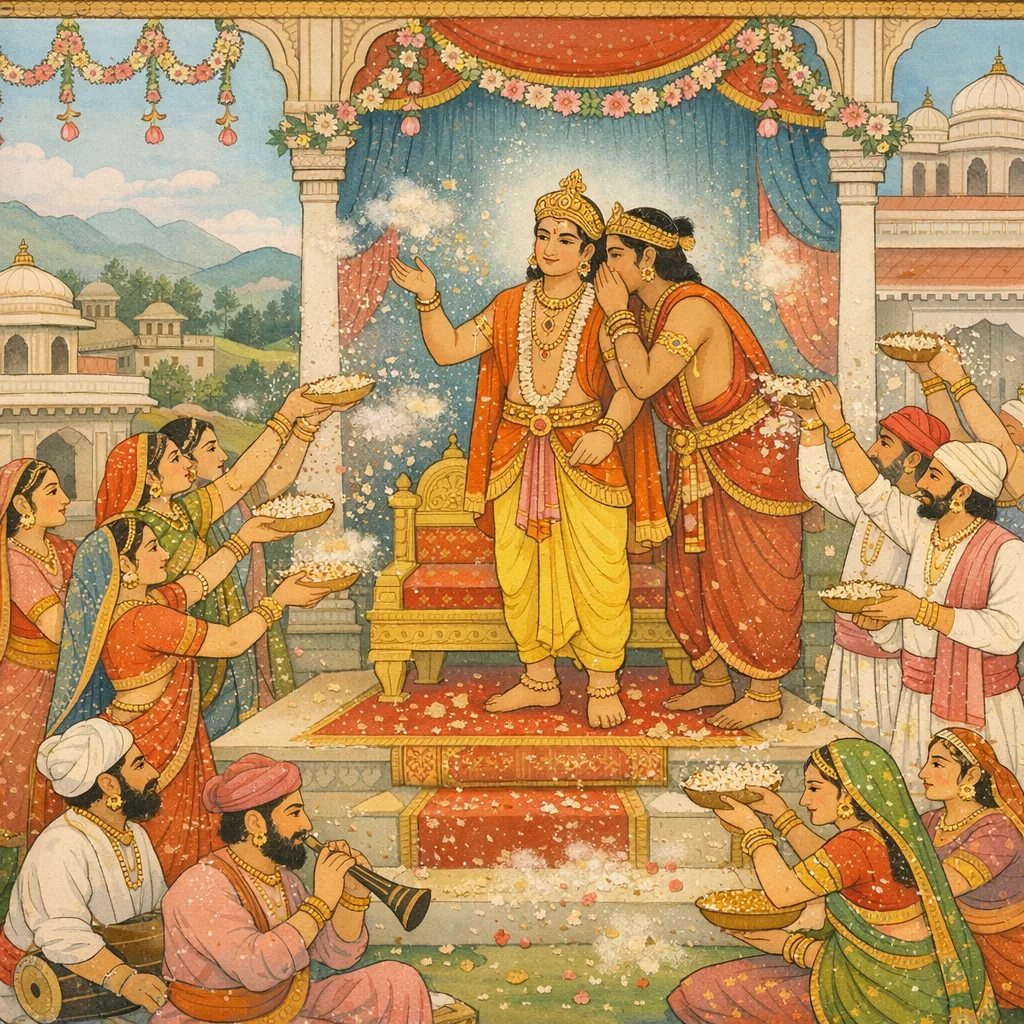
Chapter Arc: दुर्योधन के यज्ञ की समाप्ति पर सभा में जय-जयकार उठती है—लावा और चन्दनचूर्ण उड़ते हैं, और जनसमूह ‘निर्विघ्न’ पूर्ण हुए क्रतु का मंगलगान करता है। → उसी प्रशंसा के बीच कुछ कटु-स्वर भी उठते हैं—कुछ लोग तुलना कर बैठते हैं कि युधिष्ठिर के यज्ञ के समकक्ष दुर्योधन का यज्ञ नहीं। यह तुलना दुर्योधन के अहं को चुभती है और कौरव-पाण्डव प्रतिस्पर्धा फिर से सुलगती है। → यज्ञ-वैभव के बीच कर्ण का उग्र संकल्प उभरता है—अर्जुन-वध की प्रतिज्ञा/दृढ़ निश्चय का स्वर, जो उत्सव को युद्ध-छाया में बदल देता है और दुर्योधन के मन में विजय-कल्पना को धार देता है। → दुर्योधन विधिवत माता-पिता के चरणों में प्रणाम कर भीष्म, द्रोण, कृप आदि गुरुजनों का अभिवादन करता है; फिर प्रभु-सा वैभव लेकर गृह में प्रवेश करता है। कौरव-पक्ष अपने को पाण्डवों पर नैतिक-राजनीतिक बढ़त में मानने लगता है। → युधिष्ठिर के मन में द्वैतवन छोड़ने का विचार उठता है—वन-जीवन की दिशा बदलने का संकेत, मानो आगामी घटनाएँ किसी नए मोड़ पर बढ़ने वाली हों।
Shlokas
Verse 1
्ड &+(9) #25:..# #2:5::.१ सप्तपज्चाशर्दाधिकद्विशततमो< ध्याय: दुर्योधनके यज्ञके विषयमें लोगोंका मत, कर्णद्वारा अर्जुनके वधकी प्रतिज्ञा, युधिष्ठटिरकी चिन्ता तथा दुर्योधनकी शासननीति वैशम्पायन उवाच प्रविशन्तं महाराज सूतास्तुष्टवुरच्युतम् । जनाश्षापि महेष्वासं तुष्टवू राजसत्तम,वैशम्पायनजी कहते हैं--महाराज! राजश्रेष्ठ! नगरमें प्रवेश करते समय सूतों तथा अन्य लोगोंने भी अटल निश्चयी और महान धनुर्धर राजा दुर्योधनकी भूरि-भूरि प्रशंसा की
Vaiśampāyana said: O great king, O best of rulers—when he entered the city, the bards (sūtas), delighted, praised the unshakable one; and the people too praised that great archer. The scene underscores how public acclaim can surround a powerful ruler, even when the moral direction of his cause remains questionable.
Verse 2
लाजैश्वन्दनचूर्णैश्व विकीर्य च जनास्तत: । ऊ्चुर्दिष्ट्या नृपाविध्न: समाप्तो<यं क्रतुस्तव,तत्पश्चात् सब लोग लावा और चन्दनचूर्ण बिखेरकर कहने लगे--“महाराज! आपका यह यज्ञ बिना किसी विधघ्न-बाधाके पूर्ण हो गया, यह बड़े सौभाग्यकी बात है”
Then the people, scattering parched grain and sandalwood powder, exclaimed: “By good fortune, O king, this sacrifice of yours has been completed without any obstacle.” The scene underscores the communal joy that follows a rite brought to completion in an orderly, auspicious manner, where success is attributed not to mere effort alone but to favorable destiny and the maintenance of proper ritual conduct.
Verse 3
अपरे त्वब्रुवंस्तत्र वातिकास्तं महीपतिम् । युधिष्ठिरस्य यज्ञेन न समो होष ते क्रतुः,वहीं कुछ ऐसे लोग भी थे, जिनका मस्तिष्क वातरोगसे विकृत था--कब क्या कहना उचित है, इसको वे नहीं जानते थे, अतः राजा दुर्योधनको सम्बोधित करके कहने लगे --'राजन्! आपका यह यज्ञ युधिष्ठिरके यज्ञके समान नहीं था”
Vaiśaṃpāyana said: There, however, some others—men whose minds were unsettled by a vāta (wind) disorder and who lacked a sense of what should or should not be said—addressed that king and declared: “O King, this sacrifice of yours is not equal to Yudhiṣṭhira’s sacrifice.” The remark, spoken without discernment, stings the ruler’s pride and hints at the moral danger of careless speech in a charged political setting.
Verse 4
नैव तस्य क्रतोरेष कलामहति षोडशीम् । एवं तत्राब्रुवन् केचिद् वातिकास्तं जनेश्वरम्,कुछ अन्य वायुरोगग्रस्त लोग राजा दुर्योधनसे इस प्रकार कहने लगे--“यह यज्ञ तो युधिष्ठिरके यज्ञकी सोलहवीं कलाके बराबर भी नहीं है”
Vaiśampāyana said: Some men afflicted with wind-disorder (vāta) spoke there to that lord of men, saying, “This sacrifice of his does not even equal the great sixteenth part of Yudhiṣṭhira’s sacrifice.”
Verse 5
सुहृदस्त्वब्रुवंस्तत्र अति सर्वानयं क्रतुः । ययातिर्नहुषश्चापि मान्धाता भरतस्तथा
Vaiśaṃpāyana said: There, the well-wishing friends spoke up: “This sacrifice surpasses all others.” They also recalled the famed royal exemplars—Yayāti, Nahuṣa, Māndhātṛ, and Bharata.
Verse 6
एता वाच: शुभा: शृण्वन् सुहृदां भरतर्षभ
O bull among the Bharatas, as he listened to these auspicious words spoken by well-wishing friends, his mind was steadied.
Verse 7
अभिवाद्य ततः पादौ मातापित्रोर्विशाम्पते,महाराज! उसने सबसे पहले अपने माता-पिताके चरणोंमें प्रणाम किया। तत्पश्चात् क्रमश: भीष्म, द्रोण और कृपाचार्य आदिको तथा बुद्धिमान् विदुरजीको भी मस्तक झुकाया। तदनन्तर छोटे भाइयोंने आकर भ्राताओंका आनन्द बढ़ानेवाले दुर्योधनको प्रणाम किया
Vaiśampāyana said: O lord of the people, O great king—first he bowed in reverence at the feet of his mother and father. Then, in due order, he lowered his head to Bhīṣma, Droṇa, and Kṛpa and the other elders, and also to the wise Vidura. After that, the younger brothers came forward and paid homage to Duryodhana, whose presence increased the joy of his brothers.
Verse 8
भीष्मद्रोणकृपादीनां विदुरस्थ च धीमत: । अभिवादित: कनीयोभि भ्रतृभि भ्रातृनन्दन:,महाराज! उसने सबसे पहले अपने माता-पिताके चरणोंमें प्रणाम किया। तत्पश्चात् क्रमश: भीष्म, द्रोण और कृपाचार्य आदिको तथा बुद्धिमान् विदुरजीको भी मस्तक झुकाया। तदनन्तर छोटे भाइयोंने आकर भ्राताओंका आनन्द बढ़ानेवाले दुर्योधनको प्रणाम किया
Vaiśampāyana said: Then the younger brothers respectfully greeted Bhīṣma, Droṇa, Kṛpa, and the wise Vidura. After that, those younger brothers bowed to Duryodhana, the delight of his brothers.
Verse 9
निषसादासने मुख्ये भ्रातृभि: परिवारित: । तमुत्थाय महाराज सूतपुत्रो5ब्रवीद् वच:,इसके बाद सब भाइयोंसे घिरा हुआ अपने प्रमुख राजसिंहासनपर विराजमान हुआ। उस समय सूतपुत्र कर्णने उठकर महाराज दुर्योधनसे इस प्रकार कहा--
Vaiśampāyana said: Surrounded by his brothers, he sat upon the foremost royal throne. Then Karṇa, the charioteer’s son, rose and addressed King Duryodhana with these words—
Verse 10
दिष्ट्या ते भरतश्रेष्ठ समाप्तो5यं महाक्रतु: । हतेषु युधि पार्थेषु राजसूये तथा त्वया
Vaiśampāyana said: “By good fortune, O best of the Bharatas, this great sacrificial rite has been brought to completion by you—just as the Rājasūya was completed—after the Pārthas had been slain in battle.”
Verse 11
तमब्रवीन्महाराजो धार्तराष्ट्री महायशा:,राजसूये पुनर्वीर त्वमेवं वर्धयिष्यसि । तब महायशस्वी महाराज दुर्योधनने उससे इस प्रकार कहा--“वीर! तुम्हारा यह कथन सत्य है। नरश्रेष्ठ जब दुरात्मा पाण्डव मारे जायँगे, उस समय महायज्ञ राजसूयके समाप्त होनेपर तुम पुनः इसी प्रकार मेरा अभिनन्दन करोगे”
Vaiśampāyana said: Then the illustrious king of the Dhṛtarāṣṭra line addressed him: “O hero, at the Rājasūya, you will again extol me in just this way.”
Verse 12
सत्यमेतत् त्वयोक्तं हि पाण्डवेषु दुरात्मसु । निहतेषु नरश्रेष्ठ प्राप्ते चापि महाक्रतौ
Vaiśampāyana said: “What you have said is indeed true regarding the Pāṇḍavas of wicked disposition. When those foremost of men have been slain, and when the great sacrifice has also been brought to its destined point…”
Verse 13
एवमुक््त्वा महाराज कर्णमाश्लिष्य भारत
Vaiśampāyana said: “Having spoken thus, O great king, he embraced Karṇa, O descendant of Bharata.”
Verse 14
सोडब्रवीत् कौरवांश्षापि पार्श्वस्थान् नृपसत्तम:,नृपश्रेष्ठ दुर्योधनने अपने पास खड़े हुए कौरवोंको सम्बोधित करके कहा--“कुरुकुलके राजकुमारो! कब ऐसा समय आयगा जब मैं समस्त पाण्डवोंको मारकर प्रचुर धनसे सम्पन्न होनेवाले उस क्रतुश्रेष्ठ राजसूयका अनुष्ठान करूँगा”
Vaiśampāyana said: Then the best of kings addressed the Kauravas standing nearby: “O Duryodhana, foremost among rulers! When will that time come when, having slain all the Pāṇḍavas, I shall perform that supreme sacrifice—the Rājasūya—abounding in wealth?”
Verse 15
कदा तु त॑ क्रतुवरं राजसूयं महाधनम् | निहत्य पाण्डवान् सर्वानाहरिष्यामि कौरवा:,नृपश्रेष्ठ दुर्योधनने अपने पास खड़े हुए कौरवोंको सम्बोधित करके कहा--“कुरुकुलके राजकुमारो! कब ऐसा समय आयगा जब मैं समस्त पाण्डवोंको मारकर प्रचुर धनसे सम्पन्न होनेवाले उस क्रतुश्रेष्ठ राजसूयका अनुष्ठान करूँगा”
Vaiśampāyana said: “O Kaurava princes! When will that time come when, after slaying all the Pāṇḍavas, I shall obtain and perform that foremost sacrifice—the Rājasūya—abounding in wealth?”
Verse 16
तमब्रवीत् तदा कर्ण: शृणु मे राजकुञ्जर । पादौ न धावये तावदू यावन्न निहतोअर्जुन:,उस समय कर्णने दुर्योधनसे कहा--“नृपश्रेष्ठ! मेरी यह प्रतिज्ञा सुन लो--“जबतक अर्जुन मेरे हाथसे मारा नहीं जाता, तबतक मैं दूसरोंसे पैर नहीं धुलवाऊँगा, केवल जलसे उत्पन्न पदार्थ नहीं खाऊँगा और आसुरव्रत (क्रूरता आदि) नहीं धारण करूँगा। किसीके भी कुछ माँगनेपर “नहीं है", ऐसी बात नहीं कहूँगा”
Then Karṇa said to Duryodhana: “O best of kings, listen to my vow. Until Arjuna is slain by my hand, I will not have my feet washed by others.”
Verse 17
कीलालजं न खादेयं करिष्ये चासुरव्रतम् । नास्तीति नैव वक्ष्यामि याचितो येन केनचित्,उस समय कर्णने दुर्योधनसे कहा--“नृपश्रेष्ठ! मेरी यह प्रतिज्ञा सुन लो--“जबतक अर्जुन मेरे हाथसे मारा नहीं जाता, तबतक मैं दूसरोंसे पैर नहीं धुलवाऊँगा, केवल जलसे उत्पन्न पदार्थ नहीं खाऊँगा और आसुरव्रत (क्रूरता आदि) नहीं धारण करूँगा। किसीके भी कुछ माँगनेपर “नहीं है", ऐसी बात नहीं कहूँगा”
“I shall not eat anything born of fermented liquor; nor shall I undertake the ‘āsura-vrata’—a vow marked by cruelty and unrighteous conduct. And when anyone asks me for something, I will not utter the words, ‘I have nothing.’”
Verse 18
अथोत्द्ुष्टं महेष्वासैर्धार्तराष्ट्रमहारथै: । प्रतिज्ञाते फाल्गुनस्य वधे कर्णेन संयुगे,कर्णके द्वारा युद्धमें अर्जुनके वधकी प्रतिज्ञा करनेपर महान् धनुर्धर महारथी धृतराष्ट्रपुत्रोंने बड़े जोरसे सिंहनाद किया
Vaiśampāyana said: When Karṇa, in the midst of battle, vowed to slay Phālguna (Arjuna), the mighty bowmen—Dhṛtarāṣṭra’s great chariot-warriors—became fiercely elated and raised a thunderous lion-roar.
Verse 19
विजितांश्वाप्पमन्यन्त पाण्डवान् धृतराष्ट्रजा: । दुर्योधनो5पि राजेन्द्र विसृज्य नरपुड़वान्,उस दिनसे कौरव पाण्डवोंको पराजित ही मानने लगे। राजेन्द्र! तदनन्तर जैसे देवराज इन्द्र चैत्रथ नामक उद्यानमें प्रवेश करते हैं, उसी प्रकार श्रीमान् राजा दुर्योधनने उन नरपुंगवोंको विदा करके अपने महलमें प्रवेश किया। भारत! तदनन्तर वे सभी महाधनुर्धर वीर अपने-अपने भवनमें चले गये
Vaiśampāyana said: From that day onward, the sons of Dhṛtarāṣṭra regarded the Pāṇḍavas as already defeated. Then King Duryodhana, O best of kings, having dismissed those foremost of men, entered his palace in splendor—like Indra entering the celestial pleasure-grove named Caitraratha. After this, O Bhārata, all those heroes, mighty archers and men of great prowess, departed each to his own residence.
Verse 20
प्रविवेश गृहं श्रीमान् यथा चैत्रर॒थं प्रभु: । तेडपि सर्वे महेष्वासा जम्मुर्वेश्मानि भारत,उस दिनसे कौरव पाण्डवोंको पराजित ही मानने लगे। राजेन्द्र! तदनन्तर जैसे देवराज इन्द्र चैत्रथ नामक उद्यानमें प्रवेश करते हैं, उसी प्रकार श्रीमान् राजा दुर्योधनने उन नरपुंगवोंको विदा करके अपने महलमें प्रवेश किया। भारत! तदनन्तर वे सभी महाधनुर्धर वीर अपने-अपने भवनमें चले गये
Vaiśampāyana said: Then the illustrious king Duryodhana, having dismissed those foremost of men, entered his palace—just as the lord of the gods, Indra, enters the Caitraratha grove. Thereafter, O Bhārata, all those great bowmen also departed to their respective residences.
Verse 21
पाण्डवाश्न महेष्वासा दूतवाक्यप्रचोदिता: । चिन्तयन्तस्तमेवार्थ नालभन्त सुखं क्वचित्
Vaiśampāyana said: The Pāṇḍavas—mighty archers—stirred by the messenger’s words, kept reflecting on that very matter, and could find no peace anywhere.
Verse 22
इधर महाधनुर्धर पाण्डव दूतके वाक्यसे प्रेरित हो उसी विषयका चिन्तन करते हुए कभी चैन नहीं पाते थे ।। भूयश्व चारै राजेन्द्र प्रवृत्तिरुपपादिता । प्रतिज्ञा सूतपुत्रस्य विजयस्य वर्ध॑ प्रति,महाराज! फिर उन्होंने गुप्तचरोंद्वारा वह समाचार भी प्राप्त कर लिया, जिसमें अर्जुनके वधके लिये सूतपुत्र कर्णकी प्रतिज्ञा दुहटायी गयी थी
Vaiśampāyana said: “And further, O king, through their network of spies they obtained confirmed intelligence about the unfolding situation—namely, the vow made by the Sūta’s son (Karna), a pledge directed toward victory, to bring about Arjuna’s death. Thus, even while weighing the words exchanged as envoys, the Pāṇḍavas found no peace, for the moral burden of impending violence and the certainty of hostile intent pressed upon their minds.”
Verse 23
एतच्छुत्वा धर्मसुत: समुद्धिग्नो नराधिप । अभेद्यकवचं मत्वा कर्णमद्भुतविक्रमम्
Hearing this, Dharmasuta (Yudhiṣṭhira) became deeply agitated, O king, recognizing Karṇa—of wondrous prowess—as one clad in armor that could not be pierced.
Verse 24
तस्य चिन्तापरीतस्य बुद्धिर्जज्ञे महात्मन:
As that great-souled one was overwhelmed by anxious reflection, a clear resolve and understanding arose within him.
Verse 25
धार्तराष्ट्रोडपि नृपति: प्रशशास वसुन्धराम्
Vaiśampāyana said: Even Dhṛtarāṣṭra, though blind, ruled the earth as king—maintaining the order of the realm and exercising sovereign authority over the land.
Verse 26
भ्रातृभि: सहितो वीरैर्भीष्मद्रोणकृपैस्तथा | सड़म्य सूतपुत्रेण कर्णेनाहवशोभिना
Vaiśampāyana said: Accompanied by his brothers and by the heroic warriors—Bhīṣma, Droṇa, and Kṛpa as well—along with Karṇa, the charioteer’s son, resplendent in battle, he advanced in the warlike enterprise.
Verse 27
(सततं प्रीयमाणो वै देविना सौबलेन च ।) इधर राजा दुर्योधन भी अपने वीर भाइयोंके साथ रहकर भीष्म, द्रोण, कृपाचार्य, युद्धमें शोभा पानेवाले सूतपुत्र कर्ण तथा द्यूतकृशल शकुनिसे मिलकर निरन्तर प्रसन्नताका अनुभव करता हुआ इस पृथ्वीका शासन करने लगा ।। दुर्योधन: प्रिये नित्यं वर्तमानो महीभृताम् । पूजयामास विद्रेन्द्रान् क्रतुभिर्भूरिदक्षिणै:,दुर्योधन सदा अपने अधीन रहनेवाले राजाओंका प्रिय करने लगा और प्रचुर दक्षिणावाले यज्ञोंद्वारा श्रेष्ठ ब्राह्मणोंका भी स्वागत-सत्कार करता रहा
Vaiśampāyana said: Ever pleased in the company of Śakuni, brother of Queen Gāndhārī, King Duryodhana—though surrounded by his valiant brothers—joined with Bhīṣma, Droṇa, Kṛpa, and Karṇa, the charioteer’s son famed for splendour in battle, as well as Śakuni skilled at dice; and, experiencing continual satisfaction, began to rule this earth. Seeking to keep the subordinate kings loyal and content, he also honoured the foremost Brahmins by performing sacrifices rich in gifts.
Verse 28
भ्रातृणां च प्रियं राजन् स चकार परंतप: । निश्चित्य मनसा वीरो दत्तभुक्तफलं धनम्
Vaiśaṃpāyana said: “O King, that hero, a scorcher of foes, resolved firmly in his mind to do what was dear to his brothers. Accordingly, he distributed the wealth so that its fruits would be enjoyed as gifts and as rightful shares—ensuring that generosity and just allocation were both fulfilled.”
Verse 56
क्रतुमेनं समाहृत्य पूता: सर्वे दिवं गता: । जो राजाके सुहृद् थे, वे वहाँ इस प्रकार बोले--'यह यज्ञ पिछले सब यज्ञोंसे बढ़कर हुआ है। ययाति, नहुष, मांधाता और भरत भी इस यज्ञ-कर्मका अनुष्ठान करके पवित्र हो सब-के-सब स्वर्गलोकमें गये हैं”
Vaiśampāyana said: Having completed and gathered up the sacrificial rite, all were purified and went to heaven. Then the king’s friends spoke there in this manner: “This sacrifice has surpassed all earlier sacrifices. Yayāti, Nahuṣa, Māndhātṛ, and Bharata too performed this sacrificial observance; purified by it, they all attained the world of heaven.”
Verse 66
प्रविवेश पुरं हृष्ट: स्ववेश्म च नराधिप: । भरतश्रेष्ठ! सुहृदोंकी ये सुन्दर बातें सुनता हुआ राजा दुर्योधन प्रसन्नतापूर्वक नगरमें प्रवेश करके अपने राजभवनमें गया
Vaiśampāyana said: Delighted at heart, the king entered the city and then his own palace. O best of the Bharatas, listening to the pleasing words spoken by his well-wishers, King Duryodhana—his mind made glad—returned into the town and went to his royal residence.
Verse 106
आह्वते5हं नरश्रेष्ठ त्वां सभाजयिता पुन: । “भरतश्रेष्ठ) सौभाग्यकी बात है कि तुम्हारा यह महान् यज्ञ सकुशल समाप्त हुआ। नरश्रेष्ठस जब युद्धमें पाण्डव मारे जायँगे, उस समय तुम्हारे द्वारा आयोजित राजसूययज्ञकी समाप्तिपर मैं पुन: इसी प्रकार तुम्हारा अभिनन्दन करूँगा”
Vaiśaṃpāyana said: “O best of men, I shall again offer you public honor when you summon me. When, in the course of war, the Pāṇḍavas are slain, then at the conclusion of the Rājasūya sacrifice arranged by you, I will once more congratulate you in the same manner.”
Verse 123
राजसूये पुनर्वीर त्वमेवं वर्धयिष्यसि । तब महायशस्वी महाराज दुर्योधनने उससे इस प्रकार कहा--“वीर! तुम्हारा यह कथन सत्य है। नरश्रेष्ठ जब दुरात्मा पाण्डव मारे जायँगे, उस समय महायज्ञ राजसूयके समाप्त होनेपर तुम पुनः इसी प्रकार मेरा अभिनन्दन करोगे”
Vaiśampāyana said: “O hero, at the Rājasūya sacrifice you will again extol me in this very manner.” In the surrounding narration, Duryodhana responds with pride and malice, affirming the statement as true and imagining a future in which the Pāṇḍavas are slain; after the great Rājasūya concludes, he expects to be praised once more—revealing his ethical blindness, envy, and fixation on triumph rather than dharma.
Verse 136
राजसू[यं क्रतुश्रेष्ठं चिन््तयामास कौरव: । भरतकुलभूषण! महाराज! ऐसा कहकर दुर्योधनने कर्णको छातीसे लगा लिया और क्रतुश्रेष्ठ रजसूयका चिन्तन करने लगा
Vaiśampāyana said: The Kaurava (Duryodhana), after speaking thus, embraced Karṇa to his chest and began to brood again on the Rājasūya—the foremost of royal sacrifices.
Verse 236
अनुस्मरंश्व॒ संक्लेशान् न शान्तिमुपयाति स: । राजन्! यह सब सुनकर धर्मपुत्र युधिष्ठिर उद्विग्न हो उठे। वे विचारने लगे--“कर्णका कवच अभेद्य है और उसका पराक्रम भी अद्भुत है।' यह मानकर तथा वनके क्लेशोंका स्मरण करके उन्हें शान्ति नहीं प्राप्त होती थी
Vaiśampāyana said: “O King, one who keeps recalling past afflictions does not attain peace.” Hearing all this, Dharmaputra Yudhiṣṭhira became deeply agitated. Reflecting that Karṇa’s protective armor was unbreakable and that his prowess was extraordinary, and remembering the hardships of life in the forest, Yudhiṣṭhira could find no calm within himself.
Verse 246
बहुव्यालमृगाकीर्ण त्यक्तुं द्वैतववनं वनम् । इस प्रकार चिन्तासे घिरे हुए महात्मा युधिष्ठिरके मनमें यह विचार उत्पन्न हुआ कि “अनेक प्रकारके सर्पों तथा मृगोंसे भरे हुए इस द्वैतववनको छोड़कर हम कहीं अन्यत्र चले चलें"
Vaiśampāyana said: Surrounded by anxious thoughts, the high-souled Yudhiṣṭhira formed this resolve: “This Dvaitavana forest is crowded with many kinds of serpents and wild beasts; let us leave it and go elsewhere.” The moment reflects a dharmic prudence—choosing a safer course for the protection of one’s companions rather than clinging to a place that has become perilous.
Verse 256
इस प्रकार श्रीमह्ाभारत वनपवके अन्तर्गत घोषयात्रापर्वमें दुर्योधनका यज्ञविषयक दो सौ छप्पनवाँ अध्याय पूरा हुआ
Thus ends the two hundred and fifty-sixth chapter in the Ghoṣayātrā sub-section of the Vana Parva of the Śrī Mahābhārata, dealing with Duryodhana’s sacrificial undertaking. The colophon marks the completion of this unit, framing the episode as a concluded narrative segment and implicitly reminding the listener that ritual display, when driven by pride or rivalry, is ethically distinct from sacrifice grounded in dharma.
Verse 257
राजन! शत्रुओंको संताप देनेवाला वीर दुर्योधन निरन्तर अपने भाइयोंका प्रिय कार्य किया करता था। “धनके दो ही फल हैं--दान और भोग” ऐसा मन-ही-मन निश्चय करके वह इन्हींमें धनका उपयोग करता था ।। इति श्रीमहाभारते वनपर्वणि घोषयात्रापर्वणि युधिष्ठिरचिन्तायां सप्तपञ्चाशदधिकद्विशततमो<ध्याय:
Vaiśampāyana said: “O King, the heroic Duryodhana—one who brought torment to his enemies—was continually engaged in doing what pleased his brothers. Having resolved within himself that wealth yields only two true fruits—giving and enjoyment—he employed his riches only in these two ways.”
Frequently Asked Questions
The implied dilemma is how a righteous actor responds to grievous personal loss without abandoning disciplined conduct: the narrative compresses Rāma’s response into principled pursuit, alliance formation, and decisive action rather than despair or indiscriminate retaliation.
Suffering is contextualized within a causally intelligible moral history (lineage, motive, consequence), and righteous recovery is portrayed as requiring both inner steadiness and outward strategic competence—an instructive parallel for a king in exile.
No explicit phalaśruti appears in the provided verses; the chapter functions as a narrative proem establishing authority through genealogy and setting the didactic frame for the longer Rāmopākhyāna sequence.