Adhyaya 148
Bhīma–Hanūmān Dialogue on Yugas (युगवर्णनम्)
Upa-parva: Bhīma–Hanūmat-saṃvāda (Yuga-vyākhyāna episode)
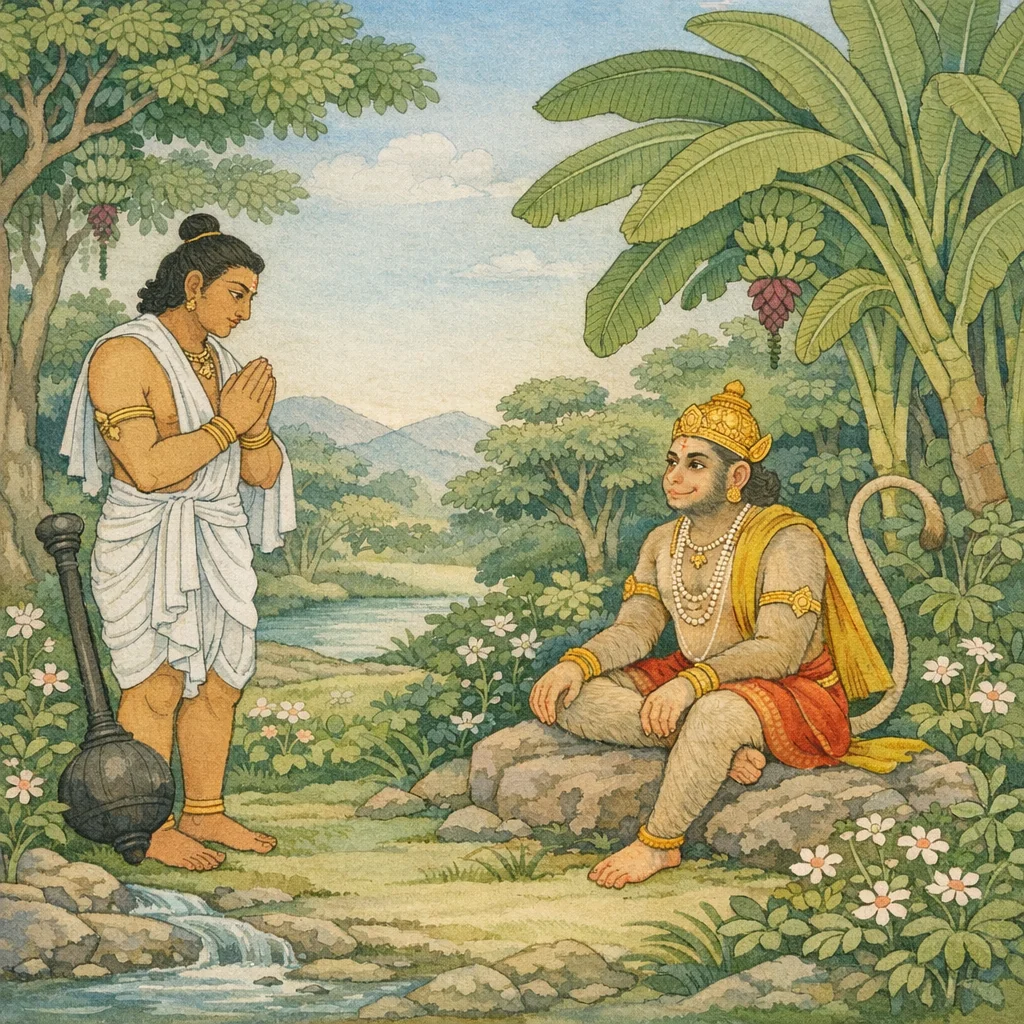
Vaiśaṃpāyana reports Bhīma’s respectful address to Hanūmān after recognition of kinship. Bhīma declares his good fortune at meeting an elder and requests a vision of Hanūmān’s unparalleled form from the ocean-crossing episode. Hanūmān refuses, stating that the temporal condition (kāla-avasthā) has changed and that beings’ strength and manifestation vary across yugas. Bhīma then asks for yuga enumeration and the norms of conduct, including dharma, kāma, artha, bodily power, and their waxing/waning. Hanūmān outlines Kṛta-yuga as a period of stable dharma and minimal ritualized striving, with absence of various social frictions and afflictions; he describes Tretā as introducing sacrificial activity and diversified ritual action with a partial reduction of dharma; Dvāpara as further division—especially the Veda’s fourfold articulation and increased inconsistency in truth and practice; and Kali as a tamasic phase where dharma stands on a single ‘foot,’ with decline in Vedic conduct and rise of disturbances and ailments. The chapter concludes by emphasizing cyclical recurrence: as yugas turn, dharma and social conditions turn correspondingly, and long-lived beings track these transitions.
Chapter Arc: कदलीवन के एकांत में भीमसेन का सामना एक विचित्र वानर-देहधारी वृद्ध से होता है; क्षत्रिय-गर्व से भरा भीम पूछ बैठता है—“आप कौन हैं, और वानर-रूप क्यों?” → भीम अपना वंश-परिचय और वायुपुत्र होने का गर्व प्रकट करता है; वानरेन्द्र (हनुमान) मंद मुसकान के साथ उसकी परीक्षा लेते हैं, और भीम भीतर-ही-भीतर अपने बाहुबल-दर्प पर चोट लगते देख असहज होता है। → भीम, जो पहले चुनौती की मुद्रा में था, अंततः विनय धारण कर ‘शिष्यवत्’ प्रश्न करता है—यदि गुप्त न हो तो अपना समस्त परिचय और रहस्य बताइए; तब हनुमान स्वीकार करते हैं और विस्तार से अपना वृत्तांत सुनाने को उद्यत होते हैं। → हनुमान भीम की जिज्ञासा को धर्मसम्मत दिशा देते हुए कहते हैं कि जो कौतूहल है वह अखिल रूप से सुनो; भीम का अहं पिघलकर श्रद्धा और शिष्यभाव में बदलता है। → हनुमान के मुख से रामकथा/पूर्ववृत्त (मारीच आदि प्रसंग) का आरंभ—आगे के अध्याय में उनका विस्तृत उपदेश और भीम के लिए वर/आशीर्वाद का संकेत।
Shlokas
Verse 1
आटा: छा () है 7 सप्तचत्वारिशंर्दाधिकशततमो< ध्याय: श्रीहनुमान् और भीमसेनका संवाद वैशम्पायन उवाच एतच्छुत्वा वचस्तस्य वानरेन्द्रस्य धीमत: । भीमसेनस्तदा वीर: प्रोवाचामित्रकर्षण:,वैशम्पायनजी कहते हैं-जनमेजय! उस समय परम बुद्धिमान् वानरराज हनुमानजीका यह वचन सुनकर शत्रुसूदन वीरवर भीमसेनने इस प्रकार कहा
Vaiśampāyana said: O Janamejaya, hearing these words of that wise lord of monkeys, Hanumān, the heroic Bhīmasena—crusher of foes—then spoke in reply.
Verse 2
भीम उवाच को भवान् कि निमित्तं वा वानरं वपुरास्थित: । ब्राह्मणानन्तरो वर्ण: क्षत्रियस्त्वां तु पृष्छति,भीमसेनने पूछा--आप कौन हैं? और किसलिये वानरका रूप धारण कर रखा है? मैं ब्राह्मणके बादका वर्ण--क्षत्रिय हूँ, और मैं आपसे आपका परिचय पूछता हूँ
Bhīma said: “Who are you, and for what reason have you assumed the body of a monkey? I am a Kshatriya—the social order that follows after the Brahmins—and I ask you to state who you are.”
Verse 3
कौरव: सोमवंशीय: कुन्त्या गर्भेण धारित: । पाण्डवो वायुतनयो भीमसेन इति श्रुत:,मेरा परिचय इस प्रकार है--मैं चन्द्रवंशी क्षत्रिय हूँ। मेरा जन्म कुरुकुलमें हुआ है। माता कुन्तीने मुझे गर्भमें धारण किया था। मैं वायुपुत्र पाण्डव हूँ। मेरा नाम भीमसेन है
Bhima said: “I am a Kaurava of the Lunar dynasty, conceived and borne in Kunti’s womb. I am also a Pandava—Vayu’s son—known by the name Bhimasena.”
Verse 4
स वाक्यं कुरुवीरस्य स्मितेन प्रतिगृह्म तत् । हनूमान् वायुतनयो वायुपुत्रमभाषत,कुरुवीर भीमसेनका वह वचन मन्द मुसकानके साथ सुनकर वायुपुत्र हनुमानजीने वायुके ही पुत्र भीमसेनसे इस प्रकार कहा
Hanuman, the son of the Wind, received the words of the Kuru hero with a gentle smile; then, addressing Bhimasena—himself also a son of the Wind—he spoke.
Verse 5
हनूमानुवाच वानरोऊहं न ते मार्ग प्रदास्यामि यथेप्सितम् | साधु गच्छ निवर्तस्व मा त्वं प्राप्स्यसि वैशसम्,हनुमानजी बोले--भैया! मैं वानर हूँ। तुम्हें तुम्हारी इच्छाके अनुसार मार्ग नहीं दूँगा। अच्छा तो यह होगा कि तुम यहींसे लौट जाओ, नहीं तो तुम्हारे प्राण संकटमें पड़ जायँगे
Hanuman said: “I am a vanara; I will not grant you passage as you desire. It would be best for you to turn back from here. Do not persist—otherwise you will meet with calamity and your very life may fall into danger.”
Verse 6
भीमसेन उवाच वैशसं वास्तु यद्वान्यन्न त्वां पृच्छामि वानर । प्रयच्छ मार्गमुनत्तिष्ठ मा मत्त: प्राप्स्यसे व्यथाम्,भीमसेनने कहा--वानर! मेरे प्राण संकटमें पड़े या और कोई दुष्परिणाम भोगना पड़े, इसके विषयमें तुमसे कुछ नहीं पूछता हूँ। उठो और मुझे आगे जानेके लिये रास्ता दो। ऐसा होनेपर तुमको मेरे हाथोंसे किसी प्रकारका कष्ट नहीं उठाना पड़ेगा
Bhīmasena said: “O Vānara, I do not ask you about whether I may meet with peril to my life or any other harmful consequence. Rise and grant me passage on the path. If you do so, you will not suffer any pain at my hands.”
Verse 7
हनूमानुवाच नास्ति शक्तिमममोत्थातुं व्याधिना क्लेशितो हाहम् । यद्यवश्यं प्रयातव्यं लड्घयित्वा प्रयाहि माम्,हनुमानजी बोले--भाई! मैं रोगसे कष्ट पा रहा हूँ। मुझमें उठनेकी शक्ति नहीं है। यदि तुम्हें जाना अवश्य है तो मुझे लाँधघधकर चले जाओ
Hanuman said: “I have no strength to rise; I am afflicted and distressed by illness. If you must go onward without fail, then step over me and proceed.”
Verse 8
भीम उवाच निर्गुण: परमात्मा तु देहं व्याप्यावतिष्ठते । तमहं ज्ञानविज्ञेयं नावमन्ये न लड्घये,भीमसेनने कहा--निर्गुण परमात्मा समस्त प्राणियोंके शरीरमें व्याप्त होकर स्थित हैं। वे ज्ञानसे ही जाननेमें आते हैं। मैं उनका अपमान या उल्लंघन नहीं करूँगा
Bhima said: “The attributeless Supreme Self pervades the body and abides within it. He is to be known through true knowledge; therefore I will neither dishonor Him nor transgress against Him.”
Verse 9
यद्यागमैर्न विद्यां च तमहं भूतभावनम् । क्रमेयं त्वां गिरिं चैव हनूमानिव सागरम्,यदि शास्त्रोंके द्वारा मुझे उन भूतभावन भगवान्के स्वरूपका ज्ञान न होता तो मैं तुम्हींको क्या इस पर्वतको भी उसी प्रकार लाँघ जाता, जैसे हनुमानजी समुद्रको लाँघ गये थे
Bhima said: “If, through the sacred teachings and the scriptures, I had not gained knowledge of that Lord—the Sustainer and Source of all beings—then I would have overstepped you and even this mountain, just as Hanuman once leapt across the ocean.”
Verse 10
हनूमानुवाच क एष हनुमान् नाम सागरो येन लड्घितः । पृच्छामि त्वां नरश्रेष्ठ कथ्यतां यदि शक््यते,हनुमानजी बोले--नरश्रेष्ठ! मैं तुमसे एक बात पूछता हूँ, वह हनुमान् कौन था जो समुद्रको लाँध गया था? उसके विषयमें यदि तुम कुछ कह सको तो कहो
Hanuman said: “O best of men, I ask you—who was this one named Hanuman by whom the ocean was leapt across? If you are able, tell me about him.”
Verse 11
भीम उवाच भ्राता मम गुणश्लाध्यो बुद्धिसत्त्वबलान्वित: । रामायणे5तिविख्यात: श्रीमान् वानरपुड्रव:,भीमसेनने कहा--वानरप्रवर श्रीहनुमानजी मेरे बड़े भाई हैं। वे अपने सदगुणोंके कारण सबके लिये प्रशंसनीय हैं। वे बुद्धि, बल, धैर्य एवं उत्साहसे युक्त हैं। रामायणमें उनकी बड़ी ख्याति है
Bhima said: “My elder brother—the illustrious foremost of monkeys—is praised for his virtues. Endowed with intelligence, courage, and strength, he is renowned far and wide in the Ramayana.”
Verse 12
रामपत्नीकृते येन शतयोजनविस्तृत: । सागर: प्लवगेन्द्रेण क्रमेणैकेन लड्घित:,वे वानरश्रेष्ठ हनुमान् श्रीरामचन्द्रजीकी पत्नी सीताजीकी खोज करनेके लिये सौ योजन विस्तृत समुद्रको एक ही छलाँगमें लाँध गये थे
Bhima said: “He who, for the sake of Rama’s wife, leapt in a single bound across the ocean that stretches a hundred yojanas—O best of monkeys, that was Hanuman.”
Verse 13
स मे भ्राता महावीर्यस्तुल्यो5हं तस्य तेजसा । बले पराक्रमे युद्धे शक्तोडहं तव निग्रहे,वे महापराक्रमी वानरवीर मेरे भाई लगते हैं। मैं भी उन्हींके समान तेजस्वी, बलवान् और पराक्रमी हूँ तथा युद्धमें तुम्हें परास्त कर सकता हूँ
Bhima said: “He is my brother, a hero of great might; in splendor I am his equal. In strength, in valor, and in battle too, I am capable of subduing you.”
Verse 14
उत्तिष्ठ देहि मे मार्ग पश्य मे चाद्य पौरुषम् । मच्छासनमकुर्वाणं त्वां वा नेष्ये यमक्षयम्,उठो और मुझे रास्ता दो तथा आज मेरा पराक्रम अपनी आँखों देख लो। यदि मेरी आज्ञा नहीं मानोगे तो तुम्हें यमलोक भेज दूँगा
Bhīma said: “Rise and give me passage; behold today, with your own eyes, my manly prowess. If you do not comply with my command, I will send you to Yama’s imperishable realm.”
Verse 15
वैशम्पायन उवाच विज्ञाय तं बलोन्मत्तं बाहुवीर्येण दर्पितम् | हृदयेनावहस्यैनं हनूमान् वाक्यमब्रवीत्,वैशम्पायनजी कहते हैं-जनमेजय! भीमसेनको बलके अभिमानसे उन्मत्त तथा अपनी भुजाओंके पराक्रमसे घमंडमें भरा हुआ जान हनुमानजीने मन-ही-मन उनका उपहास करते हुए उनसे इस प्रकार कहा
Vaiśampāyana said: Recognizing Bhīmasena to be intoxicated with strength and puffed up with pride in the prowess of his arms, Hanūmān—smiling inwardly at him—addressed him with these words.
Verse 16
हनूमानुवाच प्रसीद नास्ति मे शक्तिरुत्थातुं जरयानघ । ममानुकम्पया त्वेतत् पुच्छमुत्सार्य गम्यताम्,हनुमानजी बोले--अनघ! मुझपर कृपा करो। बुढ़ापेके कारण मुझमें उठनेकी शक्ति नहीं रह गयी है। इसलिये मेरे ऊपर दया करके इस पूँछको हटा दो और निकल जाओ
Hanuman said: “Be gracious. Blameless one, because of old age I no longer have the strength to rise. Therefore, out of compassion for me, please move this tail aside and go on your way.”
Verse 17
वैशम्पायन उवाच एवमुक्ते हनुमता हीनवीर्यपराक्रमम् | मनसाचिन्तयद् भीम: स्वबाहुबलदर्पित:,वैशम्पायनजी कहते हैं--जनमेजय! हनुमानजीके ऐसा कहनेपर अपने बाहुबलका घमंड रखनेवाले भीमने मन-ही-मन उन्हें बल और पराक्रमसे हीन समझा
Vaiśampāyana said: When Hanumān had spoken thus, Bhīma—proud of the strength of his own arms—reflected inwardly and judged him to be lacking in power and prowess.
Verse 18
पुच्छे प्रगृह्दा तरसा हीनवीर्यपराक्रमम् । सालोक्यमन्तकस्यैनं नयाम्यद्येह वानरम्,और भीतर-ही-भीतर यह संकल्प किया कि “आज मैं इस बल और पराक्रमसे शून्य वानरको वेगपूर्वक इसकी पूँछ पकड़कर यमराजके लोकमें भेज देता हूँ
Vaiśampāyana said: Seizing him swiftly by the tail, he resolved inwardly, “Today, right here, I shall send this monkey—bereft of strength and valor—to the realm of Antaka (Yama), to share the same world as Death.”
Verse 19
सावज्ञमथ वामेन स्मयग्जग्राह पाणिना । न चाशकच्चालयितुं भीम: पुच्छे महाकपे:,ऐसा सोचकर उन्होंने बड़ी लापरवाही दिखाते और मुसकराते हुए अपने बायें हाथसे उस महाकपिकी पूँछ पकड़ी, किंतु वे उसे हिला-डुला भी न सके
Vaiśampāyana said: Then, with a contemptuous air, Bhīma—smiling—seized the great ape’s tail with his left hand; yet he was unable to move it even in the slightest.
Verse 20
उच्चिक्षेप पुनर्दोर्भ्यामिन्द्रायुधमिवोच्छितम् । नोद्धर्तुमशकद् भीमो दोर्भ्यामपि महाबल:
Vaiśampāyana said: Again he heaved it up with both arms, towering aloft like Indra’s rainbow; yet even Bhīma—though of immense strength—was unable to lift it up with his two arms.
Verse 21
तब महाबली भीमसेनने उनकी इन्द्रधनुषके समान ऊँची पूँछको दोनों हाथोंसे उठानेका पुनः प्रयत्न किया, परंतु दोनों हाथ लगा देनेपर भी वे उसे उठा न सके ।। उत्क्षिप्तभ्रूविवृत्ताक्ष: संहतभ्रुकुटीमुख: । स्विन्नगात्रो5भवद् भीमो न चोद्धर्तु शशाक तम्,फिर तो उनकी भौंहें तन गयीं, आँखें फटी-सी रह गयीं, मुखमण्डलमें भ्रुकुटी स्पष्ट दिखायी देने लगी और उनके सारे अंग पसीनेसे तर हो गये। फिर भी भीमसेन हनुमानजीकी पूँछको किंचित् भी हिला न सके
Then the mighty Bhīmasena tried once again to lift that tail, arched high like a rainbow, using both hands. Yet even after setting both hands to it, he could not raise it. His brows shot up, his eyes widened, his face tightened into a deep frown, and sweat drenched his limbs; still, Bhīma was unable to lift it at all.
Verse 22
यत्नवानपि तु श्रीमॉल्लाडूलोद्धरणोद्धुर: । कपे: पार्श्रगतो भीमस्तस्थौ व्रीडानतानन:
Vaiśampāyana said: Though he was energetic and strong, Bhīma—renowned for his prowess and now burdened by the effort of lifting and carrying the load—stood close by the monkey, his face lowered in shame.
Verse 23
प्रणिपत्य च कौन्तेय: प्राउजलियवॉक्यमब्रवीत् । प्रसीद कपिशार्दूल दुरुक्त क्षम्यतां मम
Having bowed down, the son of Kuntī, with hands joined in reverence, spoke: “Be gracious, O tiger among monkeys. Please forgive my harsh words.”
Verse 24
यद्यपि श्रीमान् भीमसेन उस पूँछको उठानेमें सर्वथा समर्थ थे और उसके लिये उन्होंने बहुत प्रयत्न भी किया, तथापि सफल न हो सके। इससे उनका मुँह लज्जासे झुक गया और वे कुन्तीकुमार भीम हनुमानजीके पास जाकर उनके चरणोंमें प्रणाम करके हाथ जोड़े हुए खड़े होकर बोले--“कपिप्रवर! मैंने जो कठोर बातें कही हों, उन्हें क्षमा कीजिये और मुझपर प्रसन्न होइये ।। सिद्धो वा यदि वा देवो गन्धर्वो वाथ गुह्म॒ुक: । पृष्ट: सन् काम्यया ब्रूहि कस्त्वं वानररूपधृक्,“आप कोई सिद्ध हैं या देवता? गन्धर्व हैं या गुह्वक? मैं परिचय जाननेकी इच्छासे पूछ रहा हूँ। बतलाइये, इस प्रकार वानरका रूप धारण करनेवाले आप कौन हैं?
Vaiśaṃpāyana said: Though Bhīmasena, mighty as he was, strove with all his strength to lift that tail, he could not succeed. His face fell in shame. Then Kuntī’s son Bhīma went to Hanumān, bowed at his feet, and stood with folded hands, saying: “Best of monkeys, forgive the harsh words I may have spoken; be gracious to me. Are you a Siddha, or a god, or a Gandharva, or a Guhyaka? I ask out of a desire to know—tell me: who are you, wearing the form of a monkey?”
Verse 25
न चेद् गुहां महाबाहो श्रोतव्यं चेद् भवेन््मम । शिष्यवत् त्वां तु पृष्छामि उपपन्नो5स्मि तेडनघ,“महाबाहो! यदि कोई गुप्त बात न हो और वह मेरे सुननेयोग्य हो, तो बताइये। अनघ! मैं आपकी शरणमें आया हूँ और शिष्यभावसे पूछता हूँ। अत: अवश्य बतानेकी कृपा करें!
Vaiśampāyana said: “O mighty-armed one, if this is not a secret and if it is fit for me to hear, then please tell me. O blameless one, I have come to you for refuge; I ask you in the spirit of a disciple. Therefore, be gracious and explain.”
Verse 26
हनूमानुवाच यत् ते मम परिज्ञाने कौतूहलमरिंदम । तत् सर्वमखिलेन त्वं शृणु पाण्डवनन्दन
Hanuman said: “O subduer of foes, since you feel curiosity about what I know and have understood, listen, O delight of the Pāṇḍavas; I shall tell you everything in full.”
Verse 27
हनुमानजी बोले--शत्रुदमन पाण्डुनन्दन! तुम्हारे मनमें मेरा परिचय प्राप्त करनेके लिये जो कौतूहल हो रहा है उसकी शान्तिके लिये सब बातें विस्तारपूर्वक सुनो ।। अहं केसरिण: क्षेत्र वायुना जगदायुषा । जात: कमलपत्राक्ष हनूमान् नाम वानर:,कमलनयन भीम! मैं वानरश्रेष्ठ केसरीके क्षेत्रमें जगतके प्राणस्वरूप वायुदेवसे उत्पन्न हुआ हूँ। मेरा नाम हनुमान् वानर है
Hanuman said: “O subduer of foes, O son of Pandu! Since your mind is eager to know who I am, listen in detail so that your curiosity may be set at rest. I was born in the domain of Kesarin, begotten by Vayu—the life-breath of the world. O lotus-eyed Bhima, my name is Hanuman, foremost among the vanaras.”
Verse 28
सूर्यपुत्रं च सुग्रीवं शक्रपुत्रं च वालिनम् । सर्वे वानरराजानस्तथा वानरयूथपा:,पूर्वकालमें सभी वानरराज और वानरयूथपति, जो महान् पराक्रमी थे, सूर्यनन्दन सुग्रीव तथा इन्द्रकुमार वालीकी सेवामें उपस्थित रहते थे। शत्रुसूदन भीम! उन दिनों सुग्रीवके साथ मेरी वैसी ही प्रेमपूर्ण मित्रता थी, जैसी वायुकी अग्निके साथ मानी गयी है
Vaiśampāyana said: “Sugrīva, the son of the Sun, and Vālin, the son of Śakra (Indra)—all the monkey-kings and likewise the leaders of monkey-troops were gathered around them.”
Verse 29
उपतस्थुर्महावीर्या मम चामित्रकर्षण । सुग्रीवेणाभवत् प्रीतिरनिलस्याग्निना यथा,पूर्वकालमें सभी वानरराज और वानरयूथपति, जो महान् पराक्रमी थे, सूर्यनन्दन सुग्रीव तथा इन्द्रकुमार वालीकी सेवामें उपस्थित रहते थे। शत्रुसूदन भीम! उन दिनों सुग्रीवके साथ मेरी वैसी ही प्रेमपूर्ण मित्रता थी, जैसी वायुकी अग्निके साथ मानी गयी है
Vaiśampāyana said: “Those mighty heroes stood in attendance upon me, O subduer of foes. And with Sugrīva there arose a bond of affectionate friendship—like the famed concord between the Wind and Fire.”
Verse 30
निकृतः स ततो क्रात्रा कस्मिंश्चित् कारणान्तरे । ऋष्यमूके मया सार्ध सुग्रीवो न््यवसच्चिरम्,किसी कारणान्तरसे वालीने अपने भाई सुग्रीवको घरसे निकाल दिया, तब बहुत दिनोंतक वे मेरे साथ ऋष्यमूक पर्वतपर रहे
Vaiśampāyana said: “Then, on some pretext, he (Sugrīva) was wronged by his own brother and driven out. Thereafter Sugrīva lived for a long time together with me on Mount Ṛṣyamūka.”
Verse 31
अथ दाशरथिरवीरो रामो नाम महाबल: । विष्णुर्मानुषरूपेण चचार वसुधातलम्,उस समय महाबली वीर दशरथनन्दन श्रीराम, जो साक्षात् भगवान् विष्णु ही थे, मनुष्यरूप धारण करके इस भूतलपर विचर रहे थे
Then the mighty hero Rāma, the son of Daśaratha—indeed Viṣṇu Himself—moved about upon the earth, having assumed a human form.
Verse 32
स पितु: प्रियमन्विच्छन् सहभार्य: सहानुज: । सभथनुर्धन्विनां श्रेष्ठो दण्डकारण्यमाश्रित:,वे अपने पिताकी आज्ञा पालन करनेके लिये पत्नी सीता और छोटे भाई लक्ष्मणके साथ दण्डकारण्यमें चले आये। धनुर्धरोंमें श्रेष्ठ रघचुनाथजी सदा धनुष-बाण लिये रहते थे
Seeking to fulfill what was dear to his father—namely, the father’s command—he went to the Daṇḍaka forest together with his wife and his younger brother. That foremost of bowmen, ever bearing bow and arrows, took refuge in the wilderness.
Verse 33
तस्य भार्या जनस्थानाच्छलेनापहता बलात् | राक्षसेन्द्रेण बलिना रावणेन दुरात्मना,अनघ! दण्डकारण्यमें आकर वे जनस्थानमें रहा करते थे। एक दिन अत्यन्त बलवान् दुरात्मा राक्षसराज रावण मायासे सुवर्ण-रत्नमय विचित्र मृगका रूप धारण करनेवाले मारीच नामक राक्षसके द्वारा नरश्रेष्ठ श्रीरामको धोखेमें डालकर उनकी पत्नी सीताको छल- बलपूर्वक हर ले गया
Vaiśampāyana said: From Janasthāna, his wife was deceitfully abducted by force—carried off by the powerful lord of the Rākṣasas, Rāvaṇa, a wicked-souled one, O sinless listener. The passage shows how adharma works through māyā (deception) and coercion, violating the sanctity of marriage and the protection owed to the innocent.
Verse 34
सुवर्णरत्नचित्रेण मृगरूपेण रक्षसा । वज्चयित्वा नरव्याप्र॑ं मारीचेन तदानघ,अनघ! दण्डकारण्यमें आकर वे जनस्थानमें रहा करते थे। एक दिन अत्यन्त बलवान् दुरात्मा राक्षसराज रावण मायासे सुवर्ण-रत्नमय विचित्र मृगका रूप धारण करनेवाले मारीच नामक राक्षसके द्वारा नरश्रेष्ठ श्रीरामको धोखेमें डालकर उनकी पत्नी सीताको छल- बलपूर्वक हर ले गया
Vaiśampāyana said: “O sinless one, by means of Mārīca—the rākṣasa who assumed the form of a wondrous deer adorned with gold and jewels—Rāvaṇa deceived the tiger among men, Rāma. Through that deceit he then abducted Sītā by trickery and by force.” The passage highlights how adharma advances through māyā and deception, and how violating another’s spouse is a grave moral transgression.
Verse 146
इस प्रकार श्रीमह्ााभारत वनपर्वके अन्तर्गत तीर्थयात्रापर्वमें लोमशतीर्थयात्राके प्रसंगमें भीमसेनका कदलीवनमें प्रवेशविषयक एक सौ छियालीसवाँ अध्याय पूरा हुआ
Thus ends the one-hundred and forty-sixth chapter of the Tīrthayātrā section within the Vana Parva of the Śrī Mahābhārata, in the context of Lomāśa’s pilgrimage narrative, describing Bhīmasena’s entry into the Kadali grove. The colophon signals a transition: the sacred journey continues, and Bhīma’s act—entering a charged, often guarded or wondrous forest-space—sets the stage for further encounters where strength is tested and conduct is measured against dharma amid the austerity of exile.
Verse 147
इति श्रीमहाभारते वनपर्वणि तीर्थयात्रापर्वणि लोमशतीर्थयात्रायां हनुमद्धीमसंवादे सप्तचत्वारिंशदधिकशततमो< ध्याय:,इस प्रकार श्रीमहाभारत वनपर्वके अन्तर्गत तीर्थयात्रापर्वमें लोमशती र्थयात्राके प्रसंगमें हनुमानजी और भीमसेनका संवादविषयक एक सौ सैंतालीयवाँ अध्याय पूरा हुआ
Thus ends, in the Śrī Mahābhārata, within the Vana Parva, in the pilgrimage section (Tīrthayātrā Parva), in the episode of Lomāśa’s pilgrimage, the one-hundred-and-forty-seventh chapter—concerning the dialogue between Hanumān and Bhīmasena. This colophon marks the completion of that chapter and frames the narrative as a sacred journey where strength is tempered by humility and guided by dharma.
Frequently Asked Questions
The tension lies between desire for extraordinary display and the appropriateness of inquiry: the chapter redirects attention from spectacle to principled understanding of kāla and yuga-conditioned duty.
Embodied capacities and social-religious norms are time-bound; therefore, ethical life requires alignment with present yuga-dharma and recognition that kāla is not overcome by personal will alone.
No explicit phalaśruti is stated here; the meta-function is instructional—positioning yuga theory as interpretive context for dharma, ritual change, and the limits of power within the epic’s moral framework.