Adhyaya 144
द्रौपदीश्रमः तथा घटोत्कचस्मरणम् (Draupadī’s Exhaustion and the Summoning of Ghaṭotkaca)
Upa-parva: Unspecified Āraṇyaka-parva episode (Draupadī’s exhaustion; Ghaṭotkaca is summoned)
Vaiśaṃpāyana reports that as the great-souled Pāṇḍavas proceed, Draupadī—overwhelmed by fatigue, distress, and severe wind-and-rain—sits down and faints. In her stupor she clings to her own thighs for support, then collapses trembling. Nakula rushes to catch her and informs Yudhiṣṭhira that the Pāñcāla princess has fallen from exhaustion and deserves reassurance. Yudhiṣṭhira, seeing her pallor and frailty, laments: she once lay on prepared beds in protected dwellings, yet now lies on the ground; he condemns his own imprudence motivated by gambling. Brahmin sages led by Dhaumya arrive, console the party, offer blessings, and perform protective recitations and rites for pacification. The brothers repeatedly touch and attend to Draupadī; cooled by a moist breeze and cared for, she gradually regains composure. The twins gently massage her feet with calloused hands, and she is laid upon a deerskin. Yudhiṣṭhira then voices a practical concern about traversing difficult, icy mountains with Draupadī; Bhīma vows to escort all and proposes Ghaṭotkaca as a carrier. With Yudhiṣṭhira’s permission, Bhīma remembers his rākṣasa son; Ghaṭotkaca appears immediately, salutes the Pāṇḍavas and Brahmins, and offers unquestioning service.
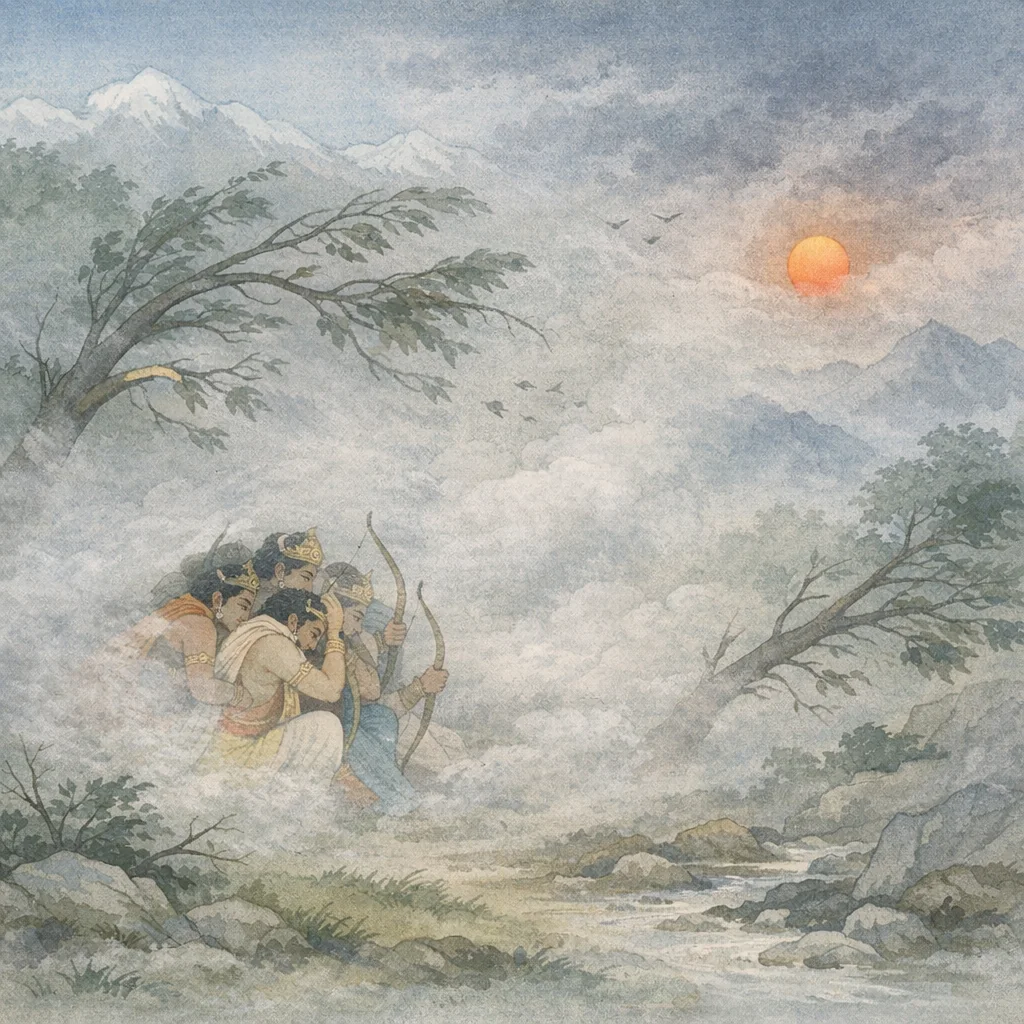
Chapter Arc: पाञ्चाली सहित पाण्डव—श्रेष्ठ धनुर्धरों के अग्रणी—गन्धमादन की ओर प्रस्थान करते हैं; पर्वत-शिखर पर सरोवर, सरिताएँ, वन और घनी छाया वाले वृक्ष उनके सामने खुलते जाते हैं। → देवर्षि-सेवित, नित्य पुष्प-फल वाले रम्य प्रदेशों के बीच अचानक प्रकृति का रौद्र रूप उतर आता है—धूल से आकाश ढक जाता है, दृष्टि नष्ट-सी हो जाती है, और वे परस्पर संवाद तक नहीं कर पाते। → प्रचण्ड वायु से वृक्ष टूट-टूटकर धरती पर गिरते हैं; महाशब्द उठता है और मोहग्रस्त योद्धा मन-ही-मन आशंका करते हैं—‘क्या आकाश गिर रहा है, क्या पृथ्वी फट रही है, क्या पर्वत टूट रहा है?’ → कुछ समय बाद कोलाहल थमता है, वायु सम हो जाती है, जल नीचे उतर जाता है और सूर्य प्रकट होता है; पाण्डव धीरे-धीरे निकलकर पुनः संगठित होते हैं। → तूफान के बाद वे फिर से गन्धमादन पर्वत की ओर आगे बढ़ते हैं—देवभूमि के भीतर आगे कौन-सी परीक्षा और कौन-सा दिव्य साक्षात्कार प्रतीक्षा कर रहा है?
Shlokas
Verse 1
#::73:.8 #::3:.7 () हि २ 7 त्रिचत्वारिशर्दाधिकशततमो< ध्याय: गन्धमादनकी यात्राके समय पाण्डवोंका आँधी-पानीसे सामना वैशम्पायन उवाच ते शूरास्ततथन्वानस्तृणवन्त: समार्गणा: । बद्धगोधाड्गुलित्राणा: खड्गवन्तोडमितौजस:,वैशम्पायनजी कहते हैं--जनमेजय! तदनन्तर सम्पूर्ण थनुर्धरोंमें अग्रगणय वे अमिततेजस्वी शूरवीर पाण्डव धनुष, बाण, तरकश, ढाल और तलवार लिये, हाथोंमें गोहके चमड़ेके बने दस्ताने पहने और श्रेष्ठ ब्राह्मणोंको आगे किये द्रौपदीके साथ गन्धमादन पर्वतकी ओर प्रस्थित हुए
Vaiśampāyana said: Those heroic men, thus equipped, carrying bows and quivers, wearing finger-guards made of iguana-hide, and bearing swords—men of immeasurable vigor—set forth, prepared to meet the arduous journey that lay ahead.
Verse 2
परिगृहा द्विजश्रेष्ठाजज्येष्ठा: सर्वधनुष्मताम् । पाञज्चालीसहिता राजन् प्रययुर्गन्धमान्दनम्,वैशम्पायनजी कहते हैं--जनमेजय! तदनन्तर सम्पूर्ण थनुर्धरोंमें अग्रगणय वे अमिततेजस्वी शूरवीर पाण्डव धनुष, बाण, तरकश, ढाल और तलवार लिये, हाथोंमें गोहके चमड़ेके बने दस्ताने पहने और श्रेष्ठ ब्राह्मणोंको आगे किये द्रौपदीके साथ गन्धमादन पर्वतकी ओर प्रस्थित हुए
Vaiśampāyana said: O King Janamejaya, then those foremost among all archers—unexcelled in prowess—having taken the best of the twice-born (brāhmaṇas) with them, and accompanied by Pāñcālī (Draupadī), set out for Gandhamādana.
Verse 3
सरांसि सरितश्नैव पर्वतांक्ष वनानि च | वृक्षांश्ष बहुलच्छायान् ददृशुर्गिरिमूर्धनि,पर्वतके शिखरपर उन्होंने बहुत-से सरोवर, सरिताएँ, पर्वत, वन तथा घनी छायावाले वृक्ष देखे
Upon the mountain’s crest they beheld many lakes and flowing rivers, along with mountains, forests, and trees casting abundant shade.
Verse 4
नित्यपुष्पफलान् देशान् देवर्षिगणसेवितान् | आत्मन्यात्मानमाधाय वीरा मूलफलाशिन:,उन्हें कितने ही ऐसे स्थान दृष्टिगोचर हुए जहाँ सदा फ़ूल और फलोंकी बहुतायत रहती थी। उन प्रदेशोंमें देवर्षियोंके समुदाय निवास करते थे। वीर पाण्डव अपने मनको परमात्माके चिन्तनमें लगाकर फल-मूलका आहार करते हुए ऊँचे-नीचे विषम-संकटपूर्ण स्थानोंमें विचर रहे थे। मार्गमें उन्हें नाना प्रकारके मृगसमूह दिखायी देते थे जिनकी संख्या बहुत थी
Vaiśampāyana said: The heroes, the Pāṇḍavas, came into view of many regions where flowers and fruits were ever-abundant—lands frequented by companies of divine seers. Centering their minds within the Self, absorbed in contemplation of the Supreme, they lived on roots and fruits as they wandered through rugged, uneven, and perilous tracts.
Verse 5
चेरुरुच्चावचाकारान् देशान् विषमसंकटान् | पश्यन्तो मृगजातानि बहूनि विविधानि च,उन्हें कितने ही ऐसे स्थान दृष्टिगोचर हुए जहाँ सदा फ़ूल और फलोंकी बहुतायत रहती थी। उन प्रदेशोंमें देवर्षियोंके समुदाय निवास करते थे। वीर पाण्डव अपने मनको परमात्माके चिन्तनमें लगाकर फल-मूलका आहार करते हुए ऊँचे-नीचे विषम-संकटपूर्ण स्थानोंमें विचर रहे थे। मार्गमें उन्हें नाना प्रकारके मृगसमूह दिखायी देते थे जिनकी संख्या बहुत थी
Vaiśampāyana said: The Pāṇḍavas wandered through regions of varied terrain—uneven, difficult, and perilous—while along the way they beheld many kinds of animals in great numbers.
Verse 6
ऋषिसिद्धामरयुतं गन्धर्वाप्सरसां प्रियम् । विविशुस्ते महात्मान: किन्नराचरितं गिरिम्,इस प्रकार उन महात्मा पाण्डवोंने गन्धर्वों और अप्सराओंकी प्रिय भूमि, किन्नरोंकी क्रीडास्थली तथा ऋषियों, सिद्धों और देवताओंके निवासस्थान गन्धमादन पर्वतकी घाटीमें प्रवेश किया
Vaiśampāyana said: Those great-souled Pāṇḍavas entered the mountain—frequented by Kinnaras, dear to Gandharvas and Apsarases, and inhabited by Ṛṣis, Siddhas, and the gods.
Verse 7
प्रविशत्स्वथ वीरेषु पर्वतं गन्धमादनम् | चण्डवातं महद् वर्ष प्रादुरासीद् विशाम्पते,राजन! वीर पाण्डवोंके गन्धमादन पर्वतपर पदार्पण करते ही प्रचण्ड आँधीके साथ बड़े जोरकी वर्षा होने लगी
Vaiśampāyana said: As the heroic Pāṇḍavas set foot upon Mount Gandhamādana, a fierce gale arose, and with it a heavy downpour burst forth, O lord of the people, O king.
Verse 8
ततो रेणु: समुद्धूत: सपत्रबहुलो महान् । पृथिवीं चान्तरिक्षं च द्यां चैव सहसा55वृणोत्,फिर धूल और पत्तोंसे भरा हुआ बड़ा भारी बवंडर (आँधी) उठा, जिसने पृथ्वी, अन्तरिक्ष तथा स्वर्गको भी सहसा आच्छादित कर दिया
Then a vast cloud of dust suddenly rose, thickly mingled with leaves. In an instant it spread like a veil, obscuring the earth, the mid-region of the sky, and even the heavens.
Verse 9
न सम प्रज्ञायते किंचिदावृते व्योम्नि रेणुना । न चापि शेकुस्तत् कर्तुमन्योन्यस्थाभिभाषणम्,धूलसे आकाशके ढक जानेसे कुछ भी सूझ नहीं पड़ता था; इसीलिये वे एक-दूसरेसे बातचीत भी नहीं कर पाते थे। अन्धकारने आँखोंपर पर्दा डाल दिया था; जिससे पाण्डवलोग एक-दूसरेके दर्शनसे भी वज्चित हो गये थे। भारत! पत्थरोंका चूर्ण बिखेरती हुई वायु उन्हें कहीं-से-कहीं खींच लिये जाती थी
Vaiśampāyana said: When the sky was veiled by dust, nothing at all could be clearly perceived. For that reason they were not even able to speak to one another from where each stood—darkness had, as it were, drawn a curtain over their eyes, cutting them off from mutual sight and communication amid the blinding storm.
Verse 10
न चापश्यंस्ततो<न्योन्यं तमसावृतचक्षुष: । आकृष्यमाणा वातेन साभश्मचूर्णेन भारत,धूलसे आकाशके ढक जानेसे कुछ भी सूझ नहीं पड़ता था; इसीलिये वे एक-दूसरेसे बातचीत भी नहीं कर पाते थे। अन्धकारने आँखोंपर पर्दा डाल दिया था; जिससे पाण्डवलोग एक-दूसरेके दर्शनसे भी वज्चित हो गये थे। भारत! पत्थरोंका चूर्ण बिखेरती हुई वायु उन्हें कहीं-से-कहीं खींच लिये जाती थी
Vaiśampāyana said: Blinded by enveloping darkness, they could no longer see one another. And, O Bhārata, as the wind—laden with dust and powdered grit—dragged at them, they were swept away from place to place, unable even to communicate with each other in that blinding storm.
Verse 11
द्रुमाणां वातभग्नानां पततां भूतलेडनिशम् । अन्येषां च महीजानां शब्द: समभवन्महान्,प्रचण्ड वायुके वेगसे टूटकर निरन्तर धरतीपर गिरनेवाले वृक्षों तथा अन्य झाड़ोंका भयंकर शब्द सुनायी पड़ता था
Vaiśampāyana said: All through the night a tremendous roar arose as trees, snapped by the wind, crashed down upon the earth—along with other plants born of the soil.
Verse 12
द्यौ: स्वित् पतति कि भूमिर्दीर्यते पर्वतो नु किम् । इति ते मेनिरे सर्वे पवनेनापि मोहिता:,हवाके झोंकेसे मोहित होकर वे सब-के-सब मन-ही-मन सोचने लगे कि आकाश तो नहीं फट पड़ा है। पृथ्वी तो नहीं विदीर्ण हो रही है अथवा कोई पर्वत तो नहीं फटा जा रहा है
Vaiśampāyana said: Bewildered by the gusting wind, they all began to wonder inwardly, “Is the sky collapsing? Is the earth splitting apart? Or is some mountain being torn asunder?”
Verse 13
ते पथानन्तरान् वृक्षान् वल्मीकान् विषमाणि च । पाणिकश्रि: परिमार्गन्तो भीता वायोर्निलिल्यिरे,तत्पश्चात् वे रास्तेके आस-पासके वृक्षों, मिट्टीके ढेरों और ऊँचे-नीचे स्थानोंको हाथोंसे ट्टोलते हुए हवासे डरकर यत्र-तत्र छिपने लगे
Vaiśampāyana said: Feeling their way along the bypaths—touching trees, anthills, and uneven ground with their hands—they became frightened of the wind and began to hide here and there.
Verse 14
ततः कार्मुकमादाय भीमसेनो महाबल: । कृष्णामादाय संगम्य तस्थावाश्रित्य पादपम्,उस समय महाबली भीमसेन हाथमें धनुष लिये द्रौपदीको अपने साथ रखकर एक वृक्षके सहारे खड़े हो गये
Then the mighty Bhīmasena took up his bow and, keeping Kṛṣṇā (Draupadī) close beside him, stood his ground under the shelter of a tree—vigilant, protective, and ready to act in defense of the vulnerable.
Verse 15
धर्मराजश्न धौम्यश्न निलिल्याते महावने । अग्निहोत्राण्युपादाय सहदेवस्तु पर्वते,धर्मराज युधिष्ठिर और पुरोहित धौम्य अग्निहोत्रकी सामग्री लिये उस महान् वनमें कहीं जा छिपे। सहदेव पर्वतपर ही (कहीं सुरक्षित स्थानमें) छिप गये
Vaiśampāyana said: King Yudhiṣṭhira, the Dharmarāja, and the family priest Dhaumya, taking the requisites for the agnihotra, hid themselves somewhere in that vast forest; Sahadeva, for his part, concealed himself on the mountain in a secure spot. The scene shows prudent restraint and the safeguarding of sacred duty even amid danger.
Verse 16
नकुलो ब्राह्मणाश्चान्ये लोमशश्न महातपा: । वृक्षानासाद्य संत्रस्तास्तत्र तत्र निलिल्यिरे,नकुल, अन्यान्य ब्राह्मणलोग तथा महातपस्वी लोमशजी भी भयभीत होकर जहाँ-तहाँ वृक्षोंकी आड़ लेकर छिपे रहे
Vaiśampāyana said: Nakula, along with other brāhmaṇas and the great ascetic Lomaśa, frightened by the danger, reached the shelter of trees and hid themselves here and there. The scene shows that even the virtuous, when faced with sudden peril, may choose concealment—not from cowardice, but from prudence, to protect life and preserve dharma.
Verse 17
मन्दीभूते तु पवने तस्मिन् रजसि शाम्यति । महद्विर्जलधारौघैर्वर्षमभ्याजगाम ह,थोड़ी देरमें जब वायुका वेग कुछ कम हुआ और धूल उड़नी बंद हो गयी, उस समय बड़ी भारी जलधारा बरसने लगी। तदनन्तर वज्रपातके समान मेघोंकी गड़गड़ाहट होने लगी और मेघमालाओंमें चारों ओर चंचल चमकवाली बिजलियाँ संचरण करने लगीं
Vaiśampāyana said: When the wind had slackened and the dust had settled, a great rain arrived in torrents—thick streams of water pouring down. The scene marks a sudden turning in the atmosphere: turbulence gives way to a cleansing downpour, as if nature itself shifts from agitation to restoration.
Verse 18
भृशं चटचटाशब्दो वच्ञाणां क्षिप्पतामिव | ततस्ताश्चज्चलाभास श्रेरुर भ्रेषु विद्युत:,थोड़ी देरमें जब वायुका वेग कुछ कम हुआ और धूल उड़नी बंद हो गयी, उस समय बड़ी भारी जलधारा बरसने लगी। तदनन्तर वज्रपातके समान मेघोंकी गड़गड़ाहट होने लगी और मेघमालाओंमें चारों ओर चंचल चमकवाली बिजलियाँ संचरण करने लगीं
Vaiśampāyana said: “A fierce crackling roar arose, like thunderbolts being hurled. Then, in the masses of clouds, lightning—restless and flashing—darted about on every side.”
Verse 19
ततो5श्मसहिता धारा: संवृण्वन्त्य: समन्ततः । प्रपेतुरनिशं तत्र शीघ्रवातसमीरिता:,तत्पश्चात् तीव्र वायुसे प्रेरित हो समस्त दिशाओंको आच्छादित करती हुई ओलोंसहित जलकी धाराएँ अविराम गतिसे गिरने लगीं
Then, driven by swift winds, torrents of water mixed with hail began to fall there without pause, spreading on every side and covering all directions.
Verse 20
तत्र सागरगा हयाप: कीर्यमाणा: समन्ततः । प्रादुरासन् सकलुषा: फेनवत्यो विशाम्पते,महाराज! वहाँ चारों ओर बिखरी हुई जलराशि समुद्रगामिनी नदियोंके रूपमें प्रकट हो गयी जो मिट्टी मिल जानेसे मलिन दीख पड़ती थी। उसमें झाग उठ रहे थे
Vaiśampāyana said: “There, the waters—scattered in every direction—appeared as streams running toward the sea. O lord of the people, O great king, they looked turbid, muddied with silt, and were covered with rising foam.”
Verse 21
वहन्त्यो वारि बहुलं फेनोडुपपरिप्लुतम् परिससुर्महाशब्दा: प्रकर्षन्त्यो महीरुहान्,फेनरूपी नौकासे व्याप्त अगाध जलसमूहको बहाती हुई सरिताएँ टूटकर गिरे हुए वृक्षोंकी अपनी लहरोंसे समेटकर जोर-जोरसे “हर-हर' ध्वनि करती हुई बह रही थीं
Vaiśampāyana said: The rivers, swollen with abundant water and covered over with foam like little boats, rushed on with a great roar. Dragging along trees from the banks, they surged forward, their waves gathering up fallen trunks, and they seemed to cry out loudly as they flowed.
Verse 22
तस्मिन्नुपरते शब्दे वाते च समतां गते । गते हाम्भसि निम्नानि प्रादुर्भूते दिवाकरे,भारत! थोड़ी देर बाद जब तूफानका कोलाहल शान्त हुआ, वायुका वेग कम एवं सम हो गया, पर्वतका सारा जल बहकर नीचे चला गया और बादलोंका आवरण दूर हो जानेसे सूर्यदेव प्रकाशित हो उठे, उस समय वे समस्त वीर पाण्डव धीरे-धीरे अपने स्थानसे निकले और गन्धमादन पर्वतकी ओर प्रस्थित हो गये
Vaiśampāyana said: When the tumultuous sound had subsided, the wind had calmed into an even flow, the gathered waters had run down into the low-lying channels, and—once the cloud-cover had cleared—the sun shone forth, then all the valiant Pāṇḍavas slowly emerged from where they had been and set out toward Mount Gandhamādana.
Verse 23
निर्जग्मुस्ते शनै: सर्वे समाजम्मुश्न भारत । प्रतस्थिरे पुनर्वीरा: पर्वत॑ गन्धमादनम्,भारत! थोड़ी देर बाद जब तूफानका कोलाहल शान्त हुआ, वायुका वेग कम एवं सम हो गया, पर्वतका सारा जल बहकर नीचे चला गया और बादलोंका आवरण दूर हो जानेसे सूर्यदेव प्रकाशित हो उठे, उस समय वे समस्त वीर पाण्डव धीरे-धीरे अपने स्थानसे निकले और गन्धमादन पर्वतकी ओर प्रस्थित हो गये
Vaiśampāyana said: When the tumult of the storm had subsided—when the wind’s force became gentle and even, the mountain’s waters had drained down, and the cloud-cover dispersed so that the sun shone forth—then all those heroic Pāṇḍavas slowly came out from where they had been and set out once again toward Mount Gandhamādana.
Verse 143
इति श्रीमहाभारते वनपर्वणि तीर्थयात्रापर्वणि लोमशतीर्थयात्रायां गन्धमादनप्रवेशे त्रिचत्वारिंशदधिकशततमो< ध्याय:,इस प्रकार श्रीमहाभारत वनपर्वके अन्तर्गत तीर्थयात्रापर्वमें लोमशती र्थयात्राके प्रसंगमें गन्धमादनप्रवेशविषयक एक सौ तैतालीसवाँ अध्याय पूरा हुआ
Vaiśaṃpāyana said: Thus, in the sacred Śrī Mahābhārata, within the Vana Parva, in the Tīrthayātrā Parva—during Lomāśa’s pilgrimage narrative—this chapter concerning the entry into Gandhamādana, the one hundred and forty-third, is concluded. This colophon marks a turning point in the holy travel account, framing the journey as a dharmic act of purification and disciplined striving rather than mere wandering.
Frequently Asked Questions
Yudhiṣṭhira confronts the ethical cost of his earlier gambling: the tension between a ruler’s personal failings and the resulting suffering imposed on dependents, especially Draupadī, who is portrayed as undeserving of such hardship.
Dharma is operationalized as responsibility and care: remorse must translate into protection, coordination, and concrete relief—supported by both human effort (service and planning) and culturally authorized ritual safeguards.
No explicit phalaśruti is presented here; the chapter functions as narrative-ethical documentation, emphasizing consequences of action and the restoration of stability through communal care and protective rites within the exile setting.