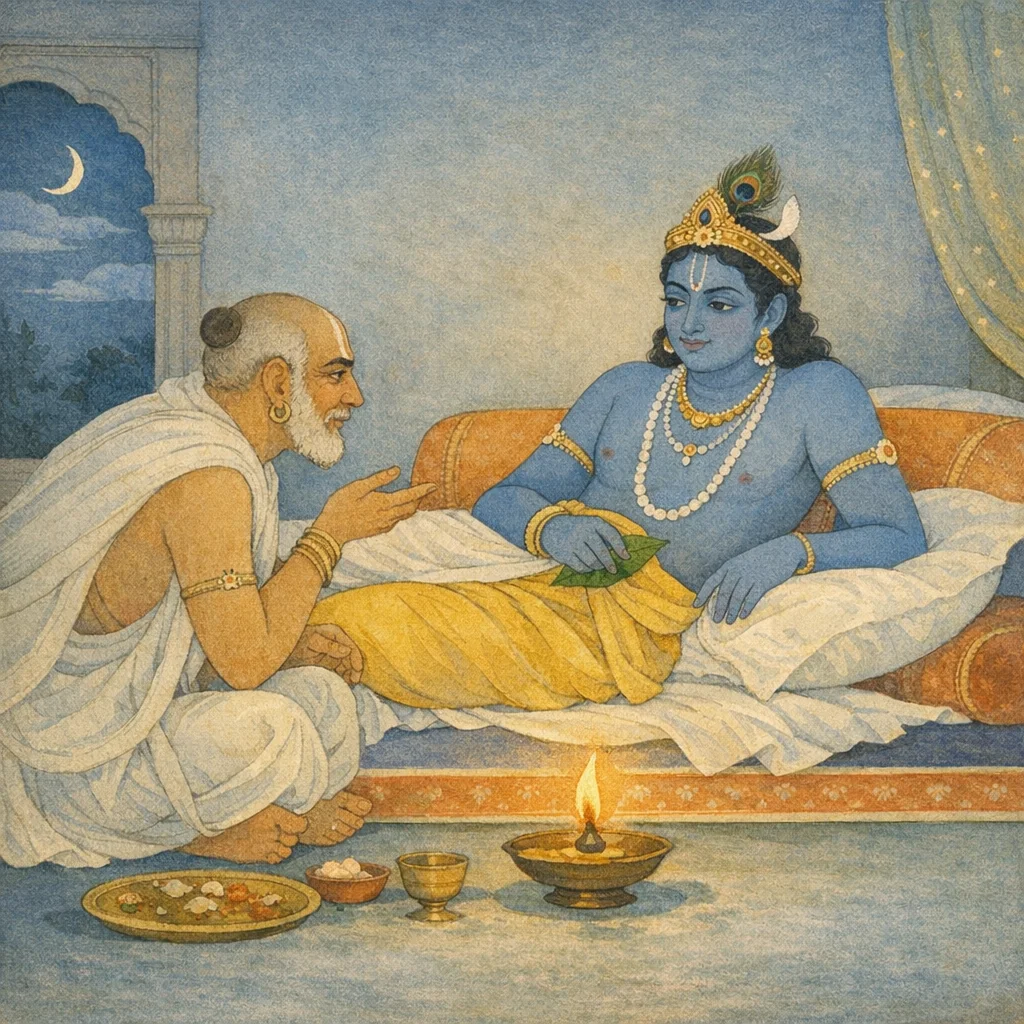
Adhyaya 91
कृष्णेन विदुरं प्रति आगमन-हेतु-निवेदनम् / Krishna explains the purpose of his coming to Vidura
Upa-parva: Vidurāgamana / Kṛṣṇa–Vidura Saṃvāda (Udyoga-parva sub-episode; Chapter 91 context)
This chapter presents a compact ethical-political monologue in which Kṛṣṇa, addressed in the text as “Bhagavān,” acknowledges Vidura’s discerning counsel and requests attentive hearing. He states that he knows the moral disorder (daurātmya) surrounding the Dhārtarāṣṭra party and the hostile alignment among kṣatriyas, yet he has come to the Kauravas with a pacific intent. Kṛṣṇa frames mediation as dharma: one who attempts, to the best of capacity, to perform a righteous task gains merit even if success is not achieved. He distinguishes between merely contemplating wrongdoing and actually performing it, asserting that moral consequence adheres to enacted choices rather than idle thought. He declares his aim to prevent the mutual destruction of Kurus and Sṛñjayas and identifies the crisis as arising from Duryodhana and Karṇa’s agency and influence. The chapter further defines the ethical profile of friendship: a true friend exerts effort—even forcibly if necessary—to restrain a companion from harmful conduct; failure to intervene in a kin-splitting conflict is censured. Kṛṣṇa anticipates possible suspicion from Duryodhana yet maintains that his duty is to speak beneficial, dharma-artha grounded words to Dhṛtarāṣṭra and his ministers for the welfare of all stakeholders. The narration closes with Vaiśaṃpāyana describing Kṛṣṇa resting after speaking.
Chapter Arc: रात्रि-विश्राम के समय, भोजन के बाद, श्रीकृष्ण के समीप विदुर का आना—और उनके मन में उठती आशंका कि यह दूत-यात्रा धर्म की रक्षा है या विनाश की ओर एक कदम। → विदुर श्रीकृष्ण को दुर्योधन की मानसिकता का कठोर चित्र दिखाते हैं—मोह, लोभ और अधर्म की जड़ें; वह सज्जन को भी दुष्ट समझने की भ्रान्ति में है, पराये धन की लालसा में जलता है, और शान्ति-प्रयास को कमजोरी मानता है। विदुर बताते हैं कि दुर्योधन भीष्म, द्रोण, कृप, कर्ण, अश्वत्थामा, जयद्रथ जैसे महारथियों के सहारे उन्मत्त है और पाण्डवों को तुच्छ समझकर युद्ध को ही नीति मान बैठा है। → विदुर का निर्णायक प्रतिरोध: ‘जहाँ बहुसंख्यक दुष्ट-चित्त शत्रु बैठे हों, वहाँ आप कैसे जाएंगे?’—यह प्रश्न श्रीकृष्ण की दूत-यात्रा को सीधे संकट के केंद्र में रख देता है, मानो धर्म स्वयं अग्नि-परीक्षा मांग रहा हो। → अध्याय का निष्कर्ष इस चेतावनी में है कि धृतराष्ट्र-पुत्रों ने शान्ति के प्रति मन बंद कर लिया है; श्रीकृष्ण का जाना केवल समझौते का प्रयास नहीं, बल्कि अधर्म के सामने धर्म की अंतिम वाणी बनकर खड़ा होना है। → अगले प्रसंग की देहरी पर भाव-उछाल: श्रीकृष्ण के दर्शन से उमड़ता प्रेम और उनकी अन्तर्यामी सत्ता का स्मरण—अब प्रश्न यह है कि यह दिव्य दूत-यात्रा दुर्योधन के हृदय को बदलेगी या युद्ध को अपरिहार्य कर देगी।
Shlokas
Verse 1
[दाक्षिणात्य अधिक पाठका १ श्लोक मिलाकर कुल ४२ “लोक हैं।] ३. जो दुष्ट नहीं है, उसे भी दुष्ट समझना मोह है। २. दूसरेके धनको हर लेनेकी इच्छाका नाम लोभ है। द्विनवतितमो< ध्याय: विदुरजीका धृतराष्ट्रपुत्रोंकी दुर्भावना बताकर श्रीकृष्णको उनके कौरवसभामें जानेका अनौचित्य बतलाना वैशम्पायन उवाच त॑ भुक्तवन्तमाश्वस्तं निशायां विदुरोड5ब्रवीत् । नेदं सम्यग् व्यवसितं केशवागमनं तव
Vaiśampāyana said: That night, when he had eaten and become reassured, Vidura spoke to him: “This resolve of yours—to have Keśava come—is not rightly determined.”
Verse 2
वैशम्पायनजी कहते हैं--जनमेजय! रातमें जब भगवान् श्रीकृष्ण भोजन करके विश्राम कर रहे थे, उस समय विदुरजीने उनसे कहा--“केशव! आपने जो यहाँ आनेका विचार किया, यह मेरी समझमें अच्छा नहीं हुआ ।। अर्थधर्मातिगो मन्द: संरम्भी च जनार्दन । मानघ्नो मानकामश्न वृद्धानां शासनातिग:,“जनार्दन! मन्दमति दुर्योधन धर्म और अर्थ दोनोंका उल्लंघन कर चुका है। वह क्रोधी, दूसरोंके सम्मानको नष्ट करनेवाला और स्वयं सम्मान चाहनेवाला है। उसने बड़े-बूढ़े गुरुजनोंके आदेशको भी ठुकरा दिया है
Vaiśampāyana said: “Janamejaya, at night, when the Blessed Śrī Kṛṣṇa had finished his meal and was resting, Vidura spoke to him: ‘Keśava, your decision to come here does not seem wise to me. ‘Janārdana, Duryodhana is dull-witted and has overstepped both dharma and artha. He is hot-tempered, a destroyer of others’ honor while craving honor for himself, and he has even transgressed the commands of elders and teachers.’”
Verse 3
धर्मशास्त्रातिगो मूढो दुरात्मा प्रग्रह॑ गत: । अनेय: श्रेयसां मन्दो धार्तराष्ट्रो जनार्दन,'प्रभो! मूढ़ धृतराष्ट्रपुत्र दुर्योधन धर्मशास्त्रोंकी भी आज्ञा नहीं मानता; सदा अपना ही हठ रखता है। उस दुरात्माको सन्मार्गपर ले आना असम्भव है
Vaiśaṃpāyana said: “O Janārdana, the Dhārtarāṣṭra (Duryodhana) is deluded and wicked. He has overstepped the bounds of the dharma-śāstras and fallen under the grip of stubborn self-will. Slow to choose what is truly beneficial, he cannot be led onto the path of welfare.”
Verse 4
कामात्मा प्राज्ञमानी च मित्रध्रुक् सर्वशड्कितः । अकर्ता चाकृतज्ञश्न त्यक्तधर्मा प्रियानृत:,“उसका मन भोगोंमें आसक्त है, वह अपनेको पण्डित मानता, मित्रोंके साथ द्रोह करता और सबको संदेहकी दृष्टिसे देखता है। वह स्वयं तो किसीका उपकार करता ही नहीं, दूसरोंके किये हुए उपकारको भी नहीं मानता। वह धर्मको त्यागकर असत्यसे ही प्रेम करने लगा है
Vaiśaṃpāyana said: “He is ruled by craving and pleasure, yet fancies himself wise. He betrays friends and looks upon everyone with suspicion. He does no good for others and does not acknowledge the good done to him. Having abandoned dharma, he has grown fond of falsehood.”
Verse 5
मूठढश्वाकृतबुद्धिश्व इन्द्रियाणामनी श्वर: । कामानुसारी कृत्येषु सर्वेष्वकृतनिश्चय:,“उसमें विवेकका सर्वथा अभाव है, उसकी बुद्धि किसी एक निश्चयपर नहीं रहती तथा वह अपनी इन्द्रियोंको काबूमें रखनेमें असमर्थ है। वह अपनी इच्छाओंका अनुसरण करनेवाला तथा सभी कार्योंमें अनिश्चित विचार रखनेवाला है
Vaiśaṃpāyana said: “He is deluded and lacks true discernment; he has no mastery over his senses. Driven by desire, he follows his cravings, and in every undertaking he remains without firm resolve.”
Verse 6
एतैश्वान्यैश्व बहुभिदोषैरेव समन्वित: । त्वयोच्यमान: श्रेयोडपि संरम्भान्न ग्रहीष्यति,'ये तथा और भी बहुत-से दोष उसमें भरे हुए हैं। आप उसे हितकी बात बतायेंगे, तो भी वह क्रोधवश उसे स्वीकार नहीं करेगा
“Endowed with these and many other faults besides, he will not accept even what is truly beneficial, though you speak it to him—because, in the heat of anger and impetuous passion, he refuses good counsel.”
Verse 7
भीष्मे द्रोणे कृपे कर्णे द्रोणपुत्रे जयद्रथे । भूयसी वर्तते वृत्ति न शमे कुरुते मन:,“वह भीष्म, द्रोणाचार्य, कृपाचार्य, कर्ण, अश्वत्थामा तथा जयद्रथयर अधिक भरोसा रखता है, अतः उसके मनमें संधि करनेका विचार ही नहीं होता है
Vaiśaṃpāyana said: “His confidence and reliance rest predominantly on Bhīṣma, Droṇa, Kṛpa, Karṇa, Droṇa’s son (Aśvatthāmā), and Jayadratha; therefore his mind does not turn toward peace, nor does he form any resolve for reconciliation.”
Verse 8
निश्चितं धार्तराष्ट्राणां सकर्णानां जनार्दन । भीष्मद्रोणमुखान् पार्था न शक्ता: प्रतिवीक्षितुम्,“'जनार्दन! धृतराष्ट्रके सभी पुत्रों तथा कर्णकी यह निश्चित धारणा है कि कुन्तीके पुत्र भीष्म एवं द्रोणाचार्य आदि वीरोंकी ओर देखनेमें भी समर्थ नहीं हैं
“O Janārdana, this is the settled conviction of all Dhṛtarāṣṭra’s sons, with Karṇa among them: that Kuntī’s sons (the Pāṇḍavas) are not able even to look upon warriors such as Bhīṣma and Droṇa.”
Verse 9
सेनासमुदयं कृत्वा पार्थिवं मधुसूदन । कृतार्थ मन््यते बाल आत्मानमविचक्षण:
Vaiśaṃpāyana said: “O Madhusūdana, having mustered a royal host of armies, a childish and undiscerning man imagines himself to have achieved his purpose.”
Verse 10
“मधुसूदन! मूर्ख एवं बुद्धिहीन दुर्योधन राजाओंकी सेना एकत्र करके अपने-आपको कृतकृत्य मानता है ।। एक: कर्ण: पराज्जेतुं समर्थ इति निश्चितम् । धार्रराष्ट्रस्य दुर्बुद्धेः स शमं नोपयास्यति,“दुर्बुद्धि दुर्योधनको तो इस बातका भी दृढ़ विश्वास है कि अकेला कर्ण ही शत्रुओंको जीतनेमें समर्थ है; इसलिये वह कदापि संधि नहीं करेगा
Vaiśampāyana said: “O Madhusūdana, the foolish and witless Duryodhana, having gathered the armies of kings, imagines himself already successful. He is firmly convinced that Karṇa alone is sufficient to defeat the foes; therefore that ill‑counselled son of Dhṛtarāṣṭra will not come to peace.”
Verse 11
संविच्च धार्तराष्ट्राणां सर्वेषामेव केशव । शमे प्रयतमानस्य तव सौ श्रात्रकाड्क्षिण:,“केशव! धृतराष्ट्रके सभी पुत्रोंने यह पक्का विचार कर लिया है कि हमें पाण्डवोंको उनका यथोचित राज्यभाग नहीं देना चाहिये। यही उनका दृढ़ निश्चय है। इधर आप संधिके लिये प्रयत्न करते हुए उनमें उत्तम भ्रातृभाव जगाना चाहते हैं; परंतु उन दुष्टोंके प्रति आप जो कुछ भी कहेंगे, वह सब व्यर्थ ही होगा
Vaiśaṃpāyana said: “Keśava, all the sons of Dhṛtarāṣṭra have already settled their resolve: they will not grant the Pāṇḍavas their rightful share of the kingdom. You strive for peace and seek to awaken true brotherly feeling among them, yet whatever you say to those wicked men will prove futile.”
Verse 12
न पाण्डवानामस्माभि: प्रतिदेयं यथोचितम् । इति व्यवसितास्तेषु वचन स्यान्निरर्थकम्,“केशव! धृतराष्ट्रके सभी पुत्रोंने यह पक्का विचार कर लिया है कि हमें पाण्डवोंको उनका यथोचित राज्यभाग नहीं देना चाहिये। यही उनका दृढ़ निश्चय है। इधर आप संधिके लिये प्रयत्न करते हुए उनमें उत्तम भ्रातृभाव जगाना चाहते हैं; परंतु उन दुष्टोंके प्रति आप जो कुछ भी कहेंगे, वह सब व्यर्थ ही होगा
Vaiśampāyana said: “The sons of Dhṛtarāṣṭra have firmly resolved, ‘We shall not give the Pāṇḍavas what is rightfully due to them.’ Since they are set in this decision, any words spoken to them—even with the aim of reconciliation and awakening brotherly feeling—will prove futile.”
Verse 13
यत्र सूक्त दुरुक्ते च सम॑ स्यान्मधुसूदन । न तत्र प्रलपेत् प्राज्ञो बधिरेष्विव गायन:,“मधुसूदन! जहाँ अच्छी और बुरी बातोंका एक-सा ही परिणाम हो, वहाँ विद्वान् पुरुषको कुछ नहीं कहना चाहिये। वहाँ कोई बात कहना बहरोंके आगे राग अलापनेके समान व्यर्थ ही है
“O Madhusūdana, where well-spoken counsel and ill-spoken words bring the same outcome, a wise person should not waste speech. To speak there is futile—like singing a melody before the deaf.”
Verse 14
अविजानत्सु मूढेषु निर्मयदिषु माधव । नत्वं वाक्यं ब्रुवन् युक्तश्नाण्डालेषु द्विजो यथा,“माधव! जैसे चाण्डालोंके बीचमें किसी विद्वान् ब्राह्यणका उपदेश देना उचित नहीं है, उसी प्रकार उन मर्यादारहित मूर्ख और अज्ञानियोंके समीप आपका कुछ भी कहना मुझे ठीक नहीं जान पड़ता
“O Mādhava, among the ignorant fools who lack all restraint, it is not fitting for you to speak. Just as a learned brāhmaṇa should not offer instruction in the midst of caṇḍālas, so too your words there would be out of place.”
Verse 15
सो<यं बलस्थो मूढश्न॒ न करिष्यति ते वच: । तस्मिन् निरर्थकं वाक्यमुक्तं सम्पत्स्यते तव,'मूढ़ दुर्योधन सैन्यसंग्रह करके अपनेको शक्तिशाली समझता है। वह आपकी बात नहीं मानेगा। उसके प्रति कहा हुआ आपका प्रत्येक वाक्य निरर्थक होगा
“That fool, relying on strength and gathering an army, thinks himself mighty; he will not heed your words. Therefore every word you speak to him will prove fruitless.”
Verse 16
तेषां समुपविष्टानां सर्वेषां पापचेतसाम् । तव मध्यावतरणं मम कृष्ण न रोचते,“श्रीकृष्ण! वे सभी पापपूर्ण विचार लेकर बैठे हुए हैं; अत: उनके बीचमें आपका जाना मुझे अच्छा नहीं लगता है। वे सब-के-सब दुर्बुद्धि, अशिष्ट और दुष्टचित्त हैं। उनकी संख्या भी बहुत है। श्रीकृष्ण! आप उनके बीचमें जाकर कोई प्रतिकूल बात कहें, यह मुझे ठीक नहीं जान पड़ता
Vaiśaṃpāyana said: “Kṛṣṇa, when all those men of sinful intent are seated together, your going down into their midst does not please me. I do not approve of your entering among them and speaking anything that might provoke a hostile response.”
Verse 17
दुर्बुद्धीनामशिष्टानां बहूनां दुष्टचेतसाम् । प्रतीपं वचनं मध्ये तव कृष्ण न रोचते,“श्रीकृष्ण! वे सभी पापपूर्ण विचार लेकर बैठे हुए हैं; अत: उनके बीचमें आपका जाना मुझे अच्छा नहीं लगता है। वे सब-के-सब दुर्बुद्धि, अशिष्ट और दुष्टचित्त हैं। उनकी संख्या भी बहुत है। श्रीकृष्ण! आप उनके बीचमें जाकर कोई प्रतिकूल बात कहें, यह मुझे ठीक नहीं जान पड़ता
Vaiśampāyana said: “O Kṛṣṇa, I do not approve of your going among them. They are many in number—ill-judging, uncultured, and of wicked intent. In the midst of such people, for you to speak words that may be taken as adverse or confrontational does not seem fitting to me.”
Verse 18
अनुपासिततवृद्ध त्वाच्छियो दर्पाच्च मोहित: । वयोदर्पादमर्षाच्च न ते श्रेयो ग्रहीष्यति,“दुर्योधनने कभी वृद्ध पुरुषोंका सेवन नहीं किया है। वह राजलक्ष्मीके घमण्डसे मोहित है। इसके सिवा उसे अपनी युवावस्थापर भी गर्व है और वह पाण्डवोंके प्रति सदा अमर्षमें भरा रहता है। अत: आपकी हितकर बात भी वह नहीं मानेगा
Vaiśampāyana said: “Duryodhana has never served or heeded the elders; he is deluded by the arrogance born of royal fortune. Moreover, intoxicated with the pride of youth and inflamed with resentment toward the Pāṇḍavas, he will not accept even the wholesome counsel you offer for his own good.”
Verse 19
बल॑ बलवदप्यस्य यदि वक्ष्यसि माधव । त्वय्यस्य महती शड्का न करिष्यति ते वच:,“माधव! दुर्योधनके पास प्रबल सैन्यबल है। इसके सिवा आपपर उसे महान संदेह है। अतः आप यदि उससे अच्छी बात कहेंगे, तो भी वह आपकी बात नहीं मानेगा
Vaiśampāyana said: “Mādhava, Duryodhana’s military strength is formidable. Beyond that, he harbors deep suspicion toward you. Therefore, even if you speak to him with wise and beneficial counsel, he will not accept your words.”
Verse 20
नेदमद्य युधा शक््यमिन्द्रेणापि सहामरै: । इति व्यवसिता: सर्वे धार्तराष्ट्रा जनार्दन
Vaiśampāyana said: “O Janārdana, all the sons of Dhṛtarāṣṭra have resolved thus: ‘Today, this cannot be accomplished by battle—not even by Indra himself, even with the gods at his side.’”
Verse 21
“'जनार्दन! धृतराष्ट्रके सभी पुत्रोंको यह दृढ़ विश्वास है कि देवताओंसहित इन्द्र भी इस समय युद्धके द्वारा हमारी इस सेनाको परास्त नहीं कर सकते ।। तेष्वेवमुपपन्नेषु कामक्रोधानुवर्तिषु । समर्थमपि ते वाक्यमसमर्थ भविष्यति,“जो इस प्रकार निश्चय किये बैठे हैं और काम-क्रोधके ही पीछे चलनेवाले हैं, उनके प्रति आपका युक्तियुक्त एवं सार्थक वचन भी निरर्थक एवं असफल हो जायगा
Vaiśampāyana said: “O Janārdana, all the sons of Dhṛtarāṣṭra are firmly convinced of this: that even Indra, together with the gods, cannot at this time defeat our army by war. When people have settled into such a certainty and are driven only by desire and anger, even your well-reasoned and effective words will become ineffective—failing to bear fruit.”
Verse 22
मध्ये तिष्ठन् हस्त्यनीकस्य मन्दो रथाश्वयुक्तस्य बलस्य मूढ: । दुर्योधनो मनन््यते वीतभीति: कृत्स्ना मयेयं पृथिवी जितेति,'रथियों और घुड़सवारोंसे युक्त हाथियोंकी सेनाके बीचमें खड़ा होकर भयसे रहित हुआ मन्दबुद्धि मूढ़ दुर्योधन यह समझता है कि यह सारी पृथ्वी मैंने जीत ली
Standing in the midst of the elephant-corps—an army furnished with charioteers and horsemen—the dull-witted, deluded Duryodhana, now free from fear, imagines: “This entire earth has been conquered by me.”
Verse 23
आशंसते वै धृतराष्ट्रस्य पुत्रो महाराज्यमसपत्नं॑ पृथिव्याम् | तस्मिज्छम: केवलो नोपलभ्यो बद्धं सन््तं मन्यते लब्धमर्थम्,धृतराष्ट्रका वह ज्येष्ठ पुत्र भूमण्डलका शत्रुरहित साम्राज्य पानेकी आशा रखता है। वह मन-ही-मन यह संकल्प भी करता है कि जूएमें प्राप्त हुआ यह धन एवं राज्य अब मेरे ही अधिकारमें आबद्ध रहे; अत: उसके प्रति केवल संधिका प्रयत्न सफल न होगा
Vaiśaṃpāyana said: Dhṛtarāṣṭra’s son (Duryodhana) longs for unrivalled imperial sovereignty upon the earth. In his case, mere conciliation cannot be obtained, for he regards the gains he has secured—bound to him as his own rightful possession—as already firmly held; therefore, simple peace-making efforts will not succeed.
Verse 24
पर्यस्तेयं पृथिवी कालपक्वा दुर्योधनार्थे पाण्डवान् योद्धुकामा: । समागता: सर्वयोधाः पृथिव्यां राजानश्ष क्षितिपालै: समेता:,“जान पड़ता है, अब यह पृथ्वी कालसे परिपक्व होकर नष्ट होनेवाली है; क्योंकि राजाओंके साथ भूमण्डलके समस्त क्षत्रिय योद्धा दुर्योधनके लिये पाण्डवोंके साथ युद्ध करनेकी इच्छासे यहाँ एकत्र हुए हैं
Vaiśampāyana said: It seems that this earth, ripened by Time, is now about to be overturned and destroyed; for, desiring to fight the Pāṇḍavas on Duryodhana’s behalf, all the warriors of the world—kings together with their allied rulers—have assembled here.
Verse 25
सर्वे चैते कृतवैरा: पुरस्तात् त्वया राजानो हृतसाराश्च कृष्ण । तवोद्देगात् संश्रिता धार्तराष्ट्रान् सुसंहता: सह कर्णेन वीरा:,“श्रीकृष्ण! ये सब-के-सब वे ही भूपाल हैं, जिन्होंने पहले आपके साथ वैर ठाना था और जिनका सार-सर्वस्व आपने हर लिया था। ये लोग आपके भयसे धृतराष्ट्रपुत्रोंकी शरणमें आये हैं तथा कर्णके साथ संगठित हो वीरता दिखानेको उद्यत हुए हैं
Vaiśaṃpāyana said: “O Kṛṣṇa, all these kings are the very ones who formerly became your enemies, and whose strength and substance you had already taken away. Now, frightened by you, they have sought refuge with the sons of Dhṛtarāṣṭra; and, firmly banded together with Karṇa, those warriors are preparing to display their valor.”
Verse 26
त्यक्तात्मान: सह दुर्योधनेन हृष्टा योद्धुं पाण्डवान् सर्वयोधा: । तेषां मध्ये प्रविशेथा यदि त्वं न तन्मतं मम दाशार्ह वीर,'ये सब योद्धा दुर्योधनके साथ मिल गये हैं और अपने प्राणोंका मोह छोड़कर हर्ष एवं उत्साहके साथ पाण्डवोंसे युद्ध करनेको तैयार हैं। दशार्हवंशी वीर! ऐसे विरोधियोंके बीचमें यदि आप जानेको उद्यत हैं तो यह मुझे ठीक नहीं जान पड़ता
Vaiśampāyana said: “All these warriors, having cast off concern for their own lives, have joined Duryodhana and, filled with exhilaration, stand ready to fight the Pāṇḍavas. Dāśārha hero, if you are intent on entering into the midst of such opponents, it does not seem right to me.”
Verse 27
तेषां समुपविष्टानां बहूनां दुष्टचेतसाम् । कथं मध्य प्रपद्येथा: शत्रूणां शत्रुकर्शन
Vaiśaṃpāyana said: “When many ill-intentioned men are seated together, how could you place yourself in their midst—among enemies—O subduer of foes?”
Verse 28
सर्वथा त्वं महाबाहो देवैरपि दुरुत्सह: । प्रभावं पौरुषं बुद्धि जानामि तव शत्रुहन्
Vaiśampāyana said: “In every way, O mighty-armed one, you are irresistible—even to the gods. O slayer of foes, I know well your power, your manly valor, and your discerning intelligence.”
Verse 29
या मे प्रीति: पाण्डवेषु भूय: सा त्वयि माधव । प्रेमणा च बहुमानाच्च सौहृदाच्च ब्रवीम्यहम्
Vaiśampāyana said: “The affection I have—indeed, in greater measure—for the Pāṇḍavas, that very same I bear toward you, O Mādhava. I speak this out of love, out of deep respect, and out of sincere friendship.”
Verse 30
'शत्रुसूदन! जहाँ दुष्टतापूर्ण विचार लिये बहुसंख्यक शत्रु बैठे हों, वहाँ उनके बीच आप कैसे जाना चाहते हैं? शत्रुहन्ता महाबाहु श्रीकृष्ण! यद्यपि सम्पूर्ण देवता भी सर्वधा आपके सामने टिक नहीं सकते हैं तथा आपका जो प्रभाव, पुरुषार्थ और बुद्धिबल है, उसे भी मैं जानता हूँ; तथापि माधव! पाण्डवोंपर जो मेरा प्रेम है, वही और उससे भी बढ़कर आपके प्रति है। अत: प्रेम, अधिक आदर और सौहार्दसे प्रेरित होकर मैं यह बात कह रहा हूँ ।। २७ --२९ || या मे प्रीति: पुष्कराक्ष त्वद्दर्शनसमुद्धवा । सा किमाख्यायते तुभ्यमन्तरात्मासि देहिनाम्
Vaiśampāyana said: “O Śatrusūdana, where many enemies sit together, their thoughts steeped in wickedness, how do you wish to go among them? O mighty-armed Śrī Kṛṣṇa, slayer of foes—though even all the gods cannot stand before you, and I know your might, your valor, and the strength of your intellect—still, O Mādhava, the love I bear for the Pāṇḍavas is the very same, and greater still, that I bear for you. Therefore, moved by love, by deeper reverence, and by friendship, I speak these words. O lotus-eyed one, the affection that rises in me upon seeing you—how could it be described to you? For you abide as the inner Self within all embodied beings.”
Verse 91
इस प्रकार श्रीमहाभारत उद्योगपर्वके अन्तर्गत भगवद्यानपर्वनें श्रीकृष्ण-दुर्योधन- संवादविषयक इक्यानबेवाँ अध्याय पूरा हुआ
Thus ends the ninety-first chapter of the Bhagavadyāna section within the Udyoga Parva of the Śrī Mahābhārata, dealing with the dialogue between Śrī Kṛṣṇa and Duryodhana. The narrator marks the close of this episode, underscoring the moral tension between counsel for peace and the obstinacy that drives the world toward war.
Verse 92
“कमलनयन! आपके दर्शनसे आपके प्रति मेरा जो प्रेम उमड़ आया है, उसका आपसे क्या वर्णन किया जाय? आप समस्त देहधारियोंके अन्तर्यामी आत्मा हैं (अत: स्वयं ही सब कुछ देखते और जानते हैं)' ।। इति श्रीमहा भारते उद्योगपर्वणि भगवद्यानपर्वणि श्रीकृष्णविदुरसंवादे द्विनवतितमो<ध्याय:
Vaiśampāyana said: “O lotus-eyed one! Since beholding you, a surge of love has risen in me toward you—how could I possibly describe it to you? For you are the inner Self (Antaryāmin) dwelling within all embodied beings; therefore you yourself already see and know everything.” Thus, in the Śrī Mahābhārata, within the Udyoga Parva’s Bhagavadyāna section, ends the ninety-second chapter on the dialogue between Śrī Kṛṣṇa and Vidura.
Frequently Asked Questions
The dilemma is whether one must intervene decisively to prevent collective harm when leaders persist in destructive policy—balancing truthful counsel and friendship-duty against the likelihood that advice may be rejected.
Righteous action includes sincere effort toward peace: dharma- and artha-consistent speech, attempted reconciliation, and corrective friendship are duties whose moral value persists even when outcomes are constrained by others’ choices.
No explicit phalaśruti is stated; however, the chapter contains a merit-logic claim: undertaking a dharmic task to the extent of one’s capacity accrues puṇya even if the objective (successful pacification) is not attained.