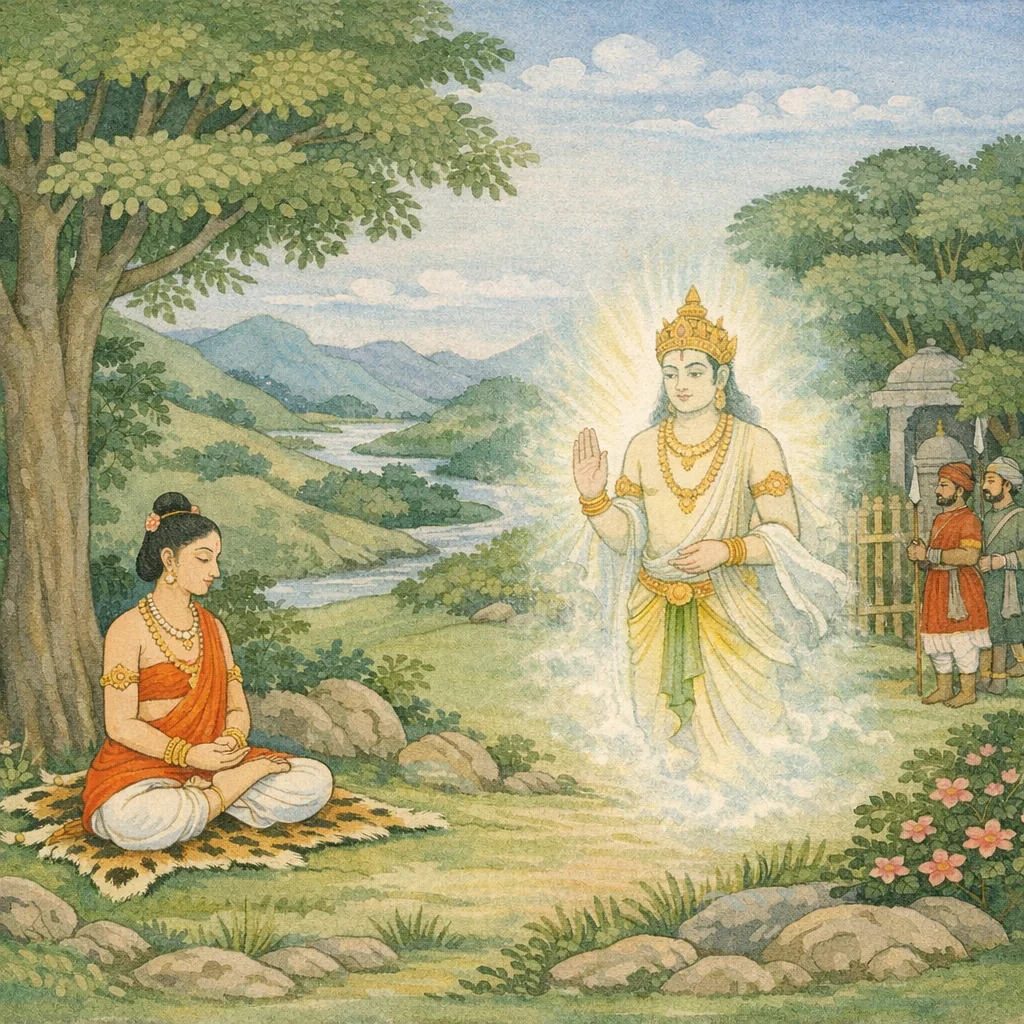
Adhyaya 190
Śikhaṇḍinī’s Marriage Arrangement and the Daśārṇa Envoy’s Accusation (शिखण्डिनी-विवाह-विप्रलम्भ-प्रसङ्गः)
Upa-parva: Śikhaṇḍinī–Vivāha–Vipralambha Episode (embedded narrative in Udyoga Parva)
Bhīṣma recounts Drupada’s efforts to cultivate Śikhaṇḍinī in education and martial skills, including training associated with Droṇa’s instruction. As Śikhaṇḍinī reaches youth, Drupada voices distress to his wife, noting prior concealment linked to a divine injunction (framed as a binding utterance). Drupada’s wife advises proceeding with a proper marriage arrangement, asserting confidence in the truth-bearing power of that prior word. The couple selects a bride from the Daśārṇa kingdom; King Hiraṇyavarmā gives his daughter in marriage to Śikhaṇḍinī. After the marriage, the Daśārṇa princess discovers Śikhaṇḍinī’s female embodiment and reports the matter, leading attendants and messengers to inform Hiraṇyavarmā. Interpreting the situation as deception and insult, Hiraṇyavarmā becomes angered and dispatches an envoy to Drupada. The envoy delivers a private but severe message: Drupada is accused of contempt and deliberate misrepresentation, and is threatened with punitive action against Drupada and his allies as recompense for the alleged vipralambha (fraud/duplicity).
Chapter Arc: द्रुपदपत्नी अपने भय और विवशता का रहस्य खोलती है—सौतों के भय से उसने कन्या को ‘पुत्र’ कहकर प्रस्तुत किया, और राजा ने भी प्रेमवश उसे स्वीकार कर लिया। → समय बीतने पर यह छल राज्य-धर्म और कुल-प्रतिष्ठा पर भारी पड़ता है; दशार्णराज से वैर और राजनीतिक दबाव के बीच द्रुपद दम्पति पर संकट घिरता है, और शिखण्डिनी की पहचान का प्रश्न आग बनकर उठता है। → शिखण्डिनी वन में जाकर कठोर उपवास करती है; यक्ष-रक्षित वन में उसका तप चरम पर पहुँचता है और यक्ष स्थूणाकर्ण स्वयं प्रकट होकर कारण पूछता है—यहीं भाग्य का द्वार खुलता है। → शिखण्डिनी यक्ष से करुण निवेदन करती है कि उसकी कृपा से वह ‘श्रेष्ठ पुरुष’ बन सके; यक्ष सहायता का आश्वासन देता है और उपाय की प्रतिज्ञा करता है। → यक्ष की प्रतिज्ञा के बाद शर्त उभरती है—जब तक राजा हिरण्यवर्मा नगर न लौटे, तब तक क्या परिवर्तन और क्या परिणाम होंगे?
Shlokas
Verse 1
ऑपनआक्रात बछ। अं क्ाज एकनवर्त्याधिकशततमो< ध्याय: ट्रुपदपत्नीका उत्तर, द्रुपदके द्वारा नगररक्षाकी व्यवस्था और देवाराधन तथा शिखण्डिनीका वनमें जाकर स्थूणाकर्ण नामक यक्षसे अपने दुःखनिवारणके लिये प्रार्थना करना भीष्म उवाच तत: शिखण्डिनो माता यथातत्त्वं नराधिप । आचचक्षे महाबाहो भरत्रें कन््यां शिखण्डिनीम्,भीष्मजी कहते हैं--महाबाहु नरेश्वर! तब शिखण्डीकी माताने अपने पतिसे यथार्थ रहस्य बताते हुए कहा--“यह पुत्र शिखण्डी नहीं, शिखण्डिनी नामवाली कन्या है
Bhishma said: “Then, O king, Shikhandi’s mother disclosed the matter exactly as it truly was. O mighty-armed ruler, she told her husband: ‘This is not a son named Shikhandi; she is a daughter named Shikhandinī.’”
Verse 2
अपुत्रया मया राजन् सपत्नीनां भयादिदम् | कन्या शिखण्डिनी जाता पुरुषो वै निवेदिता,“राजन! पुत्ररहित होनेके कारण मैंने अपनी सौतोंके भयसे इस कन्या शिखण्डिनीके जन्म लेनेपर भी इसे पुत्र ही बताया
Bhishma said: “O King, since I was without a son, and out of fear of my co-wives, when this girl Shikhandini was born I nevertheless presented her as a male child.”
Verse 3
त्वया चैव नरश्रेष्ठ तन्मे प्रीत्यानुमोदितम् । पुत्रकर्म कृतं चैव कन्याया: पार्थिवर्षभ,“नरश्रेष्ठ आपने भी प्रेमवश मेरे इस कथनका अनुमोदन किया और महाराज! कन्या होनेपर भी आपने इसका पुत्रोचित संस्कार किया
Bhishma said: “O best of men, you too, out of affection, approved what I had said. And O bull among kings, though she was a maiden, you performed for her the rites and duties that are ordinarily done for a son.”
Verse 4
भार्या चोढा त्वया राजन् दशार्णाधिपते: सुता । मया च प्रत्यभिह्ितं देववाक्यार्थदर्शनात् । कन्या भूत्वा पुमान् भावीत्येवं चैतदुपेक्षितम्,“राजन! मेरे ही कथनपर विश्वास करके आप दशार्णराजकी पुत्रीको इसकी पत्नी बनानेके लिये ब्याह लाये। महादेवजीके वरदानवाक्यपर दृष्टि रखनेके कारण मैंने इसके विषयमें पुत्र होनेकी घोषणा की थी। महादेवजीने कहा था कि पहले कन्या होगी, फिर वही पुत्र हो जायगा। इसीलिये इस वर्तमान संकटकी उपेक्षा की गयी”
Bhishma said: “O King, trusting my word, you brought as your wife the daughter of the lord of Daśārṇa. And I, keeping in view the true intent of the divine utterance, had declared that this child would be a son. For the Lord’s boon had stated: ‘She will be a maiden first, and then she will become a man.’ Therefore this present crisis was previously disregarded.”
Verse 5
एतच्छुत्वा द्रुपदो यज्ञसेन: सर्व तत्त्वं मन्त्रविद्धयो निवेद्य । मन्त्र राजा मन्त्रयामास राजन् यथायुक्तं रक्षणे वै प्रजानाम्,यह सुनकर यज्ञसेन द्रुपदने मन्त्रियोंको सब बातें ठीक-ठीक बता दीं। राजन! तत्पश्चात् प्रजाकी रक्षाके लिये जैसी व्यवस्था उचित है, उसके लिये उन्होंने पुनः मन्त्रियोंके साथ गुप्त मन्त्रणा की
Bhishma said: Hearing this, Drupada—also known as Yajñasena—reported the entire matter accurately to his knowledgeable ministers. Then, O king, with the protection of the people in view, he again held a confidential consultation with his council, arranging whatever measures were proper for safeguarding his subjects.
Verse 6
सम्बन्धकं चैव समर्थ्य तस्मिन् दाशार्णके वै नृपतौ नरेन्द्र । स्वयं कृत्वा विप्रलम्भं॑ यथाव- न्मन्त्रैकाग्रो निश्चयं वै जगाम,नरेन्द्र! यद्यपि राजा द्रुपदने स्वयं ही वंचना की थी, तथापि दशार्णराजके साथ सम्बन्ध और प्रेम बनाये रखनेकी इच्छा करके एकाग्रचित्तसे मन्त्रणा करते हुए वे एक निश्चयपर पहुँच गये
O king, having resolved to sustain and strengthen his relationship with that Daśārṇa ruler, he—though he himself had earlier practiced deception—deliberated with single-minded focus and arrived at a firm decision.
Verse 7
स्वभावगुप्तं॑ नगरमापत्काले तु भारत | गोपयामास राजेन्द्र सर्वत: समलंकृतम्,भरतनन्दन राजेन्द्र! यद्यपि वह नगर स्वभावसे ही सुरक्षित था, तथापि उस विपत्तिके समय उसको सब प्रकारसे सजा करके उन्होंने उसकी रक्षाके लिये विशेष व्यवस्था की
Bhīṣma said: “O Bhārata, though the city was by its very nature well-protected, in that time of calamity the king took special care to guard it, adorning and fortifying it on every side.”
Verse 8
आर्ति च परमां राजा जगाम सह भार्यया । दशार्णपतिना सार्ध विरोधे भरतर्षभ,भरतश्रेष्ठ! दशार्णराजके साथ विरोधकी भावना होनेपर रानीसहित राजा ट्रुपदको बड़ा कष्ट हुआ
Bhīṣma said: “O bull among the Bharatas, when hostility arose with the lord of Daśārṇa, King Drupada—together with his queen—fell into extreme distress.”
Verse 9
कथं सम्बन्धिना सार्ध न मे स्वाद विग्रहो महान् । इति संचिन्त्य मनसा देवतामर्चयत् तदा,अपने सम्बन्धीके साथ मेरा महान् युद्ध कैसे टल जाय--यह मन-ही-मन विचार करके उन्होंने देवताकी अर्चना आस्मभ कर दी
Bhīṣma said: “How can this great conflict of mine be averted with my own kinsmen?” Reflecting thus within his mind, he then began to worship the deity—seeking a way to restrain war through reverence and right counsel rather than through bloodshed among relatives.
Verse 10
तं॑ तु दृष्टवा तदा राजन् देवी देवपरं तदा । अर्चा प्रयुज्जानमथो भार्या वचनमब्रवीत्,राजन! राजा द्रुपदको देवाराधनमें तत्पर देख महारानीने पूजा चढ़ाते हुए नरेशसे इस प्रकार कहा--
O King, then the queen—devoted to the gods—seeing the monarch engaged in worship and offerings, spoke these words as his wife.
Verse 11
देवानां प्रतिपत्तिश्न सत्या साधुमता सदा । किमु दुःखार्णवं प्राप्प तस्मादर्चयतां गुरून्,“देवताओंकी आराधना साधु पुरुषोंके लिये सदा ही सत्य (उत्तम) है। फिर जो दु:ःखके समुद्रमें डूबा हुआ हो, उसके लिये तो कहना ही क्या है। अत: आप गुरुजनों और सम्पूर्ण देवताओंका पूजन करें, ब्राह्मणोंको पर्याप्त दक्षिणा दें और दशार्णराजके लौट जानेके लिये अग्नियोंमें होम करें
Bhīṣma said: “For the virtuous, reverent devotion to the gods is always a true and wholesome course. How much more so for one who has fallen into an ocean of sorrow! Therefore, honor your elders and teachers, and worship the gods.”
Verse 12
दैवतानि च सर्वाणि पूज्यन्तां भूरिदक्षिणम् अग्नयश्लापि हूयन्तां दाशार्णप्रतिषेधने,“देवताओंकी आराधना साधु पुरुषोंके लिये सदा ही सत्य (उत्तम) है। फिर जो दु:ःखके समुद्रमें डूबा हुआ हो, उसके लिये तो कहना ही क्या है। अत: आप गुरुजनों और सम्पूर्ण देवताओंका पूजन करें, ब्राह्मणोंको पर्याप्त दक्षिणा दें और दशार्णराजके लौट जानेके लिये अग्नियोंमें होम करें
Bhīṣma said: “Let all the gods be duly worshipped, with abundant gifts given as sacrificial fees. Let offerings also be poured into the sacred fires, so that the king of Daśārṇa may be turned back. For the virtuous, reverence toward the divine is always a true and elevating course; how much more so for one who is drowning in an ocean of sorrow. Therefore, honor your elders and teachers, worship the gods, give generously to the Brahmins, and perform fire-offerings to avert the Daśārṇa ruler’s advance.”
Verse 13
अयुद्धेन निवृत्ति च मनसा चिन्तय प्रभो । देवतानां प्रसादेन सर्वमेतद् भविष्यति,'प्रभो! मन-ही-मन यह चिन्तन कीजिये कि दशार्णराज बिना युद्ध किये ही लौट जाये। देवताओंके कृपाप्रसादसे यह सब कुछ सिद्ध हो जायगा
Bhīṣma said: “O lord, reflect inwardly that the king of Daśārṇa will turn back without any fighting. By the gracious favor of the gods, all of this will come to pass.”
Verse 14
मन्सत्रिभिमन्त्रितं सार्थ त्ववा पृुथुललोचन । पुरस्यास्याविनाशाय यच्च राजंस्तथा कुरु,“विशाललोचन नरेश! आपने इस नगरकी रक्षाके लिये मन्त्रियोंक साथ जैसा विचार किया है वैसा कीजिये
Bhīṣma said: “O wide-eyed king, the counsel you have taken with your ministers is sound and purposeful. Therefore, for the protection and preservation of this city, act exactly in accordance with that plan.”
Verse 15
दैवं हि मानुषोपेतं भृशं सिद्धयति पार्थिव | परस्परविरोधाद्धि सिद्धिरस्ति न चैतयो:,'भूपाल! पुरुषार्थसे संयुक्त होनेपर ही दैव विशेषरूपसे सिद्धिको प्राप्त होता है। दैव और पुरुषार्थमें परस्पर विरोध होनपर इन दोनोंकी ही सिद्धि नहीं होती
Bhishma said: “O king, destiny becomes truly and powerfully effective when it is accompanied by human effort. But when fate and personal endeavor oppose one another, neither attains success.”
Verse 16
तस्माद् विधाय नगरे विधानं सचिवै: सह । अर्चयस्व यथाकामं दैवतानि विशाम्पते,“राजन! अतः आप मन्त्रियोंके साथ नगरकी रक्षाके लिये आवश्यक व्यवस्था करके इच्छानुसार देवताओंकी अर्चना कीजिये”
Therefore, O lord of the people, after arranging—together with your ministers—the necessary measures in the city for its protection and orderly governance, worship the deities as you desire.
Verse 17
एवं संभाषमाणौ तु दृष्टया शोकपरायणौ । शिखण्डिनी तदा कन्या व्रीडितेव तपस्विनी,इन दोनोंको इस प्रकार शोकमग्न होकर बातचीत करते देख उनकी तपस्विनी पुत्री शिखण्डिनी लज्जित-सी होकर इस प्रकार चिन्ता करने लगी--'ये मेरे माता और पिता दोनों मेरे ही कारण दुःखी हो रहे हैं।। ऐसा सोचकर उसने प्राण त्याग देनेका विचार किया
Bhishma said: Seeing her parents conversing in this way, wholly given over to grief, their daughter Śikhaṇḍinī—an ascetic-minded maiden—felt as though overcome with shame. Reflecting that both her mother and father were suffering because of her, she turned inward in distress and conceived the thought of giving up her life.
Verse 18
ततः सा चिन्तयामास मत्कृते दुःखितावुभौ । इमाविति ततक्षक्रे मतिं प्राणविनाशने,इन दोनोंको इस प्रकार शोकमग्न होकर बातचीत करते देख उनकी तपस्विनी पुत्री शिखण्डिनी लज्जित-सी होकर इस प्रकार चिन्ता करने लगी--'ये मेरे माता और पिता दोनों मेरे ही कारण दुःखी हो रहे हैं।। ऐसा सोचकर उसने प्राण त्याग देनेका विचार किया
Then she reflected: ‘Because of me, both of these—my mother and my father—are suffering.’ Seeing them thus sunk in grief, she formed the resolve to end her own life.
Verse 19
एवं सा निश्चयं कृत्वा भूशं शोकपरायणा । निर्जगाम गृहं त्यक्त्वा गहनं निर्जनं वनम्,इस प्रकार जीवनका अन्त कर देनेका निश्चय करके वह अत्यन्त शोकमग्न हो घर छोड़कर निर्जन एवं गहन वनमें चली गयी
Having thus formed a firm resolve to end her life, she—overwhelmed by intense grief—abandoned her home and went forth into a deep, deserted forest.
Verse 20
यक्षेणर्द्धिमता राजन् स्थूणाकर्णेन पालितम् । तद्धभयादेव च जनो विसर्जयति तद् वनम्,राजन्! वह वन समृद्धिशाली यक्ष स्थूणाकर्णके द्वारा सुरक्षित था। इसीके भयसे साधारण लोगोंने उस वनमें आना-जाना छोड़ दिया था
O King, that forest was guarded by the prosperous and powerful Yakṣa named Sthūṇākarṇa. Out of fear of him alone, ordinary people abandoned that forest and ceased to go there.
Verse 21
तत्र च स्थूणभवन सुधामृत्तिकलेपनम् । लाजोल्लापिकधूमाद्यमुच्चप्राकारतोरणम्,उसके भीतर स्थूणाकर्णका विशाल भवन था, जो चूना और मिट्टीसे लीपा गया था। उसके परकोटे और फाटक बहुत ऊँचे थे। उसमें खसकी जड़के धूमकी सुगन्ध फैली हुई थी
There, within it, stood a great pillared mansion, plastered with lime and clay. Its ramparts and gateways rose very high, and the place was pervaded by the fragrant smoke of aromatic substances—suggesting careful preparation, prosperity, and a deliberate display of royal order and security.
Verse 22
तत् प्रविश्य शिखण्डी सा द्रुपदस्यात्मजा नृप । अनश्षाना बहुतिथं शरीरमुदशोषयत्
Bhīṣma said: “O king, having entered there, Śikhaṇḍī—Drupada’s child—remained without food for many days and caused her body to waste away. Thus, through severe self-denial, she pursued her resolve, showing how a fixed intention can drive one to harsh austerity, even at great personal cost.”
Verse 23
उस भवनमें प्रवेश करके द्रुपदपुत्री शिखण्डिनी बहुत दिनोंतक उपवास करके शरीरको सुखाती रही ।। दर्शयामास तां यक्ष: स्थूणो मार्दवर्संयुत: । किमर्थोडयं तवारम्भ: करिष्ये ब्रूहि मा चिरम्,स्थूणाकर्ण यक्षने उसे इस अवस्थामें देखा। देखकर उसके हृदयमें कोमल भावका उदय हुआ। फिर उसने पूछा--“भद्रे! तुम्हारा यह उपवास व्रत किसलिये है? अपना प्रयोजन शीघ्र बताओ। मैं उसे पूर्ण करूँगा”
Entering that dwelling, Śikhaṇḍinī, the daughter of Drupada, undertook a long fast and grew emaciated. The Yakṣa named Sthūṇa, moved by tenderness on seeing her condition, addressed her: “Noble lady, for what purpose have you begun this vow of fasting? Tell me without delay—I will accomplish your aim.”
Verse 24
अशक्यमिति सा यक्षं पुनः: पुनरुवाच ह । करिष्यामीति वै क्षिप्रं प्रत्युवाचाथ गुह्मुक:,यह सुनकर उसने यक्षसे बार-बार कहा--“यह तुम्हारे लिये असम्भव है।' तब यक्षने बार-बार उत्तर दिया--'मैं तुम्हारा मनोरथ अवश्य पूर्ण कर दूँगा
Bhishma said: She repeatedly told the Yaksha, “This is impossible for you.” But the Yaksha promptly replied again and again, “I will surely accomplish your wish.”
Verse 25
धनेश्वरस्यानुचरो वरदो5स्मि नृपात्मजे । अदेयमपि दास्यामि ब्रूहि यत् ते विवक्षितम्,“राजकुमारी! मैं कुबेरका सेवक हूँ। मुझमें वर देनेकी शक्ति है, तुम्हारी जो भी इच्छा हो बताओ । मैं तुम्हें अदेय वस्तु भी दे दूँगा"
Bhīṣma said: “O princess, I am an attendant of Kubera, the Lord of Wealth, and I possess the power to grant boons. Speak what you truly wish; I will give you even that which is ordinarily not to be given.”
Verse 26
तत:ः शिखण्डी तत् सर्वमखिलेन न्यवेदयत् | तस्मै यक्षप्रधानाय स्थूणाकर्णाय भारत,भरतनन्दन! तब शिखण्डिनीने उस यक्षप्रवर स्थूणाकर्णसे अपना सारा वृत्तान्त विस्तारपूर्वक बताया
Bhīṣma said: Then Śikhaṇḍī related the entire matter in full detail to that foremost of Yakṣas, Sthūṇākarṇa—O Bhārata, O joy of the Bharata race.
Verse 27
शिखण्डिन्युवाच अपुत्रो मे पिता यक्ष न चिरान्नाशमेष्यति । अभियास्यति सक्रोधो दशार्णाधिपतिर्हि तम्,शिखण्डिनी बोली--यक्ष! मेरे पुत्रहीन पिता अब शीघ्र ही नष्ट हो जायाँगे; क्योंकि दशार्णराज कुपित होकर उनपर आक्रमण करेंगे
Śikhaṇḍinī said: “O Yakṣa, my father is without a son and will soon meet destruction; for the lord of Daśārṇa, inflamed with anger, will indeed march against him.”
Verse 28
महाबलो महोत्साह: सहेमकवचो नृप: । तस्माद् रक्षस्व मां यक्ष मातरं पितरं च मे,वे सुवर्णमय कवचसे युक्त नरेश महाबली और महान् उत्साही हैं--यक्ष! तुम मेरे माता- पिताकी और मेरी भी उनसे रक्षा करो
Bhīṣma said: “That king is of great strength and great resolve, clad in golden armor. Therefore, O Yakṣa, protect me—and also protect my mother and my father.”
Verse 29
प्रतिज्ञातो हि भवता दुःखप्रतिशमो मम । भवेयं पुरुषो यक्ष त्वत्प्रसादादनिन्दित:
Bhīṣma said: “For you have indeed promised me the cessation of my suffering. O Yakṣa, by your gracious favor may I become a man again—blameless and untainted.”
Verse 30
यावदेव स राजा वै नोपयाति पुरं मम । तावदेव महायक्ष प्रसादं कुरु गुह्क
Bhīṣma said: “So long as that king has not come to my city, O great Yakṣa, grant your favor—O Guhaka.”
Verse 190
इस प्रकार श्रीमह्याभारत उद्योगपर्वके अन्तर्गत अम्बोपाख्यानपर्वमें दुपदप्रश्रविषयक एक सौ नब्बेवाँ अध्याय पूरा हुआ
Thus ends the one hundred and ninetieth chapter of the Udyoga Parva of the Śrī Mahābhārata, within the Ambopākhyāna section, concerning Dupada and Praśrava.
Verse 191
गुह्मक! महायक्ष! तुमने मेरे दुःखनिवारणके लिये प्रतिज्ञा की है। मैं चाहती हूँ कि तुम्हारी कृपासे एक श्रेष्ठ पुरुष हो जाऊँ। जबतक राजा हिरण्यवर्मा हमारे नगरपर आक्रमण नहीं कर रहे हैं, तभीतक मुझपर कृपा करो ।। इति श्रीमहाभारते उद्योगपर्वणि अम्बोपाख्यानपर्वणि स्थूणाकर्णसमागमे एकनवत्यधिकशततमो< ध्याय:,इस प्रकार श्रीमह्याभारत उद्योगपर्वके अन्तर्गत अग्बोपाख्यानपर्वनें स्थूणाकर्णके साथ शिखण्डिनीका भेंटविषयक एक सौ इक्यानबेवाँ अध्याय पूरा हुआ
Bhīṣma said: “O Guhyaka, O great Yakṣa! You have vowed to remove my suffering. I ask that, by your grace, I may become a noble and excellent man. Show me your favor now—so long as King Hiranyavarma has not yet attacked our city.”
Frequently Asked Questions
The chapter stages a conflict between political expediency and disclosure ethics: whether a royal household may proceed with an alliance while concealing identity-relevant facts, and how such concealment is judged when it affects another kingdom’s honor and contractual expectations.
Political arrangements built on incomplete transparency create downstream instability; once private matters become public through court networks, grievance quickly converts into formal diplomacy, where reputation and perceived insult can outweigh conciliatory intent.
No explicit phalaśruti appears in the provided verses; the chapter’s function is primarily narrative-analytical, embedding a cautionary case within Bhīṣma’s wider discourse on conduct, consequence, and the management of inter-kingdom relations.