Adhyaya 124
भीष्मद्रोणयोर्दुर्योधनं प्रति शान्त्युपदेशः | Bhīṣma and Droṇa’s Counsel to Duryodhana for Pacification
Upa-parva: Sanatsujātīya Parva (Contextual Counsel within Udyoga Parva)
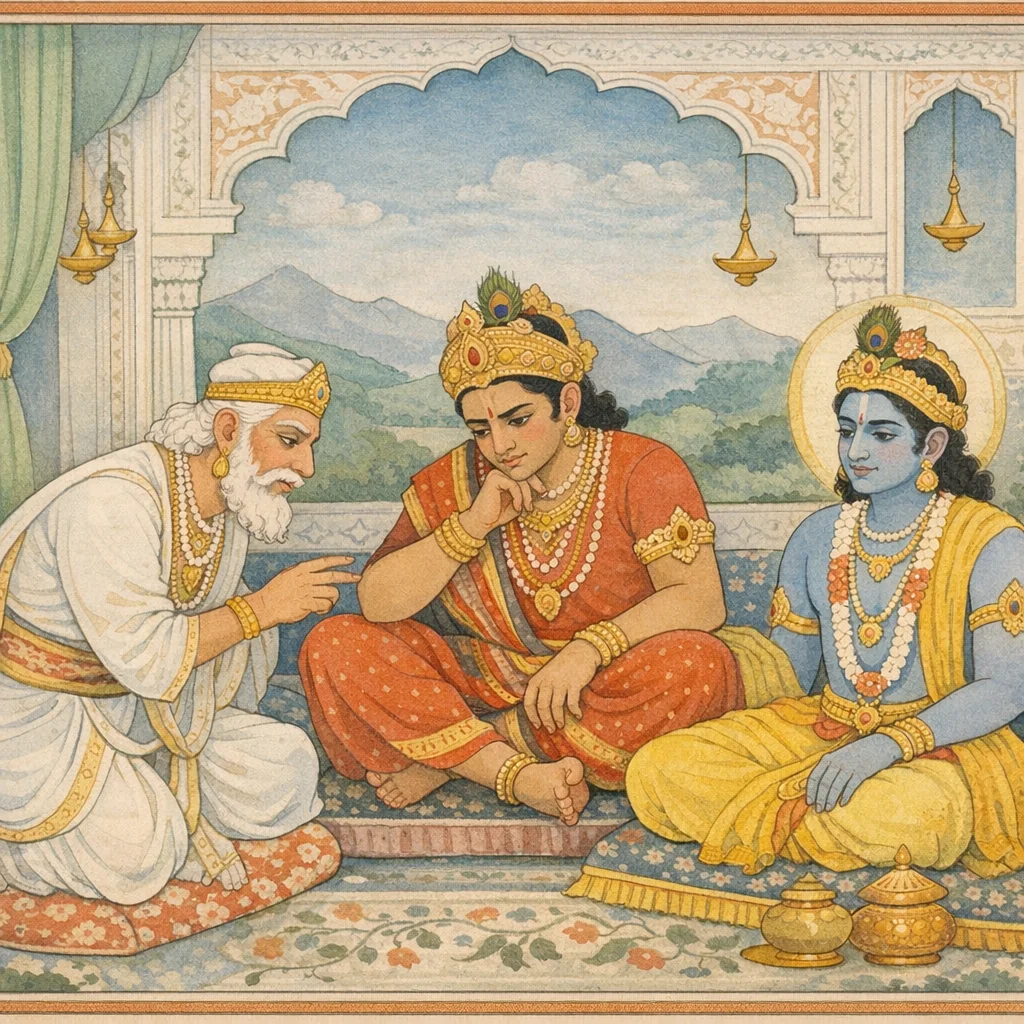
Vaiśaṃpāyana narrates that, after hearing Dhṛtarāṣṭra’s words, Bhīṣma and Droṇa jointly address Duryodhana with counsel that is characterized as exceeding ordinary command in urgency. They warn that violence should be calmed before the Pāṇḍava side fully manifests its martial readiness: Kṛṣṇa’s resolve, Arjuna’s Gāṇḍīva, and Dhaumya’s ritual actions supporting the army. They evoke the imminent visibility of Yudhiṣṭhira’s wrath and the deployment of Arjuna and Bhīma, describing Bhīma’s destructive capacity through vivid similes (fruit shaken from trees by a lethal mace) and the broader coalition of Pāṇḍava allies entering battle like aquatic predators into the ocean. The counsel then pivots from deterrence to a reconciliation script: Duryodhana is urged to accept respectful greetings, physical gestures of peace, and fraternal reunion—Yudhiṣṭhira receiving him, Arjuna and the twins offering homage, and Bhīma addressing him with conciliatory speech—culminating in the vision of kingdoms rejoicing and the earth being enjoyed in brotherhood without affliction. The chapter’s thematic lesson is that prudent kingship requires timely restraint, recognition of consequences, and restoration of kinship bonds through dignified settlement.
Chapter Arc: कृष्ण के शान्ति-वचन के बाद सभा में भीष्म का स्वर उठता है—धृतराष्ट्र-पुत्र को अंतिम बार समझाने के लिए कि अभी भी विनाश टल सकता है। → भीष्म दुर्योधन को ‘तात’ कहकर स्नेह और अधिकार दोनों से बाँधते हैं: केशव की बात न मानने पर न श्रेय मिलेगा, न सुख, न कल्याण; और जो हितैषी हैं—कृष्ण और भीष्म—उनकी सम्मति को ठुकराने पर पश्चात्ताप निश्चित है। → भीष्म निर्णायक चेतावनी देते हैं: कृष्ण देवकीपुत्र हैं, देवों को भी दुर्धर्ष; परशुराम-सम्बन्धी संकेतों से अर्जुन की महत्ता भी स्मरण कराते हैं—अर्थात् युद्ध में पाण्डव-पक्ष की शक्ति और कृष्ण की नीति दोनों अजेय हैं; दुर्योधन यदि अभी न झुका तो सर्वनाश होगा। → भीष्म दुर्योधन को कृष्ण को ‘तीर्थ’ और मध्यस्थ मानकर शान्ति ग्रहण करने की आज्ञा देते हैं—इसे वे ‘काल-प्राप्त’ (समयोचित) कर्तव्य कहते हैं और उल्लंघन न करने का आग्रह करते हैं। → दुर्योधन के हठ का भविष्य-छाया: भीष्म की आज्ञा और कृष्ण की नीति के सामने क्या वह झुकेगा, या विनाश की ओर ही बढ़ेगा?
Shlokas
Verse 1
इस प्रकार श्रीमहाभारत उद्योगपर्वके अन्तर्गत भगवद्यानपर्वमें भगवद्वाक्यसमग्बन्धी एक सौ चौबीसवाँ अध्याय पूरा हुआ ॥/ १२४ ॥/ [दाक्षिणात्य अधिक पाठका ह “लोक मिलाकर कुल ६२ इ “लोक हैं।] #स्न्मा रन () आजमाने पजञ्चविशर्त्याधेकशततमो< ध्याय: भीष्म, द्रोण, विदुर और धृतराष्ट्रका दुर्योधनको समझाना वैशम्पायन उवाच ततः शान्तनवो भीष्मो दुर्योधनममर्षणम् । केशवस्य वच: श्रुत्वा प्रोवाच भरतर्षभ,वैशम्पायनजी कहते हैं--भरतश्रेष्ठ जनमेजय! भगवान् श्रीकृष्णका पूर्वोक्त वचन सुनकर शान्तनुनन्दन भीष्मने ईर्ष्या और क्रोधमें भरे रहनेवाले दुर्योधनसे इस प्रकार कहा -- इस प्रकार श्रीमहाभारत उद्योगपर्वके अन्तर्गत भगवद्यानपर्वमें भीष्म आदिके वचनोंये सम्बन्ध रखनेवाला एक सौ पचीसवाँ अध्याय पूरा हुआ ॥/ १२५ ॥। [दाक्षिणात्य अधिक पाठका आधा श्लोक मिलाकर कुल २७ ६ “लोक हैं।] शीच्प्््ि्ल्िसज हज #ज्ज्ज्न्प्च् षड्विशरत्याधेकशततमो< ध्याय: भीष्म और द्रोणका दुर्योधनको पुनः समझाना वैशम्पायन उवाच धृतराष्ट्रवच: श्रुत्वा भीष्मद्रोणौ समव्यथौ । दुर्योधनमिदं वाक्यमूचतु: शासनातिगम्
Vaiśampāyana said: Then Bhīṣma, the son of Śantanu, having heard Keśava’s words, addressed Duryodhana—who was seething with intolerance and anger—saying, “O bull among the Bharatas.” The scene marks the elders’ renewed attempt to restrain Duryodhana from an unrighteous course after Kṛṣṇa’s counsel, foregrounding the ethical tension between wise admonition and obstinate pride that drives the march toward war.
Verse 2
कृष्णेन वाक्यमुक्तोडसि सुह्दां शममिच्छता । अन्वपद्यस्व तत् तात मा मन्युवशमन्वगा:,“तात! भगवान् श्रीकृष्णने सुहृदोंमें परस्पर शान्ति बनाये रखनेकी इच्छासे जो बात कही है, उसे स्वीकार करो। क्रोधके वशीभूत न होओ
“Dear one, accept and follow the counsel spoken by Kṛṣṇa, who seeks peace among well-wishers. Do not let yourself be carried away under the sway of anger.”
Verse 3
अकृत्वा वचनं तात केशवस्य महात्मन: । श्रेयो न जातु न सुखं न कल्याणमवाप्स्यसि,“तात! महात्मा केशवकी बात न माननेसे तुम कभी श्रेय, सुख और कल्याण नहीं पा सकोगे
“My dear child, if you do not carry out the words of the great-souled Keśava, you will never attain what is truly beneficial—nor happiness, nor well-being.”
Verse 4
धर्म्यमर्थ्य महाबाहुराह त्वां तात केशव: । तदर्थमभिपद्यस्व मा राजन् नीनश: प्रजा:,“वत्स! महाबाहु केशवने तुमसे धर्म और अर्थके अनुकूल ही बात कही है। राजन! तुम उसे स्वीकार कर लो; प्रजाका विनाश न करो
“Dear one, mighty-armed Keśava has spoken to you words that accord with both dharma and sound policy. O king, accept that counsel; do not bring ruin upon the people.”
Verse 5
ज्वलितां त्वमिमां लक्ष्मी भारतीं सर्वराजसु । जीवतो धुृतराष्ट्रस्य दौरात्म्याद् भ्रंशयिष्यसि,“बेटा! यह भरतवंशकी राजलक्ष्मी समस्त राजाओंमें प्रकाशित हो रही है; किंतु मैं देखता हूँ कि तुम अपनी दुष्टताके कारण इसे धृतराष्ट्रके जीते-जी ही नष्ट कर दोगे
“This royal fortune of the Bharata line now shines brilliantly among all kings; yet I foresee that, through your own wickedness, you will cause it to fall—while Dhṛtarāṣṭra is still alive.”
Verse 6
आत्मानं च सहामात्यं॑ सपुत्रभ्रातृबान्धवम् । अहमित्यनया बुद्धया जीविताद् भ्रंशयिष्यसि,“साथ ही अपनी इस अहंकारयुक्त बुद्धिके कारण तुम पुत्र, भाई, बान्धवजन तथा मन्त्रियोंसहित अपने-आपको भी जीवनसे वंचित कर दोगे
Vaiśaṃpāyana said: “With this self-centered notion of ‘I’—this ego-driven way of thinking—you will bring about the loss of life not only for yourself but also for your ministers, your sons, your brothers, and your kinsmen.”
Verse 7
अतिक्रामन् केशवस्य तथ्यं वचनमर्थवत् | पितुश्न भरतश्रेष्ठ विदुरस्य च धीमत:,“भरतश्रेष्ठ) केशवका वचन सत्य और सार्थक है। तुम उनके, अपने पिताके तथा बुद्धिमान् विदुरके वचनोंकी अवहेलना करके कुमार्गपर न चलो। कुलघाती, कुपुरुष और कुबुद्धिसे कलंकित न बनो तथा माता-पिताको शोकके समुद्रमें न डुबाओ”
Vaiśampāyana said: “O best of the Bharatas, Kṛṣṇa’s counsel is true and full of purpose. Do not disregard his words, nor those of your father and the wise Vidura, and then proceed on a wrongful path. Do not become a destroyer of your own lineage—a base man stained by perverse understanding—and do not plunge your mother and father into an ocean of grief.”
Verse 8
मा कुलघ्न: कुपुरुषो दुर्मति: कापथं गम: । मातरं पितरं चैव मा मज्जी: शोकसागरे,“भरतश्रेष्ठ) केशवका वचन सत्य और सार्थक है। तुम उनके, अपने पिताके तथा बुद्धिमान् विदुरके वचनोंकी अवहेलना करके कुमार्गपर न चलो। कुलघाती, कुपुरुष और कुबुद्धिसे कलंकित न बनो तथा माता-पिताको शोकके समुद्रमें न डुबाओ”
Vaiśampāyana said: “Do not become a destroyer of your lineage, a base man, or one stained by perverse judgment; do not set your feet upon the wrong road. Do not plunge your mother and father into an ocean of grief.”
Verse 9
अथ द्रोणो<ब्रवीत् तत्र दुर्योधनमिदं वच: । अमर्षवशमापन्नं नि:श्वसन्तं पुन: पुन:,तदनन्तर रोषके वशीभूत होकर बारंबार लंबी साँस खींचनेवाले दुर्योधनसे द्रोणाचार्यने इस प्रकार कहा--
Then Droṇa addressed Duryodhana there with these words—seeing him overcome by intolerant anger, repeatedly heaving deep sighs.
Verse 10
धर्मार्थयुक्ते वचनमाह त्वां तात केशव: । तथा भीष्म: शान्तनवस्तज्जुषस्व नराधिप,“तात! भगवान् श्रीकृष्ण और शान्तनुनन्दन भीष्मने धर्म और अर्थसे युक्त बात कही है। नरेश्वर! तुम उसे स्वीकार करो
Vaiśampāyana said: “Dear one, Keśava (Kṛṣṇa) has spoken to you words grounded in dharma and artha; and so too has Bhīṣma, the son of Śāntanu. O king, accept and embrace that counsel.”
Verse 11
प्राज्ञौ मेधाविनौ दान्तावर्थकामौ बहुश्रुतौ । आहतुस्त्वां हितं वाक््यं तज्जुषस्व नराधिप,“राजन! ये दोनों महापुरुष विद्वान, मेधावी, जितेन्द्रिय, तुम्हारा भला चाहनेवाले और अनेक शास्त्रोंके ज्ञाता हैं। इन्होंने तुमसे हितकी ही बात कही है, अतः तुम इसका सेवन करो
“O king! These two great men are wise, discerning, self-restrained, devoted to your good, and learned in many śāstras. They have spoken to you only what is beneficial; therefore accept it.”
Verse 12
अनुतिष्ठ महाप्राज्ञ कृष्ण भीष्मौ यदूचतु: । (मा वचो लघुबुद्धीनां समास्थास्त्वं परंतप ।) माधवं बुद्धिमोहेन मावमंस्था: परंतप,“महामते! श्रीकृष्ण और भीष्मने जो कुछ कहा है, उसका पालन करो। परंतप! तुम तुच्छ बुद्धिवाले लोगोंकी बातपर आस्था मत रखो। शत्रुदमन! अपनी बुद्धिके मोहसे माधवका तिरस्कार न करो
Vaiśaṃpāyana said: “O greatly wise one, carry out what Kṛṣṇa and Bhīṣma have spoken. O scorcher of foes, do not place your trust in the words of shallow-minded people. O subduer of enemies, do not, through delusion of intellect, slight Mādhava.”
Verse 13
ये त्वां प्रोत्साहयन्त्येते नैते कृत्याय कर्िचित् | वैरं परेषां ग्रीवायां प्रतिमोक्ष्यन्ति संयुगे
Vaiśaṃpāyana said: “Those who are urging you on are not, in truth, acting for your welfare at any time. In battle they will only fasten the enmity of others upon your neck—making you bear the burden and consequences of hostility.”
Verse 14
“जो लोग तुम्हें युद्धके लिये उत्साहित कर रहे हैं, ये कभी तुम्हारे काम नहीं आ सकते। ये युद्धका अवसर आनेपर वैरका बोझ दूसरेके कंधेपर डाल देंगे ।। मा जीघन: प्रजा: सर्वा: पुत्रान् ली हि स्तथैव च । वासुदेवार्जुनौ यत्र विद्धवजेयानलं हि तान्,“समस्त प्रजाओं, पुत्रों और भाइयोंकी हत्या न कराओ। जिनकी ओर भगवान् श्रीकृष्ण और अर्जुन हैं, उन्हें युद्धमें अजेय समझो
Vaiśampāyana said: “Do not bring about the slaughter of all the people—nor of sons and brothers as well. Know this for certain: where Vāsudeva (Kṛṣṇa) and Arjuna stand, those warriors are to be regarded as unconquerable in battle. And as for those who are urging you on toward war—they will not truly help you; when the moment of fighting comes, they will shift the burden of enmity onto another’s shoulders.”
Verse 15
एतच्चैव मतं सत्यं सुहृदो: कृष्णभीष्मयो: । यदि नादास्यसे तात पश्चात् तप्स्यसि भारत,“तात! भरतनन्दन! तुम्हारा वास्तविक हित चाहनेवाले श्रीकृष्ण और भीष्मका यही यथार्थ मत है। यदि तुम इसे ग्रहण नहीं करोगे तो पीछे पछताओगे
Vaiśaṃpāyana said: “This indeed is the true and sincere counsel of your well-wishers—Kṛṣṇa and Bhīṣma. If you do not accept it, dear child, you will suffer remorse later, O descendant of Bharata.”
Verse 16
यथोक्त जामदग्न्येन भूयानेष ततोडर्जुन: । कृष्णो हि देवकीपुत्रो देवैरपि सुदु:सह: । कि ते सुखप्रियेणेह प्रोक्तेन भरतर्षभ,“जमदग्निनन्दन परशुरामजीने जैसा बताया है, ये अर्जुन उससे भी महान् हैं और देवकीनन्दन भगवान् श्रीकृष्ण तो देवताओंके लिये भी अत्यन्त दुःसह हैं। भरतमश्रेष्ठ! तुम्हें सुखद और प्रिय लगनेवाली अधिक बातें कहनेसे क्या लाभ? ये सब बातें जो हमें कहनी थीं, मैंने कह दीं। अब तुम्हारी जैसी इच्छा हो, वैसा करो। भरतवंशविभूषण! अब तुमसे और कुछ कहनेके लिये मेरे मनमें उत्साह नहीं है”
Vaiśampāyana said: “Just as Jāmadagnya (Paraśurāma) has declared, this Arjuna is even greater than that. And Kṛṣṇa, the son of Devakī, is indeed unbearable even to the gods. O bull among the Bharatas, what is to be gained here by speaking words merely pleasing and agreeable to you? I have said what needed to be said; now do as you wish.”
Verse 17
एतत् ते सर्वमाख्यातं यथेच्छसि तथा कुरु । न हि त्वामुत्सहे वक्तुं भूयो भरतसत्तम,“जमदग्निनन्दन परशुरामजीने जैसा बताया है, ये अर्जुन उससे भी महान् हैं और देवकीनन्दन भगवान् श्रीकृष्ण तो देवताओंके लिये भी अत्यन्त दुःसह हैं। भरतमश्रेष्ठ! तुम्हें सुखद और प्रिय लगनेवाली अधिक बातें कहनेसे क्या लाभ? ये सब बातें जो हमें कहनी थीं, मैंने कह दीं। अब तुम्हारी जैसी इच्छा हो, वैसा करो। भरतवंशविभूषण! अब तुमसे और कुछ कहनेके लिये मेरे मनमें उत्साह नहीं है”
Vaiśaṃpāyana said: “All this has been fully explained to you. Act exactly as you wish. For, O best of the Bharatas, I do not have the heart to speak to you further.”
Verse 18
वैशम्पायन उवाच तस्मिन् वाक्यान्तरे वाक्यं क्षत्तापि विदुरोडब्रवीत् | दुर्योधनमभिप्रेक्ष्य धार्तराष्ट्रममर्षणम्,वैशम्पायनजी कहते हैं--जनमेजय! जब ट्रोणाचार्य अपनी बात कह रहे थे, उसी समय विदुरजी भी अमर्षमें भरे हुए धृतराष्ट्रपुत्र दुर्योधनकी ओर देखकर बीचमें ही कहने लगे--
Vaiśampāyana said: In the midst of that exchange of words, the chamberlain Vidura too spoke. Looking directly at Duryodhana—the son of Dhṛtarāṣṭra, seething with intolerance—Vidura began to interject, unable to remain silent.
Verse 19
दुर्योधन न शोचामि त्वामहं भरतर्षभ । इमौ तु वृद्धौं शोचामि गान्धारीं पितरं च ते,'भरतभूषण दुर्योधन! मैं तुम्हारे लिये शोक नहीं करता। मुझे तो तुम्हारे इन बूढ़े माता- पिता गान्धारी और धृतराष्ट्रके लिये भारी शोक हो रहा है
Vaiśampāyana said: “O Duryodhana, bull among the Bharatas, I do not grieve for you. Rather, I grieve deeply for your aged parents—Gāndhārī and your father Dhṛtarāṣṭra.”
Verse 20
यावनाथौ चरिष्येते त्वया नाथेन दुर्हदा । हतमित्रौ हतामात्यौ लूनपक्षाविवाण्डजौ
Vaiśampāyana said: “So long as those two, bereft of protectors, must go on living under you—an unfriendly guardian—they will be like two birds with their wings clipped: their allies slain, their ministers destroyed, left powerless and unable to act.”
Verse 21
"क्योंकि ये दोनों तुम-जैसे दुष्ट सहायकके कारण मित्रों और मन्त्रियोंके मारे जानेपर पंख कटे हुए पक्षियोंकी भाँति अनाथ (असहाय) होकर विचरेंगे ।। भिक्षुकौ विचरिष्येते शोचन्तौ पृथिवीमिमाम् । कुलघ्नमीदृशं पापं जनयित्वा कुपूरुषम्,“तुम्हारे-जैसे पापी और कुलघाती कुपुरुष पुत्रको जन्म देनेके कारण ये दोनों शोकमग्न हो भिक्षुककी भाँति इस पृथ्वीपर इधर-उधर भटकते फिरेंगे!
Vaiśaṃpāyana said: “Those two, overwhelmed with grief, will wander over this very earth like beggars—because they have brought forth such a sinful, base man, a destroyer of his own lineage. With their friends and counsellors slain, they will move about helpless, like birds whose wings have been cut.”
Verse 22
अथ दुर्योधन राजा धृतराष्ट्रो5भ्यभाषत । आसीन भ्रातृभि: सार्ध राजभि: परिवारितम्,तत्पश्चात् राजा धृतराष्ट्रने राजाओंसे घिरकर भाइयोंके साथ बैठे हुए दुर्योधनसे कहा --
Then King Dhṛtarāṣṭra addressed King Duryodhana, who was seated together with his brothers and surrounded by other kings.
Verse 23
दुर्योधन निबोधेदं शौरिणोक्त महात्मना । आदलत्स्व शिवमत्यन्तं योगक्षेमवदव्ययम्,“दुर्योधन! मेरी इस बातपर ध्यान दो। महात्मा श्रीकृष्णने जो बात बतायी है, वह अत्यन्त कल्याणकारक, योगक्षेमकी प्राप्ति करानेवाली तथा दीर्घकालतक स्थिर रहनेवाली है, तुम इसे स्वीकार करो
Vaiśaṃpāyana said: “Duryodhana, take heed of this. Accept the counsel spoken by the great-souled Śauri (Kṛṣṇa): it is supremely auspicious, it secures lasting welfare and safety (yoga-kṣema), and it is enduring.”
Verse 24
अनेन हि सहायेन कृष्णेनाक्लिष्टकर्मणा । इष्टान् सर्वनिभिप्रायान् प्राप्स्पाम: सर्वराजसु,“अनायास ही महान् कर्म करनेवाले इन भगवान् श्रीकृष्णकी सहायतासे हमलोग समस्त राजाओंमें सम्मानित रहकर अपने सभी अभीष्ट मनोरथोंको प्राप्त कर लेंगे
Vaiśampāyana said: “With this ally—Kṛṣṇa, whose deeds are effortless and unwearied—we shall, while being honored among all kings, attain all our desired aims and the outcomes we seek from the whole body of rulers.”
Verse 25
सुसंहत: केशवेन तात गच्छ युधिष्ठिरम् । चर स्वस्त्ययनं कृत्स्नं भरतानामनामयम्,“तात! भगवान् श्रीकृष्णसे मिलकर तुम युधिष्ठिरकके पास जाओ और पूर्णरूपसे मंगल सम्पादन करो, जिससे भरतवंशियोंको कोई क्षति न उठानी पड़े
Vaiśampāyana said: “Dear one, go—well-prepared and in concert with Keśava—to Yudhiṣṭhira. Carry out the entire auspicious mission so that the Bharatas may remain free from harm.”
Verse 26
वासुदेवेन तीर्थेन तात गच्छस्व संशमम् । कालप्राप्तमिदं मन्ये मा त्वं दुर्योधनातिगा:
Vaiśaṃpāyana said: “Dear one, go to reconciliation by the sacred means associated with Vāsudeva. I consider this the moment ordained by time; do not let Duryodhana overtake you in initiative or advantage.”
Verse 27
“तात! भगवान् श्रीकृष्णको मध्यस्थ बनाकर अब शान्ति धारण करो। मैं तुम्हारे लिये यही समयोचित कर्तव्य मानता हूँ। दुर्योधन! तुम मेरी इस आज्ञाका उल्लंघन न करो ।। शमं चेद् याचमान त्वं प्रत्याख्यास्यसि केशवम् | त्वदर्थमभिजल्पन्तं न तवास्त्यपराभव:,“यदि तुम शान्तिके लिये प्रार्थना करनेवाले भगवान् श्रीकृष्णका जो तुम्हारे हितकी बात बता रहे हैं, तिरस्कार करोगे--इनकी आज्ञा नहीं मानोगे तो तुम्हारा पराभव हुए बिना नहीं रह सकता”
Vaiśampāyana said: “Dear child, accept Bhagavān Śrī Kṛṣṇa as the mediator and now embrace peace. I judge this to be your timely duty. Duryodhana, do not violate my command. If, when Keśava pleads for peace, you reject him—though he speaks for your own welfare—then for you there can be no outcome other than defeat.”
Verse 125
इति श्रीमहाभारते उद्योगपर्वणि भगवद्यानपर्वणि भीष्मादिवाक्ये पजञ्चविंशत्यधिकशततमो< ध्याय:
Thus ends the one-hundred-and-twenty-fifth chapter of the Udyoga Parva of the Śrī Mahābhārata, within the section known as the Bhagavad-yāna Parva, in the context of the statements made by Bhīṣma and others.
Frequently Asked Questions
Whether a ruler should persist in a confrontational course driven by pride and possession, or adopt restraint and reconciliation when credible counsel indicates that escalation will produce widespread and irreversible harm.
Sound governance requires timely de-escalation, realistic assessment of adversary strength, and acceptance of honorable settlement—especially when elders and teachers urge a path that preserves kinship and public stability.
No explicit phalaśruti is stated here; the meta-function is pragmatic and ethical—positioning counsel as a preventive instrument whose acceptance or refusal determines the moral and political trajectory of the impending conflict.