Adhyaya 68
राजा-दैवतत्वम् — The King as a Stabilizing ‘Daivata’ (Divine Function) in Social Order
Upa-parva: Rājadharmānuśāsana (Instruction on Kingship and Governance)
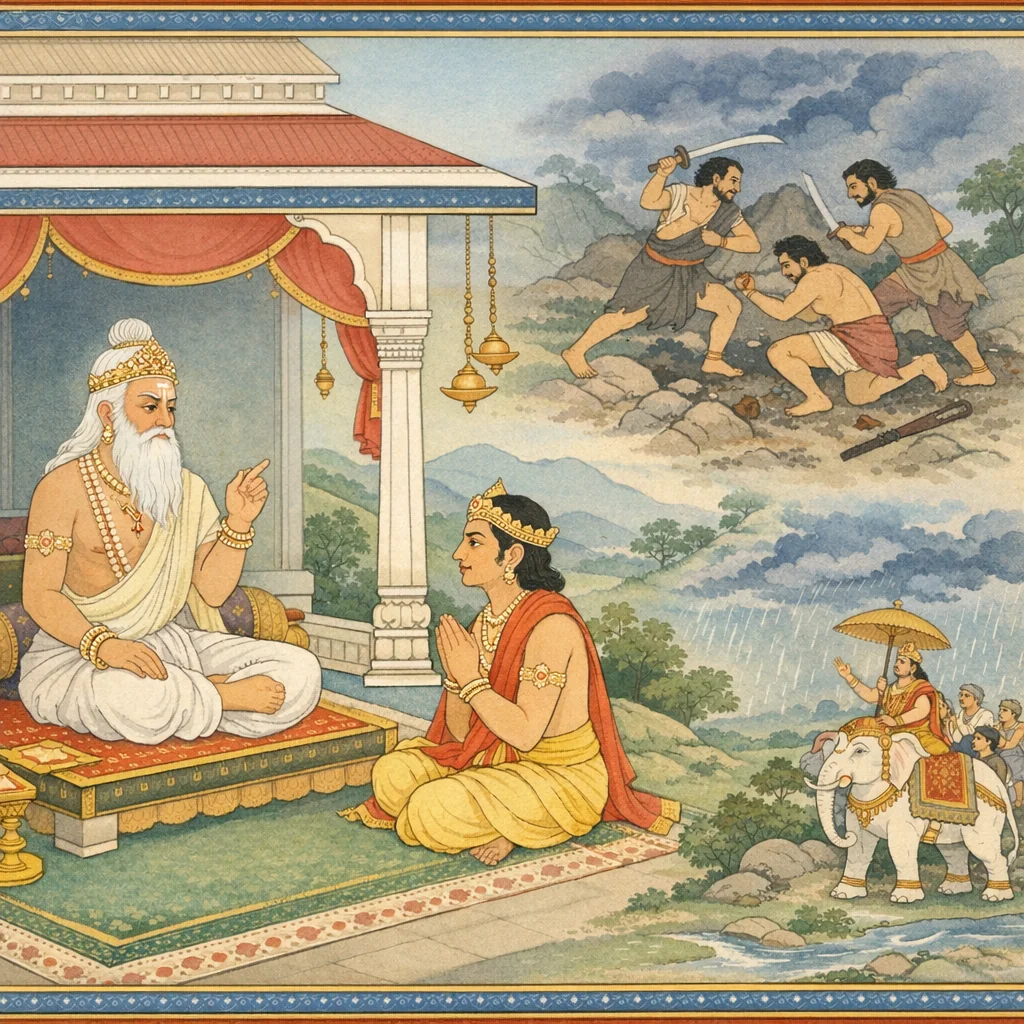
Yudhiṣṭhira asks Bhīṣma why learned authorities describe the king as a ‘daivata’ (दैवत), despite being human. Bhīṣma answers by introducing a traditional itihāsa: the wise King Vasumanā of Kosala approaches Bṛhaspati with formal humility and asks how beings flourish or decline and whom one should honor to attain enduring well-being. Bṛhaspati’s reply frames dharma as ‘rājamūla’—rooted in kingship—because fear of lawful authority prevents mutual harm and preserves property and social trust. A long series of conditional images describes societal collapse without protection: theft, violence, breakdown of family and teacher-respect, disruption of agriculture and trade, cessation of Vedic study, yajña, marriages, assemblies, and general panic. Conversely, when the ruler protects, people live without fear, travel safely, practice restraint, support one another, and sustain education, ritual, and the economic base (vārttā). The king is further described as performing time-bound functional ‘forms’ analogous to Agni (punitive burning of wrongdoing), Āditya (surveillance and welfare), Antaka/Mṛtyu (destructive force against severe threats), Yama (judicial restraint and reward of the righteous), and Vaiśravaṇa (distribution and withdrawal of prosperity). The chapter warns against slander, hostility, or misappropriation of royal revenue, depicting such acts as leading to severe consequences, and concludes by advising alignment with righteous kingship and the honoring of capable, loyal, disciplined ministers. The episode ends with Vasumanā implementing protective governance as instructed.
Chapter Arc: युधिष्ठिर चारों आश्रमों और चातुर्वर्ण्य के धर्म सुनकर अब राज्य-रक्षा के मूल प्रश्न पर आते हैं—क्या राष्ट्र की स्थिरता के लिए राजा अनिवार्य है? → भीष्म प्रतिपादन करते हैं कि राज्य का सबसे प्रधान कर्तव्य राजाभिषेक और शासन-व्यवस्था है; जहाँ राजा नहीं, वहाँ धर्म टिकता नहीं—अराजकता में लोग परस्पर ‘खाने’ लगते हैं और दस्यु-स्वभाव प्रबल हो उठता है। → भीष्म का तीक्ष्ण निष्कर्ष: ‘अराजकेषु राष्ट्रेषु धर्मो न व्यवतिष्ठते’—राजा के बिना न न्याय, न मर्यादा; भय और लोभ समाज को भीतर से तोड़ देते हैं, इसलिए राजसत्ता धर्म-स्थापन का आधार है। → राजा का आदर्श रूप उभरता है—वह पर्जन्य-वत् वर्षा करने वाला, पापों को शमित करने वाला, प्रजा को स्वकर्म में नियोजित करने वाला; ऐसा राजा गुरु और इन्द्र के समान सम्मान पाता है, और विश्वास-रक्षा हेतु दण्ड-नीति तथा नियम-समय (समझौते/संविधान) स्थापित करता है। → कुछ समय व्यवस्था चलती है, पर आगे चलकर फिर दुर्व्यवस्था फैलती है; तब पीड़ित प्रजा मिलकर ऐसे रक्षक-राजा की खोज/स्थापना का विचार करती है—अगले प्रसंग का द्वार यहीं खुलता है।
Shlokas
Verse 1
अपन कराता बछ। अंक सप्तषष्टितमो< ध्याय: राष्ट्रकी रक्षा और उन्नतिके लिये राजाकी आवश्यकताका प्रतिपादन युधिष्ठिर उवाच चातुराश्रम्यमुक्तं ते चातुर्वर्ण्य तथैव च । राष्ट्रस्य यत् कृत्यतमं ततो ब्रूहि पितामह,राजा युधिष्ठिरने कहा--पितामह! आपने चारों आश्रमों और चारों वर्णोंके धर्म बतलाये। अब आप मुझे यह बताइये कि समूचे राष्ट्रका--उस राष्ट्रमें निवास करनेवाले प्रत्येक नागरिकका मुख्य कार्य क्या है?
Yudhiṣṭhira said: “Grandfather, you have explained to me the duties of the four āśramas and likewise of the four varṇas. Now tell me, O Pitāmaha, what is the foremost obligation of a kingdom—what is the most essential task for the welfare of the entire realm and all who live within it?”
Verse 2
भीष्म उवाच राष्ट्रस्यैतत् कृत्यतमं राज्ञ एवाभिषेचनम् | अनिन्द्रमबल राष्ट्र दस्यवो5भिभवन्त्युत,भीष्मजी बोले--युथिष्ठिर! राष्ट्र अथवा राष्ट्रवासी प्रजावर्गका सबसे प्रधान कार्य यह है कि वह किसी योग्य राजाका अभिषेक करे, क्योंकि बिना राजाका राष्ट्र निर्बल होता है। उसे डाकू और लुटेरे लूटते तथा सताते हैं
Bhishma said: “For a kingdom, the most essential duty is the consecration—the installation—of a king. A realm without a king is weak; bandits and plunderers overpower it and bring it to ruin.”
Verse 3
अराजकेषु राष्ट्रेषु धर्मो न व्यवतिष्ठते । परस्परं च खादन्ति सर्वथा धिगराजकम्,जिन देशोंमें कोई राजा नहीं होता, वहाँ धर्मकी भी स्थिति नहीं रहती है; अतः वहाँके लोग एक-दूसरेको हड़पने लगते हैं; इसलिये जहाँ अराजकता हो, उस देशको सर्वथा धिक््कार है!
Bhishma said: “In kingdoms where there is no king, dharma does not remain established. People then prey upon one another; therefore, a land sunk in anarchy is to be condemned in every way.”
Verse 4
इन्द्रमेव प्रवृणुते यद्राजानमिति श्रुति: । यथैवेन्द्रस्तथा राजा सम्पूज्यो भूतिमिच्छता,श्रुति कहती है, 'प्रजा जो राजाका वरण करती है, वह मानो इन्द्रका ही वरण करती है,, अतः लोकका कल्याण चाहनेवाले पुरुषको इन्द्रके समान ही राजाका पूजन करना चाहिये
Bhīṣma said: “The sacred tradition declares: ‘When the people choose a king, they in effect choose Indra himself.’ Therefore, one who seeks the welfare and prosperity of the world should honor the king with the same reverence due to Indra—seeing in rightful kingship a divinely sanctioned support of order and public good.”
Verse 5
नाराजकेषु राष्ट्रेषु वस्तव्यमिति रोचये । नाराजकेषु राष्ट्रेषु हव्यमग्निर्वहत्युत,मेरी रुचि तो यह है कि जहाँ कोई राजा न हो, उन देशोंमें निवास ही नहीं करना चाहिये। बिना राजाके राज्यमें दिये हुए हविष्यको अग्निदेव वहन नहीं करते
Bhishma said: “My considered view is that one should not choose to live in kingdoms where there is no king. In a realm without a ruler, even the sacred oblation that is offered is not borne by Agni.”
Verse 6
अथ चेदाभिवर्तेत राज्यार्थी बलवत्तर: । अराजकाणि राष्ट्राणि हतवीर्याणि वा पुन:,यदि कोई प्रबल राजा राज्यके लोभसे उन बिना राजाके दुर्बल देशोंपर आक्रमण करे तो वहाँके निवासियोंको चाहिये कि वे आगे बढ़कर उसका स्वागत-सत्कार करें। यही वहाँके लिये सबसे अच्छी सलाह हो सकती है; क्योंकि पापपूर्ण अराजकतासे बढ़कर दूसरा कोई पाप नहीं है
Bhīṣma said: “If a stronger claimant to kingship, driven by the desire for a realm, should advance against territories that are without a ruler—or again, against those whose strength has been broken—then the inhabitants there should go forth and receive him with due welcome and honor. This is the soundest counsel for them, for no evil is greater than the sinful condition of anarchy.”
Verse 7
प्रत्युदगम्याभिपूज्य: स्यादेतदत्र सुमन्त्रितम् । न हि पापात् परतरमस्ति किज्चिदराजकात्,यदि कोई प्रबल राजा राज्यके लोभसे उन बिना राजाके दुर्बल देशोंपर आक्रमण करे तो वहाँके निवासियोंको चाहिये कि वे आगे बढ़कर उसका स्वागत-सत्कार करें। यही वहाँके लिये सबसे अच्छी सलाह हो सकती है; क्योंकि पापपूर्ण अराजकतासे बढ़कर दूसरा कोई पाप नहीं है
Bhishma said: “They should go forth to meet him and honor him—this, in this situation, is the best counsel. For there is no evil greater than the sin of living without a king (law and governance).”
Verse 8
स चेत् समनुपश्येत समग्रं कुशलं भवेत् | बलवान हि प्रकुपित: कुर्यान्निःशेषतामपि,वह बलवान् आक्रमणकारी नरेश यदि शान्त दृष्टिसे देखे तो राज्यकी पूर्णतः भलाई होती है और यदि वह कुपित हो गया तो उस राज्यका सर्वनाश कर सकता है
Bhishma said: If such a powerful ruler were to look upon matters with calm, comprehensive discernment, the welfare of the realm would become complete. But if that same strong king is provoked into anger, he can bring even the entire state to utter ruin.
Verse 9
भूयांसं लभते क्लेशं या गौर्भवति दुर्दुहा । अथ या सुद॒ुहा राजन नैव तां वितुदन्त्यपि,राजन्! जो गाय कठिनाईसे दुही जाती है, उसे बड़े-बड़े क्लेश उठाने पड़ते हैं, परंतु जो सुगमतापूर्वक दूध दुह लेने देती है, उसे लोग पीड़ा नहीं देते हैं, आरामसे रखते हैं
Bhishma said: “A cow that is hard to milk suffers greater distress, for people press and torment her to obtain milk. But the cow that yields milk easily, O King, is not prodded or pained; she is kept at ease.”
Verse 10
यदतप्तं प्रणमते नैतत् संतापमर्हति । यत् स्वयं नमते दारु न तत् संनामयन्त्यपि,जो राष्ट्र बिना कष्ट पाये ही नतमस्तक हो जाता है, वह अधिक संतापका भागी नहीं होता। जो लकड़ी स्वयं ही झुक जाती है, उसे लोग झुकानेका प्रयत्न नहीं करते हैं
Bhishma said: One who bows without having been scorched by hardship does not thereby become deserving of further anguish. And just as wood that bends of its own accord is not forced down by others, so too a person who willingly adopts humility and submission is generally not subjected to additional coercion.
Verse 11
एतयोपमया वीर संनमेत बलीयसे । इन्द्राय स प्रणमते नमते यो बलीयसे,वीर! इस उपमाको ध्यानमें रखते हुए दुर्बलको बलवानके सामने नतमस्तक हो जाना चाहिये। जो बलवानको प्रणाम करता है, वह मानो इन्द्रको ही नमस्कार करता है
Bhīṣma said: “O hero, keeping this comparison in mind, the weaker should bow before the stronger. For one who offers reverence to the mighty is, as it were, paying homage to Indra himself.”
Verse 12
तस्माद् राजैव कर्तव्य: सततं भूतिमिच्छता । न धनार्थो न दारार्थस्तेषां येघामराजकम्,अतः सदा उन्नतिकी इच्छा रखनेवाले देशको अपनी रक्षाके लिये किसीको राजा अवश्य बना लेना चाहिये। जिनके देशमें अराजकता है, उनके धन और स्त्रियोंपर उन्हींका अधिकार बना रहे, यह सम्भव नहीं है
Therefore, one who ever seeks prosperity must always appoint a king for the protection of the realm. In a country without a king—where anarchy prevails—it is not possible for people to retain secure rights over their wealth and their women.
Verse 13
प्रीयते हि हरन् पाप: परवित्तमराजके । यदास्य उद्धरन्त्यन्ये तदा राजानमिच्छति,अराजकताकी स्थितिमें दूसरोंके धनका अपहरण करनेवाला पापाचारी मनुष्य बड़ा प्रसन्न होता है, परंतु जब दूसरे लुटेरे उसका भी सारा धन हड़प लेते हैं, तब वह राजाकी आवश्यकताका अनुभव करता है
In a kingless state, the sinful man who seizes another’s wealth takes delight in it; but when other plunderers strip him of all he has, then he comes to feel the need for a king.
Verse 14
पापा हाूपि तदा क्षेम॑ न लभन्ते कदाचन । एकस्य हि द्वौ हरतो द्वयोशक्ष॒ बहवो5परे
Bhīṣma said: Even the wicked do not obtain security or well-being at that time. For when two plunder one person, others too—capable and opportunistic—join in; thus wrongdoing multiplies and safety disappears.
Verse 15
अराजक देशमें पापी मनुष्य भी कभी कुशलपूर्वक नहीं रह सकते। एकका धन दो मिलकर उठा ले जाते हैं और उन दोनोंका धन दूसरे बहुसंख्यक लुटेरे लूट लेते हैं ।। अदास: क्रियते दासो हियन्ते च बलात् स्त्रिय: । एतस्मात् कारणाद् देवा: प्रजापालान् प्रचक्रिरे,अराजकताकी स्थितिमें जो दास नहीं है, उसे दास बना लिया जाता है और स्त्रियोंका बलपूर्वक अपहरण किया जाता है। इसी कारणसे देवताओंने प्रजापालक नरेशोंकी सृष्टि की है
Bhīṣma says: In a land without a king, even wicked men cannot live in safety or well-being. The wealth of one person is carried off by two acting together, and then the wealth of those two is plundered by other, more numerous robbers. In such lawlessness, one who is not a slave is made into a slave, and women are abducted by force. For this reason, the gods established rulers—protectors of the people—so that society might be secured and order maintained.
Verse 16
राजा चेन्न भवेल्लोके पृथिव्यां दण्डधारक: । जले मत्स्यानिवाभक्ष्यन् दुर्बलं बलवत्तरा:,यदि इस जगत्में भूतलपर दण्डधारी राजा न हो तो जैसे जलमें बड़ी मछलियाँ छोटी मछलियोंको खा जाती हैं, उसी प्रकार प्रबल मनुष्य दुर्बलोंको लूट खायँ
Bhīṣma said: If in this world there were no king on earth to wield the rod of punishment, then, as in water the larger fish devour the smaller fish, so too would the strong prey upon and plunder the weak.
Verse 17
अराजका:ः प्रजा: पूर्व विनेशुरिति न: श्रुतम् । परस्परं भक्षयन्तो मत्स्या इव जले कृशान्,हमने सुन रखा है कि जैसे पानीमें बलवान मत्स्य दुर्बल मत्स्योंकोी अपना आहार बना लेते हैं, उसी प्रकार पूर्वकालमें राजाके न रहनेपर प्रजावर्गके लोग परस्पर एक-दूसरेको लूटते हुए नष्ट हो गये थे
Bhishma said: “We have heard that in ancient times, when there was no king, the people perished. Like fish in water, the strong devoured the weak; so too, in the absence of rulership, people preyed upon one another and were destroyed.”
Verse 18
समेत्य तास्ततश्चक्करु: समयानिति न: श्रुतम् । वाक्शूरो दण्डपरुषो यश्च स्यात् पारजायिक:
Bhīṣma said: “We have heard that, after assembling together, they then made mutual agreements. But one who is merely brave in speech, harsh in punishment, and inclined to defeat others is unfit for such concord.”
Verse 19
यः परस्वमथादद्यात् त्याज्या नस्तादृशा इति । विश्वासार्थ च सर्वेषां वर्णानामविशेषत: । तास्तथा समयं कृत्वा समयेनावतस्थिरे
Bhishma said: “Whoever takes another’s property should be cast out—such a person is not to be kept among us.” And, to establish trust among all the social orders without distinction, they made this agreement; having made it, they remained steadfast in it, abiding by the covenant.
Verse 20
तब उन सबने मिलकर आपसमें नियम बनाया--यह बात हमारे सुननेमें आयी है। वह नियम इस प्रकार है--“हम लोगोंमेंसे जो भी निछ्लर बोलनेवाला, भयानक दण्ड देनेवाला, परस्त्रीगामी तथा पराये धनका अपहरण करनेवाला हो, ऐसे सब लोगोंको हमें समाजसे बहिष्कृत कर देना चाहिये।” सभी वर्णके लोगोंमें विश्वास उत्पन्न करनेके लिये सामान्यतः ऐसा नियम बनाकर उसका पालन करते हुए वे सब लोग सुखसे रहने लगे ।। सहितास्तास्तदा जग्मुरसुखार्ता: पितामहम् | अनीश्वरा विनश्यामो भगवन्नी श्वरं दिश
Bhishma said: Then all of them assembled and, as we have heard, made a mutual rule among themselves. The rule was this: “If anyone among us is one who speaks vilely, inflicts terrifying punishments, pursues another man’s wife, or steals another’s wealth—such people must be expelled from the community.” By establishing and observing this common ordinance so as to inspire trust among people of all social orders, they began to live in peace. Yet later, afflicted by distress, they went together to the Grandsire and said, “Without a protector we shall perish, O Blessed One; appoint for us a ruler.”
Verse 21
ततो मनु व्यादिदेश मनुर्नाभिननन्द ता:,तब ब्रह्माजीने मनुको राजा होनेकी आज्ञा दी; परंतु मनुने उन प्रजाओंको स्वीकार नहीं किया
Bhishma said: Thereupon Manu issued his directive; yet Manu did not approve of—nor accept—those beings as his subjects.
Verse 22
मनुर॒ुवाच बिभेमि कर्मण: पापाद् राज्यं हि भृशदुस्तरम् । विशेषतो मनुष्येषु मिथ्यावृत्तेषु नित्यदा,मनु बोले--भगवन्! मैं पापकर्मसे बहुत डरता हूँ। राज्य करना बड़ा कठिन काम है-- विशेषत:ः सदा मिथ्याचारमें प्रवृत्त रहनेवाले मनुष्योंपर शासन करना तो और भी दुष्कर है
Manu said: “O Blessed One, I greatly fear the sin that arises from wrongful deeds. To rule a kingdom is exceedingly hard; and harder still is it to govern men who are ever given to false conduct.”
Verse 23
भीष्म उवाच तमन्लुवन् प्रजा मा भे: कर्त्नेनो गमिष्यति । पशूनामधिपज्चाशद्धिरण्यस्य तथैव च
Bhīṣma said: “Do not fear, O people. By following him, you will attain the whole of what is sought. He will become the lord of cattle, and likewise of gold as well.”
Verse 24
धान्यस्य दशमं भागं दास्याम: कोशवर्धनम् | कन्यां शुल्के चारुरूपां विवाहेषूद्यतासु च
Bhīṣma said: “We shall give a tenth part of the grain as a contribution that increases the treasury; and in marriages, when families are preparing for weddings, we shall also provide a beautiful maiden as śulka (the bride-price).”
Verse 25
भीष्मजी कहते हैं--राजन्! तब समस्त प्रजाओंने मनुसे कहा--“महाराज! आप डरें मत। पाप तो उन्हींको लगेगा, जो उसे करेंगे। हमलोग आपके कोशकी वृद्धिके लिये प्रति पचास पशुओंपर एक पशु आपको दिया करेंगे। इसी प्रकार सुवर्णका भी पचासवाँ भाग देते रहेंगें। अनाजकी उपजका दसवाँ भाग करके रूपमें देंगे। जब हमारी बहुत-सी कन्याएँ विवाहके लिये उद्यत होंगी, उस समय उनमें जो सबसे सुन्दरी कन्या होगी, उसे हम शुल्कके रूपमें आपको भेंट कर देंगे ।। मुखेन शस्त्रपत्रेण ये मनुष्या: प्रधानत: । भवन्तं तेडनुयास्यन्ति महेन्द्रमिव देवता:,'जैसे देवता देवराज इन्द्रका अनुसरण करते हैं, उसी प्रकार प्रधान-प्रधान मनुष्य अपने प्रमुख शस्त्रों और वाहनोंके साथ आपके पीछे-पीछे चलेंगे
Bhīṣma said: “O King, then all the people said to Manu: ‘Great King, do not be afraid. The sin will fall only upon those who commit the wrongdoing. For the increase of your treasury, we shall give you one animal out of every fifty animals; likewise we shall keep giving a fiftieth share of gold. From the produce of grain we shall give a tenth part as tax. And when many of our daughters are ready for marriage, then whichever maiden is the most beautiful among them, we shall present to you as śulka (the bride-price). Moreover, the foremost men, equipped with their principal weapons and gear, will follow you—just as the gods follow Mahendra (Indra).’”
Verse 26
स त्वं जातबलो राजा दुष्प्रधर्ष: प्रतापवान् सुखे धास्यसि न: सर्वान् कुबेर इव नैऋ#तान्,“प्रजाका सहयोग पाकर आप एक प्रबल, दुर्जय और प्रतापी राजा होंगे। जैसे कुबेर यक्षों तथा राक्षसोंकी रक्षा करके उन्हें सुखी बनाते हैं, उसी प्रकार आप हमें सुरक्षित एवं सुखसे रखेंगे
“Thus, supported by the people, you will become a king of gathered strength—hard to assail, radiant in might. You will keep us all in safety and in ease, as Kubera safeguards the Yakṣas.”
Verse 27
यं च धर्म चरिष्यन्ति प्रजा राज्ञा सुरक्षिता: | चतुर्थ तस्य धर्मस्य त्वत्संस्थं वै भविष्यति
Bhishma said: “And the dharma that the people will practice when they are well protected by the king—of that dharma, a full fourth share will truly rest upon you.”
Verse 28
“आप जैसे राजाके द्वारा सुरक्षित हुई प्रजाएँ जो-जो धर्म करेंगी, उसका चतुर्थ भाग आपको मिलता रहेगा ।। तेन धर्मेण महता सुखं लब्धेन भावित: । पाहास्मान् सर्वतो राजन् देवानिव शतक्रतु:,“राजन! सुखपूर्वक प्राप्त हुए उस महान् धर्मसे सम्पन्न हो आप उसी प्रकार सब ओरसे हमारी रक्षा कीजिये, जैसे इन्द्र देवताओंकी रक्षा करते हैं
Bhishma said: “When subjects are protected by a king like you, whatever righteous acts they perform yield a quarter share of their merit to you. Therefore, enriched by that great dharma—won with ease and bringing well-being—protect us on every side, O King, just as Indra (the hundred-sacrificed lord) protects the gods.”
Verse 29
विजयाय हि निर्याहि प्रतपन् रश्मिवानिव । मानं विधम शत्रूणां जयो<स्तु तव सर्वदा,“महाराज! आप तपते हुए अंशुमाली सूर्यके समान विजयके लिये यात्रा कीजिये, शत्रुओंका घमंड धूलमें मिला दीजिये और सर्वदा आपकी जय हो”
Bhishma said: “Set forth for victory—like the blazing, radiant sun. Crush the enemies’ pride into dust, O king, and may triumph be yours at all times.”
Verse 30
स निर्ययौ महातेजा बलेन महता वृतः । महाभिजनसम्पन्नस्तेजसा प्रज्वलन्निव,तब महान् सैन्यबलसे घिरे हुए महाकुलीन, महातेजस्वी राजा मनु अपने तेजसे प्रकाशित होते हुए-से निकले
Bhishma said: Then the mighty and radiant king Manu set forth, surrounded by a great force. Endowed with noble lineage and excellence, he appeared as though blazing with his own splendor—an image of rightful authority advancing with disciplined strength rather than mere aggression.
Verse 31
तस्य दृष्टवा महत्त्वं ते महेन्द्रस्येव देवता: । अपतत्रसिरे सर्वे स्वधर्मे च ददुर्मन:,जैसे देवता देवराज इन्द्रका प्रभाव देखकर प्रभावित हो जाते हैं, उसी प्रकार सब लोग महाराज मनुका महत्त्व देखकर आतंकित हो उठे और अपने-अपने धर्ममें मन लगाने लगे
Beholding his greatness, they—like the gods awed by the majesty of Mahendra (Indra)—were all struck with fear and reverence, and each turned his mind back to his own proper duty (svadharma).
Verse 32
ततो महीं परिययौ पर्जन्य इव वृष्टिमान् । शमयन् सर्वतः पापान् स्वकर्मसु च योजयन्
Then he ranged over the earth like a cloud heavy with rain, soothing and washing away sins on every side, and guiding people to be firmly established in their own rightful duties (svakarma).
Verse 33
तदनन्तर वर्षा करनेवाले मेघके समान मनु पापा-चारियोंको शान्त करते और उन्हें अपने वर्णाश्रमोचित कर्मोमें लगाते हुए भूमण्डलपर चारों ओर घूमने लगे ।। एवं ये भूतिमिच्छेयु: पृथिव्यां मानवा: क्वचित् । कुर्यू राजानमेवाग्रे प्रजानुग्रहकारणात्,इस प्रकार जो मनुष्य वैभव-वृद्धिकी कामना रखते हों, उन्हें सबसे पहले इस भूमण्डलमें प्रजाजनोंपर अनुग्रह करनेके लिये कोई राजा अवश्य बना लेना चाहिये
Bhishma said: Thereafter Manu—like a rain-bearing cloud—went about the whole earth in every direction, pacifying those who lived by sinful conduct and setting them to the duties proper to their own varna and ashrama. Thus, wherever on earth people desire prosperity and an increase of well-being, they should first establish a king, for the very purpose of showing favor to the subjects and securing their welfare.
Verse 34
नमस्येरंश्व॒ तं भक्त्या शिष्या इव गुरुं सदा । देवा इव च देवेन्द्रं तत्र राजानमन्तिके,फिर जैसे शिष्य भक्तिभावसे गुरुको नमस्कार करते हैं तथा जैसे देवता देवराज इन्द्रको प्रणाम करते हैं, उसी प्रकार समस्त प्रजाजनोंको अपने राजाके निकट नमस्कार करना चाहिये
Bhishma said: “Let them always bow to that king with devotion, just as disciples respectfully bow to their teacher, and just as the gods pay homage to Indra, the lord of the gods. In the same way, the people should offer reverent salutations when they are in the presence of their king.”
Verse 35
सत्कृतं स्वजनेनेह परो5पि बहु मन्यते । स्वजनेन त्ववज्ञातं परे परिभवन्त्युत,इस लोकमें आत्मीयजन जिसका आदर करते हैं, उसे दूसरे लोग भी बहुत मानते हैं और जो स्वजनोंद्वारा तिरस्कृत होता है, उसका दूसरे भी अनादर करते हैं
Bhishma said: In this world, when a person is honored by their own people, even outsiders come to hold them in high esteem. But when one is slighted by one’s own kin, others too readily treat that person with contempt.
Verse 36
राज्: परैः परिभव: सर्वेषामसुखावह: । तस्माच्छत्रं च पत्र च वासांस्थाभरणानि च,राजाका यदि दूसरोंके द्वारा पराभव हुआ तो वह समस्त प्रजाके लिये दुःखदायी होता है; इसलिये प्रजाको चाहिये कि वह राजाके लिये छत्र, वाहन, वस्त्र, आभूषण, भोजन, पान, गृह, आसन और शय्या आदि सभी प्रकारकी सामग्री भेंट करे
Bhishma said: “If a king is humiliated or defeated by others, it becomes a source of misery for everyone. Therefore the people should provide the king with all necessary supports—such as a royal parasol, conveyance, garments, ornaments, food and drink, a dwelling, a seat, and a bed—so that royal authority remains secure and the common welfare is protected.”
Verse 37
भोजनान्यथ पानानि राज्ञे दग्युर्ग्हाणि च । आसनानि च शबय्याक्ष सर्वोपकरणानि च,राजाका यदि दूसरोंके द्वारा पराभव हुआ तो वह समस्त प्रजाके लिये दुःखदायी होता है; इसलिये प्रजाको चाहिये कि वह राजाके लिये छत्र, वाहन, वस्त्र, आभूषण, भोजन, पान, गृह, आसन और शय्या आदि सभी प्रकारकी सामग्री भेंट करे
Bhishma said: “Food and drink, houses, seats and beds, and every other requisite should be provided to the king. For when a king is overcome by others, it becomes a cause of suffering for the entire populace; therefore the people ought to offer the king all supports—such as parasols, vehicles, garments, ornaments, food, drink, dwellings, seats, beds, and the like—so that the realm remains secure and well-governed.”
Verse 38
गोप्ता तस्माद् दुराधर्ष: स्मितपूर्वांभिभाषिता । आभाषिततश्च मधुरं प्रत्याभाषेत मानवान्,इस प्रकार प्रजाकी सहायता पाकर राजा दुर्धर्ष एवं प्रजाकी रक्षा करनेमें समर्थ हो जाता है। राजाको चाहिये कि वह मुसकराकर बातचीत करे। यदि प्रजावर्गके लोग उससे कोई बात पूछें तो वह मधुर वाणीमें उन्हें उत्तर दे
Bhishma said: “Therefore, supported by the people, the king becomes a steadfast protector—hard to assail and fully capable of guarding his subjects. He should address others with a smile first; and when people speak to him or ask him something, he should reply to them in sweet, courteous speech. Thus, gentle conduct and pleasant words become instruments of kingship and public welfare.”
Verse 39
कृतज्ञो दृढ्भक्ति: स्यात् संविभागी जितेन्द्रिय: । ईक्षित: प्रतिवीक्षेत मृदु वल्गु च सुष्ठु च,राजा उपकार करनेवालोंके प्रति कृतज्ञ और अपने भक्तोंपर सुदृढ़ स्नेह रखनेवाला हो। उपभोगमें आनेवाली वस्तुओंको यथायोग्य विभाजन करके उन्हें काममें ले। इन्द्रियोंको वशमें रखे। जो उसकी ओर देखे, उसे वह भी देखे एवं स्वभावसे ही मृदु, मधुर और सरल हो
Bhīṣma said: “A king should be grateful to those who render him service, and should maintain steadfast affection and loyalty toward his devoted followers. He should apportion and employ the enjoyments and resources of the realm in a fitting and orderly way, keeping his senses under control. Whoever looks toward him, he should look back upon in return; and by his very nature he should be gentle, sweet-spoken, and straightforward—so that his rule rests on trust rather than fear.”
Verse 66
इस प्रकार श्रीमह्याभारत शान्तिपर्वके अन्तर्गत राजधर्मानुशासनपर्वरमें चारों आश्रमोंके धर्मका वर्णनविषयक छाछठवाँ अध्याय पूरा हुआ
Thus ends the thirty-sixth chapter in the Rājadharmānuśāsana section within the Śānti Parva of the Śrī Mahābhārata, a chapter devoted to describing the duties (dharma) of the four stages of life (āśramas).
Verse 67
इति श्रीमहा भारते शान्तिपर्वणि राजधर्मानुशासनपर्वणि राष्ट्र राजकरणावश्यकत्वकथने सप्तषष्टितमो5ध्याय:
Thus, in the revered Mahābhārata, within the Śānti Parva—specifically in the section on instruction in the duties of kings—ends the sixty-seventh chapter, which treats the necessity of the instruments and institutions by which a kingdom and its ruler are made effective. This is a concluding colophon marking the close of Bhīṣma’s discourse on statecraft and royal duty.
Verse 206
यं पूजयेम सम्भूय यश्न नः प्रतिपालयेत् । (कुछ समयतक इस प्रकार काम चलता रहा; किंतु आगे चलकर पुनः दुर्व्यवस्था फैल गयी) तब दुःखसे पीड़ित हुई सारी प्रजाएँ एक साथ मिलकर ब्रह्माजीके पास गयीं और उनसे कहने लगीं--'भगवन्! राजाके बिना तो हमलोग नष्ट हो रहे हैं। आप हमें कोई ऐसा राजा दीजिये, जो शासन करनेमें समर्थ हो, हम सब लोग मिलकर जिसकी पूजा करें और जो निरन्तर हमारा पालन करता रहे”
Bhishma said: “Grant us a king—one whom we may all assemble to honor, and who in turn will continually protect and sustain us.” (Thus, when disorder again spread and the people were afflicted with suffering, all the subjects gathered together and approached Brahmā, pleading that without a ruler they were perishing and asking for a capable sovereign.)
Frequently Asked Questions
The chapter addresses how a human ruler can be treated as ‘daivata’: the problem of political authority’s moral legitimacy is resolved by defining kingship through protective function—securing order, rights, and welfare—rather than through personal divinity.
Dharma becomes effective in society through structured protection and impartial restraint; without enforcement and welfare-oriented rule, social cooperation collapses, while righteous governance enables education, economy, ritual continuity, and public safety.
Rather than a formal phalaśruti, the chapter provides consequential meta-claims: honoring and not undermining righteous kingship preserves social and personal well-being, while hostility toward lawful authority and misappropriation of royal revenue is depicted as leading to severe negative outcomes.