Adhyaya 53
भीष्मदर्शनार्थं प्रस्थानम् (Departure to Behold Bhīṣma)
Upa-parva: Bhīṣma-śara-talpāgamana (Approach to Bhīṣma on the Bed of Arrows)
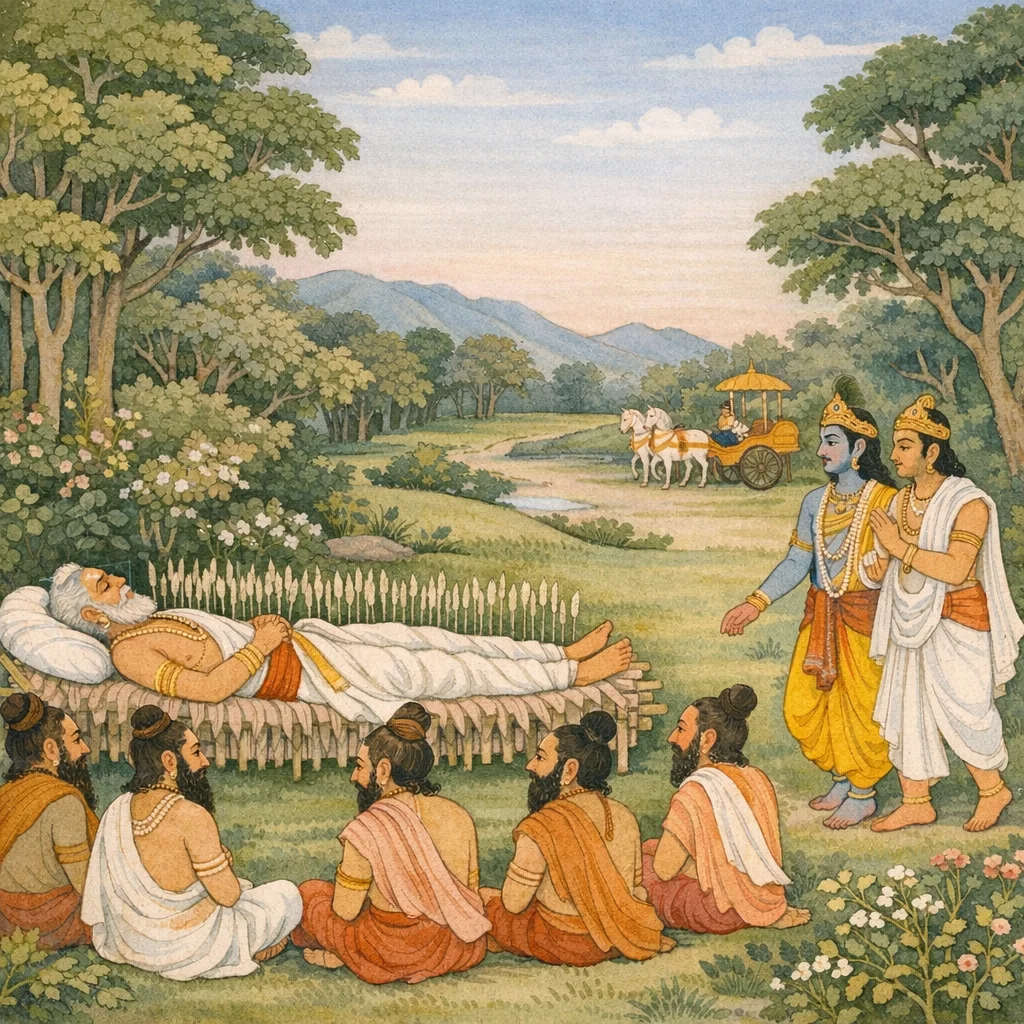
Vaiśaṃpāyana narrates an early-morning sequence in which Madhusūdana (Kṛṣṇa) awakens near the end of the night, enters a contemplative mode, and is praised amid ritualized recitation and instrumental music. He performs morning purification, stands with joined palms, and completes confidential japa while attending the sacred fires. A large-scale act of patronage follows: learned Brahmins versed in the four Vedas are commissioned for recitation, paired with substantial gifts. After auspicious preliminaries and self-inspection in a clear mirror, Kṛṣṇa instructs Sātyaki to confirm whether Yudhiṣṭhira is prepared to visit Bhīṣma. Sātyaki reports that Kṛṣṇa awaits him; Yudhiṣṭhira orders his chariot readied, restricts the presence of troops, and emphasizes that Bhīṣma must not be disturbed because he will disclose ‘paraṃ guhyaṃ’ (a highest confidential teaching). The Pāṇḍavas and companions proceed to Kṛṣṇa’s residence, coordinate, mount their chariots, and travel with Kṛṣṇa’s horses driven by Dāruka toward Kurukṣetra, described as the comprehensive field of dharma. Arriving where Bhīṣma lies on the bed of arrows among ṛṣis, they descend, honor the sages, and approach Bhīṣma with solemn apprehension, establishing the formal setting for subsequent instruction.
Chapter Arc: पिछले अध्याय के आगमन-वृत्तान्त के बाद दृश्य राजसभा से हटकर माधव के अंतर्मन में उतरता है—कृष्ण ध्यानपथ में प्रविष्ट होकर समस्त ज्ञानों का अवलोकन करते हैं और सनातन ब्रह्म का चिन्तन करते हैं। → स्तुति-पुराणज्ञ गायक-समूह विश्वकर्मा-स्वरूप वासुदेव की स्तुति करता है; उधर युधिष्ठिर के भवन से भी मंगलमयी वाणी और वाद्य-निनाद उठते हैं—मानो एक महत्त्वपूर्ण प्रस्थान की तैयारी हो। कृष्ण दर्पण में स्वयं को देखकर सात्यकि को दूत-कार्य सौंपते हैं: जाकर जानो, क्या युधिष्ठिर भीष्म-दर्शन हेतु सज्ज हैं। → रथस्थ संवाद के बाद दारुक वासुदेव के अश्वों (बलाहक, मेघपुष्प, शैब्य, सुग्रीव) को हाँकता है; घोड़े खुरों से पृथ्वी पर चिह्न बनाते हुए आगे बढ़ते हैं—और अंततः वह क्षण आता है जब सब उस स्थान पर पहुँचते हैं जहाँ महर्षियों और देव-गणों से घिरे ब्रह्मा-सम भीष्म बाणशय्या पर विराजमान हैं। → यात्रा और समन्वय (दूत-कार्य, रथ-प्रस्थान, संगति) पूर्ण होकर सभा-से-शय्या तक का सेतु बनता है; अध्याय का फल यह कि उपदेश-भूमि तैयार हो जाती है—भीष्म के समीप उपस्थित होकर राजधर्म-श्रवण का द्वार खुलता है। → भीष्म के सम्मुख उपस्थित जनसमूह के साथ प्रश्नों का भार भी उपस्थित है—अब युधिष्ठिर क्या पूछेंगे, और बाणशय्या पर पड़े पितामह कौन-सा राजधर्म उद्घाटित करेंगे?
Shlokas
Verse 1
इस प्रकार श्रीमह्याभारत शान्तिपर्वके अन्तर्गत राजधर्मानुशासनपर्वनें युधिष्ठिर आदिका आगमनविषयक बावनवाँ अध्याय पूरा हुआ ॥/ ५२ ॥। ऑपन-आ क्र बछ। 2 त्रिपञज्चाशत्तमो<ड्ध्याय: भगवान् श्रीकृष्णकी प्रातश्वचर्या, सात्यकिद्वारा उनका संदेश पाकर भाइयोंसहित युधिष्ठिरका उन्हींके साथ कुरुक्षेत्रमें पधारना वैशम्पायन उवाच तत:ः शयनमाविश्य प्रसुप्तो मधुसूदन: । याममात्रार्थशेषायां यामिन्यां प्रत्यबुद्धयत,वैशम्पायनजी कहते हैं--जनमेजय! तदनन्तर मधुसूदन भगवान् श्रीकृष्ण एक सुन्दर शय्याका आश्रय लेकर सो गये। जब आधा पहर रात बीतनेको बाकी रह गयी, तब वे जागकर उठ बैठे
Vaiśampāyana said: Thereafter Madhusūdana (Śrī Kṛṣṇa) lay down upon his couch and fell asleep. When only a single watch of the night remained, he awoke again.
Verse 2
स ध्यानपथमाविश्य सर्वज्ञानानि माधव: । अवलोक्य तत: पश्चाद् दध्यौ ब्रह्म सनातनम्,तत्पश्चात् ध्यानमार्गमें स्थित हो माधव सम्पूर्ण ज्ञानोंको प्रत्यक्ष करके अपने सनातन ब्रह्मस्वरूपका चिन्तन करने लगे
Vaiśampāyana said: Entering the path of meditation, Mādhava directly beheld all forms of knowledge; thereafter, he turned his mind to contemplation of the eternal Brahman—his timeless, supreme reality.
Verse 3
ततः स्तुतिपुराणज्ञा रक्तकण्ठा: सुशिक्षिता: | अस्तुवन् विश्वकर्माणं वासुदेव॑ प्रजापतिम्,इसी समय स्तुति और पुराणोंके ज्ञाता, मधुरकण्ठवाले, सुशिक्षित सूत-मागध और वन्दीजन विश्वनिर्माता, प्रजापालक उन भगवान् वासुदेवकी स्तुति करने लगे
Then the well-trained bards—skilled in hymns and the lore of the Purāṇas, and sweet-voiced—began to praise Vāsudeva, the Lord of beings, as the universal maker and protector.
Verse 4
पठन्ति पाणिस्वनिकास्तथा गायन्ति गायना: । शड्खानथ मृदज्जांश्न॒ प्रवाद्यन्ति सहस्रश:,हाथसे वीणा आदि बजानेवाले पुरुष स्तुतिपाठ करने लगे, गायक गीत गाने लगे और सहसौरों मनुष्य शंख एवं मृदड़ बजाने लगे
Vaiśampāyana said: The reciters began chanting hymns, the singers began to sing, and in their thousands people sounded conches and beat drums—raising a ceremonial music that marked public honor and auspicious celebration.
Verse 5
वीणापणववेणूनां स्वनश्वातिमनोरम: । सहास इव विस्तीर्ण: शुश्रुवे तस्य वेश्मन:,वीणा, पणव तथा मुरलीका अत्यन्त मनोरम स्वर इस तरह सुनायी देने लगा, मानो उस महलका अट्टहास सब ओर फैल रहा हो
Vaiśampāyana said: From his mansion there was heard an exceedingly delightful music—the blended sound of the vīṇā, the paṇava drum, and the veṇu flute—spreading far and wide, as though the very palace were laughing aloud.
Verse 6
ततो युधिष्ठिरस्यापि राज्ञो मज़लसंहिता: । उच्चेरुर्मधुरा वाचो गतिवादित्रनि:स्वना:,तत्पश्चात् राजा युधिष्ठिरके भवनसे भी मधुर, मज़्लमयी वाणी तथा गीत-वाद्यकी ध्वनि प्रकट होने लगी
Then, around King Yudhiṣṭhira as well, auspicious and harmonious sounds arose—sweet words of benediction and the resonant tones of song and musical instruments—signaling a shift from turmoil toward ordered, dharmic well-being.
Verse 7
तत उत्थाय दाशार्ह: स्नात: प्राउ्जलिरच्युत: । जप्त्वा गुह्ंं महाबाहुरग्नीनाश्रित्य तस्थिवान्,तत्पश्चात् अपनी मर्यादासे कभी च्युत न होने वाले महाबाहु भगवान् श्रीकृष्णने शय्यासे उठकर स्नान किया, फिर गूढ़ गायत्री-मन्त्रका जप करके हाथ जोड़े हुए अग्निके समीप जा बैठे
Vaiśampāyana said: Then Dāśārha (Śrī Kṛṣṇa), having risen from his bed and bathed, stood with palms joined. After silently reciting the secret (Gāyatrī) mantra, the mighty-armed Acyuta took his place near the sacred fires—showing unwavering fidelity to prescribed conduct and daily discipline.
Verse 8
ततः सहस्रं विप्राणां चतुर्वेदविदां तथा । गवां सहस््रेणैकैंके वाचयामास माधव:,वहाँ अग्निहोत्र करनेके अनन्तर भगवान् माधवने चारों वेदोंके विद्वान् एक हजार ब्राह्मणोंको बुलाकर प्रत्येकको एक-एक हजार गौएँ दान कीं और उनसे वेदमन्त्रोंका पाठ एवं स्वस्तिवाचन कराया
Then, after performing the Agnihotra, the Lord Mādhava summoned a thousand brāhmaṇas learned in the four Vedas. To each he bestowed a gift of a thousand cows, and he had them recite Vedic mantras and pronounce auspicious benedictions (svasti).
Verse 9
मड़लालम्भनं कृत्वा आत्मानमवलोक्य च । आदर्शे विमले कृष्णस्तत: सात्यकिमब्रवीत्,इसके बाद माड़लिक वस्तुओंका स्पर्श करके भगवानने स्वच्छ दर्पणमें अपने स्वरूपका दर्शन किया और सात्यकिसे कहा--
Vaiśampāyana said: Having performed the act of taking up the ritual emblem (maṇḍala) and then looking upon himself, Kṛṣṇa beheld his own form in a spotless mirror. Thereafter he addressed Sātyaki—an action that frames his next words as deliberate, self-possessed, and ethically purposeful rather than impulsive.
Verse 10
गच्छ शैनेय जानीहि गत्वा राजनिवेशनम् । अपि सज्जो महातेजा भीष्म द्रष्ट युधिष्ठिर:,“'शिनिनन्दन! जाओ, राजमहलमें जाकर पता लगाओ कि महातेजस्वी राजा युधिष्ठिर भीष्मजीके दर्शनार्थ चलनेके लिये तैयार हो गये क्या?”
Vaiśampāyana said: “Go, O son of Śini, and find out—having gone to the royal residence—whether the mighty and radiant King Yudhiṣṭhira is prepared to set out to see Bhīṣma.”
Verse 11
श्रीकृष्णकी आज्ञा पाकर सात्यकि तुरंत वहाँसे चल दिये और राजा युधिष्ठिरके पास जाकर बोले--
Vaiśampāyana said: Having received Śrī Kṛṣṇa’s command, Sātyaki immediately departed from that place. He went to King Yudhiṣṭhira and spoke—thus conveying the urgency of duty and obedience to rightful counsel in the aftermath of war.
Verse 12
युक्तो रथवरो राजन् वासुदेवस्य धीमतः । समीपमापगेयस्य प्रयास्यति जनार्दन:,“राजन! परम बुद्धिमान् भगवान् वासुदेवका श्रेष्ठ रथ जुतकर तैयार हो गया है। श्रीजनार्दन शीघ्र ही गड़ानन्दन भीष्मके समीप जानेवाले हैं
Vaiśampāyana said: “O King, the excellent chariot of the supremely wise Vāsudeva has been made ready. Janārdana is about to set out at once to the presence of Bhīṣma, the son of the Āpa line.”
Verse 13
भवत्प्रतीक्ष: कृष्णोडसौ धर्मराज महाद्युते । यदत्रानन्तरं कृत्यं तद् भवान् कर्तुमहति,“महातेजस्वी धर्मराज! भगवान् श्रीकृष्ण आपकी ही प्रतीक्षा कर रहे हैं। अब आप जो उचित समझें, वह कार्य कर सकते हैं"
Vaiśampāyana said: “O radiant Dharmarāja, that Lord Kṛṣṇa is waiting for you. Now, whatever ought to be done next in this situation, you are the one fit to decide and carry out.”
Verse 14
एवमुक्त: प्रत्युवाच धर्मपुत्रो युधिष्ठिर: । सात्यकिके इस प्रकार कहनेपर धर्मपुत्र युधिष्ठिरने अर्जुनको यह आदेश दिया ।। १३ ३ || युधिछिर उवाच युज्यतां मे रथवर: फाल्गुनाप्रतिमदझ्ुते,अतः पुरःसराश्षापि निवर्तन्तु धनंजय । युधिष्ठिर बोले--अनुपम तेजस्वी अर्जुन! मेरा श्रेष्ठ रथ जोतकर तैयार कराओ। आज सैनिकोंको हमारे साथ नहीं जाना चाहिये। केवल हमलोगोंको ही चलना है। धनंजय! धर्मात्माओंमें श्रेष्ठ भीष्मजीको अधिक भीड़ बढ़ाकर कष्ट देना उचित नहीं है। अतः आगे चलनेवाले सैनिकोंको भी जानेके लिये मना कर देना चाहिये
Yudhiṣṭhira, the son of Dharma, replied: “Have my excellent chariot yoked and made ready, O Arjuna of incomparable splendor. And let those who go in front also turn back, O Dhanañjaya. Today the army should not accompany us; only we should go. It is not right to trouble the righteous Bhīṣma by increasing the crowd around him.”
Verse 15
न सैनिकैश्नव यातव्यं यास्थामो वयमेव हि । न च पीडयिततव्यो मे भीष्मो धर्मभूतां वर:
Yudhiṣṭhira said: “We must not proceed with an armed force; indeed, we ourselves shall go. And Bhīṣma—foremost among those established in dharma—must not be pained or troubled on my account.”
Verse 16
अद्यप्रभृति गाड़ेय: परं गुह्ां प्रवक्ष्यति
Yudhiṣṭhira said: “From today onward, Gāḍeya will disclose the supreme secret teaching.”
Verse 17
अतो नेच्छामि कौन्तेय पृथग्जनसमागमम् । कुन्तीनन्दन! आजसे गड्जाकुमार भीष्मजी धर्मके अत्यन्त गूढ़ रहस्यका उपदेश करेंगे। अतः मैं भिन्न-भिन्न रुचि रखनेवाले साधारण जनसमाजको वहाँ नहीं जुटाना चाहता ।। १६ ई | वैशम्पायन उवाच स तद्वाक्यमथाज्ञाय कुन्तीपुत्रो धनंजय:
Therefore, O son of Kuntī, I do not wish for a gathering of miscellaneous people. O delight of Kuntī, today Bhīṣma, the son of the Gaṅgā, will instruct you in the profoundly hidden secret of dharma. For that reason I do not want to assemble there ordinary folk of differing tastes and inclinations. Vaiśampāyana said: Having understood those words, Arjuna, the son of Kuntī, then…
Verse 18
ततो युधिष्टिरो राजा यमौ भीमार्जुनावपि
Then King Yudhiṣṭhira—along with the twin brothers and also Bhīma and Arjuna—(proceeded onward).
Verse 19
भूतानीव समस्तानि ययु: कृष्णनिवेशनम् । तदनन्तर राजा युधिष्ठिर, भीमसेन, अर्जुन, नकुल और सहदेव सब एक रथपर आरूढ़ हो श्रीकृष्णके निवासस्थानपर गये, मानो समस्त महाभूत मूर्तिमान् होकर पधारे हों ।। १८ ई || आगच्छत्स्वथ कृष्णो5पि पाण्डवेषु महात्मसु
All beings, as it were, moved toward Krishna’s dwelling. Thereafter King Yudhiṣṭhira—together with Bhīmasena, Arjuna, Nakula, and Sahadeva—mounted a single chariot and went to Śrī Kṛṣṇa’s residence, as though the great elements themselves had taken bodily form and arrived. Then Kṛṣṇa too came forward to meet those great-souled Pāṇḍavas.
Verse 20
रथस्था: संविदं कृत्वा सुखां पृष्टवा च शर्वरीम्
Seated upon their chariots, they conferred together; and having exchanged courteous inquiries about one another’s well-being, they passed the night in comfort.
Verse 21
बलाहकं मेघपुष्पं शैब्यं सुग्रीवमेव च
Vaiśampāyana said: “(He mentioned) Balāhaka, Meghapuṣpa, Śaibya, and also Sugrīva.”
Verse 22
ते हया वासुदेवस्य दारुकेण प्रचोदिता:
Vaiśampāyana said: Those horses of Vāsudeva, urged on by Dāruka, were driven forward—an image of disciplined action guided by a trusted charioteer, where power is made purposeful through right direction.
Verse 23
ते ग्रसन्त इवाकाशं वेगवन्तो महाबला:
Vaiśampāyana said: Those mighty, swift-moving ones advanced as though they were swallowing up the very sky—an image of overwhelming force and unstoppable momentum, suggesting how power, when unrestrained, can seem to consume all space before it.
Verse 24
क्षेत्र धर्मस्य कृत्स्नस्य कुरुक्षेत्रमवातरन् उन अश्वोंका बल और वेग महान् था। वे आकाशको पीते हुए-से उड़ चले, और बात- की-बातमें सम्पूर्ण धर्मके क्षेत्रभूत कुरुक्षेत्रमें जा पहुँचे || २३ ह ।। ततो ययुर्यत्र भीष्म: शरतल्पगत: प्रभु:
Vaiśaṃpāyana said: Then they proceeded to the place where the mighty Bhīṣma lay upon his bed of arrows—still sovereign in spirit though struck down—awaiting the destined moment, as the field of Kurukṣetra stood as the witness of dharma tested by war.
Verse 25
ततो<वतीर्य गोविन्दो रथात् स च युधिछिर:,तत्पश्चात् रथसे उतरकर भगवान् श्रीकृष्ण, युधिष्ठिर, भीमसेन, गाण्डीवधारी अर्जुन, नकुल, सहदेव तथा सात्यकिने अपने-अपने दाहिने हाथोंको उठाकर ऋषियोंके प्रति सम्मानका भाव प्रदर्शित किया
Then Govinda descended from the chariot, and Yudhiṣṭhira as well. After that, Bhagavān Śrī Kṛṣṇa—together with Yudhiṣṭhira, Bhīmasena, Arjuna the bearer of Gāṇḍīva, Nakula, Sahadeva, and Sātyaki—each raised his right hand, thereby manifesting a respectful disposition toward the sages. The scene underscores the ethic that even victorious warriors and rulers must honor spiritual authority and learning with humility.
Verse 26
भीमो गाण्डीवधन्वा च यमौ सात्यकिरेव च | ऋषीनभ्यर्चयामासु: करानुद्यम्य दक्षिणान्,तत्पश्चात् रथसे उतरकर भगवान् श्रीकृष्ण, युधिष्ठिर, भीमसेन, गाण्डीवधारी अर्जुन, नकुल, सहदेव तथा सात्यकिने अपने-अपने दाहिने हाथोंको उठाकर ऋषियोंके प्रति सम्मानका भाव प्रदर्शित किया
Vaiśampāyana said: Bhīma, Arjuna the wielder of the Gāṇḍīva, the twin brothers (Nakula and Sahadeva), and Sātyaki all rose and honored the sages. Lifting their right hands in reverence, they expressed respectful assent and humility before the seers—an ethical gesture that affirms dharma through deference to spiritual authority after the turmoil of war.
Verse 27
स तै: परिवृतो राजा नक्षत्रैरिव चन्द्रमा: । अभ्याजगाम गाड़िेयं ब्रह्माणमिव वासव:,नक्षत्रोंसे घिरे हुए चन्द्रमाकी भाँति भाइयोंसे घिरे हुए राजा युधिष्ठिर गड्जानन्दन भीष्मके समीप गये, मानो देवराज इन्द्र ब्रद्माजीके निकट पधारे हों
Surrounded by them, the king—like the moon encircled by the stars—approached Bhīṣma, the son of the Gaṅgā, just as Vāsava (Indra) approaches Brahmā.
Verse 28
शरतल्पे शयानं तमादित्यं पतितं यथा । स ददर्श महाबाहुं भयाच्चागतसाध्वस:,शर-शय्यापर सोये हुए महाबाहु भीष्मजी वैसे ही दिखायी दे रहे थे, मानो सूर्यदेव आकाशसे पृथ्वीपर गिर पड़े हों। युधिष्ठिरने उसी अवस्थामें उनका दर्शन किया। उस समय वे भयसे काँप उठे थे
He beheld mighty-armed Bhīṣma lying upon the bed of arrows, like the Sun himself fallen from the sky to the earth. Yudhiṣṭhira saw him in that state and was seized with fear and trembling.
Verse 53
इति श्रीमहाभारते शान्तिपर्वणि राजधर्मानुशासनपर्वणि भीष्माभिगमने त्रिपड्चाशत्तमो5ध्याय:
Thus ends the fifty-third chapter, “The Approach to Bhīṣma,” in the Śānti Parva of the Śrī Mahābhārata, within the section on instruction concerning the king’s duties (rājadharma).
Verse 131
ततः कृष्णस्य वचनात् सात्यकिस्त्वरितो ययौ । उपगम्य च राजानं युधिष्ठिरमभाषत
Then, at Kṛṣṇa’s instruction, Sātyaki hurried away. Approaching King Yudhiṣṭhira, he addressed him.
Verse 153
अतः पुरःसराश्षापि निवर्तन्तु धनंजय । युधिष्ठिर बोले--अनुपम तेजस्वी अर्जुन! मेरा श्रेष्ठ रथ जोतकर तैयार कराओ। आज सैनिकोंको हमारे साथ नहीं जाना चाहिये। केवल हमलोगोंको ही चलना है। धनंजय! धर्मात्माओंमें श्रेष्ठ भीष्मजीको अधिक भीड़ बढ़ाकर कष्ट देना उचित नहीं है। अतः आगे चलनेवाले सैनिकोंको भी जानेके लिये मना कर देना चाहिये
Yudhiṣṭhira said: “Therefore, O Dhanaṃjaya, let even those who go in front turn back. Have my excellent chariot yoked and made ready. Today the troops should not accompany us; only we should go. It is not right to trouble Bhīṣma—foremost among the righteous—by increasing the crowd around him. Hence, the soldiers who would proceed ahead should also be told to return.”
Verse 176
युक्त रथवरं तस्मा आचचक्षे नरर्षभः । वैशम्पायनजी कहते हैं--जनमेजय! युधिष्ठिरकी आज्ञा शिरोधार्य करके कुन्तीकुमार नरश्रेष्ठ अर्जुनने वैसा ही किया। फिर आकर उन्हें सूचना दी कि महाराजका श्रेष्ठ रथ तैयार है
Vaiśampāyana said: “O Janamejaya, Arjuna—the foremost among men and son of Kuntī—received Yudhiṣṭhira’s command with reverence and carried it out exactly. Returning afterward, he informed them that the king’s finest chariot had been made ready.”
Verse 193
शैनेयसहितो धीमान् रथमेवान्वपद्यत | महात्मा पाण्डवोंके पदार्पण करनेपर सात्यकिसहित बुद्धिमान् भगवान् श्रीकृष्ण भी एक ही रथपर आरूढ़ हो गये
Vaiśampāyana said: “The wise one, accompanied by Śaineya, proceeded to the chariot. And when the noble Pāṇḍava came forward to pay reverent respects at his feet, the discerning Lord Śrī Kṛṣṇa too—together with Sātyaki—mounted that very same chariot.”
Verse 203
मेघघोषै रथवरै: प्रययुस्ते नरर्षभा: । रथपर बैठे-बैठे ही उन सबने बातचीत की, और एक-दूसरेसे रात्रिके सुखपूर्वक व्यतीत होनेका कुशल-समाचार पूछा। फिर वे नरश्रेष्ठ मेघगर्जनाके समान गम्भीर घोष करनेवाले श्रेष्ठ रथोंद्वारा वहाँसे चल पड़े
Vaiśampāyana said: “Those bull-like men set out, departing in excellent chariots whose deep rumbling sounded like thunderclouds. Seated upon their chariots, they conversed and courteously inquired after one another’s well-being and the comfort of the night; then those foremost of men moved on from there in chariots that resounded like the growl of storm-clouds.”
Verse 213
दारुकश्नोदयामास वासुदेवस्य वाजिन: । दारुकने वसुदेवनन्दन भगवान् श्रीकृष्णके बलाहक, मेघपुष्प, शैब्य और सुग्रीव नामक घोड़ोंको हाँका
Vaiśampāyana said: “Dāruka urged on the horses of Vāsudeva. Dāruka drove the steeds of Lord Śrī Kṛṣṇa, Vasudeva’s son—named Balāhaka, Meghapuṣpa, Śaibya, and Sugrīva.”
Verse 223
गां खुराग्रैस्तथा राजन् लिखन्त: प्रययुस्तदा । राजन्! उस समय दारुवद्धारा हाँके गये श्रीकृष्णके वे घोड़े अपनी टापोंके अग्रभागसे पृथ्वीपर चिह्न बनाते हुए बड़े वेगसे दौड़े
Vaiśampāyana said: “O King, at that time they sped on, their hoof-tips scoring marks upon the earth.”
Verse 243
आस्ते महर्षिभि: सार्ध ब्रह्मा देवगणैर्यथा । तदनन्तर वे सब लोग उस स्थानपर गये जहाँपर प्रभावशाली भीष्मजी बाणशय्यापर सो रहे थे। जैसे देवताओंसे घिरे हुए ब्रह्माजी शोभा पाते हैं, उसी प्रकार महर्षियोंके साथ भीष्मजी सुशोभित हो रहे थे
Vaiśampāyana said: Bhīṣma lay there in the company of great seers, radiant like Brahmā surrounded by the hosts of gods. After this, all those people went to the place where the mighty Bhīṣma was resting upon his bed of arrows. Just as Brahmā appears resplendent when encircled by the deities, so too did Bhīṣma shine, attended by the maharṣis—honoured not for victory in war, but for steadfastness to duty and the moral gravity of his final instruction.
Frequently Asked Questions
The chapter frames a governance dilemma of method: how to seek decisive instruction from a revered elder without converting the visit into a public display that burdens the vulnerable teacher—resolved through privacy, restraint, and care.
Legitimate authority is shown as disciplined receptivity: ritual order, generosity to learning, and controlled presence prepare the mind and polity for receiving confidential ethical guidance.
No explicit phalaśruti appears here; the meta-function is structural—this adhyāya consecrates the pedagogical scene at Kurukṣetra so that Bhīṣma’s subsequent teachings can be heard as authoritative and carefully contextualized.