Adhyaya 40
युधिष्ठिरस्य राज्याभिषेकः | Yudhiṣṭhira’s Royal Consecration
Upa-parva: Rājābhiṣeka (Coronation) Context within Rājadharmānuśāsana
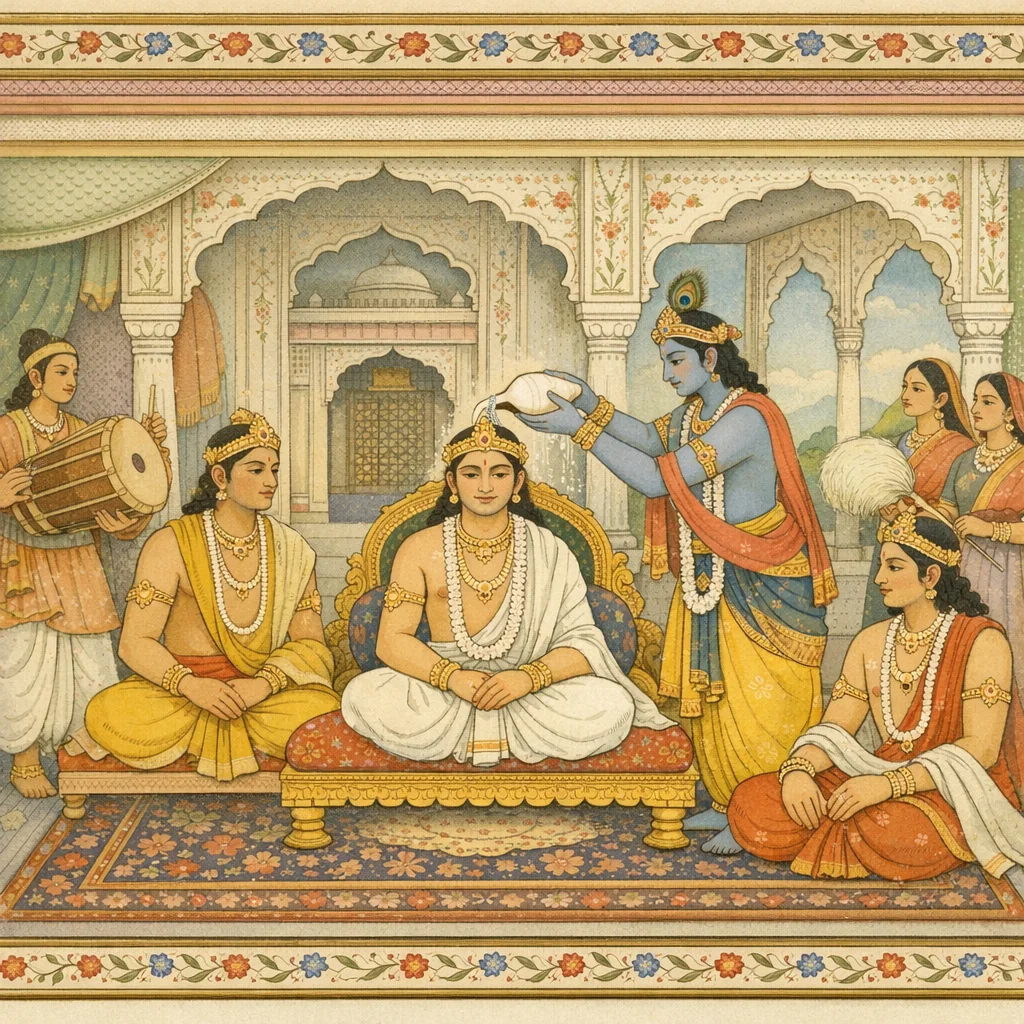
Vaiśaṃpāyana narrates a formal court assembly in which Yudhiṣṭhira—described as having set aside anger and fever—takes an eastern-facing golden seat. Kṛṣṇa (Vāsudeva) and Sātyaki sit opposite, while Bhīma and Arjuna seat themselves with the king centered, and Kuntī sits with Nakula and Sahadeva. Vidura, Dhāumya, Dhṛtarāṣṭra, Saṃjaya, Yuyutsu, and Gāndhārī are positioned nearby, establishing a comprehensive witness circle. Auspicious signs and materials are introduced: flowers, svastika markings, grains, gold, silver, gems, and abhiṣeka vessels; full jars and ritual implements are listed with technical specificity. With Kṛṣṇa’s authorization, Dhāumya prepares the altar and performs fire offerings with prescribed mantras, seating both Yudhiṣṭhira and Draupadī for the rite. Yudhiṣṭhira is anointed as ‘lord of the earth’ by Dhṛtarāṣṭra and the assembled constituents, accompanied by drums and ceremonial music. The king receives the authority ‘according to dharma,’ honors officiants with gifts, and commissions learned Brahmins to pronounce blessings; they acclaim his victory, survival, and timely assumption of post-conflict responsibilities. The chapter concludes with Yudhiṣṭhira’s attainment of great kingship together with allies and well-wishers, framing sovereignty as ethically received and publicly affirmed.
Chapter Arc: युद्ध-ज्वर और शोक से उतरता कुन्तीपुत्र युधिष्ठिर सुवर्ण-आसन की ओर अग्रसर होता है—राज्य का भार अब शस्त्र से नहीं, धर्म से उठाया जाना है। → सभा-स्थल में क्रमशः श्रीकृष्ण, सात्यकि, भीम, अर्जुन, कुन्ती, सहदेव, विदुर, धौम्य और धृतराष्ट्र आदि अपने-अपने दीप्तिमान आसनों पर विराजते हैं; यह वैभव भीतर छिपे अपराध-बोध, उत्तरदायित्व और नई व्यवस्था की कसौटी को और तीखा करता है। → श्रीकृष्ण के आदेश से पाञ्चजन्य शंख द्वारा युधिष्ठिर का अभिषेक होता है—अभिषिक्त होते ही धर्मराज का मुख ‘अमृत’ के समान प्रसन्न और तेजस्वी दीखता है, और वाद्यों की ध्वनि से राजसत्ता का धर्मसम्मत उद्घोष होता है। → युधिष्ठिर धर्मानुसार समस्त सम्मान-पूजा और विधि को स्वीकार करता है; सभा में मंगल-ध्वनि, अनुशासन और स्वीकृति का वातावरण बनता है—राज्याभिषेक एक निजी विजय नहीं, लोक-व्यवस्था की पुनर्स्थापना बन जाता है। → नव-राज्य की यह प्रथम घड़ी आगे चलकर राजधर्म के कठोर प्रश्नों—दण्ड, क्षमा, प्रजा-पालन और युद्धोत्तर प्रायश्चित्त—की ओर संकेत करती है।
Shlokas
Verse 1
ऑपन-माजल बछ। सं: चत्वारिशो< ध्याय: युधिष्ठटिरका राज्याभिषेक वैशम्पायन उवाच ततः कुन्तीसुतो राजा गतमन्युर्गतज्वर: । काउ्चने प्राड्मुखो हृष्टो न््यषीदत् परमासने,वैशम्पायनजी कहते हैं-जनमेजय! तदनन्तर कुन्तीपुत्र राजा युधिष्ठिर खेद और चिन्तासे रहित हो पूर्वकी ओर मुँह करके प्रसन्नतापूर्वक सुवर्णके सुन्दर सिंहासनपर विराजमान हुए
Vaiśampāyana said: Then the king, Kuntī’s son Yudhiṣṭhira, his anger gone and his feverish distress dispelled, sat down joyfully facing east upon a splendid golden throne.
Verse 2
तमेवाभिमुखो पीठे प्रदीप्ते काउचने शुभे । सात्यकिरव॑[सुदेवश्न निषीदतुररिंदमौ,तत्पश्चात् शत्रुओंका दमन करनेवाले सात्यकि और भगवान् श्रीकृष्ण सोनेके जगमगाते हुए सुन्दर आसनपर उन्हींकी ओर मुह करके बैठे
Facing him, Sātyaki and Vāsudeva (Śrī Kṛṣṇa)—both renowned as subduers of foes—sat down upon a splendid golden seat that shone brightly.
Verse 3
मध्ये कृत्वा तु राजानं भीमसेनार्जुनावुभौ । निषीदतुर्महात्मानौ शलक्ष्णयोर्मणिपीठयो:
Vaiśampāyana said: Placing the king between them, the two great-souled heroes Bhīmasena and Arjuna sat down upon two finely crafted, jewel-inlaid seats.
Verse 4
राजा युधिष्ठिरको बीचमें करके महामनस्वी भीमसेन और अर्जुन दो मणिमय मनोहर पीठोंपर विराजमान हुए ।। दान्ते सिंहासने शुभ्रे जाम्बूनदवि भूषिते । पृथापि सहदेवेन सहास्ते नकुलेन च,एक ओर हाथी दाँतके बने हुए स्वर्णविभूषित शुभ्र सिंहासनपर नकुल और सहदेवके साथ माता कुन्ती भी बैठ गयीं
Vaiśampāyana said: Placing King Yudhiṣṭhira in the middle, the great-souled Bhīmasena and Arjuna took their seats upon two charming, jewel-inlaid thrones. On one side, upon a bright ivory throne adorned with Jāmbūnada-gold, Pṛthā (Kuntī) also sat together with Nakula and Sahadeva.
Verse 5
सुधर्मा विदुरो धौम्यो धृतराष्ट्रश्न कौरव: । निषेदुर्ज्वलनाकारेष्वासनेषु पृथक् पृथक्,इसी प्रकार सुधर्मा, विदुर, धौम्य और कुरुराज धृतराष्ट्र अग्निके समान तेजस्वी पृथक्- पृथक् सिंहासनोंपर विराजमान हुए
Vaiśampāyana said: Sudharmā, Vidura, Dhaumya, and Dhṛtarāṣṭra of the Kuru line took their seats separately, each upon a throne-like seat radiant like fire.
Verse 6
युयुत्सु: संजयश्चैव गान्धारी च यशस्विनी । धृतराष्ट्री यतो राजा ततः सर्वे समाविशन्,युयुत्सु, संजय और यशस्विनी गान्धारी--ये सब लोग उधर ही बैठे जिस ओर राजा धृतराष्ट्र थे
Vaiśampāyana said: Yuyutsu, Sañjaya, and the illustrious Gāndhārī all took their seats on the side where King Dhṛtarāṣṭra was.
Verse 7
तत्रोपविष्टो धर्मात्मा श्वेता: सुमनसो<5स्पृशत् । स्वस्तिकानक्षतान् भूमिं सुवर्ण रजतं मणिम्,धर्मात्मा राजा युधिष्ठिरने सिंहासनपर बैठकर श्वेत पुष्प, स्वस्तिक, अक्षत, भूमि, सुवर्ण, रजत एवं मणिका स्पर्श किया
Vaiśampāyana said: Seated there upon the throne, the righteous-souled king (Yudhiṣṭhira) performed an auspicious rite of consecration by touching white flowers, sacred grains (akṣata) marked with the svastika, the earth, gold, silver, and a jewel—symbols of purity, stability, and rightful sovereignty grounded in dharma.
Verse 8
ततः प्रकृतय: सर्वा: पुरस्कृत्य पुरोहितम् । ददृशुर्धर्मराजानमादाय बहुमड्गलम्,इसके बाद मन्त्री, सेनापति आदि सभी प्रकृतियोंने पुरोहितको आगे करके बहुत-सी माड़लिक सामग्री साथ लिये धर्मराज युधिष्ठिरका दर्शन किया
Then all the king’s principal officers and constituents of the realm—placing the royal priest at their head—went to see Dharmarāja Yudhiṣṭhira, carrying with them many auspicious offerings.
Verse 9
पृथिवीं च सुवर्ण च रत्नानि विविधानि च । आभिषेचनिकं भाण्डं सर्वसम्भारसम्भूतम्,मिट्टी, सुवर्ण, तरह-तरहके रत्न, राज्याभिषेककी सामग्री, सब प्रकारके आवश्यक सामान, सोने, चाँदी, ताँबे और मिट्टीके बने हुए जलपूर्ण कलश, फूल, लाजा (खील), कुशा, गोरस, शमी, पीपल और पलाशकी समिधाएँ, मधु, घृत, गूलरकी लकड़ीका खुवा तथा स्वर्णजटित शंख--ये सब वस्तुएँ वे संग्रह करके लाये थे
Vaiśaṃpāyana said: “They brought together earth (clay), gold, and many kinds of gems, along with the complete set of consecration vessels and implements—everything required for the royal anointing—assembled with all necessary materials.”
Verse 10
काज्चनोदुम्बरास्तत्र राजता: पृथिवीमया: । पूर्णकुम्भा: सुमनसो लाजा बहींषि गोरसम्,मिट्टी, सुवर्ण, तरह-तरहके रत्न, राज्याभिषेककी सामग्री, सब प्रकारके आवश्यक सामान, सोने, चाँदी, ताँबे और मिट्टीके बने हुए जलपूर्ण कलश, फूल, लाजा (खील), कुशा, गोरस, शमी, पीपल और पलाशकी समिधाएँ, मधु, घृत, गूलरकी लकड़ीका खुवा तथा स्वर्णजटित शंख--ये सब वस्तुएँ वे संग्रह करके लाये थे
Vaiśampāyana said: “There they brought together auspicious requisites for the rite—vessels and implements made of gold, silver, and even of earth; pots filled to the brim; fragrant flowers; parched grains (lājā); sacred darbha-grass bundles; and cow’s milk. These items, gathered as consecratory materials, signal a solemn, dharma-governed undertaking in which purity, abundance, and right procedure are emphasized over mere display.”
Verse 11
शमीपिप्पलपालाशसमिथधो मधुसर्पिषी । खुव औदुम्बर: शंखस्तथा हेमविभूषित:,मिट्टी, सुवर्ण, तरह-तरहके रत्न, राज्याभिषेककी सामग्री, सब प्रकारके आवश्यक सामान, सोने, चाँदी, ताँबे और मिट्टीके बने हुए जलपूर्ण कलश, फूल, लाजा (खील), कुशा, गोरस, शमी, पीपल और पलाशकी समिधाएँ, मधु, घृत, गूलरकी लकड़ीका खुवा तथा स्वर्णजटित शंख--ये सब वस्तुएँ वे संग्रह करके लाये थे
Vaiśampāyana said: “They brought together ritual requisites—fuel-sticks of śamī, pippala, and palāśa; honey and clarified butter; a ladle made of udumbara wood; and a conch adorned with gold—items gathered to duly perform consecratory and sacrificial rites in accordance with dharma.”
Verse 12
दाशार्हेणाभ्यनुज्ञातस्तत्र धौम्य: पुरोहित: । प्रागुदक्प्रवर्णां वेदीं लक्षणेनोपलिख्य च,भगवान् श्रीकृष्णकी आज्ञासे पुरोहित धौम्यजीने एक वेदी बनायी जो पूर्व और उत्तर दिशाकी ओर नीची थी। उसे गोबरसे लीपकर कुशके द्वारा उसपर रेखा की। इस प्रकार वेदीका संस्कार करके सर्वतोभद्र नामक एक चौकीपर बाघम्बर एवं श्वेत वस्त्र बिछाकर उसके ऊपर महात्मा युधिष्छिर तथा द्रुपदकुमारी कृष्णाको बिठाया। उस चौकीके पाये और बैठनेके आधार बहुत मजबूत थे। सुवर्णजटित होनेके कारण वह आसन प्रज्वलित अग्निके समान प्रकाशित हो रहा था। बुद्धिमान् पुरोहितने वेदीपर अग्निको स्थापित करके उसमें विधि और मन्त्रके साथ आहुति दी
Vaiśampāyana said: “With Dāśārha (Śrī Kṛṣṇa) granting permission, the priest Dhaumya there marked out, according to the prescribed signs, an altar whose slope was toward the east and the north.”
Verse 13
व्याप्रचर्मोत्तरे शुक्ले सर्वतो भद्र आसने । दृढपादप्रतिष्ठाने हुताशनसमत्विषि,भगवान् श्रीकृष्णकी आज्ञासे पुरोहित धौम्यजीने एक वेदी बनायी जो पूर्व और उत्तर दिशाकी ओर नीची थी। उसे गोबरसे लीपकर कुशके द्वारा उसपर रेखा की। इस प्रकार वेदीका संस्कार करके सर्वतोभद्र नामक एक चौकीपर बाघम्बर एवं श्वेत वस्त्र बिछाकर उसके ऊपर महात्मा युधिष्छिर तथा द्रुपदकुमारी कृष्णाको बिठाया। उस चौकीके पाये और बैठनेके आधार बहुत मजबूत थे। सुवर्णजटित होनेके कारण वह आसन प्रज्वलित अग्निके समान प्रकाशित हो रहा था। बुद्धिमान् पुरोहितने वेदीपर अग्निको स्थापित करके उसमें विधि और मन्त्रके साथ आहुति दी
Vaiśampāyana said: “Upon a Sarvatobhadra seat, spread with a white cloth over a tiger-skin, firm in its legs and base, and shining like blazing fire, Yudhiṣṭhira and Kṛṣṇā (Draupadī) were seated after the altar had been duly prepared at Śrī Kṛṣṇa’s command. The wise priest Dhaumya established the sacred fire on the altar and offered oblations according to rule and mantra—framing the rite as an act of dharma: disciplined, consecrated action undertaken to restore order after calamity.”
Verse 14
उपवेश्य महात्मानं कृष्णां च द्रुपदात्मजाम् । जुहाव पावकं धीमान् विधिमन्त्रपुरस्कृतम्,भगवान् श्रीकृष्णकी आज्ञासे पुरोहित धौम्यजीने एक वेदी बनायी जो पूर्व और उत्तर दिशाकी ओर नीची थी। उसे गोबरसे लीपकर कुशके द्वारा उसपर रेखा की। इस प्रकार वेदीका संस्कार करके सर्वतोभद्र नामक एक चौकीपर बाघम्बर एवं श्वेत वस्त्र बिछाकर उसके ऊपर महात्मा युधिष्छिर तथा द्रुपदकुमारी कृष्णाको बिठाया। उस चौकीके पाये और बैठनेके आधार बहुत मजबूत थे। सुवर्णजटित होनेके कारण वह आसन प्रज्वलित अग्निके समान प्रकाशित हो रहा था। बुद्धिमान् पुरोहितने वेदीपर अग्निको स्थापित करके उसमें विधि और मन्त्रके साथ आहुति दी
Vaiśaṃpāyana said: Having seated the noble-souled king and also Kṛṣṇā, the daughter of Drupada, the wise priest kindled the sacred fire and offered oblations into it, proceeding in due ritual order with the prescribed mantras. The scene underscores the Mahābhārata’s insistence that even amid political crisis and impending conflict, rightful action is to be grounded in dharma—publicly affirmed through Vedic rite, purity, and disciplined intention.
Verse 15
तत उत्थाय दाशार्ह: शंखमादाय पूजितम् । अभ्यषिज्चत् पतिं पृथ्व्या: कुन्तीपुत्रं युधिष्ठिरम्
Then the Dāśārha rose, took up the honored conch, and performed the consecration—anointing Kuntī’s son Yudhiṣṭhira as lord of the earth. The act signals the restoration of rightful kingship through a ritually sanctioned transfer of authority, emphasizing that sovereignty is to be grounded in dharma rather than mere force.
Verse 16
अनुज्ञातो5थ कृष्णेन भ्रातृभि: सह पाण्डव:
Vaiśampāyana said: Then, having received Kṛṣṇa’s permission, the Pāṇḍava—together with his brothers—proceeded onward, acting with due respect for counsel and rightful consent in the aftermath of conflict.
Verse 17
ततो<नुवादयामासु: पणवानकदुन्दुभीन्
Then they caused the paṇavas, ānakas, and dundubhis—various war-drums and kettledrums—to resound, marking the moment with a formal, public proclamation through sound and signaling collective readiness and resolve.
Verse 18
पूजयामास तांश्वापि विधिवद् भूरिदक्षिण:,बहुत दक्षिणा देनेवाले राजा युधिष्ठिरने वेदाध्ययनसे सम्पन्न तथा धैर्य और शीलसे संयुक्त ब्राह्मणोंद्वारा स्वस्तिवाचन कराकर उनका विधिपूर्वक पूजन किया और उन्हें एक हजार अशर्फियाँ दान कीं
Vaiśaṃpāyana said: King Yudhiṣṭhira, renowned for giving abundant gifts, had learned and self-controlled Brāhmaṇas—endowed with Vedic study, steadiness, and good conduct—recite auspicious blessings. He then honored them according to proper ritual procedure and bestowed generous donations upon them. The episode underscores that righteous kingship is expressed not only through power but through reverence for learning, disciplined virtue, and the maintenance of sacred order by timely, lawful generosity.
Verse 19
ततो निष्कसहस्रेण ब्राह्मणान्स्वस्ति वाचयन् | वेदाध्ययनसम्पन्नान् धृतिशीलसमन्वितान्,बहुत दक्षिणा देनेवाले राजा युधिष्ठिरने वेदाध्ययनसे सम्पन्न तथा धैर्य और शीलसे संयुक्त ब्राह्मणोंद्वारा स्वस्तिवाचन कराकर उनका विधिपूर्वक पूजन किया और उन्हें एक हजार अशर्फियाँ दान कीं
Then King Yudhiṣṭhira had the Brahmins pronounce auspicious benedictions; and, honoring those Brahmins—accomplished in Vedic study and endowed with steadfastness and good conduct—according to due rite, he bestowed upon them a gift of a thousand niṣkas (gold coins).
Verse 20
ते प्रीता ब्राह्मणा राजन् स्वस्त्यूचुर्जयमेव च । हंसा इव च नर्दन्त: प्रशशंसुर्युधिष्ठिरम्,राजन! इससे प्रसन्न होकर उन ब्राह्मणोंने उनके कल्याणका आशीर्वाद दिया और जय- जयकार की। वे सभी ब्राह्मण हंसके समान गम्भीर स्वरमें बोलते हुए राजा युधिष्ठिरकी इस प्रकार प्रशंसा करने लगे---
O King, those Brahmins, pleased at heart, pronounced blessings of well-being and cried, “Victory!” Then, speaking in deep, resonant tones like swans, they began to extol King Yudhiṣṭhira—affirming that righteous conduct and humility in a ruler naturally draw the goodwill and benedictions of the learned.
Verse 21
युधिष्ठिर महाबाहो दिष्ट्या जयसि पाण्डव । दिष्ट्या स्वधर्म प्राप्तोड्सि विक्रमेण महाद्युते,'पाण्डुनन्दन महाबाहु युधिष्ठिर! तुम्हारी विजय हुई--यह बड़े भाग्यकी बात है। महातेजस्वी नरेश! तुमने पराक्रमसे अपना धर्मानुकूल राज्य प्राप्त कर लिया--यह भी सौभाग्यका ही सूचक है
Vaiśampāyana said: “O mighty-armed Yudhiṣṭhira, son of Pāṇḍu, it is indeed by good fortune that you have won. And it is likewise a sign of blessing, O great-splendoured king, that through your own valour you have attained a kingdom in accordance with your rightful duty (svadharma).”
Verse 22
दिष्ट्या गाण्डीवधन्वा च भीमसेनश्न् पाण्डव: । त्वं चापि कुशली राजन माद्रीपुत्रो च पाण्डवी,“गाण्डीवधारी अर्जुन, पाण्डुपुत्र भीमसेन, तुम और माद्रीपुत्र पाण्डुकुमार नकुल- सहदेव--ये सभी शत्रुओंपर विजय पाकर इस वीरविनाशक संग्रामसे कुशलपूर्वक बच गये, इसे भी महान् सौभाग्यकी ही बात समझनी चाहिये। भारत! अब आगे जो कार्य करने हैं, उन सबको शीघ्र पूर्ण कीजिये”
Vaiśampāyana said: “It is indeed by good fortune that Arjuna, bearer of the Gāṇḍīva, and Bhīmasena, the Pāṇḍava, have survived; and that you too, O king, are safe—along with the sons of Mādrī among the Pāṇḍavas. Count this as a great blessing: having won victory over enemies, you have all escaped that hero-destroying war unharmed. Now, O descendant of Bharata, swiftly accomplish the duties that still remain.”
Verse 23
मुक्ता वीरक्षयात् तस्मात् संग्रामाद् विजितद्विष: । क्षिप्रमुत्तरकार्याणि कुरु सर्वाणि भारत,“गाण्डीवधारी अर्जुन, पाण्डुपुत्र भीमसेन, तुम और माद्रीपुत्र पाण्डुकुमार नकुल- सहदेव--ये सभी शत्रुओंपर विजय पाकर इस वीरविनाशक संग्रामसे कुशलपूर्वक बच गये, इसे भी महान् सौभाग्यकी ही बात समझनी चाहिये। भारत! अब आगे जो कार्य करने हैं, उन सबको शीघ्र पूर्ण कीजिये”
Freed from that battle which brought about the destruction of heroes, and having overcome your foes, swiftly accomplish all the remaining duties, O Bhārata.
Verse 24
ततः प्रत्यर्चित: सद्धिर्धर्मराजो युधिष्ठिर: । प्रतिपेदे महद् राज्यं सुहृद्धिः सह भारत,भरतनन्दन! तत्पश्चात् समागत सज्जनोंने धर्मराज युधिष्ठिरका पुनः सत्कार किया। फिर उन्होंने सुहदोंके साथ अपने विशाल राज्यका भार हाथोंमें ले लिया
Then Dharma-king Yudhiṣṭhira, duly honoured once more by the virtuous, accepted the burden of the great kingdom together with his friends and well-wishers—O Bhārata, O delight of the Bharatas.
Verse 39
इस प्रकार श्रीमह्ाभारत शान्तिपर्वके अन्तर्गत राजधर्मानुशासनपर्वमें चार्वाकको प्राप्त हुए वरदान आदिका वर्णनविषयक उनतालीसवाँ अध्याय पूरा हुआ
Thus ends the thirty-ninth chapter in the Rājadharmānuśāsana section of the Śānti Parva of the Śrī Mahābhārata, narrating the boons and related matters obtained by Cārvāka.
Verse 40
इति श्रीमहाभारते शान्तिपर्वणि राजधर्मानुशासनपर्वणि युधिष्ठिराभिषेके चत्वारिंशो5ध्याय:
Thus ends the fortieth chapter in the Śānti Parva of the Śrī Mahābhārata, within the Rājadharmānuśāsana section, in the context of Yudhiṣṭhira’s consecration (abhiṣeka).
Verse 153
धृतराष्ट्रश्न॒ राजर्षि: सर्वा: प्रकृतयस्तथा । तत्पश्चात् दशार्हवंशी श्रीकृष्णने उठकर जिसकी पूजा की गयी थी, वह पाञ्चजन्य शंख हाथमें ले उसके जलसे पृथ्वीपति कुन्तीपुत्र युधिष्ठिरका अभिषेक किया। फिर राजा धृतराष्ट्र तथा प्रकृतिवर्गके अन्य सब लोगोंने भी अभिषेकका कार्य सम्पन्न किया
Vaiśampāyana said: Then King Dhṛtarāṣṭra, the royal sage, together with all the ministers and leading citizens, acted in due order. After this, Śrī Kṛṣṇa of the Daśārha line—who had been duly honoured—rose, took the Pāñcajanya conch in his hand, and with consecrating water anointed Yudhiṣṭhira, Kuntī’s son, as lord of the earth. Thereafter King Dhṛtarāṣṭra and all the other members of the political and civic body also completed the rites of coronation.
Verse 166
पाञ्चजन्याभिषिक्तश्न राजामृतमुखो5 भवत् | श्रीकृष्णकी आज्ञासे पाञ्चजन्य शंखद्वारा अभिषेक हो जानेपर भाइयोंसहित राजा युधिष्ठिरका मुख इतना सुन्दर दिखायी देने लगा, मानो नेत्रोंसे अमृतकी वर्षा कर रहा हो
Vaiśampāyana said: When King Yudhiṣṭhira was ceremonially anointed—by Śrī Kṛṣṇa’s command—through the auspicious conch Pāñcajanya, his face, with his brothers beside him, shone with surpassing radiance, as though his very eyes were showering nectar.
Verse 173
धर्मराजो5पि तत् सर्व प्रतिजग्राह धर्मत: । तदनन्तर वहाँ बाजा बजानेवाले लोग पणव, आनक तथा दुन्दुभिकी ध्वनि करने लगे। धर्मराज युधिष्ठिरने भी धर्मानुसार वह सारा स्वागत सत्कार स्वीकार किया
Vaiśampāyana said: King Yudhiṣṭhira too accepted all that reception and honor in accordance with dharma. Thereafter, the musicians there began to sound the paṇava, ānaka, and dundubhi drums, filling the place with ceremonial music—marking a public welcome that he receives without pride, but as a duty aligned with righteous conduct.
Frequently Asked Questions
The tension between political necessity and moral accountability after large-scale loss: the chapter resolves it procedurally by grounding kingship in dharma—through consecration, consent of elders and polity, and the king’s acceptance of duty rather than triumphalism.
That stable rule requires formal legitimacy: authorization by recognized authorities, correct ritual performance, public witnessing, and generosity toward learned and disciplined specialists—signaling that power is subordinated to obligation and social trust.
No explicit phalaśruti formula appears in this passage; instead, the chapter functions as procedural meta-validation—showing that Yudhiṣṭhira ‘receives’ kingship dharmically, with blessings and acclamation serving as the narrative certification of rightful accession.