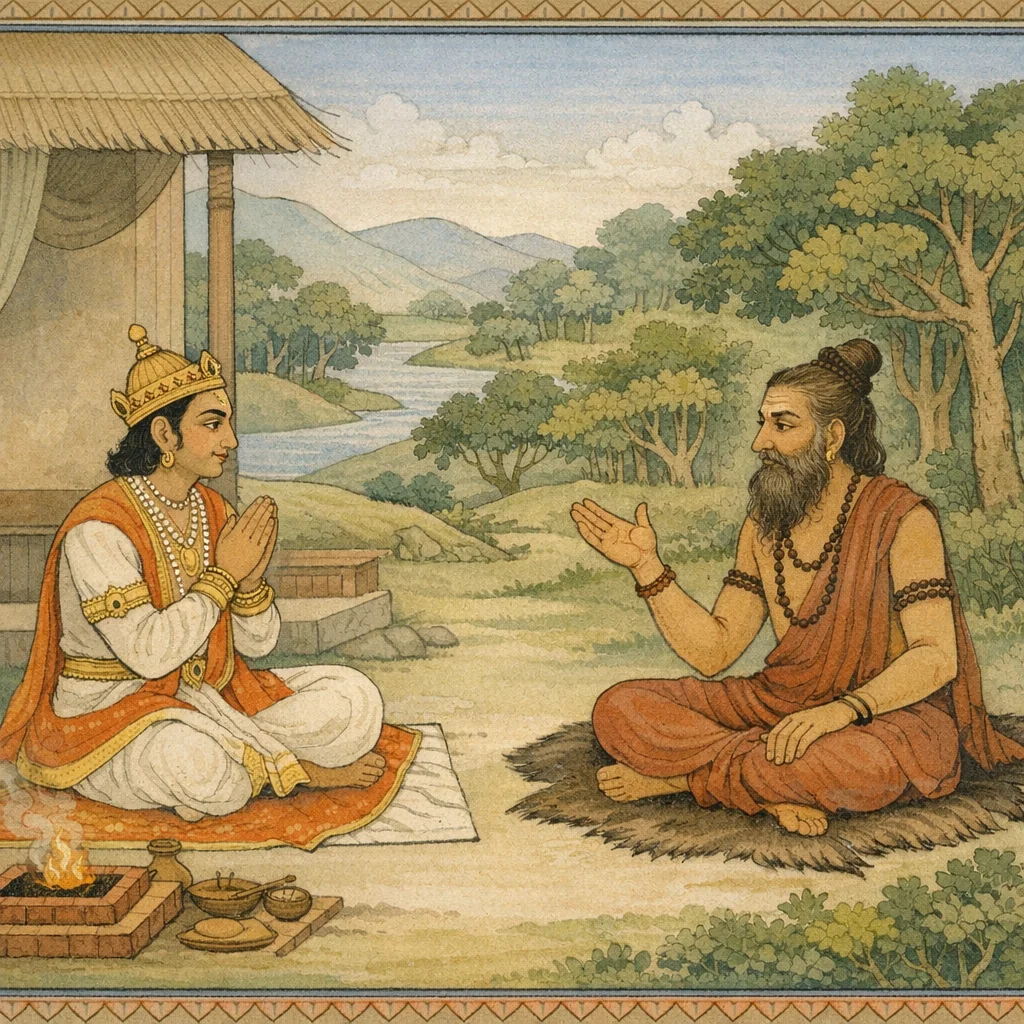
Adhyaya 296
अव्यक्त-प्रबोधः (Awakening to the Unmanifest): The 25th and 26th Principles and Eligibility for Brahma-vidyā
Upa-parva: Mokṣa-dharma (Liberation Teachings) — Sāṃkhya-oriented Discourse on Avyakta, the 25th and 26th Principles
This chapter presents a technical dialogue in which Vasiṣṭha explains the dynamics of the unmanifest (avyakta/prakṛti) operating through guṇas and continual transformation “for play,” generating and withdrawing forms. The teaching distinguishes states of cognition: the ‘unawakened’ condition in which avyakta is not properly known, and a ‘being-awakened’ condition that can still remain incomplete if it only yields identification such as “I am other.” A key analytic axis is tattva enumeration: the text repeatedly references the twenty-fifth principle and introduces a twenty-sixth, described as stainless, eternal, immeasurable, and fully awakened. Liberation is described as the abandonment of identification with the avyakta (subject to creation and dissolution) and the attainment of a ‘kevala’ (isolated/pure) condition through association with the ‘kevala’ principle, yielding equanimity and non-attachment. The chapter also provides a didactic protocol: this ‘supreme’ knowledge is not to be given to unethical, deceitful, or undisciplined recipients, but to those with faith, restraint, non-slander, purified yoga, patience, and steadiness. Bhīṣma concludes by situating the teaching in a transmission lineage (Hiraṇyagarbha → Vasiṣṭha → Nārada → Bhīṣma) and warns that ignorance results in recurring distress and repeated births; knowledge enables fearlessness regarding the perishable and imperishable.
Chapter Arc: जनक का तीक्ष्ण प्रश्न उठता है—यदि श्रुति कहती है कि ‘जिससे संतान उत्पन्न होती है, वही उसका स्वरूप है’, तो फिर ब्राह्मण-क्षत्रिय-वैश्य का भेद कैसे बना और ‘जाति’ का विशेषग्रहण क्यों हुआ? → पराशर श्रुति-वाक्य को स्वीकारते हुए भी बतलाते हैं कि तप के अपकर्ष (तप-क्षय) और कर्म-आचरण के पतन से ‘जाति-ग्रहण’ और वर्ण-विशेष की पहचान दृढ़ होती गई। जनक आगे दबाव बढ़ाते हैं—जब सब एक ब्रह्मा से उत्पन्न हैं तो गोत्रों की नानात्व-परंपरा कैसे? और मुनि-ऋषि ‘जहाँ-तहाँ’ विविध योनियों में कैसे प्रकट हुए—कहीं शुद्ध, कहीं वियोन (असामान्य/विविध) जन्म? → पराशर कर्म, तप, और आचरण-धर्म को निर्णायक ठहराते हैं—द्विजत्व (ब्राह्मण-क्षत्रिय-वैश्य) का अधिकार धर्म-पालन से है; विकर्म में स्थित वर्ण पतित होते हैं। इसी बिंदु पर अध्याय का शिखर है: जन्म-आधारित गर्व नहीं, बल्कि तप-क्षय/धर्म-क्षय और कर्म-शुद्धि ही ‘वर्ण’ की वास्तविक कसौटी है। → अध्याय संन्यास/वैराग्य की दिशा दिखाता है—जो विनयी, दमनशील, सुशिक्षित होकर कर्म-त्याग (अग्निहोत्रादि का परित्याग) और उदासीन भाव से स्थित होते हैं, वे ‘अजर स्थान’ को प्राप्त करते हैं। साथ ही यह भी कहा जाता है कि सभी वर्ण धर्मकार्य सम्यक् करके, सत्य बोलकर और अधर्म त्यागकर स्वर्गगति पा सकते हैं—यहाँ अनावश्यक विवाद नहीं। → जनक के प्रश्नों की गूँज बनी रहती है—यदि कर्म ही निर्णायक है, तो समाज में जन्म-आधारित भेद का व्यवहारिक न्याय कैसे साधा जाए?
Shlokas
Verse 1
इस प्रकार श्रीमहाभारत शान्तिपर्वके अन्तर्गत गोक्षधर्मपर्वमें पपाशरगीताविषयक दो सौ पंचानबेवाँ अध्याय पूरा हुआ ॥/ २९५ ॥। ऑपनआक्रात छा अर: षण्णवर्त्याधिकद्विशततमो< ध्याय: पराशरगीता--वर्णविशेषकी उत्पत्तिका रहस्य, तपोबलसे उत्कृष्ट वर्णकी प्राप्ति, विभिन्न वर्णोंके विशेष और सामान्य धर्म, सत्कर्मकी श्रेष्ठता तथा हिंसारहित धर्मका वर्णन जनक उवाच वर्णो विशेषवर्णानां महर्षे केन जायते । एतदिच्छाम्यहं ज्ञातुं तद् ब्रूहि वदतां वर,जनकने पूछा--वक्ताओंमें श्रेष्ठ महर्षे! ब्राह्मण आदि विशेष-विशेष वर्णोका जो वर्ण है, वह कैसे उत्पन्न होता है? यह मैं जानना चाहता हूँ। आप इस विषयको बतायें इस प्रकार श्रीमहाभारत शान्तिपर्वके अन्तर्गत गोक्षधर्मपर्वमें पराशरगीताविषयक दो सौ छानबेवाँ अध्याय पूरा हुआ ॥// २९६ ॥। ऑपनआक्रात बछ। अर: सप्तनवर्त्याधिकद्विशततमो< ध्याय: पराशरगीता--नाना प्रकारके धर्म और कर्तव्योंका उपदेश पराशर उवाच पिता सखायो गुरव: स्त्रियश्व न निर्गुणानां हि भवन्ति लोके | अनन्यभक्ता: प्रियवादिनश्न हिताश्च वश्याश्व भवन्ति राजन्
Janaka said: “O great sage, best of speakers, by what cause does the distinctive standing of the several social orders—Brahmins and the rest—arise? I wish to know this; tell me.” Parāśara said: “In this world, a father, friends, teachers, and women do not truly belong to one who is without virtues. But for a king of undivided devotion, pleasant speech, concern for others’ welfare, and self-mastery, they become well-disposed, beneficial, and compliant.”
Verse 2
यदेतज्जायते5पत्यं स एवायमिति श्रुति: । कथं ब्राह्मणतो जातो विशेषग्रहणं गत:,श्रुति कहती है कि जिससे यह संतान उत्पन्न होती है, तद्रूप ही समझी जाती है अर्थात् संततिके रूपमें जन्मदाता पिता ही नूतन जन्म धारण करता है। ऐसी दशामें प्रारम्भमें ब्रह्माजीसे उत्पन्न हुए ब्राह्मणोंसे ही सबका जन्म हुआ है, तब उनकी क्षत्रिय आदि विशेष संज्ञा कैसे हो गयी?
Janaka said: “Scripture declares, ‘The offspring that is born is none other than that very one (the progenitor).’ If so, when all beings originally arose from the Brāhmaṇas born of Brahmā, how did people come to be marked by distinct classifications such as Kṣatriya and the rest?”
Verse 3
पराशर उवाच एवमेतन्महाराज येन जात: स एव सः | तपसस्त्वपकर्षेण जातिग्रहणतां गत:,पराशरजीने कहा--महाराज! यह ठीक है कि जिससे जो जन्म लेता है, उसीका वह स्वरूप होता है तथापि तपस्याकी न्यूनताके कारण लोग निकृष्ट जातिको प्राप्त हो गये हैं
Parāśara said: “So it is, O great king: a being’s nature corresponds to the source from which it is born. Yet, when austerity and spiritual discipline decline, people come to be classified as belonging to lower conditions and ‘take on’ inferior birth-status.”
Verse 4
सुक्षेत्राच्च सुबीजाच्च पुण्यो भवति सम्भव: । अतोथ<न्यतरतो हीनादवरो नाम जायते,उत्तम क्षेत्र और उत्तम बीजसे जो जन्म होता है, वह पवित्र ही होता है। यदि क्षेत्र और बीजमेंसे एक भी निम्नकोटिका हो तो उससे निम्न संतानकी ही उत्पत्ति होती है
Parāśara said: “From a noble field and a noble seed, the birth that arises is indeed pure. But if either the field or the seed is inferior, then what is born is known to be inferior.”
Verse 5
वक्त्राद् भुजाभ्यामूरुभ्यां पदभ्यां चैवाथ जज्षिरे | सृजतः प्रजापतेलॉकानिति धर्मविदो विदु:,धर्मज्ञ पुरुष यह जानते हैं कि प्रजापति ब्रह्माजी जब मानव-जगत्की सृष्टि करने लगे, उस समय उनके मुख, भुजा, ऊरु और पैर--इन अंगोंसे मनुष्योंका प्रादुर्भाव हुआ था
Parāśara said: “Those who know dharma understand that when Prajāpati (Brahmā) set about bringing forth the worlds, human beings were born from his mouth, arms, thighs, and feet.”
Verse 6
मुखजा ब्राह्मणास्तात बाहुजा: क्षत्रिया: स्मृता: । ऊरुजा धनिनो राजन् पादजा: परिचारका:,तात! जो मुखसे उत्पन्न हुए, वे ब्राह्मण कहलाये। दोनों भुजाओंसे उत्पन्न होनेवाले मनुष्योंको क्षत्रिय माना गया। राजन! जो ऊरुओं (जाँघों) से उत्पन्न हुए, वे धनवान् (वैश्य) कहे गये; जिनकी उत्पत्ति चरणोंसे हुई, वे सेवक या शूद्र कहलाये
Parāśara said: “Dear one, those said to be born from the mouth are Brahmins; those born from the arms are remembered as Kshatriyas. O king, those born from the thighs are the wealthy (Vaiśyas); those born from the feet are attendants and servants (Śūdras).”
Verse 7
चतुर्णामेव वर्णानामागम: पुरुषर्षभ । अतोःन्ये त्वतिरिक्ता ये ते वै संकरजा: स्मृता:,पुरुषप्रवर! इस प्रकार ब्रह्माजीके चार अंगोंसे चार वर्णोकी ही उत्पत्ति हुई। इनसे भिन्न जो दूसरे-दूसरे मनुष्य हैं, वे इन्हीं चार वर्णोके सम्मिश्रणसे उत्पन्न होनेके कारण वर्णसंकर कहलाते हैं
Parāśara said: “O bull among men, the recognized origin is of the four varṇas alone. Those other people who are distinct from these are remembered as ‘born of mixture’ (varṇa-saṅkara), because they arise from intermixture among the four.”
Verse 8
क्षत्रियातिरथाम्बष्ठा उग्रा वैदेहकास्तथा । श्वपाका: पुल्कसा: स्तेना निषादा: सूतमागधा:,नरेश्वर! क्षत्रिय, अतिरथ, अम्बष्ठ, उग्र, वैदेह, श्वपाक, पुल्कस, स्तेन, निषाद, सूत, मागध, अयोग, करण, व्रात्य और चाण्डाल--ये ब्राह्मण आदि चार वर्णोसे अनुलोम और विलोम वर्णकी स्त्रियोंके साथ परस्पर संयोग होनेसे उत्पन्न होते हैं
Parāśara said: “Kṣatriyas, Atirathas, Ambaṣṭhas, Ugras, and Vaidehakas; likewise Śvapākas, Pulkasas, Stenas, Niṣādas, Sūtas, and Māgadhas—O king—these are the named social groups spoken of as arising from intermixture among the four varṇas, through unions described as ‘in order’ (anuloma) and ‘against order’ (viloma).”
Verse 9
अयोगा: करणा व्रात्याक्षाण्डालाश्ष नराधिप । एते चतुर्भ्यो वर्णेभ्यो जायन्ते वै परस्परात्,नरेश्वर! क्षत्रिय, अतिरथ, अम्बष्ठ, उग्र, वैदेह, श्वपाक, पुल्कस, स्तेन, निषाद, सूत, मागध, अयोग, करण, व्रात्य और चाण्डाल--ये ब्राह्मण आदि चार वर्णोसे अनुलोम और विलोम वर्णकी स्त्रियोंके साथ परस्पर संयोग होनेसे उत्पन्न होते हैं
Parāśara said: “O king, the Ayoga, Karaṇa, Vrātya, and Cāṇḍāla—and likewise the Kṣatriya, Atiratha, Ambaṣṭha, Ugra, Vaideha, Śvapāka, Pulkasa, Stena, Niṣāda, Sūta, and Māgadha—are said to arise through intermixture among the four primary social orders. O ruler of men, these groups are described as being born from unions (both ‘in the natural order’ and ‘against the order’) between women of the four varṇas, through mutual combinations.”
Verse 10
जनक उवाच ब्रह्मणैकेन जातानां नानात्वं गोत्रत: कथम् | बहूनीह हि लोके वै गोत्राणि मुनिसत्तम,जनकने पूछा--मुनिश्रेष्ठ!ी जब सबको एकमात्र ब्रह्माजीने ही जन्म दिया है, तब मनुष्योंके भिन्न-भिन्न गोत्र कैसे हुए? इस जगत्में मनुष्योंके बहुत-से गोत्र सुने जाते हैं
Janaka said: “O best of sages, if all beings are born from the one Brahmā alone, how has diversity arisen in terms of gotra (lineage)? For in this world, indeed, many gotras are spoken of.”
Verse 11
यत्र तत्र कथं जाता: स्वयोनिं मुनयो गता: । शुद्धयोनौ समुत्पन्ना वियोनौ च तथा परे,ऋषि-मुनि जहाँ-तहाँ जन्म ग्रहण करके अर्थात् जो शुद्ध योनिमें और दूसरे जो विपरीत योनिमें उत्पन्न हुए हैं, वे सब ब्राह्मणत्वको कैसे प्राप्त हुए?
Janaka asked: “How did the munis, taking birth here and there, attain their own proper spiritual lineage? Those born from ‘pure’ wombs and likewise others born from ‘irregular’ or contrary wombs—by what means did all of them reach Brahminhood?”
Verse 12
पराशर उवाच राजन्नेतद् भवेद् ग्राह्ममपकृष्टेन जन्मना | महात्मनां समुत्पत्तिस्तपसा भावितात्मनाम्,पराशरजीने कहा--राजन्! तपस्यासे जिनके अन्तःकरण शुद्ध हो गये हैं, उन महात्मा पुरुषोंके द्वारा जिस संतानकी उत्पत्ति होती है, अथवा वे स्वेच्छासे जहाँ-कहीं भी जन्म ग्रहण करते हैं, वह क्षेत्रकी दृष्टिसे निकृष्ट होनेपर भी उसे उत्कृष्ट ही मानना चाहिये
Parāśara said: “O King, this principle should be accepted: even if the place or circumstance of birth is considered inferior, the birth (or manifestation) of great-souled persons—whose inner being has been refined by austerity—should be regarded as noble. Such perfected ones may even take birth wherever they choose; therefore, a person’s worth is not to be judged by the supposed lowliness of the field (family, region, or womb) but by the spiritual power and purity that shape their coming into the world.”
Verse 13
उत्पाद्य पुत्रान् मुनयो नृपते यत्र तत्र ह । स्वेनैव तपसा तेषामृषित्वं विदधु: पुन:,नरेश्वर! मुनियोंने जहाँ-तहाँ कितने ही पुत्र उत्पन्न करके उन सबको अपने ही तपोबलसे ऋषि बना दिया
Parāśara said: “O king, the sages, having begotten many sons here and there, then by the power of their own austerities again conferred upon those sons the status and spiritual authority of seers.”
Verse 14
पितामहमश्न मे पूर्वमृष्यशृद्भश्च काश्यप: । वेदस्ताण्ड्य: कृपश्चैव कक्षीवान् कमठादय:
Parāśara said: “In former times, when I was taking my meal, my grandsire was present, and also the sages Ṛṣyaśṛṅga and Kāśyapa—together with Veda, Tāṇḍya, Kṛpa, Kakṣīvān, and others such as Kamaṭha.”
Verse 15
यवक्रीतश्न नृपते द्रोणश्व॒ वदतां वर: । आयुर्मतज़ो दत्तश्न ट्रपदो मत्स्य एव च
Parāśara said: “O king, Yavakrīta, Droṇa—the foremost among speakers—Āyurmatta, Datta, Tṛpaṇa, and Matsya as well: these are among the notable figures being recalled here.”
Verse 16
एते स्वां प्रकृति प्राप्ता वैदेह तपसो5<5श्रयात् । प्रतिष्ठिता वेदविदो दमेन तपसैव हि
Parāśara said: “These have attained their own true nature, O Vaideha, by taking refuge in austerity. Indeed, those who know the Veda become firmly established through self-restraint and through austerity alone.”
Verse 17
विदेहराज! मेरे पितामह वसिष्ठजी, काश्यप-गोत्रीय ऋष्यशुड्र, वेद, ताण्ड्य, कृप, कक्षीवानू, कमठ आदि, यवक्रीत, वक्ताओंमें श्रेष्ठ द्रोण, आयु, मतंग, दत्त, ट्रपद तथा मत्स्य >-ये सब तपस्याका आश्रय लेनेसे ही अपनी-अपनी प्रकृतिको प्राप्त हुए थे। इन्द्रियसंयम और तपसे ही वे वेदोंके विद्वान् तथा समाजमें प्रतिष्ठित हुए थे ।। मूलगोत्राणि चत्वारि समुत्पन्नानि पार्थिव । अज्िरा: कश्यपश्चैव वसिष्ठो भूगुरेव च,पृथ्वीनाथ! पहले अंगिरा, कश्यप, वसिष्ठ और भृगु--ये ही चार मूल गोत्र प्रकट हुए थे। अन्य गोत्र कर्मके अनुसार पीछे उत्पन्न हुए हैं। वे गोत्र और उनके नाम उन गोत्र-प्रवर्तक महर्षियोंकी तपस्यासे ही साधु-समाजमें सुविख्यात एवं सम्मानित हुए हैं
Parāśara said: “O king, in the beginning only four original lineages (gotras) came forth—Aṅgiras, Kaśyapa, Vasiṣṭha, and Bhṛgu. The other gotras arose later in accordance with conduct and vocation. These lineages and their names became widely known and honored among the virtuous because their founding sages attained distinction through austerity and self-restraint.”
Verse 18
कर्मतो<न्यानि गोत्राणि समुत्पन्नानि पार्थिव । नामधेयानि तपसा तानि च ग्रहणं सताम्,पृथ्वीनाथ! पहले अंगिरा, कश्यप, वसिष्ठ और भृगु--ये ही चार मूल गोत्र प्रकट हुए थे। अन्य गोत्र कर्मके अनुसार पीछे उत्पन्न हुए हैं। वे गोत्र और उनके नाम उन गोत्र-प्रवर्तक महर्षियोंकी तपस्यासे ही साधु-समाजमें सुविख्यात एवं सम्मानित हुए हैं
Parāśara said: “O king, other lineages (gotras) arose later according to people’s deeds and functions. Their very names, established through the austerities of the founding sages, came to be accepted and honored among the virtuous.”
Verse 19
जनक उवाच विशेषधर्मान् वर्णानां प्रब्रूहि भगवन् मम । ततः सामान्यधर्मश्चि सर्वत्र कुशलो हासि,जनकने पूछा--भगवन्! आप मुझे सब वर्णोके विशेष धर्म बताइये, फिर सामान्य धर्मोंका भी वर्णन कीजिये; क्योंकि आप सब विषयोंका प्रतिपादन करनेमें कुशल हैं
Janaka said: “O Blessed one, please explain to me the particular duties of the social orders. Then also describe the duties that are common to all; for you are indeed skilled in setting forth what is wholesome in every sphere.”
Verse 20
पराशर उवाच प्रतिग्रहो याजनं च तथैवाध्यापनं नृप । विशेषधर्मा विप्राणां रक्षा क्षत्रस्य शोभना,पराशरजीने कहा--राजन! दान लेना, यज्ञ कराना तथा विद्या पढ़ाना--ये ब्राह्मणोंके विशेष धर्म हैं (जो उनकी जीविकाके साधन हैं)। प्रजाकी रक्षा करना क्षत्रियके लिये श्रेष्ठ धर्म है
Parāśara said: “O king, accepting gifts, officiating sacrifices for others, and teaching sacred learning—these are the particular duties of Brahmins. Protecting the people is the most excellent duty of Kṣatriyas.”
Verse 21
कृषिश्च पाशुपाल्यं च वाणिज्यं च विशामपि । द्विजानां परिचर्या च शूद्रकर्म नराधिप,नरेश्वर! कृषि, पशुपालन और व्यापार--ये वैश्योंके कर्म हैं तथा द्विजातियोंकी सेवा शूद्रका धर्म है
Parāśara said: “Agriculture, the tending of cattle, and trade are the duties of the Vaiśyas. Service and attendance upon the twice-born is the proper work of the Śūdra, O king.”
Verse 22
विशेषधर्मा नृपते वर्णानां परिकीर्तिता: । धर्मान् साधारणांस्तात विस्तरेण शृणुष्व मे,महाराज! ये वर्णोंके विशेष धर्म बताये गये हैं। तात! अब उनके साधारण धर्मोंका विस्तारपूर्वक वर्णन मुझसे सुनो
O king, the particular duties of the social orders have already been set forth. Now, dear one—O great king—listen to me as I explain in detail the common duties that apply to all.
Verse 23
आनृशंस्यमहिंसा चाप्रमाद: संविभागिता । श्राद्धकर्मातिथेयं च सत्यमक्रोध एव च
Parāśara said: “Compassion and non-violence, vigilance (freedom from negligence), and the habit of sharing; the performance of śrāddha rites and hospitality to guests; truthfulness and, indeed, the absence of anger—these are the virtues to be upheld.”
Verse 24
स्वेषु दारेषु संतोष: शौच॑ नित्यानसूयता । आत्मज्ञानं तितिक्षा च धर्मा: साधारणा नृप
Parāśara said: “O king, the common duties that uphold all people are these: contentment with one’s own spouse, purity of conduct, constant freedom from envy and fault-finding, knowledge of the Self, and patient endurance. These form the ethical ground on which dharma stands.”
Verse 25
क्रूरताका अभाव (दया), अहिंसा, अप्रमाद (सावधानी), देवता-पितर आदिको उनके भाग समर्पित करना अथवा दान देना, श्राद्धकर्म, अतिथिसत्कार, सत्य, अक्रोध, अपनी ही पत्नीमें संतुष्ट रहना, पवित्रता रखना, कभी किसीके दोष न देखना, आत्मज्ञान तथा सहनशीलता--ये सभी वर्णोंके सामान्य धर्म हैं ।। ब्राह्मणा: क्षत्रिया वैश्यास्त्रयो वर्णा द्विजातय: । अत्र तेषामधीकारो धर्मेषु द्विपदां वर
Parāśara declares: “Compassion in place of cruelty, non-violence, and vigilance; offerings of one’s due share to the gods and the ancestors (pitṛs), or the giving of charity; the performance of śrāddha; hospitality to guests; truthfulness; freedom from anger; fidelity and contentment with one’s own wife; purity; refraining from censuring others or seeking out their faults; knowledge of the Self; and forbearance—these are the common duties of all the social orders. The Brahmins, Kshatriyas, and Vaishyas—these three are the twice-born. In these matters of dharma, O best of men, they possess the proper authority and eligibility.”
Verse 26
नरश्रेष्ठ! ब्राह्मण, क्षत्रिय और वैश्य--ये तीन वर्ण द्विजाति कहलाते हैं। उपर्युक्त धर्मोमें इन्हींका अधिकार है ।। विकर्मावस्थिता वर्णा: पतन्ते नृपते त्रयः । उन्नमन्ति यथासन्तमश्रित्येह स्वकर्मसु,नरेश्वर! ये तीन वर्ण विपरीत कर्मोमें प्रवृत्त होनेपर पतित हो जाते हैं। सत्पुरुषोंका आश्रय ले अपने-अपने कर्मोमें लगे रहनेसे जैसे इनकी उन्नति होती है, वैसे ही विपरीत कर्मोके आचरणसे पतन भी हो जाता है
O best of men! The Brahmin, the Kshatriya, and the Vaishya—these three are called the twice-born, and it is they who have the rightful claim to the duties described above. O king, when these three orders take to forbidden or contrary actions, they fall from their proper standing. But when, in this world, they take refuge in the guidance of the good and remain established in their own prescribed work, they rise accordingly. O lord of men, just as adherence to one’s own duty under the shelter of the virtuous brings uplift, so the practice of contrary deeds brings decline.
Verse 27
न चापि शूद्र: पततीति निश्चयो न चापि संस्कारमिहाहतीति वा । श्रुतिप्रवृत्त न च धर्ममाप्तुते न चास्य धर्मे प्रतिषेधनं कृतम्,यह निश्चय है कि शूद्र पतित नहीं होता तथा वह उपनयन आदि संस्कारका भी अधिकारी नहीं है। उसे वैदिक अग्निहोत्र आदि कर्मोके अनुष्ठानका भी अधिकार नहीं प्राप्त है; परंतु उपर्युक्त सामान्य धर्मोका उसके लिये निषेध भी नहीं किया गया है
Parāśara said: “It is a settled conclusion that a Śūdra does not become ‘fallen’ (by the kinds of lapses discussed for the twice-born), nor is he here regarded as entitled to the consecratory rites such as upanayana. He does not obtain the right to Veda-based duties set in motion by śruti—such as the Vedic fire-rites. Yet, with respect to the general duties of right conduct, no prohibition has been laid down for him.”
Verse 28
वैदेह कं शूद्रमुदाहरन्ति द्विजा महाराज श्रुतोपपन्ना: । अहं हि पश्यामि नरेन्द्र देवं विश्वस्य विष्णुं जगत: प्रधानम्,महाराज विदेहनरेश! वेद-शास्त्रोंके ज्ञानसे सम्पन्न द्विज शूद्रको प्रजापतिके तुल्य बताते हैं (क्योंकि वह परिचर्यद्वारा समस्त प्रजाका पालन करता है); परंतु नरेन्द्र! मैं तो उसे सम्पूर्ण जगतके प्रधान रक्षक भगवान् विष्णुके रूपमें देखता हूँ (क्योंकि पालन कर्म विष्णुका ही है और वह अपने उस कर्मद्वारा पालनकर्ता श्रीहरिकी आराधना करके उन्हींको प्राप्त होता है)
Parāśara said: “O king of Videha, the learned twice-born, grounded in the authority of sacred learning, describe the Śūdra as comparable to Prajāpati, for through service he sustains and supports the whole community. Yet, O ruler of men, I behold him as the very Viṣṇu of the universe—the foremost guardian of the world—because the work of protection and maintenance is truly Viṣṇu’s own; by performing that sustaining duty, he worships Hari through action and attains Him.”
Verse 29
सतां वृत्तमधिष्ठाय निहीना उद्दिधीर्षव: । मन्त्रवर्ज न दुष्यन्ति कुर्वाणा: पौष्टिकी: क्रिया:,हीनवर्णके मनुष्य (शूद्र) यदि अपना उद्धार करना चाहें तो सदाचारका पालन करते हुए आत्माको उन्नत बनानेवाली समस्त क्रियाओंका अनुष्ठान करें; परंतु वैदिक मन्त्रका उच्चारण न करें। ऐसा करनेसे वे दोषके भागी नहीं होते हैं
Parāśara said: Those of lower social standing who wish to raise themselves should take their stand upon the conduct of the virtuous and perform all practices that strengthen and elevate the self; but they should not utter Vedic mantras. When they act in this way, they do not incur fault.
Verse 30
यथा यथा हि सद्वृत्तमालम्बन्तीतरे जना: । तथा तथा सुख प्राप्य प्रेत्य चेह च मोदते,इतर जातीय मनुष्य भी जैसे-जैसे सदाचारका आश्रय लेते हैं, वैसे-ही-वैसे सुख पाकर इहलोक और परलोकमें भी आनन्द भोगते हैं
Parāśara said: “In whatever measure people take refuge in good conduct, in that very measure they attain happiness; and having gained it, they rejoice both here in this world and after death in the next.”
Verse 31
जनक उवाच कि कर्म दूषयत्येनमथो जातिर्महामुने । संदेहो मे समुत्पन्नस्तन्मे व्याख्यातुमहसि,जनकने पूछा--महामुने! मनुष्यको उसके कर्म दूषित करते हैं या जाति? मेरे मनमें यह संदेह उत्पन्न हुआ है, आप इसका विवेचन कीजिये
Janaka said: “O great sage, what is it that truly taints a person—his actions, or his birth? A doubt has arisen in my mind; please explain this to me.”
Verse 32
पराशर उवाच असंशयं महाराज उभयं दोषकारकम् | कर्म चैव हि जातिश्न विशेष तु निशामय,पराशरजीने कहा--महाराज! इसमें संदेह नहीं कि कर्म और जाति दोनों ही दोषकारक होते हैं; परंतु इसमें जो विशेष बात है, उसे बताता हूँ, सुनो
Parāśara said: “O great king, there is no doubt of this: both one’s actions and one’s birth can become causes of fault. Yet there is a crucial distinction between them—listen carefully as I explain it.”
Verse 33
जात्या च कर्मणा चैव दुष्ट कर्म न सेवते । जात्या दुष्टश्न यः पापं न करोति स पूरुष:,जो जाति और कर्म--इन दोनोंसे श्रेष्ठ तथा पापकर्मका सेवन नहीं करता एवं जातिसे दूषित होकर भी जो पापकर्म नहीं करता है, वही पुरुष कहलाने योग्य है
Parāśara said: “He who, by both birth and conduct, does not resort to wicked deeds is truly worthy. Even if one is considered tainted by birth, the person who still does not commit sin—he alone deserves to be called a true man.”
Verse 34
जात्या प्रधान पुरुष कुर्वाणं कर्म धिकृकृतम् । कर्म तद् दूषयत्येनं तस्मात् कर्म न शोभनम्
Parāśara said: “When a person, by birth, is of the higher order (pradhāna) and yet performs a deed that is contemptible, that very deed stains him. Therefore such action is not becoming (for him), for it degrades the doer and undermines the dignity expected of his station.”
Verse 35
जातिसे श्रेष्ठ पुरुष भी यदि निन्दित कर्म करता है तो वह कर्म उसे कलंकित कर देता है; इसलिये किसी भी दृष्टिसे बुरा कर्म करना अच्छा नहीं है ।। जनक उवाच कानि कर्माणि धर्म्याणि लोके5स्मिन् द्विजसत्तम । न हिंसन्तीह भूतानि क्रियमाणानि सर्वदा
“Even a man of noble birth, if he performs a censured deed, is stained by that deed; therefore, from any standpoint, doing evil is not good.” Then Janaka said: “O best of the twice-born, what actions in this world are truly in accordance with dharma—those which, when performed at all times, do not harm living beings?”
Verse 36
जनकने पूछा-<द्विजश्रेष्ठ] इस लोकमें कौन-कौन-से ऐसे धर्मानुकूल कर्म हैं, जिनका अनुष्ठान करते समय कभी किसी भी प्राणीकी हिंसा नहीं होती? ।। पराशर उवाच शृणु मे5त्र महाराज यन्मां त्वं परिपृच्छसि । यानि कर्माण्यहिंस्राणि नरं त्रायन्ति सर्वदा
King Janaka asked: “O best of the twice-born, what deeds in this world are in accord with dharma, such that in performing them one never harms any living being?” Parāśara said: “Listen, O great king, to what you ask of me. I shall speak of deeds free from violence—actions whose performance harms no creature—and which ever protect and uplift a person.”
Verse 37
पराशरजीने कहा--महाराज! तुम जिन कर्मोंके विषयमें पूछ रहे हो, उन्हें बताता हूँ, मुझसे सुनो। जो कर्म हिंसासे रहित हैं, वे सदा मनुष्यकी रक्षा करते हैं ।। संन्यस्याग्नीनुदासीना: पश्यन्ति विगतज्वरा: । नै:श्रेयसं कर्मपथं समारुह्मु यथाक्रमम्,जो लोग (संन्यासकी दीक्षा ले) अग्निहोत्रका त्याग करके उदासीनभावसे सब कुछ देखते रहते हैं और सब प्रकारकी चिन्ताओंसे रहित हो क्रमश: कल्याणकारी कर्मके पथपर आरूढ़ होकर नम्रता, विनय और इन्द्रियसंयम आदि गुणोंको अपनाते तथा तीक्ष्ण व्रतका पालन करते हैं, वे सब कर्मोंसे रहित हो अविनाशी पदको प्राप्त कर लेते हैं
Parāśara said: “O great king, I will tell you of the actions you ask about—listen to me. Deeds free from violence always protect a person. Those who, having embraced renunciation, abandon the sacred fires and behold all things with detachment, their fever of anxiety gone—such people ascend, step by step, the path of practice that leads to the highest good; and by adopting humility, discipline, restraint of the senses, and austere vows, they become free from all binding action and attain the imperishable state.”
Verse 38
प्रश्निता विनयोपेता दमनित्या: सुसंशिता: । प्रयान्ति स्थानमजरं सर्वकर्मविवर्जिता:,जो लोग (संन्यासकी दीक्षा ले) अग्निहोत्रका त्याग करके उदासीनभावसे सब कुछ देखते रहते हैं और सब प्रकारकी चिन्ताओंसे रहित हो क्रमश: कल्याणकारी कर्मके पथपर आरूढ़ होकर नम्रता, विनय और इन्द्रियसंयम आदि गुणोंको अपनाते तथा तीक्ष्ण व्रतका पालन करते हैं, वे सब कर्मोंसे रहित हो अविनाशी पदको प्राप्त कर लेते हैं
Those who, though questioned and tested, remain endowed with humility and disciplined conduct—firmly restrained and well-trained—advance to the unaging state. Having relinquished all binding action (the possessive sense of agency and attachment), they attain the imperishable goal through a life of restraint, modesty, and steady vows.
Verse 39
सर्वे वर्णा धर्मकार्याणि सम्यक् कृत्वा राजन् सत्यवाक्यानि चोकक््त्वा । त्यक्त्वाधर्म दारुणं जीवलोके यान्ति स्वर्ग नात्र कार्यो विचार:,राजन! सभी वर्णोके लोग इस जीव-जगतमें अपने-अपने धर्मानुसार कर्मका भलीभाँति अनुष्ठान करके, सदा सत्य बोलकर तथा भयानक पापकर्मका सर्वथा परित्याग करके स्वर्गलोकमें जाते हैं। इस विषयमें कोई अन्यथा विचार नहीं करना चाहिये
Parāśara said: “O King, people of all the social orders, having properly carried out the duties enjoined by dharma, having spoken truthful words, and having completely abandoned cruel unrighteousness in this world of living beings, attain heaven. On this point, O King, there is no need for further doubt or debate.”
Verse 296
इति श्रीमहाभारते शान्तिपर्वणि मोक्षधर्मपर्वणि पराशरगीतायां षण्णवत्यधिकद्धिशततमो< ध्याय:
Thus ends the two-hundred-and-ninety-sixth chapter in the Mokṣadharma section of the Śānti Parva of the Śrī Mahābhārata, within the discourse known as the Parāśara Gītā.
Frequently Asked Questions
The chapter distinguishes the unmanifest prakṛti operating through guṇas from higher knowing principles discussed via tattva counts (25th and a 26th), mapping liberation to dis-identification from guṇa-bound transformation.
The instruction treats equanimity and non-attachment as the functional outcome of correct discrimination: when identification with prakṛti’s changes is relinquished, the agent stabilizes in a purified, independent standpoint.
Yes. It explicitly restricts teaching to ethically qualified recipients (truthful, restrained, non-deceptive, disciplined, and sincere) and denies it to those characterized by harmful intent or lack of self-control, presenting eligibility as integral to mokṣa-oriented instruction.