Adhyaya 289
सांख्ययोगभेदः तथा योगबलोपदेशः (Sāṃkhya–Yoga Distinction and Instruction on Yogic Strength)
Upa-parva: Mokṣa-dharma (Liberation Teachings) — Sāṃkhya–Yoga Delineation
Yudhiṣṭhira requests a precise differentiation between Sāṃkhya and Yoga. Bhīṣma notes sectarian self-commendation—each school argues its superiority—then provides a reconciliatory verdict: both are legitimate, śiṣṭa-approved paths to the highest end when practiced as taught, sharing comparable ethical observances (purity, compassion, vows) while differing in ‘darśana’ (method of apprehending reality). The chapter then develops Yoga’s operative advantage as ‘bala’ (stabilized capacity): by cutting five defects—rāga, moha, sneha, kāma, krodha—the yogin escapes binding conditions, illustrated through images of fish and birds in nets, beings swept by a current, and fire that either dies when weak or consumes widely when strengthened. Bhīṣma further lists practical disciplines for building yogic strength (austere diet, restraint, fasting, endurance of opposites, conquest of fear/sleep/breath agitation, and control of craving and sensory contacts). He warns that the yogic path is hazardous like a difficult forest or razor’s edge; failed dhāraṇā leads to adverse outcomes, while correct dhāraṇā releases one from birth, death, suffering, and pleasure. The discourse culminates in an expansive theological-metaphysical register, describing the yogin’s entry into the great principle (paraṃ brahma) and a comprehensive cosmological scope, closing with a Nārāyaṇa-centered framing of supreme mastery.
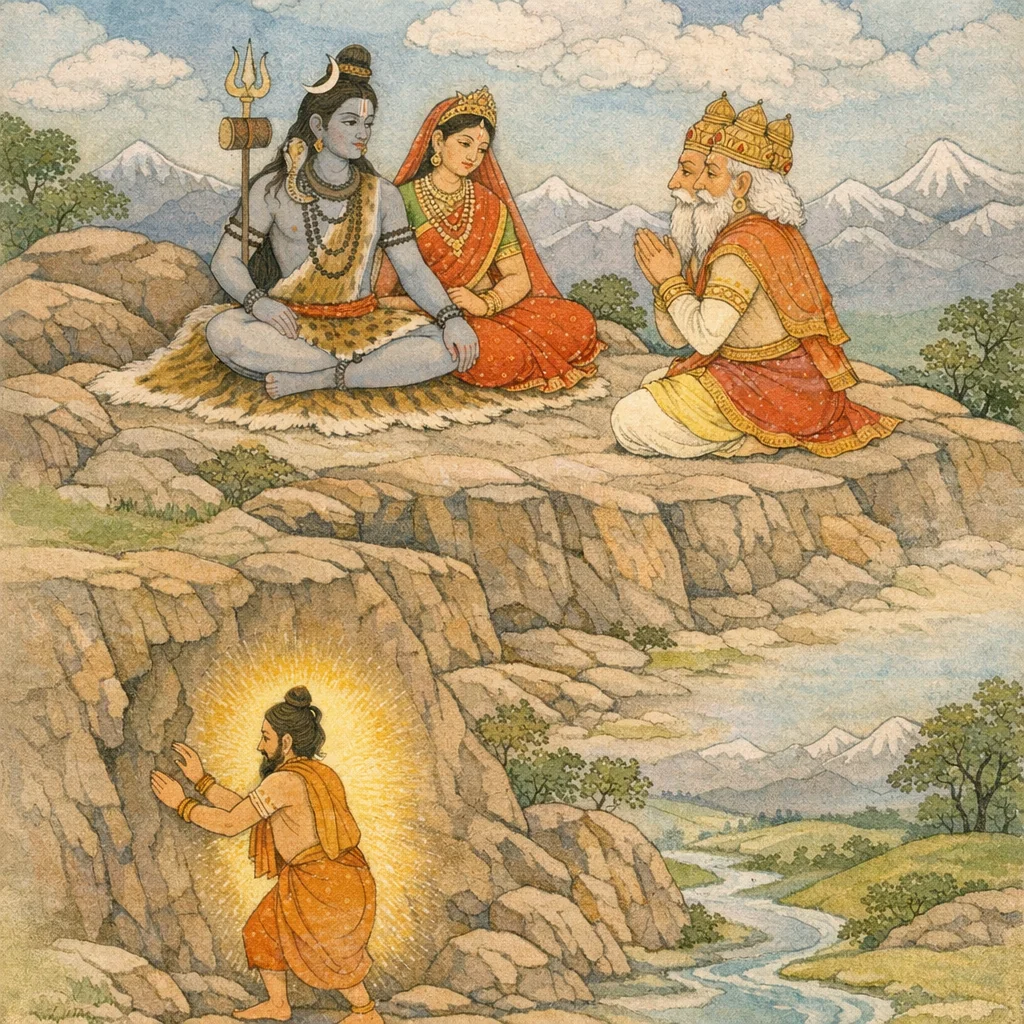
Chapter Arc: युधिष्ठिर के मन में पुराना कौतूहल जाग उठता है—देवर्षि उशना (काव्य) सदा असुरों के प्रिय और देवों के अप्रिय क्यों रहे, और उन्होंने दानवों का तेज किस हेतु बढ़ाया? → प्रश्न के उत्तर में उशना के चरित्र का प्रसंग खुलता है: देव-दानव वैर की पृष्ठभूमि में उशना की नीति-बुद्धि, कवित्व-सम्पदा और असुर-पक्ष की सहायता पर शंका गहराती जाती है। कथा शिव-लोक/शिव-सान्निध्य की ओर मुड़ती है, जहाँ उशना की साधना और उनके मार्ग में दैवी-तेज का अवरोध उपस्थित होता है। → महायोगी महेश्वर क्रुद्ध होकर शूल धारण करते हैं; उशना शिव-तेज से घिरे हुए ‘द्वार’ न देख पाने के कारण भीतर ही भीतर दग्ध-सा होकर चक्कर काटते हैं—यह क्षण साधक की सीमा और ईश्वर-तेज की अपरिहार्यता को चरम पर ले आता है। → ब्रह्मा शिव से तपोवृद्धि का कुशल पूछते हैं; अंततः उशना वरदायक महादेव और देवी उमा को प्रणाम कर इच्छित गति/सिद्धि प्राप्त करते हैं—और ‘उशना’ से ‘शुक्र’ नाम-प्राप्ति का कारण-प्रसंग स्थापित होता है।
Shlokas
Verse 1
ऑपन-मा_ज बछ। जज: एकोननवर्त्याधेकद्विशततमो< ध्याय: भूगुपुत्र 3उशनाका चरित्र और उन्हें शुक्र नामकी प्राप्ति युधिछिर उवाच तिछ्ठते मे सदा तात कौतूहलमिदं हृदि । तदहं श्रोतुमिच्छामि त्वत्त: कुरूपितामह,युधिष्ठिरने पूछा--तात! कुरुकुलके पितामह! मेरे हृदयमें चिरकालसे यह एक कौतूहलपूर्ण प्रश्न खड़ा है, जिसका समाधान मैं आपके मुखसे सुनना चाहता हूँ
Yudhiṣṭhira said: “O dear revered one, this question—full of wonder—has long remained in my heart. O grandsire of the Kurus, I wish to hear its resolution from you.”
Verse 2
कथं देवर्षिरुशना सदा काव्यो महामति: । असुराणां प्रियकर: सुराणामप्रिये रत:,परम बुद्धिमान् कवित्वसम्पन्न देवर्षि उशना क्यों सदा ही असुरोंका प्रिय तथा देवताओंका अप्रिय करनेमें लगे रहते हैं?
Yudhishthira asked: “How is it that the divine seer Ushanas—Kavya, a great-minded sage—seems always intent on pleasing the Asuras, and takes delight in what is displeasing to the Devas?”
Verse 3
वर्धयामास तेजश्न किमर्थममितौजसाम् | नित्यं वैरनिबद्धाश्न दानवा: सुरसत्तमै:,उन्होंने अमित तेजस्वी दानवोंका तेज किसलिये बढ़ाया? दानव तो सदा श्रेष्ठ देवताओंके साथ वैर ही बाँधे रहते हैं
Yudhiṣṭhira said: “For what reason did he increase the splendor and power of those mighty Daṇavas? For the Daṇavas are ever bound to enmity with the best of the gods.”
Verse 4
कथं चाप्युशना प्राप शुक्रत्वममरद्युति: । ऋद्धिं च स कथं प्राप्त: सर्वमेतद् वदस्व मे,देवोपम तेजस्वी मुनिवर उशनाका नाम शुक्र क्यों हो गया? उन्हें ऋद्धि कैसे प्राप्त हुई? यह सब मुझे बताइये
Yudhiṣṭhira said: “How did Uśanā, radiant like an immortal, come to be known as Śukra? And how did he attain extraordinary prosperity and spiritual accomplishment? Tell me all of this.”
Verse 5
न याति च स तेजस्वी मध्येन नभस: कथम् | एतदिच्छामि विज्ञातुं नेखिलेन पितामह,पितामह! देवर्षि उशना हैं तो बड़े तेजस्वी; परंतु वे आकाशके बीचसे होकर क्यों नहीं जाते? इन सब बातोंको मैं पूर्णरूपसे जानना चाहता हूँ
Yudhiṣṭhira said: “How is it that that radiant one does not pass through the very middle of the sky? Grandfather, I wish to understand this matter completely—tell me in full.”
Verse 6
भीष्म उवाच शृणु राजन्नवहित: सर्वमेतद् यथातथम् । यथामति यथा चैतच्छुतपूर्व मयानघ,भीष्मजीने कहा--निष्पाप नरेश! मैंने इन सब बातोंको पहले जिस तरह सुन रखा है, वह सारा वृत्तान्त अपनी बुद्धिके अनुसार यथार्थरूपसे बता रहा हूँ, तुम ध्यानपूर्वक सुनो
Bhishma said: “Listen, O king, with full attention. I shall relate all this exactly as it is—according to my understanding and as I previously heard it, O sinless one.”
Verse 7
एष भार्गवदायादो मुनिर्मान्यो दृढव्रत: । सुराणां विप्रियकरो निमित्ते कारणात्मके,ये भृगुपुत्र मुनिवर उशना सबके लिये माननीय तथा दृढ़तापूर्वक उत्तम व्रतका पालन करनेवाले हैं। एक विशेष कारण बन जानेसे रुष्ट होकर ये देवताओंके विरोधी हो गये+-
Bhīṣma said: “This sage, a descendant of Bhṛgu, is worthy of honor and steadfast in his vows. Yet, due to a particular causal circumstance—an occasion that became the very reason—he turned into one who acted against the wishes of the gods, becoming displeasing to them.”
Verse 8
इन्द्रोड<थ धनदो राजा यक्षरक्षो5धिप: सदा | प्रभविष्णुश्न कोशस्य जगतश्च तथा प्रभु: ८ ।। उस समय इन्द्र तीनों लोकोंके अधीश्वर थे और सदा यक्षों तथा राक्षसोंके अधिपति प्रभावशाली जगत्पति राजा कुबेर उनके कोषाध्यक्ष बनाये गये थे
Bhishma said: “At that time Indra was the sovereign lord of the three worlds. Kubera, the wealthy king (Dhanada), ever the overlord of the Yakshas and Rakshasas, powerful and authoritative, was appointed as the guardian of the treasury and as a ruler entrusted with the world’s prosperity.”
Verse 9
तस्यात्मानमथाविश्य योगसिद्धो महामुनि: । रुद्ध्वा धनपतिं देवं योगेन हृतवान् वसु,योगसिद्ध महामुनि उशनाने योगबलसे धनाध्यक्ष कुबेरके भीतर प्रवेश करके उन्हें अपने काबूमें कर लिया और उनके सारे धनका अपहरण कर लिया
Bhīṣma said: “Then that great sage, perfected in yoga, entered into him (by yogic power). Having restrained the divine Lord of Wealth, he carried off the treasure by yoga.”
Verse 10
ह्वते धने ततः शर्म न लेभे धनदस्तथा । आपकन्नमन्यु: संविग्न: सो5भ्यगात् सुरसत्तमम्,धनका अपहरण हो जानेपर कुबेरको चैन नहीं पड़ा। वे कुपित और उद्विग्न होकर देवेश्वर महादेवजीके पास गये
Bhishma said: “When his wealth had been carried off, Dhanada (Kubera), the lord of riches, found no peace. Overcome by anger and shaken with distress, he went to the foremost of the gods—Mahādeva—seeking redress.”
Verse 11
निवेदयामास तदा शिवायामिततेजसे । देवश्रेष्ठाय रुद्राय सौम्याय बहुरूपिणे,उस समय उन्होंने अमित तेजस्वी अनेक रूपधारी सौम्य एवं शिवस्वरूप देवेश्वर रुद्रसे इस प्रकार निवेदन किया
Bhīṣma said: Then he made his humble submission to Rudra—Śiva himself—of immeasurable splendour, the foremost among the gods, gentle in aspect and yet assuming many forms.
Verse 12
योगात्मकेनोशनसा रुद्ध्वा मम हतं वसु । योगेनात्मगतं कृत्वा नि:ःसृतश्च महातपा:,'प्रभो! महर्षि उशना योगबलसे सम्पन्न हैं। उन्होंने अपनी शक्तिसे मुझे बंदी बनाकर मेरा सारा धन हर लिया। वे महान् तपस्वी तो हैं ही, योगबलसे मुझे अपने अधीन करके अपना काम बनाकर निकल गये!
“Lord! The great seer Uśanā is endowed with yogic power. By that power he bound me fast and took away all my wealth. A mighty ascetic though he is, he subdued me through yoga, accomplished his purpose, and departed.”
Verse 13
एतच्छुत्वा ततः क्रुद्धो महायोगी महेश्वर: । संरक्तनयनो राजन शूलमादाय तस्थिवान्,राजन्! यह सुनकर महायोगी महेश्वर कुपित हो गये और लाल आँखें किये हाथमें त्रिशूल लेकर खड़े हो गये
Bhīṣma said: Hearing this, Maheśvara—the great Lord and supreme yogin—was seized by anger. With eyes reddened in wrath, O King, he took up his trident and stood ready.
Verse 14
क्वासौ क्वासाविति प्राह गृहीत्वा परमायुधम् । उशना दूरतस्तस्य बभौ ज्ञात्वा चिकीर्षितम्,उस उत्तम अस्त्रको लेकर वे सहसा बोल उठे--'कहाँ है, कहाँ है वह उशना?' महादेवजी क्या करना चाहते हैं, यह जानकर उशना उनसे दूर हो गये
Bhīṣma said: Seizing his supreme weapon, he suddenly cried out, “Where is he—where is Uśanā?” But Uśanā, discerning what Mahādeva intended to do, kept his distance from him.
Verse 15
स महायोगिनो बुद्ध्वा तं रोषं वै महात्मन: । गतिमागमन वेत्ति स्थानं चैव ततः प्रभु:
Having understood the anger of that great-souled Mahāyogin, the Lord knows his course and return—indeed, his very station thereafter.
Verse 16
महायोगी महात्मा भगवान् शिवके उस रोषको समझकर वे उनसे दूर हट गये थे, योगसिद्ध उशना, गमन, आगमन और स्थानको जानते थे। अर्थात् कब हटना चाहिये, कब आना चाहिये, तथा किस अवस्थामें कहीं अन्यत्र न जाकर अपने स्थानपर ही ठहरे रहना चाहिये, इन सब बातोंको वे अच्छी तरह समझते थे ।। संचिन्त्योग्रेण तपसा महात्मानं महेश्वरम् | उशना योगसिद्धात्मा शूलाग्रे प्रत्यदृश्यत,योगसिद्धात्मा उशना अपनी उग्र तपस्याद्वारा महात्मा महेश्वरका चिन्तन करके उनके त्रिशूलके अग्रभागमें दिखायी दिये
Bhīṣma said: By intense austerity and concentrated contemplation, Uśanā—whose self was perfected through yoga—meditated upon the great-souled Maheśvara (Śiva). Through that yogic attainment he became manifest upon the very tip of Śiva’s trident. The episode underscores disciplined restraint and discernment: knowing when to withdraw, when to approach, and when to remain firmly in one’s proper place, so that power is governed by dharma rather than impulse.
Verse 17
विज्ञातरूप: स तदा तपःसिद्धो 5थ धन्विना । ज्ञात्वा शूलं च देवेश: पाणिना समनामयत्,तपःसिद्ध शुक्राचार्यको उस रूपमें पहचानकर देवेश्वर शिवने उन्हें शूलपर स्थित जानकर अपने अनुषयुक्त हाथसे उस शूलको झुका दिया
Bhīṣma said: Then the Lord of the gods, Śiva, recognizing him in that very form as one perfected by austerity, and perceiving him to be stationed upon the trident, gently inclined the trident with his own hand. The episode underscores how divine power responds to true tapas—acknowledging spiritual attainment and restraining force with measured, purposeful action rather than needless harm.
Verse 18
आनतेनाथ शूलेन पाणिनामिततेजसा । पिनाकमिति चोवाच शूलमुग्रायुध: प्रभु:,जब अमित तेजस्वी शूल उनके हाथसे मुड़कर धनुषके रूपमें परिणत हो गया, तब उग्र धनुर्धर भगवान् शिवने पाणिसे आनत होनेके कारण उस शूलको 'पिनाक' कहा
Bhīṣma said: Then, when that trident—bent down by the hand of the Lord of immeasurable splendor—was transformed into the form of a bow, the mighty Lord Śiva, whose weapons are terrible, named that trident ‘Pināka’, because it had been made to bow (ānata) by his hand. The episode underscores how divine power can redirect even an instrument of destruction into a disciplined, purposeful form, and how names preserve the ethical memory of an act.
Verse 19
पाणिमध्यगतं दृष्टवा भार्गव तमुमापति: । आस्यं विवृत्य ककुदी पाणिना प्राक्षिपच्छनै:,उसके मुड़नेके साथ ही भृगुपुत्र उशना उनके हाथमें आ गये, उशनाको हाथमें आया देख देवेश्वर उमावललभ भगवान् शिवने मुँह फैला लिया और धीरेसे हाथका धक्का देकर उशनाको मुखके भीतर डाल दिया
Bhīṣma said: As it bent down, Uśanā, the son of Bhṛgu, came into his hand. Seeing Uśanā in his grasp, Śiva—the Lord of the gods, Umā’s consort—opened his mouth wide and, with a gentle push of his hand, slowly placed Uśanā within his mouth.
Verse 20
स तु प्रविष्ट उशना कोष्ठ माहेश्वरं प्रभु: । व्यचरच्चापि तत्रासौ महात्मा भूगुनन्दन:
Bhīṣma said: Then the mighty Uśanā (Śukra) entered the sacred chamber of Maheśvara. That great-souled son of Bhṛgu also moved about there, acting within that divine precinct—suggesting access gained through spiritual power and disciplined purpose rather than mere force.
Verse 21
महादेवजीके पेटमें घुसकर प्रभावशाली महामना भृगुनन्दन उशना उसके भीतर सब ओर विचरने लगे ।। युधिछिर उवाच किमर्थ व्यचरद् राजन्नुशना तस्य धीमत: । जठरे देवदेवस्य कि चाकार्षीन्महाद्युति:,युधिछ्िरने पूछा--राजन्! महातेजस्वी उशनाने बुद्धिमान् देवाधिदेव महादेवजीके उदरमें किसलिये विचरण किया और वहाँ क्या किया?
Yudhiṣṭhira said: “O King, for what purpose did the radiant Uśanā (Śukra) move about within the belly of that wise Lord of Lords (Mahādeva)? And what, indeed, did that great-lustrous one do there?”
Verse 22
भीष्म उवाच पुरा सो5न्तर्जलगत: स्थाणुभूतो महाव्रत: । वर्षाणामभवद् राजन प्रयुतान्यर्बुदानि च,भीष्मजीने कहा--नरेश्वर! प्राचीनकालमें महान् व्रतधारी महादेवजी जलके भीतर हूँठे काठकी भाँति स्थिर भावसे खड़े हो लाखों-अरबों वर्षोतक तपस्या करते रहे
Bhishma said: In ancient times, O king, that great ascetic—of mighty vows—entered the waters and remained within them, motionless like a pillar. Thus he continued his austerity for tens of thousands of years, and even for countless crores besides.
Verse 23
उदतिष्ठत् तपस्तप्त्वा दुश्चरं च महाह्ददात् ततो देवातिदेवस्तं ब्रह्मा वै समसर्पत,वह दुष्कर तपस्या पूरी करके जब वे जलके उस महान् सरोवरसे बाहर निकले, तब देवदेव ब्रह्माजी उनके पास गये
Bhīṣma said: After completing a severe and difficult austerity, he rose up and came out from the great lake. Then Brahmā—god above the gods—approached him.
Verse 24
तपोवृद्धिमपृच्छच्च कुशलं चैवमव्यय: । तप: सुचीर्णमिति च प्रोवाच वृषभध्वज:,अविनाशी ब्रह्माजीनी उनकी तपोवृद्धिका कुशल-समाचार पूछा। तब भगवान् वृषभध्वजने यह बताया कि “मेरी तपस्या भलीभाँति सम्पन्न हो गयी”
Bhishma said: The Imperishable One inquired after Tapovṛddhi’s well-being. In reply, Vṛṣabhadhvaja (Śiva) declared, “My austerity has been properly and successfully performed.”
Verse 25
तत्संयोगेन बुद्धि चाप्पपश्यत् स तु शंकर: । महामतिरचिन्त्यात्मा सत्यधर्मरत: सदा,तत्पश्चात् परम् बुद्धिमान, अचिन्त्यस्वरूप और सदा सत्यधर्मपरायण महादेवजीने अपनी तपस्याके सम्पर्कसे उशनाकी तपस्यामें भी वृद्धि हुई देखी
Bhishma said: By that association, Śaṅkara perceived the working of intelligence. That great-minded Mahādeva—of inconceivable inner nature and ever devoted to truth and dharma—then observed that, through the contact of his own austerity, even Uśanā’s austerity was increased.
Verse 26
स तेनाढ्यो महायोगी तपसा च धनेन च । व्यराजत महाराज त्रिषु लोकेषु वीर्यवान्,महाराज! महायोगी उशना उस तपस्यारूप धनसे सम्पन्न एवं शक्तिशाली हो तीनों लोकोंमें प्रकाशित होने लगे
Bhishma said: Endowed with that attainment, the great yogin—rich in the wealth of tapas and in worldly means as well—shone forth, O king. Possessed of spiritual power, he became renowned across the three worlds.
Verse 27
ततः पिनाकी योगात्मा ध्यानयोगं समाविशत् | उशना तु समुद्विग्नो निलिल्ये जठरे तत:,तदनन्तर पिनाकथधारी योगी महादेवने ध्यान लगाया। उस समय उशना अत्यन्त उद्धिग्न हो उनके उदरमें ही विलीन होने लगे
Bhishma said: Thereupon Pinaki—Mahadeva, whose very nature is Yoga—entered into the discipline of meditative absorption. But Ushana, shaken with anxiety, then withdrew and dissolved into his own belly.
Verse 28
तुष्टाव च महायोगी देवं तत्रस्थ एव च | नि:सारं काड्क्षमाण: स तेन सम प्रतिहन्यते,महायोगी उशनाने वहीं रहकर महादेवजीकी स्तुति की। वे निकलनेका मार्ग चाहते थे; परंतु महादेवजी उनकी गतिको प्रतिहत कर देते थे
Bhishma said: The great yogin, remaining there itself, praised the Lord (Mahadeva). Though he longed for an exit and sought a way to depart, Mahadeva repeatedly checked his movement, preventing him from going forth.
Verse 29
उशना तु तथोवाच जठरस्थो महामुनि: । प्रसाद मे कुरुष्वेति पुन: पुनररिंदम,शत्रुदमन नरेश! तब उदरमें ही रहकर महामुनि उशनाने महादेवजीसे बारंबार प्रार्थना की--'प्रभो! मुझपर कृपा कीजिये”
Bhishma said: Then the great sage Ushana, remaining within the belly, spoke again and again, pleading, “Show me your grace.” O king, crusher of foes, thus he repeatedly sought the Lord’s compassion even while confined within womb-like darkness.
Verse 30
तमुवाच महादेवो गच्छ शिक्षेन मोक्षणम् | इति सर्वाणि स्रोतांसि रुद्ध्वा त्रिदशपुड़व:,तब महादेवजीने उनसे कहा--'शिश्नके मार्गसे ही तुम्हारा उद्धार होगा, अतः उसीसे निकलो।' ऐसा कहकर देवेश्वर शिवने अन्य सारे द्वार रोक दिये
Bhishma said: Mahadeva addressed him, “Go—your deliverance is to be attained through the śiśna (the generative organ). Go forth by that way.” Having spoken thus, the foremost among the gods blocked all the other channels of exit.
Verse 31
अपश्यमानस्तद् द्वारं सर्वतः पिहितो मुनि: । पर्यक्रामद् दह्मुमान इतश्रैतश्न॒ तेजसा
Bhīṣma said: Not finding that doorway, and being shut in on every side, the sage—endowed with inner power—moved about here and there, seeking a way through by the force of his spiritual energy.
Verse 32
सब ओरसे घिरे हुए मुनिवर उशना उस शिक्षद्वारको देख नहीं पाते थे। अतः भगवान् शंकरके तेजसे दग्ध होते हुए वे उदरमें ही इधर-उधर चक्कर काटने लगे ।। स वै निष्क्रम्य शिक्षेन शुक्रत्वमभिपेदिवान् | कार्येण तेन नभसो नाध्यगच्छत मध्यत:,तत्पश्चात् वे शिक्षके द्वाससे निकलकर सहसा बाहर आ गये। उस द्वारसे निकलनेके कारण ही उनका नाम शुक्र (वीर्य) हो गया। यही कारण है जिससे वे आकाशके बीचसे होकर नहीं निकलते
Bhīṣma said: Hemmed in on every side, the great sage Uśanā could not see the passage called Śikṣā. Scorched within the belly by the tejas of Śaṅkara (Śiva), he began to whirl about there. Then he suddenly emerged through that doorway of Śikṣā; and because he came out by that gate, he gained the name ‘Śukra’. For that very reason—owing to that particular mode of exit and its consequence—he does not pass through the exact middle of the sky.
Verse 33
विनिष्क्रान्तं तु तं दृष्टवा ज्वलन्तमिव तेजसा । भवो रोषसमाविष्ट: शूलोद्यतकर: स्थित:,बाहर निकलनेपर शुक्र अपने तेजसे प्रज्वलित-से हो रहे थे। उन्हें उस अवस्थामें देखकर हाथमें त्रिशूल लेकर खड़े हुए भगवान् शिव पुनः रोषसे भर गये
Bhīṣma said: Seeing him emerge, blazing as if on fire with his own radiance, Bhava (Śiva) was once again seized by wrath and stood with his hand raised, holding the trident.
Verse 34
अवारयत त॑ देवी क्रुद्धं पशुपतिं पतिम् । पुत्रत्वमगमद् देव्या वारिते शंकरे च सः,उस समय देवी पार्वतीने कुपित हुए अपने पतिदेव भगवान् पशुपतिको रोका। देवीके द्वारा भगवान् शंकरके रोक दिये जानेपर शुक्राचार्य उनके पुत्रभावको प्राप्त हुए
Bhīṣma said: At that time the goddess Pārvatī restrained her own husband, Paśupati (Śiva), who had become enraged. And when Śaṅkara was thus checked by the goddess, Śukrācārya came to stand in the relation of a son.
Verse 35
देव्युवाच हिंसनीयस्त्वया नैव मम पुत्रत्वमागत: । न हि देवोदरात् कक्रिन्नि:ःसृतो नाशमृच्छति,देवी पार्वतीने कहा--प्रभो! अब यह शुक्र मेरा पुत्र हो गया; अतः आपको इसका विनाश नहीं करना चाहिये। देव! जो आपके उदरसे निकला हो, ऐसा कोई भी पुरुष विनाशको नहीं प्राप्त हो सकता
The goddess said: “Lord, Śukra has now become my son; therefore you should not destroy him. O god, no man who has come forth from your belly can ever meet with ruin.”
Verse 36
ततः प्रीतो भवो देव्या: प्रहसंश्षेदमब्रवीत् । गच्छत्वेष यथाकाममिति राजन् पुन: पुनः,राजन! यह सुनकर महादेवजी पार्वतीपर बहुत प्रसन्न हुए और हँसते हुए बारंबार कहने लगे--“अब यह जहाँ चाहे जा सकता है'
Then Bhava (Śiva), pleased with the Goddess (Pārvatī), spoke with a smile: “O King, let this one go wherever he wishes.” He repeated it again and again, graciously granting freedom in accordance with rightful desire.
Verse 37
ततः प्रणम्य वरदं देवं देवीमुमां तथा । उशना प्राप तद्धीमान् गतिमिष्टां महामुनि:,तदनन्तर बुद्धिमान् महामुनि शुक्राचार्यने वरदायक देवता महादेवजी तथा उमादेवीको प्रणाम करके अभीष्ट गति प्राप्त कर ली
Then the wise great sage Uśanā (Śukrācārya), having bowed to the boon-giving Lord Mahādeva and likewise to the Goddess Umā, attained the goal he desired—showing that humble devotion to both Śiva and Umā brings rightful aspirations to fulfillment.
Verse 38
एतत् ते कथितं तात भार्गवस्य महात्मन: । चरितं भरतश्रेष्ठ यन्मां त्वं परिपृच्छसि,भरतश्रेष्ठ! तात युधिष्ठिर! तुमने जैसा मुझसे पूछा था, उसके अनुसार मैंने यह महात्मा भृगुपुत्र शुक्राचार्यका चरित्र तुमसे कह सुनाया
Bhīṣma said: “Dear child, O best of the Bharatas, I have now told you the life and conduct of that great-souled Bhārgava, exactly as you asked. In response to your inquiry, I have recounted the story of Śukrācārya, the son of Bhṛgu.”
Verse 289
इति श्रीमहाभारते शान्तिपर्वणि मोक्षधर्मपर्वणि भवभार्गवसमागमे एकोननवत्यधिकद्विशततमो<ध्याय:
Thus, in the Śrī Mahābhārata, within the Śānti Parva—specifically in the Mokṣa-dharma section—at the meeting of Bhava (Śiva) and Bhārgava, ends the two-hundred-and-eighty-ninth chapter.
Frequently Asked Questions
The chapter addresses why Sāṃkhya and Yoga share similar ethical observances yet differ in ‘darśana,’ and how each claims a causal rationale for liberation while Bhīṣma affirms both as valid when properly practiced.
Bhīṣma emphasizes cultivating yogic strength (bala) through dhāraṇā/samādhi, cutting binding faults (rāga, moha, sneha, kāma, krodha), and sustaining disciplined restraint in diet, endurance, and sensory control.
Yes: it warns the yogic path is difficult and that failed dhāraṇā can lead to unfavorable results, whereas correct practice releases the practitioner from birth, death, suffering, and pleasure—functioning as an implicit phala-oriented framing.