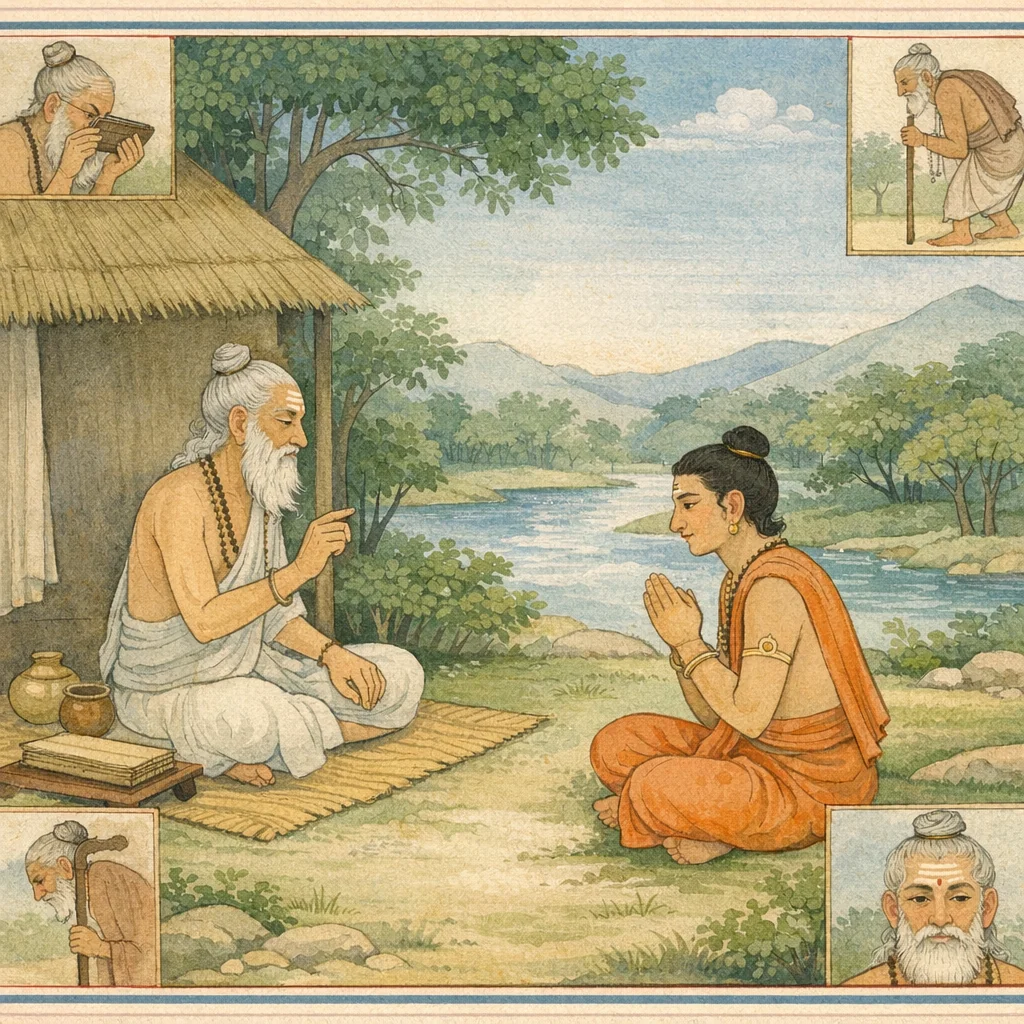
Adhyaya 288
Haṃsa–Sādhya Saṃvāda: Satya, Dama, Kṣamā and the Discipline of Speech
Upa-parva: Mokṣa-dharma (Liberation Teachings) — Haṃsa–Sādhya Saṃvāda Unit
Yudhiṣṭhira asks Bhīṣma how truth (satya), forbearance (kṣamā), restraint (dama), and wisdom (prajñā) should be understood. Bhīṣma responds by recounting a purāṇa-style exemplum: Prajāpati, taking the form of a golden Haṃsa, approaches the Sādhya deities, who inquire about mokṣa-dharma. The Haṃsa outlines a program of tapas, dama, satya, and self-guarding, emphasizing mastery over likes and dislikes and the ‘knots of the heart.’ A major portion is devoted to ethical speech: words can wound like arrows; therefore one should avoid cruel, agitating, or retaliatory speech and practice patience under insult. The chapter links restraint to immortality metaphorically (“dama as the door to amṛta”) and lists impulses to be endured—speech, mind, anger, curiosity/compulsion, and urges of appetite and sexuality. It further teaches that uncontrolled anger nullifies merit, while tolerance under provocation is portrayed as ethically superior and spiritually productive. The Sādhyas pose concise diagnostic questions—what veils the world, what blocks illumination, what breaks friendships, what prevents heaven—answered as ignorance, envy, greed, and attachment. Additional Q&A defines the marks of the wise (prājña), and characterizes brāhmaṇa ‘deva-status’ as svādhyāya, ‘sādhutva’ as vrata, ‘asādhutva’ as slander, and the ‘human condition’ as mortality. Bhīṣma closes by praising the dialogue’s excellence and framing satya as the grounding field of action and authentic being (sadbhāva).
Chapter Arc: Yudhishthira, still burdened by kingship and grief, asks how a ruler like himself should move upon the earth—how to live without being shaken by sorrow and agitation. → Bhishma answers by opening an ancient dialogue: King Sagara questions the sage Arishtanemi about the highest good—what brings true happiness here, and how one may become free from grief and inner turbulence. The sage turns Sagara’s gaze from worldly acquisitions—sons, cattle, grain, wealth—toward the subtle bondage of attachment and the unseen governance of past karma. → Arishtanemi declares that the only real happiness in the world is the happiness of moksha, which the deluded do not recognize; he presses the vision of impermanence—virility waning with time, sight and hearing failing, life-breath weakening—so that seeing the body’s inevitable decline, one loosens the knot of ‘mine’ and becomes free. → The teaching settles into practical renunciation-in-life: whatever one receives—food, clothing, inherited wealth—arrives according to prior deeds; therefore, equanimity is the true ornament. One is ‘as if liberated’ when bed and bare earth are equal, fine rice and coarse fare are equal, and one lives in household or renunciate station with an unperturbed intellect, acting without clinging.
Shlokas
Verse 1
अड-#-रू- अष्टाशीत्याधिकद्विशततमो< ध्याय: अरिषप्टनेमिका राजा सगरको वैराग्योत्पादक मोक्षविषयक उपदेश युधिछिर उवाच कथं नु युक्त: पृथिवीं चरेदस्मद्विधो नृप: । नित्यं कैश्व गुणैर्युक्त: संगपाशाद् विमुच्यते,युधिष्ठिरने पूछा--दादाजी! मेरे-जैसा राजा कैसे साधन और व्यवहारसे युक्त होकर पृथ्वीपर विचरे और सदा किन गुणोंसे सम्पन्न होकर वह आसक्तिके बन्धनसे मुक्त हो?
Yudhiṣṭhira said: “How should a king like me live and move about upon the earth—what disciplines and conduct should guide him? And with which virtues, cultivated constantly, can he be released from the noose of attachment?”
Verse 2
भीष्म उवाच अत्र ते वर्तयिष्येडहमितिहासं पुरातनम् । अरिष्टनेमिना प्रोक्ते सगरायानुपृच्छते,भीष्मजीने कहा--राजन्! इस विषयमें राजा सगरके प्रश्न करनेपर अरिष्टनेमिने जो उत्तर दिया था, वह प्राचीन इतिहास मैं तुम्हें बताऊँगा
Bhishma said: “Here I shall recount to you an ancient tradition. When King Sagara asked his question, Ariṣṭanemi gave an answer—this old narrative I will now relate to you.”
Verse 3
सगर उवाच किं श्रेय: परम॑ ब्रह्मन् कृत्वेह सुखमश्रुते । कथं न शोचेन्न क्षुभ्येदेतदिच्छामि वेदितुम्,सगरने पूछा--ब्रह्मन! इस जगत्में मनुष्य किस परम कल्याणकारी कर्मका अनुष्ठान करके सुखका भागी होता है? तथा किस उपायसे उसे शोक या क्षोभ प्राप्त नहीं होता? यह मैं जानना चाहता हूँ
Sagara said: “O venerable Brahmin, what is the highest good? By doing what here in this world does a person attain happiness? And by what means does one neither grieve nor become inwardly agitated? This I wish to know.”
Verse 4
भीष्म उवाच एवमुक्तस्तदा तार्क्ष्य: सर्वशास्त्रविदां वर: । विबुध्य सम्पदं चाग्र्यां सद्बाक्यमिदमब्रवीत्,भीष्मजी कहते हैं--राजन्! राजा सगरके इस प्रकार पूछनेपर सम्पूर्ण शास्त्रज्ञोंमें श्रेष्ठ ताक्ष्य (अरिष्टनेमि)-ने उनमें सर्वोत्तम दैवी सम्पत्तिके गुण जानकर उनको इस प्रकार उत्तम उपदेश दिया--
Bhishma said: Thus addressed at that time, Tārkṣya—foremost among all who know the scriptures—having discerned the highest divine excellence (the noblest inner wealth), spoke these wholesome words of counsel.
Verse 5
सुखं मोक्षसुखं लोके न च मूढो5वगच्छति । प्रसक्त: पुत्रपशुषु धनधान्यसमाकुल:,“सगर! संसारमें मोक्षका सुख ही वास्तविक सुख है, परंतु जो धनधान्यके उपार्जनमें व्यग्र तथा पुत्र और पशुओंमें आसक्त है, उस मूढ़ मनुष्यको उसका यथार्थ ज्ञान नहीं होता”
Bhishma said: In this world, the happiness of liberation (moksha) alone is true happiness; yet the deluded do not comprehend it. One entangled in acquiring wealth and grain, and clinging to children and livestock, remains ignorant of that reality.
Verse 6
सक्तबुद्धिरशान्तात्मा न शक्यं तच्चिकित्सितुम् । स्नेहपाशसितो मूढो न स मोक्षाय कल्पते,“जिसकी बुद्धि विषयोंमें आसक्त है, जिसका मन अशान्त रहता है, ऐसे मनुष्यकी चिकित्सा करनी कठिन है; क्योंकि जो स्नेहके बन्धनमें बँधा हुआ है, वह मूढ़ मोक्ष पानेके लिये योग्य नहीं होता”
Bhīṣma said: A person whose understanding clings to sense-objects and whose inner self remains restless is hard to cure or set right. Bound tight by the noose of affection and attachment, one becomes deluded, and such a person is not fit for liberation.
Verse 7
स्नेहजानिह ते पाशान् वक्ष्यामि शृणु तान् मम । सकर्णकेन शिरसा शक्या: श्रोतुं विजानता,'मैं तुम्हें स्नेहजनित बन्धनोंका परिचय देता हूँ, उन्हें तुम मुझसे सुनो। श्रवणेन्द्रियसम्पन्न समझदार मनुष्य ही ऐसी बातोंको बुद्धिपूर्वक सुन सकता है”
Bhīṣma said: “I shall describe to you the bonds that arise from affection; listen to them from me. Only a discerning person—mind attentive and ears truly engaged—can properly hear and grasp such counsel.”
Verse 8
सम्भाव्य पुत्रान् कालेन यौवनस्थान् निवेश्य च | समर्थान् जीवने ज्ञात्वा मुक्तश्वर यथासुखम्,“समयानुसार पुत्रोंको उत्पन्न करके जब वे जवान हो जाये, तब उनका विवाह कर दो और जब यह मालूम हो जाय कि अब ये दूसरेके सहयोगके बिना ही जीवन-निर्वाह करनेमें समर्थ हैं, तब उनके स्नेह-पाशसे मुक्त हो सुखपूर्वक विचरो'
Bhishma said: “In due course, beget sons; when they reach youth, settle them in life by arranging their marriages. And when you know they can maintain themselves without depending on others, then, freed from the bonds of attachment, live at ease—moving about as you please.”
Verse 9
भार्या पुत्रवतीं वृद्धां लालितां पुत्रवत्सलाम् | ज्ञात्वा प्रजहि कालेन परार्थमनुदृश्य च,'पत्नी पुत्रवती होकर वृद्ध हो गयी। अब पुत्रगण उसका पालन करते हैं और वह भी पुत्रोंपर पूर्ण वात्सल्य रखती है, यह जानकर परम पुरुषार्थ मोक्षको अपना लक्ष्य बनाकर यथासमय उसका परित्याग कर दे”
Bhīṣma said: “When you know that your wife has grown old after bearing sons—cherished and cared for by those sons, and herself full of motherly affection toward them—then, keeping the highest human end (liberation) in view, renounce attachment and depart at the proper time.”
Verse 10
सापत्यो निरपत्यो वा मुक्तश्वर यथासुखम् | इन्द्रियैरिन्द्रियार्थास्त्वमनु भूय यथाविधि
Bhīṣma said: “Whether you have offspring or are without offspring, live at ease, free from anxiety. Enjoy the objects of the senses through the senses, but do so in the proper manner—according to right rule and restraint.”
Verse 11
उपपच्त्योपलब्धेषु लोकेषु च समो भव,'दैवेच्छासे जो भी लौकिक पदार्थ उपलब्ध हों, उनमें समान भाव रखो--राग-द्वेष न करो'
Bhīṣma says: “In whatever worldly conditions and possessions come to you by circumstance and providence, remain even-minded. Do not fall into attachment or aversion; accept what arrives without inner agitation and keep your conduct steady in dharma.”
Verse 12
एष तावत् समासेन तव संकीर्तितो मया । मोक्षार्थो विस्तरेणाथ भूयो वक्ष्यामि तच्छुणु
Bhishma said: “So far, I have stated to you in brief the aim that leads to liberation. Now, listen—hereafter I shall explain that same path again, but in fuller detail.”
Verse 13
“यह संक्षेपमें मैंने तुम्हें मोक्षका विषय बताया है। अब पुनः इसीको विस्तारके साथ बता रहा हूँ, सुनो ।। मुक्ता वीतभया लोके चरन्ति सुखिनो नरा: । सक्तभावा विनश्यन्ति नरास्तत्र न संशय:,“मुक्त पुरुष सुखी होते हैं और संसारमें निर्भय होकर विचरते हैं; किंतु जिनका चित्त विषयोंमें आसक्त होता है, वे कीड़े-मकोड़ोंकी भाँति आहारका संग्रह करते-करते ही नष्ट हो जाते हैं, इसमें संशय नहीं है; अतः जो आसक्तिसे रहित हैं, वे ही इस संसारमें सुखी हैं। आसक्त मनुष्योंका तो नाश ही होता है!
Bhishma said: “I have explained to you, in brief, the matter of liberation. Now I shall state the same again in fuller detail—listen. Those who are free move through the world without fear and live happily; but those whose minds cling in attachment are ruined—of this there is no doubt.”
Verse 14
आहारसंचयाश्षैव तथा कीटपिपीलिका: । असक्ता: सुखिनो लोके सक्ताश्चैव विनाशिन:,“मुक्त पुरुष सुखी होते हैं और संसारमें निर्भय होकर विचरते हैं; किंतु जिनका चित्त विषयोंमें आसक्त होता है, वे कीड़े-मकोड़ोंकी भाँति आहारका संग्रह करते-करते ही नष्ट हो जाते हैं, इसमें संशय नहीं है; अतः जो आसक्तिसे रहित हैं, वे ही इस संसारमें सुखी हैं। आसक्त मनुष्योंका तो नाश ही होता है!
Bhīṣma said: “Like worms and ants that keep hoarding food, those who are attached to sense-objects perish through their very clinging. But the unattached move about the world in ease and fearlessness; it is they alone who are truly happy here. For the attached, destruction is the end.”
Verse 15
स्वजने न च ते चिन्ता कर्तव्या मोक्षबुद्धिना । इमे मया विनाभूता भविष्यन्ति कथं त्विति,“यदि तुम्हारी बुद्धि मोक्षमें लगी हुई है तो तुम्हें स््वजनोंके विषयमें ऐसी चिन्ता नहीं करनी चाहिये कि ये मेरे बिना कैसे रहेंगे”
Bhīṣma said: If your understanding is set on mokṣa (liberation), you should not sink into anxious worry about your own people, thinking, “How will they live on without me?” Such concern, born of attachment, is unfit for one whose aim is mokṣa.
Verse 16
स्वयमुत्पद्यते जन्तु: स्वयमेव विवर्धते । सुखदु:खे तथा मृत्युं स्वयमेवाधिगच्छति,प्राणी स्वयं जन्म लेता है, स्वयं बढ़ता है और स्वयं ही सुख-दुःख तथा मृत्युको प्राप्त होता है”
Bhīṣma said: A living being is born by its own course, grows by its own course, and likewise comes to experience pleasure and pain—and even death—according to the destiny shaped by its own karma. This teaching affirms personal moral responsibility: one cannot finally shift the burden of life’s results onto others.
Verse 17
भोजनाच्छादने चैव मात्रा पित्रा च संग्रहम् । स्वकृतेनाधिगच्छन्ति लोके नास्त्यकृतं पुरा
Bhīṣma said: “Food and clothing, and also the care and support given by one’s mother and father—people obtain these in the world through their own deeds. Nothing comes to anyone without being earned by action; nothing is received without a prior cause.”
Verse 18
“मनुष्य पूर्वजन्मके कर्मोंके अनुसार ही भोजन, वस्त्र तथा अपने माता-पिताके द्वारा संग्रह किया हुआ धन प्राप्त करता है। संसारमें जो कुछ मिलता है, वह पूर्वकृत कर्मोंके फलके अतिरिक्त कोई वस्तु नहीं है' ।। धात्रा विहितभक्ष्याणि सर्वभूतानि मेदिनीम् । लोके विपरिधावन्ति रक्षितानि स्वकर्मभि:,'संसारमें सभी प्राणी अपने कर्मोसे सुरक्षित हो सारी पृथ्वीकी दौड़ लगाते हैं और विधाताने उनके प्रारब्धके अनुसार जो आहार नियत कर दिया है, उसे प्राप्त करते हैं!
Bhīṣma said: A person obtains food, clothing, and even the wealth accumulated by one’s parents only in accordance with deeds done in a previous birth. Whatever is gained in this world is nothing other than the fruit of past action. All beings, protected by their own karma, run about across the earth; and they obtain the sustenance that the Ordainer has allotted to them according to their destined portion.
Verse 19
स्वयं मृत्पिण्डभूतस्य परतन्त्रस्य सर्वदा । को हेतु: स्वजन पोष्टूं रक्षितुं वादृढात्मन:,“जो स्वयं ही शरीरकी दृष्टिसे मिट्टीका लोंदामात्र है, सर्वदा परतन्त्र है, वह अदृढ़ मनवाला मनुष्य स्वजनोंका पोषण और रक्षण करनेमें कैसे समर्थ हो सकता है?”
Bhīṣma said: “When a person is, in truth, nothing more than a lump of earth in bodily terms and is always dependent on forces beyond his control, what capacity can such an unsteady-minded man have to nourish and protect his own people? The claim of being a firm guardian is hollow when one has not mastered oneself.”
Verse 20
स्वजनं हि यदा मृत्युर्हन्त्येव तव पश्यत: । कृते5पि यत्ने महति तत्र बोद्धव्यमात्मना,“जब स्वजनोंको तुम्हारे देखते-देखते ही मौत मार ही डालती है और तुम उन्हें बचानेके लिये महान् प्रयत्न करनेपर भी सफल नहीं हो पाते, तब इस विषयमें तुम्हें स्वयं ही यह विचार करना चाहिये कि मेरी क्या शक्ति है?”
Bhishma said: When Death strikes down your own people even as you watch, and even after you exert great effort you still cannot save them, then you must understand for yourself what this implies—how limited one’s power truly is.
Verse 21
“यदि वे स्वजन जीवित रह जायाँ तो भी इनके भरण-पोषण और संरक्षणका कार्य समाप्त होनेसे पहले ही तुम इन्हें छोड़कर पीछे स्वयं भी तो मर जाओगे”
Bhishma said: Even if your own kinsmen were to survive, you will still die yourself—leaving them behind—before the task of providing for them and protecting them is ever truly finished.
Verse 22
यदा मृतं च स्वजन न ज्ञास्यसि कदाचन । सुखितं दुःखितं वापि ननु बोद्धव्यमात्मना,“अथवा जब कोई स्वजन मरकर इस लोकसे चला जायगा, तब उसके विषयमें यह कभी नहीं जान सकोगे कि वह सुखी है या दुखी, अतः इस विषयमें तुम्हें स्वयं ही विचार करना चाहिये”
Bhishma said: When a kinsman has died and departed from this world, you will never truly be able to know whether he is happy or unhappy. Therefore, one must reflect for oneself.
Verse 23
जीवन्तमपि चैवैनं भरणे रक्षणे तथा । असमाप्ते परित्यज्य पश्चादपि मरिष्यसि,मृते वा त्वयि जीवे वा यदा भोक्ष्यति वै जनः । स्वकृतं ननु बुद्ध्वैवं कर्तव्यं हितमात्मन: “तुम जीवित रहो या मर जाओ। तुम्हारा प्रत्येक स््वजन जब अपनी-अपनी करनीका ही फल भोगेगा, तब इस बातको जानकर तुम्हें भी अपने कल्याणके लिये साधनमें लग जाना चाहिये”
Bhishma said: Even if you keep him alive—supporting and protecting him—if you abandon him before his allotted end, you too will later meet death. Whether you live or die, each person will in due time experience the results of his own deeds. Knowing this, apply yourself to what is truly beneficial for your highest good.
Verse 24
एवं विजान् लोके5स्मिन् क: कस्येत्यभिनिश्चित: । मोक्षे निवेशय मनो भूयश्चाप्युपधारय
Knowing thus, in this world no one can be decisively fixed as ‘belonging to’ anyone else—who is whose? Therefore, place your mind in liberation, and reflect on this again and again.
Verse 25
'ऐसा जानकर इस संसारमें कौन किसका है, इस बातका भलीभाँति विचार करके अपने मनको मोक्षमें लगा दो और साथ ही पुनः इस बातपर ध्यान दो” ।। क्षुत्पिपासादयों भावा जिता यस्येह देहिन: । क्रोधो लोभस्तथा मोह: सत्त्ववान् मुक्त एव सः,“जिसने क्षुधा, पिपासा, क्रोध, लोभ और मोह आदि भावोंपर विजय पा ली है, वह सत्त्वसम्पन्न पुरुष सदा मुक्त ही है”
Bhishma said: Knowing this, and reflecting well that in the cycle of this world no one truly belongs to anyone, fix your mind upon moksha—liberation—and contemplate this again and again. He who, while embodied here, has conquered the impulses that begin with hunger and thirst, and likewise anger, greed, and delusion—such a person, endowed with sattva (clarity and steadiness), is truly free even here.
Verse 26
द्यूते पाने तथा स्त्रीषु मृगयायां च यो नर: । न प्रमाद्यति सम्मोहात् सततं मुक्त एव सः,“जो मोहवश जूआ, मद्यपान, परस्त्रीसंसर्ग तथा मृगया आदि व्यसनोंमें आसक्त होनेका प्रमाद नहीं करता है, वह भी सदा मुक्त ही है”
Bhishma said: A man who, even amid gambling, drinking, dealings with women, and the pursuit of the hunt, does not fall into heedlessness through delusion—such a person remains ever free. The teaching stresses that bondage arises not merely from the presence of tempting pursuits, but from the loss of self-mastery and discernment that turns them into addictions and moral downfall.
Verse 27
दिवसे दिवसे नाम रात्रौ रात्रौ पुमान् सदा | भोक्तव्यमिति यः खिन्नो दोषबुद्धि: स उच्यते,“जो पुरुष सदा प्रत्येक दिन और प्रत्येक रात्रिमें भोग भोगने या भोजन करनेकी ही चिन्तामें पड़कर दुःखी रहता है, वह दोषबुद्धिसे युक्त कहलाता है”
Bhishma said: The man who, day after day and night after night, remains constantly distressed with the thought, “I must enjoy (or eat),” is said to be one whose understanding is tainted by fault—his mind is bound to craving and anxiety rather than steadied in right discernment.
Verse 28
आत्मभावं तथा स्त्रीषु मुक्तमेव पुन: पुन: । यः पश्यति सदा युक्तो यथावन्मुक्त एव सः,“जो सदा योगयुक्त रहकर स्त्रियोंके प्रति अपने भाव (अनुराग या आसक्ति)-को निवृत्त हुआ ही देखता है अर्थात् जिसकी स्त्रियोंके प्रति भोग्यबुद्धि नहीं होती, वही वास्तवमें मुक्त है!
Bhishma said: “He who, remaining constantly disciplined in yoga, repeatedly observes within himself that his attitude toward women is already released—free from craving and possessive attachment—such a person, seeing things as they truly are, is in fact liberated.”
Verse 29
सम्भवं च विनाशं च भूतानां चेष्टितं तथा । यस्तत्त्वतो विजानाति लोके5स्मिन् मुक्त एव सः
Bhishma said: He who truly understands the arising and the passing away of beings, and likewise their modes of activity and conduct in this world—such a person is already liberated here itself. The teaching points to freedom born of clear insight into the nature of existence, rather than mere ritual or status.
Verse 30
'जो प्राणियोंके जन्म, मृत्यु और चेष्टाओंको ठीक-ठीक जानता है, वह भी इस संसारमें मुक्त ही है! ।। प्रस्थं वाहसहस्रेषु यात्रार्थ चैव कोटिषु । प्रासादे मउचकं स्थानं य: पश्यति स मुच्यते,“जो हजारों और करोड़ों गाड़ी अन्नमेंसे केवल एक प्रस्थ (पेट भरने लायक)-को ही अपने जीवन-निर्वाहके लिये पर्याप्त समझता है (उससे अधिकका संग्रह करना नहीं चाहता) तथा बड़े-से-बड़े महलमें मज्च बिछाने भरकी जगहको ही अपने लिये पर्याप्त समझता है, वह मुक्त हो जाता है”
Bhishma said: One who truly understands, as they are, the birth, death, and movements of living beings is already free even while dwelling in this world. Likewise, one who, amid thousands of cartloads and even crores of provisions meant for travel, regards a mere prastha as sufficient to sustain life—and who, even in a vast palace, considers only the small space needed to spread a bed as enough for oneself—such a person is released from bondage.
Verse 31
मृत्युनाभ्याहतं लोकं व्याधिभिश्नोपपीडितम् । अवृत्तिकर्शितं चैव य: पश्यति स मुच्यते,“जो इस जगत्को रोगोंसे पीड़ित, जीविकाके अभावसे दुर्बल और मृत्युके आघातसे नष्ट हुआ देखता है, वह मुक्त हो जाता है”
Bhīṣma said: One who truly perceives the world as struck down by death, oppressed by diseases, and emaciated by the lack of livelihood—seeing its condition as it really is—becomes freed.
Verse 32
यः पश्यति स संतुष्टो न पश्यंश्व विहन्यते | यश्चाप्यल्पेन संतुष्टो लोकेडस्मिन् मुक्त एव सः,“जो ऐसा देखता है, वह संतुष्ट एवं मुक्त होता है; किंतु जो ऐसा नहीं देखता, वह मारा जाता है--जन्म, मृत्युके चक्रमें पड़ा रहता है। जो थोड़ेसे लाभमें ही संतुष्ट रहता है, वह इस जगतमें मुक्त ही है”
Bhishma said: “One who truly sees (reality as it is) becomes content and thereby free; but one who does not see is struck down—caught in the recurring cycle of birth and death. And whoever is content even with little is, in this very world, already liberated.”
Verse 33
अग्नीषोमाविदं सर्वमिति यश्चानुपश्यति । न च संस्पृश्यते भावैरद्धुतैर्मुक्त एव सः,“जो इस सम्पूर्ण जगत्को अग्नि और सोम (भोक्ता और भोज्य) रूप ही देखता है और स्वयंको उनसे भिन्न समझता है, उसे मायाके अद्भुत भाव--सुख-दुःख आदि छू नहीं सकते। वह सर्वथा मुक्त ही है”
Bhishma said: Whoever truly perceives this entire world as nothing but Agni and Soma—understood as the pair of enjoyer and enjoyed—and knows oneself to be distinct from them, is not touched by the wondrous transformations of māyā such as pleasure and pain. Such a person is, in every sense, liberated.
Verse 34
पर्यडुकशय्या भूमिश्न समाने यस्य देहिन: । शालयश्न कदन्नं च यस्य स्यान्मुक्त एव सः,“जिस देहधारीके लिये पलंगकी सेज और भूमि--दोनों समान है; जो अगहनीके चावल और कोदो आदिको एक-सा समझता है, वह मुक्त ही है”
Bhīṣma said: That embodied person is already liberated for whom a bed and the bare earth are the same, and for whom fine rice and coarse grains are equally acceptable.
Verse 35
क्षौीमं च कुशचीरं च कौशेयं वल्कलानि च । आविकं चर्म च सम॑ यस्य स्यान्मुक्त एव सः,“जिसके लिये सनके वस्त्र, कुशके चीर, रेशमी वस्त्र, वलकल, ऊनी वस्त्र और मृगचर्म --सब समान हैं, वह भी मुक्त ही है”
Bhīṣma said: “One for whom linen, a garment of kuśa-grass, silk, bark-cloth, wool, and animal-hide are all the same—whose inner being is untouched by such outward distinctions—is indeed liberated.”
Verse 36
पडज्चभूतसमुद्भूतं लोक॑ यश्चानुपश्यति । तथा च वर्तते दृष्टवा लोकेडस्मिन् मुक्त एव सः,“जो संसारको पाज्चभौतिक देखता और उस दृष्टिके अनुसार ही बर्ताव करता है, वह भी इस जगत्में मुक्त ही है!
Bhīṣma said: “One who clearly perceives this world as arising from the five great elements, and then lives in accordance with that insight—having truly seen the nature of life here—remains free even while dwelling in this world.”
Verse 37
सुखदु:खे समे यस्य लाभालाभौ जयाजयौ | इच्छाद्वेषौ भयोद्वेगौ सर्वथा मुक्त एव सः,“जिसकी दृष्टिमें सुख-दुःख, लाभ-हानि, जय-पराजय सम है तथा जिसके इच्छा-द्वेष, भय और उद्वेग सर्वथा नष्ट हो गये हैं, वही मुक्त है”
Bhīṣma said: “He alone is truly liberated whose vision remains even in pleasure and pain, gain and loss, victory and defeat—and in whom desire and aversion, fear and agitation have been completely extinguished.”
Verse 38
रक्तमूत्रपुरीषाणां दोषाणां संचयांस्तथा । शरीरं दोषबहुलं दृष्टवा चैव विमुच्यते,“यह शरीर क्या है, बहुत-से दोषोंका भण्डार। इसमें रक्त, मल-मूत्र तथा और भी अनेक दोषोंका संचय हुआ है। जो इस बातको देखता और समझता है, वह मुक्त हो जाता है!
Bhīṣma said: “This body is a storehouse of impurities—filled with accumulations of blood, urine, feces, and other defects. One who truly sees and understands the body’s fault-laden nature becomes detached, and through that clear insight is released.”
Verse 39
वलीपलितसंयोगे कार्श्य॑ वैवर्ण्यमेव च । कुब्जभावं च जरया य: पश्यति स मुच्यते,“बुढ़ापा आनेपर इस शरीरमें झुर्रियाँ पड़ जाती हैं। सिरके बाल सफेद हो जाते हैं। देह दुबली-पतली एवं कान्तिहीन हो जाती है तथा कमर झुक जानेके कारण मुनष्य कुबड़ा-सा हो जाता है। इन सब बातोंकी ओर जिसकी सदा ही दृष्टि रहती है, वह मुक्त हो जाता है!
Bhīṣma said: “When one keeps in view the marks that come with old age—wrinkles and grey hair, emaciation and loss of complexion, and the stooping, hump-backed state produced by senescence—such a person becomes freed. By steadily contemplating the body’s inevitable decline, one loosens attachment and moves toward liberation.”
Verse 40
पुंस्त्वोपघातं कालेन दर्शनोपरमं तथा । बाधिरय॑ प्राणमन्दत्वं यः पश्यति स मुच्यते,“समय आनेपर पुरुषत्व नष्ट हो जाता है, आँखोंसे दिखायी नहीं देता है, कान बहरे हो जाते हैं और प्राणशक्ति अत्यन्त क्षीण हो जाती है। इन सब बातोंको जो सदा देखता और इनपर विचार करता रहता है, वह संसार-बन्धनसे मुक्त हो जाता है”
Bhishma said: “In due course, time strikes down manly vigor; sight too comes to an end; hearing turns to deafness; and the vital force grows exceedingly weak. One who steadily observes these realities and reflects upon them becomes freed from worldly bondage.”
Verse 41
गतानृषींस्तथा देवानसुरांश्व तथा गतान् । लोकादस्मात् परं लोकं यः पश्यति स मुच्यते,“कितने ही ऋषि देवता तथा असुर इस लोकसे परलोकको चले गये। जो सदा यह देखता और स्मरण रखता है वह मुक्त हो जाता है”
Bhishma said: “Many sages, gods, and even asuras have departed from this world to the world beyond. One who continually keeps this truth in view—seeing the passage of all beings from here to the next—becomes freed.”
Verse 42
प्रभावैरन्वितास्तैस्तै: पार्थिवेन्द्रा: सहस्रश: । ये गता: पृथिवीं त्यक्त्वा इति ज्ञात्वा विमुच्यते,“सहस्रों प्रभावशाली नरेश इस पृथ्वीको छोड़कर कालके गालमें चले गये। इस बातको जानकर मनुष्य मुक्त हो जाता है”
Bhishma said: “Thousands upon thousands of mighty kings, endowed with various kinds of splendor and power, have departed—abandoning this earth and passing into the jaws of Time. Knowing this truth, a person becomes freed (from attachment and grief).”
Verse 43
अर्थाश्व दुर्लभॉल्लोके क्लेशांश्व सुलभांस्तथा । दुःखं चैव कुट॒म्बार्थे यः पश्यति स मुच्यते,'संसारमें धन दुर्लभ है और क्लेश सुलभ। कुटुम्बके पालन-पोषणके लिये भी जहाँ बहुत दु:ख उठाना पड़ता है, यह सब जिसकी दृष्टिमें है, वह मुक्त हो जाता है"
Bhishma said: “In this world, wealth and material gains are hard to obtain, while troubles are easy to come by. And for the sake of maintaining one’s family, one must often endure suffering. The person who clearly sees this reality—without delusion or attachment—becomes freed (from bondage to saṃsāra).”
Verse 44
अपत्यानां च वैगुण्यं जनं विगुणमेव च । पश्यन् भूयिष्ठशो लोके को मोक्ष नाभिपूजयेत्,“इतना ही नहीं, इस जगत्में अपनी संतानोंकी गुणहीनताका दुःख भी देखना पड़ता है। विपरीत गुणवाले मनुष्योंसे भी सम्बन्ध हो जाता है। इस प्रकार जो यहाँ अधिकांश कष्ट ही देखता है, ऐसा कौन मनुष्य मोक्षका आदर नहीं करेगा?”
Bhishma said: “In this world one must even witness the sorrow of one’s own children lacking virtues, and one also becomes entangled in relations with people of contrary or defective qualities. Seeing that life here is, for the most part, filled with such distress, who would not honor and seek liberation (moksha)?”
Verse 45
शास्त्राल्लोकाच्च यो बुद्ध: सर्व पश्यति मानव: । असारमिव मानुष्यं सर्वथा मुक्त एव सः:
Bhīṣma said: The one who is awakened by the teachings of the śāstras and by the lessons of the world, and thus sees all things clearly, regards human life as insubstantial; such a person is, in every way, truly liberated.
Verse 46
“जो मनुष्य शास्त्रोंक अध्ययन तथा लौकिक अनुभवसे भी ज्ञानसम्पन्न होकर समस्त मानव-जगत्को सारहीन-सा देखता है, वह सब प्रकारसे मुक्त ही है' ।। एतत् श्रुत्वा मम वचो भवांश्वरतु मुक्तवत् गार्हस्थ्ये यदि वा मोक्षे कृता बुद्धिरविक्लवा
Bhīṣma said: “One who, enriched in understanding through the study of the śāstras and through worldly experience as well, comes to see the whole human world as though devoid of lasting essence—such a one is, in every way, already free. Having heard these words of mine, conduct yourself like one liberated: whether you remain in the householder’s life (gārhasthya) or turn toward liberation (mokṣa), let your resolve be firm and unshaken.”
Verse 47
“मेरे इस वचनको सुनकर तुम अपनी बुद्धिको व्याकुलतासे रहित बनाकर गृहस्थाश्रममें या संन्यास-आश्रममें चाहे जहाँ रहकर मुक्तकी भाँति आचरण करो' ।। तत् तस्य वचन श्रुत्वा सम्यक् स पृथिवीपति: । मोक्षजैश्व गुणैर्युक्त: पालयामास च प्रजा:,राजा सगर अरिष्टनेमिके उपर्युक्त उपदेशको भलीभाँति सुनकर मोक्षोपयोगी गुणोंसे सम्पन्न हो प्रजाका पालन करने लगे
Bhīṣma said: “Having heard my counsel, free your mind from agitation and live—whether in the householder’s path or in renunciation—conducting yourself like one already liberated.” Hearing these words well, the lord of the earth, King Sagara, endowed with virtues that lead toward liberation, set himself to the protection and good governance of his subjects.
Verse 103
कृतकौतूहलस्तेषु मुक्तश्नवर यथासुखम् । 'शास्त्र-विधिके अनुसार इन्द्रियोंद्वारा इन्द्रियोंके विषयोंका अनुभव करके जब तुम उनके खेलको पूरा कर चुको, तब संतान हुई हो चाहे न हुई हो, उनसे मुक्त होकर सुखपूर्वक विचरो”
Bhīṣma said: “Having satisfied your curiosity in those sense-objects, and having enjoyed them in accordance with the prescriptions of the śāstras, when you have completed their ‘play’—whether or not offspring has been born—then, becoming free from them, live on at ease.”
Verse 288
इति श्रीमहाभारते शान्तिपर्वणि मोक्षधर्मपर्वणि सगरारिष्टनेमिसंवादे5ष्टाशीत्यधिकद्धिशततमो<5 ध्याय:,इस प्रकार श्रीमहाभारत शान्तिपर्वके अन्तर्गत गोक्षधर्मपर्वमें सपर और आअरिष्टनेमिका संवादविषयक दो सौ अद्ठासीवाँ अध्याय पूरा हुआ
Thus, in the Śrī Mahābhārata, within the Śānti Parva, in the Mokṣa-dharma section, the dialogue between Sagara and Ariṣṭanemi concludes here—marking the completion of the 288th chapter. This colophon signals the close of a teaching episode situated within the larger ethical inquiry into liberation (mokṣa) and right conduct (dharma).
Frequently Asked Questions
The chapter addresses how a person should respond to provocation—insult, harsh speech, and aggression—arguing that non-retaliation, controlled speech, and endurance of anger are superior to reactive harm and are integral to liberation-oriented conduct.
Practice satya and dama through guarding speech and mind, resisting anger and appetitive impulses, avoiding words that disturb others, and loosening attachment by bringing likes/dislikes under conscious governance.
Yes. Bhīṣma frames the dialogue as an ‘ancient’ exemplary discourse and concludes by validating it as a श्रेष्ठ (excellent) teaching, explicitly linking satya with sadbhāva (authentic being) and presenting it as foundational guidance within mokṣa-dharma.