Adhyaya 278
उशनसः (शुक्रस्य) चरितम् — The Account of Uśanā (Śukra): Yoga, Grievance, and Pacification
Upa-parva: Mokṣa-dharma (Liberation-Oriented Instruction) — Uśanā-Śiva Episode
Yudhiṣṭhira asks Bhīṣma to explain (i) why the devarṣi Uśanā (also called Kāvya/Śukra) is portrayed as favoring the Asuras and opposing the Devas, (ii) how he attained the status associated with Śukra, (iii) how he achieved prosperity, and (iv) why he is said not to traverse the mid-region of the sky. Bhīṣma narrates that Uśanā, a Bhṛgu-lineage sage described as firm in vows and compassionate by disposition, employs yogic means to restrain Kubera (Dhanada) and take his wealth. Distressed, Kubera approaches Śiva (Rudra) to report the act. Śiva, angered, takes up a weapon and seeks Uśanā; Uśanā anticipates the intent and, through yogic accomplishment, appears at the weapon’s point and then enters Śiva’s body, moving within. Yudhiṣṭhira asks why Uśanā moved within the deity’s abdomen; Bhīṣma adds background on Śiva’s prolonged austerity and the augmentation of his power and wealth through tapas. Śiva enters meditative absorption; Uśanā, unable to find an exit and scorched by divine energy, repeatedly requests favor. Śiva instructs him to exit through a constrained passage; upon exiting, Uśanā attains the designation linked to Śukra and is said not to pass through the mid-heavens due to that causal circumstance. Seeing Uśanā emerge radiant, Śiva remains poised to strike, but Umā restrains him, declaring Uśanā as having attained a son-like status by emergence from the deity and asserting a protective principle. Śiva relents, grants permission to depart as wished, and Uśanā, after salutation to Śiva and Umā, attains his desired course. Bhīṣma concludes that this is the requested account of the great Bhārgava’s conduct.
Chapter Arc: युधिष्ठिर के मन में युद्धोत्तर शोक और संसार-भार की तीव्र अनुभूति उठती है—देवताओं तक को मनुष्य-योनि में जन्म लेकर जो दुःख मिलता है, वह कैसे सह्य है? वे पूछते हैं: ‘कदा वयं करिष्यामः संन्यासं दुःखसंज्ञकम्’—कब हम इस दुःख-नामक बंधन से संन्यास लेंगे? → राज्य, देह-धारण, इन्द्रिय-प्राण-मन-बुद्धि की चंचलता और पुनर्भव का भय—इन सबके बीच युधिष्ठिर का प्रश्न तीखा होता जाता है: मुनि क्यों पुनर्जन्म को नहीं जाते, और हम कब राज्य त्यागकर उस मार्ग पर चलेंगे? इसी क्रम में उपमा आती है—जैसे वायु अंजन/मैनसिल के रज में प्रवेश कर उसी रंग का दीखने लगता है, वैसे ही चेतना गुणों-संस्कारों में रंग जाती है। → भीष्म ‘प्राचीन इतिहास’ का द्वार खोलते हैं—निर्जित, असहाय, हृत-राज्य होकर भी शत्रुओं के बीच अविचल बुद्धि धारण करने वाले एक आदर्श का प्रसंग (वृत्र-गीताओं का संकेत) और फिर निर्णायक जिज्ञासा: ‘ऐश्वर्य (अणिमा आदि) और महद् ब्रह्म किस वर्ण/आधार में प्रतिष्ठित हैं? वे लौटते कैसे हैं? और किस कर्म या किस ज्ञान से वह परम फल प्राप्त होता है?’ → मुनि/वक्ता (भीष्म द्वारा उद्धृत) युधिष्ठिर को एकाग्र होकर सुनने को कहते हैं और संकेत देते हैं कि उत्तर कर्म-ज्ञान के बाह्य भेद से परे, अंतःकरण की शुद्धि, वैराग्य और तत्त्व-विवेक की दिशा में है—जहाँ देह-धारण को ‘दुःख’ जानकर भी कर्तव्य-क्षेत्र में बुद्धि स्थिर रखी जाती है और अंततः संन्यास/मोक्ष का उपाय स्पष्ट होता है। → मुनि उत्तर आरम्भ करते हैं—‘मयोच्यमानं… शृणु’—पर ऐश्वर्य-ब्रह्म के आधार, निवृत्ति और साधन का पूर्ण विवेचन अगले प्रवाह में खुलने को छोड़ दिया जाता है।
Shlokas
Verse 1
(दाक्षिणात्य अधिक पाठका १ श्लोक मिलाकर कुछ २३ श्लोक हैं) ऑपन-माज बछ। अकाल एकोनाशीरवत्याधिकद्विशततमो< ध्याय: ब्रहद्मकी प्राप्तिका उपाय तथा उस विषयमें वृत्र-शुक्र- संवादक आरम्भ युधिछिर उवाच धन्या धन्या इति जना: सर्वेडस्मान् प्रवदन्त्युत । न दुःखिततर: ककश्ित् पुमानस्माभिरस्ति ह,युधिष्ठिने कहा--पितामह! सभी लोग हमलोगोंको धन्य-धन्य कहते हैं, परंतु हमलोगोंसे बढ़कर अत्यन्त दुखी दूसरा कोई मनुष्य नहीं है इस प्रकार श्रीमह्याभारत शान्तिपर्वके अन्तर्गत मोक्षधर्मपर्वमें वृत्र-गीताविषयक दो सौ उन्यासीवाँ अध्याय पूरा हुआ ॥/ २७९ ॥। है ० बक। है २ >> अशीत्यधिकद्धिशततमो< ध्याय: वृत्रासुरको सनत्कुमारका अध्यात्मविषयक उपदेश देना और उसकी परमगति तथा भीष्मद्वारा युधिष्ठिरकी शंकाका निवारण उशनोवाच नमस्तस्मै भगवते देवाय प्रभविष्णवे । यस्य पृथ्वीतलं तात साकाशं बाहुगोचर:
Yudhiṣṭhira said: “People everywhere keep calling us ‘fortunate, fortunate.’ Yet in truth, there is no man more afflicted than we are.”
Verse 2
लोकसम्भावितैर्दु:खं यत् प्राप्तं कुरुसत्तम । प्राप्प जाति मनुष्येषु देवेरपि पितामह,कुरुश्रेष्ठ पितामह! देवताओंद्वारा मानवलोकमें जन्म पाकर तथा सब लोगोंद्वारा सम्मानित होकर भी हमें यहाँ महान् दुःख प्राप्त हुआ है
O Grandsire, best of the Kurus! Though the gods granted us birth among men and all people honor us, here we have met with great sorrow.
Verse 3
कदा वयं करिष्याम: संन्यासं दुःखसंज्ञकम् | दुःखमेतच्छरीराणां धारणं कुरुसत्तम,कुरुश्रेष्ठी संसारी मनुष्य जिसे दुःख कहते हैं, उस संन्यासका अवलम्बन हमलोग कब करेंगे? हमें तो इन शरीरोंका धारण करना ही दुःख जान पड़ता है
Yudhiṣṭhira said: “When shall we undertake renunciation—so called because it is bound up with suffering? For to bear these bodies itself seems to me a suffering, O best of the Kurus.”
Verse 4
विमुक्ता: सप्तदशभिहेंतुभूतैश्व॒ पठचभि: । इन्द्रियार्थर्गुणैश्वैव अष्टाभिश्व पितामह,पितामह! पंच ज्ञानेन्द्रिय, पंच कर्मेन्द्रिय, पंच प्राण, मन और बुद्धि--ये सत्रह तत्त्व; काम, क्रोध, लोभ, भय और स्वप्न--ये संसारके पाँच हेतु; शब्द, स्पर्श, रूप, रस और गन्ध >-ये पाँच विषय; सत्त्व, रज और तम-ये तीन गुण तथा पाँच भूतोंसहित अविद्या, अहंकार और कर्म--ये आठ तत्त्वोंके समुदाय सब मिलाकर अड़तीस तत्त्व होते हैं। इन सबसे मुक्त हुए तीक्ष्ण व्रतधारी मुनि पुनर्जन्मको नहीं प्राप्त होते हैं। परंतप पितामह! हमलोग भी कब अपना राज्य छोड़कर इसी स्थितिको प्राप्त होंगे
Yudhiṣṭhira said: “O Grandsire, O Grandsire! Those ascetics who have been freed from the seventeen constituent principles, from the five causes that bind one to saṃsāra, from the sense-objects and the three guṇas, and from the eightfold aggregate (including the elements and the inner afflictions), do not attain rebirth. The seventeen are: the five organs of knowledge, the five organs of action, the five vital airs, the mind, and the intellect. The five causes of saṃsāra are: desire, anger, greed, fear, and dream. The five objects are: sound, touch, form, taste, and smell. The three guṇas are: sattva, rajas, and tamas. And together with the five great elements, ignorance, egoism, and karma make up the eightfold aggregate. When all these are transcended, the sharp-vowed sages do not return to birth again. O chastiser of foes, when shall we too abandon kingship and reach that very state?”
Verse 5
न गच्छन्ति पुनर्भावं मुनयः संशितव्रता: । कदा वयं गमिष्यामो राज्यं हित्वा परंतप,पितामह! पंच ज्ञानेन्द्रिय, पंच कर्मेन्द्रिय, पंच प्राण, मन और बुद्धि--ये सत्रह तत्त्व; काम, क्रोध, लोभ, भय और स्वप्न--ये संसारके पाँच हेतु; शब्द, स्पर्श, रूप, रस और गन्ध >-ये पाँच विषय; सत्त्व, रज और तम-ये तीन गुण तथा पाँच भूतोंसहित अविद्या, अहंकार और कर्म--ये आठ तत्त्वोंके समुदाय सब मिलाकर अड़तीस तत्त्व होते हैं। इन सबसे मुक्त हुए तीक्ष्ण व्रतधारी मुनि पुनर्जन्मको नहीं प्राप्त होते हैं। परंतप पितामह! हमलोग भी कब अपना राज्य छोड़कर इसी स्थितिको प्राप्त होंगे
Yudhiṣṭhira said: “The sages of firm and disciplined vows do not return to rebirth. O scorcher of foes, Grandfather—when shall we, abandoning kingship, attain that state?”
Verse 6
भीष्म उवाच नास्त्यनन्तं महाराज सर्व संख्यानगोचर: । पुनर्भावोडपि विख्यातो नास्ति किंचिदिहाचलम्,भीष्मजीने कहा--महाराज! दुःख अनन्त नहीं हैं। जगत्की सभी वस्तुएँ संख्याकी सीमामें ही हैं--असंख्य नहीं हैं। पुनर्जन्म भी नश्वरताके लिये विख्यात ही है। तात्पर्य यह कि इस जगतमें कोई भी वस्तु अचल या स्थायी नहीं है
Bhishma said: “O great king, nothing here is truly endless. All things in the world fall within the reach of number and measure; none are beyond limit. Even rebirth is well known as something bound up with perishability. In sum, in this world there is nothing unmoving—nothing permanent.”
Verse 7
न चापि मन्यसे राजन्नेष दोष: प्रसड्भत: । उद्योगादेव धर्मज्ञा: कालेनैव गमिष्यथ,तुम जो ऐसा मानते हो कि ऐश्वर्य दोषकारक होता है, क्योंकि वह आसक्तिका हेतु होनेके कारण मोक्षका प्रतिबन्धक है तो तुम्हारी यह मान्यता ठीक नहीं है; क्योंकि तुम सब लोग धर्मके ज्ञाता हो। स्वयं ही उद्योग करके शम, दम आदि साधनोंद्वारा कुछ ही कालमें मोक्ष प्राप्त कर सकते हो
Bhīṣma said: “O King, you should not think that sovereignty and prosperity are, by their very nature, a fault—merely because they can become occasions for attachment. That judgment is not correct. For you are knowers of dharma; by your own deliberate effort, and in due time, you can proceed onward to the highest good (liberation).”
Verse 8
नेशेडयं सततं देही नृपते पुण्यपापयो: । तत एव समुत्थेन तमसा रुध्यतेडपि च,नरेश्वर! यह जीवात्मा पुण्य और पापके फल सुख और दु:ख भोगनेमें स्वतन्त्र नहीं है, उन पुण्य और पापोंसे उत्पन्न संस्काररूप अन्धकारसे यह आच्छन्न हो जाता है
Bhishma said: “O king, the embodied self is not continually the independent master of merit and sin (and their results). Rather, O lord of men, it becomes veiled and constrained by the darkness that arises from those very deeds—an obscuring mass of impressions—so that it undergoes pleasure and pain under that covering.”
Verse 9
यथाजञ्जनमयो वायु: पुनर्मान:शिलं रज: । अनुप्रविश्य तद्वर्णो दृश्यते रज्जयन् दिश:,जैसे अन्धकारमयी वायु मैनसिलके लाल-पीले चूर्णमें प्रवेश करके उसीके रंगसे युक्त हो सम्पूर्ण दिशाओंको रँगती दिखायी देती है, उसी प्रकार स्वभावत: वर्णविहीन यह जीवात्मा तमोमय अज्ञानसे आवृत और कर्मफलसे रंजित हो वही वर्ण ग्रहण कर अर्थात् विभिन्न शरीरोंके धर्मोंकोी स्वीकार करके समस्त प्राणियोंके शरीरोंमें घूमता रहता है
Bhishma explains by a vivid simile: just as a wind laden with collyrium-like darkness enters the red-yellow dust of realgar and is then seen to take on that very hue, tinting the directions as it moves, so too the self—by nature without color or fixed quality—when covered by tamasic ignorance and stained by the fruits of action, appears to assume those “colors,” accepting the diverse properties of embodied lives and wandering through the bodies of all beings.
Verse 10
तथा कर्मफलैदेंही र|ज्जितस्तमसा55वृत: । विवर्णों वर्णमश्रित्य देहेषु परिवर्तते,जैसे अन्धकारमयी वायु मैनसिलके लाल-पीले चूर्णमें प्रवेश करके उसीके रंगसे युक्त हो सम्पूर्ण दिशाओंको रँगती दिखायी देती है, उसी प्रकार स्वभावत: वर्णविहीन यह जीवात्मा तमोमय अज्ञानसे आवृत और कर्मफलसे रंजित हो वही वर्ण ग्रहण कर अर्थात् विभिन्न शरीरोंके धर्मोंकोी स्वीकार करके समस्त प्राणियोंके शरीरोंमें घूमता रहता है
Bhishma said: “In the same way, the embodied self—stained by the fruits of its actions and veiled by darkness (ignorance)—though itself without color, takes on ‘color’ by resorting to a particular condition, and thus keeps revolving through bodies. As a dark wind entering red and yellow powders appears to dye the directions with those very hues, so too the intrinsically colorless self, covered by tamas and tinged by karma’s results, assumes the qualities and duties of diverse bodies and wanders among the embodiments of living beings.”
Verse 11
ज्ञानेन हि यदा जन्तुरज्ञानप्रभवं तम: । व्यपोहति तदा ब्रह्म प्रकाशति सनातनम्,जब जीव तत्त्वज्ञानद्वारा अज्ञानजनित अन्धकारको दूर कर देता है, तब उसके हृदयमें सनातन ब्रह्म प्रकाशित हो जाता है
Bhīṣma said: When a living being, through true knowledge, dispels the darkness that arises from ignorance, then the eternal Brahman becomes manifest within—shining forth in the heart. The ethical thrust is that inner liberation is achieved not by external force but by removing ignorance through discernment and right understanding.
Verse 12
अयत्नसाध्यं मुनयो वदन्ति ये चापि मुक्तास्त उपासितव्या: । त्वया च लोकेन च सामरेण तस्मान्नमस्यामि महर्षिसड्घान्,ऋषि-मुनि कहते हैं कि ब्रह्मकी प्राप्ति किसी क्रियात्मक यत्नसे साध्य नहीं है। इसके लिये तो देवताओंसहित सम्पूर्ण जगत्को और तुमको उन पुरुषोंकी उपासना करनी चाहिये, जो जीवन्मुक्त हैं; अतएव मैं महर्षियोंके समुदायको नमस्कार करता हूँ
Bhīṣma said: “The sages declare that realization of Brahman is not something attained by mere outward, effortful action. Therefore, you—and indeed the whole world together with the gods—should revere and attend upon those who are liberated even while living. For that reason, I bow to the assemblies of great seers.”
Verse 13
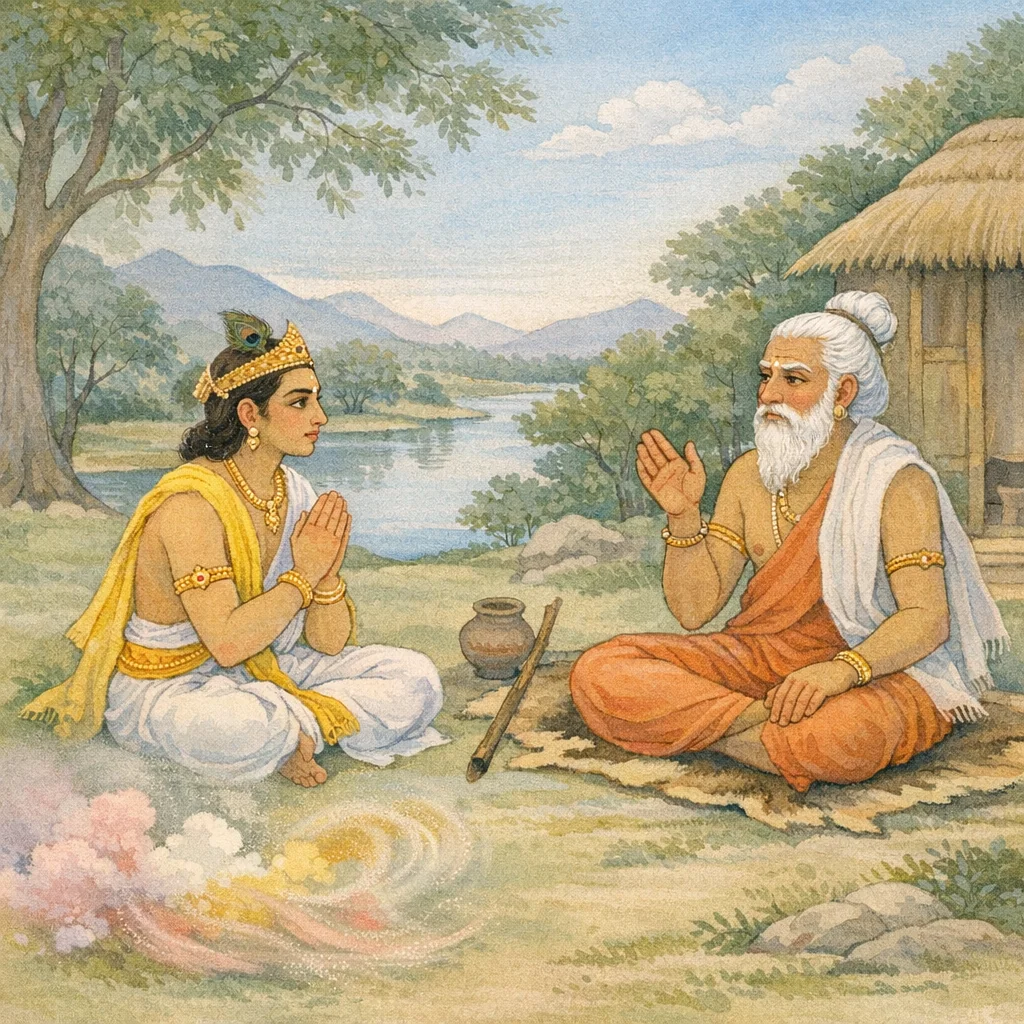
अस्मिन्नर्थे पुरा गीतं शृणुष्वैकमना नृप । यथा दैत्येन वृत्रेण भ्रष्टैश्व्॒येण चेष्टितम्,नरेश्वर! इस विषयमें एक प्राचीन इतिहास कहा जाता है। उसे एकचित्त होकर सुनो। भरतनन्दन! पूर्वकालमें वृत्रासुर पराजित और ऐश्वर्य-भ्रष्ट हो गया था। उसका कोई सहायक नहीं रह गया था। देवताओंने उसका राज्य छीन लिया था। उस दशामें पड़कर भी उस असुरने जैसी चेष्टा की थी, उसीका इस कथामें वर्णन है। वह शत्रुओंके बीचमें रहकर भी आसक्तिशून्य बुद्धिका आश्रय ले शोक नहीं करता था
Bhīṣma said: “On this very point, O king, an ancient account was once sung—listen to it with a single-pointed mind. It tells how the Daitya Vṛtra acted when he had fallen from sovereignty and prosperity.”
Verse 14
निर्जितेनासहायेन हृतराज्येन भारत । अशोचता शत्रुमध्ये बुद्धिमास्थाय केवलाम्,नरेश्वर! इस विषयमें एक प्राचीन इतिहास कहा जाता है। उसे एकचित्त होकर सुनो। भरतनन्दन! पूर्वकालमें वृत्रासुर पराजित और ऐश्वर्य-भ्रष्ट हो गया था। उसका कोई सहायक नहीं रह गया था। देवताओंने उसका राज्य छीन लिया था। उस दशामें पड़कर भी उस असुरने जैसी चेष्टा की थी, उसीका इस कथामें वर्णन है। वह शत्रुओंके बीचमें रहकर भी आसक्तिशून्य बुद्धिका आश्रय ले शोक नहीं करता था
Bhishma said: O Bharata, though he was defeated, without allies, and stripped of his kingdom, he did not grieve; even in the midst of enemies, O king, he took refuge in pure, unattached understanding. On this matter an ancient account is told—listen to it with a single-pointed mind. O best of the Bharatas, in former times Vṛtrāsura was overcome and fell from sovereignty; no helper remained to him, and the gods seized his realm. Yet even in that condition, the manner in which that asura strove is what is described here: standing among foes, he remained free from clinging and therefore did not sink into sorrow.
Verse 15
भ्रष्टैश्वर्य पुरा वृत्रमुशना वाक्यमब्रवीत् | काचित् पराजितस्याद्य न व्यथा ते5स्ति दानव,पूर्वकालकी बात है कि वृत्रासुरको ऐश्वर्यभ्रष्ट हुआ देख शुक्राचार्यने उससे पूछा --'दानवराज! तुम्हें देवताओंने पराजित कर दिया है तो भी आजकल तुम्हारे चित्तमें किसी प्रकारकी व्यथा नहीं है; इसका क्या कारण है?”
Bhishma said: Long ago, when Vritra had fallen from his former sovereignty, Ushanas (Shukracharya) addressed him: “O Danava! Though you have been defeated, today there is no distress in you at all. What is the reason for this?”
Verse 16
वृत्र बवाच सत्येन तपसा चैव विदित्वासंशयं हाहम् । न शोचामि न हृष्यामि भूतानामागतिं गतिम्,वृत्रासुरने कहा--ब्रह्मन! मैंने सत्य और तपके प्रभावसे जीवोंके आवागमनका रहस्य निश्चितरूपसे जान लिया है; इसलिये मैं उसके विषयमें हर्ष और शोक नहीं करता हूँ
Vṛtra said: “O Brāhmaṇa, through truthfulness and ascetic discipline I have come to know—without any doubt—the hidden law of beings’ coming and going (their repeated arrivals and departures in existence). Therefore, regarding their course and destiny, I neither grieve nor exult.”
Verse 17
कालसंचोदिता जीवा मज्जन्ति नरकेडवशा: । परितुष्टानि सर्वाणि दिव्यान्याहुर्मनीषिण:,कालसे प्रेरित हुए जीव अपने पापकर्मोके फलस्वरूप विवश होकर नरकमें डूबते हैं और पुण्यके फलसे वे सब-के-सब स्वर्गलोकमें जाकर वहाँ आनन्द भोगते हैं। ऐसा मनीषी पुरुषोंका कथन है
Impelled by Time (Kāla), living beings—helpless under the fruits of their sinful deeds—sink into hell; and by the fruits of merit they all go to the heavenly world and enjoy bliss there. Such is the teaching of the wise.
Verse 18
क्षपयित्वा तु तं कालं गणितं कालचोदिता: । सावशेषेण कालेन सम्भवन्ति पुन: पुन:,इस प्रकार स्वर्ग अथवा नरकमें कर्मफलभोगद्दारा निश्चित समय व्यतीत करके भोगनेसे बचे हुए कर्म-सहित कालकी प्रेरणासे वे बारंबार इस संसारमें जन्म लेते रहते हैं
Bhīṣma said: Having exhausted that fixed, reckoned span of time—impelled by Time itself—they are born again and again, as long as some residue of their karma still remains to be experienced. Thus, even after enjoying the fruits of deeds in heaven or hell for the allotted period, beings return to worldly existence until the remaining karmic balance is worked out.
Verse 19
तिर्यग्योनिसहस्राणि गत्वा नरकमेव च । निर्गच्छन्त्यवशा जीवा: कामबन्धनबन्धना:,कामनाओंके बन्धनमें बँधकर विवश हुए कितने ही जीव सहस्रों बार तिर्यक्योनि तथा नरकमें पड़कर पुनः वहाँसे निकलते हैं
Bhīṣma said: Bound fast by the fetters of desire, countless living beings—helpless under that compulsion—pass through thousands of animal births and even hell, and then emerge again from there, only to continue the cycle.
Verse 20
एवं संसरमाणानि जीवान्यहमदृष्टवान् । यथा कर्म तथा लाभ इति शास्त्रनिदर्शनम्
Bhīṣma said: “I have myself observed living beings wandering through saṁsāra. The scriptures illustrate this principle: as one’s actions are, so are one’s gains.”
Verse 21
इस प्रकार मैंने सभी जीवोंको जन्म-मरणके चक््करमें पड़ा हुआ देखा है। शास्त्रका भी ऐसा सिद्धान्त है कि जैसा कर्म होता है, वैसा ही फल मिलता है ।। तिर्यग् गच्छन्ति नरक॑ मानुष्यं दैवमेव च । सुखदु:खे प्रिये द्वेष्पे चरित्वा पूर्वमेव ह,प्राणी पहले ही सुख-दुःख तथा प्रिय और अप्रिय विषयोंमें विचरण करके कर्मके अनुसार नरक, तिर्यग्योनि, मनुष्ययोनि अथवा देवयोनिमें जाते हैं
Bhishma said: “Thus I have seen all beings caught in the cycle of birth and death. The teaching of the śāstras is also this: as one acts, so one receives the result. Having already moved through pleasure and pain, and through what is dear and what is hateful, creatures—according to their deeds—go to hell, to an animal birth, to human birth, or to a divine birth.”
Verse 22
कृतान्तविधिसंयुक्त: सर्वो लोक: प्रपद्यते । गतं गच्छन्ति चाध्वानं सर्वभूतानि सर्वदा,समस्त जीव जगत्-विधाताके विधानसे ही परिचालित हो सुख-दुःख पाता है और समस्त प्राणी सदा चले हुए मार्गपर ही चलते हैं
Bhishma said: “All the world moves under the ordinance of Kṛtānta (the power of destiny—time and death) and submits to that governing law. All beings, at all times, proceed along the already-set path—experiencing pleasure and pain as the cosmic order directs—rather than acting in complete independence.”
Verse 23
कालसंख्यानसंख्यातं सृष्टिस्थितिपरायणम् । त॑ भाषमाणं भगवानुशना प्रत्यभाषत । धीमान् दुष्टप्रलापांस्त्वं तात कस्मात् प्रभाषसे,जो काल नामसे प्रसिद्ध एवं सृष्टि और पालनके परम आश्रय हैं, उन परमात्माका प्रतिपादन करते हुए वृत्रासुरकी बात सुनकर भगवान् शुक्राचार्यने उससे कहा--“तात! तुम तो बड़े बुद्धिमान् हो, फिर ये असुरभावके विपरीत दोषयुक्त निरर्थक वचन कैसे कह रहे हो?
Bhishma said: “As Vṛtrāsura spoke of the Supreme—He who is known through the measures of time and number, and who is the ultimate ground of creation and preservation—Bhagavān Uśanā (Śukrācārya) replied to him: ‘Dear one, you are intelligent; why then do you utter such corrupt and misguided talk, words unworthy of your understanding?’”
Verse 24
वृत्र बवाच प्रत्यक्षमेतद् भवतस्तथान्येषां मनीषिणाम् । मया यज्जयलुब्धेन पुरा तप्तं महत् तप:,वृत्रासुरने कहा--ब्रह्म! आपने तथा दूसरे मनीषी महानुभावोंने यह तो प्रत्यक्ष देखा है कि मैंने पहले विजयके लोभसे बड़ी भारी तपस्या की थी
Vṛtra said: “This is directly evident to you, and likewise to the other wise seers: in former times, driven by greed for victory, I undertook an exceedingly severe austerity.”
Verse 25
गन्धानादाय भूतानां रसांश्न विविधानपि । अवर्ध त्रीन् समाक्रम्य लोकान् वै स्वेन तेजसा,मैं बलमें बहुत बढ़ा-चढ़ा था; अत: मैंने अपने ही तेजसे तीनों लोकोंपर आक्रमण करके दूसरे प्राणियोंको धूलमें मिलाकर उनके उपभोगकी गन्ध और रस आदि विविध वस्तुएँ छीन ली थीं
Vṛtra said: “I had grown exceedingly in power; therefore, by my own tejas, I assailed the three worlds, crushed other beings into dust, and seized from them their fragrances and tastes and other varied objects of enjoyment.”
Verse 26
ज्वालामालापरिक्षिप्तो वैहायसचरस्तथा । अजेय: सर्वभूतानामासं नित्यमपेतभी:,मेरे शरीरसे आगकी लपटें निकलती थीं और मैं ज्वालामालाओंसे घिरकर सदा आकाशकमें निर्भय विचरता हुआ समस्त प्राणियोंके लिये अजेय हो गया था
Bhīṣma said: “Wreathed in garlands of flame, moving freely through the sky, I remained ever without fear and became unconquerable to all beings.”
Verse 27
ऐश्वर्य तपसा प्राप्तं भ्रष्ट तच्च स्वकर्मभि: । धृतिमास्थाय भगवन् न शोचामि ततस्त्वहम्,भगवन! इस प्रकार मैंने तपस्याके प्रभावसे जो ऐश्वर्य प्राप्त किया था, वह मेरे अपने ही कर्मोसे नष्ट हो गया। तथापि मैं धैर्य धारण करके उसके लिये शोक नहीं करता हूँ
Bhīṣma said: “The sovereignty and prosperity I gained through austerity has been lost—indeed, undone by my own actions. Yet, O venerable one, having steadied myself in fortitude, I do not grieve over it.”
Verse 28
युयुत्सुना महेन्द्रेण पुंसा सार्थ महात्मना । ततो मे भगवान् दृष्टो हरिनारायण: प्रभु:,महामनस्वी पुरुषप्रवर देवराज इन्द्र जब युद्धकी इच्छासे मेरे सामने आये, उस समय उनके साथ उन्हींकी सहायताके लिये आये हुए सबके प्रभु भगवान् श्रीनारायण हरिका मैंने दर्शन किया था
Bhīṣma said: “Then Indra, king of the gods—a great-souled man who came with the desire to do battle—stood before me; and with him, as his aid, I beheld the Lord of all, Hari-Nārāyaṇa.”
Verse 29
वैकुण्ठ: पुरुषो5नन्त: शुक्लो विष्णु: सनातन: । मुञज्जकेशो हरिश्मश्रु: सर्वभूतपितामह:,वे भगवान् वैकुण्ठ, पुरुष, अनन्त, शुक्ल, विष्णु, सनातन, मुंजकेश, हरिश्मश्रु तथा सम्पूर्ण भूतोंके पितामह हैं
Bhīṣma said: “He is Vaikuṇṭha—the Supreme Person, the Endless One; the Pure (Śukla), Viṣṇu, the Eternal. With muñja-grass-like hair and tawny beard, he is the grandsire of all beings.”
Verse 30
नूनं तु तस्य तपस: सावशेषमिहास्ति वै । यदहं प्रष्टमिच्छामि भगवन् कर्मण: फलम्,भगवन्! अवश्य ही मेरी उस तपस्याका कोई अंश अब भी शेष रह गया है, अतः मैं उस कर्मफलके विषयमें प्रश्न करना चाहता हूँ
Bhīṣma said: “Surely, some residue of that austerity still remains here for me; therefore, O Blessed One, I wish to ask about the fruit of action—about the results that deeds inevitably yield.”
Verse 31
ऐश्वर्य वै महद् ब्रह्म वर्णे कस्मिन् प्रतिष्तितम् । निवर्तते चापि पुन: कथमैश्चर्यमुत्तमम्,अणिमा आदि ऐश्वर्य और महद् ब्रह्म किस वर्णमें प्रतिष्ठित हैं? तथा वह उत्तम ऐश्वर्य कैसे नष्ट हो जाता है?
Bhishma said: “In which varna is the great sovereignty—indeed the supreme Brahman—established? And how does that highest lordly power return again, and by what process does it come to be lost? Tell me: the powers beginning with minuteness (aṇimā) and the great Brahman—upon which varna do they rest, and how does that unsurpassed mastery perish?”
Verse 32
कस्माद् भूतानि जीवन्ति प्रवर्तन्ते तथा पुनः । किं वा फल परं प्राप्प जीवस्तिष्ठति शाश्वत:,प्राणी किस हेतुसे जीवन धारण करते हैं? तथा किस कारणसे कर्मामें प्रवृत्त होते हैं? जीव किस परम फलको पाकर अविनाशी एवं सनातनरूपसे प्रतिष्ठित होता है?
Bhīṣma said: “From what do living beings derive their life, and by what do they again set themselves in motion toward action? And having attained what highest fruit does the individual self abide—imperishable and eternal—firmly established in its own true state?”
Verse 33
केन वा कर्मणा शक््यमथ ज्ञानेन केन वा । तदवाप्तुं फलं विप्र तन्मे व्याख्यातुमहसि,विप्रवर! किस कर्म अथवा ज्ञानसे उस फलको प्राप्त किया जा सकता है? यह मुझे बतानेकी कृपा करें
Bhīṣma asked the learned brāhmaṇa: “By what kind of action, or by what kind of knowledge, can that desired fruit truly be attained? Please explain it to me.”
Verse 34
इतीदमुक्त: स मुनिस्तदानीं प्रत्याह यत् तच्छुणु राजसिंह । मयोच्यमान पुरुषर्षभ त्व- मनन्यचित्त: सह सोदरीयै:,राजसिंह! पुरुषप्रवर युधिष्ठिर! उसके ऐसा प्रश्न करनेपर मुनिवर शुक्राचार्यने उस समय उसे जो उत्तर दिया, उसे मैं बता रहा हूँ, तुम अपने भाइयोंके साथ एकाग्रचित्त होकर सुनो
Bhishma said: “When he had spoken thus, the sage replied at that very moment. Listen, O lion among kings, to what he said. As I recount it, O best of men, keep your mind undistracted and hear it together with your brothers.”
Verse 279
इति श्रीमहाभारते शान्तिपर्वणि मोक्षधर्मपर्वणि वृत्रगीतासु एकोनाशीत्यधिकद्धिशततमो<5 ध्याय:
Thus, in the Śrī Mahābhārata, within the Śānti Parva—specifically the Mokṣa-dharma section—this concludes the Vṛtra-gītā portion, marking the end of the 279th chapter.
Frequently Asked Questions
The dilemma concerns how power should be answered by power: a grievance (Kubera’s loss) prompts punitive escalation (Śiva’s pursuit), while the narrative tests whether enforcement should be absolute or moderated by compassion and relational status (Umā’s protective argument).
The chapter’s didactic implication is that extraordinary capacities—whether yogic or sovereign—require governance by restraint, mediation, and grace; conflict resolution is portrayed as ethically superior when it prevents disproportionate harm and restores equilibrium.
No explicit phalaśruti is stated in the provided passage; the closure is archival and confirmatory—Bhīṣma states that he has narrated the Bhārgava’s account as requested—functioning as a textual seal rather than a merit-promising epilogue.