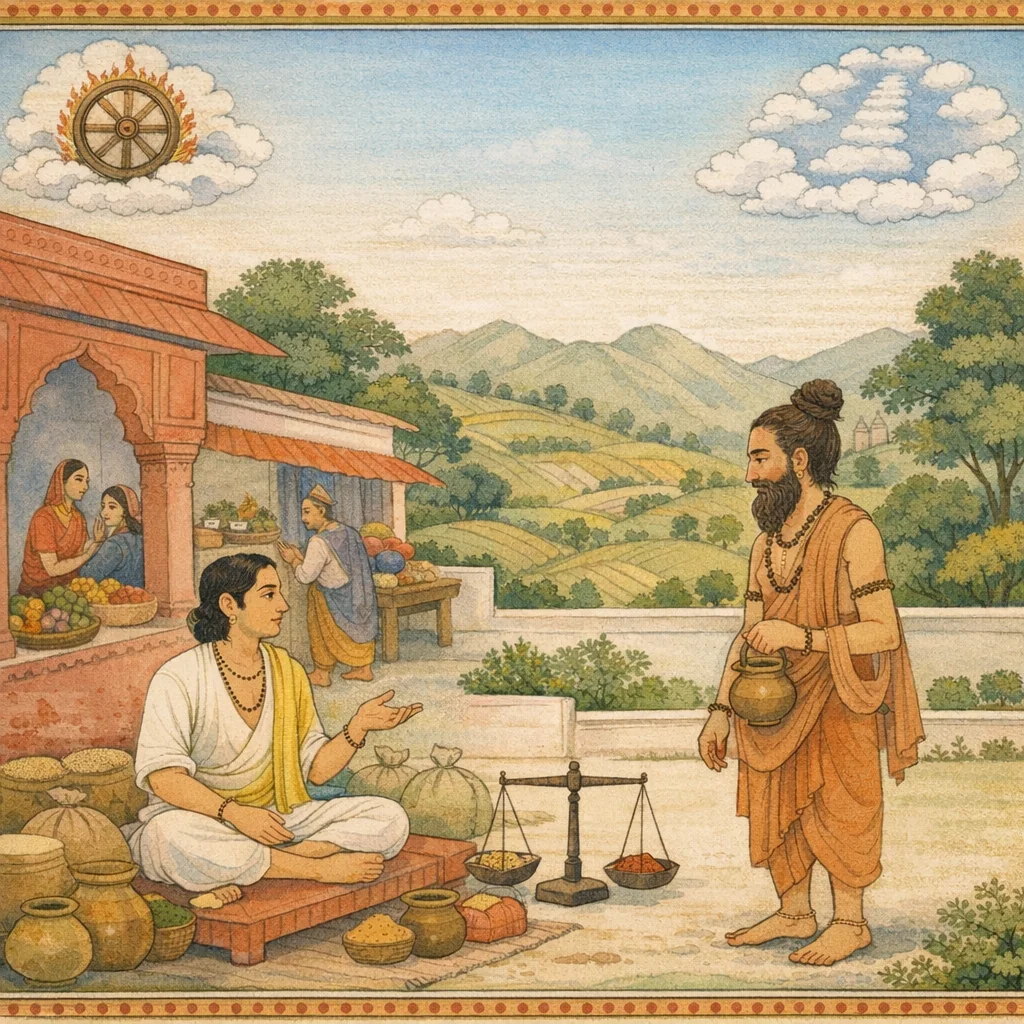
Adhyaya 262
Adhyāya 262: Śabda-brahman, Para-brahman, and the Ethics of Tyāga (Kapila–Syūmaraśmi Saṃvāda)
Upa-parva: Mokṣa-dharma (Liberation Discourse) — Kapila–Syūmaraśmi Dialogue Unit
Kapila opens by affirming the Vedas as a pramāṇa (authoritative means of knowledge) for the world and distinguishes two ‘Brahmans’ to be known: śabda-brahman (Brahman as sacred word/veda) and para-brahman (the supreme, transcendent reality). Mastery of śabda-brahman is presented as a disciplined entry-point that can culminate in realization of para-brahman. The discourse then characterizes purification through conduct and duty: bodily and ethical refinement render a brāhmaṇa ‘fit’ (pātra) for higher knowledge. Kapila describes an older ideal of collective dharma—truthfulness, straightforwardness, contentment, and non-violence—where stable virtue reduces the need for expiation (prāyaścitta), which is framed as arising from moral weakness. The chapter catalogs virtues (ānṛśaṃsya, kṣamā, śānti, ahiṃsā, satya, ārjava, adroha, humility, hri, titikṣā, śama) as ‘paths’ to Brahman. Syūmaraśmi asks which among common religious agents (enjoyers, donors, sacrificers, students, renouncers) attains the most favorable post-mortem result; Kapila replies by privileging the distinctive ‘happiness of renunciation’ over merely auspicious acquisitions. He further clarifies that karmic practices ‘cook’ or mature the person (śarīra-pakti), but knowledge is the highest destination (paramā gati). The chapter closes with a Veda-centered epistemic claim—everything is grounded in Veda—while simultaneously concluding that the stable culmination is śama/tyāga and contentment, oriented to apavarga (release).
Chapter Arc: Bhishma continues the Moksha-dharma discourse by invoking the famed dialogue of the merchant-sage Tuladhara and the ascetic Jajali, where the very meaning of “yajna” is turned inward and made ethical rather than merely ritual. → Tuladhara challenges Jajali’s austere pride and narrow ritualism, insisting that society stands on interdependence: from agriculture comes food, from food life is sustained, and from livelihood and right conduct the sacrificial order is supported—so to despise worldly vocations while speaking of dharma is a contradiction. → The teaching peaks in the redefinition of sacrifice: the highest yajna is the self-offering of ego, violence, and craving—performed as a mental and ethical rite for the welfare of beings—while fruit-hungry officiants and heaven-seekers miss Brahman’s path; the wise, free of desire, do not return to the cycle, unlike those bound to longing. → The chapter settles into a calm, luminous conclusion: non-violent, reasoned, and saint-approved dharma is praised; the knower, satisfied in knowledge-bliss, no longer runs after tastes or rewards, and the ‘instruments’ of sacrifice are recognized as one’s own purified faculties and intentions.
Shlokas
Verse 1
(दाक्षिणात्य अधिक पाठका ३ श्लोक मिलाकर कुल ५५३ श्लोक हैं) नि | अत । 3 #ीि त्रिषष्ट्याधिकद्विशततमो< ध्याय: जाजलिको तुलाधारका आत्मयज्ञविषयक धर्मका उपदेश जाजलिरुवाच अयं प्रवर्तितो धर्मस्तुलां धारयता त्वया । स्वर्गद्वारं च वृत्ति च भूतानामवरोत्स्यते,जाजलिने कहा--वणिक् महोदय! तुम हाथमें तराजू लेकर सौदा तौलते हुए जिस धर्मका उपदेश करते हो, उससे तो स्वर्गका दरवाजा ही बंद किये देते हो और प्राणियोंकी जीविकावृत्तिमें भी रुकावट पैदा करते हो
Jājali said: “This dharma that you promote while holding the balance-scale—this way of teaching tied to weighing and trade—ends up shutting the very gate of heaven, and it also obstructs the livelihood and customary means of living of living beings.”
Verse 2
कृष्या ह्वान्नं प्रभवति ततस्त्वमपि जीवसि । पशुभिश्षौषधीभिशक्च मर्त्या जीवन्ति वाणिज,वैश्यपुत्र! तुम्हें मालूम होना चाहिये कि खेतीसे ही अन्न पैदा होता है, जिससे तुम भी जी रहे हो। अन्न और पशुओंसे ही मनुष्यका जीवन-निर्वाह होता है
Tulādhāra said: “From agriculture, indeed, food is produced; therefore you too live by it. By cattle and by plants (herbs and crops) mortals sustain their lives, O merchant, son of a Vaiśya.”
Verse 3
ततो यज्ञ: प्रभवति नास्तिक्यमपि जल्पसि । न हि वर्तेदयं लोको वार्तामुत्सृज्य केवलाम्,उन्हींसे यज्ञकार्य सम्पन्न होता है। तुम तो नास्तिकताकी भी बातें करते हो। यदि पशुओंके कष्टका ख्याल करके खेती आदि वृत्तियोंका त्याग कर दिया जाय, तो इस संसारका जीवन ही समाप्त हो जायगा
“From such livelihood and productive work, sacrifice and the sustaining rites of society arise. Yet you even speak in the language of disbelief. If, out of concern for the suffering of animals, one were to abandon agriculture and other necessary occupations altogether, then the life of this world could not continue.”
Verse 4
चुलाधार उवाच वक्ष्यामि जाजले वृत्तिं नास्मि ब्राह्मण नास्तिक: । न यज्ञंच विनिन्दामि यज्ञवित् तु सुदुर्लभ:,तुलाधारने कहा--जाजले! मैं तुम्हें हिंसातिरिक्त जीविका-वृत्ति बताऊँगा। ब्राह्मणदेव! मैं नास्तिक नहीं हूँ और न यज्ञकी ही निन्दा करता हूँ; परंतु यज्ञके यथार्थ स्वरूपको समझनेवाला पुरुष अत्यन्त दुर्लभ है
Culādhāra said: “O Jājali, I shall explain to you a way of livelihood that is free from violence. O brāhmaṇa, I am not an unbeliever, nor do I disparage sacrifice; yet one who truly understands the real meaning and principle of sacrifice is exceedingly rare.”
Verse 5
नमो ब्राह्मणयज्ञाय ये च यज्ञविदो जना: । स्वयज्ञं ब्राह्मणा हित्वा क्षत्रयज्ञमिहास्थिता:,विप्र! ब्राह्मणोंके लिये जिस यज्ञका विधान है, उसको तो मैं नमस्कार करता हूँ और जो लोग उस यज्ञको ठीक-ठीक जानते हैं, उनके चरणोंमें भी मस्तक झुकाता हूँ, किंतु खेद है, इस समय ब्राह्मणलोग अपने यज्ञका परित्याग करके क्षत्रियोचित यज्ञोंके अनुष्ठानमें प्रवृत्त हो रहे हैं
“Reverence to the Brahmin’s own sacrifice, and reverence as well to those people who truly understand sacrifice. Yet, O Brahmin, it is a matter of regret that Brahmins here, abandoning their proper sacrificial discipline, have taken to rites and pursuits suited to the Kṣatriya—turning away from their own dharma toward another’s.”
Verse 6
लुब्धैर्वित्तपरैर्ब्रह्मन् नास्तिकै: सम्प्रवर्तितम् । वेदवादानविज्ञाय सत्याभासमिवानृतम्,ब्रह्म! धन कमानेके प्रयत्नमें लगे हुए बहुत-से लोभी और नास्तिक पुरुषोंने वैदिक वचनोंका तात्पर्य न समझकर सत्य-से प्रतीत होनेवाले मिथ्या यज्ञोंका प्रचार कर दिया है
“O Brahmin, many greedy men, devoted to wealth and given to disbelief, have set such practices in motion; not understanding the purport of the Vedic words, they have propagated false sacrifices—untruths that wear the semblance of truth.”
Verse 7
इदं देयमिदं देयमिति चायं॑ प्रशस्यते । अतः: स्तैन्यं प्रभवाति विकर्माणि च जाजले,जाजले! श्रुतियों और स्मृतियोंमें कहा गया है कि अमुक कर्मके लिये यह दक्षिणा देनी चाहिये, वह दक्षिणा देनी चाहिये, उसके अनुसार वैसी दक्षिणा देनेसे भी यह यज्ञ श्रेष्ठ माना जाता है; अन्यथा शक्ति रहते हुए यदि यज्ञकर्तने लोभ दिखाया तो उसको चोरी करनेका पाप लगता है और उस कर्ममें भी विपरीतता आ जाती है
Chūlādhāra said: “People praise a sacrifice by saying, ‘This gift should be given, and that gift should be given,’ in accordance with what the sacred traditions prescribe. For when a patron, though able, withholds the proper fee out of greed, it gives rise to the fault of theft; and the rite itself becomes distorted into wrongful performance.”
Verse 8
यदेव सुकृतं हव्यं तेन तुष्यन्ति देवता: । नमस्कारेण हविषा स्वाध्यायैरौषधैस्तथा
Chūlādhāra said: “The gods are satisfied only by what is truly well done and worthy as an offering. They are pleased by reverent salutations as their oblation, by self-study (svādhyāya), and likewise by healing herbs.”
Verse 9
इष्टापूर्तादसाधूनां विगुणा जायते प्रजा
From the sacrifices and public benefactions performed by the unrighteous, the offspring that arises is deficient in virtue, lacking good qualities. Merit gained through outward rites, when rooted in bad conduct, does not yield noble progeny or wholesome moral results.
Verse 10
जो लोग कामनाके वशीभूत होकर यज्ञ करते, तालाब खुदवाते या बगीचे लगवाते हैं, उन (सकाम-भावयुक्त) असाधु पुरुषोंसे उन्हींके समान गुणहीन संतान उत्पन्न होती ह॥॥7%॥॥] लुब्धेभ्यो जायते लुब्ध: समेभ्यो जायते सम: । यजमाना यथा<5त्मानमृत्विजश्न तथा प्रजा:,लोभी पुरुषोंसे लोभीका जन्म होता है और समदर्शी पुरुषोंसे समदर्शी पुत्र उत्पन्न होता है। यजमान और ऋत्विज् स्वयं जैसे होते हैं, उनकी प्रजा भी वैसी ही होती है
Those who, driven by desire, perform sacrifices, dig tanks, or plant gardens—such unrighteous men with self-seeking intent—beget offspring likewise deficient in qualities, resembling themselves. From the greedy is born the greedy; from the even-minded is born the even-minded. As the patron and the officiating priests (ṛtvij) are, so too is their progeny.
Verse 11
यज्ञात् प्रजा प्रभवति नभसो<म्भ इवामलम् | अग्नौ प्रास्ताहुतिर्ब्रह्मन्नादित्यमुपगच्छति
From sacrifice, living beings come forth, just as pure water arises from the sky. And, O brāhmaṇa, the oblation cast into the fire goes on to reach the Sun. Thus the act of offering is shown as a link in the cosmic order that sustains life and returns nourishment to the world.
Verse 12
तस्मात् सुनिषछिता: पूर्वे सर्वान् कामांश्व लेभिरे
Therefore, the elders of former times, firm in resolve and clear in discernment, attained all the ends they desired.
Verse 13
न ते यज्ञेष्वात्मसु वा फलं पश्यन्ति किंचन,वे यज्ञोंमे अपने लिये किसी फलकी ओर दृष्टि नहीं रखते थे। जो मनुष्य यज्ञसे कोई फल मिलता है या नहीं, इस प्रकारका संदेह मनमें लेकर किसी तरह यज्ञोंमें प्रवृत्त होते हैं, वे धन चाहनेवाले लोभी, धूर्त और दुष्ट होते हैं
They did not look for any fruit for themselves in sacrifices. But those who, doubting whether a sacrifice yields any result, still take up sacrificial rites in some fashion are seekers of wealth—greedy, crafty, and wicked.
Verse 14
शड्कमाना: फल यज्ञे ये यजेरन् कथंचन । जायन्ते5डसाधवो धूर्ता लुब्धा वित्तप्रयोजना:,वे यज्ञोंमे अपने लिये किसी फलकी ओर दृष्टि नहीं रखते थे। जो मनुष्य यज्ञसे कोई फल मिलता है या नहीं, इस प्रकारका संदेह मनमें लेकर किसी तरह यज्ञोंमें प्रवृत्त होते हैं, वे धन चाहनेवाले लोभी, धूर्त और दुष्ट होते हैं
Chūlādhāra said: “Those who, doubting whether a sacrifice yields any fruit, still engage in sacrificial acts in some fashion—driven by the prospect of gain—become unrighteous: crafty, greedy, and motivated by wealth. This teaching condemns ritual performed with suspicion and self-interest, and upholds purity of intention over mere outward performance.”
Verse 15
स सम पापकृतां लोकान् गच्छेदशुभकर्मणा । प्रमाणमप्रमाणेन यः कुर्यादशुभं नर:
By performing inauspicious deeds, a man goes to the same worlds as other sinners. Whoever commits wrongdoing by treating what is not a true standard as though it were valid authority—using false measures to justify action—falls into evil.
Verse 16
पापात्मा सो5कृतप्रज्ञ: सदैवेह द्विजोत्तम | द्विजश्रेष्ठ) जो मनुष्य प्रमाणभूत वेदको अपने अप्रामाणिक कुतर्कद्वारा अमंगलकारी सिद्ध करता है, उसकी बुद्धि शुद्ध नहीं है, उसका मन सदा यहाँ पापोंमें ही लगा रहता है और वह अपने अशुभ कर्मके कारण पापाचारियोंके लोकों (नरकों) में ही जाता है ।। १५३ || कर्तव्यमिति कर्तव्यं वेत्ति वै ब्राह्मणो भयम्
Chūlādhāra said: “O best of the twice-born, the sinful man who lacks true discernment remains here ever inclined toward wrongdoing. But the Brahmin who understands what must be done as ‘duty’—knowing the fearful consequences of neglecting it—recognizes the path of right action.”
Verse 17
विगुणं च पुन: कर्म ज्याय इत्यनुशुश्रुम
And again we have heard this teaching: even an action that is deficient in its outward qualities or execution may still be the better course—when it accords with the deeper demands of dharma and right intention.
Verse 18
सत्ययज्ञा दमयज्ञा अर्थलुब्धार्थतृप्तय:
Chūlādhāra said: “Some make truth their sacrifice, some make self-restraint their sacrifice; some are greedy for wealth, while others are content with what they have.”
Verse 19
क्षेत्रक्षेत्रज्ञतत्त्वज्ञा: स्वयज्ञपरिनिछिता:
Chūlādhāra said: “Those who truly know the reality of the ‘field’ and the ‘knower of the field’—and who are firmly established in the discipline of their own inner sacrifice—stand settled in right understanding.”
Verse 20
अखिल दैवतं सर्व ब्रह्म ब्रह्मणि संश्रितम्
Chūlādhāra declares that all the gods, in their entirety, are nothing other than Brahman, and that this whole divine multiplicity ultimately rests in Brahman itself—pointing the listener away from sectarian division toward a unified, ethical vision of reality grounded in the One.
Verse 21
यथा सर्वरसैस्तृप्तो नाभिनन्दति किंचन
Chulādhāra said: “Just as one who has been fully satisfied by tasting every flavor no longer hankers after anything in particular, so too the wise, having attained inner contentment, do not run after objects of desire.”
Verse 22
धर्माधारा धर्मसुखा: कृत्स्नव्यवसितास्तथा
Chūlādhāra said: “They are grounded in dharma, they find their happiness in dharma, and they are wholly resolved and steadfast in their chosen course as well.”
Verse 23
ज्ञानविज्ञानिनः केचित् परं पार तितीर्षव:,भवसागरसे पार उतरनेकी इच्छावाले कोई-कोई ज्ञान-विज्ञानसम्पन्न महात्मा पुरुष ही अत्यन्त पवित्र और पुण्यात्माओंसे सेवित पुण्यदायक ब्रह्मलोकको प्राप्त होते हैं, जहाँ जाकर वे न तो शोक करते हैं, न वहाँसे नीचे गिरते हैं और न मनमें किसी प्रकारकी व्यथाका ही अनुभव करते हैं
Chuladhara said: Among those endowed with true knowledge and realized discernment, a few—intent on crossing to the far shore beyond the ocean of becoming—attain the Brahma-world, a supremely pure realm made auspicious by the service of the holy and the virtuous. Having reached it, they do not grieve, they do not fall back to lower states, and they experience no inner distress of any kind.
Verse 24
अतीव पुण्यदं पुण्यं पुण्याभिजनसंहितम् । यत्र गत्वा न शोचन्ति न च्यवन्ति व्यथन्ति च,भवसागरसे पार उतरनेकी इच्छावाले कोई-कोई ज्ञान-विज्ञानसम्पन्न महात्मा पुरुष ही अत्यन्त पवित्र और पुण्यात्माओंसे सेवित पुण्यदायक ब्रह्मलोकको प्राप्त होते हैं, जहाँ जाकर वे न तो शोक करते हैं, न वहाँसे नीचे गिरते हैं और न मनमें किसी प्रकारकी व्यथाका ही अनुभव करते हैं
Chūlādhāra said: “There is a supremely sanctifying realm, itself pure and bestowing merit, associated with the company of the truly virtuous. Having reached that state, one does not grieve, one does not fall away from it, and one does not suffer inner distress.”
Verse 25
ते तु तद् ब्रह्मण: स्थान प्राप्तुवन्तीह सात्त्विका: | नैव ते स्वर्गमिच्छन्ति न यजन्ति यशोधनै:,न चैतानृत्विजो लुब्धा याजयन्ति फलार्थिन: । वे सात््विक महापुरुष उस ब्रह्मधामको ही प्राप्त होते हैं, उन्हें स्वर्गकी इच्छा नहीं होती, वे यश और धनके लिये यज्ञ नहीं करते, सत्पुरुषोंके मार्गपपर चलते और हिंसारहित यज्ञोंका अनुष्ठान करते हैं। वनस्पति, अन्न और फल-मूलको ही वे हविष्य मानते हैं, धनकी इच्छा रखनेवाले लोभी ऋत्विज् इनका यज्ञ नहीं कराते हैं
But those who are sāttvika attain here the very abode of Brahman. They do not long for heaven, nor do they perform sacrifices for the sake of fame and wealth. And greedy priests, seeking rewards, do not officiate at the rites of such people—whose religious life is not driven by profit, but by purity and restraint.
Verse 26
सतां वत्मनिवर्तन्ते यजन्ते चाविहिंसया । वनस्पतीनोषधीश्व फल मूलं च ते विदु:
They follow the path of the righteous and perform worship without violence. They recognize as their proper offerings and sustenance the fruits and roots of trees and medicinal herbs—choosing what can be taken without harming living beings.
Verse 27
स्वमेव चार्थ कुर्वाणा यज्ञं चक्कु: पुनर्द्धिजा:
Chūlādhāra said: “Again, the twice-born performed sacrifice while acting only for their own sake—treating the rite as a means to personal gain rather than as a selfless offering.”
Verse 28
तस्मात् तानृत्विजो लुब्धा याजयन्त्यशुभान् नरान्,लोभी ऋत्विज तो ऐसे लोगोंका ही यज्ञ कराते हैं, जो अशुभ (मोक्षकी इच्छासे रहित) होते हैं, श्रेष्ठ पुरुष तो स्वधर्मका आचरण करते हुए ही प्रजाको स्वर्गमें पहुँचा देते हैं। जाजले! यही सोचकर मेरी बुद्धि भी सर्वत्र समान भाव ही रखती है
Therefore, greedy priests officiate sacrifices for such men—men of inauspicious disposition, lacking the aspiration for liberation. But the truly excellent guide people to heaven simply by steadfastly practicing their own dharma. O Jājali, reflecting thus, my understanding remains everywhere even and impartial.
Verse 29
प्रापयेयु: प्रजा: स्वर्गे स्वरधर्मांचरणेन वै । इति मे वर्तते बुद्धि: समा सर्वत्र जाजले,लोभी ऋत्विज तो ऐसे लोगोंका ही यज्ञ कराते हैं, जो अशुभ (मोक्षकी इच्छासे रहित) होते हैं, श्रेष्ठ पुरुष तो स्वधर्मका आचरण करते हुए ही प्रजाको स्वर्गमें पहुँचा देते हैं। जाजले! यही सोचकर मेरी बुद्धि भी सर्वत्र समान भाव ही रखती है
“By the practice of one’s own dharma alone, people can be led to heaven. Such is the conviction that abides in me, O Jājali; therefore my understanding remains even and impartial toward all.”
Verse 30
यानि यज्ञेष्विहेज्यन्ति सदा प्राज्ञा द्विजर्षभा: । तेन ते देवयानेन पथा यान्ति महामुने,महामुने! श्रेष्ठ विद्वान् ब्राह्मण सदा ही जिन द्रव्योंको लेकर उनका यज्ञोंमें उपयोग करते हैं, उन्हींके द्वारा वे दिव्य मार्गसे पुण्य लोकोंमें जाते हैं
Chūlādhāra said: “O best of twice-born sages, the wise continually employ certain offerings in sacrifices here in this world. By means of those very sacrificial substances, they proceed along the ‘path of the gods’ and attain meritorious, heavenly realms, O great sage.”
Verse 31
आवृत्तिस्तस्य चैकस्थ नास्त्यावृत्तिर्मनीषिण: । उभौ तौ देवयानेन गच्छतो जाजले यथा,जाजले! जो कामनाओंमें आसक्त है, उसी मनुष्यकी इस संसारमें पुनरावृत्ति होती है। ज्ञानीका पुनः यहाँ जन्म नहीं होता। यद्यपि दोनों दिव्यमार्गसे ही पुण्यलोकोंमें जाते हैं, तथापि संकल्प-भेदसे ही उनकी आवृत्ति और अनावृत्ति होती है
Chūḍādhāra said: “For the one who is attached (to desires), there is indeed a return—rebirth in this world; but for the wise there is no return here. Though both proceed by the divine path to meritorious realms, it is the difference in inner resolve and intention that determines whether one comes back or attains non-return—just as in your case, O Jājali.”
Verse 32
स्वयं चैषामनडुहो युज्यन्ति च वहन्ति च । स्वयमुस्राश्न दुह्मन्ते मन:संकल्पसिद्धिभि:,ज्ञानी महात्माओंकी इच्छा होते ही उनके मानसिक संकल्पकी सिद्धियोंके अनुसार बैल स्वयं गाड़ीमें जुतकर उनकी सवारी ढोने लगते हैं, दूध देनेवाली गौएँ स्वयं ही सब प्रकारके मनोरथोंकी सिद्धिरूप दुग्ध प्रदान करती हैं
Chulādhāra said: “For such wise and great-souled men, the fruits of inner mastery appear outwardly as well: the bulls of their household harness themselves and carry their riders, and the milk-giving cows, by the very fulfillment of mental resolve, yield milk as the form of accomplishing every desired end. The point is not mere marvel, but the ethical claim that disciplined knowledge and purity make life’s supports—labor and sustenance—flow without coercion or harm.”
Verse 33
स्वयं यूपानुपादाय यजन्ते स्वाप्तदक्षिणै: । यस्तथा भावितात्मा स्यात् स गामालब्धुमहति,योगसिद्ध पुरुषोंके पास स्वयं यज्ञयूप उपस्थित हो जाते हैं और उन्हें लेकर वे पर्याप्त दक्षिणाओंसे युक्त यज्ञोंद्वारा यजन करते हैं। उनके ऋत्विजोंके पास दक्षिणा भी स्वतः उपस्थित हो जाती है। जिसका अन्तःकरण इस प्रकार शुद्ध एवं सिद्ध हो गया है, वही पृथ्वीको उपलब्ध कर सकता है
Chūlādhāra said: “For those perfected in yoga, the sacrificial posts (yūpas) appear of themselves; taking them up, they perform sacrifices furnished with ample fees. Even the priests’ honoraria come to them without effort. Only one whose inner self has been purified and perfected in this manner is truly fit to ‘obtain the earth’—that is, to attain rightful mastery and secure well-being without grasping or violence.”
Verse 34
ओषधीभिस्तथा ब्रह्मन् यजेरंस्ते न तादृशा: । इति त्यागं पुरस्कृत्य तादृशं प्रब्रवीमि ते,ब्रह्मन! इसलिये वे योगसिद्ध पुरुष ओषधियों--अन्न आदिके द्वारा यज्ञ कर सकते हैं। जो पहले बताये अनुसार मूढ़ लोग हैं, वे उस तरहका यज्ञ नहीं कर सकते। कर्मफलका त्याग करनेवाले महात्माओंका ऐसा अद्भुत माहात्म्य है, इसलिये मैं त्यागकको आगे रखकर तुमसे ऐसी बात कह रहा हूँ
O Brahmin, those accomplished yogins can indeed perform sacrifice by means of herbs—by food and the like; but people who are deluded, as described earlier, cannot perform such a sacrifice. Seeing the wondrous greatness of the great-souled who renounce the fruits of action, I therefore place renunciation in the forefront and speak to you in that spirit, O Brahmin.
Verse 35
निराशिषमनारम्भं निर्नमस्कारमस्तुतिम् | अक्षीणं क्षीणकर्माणं त॑ देवा ब्राह्म॒णं विदु:,जिसके मनमें कोई कामना नहीं है, जो किसी फलकी इच्छासे कर्मोंका आरम्भ नहीं करता, नमस्कार और स्तुतिसे अलग रहता है, जिसका धर्म नहीं क्षीण हुआ है, कर्म-बन्धन क्षीण हो गया है, उसी पुरुषको देवतालोग ब्राह्मण मानते हैं
Chūlādhāra says: The gods recognize as a true brāhmaṇa that person who is free from desires, who does not initiate action driven by longing for results, who stands apart from displays of salutation and praise, whose dharma has not withered, and whose bondage of karma has been worn away.
Verse 36
न श्राववयन् न च यजन् न ददद् ब्राह्मणेषु च । काम्यां वृत्ति लिप्समान: कां गतिं याति जाजले । इदं तु दैवतं कृत्वा यथा यज्ञमवाप्रुयात्,जाजले! जो ब्राह्मण वेदाध्ययन, यजन और ब्राह्मणोंको दान देना आदि वर्णोचित कर्म नहीं करता और मनोहर भोग-पदार्थोंकी लिप्सा रखता है, वह कुत्सित गतिको प्राप्त होता है। किंतु निष्काम धर्मको देवताके समान आराध्य बनानेवाला मनुष्य यज्ञके यथार्थ फल-- मोक्षको प्राप्त कर लेता है
Chūlādhāra said: “O Jājali, one who neither causes the Veda to be recited/learned, nor performs sacrifice, nor gives gifts to Brahmins, and who pursues a life driven by desire for pleasing enjoyments—what kind of end does he reach? He falls into a base and blameworthy destiny. But the person who makes desireless dharma itself his deity—worshipping it as the highest object of reverence—attains the true fruit of sacrifice, namely liberation.”
Verse 37
जाजलिर्वाच न वै मुनीनां शृणुम: सम तत्त्वं पृच्छामि ते वाणिज कष्टमेतत् । पूर्वे पूर्वे चास्य नावेक्षमाणा नात: पर तमृषय: स्थापयन्ति,जाजलिने पूछा--वैश्यप्रवर! मैंने आत्मयाजी मुनियोंके समीप तुम्हारेद्वारा प्रतिपादित तत्त्वको कभी नहीं सुना। सम्भवत: यह समझनेमें कठिन भी है, क्योंकि पूर्वकालीन महर्षियोंने उसके ऊपर विशेष विचार नहीं किया है। जिन्होंने विचार किया है, उन्होंने भी उत्तम होनेपर भी इस धर्मकी जगत्में स्थापना नहीं की है; अतः मैं तुमसे ही पूछता हूँ
Jājali said: “Among the sages I have never heard this doctrine of equal truth that you proclaim, O merchant. It is indeed difficult to grasp. The seers of old did not closely examine it; and even those who did, though it is excellent, have not established this dharma in the world. Therefore I ask you—explain it to me.”
Verse 38
यस्मिन्नेवात्मतीर्थे न पशव:ः प्राप्तुयुर्मखम् । अथ सम कर्मणा केन वाणिज प्राप्तुयात् सुखम्
If, at this very sacred ‘pilgrimage’ within the Self, animals (the ignorant) cannot attain the sacrificial rite, then by what merely external or ordinary action could a merchant attain true happiness?
Verse 39
शंस मे तन्महाप्राज्ञ भृशं वै श्रद्धधामि ते । वणिकूपुत्र! यदि इस प्रकार आत्मतीर्थमें पशु अर्थात् अज्ञानी मानव आत्मयज्ञका सौभाग्य नहीं पा सकते तो किस कर्मसे उन्हें सुखकी प्राप्ति हो सकती है? महामते! यह बात मुझे बताओ। मैं तुम्हारे कथनपर अधिक श्रद्धा रखता हूँ || ३८ $ ।। तुलाधार उवाच उत यज्ञा उतायज्ञा मखं ना्न्ति ते क्वचित्,तुलाधारने कहा--्रह्मन! जिन दम्भी पुरुषोंके यज्ञ अश्रद्धा आदि दोषोंके कारण यज्ञ कहलानेयोग्य नहीं रह जाते, वे न तो मानसिक यज्ञके अधिकारी हैं और न क्रियात्मक यज्ञके ही। श्रद्धालु पुरुष तो घी, दूध, दही और विशेषतः पूर्णाहुतिसे ही अपना यज्ञ पूर्ण करते हैं। श्रद्धालुओंमें जो असमर्थ हैं, उनका यज्ञ गाय अपनी पूँछके बालोंके स्पर्शसे, शृंगजलसे और पैरोंकी धूलसे ही पूर्ण कर देती है
Tell me this, O great sage; I place deep faith in your words. O son of a merchant! If, in this inner holy ford of the Self, the ‘animals’—that is, ignorant men—cannot gain the good fortune of the self-sacrifice, by what action can they attain happiness? Explain it to me. Tulādhāra said: “Those ostentatious men whose rites are corrupted by faults such as lack of faith do not truly attain sacrifice at all. Their acts cease to deserve the name ‘yajña’; therefore they are fit neither for the inner, mental sacrifice nor for the outward, ritual sacrifice. In contrast, the faithful complete their offering through pure oblations—ghee, milk, curd, and above all the final full oblation. And among the faithful who are materially unable, even a cow is said to complete their sacrifice for them—by the touch of her tail-hairs, the water from her horns, and the dust from her hooves—signifying that sincerity and purity of intent outweigh display and expense.”
Verse 40
आज्येन पयसा दध्ना पूर्णाहुत्या विशेषतः । वालै: शुड्रेण पादेन सम्भरत्येव गौर्मखम्,तुलाधारने कहा--्रह्मन! जिन दम्भी पुरुषोंके यज्ञ अश्रद्धा आदि दोषोंके कारण यज्ञ कहलानेयोग्य नहीं रह जाते, वे न तो मानसिक यज्ञके अधिकारी हैं और न क्रियात्मक यज्ञके ही। श्रद्धालु पुरुष तो घी, दूध, दही और विशेषतः पूर्णाहुतिसे ही अपना यज्ञ पूर्ण करते हैं। श्रद्धालुओंमें जो असमर्थ हैं, उनका यज्ञ गाय अपनी पूँछके बालोंके स्पर्शसे, शृंगजलसे और पैरोंकी धूलसे ही पूर्ण कर देती है
Tulādhāra said: “A sacrifice is truly brought to completion by offerings of ghee, milk, and curd—above all by the full oblation. And for those devoted people who are unable to provide such means, the cow herself completes their sacrifice: by the touch of her tail-hairs, by the water that flows from her horns, and by the dust raised by her feet. Thus, sincere faith—not ostentation—makes an offering effective.”
Verse 41
पत्नीं चानेन विधिना प्रकरोति नियोजयन् । इष्टं तु दैवतं कृत्वा यथा यज्ञमवाप्रुयात्,इसी विधिसे देवताके लिये घी आदि द्रव्य समर्पित करनेके लिये श्रद्धाको ही पत्नी बनाये और यज्ञको ही देवताके समान आराध्य बनाकर यथावत् रूपसे यज्ञपुरुष भगवान् विष्णुको प्राप्त करे
Tulādhāra says: “By this very discipline, one should ‘fashion’ a wife by appointing Faith itself as one’s spouse—so that offerings such as ghee and other oblations are made for the deity with reverence. Taking the sacrifice (yajña) itself as the object of worship, one should duly attain the Lord who is the Person of the sacrifice—Viṣṇu.”
Verse 42
पुरोडाशो हि सर्वेषां पशूनां मेध्य उच्यते । सर्वा नद्य: सरस्वत्य: सर्वे पुण्या: शिलोच्चया:,यज्ञविहित समस्त पशुओंके दुग्ध आदिसे निर्मित पुरोडाशको ही पवित्र बताया जाता है। सारी नदियाँ ही सरस्वतीका रूप हैं और समस्त पर्वत ही पुण्यमय प्रदेश हैं
Tulādhāra said: “The sacrificial cake (puroḍāśa), prepared as enjoined for offerings drawn from the produce of all creatures, is declared to be purifying. In the same spirit, all rivers are to be regarded as forms of Sarasvatī, and all mountains as sacred heights. Thus holiness is widened: purity is not confined to one exclusive substance or one privileged place, but is recognized wherever reverence and right conduct, as ordained, are present.”
Verse 43
जाजले तीर्थमात्मैव मा सम देशातिथिभर्भव । एतानीदृशकान् धर्मानाचरन्निह जाजले
Tulādhāra said: “O Jājali, your own Self is your sacred ford (tīrtha). Do not become one who treats the guest with indifference, as though all places and persons were the same. By practicing such duties—honoring and serving the guest—one is purified here itself, O Jājali.”
Verse 44
कारणैर्थर्ममन्विच्छन् स लोकानाप्तुते शुभान् । जाजले! यह आत्मा ही प्रधान तीर्थ है। आप तीर्थसेवनके लिये देश-देशमें मत भटकिये। जो यहाँ मेरे बताये हुए अहिंसाप्रधान धर्मोका आचरण करता है तथा विशेष कारणोंसे धर्मका अनुसंधान करता है, वह कल्याणकारी लोकोंको प्राप्त होता है ।। ४३ ई || भीष्म उवाच एतानीदृशकान् धर्मास्तुलाधार: प्रशंसति,भीष्मजी कहते हैं--युधिष्ठिर! इस प्रकार हिंसारहित, युक्तिसंगत तथा श्रेष्ठ पुरुषोंद्वारा सेवित धर्मोकी ही तुलाधार वैश्यने सदा प्रशंसा की थी
Bhishma said: “O Jājali, one who seeks out dharma through its true causes attains auspicious worlds. Know that the Self is the foremost pilgrimage-place; do not wander from land to land merely for the sake of visiting holy sites. Whoever practices the non-violence-centered duties I have taught here, and investigates dharma with discerning reasons, reaches realms of well-being. It was precisely such harmless, rational, and noble-person-approved forms of dharma that the merchant Tulādhāra consistently praised.”
Verse 45
उपपन्त्याभिसम्पन्नान् नित्यं सद्धिर्निषिवितान्,भीष्मजी कहते हैं--युधिष्ठिर! इस प्रकार हिंसारहित, युक्तिसंगत तथा श्रेष्ठ पुरुषोंद्वारा सेवित धर्मोकी ही तुलाधार वैश्यने सदा प्रशंसा की थी
Bhishma said: “Yudhishthira, in this manner the Vaishya named Tulādhāra always praised that dharma alone—free from violence, grounded in sound reasoning, and consistently practiced and upheld by the good and the noble.”
Verse 86
पूजा स्याद् देवतानां हि यथा शास्त्रनिदर्शनम् । शुभ कर्मके द्वारा जिस हविष्यका संग्रह किया जाता है, उसीके होमसे देवता संतुष्ट होते हैं। शास्त्रके कथनानुसार नमस्कार, स्वाध्याय, घी और अन्न--इन सबके द्वारा देवताओंकी पूजा हो सकती है
Chūlādhāra says that the gods are to be worshipped exactly as the scriptures indicate. The deities are satisfied not merely by outward display, but by the proper offering made through auspicious acts—especially the homa performed with duly gathered havis (oblations). According to scriptural teaching, reverent salutations, self-study of sacred texts (svādhyāya), clarified butter (ghī), and food are all valid means of honoring the gods, grounding devotion in disciplined conduct and ethical livelihood.
Verse 113
आदित्याज्जायते वृष्टिवष्टेरन्न॑ तत: प्रजा: । जिस प्रकार आकाशसे निर्मल जलकी वर्षा होती है उसी प्रकार शुद्ध भावसे किये हुए यज्ञसे योग्य प्रजाकी उत्पत्ति होती है। विप्रवर! अग्निमें डाली हुई आहुति सूर्यमण्डलको प्राप्त होती है, सूर्यसे जलकी वृष्टि होती है, वृष्टिसे अन्न उपजता है और अन्नसे सम्पूर्ण प्रजा जन्म तथा जीवन धारण करती है
Chulādhāra explains a moral ecology linking human action to cosmic order: from the Sun arises rain; from rain comes food; and from food living beings are sustained and born. He implies that when offerings are made with purity and right intention, they harmonize with the solar and atmospheric cycle, bringing timely rains, abundance of grain, and the flourishing of society—showing how dharmic conduct supports the world’s welfare.
Verse 126
अकृष्टपच्या पृथिवी आशीर्भिवीरुधो भवन् | पहलेके लोग कर्तव्य समझकर यज्ञमें श्रद्धापूर्वक प्रवृत्त होते थे और उस यज्ञसे उनकी सम्पूर्ण कामनाएँ स्वतः पूर्ण हो जाती थीं। पृथ्वीसे बिना जोते-बोये ही काफी अन्न पैदा होता तथा जगत्की भलाईके लिये उनके शुभ संकल्पसे ही वृक्षों और लताओंमें फल-फ़ूल लगते थे
Chulādhāra said: In former times the earth yielded crops without being ploughed, and plants flourished through blessings. People of old, taking sacrifice to be their duty, engaged in it with faith; and by that sacrifice all their desires were fulfilled of themselves. From the earth, even without tilling or sowing, abundant grain arose; and for the welfare of the world, merely through their auspicious resolve, trees and creepers bore fruits and flowers.
Verse 163
ब्रह्मैव वर्तते लोके नैव कर्तव्यतां पुन: । जो करने योग्य कर्मोको अपना कर्तव्य समझता है और उसका पालन न होनेपर भय मानता है, जिसकी दृष्टिमें (ऋत्विक्, हविष्य, मन्त्र और अग्नि आदि) सब कुछ ब्रह्म ही है तथा जो किसी भी कर्तव्यको अपना नहीं मानता--कर्तापनका अभिमान नहीं रखता-- वही सच्चा ब्राह्मण है
Brahman alone pervades and operates in this world; therefore, there is no separate, binding ‘ought-to-be-done’ apart from That. The one who sees all ritual factors—officiant, oblation, mantra, and fire—as nothing but Brahman, and who does not appropriate any duty as ‘mine’ (free from the ego of doership), is the true brāhmaṇa.
Verse 173
सर्वभूतोपघातश्न॒ फलभावे च संयम: । हमने सुना है कि यदि कर्ममें किसी प्रकारकी त्रुटि हो जानेके कारण वह गुणहीन हो जाय तो भी यदि वह निष्कामभावसे किया जा रहा है तो श्रेष्ठ ही है अर्थात् वह कल्याणकारी ही होता है। निष्कामभावसे किये जानेवाले कर्ममें यदि कुत्ते आदि अपवित्र पशुओंके द्वारा स्पर्श हो जानेसे कोई बाधा भी आ जाय तथापि वह कर्म नष्ट नहीं होता, वह श्रेष्ठठम ही माना जाता है, अतः प्रत्येक कर्ममें फलकी भावना या कामनापर संयम-- नियन्त्रण रखना आवश्यक है
Chūlādhāra teaches that one must restrain oneself from harming any living being and must also keep the mind disciplined with regard to the desire for results. Even if an action becomes outwardly flawed or is obstructed by incidental impurity, when it is performed without selfish craving for its fruit it remains spiritually efficacious and conducive to welfare. Therefore, in every undertaking, control over fruit-motivation is essential, along with non-injury toward all beings.
Verse 183
उत्पन्नत्यागिन: सर्वे जना आसन्नमत्सरा: । प्राचीन कालके ब्राह्मण सत्यभाषण और इन्द्रिय-संयमरूप यज्ञका अनुष्ठान करते थे। वे परम पुरुषार्थ (मोक्ष)के प्रति लोभ रखते थे, उन्हें लौकिक धनकी प्यास नहीं रहती थी, वे उस ओरसे सदा तृप्त रहते थे। वे सब लोग प्राप्त वस्तुका त्याग करनेवाले और ईर्ष्या-द्वेषसे रहित थे
Chulādhāra said: In ancient times, people were free from envy and lived without malice. The brāhmaṇas of that age performed a sacrifice made of truthfulness in speech and restraint of the senses. Their longing was directed toward the highest human goal—liberation—and they felt no thirst for worldly wealth, remaining ever content in that regard. All of them were ready to relinquish what they had obtained and were devoid of jealousy and hatred.
Verse 193
ब्राह्मं वेदमधीयन्तस्तोषयन्त्यपरानपि । वे क्षेत्र (शरीर) और क्षेत्रज्ञ (आत्मा) के तत्त्वको जाननेवाले और आत्मयज्ञ-परायण थे। उपनिषदोंके अध्ययनमें तत्पर रहते तथा स्वयं संतुष्ट होकर दूसरोंको भी संतोष देते थे
Chūlādhāra said: “Studying the Veda, the sacred Brahman-knowledge, they gladdened others as well. They knew the truth of the ‘field’ (the body) and the ‘knower of the field’ (the Self), devoted to the inner sacrifice of the Self; intent on the study of the Upaniṣads, content in themselves, they made others content too.”
Verse 203
तुष्यन्ति तृप्यतो देवास्तृप्तास्तृप्तस्य जाजले । ब्रह्म सर्वस्वरूप है, सम्पूर्ण देवता उसीके रूप हैं, वह ब्रह्मवेत्ता ब्राह्मणके भीतर विराजमान है। इसलिये जाजले! इसके तृप्त होनेपर सम्पूर्ण देवता तृप्त एवं संतुष्ट हो जाते हैं
Chūlādhāra said: “When one becomes satisfied and content, the gods too are pleased; when the knower within is fulfilled, all divine powers are fulfilled. O Jājali, the Supreme Brahman is the form of all; all deities are but its manifestations, and that Brahman shines within the Brahman-knower. Therefore, when that inner Brahman is satisfied, the entire host of gods is satisfied and appeased.”
Verse 213
तथा प्रज्ञानतृप्तस्य नित्यतृप्ति: सुखोदया । जैसे सब प्रकारके रसोंसे तृप्त हुआ मनुष्य किसी भी रसका अभिनन्दन नहीं करता, उसी प्रकार जो ज्ञानानन्दसे परितृप्त है, उसे अक्षय सुख देनेवाली नित्य तृप्ति बनी रहती है
Chūlādhāra teaches that for one who is fully satiated by wisdom—whose inner being is content in true understanding—there arises a constant, self-sustaining satisfaction that becomes the source of enduring happiness. Just as a person who has tasted and been filled by every flavor no longer runs after any particular taste, so the knower, fulfilled in the joy of insight, does not seek gratification elsewhere and abides in inexhaustible well-being.
Verse 226
अस्ति नस्तत्त्वतो भूय इति प्राज्ञस्त्ववेक्षते । हममेंसे बहुत लोग ऐसे हैं, जिनका धर्म ही आधार है, जो धर्ममें ही सुख मानते हैं तथा जिन्होंने सम्पूर्ण कर्तव्य-अकर्तव्यका निश्चय कर लिया है; परंतु हमलोगोंका जो यथार्थरूप है, उसकी अपेक्षा बहुत महान् और व्यापक परमात्मा सर्वत्र सर्वात्मा रूपसे विराजमान है --ऐसा ज्ञानी पुरुष देखता है
The wise person reflects: “There is something greater than what we take ourselves to be in truth.” Even when many among us rest their life on dharma, find happiness in dharma, and have settled what should and should not be done, the knower sees a far more vast and supreme Reality—present everywhere, abiding as the Self of all beings—surpassing our limited self-conception.
Verse 263
इति श्रीमहा भारते शान्तिपर्वणि मोक्षधर्मपर्वणि तुलाधारजाजलिसंवादे त्रिषष्ट्यधिकद्विशततमो<ध्याय:
Thus ends, in the revered Mahābhārata, within the Śānti Parva and its Mokṣa-dharma section, the dialogue between Tulādhāra and Jājali—this being the two-hundred-and-sixty-third chapter.
Verse 266
न चैतानृत्विजो लुब्धा याजयन्ति फलार्थिन: । वे सात््विक महापुरुष उस ब्रह्मधामको ही प्राप्त होते हैं, उन्हें स्वर्गकी इच्छा नहीं होती, वे यश और धनके लिये यज्ञ नहीं करते, सत्पुरुषोंके मार्गपपर चलते और हिंसारहित यज्ञोंका अनुष्ठान करते हैं। वनस्पति, अन्न और फल-मूलको ही वे हविष्य मानते हैं, धनकी इच्छा रखनेवाले लोभी ऋत्विज् इनका यज्ञ नहीं कराते हैं
Chulādhāra says that greedy priests do not officiate for those who seek no worldly reward. The sāttvika great-souled ones aim only at the supreme Brahman-abode; they do not long for heaven, nor do they perform sacrifices for fame or wealth. Walking the path of the good, they undertake rites free from violence, regarding plants, grains, fruits, and roots alone as their oblations. Because such worship yields no profit, priests driven by gain refuse to conduct these sacrifices.
Verse 273
परिनिछितकर्माण: प्रजानुग्रहकाम्यया । ज्ञानी ब्राह्मणोंने अपनेको ही यज्ञका उपकरण मानकर मानसिक यज्ञका अनुष्ठान किया है। उन्होंने प्रजाहितकी कामनासे ही मानसिक यज्ञका अनुष्ठान किया है
Chulādhāra said: “With actions firmly resolved and undertaken for the sake of showing compassion to living beings, the wise brāhmaṇa performed a sacrifice within the mind. Taking his own self to be the very instrument of the sacrifice, he carried out this inner rite solely from the desire to promote the welfare of the people.”
Frequently Asked Questions
It distinguishes śabda-brahman (Brahman known through Vedic word and disciplined study) from para-brahman (the supreme reality), stating that immersion in the former can culminate in realization of the latter.
Perform duty as ethical purification—truthfulness, non-violence, restraint, humility, and contentment—while orienting the mind toward knowledge and progressive relinquishment; karmic discipline matures the person, but jñāna is presented as the highest end.
Yes. It frames prāyaścitta as arising from moral weakness and suggests that in a stable condition of truthful, disciplined conduct, expiation is not structurally required, because ethical self-regulation prevents transgression.