Adhyaya 226
Brāhmaṇa-kṛtya, Āśrama-niyama, and Dāna-prasaṃsā (Duties of the Brāhmaṇa, āśrama discipline, and praise of giving)
Upa-parva: Dāna-dharma and Brāhmaṇa-kṛtya (Instruction on gifts, study, and āśrama duties)
Vyāsa outlines a structured account of brāhmaṇa obligations. The chapter begins by distinguishing the brāhmaṇa’s prescribed duties from general social assignments, then describes the completion of Vedic education: initiation-linked rites (e.g., jātakarma onward), study of the Vedas, disciplined service to the teacher, and ‘return’ (samāvartana) after becoming free of debt to the guru. With the teacher’s permission, one adopts one of the four āśramas and maintains its discipline throughout life; householdership is described as the practical foundation supporting the others. The text then links learning, austerity, sacrifice, and gifting to the growth of reputation (yaśas) and beneficial posthumous outcomes. A key regulatory ethic is stated: teach and study, officiate and perform sacrifice, but do not accept gifts without purpose and do not give improperly; if wealth arrives through pupils, ritual patrons, or marriage connections, it should be redirected through sacrifice and giving rather than hoarded for solitary consumption. The latter half supplies exempla—figures such as Rantideva, Śibi, Pratardana, Ambarīṣa, and others—whose notable donations (including extraordinary personal sacrifices) are presented as models of dharmic generosity, culminating in the claim that enduring fame is sustained by dāna, yajña, and progeny.
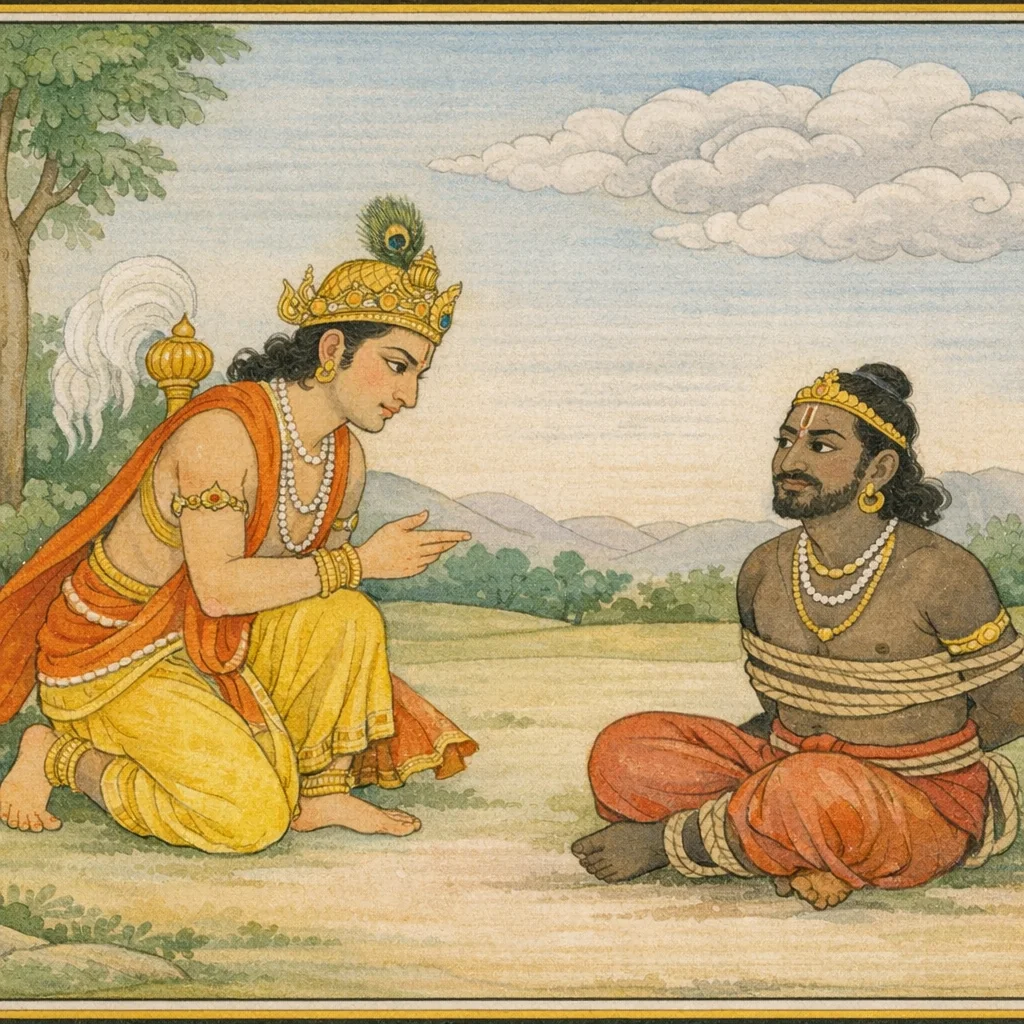
Chapter Arc: वैवस्वत मन्वन्तर के काल-चक्र का संकेत देकर कथा मन को विराट नियति की ओर उठाती है—और उसी पृष्ठभूमि में एक अपराजेय दैत्यराज नमुचि का वैभव-भंग दिखाया जाता है। → राजलक्ष्मी से च्युत, शत्रुओं के वश में, पाशों से बँधा नमुचि—फिर भी शांत—इन्द्र (पुरंदर) को विस्मित करता है। इन्द्र प्रश्न करता है: ‘इतनी विपत्ति में भी तू शोक क्यों नहीं करता?’ नमुचि प्रत्युत्तर देता है कि शोक शरीर को जलाता है, शत्रुओं को हर्ष देता है, और उसमें कोई सहायता नहीं। → नमुचि का निर्णायक उपदेश: जीव बार-बार धाता द्वारा जिस-जिस गर्भ में संयुक्त किया जाता है, वहीं रहता है—अपनी इच्छा से नहीं; अतः जो अवस्था आई है, उसे ‘होनी’ मानकर जो मन को स्थिर रखता है, वह मोह से नहीं डगमगाता। वही धीर पुरुष अर्थ-सिद्धि, व्यसन, सुख-दुःख और मध्यम अवस्था—सबमें समभाव रखता है। → संवाद का निष्कर्ष वैराग्य-युक्त विवेक में उतरता है: वैमनस्य/दुःख के कारणों को काटकर बुद्धिमान पुरुष को मन-ही-मन हृदयस्थ कल्याणमय परमात्मा का चिंतन करना चाहिए; शोक नहीं, आत्म-चिन्तन और समत्व ही मुक्ति-पथ का आधार है।
Shlokas
Verse 1
- वैवस्वत मन्वन्तरको आठ भागोंमें विभक्त करके जब अन्तिम आठवाँ भाग व्यतीत होने लगेगा, तब पूर्व आदि चारों दिशाओंमें जो इन्द्र, यम, वरुण और कुबेरकी चार पुरियाँ हैं, वे नष्ट हो जायँगी। उस समय केवल ब्रह्मलोकमें स्थित होकर सूर्य नीचेके सम्पूर्ण लोकोंको प्रकाशित करेंगे। उसी समय सावर्णिक मन्वन्तरका आरम्भ होगा, जिसमें राजा बलि इन्द्र होंगे। (नीलकण्ठी) षड्विशर्त्याधिकद्विशततमो< ध्याय: इन्द्र और नमुचिका संवाद भीष्म उवाच अनत्रैवोदाहरन्तीममितिहासं पुरातनम् | शतक्रतोश्व संवाद नमुचेश्व युधिष्ठिर,भीष्मजी कहते हैं--युधिष्ठिर! इसी विषयमें विज्ञ पुरुष इन्द्र और नमुचिके संवादरूप प्राचीन इतिहासका उदाहरण दिया करते हैं
Bhishma said: “In this very connection, O Yudhishthira, the learned cite an ancient historical precedent—namely, the dialogue between Shatakratu (Indra) and Namuci.”
Verse 2
श्रिया विहीनमासीनमक्षो भ्यामिव सागरम् | भवाभवज्ञं भूतानामित्युवाच पुरंदर:,एक समयकी बात है, दैत्यराज नमुचि राजलक्ष्मीसे च्युत हो गये, तो भी वे प्रशान्त महासागरके समान क्षोभरहित बने रहे; क्योंकि वे कालक्रमसे होनेवाले प्राणियोंके अभ्युदय और पराभवके तत्त्वको जाननेवाले थे। उस समय देवराज इन्द्र उनके पास जाकर इस प्रकार बोले--
Bhishma said: “(Indra) spoke thus about him: ‘Though bereft of royal fortune, he sat unmoved—like the ocean that cannot be stirred—because he understood the rise and fall of beings as time unfolds.’ At that time, the lord of the gods, Indra, approached the Daitya-king Namuci and addressed him in this manner—”
Verse 3
बद्धः पाशैशच्युत: स्थानाद् द्विषतां वशमागतः । श्रिया विहीनो नमुचे शोचस्यथाहो न शोचसि,“नमुचे! तुम रस्सियोंसे बाँधे गये, राज्यसे भ्रष्ट हुए, शत्रुओंके वशमें पड़े और धन- सम्पत्तिसे वंचित हो गये। तुम्हें अपनी इस दुरवस्थापर शोक होता है या नहीं?”
Bhishma said: “O Namuci, you have been bound with ropes, cast down from your position, fallen under the control of your enemies, and deprived of prosperity. Do you grieve over this wretched condition of yours—or, astonishingly, do you not grieve at all?”
Verse 4
नमुचिर्वाच अनिवार्येण शोकेन शरीरं चोपतप्यते । अमित्राश्ष प्रह्ृष्यन्ति शोके नास्ति सहायता,नमुचिने कहा--देवराज! यदि शोकको रोका न जाय तो उसके द्वारा शरीर संतप्त हो उठता है और शत्रु प्रसन्न होते हैं। शोकके द्वारा विपत्तिको दूर करनेमें भी कोई सहायता नहीं मिलती
Namuci said: “O king of the gods, if grief cannot be checked, it scorches the body, and one’s enemies rejoice. Nor does grief give any help in driving away misfortune.”
Verse 5
तस्माच्छक्र न शोचामि सर्व होवेदमन्तवत् । संतापाद् भ्रश्यते रूप॑ संतापाद् भ्रश्यते श्रिय:
Bhīṣma said: “Therefore, O Śakra, I do not grieve. All this is finite and destined to end. From inner torment one’s beauty falls away; from torment one’s prosperity and fortune also decline.”
Verse 6
संतापाद् भ्रश्यते चायुर्धर्मश्वैव सुरेश्वर । इन्द्र! इसीलिये मैं शोक नहीं करता; क्योंकि यह सम्पूर्ण वैभव नाशवान् है। संताप करनेसे रूपका नाश होता है। संतापसे कान्ति फीकी पड़ जाती है और सुरेश्वर! संतापसे आयु तथा धर्मका भी नाश होता है ।। विनीय खलु तद् दुःखमागतं वैमनस्यजम्
Bhīṣma said: “O lord of the gods, O Indra—therefore I do not grieve, for all this splendor is perishable. From inner torment one’s beauty is ruined; from torment one’s radiance fades. And, O sovereign of the gods, through torment both lifespan and dharma itself are diminished. Therefore, one should subdue that sorrow which has arisen from dejection.”
Verse 7
यदा यदा हि पुरुष: कल्याणे कुरुते मन: । तदा तस्य प्रसिध्यन्ति सर्वार्था नात्र संशय:,पुरुष जब-जब कल्याणस्वरूप परमात्माके चिन्तनमें मन लगाता है, तब-तब उसके सारे मनोरथ सिद्ध होते हैं, इसमें संशय नहीं है
Bhīṣma said: “Whenever a person turns the mind toward what is truly auspicious and wholesome, then all that person’s aims come to fulfillment—of this there is no doubt.”
Verse 8
एक: शास्ता न द्वितीयो<5स्ति शास्ता गर्भ शयानं पुरुषं शास्ति शास्ता । तेनानुयुक्त: प्रवणादिवोदकं यथा नियुक्तोडस्मि तथा वहामि,जगत्का शासन करनेवाला एक ही है, दूसरा नहीं। वही शासक गर्भमें सोये हुए जीवका भी शासन करता है, जैसे जल निम्न स्थानकी ओर ही प्रवाहित होता है, उसी प्रकार प्राणी उस शासकसे प्रेरित होकर उसकी अभीष्ट दिशाको ही गमन करता है। उस ईश्वरकी जैसी प्रेरणा होती है, उसीके अनुसार मैं भी कार्यभार वहन करता हूँ
Bhīṣma said: “There is one sole Ruler—there is no second. That very Governor directs even the person lying in the womb. Moved by His appointment, a being proceeds in the direction He intends—just as water, by its nature, flows toward lower ground. In the same way, I too bear my allotted burden according to the impulse and command of that Lord.”
Verse 9
भवाभवीो त्वभिजानन् गरीयो ज्ञानाच्छेयो न तु तद् वै करोमि । आशासु धर्म्यासु परासु कुर्वन् यथा नियुक्तोडस्मि तथा वहामि,मैं प्राणियोंके अभ्युदय और पराभवको जानता हूँ। श्रेष्ठ तत््व्से भी परिचित हूँ और ज्ञानसे कल्याणकी प्राप्ति होती है, इस बातको भी समझता हूँ, तथापि उसका सम्पादन नहीं करता हूँ। इसके विपरीत धर्म-सम्मत अथवा अधर्मयुक्त आशाएँ मनमें लेकर जैसी अन्तर्यामीकी प्रेरणा होती है, उसके अनुसार कार्यभार वहन करता हूँ
Bhishma said: “I understand the rise and fall of beings; I also know the higher good and that true welfare is attained through knowledge. Yet I do not put that knowledge into practice. Instead, moved by hopes—some aligned with dharma, others contrary—I carry out my duties exactly as the Inner Ruler impels me.”
Verse 10
यथा यथास्थय प्राप्तव्यं प्राप्नोत्येव तथा तथा । भवितव्यं यथा यच्च भवत्येव तथा तथा,पुरुषको जो वस्तु जिस प्रकार मिलनेवाली होती है, वह उस प्रकार मिल ही जाती है। जिस वस्तुकी जैसी होनहार होती है, वह वैसी होती ही है
Bhishma said: “Whatever is destined to be obtained is indeed obtained in just that manner. And whatever is fated to occur—whatever it may be—comes to pass exactly so.”
Verse 11
यत्र यत्रैव संयुक्तो धात्रा गर्भे पुन: पुनः । तत्र तत्रैव वसति न यत्र स्वयमिच्छति,विधाता जिस-जिस गर्भमें रहनेके लिये जीवको बार-बार प्रेरित करते हैं, वह जीव उसी-उसी गर्भमें वास करता है; किंतु वह स्वयं जहाँ रहनेकी इच्छा करता है, वहाँ नहीं रह पाता है
Bhishma said: “Wherever the Creator repeatedly assigns the embodied being to a womb, there alone it must dwell again and again. It does not succeed in dwelling where it personally wishes—thus the soul’s course is governed by the ordainer rather than by mere preference.”
Verse 12
भावो यो<यमनुप्राप्तो भवितव्यमिदं मम । इति यस्य सदा भावो न स मुहोत् कदाचन,मुझे जो यह अवस्था प्राप्त हुई है, ऐसी ही होनहार थी। जिसके हृदयमें सदा इस तरहकी भावना होती है, वह कभी मोहमें नहीं पड़ता है
Bhishma said: “This condition that has come upon me was bound to happen—such was my destined lot. One whose mind is always settled in this understanding never falls into delusion at any time.”
Verse 13
पययिह्न्यमानानामभियोक्ता न विद्यते | दुःखमेतत् तु यद् द्वेष्टा कर्ताहमिति मन्यते,कालक्रमसे प्राप्त होनेवाले सुख-दु:खोंद्वारा जो लोग आहत होते हैं, उनके उस दुःखके लिये दूसरा कोई दोषी या अपराधी नहीं है। दुःख पानेका कारण तो यह है कि पुरुष वर्तमान दुःखसे द्वेष करके अपनेको उसका कर्ता मान बैठता है
Bhishma said: “For those who are struck again and again by pleasures and pains that arrive in due course of time, there is no other accuser—no external culprit to blame. The real sorrow lies here: a person, hating the present pain, imagines, ‘I am the doer (of this suffering),’ and thus binds himself to distress through aversion and false agency.”
Verse 14
ऋषींश्व देवांश्व महासुरांश्न त्रैविद्यवृद्धांश्व वने मुनींश्व । कान्नापदो नोपनमन्ति लोके परावरज्ञास्तु न सम्भ्रमन्ति,ऋषि, देवता, बड़े-बड़े असुर, तीनों वेदोंके ज्ञानमें बढ़े हुए विद्वान् पुरुष तथा वनवासी मुनि--इनमेंसे किनके ऊपर संसारमें आपत्तियाँ नहीं आती हैं; परंतु जिन्हें सतू-असत्का विवेक है, वे मोह या भ्रममें नहीं पड़ते हैं
Bhishma said: “Sages, gods, mighty asuras, scholars advanced in the knowledge of the three Vedas, and forest-dwelling ascetics—upon which of these do calamities not descend in this world? Yet those who discern the higher and the lower, the true and the untrue, do not fall into delusion or confusion when adversity arrives.”
Verse 15
न पण्डित: क्रुद्धयति नाभिपद्यते न चापि संसीदति न प्रहृष्यति । न चार्थकृच्छुव्यसनेषु शोचते स्थित: प्रकृत्या हिमवानिवाचल:,विद्वान पुरुष कभी क्रोध नहीं करता, कहीं आसक्त नहीं होता, अनिष्टकी प्राप्ति होनेपर दुःखसे व्याकुल नहीं होता और किसी प्रिय वस्तुको पाकर अत्यन्त हर्षित नहीं होता है। आर्थिक कठिनाई या संकटके समय भी वह शोक ग्रस्त नहीं होता है; अपितु हिमालयके समान स्वभावसे ही अविचल बना रहता है
Bhishma said: A truly wise person does not flare up in anger, nor does he rush into attachment. He does not collapse in grief when the unwanted befalls him, and he does not become intoxicated with joy on gaining what is dear. Even amid financial hardship and calamity he does not sink into lamentation; by his very nature he remains unmoved—steady like the Himālaya.
Verse 16
यमर्थसिद्धि: परमा न मोहयेत् तथैव काले व्यसनं न मोहयेत् । सुखं च दुःखं च तथैव मध्यमं निषेवते यः स धुरंधरो नर:,जिसे उत्तम अर्थसिद्धि मोहमें नहीं डालती, इसी तरह जो कभी संकट पड़नेपर धैर्य या विवेकको खो नहीं बैठता तथा सुखका, दुःखका और दोनोंके बीचकी अवस्थाका समान भावसे सेवन करता है, वही महान् कार्यभारको सँभालनेवाला श्रेष्ठ पुरुष माना जाता है
Bhishma said: The man whom even the highest attainment of worldly success does not delude, and whom adversity, when it arrives in due course, does not confound; who meets pleasure, pain, and the state between them with the same steady disposition—he alone is a true bearer of great responsibilities, a superior man fit to carry heavy burdens of duty.
Verse 17
यां यामवस्थां पुरुषो5धिगच्छेत् तस्यां रमेतापरितप्यमान: । एवं प्रवृद्धं प्रणुदन्मनोजं संतापनीयं सकल॑ शरीरात्,पुरुष जिस-जिस अवस्थाको प्राप्त हो, उसीमें उसे संतप्त न होकर आनन्द मानना चाहिये। इस प्रकार संतापजनक बढ़े हुए कामको अपने शरीर और मनसे पूर्णतः निकाल दे
Whatever state a man attains, in that very state he should find contentment, without burning in distress. Thus, driving out desire that has grown and brings torment, let him cast it wholly from his body and from his mind.
Verse 18
न तत्सद:सत्परिषत् सभा च सा प्राप्प यां न कुरुते सदा भयम् । धर्मतत्त्वमवगाहा बुद्धिमान् यो<भ्युपैति स धुरंधर: पुमान्,न तो ऐसी कोई सभा है, न साधु-सत्पुरुषोंकी कोई परिषद् है और न कोई ऐसा जनसमाज ही है, जिसे पाकर कोई पुरुष कभी भय न करे। जो बुद्धिमान धर्मतत्त्वमें अवगाहन करके उसीको अपनाता है, वही धुरंधर माना गया है
Bhishma said: There is no assembly, no council of the good, and no gathering of people such that, upon reaching it, a man would never feel fear. The truly capable person is the wise one who plunges into the reality of dharma, understands it deeply, and chooses to live by it—rather than relying on the supposed safety of company or institutions.
Verse 19
प्राज्लस्थ कर्माणि दुरन्वयानि न वै प्राज्ञो मुह्ति मोहकाले । स्थानाच्च्युतश्नेन्न मुमोह गौतम- स्तावत् कृच्छामापदं प्राप्य वृद्धः,विद्वान् पुरुषके सारे कार्य साधारण लोगोंके लिये दुर्बोध होते हैं। विद्वान् पुरुष मोहके अवसरपर भी मोहित नहीं होता। जैसे वृद्ध गौतममुनि अत्यन्त कष्टजनक विपत्तिमें पड़कर और पदच्युत होकर भी मोहित नहीं हुए
Bhīṣma said: “The actions and ways of the truly wise are difficult for ordinary people to follow or even to comprehend. A wise person does not lose clarity even when delusion has an opening. Thus the sage Gautama, though old, did not fall into confusion even after being displaced from his position and struck by a grievous calamity.”
Verse 20
न मन्त्रबलवीर्येण प्रज्ञया पौरुषेण च | न शीलेन न वृत्तेन तथा नैवार्थसम्पदा । अलभ्यं लभते मर्त्यस्तत्र का परिदेवना,जो वस्तु नहीं मिलनेवाली होती है, उसको कोई मनुष्य मन्त्र, बल, पराक्रम, बुद्धि, पुरुषार्थ, शील, सदाचार और धन-सम्पत्तिसे भी नहीं पा सकता; फिर उसके लिये शोक क्यों किया जाय?
Bhīṣma said: “What is truly unattainable cannot be obtained by a mortal—neither through the power of mantras, nor strength and martial prowess, nor intelligence and personal effort; nor even through good character, right conduct, or wealth. If a thing is not to be had, what cause is there for lamentation over it?”
Verse 21
यदेवमनुजातस्य धातारो विदधु: पुरा । तदेवानुचरिष्यामि किं मे मृत्यु: करिष्यति,पूर्वकालमें विधाताने मेरे लिये जैसा विधान रच रक्खा है, मैं जन्मके पश्चात् उसीका अनुसरण करता आया हूँ और आगे भी करूँगा; अतः मृत्यु मेरा क्या करेगी?
Bhīṣma said: “Whatever ordinance the cosmic ordainers once laid down for me at the very outset of my life, that alone I have followed since my birth—and that I shall continue to follow. What, then, can Death do to me?”
Verse 22
लब्धव्यान्येव लभते गन्तव्यान्येव गच्छति । प्राप्तव्यान्येव चाप्रोति दुःखानि च सुखानि च,मनुष्यको प्रारब्धके विधानसे जो कुछ पाना है, उसीको वह पाता है। जहाँ जाना है, वहीं वह जाता है और जो भी सुख या दुःख उसके लिये प्राप्तव्य हैं, उन्हें वह प्राप्त करता है
Bhīṣma said: “A person gains only what is destined to be gained, goes only where he is destined to go, and experiences only those pleasures and pains that are appointed for him.”
Verse 23
एतद् विदित्वा कार्त्स्न्येन यो न मुह्ति मानव: । कुशली सर्वदु:खेषु स वै सर्वधनो नर:,यह पूर्णरूपसे जानकर जो मनुष्य कभी मोहित नहीं होता है, वह सब प्रकारके दु:खोंमें सकुशल रहता है और वही हर तरहसे धनवान् है
Bhīṣma said: “One who has understood this completely and therefore is never deluded remains steady and unharmed amid every kind of suffering. Such a person alone is truly ‘wealthy’ in every sense—rich in inner resources, not merely in possessions.”
Verse 66
ध्यातव्यं मनसा हृ॒द्यं कल्याणं संविजानता । अतः समझदार पुरुषको वैमनस्यके कारण प्राप्त हुए दुःखका निवारण करके मन-ही- मन हृदयस्थित कल्याणमय परमात्माका चिन्तन करना चाहिये
Bhīṣma said: One who understands rightly should contemplate, with the mind, that auspicious Reality which is dear and abiding in the heart. Therefore, a discerning person should first remove the sorrow that has arisen from resentment and inner discord, and then, inwardly, meditate upon the supremely beneficent Supreme Self dwelling within the heart.
Verse 225
इस प्रकार श्रीमहाभारत शान्तिपर्वके अन्तर्गत गोक्षधर्मपर्वमें श्रीयंनिधाननामक दो सौ पचीसवाँ अध्याय पूरा हुआ
Thus ends the two-hundred-and-twenty-fifth chapter, called “Śrīyaṃnidhāna,” within the Gokṣa-dharma section of the Śānti Parva of the Śrī Mahābhārata. This closing marker signals the completion of a unit of instruction on dharma, closing the discourse attributed here to Bhīṣma.
Verse 226
इति श्रीमहाभारते शान्तिपर्वणि मोक्षधर्मपर्वणि शक्रनमुचिसंवादो नाम षड्विंशत्यधिकद्धिशततमो<ध्याय:
Thus ends, in the Śrī Mahābhārata, within the Śānti Parva and its Mokṣa-dharma section, the chapter entitled “The Dialogue between Śakra and Namuci,” being the two-hundred-and-twenty-sixth chapter. This closing colophon signals the completion of a teaching episode framed as Bhīṣma’s instruction, where ethical discernment and the pursuit of liberation are conveyed through a divine dialogue.
Frequently Asked Questions
The chapter constrains both receipt and use of wealth: one should not accept gifts ‘in vain’ (without dharmic purpose), and if wealth is received through legitimate channels, it should be redirected toward sacrifice and giving; solitary consumption and purposeless accumulation are explicitly discouraged.
After completing Vedic study and teacher-service, one should adopt an āśrama with the teacher’s approval and sustain its discipline for life; householdership is presented as the enabling base that stabilizes and materially supports the other āśramas.
Yes: the text asserts that as long as one’s ethical reputation (kīrti/yaśas) endures in the world, one attains expansive beneficial outcomes; enduring fame is portrayed as grounded in dāna, yajña, and progeny, reinforced through historical exemplars.