Adhyaya 193
जपयोगयोः तुल्यफलनिर्णयः (Adhyāya 193: Adjudication of the Comparable Fruits of Japa and Yoga)
Upa-parva: Mokṣa-dharma (Yoga–Japa Phala Discourse)
Yudhiṣṭhira asks Bhīṣma what the brāhmaṇa and the king did after the prior discussion and what dialogue followed. Bhīṣma reports that, after honoring Dharma and other cosmic regulators (Yama, Kāla, Mṛtyu, Svarga) and respectfully acknowledging assembled sages, the brāhmaṇa addresses the king: he urges the king to proceed with the attained fruit and requests permission to continue japa, citing a prior boon that the king will maintain faith while practicing. The king responds by inviting the brāhmaṇa to accompany him so that the japa-practitioner may also obtain the fruit. The brāhmaṇa agrees, stating that effort was made in the presence of all and that both are of equal fruit; they proceed to their destined course. Their resolve draws a cosmic assembly: Indra arrives with devas, lokapālas, and a wide range of beings and sacred entities; celestial music and flower-rain accompany the event. Svarga personified declares both accomplished. The two then perform a synchronized interior withdrawal (viṣaya-pratisaṃhāra), placing the vital winds (prāṇa, apāna, udāna, samāna, vyāna) under mental control, fixing attention near the nasal tip and brow, steadying posture, and concentrating upward. A great light emerges from the brāhmaṇa and enters Brahmā, who welcomes it and states that japa-practitioners attain fruits equal to yogins; yoga yields direct vision, while japa has a distinctive excellence expressed as disciplined rising and samādhi-like composure. The brāhmaṇa enters Brahmā; the king follows by the same method. Devas affirm the demonstration. Brahmā adds that recitation of Mahāsmṛti and auspicious Anusmṛti, and devotion to yoga, also lead to his realm by this procedure; he then disappears, and Bhīṣma concludes by summarizing the fruit and destination of japa-practitioners.
Chapter Arc: पूर्वोक्त तीन प्रश्नों का एक साथ उत्तर देकर वाणी सीधे धर्म के मूल सूत्र पर टिकती है—जो जिस वर्ण-आश्रम का है, उसका धर्म उसी के अनुरूप है; पर वही आचरण शुद्धि और उन्नति का द्वार भी बनता है। → नियमबद्ध ब्रह्मर्षि-विहित चर्या का प्रताप बताया जाता है—जो उसे साधता है वह अग्नि की तरह दोषों को जला देता है और ‘दुर्जय’ लोकों को भी जीत लेता है; फिर परिव्राजक (संन्यासी) के कठोर आचार का विस्तार आता है—अग्नि, धन, गृह, कलत्र, परिग्रह और स्नेह-पाशों का त्याग, समता और निर्लिप्तता। → अन्तर्यज्ञ का उत्कर्ष: ब्राह्मण बाह्य अग्निहोत्र से आगे बढ़कर ‘स्वशरीरस्थ अग्नि’ में आहुति देता है—अनिन्धन ज्योति की भाँति प्रशान्त होकर मोक्षाश्रम का यथोक्त पालन करता है और ब्रह्मलोक की ओर प्रतिष्ठित होता है। → धर्म-लोक की सामाजिक-नैतिक छवि उभरती है—परदारा-लोभ का अभाव, स्वदार-निष्ठा, द्रव्य में विस्मय/आसक्ति का क्षय, परस्पर बन्धन का न होना; और इसके विपरीत लोभ-मोहयुक्त जन आवागमन में ही घूमते रहते हैं, उत्तरदिशा के उत्कृष्ट लोक को नहीं पाते। → भरद्वाज, भृगु के कथन से विस्मित होकर उनका सत्कार करते हैं; वक्ता कहता है—‘जगत् की उत्पत्ति’ का प्रसंग समग्र रूप से कह दिया, अब और क्या सुनना चाहते हो? (अगले प्रश्न का द्वार खुला रहता है)।
Shlokas
Verse 1
हि 8 छा आफ आटा: - इस श्लोकमें पूर्वोक्त तीनों प्रश्नोंका एक साथ ही सामान्य उत्तर दे दिया गया है। जो जिस वर्ण अथवा आश्रमका है, उसका धर्माचरण भी वैसा ही है। धर्मका लक्षण है--स्वर्गप्राप्ति करानेवाला वर्णाश्रमोचित आचार। वर्ण और आश्रमके जितने भेद हैं, उतने ही उनके धर्मके भी हैं। द्विनवत्याधेकशततमो< ध्याय: वानप्रस्थ और संन्यास धर्मोका वर्णन तथा हिमालयके उत्तर पारश्वमें स्थित उत्कृष्ट लोककी विलक्षणता एवं महत्ताका प्रतिपादन, भूगु-भरद्वाज-संवादका उपसंहार भूगुरुवाच वानप्रस्था: खल्वपि धर्ममनुसरन्त: पुण्यानि तीर्थानि नदीप्रस्रवणानि सुविविक्तेष्वरण्येषु.. मृगमहिषवराहशार्दूवनगजाकीर्णेषबु_ तपस्यन्तो<नुसंचरन्ति त्यक्तग्राम्यवस्त्रा भ्यवहारोपभोगा वन्यौषधि-फलमूलपर्णपरिमितविचित्रनियताहारा: स्थानास-निनो भूमिपाषाणसिकताशर्करावालुका भस्म- शायिन: काशकुशचर्मवल्कलसंवृताड़ा: केश-श्मश्रुमखरोमधारिणोी नियतकालोपस्पर्शना अस्क-न्दितकालबलिहोमानुष्ठायिन: समित्कुशकुसुमापहा-रसम्मार्जनलब्धविश्रामा: शीतोष्णवर्षपवनविष्टम्भवि-भिन्नसर्वत्वचो विविधनियमोपयोगचर्यानुष्ठानविहि- तपरिशुष्कमांसशोणितत्वगस्थि भूता धृतिपरा: सत्त्व-योगाच्छरीराण्युद्वहन्ते,भगुजी कहते हैं--मुने! तीसरे आश्रम वानप्रस्थका पालन करनेवाले मनुष्य धर्मका अनुसरण करते हुए पवित्र तीर्थोमें, नदियोंके किनारे, झरनोंके आसपास तथा मृग, भैंसे, सूअर, सिंह एवं जंगली हाथियोंसे भरे हुए एकान्त वनोंमें तप करते हुए विचरते रहते हैं। गृहस्थोंके उपभोगमें आनेवाले ग्रामजनोचित सुन्दर वस्त्र, स्वादिष्ट भोजन और विषयभोगोंका परित्याग करके वे जंगलमें अपने-आप होनेवाले अन्न, फल, मूल तथा पत्तोंका परिमित, विचित्र एवं नियत आहार करते हैं। भूमिपर ही बैठते हैं। जमीन, पत्थर, रेत, कँकरीली मिट्टी, बालू अथवा राखपर ही सोते हैं। काश, कुश, मृगचर्म और वृक्षोंकी छालसे बने वस्त्रोंस अपना शरीर ढकते हैं। सिरके बाल, दाढ़ी, मूँठ, नख और रोम सदा धारण किये रहते हैं। नियत समयपर स्नान करके निश्चित कालका उल्लंघन न करते हुए बलिवैश्वदेव तथा अग्निहोत्र आदि कर्मोंका अनुष्ठान करते हैं। सबेरे हवन-पूजनके लिये समिधा, कुशा और फूल आदिका संग्रह करके आश्रमको झाड़-बुहार लेनेके पश्चात् उन्हें कुछ विश्राम मिलता है। सर्दी गर्मी, वर्षा और हवाका वेग सहते-सहते उनके शरीरके चमड़े फट जाते हैं। नाना प्रकारके नियमोंका पालन और सत्कर्मोंका अनुष्ठान करते रहनेसे उनके रक्त और मांस सूख जाते हैं और शरीरकी जगह चामसे ढँकी हुई हड्डियोंका ढाँचामात्र रह जाता है; फिर भी धैर्य रखकर साहसपूर्वक शरीरका भार ढोते रहते हैं
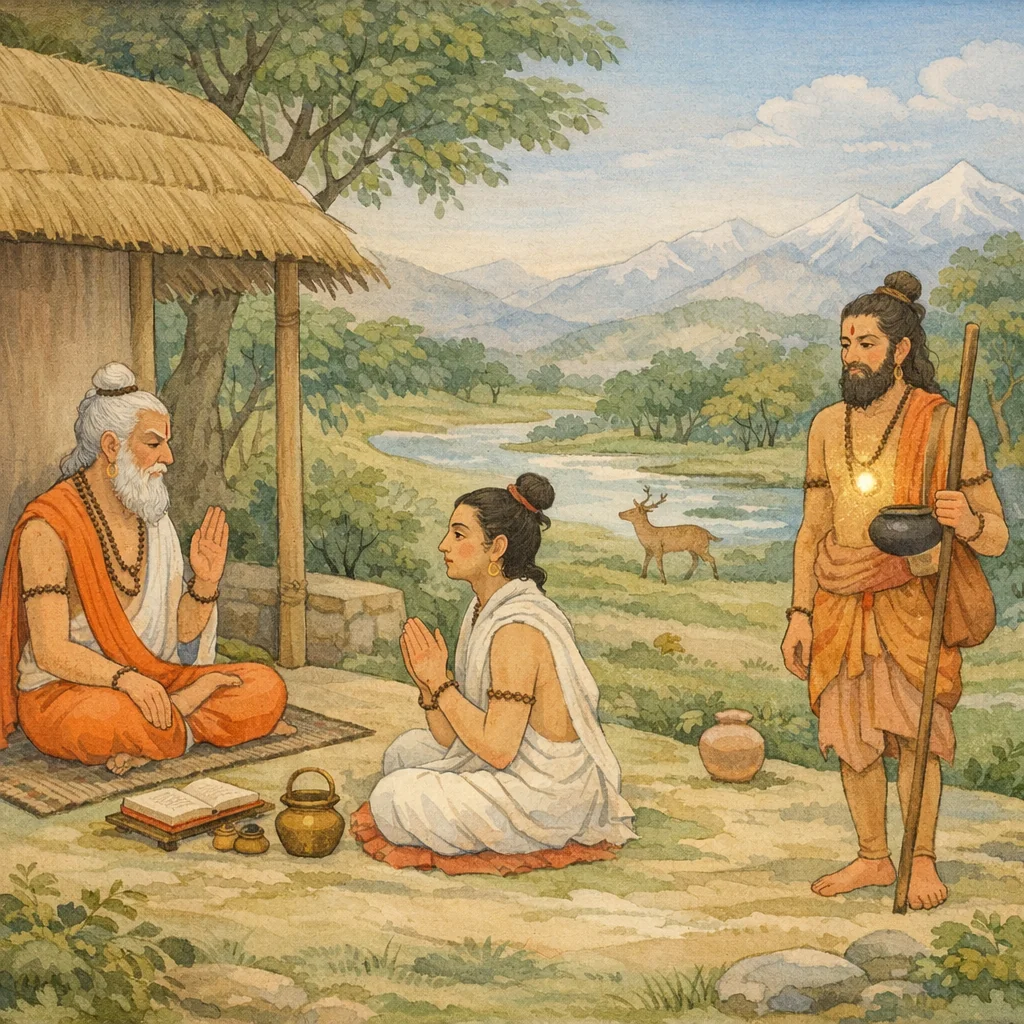
Bhṛgu said: Even those who have entered the forest-dweller’s stage (vānaprastha) follow dharma. They move about performing austerities at holy fords, along rivers and springs, and in secluded forests filled with deer, buffalo, boar, tigers, and wild elephants. Renouncing village life—fine clothing, rich foods, and sensual enjoyments—they subsist on what the wilderness provides: herbs, fruits, roots, and leaves, taken in measured, varied, and regulated portions. They sit on the ground and sleep on earth, stone, sand, gravel, dust, or ashes. Their bodies are covered with garments of reeds and kuśa-grass, animal skins, and bark-cloth. They keep their hair, beard, nails, and body-hair uncut, bathe at fixed times, and do not transgress the appointed seasons. They maintain offerings and fire-rites, gathering fuel-sticks, kuśa, and flowers for worship, and only after cleaning their hermitage do they allow themselves a little rest. Enduring cold, heat, rain, and wind until their skin cracks, and persisting in vows and disciplined practices, their flesh and blood dry up so that they seem little more than bones covered with skin—yet, with steadfast courage, they continue to bear the body’s burden. The passage presents vānaprastha as an ethical training in restraint, endurance, and ritual responsibility, where suffering is not sought for its own sake but accepted as the cost of inner steadiness and fidelity to dharma.
Verse 2
यस्त्वेतां नियतश्चर्या ब्रद्मर्षिविहितां चरेत् स दहेदग्निवद्दोषान् जयेल्लोकांश् दुर्जयान्,जो पुरुष नियमके साथ रहकर ब्रह्मर्षियोंद्वारा आचरणमें लायी हुई इस वानप्रस्थ धर्मकी विधिका अनुष्ठान करता है, वह अग्निकी भाँति अपने दोषोंको भस्म करके दुर्लभ लोकोंको प्राप्त कर लेता है
Bharadvāja said: Whoever, with disciplined restraint, practices this regulated mode of conduct laid down by the brahmarṣis—this rule of life for the forest-dweller—burns away his faults like fire and attains those hard-to-win worlds.
Verse 3
परिव्राजकानां पुनराचार:--तद्यथा विमुच्याग्नि-धनकलत्रपरिबर्हणं संगेष्वात्मन: स्नेहपाशानवधूय.._ परिव्रजन्ति | समलोष्टाश्मकाज्चनाल्त्रिवर्गप्रवृत्तेष्व- सक्तबुद्धयो5रिमित्रोदासीनानां तुल्यदर्शना: स्थावर-जरायुजाण्डजस्वेदजोद्/धिज्जानां भूतानां बाड्मन:-कर्मभिरनभिद्रोहिणो $निकेता: पर्वतपुलिनवृक्षमूल देवतायतनान्यनुचरन्तो वासार्थमुपेयुर्नगरं ग्राम॑ं वा नगरे पडउ्चरात्रिका: ग्रामे चैकरात्रिका: प्रविश्य च प्राणधारणार्थ द्विजातीनां भवनान्यसंकीर्णकर्मणामुपतिष्ठेयु: पात्रपतितायाचितमभै क्ष्या: कामक्रो धदर्प- लोभमोहकार्पण्यदम्भपरिवादाभिमानहिंसानिवृत्ता इति,अब संन्यासियोंका आचरण बतलाया जाता है। वह इस प्रकार है--इसमें प्रवेश करनेवाले पुरुष अग्निहोत्र, धन, स्त्री आदि परिवार तथा घरकी सारी सामग्रीका परित्याग करके भोगों और संगोंके प्रति अपनी आसक्तिके बन्धनोंको तोड़कर सदाके लिये घरसे बाहर निकल जाते हैं। ढेले, पत्थर और सुवर्णको समान समझते हैं। धर्म, अर्थ और कामसम्बन्धी प्रवृत्तियोंमें उनकी बुद्धि आसक्त नहीं होती। शत्रु, मित्र और उदासीन--सबके प्रति वे समान दृष्टि रखते हैं। स्थावर, पिण्डज, अण्डज, स्वेदज और उद्भिज्ज प्राणियोंके प्रति मन, वाणी और कियाओंद्वारा कभी द्रोह नहीं करते हैं, कुटी या मठ बनाकर नहीं रहते हैं। उन्हें चाहिये कि चारों ओर विचरते रहें तथा रात्रिमें ठहरनेके लिये पर्वतकी गुफा, नदीका किनारा, वृक्षकी जड़, देवमन्दिर, नगर अथवा गाँवमें चले जाया करें। नगरमें पाँच रात्रि और गाँवमें एक रातसे अधिक न ठहरें। प्राणधारणके लिये अपने विशुद्ध धर्मोका पालन करनेवाले ब्राह्मण, क्षत्रिय और वैश्य--इन द्विजातियोंके ऐसे घरोंपर जाकर खड़े हो जाये, जहाँ संकीर्णता न हो। बिना माँगे ही पात्रमें जितनी भिक्षा आ जाय, उतनी ही स्वीकार करें। काम, क्रोध, दर्प, लोभ, मोह, कृपणता, दम्भ, निन््दा, अभिमान तथा हिंसासे सर्वथा दूर रहें
Bharadvāja said: “Now the discipline of the wandering renunciants is described. Having abandoned the sacred fires, wealth, wife, and the whole apparatus of household life, they shake off the bonds of affection that tie the self to pleasures and social attachments, and they go forth as wanderers. To them clod, stone, and gold are the same. Their minds do not cling to pursuits of the three aims—dharma, artha, and kāma. They look with equal vision upon enemy, friend, and the indifferent. Toward all beings—immobile and those born from womb, egg, sweat, or sprout—they commit no harm by speech, mind, or deed. They are without a fixed abode, not establishing huts or monasteries. Moving about, they take shelter for the night in mountain caves, riverbanks, at the roots of trees, in temples, or in a town or village; in a town they stay no more than five nights, and in a village no more than one. For the mere support of life, they stand at the houses of the twice-born—Brahmins, Kshatriyas, and Vaishyas—whose conduct is pure and not mixed with improper occupations. They accept only such alms as fall into their bowl without solicitation. They remain wholly free from desire, anger, pride, greed, delusion, miserliness, hypocrisy, slander, arrogance, and violence.”
Verse 4
भवन्ति चात्र श्लोका:-- अभयं सर्वभूतेभ्यो दत्त्वा यश्चरते मुनि: । न तस्य सर्वभूतेभ्यो भयमुत्पद्यते क्वचित्,इस विषयमें ये श्लोक प्रसिद्ध हैं-- जो मुनि सब प्राणियोंको अभयदान देकर विचरता है, उसको सम्पूर्ण प्राणियोंमें किसीसे भी कहीं भय नहीं प्राप्त होता है
Here, well-known verses are cited: the sage who moves through the world after granting fearlessness to all beings never, at any time, encounters fear from any being. The ethical point is that non-violence and the active assurance of safety create a reciprocal moral security: one who does not threaten life is not met with threat.
Verse 5
कृत्वाग्निहोत्रं स्वशरीरसंस्थं शारीरमर्ग्निं स्वमुखे जुहोति । विप्रस्तु भैक्ष्यौपगतै्ह विर्भि- श्रिताग्निनां स व्रजते हि लोकम्,जो ब्राह्मण अग्निहोत्रको अपने शरीरमें आरोपित करके शरीरस्थ अग्निके उद्देश्यसे अपने मुखमें प्राप्त भिक्षारूप हविष्यका होम करता है, वह अग्नि-चयन करनेवाले अन्निहोत्रियोंके लोकमें जाता है
Bharadvāja said: Having established the Agnihotra within his own body, a brahmin offers oblations into the bodily fire by consuming the alms-food that comes to him as sacrificial offering. By this inner sacrifice, he attains the world of those who have performed the fire-altar rite and maintained the sacred fires—teaching that disciplined renunciation and mindful sustenance can become a true Agnihotra when outward ritual is internalized without abandoning dharma.
Verse 6
मोक्षाश्रमं यक्षरते यथोक्तं शुचि: सुसंकल्पितमुक्तबुद्धि: । अनिन्धन ज्योतिरिव प्रशान्तं स ब्रह्मलोकं श्रयते मनुष्य:,जो बुद्धिको संकल्परहित करके पवित्र हो शास्त्रोक्त विधिके अनुसार मोक्ष-आश्रम (संन्यास) के नियमोंका पालन करता है, वह मनुष्य बिना ईँंधनकी आगके समान परम शान्त ज्योतिर्मय ब्रह्मलोकको प्राप्त होता है
Bharadvāja said: The one who is purified, firm in resolve, and whose understanding is freed from clinging—who follows, exactly as the scriptures teach, the discipline of the mokṣa-āśrama (the renunciant life)—attains the Brahma-world, calm and radiant like a fire that burns without fuel.
Verse 7
भरद्वाज उवाच अस्माल्लोकात् परो लोक: श्रूयते नोपलभ्यते । तमहं ज्ञातुमिच्छामि तद् भवान् वक्तुमहति,भरद्वाजने पूछा--ब्रह्मन! इस लोकसे कोई श्रेष्ठ लोक सुना जाता है; किंतु वह देखनेमें नहीं आता। मैं उसे जानना चाहता हूँ, आप उसे बतानेकी कृपा करें
Bharadvāja said: “It is heard that beyond this world there is another, higher world—yet it is not directly perceived. I wish to understand it. Please explain it to me.”
Verse 8
भूगुरुवाच उत्तरे हिमवत्पाश्वे पुण्ये सर्वगुणान्विते । पुण्य: क्षेम्यश्न॒ काम्यश्च॒ स परो लोक उच्यते,भूगुजीने कहा--मुने! उत्तरदिशामें हिमालयके पार्श्वभागमें, जो सर्वगुणसम्पन्न एवं पुण्यमय प्रदेश है, वहाँके भू-भागपर श्रेष्ठ लोक बताया जाता है, वह पवित्र, कल्याणकारी और कमनीय लोक है
Bhṛgu said: “To the north, on the flank of the Himālaya, there lies a holy region endowed with every excellence. The realm upon that sacred ground is called the ‘higher world’—pure in itself, bringing welfare and security, and desirable to behold and attain.”
Verse 9
तत्र हपापकर्माण: शुचयोउत्यन्तनिर्मला: । लोभमोहपरित्यक्ता मानवा निरुपद्रवा:,वहाँ पापकर्मसे रहित, पवित्र, अत्यन्त निर्मल, लोभ और मोहसे शून्य तथा सब प्रकारके उपद्रवोंसे रहित मानव निवास करते हैं
There dwell human beings free from sinful deeds—pure and utterly stainless—who have cast aside greed and delusion and remain untouched by any kind of affliction or disturbance.
Verse 10
स स्वर्गसदृशो देशस्तत्र हाक्ता:ः शुभा गुणा: । काले मृत्यु: प्रभवति स्पृशन्ति व्याधयो न च,वह देश स्वर्गके तुल्य है। वहाँ सभी शुभ गुणोंकी स्थिति बतायी गयी है। वहाँ समयपर ही मृत्यु होती है। रोग-व्याधि किसीका स्पर्श नहीं करते हैं
Bharadvāja said: “That region is like heaven itself. There, auspicious qualities are firmly established. Death comes only at its proper time, and diseases do not touch anyone.”
Verse 11
न लोभ: परदारेषु स्वदारनिरतो जन: । नान्योन्यं बध्यते तत्र द्रव्येषु च न विस्मय: । परो ह्ुधर्मो नैवास्ति संदेहो नापि जायते,वहाँ किसीके मनमें परायी स्त्रियोंके प्रति लोभ नहीं होता। सब लोग अपनी ही स्त्रियोंमें अनुरक्त रहते हैं। वहाँके निवासी धनके लिये एक दूसरेका वध नहीं करते। किसीको बन्धनमें नहीं डालते। उन्हें कभी महान् विस्मय नहीं होता। अधर्मका तो वहाँ नाम भी नहीं है। वहाँ किसीके मनमें संदेह नहीं पैदा होता है
Bharadvāja said: In that realm there is no lust for another’s wife; people remain devoted to their own spouses. For the sake of wealth they do not kill one another, nor do they bind anyone in captivity. They are not shaken by extraordinary astonishment, for wrongdoing has no place there at all. Doubt, too, does not arise in anyone’s mind—such is the settled order of dharma there.
Verse 12
कृतस्य तु फल तत्र प्रत्यक्षमुपल भ्यते । पानासनाशनोपेता: प्रासादभवनाश्रया:,वहाँ किये हुए कर्मका फल प्रत्यक्ष उपलब्ध होता है। उस लोकमें कुछ लोग बड़े-बड़े महलोंमें रहते, अच्छे आसनोंपर बैठते और उत्तमोत्तम वस्तुएँ खाते-पीते हैं। समस्त कामनाओंसे सम्पन्न और सुवर्णमय आभूषणोंसे विभूषित होते हैं तथा कुछ लोगोंको प्राणधारणमात्रके लिये भोजन प्राप्त होता है, कुछ लोग बड़े परिश्रमसे तपोमय जीवन व्यतीत करते हुए प्राण धारण करते हैं (इस प्रकार वह लोक इस लोकसे सर्वथा उत्कृष्ट है)
Bharadvāja said: “In that realm, the result of one’s deeds is perceived directly. There are those who dwell in lofty mansions, seated on fine seats, enjoying excellent food and drink. Endowed with fulfilled desires and adorned with golden ornaments, they live in evident prosperity; while others obtain only enough food to sustain life, and some maintain themselves through a life of austerity and strenuous effort. Thus that world is described as surpassing this one.”
Verse 13
सर्वकामैर्व॒ता: केचिद्धेमाभरण भूषिता: । प्राणधारणमात्र तु केषांचिदुपपद्यते । श्रमेण महता केचित् कुर्वन्ति प्राणधारणम्,वहाँ किये हुए कर्मका फल प्रत्यक्ष उपलब्ध होता है। उस लोकमें कुछ लोग बड़े-बड़े महलोंमें रहते, अच्छे आसनोंपर बैठते और उत्तमोत्तम वस्तुएँ खाते-पीते हैं। समस्त कामनाओंसे सम्पन्न और सुवर्णमय आभूषणोंसे विभूषित होते हैं तथा कुछ लोगोंको प्राणधारणमात्रके लिये भोजन प्राप्त होता है, कुछ लोग बड़े परिश्रमसे तपोमय जीवन व्यतीत करते हुए प्राण धारण करते हैं (इस प्रकार वह लोक इस लोकसे सर्वथा उत्कृष्ट है)
Bharadvāja said: In that realm, some are surrounded by every desired enjoyment and are adorned with golden ornaments. Yet for some, only enough sustenance to keep life going is obtained; and some, with great exertion, manage merely to maintain their breath. Thus, even there, the fruits of action appear in visible form, and beings experience differing conditions according to their deeds.
Verse 14
इह धर्मपरा: केचित् केचिन्नैकृतिका नरा: । सुखिता दुःखिता: केचिन्निर्थना धनिनो5परे,इस मनुष्यलोकमें कुछ मनुष्य धर्मपरायण होते हैं तो कुछ बड़े भारी ठग निकलते हैं। इसीलिये कोई सुखी और कोई दुखी होते हैं। कुछ धनवान् और कुछ लोग निर्धन हो जाते हैं
Bharadvāja said: “Here in this human world, some people are devoted to dharma, while others are deceitful in their conduct. Therefore, some live in happiness and others in suffering; some become wealthy, while others fall into poverty.”
Verse 15
इह श्रमो भयं मोह: क्षुधा तीव्रा च जायते । लोभभश्चार्थकृतो नृणां येन मुहन्त्यपण्डिता:,इहलोकमें श्रम, भय, मोह और तीव्र भूखका कष्ट होता है। मनुष्योंमें धनका लोभ विशेष होता है, जिससे अज्ञानी पुरुष मोहमें पड़ जाते हैं
Bharadvāja said: “Here in this world arise toil, fear, delusion, and the torment of intense hunger. Among men, greed born of wealth is especially strong; through it the unwise fall into confusion and lose discernment.”
Verse 16
इह वार्ता बहुविधा धर्माधर्मस्य कारिण: । यस्तद्वेदोभयं प्राज्ञ: पाप्मना न स लिप्यते,इस देशमें धर्म और अधर्म करनेवाले मनुष्योंके विषयमें नाना प्रकारकी बातें सुनी जाती हैं। जो धर्म और अधर्म दोनोंके परिणामको जानता है, वह विद्वान पुरुष पापसे लिप्त नहीं होता है
In this world, many kinds of accounts are heard concerning those who act in dharma and in adharma. The wise who knows the consequences of both—of dharma and of adharma—is not tainted by sin.
Verse 17
सोपध॑ निकृतिः स्तेयं परीवादो हासूयिता । परोपघातो हिंसा च पैशुन्यमनृतं तथा,कपट, शठता, चोरी, निन्दा, दूसरोंके दोष देखना, दूसरोंको हानि पहुँचाना, प्राणियोंकी हिंसा करना, चुगली खाना और झूठ बोलना--जो इन दुर्गुणोंका सेवन करता है, उसकी तपस्या क्षीण होती है और जो विद्वान् इन दोषोंको कभी अपने आचरणमें नहीं लाता, उसकी तपस्या निरन्तर बढ़ती रहती है
Deceitful conduct, fraud, theft, slander, and spiteful fault-finding; causing harm to others, violence, tale-bearing, and falsehood—whoever indulges in these vices finds his austerity diminished. But the wise person who never admits these faults into his conduct sees his austerity steadily increase.
Verse 18
एतानासेवते यस्तु तपस्तस्य प्रहीयते । यस्त्वेतान् नाचरेद् विद्वांस्तपस्तस्य प्रवर्धते,कपट, शठता, चोरी, निन्दा, दूसरोंके दोष देखना, दूसरोंको हानि पहुँचाना, प्राणियोंकी हिंसा करना, चुगली खाना और झूठ बोलना--जो इन दुर्गुणोंका सेवन करता है, उसकी तपस्या क्षीण होती है और जो विद्वान् इन दोषोंको कभी अपने आचरणमें नहीं लाता, उसकी तपस्या निरन्तर बढ़ती रहती है
Whoever indulges in these faults, his austerity wanes; but the wise who does not practice them, his austerity grows.
Verse 19
इह चिन्ता बहुविधा धर्माधर्मस्य कर्मण: । कर्मभूमिरियं लोके इह कृत्वा शुभाशुभम् | शुभे: शुभमवाप्रोति तथाशुभमथान्यथा,इस लोकमें पुण्य और पापकर्मके सम्बन्धमें अनेक प्रकारके विचार होते रहते हैं। यह कर्मभूमि है। इस जगत्में शुभ और अशुभ कर्म करके मनुष्य शुभ कर्मोंका शुभ फल पाता है और अशुभ कर्मोंका अशुभ फल भोगता है
In this world, many kinds of reflections arise about action—what is dharma and what is adharma. This world is the field of karma: having performed good or evil deeds here, a person attains the good result of good actions and likewise experiences the evil result of evil actions—never otherwise.
Verse 20
इह प्रजापति: पूर्व देवा: सर्षिगणास्तथा । इष्ट्वेष्टतपस: पूता ब्रह्मलोकमुपाश्रिता:,पूर्वकालमें यहीं प्रजापति, देवता तथा ऋषियोंने यज्ञ और अभीष्ट तपस्या करके पवित्र हो ब्रह्मलोकको प्राप्त कर लिया
Here, in ancient times, Prajāpati, the gods, and the hosts of ṛṣis—purified by performing sacrifices (yajña) and the austerities (tapas) they had vowed and desired—attained and took refuge in Brahmaloka.
Verse 21
उत्तर: पृथिवी भाग: सर्वपुण्यतम: शुभ: । इहस्थास्तत्र जायन्ते ये वै पुण्यकृतो जना:,पृथ्वीका उत्तरभाग सबसे अधिक पवित्र और मंगलमय है। इस लोकमें जो पुण्यात्मा मनुष्य हैं, वे ही मृत्युके पश्चात् उस भूभागमें जन्म लेते हैं
Bharadvāja said: “The northern region of the earth is the most supremely meritorious and auspicious. Those who dwell here and perform righteous deeds—truly the doers of merit—are reborn there after death.”
Verse 22
असत्कर्माणि कुर्वन्तस्तिर्यग्योनिषु चापरे । क्षीणायुषस्तथा चान्ये नश्यन्ति पृथिवीतले,दूसरे लोग जो यहाँ पापकर्म करते हैं, वे पशु-पक्षियोंकी योनिमें जन्म ग्रहण करते हैं और दूसरे कितने ही आयुक्षय होनेपर नष्ट हो जाते हैं और पातालमें चले जाते हैं
Bharadvāja said: “Those who engage in unrighteous deeds are born again in the wombs of animals and birds; and others, their lifespan exhausted, perish upon the earth—falling away into lower states of existence.”
Verse 23
अन्योन्यभक्षणासक्ता लोभमोहसमन्विता: । इहैव परिवर्तन्ते न ते यान्त्युत्तरां दिशम्
Bharadvāja said: “Those who are addicted to preying upon one another, and who are possessed by greed and delusion, keep revolving here itself (in this worldly cycle); they do not go to the higher direction—the upward course of blessedness and liberation.”
Verse 24
जो लोभ और मोहसे युक्त हो एक दूसरेको खा जानेके लिये उद्यत रहते हैं, वे भी इसी लोकमें आवागमन करते रहते हैं, उत्तरदिशाके उत्कृष्ट लोकमें नहीं जाने पाते हैं ।। ये गुरून् पर्युपासन्ते नियता ब्रह्मचारिण: । पन्थानं सर्वलोकानां विजानन्ति मनीषिण:,जो मन और इन्द्रियोंको संयममें रखकर ब्रह्मचर्यका पालन करते हुए गुरुजनोंकी उपासना करते हैं, वे मनीषी पुरुष सभी लोकोंके मार्गको जानते हैं
Bharadvāja said: “Those who are bound by greed and delusion, ever ready to devour one another, continue to revolve in this very world; they do not attain the excellent realm in the northern direction. But those disciplined brahmacārins who restrain mind and senses and devotedly attend upon their teachers—those wise men come to know the paths leading to all worlds.”
Verse 25
इत्युक्तो5यं मया धर्म: संक्षिप्तो ब्रह्मनिर्मितः । धर्माधर्मा हि लोकस्य यो वै वेत्ति स बुद्धिमान्,इस प्रकार मैंने यहाँ ब्रह्माजीके द्वारा निर्मित इस धर्मका संक्षेपसे वर्णन किया है। जो लोकमें करने और न करने योग्य धर्म और अधर्मको जानता है, वही बुद्धिमान् है
Bharadvāja said: “Thus have I described, in brief, this dharma established by Brahmā. Truly wise is the one who knows, in this world, what is to be done and what is not to be done—dharma and adharma.”
Verse 26
भीष्म उवाच इत्युक्तो भूगुणा राजन् भरद्वाज: प्रतापवान् | भृगुं परमधर्मात्मा विस्मित: प्रत्यपूजयत्,भीष्मजी कहते हैं--राजन्! भूगुजीके इस प्रकार कहनेपर परम धर्मात्मा प्रतापी भरद्वाजने आश्वर्यवकित होकर उनकी पूजा की
Bhishma said: “O King, when Bhrigu had spoken thus, the illustrious Bharadvaja—supremely devoted to dharma—was filled with wonder and, in reverence, duly honored Bhrigu.”
Verse 27
एष ते प्रसवो राजन् जगत: सम्प्रकीर्तित: । निखिलेन महाप्राज्ञ कि भूय: श्रोतुमिच्छसि,परम बुद्धिमान् नरेश! इस प्रकार मैंने तुमसे जगत्की उत्पत्तिके सम्बन्धमें ये सारी बातें बतायी हैं। अब और क्या सुनना चाहते हो?
Bhishma said: “O King, I have thus fully proclaimed to you the origin of the world. O greatly wise ruler, what more do you wish to hear?”
Verse 192
इति श्रीमहाभारते शान्तिपर्वणि मोक्षधर्मपर्वणि भुगुभरद्वाजसंवादे द्विनवत्यधिकशततमो< ध्याय:,इस प्रकार श्रीमह्ााभारत शान्तिपर्वके अन्तर्गत मोक्षधर्मपर्वमें भगु- भरद्वाजसंवादाविषयक एक सौ बानबेवाँ अध्याय पूरा हुआ
Thus, in the Śrī Mahābhārata, within the Śānti Parva, in the Mokṣa-dharma section, the dialogue between Bhṛgu and Bharadvāja concludes here; the one-hundred-and-ninety-second chapter is completed.
Frequently Asked Questions
Whether japa and yoga, when executed with correct method and steadiness, lead to comparable spiritual outcomes; the chapter presents a narrative adjudication affirming equivalence of fruit with nuanced differentiation.
Interior discipline is framed as method-dependent: sensory withdrawal, regulated attention, and stable posture support attainment; sincerity (śraddhā) and continued practice are validated across practitioner types (brāhmaṇa and king).
Yes: Brahmā states that recitation of Mahāsmṛti and auspicious Anusmṛti, and devotion to yoga, can lead to his realm by the described method—positioning the chapter as a legitimizing statement about practice-to-result mapping within mokṣa discourse.