Adhyaya 18
जनक-राज्ञः मौण्ड्य-परिव्रज्या-विवादः (Janaka’s Renunciation Questioned; Discourse on Dāna and Detachment)
Upa-parva: Rājadharmānuśāsana Upa-Parva (Instruction on Royal Duty) — Janaka Exemplum Segment
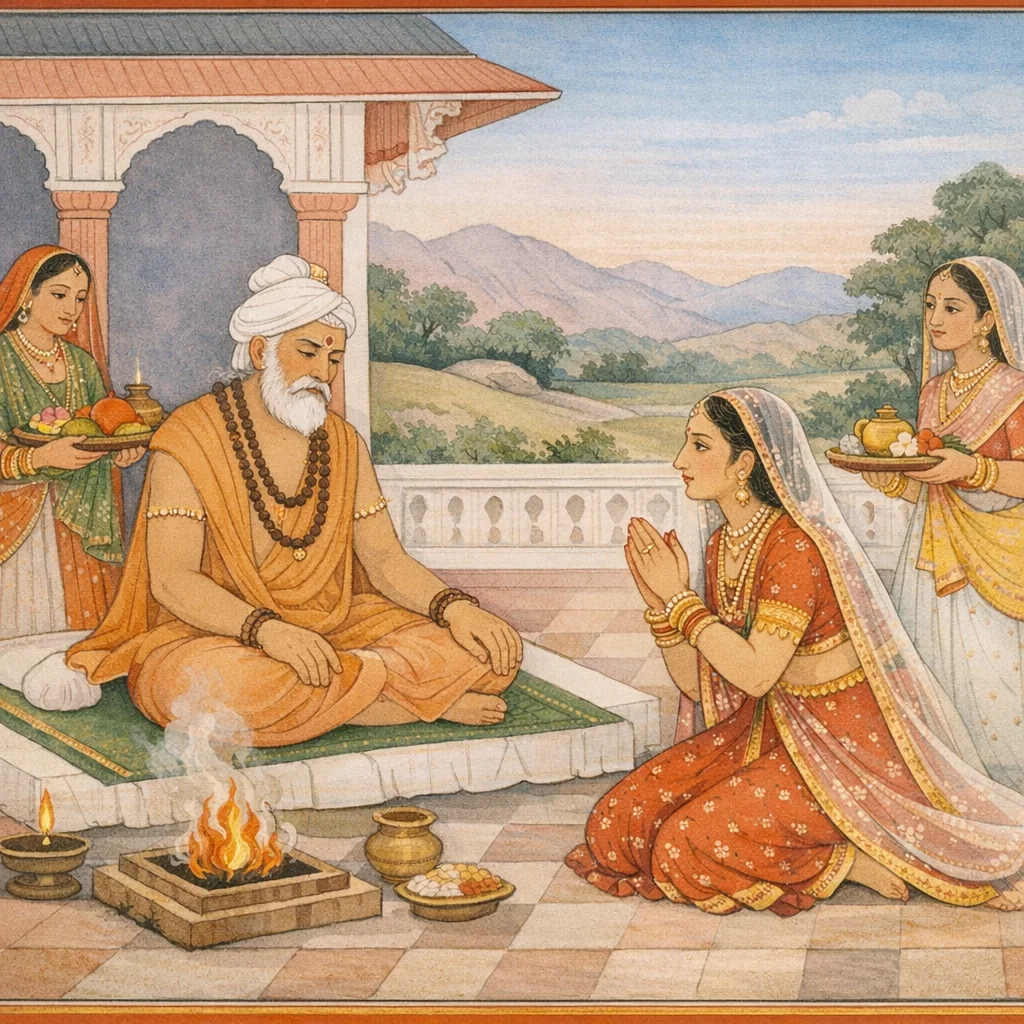
Vaiśaṃpāyana reports that Arjuna, distressed by the king’s silence and wounded by prior speech, resumes speaking and introduces an old exemplum: a dialogue between Videha’s King Janaka and his queen. Janaka is portrayed as having abandoned a ‘purifying path’ of royal duty, adopting silence, shaving/ascetic markers, and a mendicant routine, subsisting on a mere handful of grain. The queen confronts him in private with reasoned but accusatory arguments: he has rejected wealth, allies, dependents, hospitality obligations, and the expectations of those who relied on his patronage; such withdrawal risks moral failure rather than liberation. The speech then expands into a critique of performative renunciation—those who adopt ochre robes and wandering for livelihood—and contrasts genuine detachment with mere begging. The chapter pivots to an economic-ethical thesis: householders are the source of food; food sustains life; the giver of food becomes a giver of life; and without donors, even aspirants to mokṣa cannot proceed. A normative ideal is articulated: one who moves through the world unattached, equal toward friend and enemy, free from bonds, is truly liberated; public-spirited giving and governance are presented as compatible with dharma when grounded in restraint and non-cruelty.
Chapter Arc: अर्जुन युधिष्ठिर के शान्ति-प्रश्नों के बीच एक पुरावृत्त सुनने की जिज्ञासा प्रकट करता है—विदेह-राज जनक और उनकी रानी के संवाद का, जिसमें त्याग और राजधर्म आमने-सामने खड़े हैं। → जनक अचानक राज्य छोड़ भिक्षावृत्ति का निश्चय करते हैं; रानी व्याकुल होकर पूछती है—क्या धन, पुत्र, पत्नी, रत्न, प्रासाद, शयन, वाहन, वस्त्र-आभूषण सब छोड़ देना ही धर्म है, या यह मोह/मूढ़ता है? वह आग्रह करती है कि राजा पृथ्वी का शासन करें और गृहस्थ-धर्म के भीतर रहकर ही श्रेष्ठ गति पाई जा सकती है। → रानी गृहस्थ-धर्म का उत्कर्ष स्थापित करती है—गुरु-सेवा, अग्न्याधान, यज्ञ-क्रतु, दान, अतिथि-देवता-भूत-तर्पण, प्रजा-पालन, सत्यवादिता, काम-क्रोध-त्याग और आनृशंस्य (करुणा) के द्वारा ‘बंधन’ से मुक्त होकर परम पद की प्राप्ति संभव है; त्याग का सार बाह्य-परित्याग नहीं, पाप-बंधन से विमुक्ति है। → संवाद का निष्कर्ष यह बनता है कि राजधर्म और गृहस्थ-धर्म स्वयं साधना हैं—यदि वे दान, तप, सत्य, करुणा और प्रजा-रक्षा से युक्त हों; ‘आमिष’ (लोभ/विषय) और ‘बंधन’ (आसक्ति/पाप) से मुक्त होकर ही परम गति मिलती है। → जनक इस उपदेश को कैसे स्वीकारते हैं और वैराग्य व राज्य-कर्तव्य का समन्वय किस प्रकार करते हैं—यह आगे के प्रसंग के लिए द्वार खोलता है।
Shlokas
Verse 1
ऑपन-माज बछ। ऑफ ऋाजज - आमिषं बन्धनं लोके कर्मेहोक्तं तथामिषम् । ताभ्यां विमुक्तः पापाभ्यां पदमाप्नोति तत्परम् ।। (१७।१७) अष्टादशो<् ध्याय: अर्जुन॒का राजा जनक और उनकी रानीका दृष्टान्त देते हुए युधिष्ठिरको संन्यास ग्रहण करनेसे रोकना वैशम्पायन उवाच तृष्णीम्भूतं तु राजानं पुनरेवार्जुनोडब्रवीत् । संतप्त: शोकदुःखाभ्यां राजवाक्छल्यपीडित:,वैशम्पायनजी कहते हैं--जनमेजय! जब राजा युधिष्ठिर ऐसा कहकर चुप हो गये, तब राजाके वाग्बाणोंसे पीड़ित हो शोक और दुःखसे संतप्त हुए अर्जुन फिर उनसे बोले
Vaiśampāyana said: When King Yudhiṣṭhira, having spoken thus, fell silent, Arjuna—pierced by the king’s sharp words and burning with grief and sorrow—addressed him once again.
Verse 2
अजुन उवाच कथयमन्ति पुरावृत्तमितिहासमिमं जना: । विदेहराज्ञ: संवादं भार्यया सह भारत,अर्जुनने कहा--भारत! विज्ञ पुरुष विदेहतज जनक और उनकी रानीका संवादरूप यह प्राचीन इतिहास कहा करते हैं
Arjuna said: O Bhārata, discerning people recount this ancient episode: the dialogue of King Janaka of Videha with his queen.
Verse 3
उत्सृज्य राज्यं भिक्षार्थ कृतबुद्धि नरेश्वरम् । विदेहराजमहिषी दु:खिता यदभाषत,एक समय राजा जनकने भी राज्य छोड़कर भिक्षासे जीवन-निर्वाह कर लेनेका निश्चय कर लिया था। उस समय विदेहराजकी महारानीने दुखी होकर जो कुछ कहा था, वही आपको सुना रहा हूँ
Arjuna said: “Having resolved to abandon his kingdom and live by alms, the lord of men—King Janaka—once formed this determination. At that time the queen of Videha, distressed at heart, spoke certain words. I shall relate to you exactly what she said.”
Verse 4
धनान्यपत्यं दाराक्ष रत्नानि विविधानि च । पन्थानं पावकं हित्वा जनको मौढ्यमास्थित:
Arjuna said: “Abandoning wealth, children, wife, and many kinds of jewels—and even forsaking the very path of purifying discipline—Janaka fell into delusion.”
Verse 5
त॑ ददर्श प्रिया भार्या भैक्ष्यवृत्तिमकिंचनम् । धानामुष्टिमुपासीनं निरीहं गतमत्सरम्
Then his beloved wife saw him—living on alms, owning nothing, seated with only a handful of parched grain, free from restless striving, and having cast off envy. The scene holds up an ethical ideal of contentment and inner cleansing: renunciation not as display, but as simplicity, restraint, and freedom from rivalry toward others.
Verse 6
तमुवाच समागत्य भर्तारमकुतो भयम् । क्रुद्धा मनस्विनी भार्या विविक्ते हेतुमद् वच:
Approaching her husband—fearless and unshaken—his spirited wife, angered yet resolute, spoke to him in private with words that were reasoned and purposeful. The scene frames a moral confrontation: emotion is present, but it is directed into deliberate counsel rather than mere outburst.
Verse 7
कहते हैं, एक दिन राजा जनकपर मूढ़ता छा गयी और वे धन, संतान, स्त्री, नाना प्रकारके रत्न, सनातन मार्ग और अग्निहोत्रका भी त्याग करके अकिंचन हो गये। उन्होंने भिक्षुवृत्ति अपना ली और वे मुट्टीभर भुना हुआ जौ खाकर रहने लगे। उन्होंने सब प्रकारकी चेष्टाएँ छोड़ दीं। उनके मनमें किसीके प्रति ईष्याका भाव नहीं रह गया था। इस प्रकार निर्भय स्थितिमें पहुँचे हुए अपने स्वामीको उनकी भायने देखा और उनके पास आकर कुपित हुई उस मनस्विनी एवं प्रिय रानीने एकान्तमें यह युक्तियुक्त बात कही-- ॥। ४-- ६।। कथमुत्सृज्य राज्यं स्वं धनधान्यसमन्वितम् । कापालीं वृत्तिमास्थाय धानामुष्टि्न ते वर:,“राजन! आपने धन-धान्यसे सम्पन्न अपना राज्य छोड़कर यह खपड़ा लेकर भीख माँगनेका धंधा कैसे अपना लिया? यह मुट्ठी भर जौ आपको शोभा नहीं दे रहा है
The queen, seeing her lord Janaka settled in a fearless, desireless state, confronted him in private with a pointed question: “How could you abandon your own kingdom—rich in wealth and grain—and take up the beggar’s life with a skull-bowl? O king, this handful of roasted barley does not befit you.” The verse sets a moral tension between outward renunciation and the responsibilities and dignity of kingship, preparing the way for a deeper inquiry into true detachment and dharma.
Verse 8
प्रतिज्ञा तेडन्यूथा राजन् विचेष्टा चान्यथा तव । यद् राज्यं महदुत्सृज्य स्वल्पे तुष्यसि पार्थिव,“नरेश्वरर आपकी प्रतिज्ञा तो कुछ और थी और चेष्टा कुछ और ही दिखायी देती है। भूपाल! आपने विशाल राज्य छोड़कर थोड़ी-सी वस्तुमें संतोष कर लिया
Arjuna said: “O King, your vow seems to be one thing, yet your conduct appears to be another. For, O ruler of men, having renounced a vast kingdom, you now find contentment in something small.”
Verse 9
नैतेनातिथयो राजन् देवर्षिपितरस्तथा । अद्य शक््यास्त्वया भर्तु मोघस्तेडयं परिश्रम:,“राजन! इस मुद्ठीभर जौसे देवताओं, ऋषियों, पितरों तथा अतिथियोंका आप भरण- पोषण नहीं कर सकते, अत: आपका यह परिश्रम व्यर्थ है
Arjuna said: “O King, with only this much you cannot today sustain the guests, nor the divine seers and the ancestors. Therefore this effort of yours is futile.”
Verse 10
देवतातिथिभिश्नैव पितृभिश्नैव पार्थिव । सर्वरेतै: परित्यक्त: परिव्रजसि निष्क्रिय:
Arjuna said: “O king, having abandoned the gods, guests, and the ancestors—indeed, having cast off all these obligations—you wander about as a renunciant, inactive. How can such withdrawal be justified when the duties that sustain the moral order are thus left behind?”
Verse 12
तीनों वेदोंके ज्ञानमें बढ़े-चढ़े सहसरों ब्राह्मणों तथा इस सम्पूर्ण जगत्का भरण-पोषण करनेवाले होकर भी आज आप उन्हींके द्वारा अपना भरण-पोषण चाहते हैं ।। श्रियं हित्वा प्रदीप्तां त्वं श्ववत् सम्प्रति वीक्ष्यसे । अपुत्रा जननी तेड5द्य कौसल्या चापतिस्त्वया,“इस जगमगाती हुई राजलक्ष्मीको छोड़कर इस समय आप दर-दर भटकनेवाले कुत्तेके समान दिखायी देते हैं। आज आपके जीते-जी आपकी माता पुत्रहीन और यह अभागिनी कौसल्या पतिहीन हो गयी
Arjuna said: “Abandoning your blazing royal fortune, you now appear like a dog wandering from door to door. While you still live, your mother has, as it were, become sonless, and this unfortunate Kausalyā has become husbandless because of you.” The speech condemns the renunciation of rightful kingship when it results in the neglect of dependents and the collapse of familial and social duties.
Verse 13
'पृथ्वीनाथ! आप सम्पूर्ण देवताओं, अतिथियों और पितरोंसे परित्यक्त होकर अकर्मण्य हो घर छोड़ रहे हैं ।। यस्त्वं त्रैविद्यवृद्धानां ब्राह्मणानां सहस्रश: । भर्ता भूत्वा च लोकस्य सोड्द्य तैर्भतिमिच्छसि,अमी च धर्मकामास्त्यां क्षत्रिया: पर्युपासते । त्वदाशामभिकांक्षन्त: कृपणा: फलहेतुका: 'ये धर्मकी इच्छा रखनेवाले क्षत्रिय जो सदा आपकी सेवामें बैठे रहते हैं, आपसे बड़ी- बड़ी आशाएँ रखते हैं, इन बेचारोंको सेवाका फल चाहिये
Arjuna said: “O lord of the earth! You are abandoning your duties and leaving home, as though forsaken by all the gods, by guests who depend on your hospitality, and by the ancestors who rely on your rites. You who have long been the supporter of thousands of venerable Brahmins learned in the three Vedas, and who have borne the burden of the people as their protector—how can you now seek to withdraw from that responsibility? And these Kshatriyas, desirous of dharma, sit ever in attendance upon you, looking to you with great expectations—poor men whose service is sustained by the hope of its rightful fruits.”
Verse 14
तांश्व त्वं विफलान् कुर्वन् क॑ नु लोक॑ गमिष्यसि । राजन् संशयिते मोक्षे परतन्त्रेषु देहिषु,“राजन! मोक्षकी प्राप्ति संशयास्पद है और प्राणी प्रारब्धके अधीन हैं। ऐसी दशामें उन अर्थार्थी सेवकोंको यदि आप विफल-मनोरथ करते हैं तो पता नहीं किस लोकमें जायँगे?
Arjuna said: “O King, if you render those petitioners’ efforts fruitless, to what world will you go? For liberation is uncertain, and embodied beings are dependent on forces beyond their control (their allotted destiny). In such a condition, to disappoint those who seek gain and have taken refuge in your service is ethically perilous.”
Verse 15
नैव ते5स्ति परो लोको नापर: पापकर्मण: । धर्म्यान् दारान् परित्यज्य यस्त्वमिच्छसि जीवितुम्,“आप अपनी धर्मपत्नीका परित्याग करके जो अकेला जीवन बिताना चाहते हैं, इससे आप पापकर्मा बन गये हैं; अतः आपके लिये न यह लोक सुखद होगा, न परलोक
Arjuna said: “For one who acts sinfully, neither the next world nor even this world brings true well-being. By abandoning your lawful wife and wishing to live alone, you have taken up a blameworthy course; therefore, neither worldly happiness nor happiness after death will be yours.”
Verse 16
स्रजो गन्धानलंकारान् वासांसि विविधानि च । किमर्थमभिसंत्यज्य परिव्रजसि निष्क्रिय:,“बताइये तो सही, इन सुन्दर-सुन्दर मालाओं, सुगन्धित पदार्थों, आभूषणों और भाँति- भाँतिके वस्त्रोंकी छोड़कर किसलिये कर्महीन होकर घरका परित्याग कर रहे हैं?
Arjuna said: “Leaving behind garlands, perfumes, ornaments, and garments of many kinds—why do you renounce them and wander forth, inactive, abandoning the household?”
Verse 17
इस प्रकार श्रीमह्याभारत शान्तिपर्वके अन्तर्गत राजधर्मानुशासनपर्वमें युधिष्ठिरका वाक्यविषयक सत्रहवाँ अध्याय पूरा हुआ,निपानं सर्वभूतानां भूत्वा त्वं पावनं महत् | आद्यो वनस्पतिर्भूत्वा सो<न्यांस्त्वं पर्युपाससे
“Having become a watering-place for all beings, you are a great purifier. Having become the foremost of trees, you stand in attendance upon (and support) the others.” The statement praises an exemplary figure whose dharmic role is to sustain life impartially—like a public source of water and like a chief tree that shelters and nourishes the rest—thus framing kingship and leadership as service, protection, and purification for the community.
Verse 18
“आप सम्पूर्ण प्राणियोंके लिये पवित्र एवं विशाल प्याऊके समान थे--सभी आपके पास अपनी प्यास बुझाने आते थे। आप फलोंसे भरे हुए वृक्षके समान थे--कितने ही प्राणियोंकी भूख मिटाते थे, परंतु वे ही आप अब (भूख-प्यास मिटानेके लिये) दूसरोंका मुँह जोह रहे हैं ।। खादन्ति हस्तिनं न्यासै: क्रव्यादा बहवो<प्युत । बहव: कृमयश्चैव कि पुनस्त्वामनर्थकम्,“यदि हाथी भी सारी चेष्टा छोड़कर एक जगह पड़ जाय तो मांसभक्षी जीव-जन्तु और कीड़े धीरे-धीरे उसे खा जाते हैं। फिर सब पुरुषार्थोंसे शून्य आप-जैसे मनुष्योंकी तो बात ही क्या है? इति श्रीमहा भारते शान्तिपर्वणि राजधर्मानुशासनपर्वणि अर्जुनवाक्ये अष्टादशो< ध्याय: इस प्रकार श्रीमह्याभारत शान्तिपर्वके अन्तर्गत राजधरमानुशासनपर्वरमें अर्जुनका वाक्यविषयक अठारहवाँ अध्याय पूरा हुआ
Arjuna said: “You were like a pure and spacious public watering-place for all beings—everyone came to you to quench their thirst. You were like a tree laden with fruit—feeding the hunger of countless creatures. Yet those very dependents now look to others for their sustenance. For when even an elephant, abandoning all effort, lies helpless in one place, many flesh-eating creatures and worms gradually consume it. How much more, then, would a man like you—bereft of purposeful exertion—become prey to misfortune?”
Verse 19
यइमां कुण्डिकां भिन्द्यात् त्रिविष्टब्धं च यो हरेत् । वासश्नापि हरेत् तस्मिन् कथं ते मानसं भवेत्,“यदि आपकी कोई यह कुण्डी फोड़ दे, त्रिदण्ड उठा ले जाय और ये वस्त्र भी चुरा ले जाय तो उस समय आपके मनकी कैसी अवस्था होगी?
Arjuna said: “If someone were to break this water-pot, carry off your staff, and even steal your garment—what state would your mind be in then?”
Verse 20
यस्त्वयं सर्वमुत्सृज्य धानामुष्टेरनुग्रह: । यदानेन सम॑ सर्व किमिदं हृवसीयसे,“यदि सब कुछ छोड़कर भी आप मुदट्ठीभर जौके लिये दूसरोंकी कृपा चाहते हैं तो राज्य आदि अन्य सब वस्तुएँ भी तो इसीके समान हैं। फिर उस राज्यके त्यागकी क्या विशेषता रही?
Arjuna said: “If, after renouncing everything, you still seek another’s favor even for a mere handful of grain, then kingship and all other possessions are equally dependent in the same way. What special greatness, then, lies in renouncing the kingdom—why do you grieve over it?”
Verse 21
धानामुष्टेरिहार्थश्वेत् प्रतिज्ञा ते विनश्यति । का वाहं तव को मे त्वं कश्न ते मय्यनुग्रह:,“यदि यहाँ मुद्दीभर जौकी आवश्यकता बनी ही रह गयी तो सब कुछ त्याग देनेकी जो आपने प्रतिज्ञा की थी, वह नष्ट हो गयी। (सर्वत्यागी हो जानेपर) मैं आपकी कौन हूँ और आप मेरे कौन हैं तथा आपका मुझपर अनुग्रह भी क्या है?
Arjuna said: “If, even here, you still have need of a mere handful of grain, then the vow you made—to renounce everything—has been broken. If you are truly one who has abandoned all, then what relation am I to you, what relation are you to me, and what meaning can your ‘favor’ toward me have?”
Verse 22
प्रशाधि पृथिवीं राजन् यदि ते<नुग्रहो भवेत् । प्रासादं शयनं यानं वासांस्थाभरणानि च,“राजन! यदि आपका मुझपर अनुग्रह हो तो इस पृथ्वीका शासन कीजिये और राजमहल, शय्या, सवारी, वस्त्र तथा आभूषणोंको भी उपयोगमें लाइये
Arjuna said: “O King, if you would show me your favor, then rule this earth. Make use as well of the palace, the bed, the conveyance, the garments, and the ornaments.”
Verse 23
श्रिया विहीनैरधनैस्त्यक्तमित्रैरकिंचनै: । सौखिकै: सम्भृतानर्थान् यः संत्यजति कि नु तत्,'श्रीहीन, निर्धन, मित्रोंद्वारा त्यागे हुए, अकिंचन एवं सुखकी अभिलाषा रखनेवाले लोगोंकी भाँति सब प्रकारसे परिपूर्ण राजलक्ष्मीका जो परित्याग करता है उससे उसे क्या लाभ?
Arjuna said: “If a man who is bereft of prosperity, poor, abandoned by friends, and possessing nothing gives up his possessions, what is remarkable in that? But one who, while fully endowed with royal fortune and every means of enjoyment, renounces such well-secured advantages—what, then, is the true gain he attains by that renunciation?”
Verse 24
योउत्यन्तं प्रतिगृह्लीयाद् यश्च दद्यात् सदैव हि | तयोस्त्वमन्तरं विद्धि श्रेयांस्ताभ्यां क उच्यते,“जो बराबर दूसरोंसे दान लेता (भिक्षा ग्रहण करता) तथा जो निरन्तर स्वयं ही दान करता रहता है, उन दोनोंमें क्या अन्तर है और उनमेंसे किसको श्रेष्ठ कहा जाता है? यह आप समझिये
“Between one who constantly accepts gifts from others (as a beggar) and one who constantly gives of his own, understand the difference between the two—and know which of them is called the better.”
Verse 25
सदैव याचमानेषु तथा दम्भान्वितेषु च । एतेषु दक्षिणा दत्ता दावाग्नाविव दुर्हुतम्
When gifts are given to people who are forever begging, and likewise to those tainted with hypocrisy and show, that charity becomes like an offering badly poured into a forest fire—consumed without yielding the intended sacred or ethical fruit.
Verse 26
“सदा ही याचना करनेवालेको और दम्भीको दी हुई दक्षिणा दावानलमें दी गयी आहुतिके समान व्यर्थ है ।। जातवेदा यथा राजन् नादग्ध्वैवोपशाम्यति । सदैव याचमानो हि तथा शाम्यति न द्विज:,“राजन! जैसे आग लकड़ीको जलाये बिना नहीं बुझती, उसी प्रकार सदा ही याचना करनेवाला ब्राह्मण (याचनाका अन्त किये बिना) कभी शान्त नहीं हो सकता
O King, just as fire does not subside without first consuming fuel, so too a brahmin who is forever begging does not attain inner quiet so long as that habit of constant solicitation continues. A gift (dakṣiṇā) given to one who is persistently importunate and hypocritical is likened to an oblation cast into a wildfire—wasted and without wholesome fruit.
Verse 27
सतां वै ददतोऊन्न॑ च लोकेडस्मिन् प्रकृतिर्धुुवा न चेद् राजा भवेद् दाता कुत:ः स्युर्मोक्षकांक्षिण:,“इस संसारमें दाताका अन्न ही साधु पुरुषोंकी जीविकाका निश्चित आधार है। यदि दान करनेवाला राजा न हो तो मोक्षकी अभिलाषा रखनेवाले साधु-संन्यासी कैसे जी सकते हैं?
In this world, the food given by the righteous giver is the sure foundation of livelihood for the good. If the king were not a giver, how could the holy ascetics who long for liberation (moksha) sustain their lives?
Verse 28
अन्नाद् गृहस्था लोकेडस्मिन् भिक्षवस्तत एव च । अन्नात् प्राण: प्रभवति अन्नद: प्राणदो भवेत्,“इस जगतमें अन्नसे गृहस्थ और गृहस्थोंसे भिक्षुओंका निर्वाह होता है। अन्नसे प्राणशक्ति प्रकट होती है; अतः अन्नदाता प्राणदाता होता है
In this world, householders live by food, and mendicants too depend upon those very householders. From food arises vital strength (life-breath, prāṇa); therefore, the giver of food becomes, in effect, a giver of life.
Verse 29
गृहस्थेभ्योडपि निर्मुक्ता गृहस्थानेव संश्रिता: । प्रभवं च प्रतिष्ठां च दान्ता विन्दन्त आसते
Though freed even from dependence on householders, they still take refuge in the householder order itself. Self-controlled (dānta), they attain both their proper source of sustenance and a stable standing in life, and thus remain established in peace.
Verse 30
“'जितेन्द्रिय संन्न्यासी गृहस्थ-आश्रमसे अलग होकर भी गृहस्थोंके ही सहारे जीवन धारण करते हैं। वहींसे वह प्रकट होते हैं और वहीं उन्हें प्रतिष्ठा प्राप्त होती है ।। त्यागान्न भिक्षुकं विद्यान्न मौढ्यान्न च याचनात् | ऋजुस्तु यो<र्थ त्यजति न सुखं विद्धि भिक्षुकम्,“केवल त्यागसे, मूढ़तासे और याचना करनेसे किसीको भिक्षु नहीं समझना चाहिये। जो सरलभावसे स्वार्थका त्याग करता है और सुखमें आसक्त नहीं होता उसे ही भिक्षु समझिये
A self-controlled renunciant who has conquered the senses (jitendriya), though living apart from the householder’s stage, still sustains his life with the support of householders. From them he becomes visible to the world, and from them he also gains recognition. Therefore, one should not regard a person as a true mendicant merely because he has ‘given up’ outwardly, or because of dullness, or because he begs. Rather, know as the real mendicant the one who, with straightforward sincerity, relinquishes self-interest and is not attached to pleasure.
Verse 31
असक्त: सक्तवद् गच्छन् नि:संगो मुक्तबन्धन: । सम: शत्रौ च मित्रे च स वै मुक्तो महीपते,'पृथ्वीनाथ! जो आसक्तिरहित होकर आसक्तकी भाँति विचरता है, जो संगरहित एवं सब प्रकारके बन्धनोंको तोड़ चुका है तथा शत्रु और मित्रमें जिसका समान भाव है, वह सदा मुक्त ही है
O king, one who is inwardly unattached yet moves among duties as though engaged; who remains free from clinging and has cut through every bond; and whose regard is even toward both enemy and friend—such a person is truly liberated at all times.
Verse 32
परिव्रजन्ति दानार्थ मुण्डा: काषायवासस: । सिता बहुविधै: पाशै: संचिन्वन्तो वृथामिषम्,“बहुत-से मनुष्य दान लेने (पेट पालने)-के लिये मूड़ मुड़ाकर गेरुए वस्त्र पहन लेते हैं और घरसे निकल जाते हैं। वे नाना प्रकारके बन्धनोंमें बँधे होनेके कारण व्यर्थ भोगोंकी ही खोज करते रहते हैं-
For the sake of alms—merely to keep themselves fed—many men shave their heads, don ochre robes, and wander forth. Yet, bound by numerous and varied snares, they keep pursuing only futile enjoyments, mistaking them for the life of renunciation.
Verse 33
त्रयीं च नाम वार्ता च त्यक्त्वा पुत्रान् व्रजन्ति ये । त्रिविष्टब्धं च वासश्र प्रतिगृह्नन्त्यबुद्धयः,“बहुत-से मूर्ख मनुष्य तीनों वेदोंके अध्ययन, इनमें बताये गये कर्म, कृषि, गोरक्षा, वाणिज्य तथा अपने पुत्रोंका परित्याग करके चल देते हैं और त्रिदण्ड एवं भगवा वस्त्र धारण कर लेते हैं
Arjuna said: “There are many foolish men who abandon the study of the three Vedas and the lawful occupations of life, and even forsake their sons, setting off as wanderers. They then take up the triple staff and the ochre robe—outward marks of renunciation—without true understanding.”
Verse 34
अनिष्कषाये काषायमीहार्थमिति विद्धि तम् धर्मध्वजानां मुण्डानां वृत्यर्थमिति मे मिति:,“यदि हृदयका कषाय (राग आदि दोष) दूर न हुआ हो तो काषाय (गेरुआ) वस्त्र धारण करना स्वार्थ-साधनकी चेष्टाके लिये ही समझना चाहिये। मेरा तो ऐसा विश्वास है कि धर्मका ढोंग रखनेवाले मथमुंडोंके लिये यह जीविका चलानेका एक धंधामात्र है
Know that wearing ochre robes while one’s inner stains have not been cleansed is merely an attempt at self-serving gain. In my judgment, for shaven-headed men who parade the banner of religion, it becomes only a means of livelihood—religious display without inner purification.
Verse 35
काषायैरजिनैश्वीरैर्नग्नान् मुण्डान् जटाधरान् । बिभ्रत् साधून् महाराज जय लोकान् जितेन्द्रिय:,“महाराज! आप तो जितेन्द्रिय होकर नंगे रहनेवाले, मूड़ मुड़ाने और जटा रखानेवाले साधुओंका गेरुआ वस्त्र, मृगचर्म एवं वल्कल वस्त्रोंके द्वारा भरण-पोषण करते हुए पुण्यलोकोंपर विजय प्राप्त कीजिये
Arjuna said: “O great king, being self-controlled, support the holy ascetics—those who wear ochre robes, deer-skins and bark garments, who live unclothed, with shaven heads or matted locks—and by such righteous patronage win the worlds of merit.”
Verse 36
अग्न्याधेयानि गुर्वर्थ क्रतूनपि सुदक्षिणान् । ददात्यहरह: पूर्व को नु धर्मरतस्तत:,'जो प्रतिदिन पहले गुरुके लिये अग्निहोत्रार्थ समिधा लाता है; फिर उत्तम दक्षिणाओंसे युक्त यज्ञ एवं दान करता रहता है, उससे बढ़कर धर्मपरायण कौन होगा?”
Arjuna said: “Who could be more devoted to dharma than the one who, day after day, first brings the fuel-sticks for his teacher’s sacred fire (for the agnihotra), and then continues to perform sacrifices furnished with excellent priestly fees and to give gifts? Such a person places service to the guru and the sustaining of sacred rites before all else.”
Verse 37
अजुन उवाच तत्त्वज्ञो जनको राजा लोके<स्मिन्निति गीयते । सो<प्यासीन्मोहसम्पन्नो मा मोहवशमन्वगा:,अर्जुन कहते हैं--महाराज! राजा जनकको इस जगतमें “तत्त्वज्ञ" कहा जाता है; किंतु वे भी मोहमें पड़ गये थे। (रानीके इस तरह समझानेपर राजाने संन्यासका विचार छोड़ दिया। अतः) आप भी मोहके वशीभूत न होइये
Arjuna said: “In this world King Janaka is celebrated as a knower of truth. Yet even he once became overcome by delusion. Therefore, do not fall under the sway of delusion.”
Verse 38
एवं धर्ममनुक्रान्ता: सदा दानतपःपरा: | आनृशंस्यगुणोपेता: कामक्रोधविवर्जिता:,यदि हमलोग सदा दान और तपस्यामें तत्पर हो इसी प्रकार धर्मका अनुसरण करेंगे, दया आदि गुणोंसे सम्पन्न रहेंगे, काम-क्रोध आदि दोषोंको त्याग देंगे, उत्तम दान-धर्मका आश्रय ले प्रजापालनमें लगे रहेंगे तथा गुरुजनों और वृद्ध पुरुषोंकी सेवा करते रहेंगे तो हम अपने अभीष्ट लोक प्राप्त कर लेंगे
Arjuna said: “If we continually walk in the path of dharma—ever devoted to generosity and austerity—endowed with the virtues of compassion and non-cruelty, and free from the faults of desire and anger, then by taking refuge in noble gifts and righteous conduct, remaining engaged in the protection of the people, and continuing to serve teachers and venerable elders, we shall attain the world we seek.”
Verse 39
प्रजानां पालने युक्ता दानमुत्तममास्थिता: । इष्टॉल्लोकानवाप्स्यामो गुरुवृद्धोपचायिन:,यदि हमलोग सदा दान और तपस्यामें तत्पर हो इसी प्रकार धर्मका अनुसरण करेंगे, दया आदि गुणोंसे सम्पन्न रहेंगे, काम-क्रोध आदि दोषोंको त्याग देंगे, उत्तम दान-धर्मका आश्रय ले प्रजापालनमें लगे रहेंगे तथा गुरुजनों और वृद्ध पुरुषोंकी सेवा करते रहेंगे तो हम अपने अभीष्ट लोक प्राप्त कर लेंगे
Arjuna said: “If we remain devoted to the protection of the people, take refuge in the highest forms of charity, and continue to honor and serve our teachers and elders, then we shall attain the worlds we desire.”
Verse 40
देवतातिथि भूतानां निर्वपन्तो यथाविधि । स्थानमिष्टमवाप्स्यामो ब्रह्मण्या: सत्यवादिन:,इसी प्रकार देवता, अतिथि और समस्त प्राणियोंको विधिपूर्वक उनका भाग अर्पण करते हुए यदि हम ब्राह्मणभक्त और सत्यवादी बने रहेंगे तो हमें अभीष्ट स्थानकी प्राप्ति अवश्य होगी
Arjuna said: “If we duly offer the prescribed shares to the gods, to guests, and to all living beings, then—remaining devoted to the Brahmins and steadfast in truth—we shall surely attain the desired state (goal).”
Frequently Asked Questions
Whether a ruler’s personal turn toward renunciation—expressed as withdrawal into mendicancy—can be dharmically legitimate when it disrupts obligations to dependents, hospitality norms, ancestral rites, and the public responsibilities of kingship.
True freedom is defined less by external ascetic markers and more by inner non-attachment, ethical consistency, and social responsibility; dāna and governance, when practiced without craving and with restraint, can support both communal stability and spiritual aims.
No explicit phalaśruti formula appears in the provided passage; instead, the chapter functions as normative meta-commentary by embedding a didactic exemplum that evaluates renunciation through consequences for dharma, society, and mokṣa-oriented integrity.