Adhyaya 157
The Thirteen Inner Adversaries (Trayodaśa Doṣāḥ): Origins and Pacification
Upa-parva: Rājadharmānuśāsana Upa-Parva (Instruction on Kingship and Ethical Governance)
Yudhiṣṭhira asks Bhīṣma to explain, with precision, the origins of a set of powerful inner adversaries that afflict beings: anger (krodha), desire (kāma), grief (śoka), delusion (moha), skeptical disputation/curiosity born of confusion (vivitsā), cruelty toward others (parāsutva), intoxication/pride (mada), greed (lobha), envy/jealous competitiveness (mātsarya, īrṣyā), contempt (kutsā), fault-finding/resentful disparagement (asūyā), and a form of pity/softness that can cloud judgment (kṛpā). Bhīṣma characterizes them as ‘thirteen strong enemies’ that seize the inattentive like predators, generating suffering and wrongdoing. He then provides a causal and remedial mapping: anger arises from greed and is inflamed by focusing on others’ faults, but is checked by forgiveness; desire arises from mental construction (saṃkalpa) and grows by indulgence, but diminishes by seeing the defective nature of objects and by knowledge of reality; vivitsā arises when the unwise perceive contradictions in teachings, but subsides through true understanding; grief arises from attachment and separation, and dissolves when recognized as purposeless; cruelty arises from anger/greed and habit, but is ended by compassion for all beings and dispassion; envy follows from loss of sattva and from desire/conflict, and is reduced by associating with the virtuous and by insight; pride arises from lineage, learning, and power, and collapses when their limits are understood; contempt arises from confusion and incoherent hostile speech, and is pacified through deliberate disregard; asūyā (resentful fault-finding) arises toward an unanswerable, powerful wrongdoer, and is countered by empathy; kṛpā arises upon seeing the wretched, and is quieted when one recognizes steadfastness in dharma. The chapter closes by stating these thirteen faults are to be conquered through tranquility (praśama), and urges Yudhiṣṭhira to overcome them comprehensively.
Chapter Arc: नारद वायुदेव से कहते हैं कि हिमालय की पीठ पर एक परिवारवान् शाल्मलि (सेमल) वृक्ष है, जो अपने विशाल मूल और छाया के मद में तुम्हें तुच्छ समझता है और तुम्हारे विरुद्ध कटु आक्षेप करता है। → वृक्ष का अहंकार ‘बल’ के नाम पर बढ़ता जाता है—वह कहता है कि वह वायु से अधिक बलवान है और भय का कोई कारण नहीं; पर नारद के वचन और वायु की संभावित परीक्षा का संकेत उसके भीतर असुरक्षा और विचार-चक्र जगाता है। → शाल्मलि मन-ही-मन वायु द्वारा होने वाले ‘वात-कारित’ (आँधी/झंझा) परिणामों का अनुमान कर अपने को वायु के समकक्ष न पाकर टूटता है—स्वीकार करता है कि नारद के सामने कही उसकी डींगें झूठी थीं और वह वायु-बल का सामना करने में असमर्थ है। → अहंकार से उपजा ‘प्राणमात्र-बल’ (केवल देह-बल) तुच्छ ठहरता है; शाल्मलि बुद्धि/विवेक का आश्रय लेकर भय-निवारण का मार्ग खोजता है और संकेत देता है कि वन के अन्य वृक्ष भी यदि बुद्धि का सहारा लें तो वायु-कोप से ‘अरिष्ट’ (अनिष्ट) नहीं होगा। → वृक्ष का ‘बुद्धि-आश्रय’ व्यावहारिक रूप से क्या है—विनय, संयम, या किसी धर्म-नीति का पालन—यह अगले प्रसंग की ओर संकेत बनकर रह जाता है।
Shlokas
Verse 1
इस प्रकार श्रीमह्ा भारत शान्तिपर्वके अन्तर्गत आपद्धर्मपर्वमें पवन-शाल्मलिसंवादविषयक एक सौ पचपनवाँ अध्याय पूरा हुआ ॥/ १५५ ॥/ #त-८5 >> श््मु # >> षट्पज्चाशर्दाधेकशततमो< ध्याय: नारदजीकी बात सुनकर वायुका सेमलको धमकाना और सेमलका वायुको तिरस्कृत करके विचारमग्न होना भीष्म उवाच एवमुक्त्वा तु राजेन्द्र शाल्मलिं ब्रह्म॒वित्तम: । नारद: पवने सर्व शाल्मलेवॉक्यमब्रवीत्,भीष्मजी कहते हैं--राजेन्द्र! सेमलसे ऐसा कहकर ब्रह्मवेत्ताओंमें श्रेष्ठ नारदजीने वायुदेवके पास आकर उसकी सब बातें कह सुनायीं
Bhīṣma said: “O king, having spoken thus to the Śālmalī tree, Nārada—foremost among knowers of Brahman—went to Vāyu and reported to him in full the words spoken by Śālmalī.”
Verse 2
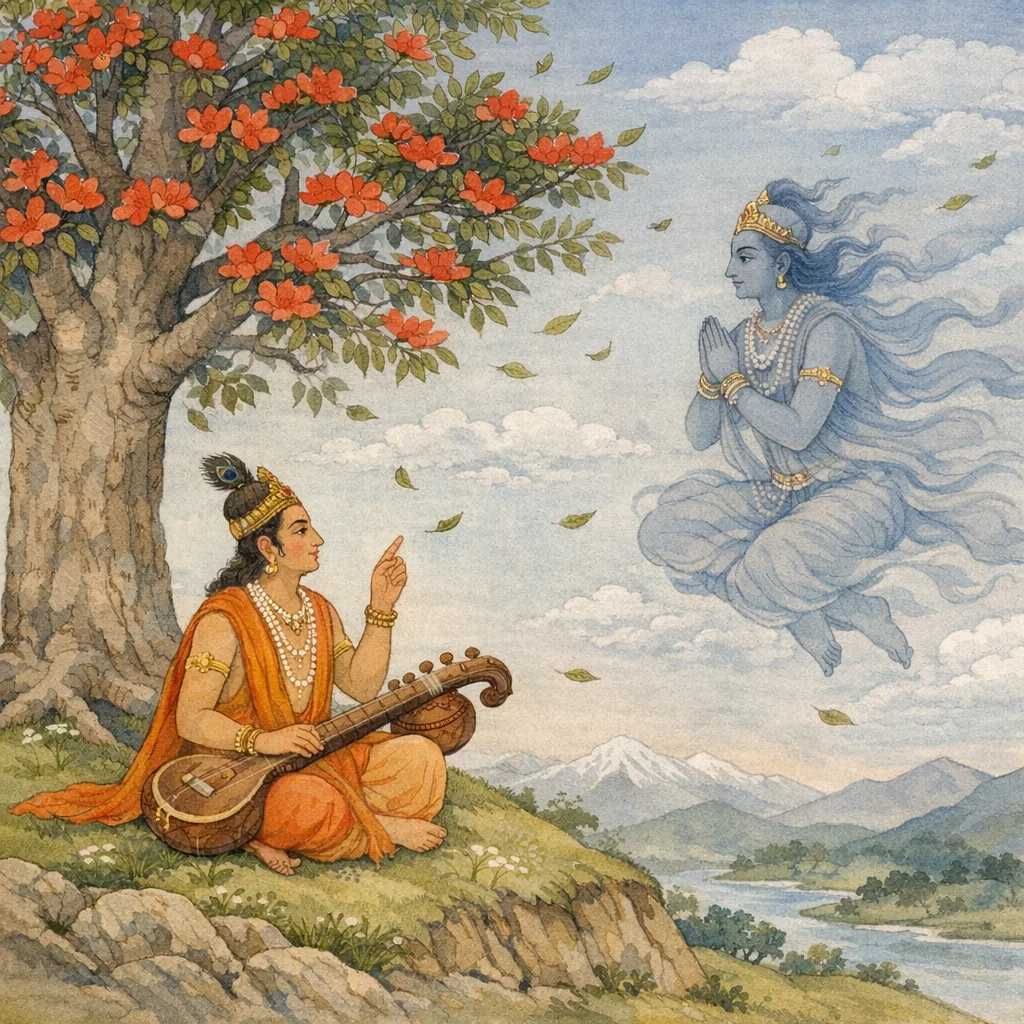
नारद उवाच हिमवत्पृष्ठज: कश्चिच्छाल्मलि: परिवारवान् । बृहन्मूलो बृहच्छाय: स त्वां वायोडवमन्यते,नारदजीने कहा--वायुदेव! हिमालयके पृष्ठभागपर एक सेमलका वृक्ष है, जो बहुत बड़े परिवारके साथ है। उसकी छाया विशाल और घनी है और जड़ें बहुत दूरतक फैली हैं। वह तुम्हारा अपमान करता है
Narada said: “On the back-slope of the Himalaya there stands a certain śālmali, a silk-cotton tree, surrounded by a great retinue. Its roots spread far and wide, and its shade is vast and dense. That tree, O Wind-god, holds you in contempt and insults you.”
Verse 3
बहुव्याक्षेपयुक्तानि त्वामाह वचनानि स: । न युक्तानि मया वायो तानि वक्तुं तवाग्रत:,उसने तुम्हारे प्रति बहुत-से ऐसे आक्षेपयुक्त वचन कहे हैं, जिन्हें तुम्हारे सामने मुझे कहना उचित नहीं है
Nārada said: “He spoke to you many words laden with reproach. O Vāyu, it is not proper for me to repeat those words in your presence.”
Verse 4
जानामि त्वामहं वायो सर्वप्राणभूतां वरम् वरिष्ठ च गरिष्ठं च क्रोधे वैवस्वतं यथा,पवनदेव! मैं तुम्हें जानता हूँ। तुम समस्त प्राण-धारियोंमें श्रेष्ठ महान् एवं गौरवशाली हो त था क्रोधमें वैवस्वत यमके समान हो
Nārada said: “O Vāyu, I know you well. Among all beings that live by breath you are the foremost—supremely excellent and most weighty in power and dignity; and when angered, you are like Vaivasvata Yama in your inexorable force.”
Verse 5
भीष्म उवाच एतत् तु वचन श्रुत्वा नारदस्य समीरण: । शाल्मलिं तमुपागम्य क्रुद्धो वचनमब्रवीत्,भीष्मजी कहते हैं--राजन्! नारदजीकी यह बात सुनकर वायुदेवने शाल्मलिके पास जा कुपित होकर कहा
Bhishma said: Hearing these words of Narada, the Wind-god (Samirana) went to the Śālmalī tree; and, angered, he addressed it with a sharp rebuke.
Verse 6
वायुरुवाच शाल्मले नारदो गच्छंस्त्वयोक्तो मद्विगर्हणम् । अहं वायु: प्रभाव ते दर्शयाम्यात्मनो बलम्,वायु बोले--सेमल! तुमने इधरसे जाते हुए नारदजीसे मेरी निन्दा की है। मैं वायु हूँ। तुम्हें अपना बल और प्रभाव दिखाता हूँ
Vāyu said: “O Śālmali, as Nārada was passing by, you spoke words that disparaged me. I am Vāyu. Now I shall show you my own strength and power.”
Verse 7
अहं त्वामभिजानामि विदितश्नचासि मे ट्रुम । पितामह: प्रजासर्गे त्वयि विश्रान्तवान् प्रभु:,वृक्ष! मैं तुम्हें अच्छी तरह जानता हूँ। तुम्हारे विषयमें मुझे सब कुछ ज्ञात है। भगवान् ब्रह्माजीने प्रजाकी सृष्टि करते समय तुम्हारी छायामें विश्राम किया था
Bhīṣma said: “I recognize you well, O tree; you are fully known to me. When the Lord, the Grandfather Brahmā, was engaged in the creation of beings, he rested in your shade.”
Verse 8
तस्य विश्रमणादेष प्रसादो मत्कृतस्तव । रक्ष्यसे तेन दुर्बुद्धे नात्मवीर्याद् टद्रमाधम,दुर्बद्धे! उनके विश्राम करनेसे ही मैंने तुमपर यह कृपा की थी, इसीसे तुम्हारी रक्षा हो रही है। द्रमाधम! तुम अपने बलसे नहीं बचे हुए हो
Bhīṣma said: “It was only because of his resting there that I showed you this favor. By that alone you are being protected, you fool—not by your own valor, O wretch among men.”
Verse 9
यन्मां त्वमवजानीषे यथान्यं प्राकृतं तथा । दर्शयाम्येष चात्मानं यथा मां नावमन्यसे,परंतु तुम अन्य प्राकृतिक मनुष्यकी भाँति जो मेरा अपमान कर रहे हो, इससे कुपित होकर मैं अपना वह स्वरूप दिखाऊँगा, जिससे तुम फिर मेरा अपमान नहीं करोगे
Bhishma said: “Since you are treating me with contempt, as though I were merely some ordinary man, I shall—angered by this—reveal my true nature, so that you will no longer dare to dishonor me.”
Verse 10
भीष्म उवाच एवमुक्तस्तत: प्राह शाल्मलि: प्रहसन्निव । पवन त्वं च मे क्रुद्धों दर्शयात्मानमात्मना,भीष्मजी कहते हैं--राजन्! पवनदेवके ऐसा कहनेपर सेमलने हँसते हुए-से कहा --'पवन! तुम कुपित होकर स्वयं ही अपनी सारी शक्ति दिखाओ
Bhishma said: When thus addressed, Śālmalī replied, as if laughing: “O Wind-god, if you are angry with me, then reveal yourself—display your full power by your own might.”
Verse 11
मयि वै त्यज्यतां क्रोध: किं मे क्रुद्धः करिष्यसि । न ते बिभेमि पवन यद्यपि त्वं स्वयं प्रभु:,“मेरे ऊपर अपना क्रोध उतारो। तुम कुपित होकर मेरा क्या कर लोगे। पवन! यद्यपि तुम स्वयं बड़े प्रभावशाली हो; फिर भी मैं तुमसे डरता नहीं हूँ
Bhīṣma said: “Let your anger be spent upon me. What can you do to me even if you are enraged? O Wind, though you are yourself mighty and sovereign in power, I do not fear you.”
Verse 12
बलाधिकोऊ३* हं त्वत्तश्न न भी: कार्या मया तव । ये तु बुद्धया हि बलिनस्ते भवन्ति बलीयस:
Bhīṣma said: “I am stronger than you in physical force; therefore you need not fear me. Those who are truly strong through intelligence and discernment become the stronger still.”
Verse 13
इत्येवमुक्त: पवन: श्व इत्येवाब्रवीद् वच:
Bhīṣma said: Thus addressed, the Wind-god replied with these words, saying, “Tomorrow…”.
Verse 14
अथ निश्चित्य मनसा शाल्मलिवातकारितम्
Bhīṣma said: “Then, having firmly resolved in his mind, he set about what had been brought about by the śālmali-tree’s wind.”
Verse 15
नारदे यन्मया प्रोक्ते वचन प्रति तनन््मूषा
Bhīṣma said: “O Nārada, regarding the statement that I have spoken, do not entertain doubt or suspicion against it.”
Verse 16
मारुतो बलवान नित्यं यथा वै नारदो<ब्रवीत्,'जैसा कि नारदजीने कहा था, वायुदेव नित्य बलवान हैं। मैं तो दूसरे वृक्षोंसे भी दुर्बल हूँ, इसमें संशय नहीं है; परंतु बुद्धिमें कोई भी वृक्ष मेरे समान नहीं है
Bhīṣma said: “As Narada once declared, the Wind-god is ever mighty. As for me, I am weaker even than other trees—there is no doubt of that. Yet in discernment and intelligence, no tree is equal to me.”
Verse 17
अहं तु दुर्बलो<न्ये भ्यो वृक्षेभ्यो नात्र संशय: । कि तु बुद्धा समो नास्ति मया कश्चिद् वनस्पति:,'जैसा कि नारदजीने कहा था, वायुदेव नित्य बलवान हैं। मैं तो दूसरे वृक्षोंसे भी दुर्बल हूँ, इसमें संशय नहीं है; परंतु बुद्धिमें कोई भी वृक्ष मेरे समान नहीं है
Bhīṣma said: “As for me, I am weaker than the other trees—there is no doubt of that. Yet in intelligence no tree is equal to me.”
Verse 18
तदहं बुद्धिमास्थाय भयं मोक्ष्ये समीरणात् | यदि तां बुद्धिमास्थाय तिष्ठेयु: पर्णिनो वने
Bhīṣma said: “Therefore, taking refuge in discernment, I shall free myself from fear of the wind. If, by holding fast to that same understanding, the leaf-bearing trees can stand firm in the forest, then so can I.”
Verse 19
ते तु बाला न जानन्ति यथा वै तान् समीरण: । समीरयति संक्रुद्धो यथा जानाम्यहं तथा,'परंतु वे मूर्ख हैं; अतः वायुदेव जिस प्रकार कुपित होकर उन्हें दबाते हैं, उसका उन्हें ज्ञान नहीं है। मैं यह सब अच्छी तरह जानता हूँ
Bhīṣma said: “But they are childish and do not understand how the Wind, when angered, can drive and buffet them. I, however, know it exactly as it is.”
Verse 123
प्राणमात्रबला ये वै नैव ते बलिनो मता: । “मैं बलमें तुमसे बहुत बढ़-चढ़कर हूँ; अतः मुझे तुमसे भय नहीं मानना चाहिये। जो बुद्धिके बली होते हैं, वे ही बलिष्ठ माने जाते हैं। जिनमें केवल शारीरिक बल होता है, वे वास्तवमें बलवान् नहीं समझे जाते”
Bhīṣma teaches that those whose strength is merely the power to sustain life—mere bodily force—are not truly regarded as strong. Real strength is measured by the power of understanding and discernment; therefore one should not be overawed by physical might alone, nor boast of it as the basis of fearlessness.
Verse 133
दर्शयिष्यामि ते तेजस्ततो रात्रिरुपागमत् । सेमलके ऐसा कहनेपर वायुने कहा--'अच्छा, कल मैं तुम्हें अपना पराक्रम दिखाऊँगा।” इतनेमें ही रात आ गयी
Bhīṣma said: “I shall show you my might.” As he spoke thus, night fell.
Verse 146
पश्यमानस्तदा55त्मानमसमं मातरिश्वना । उस समय सेमलने वायुके द्वारा जो कुछ किया जानेवाला था, उसपर मन-ही-मन विचार करके तथा अपने आपको वायुके समान बलवान् न देखकर सोचा--
Bhishma said: “Then, reflecting inwardly on what the Wind (Mātariśvan) was about to accomplish, and seeing himself as not equal in strength to that mighty force, he thought to himself…”.
Verse 153
असमर्थो हाहं वायोर्बलेन बलवान हि सः । “अहो! मैंने नारदजीसे जो बातें कही थीं, वे सब झूठी थीं। मैं वायुका सामना करनेमें असमर्थ हूँ; क्योंकि वे बलमें मुझसे बढ़े हुए हैं
Bhishma said: “Alas, I am powerless before the Wind’s might—he is truly stronger. Ah! The words I once spoke to Narada were all false. I cannot stand against Vayu, for in strength he surpasses me.”
Verse 156
इति श्रीमहाभारते शान्तिपर्वणि आपद्धर्मपर्वणि पवनशाल्मलिसंवादे षट्पज्चाशदधिकशततमो<ध्याय:
Thus, in the Śrī Mahābhārata, within the Śānti Parva—specifically the section on dharma in times of distress (Āpaddharma Parva)—in the dialogue between Pavana (the Wind) and the Śālmalī tree, ends the one-hundred-and-fifty-sixth chapter. This is a concluding colophon marking the close of the chapter and situating its ethical discussion within the broader teaching of conduct under adversity.
Verse 183
अरिष्टा: स्यु: सदा कुद्धात् पवनान्नात्र संशय: । “मैं बुद्धिका आश्रय लेकर वायुके भयसे छुटकारा पाऊँगा। यदि वनमें रहनेवाले दूसरे वृक्ष भी उसी बुद्धिका सहारा लेकर रहें तो नि:संदेह कुपित वायुसे उनका कोई अनिष्ट नहीं होगा
Bhishma said: “There is no doubt that from an enraged wind, harm would always arise. Yet one who takes refuge in discerning intelligence can escape the fear of that wind; and if the other trees dwelling in the forest likewise rely upon that same wisdom, then surely the wrathful wind will not bring them any injury.”
Frequently Asked Questions
It analyzes how unmanaged inner dispositions function as ‘enemies’ that hijack judgment, producing suffering and unethical action; the chapter frames moral failure as causally intelligible and therapeutically correctable.
The key instruction is to treat passions as governable phenomena: identify their triggers (e.g., greed → anger; saṃkalpa → desire; attachment → grief) and apply targeted counter-practices such as forgiveness, reality-knowledge, compassion, virtuous association, and tranquility.
Yes: it asserts that conquering these thirteen faults through praśama constitutes victory over the principal sources of wrongdoing, implying that ethical stability and effective rulership follow from sustained inner conquest.