Adhyaya 147
Janamejaya’s Appeal for Pacification and Śaunaka’s Counsel on Humility (जनमेजय-शौनक संवादः)
Upa-parva: Rājadharmānuśāsana (Instruction on Kingship and Public Ethics)
This chapter is structured as a dialogic ethical clarification. Bhīṣma reports that, after being addressed, King Janamejaya replies with self-reproach: he asks not to be censured further, attributes his suffering to his own actions, and fears severe consequences. He requests that the ‘thorn’ (śalya) be removed through complete instruction, expressing concern for the continuity and standing of his lineage under the shadow of Brahmin displeasure. Śaunaka responds by redefining wisdom as non-harm and perspective: the truly discerning person, elevated by insight, observes others with compassion rather than agitation. He advises Janamejaya to establish great peace, take refuge in Brahman (as a principle of ultimate order), and, if remorse is present, to align with dharma. Janamejaya affirms repentance without continuing in adharma and seeks reciprocal acceptance. Śaunaka then prescribes the practical ethic: cut off pride and arrogance, stand in universal welfare, and remember dharma. He clarifies that his admonition is not motivated by fear, pity, or greed, but by truth and dharmic obligation; he notes that some will blame the king, while only a few wise will understand the real matter. The exchange culminates in a formal vow by Janamejaya: he will not betray Brahmins by speech, mind, or deed, sealing the episode with a gesture of submission and reconciliation.
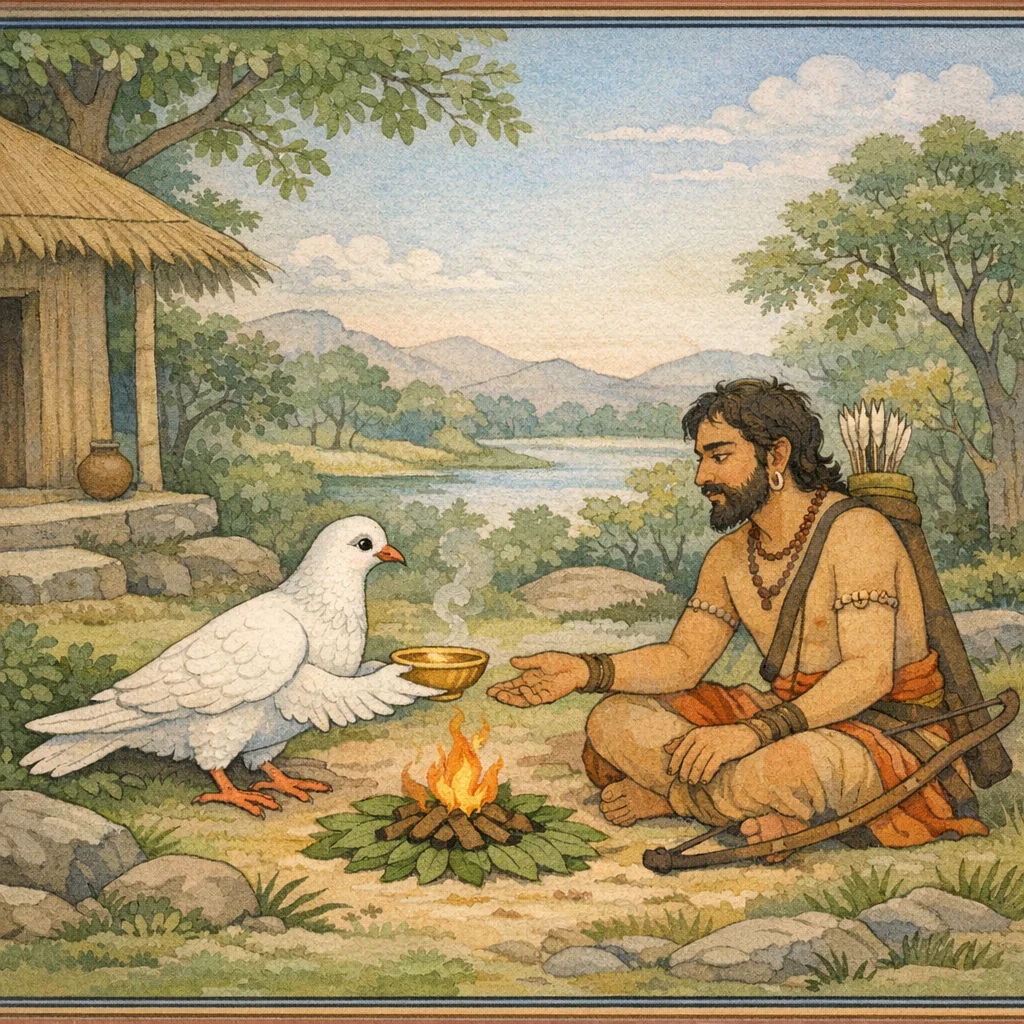
Chapter Arc: भीष्म युधिष्ठिर को आपद्धर्म के भीतर कपोत-लुब्धक संवाद सुनाते हैं: एक कबूतर अपने घर आए बहेलिये (पक्षी-जीविन) को ‘स्वागत’ कहकर अतिथि मानता है और सेवा पूछता है। → अतिथि-सत्कार का धर्म सामने है, पर गृहस्थ कबूतर के पास साधन नहीं—वह आग लाने, पत्तों पर अग्नि प्रज्वलित करने जैसे उपाय करता है, फिर भी अतिथि की भूख बनी रहती है; कबूतर उदास होकर सोचता है कि अब क्या करे। बहेलिया भी कबूतर की दशा देखकर अपने कर्मों की निंदा करता है। → कबूतर शरणागत-अतिथि के लिए अंतिम उपाय चुनता है—अपने ही शरीर का परित्याग/आहुति देकर अतिथि की भूख मिटाने का संकल्प, क्योंकि ‘शरणागतस्य’ और ‘पञ्चयज्ञ-प्रवृत्त गृहस्थ’ के लिए अतिथि-सत्कार सर्वोपरि है। → कबूतर का त्याग अतिथि-सत्कार की पराकाष्ठा बनकर स्थापित होता है; बहेलिया का हृदय परिवर्तन होता है—वह हिंसा-आधारित जीवन पर ग्लानि करता है और धर्म की ओर झुकता है।
Shlokas
Verse 1
अपन क्रात बा अं षट्चत्वारिशर्दाधेकशततमो< ध्याय: कबूतरके द्वारा अतिथि-सत्कार और अपने शरीरका बहेलियेके लिये परित्याग भीष्म उवाच स पत्न्या वचन श्रुत्वा धर्मयुक्तिसमन्वितम् । हर्षेण महता युक्तो वाक््यं व्याकुललोचन:,भीष्मजी कहते हैं--राजन्! पत्नीकी वह धर्मके अनुकूल और युक्तियुक्त बात सुनकर कबूतरको बड़ी प्रसन्नता हुई। उसके नेत्रोंमें आनन्दके आँसू छलक आये
Bhishma said: “O King, hearing his wife’s words—aligned with dharma and supported by sound reasoning—the pigeon was filled with great joy; his eyes grew moist and unsteady as he responded, overcome with emotion.”
Verse 2
तं॑ वै शाकुनिकं दृष्टवा विधिदृष्टेन कर्मणा । स पक्षी पूजयामास यत्नात् तं पक्षिजीविनम्,उस पक्षीने पक्षियोंकी हिंसासे ही जीवन-निर्वाह करनेवाले उस बहेलियेकी ओर देखकर शास्त्रीय विधिके अनुसार यत्नपूर्वक उसका पूजन किया
Bhīṣma said: Seeing that fowler, the bird—acting according to the rule sanctioned by the scriptures—carefully honored him, though he lived by harming birds.
Verse 3
उवाच स्वागत तेडद्य ब्रूहि किं करवाणि ते । संतापश्च न कर्तव्य: स्वगृहे वर्तते भवान्,और बोला--'आज आपका स्वागत है। बोलिये, मैं आपकी क्या सेवा करूँ? आपको संताप नहीं करना चाहिये, आप इस समय अपने ही घरमें हैं
Bhishma said: “Welcome to you today. Tell me—what can I do for you? You should not feel any distress; you are here as though in your own home.”
Verse 4
तद् ब्रवीतु भवान् क्षिप्रं कि करोमि किमिच्छसि । प्रणयेन ब्रवीमि त्वां त्वं हि न: शरणागत:,“अत: शीघ्र बताइये, आप क्या चाहते हैं? मैं आपकी क्या सेवा करूँ? मैं बड़े प्रेमसे पूछ रहा हूँ; क्योंकि आप हमारे घर पधारे हैं
Bhishma said: “Then speak quickly, sir—what shall I do, what do you desire? I ask you with affection, for you have come to our house seeking refuge.”
Verse 5
अरावप्युचितं कार्यमातिथ्यं गृहमागते । छेत्तुमप्यागते छायां नोपसंहरते द्रुम:,“यदि शत्रु भी घरपपर आ जाय तो उसका उचित आदर-सत्कार करना चाहिये। जो काटनेके लिये आया हो, उसके ऊपरसे भी वृक्ष अपनी छाया नहीं हटाता
Bhīṣma said: Even toward an enemy who comes to one’s house, the fitting duty of hospitality should be performed. A tree does not withdraw its shade even from one who has come to cut it down.
Verse 6
शरणागतस्य कर्तव्यमातिथ्यं हि प्रयत्नत: । पज्चयज्ञप्रवृत्तेन गृहस्थेन विशेषत:,“यों तो घरपर आये हुए अतिथिका सभीको यत्नपूर्वक आदर-सत्कार करना चाहिये; परंतु पंचयज्ञके अधिकारी गृहस्थका यह प्रधान धर्म है
Bhishma said: One who has sought refuge must be received with hospitality, and this should be done with deliberate care. For a householder—especially one engaged in the discipline of the five daily sacrifices—honouring the guest is a foremost duty.
Verse 7
पञ्चयज्ञांस्तु यो मोहान्न करोति गृहाश्रमे । तस्य नायं न च परो लोको भवति धर्मत:,जो मोहवश गृहस्थाश्रममें रहते हुए भी पञ्चमहा-यज्ञोंका अनुष्ठान नहीं करता, उसके लिये धर्मके अनुसार न तो यह लोक प्राप्त होता है और न परलोक ही
Bhīṣma said: In the householder stage, if a person—out of delusion—does not perform the five great sacrificial duties, then, according to dharma, neither this world’s well-being nor the next world’s blessed state becomes attainable for him. The teaching stresses that domestic life is ethically complete only when sustained by daily obligations of reverence, learning, hospitality, and care for beings.
Verse 8
तद् ब्रूहि मां सुविश्रब्धो यत् त्वं वाचा वदिष्यसि । तत् करिष्याम्यहं सर्व मा त्वं शोके मन: कृथा:,“अतः तुम पूर्ण विश्वास रखकर मुझसे अपनी बात बताओ, तुम अपने मुँहसे जो कुछ कहोगे, वह सब मैं करूँगा; अतः तुम मनमें शोक न करो”
Bhīṣma said: “Therefore, speak to me with complete confidence whatever you intend to say. Whatever you utter, I shall carry out in full. So do not let your mind fall into grief.”
Verse 9
तस्य तद् वचन श्रुत्वा शकुनेर्लुब्धको<ब्रवीत् । बाधते खलु मे शीतं संत्राणं हि विधीयताम्,कबूतरकी यह बात सुनकर व्याधने कहा--“इस समय मुझे सर्दीका कष्ट है; अतः इससे बचानेका कोई उपाय करो'
Bhīṣma said: Hearing those words of the dove, the hunter—an agent of Shakuni—replied, “Indeed, the cold troubles me now; therefore, arrange some protection for me.” In the ethical frame of the episode, the pursuer shifts the appeal from violence to personal need, testing whether compassion and duty will extend even to one who threatens another.
Verse 10
एवमुक्तस्तत: पक्षी पर्णान्यास्तीर्य भूतले । यथाशकत्या हि पर्णेन ज्वलनार्थ द्रुतं ययौ,उसके ऐसा कहनेपर पक्षीने पृथ्विीपर बहुत-से पत्ते लाकर रख दिये और आग लानेके लिये अपने पंखोंद्वारा यथाशक्ति बड़ी तेजीसे उड़ान लगायी
Bhīṣma said: Thus addressed, the bird at once spread many leaves upon the ground. Then, exerting itself to the best of its ability with its wings, it swiftly flew off to fetch fire—showing prompt obedience and earnest effort in carrying out what it had been asked.
Verse 11
स गत्वाड्रगरकर्मान्तं गृहीत्वाग्निमथागमत् । ततः शुष्केषु पर्णेषु पावकं सो5प्यदीपयत्
Bhīṣma said: Having gone to the place where the fire-drill work was done, he took up fire and then returned. Thereafter, on dry leaves, he too kindled the flame—showing deliberate, purposeful action in carrying out what had been resolved.
Verse 12
वह लुहारके घर जाकर आग ले आया और सूखे पत्तोंपर रखकर उसने वहाँ अग्नि प्रज्वलित कर दी ।। स संदीप्तं॑ महत् कृत्वा तमाह शरणागतम् | प्रतापय सुविश्रब्ध: स्वगात्राण्यकुतो भय:,इस प्रकार आगको बहुत प्रज्वलित करके कबूतरने शरणागत अतिथिसे कहा--'भाई! अब तुम्हें कोई भय नहीं है। तुम निश्चिन्त होकर अपने सारे अंगोंको आगसे तपाओ'
He went to the smith’s house and brought back fire; setting it upon dry leaves, he kindled a blaze there. When he had fanned it into a great flame, the pigeon spoke to the guest who had come seeking refuge: “Brother, you have nothing to fear now. Be at ease—warm all your limbs at this fire, without dread.”
Verse 13
स तथोक्तस्तथेत्युक्त्वा लुब्धो गात्राण्यतापयत् । अननिं प्रत्यागतप्राणस्तत: प्राह विहजड्गमम्,तब उस व्याधने “बहुत अच्छा” कहकर अपने सारे अंगोंको तपाया। अग्निका सेवन करके उसकी जानमें जान आयी। तब वह कबूतरसे कुछ कहनेको उद्यत हुआ
Thus addressed, the hunter replied, “So be it,” and, driven by greed, held all his limbs to the heat, enduring the hardship. Taking in the fire’s warmth, his life-breath returned. Then he prepared to speak to the bird—the pigeon.
Verse 14
हर्षेण महता5<विष्टो वाक््यं व्याकुललोचन: । तथेमं शकुनिं दृष्टवा विधिदृष्टेन कर्मणा,शास्त्रीय विधिसे सत्कार पा उसने बड़े हर्षमें भरकर डबडबायी हुई आँखोंसे कबूतरकी ओर देखकर कहा--
Bhishma said: Overwhelmed with great joy, his eyes unsteady and brimming, he looked at the bird and spoke. Having seen that śakuni (the bird) and acting as sacred rule enjoins, he offered it due hospitality—his heart moved by reverence for dharma and the duty of honoring a guest.
Verse 15
दत्तमाहारमिच्छामि त्वया क्षुद् बाधते हि माम् । स तद्वचः प्रतिश्रुत्य वाक्यमाह विहड्भम:,संचयो नास्ति चास्माकं मुनीनामिव भोजने । 'भाई! अब मुझे भूख सता रही है; इसलिये तुम्हारा दिया हुआ कुछ भोजन करना चाहता हूँ।” उसकी बात सुनकर कबूतर बोला--“भैया! मेरे पास सम्पत्ति तो नहीं है, जिससे मैं तुम्हारी भूख मिटा सकूँ। हमलोग वनवासी पक्षी हैं। प्रतिदिन चुगे हुए चारेसे ही जीवन निर्वाह करते हैं। मुनियोंके समान हमारे पास कोई भोजन का संग्रह नहीं रहता है'
He said, “I wish to eat the food you may give, for hunger is indeed tormenting me.” Hearing these words, the bird replied: “Brother, we have no stored wealth or provisions to remove your hunger. We are forest-dwelling birds; we live only on what we glean each day. Like ascetics, we keep no reserve of food.”
Verse 16
न मे5स्ति विभवो येन नाशयेयं क्षुधां तव । उत्पन्नेन हि जीवामो वयं नित्यं वनौकस:
Bhishma said: “I do not possess the means by which I could remove your hunger. We forest-dwellers live each day only on what comes forth of itself; thus we survive continually on whatever is obtained as it arises.”
Verse 17
इत्युक्त्वा तं तदा तत्र विवर्णवदनो5भवत्,ऐसा कहकर कबूतरका मुख कुछ उदास हो गया। वह इस चिन्तामें पड़ गया कि अब मुझे क्या करना चाहिये? भरतश्रेष्ठ वह अपनी कापोती वृत्तिकी निन््दा करने लगा
Bhīṣma said: Having spoken thus to him then and there, the pigeon’s face grew pale and downcast. He fell into anxious reflection—“What should I do now?”—and, O best of the Bharatas, he began to censure his own conduct as a pigeon.
Verse 18
कथं नु खलु कर्तव्यमिति चिन्तापरस्तदा । बभूव भरतश्रेष्ठ गर्हयन् वृत्तिमात्मन:,ऐसा कहकर कबूतरका मुख कुछ उदास हो गया। वह इस चिन्तामें पड़ गया कि अब मुझे क्या करना चाहिये? भरतश्रेष्ठ वह अपनी कापोती वृत्तिकी निन््दा करने लगा
Then, absorbed in anxious reflection—“What indeed should be done now?”—the pigeon became troubled, O best of the Bharatas, and began to censure his own course of conduct, reproaching himself for the way he had acted.
Verse 19
मुहूर्ताल्लब्धसंज्ञस्तु स पक्षी पक्षिघातिनम् । उवाच तर्पयिष्ये त्वां मुहूर्त प्रतिपालय,थोड़ी देरमें उसे कुछ याद आया और उस पक्षीने बहेलिये से कहा--“अच्छा, थोड़ी देरतक ठहरिये। मैं आपकी तृप्ति करूँगा”
Regaining consciousness after a short while, the bird addressed the bird-slayer (the fowler): “Wait for a moment. I shall satisfy you.”
Verse 20
इत्युक्त्वा शुष्कपर्णस्तु समुज्ज्वाल्य हुताशनम् । हर्षेण महता5<विष्ट: स पक्षी वाक्यमब्रवीत्,ऐसा कहकर उसने सूखे पत्तोंसे पुन: आग प्रज्वलित की और बड़े हर्षमें भर कर व्याधसे कहा--
Having said this, Śuṣkaparṇa rekindled the fire with dry leaves. Filled with great joy, that bird then addressed the hunter—
Verse 21
ऋषीणां देवतानां च पितृणां च महात्मनाम् । श्रुतः पूर्व मया धर्मो महानतिथिपूजने,“मैंने ऋषियों, देवताओं, पितरों तथा महात्माओंके मुखसे पहले सुना है कि अतिथिकी पूजा करनेमें महान् धर्म है
Bhīṣma said: “From the lips of sages, the gods, and the great-souled ancestors I have long ago heard this teaching: there is a lofty and weighty form of dharma in honoring the guest. The reverent reception of one who arrives—without calculation or delay—is itself a great moral duty.”
Verse 22
कुरुष्वानुग्रहं सौम्य सत्यमेतद् ब्रवीमि ते । निश्चिता खलु मे बुद्धिरतिथिप्रतिपूजने,'सौम्य! अतः मैंने भी आज अतिथिकी उत्तम पूजा करनेका निश्चय कर लिया है। आप मुझे ही ग्रहण करके मुझपर कृपा कीजिये। यह मैं आपसे सच्ची बात कहता हूँ
Bhīṣma said: “O gentle one, show me your favor; I speak this truth to you. My resolve is firmly set upon honoring the guest with due reverence. Therefore, today I have decided to perform the highest hospitality—accept me yourself and be gracious to me. This is the truthful word I tell you.”
Verse 23
ततः कृतप्रतिज्ञो वै स पक्षी प्रहसन्निव । तमननिं त्रि:परिक्रम्य प्रविवेश महामति:,ऐसा कहकर अतिथि-पूजनकी प्रतिज्ञा करके उस परम बुद्धिमान् पक्षीने तीन बार अग्निदेवकी परिक्रमा की, और हँसते हुए-से आगमें प्रवेश किया
Then that bird, having firmly made his vow of honoring the guest, seemed to smile. Circumambulating Agni three times, the great-minded one entered the fire—upholding his pledged word and placing dharma above his own life.
Verse 24
अग्निमशध्ये प्रविष्ट॑ तु लुब्धो दृष्टवा तु पक्षिणम् । चिन्तयामास मनसा किमिदं वै मया कृतम्,पक्षीको आगके भीतर घुसा हुआ देख व्याध मन-ही-मन चिन्ता करने लगा कि मैंने यह क्या कर डाला?
Bhishma said: Seeing the bird that had entered the midst of the fire, the hunter—driven by greed—was struck with remorse. He reflected inwardly, “What is this that I have done?”
Verse 25
अहो मम नृशंसस्य गर्हितस्य स्वकर्मणा | अधर्म: सुमहान् घोरो भविष्यति न संशय:,अहो! अपने कर्मसे निन्दित हुए मुझ क्रूरकर्मा व्याधके जीवनमें यह सबसे भयंकर और महान् पाप होगा, इसमें संशय नहीं है
Bhishma said: “Alas! Through my own deeds I have become a condemned and cruel man. There is no doubt that for me this will amount to a vast and dreadful act of adharma—an ethical ruin of the gravest kind.”
Verse 26
एवं बहुविधं भूरि विललाप स लुब्धक: । गर्हयन् स्वानि कर्माणि द्विजं दृष्टवा तथागतम्,इस प्रकार कबूतरकी वैसी अवस्था देखकर अपने कर्मोंकी निन््दा करते हुए उस व्याधने अनेक प्रकारकी बातें कहकर बहुत विलाप किया
Seeing the pigeon in such a pitiable state, the hunter broke into many kinds of lamentation. Beholding the brāhmaṇa who had come there, he reproached his own deeds, condemning his actions as blameworthy in the light of the suffering he had caused.
Verse 146
इति श्रीमहा भारते शान्तिपर्वणि आपद्धर्मपर्वणि कपोतलुब्धकसंवादे षट्चत्वारिंशदधिकशततमो< ध्याय:,इस प्रकार श्रीमह्या भारत शान्तिपर्वके अन्तर्गत आपद्धर्मपर्वमें कब्बृतर और व्याधका संवादविषयक एक सौ छियालीसवाँ अध्याय पूरा हुआ
Bhishma said: “Thus, in the sacred Mahabharata, within the Shanti Parva—specifically the section on dharma in times of distress (Āpaddharma)—the dialogue between the pigeon and the hunter comes to its close, completing the one hundred and forty-sixth chapter.”
Verse 166
संचयो नास्ति चास्माकं मुनीनामिव भोजने । 'भाई! अब मुझे भूख सता रही है; इसलिये तुम्हारा दिया हुआ कुछ भोजन करना चाहता हूँ।” उसकी बात सुनकर कबूतर बोला--“भैया! मेरे पास सम्पत्ति तो नहीं है, जिससे मैं तुम्हारी भूख मिटा सकूँ। हमलोग वनवासी पक्षी हैं। प्रतिदिन चुगे हुए चारेसे ही जीवन निर्वाह करते हैं। मुनियोंके समान हमारे पास कोई भोजन का संग्रह नहीं रहता है'
Bhishma said: “We have no stored provisions for eating, as sages do. We are forest-dwelling birds, living only on what we gather each day; therefore we cannot keep a reserve of food.”
Frequently Asked Questions
The dilemma is how a ruler should respond when confronted with censure and fear of consequence for Brahmin-related wrongdoing: whether to react defensively or to accept accountability, seek pacification, and realign governance with dharma.
Wisdom is marked by non-harm and perspective: abandon pride and arrogance, stand in the welfare of all beings, remember dharma, and cultivate ‘mahāśānti’—a stable inner posture that supports ethical public action.
No explicit phalāśruti is stated; the chapter’s meta-function is procedural and ethical—showing that formal vows (adroha in speech, mind, and deed) and humility operate as mechanisms of reconciliation and moral repair within rāja-dharma.