Adhyaya 121
Daṇḍa-svarūpa-nirūpaṇa (The Nature, Forms, and Function of Daṇḍa)
Upa-parva: Rājadharmānuśāsana Upa-Parva (Instruction on Kingship and Governance)
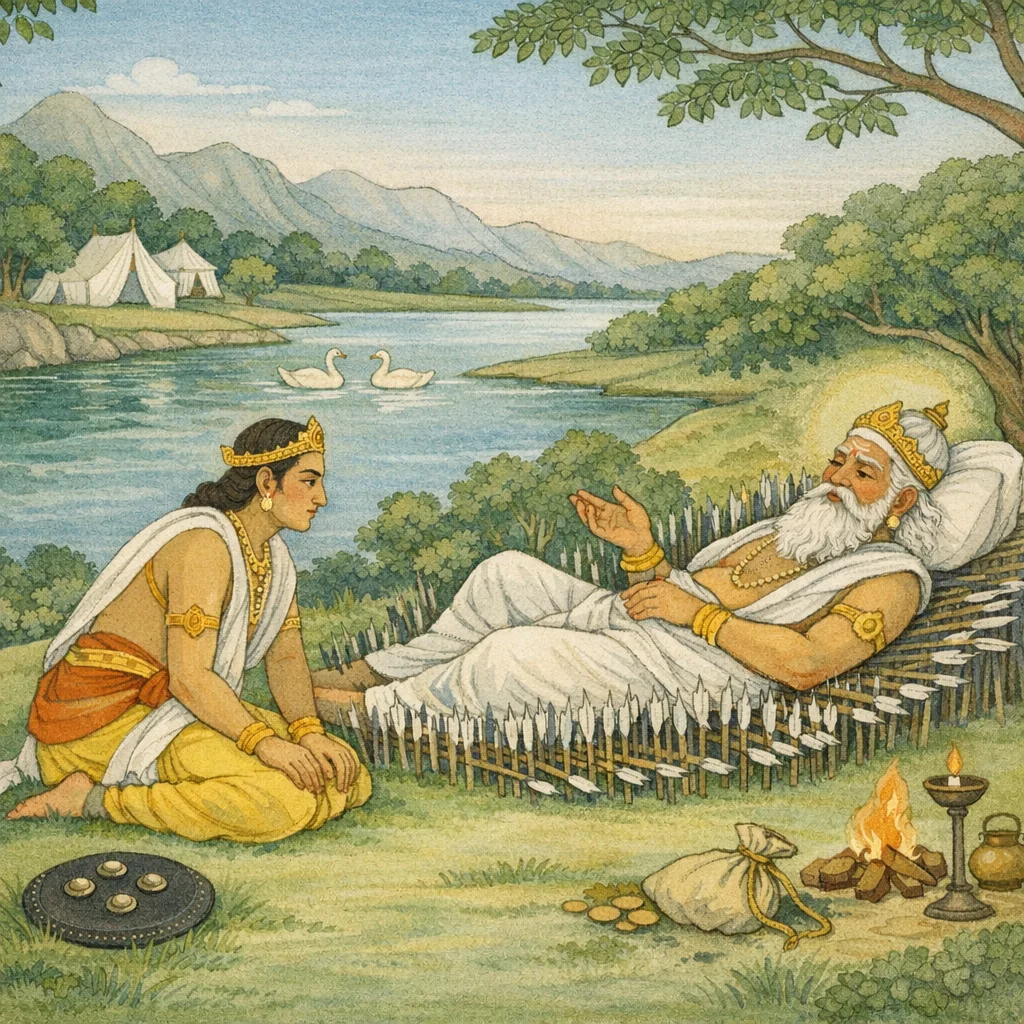
Yudhiṣṭhira opens by recalling Bhīṣma’s statement that rājadharma rests upon daṇḍa and asks for a precise account of daṇḍa’s essence: its nature, forms, authority, and operational mode among subjects. Bhīṣma replies by defining daṇḍa as the practical, enforceable dimension of dharma in governance, closely linked with vyavahāra (adjudicative procedure). He associates this doctrine with earlier authorities (notably Manu and Vasiṣṭha) and explains that properly administered daṇḍa enables the trivarga (dharma-artha-kāma) to function in society. The chapter presents daṇḍa as both a juridical instrument and a cosmic principle: it is described with vivid iconographic features and as encompassing multiple names and manifestations, including identification with major deities and with paired opposites (benefit/harm, pleasure/pain, favor/disfavor, fear/security). Bhīṣma argues that the absence of daṇḍa would lead to unchecked mutual aggression, while disciplined sanction protects subjects and stabilizes the state. He further outlines state power as structured (pañcavidhātmaka and aṣṭāṅga bala descriptions), connecting enforcement capacity to institutional components (forces, advisors, resources, reconnaissance). The discourse concludes with a strong norm of accountability: no one is exempt from sanction if they deviate from their duty, including close relations and court functionaries.
Chapter Arc: युधिष्ठिर, भीष्म से निवेदन करते हैं कि पूर्वजों द्वारा आचरित और सत्पुरुषों द्वारा अनुमोदित राजधर्म को ‘साररूप’ से नहीं, विस्तार से बताइए—ताकि राज्य-रक्षा का वास्तविक मार्ग स्पष्ट हो। → भीष्म राजधर्म की जड़ ‘रक्षण’ को घोषित करते हैं और बताते हैं कि राजा को परिस्थिति के अनुसार नीति का रूप बदलना पड़ता है—बहुरूपी राज्यकार्य में सूक्ष्म-सा अर्थ भी डूब न जाए। साथ ही वे चेताते हैं कि महान बुद्धि होने पर भी राजा कभी-कभी निकृष्ट कथा/प्रवृत्ति की ओर फिसल सकता है—जैसे तप्त कृष्णायस जल में पड़कर अपने स्वभाव को पा लेता है। → भीष्म निर्णायक रूप से कहते हैं कि विद्या, तप, धन—सब कुछ ‘व्यवसाय’ (उद्योग/दृढ़ प्रयत्न) से साध्य है; और राज्य के लिए सबसे घातक दोष ‘लोभ’ है—लोभी के भीतर सभी दोष पनपते हैं, इसलिए राजा को लोभी को न अपनाना चाहिए। → भीष्म उपसंहार करते हैं कि इन राजधर्मों को हृदय में धारण कर प्रजा-रक्षा करने से युधिष्ठिर को पुण्यफल और सुख मिलेगा, क्योंकि समस्त लोक का मूल नृप-धर्म है। → राजधर्म के अगले अंग—व्यवहार, दण्ड, और मंत्र-नीति के सूक्ष्म प्रयोग—की ओर संवाद आगे बढ़ने का संकेत देता है।
Shlokas
Verse 1
ऑपनआक्रात बछ। 2 विशर्त्याधिकशततमो< ध्याय: राजथधर्मका साररूपमें वर्णन युधिछिर उवाच राजवृत्तान्यनेकानि त्वया प्रोक्तानि भारत | पूर्व: पूर्वनियुक्तानि राजधर्मार्थवेदिभि:,युधिष्ठिने कहा--भारत! राजधर्मके तत्त्वको जाननेवाले पूर्ववर्ती राजाओंने पूर्वकालमें जिनका अनुष्ठान किया है, उन अनेक प्रकारके राजोचित बर्तावोंका आपने वर्णन किया
Yudhiṣṭhira said: O Bhārata, you have described many kinds of kingly conduct—those practices that were established and observed in earlier times by former rulers who understood the true purpose and meaning of rāja-dharma (the duties of kingship).
Verse 2
तदेव विस्तरेणोक्तं पूर्वदृष्टं सतां मतम् प्रणेयं राजधर्माणां प्रब्रूहि भरतर्षभ,भरतश्रेष्ठ) आपने पूर्वपुरुषोंद्वारा आचरित तथा सज्जनसम्मत जिन श्रेष्ठ राजधर्मोंका विस्तारपूर्वक वर्णन किया है, उन्हींको इस प्रकार संक्षिप्त करके बताइये, जिससे उनका विशेषरूपसे पालन हो सके
Yudhiṣṭhira said: “O bull among the Bharatas, you have already described at length those excellent duties of kingship—practised by the men of old and approved by the wise. Now tell me the same in a concise, practicable form, so that they may be followed with greater precision and effectiveness.”
Verse 3
भीष्म उवाच रक्षणं सर्वभूतानामिति क्षात्रं परं मतम् । तद् यथा रक्षणं कुर्यात् तथा शृणु महीपते,भीष्मजी बोले--भूपाल! क्षत्रियके लिये सबसे श्रेष्ठ धर्म माना गया है समस्त प्राणियोंकी रक्षा करना; परंतु यह रक्षाका कार्य कैसे किया जाय, उसको बता रहा हूँ, सुनो
Bhishma said: “O king, for a kshatriya the highest dharma is held to be the protection of all beings. How that protection is to be carried out—listen, and I shall tell you.”
Verse 4
यथा बहणि चित्राणि बिभर्ति भुजगाशन: । तथा बहुविध॑ राजा रूप॑ कुर्वीत धर्मवित्,जैसे साँप खानेवाला मोर विचित्र पंख धारण करता है, उसी प्रकार धर्मज्ञ राजाको समय-समयपर अपना अनेक प्रकारका रूप प्रकट करना चाहिये
Bhishma said: “Just as the peacock—devourer of serpents—bears many variegated hues, so too should a king who knows dharma reveal many different ‘forms’ in due season.”
Verse 5
तैक्ष्ण्यं जिद्वात्वमादाल्भ्यं सत्यमार्जवमेव च | मध्यस्थ: सत्त्वमातिष्ठंस्तथा वै सुखमृच्छति,राजा मध्यस्थ-भावसे रहकर तीक्ष्णता, कुटिल नीति, अभय-दान, सत्य, सरलता तथा श्रेष्ठभावका अवलम्बन करे। ऐसा करनेसे ही वह सुखका भागी होता है
Bhīṣma said: “A king who remains impartial should uphold keen firmness, prudent (even if subtle) statecraft, the granting of fearlessness (protection), truthfulness, and straightforward integrity. Established in such balanced excellence, he indeed attains welfare and happiness.”
Verse 6
यस्मिन्नर्थे हितं॑ यत् स्यात् तद्धर्ण रूपमादिशेत् | बहुरूपस्य राज्ञो हि सूक्ष्मो5प्यर्थों न सीदति,जिस कार्यके लिये जो हितकर हो, उसमें वैसा ही रूप प्रकट करे (उदाहरणके लिये अपराधीको दण्ड देते समय उग्र रूप और दीनोंपर अनुग्रह करते समय शान्त एवं दयालु रूप प्रकट करे)। इस प्रकार अनेक रूप धारण करनेवाले राजाका छोटा-सा कार्य भी बिगड़ने नहीं पाता है
Bhishma said: “In whatever undertaking something is truly beneficial, the king should present it in the form of dharma—adopting the very stance that suits that good. For a ruler who can assume many appropriate forms, even a subtle matter does not fail: he may show sternness when punishing wrongdoing and gentleness when granting protection and favor to the distressed.”
Verse 7
नित्यं रक्षितमन्त्र: स्वाद यथा मूक: शरच्छिखी । श्लक्ष्णाक्षरतनु: श्रीमान् भवेच्छास्त्रविशारद:,जैसे शरद-ऋतुका मोर बोलता नहीं, उसी प्रकार राजाको भी मौन रहकर सदा राजकीय गुप्त विचारोंको सुरक्षित रखना चाहिये। वह मधुर वचन बोले, सौम्य-स्वरूपसे रहे, शोभासम्पन्न होवे और शास्त्रोंका विशेष ज्ञान प्राप्त करे
Bhīṣma said: A king should constantly guard his confidential counsel, remaining silent about state secrets—like the peacock in autumn that does not cry out. Let him speak sweetly, maintain a gentle and refined demeanor, be endowed with dignity and splendor, and become deeply learned in the śāstras.
Verse 8
आपद्द्वारेषु युक्त: स्याज्जलप्रस्रवणेष्विव । शैलवर्षोदकानीव द्विजान् सिद्धान् समाश्रयेत् । अर्थकाम: शिखां राजा कुर्याद्धर्मध्वजोपमाम्,बाढ़के समय जिस ओरसे जल बहकर गाँवोंको डुबा देनेका संकट उपस्थित कर दे, उस स्थानपर जैसे लोग मजबूत बाँध बाँध देते हैं, उसी प्रकार जिन द्वारोंसे संकट आनेकी सम्भावना हो, उन्हें सुदृढ़ बनाने और बंद करनेके लिये राजाको सतत सावधान रहना चाहिये। जैसे पर्वतोंपर वर्षा होनेसे जो पानी एकत्र होकर नदी या तालाबके रूपमें रहता है, उसका उपयोग करनेके लिये लोग उसका आश्रय लेते हैं, उसी प्रकार राजाको सिद्ध ब्राह्मणोंका आश्रय लेना चाहिये तथा जिस प्रकार धर्मका ढोंगी सिरपर जटा धारण करता है, उसी तरह राजाको भी अपना स्वार्थ सिद्ध करनेकी इच्छासे उच्च लक्षणोंको धारण करना चाहिये
Bhīṣma said: “A king should remain constantly vigilant at the very ‘gateways’ through which calamity may enter—just as people strengthen embankments where water is likely to break through. And as one takes refuge in the collected waters that arise from rains on the mountains, so should he take refuge in accomplished Brahmins. Further, driven by the desire for advantage, a king may even assume outward marks of virtue—like a hypocrite who wears a topknot as a banner of ‘dharma’—in order to secure his aims.”
Verse 9
नित्यमुद्यतदण्ड: स्यादाचरेदप्रमादत: । लोके चायव्ययौ दृष्टवा बृहद्वृक्षमिवास्रवत्,वह सदा अपराधियोंको दण्ड देनेके लिये उद्यत रहे, प्रत्येक कार्य सावधानीके साथ करे, लोगोंके आय-व्यय देखकर ताड़के वृक्षसे रस निकालनेकी भाँति उनसे धनरूपी रस ले (अर्थात् जैसे उस रसके लिये पेड़को काट नहीं दिया जाता, उसी प्रकार प्रजाका उच्छेद न करे)
Bhishma said: “A king should always be ready to wield punishment, and he should act in every matter with vigilant care. Observing the people’s income and expenditure, he should draw revenue from them as one draws sap from a great tree—taking what is due without destroying the source, and never bringing about the ruin of his subjects.”
Verse 10
मृजावान् स्यात् स्वयूथ्येषु भौमानि चरणै: क्षिपेत् । जातपक्ष: परिस्पन्देत् प्रेक्षेद् वैकल्यमात्मन:,राजा अपने दलके लोगोंके प्रति विशुद्ध व्यवहार करे। शत्रुके राज्यमें जो खेतीकी फसल हो, उसे अपने दलके घोड़ों और बैलोंके पैरोंसे कुचलवा दे। अपना पक्ष बलवान् होनेपर ही शत्रुओंपर आक्रमण करे और अपनेमें कहाँ कैसी दुर्बलता है, इसका भलीभाँति निरीक्षण करता रहे
Bhishma said: A king should be scrupulously fair and clean in his conduct toward those of his own following. In the enemy’s territory, he should ruin the produce of the fields by having it trampled under the feet of his horses and oxen. Only when his own side has gained strength should he move against the foe, and he should continually examine himself to see where and how he is vulnerable.
Verse 11
दोषान् विवृणुयाच्छत्रो: परपक्षान् विधूनयेत् । काननेष्विव पुष्पाणि बहिरर्थान् समाचरन्,शत्रुके दोषोंको प्रकाशित करे और उसके पक्षके लोगोंको अपने पक्षमें आनेके लिये विचलित कर दे। जैसे लोग जंगलसे फूल चुनते हैं, उसी प्रकार राजा बाहरसे धनका संग्रह करे
Bhishma said: A king should expose the enemy’s faults and unsettle those on the opposing side so that they are drawn over to his own. And just as people gather flowers from the forest, so should the king gather wealth from outside.
Verse 12
उच्छितान् नाशयेत् स्फीतान् नरेन्द्रानचलोपमान् । श्रयेच्छायामविज्ञातां गुप्तं रणमुपाश्रयेत्,पर्ववके समान ऊँचा सिर करके अविचलभावसे बैठे हुए धनी नरेशोंको नष्ट करे। उनको जताये बिना ही उनकी छायाका आश्रय ले अर्थात् उनके सरदारोंसे मिलकर उनमें फूट डाल दे और गुप्तरूपसे अवसर देखकर उनके साथ युद्ध छेड़ दे
Bhishma said: “He should bring down those lofty, prosperous kings—monarchs firm as mountains. Without letting them realize it, he should take shelter in their ‘shade’ (that is, work under the cover of their influence), and then, choosing the right moment, resort to a concealed mode of warfare.”
Verse 13
प्रावषीवासितग्रीवो मज्जेत निशि निर्जने । मायूरेण गुणेनैव स्त्रीभिश्चालक्षितश्चरेत्,जैसे मोर आधी रातके समय एकान्त स्थानमें छिपा रहता है, उसी प्रकार राजा वर्षाकालमें शत्रुओंपर चढ़ाई न करके अदृश्यभावसे ही महलमें रहे। मोरके ही गुणको अपनाकर स्त्रियोंसे अलक्षित रहकर विचरे
Bhīṣma said: “Like a peacock that, with its neck drenched by the rains, keeps itself hidden and sinks into stillness in the lonely hours of night, so should a king, during the rainy season, refrain from marching against enemies and instead remain within the palace in an unseen, guarded manner. Adopting the peacock’s very trait, he should move about without being noticed—even by women—maintaining secrecy and restraint.”
Verse 14
न जह्ाच्च तनुत्राणं रक्षेदात्मानमात्मना | चारभूमिष्वभिगतान् पाशांश्व परिवर्जयेत्,अपने कवचको कभी न उतारे। स्वयं ही शरीरकी रक्षा करे। घूमने-फिरनेके स्थानोंपर शत्रुओंद्वारा जो जाल बिछाये गये हों, उनका निवारण करे
Bhīṣma said: “One should never cast off one’s protective armour; by one’s own vigilance one must safeguard oneself. And in places of movement and passage—roads, crossings, and roaming grounds—one should detect and avoid the snares and traps laid by enemies.”
Verse 15
प्रणयेद् वापि तां भूमिं प्रणश्येद् गहने पुनः । हन्यात्क्रुद्धानतिविषास्तान् जिह्मगतयो5हितान्,राजा सुयोग समझे तो जहाँ शत्रुओंका जाल बिछा हो, वहाँ भी अपने-आपको ले जाय। यदि संकटकी सम्भावना हो तो गहन वनमें छिप जाय तथा जो कुटिल चाल चलनेवाले हों, उन क्रोधमें भरे हुए शत्रुओंको अत्यन्त विषैले सर्पोंके समान समझकर मार डाले
Bhishma said: “A king, if he has the skill to do so, may even deliberately enter a region where an enemy’s snare has been laid. If danger is imminent, he should withdraw and conceal himself in a dense forest. And those hostile foes—crooked in their movements and inflamed with anger—he should regard as exceedingly venomous serpents and strike them down.”
Verse 16
नाशयेद् बलबहाणि संनिवासान् निवासयेत् । सदा बह्िनिभ: काम॑ प्रशस्तं कृतमाचरेत् । सर्वतश्नाददेत् प्रज्ञां पतंगं गहनेष्विव,शत्रुकी सेनाकी पाँख काट डाले--उसे दुर्बल कर दे, श्रेष्ठ पुरुषोंको अपने निकट बसावे। मोरके समान स्वेच्छानुसार उत्तम कार्य करे--जैसे मोर अपने पंख फैलाता है, उसी प्रकार अपने पक्ष (सेना और सहायकों) का विस्तार करे। सबसे बुद्धि--सद्दिचार ग्रहण करे और जैसे टिड्डियोंका दल जंगलमें जहाँ गिरता है, वहाँ वृक्षोंपर पत्तेतक नहीं छोड़ता, उसी प्रकार शत्रुओंपर आक्रमण करके उनका सर्वस्व नष्ट कर दे
Bhishma said: “He should destroy the enemy’s sources of strength and mobility, and establish his own secure encampments and settlements. Ever like fire in energy and resolve, he should, as he deems fit, practice what is commendable and effectively done. From every quarter he should gather intelligence and practical wisdom; and, like a swarm of locusts descending upon a forest, he should strike the foe so thoroughly that nothing of their resources remains.”
Verse 17
एवं मयूरवद् राजा स्वराज्यं परिपालयेत् | आत्मवृद्धिकरीं नीतिं विदधीत विचक्षण:,इसी प्रकार बुद्धिमान् राजा अपने स्थानकी रक्षा करनेवाले मोरके समान अपने राज्यका भलीभाँति पालन करे तथा उसी नीतिका आश्रय ले, जो अपनी उन्नतिमें सहायक हो
Bhishma said: “Thus, like the peacock that vigilantly safeguards its own place, a discerning king should carefully protect and govern his realm. He should adopt that policy of statecraft which promotes his own growth—strengthening his position and prosperity—so that his rule remains secure and well-ordered.”
Verse 18
आत्मसंयमनं बुद्धया परबुद्धयावधारणम् । बुद्धया चात्मगुणप्राप्तिरेतच्छास्त्रनिदर्शनम्,केवल अपनी बुद्धिसे मनको वशमें किया जाता है। मन्त्री आदि दूसरोंकी बुद्धिके सहयोगसे कर्तव्यका निश्चय किया जाता है और शास्त्रीय बुद्धिसे आत्मगुणकी प्राप्ति होती है। यही शास्त्रका प्रयोजन है
Bhishma said: “Self-restraint is achieved through one’s own discernment; determination of what should be done is secured with the aid of others’ counsel and intelligence; and through scripturally guided understanding one attains the virtues of the Self. This is what the teaching of the śāstra is meant to show.”
Verse 19
परं विश्वासयेत् साम्ना स्वशक्तिं चोपलक्षयेत् । आत्मन: परिमर्शेन बुद्धि बुद्धया विचारयेत्,राजा मधुर वाणीद्वारा समझा-बुझाकर अपने प्रति दूसरेका विश्वास उत्पन्न करे। अपनी शक्तिका भी प्रदर्शन करे तथा अपने विचार और बुद्धिसे कर्तव्यका निश्चय करे
Bhishma said: “A king should first win people’s confidence through gentle conciliation. He should also make his own strength evident, and then—by self-examination—deliberate with clear intelligence and determine what ought to be done. Thus, persuasion, credible power, and thoughtful judgment together guide righteous governance.”
Verse 20
सान्त्वयोगमतिः: प्राज्ञ: कार्याकार्यप्रयोजक: । निगूढबुद्धेर्धीरस्य वक्तव्ये वा कृतं तथा,राजामें सबको समझा-बुझाकर युक्तिसे काम निकालनेकी बुद्धि होनी चाहिये। वह विद्वान होनेके साथ ही लोगोंको कर्तव्यकी प्रेरणा दे और अकर्तव्यकी ओर जानेसे रोके अथवा जिसकी बुद्धि गूढ़ या गम्भीर है, उस धीर पुरुषको उपदेश देनेकी आवश्यकता ही क्या है?
Bhīṣma said: “A king should possess an intellect trained in conciliation and skillful reasoning, able to accomplish what ought to be done and to restrain what ought not be done. He should be wise, urging people toward duty and holding them back from wrongdoing. But as for a steadfast man of deep and guarded understanding—what need is there to instruct such a self-possessed person at all?”
Verse 21
स निकृष्टां कथां प्राज्ञो यदि बुद्धया बृहस्पति: । स्वभावमेष्यते तप्तं कृष्णायसमिवोदके,वह बुद्धिमान् राजा बुद्धिमें बृहस्पतिके समान होकर भी किसी कारणवश यदि निम्न श्रेणीकी बात कह डाले तो उसे चाहिये कि जैसे तपाया हुआ लोहा पानीमें डालनेसे शान्त हो जाता है, उसी तरह अपने शान्त स्वभावको स्वीकार कर ले
Bhishma said: “Even if a wise man—whose intellect is like that of Bṛhaspati—should, for some reason, utter a base or inferior remark, he ought to return at once to his own calm nature, just as heated iron becomes quieted when plunged into water. The ethical point is restraint: a momentary lapse in speech should be followed by immediate self-correction and restoration of composure.”
Verse 22
अनुयुञ्जीत कृत्यानि सर्वाण्येव महीपति: । आगमैरुपदिष्टानि स्वस्य चैव परस्यथ च,राजा अपने तथा दूसरेको भी शास्त्रमें बताये हुए समस्त कर्मोमें ही लगावे
Bhishma said: A king should diligently apply himself to all duties and necessary acts enjoined by authoritative teaching—those concerning his own conduct and those concerning others—so that rule rests on disciplined, scriptural dharma, not on personal whim.
Verse 23
मृदुशीलं तथा प्राज्ञं शूरं चार्थविधानवित् । स्वकर्मणि नियुञ्जीत ये चान्ये च बलाधिका:,कार्यसाधनके उपायको जाननेवाला राजा अपने कार्योमें कोमल-स्वभाव, विद्वान् तथा शूरवीर मनुष्यको तथा अन्य जो अधिक बलशाली व्यक्ति हों, उनको नियुक्त करे
Bhīṣma said: A king who knows the proper means of accomplishing his aims should appoint to their respective duties a man of gentle disposition, a wise man, and a heroic man; and likewise employ others who are superior in strength. Governance succeeds when responsibilities are assigned by character, competence, courage, and capacity—not by favoritism.
Verse 24
अथ दृष्टवा नियुक्तानि स्वानुरूपेषु कर्मसु । सर्वास्ताननुवर्तेत स्वरांस्तन्त्रीरिवायता,जैसे वीणाके विस्तृत तार सातों स्वरोंका अनुसरण करते हैं, उसी प्रकार राजा अपने कर्मचारियोंको योग्यता-नुसार कर्मोमें संलग्न देख उन सबके अनुकूल व्यवहार करे
Then, seeing them appointed to tasks suited to their nature, the king should move in accord with them all—like the taut strings of a vīṇā that follow the seven notes.
Verse 25
धर्माणामविरोधेन सर्वेषां प्रियमाचरेत् । ममायमिति राजा यः स पर्वत इवाचल:,राजाको चाहिये कि सबका प्रिय करे, किंतु धर्ममें बाधा न आने दे। प्रजागणको “यह मेरा ही प्रियगण है” ऐसा समझनेवाला राजा पर्वतके समान अविचल बना रहता है
Bhishma said: A king should act in ways that are pleasing to all, yet without coming into conflict with dharma. The king who regards his people with the feeling, “These are my own,” stands firm and unshakable like a mountain.
Verse 26
व्यवसायं समाधाय सूर्यो रश्मीनिवायतान् | धर्ममेवाभिरक्षेत कृत्वा तुल्ये प्रियाप्रिये,जैसे सूर्य अपनी विस्तृत किरणोंका आश्रय ले सबकी रक्षा करते हैं, उसी प्रकार राजा प्रिय और अप्रियको समान समझकर सुदृढ़ उद्योगका अवलम्बन करके धर्मकी ही रक्षा करे
Bhishma said: Having firmly set his resolve—like the sun extending its far-reaching rays—a king should protect dharma alone, treating what is dear and what is displeasing as equal. With steady effort and impartiality, he must uphold righteousness as his foremost duty, safeguarding all without being swayed by personal likes or dislikes.
Verse 27
कुलप्रकृतिदेशानां धर्मज्ञान् मृदुभाषिण: । मध्ये वयसि निर्दोषान् हिते युक्तानविक्लवान्,जो लोग कुल, स्वभाव और देशके धर्मको जानते हों, मधुरभाषी हों, युवावस्थामें जिनका जीवन निष्कलंक रहा हो, जो हितसाधनमें तत्पर और घबराहटसे रहित हों, जिनमें लोभका अभाव हो, जो शिक्षित, जितेन्द्रिय, धर्मनिष्ठ तथा धर्म एवं अर्थकी रक्षा करनेवाले हों, उन्हींको राजा अपने समस्त कार्योंमें लगावे
Bhishma said: The king should entrust all his affairs only to those who understand the duties and customary laws of family, temperament, and region; who speak gently; whose conduct in youth has been blemishless; who are devoted to what is beneficial and remain unshaken by fear or agitation. Such men—free from greed, well-trained, self-controlled, steadfast in dharma, and capable of safeguarding both righteousness and material welfare—are fit to be employed in every royal task.
Verse 28
अलुब्धान् शिक्षितान् दान्तान् धर्मेषु परिनिष्ठितान् । स्थापयेत् सर्वकार्येषु राजा धर्मार्थरक्षिण:,जो लोग कुल, स्वभाव और देशके धर्मको जानते हों, मधुरभाषी हों, युवावस्थामें जिनका जीवन निष्कलंक रहा हो, जो हितसाधनमें तत्पर और घबराहटसे रहित हों, जिनमें लोभका अभाव हो, जो शिक्षित, जितेन्द्रिय, धर्मनिष्ठ तथा धर्म एवं अर्थकी रक्षा करनेवाले हों, उन्हींको राजा अपने समस्त कार्योंमें लगावे
Bhīṣma said: A king should appoint to all affairs only those who are free from greed, properly trained, self-controlled, and firmly established in dharma—men who can safeguard both righteousness and material welfare. Such persons, steady and disciplined, become the king’s instruments for just governance rather than for private gain.
Verse 29
एतेन च प्रकारेण कृत्यानामागतिं गतिम् । युक्त: समनुतिछेत तुष्टश्चारैरुपस्कृत:,इस प्रकार राजा सदा सावधान रहकर राज्यके प्रत्येक कार्यका आरम्भ और समाप्ति करे। मनमें संतोष रखे और गुप्तचरोंकी सहायतासे राष्ट्रकी सारी बातें जानता रहे
Bhīṣma said: “In this very manner, having understood the coming and going—the course and outcome—of affairs, a disciplined king should carry out his duties with steady vigilance. Let him remain inwardly content, and, supported by a network of spies, keep himself informed about everything within the realm.”
Verse 30
अमोघक्रोधहर्षस्य स्वयं कृत्यान्ववेक्षितु: । आत्मप्रत्ययकोशस्य वसुदैव वसुन्धरा,जिसका हर्ष और क्रोध कभी निष्फल नहीं होता, जो स्वयं ही सारे कार्योकी देखभाल करता है तथा आत्म-विश्वास ही जिसका खजाना है, उस राजाके लिये यह वसुन्धरा (पृथ्वी) ही धन देनेवाली बन जाती है
For the king whose joy and wrath are never fruitless, who himself keeps watch over every task, and whose treasury is self-confidence alone—for such a ruler, this Vasundharā (the Earth) herself becomes a giver of wealth.
Verse 31
व्यक्तश्चानुग्रहो यस्य यथार्थश्चापि निग्रह: । गुप्तात्मा गुप्तराष्ट्रश्न स राजा राजधर्मवित्,जिसका अनुग्रह सबपर प्रकट है तथा जिसका निग्रह (दण्ड देना) भी यथार्थ कारणसे होता है, जो अपनी और अपने राज्यकी सुरक्षा करता है, वही राजा राजधर्मका ज्ञाता है
Bhishma said: The king whose favor is openly visible to all, whose punishment is administered only for a true and fitting cause, and who keeps both himself and his realm well-guarded—such a ruler is a true knower of the duties of kingship.
Verse 32
नित्य॑ राष्ट्रमवेक्षेत गोभि: सूर्य इवोदित: । चरान् स्वनुचरान् विद्यात् तथा बुद्धया स्वयं चरेत्,जैसे सूर्य उदित होकर प्रतिदिन अपनी किरणोंद्वारा सम्पूर्ण जगत्को प्रकाशित करते (या देखते) हैं, उसी प्रकार राजा सदा अपनी दृष्टिसे सम्पूर्ण राष्ट्रका निरीक्षण करे। गुप्तचरोंको बारंबार भेजकर राज्यके समाचार जाने तथा स्वयं अपनी बुद्धिके द्वारा भी सोच-विचारकर कार्य करे
Bhishma said: “A king should constantly keep watch over his realm, like the risen sun that surveys the world with its rays. He should learn the state of affairs through spies and trusted agents, and also act after personally reflecting with his own intelligence.”
Verse 33
काल प्राप्तमुपादद्यान्नार्थ राजा प्रसूचयेत् । अहन्यहनि संदुह्मान्महीं गामिव बुद्धिमान्,बुद्धिमान् राजा समय पड़नेपर ही प्रजासे धन ले। अपनी अर्थ-संग्रहकी नीति किसीके सम्मुख प्रकट न करे। जैसे बुद्धिमान मनुष्य गायकी रक्षा करते हुए ही उससे दूध दुहता है, उसी प्रकार राजा सदा पृथ्वीका पालन करते हुए ही उससे धनका दोहन करे
Bhishma said: “A king should take revenue only when the proper time has come, and he should not disclose his methods of accumulating wealth. Day after day, the wise king should ‘milk’ the earth for resources only while protecting and nurturing her—just as a prudent man draws milk from a cow while safeguarding her.”
Verse 34
यथा क्रमेण पुष्पेभ्यक्षिनोति मधु षघट्पद: । तथा द्रव्यमुपादाय राजा कुर्वीत संचयम्,जैसे मधुमक्खी क्रमश: अनेक फूलोंसे रसका संचय करके शहद तैयार करती है, उसी प्रकार राजा समस्त प्रजाजनोंसे थोड़ा-थोड़ा द्रव्य लेकर उसका संचय करे
Bhīṣma said: “Just as the bee gathers honey little by little from many flowers in due order, so should a king, taking small amounts of wealth from all his subjects, build up the treasury.”
Verse 35
यद्धि गुप्तावशिष्टं स्यात् तद्वित्तं धर्मकामयो: । संचयाजन्न विसर्गी स्याद् राजा शास्त्रविदात्मवान्,जो धन राज्यकी सुरक्षा करनेसे बचे, उसीको धर्म और उपभोगके कार्यमें खर्च करना चाहिये। शास्त्रज्ञ और मनस्वी राजाको कोषागारके संचित धनसे द्रव्य लेकर भी खर्च नहीं करना चाहिये
Bhishma said: “Whatever wealth remains after providing for protection and security—only that should be spent for dharma and for legitimate enjoyment. A king who is learned in the treatises and self-controlled should not become one who merely hoards; he should not be a ruler who refuses to disburse resources when their proper use is required.”
Verse 36
नार्थमल्पं परिभवेन्नावमन्येत शात्रवान् | बुद्धया तु बुद्धयेदात्मानं न चाबुद्धिषु विश्वसेत्,थोड़ा-सा भी धन मिलता हो तो उसका तिरस्कार न करे। शत्रु शक्तिहीन हो तो भी उसकी अवहेलना न करे। बुद्धिसे अपने स्वरूप और अवस्थाको समझे तथा बुद्धिहीनोंपर कभी विश्वास न करे
Bhishma said: “Do not disdain even a small gain. Do not slight an enemy even if he seems powerless. With intelligence, understand yourself and your condition, and never place trust in the foolish.”
Verse 37
धृतिर्दाक्ष्यं संयमो बुद्धिरात्मा धैर्य शौर्य देशकालाप्रमाद: । अल्पस्य वा बहुनो वा विवृद्धौ धनस्यैतान्यष्ट समिन्धनानि,धारणाशक्ति, चतुरता, संयम, बुद्धि, शरीर, धैर्य, शौर्य तथा देश-कालकी परिस्थितिसे असावधान न रहना--ये आठ गुण थोड़े या अधिक धनको बढ़ानेके मुख्य साधन हैं अर्थात् धनरूपी अग्निको प्रज्वलित करनेके लिये ईंधन हैं
Bhishma said: Steadfastness, skill in action, self-restraint, clear understanding, mastery of oneself, patience, valor, and alertness to place and time—these eight are the chief means by which wealth, whether small or great, is increased. They are like the fuel that kindles and sustains the fire of prosperity.
Verse 38
अग्नि: स्तोको वर्धते5प्याज्यसिक्तो बीजं चैक॑ रोहसहस््रमेति । आयब्ययौ विपुलौ संनिशाम्य तस्मादल्पं नावमन्येत वित्तम्,थोड़ी-सी भी आग यदि घीसे सिंच जाय तो बढ़कर बहुत बड़ी हो जाती है। एक ही छोटे-से बीजको बो देनेपर उससे सहस्रों बीज पैदा हो जाते हैं। इसी प्रकार महान् आय- व्ययके विषयमें विचार करके थोड़े-से भी धनका अनादर न करे
Bhishma said: “A small fire, when fed with ghee, grows into a great blaze. A single seed, when sown, yields thousands more. Therefore, reflecting on the vast play of income and expenditure, one should never despise even a little wealth.”
Verse 39
बालो>प्यबाल: स्थविरो रिपुर्य: सदा प्रमत्तं पुरुषं निहन्यात् | कालेनान्यस्तस्य मूलं हरेत कालज्ञाता पार्थिवानां वरिष्ठ:,शत्रु बालक, जवान अथवा बूढ़ा ही क्यों न हो, सदा सावधान न रहनेवाले मनुष्यका नाश कर डालता है। दूसरा कोई धनसम्पन्न शत्रु अनुकूल समयका सहयोग पाकर राजाकी जड़ उखाड़ सकता है। इसलिये जो समयको जानता है, वही समस्त राजाओंमें श्रेष्ठ है
Bhishma said: Even an enemy who is a mere child—or not a child, whether young or old—can destroy a man who is always careless. And another foe, aided by the right moment, can tear up a king by the roots. Therefore, among rulers, the one who understands Time and acts in season is the best.
Verse 40
हरेत कीर्ति धर्ममस्योपरुन्ध्या- दर्थे दीर्घ वीर्यमस्योपहन्यात् । रिपुर्देष्टा दुर्बलो वा बली वा तस्माच्छत्रोर्नैंव हीयेदू यतात्मा,द्वेष रखनेवाला शत्रु दुर्बल हो या बलवान, राजाकी कीर्ति नष्ट कर देता है, उसके धर्ममें बाधा पहुँचाता है तथा अर्थोपार्जनमें उसकी बढ़ी हुई शक्तिका विनाश कर डालता है; इसलिये मनको वशमें रखनेवाला राजा शत्रुकी ओरसे लापरवाह न रहे
Bhishma said: A hostile enemy—whether weak or strong—can steal a king’s fame, obstruct his dharma, and even cripple his long-built capacity and power for acquiring wealth and securing the realm. Therefore, a self-controlled king should never grow negligent with respect to an enemy.
Verse 41
क्षयं वृद्धि पालन संचयं वा बुद्ध्वाप्युभी संहतौ सर्वकामौ । ततकश्चान्यन्मतिमान् संदधीत तस्माद् राजा बुद्धिमत्तां श्रयेत,हानि, लाभ, रक्षा और संग्रहको जानकर तथा सदा परस्पर सम्बन्धित ऐश्वर्य और भोगको भी भलीभाँति समझकर बुद्धिमान् राजाको शत्रुके साथ संधि या विग्रह करना चाहिये; इस विषयपर विचार करनेके लिये बुद्धिमानोंका सहारा लेना चाहिये
Bhīṣma said: Having understood loss and gain, protection and accumulation—and also grasped how power and enjoyment are always intertwined and mutually dependent—a wise king should then decide how to proceed, whether by making alliance or by pursuing hostility with an enemy. Therefore, in such deliberation, a ruler should take refuge in the counsel of the wise.
Verse 42
बुद्धिर्दीप्ता बलवन्तं हिनस्ति बल॑ बुद्धया पाल्यते वर्धमानम् । शरत्रुर्बुद्धया सीदते वर्धमानो बुद्धे: पश्चात् कर्म यत्तत् प्रशस्तम्,प्रतिभाशालिनी बुद्धि बलवानको भी पछाड़ देती है। बुद्धिके द्वारा नष्ट होते हुए बलकी भी रक्षा होती है। बढ़ता हुआ शत्रु भी बुद्धिके द्वारा परास्त होकर कष्ट उठाने लगता है। बुद्धिसे सोचकर पीछे जो कर्म किया जाता है, वह सर्वोत्तम होता है
Bhishma said: A keen, illumined intellect can strike down even a mighty man. Strength that is failing can be protected and restored through intelligence. Even an enemy who is growing in power is brought low by wise strategy and begins to suffer. Therefore, the action that is undertaken after reflection—following the guidance of intellect—is the most commendable.
Verse 43
सर्वान् कामान् कामयानो हि धीर: सत्त्वेनाल्पेनाप्रुते हीनदोष: । यश्षात्मान प्रार्थयते<र्थ्यमानै: श्रेय:पात्रं पूरयते च नाल्पम्
Bhishma said: Even while desiring all enjoyments, a steadfast and discerning person—if he is free from faults and untainted, sustained by even a small measure of inner purity—does not become diminished. Rather, when such a person seeks the true good of the self amid those who petition him for worldly ends, he fills the vessel of merit and welfare abundantly, not meagerly.
Verse 44
जिसने सब प्रकारके दोषोंका त्याग कर दिया है, वह धीर राजा यदि किसी वस्तुकी कामना करे तो वह थोड़ा-सा बल लगानेपर भी अपनी सम्पूर्ण कामनाओंको प्राप्त कर लेता है। जो आवश्यक वस्तुओंसे सम्पन्न होनेपर भी अपने लिये कुछ चाहता है अर्थात् दूसरोंसे अपनी इच्छा पूरी करानेकी आश रखता है, वह लोभी और अहंकारी नरेश अपने श्रेयका छोटा-सा पात्र भी नहीं भर सकता ।। तस्माद् राजा प्रगृहीत: प्रजासु मूलं लक्ष्म्या: सर्वशो ह्वाददीत । दीर्घ काल॑ हापि सम्पीड्यमानो विद्युत्सम्पातमपि वा नोर्जित: स्यात्,इसलिये राजाको चाहिये कि वह सारी प्रजापर अनुग्रह करते हुए ही उससे कर (धन) वसूल करे। वह दीर्घकालतक प्रजाको सताकर उसपर बिजलीके समान गिरकर अपना प्रभाव न दिखाये
Bhishma said: A steadfast king who has cast off every kind of fault, if he desires some object, attains all his wishes with only a little exertion. But the ruler who, even when supplied with necessities, still hankers for more for himself and looks to others to satisfy his cravings—such a greedy, ego-driven king cannot fill even a small measure of his own true welfare. Therefore a king should levy revenue only while showing goodwill and protection toward all his subjects, for the subjects are, in every way, the root of prosperity. He should not oppress them for a long time, nor should he descend upon them like a lightning strike—displaying power in a sudden, destructive burst.
Verse 45
विद्या तपो वा विपुलं धनं वा सर्व होतद् व्यवसायेन शक््यम् | बुद्धयायत्तं तन्निवसेद् देहवत्सु तस्माद् विद्याद् व्यवसायं प्रभूतम्,विद्या, तप तथा प्रचुर धन--ये सब उद्योगसे प्राप्त हो सकते हैं। वह उद्योग प्राणियोंमें बुद्धिके अधीन होकर रहता है; अतः उद्योगको ही समस्त कार्योंकी सिद्धिका पर्याप्त साधन समझे
Bhīṣma said: Learning, austerity, or even abundant wealth—indeed all this can be attained through determined effort. That effort abides in embodied beings as something governed by the intellect; therefore one should understand resolute endeavor to be a powerful and sufficient means for the accomplishment of all aims.
Verse 46
यत्रासते मतिमन्तो मनस्विनः शक्रो विष्णुर्यत्र सरस्वती च । वसन्ति भूतानि च यत्र नित्य॑ तस्माद् विद्वान् नावमन्येत देहम्
Bhishma said: Where the wise and high-minded dwell—where Indra and Vishnu are present, and Sarasvati too—where living beings continually abide, therefore a learned person should never despise the body. In ethical terms, the body is to be respected as the necessary seat of consciousness, learning, and dharmic action, not treated with contempt.
Verse 47
अतः जहाँ ज्ञानेन्द्रियोंमें बुद्धिमान एवं मनस्वी महर्षि निवास करते हैं,- जिसमें इन्द्रियोंक अधिष्ठातृदेवताके रूपमें इन्द्र, विष्णु एवं सरस्वतीका निवास है तथा जिसके भीतर सदा सम्पूर्ण प्राणी वास करते हैं, अर्थात् जो शरीर समस्त प्राणियोंके जीवन- निर्वाहका आधार है, विद्वान् पुरुषको चाहिये कि उस मानव-देहकी अवहेलना न करे ।। लुब्धं हन्यात् सम्प्रदानेन नित्यं लुब्धस्तृप्तिं परवित्तस्य नैति । सर्वो लुब्ध: कर्मगुणोपभोगे यो<र्थहीनो धर्मकामौ जहाति,राजा लोभी मनुष्यको सदा ही कुछ देकर दबाये रखे; क्योंकि लोभी पुरुष दूसरेके धनसे कभी तृप्त नहीं होता। सत्कर्मोके फलस्वरूप सुखका उपभोग करनेके लिये तो सभी लालायित रहते हैं; परंतु जो लोभी धनहीन है, वह धर्म और काम दोनोंको त्याग देता है
Bhishma teaches that the human body should never be despised, for within it dwell the wise and self-controlled seers, and within it abide the presiding deities of the senses—Indra, Vishnu, and Sarasvati. Indeed, all beings continually reside within it in the sense that this body is the support by which life is sustained. Therefore, a learned person should not neglect or dishonor the human embodiment. He then turns to governance and desire: a greedy man should be kept in check by continual giving, for the greedy are never satisfied by another’s wealth. Everyone longs to enjoy the fruits of action and its qualities, but the greedy person who lacks resources abandons both dharma (right conduct) and kāma (legitimate enjoyment).
Verse 48
धनं भोगं पुत्रदारं समद्धि सर्व लुब्धः प्रार्थयते परेषाम् । लुब्धे दोषा: सम्भवन्तीह सर्वे तस्माद् राजा न प्रगृह्नीत लुब्धम्,लोभी मनुष्य दूसरोंके धन, भोग-सामग्री, स्त्री-पुत्र और समृद्धि सबको प्राप्त करना चाहता है। लोभीमें सब प्रकारके दोष प्रकट होते हैं; अत: राजा उसे अपने यहाँ किसी पदपर स्थान न दे
Bhishma said: “A man consumed by greed covets everything that belongs to others—wealth, pleasures, children and wife, and prosperity. In the greedy, every kind of fault arises here in this world; therefore a king should not take a greedy person into his service or appoint him to office.”
Verse 49
संदर्शनेन पुरुषं जघन्यमपि चोदयेत् । आरम्भान् द्विषतां प्राज्ञ: सर्वार्थाश्न प्रसूदयेत्,बुद्धिमान् राजा नीच मनुष्यको देखते ही अपने यहाँसे दूर हटा दे और यदि उसका वश चले तो वह शत्रुओंके सारे उद्योगों तथा कार्योका विध्वंस कर डाले
Bhishma said: Even by the mere sight of a base and ignoble man, a wise king should be put on alert. The prudent ruler should thwart the initiatives of his enemies and bring their undertakings and aims to ruin—removing such threats from his realm at the very outset.
Verse 50
धर्मान्वितेषु विज्ञाता मन्त्री गुप्तश्न॒ पाण्डव । आप्तो राजा कुलीनश्व पर्याप्तो राजसंग्रहे
Bhīṣma said: “O Pāṇḍava, a minister should be discerning in matters grounded in dharma, skilled in secret intelligence, and trustworthy. The king too should be reliable, of noble lineage, and fully competent in the management and consolidation of the kingdom.”
Verse 51
पाण्डुनन्दन! धर्मात्मा पुरुषोंमें जो विशेषरूपसे सम्पूर्ण विषयोंका ज्ञाता हो, उसीको मन्त्री बनावे और उसकी सुरक्षाका विशेष प्रबन्ध करे। प्रजाका विश्वास-पात्र और कुलीन राजा नरेशोंको वशमें करनेमें समर्थ होता है ।। विधिप्रयुक्तान् नरदेवधर्मा- नुक्तान् समासेन निबोध बुद्धा । इमान् विदध्याद् व्यतिसृत्य यो वै राजा महीं पालयितुं स शक्त:,राजाके जो शास््त्रोक्त धर्म हैं, उन्हें संक्षेपसे मैंने यहाँ बताया है। तुम अपनी बुद्धिसे विचार करके उन्हें हृदयमें धारण करो। जो उन्हें गुरुसे सीखकर हृदयमें धारण करता और आचरणमें लाता है, वही राजा अपने राज्यकी रक्षा करनेमें समर्थ होता है
Bhishma says: “O son of Pandu, appoint as minister the man of righteous character who is exceptionally knowledgeable in all practical affairs, and make special arrangements for his protection. A king who is noble and trusted by his people is capable of bringing other rulers under control. I have stated, in brief, the kingly duties taught by the śāstras and applied according to proper procedure; understand them with a clear mind. The king who learns these from a teacher, holds them firmly in his heart, and puts them into practice is truly able to protect the earth (his realm).”
Verse 52
अनीतिजं यस्य विधानजं सुखं हठप्रणीतं विधिवत्प्रदृश्यते । न विद्यते तस्य गतिर्महीपते- न विद्यते राज्यसुखं हानुत्तमम्,जिन्हें अन्यायसे उपार्जित, हठसे प्राप्त तथा दैवके विधानके अनुसार उपलब्ध हुआ सुख विधिके अनुरूप प्राप्त हुआ-सा दिखायी देता है, राजधर्मको न जाननेवाले उस राजाकी कहीं गति नहीं है तथा उसका परम उत्तम राज्यसुख चिरस्थायी नहीं होता
Bhishma said: O king, the man whose happiness is born of unrighteousness—won by force and obstinacy—may appear, by the workings of fate, to have been obtained in a lawful manner. Yet for such a ruler who does not truly know the duties of kingship, there is no good end; and even his seemingly supreme royal pleasure does not endure.
Verse 53
धनैर्विशिष्टान् मतिशीलपूजितान् गुणोपपन्नान् युधि दृष्टविक्रमान् । गुणेषु दृष्टवा न चिरादिवात्मवान् यतो$5भिसंधाय निहन्ति शात्रवान्,उक्त राजधर्मके अनुसार संधि-विग्रह आदि गुणोंके प्रयोगमें सतत सावधान रहनेवाला नरेश धनसम्पन्न, बुद्धि और शीलके द्वारा सम्मानित, गुणवान् तथा युद्धमें जिनका पराक्रम देखा गया है, उन वीर शत्रुओंको भी कूटकौशलपूर्वक नष्ट कर सकता है
Bhishma said: A self-possessed king, ever vigilant in the use of statecraft—such as making alliances and breaking them when necessary—can, by deliberate stratagem, soon destroy even those enemy heroes who are wealthy, honored for their intelligence and conduct, endowed with virtues, and whose valor has been proven in battle. The teaching is that royal duty requires constant alertness and prudent calculation: moral strength and political skill must be applied to neutralize threats, even when the adversary is outwardly eminent.
Verse 54
पश्येदुपायान् विविधै: क्रियापथै- न चानुपायेन मतिं निवेशयेत् । श्रियं विशिष्टां विपुलं यशो धनं न दोषदर्शी पुरुष: समश्चुते,राजा नाना प्रकारकी कार्यपद्धतियोंद्वारा शत्रु-विजयके बहुत-से उपाय दढूँढ़ निकाले। अयोग्य उपायसे काम लेनेका विचार न करे, जो निर्दोष व्यक्तियोंके भी दोष देखता है, वह मनुष्य विशिष्ट सम्पत्ति, महान् यश और प्रचुर धन नहीं पा सकता
Bhishma said: “Let a king look for means of success through many kinds of practical courses of action, and let him not set his mind on improper means. A man who is fault-finding—who sees defects even in the blameless—does not attain distinguished prosperity, abundant fame, or wealth.”
Verse 55
प्रीतिप्रवृत्ती विनिवर्तिती यथा सुहृत्सु विज्ञाय निवृत्य चोभयो: । यदेव मित्र गुरुभारमावहेत् तदेव सुस्निग्धमुदाहरेद् बुध:,सुहृदोंमेंसे जो दो मित्र प्रेमपूर्वक साथ-साथ एक कार्यमें प्रवृत्त होते हों और साथ-ही- साथ उससे निवृत्त होते हों, उन्हें अच्छी तरह जानकर उन दोनोंमेंसे जो मित्र लौटकर मित्रका गुरुतर भार वहन कर सके, उसीको दिद्वान् पुरुष अत्यन्त स्नेही मित्र मानकर दूसरोंके सामने उसका उदाहरण दें
Bhishma said: When two friends, out of affection, undertake a task together and withdraw from it together, one should observe them carefully. Of those two, the friend who, upon turning back, is able to carry the heavier burden for his companion—he alone should be recognized by the wise as the truly intimate, deeply loyal friend, and held up before others as the model of friendship.
Verse 56
एतान् मयोक्ताश्नर राजधर्मान् नृणां च गुप्ती मतिमादधत्स्व । अवाप्स्यसे पुण्यफलं सुखेन सर्वो हि लोको नृप धर्ममूल:,नरेश्वर! मेरे बताये हुए इन राजधर्मोका आचरण करो और प्रजाके पालनमें मन लगाओ। इससे तुम सुखपूर्वक पुण्यफल प्राप्त करोगे; क्योंकि सम्पूर्ण जगत्का मूल धर्म ही है
Bhishma said: “O king among men, adopt in your mind and practice these royal duties that I have taught, and devote yourself to the protection and governance of the people. By doing so you will easily attain the fruits of merit and well-being, for the whole world, O ruler, is rooted in dharma.”
Verse 119
इस प्रकार श्रीमह्ाभारत शान्तिपर्वके अन्तर्गत राजधर्मानुशासनपर्वमें कुत्ता और ऋषिका संवादविषयक एक सौ उतन्नीसवाँ अध्याय पूरा हुआ
Thus ends the one hundred and nineteenth chapter in the Rājadharmānuśāsana section of the Śānti Parva of the Śrī Mahābhārata, concerning the dialogue between a dog and a female ascetic. This colophon marks the completion of this unit, framing the foregoing discourse as instruction in royal duty and ethical governance through a moral exemplum.
Verse 120
इति श्रीमहाभारते शान्तिपर्वणि राजधर्मानुशासनपर्वणि राजधर्मकथने विंशत्यधिकशततमो<ध्याय:
Thus, in the Śrī Mahābhārata, within the Śānti Parva—specifically in the Rājadharmānuśāsana section, the instruction on the duties of kings—ends the one-hundred-and-twentieth chapter, in the discourse on royal dharma. (This is a colophon marking the close of the chapter rather than a spoken teaching.)
Frequently Asked Questions
The dilemma is how to reconcile coercive authority with dharma: when and how sanction can be used to protect society without becoming arbitrary power.
Daṇḍa is legitimate only as disciplined, procedure-guided enforcement aligned with truth and dharma; it is presented as the condition that enables social life and the pursuit of the trivarga.
Yes. The chapter states that no person is inherently exempt from sanction if they fail in their prescribed duty, explicitly including close kin and key institutional figures (e.g., family members and the purohita).