Adhyaya 111
Durgātitaraṇa—Conduct for Crossing Difficulties (दुर्गातितरणम्)
Upa-parva: Rājadharmānuśāsana Upa-Parva (Instruction on Royal Duty)
Yudhiṣṭhira asks Bhīṣma for the means by which beings, afflicted by changing conditions, can cross ‘durgāṇi’—hard passages understood as crises, moral hazards, and adverse circumstances. Bhīṣma replies with a structured enumeration of disciplines and virtues. He highlights āśrama-aligned restraint among twice-born practitioners: sincerity without hypocrisy, controlled livelihood, and sense-restraint; hospitality to guests; non-envious temperament; steady self-study; dutiful care for parents; avoidance of lethargy; fidelity and lawful marital conduct; and maintenance of ritual obligations such as agnihotra. He extends the catalogue to rulers and warriors: acquisition without greed, protection of territories, courage without panic, and a preference for victory aligned with dharma. Ethical universals follow: avoidance of wrongdoing in deed, mind, and speech; truthfulness even under threat; gentle and beneficial speech; and disciplined austerity. The chapter culminates in devotional theism: those who take refuge in Nārāyaṇa/Harī (Govinda, Puruṣottama, Vaikuṇṭha) cross difficulties. A brief phalaśruti closes: reciting, hearing, or teaching this ‘durgātitaraṇa’ is itself presented as efficacious for overcoming hardships here and hereafter.
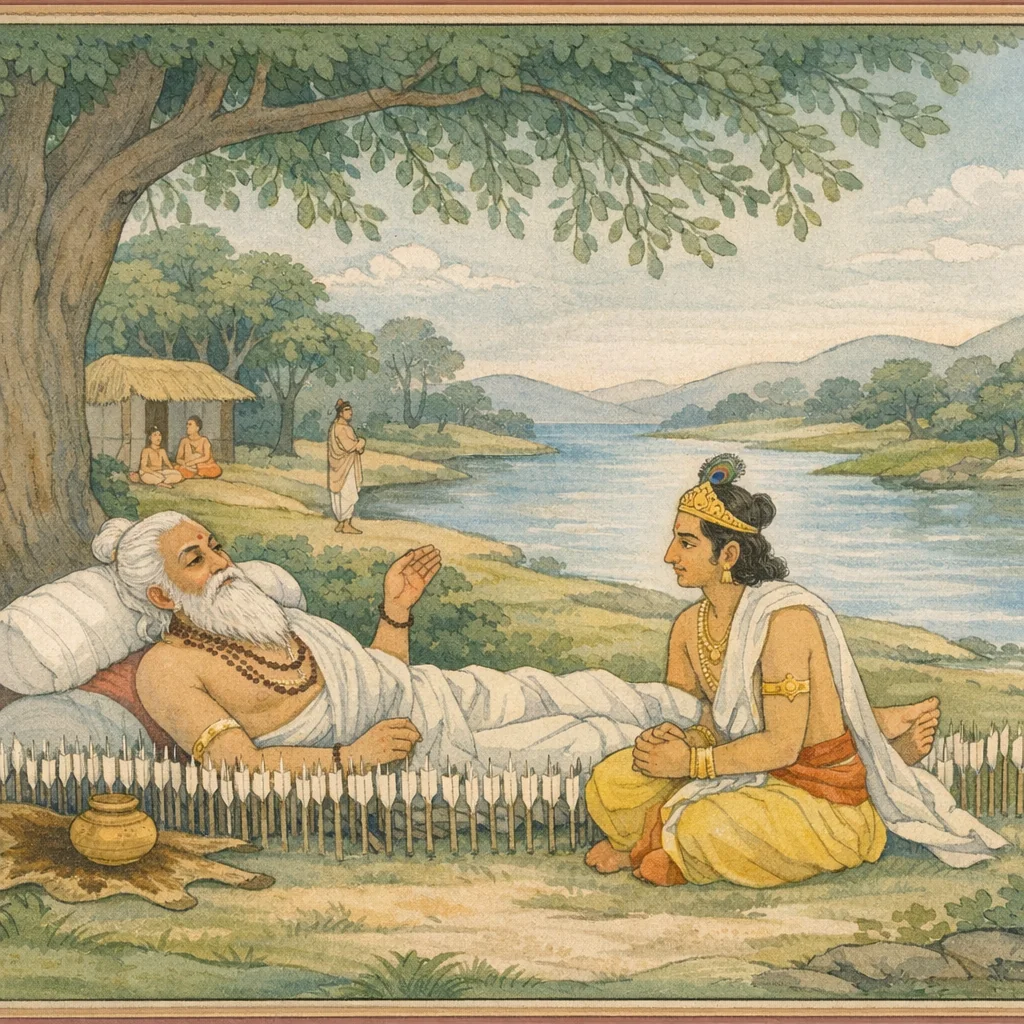
Chapter Arc: शरशय्या पर स्थित भीष्म युधिष्ठिर से कहते हैं कि मनुष्य के जीवन में ‘दुर्ग’—संकट, दुर्गति और कठिन मार्ग—अपरिहार्य हैं; पर कुछ आचार-नियम ऐसे हैं जो उन्हें पार करा देते हैं। → भीष्म एक-एक करके उन द्विज/सज्जन-लक्षणों का विधान करते हैं: आश्रम-धर्म में संयम, दम्भ-रहित आचरण, नियत/शुद्ध वृत्ति, विषय-निग्रह, दूसरों से सम्मान न चाहना पर स्वयं सम्मान देना, तथा सम्माननीयों को नमस्कार—ये सब संकट-तरण के साधन हैं। → चरम उपदेश में कठोर संयम का शिखर आता है—मधु, मांस और मदिरा का जन्म से त्याग; भोजन को स्वाद नहीं, केवल ‘यात्रा’ (जीवन-निर्वाह) के लिए मानना; मैथुन को संतान-धर्म के लिए; वाणी को सत्य-उद्देश्य के लिए—यही वह तप है जो ‘दुर्ग’ को तोड़ देता है। → भीष्म निष्कर्ष देते हैं कि यह ‘कर्तव्य-समुद्देश’ (कर्तव्यों का संक्षिप्त निर्देश) मनुष्य को इस लोक और परलोक—दोनों में—कठिनाइयों से पार कराता है। → युधिष्ठिर के लिए संकेत शेष रहता है: क्या राजधर्म के बीच रहते हुए वह इस कठोर संयम और दम्भ-शून्यता को व्यवहार में उतार पाएँगे?
Shlokas
Verse 1
(दाक्षिणात्य अधिक पाठके २६ श्लोक मिलाकर कुल ३२३ “लोक हैं) >> श््जु अीस-न्#सस - देखिये कर्णपर्व अध्याय ६९ श्लोक ३८ से ४५ तक। ३. गंगाके तटपर किसी सर्पिणीने सहस्रों अण्डे देकर रख दिये थे। उन अण्डोंको एक उल्लूने रातमें फोड़-फोड़कर नष्ट कर दिया। इससे वह महान् पुण्यका भागी हुआ; अन्यथा उन अण्डोंसे हजारों विषैले सर्प पैदा होकर कितने ही लोगोंका विनाश कर डालते। दशाधिकशततमो< ध्याय: सदाचार और ईश्वरभक्ति आदिको दु:खोंसे छूटनेका उपाय बताना युधिषछ्िर उवाच क्लिश्यमानेषु भूतेषु तैस्तैभावैस्ततस्तत: । दुर्गाण्यतितरेद् येन तन्मे ब्रूहि पितामह,युधिष्ठिरने पूछा--पितामह! जगतके जीव भिन्न-भिन्न भावोंके द्वारा जहाँ-तहाँ नाना प्रकारके कष्ट उठा रहे हैं; अतः जिस उपायसे मनुष्य इन दुःखोंसे छुटकारा पा सके, वह मुझे बताइये
Yudhiṣṭhira said: “Grandfather, when living beings are afflicted—driven here and there by their various states of mind and circumstance—they undergo many kinds of hardship. Tell me the means by which a person may cross beyond these difficult straits and be freed from such suffering.”
Verse 2
भीष्म उवाच आश्रमेषु यथोक्तेषु यथोक्तं ये द्विजातय: । वर्तन्ते संयतात्मानो दुर्गाण्यतितरन्ति ते,भीष्मजीने कहा--'राजन् जो द्विज अपने मनको वशमें करके शास्त्रोक्त चारों आश्रमोंमें रहते हुए उनके अनुसार ठीक-ठीक बर्ताव करते हैं, वे दुःखोंके पार हो जाते हैं
Bhishma said: “O king, those twice-born who have mastered their minds and live within the four āśramas as the scriptures enjoin—conducting themselves rightly according to each stage—such people cross beyond suffering.”
Verse 3
ये दम्भान्नाचरन्ति सम येषां वृत्तिश्व संयता । विषयांश्व निगृह्लन्ति दुर्गाण्यतितरन्ति ते,जो दम्भयुक्त आचरण नहीं करते, जिनकी जीविका नियमानुकूल चलती है और जो विषयोंके लिये बढ़ती हुई इच्छाको रोकते हैं, वे दुःखोंको लाँघ जाते हैं
Bhishma said: “Those who do not practice hypocrisy, whose livelihood is disciplined and restrained, and who curb the pull of sense-objects and rising cravings—such people cross beyond hardships and pass safely over difficult straits of life.”
Verse 4
प्रत्याहुनोच्यमाना ये न हिंसन्ति च हिंसिता: । प्रयच्छन्ति न याचन्ते दुर्गाण्यतितरन्ति ते,जो दूसरोंके कटु वचन सुनाने या निन््दा करनेपर भी स्वयं उन्हें उत्तर नहीं देते, मार खाकर भी किसीको मारते नहीं तथा स्वयं देते हैं, परंतु दूसरोंसे माँगते नहीं; वे भी दुर्गम संकटसे पार हो जाते हैं
Bhishma teaches that those who, even when provoked by harsh words and insults, do not retaliate; who, even when harmed, do not harm in return; and who choose to give rather than beg—such self-restrained and generous people are able to cross even the most difficult crises and dangers.
Verse 5
वासयन्त्यतिथीन् नित्य नित्यं ये चानसूयका: । नित्यं स्वाध्यायशीलाश्न दुर्गाण्यतितरन्ति ते,जो प्रतिदिन अतिथियोंको अपने घरमें सत्कारपूर्वक ठहराते हैं, कभी किसीके दोष नहीं देखते हैं तथा नित्य नियमपूर्वक वेदादि सदग्रन्थोंका स्वाध्याय करते रहते हैं, वे दुर्गम संकटोंसे पार हो जाते हैं
Bhishma said: “Those who regularly offer hospitality by respectfully lodging guests, who are free from fault-finding and envy, and who steadfastly engage every day in disciplined self-study (svādhyāya) of the Veda and sacred teachings—such people cross over even difficult, perilous crises.”
Verse 6
मातापित्रोश्व ये वृत्तिं वर्तन्ते धर्मकोविदा: । वर्जयन्ति दिवा स्वप्न दुर्गण्यतितरन्ति ते,जो धर्मज्ञ पुरुष सदा माता-पिताकी सेवामें लगे रहते हैं और दिनमें कभी सोते नहीं हैं, वे सभी दु:खोंसे छूट जाते हैं
Bhishma said: Those who, being well-versed in dharma, devote themselves to the service of their mother and father, and who refrain from sleeping by day, cross beyond misfortune and hardship; through disciplined, dutiful living they are freed from many forms of suffering.
Verse 7
ये वा पापं न कुर्वन्ति कर्मणा मनसा गिरा । निक्षिप्तदण्डा भूतेषु दुर्गाण्यतितरन्ति ते,जो मन, वाणी और क्रियाद्वारा कभी पाप नहीं करते हैं और किसी भी प्राणीको कष्ट नहीं पहुँचाते हैं, वे भी संकट से पार हो जाते हैं
Bhishma said: Those who do not commit sin by deed, by thought, or by speech—and who have laid aside violence toward all living beings—cross over even the hardest crises and dangers.
Verse 8
ये न लोभान्नयन्त्यर्थान् राजानो रजसान्विता: । विषयान् परिरक्षन्ति दुर्गाण्यतितरन्ति ते,जो रजोगुणसम्पन्न राजा लोभवश प्रजाके धनका अपहरण नहीं करते हैं और अपने राज्यकी सब ओरसे रक्षा करते हैं, वे भी दुर्गम दुःखोंको लाँघ जाते हैं
Bhishma said: Kings who, though influenced by the quality of rajas, do not let greed drive them to seize wealth, and who protect their realm and its resources on every side—such rulers cross over even formidable hardships and seemingly impassable dangers.
Verse 9
स्वेषु दारेषु वर्तन्ते न्यायवृत्तिमृतावृतौ । अग्निहोत्रपरा: सन््तो दुर्गाण्यतितरन्ति ते,जो गृहस्थ प्रतिदिन अग्निहोत्र करते और ऋतुकालमें अपनी ही स्त्रीके साथ धर्मानुकूल समागम करते हैं, वे दुःखोंसे छूट जाते हैं
Bhishma said: Those who live righteously with their own wives—uniting with them in the proper season according to dharma—and who, being devoted householders, perform the daily Agnihotra, cross beyond hardships and pass safely through times of distress.
Verse 10
आहवेषु च ये शूरास्त्यक्त्वा मरणजं भयम् | धर्मेण जयमिच्छन्ति दुर्गाण्यतितरन्ति ते,जो शूरवीर युद्धस्थलमें मृत्युका भय छोड़कर धर्मपूर्वक विजय पाना चाहते हैं, वे सभी दुःखोंसे पार हो जाते हैं
Bhishma said: Those heroes who, in the press of battle, cast aside the fear born of death and seek victory through dharma—such men cross beyond even the hardest passages and overcome their afflictions.
Verse 11
ये वदन्तीह सत्यानि प्राणत्यागे<प्युपस्थिते । प्रमाण भूता भूतानां दुर्गाण्यतितरन्ति ते
Bhīṣma said: Those who speak truth here—even when the moment has come to give up their very life—become a standard of trust for all beings; and they pass beyond even the hardest strongholds and impasses.
Verse 12
जो लोग प्राण जानेका अवसर उपस्थित होनेपर भी सत्य बोलना नहीं छोड़ते, वे सम्पूर्ण प्राणियोंके विश्वासपात्र बने रहकर सभी दु:खोंसे पार हो जाते हैं ।। कर्माण्यकुहकार्थानि येषां वाचश्व सूनृता: । येषामर्थाश्व सम्बद्धा दुर्गाण्यतितरन्ति ते
Bhishma said: Those whose actions are free from deceit, whose speech is gentle and truthful, and whose words are consistent with their real intent—such people become trusted by all beings and thereby cross over even the hardest passages of suffering and danger.
Verse 13
जिनके शुभ कर्म दिखावेके लिये नहीं होते, जो सदा मीठे वचन बोलते और जिनका धन सत्कर्मोके लिये बँधा हुआ है, वे दुर्गण संकटोंसे पार हो जाते हैं ।। अनध्यायेषु ये विप्रा: स्वाध्यायं नेह कुर्वते । तपोनिष्ठा: सुतपसो दुर्गाण्यतितरन्ति ते,जो अनध्यायके अवसरोंपर वेदोंका स्वाध्याय नहीं करते और तपस्यामें ही लगे रहते हैं, वे उत्तम तपस्वी ब्राह्मण दुस्तर विपत्तिसे छुटकारा पा जाते हैं
Bhishma said: Those Brahmins who, on days when Vedic study is traditionally suspended, do not engage in recitation here, but remain firmly devoted to austerity—such accomplished ascetics cross over formidable dangers. The teaching praises sincerity and disciplined restraint: when one’s conduct is not for display and one’s energies are bound to righteous practice, even hard-to-cross crises are overcome.
Verse 14
ये तपश्च तपस्यन्ति कौमारब्रह्मचारिण: । विद्यावेदव्रतस्नाता दुर्गाण्यतितरन्ति ते,जो तपस्या करते, कुमारावस्थासे ही ब्रह्मचर्यके पालनमें तत्पर रहते और विद्या एवं वेदोंके अध्ययन-सम्बन्धी व्रतको पूर्ण करके स्नातक हो चुके हैं, वे दुस्तर दुःखोंको तर जाते है
Bhishma said: Those who truly practice austerity—remaining steadfast in brahmacarya from boyhood, and who, having completed the disciplines of learning and Vedic study, have become graduates of sacred vows—such people cross beyond hardships that are otherwise difficult to surmount.
Verse 15
ये च संशान्तरजस: संशान्ततमसश्ष ये । सत्त्वे स्थिता महात्मानो दुर्गाण्यतितरन्ति ते,जिनके रजोगुण और तमोगुण शान्त हो गये हों तथा जो विशुद्ध सत्त्वगुणमें स्थित हैं, वे महात्मा दुर्लघ्य संकटोंको भी लाँघ जाते हैं
Bhishma said: Those in whom the turbulence of rajas has been stilled and the darkness of tamas has been quieted—those great-souled ones who abide in pure sattva—cross over even hard-to-pass dangers and crises.
Verse 16
येषां न कश्षित् त्रसति न त्रसन्ति हि कस्यचित् । येषामात्मसमो लोको दुर्गाण्यतितरन्ति ते,जिनसे कोई भयभीत नहीं होता, जो स्वयं भी किसीसे भय नहीं मानते तथा जिनकी दृष्टिमें यह सारा जगत् अपने आत्माके ही तुल्य है, वे दुस्तर संकटोंसे तर जाते हैं
Bhishma said: Those from whom no one feels fear, who themselves do not fear anyone, and for whom the whole world is regarded as equal to their own self—such people cross over even the most difficult dangers and crises.
Verse 17
परश्रिया न तप्यन्ति ये सन्त: पुरुषर्षभा: । ग्राम्यादर्थ न्निवृत्ताश्व दुर्गण्यतितरन्ति ते
Bhishma said: Those good and noble men do not burn with envy at another’s prosperity. Turning away from vulgar, village-born pursuits and petty gains, they cross over even difficult passages—hard trials and perilous straits—by the strength of their self-restraint and virtue.
Verse 18
जो दूसरोंकी सम्पत्तिसे ईर्ष्यावश जलते नहीं हैं और ग्राम्य विषय-भोगसे निवृत्त हो गये हैं, वे मनुष्योंमें श्रेष्ठ साधु पुरुष दुस्तर विपत्तिसे छुटकारा पा जाते हैं ।। सर्वान् देवान् नमस्यन्ति सर्वधर्माश्चव शृण्वते । ये श्रद्दधाना: शान्ताश्न दुर्गाण्यतितरन्ति ते,जो सब देवताओंको प्रणाम करते और सभी धर्मोको सुनते हैं, जिनमें श्रद्धा और शान्ति विद्यमान है, वे सम्पूर्ण दुःखोंसे पार हो जाते हैं
Bhishma teaches that those who do not burn with envy at another’s wealth, and who have withdrawn from coarse, worldly indulgences, are the best among people. Such truly good persons find release even from hard-to-cross calamities. Those who bow to all the gods and listen to the teachings of all dharmas—endowed with faith and inner peace—cross beyond difficult passages and pass over the whole field of suffering.
Verse 19
ये न मानित्वमिच्छन्ति मानयन्ति च ये परान् । मान्यमानान् नमस्यन्ति दुर्गाण्यतितरन्ति ते
Bhīṣma said: Those who do not crave to be honored, who instead honor others, and who bow to those worthy of respect—such people cross over even difficult and perilous situations.
Verse 20
जो दूसरोंसे सम्मान नहीं चाहते, जो स्वयं ही दूसरोंको सम्मान देते हैं और सम्माननीय पुरुषोंको नमस्कार करते हैं, वे दुर्लघ्य संकटोंसे पार हो जाते हैं ।। येच श्राद्धानि कुर्वन्ति तिथ्यां तिथ्यां प्रजार्थिन: । सुविशुद्धेन मनसा दुर्गाण्यतितरन्ति ते,जो संतानकी इच्छा रखकर प्रत्येक तिथिपर विशुद्ध हृदयसे पितरोंका श्राद्ध करते हैं, वे दुर्गम विपत्तिसे छुटकारा पा जाते हैं
Bhīṣma said: Those who do not crave honor from others, who themselves offer honor to others, and who bow to men worthy of reverence—such people cross even hardships that are difficult to surmount. Likewise, those who, desiring offspring, perform ancestral śrāddha on each lunar day with a thoroughly purified mind, they too pass beyond perilous and impassable calamities.
Verse 21
ये क्रोधं संनियच्छन्ति क्रुद्धान्संशमयन्ति च । न च कुप्यन्ति भूतानां दुर्गाण्यतितरन्ति ते,जो क्रोधको काबूमें रखते हैं, क्रोधी मनुष्योंको शान्त करते और स्वयं किसी भी प्राणीपर कुपित नहीं होते हैं, वे दुर्लघ्य संकटोंसे पार हो जाते हैं
Those who restrain their own anger, who pacify people inflamed with wrath, and who do not themselves become angry toward any living being—such persons cross over even hard-to-surmount dangers and crises.
Verse 22
मधु मांसं च ये नित्यं वर्जयन्तीह मानवा: । जन्मप्रभृति मद्यं च दुर्गण्यतितरन्ति ते,जो मानव जन्मसे ही सदाके लिये मधु, मांस और मदिराका त्याग कर देते हैं, वे भी दुस्तर दुःखोंसे छूट जाते हैं
Bhishma said: Those people who, in this world, always abstain from honey and meat—and who, from birth onward, also renounce intoxicating drink—cross beyond even grievous and hard-to-overcome sufferings. The ethical point is that disciplined restraint in diet and intoxicants becomes a means of self-purification and liberation from distress.
Verse 23
यात्रार्थ भोजन येषां संतानार्थ च मैथुनम् । वाक् सत्यवचनार्थाय दुर्गाण्यतितरन्ति ते,जिनका भोजन स्वादके लिये नहीं, जीवनयात्राका निर्वाह करनेके लिये होता है, जो विषयवासनाकी तृप्तिके लिये नहीं, संतानकी इच्छासे मैथुनमें प्रवृत्त होते हैं तथा जिनकी वाणी केवल सत्य बोलनेके लिये है, वे समस्त संकटोंसे पार हो जाते हैं
Bhishma said: Those whose eating is only for sustaining life’s journey (not for taste), whose sexual union is undertaken for the sake of progeny (not for indulgence), and whose speech is meant solely for speaking truth—such people cross over even the hardest crises and obstacles.
Verse 24
ईश्वर सर्वभूतानां जगत: प्रभवाप्ययम् । भक्ता नारायणं देवं॑ दुर्गाण्यतितरन्ति ते,जो समस्त प्राणियोंके स्वामी तथा जगत्की उत्पत्ति और प्रलयके हेतुभूत भगवान् नारायणमें भक्तिभाव रखते हैं, वे दुस्तर दुःखोंसे तर जाते हैं
Bhishma said: Narayana is the Lord of all beings and the very source from whom the world arises and into whom it dissolves. Those who place devoted faith in that divine Narayana cross beyond even the hardest-to-pass sufferings and dangers.
Verse 25
य एष पद्मरक्ताक्ष: पीतवासा महाभुज: । सुहृद् भ्राता च मित्र च सम्बन्धी च तथाच्युत:,युधिष्ठि!! ये जो कमल पुष्पके समान कुछ-कुछ लाल रंगके नेत्रोंसे सुशोभित पीताम्बरधारी महाबाह श्रीकृष्ण हैं, जो तुम्हारे सुहृदू् भाई, मित्र और सम्बन्धी भी हैं, यही साक्षात् नारायण हैं
O Yudhishthira! That Sri Krishna—lotus-eyed with a faint reddish hue, clad in yellow raiment, and mighty-armed—who is also your well-wisher, your brother, your friend, and your kinsman: he is Narayana himself, manifest.
Verse 26
य इमान् सकलाललोंकां श्वर्मवत् परिवेष्टयेत् । इच्छन् प्रभुरचिन्त्यात्मा गोविन्द: पुरुषोत्तम:,इनका स्वरूप अचिन्त्य है। ये पुरुषोत्तम भगवान् गोविन्द इन सम्पूर्ण लोकोंको इच्छापूर्वक चमड़ेकी भाँति आच्छादित किये हुए हैं
Bhishma said: He who, by His mere will, envelops all these worlds as though with a hide—He is the sovereign Lord whose true nature is beyond thought: Govinda, the Supreme Person.
Verse 27
स्थित: प्रियहिते जिष्णो: स एष पुरुषोत्तम: । राजंस्तव च दुर्धर्षो वैकुण्ठ: पुरुषर्षभ,पुरुषप्रवर युधिष्ठिर! वे ही ये दुर्धर्ष वीर पुरुषोत्तम श्रीकृष्ण साक्षात् वैकुण्ठधामके निवासी श्रीविष्णु हैं। राजन! ये इस समय तुम्हारे और अर्जुनके प्रिय तथा हितसाधनमें संलग्न हैं
That Supreme Person abides in what is dear and beneficial to Jishnu (Arjuna). O king, He is Vaikuntha—the unconquerable hero, the best of men—and at this very time He is engaged in securing the good of you as well.
Verse 28
य एनं संश्रयन्तीह भक्ता नारायणं हरिम् । ते तरन्तीह दुर्गाणि न चात्रास्ति विचारणा,जो भक्त पुरुष यहाँ इन भगवान् श्रीहरि--नारायण देवकी शरण लेते हैं, वे दुस्तर संकटोंसे तर जाते हैं। इस विषयमें कोई संशय नहीं है
Bhishma said: Those devotees who, here in this world, take refuge in Hari—Nārāyaṇa—cross over even the hardest passages and perilous crises. On this point there is no room for doubt or debate.
Verse 29
(अस्मिन्नर्पितकर्माण: सर्वभावेन भारत | कृष्णे कमलपत्राक्षे दुर्गाण्यतितरन्ति ते ।। भारत! जो इन कमलनयन श्रीकृष्णको सम्पूर्ण भक्तिभावसे अपने सारे कर्म समर्पित कर देते हैं, वे दुर्गग संकटोंको लाँघ जाते हैं ।। ब्रहद्माणं लोककर्तारें ये नमस्यन्ति सत्पतिम् | यष्टव्यं क्रतुभिवदेंव॑ दुर्गाण्यतितरन्ति ते ।। जो यज्ञोंद्वारा आराधनाके योग्य हैं, उन साधुप्रतिपालक विश्वविधाता भगवान् ब्रह्माको जो नमस्कार करते हैं, वे समस्त दुःखोंसे छुटकारा पा जाते हैं ।। य॑ं विष्णुरिन्द्र: शम्भुश्न॒ ब्रह्मा लोकपितामह: । स्तुवन्ति विविधै: स्तोत्रैदेवदेवं महेश्वरम् ।। तमर्चयन्ति ये शश्चद् दुर्गाण्यतितरन्ति ते ।।) विष्णु, इन्द्र शिव तथा लोकपितामह ब्रह्मा नाना प्रकारके स्तोत्रोंद्वारा जिनकी स्तुति करते हैं, उन देवाधिदेव परमेश्वरकी जो सदा आराधना करते हैं, वे दुर्गण संकटोंसे पार हो जाते हैं ।। दुर्गातितरणं ये च पठन्ति श्रावयन्ति च । कथयन्ति च विप्रेभ्यो दुर्गाण्यतितरन्ति ते,जो लोग इस दुर्गातितरण नामक अध्यायको पढ़ते और सुनते हैं तथा ब्राह्मणोंके सामने इसकी चर्चा करते हैं, वे दुर्गम संकटोंसे पार हो जाते हैं
Bhishma said: O Bharata, those who, with their whole being, dedicate all their actions to Krishna, the lotus-eyed Lord, cross beyond even the hardest calamities. Those who bow to Brahma—the world-maker, guardian of the good, worthy to be worshipped through sacrificial rites—also pass beyond distress. And those who continually adore that Supreme Lord, the God of gods, whom Vishnu, Indra, Shambhu (Shiva), and Brahma, the grandsire of the worlds, praise with many hymns, they too transcend peril. Likewise, those who recite, cause others to hear, and expound to Brahmins this teaching called “Durgātitaraṇa” (Crossing Difficulties) cross over formidable dangers.
Verse 30
इति कृत्यसमुद्देश: कीर्तितस्ते मयानघ । तरन्ते येन दुर्गाणि परत्रेह च मानवा:,निष्पाप युधिष्ठिर! इस प्रकार मैंने यहाँ संक्षेपसे उस कर्तव्यका प्रतिपादन किया है, जिसका पालन करनेसे मनुष्य इहलोक और परलोकमें समस्त दु:खोंसे छुटकारा पा जाते हैं
Bhishma said: Thus, O sinless one, I have set forth for you in brief the outline of the duties to be done. By following these, human beings cross over hardships and perilous passages—both here in this world and in the world beyond. O blameless Yudhishthira!
Verse 109
इस प्रकार श्रीमह्याभारत शान्तिपर्वके अन्तर्गत राजधमनुशासनपर्वमें सत्यासत्यविभागविषयक एक सौ नवाँ अध्याय पूरा हआ
Thus ends the one hundred and ninth chapter, on the discernment between truth and untruth, within the Rājadharmānuśāsana section of the Śānti Parva of the sacred Mahābhārata. This closing colophon marks the completion of Bhīṣma’s instruction on righteous governance, especially the careful judgment needed to distinguish what is truly right from what merely seems so.
Verse 110
इति श्रीमहाभारते शान्तिपर्वणि राजधर्मानुशासनपर्वणि दुर्गातितरणं नाम दशाधिकशततमो<ध्याय:
Thus, in the Śrī Mahābhārata, within the Śānti Parva—specifically in the section on instruction concerning the king’s duties—ends the one-hundred-and-tenth chapter, entitled “Crossing Difficult Straits.”
Frequently Asked Questions
Yudhiṣṭhira asks how one can cross severe difficulties when beings are distressed by shifting states and circumstances—seeking a general ethical method rather than a single case-specific remedy.
Hardship is navigated through disciplined conduct: regulated desire, truthful and non-harmful speech, responsible social duties, principled governance, and inner restraint—culminating in steadfast refuge in Nārāyaṇa as a stabilizing orientation.
Yes. The chapter states that those who recite, listen to, or teach the ‘durgātitaraṇa’ discourse are themselves said to cross difficulties, indicating a textual self-authorization of its practical and devotional efficacy.