Adhyaya 60
Duryodhana-vadha-pratikriyā: Harṣa, Nindā, and Kṛṣṇa’s Nīti-vyākhyā (Śalya-parva 60)
Upa-parva: Gadāyuddha-anantara-vāda (Post-duel discourse on Duryodhana’s fall)
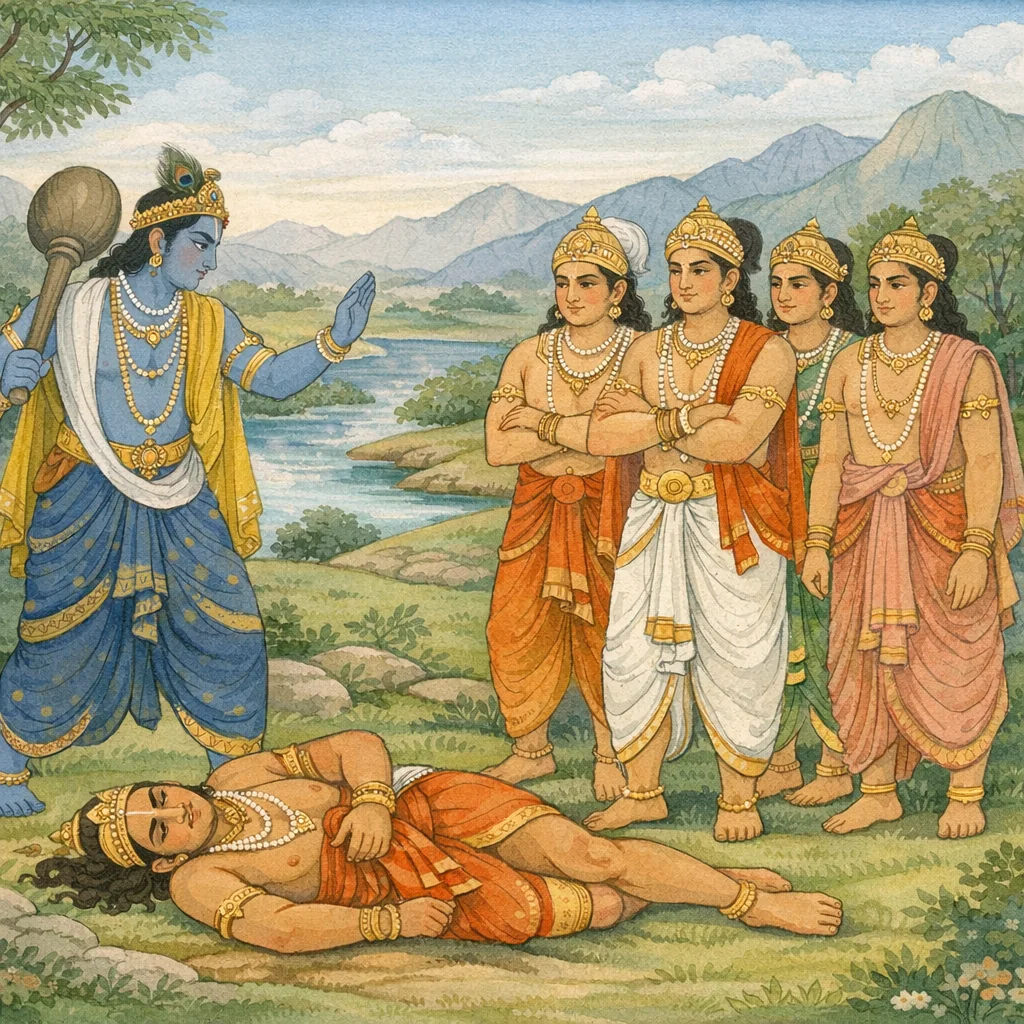
Dhṛtarāṣṭra asks Saṃjaya what the Pāṇḍavas and their allies do upon seeing Duryodhana struck down by Bhīmasena. Saṃjaya reports collective elation: martial acclamations, gestures of triumph, and praise directed to Bhīma that compares the feat to Indra’s paradigmatic victory over Vṛtra. Kṛṣṇa then intervenes to curb further verbal or physical excess toward the fallen, asserting that repeated insult is not appropriate once the enemy is already defeated. Duryodhana, though grievously wounded, rises partially and delivers a sustained accusation against Kṛṣṇa, listing prior episodes of perceived strategic irregularity and arguing that straightforward combat would have yielded a different result. Kṛṣṇa replies with a consequentialist and retributive framing: Duryodhana’s defeat is linked to earlier violations—refusal of rightful inheritance, plots against the Pāṇḍavas, and humiliation of Draupadī—thus positioning the end as a culmination of prior choices. Duryodhana closes by affirming his royal attainments and claiming a heaven-bound departure; the narrative adds celestial signs (flowers, music, auspicious wind), which produce mixed reactions—wonder, discomfort, and renewed reflection. Kṛṣṇa further explains that certain adversaries were not defeatable by strict means alone, and he instructs the party to withdraw for rest, after which conches are sounded and the scene concludes in controlled celebration.
Chapter Arc: धृतराष्ट्र संजय से पूछते हैं—गदायुद्ध-विशेषज्ञ रोहिणीनन्दन बलराम ने दुर्योधन के मस्तक पर भीम के प्रहार को देखकर क्या किया, और उस क्षण का वृत्तान्त क्या रहा। → संजय बताता है कि दुर्योधन के शिर पर घातक आघात देखकर बलराम क्रोध से भर उठते हैं और भीम को दण्ड देने को उद्यत होते हैं। पाण्डव-भ्राता अर्जुन आदि अस्त्र-निपुण भाई भीम के साथ खड़े होकर विचलित नहीं होते; सभा-सा वातावरण रणभूमि में बन जाता है—एक ओर गुरु-तुल्य बलराम, दूसरी ओर कृष्ण और पाण्डव। → श्रीकृष्ण बलराम को धर्म-युक्ति और नीति से रोकते हैं—दुर्योधन के छल-कपट, वैर की नींव, और युद्ध-धर्म की कठोरता का स्मरण कराते हैं; भीम की विजय को ‘रणयज्ञ’ की पूर्णाहुति की तरह चित्रित किया जाता है, और बलराम के क्रोध के सामने कृष्ण का शान्त, निर्णायक वचन निर्णायक मोड़ बनता है। → बलराम कृष्ण की बात सुनकर शान्त होते हैं, भीम पर दोषारोपण को त्यागते हैं और मनोग्लानि-शमन तथा मित्र-हित की दृष्टि से संयम स्वीकारते हैं। इसके बाद श्रीकृष्ण युधिष्ठिर से मिलते हैं; भीम भी धर्मराज को संबोधित कर दुर्योधन के पतन को उसके ही कपट का फल बताता है, और पाण्डव-पक्ष में विजय के साथ नैतिक-भार का बोध उभरता है। → युद्ध का मुख्य शत्रु गिर चुका है, पर विजय के बाद का धर्म-संकट और शोक-छाया—अगले प्रसंगों में शान्ति/प्रायश्चित्त/राजधर्म की दिशा किस ओर जाएगी—यह प्रश्न खुला रह जाता है।
Shlokas
Verse 1
ऑपन-- मा बछ। अल षष्टितमो< ध्याय: क्रोधमें भरे हुए बलरामको श्रीकृष्णका समझाना और युधिष्ठिरके साथ श्रीकृष्णकी तथा भीमसेनकी बातचीत ध्तराष्ट्र रवाच अधर्मेण हतं दृष्टवा राजानं माधवोत्तम: । किमब्रवीत् तदा सूत बलदेवो महाबल:,धृतराष्ट्रने पूछा--सूत! उस समय राजा दुर्योधनको अधर्मपूर्वक मारा गया देख महाबली मधुकुलशिरोमणि बलदेवजीने क्या कहा था?
Dhṛtarāṣṭra said: “O Sūta, when the mighty Baladeva—foremost among the Yādavas—saw the king (Duryodhana) slain by an unrighteous means, what did that great-armed hero say at that time?”
Verse 2
गदायुद्धविशेषज्ञो गदायुद्धविशारद: । कृतवान् रौहिणेयो यत् तन्ममाचक्ष्व संजय,संजय! गदायुद्धके विशेषज्ञ तथा उसकी कलामें कुशल रोहिणीनन्दन बलरामजीने वहाँ जो कुछ किया हो, वह मुझे बताओ
Dhṛtarāṣṭra said: “O Sañjaya, tell me what Rauhiṇeya Balarāma—an expert and consummate master of mace-combat—did there.”
Verse 3
संजय उवाच शिरस्यभिह्ठतं दृष्टवा भीमसेनेन ते सुतम् । राम: प्रहरतां श्रेष्ठक्षुक्रोध बलवदूबली,संजयने कहा--राजन्! भीमसेनके द्वारा आपके पुत्रके मस्तकपर पैरका प्रहार हुआ देख योद्धाओंमें श्रेष्ठ बलवान् बलरामको बड़ा क्रोध हुआ
Sañjaya said: “O King, seeing your son struck upon the head by Bhimasena’s trampling blow, mighty Balarama—foremost among those who smite in battle—was seized by a powerful wrath.”
Verse 4
ततो मध्ये नरेन्द्राणामूर्ध्वबाहुर्हलायुध: । कुर्वन्नार्तस्वरं घोरं धिग् धिग् भीमेत्युवाच ह
Then, in the midst of the assembled kings, Halāyudha (Balarāma) raised his arms aloft and, with a dreadful cry of anguish, repeatedly exclaimed, “Shame! Shame, Bhīma!”
Verse 5
फिर वहाँ राजाओंकी मण्डलीमें अपनी दोनों बाँहें ऊपर उठाकर हलधर बलरामने भयंकर आर्तनाद करते हुए कहा--'भीमसेन! तुम्हें धिक्कार है! धिक्कार है!! ।। अहो धिग् यदधो नाभे: प्रह्तं धर्मविग्रहे नैतद् दृष्टं गदायुद्धे कृतवान् यद् वकोदर:,“अहो! इस धर्मयुद्धमें नाभिसे नीचे जो प्रहार किया गया है और जिसे भीमसेनने स्वयं किया है, यह गदायुद्धमें कभी नहीं देखा गया
Sañjaya said: Then, there in the assembly of kings, Haladhara Balarāma raised both his arms aloft and, with a dreadful cry of anguish, declared: “Bhīmasena—shame on you, shame! Alas, shame indeed: in this duel claimed as righteous, a blow has been struck below the navel. Such a thing has never been seen in mace-fighting—yet it is Vṛkodara who has done it.”
Verse 6
अधो नाभ्या न हन्तव्यमिति शास्त्रस्य निश्चय: । अयं त्वशास्त्रविन्मूढ: स्वच्छन्दात् सम्प्रवर्तते,“नाभिसे नीचे आघात नहीं करना चाहिये। यह गदा-युद्धके विषयमें शास्त्रका सिद्धान्त है। परंतु यह शास्त्रज्ञानसे शून्य मूर्ख भीमसेन यहाँ स्वेच्छाचार कर रहा है'
Sañjaya said: “The śāstra’s settled rule for mace-fighting is that one should not strike below the navel. Yet this deluded man, ignorant of the śāstra, is acting by mere whim.”
Verse 7
तस्य तत् तद् ब्रुवाणस्य रोष: समभवन्महान् | ततो राजानमालोक्य रोषसंरक्तलोचन:,ये सब बातें कहते हुए बलदेवजीका रोष बहुत बढ़ गया। फिर राजा दुर्योधनकी ओर दृष्टिपात करके उनकी आँखें क्रोधसे लाल हो गयीं
As he kept speaking those words, a great anger rose within him. Then, casting his gaze upon King Duryodhana, his eyes became reddened with wrath.
Verse 8
बलदेवो महाराज ततो वचनमत्रवीत् | न चैष पतित: कृष्ण केवलं मत्समो5सम:
Sañjaya said: “O King, then Baladeva spoke these words: ‘Kṛṣṇa has not fallen into wrongdoing; he is simply my equal—indeed, without equal.’”
Verse 9
ततो लाडलमुद्यम्य भीममभ्यद्रवद् बली,ऐसा कहकर महाबली बलराम अपना हल उठाकर भीमसेनकी ओर दौड़े। उस समय अपनी भुजाएँ ऊपर उठाये हुए महात्मा बलरामजीका रूप अनेक धातुओंके कारण विचित्र शोभा पानेवाले महान् श्वेतपर्वतके समान जान पड़ता था
Sañjaya said: Then the mighty Balarāma, lifting up his ploughshare-weapon, rushed straight at Bhīmasena. With his arms raised aloft, the great-souled Balarāma appeared like a vast white mountain, made wondrously radiant by many mineral hues—an image of overwhelming strength poised to enforce his sense of justice in the midst of the warriors’ quarrel.
Verse 10
तस्योर्ध्वबाहो: सदृशं रूपमासीन्महात्मन: । बहुधातुविचित्रस्य श्वेतस्येव महागिरे:,ऐसा कहकर महाबली बलराम अपना हल उठाकर भीमसेनकी ओर दौड़े। उस समय अपनी भुजाएँ ऊपर उठाये हुए महात्मा बलरामजीका रूप अनेक धातुओंके कारण विचित्र शोभा पानेवाले महान् श्वेतपर्वतके समान जान पड़ता था
Sañjaya said: As that great-souled one stood with his arms raised aloft, his form appeared like a mighty white mountain—made splendidly variegated by many minerals. In the charged moment of impending violence, the image underscores both Balarāma’s overwhelming power and the awe such power inspires, even as it threatens to break the bounds of restraint.
Verse 11
(भ्रातृभि: सहितो भीम: सार्जुनैरस्त्रकोविदै: । न विव्यथे महाराज दृष्टवा हलधरं बली ।।) महाराज! हलधरको आक्रमण करते देख अर्जुनसहित अस्त्रवेत्ता भाइयोंके साथ खड़े हुए बलवान् भीमसेन तनिक भी व्यथित नहीं हुए। तमुत्पतन्तं जग्राह केशवो विनयान्वित: । बाहुभ्यां पीनवृत्ताभ्यां प्रयत्नादू बलवद्धली,उस समय विनयशील, बलवान श्रीकृष्णने आक्रमण करते हुए बलरामजीको अपनी मोटी एवं गोल-गोल भुजाओंद्वारा बड़े प्रयत्नसे पकड़ा
Sanjaya said: O King, mighty Bhima—standing together with his brothers, with Arjuna, all skilled in the use of weapons—did not waver in the least on seeing the powerful Haladhara (Balarama). Then, as Balarama sprang forward to attack, Krishna (Keshava), composed and respectful, seized him with great effort, restraining the strong wielder of the plough by his thick, rounded arms—thus preventing an escalation among kinsmen.
Verse 12
सितासितौ यदुवरौ शुशुभाते5डधिकं तदा । (संगताविव राजेन्द्र कैलासाञ्जनपर्वतौ ।।) नभोगतौ यथा राजंश्रन्द्रसूयों दिनक्षये,राजेन्द्र! वे श्याम-गौर यदुकुलतिलक दोनों भाई परस्पर मिले हुए कैलास और कज्जल पर्वतोंके समान शोभा पा रहे थे। राजन! संध्याकालके आकाशमें जैसे चन्द्रमा और सूर्य उदित हुए हों, वैसे ही उस रणक्षेत्रमें वे दोनों भाई सुशोभित हो रहे थे
Sañjaya said: O king, at that time the two foremost heroes of the Yadu line—one fair and one dark—shone with even greater splendor, like Mount Kailāsa and the dark Añjana mountain standing together. O ruler, they appeared on that battlefield like the moon and the sun seen together in the sky at day’s end—an image that heightens the sense of awe and moral gravity as the war nears its fateful culmination.
Verse 13
उवाच चैन संरब्धं शमयन्निव केशव: । आत्मवद्धिमित्रवृद्धिर्मित्रमित्रोदपस्तथा
Sañjaya said: Keśava spoke to him, who was inflamed with anger, as though to calm him. He urged him to regard others as himself, to increase friendship, and to treat friend and foe alike with impartiality and restraint.
Verse 14
विपरीत द्विषत्स्वेतत् षड्विधा वृद्धिरात्मन: । उस समय श्रीकृष्णने रोषसे भरे हुए बलरामजीको शान्त करते हुए-से कहा--“भैया! अपनी उन्नति छः: प्रकारकी होती है--अपनी वृद्धि, मित्रकी वृद्धि और मित्रके मित्रकी वृद्धि तथा शत्रुपक्षमें इसके विपरीत स्थिति अर्थात् शत्रुकी हानि, शत्रुके मित्रकी हानि तथा शत्रुके मित्रके मित्रकी हानि ।। आत्मन्यपि च मित्रे च विपरीतं यदा भवेत्
Sañjaya said: “This is the sixfold measure of one’s own advancement: the increase of oneself, the increase of one’s ally, and the increase of an ally’s ally; and, on the enemy’s side, the reverse—namely the enemy’s loss, the loss of the enemy’s ally, and the loss of the ally of the enemy’s ally. And when the opposite occurs with respect to oneself and one’s ally… (the consequences are to be understood accordingly).”
Verse 15
अस्माकं सहजं मित्र पाण्डवा: शुद्धपौरुषा:
Sañjaya said: “The Pāṇḍavas are our natural, inborn allies, my friend—men of untainted manliness.”
Verse 16
स्वका: पितृष्वसुः पुत्रास्ते परैर्निकृता भृूशम् । 'शुद्ध पुरुषार्थका आश्रय लेनेवाले पाण्डव हमारे सहज मित्र हैं। बुआके पुत्र होनेके कारण सर्वथा अपने हैं। शत्रुओंने इनके साथ बहुत छल-कपट किया था ।। प्रतिज्ञापालनं धर्म: क्षत्रियस्येह वेद्म्यहम्,“मैं समझता हूँ कि इस जगत्में अपनी प्रतिज्ञाका पालन करना क्षत्रियके लिये धर्म ही है। पहले सभामें भीमसेनने यह प्रतिज्ञा की थी कि “मैं महायुद्धमें अपनी गदासे दुर्योधनकी दोनों जाँघें तोड़ डालूँगा”
Sanjaya said: “Those sons of our paternal aunt are truly our own; yet they have been grievously wronged by their enemies. The Pandavas, who take refuge in pure manly effort, are our natural friends—indeed, because they are our aunt’s sons, they belong wholly to us. The foes dealt with them through much deceit and treachery. I understand that, in this world, keeping one’s vow is the very dharma of a kshatriya. Earlier, in the royal assembly, Bhimasena had made this pledge: ‘In the great war, with my mace I will break both thighs of Duryodhana.’”
Verse 17
सुयोधनस्य गदया भडद्भक्तास्म्यूरू महाहवे । इति पूर्व प्रतिज्ञातं भीमेन हि सभातले,“मैं समझता हूँ कि इस जगत्में अपनी प्रतिज्ञाका पालन करना क्षत्रियके लिये धर्म ही है। पहले सभामें भीमसेनने यह प्रतिज्ञा की थी कि “मैं महायुद्धमें अपनी गदासे दुर्योधनकी दोनों जाँघें तोड़ डालूँगा”
Sañjaya said: “In the great battle, Bhima had earlier vowed in the royal assembly: ‘With my mace I shall shatter Suyodhana’s thighs.’”
Verse 18
मैत्रेयेणाभिशप्तश्न पूर्वमेव महर्षिणा । ऊरू ते भेत्स्यते भीमो गदयेति परंतप
Sañjaya said: “Long ago, the great sage Maitreya had already pronounced a curse: ‘Bhīma will shatter your thighs with his mace.’”
Verse 19
'शत्रुओंको संताप देनेवाले बलरामजी! महर्षि मैत्रेयने भी दुर्योधनको पहलेसे ही यह शाप दे रखा था कि “भीमसेन अपनी गदासे तेरी दोनों जाँघें तोड़ डालेंगे” ।। अतो दोषं न पश्यामि मा क्रुद्धयस्व प्रलम्बहन् । यौन: स्वै: सुखहार्दे श्ष॒ सम्बन्ध: सह पाण्डवै:
Sañjaya said: “O Balarāma, tormentor of enemies! The great sage Maitreya had already, long before, laid this curse upon Duryodhana: ‘Bhīmasena will shatter both your thighs with his mace.’ Therefore I see no fault here—do not be angry, O slayer of Pralamba. For through our own bonds of affection and shared happiness, we have a relationship with the Pāṇḍavas.”
Verse 20
वासुदेववच: श्रुत्वा सीरभृत् प्राह धर्मवित्
Sañjaya said: Having heard the words of Vāsudeva, the plough-bearing hero—knower of dharma—spoke in reply.
Verse 21
अर्थश्षात्यर्थलुब्धस्य कामश्नातिप्रसज्धिण:
Sañjaya said: For one who is greedy for wealth and driven by the pursuit of gain, desire becomes excessively attached and overreaches—pushing him beyond restraint and right conduct.
Verse 22
धर्मार्थो धर्मकामौ च कामार्थो चाप्पपीडयन् । धर्मार्थकामान् यो<भ्येति सो>त्यन्तं सुखमश्ुते
Sañjaya said: When the aims of life—dharma with artha, dharma with kāma, and kāma with artha—do not oppress one another, and a person harmonizes dharma, artha, and kāma together, that person attains the highest happiness.
Verse 23
“अत्यन्त लोभीका अर्थ और अधिक आसक्ति रखनेवालेका काम--ये दोनों ही धर्मको हानि पहुँचाते हैं! जो मनुष्य कामसे धर्म और अर्थको, अर्थसे धर्म और कामको तथा धर्मसे अर्थ और कामको हानि न पहुँचाकर धर्म, अर्थ और काम तीनोंका यथोचित रूपसे सेवन करता है, वह अत्यन्त सुखका भागी होता है ।। तदिदं व्याकुलं सर्व कृतं धर्मस्य पीडनात् । भीमसेनेन गोविन्द काम॑ त्वं तु यथा55तथ माम्,“गोविन्द! भीमसेनने (अर्थके लोभसे) धर्मको हानि पहुँचाकर इन सबको विकृत कर डाला है। तुम मुझसे जिस प्रकार इस कार्यको धर्मसंगत बता रहे हो वह सब तुम्हारी मनमानी कल्पना है”
Sañjaya said: “Excessive greed for wealth, stronger still the clinging to it, and desire—these two indeed strike at dharma. But the man who does not, for desire’s sake, injure dharma and artha; nor, for wealth’s sake, injure dharma and kāma; nor, for dharma’s sake, injure artha and kāma—who instead pursues dharma, artha, and kāma in due measure—he becomes a sharer of the highest happiness. But now everything has been thrown into turmoil by the wounding of dharma. O Govinda, Bhīmasena has done this by harming dharma (through greed for gain); and you, as you please, are trying to present this deed to me as ‘in accordance with dharma’—it is your own contrivance.”
Verse 24
श्रीकृष्ण उवाच अरोषणो हि धर्मात्मा सततं धर्मवत्सल: । भवान् प्रख्यायते लोके तस्मात् संशाम्य मा क्रुध:
Śrī Kṛṣṇa said: “A righteous man is indeed free from anger and ever devoted to dharma. You are renowned in the world for such conduct; therefore, compose yourself—do not give way to wrath.”
Verse 25
श्रीकृष्णने कहा--भैया! आप संसारमें क्रोधरहित, धर्मात्मा और निरन्तर धर्मपर अनुग्रह रखनेवाले सत्पुरुषके रूपमें विख्यात हैं; अत: शान्त हो जाइये, क्रोध न कीजिये ।। प्राप्त कलियुगं विद्धि प्रतिज्ञां पाण्डवस्य च । आनुृण्यं यातु वैरस्य प्रतिज्ञायाश्व॒ पाण्डव:,समझ लीजिये कि कलियुग आ गया। पाण्डुपुत्र भीमसेनकी प्रतिज्ञापर भी ध्यान दीजिये। आज पाण्डुकुमार भीम वैर और प्रतिज्ञाके ऋणसे मुक्त हो जायँ
Śrī Kṛṣṇa said: “Brother, you are renowned in the world as a righteous man—free from anger and ever inclined to uphold dharma. Therefore be calm; do not give way to wrath. Know that the time has come that resembles Kali-yuga; and keep in mind the Pāṇḍava’s vow as well. Today let the Pāṇḍava be released from the debt of enmity and from the burden of his pledge.”
Verse 26
(गत: पुरुषशार्दूलो हत्वा नैकृतिकं रणे । अधर्मो विद्यते नात्र यद् भीमो हतवान् रिपुम् ।। पुरुषसिंह भीम रणभूमिमें कपटी दुर्योधनको मारकर चले गये। उन्होंने जो अपने शत्रुका वध किया है, इसमें कोई अधर्म नहीं है। युद्धयन्तं समरे वीरं कुरुवृष्णियशस्करम् । अनेन कर्ण: संदिष्ट: पृष्ठतो धनुराच्छिनत् ।। इसी दुर्योधनने कर्णको आज्ञा दी थी, जिससे उसने कुरु और वृष्णि दोनों कुलोंके सुयशकी वृद्धि करनेवाले, युद्धपरायण, वीर अभिमन्युके धनुषको समरांगणमें पीछेसे आकर काट दिया था। ततः सछिन्नधन्वानं विरथं पौरुषे स्थितम् | व्यायुधीकृत्य हतवान् सौभद्रमपलायिनम् ।। इस प्रकार धनुष कट जाने और रथसे हीन हो जानेपर भी जो पुरुषार्थमें ही तत्पर था, रणभूमिमें पीठ न दिखानेवाले उस सुभद्राकुमार अभिमन्युको इसने निहत्था करके मार डाला था। जन्मप्रभृतिलुब्धश्न पापश्चैव दुरात्मवान् । निहतो भीमसेनेन दुर्बुद्धिः कुलपांसन: ।। यह दुरात्मा, दुर्बुद्धि एवं पापी दुर्योधन जन्मसे ही लोभी तथा कुरुकुल॒का कलंक रहा है, जो भीमसेनके हाथसे मारा गया है। प्रतिज्ञां भीमसेनस्य त्रयोदशसमार्जिताम् | किमर्थ नाभिजानाति युद्धयमानो5पि विश्रुताम् ।। भीमसेनकी प्रतिज्ञा तेरह वर्षोंसे चल रही थी और सर्वत्र प्रसिद्ध हो चुकी थी। युद्ध करते समय दुर्योधनने उसे याद क्यों नहीं रखा?। ऊर्ध्वमुत्क्रम्य वेगेन जिघांसन्तं वृकोदर: । बभज्ज गदया चोरू न स्थाने न च मण्डले ।।) यह वेगसे ऊपर उछलकर भीमसेनको मार डालना चाहता था। उस अवस्थामें भीमने अपनी गदासे इसकी दोनों जाँघें तोड़ डाली थीं। उस समय न तो यह किसी स्थानमें था और न मण्डलमें ही। संजय उवाच धर्मच्छलमपि श्रुत्वा केशवात् स विशाम्पते । नैव प्रीतमना रामो वचन प्राह संसदि,संजय कहते हैं--प्रजानाथ! भगवान् श्रीकृष्णसे यह छलरूप धर्मका विवेचन सुनकर बलदेवजीके मनको संतोष नहीं हुआ। उन्होंने भरी सभामें कहा--
Sanjaya said: “O lord of the people, even after hearing from Keshava an explanation of dharma that involved a subtle stratagem, Rama (Balarama) did not feel pleased at heart; and in the full assembly he spoke out.”
Verse 27
हत्वाधर्मेण राजानं धर्मात्मानं सुयोधनम् | जिह्ययोधीति लोके5स्मिन् ख्यातिं यास्यति पाण्डव:,“धर्मात्मा राजा दुर्योधनको अधर्मपूर्वक मारकर पाण्डुपुत्र भीमसेन इस संसारमें कपट॒पूर्ण युद्ध करनेवाले योद्धाके रूपमें विख्यात होंगे
Sañjaya said: “Having slain King Suyodhana—who is spoken of as righteous—by an unrighteous means, the Pāṇḍava will, in this world, gain the reputation of being a deceitful fighter.”
Verse 28
दुर्योधनो5पि धर्मात्मा गतिं यास्यति शाश्वतीम् । ऋणजुयोधी हतो राजा धार्तराष्ट्री नराधिप:,“धृतराष्ट्रपुत्र धर्मात्मा राजा दुर्योधन सरलतासे युद्ध कर रहा था, उस अवस्थामें मारा गया है; अतः वह सनातन सदगतिको प्रान्त होगा
Sañjaya said: “Even Duryodhana, being of a dharmic disposition, will attain an everlasting destiny. That king—lord of men, the son of Dhṛtarāṣṭra—has been slain while fighting straightforwardly, as one who repays his debt in battle; therefore he will reach the eternal good state.”
Verse 29
युद्धदीक्षां प्रविश्याजी रणयज्ञं वितत्य च । हुत्वा55त्मानममित्राग्नौ प्राप चावभूथं यश:,'युद्धकी दीक्षा ले संग्रामभूमिमें प्रविष्ट हो रणयज्ञका विस्तार करके शत्रुरूपी प्रज्वलित अग्निमें अपने शरीरकी आहुति दे दुर्योधनने सुयशरूपी अवभूथ-स्नानका शुभ अवसर प्राप्त किया है”
Sañjaya said: Having entered the consecration for battle and spread out the sacrifice that is war, he offered his very self into the blazing fire of his foes; thus Duryodhana attained the auspicious concluding bath—the avabhṛtha—of enduring fame.
Verse 30
इत्युक्त्वा रथमास्थाय रौहिणेय: प्रतापवान् । श्वेताभ्रशिखराकार: प्रययौ द्वारकां प्रति
Sañjaya said: Having spoken thus, the valiant Rauhiṇeya mounted his chariot and set out toward Dvārakā—his form towering like a peak of white cloud—departing with resolute purpose after his words were delivered.
Verse 31
यह कहकर प्रतापी रोहिणीनन्दन बलरामजी, जो श्वेत बादलोंके अग्रभागकी भाँति गौर-कान्तिसे सुशोभित हो रहे थे, रथपर आरूढ़ हो द्वारकाकी ओर चल दिये ।। पज्चालाशक्ष सवारष्णेया: पाण्डवाश्न विशाम्पते । रामे द्वारावतीं याते नातिप्रमनसो5भवन्,प्रजानाथ! बलरामजीके इस प्रकार द्वारका चले जानेपर पांचाल, वृष्णिवंशी तथा पाण्डववीर उदास हो गये। उनके मनमें अधिक उत्साह नहीं रह गया
Sañjaya said: Having spoken thus, the valiant Balarāma, Rohiṇī’s delight—radiant with a fair splendor like the forefront of white clouds—mounted his chariot and set out toward Dvārakā. When Rāma departed for Dvāravatī, the Pañcālas, the Vṛṣṇis, and the Pāṇḍava heroes became downcast, O lord of the people; their hearts no longer held much enthusiasm.
Verse 32
ततो युधिष्छिरं दीनं चिन्तापरमधोमुखम् । शोकोपहतसंकल्पं वासुदेवोडब्रवीदिदम्,उस समय युधिष्छिर बहुत दुःखी थे। वे नीचे मुख किये चिन्तामें डूब गये थे। शोकसे उनका मनोरथ भंग हो गया था। उस अवस्थामें उनसे भगवान् श्रीकृष्ण बोले
Then Vāsudeva (Kṛṣṇa) addressed Yudhiṣṭhira, who sat despondent with his face cast down, absorbed in anxious thought; grief had shattered his resolve. In that condition, Kṛṣṇa spoke these words to him.
Verse 33
वायुदेव उवाच धर्मराज किमर्थ त्वमधर्ममनुमन्यसे । हतबन्धोर्यदेतस्य पतितस्यथ विचेतस:,श्रीकृष्णने पूछा--धर्मराज! आप चुप होकर अधर्मका अनुमोदन क्यों कर रहे हैं? नरेश्वर दुर्योधनके भाई और सहायक मारे जा चुके हैं। यह पृथ्वीपर गिरकर अचेत हो रहा है। ऐसी दशामें भीमसेन इसके मस्तकको पैरसे कुचल रहे हैं। आप धर्मज्ञ होकर समीपसे ही यह सब कैसे देख रहे हैं
Vāyu said: “O Dharmarāja, for what reason do you silently assent to unrighteousness? Look at him—his kinsmen and supporters have been slain; he has fallen to the ground and lies senseless. Even in such a state, Bhīmasena is crushing his head with his foot. How can you, who know dharma, stand nearby and watch this?”
Verse 34
दुर्योधनस्यथ भीमेन मृद्यमानं शिर: पदा । उपप्रेक्षसि कस्मात् त्वं धर्मज्ञ: सन्नराधिप,श्रीकृष्णने पूछा--धर्मराज! आप चुप होकर अधर्मका अनुमोदन क्यों कर रहे हैं? नरेश्वर दुर्योधनके भाई और सहायक मारे जा चुके हैं। यह पृथ्वीपर गिरकर अचेत हो रहा है। ऐसी दशामें भीमसेन इसके मस्तकको पैरसे कुचल रहे हैं। आप धर्मज्ञ होकर समीपसे ही यह सब कैसे देख रहे हैं
“As Duryodhana’s head is being crushed under Bhīma’s foot, why do you merely stand by and watch, O king? Though you are a knower of dharma, how can you, from so near, silently witness this act—an assault upon a fallen and helpless foe—without restraining it?”
Verse 35
युधिछिर उवाच न ममैतत् प्रियं कृष्ण यद् राजानं वृकोदर: । पदा मूर्थ्न्यस्पृशत् क्रोधान्न च हृष्ये कुलक्षये,युधिष्ठिरने कहा--श्रीकृष्ण! भीमसेनने क्रोधमें भरकर जो राजा दुर्योधनके मस्तकको पैरोंसे ठुकराया है, यह मुझे भी अच्छा नहीं लगा। अपने कुलका संहार हो जानेसे मैं प्रसन्न नहीं हूँ
Yudhiṣṭhira said: “Kṛṣṇa, this does not please me—that Vṛkodara, in anger, set his foot upon the king’s head. Nor do I rejoice in the destruction of my own lineage.”
Verse 36
निकृत्या निकृता नित्यं धृतराष्ट्रसुतैर्वयम् बहूनि परुषाण्युक्त्वा वन॑ प्रस्थापिता: सम ह,परंतु क्या करूँ, धृतराष्ट्रके पुत्रोंने सदा ही हमें अपने कपटजालका शिकार बनाया और बहुत-से कटुवचन सुनाकर वनमें भेज दिया
Yudhiṣṭhira said: “By deceit we have continually been deceived by Dhṛtarāṣṭra’s sons. After hurling many harsh words at us, they sent us away to the forest.”
Verse 37
भीमसेनस्य तद् दुःखमतीव हृदि वर्तते । इति संचिन्त्य वार्ष्णेय मयैतत् समुपेक्षितम्,वृष्णिनन्दन! भीमसेनके हृदयमें इन सब बातोंके लिये बड़ा दुःख था। यही सोचकर मैंने उनके इस कार्यकी उपेक्षा की है
Yudhiṣṭhira said: “I reflected that Bhīmasena bears an intense sorrow within his heart over all these matters. Therefore, O Vārṣṇeya, O delight of the Vṛṣṇis, I chose to overlook his action—understanding the pain that drove him.”
Verse 38
तस्माद्धत्वाकृतप्रज्ञं लुब्धं कामवशानुगम् । लभतां पाण्डव: काम॑ धर्मेडधर्मे च वा कृते,इसलिये मैंने विचार किया कि कामके वशीभूत हुए लोभी और अजितात्मा दुर्योधनको मारकर धर्म या अधर्म करके पाण्डुपुत्र भीम अपनी इच्छा पूरी कर लें
“Therefore, having slain Duryodhana—one whose judgment is perverted, who is greedy, and who follows the sway of desire—let the Pāṇḍava (Bhīma) attain his wished-for end, whether by an act deemed righteous or even by one deemed unrighteous.”
Verse 39
संजय उवाच इत्युक्ते धर्मराजेन वासुदेवो<ब्रवीदिदम् । काममस्त्वेतदिति वै कृच्छाद् यदुकुलोद्धह:,संजय कहते हैं--राजन्! धर्मराजके ऐसा कहनेपर यदुकुलश्रेष्ठ भगवान् श्रीकृष्णने बड़े कष्टसे यह कहा कि “अच्छा, ऐसा ही सही”
Sañjaya said: When Dharmarāja had spoken thus, Vāsudeva—Kṛṣṇa, foremost of the Yadu line—replied with difficulty, “So be it; let it be as you wish.”
Verse 40
इत्युक्तो वासुदेवेन भीमप्रियहितैषिणा । अन्वमोदत तत् सर्व यद् भीमेन कृतं युधि,भीमसेनका प्रिय और हित चाहनेवाले भगवान् श्रीकृष्णके ऐसा कहनेपर युधिष्ठिरने भीमसेनके द्वारा युद्धस्थलमें जो कुछ किया गया था, उस सबका अनुमोदन किया
Sañjaya said: Thus addressed by Vāsudeva—who sought what was dear and beneficial to Bhīma—Yudhiṣṭhira assented to it all, approving everything that Bhīma had done on the battlefield.
Verse 41
(अर्जुनो5पि महाबाहुरप्रीतेनान्तरात्मना । नोवाच वचन किंचिद् भ्रातरं, साध्वसाधु वा ।।) महाबाहु अर्जुन भी अप्रसन्नचित्तसे अपने भाईके प्रति भला-बुरा कुछ नहीं बोले। भीमसेनो<पि हत्वा55जौ तव पुत्रममर्षण: । अभिवाद्याग्रत: स्थित्वा सम्प्रहष्ट: कृताज्जलि:,अमर्षशील भीमसेन युद्धस्थलमें आपके पुत्रका वध करके बड़े प्रसन्न हुए और युधिष्ठिरको प्रणाम करके उनके आगे हाथ जोड़कर खड़े हो गये
Sañjaya said: Mighty-armed Arjuna too, with his inner self displeased, spoke not a single word to his brother—neither approving nor reproaching. But Bhīmasena, fierce in wrath, having slain your son in battle, became greatly elated; he bowed to Yudhiṣṭhira and stood before him with hands joined in reverence.
Verse 42
प्रोवाच सुमहातेजा धर्मराजं युधिष्ठिरम् । हर्षादुत्फुल्ललयनो जितकाशी विशाम्पते,प्रजानाथ! उस समय महातेजस्वी भीमसेन विजयश्रीसे प्रकाशित हो रहे थे। उनके नेत्र हर्षसे खिल उठे थे, उन्होंने धर्मराज युधिष्ठिरसे कहा--
Sañjaya said: Then the exceedingly radiant Bhīmasena—his splendor heightened by victory—spoke to Dharmarāja Yudhiṣṭhira. With eyes blossoming in joy, he addressed him: “O lord of the people.”
Verse 43
तवाद्य पृथिवी सर्वा क्षेमा निहतकण्टका । तां प्रशाधि महाराज स्वधर्ममनुपालय,“महाराज! आज यह सारी पृथ्वी आपकी हो गयी, इसके काँटे नष्ट कर दिये गये, अतः यह मंगलमयी हो गयी है। आप इसका शासन तथा अपने धर्मका पालन कीजिये
Sañjaya said: “Today the whole earth has become secure, its thorns removed—its sources of harm have been cut down. Therefore, O great king, govern this realm and uphold your own dharma.”
Verse 44
यस्तु कर्तास्य वैरस्थ निकृत्या निकृतिप्रिय: । सो<यं विनिहतः शेते पृथिव्यां पृथिवीपते
Sañjaya said: “But the one who engineered this enmity through treachery—one who delighted in deceit—now lies here slain upon the earth, O lord of the earth. Thus the fruits of crooked counsel and unethical stratagems have returned upon their author amid the ruin of war.”
Verse 45
'पृथ्वीनाथ! जिसे छल और कपट ही प्रिय था तथा जिसने कपटसे ही इस वैरकी नींव डाली थी, वही यह दुर्योधन आज मारा जाकर पृथ्वीपर सो रहा है ।। दुःशासनप्रभूतय: सर्वे ते चोग्रवादिन: । राधेय: शकुनिश्चैव हताश्न तव शत्रव:,“वे भयंकर कटुवचन बोलनेवाले दुःशासन आदि धूृतराष्ट्रपुत्र तथा कर्ण और शकुनि आदि आपके सभी शत्रु मार डाले गये
Sañjaya said: “O lord of the earth, he who delighted only in deceit and guile, and who by guile laid the very foundation of this enmity—this same Duryodhana has now been slain and lies upon the ground. And all those of yours who spoke harsh and violent words—Duhshasana and the rest—together with Radheya (Karna) and Shakuni as well, have been killed: your enemies are destroyed.”
Verse 46
सेयं रत्नसमाकीर्णा मही सवनपर्वता । उपावृत्ता महाराज त्वामद्य निहतद्विषम्,“महाराज! आपके शत्रु नष्ट हो गये। आज यह रत्नोंसे भरी हुई वन और पर्वतोंसहित सारी पृथ्वी आपकी सेवामें प्रस्तुत है!
Sañjaya said: “O King, this earth—strewn with treasures, together with its forests and mountains—now stands turned toward you in service today, for your enemies have been slain.”
Verse 47
युधिछिर उवाच गतो वैरस्य निधनं हतो राजा सुयोधन: । कृष्णस्य मतमास्थाय विजितेयं वसुन्धरा,युधिष्ठिर बोले--भीमसेन! सौभाग्यकी बात है कि तुमने वैरका अन्त कर दिया, राजा दुर्योधन मारा गया और श्रीकृष्णके मतका आश्रय लेकर हमने यह सारी पृथ्वी जीत ली
Yudhiṣṭhira said: “The end of our enmity has come; King Suyodhana has been slain. Relying on Kṛṣṇa’s counsel, we have won this entire earth.”
Verse 48
दिष्टया गतस्त्वमानृण्यं मातु:ः कोपस्य चोभयो: । दिष्ट्या जयति दुर्धर्ष दिष्टया शत्रुर्निपातित:,सौभाग्यसे तुम माता तथा क्रोध दोनोंके ऋणसे उऋण हो गये। दुर्धर्ष वीर! भाग्यवश तुम विजयी हुए और सौभाग्यसे ही तुमने अपने शत्रुको मार गिराया
Yudhiṣṭhira said: “By good fortune you have become free of the debt owed to both your mother and her wrath. By that same providence, O hard-to-overcome hero, you have won; and by fortune indeed your enemy has been struck down.”
Verse 60
इति श्रीमहाभारते शल्यपर्वणि गदापर्वणि बलदेवसान्त्वने षष्टितमोडध्याय:
Thus ends the sixtieth chapter in the Śalya Parva of the Śrī Mahābhārata—within the section on the mace-fight—where Baladeva offers consolation. This colophon marks a pause in the narrative, framing the episode as a moral and emotional settling after violent conflict, with Baladeva’s pacifying counsel set against the war’s destructiveness.
Verse 86
आश्रितस्य तु दौर्बल्यादाश्रय: परिभर्त्स्यते । महाराज! फिर बलदेवजीने कहा--“श्रीकृष्ण! राजा दुर्योधन मेरे समान बलवान था। गदायुद्धमें उसकी समानता करनेवाला कोई नहीं था। यहाँ अन्याय करके केवल दुर्योधन ही नहीं गिराया गया है, (मेरा भी अपमान किया गया है) शरणागतकी दुर्बलताके कारण शरण देनेवालेका तिरस्कार किया जा रहा है'
Sañjaya said: “O great king, because of the weakness of one who has sought refuge, the very protector who grants that refuge is being reviled.” The line voices a moral protest: when a dependent is harmed or humiliated, the dishonor rebounds upon the one who stood as their support, making the ethics of protection and loyalty a matter for all to see.
Verse 146
तदा विद्यान्मनोग्लानिमाशु शान्तिकरो भवेत् | “अपनी और अपने मित्रकी यदि इसके विपरीत परिस्थिति हो तो मन-ही-मन ग्लानिका अनुभव करना चाहिये और मित्रोंकी उस हानिके निवारणके लिये शीघ्र प्रयत्नशील होना चाहिये
Sañjaya said: “At such a time, one should recognize the inner heaviness of mind at once, and promptly become a maker of peace—striving quickly to avert the harm that has arisen, whether it concerns oneself or one’s friends.”
Verse 203
धर्म: सुचरित: सद्धिः स च द्वाभ्यां नियच्छति । श्रीकृष्णकी यह बात सुनकर धर्मज्ञ हलधरने इस प्रकार कहा--*श्रीकृष्ण! श्रेष्ठ पुरुषोंने धर्मका अच्छी तरह आचरण किया है; किंतु वह अर्थ और काम--इन दो वस्तुओंसे संकुचित हो जाता है
Sañjaya said: “Dharma is well practiced by the virtuous; yet it is constrained by two forces—artha (material advantage) and kāma (desire).” In the war’s ethical tension, the line shows how even acknowledged righteousness can be narrowed or overridden when worldly gain and personal craving press upon judgment.
Verse 1936
तेषां वृद्धया हि वृद्धिनों मा क्रुध: पुरुषर्षभ । “अत: प्रलम्बहन्ता बलभद्रजी! मैं इसमें भीमसेनका कोई दोष नहीं देखता; इसलिये आप क्रोध न कीजिये। हमारा पाण्डवोंके साथ यौन-सम्बन्ध तो है ही। परस्पर सुख देनेवाले सौहार्दसे भी हमलोग बँधे हुए हैं। पुरुषप्रवर! इन पाण्डवोंकी वृद्धिसे हमारी भी वृद्धि है, अतः आप क्रोध न करें"
Sañjaya said: “Our own prosperity increases when theirs increases; therefore, O best of men, do not be angry. O slayer of Pralamba, Balabhadra, I see no fault at all in Bhimasena in this matter. So restrain your wrath. We are bound to the Pandavas by kinship, and also by a mutual goodwill that brings happiness to one another. O foremost of men, the rise of the Pandavas is also our rise—therefore do not be angered.”
Frequently Asked Questions
Whether victory permits continued insult or harm toward a defeated opponent, and—more broadly—whether necessity-based strategy can be reconciled with the normative ideals of martial conduct.
The chapter juxtaposes two interpretive frames: (1) grievance-based claims about procedural fairness, and (2) consequence-based accountability linking outcomes to prior ethical breaches; it also emphasizes restraint as a stabilizing virtue after success.
No explicit phalaśruti is stated; instead, meta-commentary appears through Kṛṣṇa’s justification of “upāya” (strategic means) and the celestial-sign motif, which functions as a narrative device to complicate simple moral verdicts.