Adhyaya 36
अर्हणनिर्णयः (Decision on the Highest Honor at the Assembly)
Upa-parva: Rājasūyārhaṇa (Honoring at the Rājasūya Assembly)
Vaiśaṃpāyana reports that after Bhīṣma concludes his statement, Sahadeva delivers a pointed, policy-laden endorsement of honoring Keśava-Kṛṣṇa, describing him as immeasurable in valor and fit for worship. Sahadeva frames the act as placing a ‘step’ upon the heads of the powerful—i.e., a formal precedence decision—and invites any rival king to offer a reasoned counterargument. He further urges that discerning rulers should authorize honoring one’s teacher, father, and guru, extending the logic of veneration to the political sphere. The assembly of eminent kings offers no verbal rebuttal; a symbolic पुष्पवृष्टि (flower-rain) and disembodied acclamations validate Sahadeva’s stance. Nārada appears as a doubt-dispeller and all-world knower, intensifying the sacral authority of the moment. Yet the text records visible agitation among certain groups led by Sunītha; some kings speak of Yudhiṣṭhira’s consecration and Vāsudeva’s honoring with resigned resolve. Kṛṣṇa perceives an inexhaustible ‘ocean of kings’ preparing for confrontation. After the honor is completed—especially toward brahma-kṣatra excellence—Sunītha, angered, urges the assembled rulers to arm and stand against the Vṛṣṇis and Pāṇḍavas, then consults about obstructing the sacrifice.
Chapter Arc: राजसूय-यज्ञ की अन्तर्वेदी में देवर्षि-राजर्षियों का तेजस्वी समागम—नक्षत्रमण्डित आकाश-सा दीप्तिमान यज्ञभवन—और उसी सभा में यह प्रश्न कि प्रथम अर्घ्य किसे मिले। → नारद आदि महर्षि पुरातन वृत्तान्त का स्मरण कराते हैं—नारायण-शम्भु की आज्ञा, देवताओं का विधान, और क्षत्र-समुदाय के उत्थान-पतन का संकेत—जिससे सभा समझती है कि यह केवल सम्मान नहीं, धर्म-निर्णय है। → धर्मज्ञों के बीच निर्णायक बोध उभरता है: श्रीकृष्ण ही समस्त यज्ञों के आराध्य, सर्वेश्वर नारायण हैं; अतः राजसूय में प्रथम अर्घ्य उन्हीं को अर्पित होना चाहिए—और युधिष्ठिर के महाध्वर में यह अर्घ्य-दान प्रतिष्ठित होता है। → यज्ञमण्डप में उपस्थित ब्राह्मण-देवर्षि-राजर्षि इस निर्णय को मान्यता देते हैं; युधिष्ठिर का यज्ञ-क्रम धर्मसम्मत दिशा पाता है और सभा का केन्द्र श्रीकृष्ण की सर्वोच्चता पर स्थिर हो जाता है। → यह सर्वोच्च सम्मान जिनके अहंकार को चुभेगा, वे मौन नहीं रहेंगे—सभा के भीतर ही विरोध का बीज अंकुरित होने लगता है।
Shlokas
Verse 1
अफत-८#-रू- जा - नीलकण्ठीकी टीकामें छः: अग्नियाँ इस प्रकार बतायी गयी हैं--आरम्भणीय, क्षत्र, धृति, व्युष्टि, द्विरात्र और दशपेय। (अर्घाभिहरण पर्व) षटत्रिशो<ध्याय: राजसूययज्ञमें ब्राह्मणों तथा राजाओंका समागम, श्रीनारदजीके द्वारा श्रीकृष्ण-महिमाका वर्णन और भीष्मजीकी अनुमतिसे श्रीकृष्णकी अग्रपूजा वैशम्पायन उवाच ततो<5भिषेचनीयेडट्रि ब्राह्मणा राजभि: सह । अन्तर्वेदीं प्रविविशु: सत्काराहा महर्षय:,वैशम्पायनजी कहते हैं--जनमेजय! तदनन्तर अभिषेचनीय- कर्मके दिन सत्कारके योग्य महर्षिगण और ब्राह्मणलोग राजाओंके साथ यज्ञभवनमें गये इस प्रकार श्रीम्याभारत सभापतव॑के अन्तर्गत अर्घाभिद्दरणपर्वमें श्रीकृष्णको अ््यदानविषयक छत्तीसवाँ अध्याय पूरा हुआ ॥/ ३६ ॥ है ० बछ। ] अति्ऑशाड<ह ३. जिसमें पूजनीय पुरुषोंका अभिषेक--अर्घध्य देकर सम्मान किया जाता है, उस कर्मका नाम अभिषेचनीय है। यह राजसूययज्ञका अंगभूत सोमयागविशेष है। २. यह एक प्रकारका वाद है, जिसमें वादी छल, जाति और निग्रहस्थानको लेकर अपने पक्षका मण्डन और विपक्षीके पक्षका खण्डन करता है। इसमें वादीका उद्देश्य तत्त्वनिर्णय नहीं होता, किंतु स्वपक्षस्थापन और परपक्षखण्डनमात्र होता है। वादके समान इसमें भी प्रतिज्ञा, हेतु आदि पाँच अवयव होते हैं। 3. जिस बहस या वाद-विवादका उद्देश्य अपने पक्षकी स्थापना या परपक्षका खण्डन न होकर व्यर्थकी बकवादमात्र हो, उसका नाम “वितण्डा' है। सप्तत्रिशो5ध्याय: शिशुपालके आक्षेपपूर्ण वचन शिशुपाल उवाच नायमर्हति वार्ष्णेयस्तिष्ठत्स्विह महात्मसु । महीपतिषु कौरव्य राजवत् पार्थिवार्हणम्
Vaiśampāyana said: Then, on the day appointed for the consecratory rite (a principal component of the Rājasūya), the venerable great seers—worthy of honor—together with the brāhmaṇas and accompanied by the kings, entered the inner sacrificial enclosure. The scene signals a public, dharma-governed gathering of spiritual authority and royal power for a rite meant to legitimate sovereignty through proper ritual and reverence.
Verse 2
नारदप्रमुखास्तस्यामन्तर्वेद्यां महात्मन: । समासीना: शुशुभिरे सह राजर्षिभिस्तदा,महात्मा राजा युधिष्ठिरके उस यज्ञभवनमें राजर्षियोंके साथ बैठे हुए नारद आदि महर्षि उस समय ब्रह्माजीकी सभामें एकत्र हुए देवताओं और देवर्षियोंके समान सुशोभित हो रहे थे। बीच-बीचमें यज्ञसम्वन्धी एक-एक कर्मसे अवकाश पाकर अत्यन्त प्रतिभाशाली विद्वान आपसमें जल्पः (वाद-विवाद) करते थे। “यह इसी प्रकार होना चाहिये”, “नहीं, ऐसे नहीं होना चाहिये", “यह बात ऐसी ही है, ऐसी ही है, इससे भिन्न नहीं है।” इस प्रकार कह- कहकर बहुत-से वितण्डावादीः5 द्विज वहाँ वाद-विवाद करते थे
Vaiśampāyana said: In that sacred inner enclosure, the great-souled sages led by Nārada sat assembled and shone in splendour, in the company of royal seers. Their presence lent the sacrificial hall the dignity of a divine assembly, where learning, restraint, and ritual order upheld the king’s dharmic undertaking.
Verse 3
समेता ब्रह्मभवने देवा देवर्षयस्तथा । कर्मान्तरमुपासन्तो जजल्पुरमितौजस:,महात्मा राजा युधिष्ठिरके उस यज्ञभवनमें राजर्षियोंके साथ बैठे हुए नारद आदि महर्षि उस समय ब्रह्माजीकी सभामें एकत्र हुए देवताओं और देवर्षियोंके समान सुशोभित हो रहे थे। बीच-बीचमें यज्ञसम्वन्धी एक-एक कर्मसे अवकाश पाकर अत्यन्त प्रतिभाशाली विद्वान आपसमें जल्पः (वाद-विवाद) करते थे। “यह इसी प्रकार होना चाहिये”, “नहीं, ऐसे नहीं होना चाहिये", “यह बात ऐसी ही है, ऐसी ही है, इससे भिन्न नहीं है।” इस प्रकार कह- कहकर बहुत-से वितण्डावादीः5 द्विज वहाँ वाद-विवाद करते थे
Vaiśampāyana said: In Brahmā’s celestial hall, the gods and the divine seers had assembled. In the intervals between the successive acts of the sacrifice, those men of immeasurable brilliance engaged in lively discussion and debate—arguing what should be done and how it should be done—thus adorning the sacrificial setting with learned deliberation on right performance.
Verse 4
एवमेतन्न चाप्येवमेवं चैतन्न चान्यथा । इत्यूचुर्बहवस्तत्र वितण्डा वै परस्परम्,महात्मा राजा युधिष्ठिरके उस यज्ञभवनमें राजर्षियोंके साथ बैठे हुए नारद आदि महर्षि उस समय ब्रह्माजीकी सभामें एकत्र हुए देवताओं और देवर्षियोंके समान सुशोभित हो रहे थे। बीच-बीचमें यज्ञसम्वन्धी एक-एक कर्मसे अवकाश पाकर अत्यन्त प्रतिभाशाली विद्वान आपसमें जल्पः (वाद-विवाद) करते थे। “यह इसी प्रकार होना चाहिये”, “नहीं, ऐसे नहीं होना चाहिये", “यह बात ऐसी ही है, ऐसी ही है, इससे भिन्न नहीं है।” इस प्रकार कह- कहकर बहुत-से वितण्डावादीः5 द्विज वहाँ वाद-विवाद करते थे
Vaiśampāyana said: There, many disputants kept contradicting one another, declaring, “It must be exactly so,” “No, not so,” “Yes, it is so and cannot be otherwise.” In the sacrificial hall of King Yudhiṣṭhira, learned Brahmins—finding intervals between ritual acts—engaged in sharp debate, their contention more intent on refutation than on arriving at truth, even as the assembly shone with sages like Nārada, resembling the gathering of gods and divine seers in Brahmā’s court.
Verse 5
कृशानर्थास्तत: केचिदकृशांस्तत्र कुर्वते । अवृशांश्व व॒शांक्षक्रुहेतुभि: शास्त्रनिश्चयै:,कुछ विद्वान शास्त्रनिश्चित नाना प्रकारके तर्कों और युक्तियोंसे दुर्बल पक्षोंको पुष्ट और पुष्ट पक्षोंको दुर्बल सिद्ध कर देते थे
Vaiśampāyana said: Then, in that assembly, certain learned men—armed with reasons and conclusions drawn from the śāstras—would make weak positions appear strong, and would also render strong positions weak, by their many modes of argument. The scene shows how intellectual skill, when used merely to win, can distort judgment and unsettle what is truly right.
Verse 6
तत्र मेधाविन: केचिदर्थमन्यैरुदीरितम् । विचिक्षिपुर्यथा श्येना नभोगतमिवामिषम्,वहीं कुछ मेधावी पण्डित, जो दूसरोंके कथनमें दोष दिखानेके ही अभ्यासी थे, अन्य लोगोंके कहे हुए अनुमानसाधित विषयको उसी तरह बीचसे ही लोक लेते थे, जैसे बाज मांसके लोथड़ेको आकाशमें ही एक-दूसरेसे छीन लेते हैं
There, certain sharp-witted men would snatch away the meaning expressed by others—seizing it mid-course—just as hawks, while still in the sky, wrest a morsel of flesh from one another. The verse portrays a disputatious culture where cleverness is used less for truth-seeking and more for fault-finding and competitive display.
Verse 7
केचिद् धर्मार्थकुशला: केचित् तत्र महाव्रता: । रेमिरे कथयन्तश्न सर्वभाष्यविदां वरा:,उन्हींमें कुछ लोग धर्म और अर्थके निर्णयमें अत्यन्त निपुण थे। कोई महान् व्रतका पालन करनेवाले थे। इस प्रकार सम्पूर्ण भाष्यके दिद्वानोंमें श्रेष्ठ वे महात्मा अच्छी कथाएँ और शिक्षाप्रद बातें कहकर स्वयं भी सुखी होते और दूसरोंको भी प्रसन्न करते थे
Vaiśampāyana said: Some among them were highly skilled in judging matters of dharma and artha; others there were observers of great vows. Thus those eminent sages—foremost among the learned interpreters—took delight in conversing, sharing fine stories and instructive counsel, gladdening themselves and bringing joy to others as well.
Verse 8
सा वेदिदवेंदसम्पन्नैदेवद्धिजमहर्षिभि: । आबभासे समाकीर्णा नक्षत्रैद्यौरिवायता,जैसे नक्षत्रमालाओंद्वारा मण्डित विशाल आकाश मण्डलकी शोभा होती है, उसी प्रकार वेदज्ञ देवर्षियों, ब्रह्मर्षियों और महर्षियोंसे वह वेदी सुशोभित हो रही थी
Vaiśampāyana said: That sacrificial altar, thronged with Veda-knowing Brahmin seers—devarṣis, brahmarṣis, and maharṣis—shone splendidly, as the vast sky gleams when adorned with clusters of stars.
Verse 9
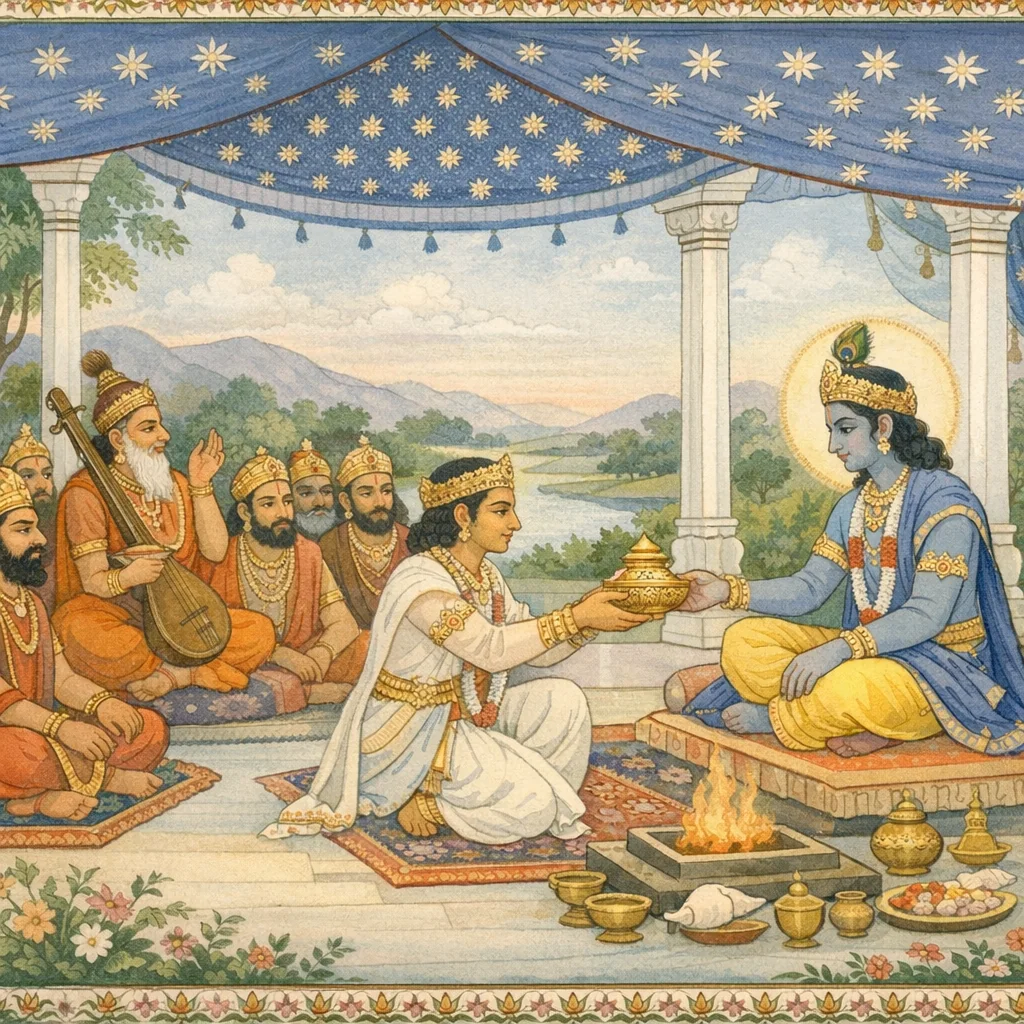
न तस्यां संनिधौ शूद्र: कश्चिदासीज्न चाव्रती । अन्तर्वेद्यां तदा राजन् युधिष्ठिरनिवेशने,राजन् युधिष्ठिरकी यज्ञशालाके भीतर उस अन्तर्वेदीके आस-पास उस समय न तो कोई शूद्र था और न व्रतहीन द्विज ही
Vaiśampāyana said: O King, at that time, within the inner sacrificial enclosure in Yudhiṣṭhira’s ritual hall, there was no Śūdra present nearby, nor any twice-born man who was without the prescribed vows.
Verse 10
तां तु लक्ष्मीवतो लक्ष्मीं तदा यज्ञविधानजाम् | तुतोष नारद: पश्यन् धर्मराजस्य धीमत:,परम बुद्धिमान् राजलक्ष्मीसम्पन्न धर्मराज युधिष्ठिरके उस धन-वैभव और यज्ञविधिको देखकर देवर्षि नारदको बड़ी प्रसन्नता हुई
Seeing that splendour of the fortunate king—prosperity born of proper sacrificial order—Devarṣi Nārada was greatly delighted as he beheld the wise Dharmarāja Yudhiṣṭhira, endowed with royal fortune and supreme discernment.
Verse 11
जनमेजय! उस समय वहाँ समस्त क्षत्रियोंका सम्मेलन देखकर मुनिवर नारदजी सहसा चिन्तित हो उठे
Vaiśampāyana said: “O Janamejaya, at that time, seeing there the great assembly of all the kṣatriyas gathered together, the sage Nārada was suddenly seized by anxious reflection.”
Verse 12
सस्मार च पुरा वृत्तां कथां तां पुरुषर्षभ । अंशावतरणे यासौ ब्रह्मणो भवने5भवत्,नरश्रेष्ठ भगवान्के सम्पूर्ण अंशों (देवताओं)-सहित अवतार लेनेके सम्बन्धमें ब्रह्मलोकमें पहले जो चर्चा हुई थी, वह प्राचीन घटना उन्हें याद आ गयी
Vaiśampāyana said: He then recalled an ancient account—the discussion that had once taken place in Brahmā’s abode concerning the descent into the world of the Lord along with the full portions of the gods.
Verse 13
अथ चिन्तां समापेदे स मुनिर्मनुजाधिप । नारदस्तु तदा पश्यन् सर्वक्षत्रसमागमम्,देवानां संगमं तं तु विज्ञाय कुरुनन्दन । नारद: पुण्डरीकाक्षं सस्मार मनसा हरिम् कुरुनन्दन! नारदजीने यह जानकर कि राजाओंके इस समुदायके रूपमें वास्तवमें देवताओंका ही समागम हुआ है, मन-ही-मन कमलनयन भगवान् श्रीहरिका चिन्तन किया
Vaiśampāyana said: Then that sage fell into deep reflection, O lord of men. Nārada, seeing at that time the great assembly of all the kṣatriyas, understood it to be, in truth, a gathering of the gods, O joy of the Kurus. Knowing this, Nārada inwardly remembered Hari—the lotus-eyed Lord—turning his mind toward the divine presence behind the worldly spectacle.
Verse 14
साक्षात् स विबुधारिघ्न: क्षत्रे नारायणो विभु: । प्रतिज्ञां पालयंश्वेमां जात: परपुरंजय:,वे सोचने लगे--“अहो! सर्वव्यापक देवशत्रु-विनाशक वैरिनगरविजयी साक्षात् भगवान् नारायणने ही अपनी इस प्रतिज्ञाको पूर्ण करनेके लिये क्षत्रियकुलमें अवतार ग्रहण किया है
He reflected: “Alas! Nārāyaṇa himself—the all-pervading Lord, slayer of the gods’ foes, conqueror of enemy strongholds—has taken birth among the kṣatriyas in order to fulfill this vow.”
Verse 15
संदिदेश पुरायोडसौ विबुधान् भूतकृत् स्वयम् । अन्योन्यमभिनिध्नन्त: पुनर्लोकानवाप्स्यथ,'पूर्वकालमें सम्पूर्ण भूतोंके उत्पादक साक्षात् उन्हीं भगवानने देवताओंको यह आदेश दिया था कि तुमलोग भूतलपर जन्म ग्रहण करके अपना अभीष्ट साधन करते हुए आपसमें एक-दूसरेको मारकर फिर देवलोकमें आ जाओगे
Vaiśampāyana said: In former times, that very Lord—the Creator of all beings—personally commanded the gods: “Take birth upon the earth; accomplish your intended purpose; and, striking down one another, return again to your heavenly worlds.”
Verse 16
इति नारायण: शम्भुर्भगवान् भूतभावन: । आदित्यविबुधान् सर्वानजायत यदुक्षये,“कल्याणस्वरूप भूतभावन भगवान् नारायणने सब देवताओंको यह आज्ञा देनेके पश्चात् स्वयं भी यदुकुलमें अवतार लिया
Vaiśampāyana said: “Thus the Blessed Lord—Nārāyaṇa, also called Śambhu, the sustainer and benefactor of all beings—having issued his command to all the gods, was himself born in the Yadu lineage.”
Verse 17
क्षितावन्न्धकवृष्णीनां वंशे वंशभूतां वर: । परया शुशुभे लक्ष्म्या नक्षत्राणामिवोडुराट्,“अन्धक और वृष्णियोंके कुलमें वंशधारियोंमें श्रेष्ठ वे ही भगवान् इस पृथ्वीपर प्रकट हो अपनी सर्वोत्तम कान्तिसे उसी प्रकार शोभायमान हैं, जैसे नक्षत्रोंमें चन्द्रमा सुशोभित होते हैं
Vaiśampāyana said: In this world, among the Andhakas and Vṛṣṇis, he who was the finest of lineage-bearers shone with supreme splendor—like the moon, sovereign among the stars.
Verse 18
यस्य बाहुबल सेन्द्रा: सुरा: सर्व उपासते । सो<यं मानुषवन्नाम हरिरास्तेडरिमर्दन:,“इन्द्र आदि सम्पूर्ण देवता जिनके बाहुबलकी उपासना करते हैं, वे ही शत्रुमर्दन श्रीहरि यहाँ मनुष्यके समान बैठे हैं
Vaiśampāyana said: “He whose might of arm is revered by all the gods, Indra included—he, the enemy-crushing Hari, is seated here, bearing a human name and appearing as a man.”
Verse 19
अहो बत महद्धूतं स्वयंभूर्यदिदं स्वयम् । आदास्यति पुन: क्षत्रमेवं बलसमन्वितम्,“अहो! ये स्वयम्भू महाविष्णु ऐसे बलसम्पन्न क्षत्रियसमुदायको पुनः उच्छिन्न करना चाहते हैं!
Vaiśampāyana said: “Alas—what a grave portent this is, that the Self-born Lord Himself seems poised to take away once again the very order of kṣatriyas, even though they are endowed with such strength.”
Verse 20
इत्येतां नारदश्निन्तां चिन्तयामास सर्ववित् । हरिं नारायणं ध्यात्वा यज्ैरीज्यन्तमी श्वरम्,धर्मज्ञ नारदजीने इसी पुरातन वृत्तान्तका स्मरण किया और ये भगवान् श्रीकृष्ण ही समस्त यज्ञोंके द्वारा आराधनीय, सर्वेश्वर नारायण हैं; ऐसा समझकर वे धर्मवेत्ताओंमें श्रेष्ठ परम बुद्धिमान् देवर्षि मेधावी धर्मराजके उस महायज्ञमें बड़े आदरके साथ बैठे रहे
Vaiśampāyana said: “Reflecting on this thought, the all-knowing Nārada contemplated Hari Nārāyaṇa—the Supreme Lord who is to be worshipped through all sacrifices. Understanding that Kṛṣṇa himself is that universal Lord, the wise divine seer, foremost among knowers of dharma, remained seated with great respect at Dharmarāja’s grand sacrifice.”
Verse 21
धर्मज्ञ नारदजीने इसी पुरातन वृत्तान्तका स्मरण किया और ये भगवान् श्रीकृष्ण ही समस्त यज्ञोंके द्वारा आराधनीय, सर्वेश्वर नारायण हैं; ऐसा समझकर वे धर्मवेत्ताओंमें श्रेष्ठ परम बुद्धिमान् देवर्षि मेधावी धर्मराजके उस महायज्ञमें बड़े आदरके साथ बैठे रहे
Nārada, knower of dharma, recalled that ancient account and understood that Kṛṣṇa himself is Nārāyaṇa, the universal Lord to be worshipped through all sacrifices. Therefore the wise divine seer, foremost among knowers of dharma, remained seated with great respect at Dharmarāja’s grand sacrifice.
Verse 22
ततो भीष्मोडब्रवीद् राजन् धर्मराजं युधिष्ठिरम् । क्रियतामर्हणं राज्ञां यथाहमिति भारत,जनमेजय! तत्पश्चात् भीष्मजीने धर्मराज युधिष्ठिससे कहा--“भरतकुलभूषण युधिष्ठिर! अब तुम यहाँ पधारे हुए राजाओंका यथायोग्य सत्कार करो”
Then Bhīṣma said to King Yudhiṣṭhira, the lord of dharma: “O King, let due honors be offered to the assembled monarchs, as I advise.” Thus, O descendant of Bharata—O Janamejaya—Bhīṣma urges Yudhiṣṭhira to uphold royal propriety by receiving and honoring the visiting kings in a manner befitting their rank.
Verse 23
आचार्यमृत्विजं चैव संयुजं च युधिष्ठिर । स्नातकं च प्रियं प्राहुः षडर्घ्यारहान् नृप॑ं तथा,आचार्य, ऋत्विजू, सम्बन्धी, स्नातक, प्रिय मित्र तथा राजा--इन छहोंको अर्घ्य देकर पूजनेयोग्य बताया गया है
Vaiśampāyana said: “O Yudhiṣṭhira, the teacher, the officiating priest (ṛtvij), a kinsman or ally, a snātaka (one who has completed Vedic study and the graduation bath), and a dear friend—these five, and likewise a king—are declared to be six persons worthy of being honored with arghya, the formal offering of respect.”
Verse 24
एतानर्घ्यानभिगतानाहु: संवत्सरोषितान् । त इमे कालपूगस्य महतो<स्मानुपागता:,'ये यदि एक वर्ष बिताकर अपने यहाँ आवें तो इनके लिये अर्घ्य निवेदन करके इनकी पूजा करनी चाहिये, ऐसा शास्त्रज्ञ पुरुषोंका कथन है। ये सभी नरेश हमारे यहाँ सुदीर्घकालके पश्चात् पधारे हैं
The learned declare: “If these persons arrive after having been away for a full year, arghya should be offered and they should be honored. And these kings have come to us after a very long time.”
Verse 25
एषामेकैकशो राजन्नर्ष्यमानीयतामिति । अथ चीैषां वरिष्ठाय समर्थायोपनीयताम्,इसलिये राजन! तुम बारी-बारीसे इन सबके लिये अर्घ्य दो और इन सबमें जो श्रेष्ठ एवं शक्तिशाली हो, उसको सबसे पहले अर्घ्य समर्पित करो”
“Therefore, O King, let arghya be brought for each of these guests one by one. And among them, let it first be presented to the one who is foremost and most capable.”
Verse 26
युधिछिर उवाच कस्मै भवान् मन्यते<र्घ्यमेकस्मै कुरुनन्दन । उपनीयमान युक्त च तन्मे ब्रूहि पितामह,युधिष्ठिरने पूछा--कुरुनन्दन पितामह! इन समागत नरेशोंमें किस एकको सबसे पहले अर्घ्य निवेदन करना आप उचित समझते हैं? यह मुझे बताइये
Yudhiṣṭhira said: “O Kurunandana, whom do you judge to be the one to whom the arghya should first be offered among these assembled kings? As this ceremonial honor is being prepared, tell me what is proper, O Pitāmaha.”
Verse 27
वैशम्पायन उवाच ततो भीष्म: शान्तनवो बुद्धया निश्चित्य वीर्यवान् | अमन्यत तदा कृष्णमर्हणीयतमं भुवि,वैशम्पायनजी कहते हैं--तब महापराक्रमी शान्तनुनन्दन भीष्मने अपनी बुद्धिसे निश्चय करके भगवान् श्रीकृष्णको ही भूमण्डलमें सबसे अधिक पूजनीय माना
Vaiśampāyana said: Then the mighty Bhīṣma, son of Śāntanu, having reached a firm conclusion through his discernment, regarded Kṛṣṇa at that time as the most worthy of honor upon the earth.
Verse 28
भीष्म उवाच एष होषां समस्तानां तेजोबलपराक्रमै: । मध्ये तपन्निवाभाति ज्योतिषामिव भास्कर:,भीष्मने कहा--कुन्तीनन्दन! ये भगवान् श्रीकृष्ण इन सब राजाओंके बीचमें अपने तेज, बल और पराक्रमसे उसी प्रकार देदीप्यमान हो रहे हैं, जैसे ग्रह-नक्षत्रोंमें भुवनभास्कर भगवान् सूर्य। अन्धकारपूर्ण स्थान जैसे सूर्यका उदय होनेपर ज्योतिसे जगमग हो उठता है और वायुहीन स्थान जैसे वायुके संचारसे सजीव-सा हो जाता है, उसी प्रकार भगवान् श्रीकृष्णके द्वारा हमारी यह सभा आह्वादित और प्रकाशित हो रही है (अतः ये ही अग्रपूजाके योग्य हैं)
Bhishma said: “O son of Kunti, among all these assembled kings, Sri Krishna shines in their midst by his splendor, strength, and heroic prowess—just as the sun outshines the planets and stars. As darkness is dispelled when the sun rises, and as a still, airless place seems to come alive when wind begins to move, so this royal assembly is gladdened and illumined by Krishna’s presence. Therefore, he alone is worthy of the foremost honor.”
Verse 29
असूर्यमिव सूर्येण निर्वातमिव वायुना । भासितं ह्वादितं चैव कृष्णेनेदं सदो हि न:,भीष्मने कहा--कुन्तीनन्दन! ये भगवान् श्रीकृष्ण इन सब राजाओंके बीचमें अपने तेज, बल और पराक्रमसे उसी प्रकार देदीप्यमान हो रहे हैं, जैसे ग्रह-नक्षत्रोंमें भुवनभास्कर भगवान् सूर्य। अन्धकारपूर्ण स्थान जैसे सूर्यका उदय होनेपर ज्योतिसे जगमग हो उठता है और वायुहीन स्थान जैसे वायुके संचारसे सजीव-सा हो जाता है, उसी प्रकार भगवान् श्रीकृष्णके द्वारा हमारी यह सभा आह्वादित और प्रकाशित हो रही है (अतः ये ही अग्रपूजाके योग्य हैं)
Bhishma said: “O son of Kunti, by Krishna this assembly of ours is made radiant and gladdened—just as a sunless sky is lit up by the sun, and a windless place is enlivened by the moving air. In the same way, Krishna’s presence illumines and delights this royal court.”
Verse 30
तस्मै भीष्माभ्यनुज्ञात: सहदेव: प्रतापवान् | उपजद्वेडथ विधिवद् वार्ष्णेयायार्घ्यमुत्तमम्,भीष्मजीकी आज्ञा मिल जानेपर प्रतापी सहदेवने वृष्णिकुलभूषण भगवान् श्रीकृष्णको विधिपूर्वक उत्तम अर्घ्य निवेदन किया
With Bhishma’s permission granted, the valiant Sahadeva approached Krishna—the foremost of the Vrishnis—and, following the prescribed rite, offered him the finest arghya (honor-offering).
Verse 31
रु |। ४७ ७-९२ ५ £९3९६*९९३६ '! >> >> 0. */| प्रतिजग्राह तत् कृष्ण: शास्त्रदृष्टेन कर्मणा । शिशुपालस्तु तां पूजां वासुदेवे न चक्षमे,श्रीकृष्णने शास्त्रीय विधिके अनुसार वह अर्घ्य स्वीकार किया। वसुदेवनन्दन भगवान् श्रीहरिकी वह पूजा राजा शिशुपाल नहीं सह सका
Krishna accepted that offering in the manner prescribed by sacred rule. But Shishupala could not endure the honor being paid to Vasudeva (Krishna).
Verse 32
स उपालभ्य भीष्मं॑ च धर्मराजं च संसदि । अपाक्षिपद् वासुदेवं चेदिराजो महाबल:,महाबली चेदिराज भरी सभामें भीष्म और धर्मराज युधिष्ठिरको उलाहना देकर भगवान् वासुदेवपर आक्षेप करने लगा
In the royal assembly, the mighty king of Cedi first reproached Bhishma and Dharmaraja Yudhishthira, and then began to cast accusations against Vasudeva (Krishna).
Verse 35
इस प्रकार श्रीमह्याभारत सभापवके अन्तर्गत राजस्यपर्वमें यज्ञकरणविषयक पैंतीसवाँ अध्याय पूरा हुआ
Thus ends the thirty-fifth chapter of the Rājasūya section within the Sabhā Parva of the Śrī Mahābhārata, concerning the performance of the sacrifice.
Verse 36
इति श्रीमहाभारते सभापर्वणि अर्घाभिहरणपर्वणि श्रीकृष्णार्घ्यदाने षट्त्रिंशो 5 ध्याय:
Thus, in the Śrī Mahābhārata, within the Sabhā Parva, in the section concerning the ceremonial offering of arghya, concludes the thirty-sixth chapter, describing the presentation of arghya to Śrī Kṛṣṇa.
Verse 231
तस्मिन् धर्मविदां श्रेष्ठो धर्मराजस्य धीमत: । महाध्वरे महाबुद्धिस्तस्थौ स बहुमानत:
There, at the great sacrificial rite of the wise Dharmarāja (Yudhiṣṭhira), the foremost among the knowers of dharma—great in understanding—stood present, held in high honor.
Frequently Asked Questions
The dilemma is whether public precedence should follow intrinsic worth (as argued for Kṛṣṇa) or political rank and rivalry, given that honoring one figure can be read as diminishing others in a competitive assembly.
The chapter teaches that legitimacy in public life depends on reasoned endorsement, ritual propriety, and consensus management; it also warns that unaddressed envy can convert symbolic honor into strategic destabilization.
No explicit phalaśruti is presented here; the meta-significance is conveyed indirectly through omens (flower-rain, acclamations) and the narrative function of Nārada as an authoritative validator within the epic’s ethical frame.