Adhyaya 88
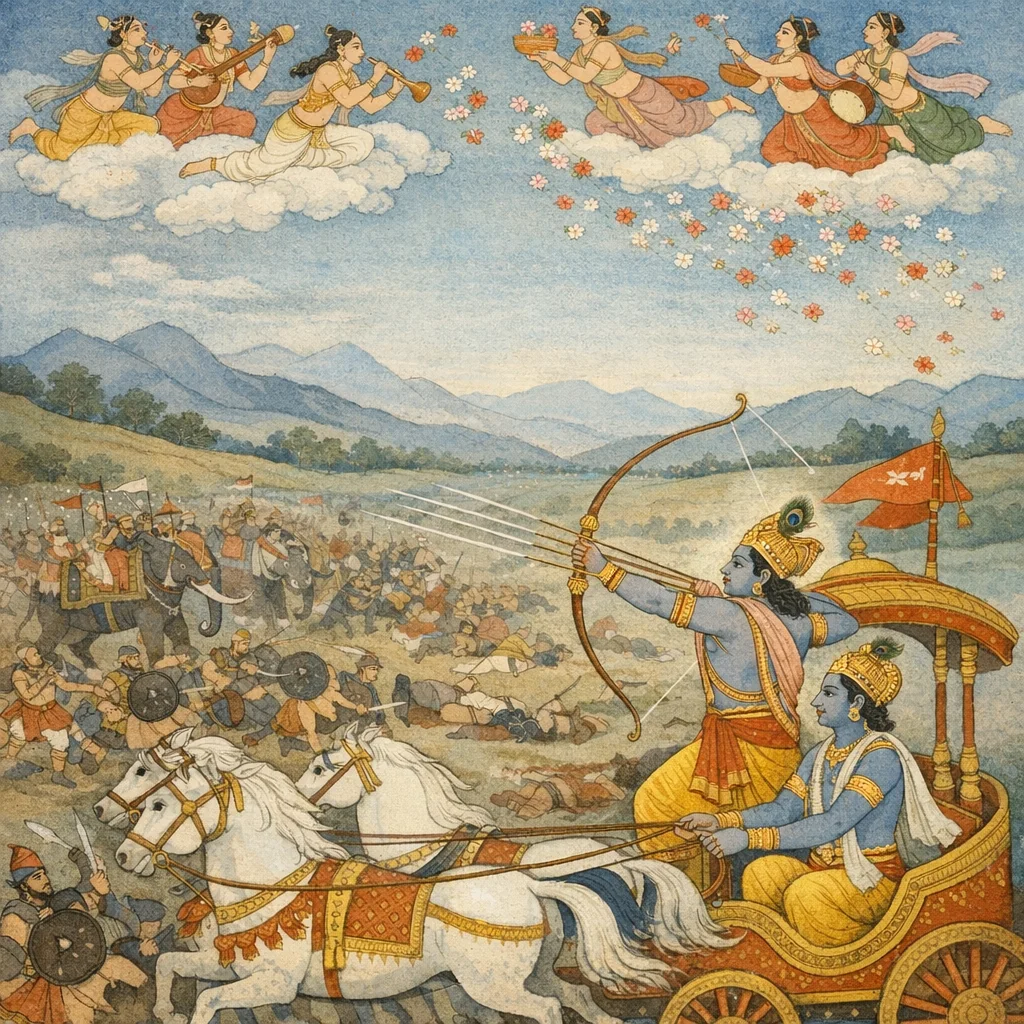
Chapter Arc: तुमुल कुरु-पाण्डव संग्राम के बीच आकाश स्वयं रंगमंच बन उठता है—वाद्य, गीत, स्तुति, नृत्य और हास्य के निनाद से दिशाएँ गूँजती हैं; मनुष्य और खगचर प्राणी एक अद्भुत, विस्मयकारी दृश्य देखते हैं। → युद्ध देवासुर-संग्राम-सा उग्र हो जाता है। धनंजय (अर्जुन) अपने शरवर्ष से कौरव-सेना को क्षीण करने लगता है। दूर से शकों, तुषारों, यवनों, सादिनों और काम्बोज-वीरों सहित अनेक रथी-गजसवार ‘अर्जुन-वध’ की इच्छा से टूट पड़ते हैं, पर अर्जुन उनके श्रेष्ठ अस्त्रों को क्षुरों से काटता और उन्हें भूमि पर गिराता चलता है। → अश्र्वत्थामा का वचन/उकसाहट निर्णायक क्षण बनता है—वह अच्युत (कृष्ण) से कहता है कि कर्ण को ‘गुरुपुत्र’ (अर्जुन) के साथ युद्ध से विरत होने को कहना मर्यादा के विरुद्ध है; आज श्रमयुक्त फाल्गुन को कर्ण बलपूर्वक मार देगा। इसी बीच अर्जुन का प्रचण्ड प्रतिघात चरम पर पहुँचता है और शत्रु-समूह रथ, अश्व, गज सहित कटकर गिरता है। → अर्जुन के पराक्रम पर आकाश से पुष्प-वृष्टि होती है; सुगन्धित पवन बहता है; दर्शक साधुवाद करते हैं और दिव्य बाजे बज उठते हैं—युद्धभूमि में क्षणिक विजय-ध्वनि और देव-समर्थन का संकेत स्थापित होता है। → पर अश्र्वत्थामा की चेतावनी हवा में तनी रहती है—कर्ण बनाम अर्जुन का निर्णायक टकराव अभी शेष है, और ‘आज’ का परिणाम अनिश्चित है।
Shlokas
Verse 1
(दाक्षिणात्य अधिक पाठके १३१ ३ श्लोक मिलाकर कुल १२८ ३ “लोक हैं।) भीस्न्ैम+ज (2) अमन अष्टाशीतितमो<् ध्याय: अर्जुनद्वारा कौरव-सेनाका संहार, अश्रृत्थामाका दुर्योधनसे संधिके लिये प्रस्ताव और दुर्योधनद्वारा उसकी अस्वीकृति संजय उवाच तद् देवनागासुरसिद्धयक्षै- ्गन्धर्वरक्षो5प्सरसां च संघै: । ब्रह्मार्षिराजर्षिसुपर्णजुष् बभौ वियद् विस्मयनीयरूपम्,संजय कहते हैं--महाराज! उस समय आकाशमें देवता, नाग, असुर, सिद्ध, यक्ष, गन्धर्व, राक्षस, अप्सराओंके समुदाय, ब्रह्मर्षि, राजर्षि और गरुड़--ये सब जुटे हुए थे। इनके कारण आकाशका स्वरूप अत्यन्त आश्वर्यमय प्रतीत होता था इस प्रकार श्रीमह्याभारत कर्णपर्वमें अश्वत्थामाका वचनविषयक अठासीवाँ अध्याय पूरा हुआ ॥/ ८८ ॥ (दाक्षिणात्य अधिक पाठके १२ श्लोक मिलाकर कुल ४६ श्लोक हैं।) है ० बछ। कै २ >> एकोननवतितमो<ध्याय: कर्ण और अर्जुनका भयंकर युद्ध और कौरववीरोंका पलायन संजय उवाच तौ शड्खभेरीनिनदे समृद्धे समीयतु: श्वेतहयौ नराग्रयौ । वैकर्तन: सूतपुत्रो<र्जुनश्व दुर्मन्त्रिते तव पुत्रस्य राजन्
Sanjaya said: O King, at that time the sky was filled with gathered hosts of gods, nāgas, asuras, siddhas, yakṣas, gandharvas, rākṣasas, and apsarases, along with brahmarṣis, royal seers, and Garuḍa. With all these beings assembled as witnesses, the very firmament appeared wondrous beyond measure—signaling that the battle’s events were of cosmic and moral consequence, observed by powers that uphold and judge dharma.
Verse 2
नानद्यमानं निनदैर्मनोज्ञै- वददित्रगीतस्तुतिनृत्यहासै: । सर्वेडन्तरिक्ष॑ ददृशुर्मनुष्या: खस्थाश्न तद् विस्स्मपनीयरूपम्
Sañjaya said: With delightful sounds—voices, instrumental music, songs of praise, dancing, and laughter—it resounded. All the people beheld it in the sky; those stationed aloft too saw that wondrous, astonishing form, stirring amazement amid the grim course of war.
Verse 3
नाना प्रकारके मनोरम शब्दों, वाद्यों, गीतों, स्तोत्रों, नृत्यों और हास्य आदिसे आकाश मुखरित हो उठा। उस समय भूतलके मनुष्य और आकाशचारी प्राणी सभी उस आश्वर्यमय अन्तरिक्षकी ओर देख रहे थे ।। ततः प्रह्ृष्टा: कुरुपाण्डुयोधा वादित्रशड्खस्वनसिंहनादै: । विनादयन्तो वसुधां दिशश्व स्वनेन सर्वान् द्विषतो निजघ्नु:,तदनन्तर कौरव और पाण्डवपक्षके समस्त योद्धा बड़े हर्षमें भरकर वाद्य, शंखध्वनि, सिंहनाद और कोलाहलसे रणभूमि एवं सम्पूर्ण दिशाओंको प्रतिध्वनित करते हुए समस्त शत्रुओंका संहार करने लगे
Sañjaya said: The sky rang out with many kinds of delightful sounds—voices, instruments, songs, hymns, dances, and laughter. At that time, people on the earth and beings moving through the air all gazed toward that wondrous expanse. Then the warriors of the Kurus and the Pāṇḍavas, filled with exhilaration, made the earth and all the directions resound with the blare of instruments, the roar of conches, and lion-like battle-cries; and they set about striking down all who stood against them.
Verse 4
नराश्वमातड़रथै: समाकुलं शरासिशव्त्यृष्टिनिपातदुः:सहम् । अभीरुजुष्ट हतदेहसंकुलं रणाजिरं लोहितमाबभौ तदा,उस समय हाथी, अश्व, रथ और पैदल सैनिकोंसे भरा हुआ बाण, खड़्ग, शक्ति और ऋष्टि आदि अस्त्र-शस्त्रोंके प्रहारसे दुःसह प्रतीत होनेवाला एवं मृतकोंके शरीरोंसे व्याप्त हुआ वह वीरसेवित समरांगण खूनसे लाल दिखायी देने लगा
Sañjaya said: Then the battlefield—choked with foot-soldiers, horses, elephants, and chariots—became almost unbearable under the crashing blows of arrows and weapons such as swords, spears, and lances. Crowded with the bodies of the slain and frequented by the fearless, that arena of war appeared red with blood.
Verse 5
बभूव युद्ध कुरुपाण्डवानां यथा सुराणामसुरै: सहाभवत् | तथा प्रवृत्ते तुमुले सुदारुणे धनंजयस्याधिरयथेश्ष॒ सायकै:
Sañjaya said: The battle between the Kurus and the Pāṇḍavas became like the ancient war of the gods with the asuras. As that tumultuous and exceedingly dreadful combat surged on, Dhanañjaya (Arjuna) and Adhiratha (Karna) assailed one another with volleys of arrows, each striving to prevail in a contest where valor and resolve were tested amid the ruinous demands of war.
Verse 6
ततस्त्वदीयाश्ष परे च सायकै: कृते<न्धकारे ददृशुर्न किंचन
Sañjaya said: Then, when darkness was produced by the volleys of arrows, both your warriors and the opposing host could see nothing at all. In the moral haze of war, even vision and discernment are overwhelmed by the very weapons men choose to unleash.
Verse 7
ततोअस्त्रमस्त्रेण परस्परं तौ विधूय वाताविव पूर्वपश्चिमौ
Then the two warriors, countering weapon with weapon, struck and repelled each other in turn—like two opposing winds blowing from east and west—each meeting the other with equal force in the relentless ethics of battlefield reciprocity.
Verse 8
न चाभिसर्तव्यमिति प्रचोदिता: परे त्वदीयाश्व॒ तथावतस्थिरे
Sañjaya said: Though urged with the command, “Do not advance,” the opposing warriors—and your own as well—remained stationed just as they were, holding their positions in disciplined restraint amid the press of war.
Verse 9
महारथौ तौ परिवार्य सर्वतः सुरासुरा: शम्बरवासवाविव । “किसीको युद्धसे मुँह मोड़कर भागना नहीं चाहिये” इस नियमसे प्रेरित होकर आपके और शत्रुपक्षके सैनिक उन दोनों महारथियोंको चारों ओरसे घेरकर उसी प्रकार युद्धमें डटे रहे, जैसे पूर्वकालमें देवता और असुर, इन्द्र और शम्बरासुरको घेरकर खड़े हुए थे ।। मृदड्रभेरीपणवानकस्वनै: ससिंहनादैर्नदतुर्नरोत्तमौ
Sañjaya said: Those two great chariot-warriors were surrounded on every side, as the gods and the asuras once ringed about Vāsava (Indra) and Śambara. Driven by the rule that one should not turn one’s face away from battle and flee, the soldiers of both your side and the enemy’s side stood firm in the fight, hemming in those two heroes. Amid the blare of mṛdaṅgas, bherīs, paṇavas and ānakas, and with lion-like roars, the two foremost of men thundered on.
Verse 10
महाभनुर्मण्डलमध्यगावुभौ सुवर्चसौ बाणसहस्रदीधिती
Sañjaya said: Both of them, standing in the very midst of the blazing circle like a great sun, shone with splendid radiance, their brilliance flashing forth as if from thousands of arrows.
Verse 12
ततो महास्त्राणि महाभनुर्धरी विमुञ्चमानाविषुभ्रिर्भयानकै:
Sañjaya said: Then the mighty bowman began releasing great celestial weapons, sending forth dreadful arrows.
Verse 13
दिधक्षमाणौ सचराचरं जगद् युगान्तसूर्याविव दुःसहौ रणे | रणभूमिमें वे दोनों वीर चराचर जगतको दग्ध करनेकी इच्छासे प्रकट हुए प्रलयकालके दो सूर्योके समान शत्रुओंके लिये दुःसह हो रहे थे। कर्ण और अर्जुनरूप वे दोनों सूर्य अपने विशाल धनुषरूपी मण्डलके मध्यमें प्रकाशित होते थे। सहस्नों बाण ही उनकी किरण थे और वे दोनों ही महान् तेजसे सम्पन्न दिखायी देते थे ।। १० ई ।। उभावजेयावहितान्तकावु भा- वुभौ जिघांसू कृतिनौ परस्परम्,ततो विसस्ः पुनरर्दिता नरा नरोत्तमाभ्यां कुरुपाण्डवाश्रया:
Sanjaya said: Burning to consume the whole world of moving and unmoving beings, the two were unbearable in battle—like a pair of suns at the end of an age. On the battlefield those two heroes, Karna and Arjuna, appeared as though desiring to scorch all creation; for their enemies they were as intolerable as the two suns of cosmic dissolution. Shining within the vast circle of their bows, those two ‘suns’ blazed forth; their thousands of arrows were their rays, and both seemed endowed with tremendous splendor. Both were unconquerable, both destroyers of foes; both, capable and intent on slaying one another. Then the warriors—aligned with the Kurus and the Pandavas—were again struck down and tormented by those two best of men.
Verse 14
सनागप्त्त्यश्वरथा दिशो दश तथा यथा सिंहहता वनौकस: । जैसे सिंहके द्वारा घायल किये हुए जंगली पशु सब ओर भागने लगते हैं, उसी प्रकार उन नरश्रेष्ठ वीरोंके द्वारा बाणोंसे पीड़ित किये हुए कौरव तथा पाण्डव-सैनिक हाथी, घोड़े, रथ और पैदलोंसहित दसों दिशाओंमें भाग खड़े हुए ।। १३ $ ।। ततस्तु दुर्योधनभोजसौबला: कृपेण शारद्वतसूनुना सह
Sañjaya said: Just as wild creatures, struck down by a lion, scatter and flee in every direction, so too the Kaurava and Pāṇḍava troops—wounded by the arrows of those foremost heroes—broke ranks and ran headlong toward all ten quarters, along with their elephants, horses, chariots, and foot-soldiers.
Verse 15
महारथा: पठ्च धनंजयाच्युतौ शरै: शरीरार्तिकरैरताडयन् । महाराज! तदनन्तर दुर्योधन, कृतवर्मा, शकुनि, शरद्वानके पुत्र कृपाचार्य और कर्ण--ये पाँच महारथी शरीरको पीड़ा देनेवाले बाणोंद्वारा श्रीकृष्ण और अर्जुनको घायल करने लगे ।। धनूंषि तेषामिषुधीन् ध्वजान् हयान् रथांश्व सूतांक्ष धनंजय: शरै:
Sañjaya said: O King, thereafter five great chariot-warriors assailed Dhanañjaya (Arjuna) and Acyuta (Kṛṣṇa) with arrows that inflicted bodily torment—Duryodhana, Kṛtavarmā, Śakuni, Kṛpa, son of Śaradvat, and Karṇa. In response, Dhanañjaya struck with his own arrows at their bows, quivers, standards, horses, chariots, and even their charioteers, turning the attack back by disabling the instruments of war rather than merely trading wounds.
Verse 16
अथाभ्यधावंस्त्वरिता: शतं रथा: शतं गजाश्चार्जुममाततायिन:
Sañjaya said: Then, in great haste, a hundred chariots and a hundred elephants charged forward against Arjuna, assailing him and branding him an “ātatāyin”—an aggressor.
Verse 17
वरायुधान् पाणिगतै: शरै:ः सह क्षुरैन्यकृन्तत् प्रपतन् शिरांसि च
Sañjaya said: With arrows shot from his own hand—together with razor-edged shafts—he cut down the heads of warriors bearing excellent weapons, so that they fell to the ground.
Verse 18
ततोडन््तरिक्षे सुरतूर्यनि:स्वना: ससाधुवादा हृषितै: समीरिता:
Then, in the mid-sky, the sounds of the gods’ trumpets resounded, accompanied by cries of approval—raised by beings filled with joy.
Verse 19
तदद्धुतं देवमनुष्यसाक्षिकं समीक्ष्य भूतानि विसिस्मियुस्तदा
Sañjaya said: Beholding that wondrous event—witnessed alike by gods and men—all beings looked on and, at that moment, were struck with astonishment.
Verse 20
तवात्मज: सूतसुतश्न न व्यथां न विस्मयं जम्मतुरेकनिश्चयौ । देवताओं और मनुष्योंके साक्षित्वमें होनेवाले उस युद्धको देखकर समस्त प्राणी उस समय आश्चर्यसे चकित हो उठे; परंतु आपका पुत्र दिन और सूतपुत्र कर्ण--ये दोनों एक निश्चयपर पहुँच चुके थे; अतः इनके मनमें न तो व्यथा हुई और न ये विस्मयको ही प्राप्त हुए ।। अथाब्रवीद् द्रोणसुतस्तवात्मजं करं करेण प्रतिपीड्य सान्त्वयन्,तदनन्तर द्रोणकुमार अश्वत्थामाने दुर्योधनका हाथ अपने हाथसे दबाकर उसे सान्त्वना देते हुए कहा--'दुर्योधन! अब प्रसन्न हो जाओ। पाण्डवोंसे संधि कर लो। विरोधसे कोई लाभ नहीं है। आपसके इस झगड़ेको धिक्कार है! तुम्हारे गुरुदेव अस्त्रविद्याके महान् पण्डित थे। साक्षात् ब्रह्माजीके समान थे तो भी इस युद्धमें मारे गये। यही दशा भीष्म आदि महारथियोंकी भी हुई है
Sañjaya said: Your son and the charioteer’s son (Karna), having reached a single, fixed resolve, felt neither anguish nor amazement. When all beings beheld that battle—witnessed, as it were, before gods and men—they were struck with wonder; yet Duryodhana and Karna remained unmoved, for their minds had settled on one determination. Then Drona’s son (Ashvatthama), pressing your son’s hand in his own and seeking to console him, said: “Duryodhana, be calm now. Make peace with the Pandavas. There is no gain in hostility. Shame on this quarrel! Your revered teachers were great masters of weapon-lore, like Brahma himself—yet they were slain in this war. The same fate has befallen even mighty chariot-warriors such as Bhishma.”
Verse 21
प्रसीद दुर्योधन शाम्य पाण्डवै- रल॑ विरोधेन धिगस्तु विग्रहम् । हतो गुरुब्रह्मसमो महास्त्रवित् तथैव भीष्मप्रमुखा महारथा:,तदनन्तर द्रोणकुमार अश्वत्थामाने दुर्योधनका हाथ अपने हाथसे दबाकर उसे सान्त्वना देते हुए कहा--'दुर्योधन! अब प्रसन्न हो जाओ। पाण्डवोंसे संधि कर लो। विरोधसे कोई लाभ नहीं है। आपसके इस झगड़ेको धिक्कार है! तुम्हारे गुरुदेव अस्त्रविद्याके महान् पण्डित थे। साक्षात् ब्रह्माजीके समान थे तो भी इस युद्धमें मारे गये। यही दशा भीष्म आदि महारथियोंकी भी हुई है
Sañjaya said: “Be calm, Duryodhana; make peace with the Pāṇḍavas. Enough of hostility—this quarrel is to be condemned. Your teacher, a master of the great weapons and equal to Brahmā himself, has been slain in this war; and the same fate has met the mighty chariot-warriors led by Bhīṣma.”
Verse 22
अहं त्ववध्यो मम चापि मातुलः प्रशाधि राज्यं सह पाण्डवैश्विरम् धनंजय: शाम्यति वारितो मया जनार्दनो नैव विरोधमिच्छति,“मैं और मेरे मामा कृपाचार्य तो अवध्य हैं (इसीलिये अबतक बचे हुए हैं)| अतः अब तुम पाण्डवोंके साथ मिलकर चिरकालतक राज्यशासन करो। अर्जुन मेरे मना करनेपर शान्त हो जायँगे। श्रीकृष्ण भी तुमलोगोंमें विरोध नहीं चाहते हैं
Sañjaya said: “I am not to be slain, and my maternal uncle too is not to be slain; that is why we have survived until now. Therefore, make peace and rule the kingdom for a long time together with the Pāṇḍavas. Dhanañjaya (Arjuna) will be pacified when restrained by me, and Janārdana (Kṛṣṇa) likewise does not desire hostility among you.”
Verse 23
युधिष्ठिरो भूतहिते रत: सदा वृकोदरस्तद्वशगस्तथा यमौ । त्वया तु पार्थश्न॒ कृते च संविदे प्रजा: शिवं प्राप्तुयुरिच्छया तव,'युधिष्ठिर तो सभी प्राणियोंके हितमें ही लगे रहते हैं। अतः वे भी मेरी बात मान लेंगे। बाकी रहे भीमसेन और नकुल-सहदेव, सो ये भी धर्मराजके अधीन हैं; (अत: उनकी इच्छाके विरुद्ध कुछ नहीं करेंगे) इस प्रकार पाण्डवोंके साथ तुम्हारी संधि हो जानेपर सारी प्रजाका कल्याण होगा। फिर तुम्हारी इच्छासे सगे-सम्बन्धी भाई-बन्धु अपने-अपने नगरको लौट जायेँ और समस्त सैनिकोंको युद्धसे छुट्टी मिल जाय। नरेश्वर! यदि मेरी बात नहीं सुनोगे तो निश्चय ही युद्धमें शत्रुओंके हाथसे मारे जाओगे और उस समय तुम्हें बड़ा पश्चात्ताप होगा
Sañjaya said: “Yudhiṣṭhira is ever devoted to the welfare of all beings; therefore he will accept my counsel. As for Bhīma and the twins, Nakula and Sahadeva, they too are under Dharmarāja’s guidance and will not act against his will. If you conclude a settlement with the Pāṇḍavas, the whole realm will attain well-being by your own choice—kinsmen will return to their cities, and the armies will be released from the burden of war.”
Verse 24
व्रजन्तु शेषा: स्वपुराणि बान्धवा निवृत्तयुद्धाश्व भवन्तु सैनिका: । न चेद् वच: श्रोष्यसि मे नराधिप ध्रुवं प्रतप्तासि हतो5रिभियुधि,'युधिष्ठिर तो सभी प्राणियोंके हितमें ही लगे रहते हैं। अतः वे भी मेरी बात मान लेंगे। बाकी रहे भीमसेन और नकुल-सहदेव, सो ये भी धर्मराजके अधीन हैं; (अत: उनकी इच्छाके विरुद्ध कुछ नहीं करेंगे) इस प्रकार पाण्डवोंके साथ तुम्हारी संधि हो जानेपर सारी प्रजाका कल्याण होगा। फिर तुम्हारी इच्छासे सगे-सम्बन्धी भाई-बन्धु अपने-अपने नगरको लौट जायेँ और समस्त सैनिकोंको युद्धसे छुट्टी मिल जाय। नरेश्वर! यदि मेरी बात नहीं सुनोगे तो निश्चय ही युद्धमें शत्रुओंके हाथसे मारे जाओगे और उस समय तुम्हें बड़ा पश्चात्ताप होगा
“Let the remaining kinsmen return to their own cities, and let the soldiers be released from battle. But if you will not heed my words, O king, then surely you will be slain by your enemies in war—and afterwards you will burn with remorse.”
Verse 25
(वृद्धं पितरमालोक्य गान्धारी च यशस्विनीम् | कृपालुर्धर्मराजो हि याचित: शममेष्यति ।। “बूढ़े पिता धृतराष्ट्र और यशस्विनी माता गान्धारीकी ओर देखकर दयालु धर्मराज युधिष्ठिर मेरे अनुरोध करनेपर भी संधि कर लेंगे। यथोचितं च वै राज्यमनुज्ञास्यति ते प्रभु: । विपश्चित् सुमतिर्धीर: सर्वशास्त्रार्थतत्त्ववित् ।। “वे सामर्थ्यशाली, विद्वान, उत्तम बुद्धिसे युक्त, धैर्यवान् तथा सम्पूर्ण शास्त्रोंके तत्त्वको जाननेवाले हैं; अतः तुम्हारे लिये राज्यका जितना भाग उचित है, उसपर शासन करनेके लिये वे तुम्हें स्वयं ही आज्ञा दे देंगे। वैरं नेष्यति धर्मात्मा स्वजने नास्त्यतिक्रम: । न विग्रहमति: कृष्ण: स्वजने प्रतिनन्दति ।। “धर्मात्मा युधिष्ठिर वैर दूर कर देंगे; क्योंकि आत्मीयजनसे कोई भूल हो जाय तो उसे अक्षम्य अपराध नहीं माना जाता। श्रीकृष्ण भी यह नहीं चाहते कि आपसमें कलह हो, वे स्वजनोंपर सदा संतुष्ट रहते हैं। भीमसेनार्जुनौ चोभौ माद्रीपुत्रो च पाण्डवौ | वासुदेवमते चैव पाण्डवस्य च धीमत: ।। स्थास्यन्ति पुरुषव्याप्रास्तयोर्वचनगौरवात् । 'भीमसेन, अर्जुन और दोनों भाई माद्रीकुमार पाण्डुपुत्र नकुल-सहदेव--ये सब लोग भगवान् श्रीकृष्ण तथा बुद्धिमान् युधिष्ठिरकी रायसे चलते हैं; अतः ये पुरुषसिंह वीर उन दोनोंके आदेशका गौरव रखते हुए युद्धसे निवृत्त हो जायूँगे। रक्ष दुर्योधनात्मानमात्मा सर्वस्य भाजनम् ।। जीवने यत्नमातिष्ठ जीवन् भद्राणि पश्यति । “दुर्योधन! तुम स्वयं ही अपनी रक्षा करो। आत्मा ही सब सुखोंका भाजन है। तुम जीवन-रक्षाके लिये प्रयत्न करो। जीवित रहनेवाला पुरुष ही कल्याणका दर्शन करता है। राज्यं श्रीक्षैव भद्रं ते जीवमाने तु कल्पते ।। मृतस्य खलु कौरव्य नैव राज्यं कुतः सुखम् । “तुम्हारा कल्याण हो; तुम जीवित रहोगे, तभी तुम्हें राज्य और लक्ष्मीकी प्राप्ति हो सकती है। कुरुनन्दन! मरे हुएको राज्य नहीं मिलता, फिर सुख कैसे प्राप्त हो सकता है?। लोकवृत्तमिदं वृत्तं प्रवृत्तं पश्य भारत ।। शाम्य त्वं पाण्डवै: सार्थ शेषं कुरुकुलस्य च । “भारत! लोकमें घटित होनेवाले इस प्रचलित व्यवहारकी ओर दृष्टिपात करो; पाण्डवोंके साथ संधि कर लो और कौरवकुलको शेष रहने दो। मा भूत् स काल: कौरव्य यदाहमहितं वच: ।। ब्रूयां काम॑ं महाबाहो मावमंस्था वचो मम । “कुरुनन्दन! ऐसा समय कभी न आवे जब कि मैं इच्छानुसार तुमसे कोई अहितकर बात कहूँ; अतः महाबाहो! तुम मेरी बातका अनादर न करो। धर्मिष्ठमिदमत्यर्थ राज्ञश्चैव कुलस्य च ।। एतद्धि परम॑ श्रेय: कुरुवंशस्य वृद्धये । “मेरा यह कथन धर्मके अनुकूल तथा राजा और राजकुलके लिये अत्यन्त हितकर है; यह कौरववंशकी वृद्धिके लिये परम कल्याणकारी है। प्रजाहितं च गान्धारे कुलस्य च सुखावहम् ।। पथ्यमायतिसंयुक्त कर्णोउप्यर्जुनमाहवे । न जेष्यति नरव्याप्रमिति मे निश्चिता मति: ।। रोचतां ते नरश्रेष्ठ ममैतद् वचन शुभम् । अतो<न््यथा हि राजेन्द्र विनाश: सुमहान् भवेत् ।।) “गान्धारीनन्दन! मेरा यह वचन प्रजाजनोंके लिये हितकर, इस कुलके लिये सुखदायक, लाभकारी तथा भविष्यमें भी मंगलकारक है। नरश्रेष्ठ! मेरी यह निश्चित धारणा है कि कर्ण नरव्याप्र अर्जुनको कदापि जीत न सकेगा; अतः मेरा यह शुभ वचन तुम्हें पसंद आना चाहिये। राजेन्द्र! यदि ऐसा नहीं हुआ तो बड़ा भारी विनाश होगा। इदं च दृष्टं जगता सह त्वया कृतं यदेकेन किरीटमालिना । यथा न कुर्याद् बलभिन्न चान्तको न चापि धाता भगवान् न यक्षराट्
Sanjaya said: “Looking at your aged father and the illustrious Gandhari, the compassionate King Yudhishthira—if entreated—will surely come to peace. That capable lord, discerning, wise-minded, steadfast, and a knower of the true purport of all the śāstras, will himself authorize for you a share of the kingdom that is fitting. That righteous-souled one will not carry enmity against his own kin; among one’s own people, a lapse is not treated as an unforgivable crime. Krishna too does not approve of quarrel among relatives; he remains well-disposed toward his own. Bhimasena and Arjuna, and the two Pandava sons of Madri, will stand by the counsel of Vasudeva and the wise Yudhishthira; honoring the weight of those two men’s words, those lion-like heroes will withdraw from war. Therefore, Duryodhana, protect yourself. The self is the vessel of all good; strive to preserve your life, for only the living behold auspicious outcomes. If you live, welfare, sovereignty, and prosperity are possible; for the dead, O Kaurava, there is no kingdom—how then any happiness? Observe this established way of the world, O Bharata: make peace with the Pandavas and let the Kuru line remain. Let there never come a time, O Kaurava, when I might speak to you, as I please, words that are harmful; O mighty-armed one, do not slight my counsel. This advice is supremely in accord with dharma and greatly beneficial for the king and the dynasty; it is the highest good for the growth of the Kuru house—beneficial to the people, bringing happiness to the family, wholesome and bearing future good. I am firmly convinced that Karna will not defeat the valiant Arjuna in battle. Let this auspicious counsel please you, O best of men; otherwise, O king, a very great destruction will occur. And this too has been witnessed by the world along with you: what has been accomplished by the diadem-wearing one (Arjuna) is such as neither Death, the breaker of strength, nor the blessed Creator, nor the lord of the Yakshas could accomplish.”
Verse 26
“किरीटधारी अर्जुनने अकेले जो पराक्रम किया है, इसे सारे संसारके साथ तुमने प्रत्यक्ष देख लिया है। ऐसा पराक्रम न तो इन्द्र कर सकते हैं और न यमराज। न धाता कर सकते हैं और न भगवान् यक्षराज कुबेर ।। अतोड5पि भूयान् स्वगुणैर्धनंजयो न चातिवर्तिष्यति मे वचो5खिलम् । तवानुयात्रां च सदा करिष्यति प्रसीद राजेन्द्र शमं त्वमाप्लुहि,“यद्यपि अर्जुन अपने गुणोंद्वारा इससे भी बहुत बढ़े-चढ़े हैं, तथापि मुझे विश्वास है कि मेरी कही हुई इन सारी बातोंको कदापि नहीं टालेंगे। यही नहीं, वे सदा तुम्हारा अनुसरण करेंगे; इसलिये राजेन्द्र! तुम प्रसन्न होओ और संधि कर लो
Sañjaya said: You have seen with your own eyes—together with all the world—the prowess that Arjuna, the diadem-wearer, has displayed single-handedly. Such might is beyond even Indra and Yama; neither the Creator (Dhātā) nor Kubera, lord of the Yakṣas, can match it. And though Dhanañjaya is greater still by his innate virtues, I am confident he will not disregard any of what I have said. Indeed, he will continue to follow your lead. Therefore, O king of kings, be appeased—enter into peace and make a settlement.
Verse 27
ममापि मान: परम: सदा त्वयि ब्रवीम्यतस्त्वां परमाच्च सौहदात् । निवारयिष्यामि च कर्णमप्यहं यदा भवान् सप्रणयो भविष्यति,“तुम्हारे प्रति मेरे मनमें भी सदा बड़े आदरका भाव रहा है। हम दोनोंकी जो घनिष्ठ मित्रता है, उसीके कारण मैं तुमसे यह प्रस्ताव करता हूँ। यदि तुम प्रेमपूर्वक राजी हो जाओगे तो मैं कर्णको भी युद्धसे रोक दूँगा
Sañjaya said: “I too have always held you in the highest esteem. Therefore, out of our deepest friendship, I speak this to you as a proposal: if you will consent with goodwill and affection, then I will restrain even Karṇa from the war.”
Verse 28
वदन्ति मित्र॑ं सहजं विचक्षणा- स्तथैव साम्ना च धनेन चार्जितम् | प्रतापतश्नोपनतं चतुर्विधिं तदस्ति सर्व तव पाण्डवेषु,“विद्वान् पुरुष चार प्रकारके मित्र बतलाते हैं। एक सहज मित्र होते हैं (जिनके साथ स्वाभाविक मैत्री होती हैं)। दूसरे हैं संधि करके बनाये हुए मित्र। तीसरे वे हैं जो धन देकर अपनाये गये हैं। जो किसीके प्रबल प्रतापसे प्रभावित हो स्वतः शरणमें आ जाते हैं, वे चौथे प्रकारके मित्र हैं। पाण्डवोंके साथ तुम्हारी सभी प्रकारकी मित्रता सम्भव है
Sañjaya said: “The discerning speak of friendship as fourfold: the natural friend born of innate affinity; the friend won through conciliation and agreement; the friend secured by gifts of wealth; and the friend who, overawed by another’s power and prowess, comes of his own accord to seek shelter. With the Pāṇḍavas, all these forms of alliance are available to you.”
Verse 29
निसर्गतस्ते तव वीर बान्धवा: पुनश्न साम्ना समवाप्ठ॒हि प्रभो । त्वयि प्रसन्ने यदि मित्रतां गते हितं कृतं स्थाज्जगतस्त्वयातुलम्,“वीर! एक तो वे तुम्हारे जन्मजात भाई हैं; अतः सहज मित्र हैं। प्रभो! फिर तुम संधि करके उन्हें अपना मित्र बना लो। यदि तुम प्रसन्नतापूर्वक पाण्डवोंसे मित्रता स्वीकार कर लो तो तुम्हारे द्वारा संसारका अनुपम हित हो सकता है”
Sañjaya said: “O hero, they are your kinsmen by birth—therefore natural friends. O lord, win them back again through conciliation and make them your allies. If you, being gracious, accept friendship with the Pāṇḍavas, an incomparable good for the whole world could be accomplished through you.”
Verse 30
स एवमुक्तः सुहृदा वचो हित विचिन्त्य नि:श्वस्य च दुर्मनाब्रवीत् । यथा भवानाह सखे तथैव त- न्ममापि विज्ञापयतो वच: शूणु,सुहृद् अश्वत्थामाने जब इस प्रकार हितकी बात कही, तब दुर्योधन उसपर विचार करके लंबी साँस खींचकर मन-ही-मन दुःखी हो इस प्रकार बोला--'सखे! तुम जैसा कहते हो, वह सब ठीक है; परंतु इस विषयमें कुछ मैं भी निवेदन कर रहा हूँ, अतः मेरी बात भी सुन लो
Sañjaya said: Thus addressed by his well-wishing friend with words meant for his good, Duryodhana reflected, heaved a deep sigh, and—his mind inwardly distressed—spoke: “Friend, what you say is indeed right; yet on this matter I too have something to submit. Therefore, listen also to my words, O well-wisher.”
Verse 31
निहत्य दुःशासनमुक्तवान् वच: प्रसह शार्टूलवदेष दुर्मति: । वृकोदरस्तद्धृदये मम स्थितं न तत् परोक्षं भवतः कुत: शम:,“इस दुर्बुद्धि भीमसेनने सिंहके समान हठपूर्वक दुःशासनका वध करके जो बात कही थी, वह तुमसे छिपी नहीं है। वह इस समय भी मेरे हृदयमें स्थित होकर पीड़ा दे रही है। ऐसी दशामें कैसे संधि हो सकती है?
Sañjaya said: “After slaying Duḥśāsana, this ill-minded Bhīma—like a tiger, acting with sheer force—uttered certain words. That is not hidden from you. Even now it remains lodged in my heart and torments me. In such a state, how could there be any peace or reconciliation?”
Verse 32
न चापि कर्ण प्रसहेद् रणे<र्जुनो महागिरिं मेरुमिवोग्रमारुत: । नचाश्वसिष्यन्ति पृथात्मजा मयेि प्रसह वैरं बहुशो विचिन्त्य,“इसके सिवा भयंकर वायु जैसे महापर्वत मेरुका सामना नहीं कर सकती, उसी प्रकार अर्जुन इस रणभूमिमें कर्णका वेग नहीं सह सकते। हमने हठपूर्वक बारंबार जो वैर किया है, उसे सोचकर कुन्तीके पुत्र मुझपर विश्वास भी नहीं करेंगे
Sañjaya said: “Even Arjuna would not be able to withstand Karṇa in battle—just as a fierce gale cannot confront the mighty mountain Meru. And the sons of Pṛthā (Kuntī), reflecting again and again on the enmity I have stubbornly forced upon them, will not place their trust in me.”
Verse 33
न चापि कर्ण गुरुपुत्र संयुगा- दुपारमेत्यर्हसि वक्तुमच्युत । श्रमेण युक्तो महताद्य फाल्गुन- स्तमेष कर्ण: प्रसभं हनिष्यति,“अपनी मर्यादा न छोड़नेवाले गुरुपुत्र! तुम्हें कर्णसे युद्ध बंद करनेके लिये नहीं कहना चाहिये; क्योंकि इस समय अर्जुन महान् परिश्रमसे थक गये हैं; अतः अब कर्ण उन्हें बलपूर्वक मार डालेगा”
Sañjaya said: “O Acyuta, you should not tell the son of the Guru to withdraw from battle with Karṇa. For at this moment Phālguna (Arjuna) is worn down by great exertion; therefore Karṇa will now strike him down by force.”
Verse 34
तमेवमुक्त्वाप्यनुनीय चासकृत् तवात्मज: स्वाननुशास्ति सैनिकान् | विनिध्नताभिद्रवताहितान् मम सबाणहस्ता: किमु जोषमासत,अश्वत्थामासे ऐसा कहकर बारंबार अनुनय-विनयके द्वारा उसे प्रसन्न करके आपके पुत्रने अपने सैनिकोंको आदेश देते हुए कहा--“अरे! तुमलोग हाथोंमें बाण लिये चुपचाप बैठे क्यों हो? मेरे शत्रुओंपर टूट पड़ो और उन्हें मार डालो”
Sañjaya said: Even after speaking to him thus, and repeatedly conciliating and pleasing him with entreaty, your son then issued orders to his own troops: “Why are you sitting idle with arrows in your hands? Rush upon my enemies and strike them down!”
Verse 56
दिशश्चव सैन्यं च शितैरजिह्ागै: परस्पर प्रावृणुतां सुदंशितौ । जैसे पूर्वकालमें देवताओंका असुरोंके साथ संग्राम हुआ था, उसी प्रकार पाण्डवोंका कौरवोंके साथ युद्ध होने लगा। अर्जुन और कर्णके बाणोंसे वह अत्यन्त दारुण तुमुल युद्ध आरम्भ होनेपर वे दोनों कवचधारी वीर अपने पैने बाणोंसे परस्पर सम्पूर्ण दिशाओं तथा सेनाको आच्छादित करने लगे
Sañjaya said: With razor-sharp, serpent-like arrows, the two well-armoured, keen-fanged heroes covered—each against the other—the directions and the armies. As in ancient times the gods once clashed with the asuras, so now the Pandavas and the Kauravas entered a dreadful, tumultuous battle; and when the fierce combat began under the volleys of Arjuna and Karna, their shafts seemed to veil the whole field, turning war into an all-encompassing storm of weapons.
Verse 63
भयातुरा एकरथौ समाश्रयं- स्ततो5भवत् त्वद्धुतमेव सर्वतः | तत्पश्चात् आपके और शत्रुपक्षेके सैनिक जब बाणोंसे फैले हुए अन्धकारमें कुछ भी देख न सके, तब भयसे आतुर हो उन दोनों प्रधान रथियोंकी शरणमें आ गये। फिर तो चारों ओर अद्भुत युद्ध होने लगा
Sañjaya said: Stricken with fear, the warriors took refuge with the two foremost chariot-fighters. Then, on every side, a truly astonishing battle arose. After that, when the soldiers of both your side and the enemy side could see nothing at all in the darkness spread by volleys of arrows, they—overwhelmed by fear—crowded to the protection of those two leading champions; and from that point the fighting became wondrous and intense in all directions.
Verse 73
घनान्धकारे वितते तमोनुदौ यथोदितौ तद्वदतीव रेजतु: । तदनन्तर जैसे पूर्व और पश्चिमकी हवाएँ एक-दूसरीको दबाती हैं, उसी प्रकार वे दोनों वीर एक-दूसरेके अस्त्रोंको अपने अस्त्रोंद्वारा नष्ट करके फैले हुए प्रगाढ़ अन्धकारमें उदित हुए सूर्य और चन्द्रमाके समान अत्यन्त प्रकाशित होने लगे
Sañjaya said: When dense darkness had spread everywhere, those two—dispellers of gloom—shone forth brilliantly, like the sun and the moon rising in the sky. Then, as opposing winds from east and west press against one another, so did the two heroes counter each other: each destroyed the other’s missiles with his own weapons, and amid that thick obscurity they blazed with renewed splendor—an image of martial excellence where skill answers skill.
Verse 88
इति श्रीमहाभारते कर्णपर्वणि अश्वृत्थामवाक्येडष्टाशीतितमो5 ध्याय:
Thus ends the eighty-eighth chapter of the Karṇa Parva of the Śrī Mahābhārata, in the section concerning the words of Aśvatthāmā, as narrated by Sañjaya.
Verse 96
शशाड्कसूर्याविव मेघनि:स्वनै- विरिजतुस्तौ पुरषर्षभौ तदा | दोनों दलोंमें होती हुई मृदंग, भेरी, पणव और आनक आदि वाद्योंकी ध्वनिके साथ वे दोनों नरश्रेष्ठ जोर-जोरसे सिंहनाद कर रहे थे, उस समय वे दोनों पुरुषरत्न मेघोंकी गम्भीर गर्जनाके साथ उदित हुए चन्द्रमा और सूर्यके समान प्रकाशित हो रहे थे
Sañjaya said: Amid the deep, cloud-like roar of war-drums—mṛdaṅgas, bherīs, paṇavas, and ānakas—those two foremost of men raised mighty lion-roars. In that moment they shone forth like the moon and the sun rising together, radiant and awe-inspiring on the battlefield.
Verse 116
महाहवे वीतभयौ समीयतु- महेन्द्रजम्भाविव कर्णपाण्डवौ । दोनों ही अजेय और शत्रुओंका विनाश करनेवाले थे। दोनों ही अस्त्र-शस्त्रोंके विद्वान् और एक-दूसरेके वधकी इच्छा रखनेवाले थे। कर्ण और अर्जुन दोनों वीर इन्द्र और जम्भासुरके समान उस महासमरमें निर्भय विचरते थे
In that great battle, Karṇa and the Pāṇḍava (Arjuna) met without fear, like Indra confronting Jambhāsura. Both were invincible, destroyers of foes, masters of weapons and astras, and each desired the other’s death.
Verse 123
नराश्वनागानमितान् निजषघ्नतुः परस्परं चापि महारथौ नृप । नरेश्वर! वे महाधनुर्धर और महारथी वीर महान् अस्त्रोंका प्रयोग करते हुए अपने भयानक बाणोंद्वारा असंख्य मनुष्यों, घोड़ों और हाथियोंका संहार करते और आपसमें भी एक-दूसरेको चोट पहुँचाते थे
Sañjaya said: O King, those two great chariot-warriors, mighty archers, unleashed their formidable missiles, and with dreadful arrows slaughtered countless men, horses, and elephants; and in that same fury of battle they struck each other again and again.
Verse 153
सम॑ प्रमथ्याशु परान् समन्ततः शरोत्तमैर्द्घादशभिश्न सूतजम् | यह देख अर्जुनने उनके धनुष, तरकस, ध्वज, घोड़े, रथ और सारथि--इन सबको अपने बाणोंद्वारा एक साथ ही प्रमथित करके चारों ओर खड़े हुए शत्रुओंको शीघ्र ही बींध डाला और सूत॒पुत्र कर्णपर भी बारह बाणोंका प्रहार किया
Seeing this, Arjuna with his arrows shattered at once their bow, quiver, banner, horses, chariot, and charioteer; then he swiftly pierced the enemies standing all around, and he struck Karṇa, the sūta’s son, with twelve arrows as well.
Verse 166
शकास्तुषारा यवनाश्न सादिन: सहैव काम्बोजवरैर्जिघांसव: । तदनन्तर वहाँ सैकड़ों रथी और सैकड़ों हाथीसवार आततायी बनकर अर्जुनको मार डालनेकी इच्छासे दौड़े आये, उनके साथ शक, तुषार, यवन तथा काम्बोजदेशोंके अच्छे घुड़सवार भी थे
Sañjaya said: Then, after that, hundreds of chariot-warriors and hundreds of elephant-riders—like ruthless assailants—charged forward with the desire to kill Arjuna. With them came the Śakas, Tuṣāras, Yavanas, and the finest horsemen of the Kāmboja land, all intent on slaughter.
Verse 176
हयांश्व नागांश्व रथांश्व युध्यतो धनंजय: शत्रुगणान् क्षितौ क्षिणोत् परंतु अर्जुनने अपने हाथके बाणों और क्षुरोंद्वारा उन सबके उत्तम-उत्तम अस्त्रोंको काट डाला। शत्रुओंके मस्तक कट-कटकर गिरने लगे। अर्जुनने विपक्षियोंके घोड़ों, हाथियों और रथोंको तथा युद्धमें तत्पर हुए उन शत्रुओंको भी पृथ्वीपर काट गिराया
Sañjaya said: Dhanañjaya (Arjuna), in the thick of battle, struck the enemy host down to the ground—cutting down their horses, elephants, and chariots, and felling the warriors who pressed forward to fight. With his arrows and razor-edged shafts he severed their finest weapons, and the enemies’ heads fell, one after another.
Verse 186
निपेतुरप्युत्तमपुष्पवृष्टय: सुगन्धिगन्धा: पवनेरिता: शुभा: | तत्पश्चात् आकाशमें हर्षसे उल्लासित हुए दर्शकोंद्वारा साधुवाद देनेके साथ-साथ दिव्य बाजे भी बजाये जाने लगे। वायुकी प्रेरणासे वहाँ सुन्दर सुगन्धित और उत्तम फूलोंकी वर्षा होने लगी
Sañjaya said: Even showers of the finest flowers—fragrant, auspicious, and wafted by the wind—fell from above. Thereafter the sky seemed to rejoice: spectators, thrilled with delight, cried “Well done!” while divine instruments resounded, and a rain of sweet-scented blossoms continued to descend.