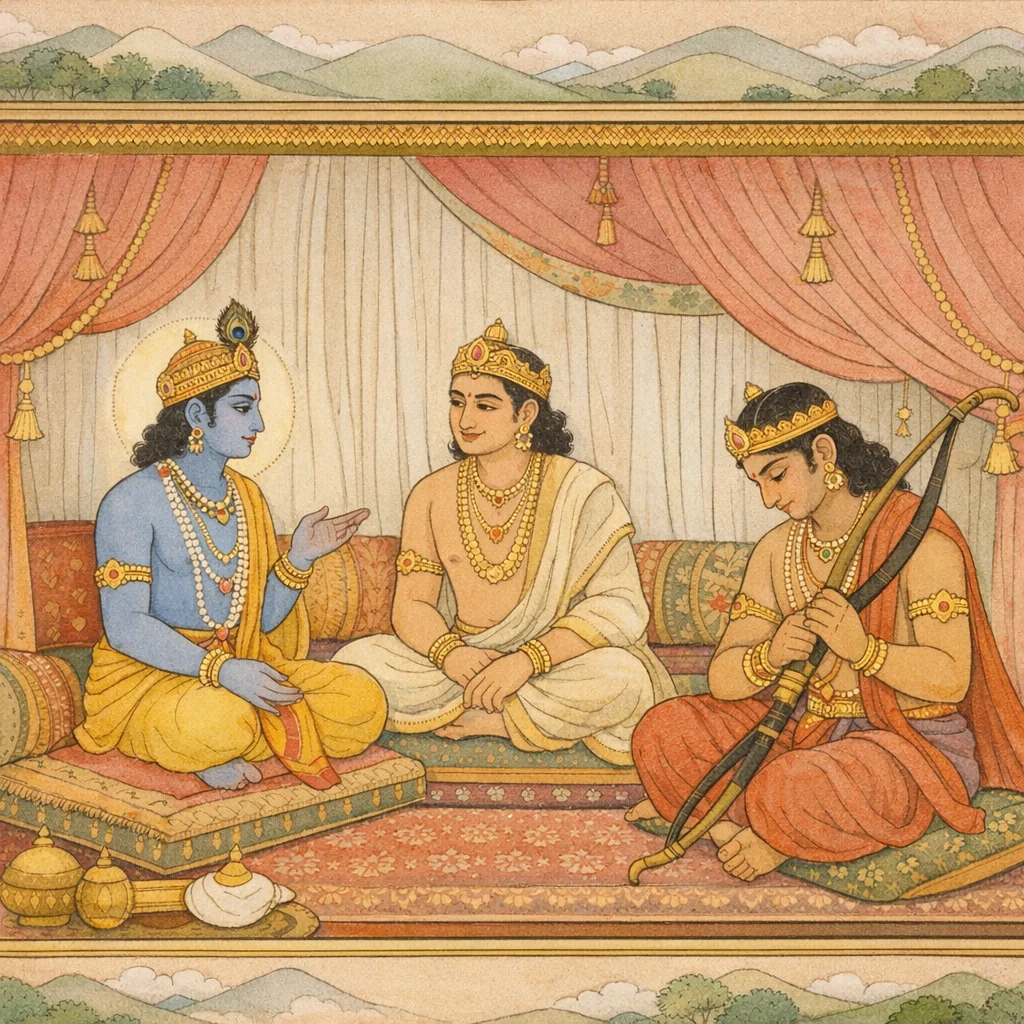
Adhyaya 71
Chapter Arc: कर्ण-वध की घड़ी निकट है, पर उससे पहले अर्जुन के भीतर एक और युद्ध उठ खड़ा होता है—युधिष्ठिर के प्रति कहे गये तिरस्कारपूर्ण वचनों का पश्चात्ताप, मानो उसने धर्म के विरुद्ध कोई पातक कर डाला हो। → अर्जुन का मन ग्लानि से भरता है; वह अपने ही वचन-बाणों से घायल है। श्रीकृष्ण उसकी दशा देखकर उसे रोकते-टोकते, हँसते-से, उसे धर्म की मर्यादा और क्षत्रिय-कर्तव्य की सीमा याद दिलाते हैं—क्रोध में उठे ‘तीक्ष्णधार’ संकल्पों को शमन करते हैं और उसे युधिष्ठिर के पास लौटने को प्रेरित करते हैं। → श्रीकृष्ण युधिष्ठिर से कहते हैं कि वे अर्जुन को सान्त्वना दें और दुरात्मा कर्ण-वध के लिए आज्ञा प्रदान करें; तब अर्जुन प्रतिज्ञा करता है—आज ही रण में राधेय कर्ण को शरों से अन्त तक पहुँचाऊँगा। → धर्मराज युधिष्ठिर प्रसन्न होकर, बार-बार मुस्कराते हुए, अर्जुन को अनुमति और आशीर्वाद देते हैं; अर्जुन का अपराध-बोध क्षमा और आदेश में रूपान्तरित होकर एकाग्र संकल्प बन जाता है। श्रीकृष्ण भी आश्वस्त करते हैं कि अर्जुन कर्ण-वध में समर्थ है। → आज्ञा मिल चुकी है—अब अगला चरण केवल रणभूमि है: क्या अर्जुन का संकल्प कर्ण के कवच-कुण्डल-यश और भाग्य-चक्र को भेद पाएगा?
Shlokas
Verse 1
/ (दाक्षिणात्य अधिक पाठके ३ श्लोक मिलाकर कुल ६३ श्लोक हैं।) ऑपन-माज बछ। अि्--छऋाञ एकसप्ततितमो<ध्याय: अर्जुनसे भगवान् श्रीकृष्णका उपदेश, कि युधिष्ठटिरका प्रसन्नतापूर्वक मिलन एवं कर्णवधकी प्रतिज्ञा, युधिष्ठिरका आशीर्वाद संजय उवाच धर्मराजस्य तच्छुत्वा प्रीतियुक्ते वचस्तत: । पार्थ प्रोवाच धर्मात्मा गोविन्दो यदुनन्दनः,संजय कहते हैं--महाराज! धर्मराजके मुखसे यह प्रेमपूर्ण वचन सुनकर यदुकुलको आनन्दित करनेवाले धर्मात्मा गोविन्द अर्जुनसे कुछ कहने लगे
Sañjaya said: O King, having heard that affectionate speech from Dharmaraja, the righteous Govinda—delighter of the Yadu line—then addressed Pārtha (Arjuna).
Verse 2
इति सम कृष्णवचनात् प्रत्युच्चार्य युधिष्ठिरम् । बभूव विमना: पार्थ: किंचित् कृत्वेव पातकम्
Sañjaya said: Having thus replied to Yudhiṣṭhira with words even and measured, Pārtha (Arjuna) grew downcast, as though he had committed some slight wrongdoing.
Verse 3
अर्जुन श्रीकृष्णके कहनेसे युधिष्ठिरके प्रति जो तिरस्कारपूर्ण वचन बोले थे, इसके कारण वे मन-ही-मन ऐसे उदास हो गये थे मानो कोई पाप कर बैठे हों ।। ततोअब्रवीद् वासुदेव: प्रहसन्निव पाण्डवम् । कथं नाम भवेदेतद् यदि त्वं पार्थ धर्मजम्,उनकी यह अवस्था देख भगवान् श्रीकृष्ण हँसते हुए-से उन पाण्डुकुमारसे बोले --'पार्थ! तुम तो राजाके प्रति केवल “तू” कह देनेमात्रसे ही इस प्रकार शोकमें डूब गये हो। फिर यदि धर्ममें स्थित रहनेवाले धर्मकुमार युधिष्ठिरको तीखी धारवाले तलवारसे मार डालते, तब तुम्हारी दशा कैसी हो जाती?
Then Vāsudeva (Kṛṣṇa), as though smiling, spoke to the Pāṇḍava (Arjuna): “How can this be, Pārtha? If you are plunged into grief merely for having addressed the king (Yudhiṣṭhira) with an overly familiar ‘you,’ what would your condition be if you had truly slain Dharmarāja—Yudhiṣṭhira, steadfast in dharma—with a sharp-edged sword?”
Verse 4
असिना तीक्ष्णधारेण हन्या धर्मे व्यवस्थितम् । त्वमित्युक्त्वाथ राजानमेवं कश्मलमाविश:,उनकी यह अवस्था देख भगवान् श्रीकृष्ण हँसते हुए-से उन पाण्डुकुमारसे बोले --'पार्थ! तुम तो राजाके प्रति केवल “तू” कह देनेमात्रसे ही इस प्रकार शोकमें डूब गये हो। फिर यदि धर्ममें स्थित रहनेवाले धर्मकुमार युधिष्ठिरको तीखी धारवाले तलवारसे मार डालते, तब तुम्हारी दशा कैसी हो जाती?
Sañjaya said: “(Kṛṣṇa implied:) ‘If, with a sharp-edged sword, you were to strike down one who stands firm in dharma—then what would become of you?’ Having merely addressed the king with the familiar ‘you’ (tvam), you have already fallen into such delusion and grief; how much more would you be overwhelmed if you were to kill Dharmarāja Yudhiṣṭhira, steadfast in righteousness.”
Verse 5
हत्वा तु नृपतिं पार्थ अकरिष्य: किमुत्तरम् एवं हि दुर्विदो धर्मो मन्दप्रज्ञैर्विशेषत:,“कुन्तीनन्दन! तुम राजाका वध करनेके पश्चात् क्या करते? इस तरह धर्मका स्वरूप सभीके लिये दुर्विज्ञेय है। विशेषतः उन लोगोंके लिये, जिनकी बुद्धि मन्द है, उसके सूक्ष्म स्वरूपको समझना अत्यन्त कठिन है
Sañjaya said: “O Pārtha, having slain a king, what further course would you take? For in truth the nature of dharma is hard to discern; and especially for those of dull understanding, its subtle workings are exceedingly difficult to grasp.”
Verse 6
स भवान् धर्मभीरुत्वाद् ध्रुवमैष्यन्महत्तम: । नरकं घोररूपं च भ्रातुर्ज्येष्ठस्य वै वधात्,“अतः तुम धर्मभीरु होनेके कारण अपने ज्येष्ठ भाईके वधसे निश्चय ही घोर नरकरूप महान् अन्धकार (दुःख)-में डूब जाते
Sañjaya said: “O best of men, because you are fearful of violating dharma, by slaying your eldest brother you would surely fall into a dreadful hell—into a great darkness of suffering.”
Verse 7
स त्वं धर्मभृतां श्रेष्ठ राजानं धर्मसंहितम् । प्रसादय कुरुश्रेष्ठमेतदत्र मतं मम,“इसलिये इस विषयमें मेरा विचार यह है कि तुम धर्मात्माओंमें श्रेष्ठ धर्मपरायण कुरुश्रेष्ठ राजा युधिष्ठिरको प्रसन्न करो
Sañjaya said: “Therefore, O best among the upholders of dharma, win the favor of that king who is steadfast in righteousness—Yudhiṣṭhira, the foremost of the Kurus. This, in this matter, is my considered counsel.”
Verse 8
प्रसाद्य भक्त्या राजानं प्रीते चैव युधिष्ठिरे । प्रयावस्त्वरितौ योद्धुं सूतपुत्ररथथं प्रति,“राजा युधिष्ठिरको भक्तिभावसे प्रसन्न कर लो। जब वे प्रसन्न हो जायँ, तब हमलोग तुरंत ही युद्धके लिये सूतपुत्रके रथपर चढ़ाई करेंगे
Sañjaya said: “Win over the king with reverent devotion, and once Yudhiṣṭhira is pleased, we shall set out at once—swiftly—to fight, advancing against the chariot of the Sūta’s son.”
Verse 9
हत्वा तु समरे कर्ण त्वमद्य निशितै: शरै: । विपुलां प्रीतिमाधत्स्व धर्मपुत्रस्य मानद,“मानद! आज तुम तीखे बाणोंसे समरभूमिमें कर्णका वध करके धर्मपुत्र युधिष्ठिरके हृदयमें अत्यन्त हर्षोल्लास भर दो
Sañjaya said: “Having slain Karṇa today in the battle with your keen arrows, bring abundant joy into the heart of Dharmaputra (Yudhiṣṭhira), O bestower of honor.”
Verse 10
एतदत्र महाबाहो प्राप्तकालं मतं मम । एवं कृते कृतं चैव तव कार्य भविष्यति,“महाबाहो! मुझे तो इस समय यहाँ यही करना उचित जान पड़ता है। ऐसा कर लेनेपर तुम्हारा सारा कार्य सम्पन्न हो जायगा”
Sañjaya said: “O mighty-armed one, in my judgment this is the proper course to adopt at this very moment. If it is done in this way, your intended purpose will indeed be accomplished.”
Verse 11
ततोअ<र्जुनो महाराज लज्जया वै समन्वित: । धर्मराजस्य चरणौ प्रपद्य शिरसा नतः,“महाराज! तब अर्जुन लज्जित हो धर्मराजके चरणोंमें गिरकर मस्तक नवाकर उन भरतश्रेष्ठ नरेशसे बारंबार बोले--“राजन्! प्रसन्न होइये, प्रसन्न होइये। मैंने धर्मपालनकी इच्छासे भयभीत होकर जो अनुचित वचन कहा है, उसके लिये क्षमा कीजिये'
Sañjaya said: Then Arjuna, O King, overcome with shame, approached the feet of Dharmarāja. Bowing his head, he repeatedly addressed that best of Bharata kings: “O King, be gracious—be gracious. Forgive the improper words I spoke, spoken in fear while striving to uphold dharma.”
Verse 12
उवाच भरतश्रेष्ठ प्रसीदेति पुन: पुनः । क्षमस्व राजन यत्र प्रोक्त धर्मकामेन भीरुणा,“महाराज! तब अर्जुन लज्जित हो धर्मराजके चरणोंमें गिरकर मस्तक नवाकर उन भरतश्रेष्ठ नरेशसे बारंबार बोले--“राजन्! प्रसन्न होइये, प्रसन्न होइये। मैंने धर्मपालनकी इच्छासे भयभीत होकर जो अनुचित वचन कहा है, उसके लिये क्षमा कीजिये'
Sañjaya said: Addressing the best of the Bharatas, he pleaded again and again, “Be gracious, be gracious, O King. Forgive me for the improper words I spoke—spoken in fear, yet driven by the desire to uphold dharma.”
Verse 13
दृष्टवा तु पतितं पद्भ्यां धर्मराजो युधिष्ठिर: । धनंजयममित्रघ्नं रुदन्तं भरतर्षभ,भरतश्रेष्ठ! धर्मराज युधिष्छिरने शत्रुसूदन, भाई धनंजयको अपने चरणोंपर गिरकर रोते देख बड़े स्नेहसे उठाकर हृदयसे लगा लिया। फिर वे भूपाल धर्मराज भी फूट-फूटकर रोने लगे
Sañjaya said: Seeing Dhanañjaya (Arjuna)—the slayer of foes—fallen at his feet and weeping, King Yudhiṣṭhira, steadfast in dharma, lifted him up with deep affection and embraced him to his heart. Overwhelmed by the weight of kinship and the calamity of war, that righteous king himself then broke down and wept aloud.
Verse 14
उत्थाय भ्रातरं राजा धर्मराजो धनंजयम् | समाश्लिष्य च सस्नेहं प्रसुरोद महीपति:,भरतश्रेष्ठ! धर्मराज युधिष्छिरने शत्रुसूदन, भाई धनंजयको अपने चरणोंपर गिरकर रोते देख बड़े स्नेहसे उठाकर हृदयसे लगा लिया। फिर वे भूपाल धर्मराज भी फूट-फूटकर रोने लगे
Sañjaya said: King Yudhiṣṭhira, the upholder of dharma, rose and lifted up his brother Dhanañjaya (Arjuna). Embracing him with deep affection, the lord of the earth then broke down and wept—showing that even amid the harsh demands of war, righteous leadership is not devoid of tenderness, grief, and familial duty.
Verse 15
रुदित्वा सुचिरं काल भ्रातरौ सुमहाद्युती । कृतशौचौ महाराज प्रीतिमन्तौ बभूवतु:,महाराज! वे दोनों महातेजस्वी भाई दीर्घकालतक रोते रहे। इससे उनके मनकी मैल धुल गयी और वे दोनों भाई परस्पर प्रेमसे भर गये
Sañjaya said: “After weeping for a long time, O King, the two brothers of great splendor became purified, as though cleansed inwardly; and they came to be filled with mutual affection.”
Verse 16
तत आश्शलिष्य त॑ प्रेम्णा मूर्थ्नि चाप्राय पाण्डव: । प्रीत्या परमया युक्तो विस्मयंश्व पुनः पुन:
Sañjaya said: Then the Pāṇḍava embraced him with affection and kissed (or smelled) his head. Filled with the highest joy, he kept expressing wonder again and again—an intimate gesture of kinship and reverence that momentarily softens the harshness of war with humane gratitude and recognition.
Verse 17
कर्णेन मे महाबाहो सर्वसैन्यस्यथ पश्यत:,“महाधनुर्धर! महाबाहो! मैं युद्धमें यत्नपूर्वक लगा हुआ था, किंतु कर्णने सारी सेनाके देखते-देखते अपने बाणोंद्वारा मेरे कवच, ध्वज, धनुष, शक्ति, घोड़े और बाणोंके टुकड़े- टुकड़े कर डाले हैं!
Sañjaya said: “O mighty-armed one, while the entire army looked on, Karṇa shattered my armor, my banner, my bow, my spear, my horses, and my arrows—splintering them into pieces with his shafts. Though I was striving with full effort in the battle, his prowess broke through my defenses before all.”
Verse 18
कवचं च ध्वजं चैव धनु: शक्ति्हया: शरा: । शरै: कृत्ता महेष्वास यतमानस्य संयुगे,“महाधनुर्धर! महाबाहो! मैं युद्धमें यत्नपूर्वक लगा हुआ था, किंतु कर्णने सारी सेनाके देखते-देखते अपने बाणोंद्वारा मेरे कवच, ध्वज, धनुष, शक्ति, घोड़े और बाणोंके टुकड़े- टुकड़े कर डाले हैं!
Sañjaya said: “O mighty archer, while I was striving with all my effort in the press of battle, Karṇa—before the very eyes of the army—shattered with his arrows my armour and banner, my bow, my spear, my horses, and even my arrows, cutting them to pieces.”
Verse 19
सोऊ हं ज्ञात्वा रणे तस्य कर्म दृष्टवा च फाल्गुन । व्यवसीदामि दुःखेन न च मे जीवितं प्रियम्,'फाल्गुन! रणभूमिमें उसके इस कर्मको देख और समझकर मैं दुःखसे पीड़ित हो रहा हूँ। मुझे अपना जीवन प्रिय नहीं रह गया है
Sañjaya said: “O Phālguna (Arjuna), having understood and witnessed his deed on the battlefield, I am sinking under sorrow; life itself no longer seems dear to me.”
Verse 20
न चेदद्य हि त॑ वीरं निहनिष्यसि संयुगे । प्राणानेव परित्यक्ष्ये जीवितार्थो हि को मम,“यदि आज युद्धस्थलमें तुम वीर कर्णका वध नहीं करोगे तो मैं अपने प्राणोंका ही परित्याग कर दूँगा। फिर मेरे जीवनका प्रयोजन ही क्या है?”
Sañjaya said: “If today, on the battlefield, you do not slay that hero, then I will renounce my very life-breaths. For what purpose would my life serve then?”
Verse 21
एवमुक्त: प्रत्युवाच विजयो भरतर्षभ । सत्येन ते शपे राजन् प्रसादेन तथैव च । भीमेन च नरश्रेष्ठ यमा भ्यां च महीपते,भरतश्रेष्ठ] उनके ऐसा कहनेपर अर्जुनने उत्तर दिया--'राजन्! नरश्रेष्ठ महीपाल! मैं आपसे सत्यकी, आपके कृपापूर्ण प्रसादकी, भीमसेनकी तथा नकुल और सहदेवकी शपथ खाकर सत्यके द्वारा अपने धनुषको छूकर कहता हूँ कि आज समरमें या तो कर्णको मार डालूँगा या स्वयं ही मारा जाकर पृथ्वीपर गिर जाऊँगा'
Sañjaya said: Thus addressed, Vijaya (Arjuna) replied, “O king, O bull among the Bharatas! I swear to you by truth itself, and likewise by your gracious favor; I swear also by Bhīma, and by the twin sons of Yama (Nakula and Sahadeva), O lord of the earth. Touching my bow as a witness to my vow, I declare in truth: today in battle I shall either slay Karṇa, or I myself, slain, shall fall upon the earth.”
Verse 22
यथाद्य समरे कर्ण हनिष्यामि हतो5पि वा । महीतले पतिष्यामि सत्येनायुधमालभे,भरतश्रेष्ठ] उनके ऐसा कहनेपर अर्जुनने उत्तर दिया--'राजन्! नरश्रेष्ठ महीपाल! मैं आपसे सत्यकी, आपके कृपापूर्ण प्रसादकी, भीमसेनकी तथा नकुल और सहदेवकी शपथ खाकर सत्यके द्वारा अपने धनुषको छूकर कहता हूँ कि आज समरमें या तो कर्णको मार डालूँगा या स्वयं ही मारा जाकर पृथ्वीपर गिर जाऊँगा'
Sañjaya said: “(Arjuna declared,) ‘Even if I myself be slain, so shall it be: today in battle I will kill Karṇa, or else, struck down, I shall fall upon the earth. By truth I take hold of my weapon (touching my bow as a solemn vow).’”
Verse 23
एवमाभाष्य राजानमब्रवीन्माधवं वच: । अद्य कर्ण रणे कृष्ण सूदयिष्ये न संशय:
Sañjaya said: Having thus addressed the king, he spoke these words to Mādhava: “Today, O Kṛṣṇa, I shall slay Karṇa in battle—of this there is no doubt.”
Verse 24
एवमुक्तो5ब्रवीत् पार्थ केशवो राजसत्तम,कथं भवान् रणे कर्ण निहन्यादिति सत्तम | नृपश्रेष्ठ उनके ऐसा कहनेपर श्रीकृष्णने अर्जुनसे कहा--“भरतश्रेष्ठ! तुम महाबली कर्णका वध करनेमें समर्थ हो। सत्पुरुषोंमें श्रेष्ठ महारथी वीर! मेरे मनमें भी सदा यही इच्छा बनी रहती है कि तुम रणभूमिमें कर्णको किसी तरह मार डालो”
Sañjaya said: Thus addressed, Keśava spoke to Pārtha (Arjuna), O best of kings: “How will you, in battle, slay Karṇa?”
Verse 25
शक्तोडसि भरतश्रेष्ठ हन्तुं कर्ण महाबलम् । एष चापि हि मे कामो नित्यमेव महारथ
Sañjaya said: “O best of the Bharatas, you are capable of slaying the mighty-armed Karṇa. Indeed, this too is my constant wish, O great chariot-warrior.”
Verse 26
भूयश्चोवाच मतिमान् माधवो धर्मनन्दनम्
Sañjaya said: Then again, the wise Mādhava (Kṛṣṇa) spoke to Dharmanandana (Yudhiṣṭhira), continuing his counsel in the midst of the war’s moral strain.
Verse 27
युधिष्ठिरेमं बीभत्सुं त्वं सान्त्वयितुमरहसि । अनुज्ञातुं च कर्णस्य वधायाद्य दुरात्मन:
Sañjaya said: “Console Yudhiṣṭhira in this matter, O Bībhatsu (Arjuna), and today also grant leave for the slaying of wicked-souled Karṇa.”
Verse 28
फिर बुद्धिमान् भगवान् माधवने धर्मनन्दन युधिष्ठिरसे इस प्रकार कहा--“महाराज! आप अर्जुनको सान्त्वना और दुरात्मा कर्णके वधके लिये आज्ञा प्रदान करें ।। श्रुत्वा ह्रहमयं चैव त्वां कर्णशरपीडितम् । प्रवृत्ति ज्ञातुमायाताविहावां पाण्डुनन्दन,'पाण्डुनन्दन! राजन! आप कर्णके बाणोंसे बहुत पीड़ित हो गये हैं--यह सुनकर मैं और ये अर्जुन दोनों आपका समाचार जाननेके लिये यहाँ आये थे
Sañjaya said: Then the wise and revered Mādhava spoke to Yudhiṣṭhira, son of Dharma, in this manner: “O King, console Arjuna and today give him the command to slay the wicked Karṇa. Hearing that you were grievously stricken at heart and tormented by Karṇa’s arrows, we—Arjuna and I—have come here to learn what has happened, O son of Pāṇḍu.”
Verse 29
दिष्टयासि राजन् न हतो दिष्ट्या न ग्रहणं गत: । परिसान्त्वय बीभत्सुं जयमाशाधि चानघ,“निष्पाप नरेश! सौभाग्यकी बात है कि (कर्णके द्वारा) न तो आप मारे गये और न पकड़े ही गये। अब आप अर्जुनको सान्त्वना दें और उन्हें विजयके लिये आशीर्वाद प्रदान करें!
Sañjaya said: “By good fortune, O King, you have not been slain; by good fortune you have not fallen into captivity. Now console Bībhatsu (Arjuna) and, O sinless one, bid him hope for victory and bless him toward triumph.”
Verse 30
युधिछिर उवाच एह्रीहि पार्थ बीभत्सो मां परिष्वज पाण्डव | वक्त व्यमुक्तो5स्मि हित॑ त्वया क्षान्तं च तन्मया,युधिष्ठिर बोले--कुन्तीनन्दन! बीभत्सो! आओ, आओ! पाण्डुकुमार! मेरे हृदयसे लग जाओ। तुमने तो मेरे प्रति कहनेयोग्य और हितकी ही बात कही है तथा मैंने उसके लिये क्षमा भी कर दी
Yudhiṣṭhira said: “Come, come, O Pārtha—O Bībhatsu—embrace me, O son of Pāṇḍu. You have spoken to me what was fitting to be said and truly for my good; and I, for my part, have forgiven that.”
Verse 31
अहं त्वामनुजानामि जहि कर्ण धनंजय । मन्युं च मा कृथा: पार्थ यन्मयोक्तोडसि दारुणम्,धनंजय! मैं तुम्हें आज्ञा देता हूँ, कर्णका वध करो। पार्थ! मैंने जो तुमसे कठोर वचन कहा है, उसके लिये खेद न करना
Yudhiṣṭhira said: “I grant you leave—slay Karṇa, O Dhanañjaya. And, O Pārtha, do not harbor resentment on account of the harsh words I spoke to you.”
Verse 32
संजय उवाच ततो धनंजयो राजज्शिरसा प्रणतस्तदा । पादौ जग्राह पाणि श्यां भ्रातुर्ज्येष्ठसल्य मारिष,संजय कहते हैं--माननीय नरेश! तब धनंजयने मस्तक झुकाकर प्रणाम किया और दोनों हाथोंसे बड़े भाईके पैर पकड़ लिये
Sañjaya said: Then Dhanañjaya (Arjuna), O King, bowed his head in reverence; and at that moment, O venerable one, he clasped with both hands the feet of his eldest brother—an act of humility and filial duty, even amid the harsh demands of war.
Verse 33
तमुत्थाप्य ततो राजा परिष्वज्य च पीडितम् | मूर्थ््युपाच्राय चैवैनमिदं पुनरुवाच ह,तत्पश्चात् राजाने मन-ही-मन पीड़ाका अनुभव करनेवाले अर्जुनको उठाकर छातीसे लगा लिया और उनका मस्तक सूँघकर पुन: उनसे इस प्रकार कहा--
Sañjaya said: Then the king lifted him up; embracing the afflicted one and smelling his head in a gesture of paternal tenderness, he spoke to him again in these words.
Verse 34
धनंजय महाबाहो मानितो<स्मि दृढं त्वया | माहात्म्यं विजयं चैव भूय: प्राप्तुहि शाश्वतम्,“महाबाहु धनंजय! तुमने मेरा बड़ा सम्मान किया है; अतः तुम्हारी महिमा बढ़े और तुम्हें पुन सनातन विजय प्राप्त हो”
Sañjaya said: “O Dhanañjaya, mighty-armed one, you have honored me deeply. Therefore may your greatness increase, and may you again attain the everlasting victory.”
Verse 35
अजुन उवाच अद्य तं पापकर्माणं सानुबन्धं रणे शरै: । नयाम्यन्तं समासाद्य राधेयं बलगर्वितम्,अर्जुन बोले--महाराज! आज मैं अपने बलका घमंड रखनेवाले उस पापाचारी राधापुत्र कर्णको रणभूमिमें पाकर उसके सगे-सम्बन्धियोंसहित मृत्युके समीप भेज दूँगा
Arjuna said: “Today, meeting that evil-doer Rādheya (Karna) on the battlefield—proud of his strength—I will drive him to his end with my arrows, along with all who are bound to him (his supporters and associates).”
Verse 36
येन त्वं पीडितो बाणैर्दूढमायम्य कार्मुकम् । तस्याद्य कर्मण: कर्ण: फलमाप्स्यति दारुणम्,राजन! जिसने धनुषको दृढ़तापूर्वक खींचकर अपने बाणोंद्वारा आपको पीड़ित किया है, वह कर्ण आज अपने उस पापकर्मका अत्यन्त भयंकर फल पायेगा
O King, he who, drawing his bow to the full with unyielding force, tormented you with his arrows—Karna—shall today reap the dreadful fruit of that deed.
Verse 37
अद्य त्वामनुपश्यामि कर्ण हत्वा महीपते | सभाजयितुमाक्रन्दादिति सत्यं ब्रवीमि ते,भूपाल! आज मैं कर्णको मारकर ही आपका दर्शन करूँगा और युद्धस्थलसे आपका अभिनन्दन करनेके लिये आऊँगा। यह मैं आपसे सत्य कहता हूँ
Arjuna said: “O king, today I shall come before you only after slaying Karṇa. Then, from the battlefield’s tumult, I will approach to pay you homage. This I tell you in truth.”
Verse 38
नाहत्वा विनिवर्तिष्ये कर्णममद्य रणाजिरात् । इति सत्येन ते पादौ स्पृशामि जगतीपते
Arjuna said: “I will not turn back from the battlefield today without slaying Karṇa. With this pledge of truth, O lord of the earth, I touch your feet.”
Verse 39
पृथ्वीपते! आज मैं कर्णको मारे बिना समरांगणसे नहीं लौटूँगा। इस सत्यके द्वारा मैं आपके दोनों चरण छूता हूँ ।। संजय उवाच इति ब्रुवाणं सुमना: किरीटिनं युधिष्ठिर: प्राह वचो बृहत्तरम् । यशो$क्षयं जीवितमीप्सितं ते जयं सदा वीर्यमरिक्षयं तदा,संजय कहते हैं--राजन्! ऐसी बातें कहनेवाले किरीटधारी अर्जुनसे युधिष्ठिरने प्रसन्नचित्त होकर यह महत्त्वपूर्ण बात कही--*वीर! तुम्हें अक्षय यश, पूर्ण आयु, मनोवांछित कामना, विजय तथा शत्रुनाशक पराक्रम--ये सदा प्राप्त होते रहें
Sanjaya said: When the diadem-wearing Arjuna spoke thus, Yudhishthira—his heart gladdened—addressed him with weighty words: “May imperishable fame be yours; may your life be full and complete; may your cherished aims be fulfilled; may victory ever attend you; and may you possess unfailing, foe-destroying valor.”
Verse 40
प्रयाहि वृद्धिं च दिशन्तु देवता यथाहमिच्छामि तवास्तु तत् तथा | प्रयाहि शीघ्रं जहि कर्णमाहवे पुरंदरो वृत्रमिवात्मवृद्धये,“जाओ, देवता तुम्हें अभ्युदय प्रदान करें। मैं तुम्हारे लिये जैसा चाहता हूँ, वैसा ही सब कुछ तुम्हें प्राप्त हो। आगे बढ़ो और युद्धस्थलमें शीघ्र ही कर्णको मार डालो। ठीक उसी तरह, जैसे देवराज इन्द्रने अपने ही ऐश्वर्यकी वृद्धिके लिये वृत्रासुरका नाश किया था!
Sañjaya said: “Go forth; may the gods grant you prosperity. May it be for you exactly as I desire. Advance quickly and strike down Karṇa on the battlefield—just as Indra, for the increase of his own sovereignty, slew Vṛtra.”
Verse 70
इस प्रकार श्रीमह्याभारत कर्णपर्वमें युधिष्ठिरको आश्वासनविषयक सत्तरवाँ अध्याय पूरा हुआ
Thus ends the seventieth chapter of the Karṇa Parva of the sacred Mahābhārata, a chapter concerned with offering reassurance to Yudhiṣṭhira.
Verse 71
इति श्रीमहा भारते कर्णपर्वणि अर्जुनप्रतिज्ञायामेकसप्ततितमो<5ध्याय:
Sanjaya said: Thus ends the seventy-first chapter in the Karṇa Parva of the revered Mahābhārata, within the section concerning Arjuna’s solemn vow. This colophon marks a turning in the war narrative, underscoring the moral weight of a warrior’s pledged word—for once a vow is declared, it becomes a binding force that shapes duty, resolve, and the consequences unfolding upon the battlefield.
Verse 166
अब्रवीत् त॑ महेष्वासं धर्मराजो धनंजयम् । तदनन्तर अत्यन्त प्रसन्न हो बारंबार मुसकराते हुए पाण्डुकुमार धर्मराज युधिष्छिरने महाधनुर्धर धनंजयको बड़े प्रेमसे हृदयसे लगाकर उनका मस्तक सूँघा और उनसे इस प्रकार कहा--
Sanjaya said: Then Dharmarāja Yudhiṣṭhira addressed Dhanañjaya (Arjuna), that great archer. Immediately afterward, the son of Pāṇḍu—Dharmarāja Yudhiṣṭhira—became exceedingly pleased; smiling again and again, he embraced the mighty bowman Dhanañjaya with deep affection, smelled his head in a gesture of intimate blessing, and spoke to him in this manner.
Verse 233
तव बुद्ध्या हि भद्रें ते वधस्तस्य दुरात्मन: । राजा युधिष्ठिरसे ऐसा कहकर अर्जुन भगवान् श्रीकृष्णसे बोले--'श्रीकृष्ण! आज रणभूमिमें मैं कर्णका वध करूँगा, इसमें संशय नहीं है। आपका कल्याण हो। आपकी बुद्धिसे ही उस दुरात्माका वध होगा”
Sanjaya said: “O noble one, it is indeed through your counsel that the slaying of that wicked-souled man will be accomplished.” In the narrative frame, Arjuna said to Bhagavān Śrī Kṛṣṇa: “Śrī Kṛṣṇa! Today on the battlefield I shall slay Karṇa—of this there is no doubt. May welfare be yours. Through your wisdom alone will the death of that evil man be brought to pass.”
Verse 256
कथं भवान् रणे कर्ण निहन्यादिति सत्तम | नृपश्रेष्ठ उनके ऐसा कहनेपर श्रीकृष्णने अर्जुनसे कहा--“भरतश्रेष्ठ! तुम महाबली कर्णका वध करनेमें समर्थ हो। सत्पुरुषोंमें श्रेष्ठ महारथी वीर! मेरे मनमें भी सदा यही इच्छा बनी रहती है कि तुम रणभूमिमें कर्णको किसी तरह मार डालो”
“How could you slay Karṇa in battle, O best of men?” When the foremost of kings spoke thus, Śrī Kṛṣṇa said to Arjuna: “O best of the Bhāratas! You are able to kill the mighty Karṇa. O heroic mahāratha, foremost among the virtuous! In my own heart too this wish ever remains—that you, somehow, should strike down Karṇa upon the battlefield.”