Adhyaya 65
अर्जुनकर्णसंनिपातवर्णनम् / The Convergence of Arjuna and Karṇa
Upa-parva: Arjuna–Karṇa Saṃnipāta (Duel Escalation Episode)
Sañjaya reports to Dhṛtarāṣṭra that Arjuna and Karṇa, each in a white-horsed chariot, close upon one another amid conch and drum resonance. The narration uses layered similes—rutting elephants, colliding clouds and mountains—to represent the inevitability and force of the encounter. As missile exchange intensifies, allied troops vocally urge their champions, and the duel becomes a focal spectacle for observers. Karṇa strikes first with concentrated volleys; Arjuna counters with sharp, targeted arrows. Bhīma, angered by the exchange, admonishes Arjuna to reassert resolve; Vāsudeva similarly challenges Arjuna’s momentary disadvantage, interpreting it as a visible morale hazard. Arjuna then declares intent to manifest a formidable Brahmā-weapon (brāhma-astra) for the “welfare of the world” and the neutralization of Karṇa, seeking cosmic assent in formal terms. A dense darkness-like covering of the directions follows from the weapon’s release, while Arjuna simultaneously executes battlefield attrition against Kaurava protectors and formations. The chapter ends with Karṇa, seeing allies dispersed, remaining steady and advancing again toward Arjuna, signaling persistence despite tactical isolation.
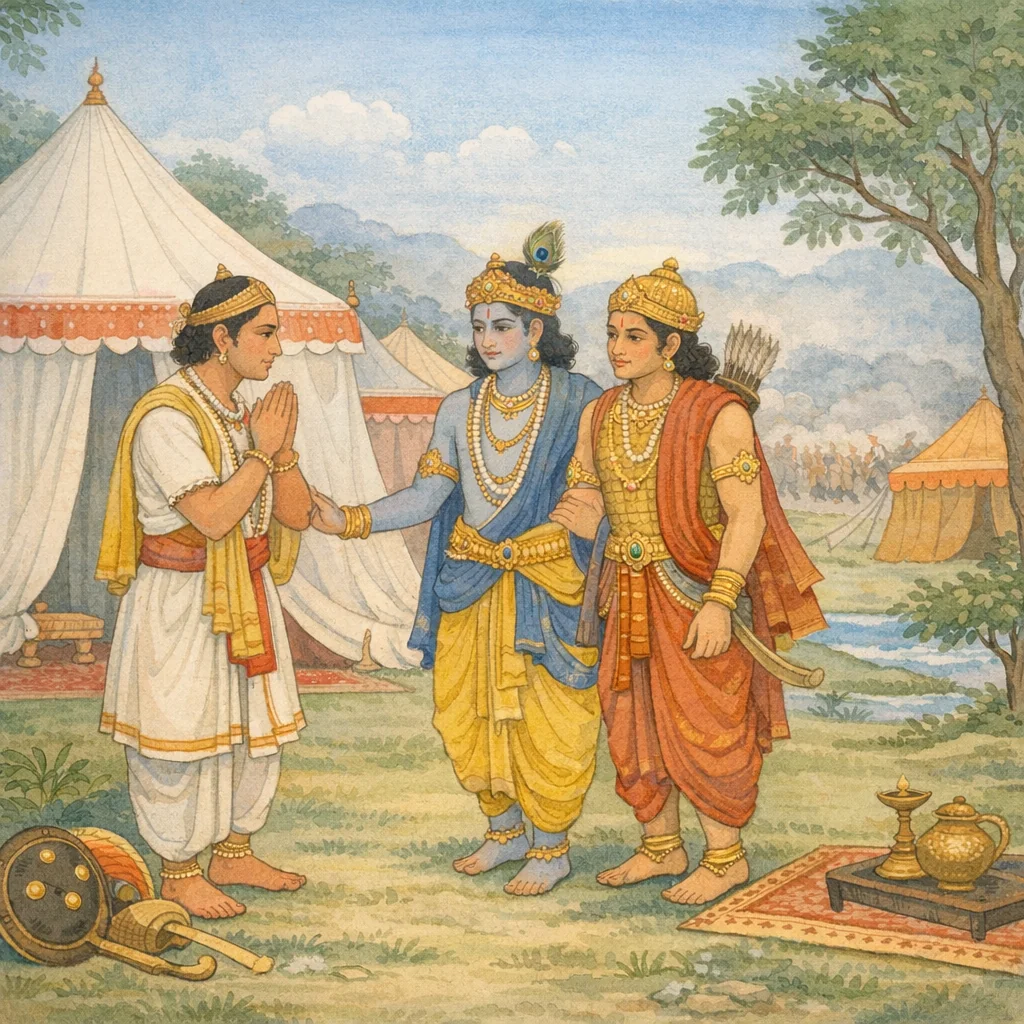
Chapter Arc: युद्धभूमि से लौटते श्रीकृष्ण और अर्जुन का शिविर में आगमन—युधिष्ठिर का स्वागत, पर स्वागत के भीतर छिपी हुई आशंका: क्या सचमुच कर्ण मारा गया? → युधिष्ठिर कर्ण की भयावहता का स्मरण कर-करके अर्जुन से पूछते हैं—वह जो युद्ध में विषधर सर्प-सा, शस्त्रविद्या में सर्वज्ञ, कौरवों का अग्रगामी और मित्रों का नन्दिवर्धन था, वह कैसे मारा गया? वे स्वीकारते हैं कि जहाँ-जहाँ वे जाते, कर्ण का भय उन्हें सामने खड़ा दिखता था; और यह भी कि कर्ण ने युद्ध में उनका पीछा कर कठोर वचन कहे, अपमानित किया। → अर्जुन का निर्णायक कथन—सबके देखते-देखते उसने कर्ण का सिर वैसे ही काट लिया जैसे सिंह शिकार का मस्तक ले ले; और वह क्षण जब अर्जुन अपने भीतर वर्षों से धधकती अमर्ष-अग्नि को ‘आज कर्ण को मार डाला’ कहकर शांत करने का प्रयास करता है। → युधिष्ठिर को प्रमाण मिलता है कि महारथी कर्ण ‘अक्षत’ (सुरक्षित) कृष्ण-अर्जुन के रहते मारा गया; स्वागत अब शोक-मिश्रित राहत में बदलता है—कर्ण का अंत युद्ध की दिशा मोड़ देता है। → कर्ण-वध के बाद कौरव-पक्ष की अगली प्रतिक्रिया और नेतृत्व-संकट की आहट—अब कौन धारण करेगा धृतराष्ट्र-पुत्रों की ढाल और कवच?
Shlokas
Verse 1
/ अपन काल बा | अर षट्षष्टितमो<5 ध्याय: युधिष्ठिरका अर्जुनसे भ्रमवश कर्णके मारे जानेका वृत्तान्त पूछना युधिषछ्िर उवाच स्वागतं देवकीमात: स्वागतं ते धनंजय । प्रियं मे दर्शनं गाढं युवयोरच्युतार्जुनौ
Yudhiṣṭhira said: “Welcome, O son of Devakī; welcome to you, Dhanaṃjaya. Deeply dear to me is the sight of you both—Acyuta and Arjuna.”
Verse 2
आशीविषसमं युद्धे सर्वशस्त्रविशारदम्,कर्ण युद्धमें विषधर सर्पके समान भयंकर, सम्पूर्ण शस्त्र-विद्याओंमें निपुण तथा कौरवोंका अगुआ था। वह शत्रुपक्षमें सबका कल्याण-साधक और कवच बना हुआ था। वृषसेन और सुषेण-जैसे धनुर्धर उसकी रक्षा करते थे
Yudhiṣṭhira said: “In battle, Karṇa was like a venomous serpent—terrifying, and fully accomplished in every weapon-discipline. He stood as the Kauravas’ foremost leader, and on the enemy side he functioned like a protective armor, securing the welfare and advantage of all his own. Archers such as Vṛṣasena and Suṣeṇa guarded him.”
Verse 3
अग्रगं धार्तराष्ट्राणां सर्वेषां शर्म वर्म च । रक्षितं वृषसेनेन सुषेणेन च धन्विना,कर्ण युद्धमें विषधर सर्पके समान भयंकर, सम्पूर्ण शस्त्र-विद्याओंमें निपुण तथा कौरवोंका अगुआ था। वह शत्रुपक्षमें सबका कल्याण-साधक और कवच बना हुआ था। वृषसेन और सुषेण-जैसे धनुर्धर उसकी रक्षा करते थे
Yudhiṣṭhira said: “Karna was the foremost leader among all the sons of Dhṛtarāṣṭra—at once their refuge and their armor. He was guarded by the bowmen Vṛṣasena and Suṣeṇa.”
Verse 4
अनुज्ञातं महावीर्य रामेणास्त्रे सुदुर्जयम् । अग्र्यं सर्वस्य लोकस्य रथिनं लोकविश्रुतम्
Yudhiṣṭhira said: “O mighty one, he has been authorized by Rāma (Paraśurāma) in the use of a weapon that is exceedingly hard to overcome. He is famed throughout the world as a foremost chariot-warrior, renowned among all people.”
Verse 5
परशुरामजीसे अस्त्र-शस्त्रोंका ज्ञान प्राप्त करके वह महान् शक्तिशाली और अत्यन्त दुर्जय हो गया था। समस्त संसारका सर्वश्रेष्ठ रथी एवं विश्वविख्यात वीर था ।। त्रातारं धार्तराष्ट्राणां गन्तारं वाहिनीमुखे । हन्तारं परसैन्यानाममित्रगणमर्दनम्,धृतराष्ट्रपुत्रोंका रक्षक, सेनाके मुहानेपर जाकर युद्ध करनेवाला, शत्रुसैनिकोंका संहार करनेमें समर्थ तथा विरोधियोंका मान मर्दन करनेवाला था
Yudhiṣṭhira said: “He was the protector of Dhṛtarāṣṭra’s sons, the one who would advance to the very front of the army, the slayer of opposing forces, and the crusher of hostile ranks.”
Verse 6
दुर्योधनहिते युक्तमस्मद्दु:खाय चोद्यतम् । अप्रधृष्यं महायुद्धे देवेरपि सवासवै:,वह सदा दुर्योधनके हितमें संलग्न रहकर हम-लोगोंको दुःख देनेके लिये उद्यत रहता था। महायुद्ध-में इन्द्रसहित सम्पूर्ण देवता भी उसे परास्त नहीं कर सकते थे
Yudhiṣṭhira said: “He was ever devoted to Duryodhana’s welfare and intent on bringing sorrow upon us. In the great war he was unassailable—so formidable that even the gods, with Indra at their head, could not overcome him.”
Verse 7
अनलानिलयोस्तुल्यं तेजसा च बलेन च | पातालमिव गम्भीर सुहृदां नन्दिवर्धनम्,वह तेजमें अग्नि, बलमें वायु और गम्भीरतामें पातालके समान था। अपने मित्रोंका आनन्द बढ़ानेवाला और मेरे मित्रोंके लिये यमराजके समान था। किसी असुरको जीतकर आये हुए दो देवताओंके समान तुम दोनों मित्र महासमरमें कर्णको मारकर यहाँ आ गये, यह बड़े सौभाग्यकी बात है
Yudhiṣṭhira said: “In fiery splendor like Agni and in strength like Vāyu, deep as Pātāla, and a source of joy to friends—such was he. For my allies he was like Yama himself. It is a great fortune that you two, like a pair of gods returning after conquering an asura, have come back here after slaying Karṇa in the great battle.”
Verse 8
अन्तकं मम मित्राणां हत्वा कर्ण महामृधे । दिष्ट्या युवामनुप्राप्ती जित्वासुरमिवामरौ,वह तेजमें अग्नि, बलमें वायु और गम्भीरतामें पातालके समान था। अपने मित्रोंका आनन्द बढ़ानेवाला और मेरे मित्रोंके लिये यमराजके समान था। किसी असुरको जीतकर आये हुए दो देवताओंके समान तुम दोनों मित्र महासमरमें कर्णको मारकर यहाँ आ गये, यह बड़े सौभाग्यकी बात है
Yudhiṣṭhira said: “Having slain Karṇa in that great and terrible battle—he who was like Death itself to my allies—you two have returned here, by good fortune, like two gods who have conquered an asura. This is indeed a blessing.”
Verse 9
घोरं युद्धमदीनेन मया हाप्याच्युतार्जुनौ । कृत॑ तेनान्तकेनेव प्रजा: सर्वा जिघांसता,श्रीकृष्ण और अर्जुन! सम्पूर्ण प्रजाका संहार करनेकी इच्छा रखनेवाले कालके समान उस कर्णने आज मेरे साथ घोर युद्ध किया था। फिर भी मैंने उसमें दीनता नहीं दिखायी
Yudhiṣṭhira said: “O Kṛṣṇa and Arjuna, Karṇa—like Death itself, intent on the destruction of all beings—waged a dreadful battle with me today. Yet even so, I did not show any dejection or weakness before him.”
Verse 10
तेन केतुश्न मे छिन्नो हतौ च पार्ष्णिसारथी । हतवाहस्ततश्चास्मि युयुधानस्य पश्यत:,उसने सात्यकि, धृष्टद्युम्न, नकुल, सहदेव, वीर शिखण्डी, द्रौपदीपुत्र तथा पांचालोंके देखते-देखते मेरी ध्वजा काट डाली, पार्श्वरक्षकोंको मार डाला और मेरे घोड़ोंका भी संहार कर डाला था
Then my banner was cut down, my flank-guards were slain, and my horses were destroyed—all before the eyes of Yuyudhāna (Sātyaki), Dhṛṣṭadyumna, Nakula, Sahadeva, the valiant Śikhaṇḍin, the sons of Draupadī, and all the Pāñcālas.
Verse 11
धृष्टद्युम्नस्य यमयोवीरिस्थ च शिखण्डिन: । पश्यतां द्रौपदेयानां पज्चालानां च सर्वश:,उसने सात्यकि, धृष्टद्युम्न, नकुल, सहदेव, वीर शिखण्डी, द्रौपदीपुत्र तथा पांचालोंके देखते-देखते मेरी ध्वजा काट डाली, पार्श्वरक्षकोंको मार डाला और मेरे घोड़ोंका भी संहार कर डाला था
Yudhiṣṭhira said: “The mighty Śikhaṇḍin—like Death itself—together with Dhṛṣṭadyumna, in full view of the sons of Draupadī and all the Pāñcālas, cut down my banner, slew my flank-guards, and destroyed my horses. In this war, even the visible emblems of royal honor and protection are shattered before one’s own allies, reminding us how swiftly fortune turns and how relentless the consequences of battle become.”
Verse 12
एताज्जित्वा महावीर्य: कर्ण: शत्रुगणान् बहून् । जितवान् मां महाबाहो यतमानो महारणे,महाबाहो! महायुद्धमें विजयके लिये प्रयत्न करनेवाले महापराक्रमी कर्णने इन बहुसंख्यक शत्रुगणोंको परास्त करके मुझपर विजय पायी थी
O strong-armed one, having overcome these many hosts of enemies, the mighty Karṇa—striving for victory in that great battle—also defeated me.
Verse 13
अभिसृत्य च मां युद्धे परुषाण्युक्तवान् बहु । तत्र तत्र युधां श्रेष्ठ परिभूय न संशय:,योद्धाओंमें श्रेष्ठ वीर! उसने युद्धमें मेरा पीछा करके जहाँ-तहाँ मुझे अपमानित करते हुए बहुत-से कटुवचन सुनाये हैं--इसमें संशय नहीं है। धनंजय! मैं इस समय भीमसेनके प्रभावसे ही जीवित हूँ। यहाँ अधिक कहनेसे क्या लाभ? मैं उस अपमानको किसी प्रकार सह नहीं सकता
O best of warriors, he pursued me in battle and hurled many harsh words at me; and, humiliating me again and again in various places—of this there is no doubt. Dhanañjaya, even now I live only by the might of Bhīmasena. What is the use of saying more? I cannot, in any way, endure that dishonour.
Verse 14
भीमसेनप्रभावात्तु यज्जीवामि धनंजय । बहुनात्र किमुक्तेन नाहं तत् सोढुमुत्सहे,योद्धाओंमें श्रेष्ठ वीर! उसने युद्धमें मेरा पीछा करके जहाँ-तहाँ मुझे अपमानित करते हुए बहुत-से कटुवचन सुनाये हैं--इसमें संशय नहीं है। धनंजय! मैं इस समय भीमसेनके प्रभावसे ही जीवित हूँ। यहाँ अधिक कहनेसे क्या लाभ? मैं उस अपमानको किसी प्रकार सह नहीं सकता
Yudhiṣṭhira said: “O Dhanañjaya, it is only through Bhīmasena’s might that I still live. What is the use of saying much more here? I do not have the strength to endure that humiliation.”
Verse 15
त्रयोदशाहं वर्षाणि यस्माद् भीतो धनंजय । न सम निद्रां लभे रात्री न चाहनि सुखं क्वचित्,अर्जुन! मैं जिससे भयभीत होकर तेरह वर्षोतक न तो रातमें अच्छी तरह नींद ले सका और न दिनमें ही कहीं सुख पा सका
Yudhiṣṭhira said: “O Dhanañjaya (Arjuna), out of fear of him, for thirteen years I could not obtain proper sleep at night, nor did I find happiness anywhere in the daytime.”
Verse 16
तस्य द्वेषेण संयुक्त: परिदहों धनंजय । आत्मनो मरणे यातो वाध्रीणस इव द्विप:,धनंजय! मैं उसके द्वेषसे निरन्तर जलता रहा। जैसे वाध्रीणस नामक पशु अपनी मौतके लिये ही वधस्थानमें पहुँच जाय, उसी प्रकार मैं भी अपनी मृत्युके लिये कर्णका सामना करने चला गया था
Yudhiṣṭhira said: “Consumed by hatred for him, I kept burning inwardly, O Dhanañjaya. Like the creature called vādhṛīṇasa that goes straight to the place of slaughter for its own death, so too I went to face Karṇa as though to meet my own end.”
Verse 17
तस्यायमगमत् कालकश्रिन्तयानस्य मे चिरम् । कथं कर्णो मया शकयो युद्धे क्षपयितुं भवेत्,मैं कर्णको युद्धमें कैसे मार सकता हूँ, यही सोचते हुए मेरा यह दीर्घकाल व्यतीत हुआ है
Yudhiṣṭhira said: “A long time has passed for me in this very way—absorbed in anxious reflection: ‘How could I possibly be able to destroy Karṇa in battle?’”
Verse 18
जाग्रत्स्वपंश्व॒ कौन्तेय कर्णमेव सदा हाहम् | पश्यामि तत्र तत्रैव कर्णभूतमिदं जगत्,कुन्तीनन्दन! मैं जागते और सोते समय सदा कर्णको ही देखा करता था। यह सारा जगत् मेरे लिये जहाँ-तहाँ कर्णमय हो रहा था
Yudhiṣṭhira said: “O son of Kuntī, whether awake or in sleep, I have continually been seeing only Karṇa. Everywhere I look, this whole world appears to me as though it has become Karṇa.”
Verse 19
यत्र यत्र हि गच्छामि कर्णाद् भीतो धनंजय । तत्र तत्र हि पश्यामि कर्णमेवाग्रत: स्थितम्
Yudhiṣṭhira said: “Wherever I go, O Dhanaṃjaya, frightened of Karṇa, there—again and again—I see Karṇa himself standing right before me.”
Verse 20
धनंजय! मैं जहाँ-जहाँ भी जाता, कर्णसे भयभीत होनेके कारण सदा उसीको अपने सामने खड़ा देखता था ।। सो*<हं तेनैव वीरेण समरेष्वपलायिना । सहय: सरथ: पार्थ जित्वा जीवन् विसर्जित:,पार्थ! मैं समरभूमिमें कभी पीठ न दिखानेवाले उसी वीर कर्णके द्वारा रथ और घोड़ोंसहित परास्त करके केवल जीवित छोड़ दिया गया हूँ
Yudhiṣṭhira said: “O Dhanañjaya (Arjuna)! Wherever I went, fear of Karṇa made me see him standing before me. Indeed, O Pārtha, it was that very hero—one who never turns his back in battle—who defeated me in combat, along with my chariot and horses, yet released me alive.”
Verse 21
अब मुझे इस जीवनसे तथा राज्यसे क्या प्रयोजन है? जब कि आज युद्धमें शोभा पानेवाले कर्णने मुझे इस प्रकार क्षत-विक्षत कर डाला है
Yudhiṣṭhira said: “What use to me now are life and kingship, when today Karṇa—seeking glory on the battlefield—has so grievously wounded and mangled me?”
Verse 22
न प्राप्तपूर्व यद् भीष्मात् कृपद्रोणाच्च संयुगे । तत् प्राप्तमद्य मे युद्धे सूतपुत्रान्महारथात्,पहले कभी भीष्म, द्रोण और कृपाचार्यसे भी मुझे युद्धस्थलमें जो अपमान नहीं प्राप्त हुआ था, वही आज महारथी सूतपुत्रसे युद्धमें प्राप्त हो गया है
Yudhiṣṭhira said: “That humiliation which I had never before suffered in battle at the hands of Bhīṣma, Droṇa, or Kṛpa—today, in this war, I have suffered it from the charioteer’s son, the great chariot-warrior.”
Verse 23
को नु मे जीवितेनार्थों राज्येनार्थों भवेत् पुन: । ममैवं विक्षतस्याद्य कर्णेनाहवशोभिना,स त्वां पृच्छामि कौन्तेय यथाद्य कुशलं तथा । तन्ममाचक्ष्व कार्त्स्न्येन यथा कर्णो हतस्त्वया कुन्तीनन्दन! इसीलिये मैं तुमसे पूछता हूँ कि आज जिस प्रकार सकुशल रहकर तुमने कर्णको मारा है, वह सारा समाचार मुझे पूर्णरूपसे बताओ
Yudhiṣṭhira said: “What use is life to me now—what use is kingship again—when I have been thus wounded today by Karṇa, the very glory of the battlefield? Therefore, O son of Kuntī, I ask you: tell me, just as you have returned safe today, the whole account in full—how Karṇa was slain by you.”
Verse 24
शक्रतुल्यबलो युद्धे यमतुल्य: पराक्रमे । रामतुल्यस्तथास्त्रेण स कथं वै निषूदित:,जो युद्धमें इन्द्रके समान बलवान, यमराजके समान पराक्रमी और परशुरामजीके समान अस्त्र-शस्त्रोंका ज्ञाता था, वह कर्ण कैसे मारा गया
Yudhiṣṭhira said: “In battle he had strength equal to Indra, in prowess equal to Yama, and in mastery of weapons equal to Rāma (Paraśurāma). How, then, was Karṇa brought down and slain?”
Verse 25
महारथ: समाख्यात: सर्वयुद्धविशारद: । धनुर्धराणां प्रवर: सर्वेषामेकपूरुष:,जो सम्पूर्ण युद्धकी कलामें कुशल, विख्यात महारथी, धनुर्धरोंमें श्रेष्ठ तथा सब शत्रुओंमें प्रधान पुरुष था, जिसे पुत्रसहित धृतराष्ट्रने तुम्हारा सामना करनेके लिये ही सम्मानपूर्वक रखा था, वह महाबली राधापुत्र कर्ण तुम्हारे द्वारा कैसे मारा गया?
Yudhiṣṭhira said: “He was renowned as a great chariot-warrior, skilled in every mode of battle; the foremost among archers, a single champion who stood pre-eminent against all foes. Fully trained in the complete art of war, celebrated everywhere, and honored by Dhṛtarāṣṭra—together with his sons—specifically to confront you: how was that mighty Rādheya, Karṇa, slain by you?”
Verse 26
पूजितो धृतराष्ट्रेण सपुत्रेण महाबल: । त्वदर्थमेव राधेय: स कथं निहतस्त्वया,जो सम्पूर्ण युद्धकी कलामें कुशल, विख्यात महारथी, धनुर्धरोंमें श्रेष्ठ तथा सब शत्रुओंमें प्रधान पुरुष था, जिसे पुत्रसहित धृतराष्ट्रने तुम्हारा सामना करनेके लिये ही सम्मानपूर्वक रखा था, वह महाबली राधापुत्र कर्ण तुम्हारे द्वारा कैसे मारा गया?
Yudhiṣṭhira said: “That mighty warrior Rādheya (Karna) was honored by Dhṛtarāṣṭra together with his sons, kept and supported precisely for your sake—to confront you. How, then, did you manage to slay him?”
Verse 27
धार्रराष्ट्रो हि योधेषु सर्वेष्वेव सदार्जुन । तव मृत्युं रणे कर्ण मन्यते पुरुषर्षभ,पुरुषप्रवर अर्जुन! दुर्योधन रणक्षेत्रमें सम्पूर्ण योद्धाओंमेंसे कर्णको ही तुम्हारी मृत्यु मानता था
Yudhiṣṭhira said: “O Arjuna, among all the warriors, Dhṛtarāṣṭra’s son (Duryodhana) always regarded Karṇa as the very cause of your death in battle, O bull among men. In the moral blindness of war, he pinned his hope on one champion, imagining that Karṇa alone would bring about your fall.”
Verse 28
स त्वया पुरुषव्याप्र कथं युद्धे निष्दितः । तन्ममाचक्ष्व कौन्तेय यथा कर्णो हतस्त्वया,कुन्तीपुत्र! पुरुषसिंह! तुमने कैसे युद्धमें उस कर्णको मारा है? कर्ण जिस प्रकार तुम्हारे द्वारा मारा गया है, वह सब समाचार मुझे बताओ
Yudhiṣṭhira said: “O tiger among men, how was Karṇa brought down by you in the battle? O son of Kuntī, tell me in full the manner in which Karṇa was slain by you.”
Verse 29
युध्यमानस्य च शिर: पश्यतां सुदह्दां हृतम् त्वया पुरुषशार्दूल सिंहेनेव यथा रुरो:,पुरुषसिंह! जैसे सिंह रुक नामक मृगका मस्तक काट लेता है, उसी प्रकार तुमने समस्त सुहृदोंके देखते-देखते जो जूझते हुए कर्णका सिर धड़से अलग कर दिया है, वह किस प्रकार सम्भव हुआ
Yudhiṣṭhira said: “O tiger among men, before the eyes of all our well-wishers you have severed the head of Karṇa even as he fought—like a lion cutting down the head of a deer. O lion among men, how could such a deed be accomplished?”
Verse 30
यः पर्युपासीत् प्रदिशो दिशश्नव त्वां सूतपुत्र: समरे परीप्सन् | दित्सु: कर्ण: समरे हस्तिषड्गवं स हीदानीं कड्कपत्रैः सुतीक्षणै:,अर्जुन! समरांगणमें जो सूतपुत्र कर्ण सम्पूर्ण दिशाओं और विदिशाओंमें तुम्हें पानेके लिये चक्कर लगाता था और तुम्हारा पता बतानेवालेको हाथीके समान छ: बैल देना चाहता था, वही दुरात्मा सूतपुत्र क्या इस समय रणभूमिमें तुम्हारे द्वारा कंकपत्रयुक्त तीखे बाणोंसे मारा जाकर पृथ्वीपर सो रहा है? आज रफक्षेत्रमें सूतपुत्रको मारकर तुमने मेरा यह परम प्रिय कार्य पूर्ण किया है?
Yudhiṣṭhira said: “That charioteer’s son Karṇa—who, seeking you in battle, used to scour every direction and intermediate quarter, and who promised a reward of six oxen, great as an elephant, to anyone who could point out where you were—does that very wicked man now lie upon the earth, slain by you on the battlefield with your razor-sharp arrows fletched with heron-feathers, O Arjuna? By killing the charioteer’s son today in the field of war, you have fulfilled for me a task most dear.”
Verse 31
त्वया रणे निहतः सूतपुत्र: कच्चिच्छेते भूमितले दुरात्मा । प्रियश्च मे परमो वै कृतो<यं त्वया रणे सूतपुत्रं निहत्य,अर्जुन! समरांगणमें जो सूतपुत्र कर्ण सम्पूर्ण दिशाओं और विदिशाओंमें तुम्हें पानेके लिये चक्कर लगाता था और तुम्हारा पता बतानेवालेको हाथीके समान छ: बैल देना चाहता था, वही दुरात्मा सूतपुत्र क्या इस समय रणभूमिमें तुम्हारे द्वारा कंकपत्रयुक्त तीखे बाणोंसे मारा जाकर पृथ्वीपर सो रहा है? आज रफक्षेत्रमें सूतपुत्रको मारकर तुमने मेरा यह परम प्रिय कार्य पूर्ण किया है?
Yudhiṣṭhira said: “Has the charioteer’s son been slain by you in battle—does that wicked man now lie upon the ground? By killing the charioteer’s son in the fight, you have accomplished for me a deed most dear and supremely desired.”
Verse 32
यः सर्वतः पर्यपतत्त्वदर्थे सदार्चितो गर्वित: सूतपुत्र: । स शूरमानी समरे समेत्य कच्चित्त्वया निहत: संयुगेडसौ,जो सदा सम्मानित होकर घमंडमें भरा हुआ सूतपुत्र तुम्हारे लिये सब ओर धावा किया करता था, अपनेको शूरवीर माननेवाले उस कर्णको समरांगणमें उसके साथ युद्ध करके क्या तुमने मार डाला है?
Yudhiṣṭhira said: “That charioteer’s son—ever honored and swollen with pride—who used to rush at you from every side with the sole aim of bringing you down: when you met him in battle, that self-styled hero Karṇa, have you truly slain him in the thick of the fight?”
Verse 33
रौक्मं॑ वरं हस्तिगजा श्वयुक्तं रथं प्रदित्सुर्य: परेभ्यस्त्वदर्थे । सदा रणे स्पर्थते यः स पाप: कच्चित्त्वया निहतस्तात युद्धे,तात! जो रफक्षेत्रमें तुम्हारा पता बतानेके लिये दूसरोंको हाथी-घोड़ोंसे युक्त सोनेका बना हुआ सुन्दर रथ देनेका हौसला रखता और सदा तुमसे होड़ लगाता था, वह पापी क्या युद्धस्थलमें तुम्हारे द्वारा मार डाला गया?
Yudhiṣṭhira said: “That sinful man—who, for your sake, was ready to offer others a splendid chariot of gold, yoked with elephants and horses, and who always sought to rival you in battle—has he been slain by you on the battlefield, dear one?”
Verse 34
यो5सौ सदा शूरमदेन मत्तो विकत्थते संसदि कौरवाणाम् | प्रियो5त्यर्थ तस्य सुयोधनस्य कच्चित् सपापो निहतस्त्वयाद्य
Yudhiṣṭhira said: “Has that sinful man—ever intoxicated with the pride of his own valor, who used to boast in the Kauravas’ assembly, and who was exceedingly dear to Suyodhana—been slain by you today?”
Verse 35
जो शौर्यके मदसे उन्मत्त हो कौरवोंकी सभामें सदा बढ-बढ़कर बातें बनाया करता था और दुर्योधनको अत्यन्त प्रिय था, क्या उस पापी कर्णको तुमने आज मार डाला? ।। कच्चित् समागम्य धनु:प्रयुक्तै- स्त्वत्प्रेषितैलोहिताज्ैविंहज़ै: शेते स पाप: सुविभिन्नगात्र: कच्चिद् भग्नौ धार्तराष्ट्रस्य बाहू,क्या आज युद्धमें तुमसे भिड़कर तुम्हारे द्वारा धनुषसे छोड़े गये लाल अंगोंवाले आकाशचारी बाणोंसे सारा शरीर छित्न-भिन्न हो जोनेके कारण वह पापी कर्ण आज पृथ्वीपर पड़ा है? क्या उसके मरनेसे दुर्योधनकी दोनों बाँहें टूट गयीं?
Yudhiṣṭhira said: “That Karṇa—intoxicated with the pride of his valor—who in the Kauravas’ assembly would always boast and speak beyond measure, and who was exceedingly dear to Duryodhana: have you today slain that sinful man? Having met you in battle, does he now lie on the earth with his limbs thoroughly torn apart by the sky-ranging arrows you released from your bow, red as blood, like birds in flight? And with his fall, have Duryodhana’s two arms been broken?”
Verse 36
योडसौ सदा श्लाघते राजमध्ये दुर्योधन हर्षयन् दर्पपूर्ण: । अहं हन्ता फाल्गुनस्थेति मोहात् कच्चिद्वचस्तस्य न वै तथा तत्,जो राजाओंके बीचमें दुर्योधनका हर्ष बढ़ाता हुआ घमंडमें भरकर सदा मोहवश यह डींग हाँकता था कि मैं अर्जुनका वध कर सकता हूँ। क्या उसकी वह बात आज निष्फल हो गयी?
Yudhiṣṭhira said: “That man, ever swollen with pride, used to boast in the midst of kings—delighting Duryodhana—‘In my delusion I can slay Phālguna (Arjuna).’ Has that claim of his now proved false and come to nothing?”
Verse 37
नाहं पादौ धावयिष्ये कदाचित् यावत् स्थित: पार्थ इत्यल्पबुद्धे: । ब्रतं तस्यैतत् सर्वदा शक्रसूनो कच्चित् त्वया निहतः सोउद्य कर्ण:,इन्द्रकुमार! उस मन्दबुद्धि कर्णने सदाके लिये यह व्रत ले रखा था कि जबतक कुन्तीकुमार अर्जुन जीवित हैं तबतक मैं दूसरोंसे पैर नहीं धुलाऊँगा। क्या उस कर्णको तुमने आज मार डाला?
Yudhiṣṭhira said: “So long as Pārtha (Arjuna) stands alive, I will never wash anyone’s feet”—such was the foolish vow Karṇa had taken for all time. O son of Indra, have you today slain that Karṇa?”
Verse 38
योडसौ कृष्णामब्रवीद् दुष्टबुद्धि: कर्ण: सभायां कुरुवीरमध्ये । कि पाण्डवांस्त्वं न जहासि कृष्णे सुदुर्बलान् पतितान् हीनसत्त्वान्
Yudhiṣṭhira said: “That Karṇa of wicked intent—who, in the royal assembly amid the Kuru heroes, spoke those words to Kṛṣṇā (Draupadī)—why did you not then laugh at the Pāṇḍavas, O Kṛṣṇe, as weak, fallen, and devoid of true spirit?”
Verse 39
जिस दुष्टबुद्धिवाले कर्णने कौरव-वीरोंके बीच भरी सभामें द्रौपदीसे कहा था कि 'कृष्णे! तू इन अत्यन्त दुर्बल, पतित और शक्तिहीन पाण्डवोंको छोड़ क्यों नहीं देती?” ।। योड्सौ कर्ण: प्रत्यजानात्त्वदर्थ नाहं हत्वा सह कृष्णेन पार्थम् | इहोपयातेति स पापबुद्धि: कच्चिच्छेते शरसम्मभिन्नगात्र:,“जिस कर्णने तुम्हारे लिये यह प्रतिज्ञा की थी कि “आज मैं श्रीकृष्णसहित अर्जुनको मारे बिना यहाँ नहीं लौटूँगा” क्या वह पापात्मा तुम्हारे बाणोंसे छिन्न-भिन्न होकर धरतीपर पड़ा है?
Yudhiṣṭhira said: “That Karṇa of wicked intent—who, for your sake, vowed, ‘I shall not return here without slaying Pārtha (Arjuna) together with Kṛṣṇa’—does he now lie on the earth, his limbs torn apart by your arrows?”
Verse 40
कच्चित् संग्रामो विदितो वै तवायं समागमे सृजजयकौरवाणाम् | यत्रावस्थामीदृशीं प्रापितो<$हं कच्चित् त्वया सोड्द्य हतो दुरात्मा,क्या तुम्हें आजके संघर्षमें सूंजयों और कौरवोंका जो यह संग्राम हुआ था, उसका समाचार ज्ञात हुआ है, जिसमें मैं ऐसी दुर्दशाको पहुँचा दिया गया। क्या तुमने आज उस दुरात्मा कर्णको मार डाला?
Yudhiṣṭhira said: “Have you learned the news of today’s battle, the encounter between the Sṛñjayas and the Kauravas—by which I have been brought to such a wretched condition? And have you today slain that wicked-souled Karṇa?”
Verse 41
कच्चित्त्वया तस्य सुमन्दबुद्धे- गण्डीवमुक्तिविशिखैज्वलद्धि: । सकुण्डलं भानुमदुत्तमाज़ं कायात् प्रकृत्तं युधि सव्यसाचिन्,सव्यसाची अर्जुन! क्या तुमने युद्धस्थलमें गाण्डीव धनुषसे छोड़े गये प्रज्वलित बाणोंद्वारा उस मन्दबुद्धि कर्णके कुण्डलमण्डित तेजस्वी मस्तकको धड़से काट गिराया?
Yudhiṣṭhira said: “O Savyasācin (Arjuna), have you, in the midst of battle, with blazing arrows released from the Gāṇḍīva, cut from his body the radiant head of that dull-witted Karṇa, adorned with earrings?”
Verse 42
यत्तन्मया बाणसमर्पितेन ध्यातो5सि कर्णस्य वधाय वीर । तन्मे त्वया कच्चिदमोघमद्य ध्यानं कृतं कर्णनिपातनेन,वीर! जिस समय मैं बाणोंसे घायल कर दिया गया, उस समय कर्णके वधके लिये मैंने तुम्हारा चिन्तन किया था। क्या तुमने कर्णको धराशायी करके मेरे उस चिन्तनको आज सफल बना दिया?
Yudhiṣṭhira said: “O hero, when I was struck down by arrows, I fixed my mind upon you for the slaying of Karṇa. Has that meditation of mine proved unfailing today—have you made it fruitful by bringing Karṇa down?”
Verse 43
यद् दर्पपूर्ण: स सुयोधनोस्मा- नुदीक्षते कर्णसमाश्रयेण । कच्चित् त्वया सोड्द्य समाश्रयो5स्य भग्नः पराक्रम्य सुयोधनस्य,कर्णका आश्रय लेकर दुर्योधन जो बड़े घमंडमें भरकर हमलोगोंकी ओर देखा करता था। क्या तुमने दुर्योधनके उस महान् आश्रयको आज पराक्रम करके नष्ट कर दिया?
Yudhiṣṭhira said: “That Suyodhana, swollen with pride, used to look upon us with contempt because he leaned upon Karṇa for support. Have you today, by your valor, shattered that very great support of Suyodhana?”
Verse 44
यो नः पुरा षण्ढतिलानवोचत् सभामध्ये कौरवाणां समक्षम् । स दुर्मति: कच्चिदुपेत्य संख्ये त्वया हतः सूतपुत्रो हामर्षी,जिसने पूर्वकालमें सभाभवनके भीतर कौरवोंकी आँखोंके सामने हमें थोथे तिलोंके समान नपुंसक बताया था वह अमर्षशील दुर्बुद्धि सूतपुत्र क्या आज युद्धमें आकर तुम्हारे हाथसे मारा गया?
Yudhiṣṭhira said: “Was that ill-minded, quick-to-anger son of a charioteer—who long ago, in the assembly hall, before the very eyes of the Kauravas, derided us as ‘impotent as empty sesame’—has he now come onto the battlefield and been slain by your hand?”
Verse 45
यः सूतपुत्र: प्रहसन् दुरात्मा पुराब्रवीन्निर्जितां सौबलेन । स्वयं प्रसह्यानय याज्ञसेनी- मपीह कच्चित् स हतस्त्वयाद्य,जिस दुरात्मा सूतपुत्र कर्णने हँसते-हँसते पहले दुःशासनसे यह बात कही थी कि 'सुबलपुत्रके द्वारा जीती हुई ट्रुपदकुमारीको तुम स्वयं जाकर बलपूर्वक यहाँ ले आओ, क्या तुमने आज उसे मार डाला?
Yudhiṣṭhira said: “That wicked son of a charioteer—Karna—who once, laughing, spoke these words: ‘The daughter of Drupada has been won by the son of Subala; go yourself and drag Yājñasenī here by force’—tell me, has he today been slain by you?”
Verse 46
यः शस्त्रभृच्छेष्ठतम: पृथिव्यां पितामहं व्याक्षिपदल्पचेता: । संख्यायमानो<र्थरथ: स कच्चित् त्वया हतोड्द्याधिरथिमहात्मन्,महात्मन्! जो पृथ्वीपर समस्त शणस्त्रधारियोंमें श्रेष्ठम समझा जाता था तथा जिस मूर्खने अर्धरथी गिना जानेपर पितामह भीष्मके ऊपर महान् आक्षेप किया था, उस अधिरथपुत्रको क्या तुमने आज मार डाला?
Yudhiṣṭhira said: “Has that son of an Adhiratha—who was once regarded on earth as the foremost among weapon-bearers, yet in his folly cast aspersions upon the grandsire Bhīṣma when he was being counted as only a ‘half-chariot warrior’—has that man, O great-souled one, been slain by you today?”
Verse 47
अमर्षजं निकृतिसमीरणेरितं हृदि स्थितं ज्वलनमिमं सदा मम | हतो मया सोउ्द्य समेत्य कर्ण इति ब्रुवन् प्रशमयसे5द्य फाल्गुन
Yudhiṣṭhira said: “This blazing fire within my heart—born of resentment and fanned by the wind of deceit—has always dwelt in me. Yet today, O Phālguna, you soothe it by declaring: ‘Karna has been slain by me in fair combat, meeting him face to face.’”
Verse 48
फाल्गुन! मेरे हृदयमें जिस कर्णकी शठतारूपी वायुसे प्रेरित हो अमर्षकी आग सदा प्रज्वलित रहती है “उस कर्णको आज युद्धमें पाकर मैंने मार डाला” ऐसा कहते हुए क्या तुम आज मेरी उस अताको बुझा दोगे? ।। ब्रवीहि मे दुर्लभमेतदद्य कथं त्वया निहतः सूतपुत्र: । अनुध्याये त्वां सततं प्रवीर वृत्रे हतेडसौ भगवानिवेन्द्र:
Yudhiṣṭhira said: “Tell me—this seems almost impossible today—how was the charioteer’s son (Karna) slain by you? O foremost of heroes, I keep thinking of you constantly, as one thinks of the blessed Indra after he has slain Vṛtra. If, having met Karna in battle today, you can truly say, ‘I have killed him,’ will you at last extinguish the burning fire of my pent-up wrath—ever fanned within my heart by the wind of Karna’s deceit?”
Verse 163
अक्षताभ्यामरिष्टा भ्यां हत: कर्णो महारथ: । युधिष्ठिर बोले--देवकीनन्दन! तुम्हारा स्वागत हो। धनंजय! तुम्हारा भी स्वागत है। श्रीकृष्ण और अर्जुन! इस समय तुम दोनोंका दर्शन मुझे अत्यन्त प्रिय लगा है; क्योंकि तुम दोनोंने स्वयं किसी प्रकारकी क्षति न उठाकर सकुशल रहते हुए महारथी कर्णको मार डाला है
Yudhiṣṭhira said: “O Kṛṣṇa, son of Devakī—welcome. O Dhanañjaya—welcome to you as well. The sight of you both, Kṛṣṇa and Arjuna, is exceedingly dear to me at this moment, for without yourselves suffering any harm or misfortune, you have safely brought down Karṇa, that great chariot-warrior.”
Frequently Asked Questions
The pressure point is not a legal dispute but a duty-crisis under visibility: Arjuna’s momentary tactical setback becomes a collective morale risk, prompting allies to frame renewed resolve as an obligation to the wider cause and to kṣātra-dharma.
The chapter models leadership under stress: allies re-anchor a warrior’s focus by recalling prior achievements, clarifying the strategic cost of hesitation, and urging disciplined escalation when the opponent is neutralizing one’s standard methods.
No explicit phalaśruti appears in this chapter; its meta-function is narrative and ethical—demonstrating how resolve, counsel, and proportional force shape outcomes within the epic’s broader dharma framework.