Adhyaya 24
त्रिपुरदाह-इतिहासः (Tripura-destruction exemplum and counsel to Śalya)
Upa-parva: Tripura-Itihāsa (Exemplum on Tripura and Mahādeva’s intervention)
Duryodhana re-engages Śalya with an authoritative recollection attributed to Mārkaṇḍeya, presenting a layered itihāsa. First, after an early devasura conflict, Tāraka’s three sons (Tārākṣa, Kamalākṣa, Vidyunmālī) undertake severe tapas and receive boons from Brahmā, including conditional invulnerability and a death-condition tied to the rare convergence of three fortified cities. Assisted by the architect Maya, they establish three cities of distinct materials and cosmic locations (heaven/sky/earth), later forming Tripura. A further boon-device appears through Hari (son of Tārākṣa), who creates a revivifying reservoir that restores fallen asuras, producing battlefield resilience. The devas, unable to contain the disruption, appeal upward: Brahmā directs them to Śiva. Extensive stuti frames Śiva’s supremacy; the devas construct a cosmic chariot and request Brahmā as charioteer. When the three cities align in time, Śiva releases a decisive projectile (Pāśupata-linked) and destroys Tripura, restoring order. Duryodhana then pivots from mythic precedent to immediate counsel: he analogizes the need for an exceptional charioteer (Śalya) to enable Karṇa’s victory over Arjuna, and introduces a second exemplum (Paraśurāma/Jāmadagnya’s tapas and astras) to reinforce Karṇa’s legitimacy and martial capacity.
Chapter Arc: कर्णपर्व के रण-कोलाहल में एक तीखा उपाख्यान उभरता है—उलूक का युद्ध, और धृतराष्ट्र-पुत्र युयुत्सु का उसके सामने डट जाना; साथ ही शतानीक, श्रवकर्मा, सुतसोम और शकुनि के घोर संग्राम की भूमिका बनती है। → युयुत्सु तीक्ष्णधार बाणों से उलूक पर प्रहार करता है, पर उलूक क्रुद्ध होकर क्षुरप्र से उसका धनुष काट देता है और कर्णिका-प्रहारों से दबाव बढ़ाता है। युयुत्सु का स्वर्णध्वज दण्ड कटने से गिर पड़ता है; ध्वज-विध्वंस देखकर युयुत्सु क्रोधोन्मत्त होकर उलूक के वक्ष में पाँच बाणों से प्रतिघात करता है। समानांतर मोर्चे पर सुतसोम रथ-घोड़े-ध्वज नष्ट होने पर भी धनुष लेकर भूमि पर उतरता है और पैदल होकर भी रथस्थ शकुनि से भिड़ता है—यह दृश्य योद्धाओं और सिद्धों तक को विस्मित करता है। → सुतसोम का ‘विरथ होकर भी’ शकुनि के साथ अद्भुत युद्ध चरम पर पहुँचता है; फिर वह श्रुतकीर्ति के विशाल रथ पर चढ़कर पुनः वेग पाता है। उधर सौबलपुत्र शकुनि निर्भय विचरता हुआ पाण्डवानीक में आतंक फैलाता है—उसके पराक्रम पर पाण्डव-दल में सिंहनाद भी उठता है, पर वही शकुनि अनेक शत्रुगणों को रौंदता-भगाता दिखाई देता है। → अध्याय का निष्कर्ष निर्णायक वध नहीं, बल्कि रण-स्थितियों के पलटाव में है—युयुत्सु-उलूक का द्वंद्व ध्वज-भंग और प्रतिघातों के बाद भी खुला रहता है; सुतसोम का पुनः रथारोहण पाण्डव पक्ष को क्षणिक संबल देता है, पर शकुनि का दबदबा पाण्डवानीक को पीछे ढकेलता है। → शकुनि द्वारा पाण्डव-सेना के द्रवित होने का दृश्य आगे के अध्याय में बड़े विघटन या प्रतिकार की आशंका छोड़ देता है।
Shlokas
Verse 1
ऑफ क्राछ पज्चविशो< ध्याय: है ६ और उलूकका युद्ध, युयुत्सुका पलायन, शतानीक धृतराष्ट्रपुत्र श्र॒वकर्माका तथा सुतसोम और शकुनिका घोर युद्ध एवं शकुनिद्वारा पाण्डव-सेनाका विनाश संजय उवाच युयुत्सुं तव पुत्रस्य द्रावयन्तं बल॑ महत् | उलूको न्यपतत्तूर्ण तिष्ठ तिछेति चाब्रवीत्,संजय कहते हैं--महाराज! दूसरी ओर युयुत्सु आपके पुत्रकी विशाल सेनाको खदेड़ रहा था। यह देख उलूक तुरंत वहाँ आ धमका और युयुत्सुसे बोला--“अरे! खड़ा रह, खड़ा रह”
Sañjaya said: “O King, on the other side Yuyutsu was driving back the great host of your sons. Seeing this, Ulūka swiftly rushed there and cried out to Yuyutsu, ‘Stand! Stand!’”
Verse 2
युयुत्सुश्न ततो राजन् शितधारेण पत्रिणा । उलूक॑ ताडयामास वच्ञेणेन्द्र इवाचलम्,राजन! तब युयुत्सुने तीखी धारवाले बाणसे महाबली उलूकको उसी प्रकार पीट दिया, जैसे इन्द्र पर्वतपर वज्रका प्रहार करते हैं
Sañjaya said: Then, O King, Yuyutsu struck Ulūka with a sharp-edged, feathered arrow, smiting him as Indra strikes an immovable mountain with the thunderbolt.
Verse 3
उलूकस्तु तत: क्रुद्धस्तव पुत्रस्य संयुगे । क्षुरप्रेण धनुश्छित्तवा ताडयामास कर्णिना,इससे उलूकको बड़ा क्रोध हुआ। उसने युद्धस्थलमें एक क्षुरप्रके द्वारा आपके पुत्रका धनुष काटकर उसपर कर्णी नामक बाणका प्रहार किया
Sañjaya said: Then Ulūka, inflamed with anger on the battlefield against your son, severed his bow with a razor-edged arrow and struck him with a karṇin arrow.
Verse 4
तदपास्य धनुश्किन्नं युयुत्सुर्वेगवत्तरम् अन्यदादत्त सुमहच्चापं संरक्तलोचन:,युयुत्सुने उस कटे हुए धनुषको फेंककर क्रोधसे आँखें लाल करके दूसरा अत्यन्त वेगशाली एवं विशाल धनुष हाथमें लिया
Sañjaya said: Casting aside the bow that had been cut, Yuyutsu—his eyes reddened with anger—took up another bow, exceedingly swift in its action and very great in size, resolved to continue the fight without yielding.
Verse 5
शाकुनिं तु तत: षष्टया विव्याध भरतर्षभ । सारथिं त्रिभिरानर्छत्तं च भूयो व्यविध्यत,भरतश्रेष्ठ) उसने शकुनिपुत्र उलूकको साठ बाणोंसे बेध दिया और तीन बाणोंसे उसके सारथिको पीड़ित किया। तत्पश्चात् उसे और भी घायल कर दिया
Sañjaya said: Then, O bull among the Bharatas, he pierced Śakuni’s son Ulūka with sixty arrows; with three arrows he struck and distressed his charioteer, and thereafter he wounded Ulūka still further.
Verse 6
उलूकस्तं तु विंशत्या विद्ध्वा स्वर्णविभूषितै: । अथास्य समरे क्रुद्धों ध्वजं चिच्छेद काउ्चनम्,तब उलूकने संग्रामभूमिमें कुपित हो स्वर्णभूषित बीस बाणोंसे युयुत्सुको घायल करके उनके सुवर्णमय ध्वजको भी काट डाला
Sañjaya said: Ulūka struck him with twenty arrows adorned with gold, and then—angered in the thick of battle—cut down his golden banner.
Verse 7
सच्छिन्नयष्टि: सुमहान् शीर्यमाणो महाध्वज: । पपात प्रमुखे राजन् युयुत्सो: काउ्चनध्वज:,राजन्! ध्वजका दण्ड कट जानेपर युयुत्सुका वह विशाल कांचनध्वज छिज्न-भिन्न हो उसके सामने ही गिर पड़ा
Sañjaya said: O King, Yuyutsu’s great golden standard—its staff cut through and the banner tearing—fell down right in front of him.
Verse 8
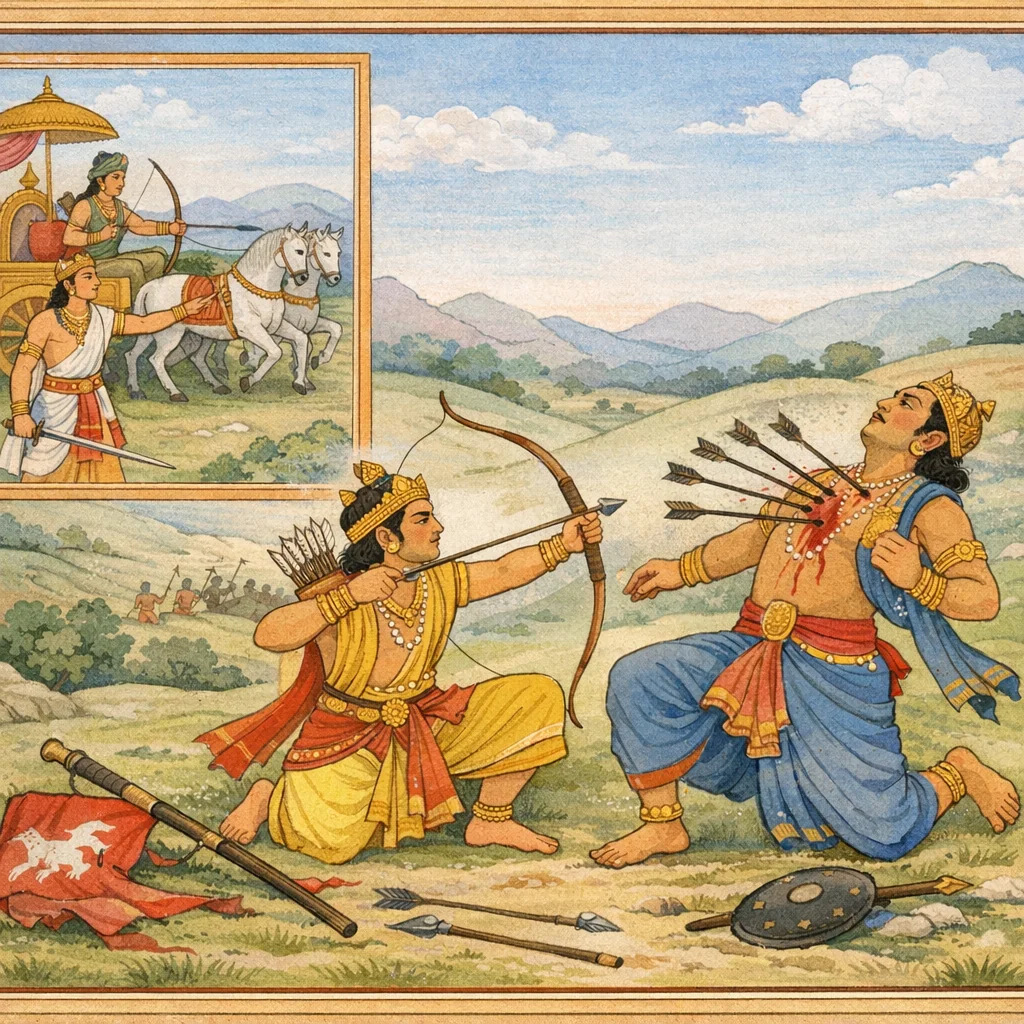
ध्वजमुन्मथितं दृष्ट्वा युयुत्सु: क्रो धमूर्च्छित: । उलूक॑ पञ्चभिर्बाणैराजघान स्तनान्तरे,अपने ध्वजका यह विध्वंस देखकर युयुत्सु क्रोधसे मूर्च्छित-सा हो गया और उसने पाँच बाणोंसे उलूककी छाती छेद डाली
Sañjaya said: Seeing his banner shattered, Yuyutsu—overwhelmed as if fainting with rage—struck Ulūka in the chest with five arrows.
Verse 9
उलूकस्तस्य समरे तैलधौतेन मारिष । शिरक्रिच्छेद भल्लेन यन्तुर्भरतसत्तम
Sañjaya said: O revered one, in that battle Ulūka, with a broad-headed arrow smeared with oil, struck and severed the charioteer’s head—O best of the Bharatas.
Verse 10
माननीय भरतभूषण! उलूकने तेलसे साफ किये हुए भल्लके द्वारा युयुत्सुके सारथिका मस्तक काट डाला ।। तच्छिन्नमपतद् भूमौ युयुत्सो: सारथेस्तदा । तारारूप॑ यथा चित्र निपपात महीतले,उस समय युयुत्सुके सारथिका वह कटा हुआ मस्तक पृथ्वीपर उसी भाँति गिरा, मानो आकाशसे भूतलपर कोई विचित्र तारा टूट पड़ा हो
Sañjaya said: Then the severed head of Yuyutsu’s charioteer fell to the ground. It dropped upon the earth like a strange star, torn from the sky, flashing down to the world below.
Verse 11
जघान चतुरोउश्चांश्न तं च विव्याध पठ्चभि: । सो5तिविद्धो बलवता प्रत्यपायाद् रथान्तरम्,तत्पश्चात् उलूकने युयुत्सुके चारों घोड़ोंको भी मार डाला और पाँच बाणोंसे उसे भी घायल कर दिया। उस बलवान वीरके द्वारा अत्यन्त घायल हो युयुत्सु दूसरे रथपर आरूढ़ हो वहाँसे भाग गया
Sañjaya said: He slew the four horses and also pierced that warrior with five arrows. Struck through with great force, Yuyutsu—severely wounded by the mighty Ulūka—withdrew, took refuge on another chariot, and retreated from that place.
Verse 12
त॑ निर्जित्य रणे राजन्नुलूकस्त्वरितो ययौ । पज्चालान् सृज्जयांश्वैव विनिघ्नन् निशितै: शरै:,राजन! रणभूमिमें युयुत्सुको पराजित करके उलूक तुरंत ही पांचालों और सूंजयोंकी ओर चला गया और उन्हें तीखे बाणोंसे मारने लगा
Sañjaya said: O King, having defeated them in the battle, Ulūka swiftly advanced toward the Pāñcālas and the Sṛñjayas, striking them down with keen, sharp arrows.
Verse 13
शतानीकं महाराज श्रुतकर्मा सुतस्तव । व्यश्वसूतरथं चक्रे निमेषार्धादसम्भ्रम:,महाराज! दूसरी ओर आपके पुत्र श्रुतकर्मने बिना किसी घबराहटके आधे निमेषयमें ही शतानीकके रथको घोड़ों और सारथिसे शून्य कर दिया
Sañjaya said: O great king, your son Śrutakarmā, without the least agitation, in but half a blink of an eye, rendered Śatānīka’s chariot bereft of horses and charioteer.
Verse 14
हताश्वे तु रथे तिष्तन् शतानीको महारथः । गदां चिक्षेप संक्रुद्धस्तव पुत्रस्य मारिष,मान्यवर! महारथी शतानीकने कुपित होकर अपने अश्वहीन रथपर खड़े रहकर ही आपके पुत्रके ऊपर गदाका प्रहार किया
Sañjaya said: Then the great chariot-warrior Śatānīka, standing upon his chariot now bereft of horses, hurled a mace in anger at your son.
Verse 15
सा कृत्वा स्यन्दनं भस्म हयांश्नैव ससारथीन् | पपात धरणीं तूर्ण दारयन्तीव भारत,भारत! वह गदा तुरंत ही श्रुतकर्माके रथ, घोड़ों और सारथिको भस्म करके पृथ्वीको विदीर्ण करती हुई-सी गिर पड़ी
Sañjaya said: That mace reduced Śrutakarman’s chariot to ashes—along with the horses and the charioteers—and then fell swiftly to the ground, as though it would split the earth itself.
Verse 16
तावुभौ विरथौ वीरौ कुरूणां कीर्तिवर्धनौ | व्यपाक्रमेतां युद्धात्तु प्रेक्षमाणी परस्परम्,कुरुकुलकी कीर्ति बढ़ानेवाले वे दोनों वीर रथहीन हो एक-दूसरेको देखते हुए युद्धस्थलसे हट गये
Sañjaya said: Those two heroic warriors, now without their chariots and enhancing the fame of the Kurus, withdrew from the battle, each watching the other—not in fear, but in the disciplined pause that follows the loss of one’s fighting position.
Verse 17
पुत्रस्तु तव सम्भ्रान्तो विवित्सो रथमारुहत् । शतानीको<पि त्वरित: प्रतिविन्ध्यरथं गत:,आपका पुत्र श्रुतकर्मा घबरा गया था। वह विवित्सुके रथपर जा चढ़ा और शतानीक भी तुरंत ही प्रतिविन्ध्यके रथपर चला गया
Sañjaya said: Your son, shaken and confused, mounted the chariot of Vivitsu; and Śatānīka too, in haste, went to the chariot of Prativindhya. The scene shows warriors seeking immediate protection and tactical advantage amid the pressure of battle, where fear and urgency drive swift alliances on the field.
Verse 18
सुतसोम॑ तु शकुनिर्विद्ध्वा तु निशितै: शरै: । नाकम्पयत संक्रुद्धो वार्योध इव पर्वतम्,दूसरी ओर शकुनि अत्यन्त कुपित हो अपने तीखे बाणोंसे सुतसोमको घायल करके भी उसे विचलित न कर सका। ठीक उसी तरह जैसे जलका प्रवाह पर्वतको नहीं हिला सकता
Sañjaya said: Though Śakuni, inflamed with anger, struck Sutasoma with sharp arrows, he could not shake him from his resolve—just as a rushing flood of water cannot move a mountain.
Verse 19
सुतसोमस्तु त॑ दृष्टवा पितुरत्यन्तवैरिणम् । शरैरनेकसाहस्रैश्छादयामास भारत,भरतनन्दन! सुतसोमने अपने पिताके अत्यन्त वैरी शकुनिको सामने देखकर उसे कई हजार बाणोंसे आच्छादित कर दिया
Sañjaya said: Seeing Śakuni—his father’s most implacable enemy—Sutasoma covered him with many thousands of arrows, O Bhārata, O joy of the Bharatas.
Verse 20
ताञ्शराज्शकुनिस्तूर्ण चिच्छेदान्यै: पतत्रिभि: । लघ्वस्त्रश्चित्रयोधी च जितकाशी च संयुगे,परंतु शकुनिने तुरंत ही दूसरे बाणोंद्वारा सुतसोमके बाणोंको काट डाला। वह शीघ्रतापूर्वक अस्त्र चलानेवाला, विचित्र युद्धमें कुशल और युद्धसस््थलमें विजयश्रीसे सुशोभित होनेवाला था। उसने समरांगणमें अपने तीखे बाणोंसे सुतसोमके बाणोंका निवारण करके अत्यन्त कुपित हो तीन बाणोंद्वारा सुतसतोमको भी घायल कर दिया
Sañjaya said: Śakuni swiftly cut down those arrows with other feathered shafts. Quick in the use of weapons, skilled in varied modes of combat, and radiant with the confidence of victory on the battlefield, he checked Sutasoma’s missiles with his sharp arrows and then—angered—wounded Sutasoma himself with three arrows.
Verse 21
परंतु शकुनिने तुरंत ही दूसरे बाणोंद्वारा सुतसोमके बाणोंको काट डाला। वह शीघ्रतापूर्वक अस्त्र चलानेवाला, विचित्र युद्धमें कुशल और युद्धसस््थलमें विजयश्रीसे सुशोभित होनेवाला था। उसने समरांगणमें अपने तीखे बाणोंसे सुतसोमके बाणोंका निवारण करके अत्यन्त कुपित हो तीन बाणोंद्वारा सुतसतोमको भी घायल कर दिया
Sañjaya said: Yet Śakuni at once cut down Sutasoma’s arrows with other shafts. Swift in the use of weapons, skilled in the varied arts of battle, and radiant with the fortune of victory upon the field, he checked Sutasoma’s missiles with his own sharp arrows. Then, inflamed with anger, he wounded Sutasoma himself with three arrows.
Verse 22
तस्याश्वान् केतनं सूतं तिलशो व्यधमच्छरै: । स्यथालस्तव महाराज तत उच्चुक्रुशुर्जना:,महाराज! आपके सालेने सुतसोमके घोड़ोंको तथा ध्वज और सारथिको भी अपने बाणोंसे तिल-तिल करके काट डाला; इससे सब लोग हर्षसूचक कोलाहल करने लगे
Sañjaya said: Your brother-in-law then shot down his opponent’s horses, banner, and charioteer, cutting them to pieces with his arrows. At that sight, O great king, the warriors and onlookers raised a loud cry of exultation.
Verse 23
हताश्वो विरथश्वैव छिन्नकेतुश्न मारिष । धन्वी धरनुर्वरं गृह रथाद् भूमावतिष्ठत,मान्यवर! घोड़े, रथ और ध्वजके नष्ट हो जानेपर धनुर्धर सुतसोम अपने हाथमें श्रेष्ठ धनुष लिये रथसे उतरकर धरतीपर खड़ा हो गया
Sañjaya said: “O revered one, when his horses were slain, his chariot rendered useless, and his banner cut down, the archer Sutasoma—taking up his excellent bow—descended from the chariot and stood firm upon the ground.”
Verse 24
व्यसृजत् सायकांश्वैव स्वर्णपुड्खान् शिलाशितान् । छादयामास समरे तव स्यालस्य तं रथम्,फिर उसने शिलापर तेज किये हुए सुवर्णमय पंखवाले बहुत-से बाण छोड़े। उन बाणोंद्वारा समरभूमिमें उसने आपके सालेके रथको ढक दिया
Sañjaya said: He then released many arrows—stone-whetted and fitted with golden fletchings—and in the press of battle he so showered them that he covered the chariot of your brother-in-law.
Verse 25
शलभानामिव व्राताञ्शरब्रातान् महारथ: । रथोपगान् समीक्ष्यैवं विव्यथे नैव सौबल:,इति श्रीमहा भारते कर्णपर्वणि सुतसोमसौबलयुद्धे पजचरविंशो 5ध्याय:
Sañjaya said: Seeing the dense flights of arrows rushing toward the chariot like swarms of locusts, the great warrior pressed the attack; yet Saubala (Śakuni), even upon observing those arrows closing in on the chariot, did not waver.
Verse 26
तत्रातुष्यन्त योधाश्व सिद्धाश्चापि दिवि स्थिता:,सुतसोम जो वहाँ पैदल होकर भी रथपर बैठे हुए शकुनिके साथ युद्ध कर रहा था। उसके इस अविश्वसनीय और अद्भुत कर्मको देखकर वहाँ खड़े हुए समस्त योद्धा तथा आकाशकमें स्थित हुए सिद्धगण भी बहुत संतुष्ट हुए
Sañjaya said: Thereupon, the warriors standing there were greatly delighted, and even the Siddhas abiding in heaven felt deep satisfaction. Witnessing such an extraordinary feat in the midst of battle, they approved the valor and resolve displayed, as if the very worlds affirmed heroic excellence when it is shown without wavering in the face of danger.
Verse 27
सुतसोमस्य तत् कर्म दृष्ट्वा श्रद्धेयमद्भुतम् । रथस्थं शकुनिं यस्तु पदाति: समयोधयत्,सुतसोम जो वहाँ पैदल होकर भी रथपर बैठे हुए शकुनिके साथ युद्ध कर रहा था। उसके इस अविश्वसनीय और अद्भुत कर्मको देखकर वहाँ खड़े हुए समस्त योद्धा तथा आकाशकमें स्थित हुए सिद्धगण भी बहुत संतुष्ट हुए
Sañjaya said: Seeing that deed of Sutasoma—astonishing and almost beyond belief—how, though on foot, he engaged in combat with Śakuni who was stationed upon a chariot, all the warriors standing there, and even the Siddhas abiding in the sky, felt deep satisfaction. The scene highlights valor grounded in resolve: true prowess is measured not by advantage of position, but by steadfast courage in the face of it.
Verse 28
तस्य ती&णैर्महावेगैर्भल्लै: संनतपर्वभि: । व्यहनत् कार्मुकं राजंस्तूणीरांश्वैव सर्वश:
Sañjaya said: With razor-sharp, high-velocity bhalla arrows—fitted with well-jointed shafts—he struck down his bow, O King, and likewise shattered his quivers completely. In the ruthless logic of battle, this is a deliberate act of disarming: not merely wounding the warrior, but cutting off his capacity to fight, turning skill and valor into helplessness for a moment.
Verse 29
राजन! उस समय शकुनिने अत्यन्त वेगशाली और झुकी हुई गाँठवाले तीखे भल््लोंद्वारा सुतसोमके धनुष, तरकस तथा अन्य सब उपकरणोंको भी नष्ट कर दिया ।। स च्छिन्नधन्वा विरथ: खड््गमुद्यम्य चानदत् । वैदूर्योत्पलवर्णाभं दन्तिदन्तमयत्सरुम्
Sañjaya said: O King, at that time Śakuni, with extremely swift, sharp bhalla-arrows whose joints were bent downward, shattered Sutasoma’s bow, his quiver, and all his other fighting gear. With his bow cut, Sutasoma became chariotless; raising his sword, he roared aloud, and then took up a spear made of elephant-ivory, gleaming like vaidūrya-gem and blue lotus in hue—ready to continue the fight despite the loss of his weapons.
Verse 30
रथ तो नष्ट हो ही चुका था, जब धनुष भी कट गया, तब सुतसोमने वैदूर्यमणि तथा नील कमलके समान श्याम रंगवाले, हाथीके दाँतकी बनी हुई मूठसे युक्त खड्गको ऊपर उठाकर बड़े जोरसे गर्जना की ।। भ्राम्यमाणं ततस्तं तु विमलाम्बरवर्चसम् | कालदण्डोपमं मेने सुतसोमस्य धीमत:,बुद्धिमान् सुतसोमके उस निर्मल आकाशके समान कान्तिवाले खड़्गको घुमाया जाता देख शकुनिने उसे अपने लिये कालदण्डके समान माना
Sañjaya said: Then, seeing that radiant sword of the wise Sutasoma—shining like the spotless sky—being whirled about, Śakuni judged it to be like the staff of Death itself for him. In the background, Sutasoma, with his chariot ruined and his bow cut down, lifted up his sword with an ivory hilt, dark-hued like a vaidūrya gem and a blue lotus, and roared with great force—signaling unwavering resolve amid the chaos of battle.
Verse 31
सो5चरत् सहसा खड्गी मण्डलानि समन्तत: । चतुर्दश महाराज शिक्षाबलसमन्वित:,महाराज! सुतसोम शिक्षा और बल दोनोंसे सम्पन्न था, वह खड़्ग लेकर सहसा उसके चौदह मण्डल (पैंतरे) दिखाता हुआ रणभूमिमें सब ओर विचरने लगा
Sañjaya said: Then, sword in hand, he suddenly moved about on every side, displaying the fourteen circular maneuvers. O King, endowed with disciplined training and strength alike, Sutasoma ranged across the battlefield, showing martial skill as a sign of readiness and resolve amid the moral weight of war.
Verse 32
भ्रान्तमुद्भ्रान्तमाविद्धमाप्लुतं विप्लुतं सृतम् । सम्पातसमुदीर्णे च दर्शयामास संयुगे,उसने युद्धस्थलमें भ्रान्त, उदभ्रान्त, आविद्ध, आप्लुत, प्लुत, सृत, सम्पात और समुदीर्ण आदि गतियोंको दिखाया
Sañjaya said: In the thick of battle he displayed every kind of swift and bewildering maneuver—circling and reeling, sudden whirls and feints, leaps and plunges, rapid darts and rushes, and even soaring descents and forceful upsurges—making the battlefield a theatre of relentless martial skill.
Verse 33
सौबलस्तु ततस्तस्य शरांक्षिक्षेप वीर्यवान् | तानापतत एवाशु चिच्छेद परमासिना,तब पराक्रमी सुबलपुत्रने सुतसोमपर बहुत-से बाण चलाये; परंतु उसने अपने उत्तम खड्गसे निकट आते ही उन सब बाणोंको काट गिराया
Sañjaya said: Then the valiant son of Śubala (Śakuni) hurled a multitude of arrows at him. But as those shafts rushed in, he swiftly cut them down with his excellent sword—showing the warrior’s alertness and mastery in battle, where skill and presence of mind can neutralize even a sudden storm of weapons.
Verse 34
ततः क्रुद्धो महाराज सौबल: परवीरहा । प्राहिणोत् सुततोमाय शरानाशीविषोपमान्,महाराज! इससे शत्रुवीरोंका संहार करनेवाले सुबलपुत्र शकुनिको बड़ा क्रोध हुआ। उसने सुतसोमपर विषधर सर्पोके समान बाणोंकी वर्षा आरम्भ कर दी
Sañjaya said: Then, O King, Śakuni—the son of Subala, a slayer of enemy heroes—became enraged and hurled at Sutasoma a shower of arrows, like venomous serpents. The scene underscores how wrath on the battlefield drives men toward ruthless escalation, where skill is harnessed not for restraint but for destruction.
Verse 35
चिच्छेद तांस्तु खड्गेन शिक्षया च बलेन च | दर्शयँल्लाघवं युद्धे ताक्ष्यतुल्यपराक्रम:,परंतु गरुड़के तुल्य पराक्रमी सुतसोमने अपनी शिक्षा और बलके अनुसार युद्धमें फुर्ती दिखाते हुए खड्गसे उन सब बाणोंके टुकड़े-टुकड़े कर डाले
Sañjaya said: Displaying swift agility in battle, and relying on his training and strength, the warrior of prowess equal to Tākṣya (Garuḍa) cut all those arrows to pieces with his sword. The scene underscores the kṣatriya ideal of disciplined skill—power guided by practice—amid the relentless ethics of battlefield duty.
Verse 36
तस्य संचरतो राजन् मण्डलावर्तने तदा | क्षुरप्रेण सुतीक्ष्णेणन खड्गं चिच्छेद सुप्रभम्,राजन! सुतसोम जब अपनी चमकीली तलवारको मण्डलाकार घुमा रहा था, उसी समय शकुनिने तीखे क्षुरप्रसे उसके दो टुकड़े कर दिये
Sañjaya said: O King, as he moved about, whirling his sword in circular arcs, Śakuni—using a razor-sharp kṣurapra—cut that brilliantly shining sword to pieces. In the midst of battle, skill and stratagem can abruptly overturn a warrior’s advantage, reminding one that prowess must be joined with vigilance and steadiness of mind.
Verse 37
स च्छिन्न: सहसा भूमौ निपपात महानसि: । अर्धमस्य स्थितं हस्ते सुत्सरोस्तत्र भारत,वह महान् खड़ग कटकर सहसा पृथ्वीपर गिर पड़ा। भारत! सुन्दर मूठवाले उस खड्गका आधा भाग सुतसोमके हाथमें ही रह गया
Sañjaya said: The great sword, having been suddenly severed, fell to the ground at once. O Bhārata, there the half of that weapon—the portion with the fine hilt—still remained in Sutasoma’s hand. In the midst of battle, it shows how swiftly power and advantage can be cut down, and how a warrior’s resolve is tested when his means are abruptly diminished.
Verse 38
छिन्नमाज्ञाय निस्त्रिंशमवप्लुत्य पदानि षट् । प्राविध्यत तत: शेषं सुतसोमो महारथ:,अपने उस खड्गको कटा हुआ जान महारथी सुतसोमने छ: पग ऊँचे उछलकर उसके शेष भागको ही शकुनिपर दे मारा
Sañjaya said: Realizing that his sword had been cut, the great chariot-warrior Sutasoma sprang upward by six paces and then hurled the remaining fragment of the blade at Śakuni. The scene underscores the relentless momentum of battle: even when a weapon is broken, a kṣatriya’s resolve does not break, and presence of mind turns loss into immediate counteraction.
Verse 39
तच्छित्त्वा सगुणं चापं रणे तस्य महात्मन: । पपात धरणी तूर्ण स्वर्णवज्विभूषितम्,वह स्वर्ण और हीरेसे विभूषित कटा हुआ खड्ग रणभूमिमें महामना शकुनिके धनुषको प्रत्यंचासहित काटकर तुरंत ही पृथ्वीपर गिर पड़ा
Sañjaya said: Having cut in battle the great-souled warrior’s bow together with its string, the gold-and-diamond-adorned weapon fell swiftly to the ground. The moment marks a decisive turn in the duel: the stripping away of a fighter’s means of combat, exposing vulnerability amid the relentless ethics of kṣatriya warfare where skill and fate collide.
Verse 40
सुतसोमस्ततो<गच्छच्छुतकीर्तेर्महारथम् । सौबलो<पि भनुर्गह्य घोरमन्यत् सुदुर्जयम्
Sañjaya said: Then Sutasoma advanced against the great chariot-warrior Śutakīrti. Saubala too, taking Bhānu with him, pressed on toward another formidable and hard-to-overcome opponent—showing how, in the chaos of battle, warriors deliberately seek out worthy adversaries and bind themselves to alliances of necessity, even when the encounter promises peril.
Verse 41
तत्र नादो महानासीत् पाण्डवानां विशाम्पते
Then, O lord of the people, a great roar arose from the Pāṇḍavas—an overwhelming battle-cry that proclaimed their resolve and rallied their forces amid the moral gravity of the war.
Verse 42
तान्यनीकानि दृप्तानि शस्त्रवन्ति महान्ति च
Sañjaya said: “Those battle-formations stood proud and formidable—well-armed and vast in scale.”
Verse 43
यथा दैत्यचमूं राजन् देवराजो ममर्द ह । तथैव पाण्डवीं सेनां सौबलेयो व्यनाशयत्,राजन! जिस प्रकार देवराज इन्द्रने दैत्योंकी सेनाको कुचल दिया था, उसी प्रकार सुबलपुत्र शकुनिने पाण्डव-सेनाका विनाश कर डाला
Sañjaya said: “O King, just as Indra, the lord of the gods, once crushed the host of the Dānavas, so too did Śakuni, the son of Subala, bring the Pāṇḍava army to ruin.”
Verse 231
निवार्य समरे चापि शरांस्तान् निशितै: शरै: । आजचघान सुसंक्रुद्ध: सुतसोम॑ त्रिभि: शरै:
Sañjaya said: In the thick of battle, having checked those arrows with his own keen shafts, the warrior—now fiercely enraged—struck Sutasoma with three arrows.
Verse 256
प्रममाथ शरांस्तस्य शरव्रातैर्महायशा: । उसके बाणसमूह टिड्डीदलोंके समान जान पड़ते थे। उन्हें अपने रथके समीप देखकर भी महारथी सुबलपुत्र शकुनिके मनमें तनिक भी व्यथा नहीं हुई। उस महायशस्वी वीरने अपने बाणसमूहोंद्वारा सुतसोमके सारे बाणोंको पूर्णतया मथ डाला
Sañjaya said: The illustrious warrior shattered his opponent’s arrows with volleys of his own. Though the mass of arrows near his chariot looked like swarms of locusts, the great chariot-fighter Śakuni, son of Subala, felt not the slightest distress; with his arrow-clusters he completely crushed all of Sutasoma’s missiles.
Verse 406
अभ्ययात् पाण्डवानीकं निध्नज्शत्रुगणान् बहून् । तत्पश्चात् सुतसोम श्रुतकीर्तिके विशाल रथपर चढ़ गया। उधर शकुनि भी दूसरा अत्यन्त दुर्जय एवं भयंकर धनुष लेकर बहुत-से शत्रुओंका संहार करता हुआ पाण्डव- सेनाकी ओर चल दिया
Sanjaya said: Advancing toward the Pandava host, he struck down many bands of enemies. After that, Sutasoma and Shrutakirti—surrounded by great chariot-warriors—mounted and moved into action. On the other side, Shakuni too, taking up a second bow, exceedingly hard to overcome and terrifying, proceeded toward the Pandava army while cutting down many foes.
Verse 413
सौबलं समरे दृष्टवा विचरन्तमभीतवत् । प्रजानाथ! सुबलपुत्र शकुनिको समरभूमिमें निर्भयसे विचरते देख पाण्डव-दलमें महान् सिंहनाद होने लगा
Sanjaya said: “O lord of men, seeing Saubala—Shakuni, the son of Subala—moving about the battlefield as if fearless, a great lion-like roar arose within the Pandava ranks.”
Verse 423
द्राव्यमाणान्यदृश्यन्त सौबलेन महात्मना । महामना शकुनिने घमंडमें भरे हुए उन शस्त्रसम्पन्न महान् सैनिकोंको भगा दिया। यह सब हमने अपनी आँखों देखा
Sanjaya said: “They were seen being driven into flight by the great-souled son of Subala—high-minded Shakuni. Thus, before our very eyes, Shakuni routed those well-armed, proud warriors.”
Frequently Asked Questions
The implicit dilemma is whether leadership may justify immediate strategic pressure through mythic precedent—treating divine intervention and conditional invulnerability as analogies for human decision—thereby narrowing deliberation (“no further consideration”) in a high-stakes setting.
Power is structurally bounded: tapas and boons generate extraordinary capacity, yet dharma and kāla impose constraints; coordinated agency and right timing can dissolve seemingly absolute protections.
No explicit phalaśruti is presented here; the chapter’s meta-function is argumentative and exemplificatory—using itihāsa to validate strategy, hierarchy, and the necessity of a superior guiding role (sārathi) within the broader war narrative.