Adhyaya 19
Karṇa-parva Adhyāya 19 — Saṃśaptaka–Trigarta Assault and Aindra-astra Counter
Upa-parva: Saṃśaptaka–Trigarta Engagement (Dhanañjaya-Abhyardana Episode)
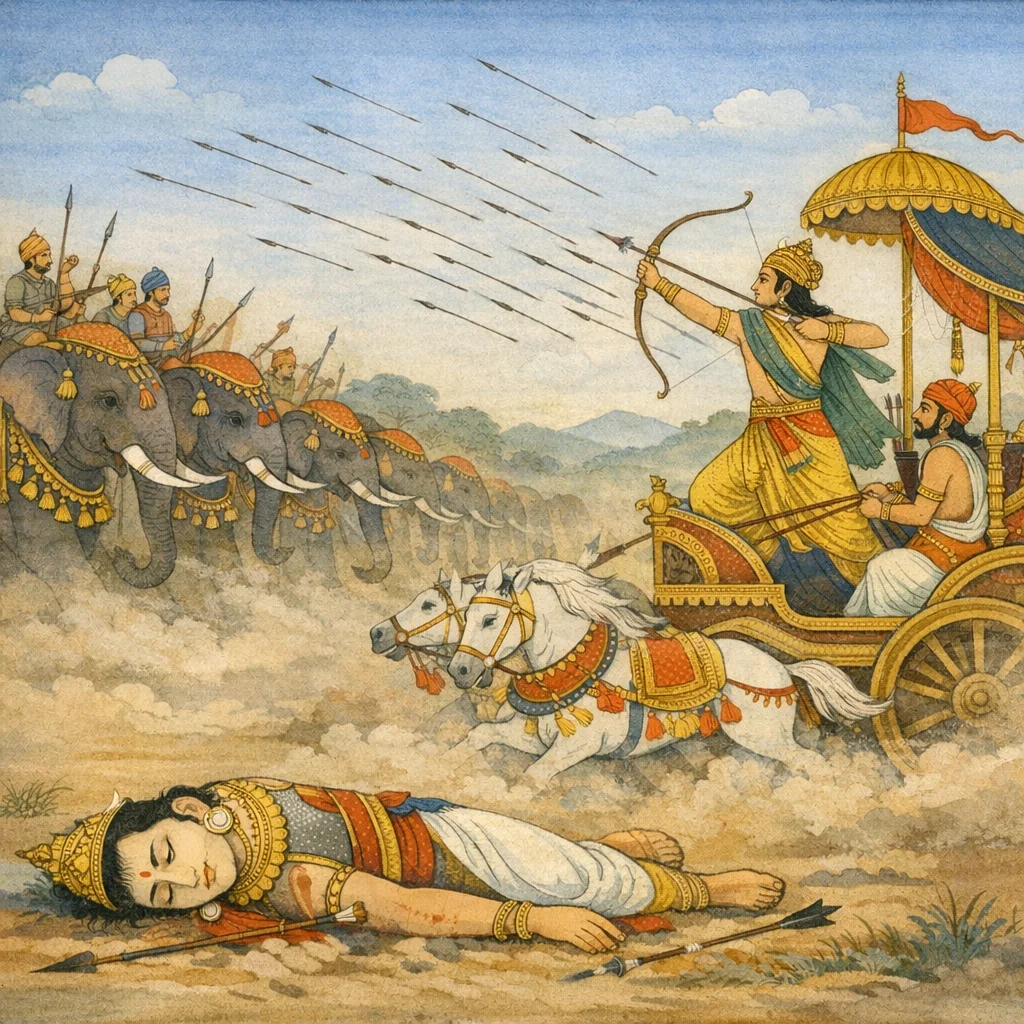
Saṃjaya reports that Śvetāśva’s force presses the Kaurava host, while Trigartas, Śibis, Śālvas, Saṃśaptakas, and the Nārāyaṇa contingent surge against Arjuna. Named Trigarta leaders (including Satyasena, Satyakīrti, Mitradeva, Śrutaṃjaya, Sauśruti, Citrasena, Mitravarmā) attack in massed volleys, likened to waves. Despite heavy pressure, Arjuna’s counterfire causes rapid collapses in the attacking ranks. He kills key figures—Śatruṃjaya, Sauśruti, Candradeva—and continues to check other mahārathas with measured volleys. Satyasena hurls a tomara that pierces Kṛṣṇa/Mādhava’s left arm, briefly disrupting reins and whip; Kṛṣṇa regains control and drives toward Satyasena, after which Arjuna kills Satyasena and strikes further leaders, including Mitradeva, while wounding Suśarmā. Encircled again by Saṃśaptakas, Arjuna manifests the Aindra-astra, producing a vast discharge of arrows that shatters standards, weapons, chariots, and armor, creating a chaotic field of severed heads and bodies described with stark similes. The battle devolves into close-quarters mêlée—elephants trampling, chariots overturned, and even fistfights—until confusion spreads and combatants strike friend and foe alike. The report closes with a broader attrition update: Karṇa slays Pāñcālas, Arjuna slays Trigartas, and Bhīma strikes Kuru forces and elephant divisions as afternoon slaughter intensifies.
Chapter Arc: धृतराष्ट्र, संजय से उस ‘लोकविश्रुत’ प्रवीर के कर्म-वैभव का विस्तार पूछते हैं—उसकी शिक्षा, प्रभाव, वीर्य, प्रमाण और दर्प तक; मानो युद्धभूमि के शोर के पीछे किसी एक पुरुष की कथा-रेखा खोजी जा रही हो। → संजय धनुर्विद्या के शिखर-पुरुषों की परंपरा गिनाते हुए (भीष्म, द्रोण, कृप, द्रौणि, कर्ण, अर्जुन, जनार्दन) युद्ध की कसौटी पर ‘प्रतिवीर’ की दुर्लभता दिखाते हैं—और संकेत करते हैं कि जब बाण-वर्षा का महावेग उठता है, तब उसे रोकने वाला कोई विरल ही होता है। → इसी बीच कर्ण पाण्डवों की गजसेना पर टूट पड़ते हैं; महावेग शरवर्षा से हाथ, भुजाएँ, शिर—अंग-अंग काटते हुए महारथियों को धराशायी करते हैं, और पूर्णचन्द्र-प्रभ मुख वाला एक प्रमुख योद्धा (पाण्ड्यराज/पाण्ड्य-नरेश पक्ष) रणभूमि में चन्द्रमा-सा गिरकर भी चमकता दिखता है। → कर्ण के प्रहार से पाण्डव-पक्ष की गजानीक-शक्ति विचलित होती है; रथी-महारथी कटते-बिखरते हैं और युद्ध की धारा क्षण भर के लिए कौरव-पक्ष की ओर झुकती है—विजय का उन्माद नहीं, पर निर्णायक दबाव अवश्य बनता है। → कर्ण की इस उग्र गति के सामने पाण्डव-पक्ष कौन ‘प्रतिवीर’ बनकर खड़ा होगा—और यह दबाव किस बड़े द्वंद्व को जन्म देगा?
Shlokas
Verse 1
2८. ह०:<-४ #::-फ कहे विशो&्ध्याय: अश्वत्थामाके द्वारा पाण्ड्यनेरशका वध धृतराष्ट उवाच प्रोक्तस्त्वया पूर्वमेव प्रवीरो लोकविश्रुत: । न त्वस्य कर्म संग्रामे त्वया संजय कीर्तितम्,धृतराष्ट्रने पूछा--संजय! तुमने पाण्ड्यको पहले ही लोकविख्यात वीर बतलाया था; परंतु संग्राममें उनके किये हुए वीरोचित कर्मका वर्णन नहीं किया
Dhṛtarāṣṭra said: “You have already described him to me earlier as a mighty hero, renowned throughout the world. Yet, Sañjaya, you have not recounted to me his deeds—his actual conduct and exploits—in the battle.”
Verse 2
तस्य विस्तरशो ब्रूहि प्रवीरस्याद्य विक्रमम् । शिक्षां प्रभावं वीर्य च प्रमाणं दर्पमेव च,आज उन प्रमुख वीरके पराक्रम, शिक्षा, प्रभाव, बल, प्रमाण और दर्पका विस्तारपूर्वक वर्णन करो
Dhṛtarāṣṭra said: “Tell me in full detail, today, of that foremost hero’s prowess—his training, his influence, his valor, his stature, and even his pride.”
Verse 3
संजय उवाच भीष्मद्रोणकृपद्रौणिकर्णार्जुनजनार्दनान् | समाप्तविद्यान् धनुषि श्रेष्ठान् यान् मन्यसे रथान्,संजयने कहा--राजन्! भीष्म, द्रोण, कृपाचार्य, अश्वत्थामा, कर्ण, अर्जुन तथा श्रीकृष्ण आदि जिन वीरोंको आप पूर्ण विद्वान, थनुर्वेदमें श्रेष्ठ तथा महारथी मानते हैं, इन सब महारथियोंको जो अपने पराक्रमके समक्ष तुच्छ समझता था, जो किसी भी नरेशको अपने समान नहीं मानता था, जो द्रोण और भीष्मके साथ अपनी तुलना नहीं सह सकता था और जिसने श्रीकृष्ण तथा अर्जुनसे भी अपनेमें तनिक भी न्यूनता माननेकी इच्छा नहीं की, उसी सम्पूर्ण शस्त्रधारियोंमें श्रेष्ठ नृपशिरोमणि पाण्ड्यने अपमानित हुए यमराजके समान कुपित हो कर्णकी सेनाका वध आरम्भ किया
Sañjaya said: O king, those warriors—Bhīṣma, Droṇa, Kṛpa, Aśvatthāmā, Karṇa, Arjuna, and Janārdana (Śrī Kṛṣṇa)—whom you regard as fully accomplished in learning, foremost in archery, and pre-eminent chariot-fighters: the narrative turns to a ruler who, scorning even such masters as insignificant before his own prowess, acknowledging no king as his equal, refusing comparison with Bhīṣma and Droṇa, and unwilling to admit even the slightest inferiority to Kṛṣṇa and Arjuna, became enraged like Yama when insulted and began the slaughter of Karṇa’s forces.
Verse 4
यो ह्ाक्षिपति वीर्येण सवनितान् महारथान् | न मेने चात्मना तुल्यं कंचिदेव नरेश्वरम्,संजयने कहा--राजन्! भीष्म, द्रोण, कृपाचार्य, अश्वत्थामा, कर्ण, अर्जुन तथा श्रीकृष्ण आदि जिन वीरोंको आप पूर्ण विद्वान, थनुर्वेदमें श्रेष्ठ तथा महारथी मानते हैं, इन सब महारथियोंको जो अपने पराक्रमके समक्ष तुच्छ समझता था, जो किसी भी नरेशको अपने समान नहीं मानता था, जो द्रोण और भीष्मके साथ अपनी तुलना नहीं सह सकता था और जिसने श्रीकृष्ण तथा अर्जुनसे भी अपनेमें तनिक भी न्यूनता माननेकी इच्छा नहीं की, उसी सम्पूर्ण शस्त्रधारियोंमें श्रेष्ठ नृपशिरोमणि पाण्ड्यने अपमानित हुए यमराजके समान कुपित हो कर्णकी सेनाका वध आरम्भ किया
Sañjaya said: “He who, by the sheer force of his valor, would cast aside even the foremost great chariot-warriors as insignificant, and who regarded no king whatsoever as equal to himself.”
Verse 5
तुल्यतां द्रोणभीष्मा भ्यामात्मनो यो न मृष्यते । वासुदेवार्जुनाभ्यां च न्यूनतां नैच्छतात्मनि,संजयने कहा--राजन्! भीष्म, द्रोण, कृपाचार्य, अश्वत्थामा, कर्ण, अर्जुन तथा श्रीकृष्ण आदि जिन वीरोंको आप पूर्ण विद्वान, थनुर्वेदमें श्रेष्ठ तथा महारथी मानते हैं, इन सब महारथियोंको जो अपने पराक्रमके समक्ष तुच्छ समझता था, जो किसी भी नरेशको अपने समान नहीं मानता था, जो द्रोण और भीष्मके साथ अपनी तुलना नहीं सह सकता था और जिसने श्रीकृष्ण तथा अर्जुनसे भी अपनेमें तनिक भी न्यूनता माननेकी इच्छा नहीं की, उसी सम्पूर्ण शस्त्रधारियोंमें श्रेष्ठ नृपशिरोमणि पाण्ड्यने अपमानित हुए यमराजके समान कुपित हो कर्णकी सेनाका वध आरम्भ किया
Sañjaya said: He could not endure being regarded as merely equal to Droṇa and Bhīṣma, and he would not admit even the slightest inferiority in himself when compared with Vāsudeva (Kṛṣṇa) and Arjuna. Thus, driven by an uncompromising pride in his own prowess, he measured all warriors by himself and refused any rank above him—an attitude that, in the moral atmosphere of the war, becomes a seed of wrath and ruin.
Verse 6
स पाण्ड्यो नृपतिमश्रेष्ठ: सर्वशस्त्रभूतां वर: । कर्णस्यानीकमहनत् परा भूत इवान्तक:,संजयने कहा--राजन्! भीष्म, द्रोण, कृपाचार्य, अश्वत्थामा, कर्ण, अर्जुन तथा श्रीकृष्ण आदि जिन वीरोंको आप पूर्ण विद्वान, थनुर्वेदमें श्रेष्ठ तथा महारथी मानते हैं, इन सब महारथियोंको जो अपने पराक्रमके समक्ष तुच्छ समझता था, जो किसी भी नरेशको अपने समान नहीं मानता था, जो द्रोण और भीष्मके साथ अपनी तुलना नहीं सह सकता था और जिसने श्रीकृष्ण तथा अर्जुनसे भी अपनेमें तनिक भी न्यूनता माननेकी इच्छा नहीं की, उसी सम्पूर्ण शस्त्रधारियोंमें श्रेष्ठ नृपशिरोमणि पाण्ड्यने अपमानित हुए यमराजके समान कुपित हो कर्णकी सेनाका वध आरम्भ किया
Sañjaya said: “That Pāṇḍya—foremost among kings, the best of all weapon-bearers—began to cut down Karṇa’s host, raging like Death itself when dishonoured. In the moral atmosphere of the war, his wrath is presented not as mere cruelty but as the fierce, kingly resolve to answer insult and uphold his own kṣatriya standing through decisive action on the battlefield.”
Verse 7
तदुदीर्णरथाश्वेभं पत्तिप्रवरसंकुलम् | कुलालचक्रवद् भ्रान्तं पाण्ड्येना भ्याहतं बलात्,कौरव-सेनामें रथ, घोड़े और हाथियोंकी संख्या बढ़ी-चढ़ी थी, श्रेष्ठ पैदल सैनिकोंसे भी वह सेना भरी हुई थी, तथापि पाण्ड्यनरेशके द्वारा बलपूर्वक आहत होकर वह कुम्हारके चाककी भाँति चक्कर काटने लगी
Sañjaya said: Though the Kaurava host was swollen with chariots, horses, and elephants, and crowded with excellent foot-soldiers, yet—struck with force by the Pāṇḍya king—it began to whirl about like a potter’s wheel. The image conveys how sheer martial prowess and numbers, when met by a focused and righteous counterstroke, can collapse into confusion and loss of order on the battlefield.
Verse 8
व्यश्वसूतध्वजरथान् विप्रविद्धायुधद्विपान् । सम्यगस्तै: शरै: पाण्ड्यो वायुर्मेघानिवाक्षिपत्,जैसे वायु मेघोंको उड़ा देती है, उसी प्रकार पाण्ड्यनरेशने अच्छी तरह चलाये हुए बाणोंद्वारा समस्त सैनिकोंको घोड़े, सारथि, ध्वज और रथोंसे हीन कर दिया। उनके आयुधों और हाथियोंको भी मार गिराया
Sanjaya said: The Pandya king, with arrows well released and precisely aimed, scattered the enemy host—stripping them of horses, charioteers, banners, and chariots, and striking down their weapons and elephants—just as the wind drives and disperses the clouds. The verse underscores the ruthless efficiency of battlefield skill, where martial excellence rapidly turns organized forces into disarray.
Verse 9
द्विरदान् द्विरदारोहान् विपताकायुधध्वजान् | सपादरक्षानहनद् वज्ेणाद्रीनिवाद्रिहा,जैसे पर्वतोंका हनन करनेवाले इन्द्रने वज्रद्वारा पर्वतोंपर आघात किया था, उसी प्रकार पाण्ड्यनरेशने पादरक्षकोंसहित हाथियों और हाथीसवारोंको ध्वजा, पताका तथा आयुधोंसे वंचित करके मार डाला
Sañjaya said: Like Indra, the smiter of mountains, striking the mountains with his thunderbolt, so did the king of the Pāṇḍyas strike down the elephants and their riders—together with their foot-guards—after stripping them of their weapons, banners, and pennants. The verse underscores the ruthless efficiency of battlefield violence, where martial insignia and arms—symbols of status and protection—are rendered useless before overwhelming force.
Verse 10
सशक्तिप्रासतूणीरानश्वारोहान् हयानपि । पुलिन्दखसबाह्लीकनिषादान्ध्रककुन्तलान्,शक्ति, प्रास और तरकसोंसहित घुड़सवारों तथा घोड़ोंको भी यमलोक पहुँचा दिया। पुलिन्द, खस, बाह्लीक, निषाद, आन्ध्र, कुन्तल, दाक्षिणात्य तथा भोजप्रदेशीय रणकर्कश श्र-वीरोंको अपने बाणोंद्वारा अस्त्र-शस्त्र तथा कवचोंसे हीन करके उनके प्राण हर लिये
Sañjaya said: With his arrows he sent to Yama’s realm even the horsemen equipped with śaktis, spears, and quivers—and the horses themselves. He struck down warriors from the Pulinda, Khasa, Bāhlīka, Niṣāda, Āndhra, and Kuntala peoples, stripping them of weapons and armor and taking their lives amid the harsh din of battle—an image of war’s relentless impartiality, where prowess and equipment offer no sure refuge from death.
Verse 11
दाक्षिणात्यांश्व भोजांश्व॒ शूरान् संग्रामकर्कशान् । विशस्त्रकवचान् बाणै: कृत्वा चैवाकरोद् व्यसून्,शक्ति, प्रास और तरकसोंसहित घुड़सवारों तथा घोड़ोंको भी यमलोक पहुँचा दिया। पुलिन्द, खस, बाह्लीक, निषाद, आन्ध्र, कुन्तल, दाक्षिणात्य तथा भोजप्रदेशीय रणकर्कश श्र-वीरोंको अपने बाणोंद्वारा अस्त्र-शस्त्र तथा कवचोंसे हीन करके उनके प्राण हर लिये
Sañjaya said: He struck down the southern warriors and the Bhojas—heroes hardened for battle—first stripping them, with his arrows, of their weapons and armor, and then leaving them lifeless. The verse underscores the grim efficiency of war: valor and regional renown offer no refuge when martial skill is turned toward annihilation.
Verse 12
चतुरज्ुृं बल॑ं बाणैनिध्नन्तं पाण्ड्यमाहवे । दृष्टवा द्रौणिरसम्भ्रान्तमसम्भ्रान्तस्ततो5 भ्ययात्,राजा पाण्ड्यको समरांगणमें बिना किसी घबराहटके अपने बाणोंद्वारा कौरवोंकी चतुरंगिणी सेनाका विनाश करते देख अभश्वत्थामाने निर्भय होकर उनका सामना किया
Sañjaya said: Seeing the Pāṇḍya king in the thick of battle striking down the fourfold Kaurava host with his arrows, Droṇa’s son (Aśvatthāman), himself unshaken, advanced to meet that unshaken warrior. The scene underscores the ethic of kṣatriya warfare: steadfastness under peril and the resolve to confront a formidable opponent without panic.
Verse 13
आभाष्य चैनं मधुरमभीतं तमभीतवत् | प्राह प्रहरतां श्रेष्ठ: स्मितपूर्व समाह्दयत्,साथ ही उन निर्भय नरेशको मधुर वाणीमें सम्बोधित करके योद्धाओंमें श्रेष्ठ अश्वत्थामाने मुसकराकर युद्धके लिये उनका आह्वान करते हुए निर्भीकके समान कहा --
Sañjaya said: Addressing him with gentle, pleasing words—though he was fearless—Aśvatthāmā, foremost among fighters, first smiled and then, as if himself unafraid, called him forth to battle and spoke.
Verse 14
राजन् कमलपत्राक्ष विशिष्टाभिजनश्रुत | वज्ञसंहननप्रख्य प्रदातवतलपौरुष,“राजन! कमलनयन! तुम्हारा कुल और शास्त्रज्ञान सर्वश्रेष्ठ है। तुम्हारा सुगठित शरीर वज्रके समान कान्तिमान् है, तुम्हारे बल और पुरुषार्थ भी प्रसिद्ध हैं
Sañjaya said: “O King, lotus-eyed one! Your lineage and your learning are renowned as foremost. Your well-knit frame is like adamant, and your strength and manly effort are celebrated.”
Verse 15
मुष्टिश्लिष्टायतज्यं च व्यायताभ्यां महद् धनु: । दोर्भ्या विस्फारयन् भासि महाजलदवद् भशम्,“तुम्हारे धनुषकी प्रत्यंचा एक ही समय तुम्हारी मुद्ठीमें सटी हुई तथा गोलाकार फैली हुई दिखायी देती है। जब तुम अपनी दोनों बड़ी-बड़ी भुजाओंसे विशाल धनुषको खींचने और उसकी टंकार करने लगते हो, उस समय महान् मेघके समान तुम्हारी बड़ी शोभा होती है
Sañjaya said: “The bowstring appears at once pressed close within your fist and yet stretched out in a wide arc. When, with your two mighty arms, you draw and make the great bow resound, you shine with intense splendor—like a vast rain-cloud.”
Verse 16
शरवर्षरमहावेगैरमित्रानभिवर्षत: । मदन्यं नानुपश्यामि प्रतिवीरं तवाहवे,“जब तुम अपने शत्रुओंपर बड़े वेगसे बाण-वर्षा करने लगते हो, उस समय मैं अपने सिवा दूसरे किसी वीरको ऐसा नहीं देखता, जो समरांगणमें तुम्हारा सामना कर सके
Sañjaya said: “When you unleash a torrential shower of arrows with tremendous speed upon your foes, I see no warrior—other than myself—who can stand as your equal opponent on the battlefield.”
Verse 17
रथद्विरदपत्त्यश्वानेकः प्रमथसे बहुन् । मृगसंघानिवारण्ये विभीर्भीमबलो हरि:,तुम अकेले ही बहुत-से रथ, हाथी, पैदल और घोड़ोंको मथ डालते हो। ठीक उसी तरह जैसे वनमें भयंकर बलशाली सिंह बिना किसी भयके मृग-समूहोंका संहार कर डालता है
Sañjaya said: “Alone you are crushing many—chariots, elephants, infantry, and horses. Just as, in a forest, a fearsome lion of tremendous strength, without any fear, destroys herds of deer, so does Hari (Kṛṣṇa) overwhelm the enemy host.”
Verse 18
महता रथघोषेण दिवं भूमिं च नादयन् । वर्षान्ति सस्यहा मेघो भासि ह्वादीव पार्थिव,“राजन! तुम अपने रथके गम्भीर घोषसे आकाश और पृथ्वीको प्रतिध्वनित करते हुए शरत्कालमें गर्जना करनेवाले सस्यनाशक मेघके समान जान पड़ते हो
Sañjaya said: “O King, with the deep thunder of your chariot you make both heaven and earth resound. You appear like a crop-destroying cloud that roars at the end of the rains—like a great lake swelling and rumbling in the season.”
Verse 19
इस प्रकार श्रीमह्ाभारत कर्णपर्वमें संकुलयुद्धाविषयक उतन्नीसवाँ अध्याय पूरा हुआ,संस्पृशान: शरांस्तीक्ष्णांस्तूणादाशीविषोपमान् । मयैवैकेन युध्यस्व तरयम्बकेनान्धको यथा “अब तुम अपने तरकससे विषधर सर्पोके समान तीखे बाण लेकर जैसे महादेवजीके साथ अन्धकासुरने संग्राम किया था, उसी प्रकार केवल मेरे साथ युद्ध करो'
Sañjaya said: “Taking from your quiver sharp arrows, like venomous serpents, fight now with me alone—just as Andhaka once fought with Tryambaka (Śiva) in battle.”
Verse 20
एवमुक्तस्तथेत्युक्त्वा प्रहरेति च ताडित: । कर्णिना द्रोणतनयं विव्याध मलयध्वज:,अश्वत्थामाके ऐसा कहनेपर पाण्ड्यनरेश बोले--“अच्छा ऐसा ही होगा। पहले तुम प्रहार करो।' इस प्रकार आक्षेपयुक्त वचन सुनकर अश्वत्थामाने उनपर अपने बाणका प्रहार किया। तब मलयध्वज पाण्ड्यनरेशने कर्णी नामक बाणके द्वारा द्रोणपुत्रको बींध डाला इति श्रीमहाभारते कर्णपर्वणि पाण्ड्यवधे विंशो5ध्याय:
Sañjaya said: Thus addressed, the Pāṇḍya king Malayadhvaja replied, “So be it,” and, stung by the taunting words—“Strike first!”—Aśvatthāmā shot his arrows at him. Then Malayadhvaja pierced Droṇa’s son with a Karṇī arrow.
Verse 21
मर्मभेदिभिरत्युग्रैर्बाणैरग्निशिखोपमै: । स्मयन्नभ्यहनद् द्रौणि: पाण्ड्यमाचार्यसत्तम:,तब आचार्यप्रवर अश्वत्थामाने अत्यन्त भयंकर तथा अग्निशिखाके समान तेजस्वी मर्मभेदी बाणोंद्वारा पाण्ड्यनरेशको मुसकराते हुए घायल कर दिया
Sañjaya said: Then Aśvatthāman, Droṇa’s son and foremost of teachers, smiling, struck the king of Pāṇḍya with exceedingly fierce arrows that pierced the vital spots, blazing like tongues of fire.
Verse 22
ततो<परान् सुतीक्ष्णाग्रान् नाराचान् मर्मभेदिन: । गत्या दशम्या संयुक्तान श्वत्थामाप्यवासृजत्,तत्पश्चात् अश्वत्थामाने तीखे अग्रभागवाले दूसरे बहुत-से मर्मभेदी नाराच चलाये, जो दसवीं गतिका आश्रय लेकर छोड़े गये थे-
Sañjaya said: Then he released many more nārāca arrows, with exceedingly sharp points, piercing the vital spots, and sped them forth with a tenth-degree swiftness.
Verse 23
तान् शरानच्छिनत् पाण्ड्यो नवभिन्निशितैः शरै: । चतुर्भिरर्दयच्चाश्वानाशु ते व्यसवो5भवन्,परंतु पाण्ड्यनरेशने नौ तीखे सायकोंद्वारा उन सब बाणोंके टुकड़े-टुकड़े कर दिये। फिर चार बाणोंसे उसके अश्वोंको अत्यन्त पीड़ा दी, जिससे वे शीघ्र ही अपने प्राण छोड़ बैठे
But the Pāṇḍya king cut those arrows to pieces with nine keen shafts; then with four more he grievously pained his opponent’s horses, and they quickly died.
Verse 24
अथ द्रोणसुतस्येषूंस्ताञ्छित्त्वा निशितै: शरै: । धनुर्ज्या विततां पाण्ड्यश्विच्छेदादित्य तेजस:,तत्पश्चात् पाण्ड्यराजने अपने तीखे बाणोंद्वारा सूर्यके समान तेजस्वी अश्वत्थामाके उन बाणोंको छिन्न-भिन्न करके उसके धनुषकी फैली हुई डोरी भी काट डाली
Sañjaya said: Then the Pāṇḍya king, with razor-sharp arrows, shattered the shafts released by Droṇa’s son; and next he cut the fully drawn bowstring of Aśvatthāmā, whose brilliance was like the sun.
Verse 25
दिव्यं धनुरथाधिज्यं कृत्वा द्रौणिरमित्रहा । प्रेक्ष्य चाशु रथे युक्तान् नरैरन्यान् हयोत्तमान्,तब शत्रुसूदन द्रोणपुत्र विप्रवर अश्वत्थामाने अपने दिव्य धनुषपर प्रत्यंचा चढ़ाकर तथा यह भी देखकर कि मेरे रथमें सेवकोंने शीघ्र ही दूसरे उत्तम घोड़े लाकर जोत दिये हैं, सहस्रों बाण छोड़े तथा आकाश और दिशाओंको अपने बाणोंसे खचाखच भर दिया
Sañjaya said: Then Drauṇi (Aśvatthāmā), the slayer of foes, having strung his divine bow, and seeing that other excellent horses had swiftly been yoked to his chariot by the attendants, let fly a torrent of arrows, filling the sky and the quarters with his shafts.
Verse 26
ततः: शरसहस्राणि प्रेषयामास वै द्विज: । इषुसम्बाधमाकाशमकरोद् दिश एव च,तब शत्रुसूदन द्रोणपुत्र विप्रवर अश्वत्थामाने अपने दिव्य धनुषपर प्रत्यंचा चढ़ाकर तथा यह भी देखकर कि मेरे रथमें सेवकोंने शीघ्र ही दूसरे उत्तम घोड़े लाकर जोत दिये हैं, सहस्रों बाण छोड़े तथा आकाश और दिशाओंको अपने बाणोंसे खचाखच भर दिया
Sañjaya said: Then the brahmin warrior sent forth thousands of arrows. He so choked the sky with shafts that even the directions themselves seemed filled and obstructed—an overwhelming display of martial power that darkened the field and pressed the battle toward ruthless intensity.
Verse 27
ततस्तानस्यत: सर्वान् द्रौणेर्बाणान् महात्मन: । जानानोअप्यक्षयान् पाण्ड्योडशातयत् पुरुषर्षभ:,पुरुषशिरोमणि पाण्ड्यने बाण चलाते हुए महामनस्वी अश्वत्थामाके उन सब बाणोंको अक्षय जानते हुए भी काट डाला
Sañjaya said: Then the Pāṇḍya, that bull among men, shattered all the arrows being hurled by the great-souled son of Droṇa. Even knowing those missiles to be unfailing, he still cut them down—showing steadfast courage and mastery amid the ruthless ethics of war.
Verse 28
प्रयुक्तांस्तान् प्रयत्नेन छित्त्वा द्रौणेरिषूनरि: । चक्ररक्षौ रणे तस्य प्राणुदन्निशितै: शरै:,इस प्रकार अश्वत्थामाके चलाये हुए उन बाणोंको प्रयत्नपूर्वक काटकर उसके शत्रु पाण्ड्यनरेशने पैने बाणोंद्वारा रणभूमिमें उसके दोनों चक्ररक्षकोंको मार डाला
Sañjaya said: Having carefully cut down those arrows that had been launched by Droṇa’s son (Aśvatthāman), the enemy—here, the king of Pāṇḍya—then, in the thick of battle, struck down Aśvatthāman’s two wheel-guards with sharp shafts.
Verse 29
अथारेल॑घचवं दृष्टवा मण्डलीकृतकार्मुक: । प्रास्यद् द्रोणसुतो बाणान् वृष्टिं पूषानुजो यथा,शत्रुकी यह फुर्ती देखकर द्रोणकुमारने अपने धनुषको खींचकर मण्डलाकार बना दिया और जैसे पूषाका भाई पर्जन्य जलकी वर्षा करता है, उसी प्रकार उसने बाणोंकी वृष्टि आरम्भ कर दी
Sañjaya said: Seeing the enemy’s swift prowess, Droṇa’s son drew his bow until it curved like a circle; and like Parjanya, brother of Pūṣan, pouring down rain, he began to unleash a downpour of arrows.
Verse 30
अष्टावष्टगवान्यूहु: शकटानि यदायुधम् | अह्नस्तदष्टभागेन द्रौणिश्षिक्षेप मारिष,मान्यवर! आठ बैलोंसे जुते हुए आठ छकड़ोंने जितने आयुध ढोये थे, उन सबको अश्वत्थामाने उस दिनके आठवें भागमें चलाकर समाप्त कर दिया
Sañjaya said: The weapons that eight wagons, each drawn by eight oxen, had carried—Aśvatthāman, son of Droṇa, discharged and expended all of them within one-eighth of that day.
Verse 31
तमनतकमिव क्रुद्धमन्तकस्यान्तकोपमम् । ये ये ददृशिरे तत्र विसंज्ञा: प्रायशो5भवन्,यमराजके समान क्रोधमें भरा हुआ अश्वत्थामा उस समय कालका भी काल-सा जान पड़ता था। जिन-जिन लोगोंने वहाँ उसे देखा, वे प्रायः बेहोश हो गये
Sañjaya said: “Aśvatthāmā, inflamed with wrath, appeared there like Death itself—indeed, like the very slayer of Death. Nearly all who beheld him on that field were struck senseless, overwhelmed by terror at the destructive force his anger seemed to embody.”
Verse 32
पर्जन्य इव घर्मान्ति वृष्टया साद्रिद्रुमां महीम् आचार्यपुत्रस्तां सेनां बाणवृष्ट्या व्यवीवृषत्,जैसे वर्षाकालमें मेघ पर्वत और वृक्षोंसहित इस पृथ्वीपर जलकी वर्षा करता है, उसी प्रकार आचार्यपुत्र अश्वत्थामाने उस सेनापर बाणोंकी वर्षा आरम्भ कर दी
Sañjaya said: As a rain-cloud at the end of the hot season pours down showers upon the earth with its mountains and trees, so did Aśvatthāmā, the son of the preceptor, begin to drench that army with a relentless rain of arrows.
Verse 33
द्रौणिपर्जन्यमुक्तां तां बाणवृष्टिं सुदुः:सहाम् । वायव्यास्त्रेण संक्षिप्प मुदा पाण्ड्यानिलोडनुदत्,अश्वत्थामारूपी मेघद्वारा की हुई उस दुःसह बाण-वर्षाको पाण्ड्यराजरूपी वायुने वायव्यास्त्रसे छिन्न-भिन्न करके प्रसन्नतापूर्वक उड़ा दिया
Sañjaya said: The unbearable shower of arrows released like a raincloud by Droṇa’s son (Aśvatthāman) was shattered and scattered by the Pāṇḍya king, who—like a mighty wind—drove it away with the Vāyavya weapon.
Verse 34
तस्य नानदतः केतुं चन्दनागुरुरूषितम् | मलयप्रतिम॑ द्रौणिश्कछित्त्वाश्चांश्वतुरो5>हनत्,उस समय द्रोणकुमार अभ्वत्थामाने बारंबार गर्जना करते हुए पाण्ड्यके मलयाचल- सदृश ऊँचे तथा चन्दन और अगुरुसे चर्चित ध्वजको काटकर उनके चारों घोड़ोंको भी मार डाला
Sañjaya said: As he roared again and again, Droṇa’s son (Aśvatthāman) cut down his banner, fragrant with sandal and agaru and towering like Mount Malaya; and he also slew his four horses.
Verse 35
सूतमेकेषुणा हत्वा महाजलदनि:स्वनम् । धनुश्कित्त्वार्थचन्द्रेण तिलशो व्यधमद् रथम्,फिर एक बाणसे सारथिको मारकर महान् मेघके समान गम्भीर शब्द करनेवाले उनके धनुषको भी अर्धचन्द्राकार बाणके द्वारा काट दिया और उनके रथको तिल-तिल करके नष्ट कर डाला
Sañjaya said: With a single arrow he slew the charioteer, whose voice resounded like a great thundercloud. Then, with a crescent-headed shaft, he cut down the bow, and he shattered the chariot into fragments—reducing it piece by piece.
Verse 36
अस्त्रैरस्त्राणि संवार्य छित्त्वा सर्वायुधानि च । प्राप्तमप्यहितं द्रौणिन जघान रणेप्सया,इस प्रकार अस्त्रोंद्वारा पाण्ड्यके अस्त्रोंका निवारण करके अभश्व॒त्थामाने उनके सारे आयुध काट डाले, तथापि युद्धकी अभिलाषासे उसने अपने वशमें आये हुए शत्रुका भी वध नहीं किया
Sañjaya said: Meeting weapon with weapon and cutting down all his arms, he still did not slay Droṇa’s son, though the foe had fallen into his power. Even with the battle-lust upon him, he restrained himself from killing an enemy already subdued.
Verse 37
एतस्मिन्नन्तरे कर्णो गजानीकमुपाद्रवत् । द्रावयामास स तदा पाण्डवानां महद् बलम्,इसी बीचमें कर्णने पाण्डवोंकी गजसेनापर आक्रमण किया। उस समय उसने पाण्डवोंकी विशाल सेनाको खदेड़ना आरम्भ किया
Sañjaya said: In that very interval, Karṇa charged upon the Pāṇḍavas’ elephant-corps. Then and there he began to drive back the Pāṇḍavas’ great host.
Verse 38
विरथान् रथिनश्रषक्रे गजानश्वांश्न भारत । गजान् बहुभिरानर्छच्छरै: संनतपर्वभि:,भारत! उसने बहुत-से रथियोंको रथहीन कर दिया, हाथीसवारों और घुड़सवारोंके हाथी और घोड़े मार डाले तथा झुकी हुई गाँठवाले बहुसंख्यक बाणोंद्वारा कितने ही हाथियोंको अत्यन्त पीड़ित कर दिया
O Bhārata! He made many chariot-warriors chariotless, slew the elephants and horses of the elephant-riders and horsemen, and with countless arrows with bent knots he grievously tormented many elephants.
Verse 39
अथ द्रौणिरम॑हेष्वास: पाण्ड्यं शत्रुनिबर्हणम् । विरथं रथिनां श्रेष्ठ नाहनद् युद्धकाड्क्षया,इधर महाथधनुर्धर अश्व॒त्थामाने शत्रुसंहारक, रथियोंमें श्रेष्ठ पाण्ड्यको रथहीन करके भी उनका वध इसलिये नहीं किया कि वह उनके साथ अभी युद्ध करना चाहता था
Sañjaya said: Then Droṇa’s son, Aśvatthāman—an unrivalled archer—struck Pāṇḍya, that crusher of foes, and made the foremost of chariot-warriors chariotless. Yet he did not kill him, for he still desired to fight with him.
Verse 40
हतेश्वरो दन्तिवर: सुकल्पित- स्त्वराभिसृष्ट: प्रतिशब्दगो बली । तमाद्रवद् द्रौणिशराहतस्त्वरन् जवेन कृत्वा प्रतिहस्तिगर्जितम्,इतनेहीमें एक सजा-सजाया श्रेष्ठ एवं बलवान् गजराज बड़ी उतावलीके साथ छूटकर प्रतिध्वनिका अनुसरण करता हुआ उधर आ निकला, उसके मालिक और महावत मारे जा चुके थे। अश्वत्थामाके बाणोंसे आहत होकर वह शीघ्रतापूर्वक पाण्ड्ययाजकी ओर दौड़ा। उसने प्रतिपक्षी हाथीकी गर्जनाका शब्द सुनकर बड़े वेगसे उसी ओर धावा किया था
Sañjaya said: Just then a powerful lord of elephants, superbly caparisoned—its rider and mahout slain—broke loose in frantic haste, following the echoing sound. Wounded by Aśvatthāmā’s arrows, it rushed swiftly toward Pāṇḍyayāja, charging at great speed toward the trumpet-call of the opposing elephant, as though answering that challenge amid the chaos of war.
Verse 41
त॑ वारणं वारणयुद्धकोविदो द्विपोत्तमं पर्वतसानुसंनि भम् । समभ्यतिष्ठन्मलयध्वजस्त्वरन् यथाद्रिशृज्ं हरिरुन्नदंस्तथा,परंतु गजयुद्धविशारद मलयध्वज पाण्ड्यनरेश पर्वतशिखरके समान ऊँचे उस श्रेष्ठ गजराजपर उतनी ही शीघ्रताके साथ चढ़ गये, जैसे दहाड़ता हुआ सिंह किसी पहाड़की चोटीपर चढ़ जाता है
Sañjaya said: Skilled in the combat of elephants, Malaya-dhvaja swiftly mounted that foremost of elephants, towering like a mountain-peak. He climbed it with the same sudden force as a roaring lion springs up onto a crag—an image that underscores the warrior’s trained courage and the relentless momentum of battle.
Verse 42
स तोमरं भास्कररश्मिवर्चसं बलास्त्रसर्गोत्तमयत्नमन्युभि: । ससर्ज शीघ्र॑ं परिपीडयन् गजं गुरो: सुतायाद्रिपती श्वरो नदन्,गिरिराज मलयके स्वामी पाण्ड्यराजने तुरंत अग्रसर होनेके लिये उस हाथीको पीड़ा दी और अस्त्र-प्रहारके लिये उत्तम यत्न, बल तथा क्रोधसे प्रेरित हो सूर्यकी किरणोंके समान तेजस्वी एक तोमर हाथमें लेकर गर्जना करते हुए उसे शीघ्र ही आचार्यपुत्रपर चला दिया
Sañjaya said: Urged on by strength, the finest effort in weapon-craft, and anger, the lord of Malaya, while goading his elephant forward, swiftly hurled a javelin blazing like the sun’s rays at the son of the Guru (Droṇa), roaring aloud.
Verse 43
मणिप्रवेकोत्तमवज्रहाटकै- रलंकृत चांशुकमाल्यमौक्तिकै: । हतो हतो$सीत्यसकृन्मुदा नदन् पराहनद् द्रौणिवराज़भूषणम्,उस तोमरद्वारा उन्होंने उत्तम मणि, श्रेष्ठ हीरक, स्वर्ण, वस्त्र, माला और मुक्तासे विभूषित अश्व॒त्थामाके मुकुटपर बारंबार यह कहते हुए प्रसन्नतापूर्वक आघात किया कि “तुम मारे गये, मारे गये”
Sañjaya said: Adorned with excellent gems, the finest diamonds, and gold—together with silken cloth, garlands, and pearls—Aśvatthāmā’s splendid crown was struck again and again with a spear, while the assailant cried out joyfully, “You are slain! You are slain!”
Verse 44
तदर्कचन्द्रग्रहपावकव्विषं भृशातिपातात् पतितं विचूर्णितम् । महेन्द्रवज्ाभिहतं महास्वनं यथाद्रिशुड्रं धरणीतले तथा,सूर्य, चन्द्रमा, ग्रह और अग्निके समान प्रकाशमान वह मुकुट उस तोमरके गहरे आघातसे चूर-चूर होकर महान् शब्दके साथ उसी प्रकार पृथ्वीपर गिर पड़ा, जैसे इन्द्रके वज्ग़से आहत हो किसी पर्वतका शिखर भारी आवाजके साथ धराशायी हो जाता है
Sañjaya said: That crown, radiant like the sun, the moon, the planets, and fire, was struck by the tomara with crushing force; shattered to pieces, it fell to the earth with a tremendous roar—just as a mountain peak, smitten by Indra’s thunderbolt, crashes down to the ground with a great sound.
Verse 45
ततः प्रजज्वाल परेण मन्युना पादाहतो नागपतिर्यथा तथा । समाददे चान्तकदण्डसंनिभा- निषूनमित्रार्तिकरां क्षतुर्दश,तब अअश्वत्थामा पैरोंसे ठुकराये हुए नागराजके समान शीघ्र ही अत्यन्त क्रोधसे जल उठा। फिर तो उसने यमदण्डके समान शत्रुओंको संताप देनेवाले चौदह बाण हाथमें लिये
Sañjaya said: Then, stung by a supreme fury—like the lord of serpents when struck by a foot—he blazed up at once. Thereupon he took up fourteen arrows, like the rod of Yama in their dread power, intent on tormenting and destroying the enemy host.
Verse 46
द्विपस्य पादाग्रकरान् स पञठ्चभि- नपस्य बाहू च शिरो<5थ च त्रिभि: | जघान षड्भि: षडनुत्तमत्विष: स पाण्ड्यराजानुचरान् महारथान्,उसने पाँच बाणोंसे उस हाथीके पैर तथा सूँड़ काट लिये। फिर तीन बाणोंसे पाण्ड्यनरेशकी दोनों भुजाओं और मस्तकको शरीरसे अलग कर दिया। इसके बाद छः: बाणोंसे पाण्ड्यराजके पीछे चलनेवाले उत्तम कान्तिसे सुशोभित छ: महारथियोंको भी मार डाला
Sañjaya said: With five arrows he cut off the elephant’s forefeet and trunk. Then, with three arrows, he severed the Pāṇḍya king’s two arms and his head from the body. After that, with six arrows, he also slew six great chariot-warriors—men of excellent radiance—who were following behind the Pāṇḍya ruler.
Verse 47
सुदीर्घवृत्त वरचन्दनो क्षितौ सुवर्णमुक्तामणिवज्रभूषणौ । भुजौ धरायां पतितौ नृपस्य तौ विचेष्ट तुस्ता क्ष्यहताविवोरगौ,उत्तम, विशाल, गोलाकार, श्रेष्ठ चन्दनसे चर्चित, सुवर्ण, मुक्ता, मणि तथा हीरोंसे विभूषित पाण्ड्यनरेशकी वे दोनों भुजाएँ पृथ्वीपर गिरकर गरुड़के मारे हुए दो सर्पोंके समान छटपटाने लगीं
Sañjaya said: Upon the ground lay the king’s two arms—long and well-rounded, anointed with excellent sandalwood paste, and adorned with gold, pearls, gems, and diamonds. Fallen onto the earth, they writhed like two serpents struck down and wounded by Garuḍa.
Verse 48
शिरश्न तत् पूर्णशशिप्रभाननं सरोषताम्रायतनेत्रमुन्नसम् । क्षितावपि भ्राजति तत् सकुण्डलं विशाखयोर्मध्यगत: शशी यथा,जिसका मुखमण्डल पूर्ण चन्द्रमाके सदृश प्रकाशमान तथा नेत्र क्रोधके कारण अरुणवर्ण थे, जिसकी नासिका ऊँची थी, वह पाण्ड्यराजका कुण्डलमण्डित मस्तक पृथ्वीपर गिरकर भी दो विशाखा नक्षत्रोंक बीचमें विराजमान चन्द्रमाके समान सुशोभित हो रहा था
Sañjaya said: Even after it had fallen upon the earth, that head—its face radiant like the full moon, its eyes reddened by wrath, its nose high and prominent, and adorned with earrings—still shone splendidly, like the moon poised between the twin stars of Viśākhā.
Verse 49
स तु द्विप: पठ्चभिरुत्तमेषुभि: कृतः षडंशकश्षतुरो नृपस्त्रिभि: । कृतो दशांश: कुशलेन युध्यता यथा हविस्तद्दशदैवतं तथा,युद्धकुशल अभश्वत्थामाने पाँच उत्तम बाण मारकर उस हाथीके छ: टुकड़े कर दिये और फिर तीन बाणसे राजाके भी चार टुकड़े कर डाले। इस प्रकार दोनों मिलाकर दस भाग कर दिये। जैसे कि कर्मनिपुण पुरोहित दस हविर्धान यज्ञमें इन्द्र आदि दस देवताओंके लिये हविष्यके दस भाग कर देता है
Sañjaya said: With five superb arrows, the elephant was cut into six portions; and with three arrows the enemy king was cut into four. Thus, by the skill of the warrior, the two together became ten parts—just as a rite-skilled priest apportions the oblation (havis) into ten shares for the ten deities, beginning with Indra, in a tenfold offering.
Verse 50
स पादशो राक्षसभोजनान् बहून् प्रदाय पाण्ड्यो5श्वमनुष्यकुञ्जरान् । स्वधामिवाप्य ज्वलनः पितृप्रिय- सतत: प्रशान्त: सलिलप्रवाहत:,जैसे पितरोंकी प्रिय चिताग्नि मृत शरीरको पाकर प्रज्वलित हो उसे जलाती है और अन्तमें जलका अभिषेक पाकर शान्त हो जाती है, उसी प्रकार पाण्ड्यनरेश घोड़े, हाथी और मनुष्योंके टुकड़े-टुकड़े करके उन्हें प्रचुर मात्रामें राक्षसोंके लिये भोजन देकर अन्तमें अश्व॒त्थामाके बाणसे सदाके लिये शान्त हो गये
Sañjaya said: The Pāṇḍya king, having hewn horses, men, and elephants into pieces, gave them in abundance as food for the rākṣasas. Then, struck by Aśvatthāmā’s arrow, he became forever stilled—like the fire of a funeral pyre, dear to the ancestors, which flares up upon receiving the dead body, consumes it, and at last is quieted when water is poured upon it.
Verse 51
समाप्तविद्य॑ तु गुरो: सुतं नृपः समाप्तकर्माणमुपेत्य ते सुतः । सुहृदवृतो त्यर्थमपूजयन्मुदा जिते बलौ विष्णुमिवामरेश्वर:,जिसने पूरी विद्या समाप्त कर ली है तथा समस्त कर्तव्यकर्म पूर्ण कर लिये हैं, उस गुरुपुत्र अश्वत्थामाके पास सुहृदोंसहित आकर आपके पुत्र दुर्योधनने प्रसन्नतापूर्वक उसकी बड़ी पूजा की। ठीक उसी तरह जैसे बलिके पराजित होनेपर देवराज इन्द्रने विष्णुका पूजन किया था
Sañjaya said: When the teacher’s son had completed his learning and fulfilled all the duties expected of him, your son Duryodhana approached him with his friends and, in gladness, honored him with gifts and reverence. It was like Indra, lord of the gods, worshipping Viṣṇu after Bali had been subdued—strategic devotion offered to secure strength and advantage.
Frequently Asked Questions
The chapter stages the ethical strain of kṣātra-dharma where vow-bound attackers persist despite catastrophic losses, while defenders escalate force (including astras) to restore order—raising the question of proportionality amid existential threat.
Operationally, leadership protection and cohesion determine survival in mass engagements; philosophically, the text illustrates how violence accelerates beyond individual intent, turning skill and resolve into instruments of collective disorder.
No explicit phalaśruti is presented here; the meta-commentary is implicit in Saṃjaya’s descriptive framing—similes of chaos, loss of recognition between ‘own’ and ‘other,’ and the portrayal of escalation as a systemic consequence.