Adhyaya 93
द्रोण–सात्यकि-युद्धम् (Droṇa–Sātyaki Engagement)
Upa-parva: Droṇa–Sātyaki Saṃprahāra (Strategic Engagement Episode)
Sañjaya describes an intense, publicly witnessed duel between Droṇa and Sātyaki. Droṇa first strikes Sātyaki with three iron arrows to the forehead, then increases pressure with successive volleys likened to thunder. Sātyaki counters by cutting incoming arrows in flight, retaliating with dense showers, and directly striking Droṇa, his banner, and his charioteer. Droṇa responds by wounding Sātyaki heavily, damaging the opposing bow, and countering thrown weapons (gadā, śakti), including a spear that fails to reach its intended target and instead pierces the chariot and falls to the earth. After Droṇa’s charioteer is struck and becomes incapacitated, Sātyaki performs an exceptional act by taking the reins himself while continuing combat. He then kills Droṇa’s driver and drives away the horses, causing Droṇa’s chariot to move erratically in many circles. Observing the disruption, surrounding warriors redirect toward Droṇa’s position, and the broader formation shows renewed disorder. The chapter closes with Droṇa re-stabilizing near the formation’s gateway and standing with intensified resolve, portrayed through fire-and-sun metaphors that emphasize command persistence amid tactical chaos.
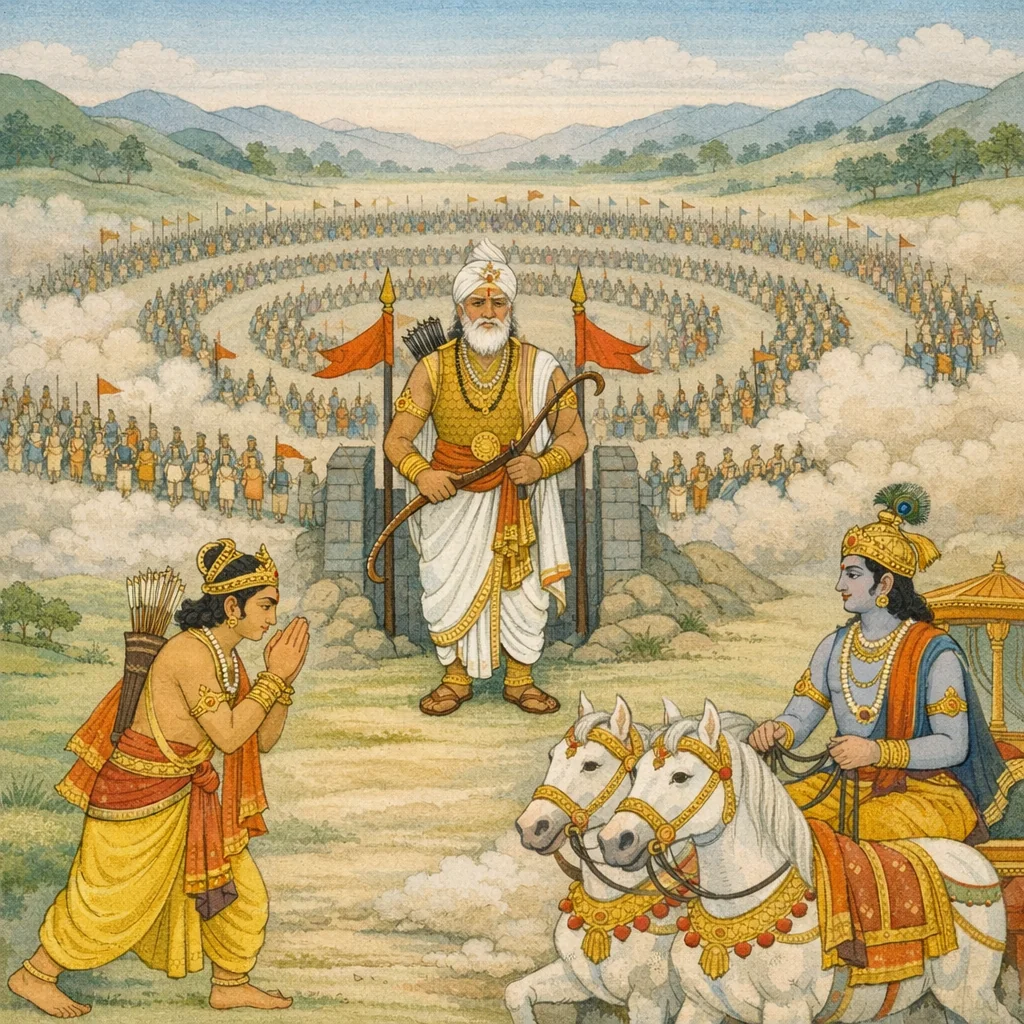
Chapter Arc: दुःशासन की सेना के पराभव के बाद रणभूमि का धूल-धुआँ अभी बैठा भी नहीं कि अर्जुन, कृष्ण की अनुमति लेकर, चक्रव्यूह के मुहाने पर स्थित आचार्य द्रोण के सम्मुख जा खड़ा होता है—मानो समय स्वयं द्वार पर दस्तक दे रहा हो। → अर्जुन हाथ जोड़कर द्रोण से ‘स्वस्ति’ और ‘कल्याण’ की याचना करता है—वह दुर्भेद्य सेना-समूह में प्रवेश चाहता है, क्योंकि सूर्यास्त से पहले जयद्रथ-वध का संकल्प उसके सिर पर अग्नि-सा धधक रहा है। द्रोण, व्यूह-रक्षक के रूप में, उसे रोकने को तत्पर होते हैं; दोनों ओर से बाण-वर्षा बढ़ती जाती है। → द्रोण अर्जुन के बाण काटते हुए विष और अग्नि के समान तेजस्वी शरों से कृष्ण और अर्जुन—दोनों को घायल करते हैं; फिर सात सौ, फिर हजार, फिर असंख्य अनिवर्तनीय बाणों की धारा से पाण्डव-सेना को छिन्न-भिन्न करते हैं। उसी क्षण वासुदेव अर्जुन को चेताते हैं—‘पार्थ, काल-व्यय न हो’; लक्ष्य द्रोण नहीं, जयद्रथ है। → कृष्ण की नीति-धुरी पर अर्जुन द्रोण को ‘उत्सृज्य’—अर्थात् उनसे उलझे बिना—आगे बढ़ने का निश्चय करता है: यह अध्याय ‘द्रोणातिक्रम’ बन जाता है, जहाँ वीरता का अर्थ केवल जीतना नहीं, समय के भीतर सही लक्ष्य तक पहुँचना है। → द्रोण के प्रचण्ड प्रतिरोध को पार कर अर्जुन आगे बढ़ता है, पर आगे अनेक रथी-समूह (शूरसेन, शिबि, केकय आदि) रोग-निवारक चिकित्सा की भाँति उसे रोकने को उठ खड़े होते हैं—क्या सूर्यास्त से पहले मार्ग खुलेगा?
Shlokas
Verse 1
इस प्रकार श्रीमह्याभारत द्रोणपर्वके अन्तर्गत जयद्रथवधपर्वमें दुःशासनकी सेनाका पराभवविषयक नब्बेवाँ अध्याय पूरा हुआ ॥/ ९० ॥। अपन का छा | अड-#-रू- एकनवतितमो<ध्याय: अर्जुन और द्रोणाचार्यका वार्तालाप तथा युद्ध एवं द्रोणाचार्यको छोड़कर आगे बढ़े हुए अर्जुनका कौरव- सैनिकोंद्वारा प्रतिरोध संजय उवाच दुःशासनबल हत्वा सव्यसाची महारथ: । सिन्धुराजं परीप्सन् वै द्रोणानीकमुपाद्रवत्,संजय कहते हैं--राजन्! दुःशासनकी सेनाका संहार करके सव्यसाची महारथी अर्जुनने सिन्धुराज जयद्रथको पानेकी इच्छा रखकर द्रोणाचार्यकी सेनापर धावा किया
Sañjaya said: O King, after destroying the forces of Duḥśāsana, the left-handed master archer Arjuna—great charioteer—pressed on with the aim of reaching Jayadratha, the king of Sindhu, and charged into Droṇa’s battle-array.
Verse 2
स तु द्रोणं समासाद्य व्यूहस्य प्रमुखे स्थितम् । कृताञ्जलिरिदं वाक््यं कृष्णस्यानुमते5ब्रवीत्,व्यूहके मुहानेपर खड़े हुए आचार्य द्रोणके पास पहुँचकर अर्जुनने भगवान् श्रीकृष्णकी अनुमति ले हाथ जोड़कर इस प्रकार कहा--
Then Arjuna approached Droṇa, who stood at the very front of the battle-formation. With palms joined in reverence, and with Kṛṣṇa’s consent, he spoke these words.
Verse 3
शिवेन ध्याहि मां ब्रह्मन् स्वस्ति चैव वदस्व मे । भवत्प्रसादादिच्छामि प्रवेष्टूं दुर्भिदां चमूम्,“ब्रह्म! आप मेरा कल्याण चिन्तन कीजिये। मुझे स्वस्ति कहकर आशीर्वाद दीजिये। मैं आपकी कृपासे ही इस दुर्भद्य सेनाके भीतर प्रवेश करना चाहता हूँ
Sañjaya said: “O Brahmin, think of my welfare with auspiciousness and pronounce blessings upon me. Relying on your favor alone, I wish to enter this hard-to-penetrate battle-array.”
Verse 4
भवान् पितृसमो महां धर्मराजसमोडपि च । तथा कृष्णसमश्वैव सत्यमेतद् ब्रवीमि ते,“आप मेरे लिये पिता पाण्डु, भ्राता धर्मराज युधिष्ठिर तथा सखा श्रीकृष्णके समान हैं। यह मैं आपसे सच्ची बात कहता हूँ
Sañjaya said: “To me, you are like my father Pāṇḍu, like my brother Dharmarāja Yudhiṣṭhira, and also like my friend Kṛṣṇa. This is the truth I speak to you.”
Verse 5
अश्वत्थामा यथा तात रक्षणीयस्त्वयानघ । तथाहमपि ते रक्ष्य: सदैव द्विजसत्तम,“तात! निष्पाप द्विजश्रेष्ठ! जैसे अश्वत्थामा आपके लिये रक्षणीय हैं, उसी प्रकार मैं भी सदैव आपसे संरक्षण पानेका अधिकारी हूँ
Sañjaya said: “O dear father, O sinless one, O best of Brahmins—just as Aśvatthāmā is to be protected by you, so too am I ever worthy of your protection.”
Verse 6
तव प्रसादादिच्छेयं सिन्धुराजानमाहवे । निहन्तुं द्विपदां श्रेष्ठ प्रतिज्ञां रक्ष मे प्रभो,“नरश्रेष्ठ! मैं आपके प्रसादसे इस युद्धमें सिन्धुराज जयद्रथको मारना चाहता हूँ। प्रभो! आप मेरी इस प्रतिज्ञाकी रक्षा कीजिये"
Sañjaya said: “By your grace, O best of men, I wish in this battle to slay the king of Sindhu, Jayadratha. O Lord, protect and uphold my vow.”
Verse 7
संजय उवाच एवमुक्तस्तदाचार्य: प्रत्युवाच स्मयन्निव । मामजित्वा न बीभत्सो शक््यो जेतुं जयद्रथ:
Sañjaya said: Thus addressed, that preceptor replied, as if with a faint smile: “O Bībhatsa (Arjuna), unless you first overcome me, Jayadratha cannot be conquered.”
Verse 8
संजय कहते हैं--महाराज! अर्जुनके ऐसा कहनेपर उस समय द्रोणाचार्यने उन्हें हँसते हुए-से उत्तर दिया--'अर्जुन! मुझे पराजित किये बिना जयद्रथको जीतना असम्भव है! ७ |। एतावदुक्त्वा तं द्रोण: शरब्रातैरवाकिरत् । सरथाश्चथध्वजं ती&णै: प्रहसन् वै ससारथिम्,अर्जुनसे इतना ही कहकर द्रोणाचार्यने हँसते-हँसते रथ, घोड़े, ध्वज तथा सारथिसहित उनके ऊपर तीखे बाणसमूहोंकी वर्षा आरम्भ कर दी
Sañjaya said: O King, when Arjuna spoke thus, Droṇa answered him with a laugh that seemed like scorn: “Arjuna! Without first overcoming me, it is impossible to conquer Jayadratha!” Having said only this, Droṇa, laughing, began to shower Arjuna with keen volleys of arrows, striking his chariot, his horses, his banner, and even his charioteer.
Verse 9
ततोड्र्जुन:ः शर्रातान् द्रोणस्थावार्य सायकैः । द्रोणमभ्यद्रवद् बाणै्घोररूपैर्महत्तरै:,तब अर्जुनने अपने बाणोंद्वारा द्रोणाचार्यके बाण-समूहोंका निवारण करके बड़े-बड़े भयंकर बाणोंद्वारा उनपर आक्रमण किया
Sañjaya said: Then Arjuna, having checked Droṇa’s volleys with his own shafts, surged forward against Droṇa and assailed him with mighty arrows of terrifying form.
Verse 10
विव्याध चरणे द्रोणमनुमान्य विशाम्पते | क्षत्रधर्म समास्थाय नवभि: सायकै: पुन:,प्रजानाथ! उन्होंने द्रोणाचार्यका समादर करते हुए क्षत्रियधर्मका आश्रय ले पुनः नौ बाणोंद्वारा उनके चरणोंमें आघात किया
Sañjaya said: O lord of the people, honoring Droṇa, he nevertheless stood firm in the warrior’s code and again struck Droṇa’s feet with nine arrows.
Verse 11
तस्येषूनिषुभिश्कित्त्वा द्रोणो विव्याध तावुभौ । विषाग्निज्वलितप्रख्यैरिषुभि: कृष्णपाण्डवौ
Sañjaya said: Having cut down his arrows with volleys of shafts, Droṇa then pierced both of them—Kṛṣṇa and the Pāṇḍava—with arrows that seemed as if blazing with poison and fire.
Verse 12
द्रोणाचार्यने अपने बाणोंद्वारा अर्जुनके उन बाणोंको काटकर प्रज्वलित विष एवं अग्निके समान तेजस्वी बाणोंसे श्रीकृष्ण और अर्जुन दोनोंको घायल कर दिया ।। इयेष पाण्डवस्तस्य बाणैश्छेत्तुं शरासनम् | तस्य चिन्तयतस्त्वेवं फाल्गुनस्य महात्मन:,तब पाण्डुनन्दन अर्जुनने अपने बाणोंद्वारा द्रोणाचार्यके धनुषको काट देनेकी इच्छा की। महामना अर्जुन अभी इस प्रकार विचार कर ही रहे थे कि पराक्रमी द्रोणाचार्यने बिना किसी घबराहटके अपने बाणोंद्वारा शीघ्र ही उनके धनुषकी प्रत्यंचा काट डाली और अर्जुनके घोड़ों, ध्वज और सारथिको भी बींध डाला
Sañjaya said: Droṇācārya cut down Arjuna’s arrows with his own shafts, and then wounded both Śrī Kṛṣṇa and Arjuna with radiant arrows that seemed to blaze like poison and fire. Then Arjuna, the son of Pāṇḍu, resolved to sever Droṇa’s bow with his arrows; but while that great-souled Phālguna was still turning the thought, the mighty Droṇa, unshaken, swiftly cut Arjuna’s bowstring with his own shafts, and also pierced Arjuna’s horses, his banner, and his charioteer.
Verse 13
द्रोण: शरैरसम्भ्रान्तो ज्यां चिच्छेदाशु वीर्यवान् विव्याध च हयानस्य ध्वजं सारथिमेव च,तब पाण्डुनन्दन अर्जुनने अपने बाणोंद्वारा द्रोणाचार्यके धनुषको काट देनेकी इच्छा की। महामना अर्जुन अभी इस प्रकार विचार कर ही रहे थे कि पराक्रमी द्रोणाचार्यने बिना किसी घबराहटके अपने बाणोंद्वारा शीघ्र ही उनके धनुषकी प्रत्यंचा काट डाली और अर्जुनके घोड़ों, ध्वज और सारथिको भी बींध डाला
Sañjaya said: Mighty Droṇa, unshaken and without the least confusion, swiftly severed the bowstring with his arrows. He also pierced Arjuna’s horses, his banner, and even his charioteer—displaying calm mastery in battle and turning Arjuna’s intent to disable him into an immediate test of composure and skill.
Verse 14
अर्जुनं च शरैवीर: स्मयमानो5भ्यवाकिरत् । एतस्मिन्नन्तरे पार्थ: सज्यं कृत्वा महद् धनु:,इतना ही नहीं, वीर द्रोणाचार्यने मुसकराकर अर्जुनको अपने बाणोंकी वर्षसे आच्छादित कर दिया। इसी बीचमें सम्पूर्ण अस्त्रवेत्ताओंमें श्रेष्ठ कुन्तीकुमार अर्जुनने अपने विशाल धनुषपर प्रत्यंचा चढ़ा दी और आचार्यसे बढ़कर पराक्रम दिखानेकी इच्छासे तुरंत छ: सौ बाण छोड़े। उन बाणोंको उन्होंने इस प्रकार हाथमें ले लिया था, मानो एक ही बाण हो
Sañjaya said: Smiling, the heroic Droṇa showered Arjuna with a rain of arrows, covering him on every side. In that very interval, Pārtha (Arjuna) swiftly strung his great bow, intent on displaying a prowess surpassing his teacher—meeting the assault with resolute skill amid the demands of war and duty.
Verse 15
विशेषयिष्यन्नाचार्य सर्वास्त्रविदुषां वर: । मुमोच षट्शतान् बाणान् गृहीत्वैकमिव द्रुतम्,इतना ही नहीं, वीर द्रोणाचार्यने मुसकराकर अर्जुनको अपने बाणोंकी वर्षसे आच्छादित कर दिया। इसी बीचमें सम्पूर्ण अस्त्रवेत्ताओंमें श्रेष्ठ कुन्तीकुमार अर्जुनने अपने विशाल धनुषपर प्रत्यंचा चढ़ा दी और आचार्यसे बढ़कर पराक्रम दिखानेकी इच्छासे तुरंत छ: सौ बाण छोड़े। उन बाणोंको उन्होंने इस प्रकार हाथमें ले लिया था, मानो एक ही बाण हो
Sañjaya said: Wishing to outshine his teacher, Arjuna—foremost among all who know the science of weapons—swiftly released six hundred arrows, as though they were a single shaft. The verse underscores the fierce competitive spirit on the battlefield, where even the teacher–disciple bond is strained by the demands of war and the urge to prove superior prowess.
Verse 16
पुन: सप्तशतानन्यान् सहस््रन॑ चानिवर्तिन: । चिक्षेपायुतशश्नान्यांस्ते5घ्नन् द्रोणस्प तां चमूम्,तत्पश्चात् सात सौ और फिर एक हजार ऐसे बाण छोड़े जो किसी प्रकार प्रतिहत होनेवाले नहीं थे। तदनन्तर अर्जुनने दस-दस हजार बाणोंद्वारा प्रहार किया। उन सभी बाणोंने द्रोणाचार्यकी उस सेनाका संहार कर डाला
Sañjaya said: Again he discharged seven hundred more arrows, and then a thousand that could not be turned back. Thereafter he hurled tens of thousands more; and those shafts cut down Droṇa’s host. The passage underscores the relentless mechanics of battle—skill and force overwhelming formations—while leaving the ethical tension of war implicit: victory is purchased through mass destruction, even when fought under the banner of duty.
Verse 17
तै: सम्यगस्तैर्बलिना कृतिना चित्रयोधिना । मनुष्यवाजिमातज्ज विद्धा: पेतुर्गतासव:,विचित्र रीतिसे युद्ध करनेवाले अस्त्रवेत्ता महाबली अर्जुनके द्वारा भलीभाँति चलाये हुए उन बाणोंसे घायल हो बहुत-से मनुष्य, घोड़े और हाथी प्राणशून्य होकर पृथ्वीपर गिर पड़े
Sañjaya said: Struck cleanly by those well-directed missiles shot by the mighty, accomplished Arjuna—skilled in wondrous modes of combat—many men, horses, and elephants, their life-breath gone, fell upon the earth. The verse underscores the grim moral weight of war: mastery and precision in arms bring decisive results, yet they also multiply death on the battlefield.
Verse 18
विसूताश्वध्वजा: पेतु: संछिन्नायुधजीविता: । रथिनो रथमुख्येभ्य: सहसा शरपीडिता:,अर्जुनके बाणोंसे पीड़ित हुए बहुतेरे रथी सारथि, अश्व, ध्वज, अस्त्र-शस्त्र और प्राणोंसे भी वंचित हो सहसा श्रेष्ठ रथोंसे नीचे जा गिरे
Sañjaya said: Struck down by Arjuna’s arrows, many chariot-warriors fell suddenly from their finest chariots—bereft of charioteers, horses, and banners, their weapons shattered and their very lives cut off.
Verse 19
चूर्णिताक्षिप्तदग्धानां वजानिलहुताशनै: । तुल्यरूपा गजाः: पेतुर्गियग्राम्बुदवेश्मनाम्
Sañjaya said: In that dreadful turmoil—where bodies were crushed, hurled down, and burned by the thunderbolt-like force of weapons, the gale of battle, and the consuming fire—elephants fell in heaps, indistinguishable from one another, like mountains, villages, clouds, and lofty mansions collapsing into ruin.
Verse 20
वज्रके आघातसे चूर-चूर हुए पर्वतों, वायुके द्वारा संचालित हुए भयंकर बादलों तथा आगममें जले हुए गृहोंके समान रूपवाले बहुत-से हाथी धराशायी हो रहे थे ।। पेतुरश्वसहस््राणि प्रहतान्यर्जुनेषुभि: | हंसा हिमवत: पृष्ठे वारिविप्रहता इव,अर्जुनके बाणोंसे मारे गये सहस्रों घोड़े रणभूमिमें उसी प्रकार पड़े थे, जैसे वर्षाकि जलसे आहत हुए बहुत-से हंस हिमालयकी तलहटीमें पड़े हुए हों
Sañjaya said: Struck down by Arjuna’s arrows, thousands of horses fell upon the battlefield—like flocks of swans on the slopes of Himavat, beaten down by the pelting rain.
Verse 21
रथाश्वद्विपपत्त्योधा: सलिलौघा इवाद्धभुता: । युगान्तादित्यरश्म्याभै: पाण्डवास्त्रशरैर्हता:,प्रलयकालके सूर्यकी किरणोंके समान अर्जुनके तेजस्वी बाणोंद्वारा मारे गये रथ, घोड़े, हाथी और पैदलोंके समूह सूर्यकिरणोंद्वारा सोखे गये अद्भुत जलप्रवाहके समान जान पड़ते थे
Sañjaya said: The masses of chariots, horses, elephants, and foot-soldiers, slain by the Pāṇḍavas’ weapons and arrows—bright as the sun’s rays at the end of an age—seemed like a wondrous flood of water, dried up by sunlight.
Verse 22
त॑ पाण्डवादित्यशरांशुजालं कुरुप्रवीरान् युधि निष्टपन्तम् । स द्रोणमेघः शरवृष्टिवेगै: प्राच्छादयन्मेघ इवार्करश्मीन्,जैसे बादल सूर्यकी किरणोंको छिपा देता है, उसी प्रकार द्रोणाचार्यरूपी मेघने अपनी बाण-वर्षके वेगसे अर्जुनरूपी सूर्यके इस बाणरूपी किरणसमूहको आच्छादित कर दिया, जो युद्धमें मुख्य-मुख्य कौरव वीरोंको संतप्त कर रहा था
Sañjaya said: Arjuna, the sun of the Pāṇḍavas, was scorching the foremost Kuru heroes in battle with a net of arrow-rays. Then Droṇa, like a cloud, covered that sun’s beams—checking Arjuna’s blazing onslaught by the sheer force of his arrow-rain.
Verse 23
अथात्यर्थ विसृष्टेन द्विषतामसुभोजिना । आजलेने वक्षसि द्रोणो नाराचेन धनंजयम्,तत्पश्चात् शत्रुओंके प्राण लेनेवाले एक नाराचका प्रहार करके द्रोणाचार्यने अर्जुनकी छातीमें गहरी चोट पहुँचायी
Sañjaya said: Then Droṇa, hurling a nārāca arrow with utmost force—an arrow that seems to feed upon the very life-breath of foes—struck Dhanañjaya (Arjuna) on the chest, dealing him a deep and grievous wound. Thus is the battle’s ruthless intensity revealed: even a revered teacher employs lethal skill, testing a warrior’s steadiness and resolve under the demands of kṣatriya-dharma.
Verse 24
स विद्वलितसर्वाड्: क्षितिकम्पे यथाचल: । धेर्यमालम्ब्य बीभत्सुद्रोणं विव्याध पत्रिभि:,उस आधघातसे अर्जुनका सारा शरीर विह्लल हो गया, मानो भूकम्प होनेपर पर्वत हिल उठा हो। तथापि अर्जुनने धैर्य धारण करके पंखयुक्त बाणोंद्वारा द्रोणाचार्यको घायल कर दिया
Sañjaya said: Arjuna’s whole body was shaken and unsteady, like a mountain trembling when the earth quakes. Yet, holding fast to courage and composure, the terrible Arjuna pierced Droṇācārya with feathered arrows and wounded him—showing that even amid shock and fear, steadfast resolve must guide one’s action in battle.
Verse 25
द्रोणस्तु पञचभिर्बाणैर्वासुदेवमताडयत् । अर्जुन च त्रिसप्तत्या ध्वजं चास्य त्रिभि: शरै:,फिर द्रोणने भी पाँच बाणोंसे भगवान् श्रीकृष्णको, तिहत्तर बाणोंसे अर्जुनको और तीन बाणोंद्वारा उनके ध्वजको भी चोट पहुँचायी
Sañjaya said: Droṇa struck Vāsudeva (Śrī Kṛṣṇa) with five arrows; he also struck Arjuna with seventy-three, and with three shafts he wounded Arjuna’s banner as well. The narration underscores the relentless precision of war, where even the charioteer and the warrior’s emblem are targeted to shake resolve and morale.
Verse 26
विशेषयिष्यन् शिष्यं च द्रोणो राजन् पराक्रमी । अदृश्यमर्जुनं चक्रे निमेषाच्छरवृष्टिभि:,राजन! पराक्रमी द्रोणाचार्यने अपने शिष्य अर्जुनसे अधिक पराक्रम प्रकट करनेकी इच्छा रखकर पलक मारते-मारते अपने बाणोंकी वर्षद्वारा अर्जुनको अदृश्य कर दिया
Sañjaya said: O King, the mighty Droṇa—seeking to outshine even his own disciple—made Arjuna vanish from sight in the blink of an eye by a torrential shower of arrows. The scene shows how, in war’s frenzy, mastery and pride can drive a teacher to prove superiority, turning skill into overwhelming force.
Verse 27
प्रसक्तान् पततो<द्राक्ष्म भारद्वाजस्य सायकान् | मण्डलीकृतमेवास्य धनुश्नादृश्यताद्भुतम्,हमने देखा, द्रोणाचार्यके बाण परस्पर सटे हुए गिरते थे। उनका अद्भुत धनुष सदा मण्डलाकार ही दिखायी देता था
Sañjaya said: We saw the arrows of Bhāradvāja’s son (Droṇa) falling in an unbroken, closely packed stream. So wondrous was his bow-work that his bow itself seemed not to be seen—appearing only as a continuous circle, as if it never paused. The scene shows how martial mastery, when driven by resolve in war, can become overwhelming and almost impersonal in its force.
Verse 28
ते भ्ययु: समरे राजन् वासुदेवधनंजयौ । द्रोणसृष्टा: सुबहव: कड्कपत्रपरिच्छदा:,राजन! उस समरांगणमें द्रोणाचार्यके छोड़े हुए कंकपत्रविभूषित बहुत-से बाण श्रीकृष्ण और अर्जुनपर पड़ने लगे
Sañjaya said: O King, in that battle many arrows—loosed by Droṇa and furnished with vulture-feathers—came rushing down upon Vāsudeva (Kṛṣṇa) and Dhanañjaya (Arjuna). The narration underscores the relentless force of war even against the foremost champions, while also highlighting the grave responsibility borne by teachers and warriors when their skill is turned toward destruction.
Verse 29
तद् दृष्टवा तादृशं युद्ध द्रोणपाण्डवयोस्तदा । वासुदेवो महाबुद्धि: कार्यवत्तामचिन्तयत्,उस समय द्रोणाचार्य और अर्जुनका वैसा युद्ध देखकर परम बुद्धिमान् वसुदेवनन्दन श्रीकृष्णने मन-ही-मन कर्तव्यका निश्चय कर लिया
Sañjaya said: Seeing then that kind of battle between Droṇa and the Pāṇḍava (Arjuna), Vāsudeva—of great intelligence—reflected inwardly and resolved upon what needed to be done. The moment signals a shift from mere observation to ethical decision: when the struggle turns critical, Kṛṣṇa weighs duty and timely action to protect the righteous cause.
Verse 30
ततोडब्रवीद् वासुदेवो धनंजयमिदं वच: । पार्थ पार्थ महाबाहो न नः कालात्ययो भवेत्
Then Vāsudeva addressed Dhanañjaya with these words: “Pārtha, Pārtha, mighty-armed one—let there be no loss of time for us.” In the press of battle, Kṛṣṇa urges Arjuna to act without delay, implying that right action (dharma) must be carried out with timely resolve, not postponed until opportunity and duty slip away.
Verse 31
पार्थश्षाप्यब्रवीत् कृष्णं यथेष्टमिति केशवम्,तब अर्जुनने भी सच्चिदानन्दस्वरूप केशवसे कहा-- 'प्रभो! आपकी जैसी रुचि हो, वैसा कीजिये।” तत्पश्चात् अर्जुन महाबाहु द्रोणाचार्यकी परिक्रमा करके लौट पड़े और बाणोंकी वर्षा करते हुए आगे चले गये
Sañjaya said: Arjuna too spoke to Kṛṣṇa, Keśava, saying, “Do as you wish.” Then the mighty-armed Arjuna, having respectfully circumambulated Droṇācārya, turned back and advanced again, showering the battlefield with a rain of arrows. The passage frames Arjuna’s obedience to Kṛṣṇa’s guidance alongside a warrior’s code of reverence toward a revered teacher even amid lethal conflict.
Verse 32
ततः प्रदक्षिणं कृत्वा द्रोणं प्रायान्महाभुजम् । परिवृत्तश्न बीभत्सुरगच्छद् विसृजन् शरान्,तब अर्जुनने भी सच्चिदानन्दस्वरूप केशवसे कहा-- 'प्रभो! आपकी जैसी रुचि हो, वैसा कीजिये।” तत्पश्चात् अर्जुन महाबाहु द्रोणाचार्यकी परिक्रमा करके लौट पड़े और बाणोंकी वर्षा करते हुए आगे चले गये
Then Arjuna, the mighty-armed, circumambulated Droṇa in reverence and withdrew. Turning back, Bībhatsu moved on while releasing volleys of arrows—maintaining the warrior’s duty in battle even as he observes the ethical restraint of honoring his revered teacher.
Verse 33
ततोडब्रवीत् स्वयं द्रोण: क्वेदं पाण्डव गम्यते । ननु नाम रणे शत्रुमजित्वा न निवर्तसे,यह देख द्रोणाचार्यने स्वयं कहा--'पाण्डुनन्दन! तुम इस प्रकार कहाँ चले जा रहे हो? तुम तो रणक्षेत्रमें शत्रुको पराजित किये बिना कभी नहीं लौटते थे”
Then Droṇa himself spoke: “O Pāṇḍava, where are you going like this? Surely, in battle you never used to turn back without first defeating the enemy.”
Verse 34
अजुन उवाच गुरुर्भवान् न मे शत्रु: शिष्य: पुत्रसमो5स्मि ते । न चास्ति स पुमॉल्लोके यस्त्वां युधि पराजयेत्,अर्जुन बोले--ब्रह्मन! आप मेरे गुरु हैं। शत्रु नहीं हैं। मैं आपका पुत्रके समान प्रिय शिष्य हूँ। इस जगत्में ऐसा कोई पुरुष नहीं है, जो युद्धमें आपको पराजित कर सके
Arjuna said: “O Brahmin, you are my guru, not my enemy. I am your beloved disciple, like a son to you. In this world there is no man who could defeat you in battle.”
Verse 35
संजय उवाच एवं ब्रुवाणो बीभत्सुर्जयद्रथवधोत्सुक: । त्वरायुक्तो महाबाह॒स्त्वत्सैन्यं समुपाद्रवत्,संजय कहते हैं--राजन्! ऐसा कहते हुए महाबाहु अर्जुनने जयद्रथ-वधके लिये उत्सुक हो बड़ी उतावलीके साथ आपकी सेनापर धावा किया
Sañjaya said: “O King, speaking thus, Arjuna—dreaded in battle—burning with resolve to slay Jayadratha, and driven by urgent haste, the mighty-armed warrior charged straight at your army.”
Verse 36
त॑ चक्ररक्षौ पाउ्चाल्यौ युधामन्यूत्तमौजसौ । अन्वयातां महात्मानौ विशन्तं तावकं बलम्,आपकी सेनामें प्रवेश करते समय उनके पीछे-पीछे पांचाल वीर महामना युधामन्यु और उत्तमौजा चक्र-रक्षक होकर गये
Sañjaya said: As he entered your army, the two Pāñcāla heroes—Yudhāmanyu and Uttamaujā—both great-souled men, followed close behind him as the protectors of the chariot-wheels, guarding his rear and ensuring his advance into the Kaurava host.
Verse 37
ततो जयो महाराज कृतवर्मा च सात्वतः । काम्बोजश्च श्रुतायुश्न धनंजयमवारयन्,महाराज! तब जय, सात्वतवंशी कृतवर्मा, काम्बोज-नरेश तथा श्रुतायुने सामने आकर अर्जुनको रोका
Sañjaya said: Then, O King, Jaya, and Kṛtavarmā of the Sātvata line, and the Kāmboja ruler, and Śrutāyus—coming face to face—checked Dhanañjaya (Arjuna).
Verse 38
तेषां दश सहस्राणि रथानामनुयायिनाम् । अभीषाहा: शूरसेना: शिबयो5थ वसातय:,इनके पीछे दस हजार रथी, अभीषाह, शूरसेन, शिबि, वसाति, मावेल्लक, ललित्थ, केकय, मद्रक, नारायण नामक गोपालगण तथा काम्बोजदेशीय सैनिकगण भी थे। इन सबको पूर्वकालमें कर्णने रणभूमिमें जीतकर अपने अधीन कर लिया था। ये सब-के-सब शूरवीरोंद्वारा सम्मानित योद्धा थे और प्रसन्नचित्त हो द्रोणाचार्यको आगे करके अर्जुनपर चढ़ आये थे
Sañjaya said: Behind them came ten thousand chariot-warriors with their attendants—the fighters of the Abhīṣāha clan, the Śūrasenas, the Śibis, and the Vasātayas. All of these had once been conquered by Karṇa in battle and brought under his sway. Honoured among heroes, they advanced with glad hearts, placing Droṇa at their head as they charged against Arjuna.
Verse 39
मावेल्लका ललित्थाक्ष केकया मद्रकास्तथा । नारायणाक्ष् गोपाला: काम्बोजानां च ये गणा:,इनके पीछे दस हजार रथी, अभीषाह, शूरसेन, शिबि, वसाति, मावेल्लक, ललित्थ, केकय, मद्रक, नारायण नामक गोपालगण तथा काम्बोजदेशीय सैनिकगण भी थे। इन सबको पूर्वकालमें कर्णने रणभूमिमें जीतकर अपने अधीन कर लिया था। ये सब-के-सब शूरवीरोंद्वारा सम्मानित योद्धा थे और प्रसन्नचित्त हो द्रोणाचार्यको आगे करके अर्जुनपर चढ़ आये थे
Sañjaya said: “There were also the Māvellakas, the Lalitthākṣas, the Kekayas, and the Madrakas; likewise the cowherd-bands known as the Nārāyaṇākṣas, and the various companies of the Kāmbojas.” These named peoples and troops—once subdued and drawn under Karṇa’s influence—now advanced in disciplined ranks, their valor acknowledged, and under Droṇa’s command set their purpose on the assault against Arjuna.
Verse 40
कर्णेन विजिता: पूर्व संग्रामे शूरसम्मता: । भारद्वाजं पुरस्कृत्य हृष्टात्मानो<र्जुनं प्रति,इनके पीछे दस हजार रथी, अभीषाह, शूरसेन, शिबि, वसाति, मावेल्लक, ललित्थ, केकय, मद्रक, नारायण नामक गोपालगण तथा काम्बोजदेशीय सैनिकगण भी थे। इन सबको पूर्वकालमें कर्णने रणभूमिमें जीतकर अपने अधीन कर लिया था। ये सब-के-सब शूरवीरोंद्वारा सम्मानित योद्धा थे और प्रसन्नचित्त हो द्रोणाचार्यको आगे करके अर्जुनपर चढ़ आये थे
Sañjaya said: Those warriors—earlier conquered by Karṇa in battle and acknowledged as heroes—advanced against Arjuna with uplifted spirits, placing Bhāradvāja’s son, Droṇa, at their head.
Verse 41
पुत्रशोकाभिसंतप्तं क्रुद्धं मृत्युमिवान्तकम् । त्यजन्तं तुमुले प्राणान् संनद्धं चित्रयोधिनम्,अर्जुन पुत्रशोकसे संतप्त एवं कुपित हुए प्राणान्तक मृत्युके समान प्रतीत होते थे। वे उस भयंकर युद्धमें अपने प्राणोंको निछावर करनेके लिये उद्यत, कवच आदिसे सुसज्जित और विचित्र रीतिसे युद्ध करनेवाले थे। जैसे यूथयति गजराज गजसमूहमें प्रवेश करता है, उसी प्रकार आपकी सेनाओंमें घुसते हुए महाधनुर्धर परम पराक्रमी उन नरश्रेष्ठ अर्जुनको पूर्वोक्त योद्धाओंने आकर रोका
Sañjaya said: Arjuna, scorched by grief for his son and inflamed with wrath, looked like Death itself, the Ender. In that tumultuous battle he was resolved to cast away his very life, fully armoured and fighting with wondrous, varied skill. As a lordly elephant plunges into a herd, so the mighty bowman Arjuna, best of men, forced his way into your armies—yet the warriors named earlier came forward and checked him.
Verse 42
गाहमानमनीकानि मातड़्मिव यूथपम् | महेष्वासं पराक्रान्तं नरव्याप्रमवारयन्,अर्जुन पुत्रशोकसे संतप्त एवं कुपित हुए प्राणान्तक मृत्युके समान प्रतीत होते थे। वे उस भयंकर युद्धमें अपने प्राणोंको निछावर करनेके लिये उद्यत, कवच आदिसे सुसज्जित और विचित्र रीतिसे युद्ध करनेवाले थे। जैसे यूथयति गजराज गजसमूहमें प्रवेश करता है, उसी प्रकार आपकी सेनाओंमें घुसते हुए महाधनुर्धर परम पराक्रमी उन नरश्रेष्ठ अर्जुनको पूर्वोक्त योद्धाओंने आकर रोका
Sañjaya said: As he plunged into the battle-formations—like a mighty elephant entering the herd—those warriors came forward and checked that great archer, the valiant tiger among men.
Verse 43
ततः प्रववृते युद्ध तुमुलं लोमहर्षणम् । अन्योनयं वै प्रार्थयतां योधानामर्जुनस्थ च,तदनन्तर एक-दूसरेको ललकारते हुए कौरव-योद्धाओं तथा अर्जुनमें रोमांचकारी एवं भयंकर युद्ध छिड़ गया
Sañjaya said: Then there erupted a tumultuous battle, terrifying enough to make the hair stand on end, as the Kaurava warriors and Arjuna challenged one another in direct confrontation. The scene marks a fresh surge of violence driven by mutual provocation and martial pride, intensifying the moral weight of war where valor and duty collide with escalating destruction.
Verse 44
जयद्रथवधरप्रेप्सुमायान्तं पुरुषर्षभम् । न्यवारयन्त सहिता: क्रिया व्याधिमिवोत्थितम्,जैसे चिकित्साकी क्रिया उभड़ते हुए रोगको रोक देती है, उसी प्रकार जयद्रथका वध करनेकी इच्छासे आते हुए पुरुषश्रेष्ठ अर्जुनको समस्त कौरव-वीरोंने एक साथ मिलकर रोक दिया
Arjuna, the bull among men, advanced intent on slaying Jayadratha; but all the Kaurava heroes together checked him, as a physician’s treatment restrains a disease as it rises.
Verse 91
इति श्रीमहा भारते द्रोणपर्वणि जयद्रथवधपर्वणि द्रोणातिक्रमे एकनवतितमो< ध्याय:,इस प्रकार श्रीमह्ा भारत द्रोणपर्वके अन्तर्गत जयद्रथवधपर्वमें द्रोणातिक्रमण-विषयक इक्यानबेवाँ अध्याय पूरा हुआ
Sañjaya said: “Thus, in the revered Mahābhārata, within the Droṇa Parva—specifically in the section concerning the slaying of Jayadratha—this ninety-first chapter, dealing with the overcoming (or outmaneuvering) of Droṇa, is concluded.” This closing colophon frames the episode as part of the larger moral and strategic crisis of the war: the struggle to uphold one’s chosen duty while confronting formidable teachers and the escalating costs of victory.
Verse 303
द्रोणमुत्सूज्य गच्छाम: कृत्यमेतन्महत्तरम् । तत्पश्चात् श्रीकृष्ण अर्जुनसे इस प्रकार बोले--'अर्जुन! अर्जुन! महाबाहो! हमारा अधिक समय यहाँ न बीत जाय, इसलिये द्रोणाचार्यको छोड़कर आगे चलें; यही इस समय सबसे महान् कार्य है”
Sañjaya said: “Leaving Droṇa behind, let us move on; this is the greater duty at this moment.” After that, Śrī Kṛṣṇa spoke to Arjuna in this manner: “Arjuna, Arjuna, mighty-armed! Let not too much of our time be spent here. Therefore, leaving Droṇācārya, let us advance; this, right now, is the highest task.”
Frequently Asked Questions
The chapter implicitly tests proportionality and targeting ethics: both sides shift from dueling strikes to disabling the opponent’s combat system (bow, banner, driver, horses), raising questions about legitimate means within duty-bound engagement.
Competence and steadiness under pressure (lāghava plus composure) function as practical dharma: maintaining agency amid disrupted support systems, adapting method without abandoning responsibility.
No explicit phalaśruti appears in this passage; its meta-commentary is conveyed through Sañjaya’s comparative imagery (Indra-like battle, fire/sun metaphors) that frames the episode as exemplary of consequence-driven escalation.