Adhyaya 36
अभिमन्यु-परिवेष्टनम् (Encirclement and Counterassault of Abhimanyu)
Upa-parva: Abhimanyu-saṃgrāma (Saubhadra-yuddha) Episode
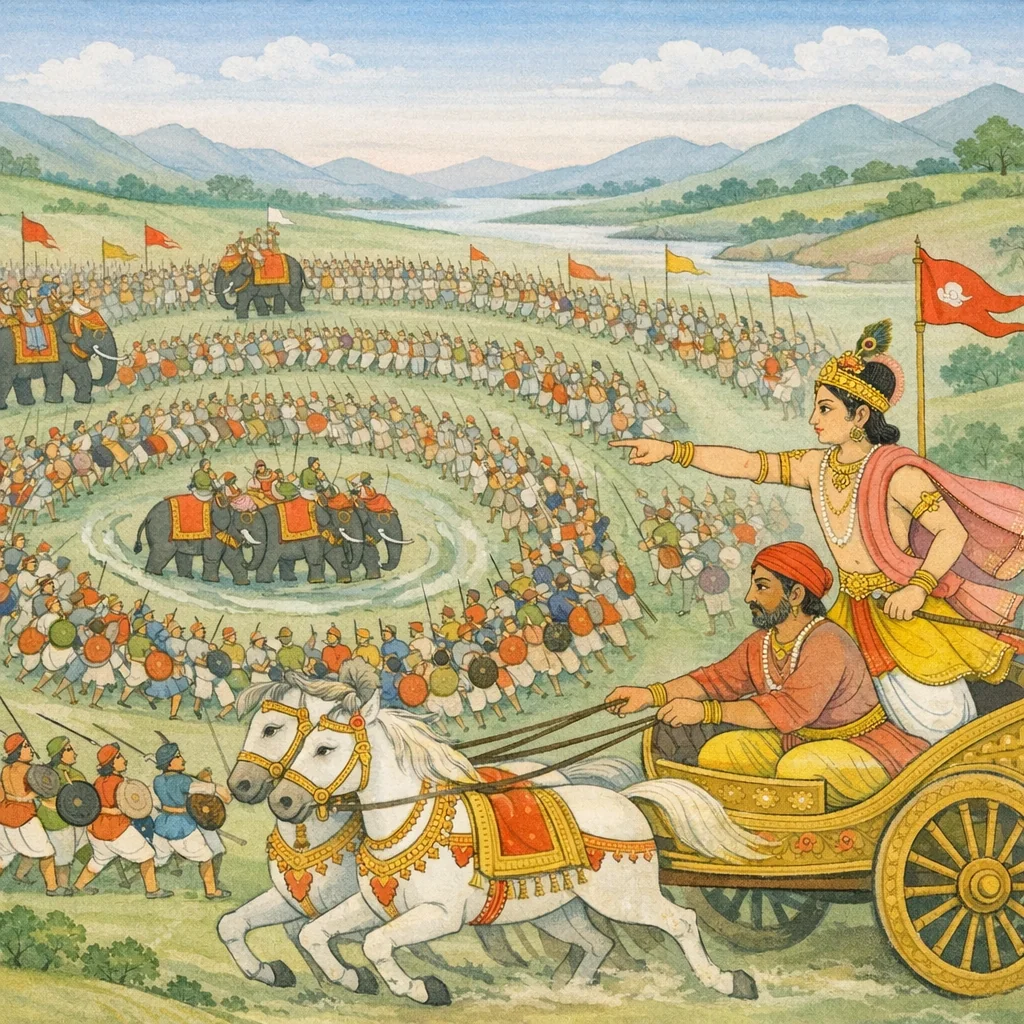
Saṃjaya reports that, seeing their ranks disrupted by Abhimanyu’s force, Duryodhana advances in anger. Droṇa instructs allied warriors to quickly surround the king’s adversary and stabilize Kaurava lines. A coalition of senior chariot-warriors—Droṇa, Aśvatthāmā, Kṛpa, Karṇa, Kṛtavarmā, Śakuni, Śalya, Bhūriśravas, and others—launches dense arrow volleys and forms a chariot-ring (koṣṭhakī-kṛtya) to constrain Abhimanyu’s mobility. Abhimanyu responds by cutting missiles midair, counter-wounding key opponents, and forcing momentary withdrawals; his roar is described as leonine, intensifying adversaries’ resolve. The text enumerates specific arrow-count exchanges, emphasizing technical martial skill and the cumulative pressure of coordinated fire. Abhimanyu pierces Karṇa’s armor and body, staggers him, and strikes down additional named combatants; he also showers Śalya, causing temporary collapse on the chariot-platform. The chapter closes with a heightened, quasi-cosmic appraisal of Abhimanyu’s radiance and renown amid assembled superhuman witnesses, underscoring heroic perception as a narrative device alongside tactical description.
Chapter Arc: धर्मराज युधिष्ठिर के वचन सुनकर सौभद्र अभिमन्यु का रक्त खौल उठता है; वह रथ पर चढ़ते ही सारथि सुमित्र को बार-बार ‘चलो, चलो’ कहकर द्रोण की सेना की ओर हाँकने का आदेश देता है। → सारथि क्षणभर ठिठककर कहता है कि पाण्डवों ने उसके कंधों पर भारी भार रखा है—पहले विचार कर फिर युद्ध करना चाहिए। अभिमन्यु हँसकर उत्तर देता है कि द्रोण या समस्त क्षत्रबल भी उसे रोक नहीं सकता; वह अपने कुल-पराक्रम और कृष्ण-अर्जुन के आश्रय का स्मरण कर निर्भयता प्रकट करता है। → अभिमन्यु बीस पग भी आगे नहीं बढ़ता कि द्रोणानीक की ओर से घोर प्रतिघात उठता है—समुद्र-मंथन-सा आवर्त बनता है; फिर भी वह रथ, अश्व और पदाति-समूहों को चीरता हुआ द्रोण की सेना में घुसकर ‘असह्य पराक्रम’ से तुम्हारे (कौरव) पैदल दलों का सर्वथा संहार करता है। → सुमित्र स्वर्णाभूषणों से सजे, तीन वर्ष के वेगवान घोड़ों को आगे बढ़ाता है; अभिमन्यु का आक्रमण द्रोणानीक में क्षणिक भगदड़ और अव्यवस्था फैलाता है, और कौरव पक्ष को उसकी एकल-वीरता का दंश सहना पड़ता है। → द्रोण की विशाल व्यवस्था के बीच अभिमन्यु का यह निर्भीक प्रवेश आगे किस महायोद्धा को उसे रोकने के लिए खड़ा करेगा—यही प्रश्न युद्धभूमि पर लटक जाता है।
Shlokas
Verse 1
अड--#क+ षट्त्रिशो5ध्याय: अभिमन्युका उत्साह तथा उसके द्वारा कौरवोंकी चतुरंगिणी सेनाका संहार संजय उवाच सौभद्रस्तद् वच: श्रुत्वा धर्मराजस्य धीमत: । अचोदयत यन्तारं द्रोणानीकाय भारत,संजय कहते हैं--भारत! बुद्धिमान् युधिष्ठिरका पूर्वोक्त वचन सुनकर सुभद्राकुमार अभिमन्युने अपने सारथि-को द्रोणाचार्यकी सेनाकी ओर चलनेका आदेश दिया
Sanjaya said: O Bharata, having heard the earlier words of the wise Dharmarāja (Yudhiṣṭhira), Abhimanyu, the son of Subhadrā, urged his charioteer to drive toward Droṇa’s battle-array. Thus, with dutiful resolve and youthful ardor, he turns from counsel to action, choosing to meet the teacher’s forces in the thick of war.
Verse 2
तेन संचोद्यमानस्तु याहि याहीति सारथि: । प्रत्युवाच ततो राजन्नभिमन्युमिदं वच:,राजन्! “चलो, चलो” ऐसा कहकर अभिमन्युके बारंबार प्रेरित करनेपर सारथिने उससे इस प्रकार कहा--
Sañjaya said: Thus repeatedly urged—“Go on, go on!”—the charioteer then replied to Abhimanyu with these words, O King, amid the press of battle and the demands of duty.
Verse 3
अतिभारोथयमायुष्मन्नाहितस्त्वयि पाण्डवै: । सम्प्रधार्य क्षणं बुद्धा ततस्त्वं योद्धुमहसि,'आयुष्मन्! पाण्डवोंने आपके ऊपर यह बहुत बड़ा भार रख दिया है। पहले आप क्षणभर रुककर बुद्धिपूर्वक अपने कर्तव्यका निश्चय कर लीजिये। उसके बाद युद्ध कीजिये
Sañjaya said: “O venerable one, the Pāṇḍavas have placed upon you a very heavy burden. Pause for a moment, reflect with clear judgment, and decide what your duty requires; then, having resolved, you should engage in battle.”
Verse 4
आचार्यो हि कृती द्रोण: परमास्त्रे कृतश्रम: । अत्यन्तसुखसंवृद्धस्त्वं चायुद्धविशारद:,'द्रोणाचार्य अस्त्रविद्याके विद्वान हैं और उत्तम अस्त्रोंके अभ्यासके लिये उन्होंने विशेष परिश्रम किया है। इधर आप अत्यन्त सुख एवं लाड़-प्यारमें पले हैं। युद्धकी कलामें आप उनके-जैसे विज्ञ नहीं हैं!
Sañjaya said: “For Droṇa, the preceptor, is truly accomplished—he has labored hard in mastering the highest weapons. But you have been raised in extreme comfort and indulgence; you are not equally skilled in the art of war.”
Verse 5
! ४ है उस पक * हि ० ततो$भिमन्यु: प्रहसन् सारथिं वाक्यमत्रवीत् । सारथे को न्वयं द्रोण: समग्रं क्षत्रमेव वा,तब अभिमन्युने हँसते-हँसते सारथिसे इस प्रकार कहा--'सारथे! इन द्रोणाचार्य अथवा सम्पूर्ण क्षत्रिय-मण्डलकी तो बात ही क्या, मैं तो ऐरावत पर चढ़े हुए सम्पूर्ण देवगणों-सहित इन्द्रके अथवा समस्त प्राणियोंद्वारा पूजित एवं सबके ईश्वर रुद्रदेवके साथ भी सामने खड़ा होकर युद्ध कर सकता हूँ। अत: इस समय इस क्षत्रियसमूहके साथ युद्ध करनेमें मुझे आज कोई आश्चर्य नहीं हो रहा है
Sañjaya said: Then Abhimanyu, smiling, spoke to his charioteer: “Charioteer, what is this Droṇa to me—or even the whole body of kṣatriyas? I could stand before Indra with all the gods, mounted on Airāvata, or even before Rudra, the Lord worshipped by all beings, and still fight. Therefore, I find nothing astonishing in battling this host of warriors today.”
Verse 6
ऐरावतगतं शक्रं सहामरगणैरहम् | अथवा रुद्रमीशानं सर्वभूतगणार्चितम् । योधयेयं रणमुखे न मे क्षत्रेड्द्य विस्मय:,तब अभिमन्युने हँसते-हँसते सारथिसे इस प्रकार कहा--'सारथे! इन द्रोणाचार्य अथवा सम्पूर्ण क्षत्रिय-मण्डलकी तो बात ही क्या, मैं तो ऐरावत पर चढ़े हुए सम्पूर्ण देवगणों-सहित इन्द्रके अथवा समस्त प्राणियोंद्वारा पूजित एवं सबके ईश्वर रुद्रदेवके साथ भी सामने खड़ा होकर युद्ध कर सकता हूँ। अत: इस समय इस क्षत्रियसमूहके साथ युद्ध करनेमें मुझे आज कोई आश्चर्य नहीं हो रहा है
Sañjaya said: “I could face in battle even Śakra (Indra) seated upon Airāvata, together with the hosts of the gods; or even Rudra, the Lord (Īśāna), worshipped by all multitudes of beings. Therefore, to fight this company of kṣatriyas today brings me no astonishment at all.”
Verse 7
न ममैतद् द्विषत्सैन्यं कलामहति षोडशीम् | अपि विश्वजितं विष्णु मातुलं प्राप्प सूतज
Sañjaya said: “This hostile army is not even a sixteenth part of mine in strength. Yet, O son of a charioteer, Viṣṇu—my maternal uncle, the universal conqueror—has been drawn into this conflict.”
Verse 8
अभिमन्युश्व तां वाचं कदर्थीकृत्य सारथे:
Sañjaya said: Abhimanyu, rebuking that remark as improper and casting it aside, addressed the charioteer with the urgency and moral clarity demanded by the battlefield.
Verse 9
ततः संनोदयामास हयानाशु त्रिहायनान्
Then he swiftly urged on the three-year-old horses, driving the chariot forward with renewed force—an image of decisive action amid the pressure and urgency of battle.
Verse 10
ते प्रेषिता: सुमित्रेण द्रोणानीकाय वाजिन:
Sañjaya said: Sent forth by Sumitra, the horsemen advanced toward Droṇa’s battle-array. The line underscores how, in war, commanders direct swift forces to strike a chosen formation—duty to one’s side, yet ethically shadowed by the larger violence of the conflict.
Verse 11
तमुदीक्ष्य तथा<<यान्तं सर्वे द्रोणपुरोगमा: । अभ्यवर्तन्त कौरव्या: पाण्डवाश्व तमन्वयु:,अभिमन्युको इस प्रकार आते देख द्रोणाचार्य आदि कौरव-वीर उनके सामने आकर खड़े हो गये और पाण्डव-योद्धा उनका अनुसरण करने लगे
Sañjaya said: Seeing him advancing in that manner, all the Kaurava warriors—led by Droṇa—moved forward to confront him; and the Pāṇḍava fighters followed close behind him, pressing on in support. The scene underscores how, in the heat of war, leadership and allegiance draw entire hosts into a single, fateful movement toward clash.
Verse 12
स कर्णिकारप्रवरोच्छित ध्वज: सुवर्णवर्मार्जुनिरर्जुनादू वर: । युयुत्सया द्रोणमुखान् महारथान् समासदत् सिंहशिशुर्यथा द्विपान्,अभिमन्युके ऊँचे एवं श्रेष्ठ ध्वजपर कर्णिकारका चिह्न बना हुआ था। उसने सुवर्णका कवच धारण कर रखा था। वह अर्जुनकुमार अपने पिता अर्जुनसे भी श्रेष्ठ वीर था। जैसे सिंहका बच्चा हाथियोंपर आक्रमण करता है, उसी प्रकार अभिमन्युने युद्धकी इच्छासे द्रोण आदि महारथियोंपर धावा किया
Sañjaya said: Bearing a lofty banner marked with the excellent karṇikāra emblem, and clad in golden armour, Abhimanyu—Arjuna’s son—surpassed even his father in valour. Burning with the will to fight, he charged straight at the great chariot-warriors headed by Droṇa, like a lion-cub rushing upon elephants.
Verse 13
ते विंशतिपदे यत्ता: सम्प्रहारं प्रचक्रिरे । आसीद् गाज् इवावर्तो मुहूर्तमुदधाविव,अभिमन्यु बीस पग ही आगे बढ़े थे कि सामना करनेके लिये उद्यत हुए द्रोणाचार्य आदि योद्धा उनपर प्रहार करने लगे। उस समय उस सैन्यसागरमें अभिमन्युके प्रवेश करनेसे दो घड़ीतक सेनाकी वही दशा रही, जैसी कि समुद्रमें गंगाकी भँवरोंसे युक्त जलराशिके मिलनेसे होती है
Sañjaya said: When Abhimanyu had advanced about twenty paces, the warriors led by Droṇācārya, ready to confront him, began to strike. For a brief while, the army-ocean was thrown into a whirling turmoil by Abhimanyu’s entry—like the sea when the swirling, eddying waters of the Gaṅgā rush into it.
Verse 14
शूराणां युध्यमानानां निघ्नतामितेरतरम् । संग्रामस्तुमुलो राजन् प्रावर्तत सुदारुण:,राजन! युद्धमें तत्पर हो एक-दूसरेपर घातक प्रहार करते हुए उन शूरवीरोंमें अत्यन्त दारुण एवं भयंकर संघर्ष होने लगा
Sañjaya said: “O King, as the heroes fought on—striking one another down with deadly blows—a tumultuous battle arose, exceedingly harsh and terrifying.”
Verse 15
प्रवर्तमाने संग्रामे तस्मिन्नतिभयंकरे । द्रोणस्य मिषतो व्यूहं भित्वा प्राविशदार्जुनि:,वह अति भयंकर संग्राम चल ही रहा था कि द्रोणाचार्यके देखते-देखते अर्जुनकुमार अभिमन्यु व्यूह तोड़कर भीतर घुस गया
Sañjaya said: As that exceedingly dreadful battle raged on, Arjuna’s son broke open the formation (vyūha) and entered within—even as Droṇa looked on.
Verse 16
(तदभेद्यमनाधृष्य॑ द्रोणानीकं सुदुर्जयम् । भित्त्वा$<र्जुनिरसम्भ्रान्तो विवेशाचिन्त्यविक्रम: ।।) अभिमन्युका पराक्रम अचिन्त्य था। उसने बिना किसी घबराहटके द्रोणाचार्यके अत्यन्त दुर्जय एवं दुर्धर्ष सैन्य-व्यूहको भंग करके उसके भीतर प्रवेश किया। त॑ प्रविष्टं विनिघ्नन्तं शत्रुसंघान् महाबलम् । हस्त्यश्वरथपत्त्यौघा: परिवद्रुरुदायुधा:,व्यूहके भीतर घुसकर शत्रुसमूहोंका विनाश करते हुए महाबली अभिमन्युको हाथोंमें अस्त्र-शस्त्र लिये गजारोही, अश्वारोही, रथी और पैदल योद्धाओंके भिन्न-भिन्न दलोंने चारों ओरसे घेर लिया
Sañjaya said: Unimaginable was Abhimanyu’s prowess. Without the least confusion, he shattered Droṇa’s battle-array—deemed unbreakable, unassailable, and exceedingly hard to conquer—and entered within. Once inside, as the mighty Abhimanyu cut down masses of foes, waves of warriors—elephant-riders, horsemen, chariot-fighters, and infantry—surrounded him on every side with weapons raised.
Verse 17
नानावादित्रनिनदै: &्ष्वेडितोत्क्ुष्टगर्जितै: । हुंकारैः सिंहनादैश्व तिष्ठ तिछ्ठेति नि:स्वनै:,नाना प्रकारके वाद्योंकी ध्वनि, कोलाहल, ललकार, गर्जना, हुंकार, सिंहनाद, “ठहरो, ठहरो” की आवाज और घोर हलहला शब्दके साथ “न जाओ, खड़े रहो, मेरे पास आओ, तुम्हारा शत्रु मैं तो यहाँ हूँ” इत्यादि बातें बारंबार कहते हुए वीर सैनिक हाथियोंके चिग्घाड़, घुँघुरुओंकी रुनझुन, अट्टाहास, हाथोंकी तालीके शब्द तथा पहियोंकी घर्घराहटसे सारी वसुधाको गुँजाते हुए अर्जुनकुमारपर टूट पड़े
Sañjaya said: With the clamour of many kinds of instruments, with shrill whistlings and exultant roars, with taunting war-cries and lion-like shouts, and with the repeated din of “Stand! Stand!”, the warriors surged forward—filling the earth with tumult as they pressed upon Arjuna’s son.
Verse 18
घोरैहलहलाशब्दैर्मा गास्तिष्ठैह्ि मामिति । असावहममुत्रेति प्रवदन्तो मुहुर्मुहु:,नाना प्रकारके वाद्योंकी ध्वनि, कोलाहल, ललकार, गर्जना, हुंकार, सिंहनाद, “ठहरो, ठहरो” की आवाज और घोर हलहला शब्दके साथ “न जाओ, खड़े रहो, मेरे पास आओ, तुम्हारा शत्रु मैं तो यहाँ हूँ” इत्यादि बातें बारंबार कहते हुए वीर सैनिक हाथियोंके चिग्घाड़, घुँघुरुओंकी रुनझुन, अट्टाहास, हाथोंकी तालीके शब्द तथा पहियोंकी घर्घराहटसे सारी वसुधाको गुँजाते हुए अर्जुनकुमारपर टूट पड़े
Sañjaya said: Amid terrifying cries of “halahalā,” they kept shouting again and again, “Do not go—stand! Come to me! I am here—there he is!” Thus, with repeated challenges and tumult, the warriors surged upon Arjuna’s son, making the whole earth resound with the trumpeting of elephants, the jingle of bells, loud laughter, clapping of hands, and the rumbling of chariot-wheels.
Verse 19
बंहितै: सिंजितैहासि: करनेमिस्वनैरपि । संनादयन्तो वसुधामभिदुद्रवुराजुनिम्,नाना प्रकारके वाद्योंकी ध्वनि, कोलाहल, ललकार, गर्जना, हुंकार, सिंहनाद, “ठहरो, ठहरो” की आवाज और घोर हलहला शब्दके साथ “न जाओ, खड़े रहो, मेरे पास आओ, तुम्हारा शत्रु मैं तो यहाँ हूँ” इत्यादि बातें बारंबार कहते हुए वीर सैनिक हाथियोंके चिग्घाड़, घुँघुरुओंकी रुनझुन, अट्टाहास, हाथोंकी तालीके शब्द तथा पहियोंकी घर्घराहटसे सारी वसुधाको गुँजाते हुए अर्जुनकुमारपर टूट पड़े
Sañjaya said: With the blare of instruments, the jingling of ornaments, loud laughter, and the rumbling sound of chariot-wheels, they made the very earth resound and rushed straight at Arjuna.
Verse 20
तेषामापततां वीर: शीघ्रयोधी महाबल: । क्षिप्रास्त्रो न्यवधीद् राजन् मर्मज्ञो मर्मभेदिभि:,राजन! महाबली वीर अभिमन्यु शीघ्रतापूर्वक युद्ध करनेमें कुशल, जल्दी-जल्दी अस्त्र चलानेवाला और शशत्रुओंके मर्मस्थानोंको जाननेवाला था। वह अपनी ओर आते हुए शत्रु सैनिकोंका मर्मभेदी बाणोंद्वारा वध करने लगा
Sañjaya said: O King, that mighty hero—swift in combat and quick to discharge his weapons—cut down those who rushed upon him. Knowing the vital points of the body, he struck with vital-piercing missiles, meeting the oncoming assault with lethal precision.
Verse 21
ते हन्यमाना विवशा नानालिऊ्लेः शितै: शरै: । अभिपेतु: सुबहुश: शलभा इव पावकम्,नाना प्रकारके चिह्लोंसे सुशोभित पैने बाणोंकी मार खाकर वे बहुसंख्यक कौरववीर विवश हो धरतीपर गिर पड़े, मानो ढेर-के-ढेर फतिंगे जलती आगमें पड़ गये हों
Sañjaya said: Struck down by sharp arrows marked with many different emblems, the Kaurava warriors, helpless under the assault, fell in great numbers—like swarms of moths rushing into a blazing fire.
Verse 22
ततस्तेषां शरीरैश्व॒ शरीरावयवैश्व सः । संतस्तार क्षितिं क्षिप्रं कुशै्वेदिमिवाध्वरे,जैसे यज्ञमें वेदीके ऊपर कुश बिछाये जाते हैं, उसी प्रकार अभिमन्युने तुरंत ही शत्रुओंके शरीरों तथा विभिन्न अवयवोंके द्वारा सारी रणभूमिको पाट दिया
Sañjaya said: Then he swiftly covered the ground with their bodies and severed limbs—so that the battlefield was spread over as an altar is strewn with kuśa grass in a sacrifice. The simile underscores how the violence of war can mimic the outward forms of ritual, while remaining morally grave in its human cost.
Verse 23
बद्धगोधाड्गुलित्राणानू सशरासनसायकान् | सासिचर्माड्कुशाभीषून् सतोमरपरश्चधान्,महाराज! अर्जुनकुमार अभिमन्युने आपके सहस्रों सैनिकोंकी उन भुजाओंको तुरंत काट डाला, जिनमें मनोहर सुगन्धयुक्त चन्दनका लेप लगा हुआ था। वीरोंकी उन भुजाओंमें गोहके चमड़ेसे बने हुए दस्ताने बँधे हुए थे। धनुष और बाण शोभा पाते थे। किन्हीं भुजाओंमें ढाल, तलवार, अंकुश और बागडोर दिखायी देती थीं। किन्हींमें तोमर और फरसे शोभा पाते थे। किन्हींमें गदा, लोहेकी गोलियाँ, प्रास, ऋष्टि, तोमर, पट्टिश, भिन्दिपाल, परिघ, श्रेष्ठ शक्ति, कम्पन, प्रतोद, महाशंख और कुन्त दृष्टिगोचर हो रहे थे। किन्हीं-किन्हीं भुजाओंने शत्रुओंकी चोटियाँ पकड़ रखी थीं। किन्हींमें मुदूगर फेंकनेयोग्य अन्यान्य अस्त्र, पाश, परिघ तथा प्रस्तरखण्ड दिखायी देते थे। वीरोंकी वे सभी भुजाएँ केयूर और अंगद आदि आभूषणोंसे विभूषित थीं
Sañjaya said: O King, Abhimanyu, the son of Arjuna, swiftly hewed off the arms of your warriors by the thousand—arms anointed with fragrant sandal paste, fitted with iguana-leather finger-guards, and adorned with bows and arrows. Some bore sword and shield, goad and reins; others carried javelins and axes. Thus, in the fury of battle, the instruments of violence and the pride of martial display were cut down together, underscoring the grim ethical cost of war where valor and ornament alike are rendered futile before death.
Verse 24
सगदायोगुडप्रासान् सर्ितोमरपट्टिशान् | सभिन्दिपालपरिघान् सशक्तिवरकम्पनान्,महाराज! अर्जुनकुमार अभिमन्युने आपके सहस्रों सैनिकोंकी उन भुजाओंको तुरंत काट डाला, जिनमें मनोहर सुगन्धयुक्त चन्दनका लेप लगा हुआ था। वीरोंकी उन भुजाओंमें गोहके चमड़ेसे बने हुए दस्ताने बँधे हुए थे। धनुष और बाण शोभा पाते थे। किन्हीं भुजाओंमें ढाल, तलवार, अंकुश और बागडोर दिखायी देती थीं। किन्हींमें तोमर और फरसे शोभा पाते थे। किन्हींमें गदा, लोहेकी गोलियाँ, प्रास, ऋष्टि, तोमर, पट्टिश, भिन्दिपाल, परिघ, श्रेष्ठ शक्ति, कम्पन, प्रतोद, महाशंख और कुन्त दृष्टिगोचर हो रहे थे। किन्हीं-किन्हीं भुजाओंने शत्रुओंकी चोटियाँ पकड़ रखी थीं। किन्हींमें मुदूगर फेंकनेयोग्य अन्यान्य अस्त्र, पाश, परिघ तथा प्रस्तरखण्ड दिखायी देते थे। वीरोंकी वे सभी भुजाएँ केयूर और अंगद आदि आभूषणोंसे विभूषित थीं
Sañjaya said: “O King, Abhimanyu, the son of Arjuna, swiftly hewed down the arms of your thousands of warriors—arms that bore maces, heavy clubs, spears, lances, javelins, battle-axes, bhindipālas, iron bars, and mighty śaktis, along with the famed weapon called Kampana. The verse underscores the grim momentum of battle: weapons meant to uphold a warrior’s duty in combat become, in an instant, the very marks by which he is struck down. It presents the ethical tension of kṣatriya-dharma—valor and skill displayed amid relentless destruction.”
Verse 25
सप्रतोदमहाशड्खान् सकुन्तान् सकचग्रहान् । समुद्गरक्षेपणीयान् सपाशपरिघोपलान्,महाराज! अर्जुनकुमार अभिमन्युने आपके सहस्रों सैनिकोंकी उन भुजाओंको तुरंत काट डाला, जिनमें मनोहर सुगन्धयुक्त चन्दनका लेप लगा हुआ था। वीरोंकी उन भुजाओंमें गोहके चमड़ेसे बने हुए दस्ताने बँधे हुए थे। धनुष और बाण शोभा पाते थे। किन्हीं भुजाओंमें ढाल, तलवार, अंकुश और बागडोर दिखायी देती थीं। किन्हींमें तोमर और फरसे शोभा पाते थे। किन्हींमें गदा, लोहेकी गोलियाँ, प्रास, ऋष्टि, तोमर, पट्टिश, भिन्दिपाल, परिघ, श्रेष्ठ शक्ति, कम्पन, प्रतोद, महाशंख और कुन्त दृष्टिगोचर हो रहे थे। किन्हीं-किन्हीं भुजाओंने शत्रुओंकी चोटियाँ पकड़ रखी थीं। किन्हींमें मुदूगर फेंकनेयोग्य अन्यान्य अस्त्र, पाश, परिघ तथा प्रस्तरखण्ड दिखायी देते थे। वीरोंकी वे सभी भुजाएँ केयूर और अंगद आदि आभूषणोंसे विभूषित थीं
Sañjaya said: O King, Abhimanyu, the son of Arjuna, swiftly hewed off the arms of your warriors—arms smeared with fragrant sandal paste, adorned with armlets and ornaments, and fitted with iguana-leather gloves—arms that bore bows and arrows, shields and swords, goads and reins, javelins and axes, clubs, iron balls, spears and lances, tomara and pattisa, bhindipāla and parigha, fine śaktis, whips and prods, great conches and spears; some even still clutching the enemy by the topknot, and others holding hurlable mudgaras, nooses, iron bars, and stones. The verse underscores the grim momentum of battle: valor and skill are displayed through destruction, while the king is made to confront the human cost borne by his own side.
Verse 26
सकेयूराज्गदान् बाहून् हृद्यगगन्धानुलेपनान् संचिच्छेदार्जुनिस्तूर्ण त्॒वदीयानां सहस्रश:,महाराज! अर्जुनकुमार अभिमन्युने आपके सहस्रों सैनिकोंकी उन भुजाओंको तुरंत काट डाला, जिनमें मनोहर सुगन्धयुक्त चन्दनका लेप लगा हुआ था। वीरोंकी उन भुजाओंमें गोहके चमड़ेसे बने हुए दस्ताने बँधे हुए थे। धनुष और बाण शोभा पाते थे। किन्हीं भुजाओंमें ढाल, तलवार, अंकुश और बागडोर दिखायी देती थीं। किन्हींमें तोमर और फरसे शोभा पाते थे। किन्हींमें गदा, लोहेकी गोलियाँ, प्रास, ऋष्टि, तोमर, पट्टिश, भिन्दिपाल, परिघ, श्रेष्ठ शक्ति, कम्पन, प्रतोद, महाशंख और कुन्त दृष्टिगोचर हो रहे थे। किन्हीं-किन्हीं भुजाओंने शत्रुओंकी चोटियाँ पकड़ रखी थीं। किन्हींमें मुदूगर फेंकनेयोग्य अन्यान्य अस्त्र, पाश, परिघ तथा प्रस्तरखण्ड दिखायी देते थे। वीरोंकी वे सभी भुजाएँ केयूर और अंगद आदि आभूषणोंसे विभूषित थीं
Sañjaya said: O great king, Abhimanyu, the son of Arjuna, swiftly severed by the thousand the arms of your warriors—arms adorned with armlets and smeared with pleasing, fragrant sandal-paste. The verse underscores the grim momentum of battle: ornament and refinement (perfumed unguents, jewelry) cannot shield one from the consequences of violent conflict, and the splendor of martial display is abruptly reduced to suffering and loss.
Verse 27
तैः स्फुरद्धिर्महाराज शुशुभे भू: सुलोहितै: । पज्चास्यै: पन्नगैश्छिन्नैर्गरुडेनेव मारिष,आदरणीय महाराज! खूनसे लथपथ होकर तड़पती हुई उन भुजाओंसे इस पृथ्वीकी वैसी ही शोभा हो रही थी, जैसे गरुड़के द्वारा छिन्न-भिन्न किये हुए पाँच मुखवाले सर्पोंके शरीरोंसे आच्छादित हुई वसुधा सुशोभित होती है
Sañjaya said: O great king, the earth shone with those blood-red limbs, still twitching. It was as though the ground were adorned with the severed bodies of five-hooded serpents, cut to pieces by Garuḍa—an image that reveals the terrible splendor of battle and the moral weight of violence that stains the world even as it displays martial prowess.
Verse 28
सुनासाननकेशान्तैरब्रणैश्वारुकुण्डलै: । संदष्टौष् पुटै: क्रोधात् क्षरद्धि: शोणितं बहु,जिनमें सुन्दर नासिका, सुन्दर मुख और सुन्दर केशान्त भागकी अद्भुत शोभा हो रही थी, जिनमें फोड़े-फुंसी या घावके चिह्न नहीं थे, जो मनोहर कुण्डलोंसे प्रकाशित हो रहे थे, जिनके ओषछ्ठपुट क्रोधके कारण दाँतों तले दबे हुए थे, जो अधिकाधिक रक्तकी धारा बहा रहे थे, जिनके ऊपर मनोहर मुकुट और पगड़ीकी शोभा होती थी, जो मणिरत्नमय आभूषणोंसे विभूषित थे, जिनकी प्रभा सूर्य और चन्द्रमाके समान जान पड़ती थी, जो बिना नालके प्रफुल्ल कमलके समान प्रतीत होते थे, जो समय-समयपर हित एवं प्रियकी बातें बताते थे, जिनकी संख्या बहुत अधिक थी तथा जो पवित्र सुगन्धसे सुवासित थे, शत्रुओंके उन मस्तकोंद्वारा अभिमन्युने वहाँकी सारी पृथ्वीको पाट दिया
Sañjaya said: Their heads—graced with beautiful noses, faces, and hairlines, unscarred by boils or wounds, and adorned with charming earrings—had their lips clenched beneath the bite of rage, while much blood streamed forth. With such enemy heads, Abhimanyu there covered the earth, a grim testimony to the fury and cost of battle.
Verse 29
स चारुमुकुटोष्णीषैर्मणिरत्नविभूषितै: । विनालनलिनाकारैर्दिवाकरशशिप्रभै:,जिनमें सुन्दर नासिका, सुन्दर मुख और सुन्दर केशान्त भागकी अद्भुत शोभा हो रही थी, जिनमें फोड़े-फुंसी या घावके चिह्न नहीं थे, जो मनोहर कुण्डलोंसे प्रकाशित हो रहे थे, जिनके ओषछ्ठपुट क्रोधके कारण दाँतों तले दबे हुए थे, जो अधिकाधिक रक्तकी धारा बहा रहे थे, जिनके ऊपर मनोहर मुकुट और पगड़ीकी शोभा होती थी, जो मणिरत्नमय आभूषणोंसे विभूषित थे, जिनकी प्रभा सूर्य और चन्द्रमाके समान जान पड़ती थी, जो बिना नालके प्रफुल्ल कमलके समान प्रतीत होते थे, जो समय-समयपर हित एवं प्रियकी बातें बताते थे, जिनकी संख्या बहुत अधिक थी तथा जो पवित्र सुगन्धसे सुवासित थे, शत्रुओंके उन मस्तकोंद्वारा अभिमन्युने वहाँकी सारी पृथ्वीको पाट दिया
Sañjaya said: And with those enemy heads—adorned with beautiful crowns and turbans, embellished with jewels and gems, lotus-like as if without stalks, and shining with the radiance of the sun and the moon—Abhimanyu there covered the earth, as though paving it with them. The verse underscores the grim splendor of battlefield violence: outward beauty and royal insignia remain, yet they now serve only as trophies of death, revealing the ethical tension between heroic valor and the terrible cost of war.
Verse 30
हितप्रियंवदैः काले बहुभि: पुण्यगन्धिभि: । द्विषच्छिरोभि: पृथिवीं स वै तस्तार फाल्गुनि:,जिनमें सुन्दर नासिका, सुन्दर मुख और सुन्दर केशान्त भागकी अद्भुत शोभा हो रही थी, जिनमें फोड़े-फुंसी या घावके चिह्न नहीं थे, जो मनोहर कुण्डलोंसे प्रकाशित हो रहे थे, जिनके ओषछ्ठपुट क्रोधके कारण दाँतों तले दबे हुए थे, जो अधिकाधिक रक्तकी धारा बहा रहे थे, जिनके ऊपर मनोहर मुकुट और पगड़ीकी शोभा होती थी, जो मणिरत्नमय आभूषणोंसे विभूषित थे, जिनकी प्रभा सूर्य और चन्द्रमाके समान जान पड़ती थी, जो बिना नालके प्रफुल्ल कमलके समान प्रतीत होते थे, जो समय-समयपर हित एवं प्रियकी बातें बताते थे, जिनकी संख्या बहुत अधिक थी तथा जो पवित्र सुगन्धसे सुवासित थे, शत्रुओंके उन मस्तकोंद्वारा अभिमन्युने वहाँकी सारी पृथ्वीको पाट दिया
Sañjaya said: At that time, with many enemy heads—heads that had spoken what was beneficial and pleasing at the proper moment, and that were fragrant with auspicious perfumes—Phālguni (Abhimanyu) indeed covered the earth there, strewing it with the severed heads of his foes. The verse underscores the grim irony of war: even those once capable of courteous, timely counsel are reduced to lifeless trophies when dharma collapses into slaughter.
Verse 31
अभिमन्युके द्वारा कौरव-सेनाके प्रमुख वीरोंका संहार गन्धर्वनगराकारान् विधिवत् कल्पितान् रथान् । वीषामुखान द्वित्रिवेणून् न्यस्तदण्डकबन्धुरान्,इसी प्रकार अभिमन्यु अपने बाणोंसे शत्रुओंके गन्धर्वनगरके समान विशाल तथा विधिपूर्वक सुसज्जित बहुसंख्यक रथोंके टुकड़े-टुकड़े करता हुआ सम्पूर्ण दिशाओंमें दृष्टिगोचर हो रहा था। उन रथोंके प्रधान ईषादण्ड नष्ट हो गये थे। त्रिवेणु चूर-चूर हो गये थे। स्तम्भदण्ड उखड़ गये थे। उसके बन्धन टूट गये थे। जंघा (नीचेका स्थान) और कूबर (जूएका आधारभूत काष्ठ) टूट-फ़ूट गये थे। पहियोंके ऊपरी भाग और अरे चौपट कर दिये गये थे। पहिये, रथकी सजावटके समान और बैठकें नष्ट-भ्रष्ट हो गयी थीं। सारी सामग्री तथा रथके अवयव चूर-चूर हो गये थे। रथकी छतरी और आवरणको गिरा दिया गया था तथा उन रथोंके समस्त योद्धा मार डाले गये थे। इस तरह सहसोरों रथोंकी धज्जियाँ उड़ गयी थीं
Sañjaya said: Abhimanyu, having cut down the foremost heroes of the Kaurava host, shattered their many chariots—vast and carefully arrayed like a celestial Gandharva-city—into fragments. The chariots’ yoke-tips and principal shafts were broken; their triple-poles were splintered; posts and supports were torn away; bindings snapped; the lower frames and yoke-bases cracked; wheel-rims and spokes were crushed; ornaments and seats were ruined; every fitting and component was ground to pieces. Their parasols and coverings were cast down, and the warriors upon them were slain. Thus, by Abhimanyu’s arrows, thousands of chariots were reduced to wreckage in every direction, displaying the terrible momentum of battle and the stark cost of martial prowess when dharma is contested on the field.
Verse 32
विजड्घाकूबरांस्तत्र विनेमिदशनानपि | विचक्रोपस्करोपस्थान् भग्नोपकरणानपि,इसी प्रकार अभिमन्यु अपने बाणोंसे शत्रुओंके गन्धर्वनगरके समान विशाल तथा विधिपूर्वक सुसज्जित बहुसंख्यक रथोंके टुकड़े-टुकड़े करता हुआ सम्पूर्ण दिशाओंमें दृष्टिगोचर हो रहा था। उन रथोंके प्रधान ईषादण्ड नष्ट हो गये थे। त्रिवेणु चूर-चूर हो गये थे। स्तम्भदण्ड उखड़ गये थे। उसके बन्धन टूट गये थे। जंघा (नीचेका स्थान) और कूबर (जूएका आधारभूत काष्ठ) टूट-फ़ूट गये थे। पहियोंके ऊपरी भाग और अरे चौपट कर दिये गये थे। पहिये, रथकी सजावटके समान और बैठकें नष्ट-भ्रष्ट हो गयी थीं। सारी सामग्री तथा रथके अवयव चूर-चूर हो गये थे। रथकी छतरी और आवरणको गिरा दिया गया था तथा उन रथोंके समस्त योद्धा मार डाले गये थे। इस तरह सहसोरों रथोंकी धज्जियाँ उड़ गयी थीं
Sañjaya said: There, Abhimanyu shattered the enemy chariots into fragments—breaking their yokes and pole-ends, damaging even the rims and spokes of their wheels, and ruining their fittings and seats. With their equipment smashed and their parts splintered, those chariots—once orderly and splendid like a Gandharva-city—were reduced to wreckage in every direction. The scene proclaimed the terrible efficiency of martial skill when turned to destruction: magnificence and human effort, when yoked to adharma and violence, are swiftly undone on the battlefield.
Verse 33
प्रपातितोपस्तरणान् हतयोधान् सहस्रश: । शरैविशकलीकुर्वन् दिक्षु सर्वास्वदृश्यत,इसी प्रकार अभिमन्यु अपने बाणोंसे शत्रुओंके गन्धर्वनगरके समान विशाल तथा विधिपूर्वक सुसज्जित बहुसंख्यक रथोंके टुकड़े-टुकड़े करता हुआ सम्पूर्ण दिशाओंमें दृष्टिगोचर हो रहा था। उन रथोंके प्रधान ईषादण्ड नष्ट हो गये थे। त्रिवेणु चूर-चूर हो गये थे। स्तम्भदण्ड उखड़ गये थे। उसके बन्धन टूट गये थे। जंघा (नीचेका स्थान) और कूबर (जूएका आधारभूत काष्ठ) टूट-फ़ूट गये थे। पहियोंके ऊपरी भाग और अरे चौपट कर दिये गये थे। पहिये, रथकी सजावटके समान और बैठकें नष्ट-भ्रष्ट हो गयी थीं। सारी सामग्री तथा रथके अवयव चूर-चूर हो गये थे। रथकी छतरी और आवरणको गिरा दिया गया था तथा उन रथोंके समस्त योद्धा मार डाले गये थे। इस तरह सहसोरों रथोंकी धज्जियाँ उड़ गयी थीं
Sañjaya said: Abhimanyu was seen in every direction, shredding with his arrows the enemy chariots—vast and splendidly arrayed like a Gandharva-city—so that their fittings collapsed and their warriors were slain by the thousand. The scene proclaimed not only the ferocity of battle but also the tragic cost of prowess when dharma is pursued amid the machinery of war: skill becomes destruction, and magnificence turns to ruin.
Verse 34
पुनर्दधिपान् द्विपारोहान् वैजयन्त्यड्कुशध्वजान् । तूणान् वर्माण्यथो कक्ष्या ग्रैवेयांश्व॒ सकम्बलान्,रथोंका संहार करके अभिमन्युने पुनः तीखी धारवाले बाणोंद्वारा शत्रुओंके हाथियों, गजारोहियों, उनके झंडों, अंकुशों, ध्वजाओं, तूणीरों, कवचों, रस्सों, कण्ठाभूषणों, झूलों, घंटों, सूँड़ों, दाँतों, छत्रों, मालाओं और पादरक्षकों को भी काट डाला
Sañjaya said: Again, Abhimanyu cut down with razor-edged arrows the enemy’s elephant-drivers and the riders upon elephants, along with their vaijayantī standards, goads, and banners; and he also severed their quivers, armours, girths and straps, neck-ornaments, and even the elephants’ coverings. The scene underscores the relentless momentum of battle—skill and courage deployed to break the opponent’s war-machine, yet within the grim moral atmosphere of a fratricidal war where prowess and destruction advance together.
Verse 35
घण्टा:शुण्डाविषाणाग्रान् छत्रमाला: पदानुगान् । शरैरनिशितधाराग्रै: शात्रवाणामशातयत्,रथोंका संहार करके अभिमन्युने पुनः तीखी धारवाले बाणोंद्वारा शत्रुओंके हाथियों, गजारोहियों, उनके झंडों, अंकुशों, ध्वजाओं, तूणीरों, कवचों, रस्सों, कण्ठाभूषणों, झूलों, घंटों, सूँड़ों, दाँतों, छत्रों, मालाओं और पादरक्षकों को भी काट डाला
Sañjaya said: With arrows whose tips were keen and razor-edged, Abhimanyu cut down the enemy’s battle-gear and ornaments—bells, trunks and the points of tusks, parasols and garlands, and even the foot-guards that followed the steps—thus shattering the foe’s martial display and protection in the midst of the fight. The scene underscores how, in war, prowess is shown not only by slaying but by disabling the opponent’s means of harm and breaking their confidence and formation.
Verse 36
वनायुजानू् पर्वतीयान् काम्बोजानथ बाह्लिकान् | स्थिरबालधिकर्णाक्षाञ्जवनान् साधुवाहिन:,इति श्रीमहा भारते द्रोणपर्वणि अभिमन्युवधपर्वणि अभिमन्युपराक्रमे षट्त्रिंशो5ध्याय:
Sañjaya said: “There were also the Vanāyujas and the Parvatīyas, the Kāmbojas and the Bāhlikas; and the Yavanas—men of steady strength, with prominent ears and eyes, and renowned for their fine steeds.” In this account, the poet’s catalogue underscores how the war draws in distant peoples and varied martial cultures, intensifying the moral weight of a conflict that consumes not only kin but entire regions and ways of life.
Verse 37
आरूढाज्गशिक्षितैर्योधै: शकक््त्यृष्टिप्रासयोधिभि: । विध्वस्तचामरमुखान् विप्रविद्धप्रकीर्णकान्
Sañjaya said: The warriors, well-trained in mounted combat, and skilled in the use of spears, javelins, lances, and other weapons, struck down and scattered those whose foremost ranks and standards were shattered—men pierced and thrown into confusion amid the violence of battle. The verse underscores how disciplined martial training, when yoked to wrath and rivalry, becomes a force that breaks formations and lives alike, intensifying the moral weight of war’s devastation.
Verse 38
निरस्तजिद्दानयनान् निष्कीर्णान्त्रयकृद्घनान् । हतारोहांश्छिन्नघण्टान् क्रव्यादगणमोदकान्
Sañjaya said: “(On that battlefield) there were warriors whose victory-pride had been cast down, whose eyes were fixed and lifeless; their entrails had spilled out and their bodies were made heavy with gore. Riders lay slain, their bells cut away and silenced, while flesh-eating creatures gathered in delighted swarms.”
Verse 39
निकृत्तचर्मकवचान् शकृन्मूत्रासृगाप्लुतान् । निपातयजन्नश्ववरांस्तावकान् स व्यरोचत
Sañjaya said: Cutting down your finest horses—stripped of their protective hide and armor and drenched in dung, urine, and blood—he kept felling them, and in that grim work he shone forth. The verse underscores how battlefield “glory” is inseparable from horrific bodily reality, exposing the ethical cost of martial prowess.
Verse 40
एको विष्णुरिवाचिन्त्यं कृत्वा कर्म सुदुष्करम् | राजन्! आपके वनायुज, पर्वतीय, काम्बोज तथा बाह्लिक देशीय श्रेष्ठ घोड़ोंको, जो पूँछ, कान और नेत्रोंको निश्चल करके दौड़नेवाले, वेगवान् और अच्छी तरह सवारीका काम देनेवाले थे तथा जिनके ऊपर शक्ति, ऋष्टि एवं प्रासद्वारा युद्ध करनेवाले सुशिक्षित योद्धा सवार थे, धराशायी करता हुआ अकेला वीर अभिमन्यु एकमात्र भगवान् विष्णुकी भाँति अचिन्त्य एवं दुष्कर कर्म करके बड़ी शोभा पा रहा था। उन घोड़ोंके मस्तक और गर्दनके चँवरके समान बड़े-बड़े बाल और मुख बाणोंके आघातसे नष्ट हो गये थे। वे सब-के-सब घायल हो गये थे। कितने ही अश्वोंके सिर छिन्न-भिन्न होकर बिखर गये थे। कितनोंकी जिह्ना और नेत्र बाहर निकल आये थे। आँत और जिगरके टुकड़े-टुकड़े हो गये थे। उन सबके सवार मार डाले गये थे। उनके गलेके घुँघचुरू कटकर गिर गये थे। वे घोड़े मृत्युके अधीन होकर मांसभक्षी प्राणियोंका हर्ष बढ़ा रहे थे। उनके चमड़े और कवच टूक-टूक हो गये थे और वे मल-मूत्र तथा रक्तमें डूबे हुए थे || ३६--३९ $ ।। तथा निर्मथितं तेन त्यड्रं तव बल॑ महत्
Verse 41
यथासुरबल घोरें त्रयम्बकेण महौजसा । जैसे महान् तेजस्वी त्रिनेत्रधारी भगवान् रुद्रने असुरोंकी सेनाको मथ डाला था, उसी प्रकार अभिमन्युने रथ, हाथी और घोड़े--इन तीन अंगोंसे युक्त आपकी विशाल सेनाको रौंद डाला || ४० $ || कृत्वा कर्म रणे5सहां परैरार्जुनिराहवे
Verse 42
एवमेकेन तां सेनां सौभद्रेण शितै: शरै:,जैसे कार्तिकेयने असुरोंकी सेनाको नष्ट-भ्रष्ट कर दिया था, उसी प्रकार एकमात्र सुभद्राकुमार अभिमन्युने अपने तीखे बाणोंद्वारा समस्त कौरव-सेनाको अत्यन्त छिलन्न-भिन्न कर डाला है; यह देखकर आपके पुत्र और सैनिक भयभीत हो दसों दिशाओंकी ओर देखने लगे। उनके मुख सूख गये थे, नेत्र चंचल हो उठे थे, सारे अंगोंमें पसीना हो आया था और उनके रोंगटे खड़े हो गये थे। अब वे भागनेमें उत्साह दिखाने लगे। शत्रुओंको जीतनेके लिये उनके मनमें तनिक भी उत्साह नहीं रह गया था
Sañjaya said: “Just as Kārttikeya once shattered the hosts of the asuras, so too did Saubhadra—alone—tear the entire Kaurava army to pieces with his keen arrows. Seeing this, your sons and their soldiers, seized by fear, began to look in all ten directions. Their mouths went dry, their eyes darted restlessly, sweat broke out over their limbs, and their hair stood on end. Now their energy turned toward flight; not even a trace of eagerness remained in their hearts to conquer the enemy.”
Verse 43
भृशं विप्रहतां दृष्टवा स्कन्देनेवासुरीं चमूम् । त्वदीयास्तव पुत्राश्न॒ वीक्षमाणा दिशो दश,जैसे कार्तिकेयने असुरोंकी सेनाको नष्ट-भ्रष्ट कर दिया था, उसी प्रकार एकमात्र सुभद्राकुमार अभिमन्युने अपने तीखे बाणोंद्वारा समस्त कौरव-सेनाको अत्यन्त छिलन्न-भिन्न कर डाला है; यह देखकर आपके पुत्र और सैनिक भयभीत हो दसों दिशाओंकी ओर देखने लगे। उनके मुख सूख गये थे, नेत्र चंचल हो उठे थे, सारे अंगोंमें पसीना हो आया था और उनके रोंगटे खड़े हो गये थे। अब वे भागनेमें उत्साह दिखाने लगे। शत्रुओंको जीतनेके लिये उनके मनमें तनिक भी उत्साह नहीं रह गया था
Sañjaya said: Seeing that host utterly shattered—like the demonic army once crushed by Skanda—your men, including your sons, began to look about in all ten directions. Overwhelmed by fear, they lost their steadiness and spirit for victory, their minds turning toward flight rather than righteous resolve in battle.
Verse 44
संशुष्कास्याश्षलन्नेत्रा: प्रस्विन्ना रोमहर्षिण: । पलायनकृतोत्साहा निरुत्साहा द्विषज्जये,जैसे कार्तिकेयने असुरोंकी सेनाको नष्ट-भ्रष्ट कर दिया था, उसी प्रकार एकमात्र सुभद्राकुमार अभिमन्युने अपने तीखे बाणोंद्वारा समस्त कौरव-सेनाको अत्यन्त छिलन्न-भिन्न कर डाला है; यह देखकर आपके पुत्र और सैनिक भयभीत हो दसों दिशाओंकी ओर देखने लगे। उनके मुख सूख गये थे, नेत्र चंचल हो उठे थे, सारे अंगोंमें पसीना हो आया था और उनके रोंगटे खड़े हो गये थे। अब वे भागनेमें उत्साह दिखाने लगे। शत्रुओंको जीतनेके लिये उनके मनमें तनिक भी उत्साह नहीं रह गया था
Sañjaya said: Their mouths had gone dry, their eyes darted about; sweat covered them and their hair stood on end. Their energy now turned toward flight, while for victory over the foe they had no zeal left at all.
Verse 45
गोत्रनामभिरन्योन्यं क्रन्दन्तो जीवितैषिण: । हतान् पुत्रान् पितृन् भ्रातृन् बन्धून् सम्बन्धिनस्तथा,वे जीवनकी इच्छा रखकर अपने-अपने सगे-सम्बन्धियोंके गोत्र और नामका उच्चारण करके एक-दूसरेके लिये क्रन्दन कर रहे थे। उस समय आपके सैनिक इतने डर गये थे कि वहाँ मारे गये अपने पुत्रों, पितृतुल्य सम्बन्धियों, भाई-बन्धुओं तथा नातेदारोंको भी छोड़कर अपने घोड़ों और हाथियोंको उतावलीके साथ हाँकते हुए रणभूमिसे पलायन कर गये
Sañjaya said: Longing to preserve their lives, they cried out to one another, calling each other by clan and personal names. In that terror and confusion, they lamented for their slain sons, fathers, brothers, kinsmen, and other relations—yet the scene also shows how fear in war can drive men to abandon even their dead and flee for safety.
Verse 46
प्रातिष्ठन्त समुत्सृज्य त्वरयन्तो हयद्विपान्,वे जीवनकी इच्छा रखकर अपने-अपने सगे-सम्बन्धियोंके गोत्र और नामका उच्चारण करके एक-दूसरेके लिये क्रन्दन कर रहे थे। उस समय आपके सैनिक इतने डर गये थे कि वहाँ मारे गये अपने पुत्रों, पितृतुल्य सम्बन्धियों, भाई-बन्धुओं तथा नातेदारोंको भी छोड़कर अपने घोड़ों और हाथियोंको उतावलीके साथ हाँकते हुए रणभूमिसे पलायन कर गये
Sañjaya said: Casting everything aside, they hurriedly drove their horses and elephants away. Clinging to the desire to live, they cried out to one another, calling aloud the clans and names of their own kinsmen. At that time your soldiers, shaken with fear, abandoned even their slain sons, father-like elders, brothers, friends, and other relatives lying there, and fled from the battlefield, urging their horses and elephants on in frantic haste.
Verse 73
पितरं चार्जुनं युद्धे न भीर्मामुपयास्यति । 'शत्रुओंकी यह सारी सेना मेरी सोलहवीं कलाके बराबर भी नहीं है। सूतनन्दन! विश्वविजयी विष्णुस्वरूप मामा श्रीकृष्णको तथा पिता अर्जुनको भी युद्धमें विपक्षीके रूपमें सामने पाकर मुझे भय नहीं होगा”
Sañjaya said: “Even if I face my own father Arjuna in battle, fear will not come upon me.” In the surrounding boast, the speaker declares that the entire opposing host is not even equal to a sixteenth part of his power, and that he would remain unafraid even when confronted by Kṛṣṇa—seen as the all-conquering, Viṣṇu-like embodiment—and by Arjuna. The passage highlights the moral tension of war: confidence and pride can harden into delusion, blinding a warrior to the ethical weight of fighting revered elders and divinely guided opponents.
Verse 86
याहीत्येवाब्रवीदेनं द्रोणानीकाय मा चिरम् | अभिमन्युने सारथिके पूर्वोक्त कथनकी अवहेलना करके उससे यही कहा--“तुम शीघ्र द्रोणाचार्यकी सेनाकी ओर चलो”
Sañjaya said: Disregarding the earlier counsel, Abhimanyu addressed his charioteer curtly, “Go—without delay—toward the army of Droṇa.” The moment underscores the warrior’s urgency and resolve, even when it means setting aside prudent advice in the press of dharma-bound battle.
Verse 96
नातिहृष्टमना: सूतो हेमभाण्डपरिच्छदान् । तब सारथिने सुवर्णमय आभूषणोंसे भूषित तथा तीन वर्षकी अवस्थावाले घोड़ोंको शीघ्र आगे बढ़ाया। उस समय उसका मन अधिक प्रसन्न नहीं था
Sañjaya said: The charioteer, not greatly delighted at heart, then quickly urged forward the horses—three years of age—adorned with golden ornaments and furnished with golden trappings for the chariot. Yet at that moment his mind was not truly joyful, suggesting an inward unease amid the outward splendor and the pressing demands of war.
Verse 106
द्रोणमभ्यद्रवन् राजन् महावेगपराक्रमम् । राजन! सारथि सुमित्रद्वारा द्रोणाचार्यकी सेनाकी ओर हाँके हुए वे घोड़े महान् वेगशाली और पराक्रमी द्रोणकी ओर दौड़े
Sañjaya said: O King, they charged straight toward Droṇa—who was marked by tremendous speed and heroic might—driving their horses forward into the face of Droṇācārya’s forces. The verse underscores the relentless momentum of battle, where resolve and command propel warriors toward a formidable teacher-commander, even amid the moral weight of fighting revered elders.
Verse 413
अभिनच्च पदात्योघांस्त्वदीयानेव सर्वश: । इस प्रकार अर्जुनकुमार अभिमन्युने रणक्षेत्रमें शत्रुओंके लिये असहा पराक्रम करके आपके पैदल योद्धाओंके समूहोंका सभी प्रकारसे विनाश आरम्भ किया
Sañjaya said: Abhimanyu, Arjuna’s son, displaying an irresistible prowess on the battlefield, began to destroy in every way the massed ranks of your infantry. The verse underscores the ethical tension of war: valor and duty in combat are praised, yet the narration also highlights the tragic cost borne by ordinary foot-soldiers swept up in the clash of rival causes.
Frequently Asked Questions
The chapter implicitly raises the tension between idealized single-combat heroics and the pragmatic ethics of collective containment: when a single warrior destabilizes an army, commanders choose coordinated suppression, challenging expectations of proportional and individually matched engagement.
Agency and excellence operate within systems: individual skill can temporarily offset numerical and hierarchical pressure, yet outcomes are shaped by coordinated institutions (command, alliances, and morale) as much as by personal valor.
No explicit phalaśruti appears; the closest meta-layer is the elevated descriptive closure portraying Abhimanyu’s fame and radiance witnessed by superhuman assemblies, reinforcing the epic’s theme that remembrance and moral evaluation are integral to the event’s meaning.