Adhyaya 78
Adhyāya 78 — Bhīṣma’s Advance, Duryodhana’s Rally, and Concurrent Duels (भीष्मस्याभ्युद्यमः, दुर्योधनस्योत्साहवचनम्, विविधयुद्धवर्णनम्)
Upa-parva: Kurukṣetra-saṃgrāma-varṇana (Battle Narration Unit within Bhīṣma-parva)
Saṃjaya reports a volatile phase of the engagement. Observing Arjuna’s (Pārtha/Dhanaṃjaya) battlefield pressure and the retreat of Suśarmā amid disrupted ranks, Duryodhana hastens to address allied kings and urges unified protection of Bhīṣma, who advances with total resolve to meet Arjuna. The narrative then interleaves multiple simultaneous contests: Droṇa (Bhāradvāja) strikes Virāṭa’s equipment; Virāṭa’s counter is met by Droṇa’s lethal precision culminating in the fall of Virāṭa’s son Śaṅkha and Virāṭa’s fearful withdrawal. Aśvatthāmā and Śikhaṇḍī exchange rapid escalations—vehicle destruction, close-quarters sword movement, and renewed arrow volleys—ending with Śikhaṇḍī seeking cover by mounting Mādhava’s chariot. Sātyaki confronts the rākṣasa Alambusa; Alambusa employs māyā and arrow-rain, but Sātyaki deploys an Aindra weapon, breaks the illusion, and forces Alambusa to flee, then presses Kaurava troops into retreat. Concurrently Dhṛṣṭadyumna showers Duryodhana with arrows; Duryodhana responds with heavy counter-fire until Śakuni extracts him onto another chariot. Bhīma and Kṛtavarmā exchange dense arrowing; Bhīma disables Kṛtavarmā’s chariot assets, after which Kṛtavarmā transfers to another vehicle while Bhīma continues a forceful advance against the Kaurava line.
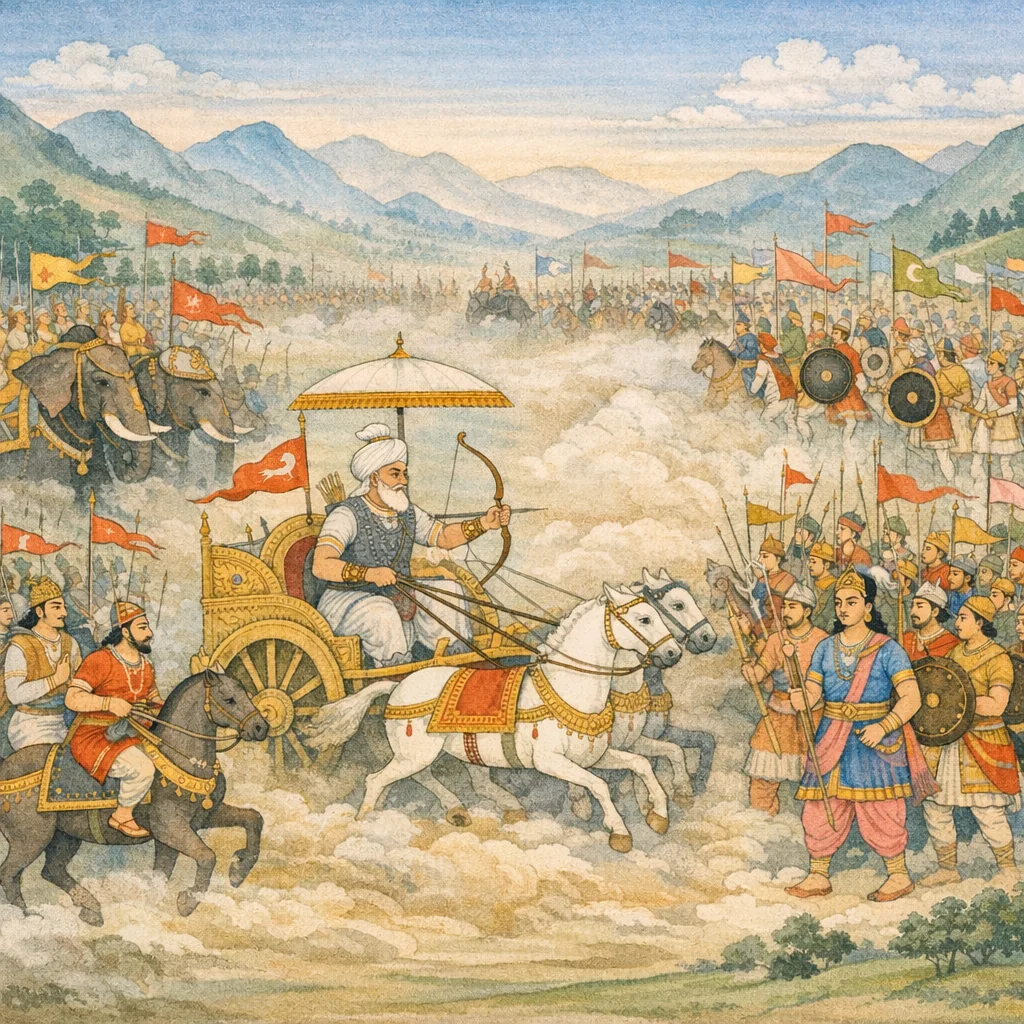
Chapter Arc: षष्ठ-दिवस के युद्ध का आरम्भ होते ही दोनों पक्षों की सेनाओं में रथों, हाथियों, घोड़ों और पदातियों की सज्जा के साथ ऐसा कोलाहल उठता है कि कुरुक्षेत्र स्वयं ध्वनि से काँप उठता है। → व्यूह-रचना के अनुसार योद्धा अपने-अपने स्थानों पर जमते हैं—पाण्डव-पक्ष में शिखण्डी सोमकों से घिरकर और इरावान् अग्र-पंक्ति के निकट स्थित होते हैं; कौरव-पक्ष में दुर्योधन अनेक राजाओं से घिरा, शूरसेन आदि के साथ ग्रीवा-प्रदेश में मोर्चा सँभालता है। घुड़सवार, रथी और हाथी-दल परस्पर चढ़-दौड़ कर युद्ध को घना कर देते हैं। → द्रोणाचार्य प्रताप में प्रज्वलित होकर स्वयं वाहनों की बागडोर सँभालते हैं और पाण्डव-सेना पर ऐसे टूट पड़ते हैं जैसे तूल-राशि पर अग्नि; उनके प्रहार से पाण्डव-पंक्तियों में क्षणिक विचलन और तीव्र दबाव उत्पन्न होता है। → पाण्डव-सेना भी व्यूह के मुख-ग्रीवा आदि स्थानों पर अपने प्रमुखों को स्थिर कर प्रतिरोध संगठित करती है—धर्मराज और सात्यकि ग्रीवा-भाग में, भीम मुख-भाग में, तथा अभिमन्यु, द्रौपदी-पुत्र और घटोत्कच आदि सहायक-बल के रूप में मोर्चे को थामते हैं; युद्ध एक निर्णायक मोड़ पर टिक कर अगले संघर्ष के लिए तैयार हो जाता है। → द्रोण के उग्र आक्रमण के सामने पाण्डवों की यह नई तैनाती क्या मोर्चा पलट देगी, या कौरव-सेना दबाव बढ़ाकर व्यूह को भेद देगी?
Shlokas
Verse 1
[दाक्षिणात्य अधिक पाठके २ ३ *लोक मिलाकर कुल ४१ ६ “लोक हैं।] #.5०3८६>- | अर । जहा पञ्चसप्ततितमोब ध्याय: छठे दिनके युद्धका आरम्भ, पाण्डव तथा कौरव-सेनाका क्रमश: मकरव्यूह एवं क्रौचव्यूह बनाकर युद्धमें प्रवृत्त होना संजय उवाच ते विश्रम्य ततो राजन् सहिता: कुरुपाण्डवा: । व्यतीतायां तु शर्वर्या पुनर्युद्धाय निर्ययु:,संजय कहते हैं--राजन्! रातको विश्राम करनेके अनन्तर जब वह रात बीत गयी, तब कौरव और पाण्डव पुनः युद्धके लिये साथ-साथ निकले
Sañjaya said: O King, after taking rest, when that night had passed, the Kurus and the Pāṇḍavas—each with their respective hosts—set out once again for battle.
Verse 2
तत्र शब्दो महानासीत् तव तेषां च भारत | युज्यतां रथमुख्यानां कल्प्यतां चैव दन्तिनाम्,भारत! उस समय वहाँ आपके और पाण्डव-पक्षके सैनिकोंमें बड़ा कोलाहल मचा। कुछ लोग श्रेष्ठ रथोंको जोत रहे थे, कुछ लोग हाथियोंको सुसज्जित करते थे, कहीं पैदल सैनिक और घोड़े कवच बाँधकर साज-बाज धारण कर तैयार किये जा रहे थे। शंखों और दुन्दुभियोंकी ध्वनि बड़े चोर-जोरसे हो रही थी। इन सबका सम्मिलित शब्द सब ओर गूँज उठा था
Sañjaya said: “There arose there a great tumult—among your forces and theirs as well, O Bhārata. The foremost chariots were being yoked, and the elephants too were being readied and equipped.”
Verse 3
संनहातां पदातीनां हयानां चैव भारत । शड्खदुन्दुभिनादश्व तुमुल: सर्वतो5भवत्,भारत! उस समय वहाँ आपके और पाण्डव-पक्षके सैनिकोंमें बड़ा कोलाहल मचा। कुछ लोग श्रेष्ठ रथोंको जोत रहे थे, कुछ लोग हाथियोंको सुसज्जित करते थे, कहीं पैदल सैनिक और घोड़े कवच बाँधकर साज-बाज धारण कर तैयार किये जा रहे थे। शंखों और दुन्दुभियोंकी ध्वनि बड़े चोर-जोरसे हो रही थी। इन सबका सम्मिलित शब्द सब ओर गूँज उठा था
Sañjaya said: “O Bhārata, as the foot-soldiers and horses were being fully armed and made ready, a tremendous din arose everywhere—the blare of conches and the booming of kettledrums resounding on all sides.”
Verse 4
ततो युधिष्ठिरो राजा धृष्टद्युम्मनम भाषत । व्यूहं व्यूह महाबाहो मकरं शत्रुनाशनम्,तदनन्तर राजा युधिष्ठिरने धृष्टद्युम्नसे कहा--“महाबाहो! तुम शत्रुनाशक मकरव्यूहकी रचना करो”
Then King Yudhiṣṭhira addressed Dhṛṣṭadyumna: “O mighty-armed one, arrange the battle-formation—construct the Makara array, a formation meant for the destruction of the enemy.”
Verse 5
एवमुक्तस्तु पार्थेन धृष्टद्युम्नो महारथ: । व्यादिदेश महाराज रथिनो रथिनां वर:,महाराज! कुन्तीपुत्र युधिष्ठिरके ऐसा कहनेपर रथियोंमें श्रेष्ठ महारथी धृष्टद्युम्नने अपने समस्त रथियोंको मकरव्यूह बनानेके लिये आज्ञा दे दी
Sañjaya said: Thus addressed by Pārtha, the great chariot-warrior Dhṛṣṭadyumna—foremost among charioteers—issued orders, O King, to the chariot-fighters to form the Makara battle-array.
Verse 6
शिरो<भूद् द्रुपदस्तस्य पाण्डवश्न धनंजय: । चक्षुषी सहदेवश्व नकुलश्व महारथ:,उसके मस्तकके स्थानपर राजा ट्रुपद तथा पाण्डुपुत्र अर्जुन खड़े हुए। महारथी नकुल और सहदेव नेत्रोंके स्थानमें स्थित हुए
Sañjaya said: Drupada and the Pāṇḍava Dhanañjaya (Arjuna) stood where his head was; and the great chariot-warriors Nakula and Sahadeva took their places where his two eyes were.
Verse 7
तुण्डमासीन्महाराज भीमसेनो महाबल: । सौभद्रो द्रौपदेयाश्ष राक्षसक्ष घटोत्कच:
Sañjaya said: “O King, mighty Bhīmasena was like a ‘tusk’, the foremost striking force. With him were Saubhadra (Abhimanyu), the sons of Draupadī, and the rākṣasa Ghaṭotkaca.”
Verse 8
पृष्ठमासीन्महाराज विराटो वाहिनीपति:
Sañjaya said: “O great king, Virāṭa, commander of the host, was stationed at the rear.”
Verse 9
धृष्टय्युम्नेन सहितो महत्या सेनयावृत: । नरेश्वर! सेनापति विराट विशाल सेनासे घिरकर धृष्टद्युम्नके साथ उस व्यूहके पृष्ठ भागमें खड़े हुए ।। केकया भ्रातर: पञ्च वामपार्श्व समाश्रिता:,पाँच भाई केकयराजकुमार उनके वामपार्श्चमें खड़े थे। नरश्रेष्ठ धृष्टकेतु और पराक्रमी चेकितान--ये व्यूहके दाहिने भागमें स्थित होकर उसकी रक्षा करते थे
Sañjaya said: “O king, accompanied by Dhṛṣṭadyumna and surrounded by a great host, the commander Virāṭa, with his vast army, stood at the rear of that battle-formation. The five Kekaya brothers took position on its left flank. On the right flank, the excellent warrior Dhṛṣṭaketu and the valiant Cekitāna stood to guard and protect the array.”
Verse 10
धृष्टकेतुर्नरव्याप्रश्नेकितानश्व वीर्यवान् । दक्षिणं पक्षमाश्रित्य स्थितौ व्यूहस्य रक्षणे,पाँच भाई केकयराजकुमार उनके वामपार्श्चमें खड़े थे। नरश्रेष्ठ धृष्टकेतु और पराक्रमी चेकितान--ये व्यूहके दाहिने भागमें स्थित होकर उसकी रक्षा करते थे
Sañjaya said: “Dhṛṣṭaketu, foremost of men, and the valiant Cekitāna, taking their stand on the right wing, remained stationed to guard the battle-formation.”
Verse 11
पादयोस्तु महाराज स्थित: श्रीमान् महारथ: । कुन्तिभोज: शतानीको महत्या सेनयावृत:,महाराज! उसके दोनों पैरोंकी जगह महारथी श्रीमान् कुन्तिभोज और विशाल सेनासहित शतानीक खड़े थे
Sañjaya said: “O King, stationed at his (Bhīṣma’s) feet stood the illustrious great chariot-warrior Śatānīka of the Kuntibhoja line, surrounded by a vast army.”
Verse 12
शिखण्डी तु महेष्वास: सोमकै: संवृतो बली । इरावांश्व॒ ततः पुच्छे मकरस्य व्यवस्थितौ,सोमकोंसे घिरा हुआ महाधनुर्धर शिखण्डी और बलवान इरावान्--ये दोनों उस मकरव्यूहके पुच्छ-भागमें खड़े थे
Sañjaya said: The great archer Śikhaṇḍī, surrounded by the Somakas, and the mighty Irāvān—these two were stationed at the rear, the tail-end, of the Makara battle-formation.
Verse 13
एवमेतं महाव्यूहं व्यूह्यू भारत पाण्डवा: । सूर्योदये महाराज पुनर्युद्धाय दंशिता:,महाराज! भरतनन्दन! इस प्रकार उस महान् मकरव्यूहकी रचना करके पाण्डव कवच बाँधकर सूर्योदयके समय पुनः युद्धके लिये तैयार हो गये
Sañjaya said: “Thus, O Bhārata, having arrayed that vast battle-formation, the Pāṇḍavas—armoured and resolute—stood ready once more for combat at sunrise, O King.”
Verse 14
कौरवानभ्ययुस्तूर्ण हस्त्यश्वरथपत्तिभि: । समुच्छितैर्ध्वजैश्छत्रै: शस्त्रैश्व विमलै: शितै:,ऊँची-ऊँची ध्वजाओं, छत्रों तथा चमकीले और तीखे अस्त्र-शस्त्रोंसे युक्त हाथी, घोड़े, रथ और पैदल सैनिकोंकी चतुरंगिणी सेनाके साथ पाण्डवोंने कौरवोंपर शीघ्रतापूर्वक आक्रमण किया
The Kauravas surged forward swiftly with elephants, horses, chariots, and foot-soldiers; their banners and royal parasols raised high, their weapons bright and keen-edged.
Verse 15
व्यूढं दृष्टवा तु तत् सैन्यं पिता देवव्रतस्तव । क्रौज्चेन महता राजन प्रत्यव्यूहत वाहिनीम्,राजन्! तब आपके ताऊ देवव्रतने पाण्डवोंका वह व्यूह देखकर उसके मुकाबिलेमें अपनी सेनाको महान् क्रौंचव्यूहके रूपमें संगठित किया
Sañjaya said: O King, when Devavrata (Bhīṣma), your father’s brother, saw that army drawn up in formation, he counter-arrayed his own host, organizing it into the great Krauñca (crane) battle-formation.
Verse 16
तस्य तुण्डे महेष्वासो भारद्वाजो व्यरोचत । अश्वत्थामा कृपश्चैव चक्षुरासीन्नरेश्वर,उसकी चोंचके स्थानमें महाधनुर्धर द्रोणाचार्य सुशोभित हुए। नरेश्वर! अश्वत्थामा और कृपाचार्य नेत्रोंके स्थानमें खड़े हुए
Sañjaya said: “In the beak of that formation stood the great archer Bhāradvāja—Droṇācārya—shining conspicuously. O King, Aśvatthāmā and Kṛpācārya were stationed in the place of its eyes.”
Verse 17
कृतवर्मा तु सहित: काम्बोजवरबाद्निकै: । शिरस्यासीन्नरश्रेष्ठ: श्रेष्ठ: सर्वधनुष्मताम्,काम्बोज और बाह्लिकदेशके उत्तम सैनिकोंके साथ समस्त थधनुर्धरोंमें श्रेष्ठ नरप्रवर कृतवर्मा व्यूहके शिरोभागमें स्थित हुए
Sañjaya said: Kṛtavarmā, accompanied by the finest warriors of Kāmboja and Bāhlīka, took his position at the head of the battle-array. That foremost of men—renowned as the best among all archers—stood in the vanguard, embodying the Kaurava side’s deliberate ordering of force and skill as the war’s violence was methodically set in place.
Verse 18
ग्रीवायां शूरसेनश्न तव पुत्रश्न मारिष । दुर्योधनो महाराज राजभिर्बहुभिवृत:,आर्य! महाराज! राजा शूरसेन तथा आपका पुत्र दुर्योधन--ये दोनों बहुत-से राजाओंके साथ क्रौंचव्यूहके ग्रीवाभागमें स्थित हुए
Sañjaya said: O venerable one, King Śūrasena and your son Duryodhana, O great king, surrounded by many allied rulers, took their position at the “neck” section of the Krauñca battle-formation. The report underscores how Duryodhana is protected and supported by a coalition, revealing the strategic and moral weight of leadership amid war—where power is amplified by alliances, yet responsibility for the consequences also deepens.
Verse 19
प्राग्ज्योतिषस्तु सहितो मद्रसौवीरकेकयै: । उरस्यभून्नरश्रेष्ठ महत्या सेनयावृत:,नरश्रेष्ठ! मद्र, सौवीर और केकय योद्धाओंके साथ विशाल सेनासे घिरे हुए प्राग्ज्योतिषपुरके राजा भगदत्त उस व्यूहके वक्ष:स्थलमें स्थित हुए
Sañjaya said: O best of men, Bhagadatta, the king of Prāgjyotiṣa, accompanied by the warriors of Madra, Sauvīra, and Kekaya, and surrounded by a vast army, took his position at the very breast of that battle-formation—standing in the forefront where the clash would be fiercest, embodying the grim resolve and collective duty of his side in war.
Verse 20
स्वसेनया च सहित: सुशर्मा प्रस्थलाधिप: । वामपक्ष॑ समाश्रित्य दंशित: समवस्थित:,प्रस्थलाधिपति (त्रिगर्तराज) सुशर्मा कवच धारण करके अपनी सेनाके साथ व्यूहके वामपक्षका आश्रय लेकर खड़े थे
Sañjaya said: Suśarmā, the lord of Prasthala, armoured and accompanied by his own troops, took position on the left wing of the battle-array. The placement signals a deliberate tactical resolve—each king standing where duty to his side and the demands of war require, even as the conflict advances toward grave moral consequence.
Verse 21
तुषारा यवनाश्नैव शकाश्न सह चूचुपै: । दक्षिणं पक्षमाश्रित्य स्थिता व्यूहस्य भारत
Sañjaya said: The Tuṣāras, the Yavanas, and the Śakas—together with the Cūcupas—took position on the right wing of the battle-formation, O Bhārata. The verse underscores how diverse frontier peoples were arrayed within the Kaurava host, emphasizing the vast, multi-ethnic scale of the war and the strategic ordering of forces rather than any moral instruction in itself.
Verse 22
भारत! तुषार, यवन, शक और चूचुपदेशके सैनिक व्यूहके दाहिने पक्षका आश्रय लेकर स्थित हुए ।। श्रुतायुश्न शतायुश्च॒ सौमदत्तिश्न मारिष | व्यूहस्य जघने तस्थू रक्षमाणा: परस्परम्,मारिष! श्रुतायु, शतायु तथा सोमदत्तकुमार भूरिश्रवा--ये परस्पर एक-दूसरेकी रक्षा करते हुए व्यूहके जघनप्रदेशमें स्थित हुए
Sañjaya said: O Bhārata, Śrutāyu, Śatāyu, and Bhūriśravas—the son of Somadatta—took their stand at the rear of the battle-array, guarding one another. The verse highlights disciplined station within the formation and the comrades’ vow of mutual protection amid war’s ordered violence.
Verse 23
ततो युद्धाय संजग्मु: पाण्डवा: कौरवै: सह । सूर्योदये महाराज ततो युद्धम भून्महत्,महाराज! तत्पश्चात् सूर्योदयकालमें पाण्डवोंने कौरवोंके साथ युद्धके लिये उनकी सेनापर आक्रमण किया; फिर तो बड़ा भयंकर युद्ध प्रारम्भ हुआ
Sañjaya said: Then, at sunrise, the Pāṇḍavas advanced to engage the Kauravas in battle, O King. From that moment a great and terrible combat began—marking the day’s renewed descent into inexorable duty and war’s devastation.
Verse 24
प्रतीयू रथिनो नागा नागांश्व रथिनो ययु: । हयारोहान् रथारोहा रथिनश्लापि सादिन:,रथियोंकी ओर हाथी और हाथियोंकी ओर रथी बढ़े। घुड़सवारोंपर रथारोही तथा रथारोहियोंपर घुड़-सवार चढ़ आये
Sañjaya said: The elephant-warriors pressed against the chariot-fighters, and the chariot-fighters in turn advanced upon the elephants. Chariot-mounted warriors charged the horsemen, and the cavalry likewise surged upon the charioteers—each arm of the host meeting its counterpart in the fierce, interlocking rush of battle.
Verse 25
सादिनश्न हयान् राजन् रथिनश्न महारणे । हस्त्यारोहान् हयारोहा रथिन: सादिनस्तथा,राजन! उस महायुद्धमें घुड़सवार योद्धा घुड़सवारों तथा रथियोंपर भी चढ़ दौड़े । इसी प्रकार अश्वारोही हाथीसवारों तथा रथियोंपर भी टूट पड़े
Sañjaya said: O King, in that great battle the cavalry charged upon other horsemen and even upon chariot-warriors. Likewise, the horse-mounted fighters fell upon elephant-riders and charioteers, while the chariot-warriors and the foot-soldiers also pressed their assaults in turn. Thus the fight became a close, intermingled melee where each arm of the army struck at the others without pause.
Verse 26
रथिनः पत्तिभि: सार्ध सादिनश्षापि पत्तिभि: | अन्योन्यं समरे राजन प्रत्यधावन्नमर्षिता:
Sañjaya said: O King, the chariot-warriors with the foot-soldiers, and the horsemen also with the foot-soldiers, rushed at one another in battle, inflamed with wrath and unwilling to endure any affront. The scene shows restraint collapsing as anger drives combatants into mutual assault, deepening war’s moral tragedy.
Verse 27
रथी और घुड़सवार दोनों ही पैदल सेनाओंपर आक्रमण करने लगे। राजन्! इस प्रकार अमर्षमें भरे हुए ये समस्त सैनिक एक-दूसरेपर धावा करने लगे ।। भीमसेनार्जुनयमैर्गुप्ता चान्यैर्महारथै: । शुशुभे पाण्डवी सेना नक्षत्रैरिव शर्वरी,भीमसेन, अर्जुन, नकुल, सहदेव तथा अन्य महारथियोंसे सुरक्षित हुई पाण्डवसेना नक्षत्रोंसे रात्रिकी भाँति सुशोभित हो रही थी
Sañjaya said: The chariot-warriors and the horsemen began to assail the infantry. O King, thus all those soldiers—seething with wrath and impatience—rushed upon one another in a headlong onset. Guarded by Bhīmasena, Arjuna, and the twin sons of Mādrī (Nakula and Sahadeva), and by other great chariot-fighters, the Pāṇḍava host shone forth—like the night sky adorned with stars—showing disciplined protection amid the chaos of battle.
Verse 28
तथा भीष्मकृपद्रोणशल्यदुर्योधनादिभि: । तवापि च बभौ सेना ग्रहैद्यौरिव संवृता,इसी प्रकार भीष्म, कृपाचार्य, द्रोणाचार्य, शल्य और दुर्योधन आदिसे घिरी हुई आपकी सेना ग्रहोंसे आकाशकी भाँति शोभा पा रही थी
Sañjaya said: “In the same way, your army too shone forth—encircled by Bhīṣma, Kṛpa, Droṇa, Śalya, Duryodhana, and the rest—like the sky surrounded by the planets.” The image suggests that the Kaurava host draws splendor and confidence from being ringed by renowned elders and champions, even as the war’s moral weight remains unresolved beneath outward brilliance.
Verse 29
भीमसेनस्तु कौन्तेयो द्रोणं दृष्टवा पराक्रमी | अभ्ययाज्जवनैरश्वैर्भारिद्वाजस्य वाहिनीम्,पराक्रमी कुन्तीकुमार भीमसेनने द्रोणाचार्यको देखकर वेगशाली अअभ्रोंद्वारा द्रोणकी सेनापर धावा किया
Sañjaya said: The mighty Bhīmasena, son of Kuntī, on seeing Droṇa, charged straight at the army of Bhāradvāja (Droṇa), driving swift horses. The verse highlights Bhīma’s fearless resolve in battle and the warrior-ethic of directly confronting a formidable teacher-general amid the demands of dharma in war.
Verse 30
द्रोणस्तु समरे क्रुद्धों भीम॑ नवभिरायसै: । विव्याध समरश्लाघी मर्माण्युद्दिश्य वीर्यवान्,युद्धकी स्पृह्ठा रखनेवाले पराक्रमी द्रोणाचार्यने रणभूमिमें कुपित हो भीमके मर्मस्थानोंको लोहेके नौ बाणोंसे घायल कर दिया
Sañjaya said: In the thick of battle, Droṇa—angered yet proud of his prowess—aimed at Bhīma’s vital points and pierced him with nine iron-shafted arrows. The scene underscores how, in war, mastery and wrath can turn skill into deliberate, targeted harm, even against a foremost hero.
Verse 31
दृढाहतस्ततो भीमो भारद्वाजस्य संयुगे । सारथिं प्रेषयामास यमस्य सदन प्रति,तब युद्धमें द्रोणाचार्यके द्वारा अत्यन्त आहत होकर भीमसेनने उनके सारथिको यमलोक भेज दिया
Sañjaya said: Though grievously struck in the battle by Bhāradvāja’s son (Droṇācārya), Bhīma, unshaken, sent Droṇa’s charioteer to the abode of Yama—signaling the fierce, uncompromising momentum of war where even severe injury does not halt a warrior’s resolve.
Verse 32
स संगृहा[ स्वयं वाहान् भारद्वाज: प्रतापवान् | व्यधमत् पाण्डवीं सेनां तूलराशिमिवानल:,तब प्रतापी द्रोणाचार्य स्वयं ही घोड़ोंकी बागडोर सँभालते हुए पाण्डवसेनाका उसी प्रकार संहार करने लगे, जैसे आग रुईके ढेरको भस्म कर डालती है
Sañjaya said: Then the mighty Bhāradvāja (Droṇa), taking the reins of his horses into his own hands, began to crush the Pāṇḍava army—just as fire consumes and reduces a heap of cotton to ash.
Verse 33
ते वध्यमाना द्रोणेन भीष्मेण च नरोत्तमा: । सृञ्जया: केकयै: सार्थ पलायनपरा5भवन्,वे नरश्रेष्ठ सृंजय और केकय द्रोणाचार्य तथा भीष्मकी मार खाकर रणभूमिसे भागने लगे
Sañjaya said: Struck down and hard-pressed by Droṇa and Bhīṣma, those foremost of men—the Sṛñjayas together with the Kekayas—became intent on flight, turning from the battlefield.
Verse 34
तथैव तावकं सैन्यं भीमार्जुनपरिक्षतम् । मुहाते तत्र तत्रेव समदेव वराड़ना,इसी प्रकार भीम और अर्जुनके बाणोंसे क्षत-विक्षत हुई आपकी सेना मतवाली स्त्रीकी भाँति जहाँ-तहाँ मूर्च्छित होने लगी
Sañjaya said: “In the same way, your army—torn and mangled by the shafts of Bhīma and Arjuna—began, within a short time, to swoon and collapse here and there, like a woman overcome by intoxication.”
Verse 35
अभि्येतां ततो व्यूहौ तस्मिन् वीरवरक्षये । आसीद् व्यतिकरो घोरस्तव तेषां च भारत,भारत! बड़े-बड़े वीरोंका संहार करनेवाले उस युद्धमें दोनों सेनाओंके व्यूह टूट गये और आपके तथा पाण्डवोंके सैनिकोंका भयंकर सम्मिश्रण हो गया
Sañjaya said: Then, in that battle which brought about the destruction of the foremost heroes, both battle-formations were broken. A dreadful intermingling arose between your troops and theirs, O Bhārata.
Verse 36
तदद्भुतमपश्याम तावकानां परै: सह । एकायनगता: सर्वे यदयुध्यन्त भारत,भरतनन्दन! हमने आपके पुत्रोंका शत्रुओंके साथ अद्भुत पराक्रम देखा था। वे सब-के- सब एक पंक्तिमें खड़े होकर युद्ध कर रहे थे
Sañjaya said: “We witnessed a truly astonishing display of valor—your sons fighting together with their foes. All of them, O Bhārata, O joy of the Bharatas, stood aligned in a single formation and fought as one.”
Verse 37
प्रतिसंवार्य चास्त्राणि ते<न्योन्यस्य विशाम्पते । युयुधु: पाण्डवाश्वैव कौरवाश्व॒ महाबला:
Sañjaya said: “O lord of men, having checked and warded off one another’s missiles, the mighty Pāṇḍavas and the mighty Kauravas fought on—each meeting the other’s weapons with countermeasures, as the battle pressed forward in relentless reciprocity.”
Verse 74
इस प्रकार श्रीमह्याभारत भीष्मपर्वके अन्तर्गत भीष्मवधपर्वमें पाँचवें दिवसके युद्धकी समाप्तिविषयक चौहत्तरवाँ अध्याय पूरा हुआ
Thus, in the revered Mahābhārata, within the Bhīṣma Parva—specifically in the section concerning Bhīṣma’s fall—this seventy-fourth chapter, describing the conclusion of the fighting on the fifth day, comes to an end. The narration marks a formal pause in the war’s progression, underscoring the relentless passage of days and the mounting moral weight of the conflict as it moves toward Bhīṣma’s decisive fate.
Verse 75
प्रजानाथ! महाबली कौरव तथा पाण्डव एक-दूसरेके अस्त्र-शस्त्रोंका निवारण करते हुए जूझ रहे थे ।। इति श्रीमहा भारते भीष्मपर्वणि भीष्मवधपर्वणि षष्ठदिवसयुद्धारम्भे पज्चसप्ततितमो<ध्याय:
Sañjaya said: “O lord of the people! The mighty Kauravas and the Pāṇḍavas were locked in combat, each countering the other’s missiles and weapons.” Thus, in the Mahābhārata, in the Bhīṣma Parva, in the section concerning the fall of Bhīṣma, at the commencement of the fighting on the sixth day, ends the seventy-fifth chapter.
Verse 76
सात्यकिर्धर्मराजश्च व्यूहग्रीवां समास्थिता: । महाराज! महाबली भीमसेन उसके मुखकी जगह खड़े हुए। सुभद्राकुमार अभिमन्यु, द्रौपदीके पाँच पुत्र, राक्षस घटोत्कच, सात्यकि और धर्मराज युधिष्ठिर--ये उस मकरव्यूहके ग्रीवाभागमें स्थित हुए
Sañjaya said: Sātyaki and King Yudhiṣṭhira took their positions at the “neck” of the battle-formation. O King, the mighty Bhīmasena stood where its “mouth” was placed. Abhimanyu, the son of Subhadrā; the five sons of Draupadī; the rākṣasa Ghaṭotkaca; along with Sātyaki and Dharma-rāja Yudhiṣṭhira—these were stationed in the neck-region of that Makara-formation. The passage underscores disciplined coordination in war, where strength is placed at the front and responsible leadership holds the critical connecting point of the array.
Frequently Asked Questions
The chapter juxtaposes loyalty to a senior commander (protecting Bhīṣma as institutional authority) with the operational realities of warfare, where individual duels and sudden reversals force choices between persistence, rescue, withdrawal, and risk to allies.
Effective leadership under crisis requires coordinated protection of strategic assets (commanders, mobility, standards) and disciplined adaptability; reputational valor is repeatedly tested by whether one can respond coherently when plans collapse mid-action.
No explicit phalaśruti appears in the supplied material; the chapter functions primarily as operational narration, with meaning implied through outcomes, similes, and the repeated emphasis on resolve, cohesion, and consequence.