Adhyaya 74
Adhyāya 74 (Book 6, Bhīṣma-parva): Bhīma–Duryodhana re-engagement and afternoon escalation
Upa-parva: Kurukṣetra-raṇa-varṇana (Sañjaya’s battle reportage: Bhīma–Duryodhana engagements and allied clashes)
Sañjaya reports that Duryodhana, returning under a moment of confusion or disorientation, renews pressure on Bhīma with arrow-showers. Kaurava mahārathas regroup and collectively advance to restrain Bhīma, who regains his chariot and counters with rapid archery, wounding multiple opponents. Duryodhana strikes Bhīma at a vital point with a sharp nārāca; Bhīma, enraged, answers with three arrows to Duryodhana’s arms and chest, and the king remains steady “like a mountain.” Observing the duel, Duryodhana’s brothers recall earlier consultation about checking Bhīma and commit to the attempt; Bhīma meets their charge like an elephant against elephants, striking Citraseṇa and others with varied, swift shafts. Yudhiṣṭhira dispatches twelve mahārathas—beginning with Abhimanyu—to support Bhīma’s advance; the Kauravas, seeing the radiant Pandava chariot-warriors, momentarily disengage, and Bhīma pursues and harasses them. The report then widens: Kaurava leaders move toward Abhimanyu and allied forces; by afternoon a major battle swells. Abhimanyu disables Vikarṇa’s horses, forcing Vikarṇa onto Citraseṇa’s chariot, and he blankets the brothers with a net of arrows; they strike Kṛṣṇa’s charioteer/ally (Kārṣṇi) without shaking him. Duhśāsana engages the Kekayas; the Draupadeyas check Duryodhana with disciplined volleys, while Duryodhana counters and is described as blood-splashed yet resplendent. Bhīṣma continues to press the Pandava host; Arjuna’s Gāṇḍīva is heard as he strikes enemies. The battlefield is depicted with stark mass-conflict imagery—severed limbs, fallen elephants, and a “sea of armies”—and Sañjaya notes the remarkable, near-universal willingness of warriors to seek combat and reputation.
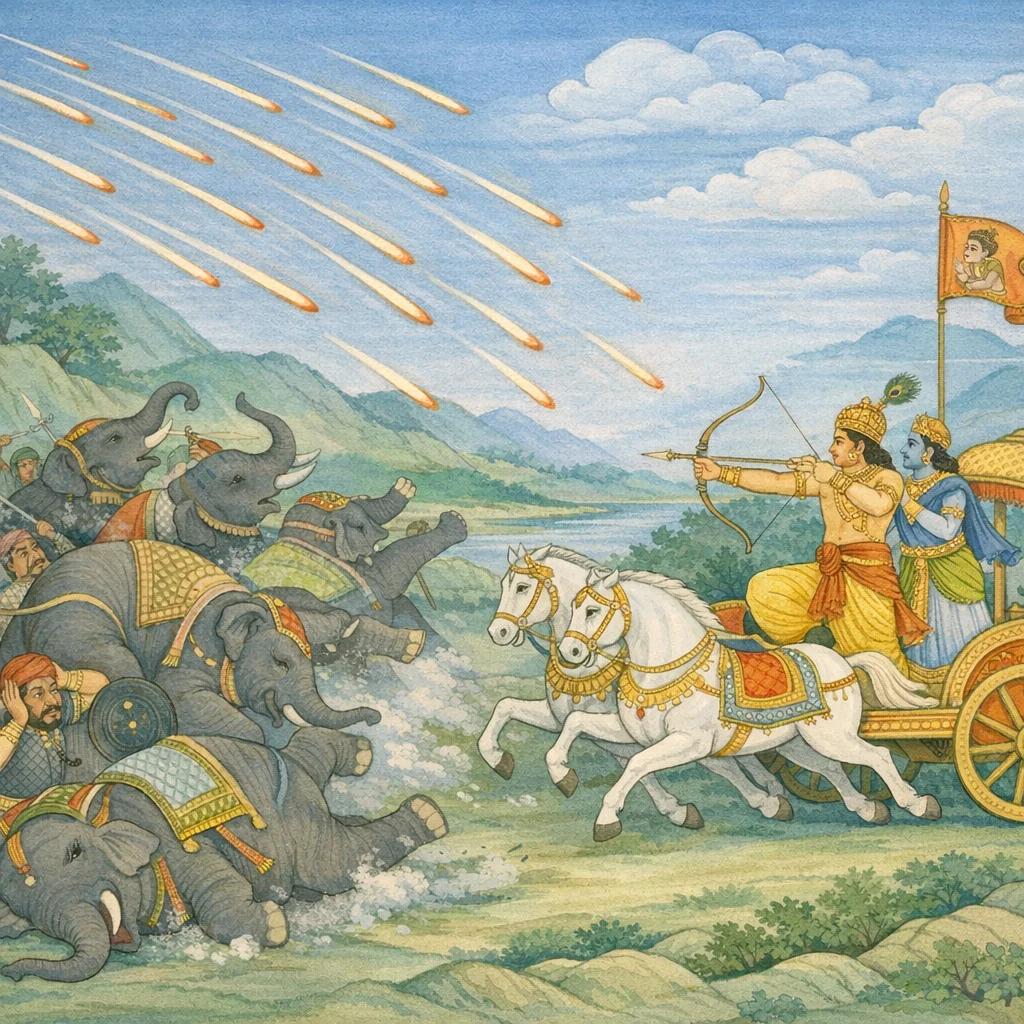
Chapter Arc: संजय धृतराष्ट्र को बताता है कि भीष्म के साथ घिरे हुए पाण्डव-योद्धाओं और अन्य राजाओं को देखकर अर्जुन गाण्डीव सहित वेग से रण में कूद पड़ता है। → पाञ्चजन्य का निर्घोष, गाण्डीव की टंकार और अर्जुन के कपिध्वज का दिव्य-भयानक रूप कौरव-सेना में भय और अव्यवस्था फैला देता है; चारों ओर अस्त्रों की चमक नक्षत्रों-सी उठती है और रथ-हाथी-घोड़े उलझकर संकुल युद्ध बन जाते हैं। → धनंजय भैरवास्त्र-सम तेजस्वी बाणवर्षा से दिशाओं को ढक देता है; उसी घोर संनिपात में उन्मत्त हाथियों की टक्कर से ध्वज सहित गज और सवार धराशायी होते हैं—रण का मध्य भाग एक प्रलय-चित्र बन जाता है। → कृपाचार्य और कृतवर्मा धृष्टद्युम्न पर धावा करते हैं; उधर विभिन्न राजाओं के जोड़े-जोड़े संग्राम-सम्बन्ध बनते हैं—जयद्रथ भीम से, काशिराज शल्य से, और युधिष्ठिर अपने पुत्रों-अमात्यों सहित शत्रुओं से भिड़ते हैं—युद्ध अनेक मोर्चों में बँटकर स्थिर-घोर गति पकड़ लेता है। → अगले क्षण किस मोर्चे पर निर्णायक आघात पड़ेगा—धृष्टद्युम्न पर कृप-कृतवर्मा का दबाव, या अर्जुन की बाणवृष्टि से कौरव-पंक्तियों का टूटना—यह अनिश्चितता अध्याय को आगे की ओर धकेलती है।
Shlokas
Verse 1
अप्-#-रा+ एकसप्ततितमो< ध्याय: भीष्म, अर्जुन आदि योद्धाओंका घमासान युद्ध संजय उवाच दृष्टवा भीष्मेण संसक्तान् भ्रातृनन्यांश्व पार्थिवान् । समभ्यधावद् गाड़्रेयमुद्यतास्त्रो धनंजय:,संजय कहते हैं--महाराज! अपने भाइयों तथा दूसरे राजाओंको भीष्मके साथ उलझा हुआ देख अस्त्र उठाये हुए अर्जुनने भी गंगानन्दन भीष्मपर धावा किया
Sañjaya said: O King, seeing his brothers and other rulers entangled in combat with Bhīṣma, Dhanañjaya (Arjuna), with weapons raised, charged straight at Gāṅgeya Bhīṣma. The moment frames Arjuna’s resolve to confront a revered elder for the sake of duty in war, even when the opponent is morally and emotionally weighty.
Verse 2
पाञ्चजन्यस्य निर्घोषं धनुषो गाण्डिवस्य च । ध्वजं च दृष्टवा पार्थस्य सर्वान् नो भयमाविशत्,पांचजन्यशंख और गाण्डीवधनुषका शब्द सुनकर तथा अर्जुनके ध्वजको देखकर हमारे सब सैनिकोंके मनमें भय समा गया
Sañjaya said: Hearing the thunderous blast of Pāñcajanya and the twang of the Gāṇḍīva bow, and seeing Arjuna’s banner, fear entered the hearts of all our warriors.
Verse 3
सिंहलाड्गूलमाकाशे ज्वलन्तमिव पर्वतम् | असज्जमान वृक्षेषु धूमकेतुमिवोत्थितम्,महाराज! अर्जुनका ध्वज सिंहपुच्छके समान वानरकी पूँछसे युक्त था। वह प्रज्वलित पर्वत-सा दिखायी देता था। वृक्षोंमें कहीं भी अटकता नहीं था। आकाशमें उदित हुए धूमकेतु-सा दृष्टिगोचर होता था। वह अनेक रंगोंसे सुशोभित, विचित्र, दिव्य एवं वानर- चिह्से युक्त था। इस प्रकार हमने गाण्डीवधारी अर्जुके उस ध्वजको उस समय देखा
Sañjaya said: “O King, Arjuna’s banner—adorned with the emblem of the monkey and bearing a lion-like tail—appeared like a blazing mountain in the sky. It did not snag upon the trees as it moved, and it was seen rising like a comet. Thus we beheld, at that time, the wondrous, many-hued, divine standard of Arjuna, the wielder of the Gāṇḍīva.”
Verse 4
बहुवर्ण विचित्र च दिव्यं वानरलक्षणम् । अपश्याम महाराज ध्वजं गाण्डीवधन्चन:,महाराज! अर्जुनका ध्वज सिंहपुच्छके समान वानरकी पूँछसे युक्त था। वह प्रज्वलित पर्वत-सा दिखायी देता था। वृक्षोंमें कहीं भी अटकता नहीं था। आकाशमें उदित हुए धूमकेतु-सा दृष्टिगोचर होता था। वह अनेक रंगोंसे सुशोभित, विचित्र, दिव्य एवं वानर- चिह्से युक्त था। इस प्रकार हमने गाण्डीवधारी अर्जुके उस ध्वजको उस समय देखा
Sañjaya said: O King, we beheld the banner of Arjuna, the wielder of the Gāṇḍīva bow—divine, wondrous, and adorned with many colors, bearing the emblem of a monkey.
Verse 5
विद्युतं मेघमध्यस्थां भ्राजमानामिवाम्बरे । ददृशुर्गाण्डिवं योधा रुक्मपृष्ठं महामृथे,उस महान् समरमें हमारे पक्षके योद्धाओंने सुवर्णमय पीठसे युक्त गाण्डीवधनुषको आकाश के भीतर मेघोंकी घटामें चमकती हुई बिजलीके समान देखा
Sañjaya said: In that great clash of arms, our warriors beheld the Gāṇḍīva bow—gold-backed—shining in the sky like lightning flashing amid a mass of clouds.
Verse 6
अशुश्रुम भृशं चास्य शक्रस्येवाभिगर्जत: । सुघोरं तलयो: शब्द निध्नतस्तव वाहिनीम्,अर्जुन आपकी सेनाका संहार करते हुए इन्द्रके समान गर्जना कर रहे थे। इस समय हमलोगोंने उनके हस्ततलोंका बड़ा भयंकर शब्द सुना
Sañjaya said: “We heard, loudly and distinctly, his thunderous roar—like that of Śakra (Indra). As he struck down your army, a most dreadful sound arose from the clapping/striking of his palms.”
Verse 7
चण्डवातो यथा मेघ: सविद्युत्स्तनयित्नुमान् । दिश: सम्प्लावयन् सर्वा: शरवर्ष: समनन््तत:ः
Sañjaya said: “As a fierce wind drives a cloud that flashes with lightning and roars with thunder, so the shower of arrows surged on without end, flooding every direction—an overwhelming storm of war that left no quarter untouched.”
Verse 8
दिशं प्राची प्रतीचीं च न जानीमो<स्त्रमोहिता:,उस समय हमलोग उनके अस्त्रोंसे इतने मोहित हो गये थे कि हमें पूर्व और पश्चिमका भी पता नहीं चलता था। भरतश्रेष्ठ] आपके सभी योद्धा घबराकर यह सोचने लगे कि हम किस दिशामें जायँँ। उनके सारे वाहन थक गये थे। कितनोंके घोड़े मार डाले गये थे। उन सबका हार्दिक उत्साह नष्ट हो गया था। वे सब-के-सब एक-दूसरेसे सटकर आपके पुत्रोंके साथ भीष्मजीकी ही शरणमें छिपने लगे। उस युद्धस्थलमें उन्हें केवल शान्तनुनन्दन भीष्म ही आर्त सैनिकोंको शरण देनेवाले प्रतीत हुए
Sañjaya said: Bewildered by the spell of those missiles, we could no longer even tell east from west. In that confusion, your warriors lost their bearings and courage, unsure which way to move, their mounts exhausted and many horses slain. With their inner resolve broken, they pressed close together and, along with your sons, sought refuge in Bhīṣma alone—on that battlefield, Śāntanu’s son Bhīṣma appeared to them as the sole protector and shelter for the distressed.
Verse 9
कांदिग्भूता: श्रान्तपत्रा हताश्वा हतचेतस: । अन्योन्यमभिसंश्लिष्य योधास्ते भरतर्षभ,उस समय हमलोग उनके अस्त्रोंसे इतने मोहित हो गये थे कि हमें पूर्व और पश्चिमका भी पता नहीं चलता था। भरतश्रेष्ठ] आपके सभी योद्धा घबराकर यह सोचने लगे कि हम किस दिशामें जायँँ। उनके सारे वाहन थक गये थे। कितनोंके घोड़े मार डाले गये थे। उन सबका हार्दिक उत्साह नष्ट हो गया था। वे सब-के-सब एक-दूसरेसे सटकर आपके पुत्रोंके साथ भीष्मजीकी ही शरणमें छिपने लगे। उस युद्धस्थलमें उन्हें केवल शान्तनुनन्दन भीष्म ही आर्त सैनिकोंको शरण देनेवाले प्रतीत हुए
Sañjaya said: O bull among the Bharatas, your warriors—bewildered about the directions, their chariots’ gear worn out, their horses slain, and their spirits broken—clung closely to one another. In their distress they huddled together as if only Bhīṣma, the son of Śantanu, could offer shelter amid the terror of the battlefield.
Verse 10
भीष्ममेवा भ्यलीयन्त सह सर्वैस्तवात्मजै: | तेषामार्तायनमभूद् भीष्म: शान्तनवो रणे,उस समय हमलोग उनके अस्त्रोंसे इतने मोहित हो गये थे कि हमें पूर्व और पश्चिमका भी पता नहीं चलता था। भरतश्रेष्ठ] आपके सभी योद्धा घबराकर यह सोचने लगे कि हम किस दिशामें जायँँ। उनके सारे वाहन थक गये थे। कितनोंके घोड़े मार डाले गये थे। उन सबका हार्दिक उत्साह नष्ट हो गया था। वे सब-के-सब एक-दूसरेसे सटकर आपके पुत्रोंके साथ भीष्मजीकी ही शरणमें छिपने लगे। उस युद्धस्थलमें उन्हें केवल शान्तनुनन्दन भीष्म ही आर्त सैनिकोंको शरण देनेवाले प्रतीत हुए
Sañjaya said: Then all your sons, along with their forces, pressed close to Bhīṣma alone. On that battlefield, Bhīṣma—the son of Śāntanu—became for those distressed warriors a refuge and a place of safety.
Verse 11
समुत्पतन्ति वित्रस्ता रथेभ्यो रथिनस्तथा । सादिनश्चाश्वपृछठे भ्यो भूमी चापि पदातय:,वे सभी लोग ऐसे भयभीत हो गये कि रथी रथोंसे और घुड़सवार घोड़ोंकी पीठोंसे गिरने लगे तथा पैदल सैनिक भी पृथ्वीपर लोट-पोट हो गये
Sañjaya said: Struck with panic, the chariot-warriors sprang and tumbled from their chariots; the horsemen fell from the backs of their horses; and even the foot-soldiers collapsed and rolled upon the ground.
Verse 12
श्रुत्वा गाण्डीवनिर्घोषं विस्फूर्जितमिवाशने: । सर्वसैन्यानि भीतानि व्यवालीयन्त भारत,भारत! बिजलीकी गड़गड़ाहटके समान गाण्डीवका गम्भीर घोष सुनकर हमारे समस्त सैनिक भयभीत हो लुकने-छिपने लगे
Sañjaya said: Hearing the deep, thunder-like roar of the Gāṇḍīva—like the crack of lightning—our entire host was seized with fear and began to recoil and scatter, O Bhārata.
Verse 13
भीमसेन और भीष्मका युद्ध अथ काम्बोजजैरश्लैर्महद्धिः शीघ्रगामिभि: । गोपानां बहुसाहसैब्बलैगोंपायनैर्वृत:ः,तत्पश्चात् काम्बोजराज सुदक्षिण काम्बोजदेशीय विशाल एवं शीघ्रगामी घोड़ोंपर आरूढ़ हो युद्धके लिये चले। उनके साथ गोपायन नामवाले कई हजार गोप-सैनिक थे
Sañjaya said: Then, surrounded by the Gopāyana troops—many thousands of cowherd-soldiers famed for daring—and supported by great, swift Kāmboja horses, King Sudakṣiṇa of Kāmboja mounted his broad, fast steeds and advanced to battle.
Verse 14
मद्रसौवीरगान्धारैस्त्रैगर्तै क्ष विशाम्पते । सर्वकालिज्रमुख्यैश्व कलिड्राधिपतिर्वृत:,प्रजानाथ! समस्त कलिंगदेशीय प्रमुख वीरोंसे घिरे हुए कलिंगराज भी युद्धके लिये आगे बढ़े। उनके साथ मद्र, सौवीर, गान्धार और त्रिगर्तदेशीय योद्धा भी मौजूद थे
Sañjaya said: “O lord of men, the king of Kaliṅga advanced for battle, surrounded by all the foremost warriors of the Kaliṅga realm. Along with him were fighters from Madra, Sauvīra, Gāndhāra, and Trigarta as well.”
Verse 15
नानानरगणौघैश्व दुःशासनपुर:सर: । जयद्रथश्न नृपति: सहित: सर्वराजभि:,इनके सिवा राजा जयद्रथ सम्पूर्ण राजाओंको साथ ले दुःशासनको आगे करके चला। उसके साथ भी अनेक जनपदोंके लोगोंकी पैदल सेना मौजूद थी
Sañjaya said: With great masses of foot-soldiers drawn from many peoples, and with Duḥśāsana placed at the front, King Jayadratha advanced, accompanied by all the allied kings.
Verse 16
हयारोहवराश्वैव तव पुत्रेण चोदिता: । चतुर्दश सहस्राणि सौबलं पर्यवारयन्
Sañjaya said: Spurred on by your son, fourteen thousand elite horsemen surrounded Saubala, tightening the ring of battle around him.
Verse 17
इसके सिवा आपके पुत्रकी आज्ञासे चौदह हजार अच्छे घुड़सवार सुबलपुत्र शकुनिको घेरकर खड़े हुए ।। ततस्ते सहिता: सर्वे विभक्तरथवाहना: । अर्जुनं समरे जघ्नुस्तावका भरतर्षभ,भरतश्रेष्ठ! फिर पृथक्ू-पृथक् रथ और वाहन लिये आपके पक्षके ये सब महारथी वीर समरांगणमें अर्जुनपर अस्त्र-शस्त्रोंका प्रहार करने लगे
Sañjaya said: Then all those warriors of your side, acting together yet each with his own chariot and mount set apart, assailed Arjuna in the battle—striking at him with their weapons, O bull among the Bharatas.
Verse 18
(चेदिकाशिपदातैश्न रथै: पाउ्चालसूंजयै: । सहिता: पाण्डवा: सर्वे धृष्टद्युम्नपुरोगमा: ।। तावकान् समरे जघ्नुर्धर्मपुत्रेण चोदिता: ।) इधर चेदि और काशिदेशके पैदलसैनिकोंके तथा पांचाल और सुूंजयदेशके रथियोंसहित धृष्टद्युम्म आदि समस्त पाण्डववीर धर्मपुत्र युधिष्ठिरकी आज्ञासे समरभूमिमें आपके सैनिकोंका संहार करने लगे। रथिभिवररिणैरश्वै: पादातैश्व समीरितम् । घोरमायोधनं चक्रे महा भ्रसदृशं रज:,रथियों, हाथियों, घोड़ों और पैदलोंके पैरोंसे उड़ी हुई धूलराशिने मेघोंकी भारी घटाके समान आकाशकमें व्याप्त होकर उस युद्धको भयंकर बना दिया
Sañjaya said: United with the foot-soldiers of Cedi and Kāśī, and with the chariot-warriors of the Pāñcālas and the Sūñjayas, all the Pāṇḍava heroes—led by Dhṛṣṭadyumna—began to strike down your troops on the battlefield, urged on by Dharmaputra (Yudhiṣṭhira). Stirred up by the movement of charioteers, excellent elephants, horses, and infantry, a dreadful cloud of dust—like a mass of storm-clouds—spread through the sky and made the combat even more terrifying.
Verse 19
तोमरप्रासनाराचगजाश्वरथयोधिनाम् । बलेन महता भीष्म: समसज्जत् किरीटिना
Sañjaya said: With a mighty force of warriors—armed with javelins, spears, and iron arrows, and fighting from elephants, horses, and chariots—Bhishma drew up his formation, facing the diademed Arjuna.
Verse 20
भीष्म तोमर, नाराच और प्रास आदि धारण करनेवाले हाथीसवार, घुड़सवार तथा रथारोही योद्धाओंकी विशाल वाहिनीके साथ किरीटधारी अर्जुनसे भिड़ गये ।। आवन्त्य: काशिराजेन भीमसेनेन सैन्धव: । अजातशश्त्रुर्मद्राणामृषभेण यशस्विना
Sañjaya said: Armed with tomara-javelins, nārāca-arrows, and spears, a vast host of elephant-riders, horsemen, and chariot-warriors surged forward and closed with Arjuna, the wearer of the diadem. On other fronts too, the battle-lines met in appointed duels: the Avanti prince engaged the king of Kāśī; Jayadratha of Sindhu pressed against Bhīmasena; and Ajātaśatru (Yudhiṣṭhira) confronted the renowned bull among the Madras.
Verse 22
मत्स्या दुर्योधनं जग्मु: शकुनिं च विशाम्पते । द्रुपदश्चेकितानश्न सात्यकिश्न महारथ:
Sañjaya said: O lord of the people, the Matsyas advanced against Duryodhana and also against Śakuni; and Drupada, Cekitāna, and the great chariot-warrior Sātyaki as well moved into action.
Verse 23
विकर्ण: सहदेवेन चित्रसेन: शिखण्डिना,द्रोणेन समसज्जन्त सपुत्रेण महात्मना । प्रजानाथ! विकर्ण सहदेवके साथ और चित्रसेन शिखण्डीके साथ भिड़ गये। मत्स्यदेशीय योद्धाओंने दुर्योधन और शकुनिका सामना किया। ट्रपद, चेकितान और महारथी सात्यकि--ये अश्वत्थामासहित महामना द्रोणसे भिड़ गये || २१-२२ है ।। कृपश्च कृतवर्मा च धृष्टद्युम्नमभिद्रुतौ कृपाचार्य और कृतवर्मा--इन दोनोंने धृष्टद्युम्मपर धावा किया। इस प्रकार अपने-अपने घोड़ोंको आगे बढ़ाकर तथा हाथी एवं रथोंको घुमाकर समस्त सैनिक सब ओर युद्ध करने लगे
Sanjaya said: Vikarṇa engaged Sahadeva in combat, and Chitrasena confronted Śikhaṇḍin. The great-souled Droṇa, together with his son, also pressed into the fray. And Kṛpa and Kṛtavarmā charged straight at Dhṛṣṭadyumna. Thus, as each warrior urged his horses forward and wheeled elephants and chariots into position, the entire host became locked in battle on every side—an image of war’s relentless momentum, where personal rivalries and sworn duties drive men into fateful encounters.
Verse 24
एवं प्रव्रजिताश्चानि भ्रान्तनागरथानि च | सैन्यानि समसज्जन्त प्रयुद्धानि समन््ततः,कृपाचार्य और कृतवर्मा--इन दोनोंने धृष्टद्युम्मपर धावा किया। इस प्रकार अपने-अपने घोड़ोंको आगे बढ़ाकर तथा हाथी एवं रथोंको घुमाकर समस्त सैनिक सब ओर युद्ध करने लगे
Sañjaya said: Thus, with their forces set in motion—horses driven forward and the elephant- and chariot-divisions wheeling about in confusion—the armies on every side closed in and arrayed themselves for battle. In that surge of combat, Kṛpācārya and Kṛtavarmā charged toward Dhṛṣṭadyumna, and the whole field became engaged in fighting from all directions.
Verse 25
निरभश्रे विद्युतस्तीव्रा दिशश्व॒ रजसा5<वृता: । प्रादुरासन् महोल्काश्न सनिर्घाता विशाम्पते,प्रजानाथ! बिना बादलके ही दु:ःसह बिजलियाँ चमकने लगीं, सम्पूर्ण दिशाएँ धूलसे भर गयीं और भयंकर वज्रपातकी-सी आवाजके साथ बड़ी-बड़ी उल्काएँ गिरने लगीं
Sañjaya said: “O lord of the people, O protector of subjects—though the sky was cloudless, fierce lightning flashed; all the quarters were veiled in dust; and with thunderous, bolt-like crashes, great meteors appeared and fell.” The scene is framed as an ominous moral portent: nature itself seems to protest the impending slaughter, warning that adharma-driven war brings disorder to the world.
Verse 26
प्रादुर्भूती महावात: पांसुवर्ष पपात च । नभस्यथन्तर्दथे सूर्य: सैन्येन रजसा55वृत:,बड़े जोरकी आँधी उठ गयी। धूलकी वर्षा होने लगी। सेनाके द्वारा उड़ायी हुई धूलसे आकाश में सूर्यदेव छिप गये
Sañjaya said: A mighty gale suddenly arose, and a rain of dust began to fall. Covered by the dust churned up by the armies, the sun disappeared from the sky. The battlefield’s turmoil itself became an omen—nature mirroring the moral darkness and confusion that war unleashes when vast forces collide.
Verse 27
प्रमोह: सर्वसत्त्वानामतीव समपद्यत । रजसा चाभिशभूतानामस्त्रजालै श्व॒ तुद्यताम्,उस समय समस्त प्राणियोंपर बड़ा भारी मोह छा गया; क्योंकि वे धूलसे तो दबे ही थे, अस्त्रोंके समुदायसे भी पीड़ित हो रहे थे
Sañjaya said: A profound bewilderment fell upon all living beings. Overwhelmed by the dust and harried on every side by a net of weapons, they were struck and tormented amid the chaos of battle—so that clarity, discernment, and orderly conduct were eclipsed by the violence of war.
Verse 28
वीरबाहुविसृष्टानां सर्वावरणभेदिनाम् । संघात: शरजालानां तुमुल: समपद्यत,वीरोंकी भुजाओंसे छूटकर सब प्रकारके आवरणों (कवच आदि)-का भेदन करनेवाले बाणसमूहोंके भयानक आघात सब ओर हो रहे थे
Sanjaya said: Released from the mighty arms of warriors, volleys of arrows—piercing every kind of protection such as armor—fell in dense nets. Their impact became a tumultuous, terrifying barrage on all sides, showing how the battle’s violence overwhelmed even the safeguards meant to restrain harm.
Verse 29
प्रकाशं चक्कुराकाशमुद्यतानि भुजोत्तमै: । नक्षत्रविमलाभानि शस्त्राणि भरतर्षभ,भरतश्रेष्ठ! उत्तम भुजाओंद्वारा ऊपर उठाये हुए नक्षत्रोंके समान निर्मल एवं चमकीले अस्त्र आकाशमें प्रकाश फैला रहे थे
Sañjaya said: O bull among the Bharatas, the weapons—spotless and shining like stars—raised aloft by warriors of excellent arms, were casting their radiance across the sky. The scene heightens the moral tension of war: human prowess and splendid arms illuminate the battlefield even as they signal imminent violence and the grave consequences of kṣatriya duty.
Verse 30
आर्षभाणि विचित्राणि रुक्मजालावृतानि च । सम्पेतुर्दिक्षु सर्वासु चर्माणि भरतर्षभ,भरतभूषण! सोनेकी जालीसे ढकी और ऋषभ-चर्मकी बनी हुई विचित्र ढालें सम्पूर्ण दिशाओंमें गिर रही थीं
Sañjaya said: “O bull among the Bharatas, wondrous shields made of bull-hide, covered with nets of gold, were falling and scattering in every direction.”
Verse 31
सूर्यवर्णैश्न निस्त्रिंशी: पात्यमानानि सर्वशः । दिक्षु सर्वास्वदृश्यन्त शरीराणि शिरांसि च,सूर्यके समान चमकीले खड्गोंसे सब ओर काटकर गिराये जानेवाले शरीर और मस्तक सम्पूर्ण दिशाओंमें दृष्टिगोचर हो रहे थे
Sañjaya said: With swords gleaming like the sun, men were being hewn down on every side; in all directions bodies and severed heads could be seen. The scene conveys the terrible cost of war—where valor and duty on the battlefield unfold amid widespread destruction and suffering.
Verse 32
भग्नचक्राक्षनीडाश्ष निपातितमहा ध्वजा: । हताश्वाः पृथिवीं जग्मुस्तत्र तत्र महारथा:,कितने ही महारथियोंके रथोंके पहिये, धुरे और भीतरकी बैठकें टूट-फूटकर नष्ट हो गयीं, बड़ी-बड़ी ध्वजाएँ खण्डित होकर गिर गयीं, घोड़े मार दिये गये और वे महारथी स्वयं भी मारे जाकर धरतीपर जहाँ-तहाँ गिर पड़े
Sañjaya said: Many great warriors had their chariot-wheels, axles, and seats shattered; their lofty standards were cut down and fell. Their horses were slain, and those mahārathas themselves, struck down in battle, collapsed upon the earth in scattered places. The scene underscores the ruthless momentum of war, where pride of arms and outward emblems of power are swiftly reduced to ruin, reminding the listener of the grave moral cost of violence even among the mighty.
Verse 33
परिपेतुर्हयाश्चात्र केचिच्छस्त्रकृतव्रणा: । रथान् विपरिकर्षन्तो हतेषु रथयोथधिषु,उस युद्धस्थलमें कितने ही घोड़े अस्त्र-शस्त्रोंक आधातसे घायल होकर अपने रथियोंके मारे जानेके बाद भी रथ खींचते हुए भागते और गिर पड़ते थे
Sañjaya said: Here and there on that battlefield, some horses—wounded by blows of weapons—ran wildly. Even after their chariot-warriors had been slain, they still dragged the chariots along, only to flee and collapse, revealing the pitiless momentum of war in which even the innocent beasts are driven beyond endurance.
Verse 34
शराहता भिन्नदेहा बद्धयोक्त्रा हयोत्तमा: | युगानि पर्यकर्षन्त तत्र तत्र सम भारत,भारत! कितने ही उत्तम घोड़ोंके शरीर बाणोंसे आहत होकर क्षत-विक्षत हो गये थे, तो भी रथके साथ रस्सीमें बँधे हुए थे, इसलिये रथके जूओंको इधर-उधर खींचते रहते थे
Sañjaya said: Though struck by arrows and their bodies torn and mangled, the finest horses—still fastened by the yoke-straps—kept dragging the yokes this way and that on the battlefield, driven by pain and the relentless momentum of war. The scene underscores the pitiless mechanics of combat, where even noble creatures, bound by harness and duty, are forced to move despite grievous injury.
Verse 35
अदृश्यन्त ससूताश्च साश्वा: सरथयोधिन: । एकेन बलिना राजन् वारणेन विमर्दिता:,राजन! कितने ही रथारोही युद्धस्थलमें एक ही महाबली गजराजके द्वारा घोड़ों और सारथियोंसहित कुचले हुए दिखायी पड़ते थे
Sañjaya said: O King, there were seen on the battlefield many chariot-warriors—together with their charioteers and horses—crushed and trampled by a single mighty elephant. The scene revealed how, in war, strength and momentum can overwhelm even well-equipped fighters, turning pride in arms into sudden ruin.
Verse 36
गन्धहस्तिमदस्त्रावमात्राय बहवो रणे । संनिपाते बलौघानां वीतमाददिरे गजा:,समस्त सेनाओंमें भीषण मार-काट मची हुई थी और बहुत-से हाथी गन्धयुक्त गजराजके मदकी गन्ध सूँघकर उसीके भ्रमसे निर्बल हाथीको भी मार गिरानेके लिये पकड़ लेते थे
Sañjaya said: In that battle, amid the dense clash of massed forces, many elephants—stirred by the scent of rut and the mere trace of the fragrant war-elephant’s intoxication—seized other elephants as if they were that very one, and in the frenzy of slaughter brought even weakened beasts down. The scene shows how, when war’s confusion and bloodlust rise, discernment collapses and violence spreads beyond intention, striking even the already vulnerable.
Verse 37
सतोमरैर्महामात्रैर्निपतद्धिर्गतासुभि: । बभूवायोधनं छन्न॑ नाराचाभिहतैर्गजै:,तोमरोंसहित प्राणशून्य होकर गिरे हुए महावतों और नाराचोंकी मारसे मरकर गिरनेवाले हाथियोंसे वह रणभूमि आच्छादित हो गयी थी
Sañjaya said: The battlefield became completely covered—strewn with great elephant-drivers who, struck down by spears, had fallen lifeless, and with elephants that, pierced by iron arrows, had been slain and collapsed. The scene underscores the terrible cost of war, where even the mighty and their attendants are reduced to silence on the ground.
Verse 38
संनिपाते बलौघानां प्रेषितैर्वरवारणै: । निपेतुर्युधि सम्भग्ना: सयोधा: सध्वजा गजा:,सैन्यसमूहोंके उस भीषण संघर्षमें आगे बढ़ाये हुए बड़े-बड़े हाथियोंसे टकराकर युद्धमें कितने ही छोटे-छोटे हाथी अंग-भंग हो जानेके कारण सवारों और ध्वजोंसहित गिर जाते थे
Sañjaya said: In the dense collision of the massed armies, as the foremost great elephants were driven forward, many lesser elephants, shattered and maimed in the fighting, fell to the ground—along with their riders and their standards.
Verse 39
नागराजोपमैहस्तैनगिराक्षिप्य संयुगे | व्यदृश्यन्त महाराज सम्भग्ना रथकूबरा:
Sañjaya said: O great king, in the thick of battle, with hands like those of the lord of serpents, they seized and hurled the chariots; and there were seen many chariot-poles shattered and broken.
Verse 40
महाराज! उस युद्धमें कितने ही हाथियोंके द्वारा विशाल सर्पराजके समान सूँड़ोंसे खींचकर फेंके हुए रथोंके ध्वज और कूबर चूर-चूर होकर गिरते देखे जाते थे ।। विशीर्णरथसंघाश्न केशेष्वाक्षिप्य दन्तिभि: । ट्रमशाखा इवाविध्य निष्पिष्टा रथिनो रणे,कितने ही दन्तार हाथी रथसमूहोंको तोड़-फोड़कर उनमें बैठे हुए रथियोंको उनके केश पकड़कर खींच लेते और वृक्षकी शाखाकी भाँति उन्हें घुमाकर धरतीपर दे मारते थे। इस प्रकार उस युद्धमें उन रथियोंकी धज्जियाँ उड़ जाती थीं
Sañjaya said: O King, in that battle one could see many chariots seized and hurled by elephants, their trunks like mighty serpent-kings; the chariots’ standards and yokes were smashed to pieces and fell. Elephants broke up whole clusters of chariots, caught the charioteers by their hair, whirled them like tree-branches, and dashed them to the ground—so that, in the fury of war, those warriors were utterly crushed.
Verse 41
रथेषु च रथात् युद्धे संसक्तान् वरवारणा: । विकर्षन्तो दिश: सर्वा: सम्पेतु: सर्वशब्दगा:,कितने ही बड़े-बड़े गजराज रथसमूहोंमें घुसकर युद्धमें उलझे हुए रथोंको पकड़ लेते और सब प्रकारके शब्दोंका अनुसरण करते हुए सम्पूर्ण दिशाओंमें उन रथोंको खींचे फिरते थे
Sañjaya said: In the thick of battle, many excellent war-elephants seized chariots that had become entangled among other chariots, and dragging them away in every direction—moving toward every kind of din and tumult—they caused utter confusion across the field.
Verse 42
तेषां तथा कर्षतां तु गजानां रूपमाबभौ | सर:सु नलिनीजालं विषक्तमिव कर्षताम्
Sañjaya said: As those elephants strained and dragged on, their appearance became like a tangled net of lotus-stalks caught in the lakes—an image of mighty strength hindered by entanglement amid the press of war.
Verse 43
इस प्रकार रथोंसे रथियोंको खींचनेवाले उन हाथियोंका स्वरूप ऐसा जान पड़ता था, मानो वे तालाबमें वहाँ उगे हुए कमलोंका समूह खींच रहे हों ।। एवं संछादितं तत्र बभूवायोधनं महत् | सादिभिश्न पदातैश्न सध्वजैश्न महारथै:,इस तरह सवारों, पैदलों और ध्वजोंसहित महारथियोंके शरीरोंसे वह विशाल युद्धस्थल पट गया था
Sañjaya said: Thus the vast battlefield there became completely covered—blanketed by the press of great chariot-warriors with their banners, along with the mounted troops and the foot-soldiers. The scene conveys the overwhelming density of war, where valor and insignia alike are swallowed by the sheer mass of combatants, foreshadowing the moral weight and human cost that the conflict inevitably exacts.
Verse 71
इति श्रीमहा भारते भीष्मपर्वणि भीष्मवधपर्वणि संकुलयुद्धे एकसप्ततितमो< ध्याय:,इस प्रकार श्रीमह्या भारत भीष्मपर्वके अन्तर्गत भीष्मवधपर्वमें संकुलयुद्धाविषयक इकद्ठत्तवाँ अध्याय पूरा हुआ
Sañjaya said: “Thus, in the revered Mahābhārata, within the Bhīṣma Parva—specifically in the section concerning Bhīṣma’s fall—ends the seventy-first chapter, describing the tangled and confused fighting.” This is a formal colophon marking the close of the chapter and situating the narrative within the larger ethical tragedy of war, where even great warriors become enmeshed in chaotic violence leading toward Bhīṣma’s downfall.
Verse 76
समभ्यधावद् गाड़्ेयं भैरवास्त्रो धनंजय: । भयंकर अस्त्रवाले अर्जुनने प्रचण्ड आँधी, बिजली तथा गर्जनासे युक्त मेघके समान सम्पूर्ण दिशाओंको अपनी बाणवर्षासे आप्लावित करते हुए गंगानन्दन भीष्मपर सब ओरसे धावा किया
Sañjaya said: Dhanañjaya Arjuna, armed with a fearsome array of missiles, rushed upon Bhīṣma, the son of the Gaṅgā. Like a storm-cloud charged with violent wind, lightning, and thunder, he flooded every direction with a rain of arrows and attacked Bhīṣma from all sides—an image of war’s overwhelming force, where prowess is displayed even as the moral weight of striking an elder and revered warrior hangs over the battlefield.
Verse 206
सहपुत्र: सहामात्य: शल्येन समसज्जत | फिर, अवन्तीनरेश काशिराजके साथ, सिन्धुराज जयद्रथ भीमसेनके साथ तथा पुत्रों और मन्त्रियोंसहित अजातशत्रु राजा युधिष्ठिर यशस्वी मद्रराज शल्यके साथ युद्ध करने लगे
Sañjaya said: With his sons and ministers beside him, Yudhiṣṭhira (Ajātaśatru) engaged in battle with the renowned Madra king Śalya. At the same time, the king of Avanti and the king of Kāśī, and the Sindhu king Jayadratha, confronted Bhīmasena. The scene underscores how the war draws entire royal houses—kings, heirs, and counsellors—into direct combat, binding political duty and personal loyalty to the harsh demands of the battlefield.
Frequently Asked Questions
The chapter implicitly stages the tension between individual prowess and collective responsibility: leaders attempt to restrain a single dominant fighter through group action, while opponents pursue retreating kin-combatants—raising questions about proportional response, duty to command, and the ethics of pursuit amid shifting formations.
Sañjaya’s reportage emphasizes that outcomes are shaped by cycles of regrouping, reinforcement, and composure under injury; steadiness (dhairya) and coordinated policy can offset raw strength, while uncontrolled rage invites escalation and wider systemic cost.
No explicit phalaśruti appears in this passage; the meta-commentary is indirect, conveyed through Sañjaya’s evaluative descriptions (e.g., steadiness “like a mountain,” the universal appetite for combat and fame) that frame the episode as an ethical-historical observation rather than a ritual promise.