Adhyaya 50
Bhīmasena’s Kalinga Engagement and the Approach of Bhīṣma (भीमसेन-कालिङ्ग-संग्रामः)
Upa-parva: Bhīṣma-parva (War Narration Unit: Kalinga Engagements around Bhīma)
Dhṛtarāṣṭra inquires how the Kalinga commander confronted the ‘marvelously active’ Bhīmasena. Saṃjaya recounts Kalinga’s advance with a large mixed force of chariots, elephants, and cavalry, supported by allied groups, surrounding Bhīma amid severe confusion where combatants scarcely distinguish friend from foe. Bhīma withstands missile fire, kills Kalinga’s son Śakradeva with a hurled iron mace, and continues with sword and shield after losing chariot support, displaying rapid movement across multiple lanes of the battlefield. The narration catalogs battlefield debris—broken weapons, armor, harness, banners—emphasizing the material economy of war and its disintegration. Bhīma’s actions induce fear and disarray among Kalinga troops; he kills Kalinga and other named leaders (including Ketumān) and breaks repeated formations. Allied Pāṇḍava leaders (Dhṛṣṭadyumna, Sātyaki, Pārṣata) converge to support him; Bhīṣma arrives, exchanges missiles, and is momentarily removed when his charioteer is struck, after which Bhīma is withdrawn and commended by allies.
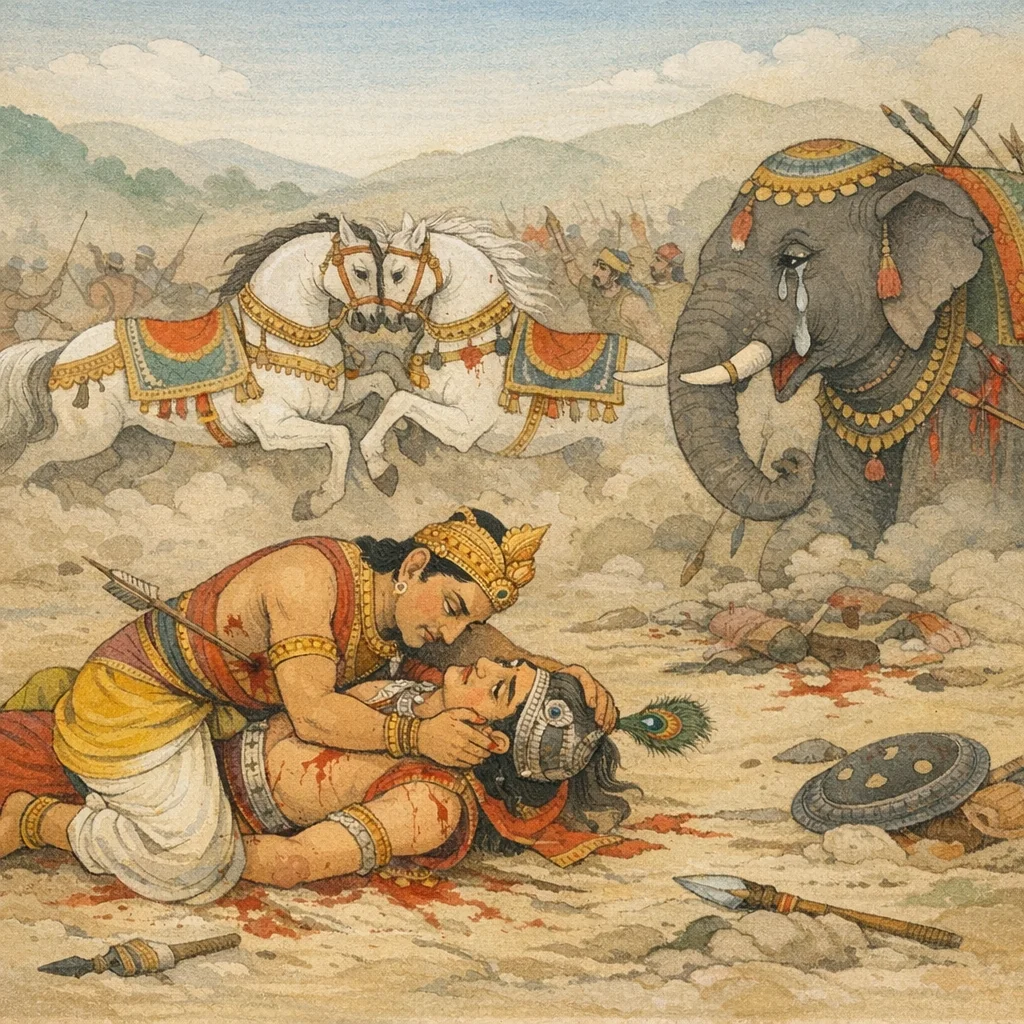
Chapter Arc: संजय धृतराष्ट्र से कहता है—राजन्, पैदल सैनिकों के शत-सहस्र दल जहाँ-तहाँ टकरा पड़े; रणभूमि एक साथ अनेक युद्धों का ज्वार बन गई। → धूल, शोर और रक्त के उन्माद में पहचान मिट जाती है—न पुत्र पिता को जानता, न पिता पुत्र को; न भाई भाई को, न मामा-भांजा, न मित्र-मित्र। पाण्डव और कौरव ‘आविष्ट’ से होकर एक-दूसरे पर टूटते हैं; घोड़े चँवर-कलंगी से सजे हंसों-से वेगवान होकर आमने-सामने भिड़ते हैं; हाथियों के कुम्भस्थल और पार्श्व प्रासों से फटते हैं और वे करुण क्रंदन करते हैं। → युद्ध की चरम विकृति में पिता पुत्र को और पुत्र पिता को मार गिराता है; मामा-भांजा एक-दूसरे पर प्रहार करते हैं—कुल-धर्म का बंधन रण-धर्म की आग में जलता दिखता है। कटे हुए बाहु, विदीर्ण पार्श्व, बाहर निकली आँतें—जीवन की तृष्णा लिए घायल कराहते हैं; चमकती तलवारें म्यानों से निकलकर निर्मम नृत्य करती हैं। → संजय इस घमासान का परिणाम किसी एक वीर की विजय में नहीं, बल्कि ‘अगणित’ गिरे हुए मनुष्यों की पुकार में रखता है—रणभूमि पर बिखरे लोग अपने कुटुम्बियों को पुकारते हैं; क्रोध से भौंहें टेढ़ी कर, दाँतों से ओठ दबाकर योद्धा फिर-फिर उकसते हैं। → यह उन्मत्त संग्राम थमता नहीं—क्रोध और वेग की वही धारा अगले क्षण किसको निगल लेगी, यह अनिश्चित रह जाता है।
Shlokas
Verse 1
ऑपन--माजल छा जि: षट्चत्वारिशो5 ध्याय: कौरव-पाण्डव-सेनाका घमासान युद्ध संजय उवाच राजन् शतसहस्राणि तत्र तत्र पदातिनाम् | निर्मयदिं प्रयुद्धानि तत् ते वक्ष्यामि भारत,संजय कहते हैं--भरतवंशी नरेश! उस रणभूमिमें जहाँ-तहाँ लाखों सैनिकोंका मर्यादाशून्य युद्ध चल रहा था। वह सब आपको बता रहा हूँ, सुनिये
Sañjaya said: O King, in that battlefield, hundreds of thousands of foot-soldiers were fighting in scattered places, their combat having slipped beyond all restraint and proper bounds. I shall now recount to you those lawless clashes, O Bharata.
Verse 2
न पुत्र: पितरं जज्ञे पिता वा पुत्रमौरसम् | न क्षाता क्रातरं तत्र स्वस्रीयं न च मातुल:,न पुत्र पिताको पहचानता था, न पिता अपने औरस पुत्रको। न भाई भाईको जानता था, न मामा अपने भानजेको
Sañjaya said: In that turmoil, a son did not recognize his father, nor did a father recognize his own legitimate son. Brother failed to know brother there, and even a maternal uncle did not recognize his sister’s son. The battle’s confusion and fury had so overwhelmed ordinary bonds of kinship that familial duty and recognition were eclipsed by the immediacy of survival and combat.
Verse 3
न मातुलं च स्वस्रीयो न सखायं सखा तथा । आविष्टा इव युध्यन्ते पाण्डवा: कुरुभि: सह,न भानजेने मामाको पहचाना, न मित्रने मित्रको। उस समय पाण्डव-योद्धा कौरव- सैनिकोंके साथ इस प्रकार युद्ध करते थे, मानो उनमें किसी ग्रह आदिका आवेश हो गया हो
Sañjaya said: In that battle the Pāṇḍava warriors fought the Kurus as if seized by a sudden overpowering force—showing no pause for kinship or friendship: not sparing a maternal uncle for a sister’s son, nor a friend for a friend. The demands of war had eclipsed personal ties, revealing how the frenzy of conflict can harden the heart and suspend ordinary social duties.
Verse 4
रथानीकं नरव्याप्रा: केचिदभ्यपतन् रथै: । अभज्यन्त युगैरेव युगानि भरतर्षभ,कुछ नरश्रेष्ठ वीर अपने रथोंद्वारा शत्रुपक्षकी रथ-सेनापर टूट पड़े। भरतश्रेष्ठ! कितने ही रथोंके जूए विपक्षी रथोंके जूओंसे ही टकराकर टूट गये
Sañjaya said: Some heroic men, intent on combat, charged with their chariots straight into the enemy’s chariot-formation. O bull among the Bharatas, many chariot-yokes shattered as yoke struck yoke—an image of the battle’s close-quarters fury, where skill and courage meet the harsh, impersonal mechanics of war.
Verse 5
रथेषाश्न रथेषाभि: कूबरा रथकूबरै: । संगतैः सहिता: केचित् परस्परजिघांसव:
Sañjaya said: The chariot-poles struck against chariot-poles, and the yokes and yoke-pins collided with those of other chariots. Some warriors, packed tightly together in the crush, moved with mutual intent to kill one another—an image of battle where proximity itself becomes a weapon and hostility overrides restraint.
Verse 6
प्रभिन्नास्तु महाकाया: संनिपत्य गजा गजै:
Sañjaya said: The huge-bodied elephants, maddened and in full charge, crashed together—elephant against elephant—signaling the battle’s descent into close, crushing violence where sheer force and discipline contend side by side.
Verse 7
बहुधादारयन् क्रुद्धा विषाणैरितरेतरम् । गण्डस्थलसे मदकी धारा बहानेवाले विशालकाय गजराज कुपित हो दूसरे हाथियोंसे टक्कर लेते हुए अपने दाँतोंके आघातसे एक-दूसरेको नाना प्रकारसे विदीर्ण करने लगे ।। ६ षू “व सतोरणपताकैश्न वारणा वरवारणै:,महाराज! कितने ही हाथी तोरण और पताकाओंसहित वेगशाली महाकाय एवं श्रेष्ठ गजराजोंसे भिड़कर उनके दाँतोंके आघातसे अत्यन्त पीड़ित हो आतुर भावसे चिग्घाड़ रहे थे
Sañjaya said: Enraged, the elephants tore into one another in many ways with their tusks. From their temples the streams of must flowed, as those mighty beasts crashed together in the fury of battle—an image of war’s blind momentum, where strength and pride, ungoverned by restraint, become instruments of mutual ruin.
Verse 8
अभिसृत्य महाराज वेगवद्धिर्महागजै: । दन्तैरभिहतास्तत्र चुक्रुशु: परमातुरा:,महाराज! कितने ही हाथी तोरण और पताकाओंसहित वेगशाली महाकाय एवं श्रेष्ठ गजराजोंसे भिड़कर उनके दाँतोंके आघातसे अत्यन्त पीड़ित हो आतुर भावसे चिग्घाड़ रहे थे
Sañjaya said: O King, charging forward, many elephants there collided with swift, massive war-elephants; struck by their tusks, they cried out in extreme agony—an image of the battlefield’s relentless violence and the suffering that follows from martial fury.
Verse 9
अभिनीताश्च शिक्षाभिस्तोत्रांकुशसमाहता: । अप्रभिन्ना: प्रभिन्नानां सम्मुखाभिमुखा ययु:,जिन्हें अनेक प्रकारकी शिक्षाएँ मिली थीं तथा जिनका मद अभी प्रकट नहीं हुआ था, वे हाथी तोत्र और अंकुशोंकी चोट खाकर सम्मुख खड़े हुए मदस्रावी गजराजोंके सामने जाकर युद्धके लिये डट गये
And those elephants, trained by many disciplines and not yet roused into musth, though struck by the goad and the elephant-hook, advanced straight on, face to face, against the musth-driven tuskers standing before them, and held their ground for battle.
Verse 10
प्रभिन्नैरपि संसक्ता: केचित् तत्र महागजा: । क्रौज्चवन्निनदं कृत्वा दुद्रुवु: सर्वतो दिशम्,कुछ महान् गजराज मदस्रावी हाथियोंसे टक्कर लेकर क्रौंच पक्षीकी भाँति चीत्कार करते हुए सब दिशाओंमें भाग गये
Sañjaya said: Some great elephants there, though already in musth and locked in violent clashes, raised a cry like the krauñca bird and fled in every direction. The scene underscores how, in the press of war, even the mightiest can be driven from steadiness into panic when force meets force and fear overwhelms resolve.
Verse 11
अच्छी तरह शिक्षा पाये हुए कितने ही हाथी तथा श्रेष्ठ गज, जिनके गण्डस्थलसे मद चू रहा था, ऋष्टि, तोमर और नाराचोंसे विद्ध होकर मर्म विदीर्ण हो जानेके कारण चिग्घाड़ते और प्राणशून्य हो धरतीपर गिर पड़ते थे। कितने ही भयानक चीत्कार करते हुए सब दिशाओं में भाग जाते थे
Sañjaya said: Many well-trained elephants and noble tuskers, with ichor streaming from their temples, were struck by spears, javelins, and iron arrows. Their vital points torn open, they bellowed in agony and fell lifeless upon the earth; others, raising terrifying cries, fled in panic in every direction. The scene underscores the moral cost of war: even the mightiest creatures, disciplined for battle, become helpless victims when violence overwhelms restraint and duty collapses into slaughter.
Verse 12
प्रणेदुर्भिन्नमर्माणो निपेतुश्च गतासव: । प्राद्रवन्त दिश: केचिन्नदन्तो भैरवान् रवान्,अच्छी तरह शिक्षा पाये हुए कितने ही हाथी तथा श्रेष्ठ गज, जिनके गण्डस्थलसे मद चू रहा था, ऋष्टि, तोमर और नाराचोंसे विद्ध होकर मर्म विदीर्ण हो जानेके कारण चिग्घाड़ते और प्राणशून्य हो धरतीपर गिर पड़ते थे। कितने ही भयानक चीत्कार करते हुए सब दिशाओं में भाग जाते थे
Sañjaya said: Some, their vital joints and vulnerable points shattered, trumpeted loudly and then fell to the ground lifeless. Others fled in all directions, bellowing terrifying cries. The scene underscores the brutal momentum of battle—where even the mightiest war-elephants, once symbols of royal power and disciplined training, are reduced to panic, collapse, and death under the force of weapons.
Verse 13
सम्यक् प्रणीता नागाश्च प्रभिन्नकरटामुखा: । ऋष्टितोमरनाराचैर्निविंद्धा वरवारणा:,गजानां पादरक्षास्तु व्यूढोरस्का: प्रहारिण: । ऋष्टिभि श्र थनुर्भिश्च विमलैश्नव परश्वधै:
Sañjaya said: The elephants were driven forward with skill, their temples streaming as they charged. Those splendid tuskers were pierced by spears, javelins, and iron-pointed arrows. And the foot-guards assigned to protect the elephants—broad-chested and trained to strike—fought on with spears, with bows and arrows, and with bright, newly whetted axes.
Verse 14
गदाभिमरुसलै श्चैव भिन्दिपालै: सतोमरै: । आयसै: परिधघैश्नैव निस्त्रिंशैर्विमलै: शितै:
Sañjaya said: The warriors pressed the fight with heavy weapons—maces and iron clubs, bhindipālas and javelins, iron parighas (bars), and bright, razor-sharp swords.
Verse 15
प्रगृहीतैः सुसंरब्धा द्रवमाणास्ततस्ततः । व्यदृश्यन्त महाराज परस्परजिघांसव:
Sañjaya said: O King, seized and pressed hard, they were seen fleeing in different directions—each intent on killing the other.
Verse 16
महाराज! हाथियोंके पैरोंकी रक्षा करनेवाले योद्धा, जिनके वक्षःस्थल विस्तृत एवं विशाल थे, अत्यन्त क्रोधमें भरकर इधर-उधर दौड़ रहे थे और हाथोंमें लिये हुए ऋष्टि, धनुष, चमकीले फरसे, गदा, मूसल, भिन्दिपाल, तोमर, लोहेकी परिघ तथा तेज धारवाले उज्ज्वल खड्ग आदि आयुधधोंद्वारा एक-दूसरेके वधके लिये उत्सुक दिखायी दे रहे थे ।। १३ -१५।। राजमानाश्ष निस्त्रिंशा: संसिक्ता नरशोणितै: । प्रत्यदृश्यन्त शूराणामन्योन्यमभिधावताम्,परस्पर धावा करनेवाले शूरवीरोंके चमकीले खड्ग मनुष्योंके रक्तसे रँगे हुए देखे जाते थे
Sañjaya said: O King, as the heroes charged at one another, their gleaming swords were seen smeared with human blood.
Verse 17
अवक्षिप्तावधूतानामसीनां वीरबाहुभि: । संजज्ञे तुमुल: शब्द: पततां परमर्मसु,वीरोंकी भुजाओंसे घुमाकर चलाये हुए खड्ग जब दूसरोंके मर्मपर आघात करते थे, उस समय उनका भयंकर शब्द सुनायी पड़ता था
Sañjaya said: As the heroes, with mighty arms, whirled and hurled their swords, and those blades struck the vital points of their foes, a tumultuous, dreadful clangor arose—an ominous sound of battle.
Verse 18
गदामुसलरुग्णानां भिन्नानां च वरासिभि: | दन्तिदन्तावभिन्नानां मृदितानां च दन्तिभि:,उस युद्धस्थलमें गदा और मूसलके आघातसे कितने ही मनुष्योंके अंग-भंग हो गये थे, कितने ही अच्छी श्रेणीके तलवारोंसे छिन्न-भिन्न हो रहे थे, कितनोंके शरीर हाथियोंके दाँतोंसे दबकर विदीर्ण हो गये थे और कितनोंको हाथियोंने कुचल दिया था। इस प्रकार असंख्य मनुष्योंके समुदाय अधमरे-से होकर एक-दूसरेको पुकार रहे थे। भारत! उनके वे भयंकर आर्तनाद प्रेतोंके कोलाहलके समान श्रवणगोचर हो रहे थे
Sañjaya said: On that battlefield, many men had their limbs shattered by the blows of maces and clubs; many were hewn apart by excellent swords; many were torn open by the tusks of elephants, and many were crushed beneath the elephants’ weight. Thus countless bands of warriors, half-dead, cried out to one another. O Bhārata, their dreadful wails were heard like the tumult of spirits.
Verse 19
तत्र तत्र नरौघाणां क्रोशतामितरेतरम् | शुश्रुवुर्दारुणा वाच: प्रेतानामिव भारत,उस युद्धस्थलमें गदा और मूसलके आघातसे कितने ही मनुष्योंके अंग-भंग हो गये थे, कितने ही अच्छी श्रेणीके तलवारोंसे छिन्न-भिन्न हो रहे थे, कितनोंके शरीर हाथियोंके दाँतोंसे दबकर विदीर्ण हो गये थे और कितनोंको हाथियोंने कुचल दिया था। इस प्रकार असंख्य मनुष्योंके समुदाय अधमरे-से होकर एक-दूसरेको पुकार रहे थे। भारत! उनके वे भयंकर आर्तनाद प्रेतोंके कोलाहलके समान श्रवणगोचर हो रहे थे
Sañjaya said: Here and there on that battlefield, the massed ranks of men—crying out to one another—were heard raising dreadful voices, O Bhārata, like the clamour of the dead.
Verse 20
हयैरपि हयारोहाश्चलामरापीडधारिभि: । हंसैरिव महावेगैरन्योन्यमभिविद्रुता:,चँवर और कलंगीसे सुशोभित हंस-तुल्य सफेद एवं महान् वेगशाली घोड़ोंपर बैठे हुए कितने ही घुड़सवार एक-दूसरेपर धावा कर रहे थे
Sañjaya said: Even the mounted horsemen, bearing fluttering yak-tail whisks and crested head-ornaments, rode upon white horses swift as great-winged swans, and they charged at one another in headlong rushes.
Verse 21
तैविमुक्ता महाप्रासा जाम्बूनदविभूषणा: । आशुगा विमलास्तीक्ष्णा: सम्पेतुर्भुजगोपमा:,उनके द्वारा चलाये हुए सुवर्णभूषित निर्मल और तेज धारवाले शीघ्रगामी महाप्रास (भाले) सर्पोके समान गिर रहे थे
Sañjaya said: Released by them, the great lances—adorned with Jāmbūnada gold, swift, spotless, and razor-sharp—came hurtling down like serpents.
Verse 22
अश्वैरग्रयजवै: केचिदाप्लुत्य महतो रथान् | शिरांस्याददिरे वीरा रथिनामश्वसादिन:,कितने ही वीर घुड़सवार शीघ्रगामी अभश्वोंद्वारा धावा करके बड़े-बड़े रथोंपर कूद पड़ते और रथियोंके मस्तक काट लेते थे
Sañjaya said: Some heroic horsemen, mounted on swift and excellent steeds, would leap up onto the great chariots and cut off the heads of the chariot-warriors.
Verse 23
बहूनपि हयारोहान् भल््लै: संनतपर्वभि: । रथी जघान सम्प्राप्पय बाणगोचरमागतान्,इसी प्रकार एक-एक रथी झुकी हुई गाँठवाले भलल नामक बाणोंद्वारा निशानेपर आये हुए बहुत-से घुड़सवारोंका संहार कर डालता था
Sañjaya said: When those many horsemen came within the range of his arrows, each chariot-warrior cut them down with bhalla shafts—arrows fitted with bent knots—once they were squarely within his aim. Thus, as the battle tightened into close and deadly distance, skill and resolve turned the field into a swift slaughter.
Verse 24
नवमेघप्रतीकाशाश्षाक्षिप्य तुरगान् गजा: । पादैरेव विमृद्नन्ति मत्ता: कनकभूषणा:,नूतन मेघोंके समान शोभा पानेवाले स्वर्णभूषित मतवाले हाथी बहुत-से घोड़ोंको सूँड्ोंस झटककर पैरोंसे ही रौंद डालते थे
Sañjaya said: Like newly formed rain-clouds in appearance, the elephants—maddened and adorned with golden ornaments—flung aside the horses and trampled them underfoot. The scene underscores the overwhelming, impersonal force of battle, where living beings become instruments of destruction amid the clash of armies.
Verse 25
पाट्यमानेषु कुम्भेषु पाश्चेष्वपि च वारणा: । प्रासैविनिहता: केचिद् विनेदु: परमातुरा:,कितने ही हाथी प्रासोंकी चोट खाकर कुम्भस्थल और पार्श्वभागोंके विदीर्ण हो जानेपर अत्यन्त आतुर हो घोर चिग्घाड़ मचा रहे थे
Sañjaya said: As their temples and flanks were being split open, some elephants—struck down by spears—cried out in terrible agony, raising a dreadful clamour amid the slaughter of war.
Verse 26
साथ्वारोहान् हयान् कांचिदुन्मथ्य वरवारणा: । सहसा चिक्षिपुस्तत्र संकुले भैरवे सति,बहुत-से बड़े-बड़े हाथी कितने ही घुड़सवारों-सहित घोड़ोंको पैरोंसे कुचलकर सहसा भयंकर युद्धमें फेंक देते थे
Sañjaya said: In that crowded and dreadful clash, the mighty elephants, after violently wrenching up some horses along with their mounted riders, suddenly hurled them down amid the terror of battle. The scene underscores the brutal momentum of war, where strength and panic overturn order and life alike.
Verse 27
साश्वारोहान् विषाणाग्रैरुत्क्षिप्प तुरगान् गजा: । रथौघानभिमृद्नन्त: सध्वजानभिचक्रमु:,कितने ही हाथी अपने दाँतोंके अग्रभागसे घुड़सवारों-सहित घोड़ोंको उछालकर ध्वजोंसहित रथसमूहोंको पैरोंतले रौंदते हुए रणभूमिमें विचर रहे थे
Sañjaya said: The elephants, lifting up the horses along with their riders on the tips of their tusks, and trampling down masses of chariots together with their banners, ranged about the battlefield—an image of war’s crushing force where valor and life are overturned in an instant.
Verse 28
पुंस्त्वादतिमदत्वाच्च केचित् तत्र महागजा: । साश्वारोहान् हयाञ्जघ्नु: करै: सचरणैस्तथा,वहाँ कितने ही महान् गज अत्यन्त मदोन्मत्त तथा पुरुष होनेके कारण सूँड़ों और पैरोंसे घोड़ों और घुड़सवारोंका संहार कर डालते थे
Sañjaya said: There, some mighty elephants—driven wild by their musth and by their aggressive, virile force—slew horses and their riders alike, striking them down with their trunks and trampling them underfoot. The scene shows how, in the fury of battle, even noble war-beasts become instruments of indiscriminate destruction, sweeping away both mount and man.
Verse 29
अभ्चारोहैश्व समरे हस्तिसादिभिरेव च । प्रतिमानेषु गात्रेषु पाश्वेष्वभि च वारणान् | आशुगा विमलास्ती क्ष्णा: सम्पेतुर्भुजगोपमा:,युद्धमें घुड़लवारों और गजारोहियोंके चलाये हुए निर्मल, तीक्ष्ण तथा सर्पोके समान भयंकर शीघ्रगामी बाण हाथियोंके ललाटों, अन्यान्य अंगों तथा पसलियोंपर चोट करते थे
Sañjaya said: In that battle, arrows—swift, spotless, razor-sharp, and dreadful like serpents—shot by horsemen and by those mounted on elephants, struck the elephants on their foreheads, on other limbs, and along their flanks. The scene reveals the relentless mechanics of war: skill and speed are turned into instruments of harm, and even mighty creatures become targets amid the human pursuit of victory.
Verse 30
नराश्चकायान् निर्भिद्य लौहानि कवचानि च । निपेतुर्विमला: शक््त्यो वीरबाहुभिरपिंता:
Sañjaya said: The spotless spears, hurled by the mighty arms of heroic warriors, pierced through men’s bodies and even split iron cuirasses; then, having done their work, they fell to the ground. The scene shows the grim certainty of battle—where valor and skill become instruments of destruction, and the cost is borne in flesh and armor alike.
Verse 31
द्वीपिचर्मावनद्धैश्व व्याप्रचर्मच्छदैरपि
Sañjaya said: “They were also clad in coverings of leopard-skin, and likewise had coverings made of tiger-skin.” The line highlights the warriors’ fierce, almost ascetic martial display—adopting animal hides as emblems of strength and intimidation under the ethical weight of the coming battle.
Verse 32
अभिष्लुतमभिक्रुद्धमेकपार्श्वावदारितम्
Sañjaya said: “(It was) struck hard and enraged, and had one side torn open.” The line conveys the brutal immediacy of battlefield violence—an image of a wounded combatant or creature driven into fury by injury, showing how war deforms both body and temperament.
Verse 33
केचिदाक्षिप्प करिण: साश्वानपि रथान् करै:
Sañjaya said: Some warriors, in the fury of close combat, seized the elephants and even the horse-drawn chariots with their hands—an image of desperate valor and the brutal immediacy of war, where strength and resolve override ordinary limits.
Verse 34
शड्कुभिदारिता: केचित् सम्भिन्नाश्न परश्वधै:,कुछ मनुष्य बाणोंसे विदीर्ण होकर पड़े थे, कितने ही फरसोंसे छिन्न-भिन्न हो रहे थे, कितनोंको हाथियोंने मसल डाला था, कितने ही घोड़ोंकी टापसे कुचल गये थे, कितनोंके शरीर रथके पहियोंसे कट गये थे और कितने ही कूबरोंसे काट डाले गये थे
Sañjaya reports the battlefield’s grim spectacle: some warriors lay pierced through by sharp stakes, others were hacked apart by axes; some were crushed under elephants, others trampled by horses’ hooves. Many bodies were severed by chariot wheels, and others were cut down by the chariot’s pole and fittings. The scene underscores the moral cost of war—how, once violence is unleashed, human bodies become mere objects in the machinery of battle.
Verse 35
हस्तिभिर्मुदिता: केचित् क्षुण्णाश्षान्ये तुरंगमै: । रथनेमिनिकृत्ताश्च निकृत्ताश्न परश्वथै:,कुछ मनुष्य बाणोंसे विदीर्ण होकर पड़े थे, कितने ही फरसोंसे छिन्न-भिन्न हो रहे थे, कितनोंको हाथियोंने मसल डाला था, कितने ही घोड़ोंकी टापसे कुचल गये थे, कितनोंके शरीर रथके पहियोंसे कट गये थे और कितने ही कूबरोंसे काट डाले गये थे
Sañjaya said: Some warriors lay crushed down by elephants; others were trampled by swift horses. Some had their bodies sliced by the rims of chariot-wheels, and others were hewn apart by axes. The battlefield thus displayed the grim, indiscriminate force of war, where strength and weapons alike reduce living beings to ruin, underscoring the heavy moral cost that accompanies kṣatriya conflict even when fought under the banner of duty.
Verse 36
व्याक्रोशन्त नरा राजंस्तत्र तत्र सम बान्धवान् | पुत्रानन्ये पितृनन्ये भ्रातृश्व सह बन्धुभि:
Sañjaya said: “O King, men cried out in anguish here and there, calling to their own kinsmen—some for their sons, some for their fathers, and some for their brothers, along with their other relatives.”
Verse 37
विकीर्णानन्त्रा: सुबहवो भग्नसक्थाश्न भारत,भारत! बहुतोंकी आँतें बाहर निकलकर बिखर गयी थीं, जाँघें टूट गयी थीं, कितनोंकी बाहें कट गयी थीं, बहुतोंकी पसलियाँ फट गयी थीं और कितने ही घायल अवस्थामें प्याससे पीड़ित हो जीवनके लोभसे रोते दिखायी देते थे
Sañjaya said: “O Bhārata, many lay with their entrails spilled and scattered; many had their thighs shattered; many had their arms severed; many had their ribs split. Wounded and tormented by thirst, clinging to the hope of life, they were seen crying out—an image of war’s cruelty and the tragic attachment that persists even amid righteous conflict.”
Verse 38
बाहुभिश्षचापरे छिन्नैः पार्श्ेषु च विदारिता: । क्रन्दन्त: समदृश्यन्त तृषिता जीवितेप्सव:,भारत! बहुतोंकी आँतें बाहर निकलकर बिखर गयी थीं, जाँघें टूट गयी थीं, कितनोंकी बाहें कट गयी थीं, बहुतोंकी पसलियाँ फट गयी थीं और कितने ही घायल अवस्थामें प्याससे पीड़ित हो जीवनके लोभसे रोते दिखायी देते थे
Sañjaya said: Others were seen with their arms severed, their flanks and ribs torn open; crying out in agony, parched with thirst, and still clinging to life, they appeared before the eyes—O Bhārata—revealing the grim moral cost of war, where the instinct to survive persists even amid utter ruin.
Verse 39
तृषा परिगता: केचिदल्पसत्त्वा विशाम्पते । भूमौ निपतिता: संख्ये मृगयांचक्रिरे जलम्,राजन! कुछ लोग धरतीपर अधमरे पड़े थे। उनमें जीवनकी शक्ति बहुत थोड़ी रह गयी थी और वे पिपासासे पीड़ित हो युद्धभूमिमें ही जलकी खोज कर रहे थे
Sañjaya said: “O lord of the people, some men—of very little remaining strength—were overcome by thirst. Fallen upon the ground amid the battle, they searched there for water, O king.”
Verse 40
रुधिरौघपरिक्लिन्ना: क्लिश्यमानाश्न भारत । व्यनिन्दन् भृशमात्मानं तव पुत्रांश्व संगतान्,भरतनन्दन! लहूलुहान होकर कष्ट पाते हुए वे समस्त घायल सैनिक अपनी और आपके पुत्रोंकी अत्यन्त निन््दा करते थे
Sañjaya said: “O Bharata, drenched in torrents of blood and suffering grievously, all those wounded soldiers bitterly condemned themselves—and also your sons who had brought about this encounter, O joy of the Bharatas.”
Verse 41
अपरे क्षत्रिया: शूरा: कृतवैरा: परस्परम् | नैव शस्त्र विमुछ्चन्ति नैव क्रन्दन्ति मारिष,माननीय महाराज! दूसरे शूरवीर क्षत्रिय आपसमें वैर बाँधे हुए उस घायल अवस्थामें भी न हथियार छोड़ते थे और न क्रन्दन ही करते थे
Sañjaya said: Other valiant kṣatriyas too—bound to one another by settled enmity—would not let go of their weapons even when wounded, nor would they cry out. In the midst of battle, their warrior code and pride held them to steadfast endurance, revealing the grim ethic of kṣatriya duty where resolve is displayed through silence and unbroken combat.
Verse 42
तर्जयन्ति च संद्ृष्टास्तत्र तत्र परस्परम् | आदश्य दशनैश्लवापि क्रोधात् सरदनच्छदम्
Sañjaya said: Wherever they caught sight of one another, they threatened each other again and again. In anger they even bared their teeth, their faces hardening with hostility—signs of minds overtaken by wrath as the battle-spirit rose.
Verse 43
अपरे क्लिश्यमानास्तु शरार्ता ब्रणपीडिता:
Sañjaya said: Others, however, were suffering—tormented by arrows and distressed by painful wounds.
Verse 44
निष्कूजा: समपद्यन्त दृढसत्त्वा महाबला: । धैर्यको दृढ़तापूर्वक धारण किये रहनेवाले दूसरे महाबली वीर बाणोंके आघातसे पीड़ित हो क्लेश सहन करते हुए भी मौन ही रहते थे--अपनी वेदना प्रकाशित नहीं करते थे ।। ४३ कक . अन्ये च विरथा: शूरा रथमन्यस्य संयुगे,महाराज! कुछ वीर पुरुष अपना रथ भग्न हो जानेके कारण युद्धमें पृथ्वीपर गिरकर दूसरेका रथ माँग रहे थे, इतनेहीमें बड़े-बड़े हाथियोंके पैरोंसे वे कुचल गये। उस समय उनके रक्तरंजित शरीर फूले हुए पलाशके समान शोभा पा रहे थे
Sañjaya said: Mighty warriors of steadfast spirit endured the blows in silence, not crying out even when struck by arrows. Others—brave men whose chariots had been shattered—fell to the ground in the thick of battle and called for another’s chariot; but before they could be rescued, they were crushed under the feet of great elephants. Their blood-smeared bodies, swollen and torn, appeared like blossoming palāśa flowers.
Verse 45
प्रार्थयाना निपतिता: संक्षुण्णा वरवारणै: । अशोभन्त महाराज सपुष्पा इव किंशुका:,महाराज! कुछ वीर पुरुष अपना रथ भग्न हो जानेके कारण युद्धमें पृथ्वीपर गिरकर दूसरेका रथ माँग रहे थे, इतनेहीमें बड़े-बड़े हाथियोंके पैरोंसे वे कुचल गये। उस समय उनके रक्तरंजित शरीर फूले हुए पलाशके समान शोभा पा रहे थे
Sañjaya said: O King, some heroic men, having fallen to the ground when their chariots were shattered, were pleading for another chariot; even as they did so, they were crushed under the feet of great elephants. Then, their bodies—smeared with blood—appeared striking, like kiṁśuka trees in bloom.
Verse 46
सम्बभूवुरनीकेषु बहवो भैरवस्वना: । वर्तमाने महाभीमे तस्मिन् वीरवरक्षये,इति श्रीमहाभारते भीष्मपर्वणि भीष्मवधपर्वणि संकुलयुद्धे षट्चत्वारिंशो5ध्याय: ।। ४६ ।। इस प्रकार श्रीमह्याभारत भीष्मपर्वके अन्तर्गत भीष्मवधपर्वमें दोनों सेनाओंका घमासान युद्धविषयक छियालीसवाँ अध्याय पूरा हुआ
Sañjaya said: In the battle-formations, many terrifying cries arose. As that exceedingly dreadful slaughter of the foremost heroes went on, the din and dread of war swelled on every side.
Verse 47
निजघान पिता पुत्र पुत्रश्न॒ पितरं रणे । स्वस्रीयो मातुलं चापि स्वस्रीयं चापि मातुल:
Sañjaya said: In the fury of battle, a father struck down his own son, and a son struck down his own father. A sister’s son slew his maternal uncle, and the maternal uncle likewise slew his sister’s son.
Verse 48
सखा सखायं च तथा सम्बन्धी बान्धवं तथा । उन सेनाओंमें अनेकानेक भयंकर शब्द सुनायी पड़ते थे। बड़े-बड़े वीरोंका विनाश करनेवाले उस महाभयानक संग्राममें पिताने पुत्रको, पुत्रने पिताको, भानजेने मामाको, मामाने भानजेको, मित्रने मित्रको तथा सगे-सम्बन्धीने अपने सगे बान्धवजनोंको मार डाला || ४६-४७ है || एवं युयुधिरे तत्र कुरव: पाण्डवै: सह,इस प्रकार उस मर्यादाशून्य भयानक संग्राममें कौरवोंका पाण्डवोंके साथ घोर युद्ध हो रहा था। इतनेहीमें सेनापति भीष्मके पास पहुँचकर पाण्डवोंकी सारी सेना काँपने लगी
Sanjaya said: “There, friend fought friend, and kinsman fought kinsman. Thus the Kurus and the Pandavas battled one another in that dreadful, boundaryless slaughter, where the bonds of family and friendship were overwhelmed by the frenzy of war and the collapse of restraint.”
Verse 49
वर्तमाने तथा तस्मिन् निर्मयदि भयानके । भीष्ममासाद्य पार्थानां वाहिनी समकम्पत,इस प्रकार उस मर्यादाशून्य भयानक संग्राममें कौरवोंका पाण्डवोंके साथ घोर युद्ध हो रहा था। इतनेहीमें सेनापति भीष्मके पास पहुँचकर पाण्डवोंकी सारी सेना काँपने लगी
Sañjaya said: As that dreadful battle—stripped of all restraint—raged on, the Pāṇḍavas’ host, on coming up against Bhīṣma, began to tremble.
Verse 50
केतुना पञ्चतारेण तालेन भरतर्षभ । राजतेन महाबाहुरुच्छितेन महारथे । बभौ भीष्मस्तदा राजंश्नन्द्रमा इव मेरुणा,भरतश्रेष्ठ! महाबाहु भीष्म अपने विशाल रथपर बैठकर चाँदीके बने हुए पाँच तारोंसे युक्त तालांकित ध्वजके द्वारा मेरके शिखरपर स्थित हुए चन्द्रमाके समान शोभा पा रहे थे
Sañjaya said: O bull among the Bharatas, with a lofty banner marked by a palmyra emblem and adorned with five star-like ornaments of shining silver, the mighty-armed Bhīṣma, seated upon his great chariot, then appeared resplendent—like the moon poised upon Mount Meru.
Verse 56
न शेकुश्वलितुं केचित् संनिपत्य रथा रथै: । रथोंके ईषादण्ड और कूबर भी सामने आये हुए रथोंके ईषादण्ड और कूबरोंसे भिड़कर टूक-टूक हो गये। एक दूसरेको मार डालनेकी इच्छा रखनेवाले कितने ही रथ दूसरे रथोंसे आमने-सामने भिड़कर एक पग भी इधर-उधर चल न सके
Sañjaya said: Some could not even turn their chariots; having closed in, chariot met chariot head-on. The chariot-poles and yokes, colliding with the poles and yokes of the opposing cars, were shattered to pieces. Many chariots, driven by the will to kill one another, crashed face to face and could not move even a single step to either side.
Verse 306
महोल्काप्रतिमा घोरास्तत्र तत्र विशाम्पते । वीरोंकी भुजाओंसे चलायी हुई निर्मल शक्तियाँ, मनुष्यों और घोड़ोंकी काया तथा लोहमय कवचोंको भी विदीर्ण करके धरतीपर गिर जाती थीं। प्रजानाथ! वहाँ गिरते समय वे भयंकर शक्तियाँ बड़ी भारी उल्काओंके समान प्रतीत होती थीं
O lord of the people! There, the spotless śakti-spears hurled by the heroes’ arms tore through the bodies of men and horses, even rending iron armor, and then fell to the earth. As they fell, those dreadful weapons seemed like great, heavy meteors.
Verse 326
विदर्शयन्त: सम्पेतु: खड्गचर्मपरश्वथै: । कितने ही योद्धा ढाल, तलवार तथा फरसोंसे निर्भय होकर शत्रुके सम्मुख जाने, क्रोधपूर्वक दाँतोंस ओठ दबाकर आक्रमण करने तथा बायीं पसलीपर चोट करके उसे विदीर्ण करने आदिके पैंतरे दिखाते हुए शत्रुओंपर टूट पड़ते थे
Sañjaya said: Displaying their martial skill, the warriors closed in—brandishing swords, shields, and axes. Fearless before the enemy, they advanced in wrath, clenching their teeth and pressing their lips tight, and they struck with practiced feints—aiming even at the left flank to split it—thus rushing headlong upon their foes. The scene underscores how anger and battle-craft can drive men beyond hesitation, turning the field into a test of courage, restraint, and the harsh demands of kṣatriya-duty.
Verse 333
विकर्षन्तो दिश: सर्वा: सम्पेतु: सर्वशब्दगा: । प्रत्येक शब्दकी ओर गमन करनेवाले कितने ही हाथी घोड़ोंसहित रथोंकी अपनी सूँड्रोंसे खींचकर उन्हें लिये-दिये सम्पूर्ण दिशाओंमें दौड़ रहे थे
Sanjaya reports that the tumult of battle spread in every direction. Drawn toward each separate cry and clash, many elephants—along with horses—seized chariots with their trunks, dragging and carrying them as they charged about across the whole field. The scene conveys the moral chaos of war: once violence is unleashed, even disciplined forces are pulled by noise, fear, and impulse, and order gives way to indiscriminate destruction.
Verse 366
मातुलान् भागिनेयांश्व॒ परानपि च संयुगे । राजन! रणभूमिमें जहाँ-तहाँ गिरे हुए अगणित मनुष्य अपने कुट॒म्बीजनोंको पुकार रहे थे। कुछ बेटोंको, कुछ पिताको, कुछ भाई-बन्धुओंको, कुछ मामा-भाजोंको और कुछ लोग दूसरों-दूसरोंके नाम ले-लेकर विलाप कर रहे थे
Sanjaya said: O King, on the battlefield, countless men lay fallen in every direction. In their anguish they cried out for their own family members—some calling for their sons, some for their fathers, some for brothers and kinsmen, some for maternal uncles and nephews—while others, naming this person and that, lamented aloud. The scene exposes the human cost of war: when bonds of kinship are torn, grief overwhelms all sides, regardless of victory or defeat.
Verse 426
भ्रुकुटीकुटिलै रवक्रै: प्रेक्षन्ति च परस्परम् । वे बार-बार उत्साहित होकर एक-दूसरेको डाँट बताते और क्रोधपूर्वक ओठोंको दाँतसे दबाकर भौंहें टेढ़ी करके परस्पर दृष्टिपात करते थे
Sañjaya said: With brows knotted into a frown and faces twisted in harshness, they kept glaring at one another—repeatedly rousing themselves, trading taunts, and, in anger, biting their lips as they measured each other with hostile looks. The scene underscores how wrath and pride harden the mind and turn speech into injury, intensifying the moral descent that accompanies war.
Verse 3163
विकोशैर्विमलै: खड्गैरभिजग्मु: परान् रणे | जो चमकीली तलवारें पहले चितकबरे अथवा साधारण व्याप्र-चर्मकी बनी हुई म्यानोंमें बंद रहती थीं, उन्हें उन म्यानोंसे निकालकर उनके द्वारा वीर पुरुष रणभूमिमें विपक्षियोंका वध कर रहे थे
Sanjaya said: With bright, unsheathed, spotless swords, the warriors pressed upon their foes in the battle, closing in to strike them down. The shining blades that had earlier lain shut within scabbards of mottled tiger-hide or plain leather were drawn forth; and with them the valiant men slew their opponents on the field. The scene underscores the grim resolve of combat—once weapons were drawn, skill and courage turned into lethal action, as kṣātra-dharma, the warrior’s duty, drove men to meet enemies face to face.
Frequently Asked Questions
The chapter presents the ethical strain of mass combat where duty-driven action continues despite loss of discrimination in the melee; it implicitly questions how dharma is operationalized when violence becomes indiscriminate through saṃmoha (confusion).
The narrative emphasizes that agency (puruṣakāra) and disciplined resolve can stabilize a collapsing situation, yet it also records the systemic costs—fear, disorientation, and material ruin—underscoring that outcomes arise from both personal capacity and collective conditions.
No explicit phalaśruti is stated in this adhyāya; its meta-commentary operates through Saṃjaya’s descriptive framing, which positions the episode as an illustrative case of battlefield dharma, morale dynamics, and the limits of control in large-scale conflict.