Adhyaya 100
भीष्म-पर्व अध्याय १०० — त्रिगर्त-आक्रमण, भीष्म-केन्द्रित पुनर्संयोजन, तथा शक्त्यस्त्र-विनिमय
Upa-parva: Bhīṣma-vadha–pūrvabhāga (War-Day Engagements under Bhīṣma’s command)
Saṃjaya reports that Arjuna (Dhanaṃjaya) drives Suśarmā and allied kings into disarray with sharp arrows, producing a rapid rout across chariot, elephant, cavalry, and infantry elements; many abandon vehicles and weapons while commanders fail to halt the flight. Observing the collapse, Duryodhana advances with maximal effort, placing Bhīṣma prominently to stabilize the Kaurava front and to pressure Arjuna in defense of the Trigarta leader’s position. As the wider battle converges near midday, multiple parallel duels ignite: Sātyaki checks Kṛtavarmā and moves toward Bhīṣma; Drupada and Droṇa exchange dense volleys leading to Drupada’s withdrawal; Bhīma overwhelms Bāhlika’s chariot-team; and Abhimanyu disables an opponent’s team and remounts swiftly. A critical weapons episode follows: Bhīṣma hurls a powerful śakti toward Vāsudeva, which Kṛṣṇa neutralizes with agility; Kṛṣṇa counters with his own śakti, which Bhīṣma cleaves mid-flight and then strikes Sātyaki. The chapter closes with intensified, tumulous fighting as Pāṇḍava forces encircle Bhīṣma to mitigate risk to Mādhava (Kṛṣṇa) and to contest command dominance.
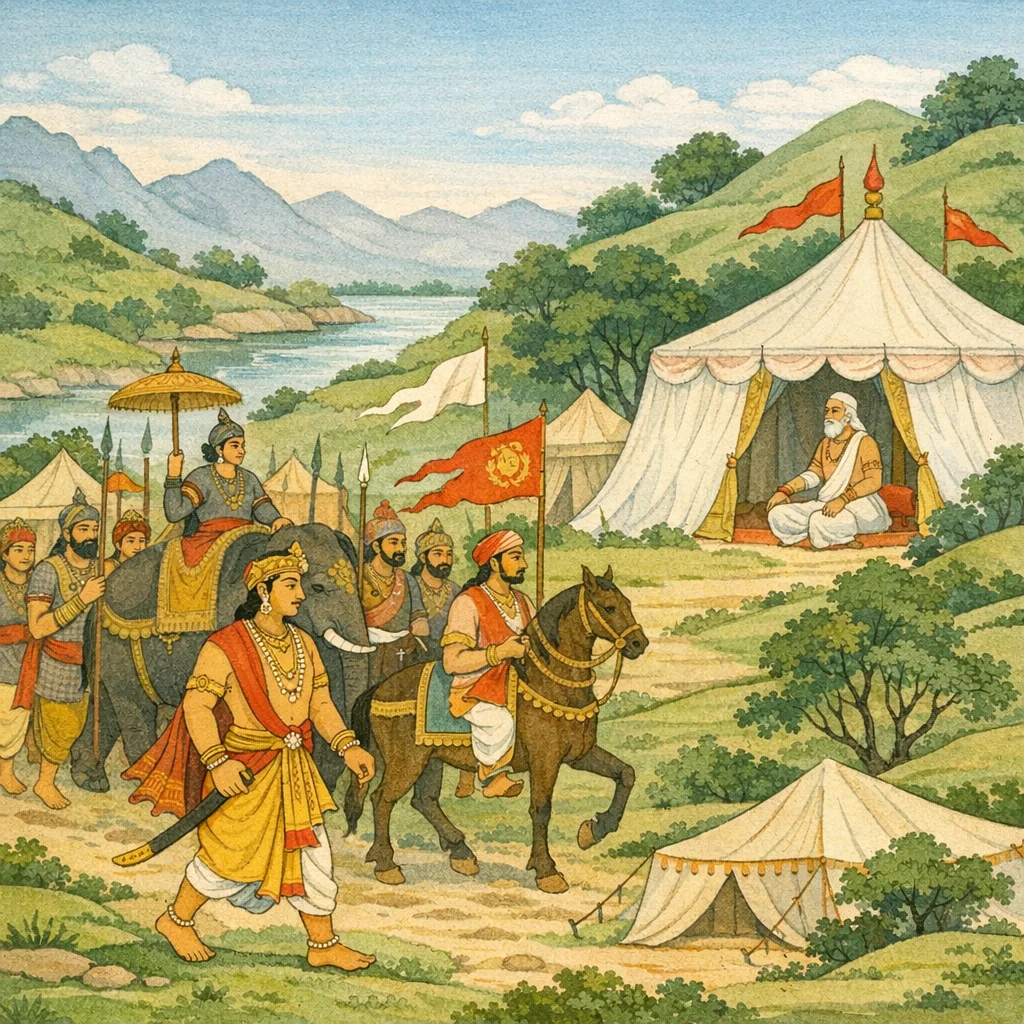
Chapter Arc: संजय धृतराष्ट्र को बतलाते हैं कि युद्ध की पूर्व-संध्या में दुर्योधन अपने मन्त्रियों को बुलाकर एक ही प्रश्न पर मन टिकाता है—पाण्डु-पुत्रों को उनके समस्त सहायक-समूह सहित रण में कैसे जीता जाए। → दुर्योधन कर्ण और शकुनि सहित मन्त्रियों से रणनीति पर विचार करता है; कर्ण अपने पराक्रम का आश्वासन देता है कि वह सोमक, पांचाल, केकय, करूष आदि को नष्ट कर देगा और पाण्डवों को उनके बन्धु-बान्धवों सहित पराजित करेगा। दुर्योधन तत्क्षण दुःशासन को आदेश देता है कि अनुयात्रा, रसद, रथ-हाथी-घोड़े, शस्त्र-सज्जा—सब कुछ शीघ्र और सर्वथा तैयार हो। → कर्ण का निर्णायक आग्रह—‘समर में मुझे आज्ञा दीजिए; मैं रण-शोभा कर्ण पाण्डवों को ससुहृद्गण-बान्धव परास्त कर दूँगा’—सभा के भीतर युद्ध-निश्चय को कठोर रूप देता है और दुर्योधन का संकल्प भीष्म के शिविर की ओर कूच में बदल जाता है। → दुर्योधन सुवर्ण-प्रभा, सुगन्धित चन्दन-लेप और राजसी अलंकरण से युक्त होकर भीष्म के शिविर की ओर प्रस्थान करता है; उसके पीछे महाधनुर्धर राजा-नरेश, भाई-बंधु और मित्र-समूह अस्त्र-शस्त्र सहित उसी प्रकार साथ हो लेते हैं जैसे इन्द्र के पीछे देवगण। → भीष्म के शिविर में पहुँचकर दुर्योधन क्या निवेदन करेगा—और सेनापति-निर्णय/रणनीति किस दिशा में मुड़ेगी?
Shlokas
Verse 1
[दाक्षिणात्य अधिक पाठका इं श्लोक मिलाकर कुल ८० ६ “लोक हैं।] #स्न्ैमा रन () अिन्मानन- सप्तनवतितमो< ध्याय: दुर्योधनका अपने मन्त्रियोंस सलाह करके भीष्मसे पाण्डवोंको मारने अथवा कर्णको युद्धके लिये आज्ञा देनेका अनुरोध करना संजय उवाच ततो दुर्योधनो राजा शकुनिश्चापि सौबल: । दुःशासनश्र पुत्रस्ते सूतपुत्रश्न दुर्जय:,संजय कहते हैं--महाराज! तदनन्तर राजा दुर्योधन, सुबलपुत्र शकुनि, आपका पुत्र दुःशासन, दुर्जयवीर सूतपुत्र कर्ण--ये सभी मिलकर अभीष्ट कार्यके विषयमें गुप्त परामर्श करने लगे। उनकी मन्त्रणाका मुख्य विषय यह था कि पाण्डवोंको दल-बलसहित युद्धमें कैसे जीता जा सकता है?
Sanjaya said: Then King Duryodhana, along with Shakuni the son of Subala, your son Duhshasana, and Karna—the hard-to-conquer son of a charioteer—came together to confer in secrecy about their desired objective. Their counsel centered on how the Pandavas, with their forces, might be overcome in war—an alliance of ambition and strategy set against the demands of righteousness.
Verse 2
समागम्य महाराज मन्त्र चक्रुविवश्षितम् | कथं पाण्डुसुता: संख्ये जेतव्या: सगणा इति,संजय कहते हैं--महाराज! तदनन्तर राजा दुर्योधन, सुबलपुत्र शकुनि, आपका पुत्र दुःशासन, दुर्जयवीर सूतपुत्र कर्ण--ये सभी मिलकर अभीष्ट कार्यके विषयमें गुप्त परामर्श करने लगे। उनकी मन्त्रणाका मुख्य विषय यह था कि पाण्डवोंको दल-बलसहित युद्धमें कैसे जीता जा सकता है?
Sañjaya said: “O King, thereafter Duryodhana, Śakuni the son of Subala, your son Duḥśāsana, and Karṇa—the hard-to-conquer hero, son of a charioteer—came together and held a secret council about their desired objective. The central question of their deliberation was this: ‘How are the sons of Pāṇḍu, together with their forces and allies, to be defeated in battle?’”
Verse 3
ततो दुर्योधनो राजा सर्वास्तानाह मन्त्रिण: | सूतपुत्र॑ समाभाष्य सौबलं च महाबलम्,उस समय राजा दुर्योधनने सूतपुत्र कर्ण तथा महाबली शकुनिको सम्बोधित करके उन सब मन्त्रियोंसे कहा--
Then King Duryodhana, having first addressed Karṇa—the son of a charioteer—and also Śakuni of the Saubala line, a man of great strength, spoke to all those ministers.
Verse 4
की व हा 0 कहर ४ हक! 0 ८ 0प॥॥ष/&४४७४ 4005 द्रोणो भीष्म: कृप: शल्य: सौमदत्तिश्न संयुगे न पार्थान् प्रतिबाधन्ते न जाने तच्च कारणम्,“मित्रो! द्रोणाचार्य, भीष्म, कृपाचार्य, शल्य तथा भूरिश्रवा--ये लोग युद्धमें कुन्तीके पुत्रोंकोी कभी कोई बाधा नहीं पहुँचाते हैं। इसका क्या कारण है, यह मैं नहीं जानता
Sanjaya said: “In this battle, Drona, Bhishma, Kripa, Shalya, and Somadatta’s son do not truly obstruct the sons of Pritha (the Pandavas). I do not understand what the reason for that is.”
Verse 5
अवध्यमानास्ते चापि क्षपयन्ति बल॑ मम । सो<स्मि क्षीणबल: कर्ण क्षीणशस्त्रश्न संयुगे,“वे पाण्डव स्वयं अवध्य रहकर मेरी सेनाका संहार कर रहे हैं। कर्ण! इस प्रकार मेरी सेना तथा अस्त्र-शस्त्रोंका युद्धमें क्षय होता चला जा रहा है
Sañjaya said: “Though they themselves remain unassailable, they are wearing down my forces. O Karṇa, thus in this battle I have become depleted in strength, and my weapons too are being exhausted.”
Verse 6
(त्वयि युद्धविमुखे चापि जितश्वास्मि हि पाण्डवै: । द्रोणस्य प्रमुखे वीरा हतास्ते भ्रातरो मम ।। भीमसेनेन राधेय मम चैवानुपश्यत: ।) 'राधानन्दन! तुम युद्धसे मुँह मोड़कर बैठ रहे हो, इसलिये पाण्डवोंने मुझे परास्त कर दिया। द्रोणाचार्यके सामने ही मेरे देखते-देखते भीमसेनने मेरे वीर भाइयोंको मार डाला। निकृतः पाण्डवै: शूरैरवरध्यैर्दैवतैरपि । सो*हं संशयमापतन्न: प्रहरिष्ये कं रणे,'पाण्डव शूरवीर और देवताओंके लिये भी अवध्य हैं। उनके द्वारा पराजित होकर मैं जीवनके संशयमें पड़ गया हूँ। ऐसी दशामें रणक्षेत्रमें मैं कैसे युद्ध करूँगा?”
Sañjaya said: “Since you have turned away from battle, O son of Rādhā, I have indeed been overcome by the Pāṇḍavas. Right before Droṇa’s eyes, and while I myself looked on, Bhīmasena slew my heroic brothers. Defeated by those valiant Pāṇḍavas—warriors whom even the gods cannot subdue—I have fallen into a crisis of life itself. In such a state, whom can I strike in battle?”
Verse 7
(एवमुक्तस्तु राधेयो दुर्योधनमरिंदमम् ।) तमब्रवीन्महाराजं सूतपुत्रो नराधिपम् | यह सुनकर सूत्रपुत्र कर्णने शत्रुदमन नरनाथ महाराज दुर्योधनसे इस प्रकार कहा ।। ६ -॥] कर्ण उवाच मा शोच भरतश्रेष्ठ करिष्ये5हं प्रियं तव
Thus addressed, Radheya (Karna) spoke to King Duryodhana, the subduer of foes. The charioteer’s son said to the lord of men: “Do not grieve, best of the Bharatas. I shall do what is dear to you.”
Verse 8
निवत्ते युधि गाड़ेये न्यस्तशस्त्रे च भारत,भरतवंशी नरेश! जब युद्धमें गंगानन्दन भीष्म हथियार डाल देंगे और उससे सर्वथा निवृत्त हो जायँगे, उस समय मैं युद्धमें भीष्मके देखते-देखते सोमकोंसहित समस्त कुन्तीपुत्रोंकी एक साथ मार डालूँगा, यह मैं तुमसे सत्यकी शपथ खाकर कहता हूँ
Karna said: “O Bharata, O king of the Bharata line! When, in the thick of battle, Bhishma—the son of the Ganga—lays down his weapons and withdraws completely, then, with Bhishma looking on, I will strike down all the sons of Kunti at once, together with the Somakas. This I declare to you, swearing by truth.”
Verse 9
अहं पार्थान् हनिष्यामि सहितान् सर्वसोमकै: । पश्यतो युधि भीष्मस्य शपे सत्येन ते नृप,भरतवंशी नरेश! जब युद्धमें गंगानन्दन भीष्म हथियार डाल देंगे और उससे सर्वथा निवृत्त हो जायँगे, उस समय मैं युद्धमें भीष्मके देखते-देखते सोमकोंसहित समस्त कुन्तीपुत्रोंकी एक साथ मार डालूँगा, यह मैं तुमसे सत्यकी शपथ खाकर कहता हूँ
Karna said: “I shall slay the sons of Pṛthā, together with all the Somakas, while Bhīṣma looks on in the battle. O king, I swear this to you by truth.”
Verse 10
पाण्डवेषु दयां नित्यं स हि भीष्म: करोति वै । अशक्तिश्च रणे भीष्मो जेतुमेतान् महारथान्,भीष्म सदा ही पाण्डवोंपर दया करते हैं; अतः युद्धमें वे इन महारथियोंको जीतनेमें सर्वथा असमर्थ हैं
Karna said: “Bhishma always shows compassion toward the Pandavas; therefore, on the battlefield he is truly unable to overcome these great chariot-warriors.”
Verse 11
अभिमानी रणे भीष्मो नित्यं चापि रणप्रिय: । स कथं पाण्डवान् युद्धे जेष्यते तात संगतान्,तात! भीष्म युद्धमें अभिमान रखनेवाले तथा सदा युद्धको प्रिय माननेवाले हैं; तथापि पाण्डवोंपर दया रखनेके कारण वे उन सबको संग्राममें कैसे जीत सकेंगे?
Karna said: “Bhishma is proud in battle and ever fond of warfare. Yet, since his heart is inclined with compassion toward the Pandavas, how will he be able to defeat them when they stand united in war, dear one?”
Verse 12
स त्वं शीघ्रमितो गत्वा भीष्मस्य शिबिरं प्रति अनुमान्य गुरुं वृद्ध शस्त्र न्यासय भारत,भारत! अतः तुम शीघ्र ही यहाँसे भीष्मजीके शिविरमें जाकर अपने उन पूजनीय वृद्ध पितामहको राजी करके उनसे हथियार रखवा दो
Karna said: “So you—go quickly from here to Bhishma’s camp. Having won over that venerable elder and teacher, make him lay down his weapons, O Bharata.”
Verse 13
न्यस्तशस्त्रे ततो भीष्मे निहतान् पश्य पाण्डवान् | मयैकेन रणे राजन् ससुहृद्गणबान्धवान्,राजन! भीष्मके हथियार डाल देनेपर पाण्डवोंको केवल मेरे द्वारा युद्धमें सुहदों और बान्धवोंसहित मारा गया समझो
Karna said: “When Bhishma has laid down his weapons, O King, regard the Pandavas as already slain—slain in battle by me alone, together with their circle of friends and kinsmen.”
Verse 14
एवमुक्तस्तु कर्णेन पुत्रो दुर्योधनस्तव । अब्रवीद् भ्रातरं तत्र दुःशासनमिदं वच:,कर्णके ऐसा कहनेपर आपके पुत्र दुर्योधनने वहीं अपने भाई दुःशासनसे इस प्रकार कहा--*दुःशासन! तुम शीघ्र सब प्रकारसे ऐसी व्यवस्था करो, जिससे यात्रासम्बन्धी सब आवश्यक तैयारी सम्पन्न हो जाय”
When Karna had spoken thus, your son Duryodhana there addressed his brother Duhshasana with these words:
Verse 15
अनुयात्र यथा सर्व सज्जीभवति सर्वश: । दुःशासन तथा क्षिप्र॑ं सर्वमेवोपपादय,कर्णके ऐसा कहनेपर आपके पुत्र दुर्योधनने वहीं अपने भाई दुःशासनसे इस प्रकार कहा--*दुःशासन! तुम शीघ्र सब प्रकारसे ऐसी व्यवस्था करो, जिससे यात्रासम्बन्धी सब आवश्यक तैयारी सम्पन्न हो जाय”
“Duhshasana! Make swift arrangements in every way, so that all preparations required for the journey are fully completed.”
Verse 16
एवमुक्त्वा ततो राजन् कर्णमाह जनेश्वर: । अनुमान्य रणे भीष्ममेषो<हं द्विपदां वरम्,राजन! दुःशासनसे ऐसा कहकर जनेश्वर दुर्योधनने कर्णसे कहा--'शत्रुदमन! मैं मनुष्योंमें श्रेष्ठ भीष्मको युद्धसे हटनेके लिये राजी करके अभी तुम्हारे पास लौट आता हूँ। फिर भीष्मके हट जानेपर तुम युद्धके मैदानमें शत्रुओंपर प्रहार करना”
Having spoken thus, O King, Duryodhana—the lord of men—addressed Karna: “O subduer of foes, I shall first persuade Bhishma, the best of men, to withdraw from the battle, and then return to you. Once Bhishma has stepped aside, you should strike the enemies on the battlefield.”
Verse 17
आगमिष्ये ततः: क्षिप्रं त्वत्सकाशमरिंदम । अफक्रान्ते ततो भीष्मे प्रहरिष्यसि संयुगे,राजन! दुःशासनसे ऐसा कहकर जनेश्वर दुर्योधनने कर्णसे कहा--'शत्रुदमन! मैं मनुष्योंमें श्रेष्ठ भीष्मको युद्धसे हटनेके लिये राजी करके अभी तुम्हारे पास लौट आता हूँ। फिर भीष्मके हट जानेपर तुम युद्धके मैदानमें शत्रुओंपर प्रहार करना”
Duryodhana said to Karna: “O subduer of foes, I shall quickly return to you after persuading Bhishma—best among men—to withdraw from the battle. Then, once Bhishma has stepped aside, you shall strike the enemies on the battlefield, O king.”
Verse 18
निष्पपात ततस्तूर्ण पुत्रस्तव विशाम्पते । सहितो भ्रातृभिस्तैस्तु देवैरिव शतक्रतु:,प्रजानाथ! तदनन्तर आपका पुत्र दुर्योधन तुरंत ही अपने भाइयोंके साथ शिविरसे बाहर निकला, मानो देवताओंके साथ इन्द्र अपने भवनसे बाहर आये हों
Then, O lord of the people, your son Duryodhana swiftly rushed out of the camp together with his brothers—like Śatakratu (Indra) emerging from his own abode accompanied by the gods.
Verse 19
ततस्तं नृपशार्दूलं शार्टूल्समविक्रमम् । आरोहयद्धयं तूर्ण भ्राता दःशासनस्तदा,उस समय भाई दुःशासनने अपने ज्येष्ठ भ्राता सिंहके समान पराक्रमी नृपश्रेष्ठ दुर्योधनको घोड़ेपर चढ़ाया
Then Duḥśāsana, his brother, swiftly mounted that tiger among kings—Duryodhana—whose valor matched a tiger’s, upon a horse.
Verse 20
अंगदी बद्धमुकुटो हस्ताभरणवान् नृप । धार्तराष्ट्री महाराज विबभौ स पथि व्रजन्,नरेश्वर! महाराज! माथेपर मुकुट, भुजाओंमें अंगद तथा हाथोंमें वलय आदि आभूषण धारण किये मार्गपर जाता हुआ आपका पुत्र दुर्योधन बड़ी शोभा पा रहा था
Karna said: “O king, your son of Dhṛtarāṣṭra—wearing armlets, his diadem firmly bound, and his hands adorned with ornaments—shone brilliantly as he went along the road.”
Verse 21
उसने शिरीषपुष्प एवं सुवर्णके समान पीतवर्णका बहुमूल्य सुगन्धित चन्दन लगा रखा था
Karna said that he was anointed with fragrant sandalwood paste—costly, golden-yellow in hue, and delicate like the blossom of the śirīṣa—signaling refined splendor.
Verse 22
अरजोअम्बरसंवीत: सिंहखेलगतिर्नुप । शुशुभे विमलार्चिष्मान् नभसीव दिवाकर:,राजन! उसके सारे अंग निर्मल वस्त्रसे ढके हुए थे। वह सिंहके समान मस्तानी चालसे चलता था और अपनी निर्मल प्रभाके कारण आकाशगमें प्रकाशित होनेवाले सूर्यके समान शोभा पा रहा था
Karna said: “O king, his whole body was clad in spotless garments. Moving with the proud, playful gait of a lion, he shone with pure radiance—like the sun blazing in the sky.”
Verse 23
त॑ प्रयान्तं नरव्याप्र॑ भीष्मस्य शिबिरं प्रति । अनुजममुर्महेष्वासा: सर्वलोकस्य धन्विन:
Karna said: “As that tiger among men set out toward Bhishma’s camp, we—mighty archers, famed as bowmen throughout the world—followed after him.”
Verse 24
हयानन्ये समारुह्मु गजानन्ये च भारत
Karna said: “O Bhārata, some mounted horses, and others mounted elephants.”
Verse 25
रथानन्ये नरश्रेष्ठं परिवद्रु: समनन््ततः । भारत! कुछ लोग घोड़ोंपर और कुछ लोग हाथियोंपर चढ़े थे। दूसरे लोग रथोंपर आरूढ़ हो सब ओरसे नरश्रेष्ठ दुर्योधनको घेरे हुए थे ।। २४ $ ।। आत्तशस्त्राश्न सुहृदो रक्षणार्थ महीपते:
Karna said: “Others, O best of men, moved about in chariots all around. And the king’s well-wishers, weapons in hand, stood ready for his protection.”
Verse 26
स पूज्यमान: कुरुभि: कौरवाणां महाबल:,इस प्रकार कौरवोंसे पृूजित हो महाबली कौरवराज दुर्योधन यशस्वी भीष्मके शिविरमें गया। उसके भाई उसे घेरकर निरन्तर उसीके साथ-साथ रहे
Thus honored by the Kurus, the mighty Kaurava king Duryodhana—celebrated for his renown—went to Bhishma’s camp. His brothers surrounded him and remained constantly at his side, moving with him without separation.
Verse 27
प्रययौं सदनं राजा गाड्रेयस्य यशस्विन: । अन्वीयमान: सततं सोदरै: परिवारित:,इस प्रकार कौरवोंसे पृूजित हो महाबली कौरवराज दुर्योधन यशस्वी भीष्मके शिविरमें गया। उसके भाई उसे घेरकर निरन्तर उसीके साथ-साथ रहे
Karna said: “Honoured by the Kauravas, the mighty Kuru king Duryodhana proceeded to the illustrious Bhīṣma’s camp. His brothers, surrounding him, accompanied him continuously—signalling solidarity and collective resolve as the war’s leadership and counsel gathered around Bhīṣma.”
Verse 28
दक्षिणं दक्षिण: काले सम्भृत्य स्वभुजं तदा । हस्तिहस्तोपमं शैक्ष॑ सर्वशत्रुनिबर्हणम्,उदार स्वभाववाले राजा दुर्योधनने उस समय सम्पूर्ण शत्रुओंका संहार करनेमें समर्थ, हाथीकी सूँड़के समान विशाल तथा अस्त्र-प्रहारकी शिक्षामें निपुणताको प्राप्त हुई अपनी दाहिनी भुजाको ऊपर उठाकर सम्पूर्ण दिशाओंमें उठी हुई विभिन्न देशके निवासी मनुष्योंकी प्रणामांजलियोंको स्वीकार करते हुए उनकी मधुर बातें सुनीं
Karna said: At the proper time, King Duryodhana—noble by temperament and able to crush every foe—gathered his strength and raised his right arm, vast like an elephant’s trunk and perfected by training in the strikes of weapons. Then, as people from many lands rose in every direction with folded hands, he accepted their salutations and listened to their sweet words.
Verse 29
हे कक 80248 [ सर्वतो दिश: । शुश्राव मधुरा नानादेशनिवासिनाम्,उदार स्वभाववाले राजा दुर्योधनने उस समय सम्पूर्ण शत्रुओंका संहार करनेमें समर्थ, हाथीकी सूँड़के समान विशाल तथा अस्त्र-प्रहारकी शिक्षामें निपुणताको प्राप्त हुई अपनी दाहिनी भुजाको ऊपर उठाकर सम्पूर्ण दिशाओंमें उठी हुई विभिन्न देशके निवासी मनुष्योंकी प्रणामांजलियोंको स्वीकार करते हुए उनकी मधुर बातें सुनीं
Karna said: “From every direction he heard sweet words—spoken by people who had come from many lands. At that time King Duryodhana, noble by nature and capable of destroying all enemies, raised his right arm—vast like an elephant’s trunk and trained in the discipline of weapon-strikes—and, accepting the folded salutations offered from all quarters, listened to their pleasing speech.”
Verse 30
संस्तूयमान: सूतैश्न मागधैश्व महायशा: । पूजयानश्च तान् सर्वान् सर्वलोकेश्चरेश्वर:,(एवं स प्रययौ राजा सर्वसैन्यसमावृतः ।) सम्पूर्ण जगत्का अधीश्वर महायशस्वी राजा दुर्योधन सम्पूर्ण सेनाओंसे घिरकर सूतों और मागधोंके मुखसे अपनी स्तुति सुनता और सब लोगोंका समादर करता हुआ (भीष्मके शिविरकी ओर) आगे बढ़ता गया
Thus the glorious king—hailed by bards and panegyrists—advanced onward, listening to their praises and honoring them all. Surrounded by the entirety of his forces, Duryodhana, who styled himself lord over the lords of the world, proceeded ahead (toward Bhīṣma’s camp).
Verse 31
प्रदीप: काउचनैस्तत्र गन्धतैलावसेचितै: । परिवत्रुर्महाराजं॑ प्रज्वलद्धिः समनन््तत:,सुगन्धित तेलसे भरे हुए सोनेके जलते दीपक लिये बहुत-से सेवक महाराज दुर्योधनको सब ओरसे घेरकर चल रहे थे
There, many attendants, carrying blazing golden lamps filled with fragrant oil, moved all around King Duryodhana, surrounding him on every side.
Verse 32
स तैः परिवृतो राजा प्रदीपै: काउचनैज्वलन् । शुशुभे चन्द्रमा युक्तो दीप्तैरिव महाग्रहै:,उन सुवर्णमय प्रदीपोंसे घिरकर प्रकाशित होनेवाला राजा दुर्योधन दीप्तिमान् महाग्रहोंसे संयुक्त चन्द्रमाके समान शोभा पा रहा था
Surrounded by those men, the king—Duryodhana—shone, blazing amid golden lamps. He appeared splendid like the moon attended by radiant great planets.
Verse 33
काज्चनोष्णीषिणत्तत्र वेत्रझर्सरपाणय: । प्रोत्सारयन्त: शनकैस्तं जन॑ सर्वतो दिशम्,सुनहरी पगड़ी धारण करके हाथोंमें बेंत और झर्झर लिये बहुतेरे सिपाही धीरे-धीरे सब ओरसे लोगोंकी भीड़को हटाते हुए चल रहे थे
There, many attendants wearing golden turbans, with canes and whisks in their hands, moved slowly, pushing the crowd back on all sides to clear the way.
Verse 34
सम्प्राप्य तु ततो राजा भीष्मस्य सदनं शुभम् | अवतीर्य हयाच्चापि भीष्म॑ प्राप्प जनेश्वर:,तत्पश्चात् राजा दुर्योधन भीष्मके सुन्दर निवास-स्थानके निकट पहुँचकर घोड़ेसे उतर पड़ा और भीष्मजीके पास जाकर उन्हें प्रणाम करके बहुमूल्य बिछौनोंसे युक्त सर्वतोभद्र नामक सर्वोत्तम स्वर्णमय सिंहासनपर बैठ गया
Then the king, having reached Bhīṣma’s auspicious residence, dismounted from his horse; and the lord of men approached Bhīṣma—an act of deference to seniority and established authority on the eve of war.
Verse 35
अभिवाद्य ततो भीष्मं निषण्ण: परमासने | काउचने सर्वतोभद्रे स्पद्धास्तिरणसंवृते,तत्पश्चात् राजा दुर्योधन भीष्मके सुन्दर निवास-स्थानके निकट पहुँचकर घोड़ेसे उतर पड़ा और भीष्मजीके पास जाकर उन्हें प्रणाम करके बहुमूल्य बिछौनोंसे युक्त सर्वतोभद्र नामक सर्वोत्तम स्वर्णमय सिंहासनपर बैठ गया
Having paid reverent homage to Bhīṣma, he then sat upon the highest seat—on the splendid throne called Sarvatobhadra, draped in fine silk and covered with richly spread coverings.
Verse 36
उवाच प्राञ्जलिर्भीष्मं बाष्पकण्ठो5श्रुलोचन: । त्वां वयं हि समाश्रित्य संयुगे शत्रुसूदन,इसके बाद नेत्रोंमें आँसू भरकर हाथ जोड़े हुए गदगद कण्ठसे वह भीष्मसे इस प्रकार बोला--“शत्रुसूदन! हमलोग आपका आश्रय लेकर युद्धके मैदानमें इन्द्रसहित सम्पूर्ण देवताओं तथा असुरोंको भी जीतनेका उत्साह रखते हैं; फिर मित्रों और बान्धवोंसहित वीर पाण्डवोंको जीतना कौन बड़ी बात है। अतः प्रभो! गंगानन्दन! आपको मुझपर कृपा करनी चाहिये। जैसे देवराज इन्द्र दानवोंका संहार करते हैं, उसी प्रकार आप वीर पाण्डवोंको मार डालिये
With palms joined, his throat choked with tears and his eyes brimming, Karṇa addressed Bhīṣma: “O slayer of foes, relying upon you in this battle, we take heart that we could overcome even the gods with Indra and the asuras—so what great feat would it be to defeat the valiant Pāṇḍavas along with their friends and kinsmen? Therefore, O lord, son of the Gaṅgā, show me favor: as Indra destroys the Dānavas, so should you strike down the heroic Pāṇḍavas.”
Verse 37
उत्सहेम रणे जेतु सेन्द्रानपि सुरासुरान् । किमु पाण्डुसुतान् वीरान् ससुहृदूगणबान्धवान्,इसके बाद नेत्रोंमें आँसू भरकर हाथ जोड़े हुए गदगद कण्ठसे वह भीष्मसे इस प्रकार बोला--“शत्रुसूदन! हमलोग आपका आश्रय लेकर युद्धके मैदानमें इन्द्रसहित सम्पूर्ण देवताओं तथा असुरोंको भी जीतनेका उत्साह रखते हैं; फिर मित्रों और बान्धवोंसहित वीर पाण्डवोंको जीतना कौन बड़ी बात है। अतः प्रभो! गंगानन्दन! आपको मुझपर कृपा करनी चाहिये। जैसे देवराज इन्द्र दानवोंका संहार करते हैं, उसी प्रकार आप वीर पाण्डवोंको मार डालिये
Karna said: “Under your protection, we have the confidence to conquer in battle even the gods and the asuras, Indra included. How much more, then, those heroic sons of Pāṇḍu—together with their friends, followers, and kinsmen?”
Verse 38
तस्मादर्हसि गाज़्ेय कृपां कर्तु मयि प्रभो । जहि पाण्डुसुतान् वीरान् महेन्द्र इव दानवान्,इसके बाद नेत्रोंमें आँसू भरकर हाथ जोड़े हुए गदगद कण्ठसे वह भीष्मसे इस प्रकार बोला--“शत्रुसूदन! हमलोग आपका आश्रय लेकर युद्धके मैदानमें इन्द्रसहित सम्पूर्ण देवताओं तथा असुरोंको भी जीतनेका उत्साह रखते हैं; फिर मित्रों और बान्धवोंसहित वीर पाण्डवोंको जीतना कौन बड़ी बात है। अतः प्रभो! गंगानन्दन! आपको मुझपर कृपा करनी चाहिये। जैसे देवराज इन्द्र दानवोंका संहार करते हैं, उसी प्रकार आप वीर पाण्डवोंको मार डालिये
Therefore, O Gāṅgeya, you ought to show me favor, O lord. Slay the heroic sons of Pāṇḍu, just as great Indra destroys the Dānavas. With tears in his eyes and hands folded, Karṇa implores Bhīṣma to extend protective grace to him and to act decisively in war—framing the killing of kin as a righteous, god-like duty of the commander, and appealing to Bhīṣma’s authority to secure victory for the Kauravas.
Verse 39
अहं सर्वान् महाराज निहनिष्यामि सोमकान् । पज्चालान् केकयै: सार्थ करूषांश्वनेति भारत,“महाराज! भरतनन्दन! मैं केकयोंसहित सम्पूर्ण सोमकों, पांचालों और करूषोंको मार डालूँगा--आपकी यह बात सत्य हो। भारत! आप युद्धमें सामने आये हुए कुन्तीपुत्रों और महाधनुर्धर सोमकोंका वध कीजिये और ऐसा करके अपने वचनको सत्य कीजिये
Karna said: “O great king, I shall slay all the Somakas—along with the Panchalas, and the Kekayas, and the Karushas as well, O Bharata.” In this vow Karna asserts his resolve to secure victory for his side by annihilating the principal allied clans of the Pandavas, framing mass killing as a pledge of loyalty and martial duty within the brutal ethics of war.
Verse 40
त्वद्गबच: सत्यमेवास्तु जहि पार्थान् समागतान् | सोमकांश्व महेष्वासान् सत्यवाग् भव भारत,“महाराज! भरतनन्दन! मैं केकयोंसहित सम्पूर्ण सोमकों, पांचालों और करूषोंको मार डालूँगा--आपकी यह बात सत्य हो। भारत! आप युद्धमें सामने आये हुए कुन्तीपुत्रों और महाधनुर्धर सोमकोंका वध कीजिये और ऐसा करके अपने वचनको सत्य कीजिये
Karna said: “Let your words indeed prove true. Strike down the assembled sons of Pṛthā. Slay also those Somakas, the great bowmen. O Bhārata, make your promise truthful by your deed.”
Verse 41
दयया यदि वा राजन द्वेष्यभावान्मम प्रभो | मन्दभाग्यतया वापि मम रक्षसि पाण्डवान्,“शक्तिशाली राजन! यदि पाण्डवोंके प्रति दयाभाव अथवा मेरे दुर्भाग्यवश मेरे प्रति द्ेषभाव रखनेके कारण आप पाण्डवोंकी रक्षा करते हैं तो समरभूमिमें शोभा पानेवाले कर्णको युद्धके लिये आज्ञा दे दीजिये। वह सुहृदों और बान्धवोंसहित कुन्तीपुत्रोंको अवश्य जीत लेगा”
Karna said: “O king, my lord—if out of compassion toward the Pāṇḍavas, or out of hostility toward me born of my ill fortune, you are protecting the Pāṇḍavas, then grant Karna—who seeks glory on the battlefield—permission to fight. He will surely defeat the sons of Kuntī, together with their friends and kinsmen.”
Verse 42
अनुजानीहि समरे कर्णमाहवशोभिनम् | स जेष्यति रणे पार्थान् ससुहृदू्गणबान्धवान्,“शक्तिशाली राजन! यदि पाण्डवोंके प्रति दयाभाव अथवा मेरे दुर्भाग्यवश मेरे प्रति द्ेषभाव रखनेके कारण आप पाण्डवोंकी रक्षा करते हैं तो समरभूमिमें शोभा पानेवाले कर्णको युद्धके लिये आज्ञा दे दीजिये। वह सुहृदों और बान्धवोंसहित कुन्तीपुत्रोंको अवश्य जीत लेगा”
Karna said: “Grant me leave to fight—me, Karna, who shines in the press of battle. In this war he will surely defeat the sons of Pṛthā (the Pāṇḍavas), together with their friends and kinsmen.” In ethical tone, Karna frames his request as a demand for rightful permission and recognition, asserting his martial duty and confidence while implicitly challenging any partiality shown toward the Pāṇḍavas.
Verse 43
स एवमुक्त्वा नृपति: पुत्रो दुर्योधनस्तव । नोवाच वचन किज्चिद् भीष्म सत्यपराक्रमम्,सत्यपराक्रमी भीष्मसे ऐसा कहकर आपका पुत्र राजा दुर्योधन और कुछ नहीं बोला
Having spoken thus, your son King Duryodhana said nothing further to Bhīṣma—Bhīṣma whose prowess is grounded in truth.
Verse 73
भीष्म: शान्तनवस्तूर्णमपयातु महारणात् । कर्ण बोला--भरतश्रेष्ठी] शोक न करो। मैं तुम्हारा प्रिय कार्य करूँगा, परंतु शान्तनुनन्दन भीष्म शीघ्र ही महायुद्धसे हट जायेँ
Karna said: “O best of the Bharatas, do not grieve. I will accomplish what is dear to you; but Bhishma, the son of Shantanu, will quickly withdraw from this great battle.”
Verse 96
इस प्रकार श्रीमह्ााभारत भीष्मपर्वके अन्तर्गत भीष्मवधपर्वमें आठवें दिनके युद्धरें सेनाके शिविरमें लौटनेसे सम्बन्ध रखनेवाला छानबेवाँ अध्याय पूरा हुआ
Thus ends the ninety-sixth chapter of the Bhīṣma Parva of the Śrī Mahābhārata, within the section concerning the fall of Bhīṣma, describing how—on the eighth day of the war—the army returned to its camp.
Verse 97
इति श्रीमहाभारते भीष्मपर्वणि भीष्मवधपर्वणि भीष्म॑ प्रति दुर्योधनवाक्ये सप्तनवतितमो<ध्याय:
Thus, in the Śrī Mahābhārata, within the Bhīṣma Parva—specifically in the section concerning the fall of Bhīṣma—ends the ninety-seventh chapter, known as Duryodhana’s address directed toward Bhīṣma.
Verse 231
भण्डीपुष्पनिकाशेन तपनीयनिभेन च । अनुलिप्त: पराध्येन चन्दनेन सुगन्धिना
Karna said: “He was adorned with ornaments that shone like bhaṇḍī-flowers and gleamed like refined gold, and his body was anointed with costly, fragrant sandalwood paste.”
Verse 236
भ्रातरश्न महेष्वासास्त्रिदशा इव वासवम् | भीष्मके शिविरकी ओर जाते हुए पुरुषश्रेष्ठ दुर्योधनके पीछे सारे जगत्के महाधनुर्धर कौरवपक्षीय नरेश तथा विशाल धनुष धारण करनेवाले उसके भाई उसी प्रकार जा रहे थे, जैसे इन्द्रके पीछे देवता चलते हैं
Karna said: “And his brothers—mighty archers—along with the great bowmen of the Kaurava side, followed the foremost of men, Duryodhana, as he proceeded toward Bhishma’s camp, just as the gods follow Indra.”
Verse 256
प्रादुर्बभूवु: सहिता: शक्रस्येवामरा दिवि । राजा दुर्योधनकी रक्षाके लिये समस्त सुहृद् अस्त्र-शस्त्र लेकर उसी प्रकार उसके साथ हो गये थे, जैसे स्वर्गमें देवता इन्द्रकी रक्षाके लिये उनके साथ रहते हैं
Karna said: Just as the immortals in heaven stand together to protect Śakra (Indra), so too all the king Duryodhana’s well-wishers appeared in unity, taking up their weapons and gathering at his side for his defense.
Frequently Asked Questions
The chapter stages a dharma-sankat of leadership under crisis: whether to prioritize immediate tactical survival (retreat, dispersion) or collective duty (reforming lines under command), showing how fear-driven flight conflicts with the kṣatriya expectation of ordered resistance.
Agency operates within constraint: disciplined coordination and clarity of command can convert chaos into purposeful action, while uncontrolled emotion (panic) multiplies harm; the narrative frames competence and restraint as ethically relevant, not merely strategic.
No explicit phalaśruti appears here; the meta-function is historiographic—Saṃjaya’s granular war-reporting models how events, intentions, and consequences are to be interpreted within the epic’s broader inquiry into dharma and responsibility.