Adhyaya 6
Marutta Seeks a Priest: Bṛhaspati’s Refusal and Nārada’s Guidance to Saṃvarta (Chapter 6)
Upa-parva: Bṛhaspati–Marutta–Saṃvarta Itihāsa (Embedded Exemplum)
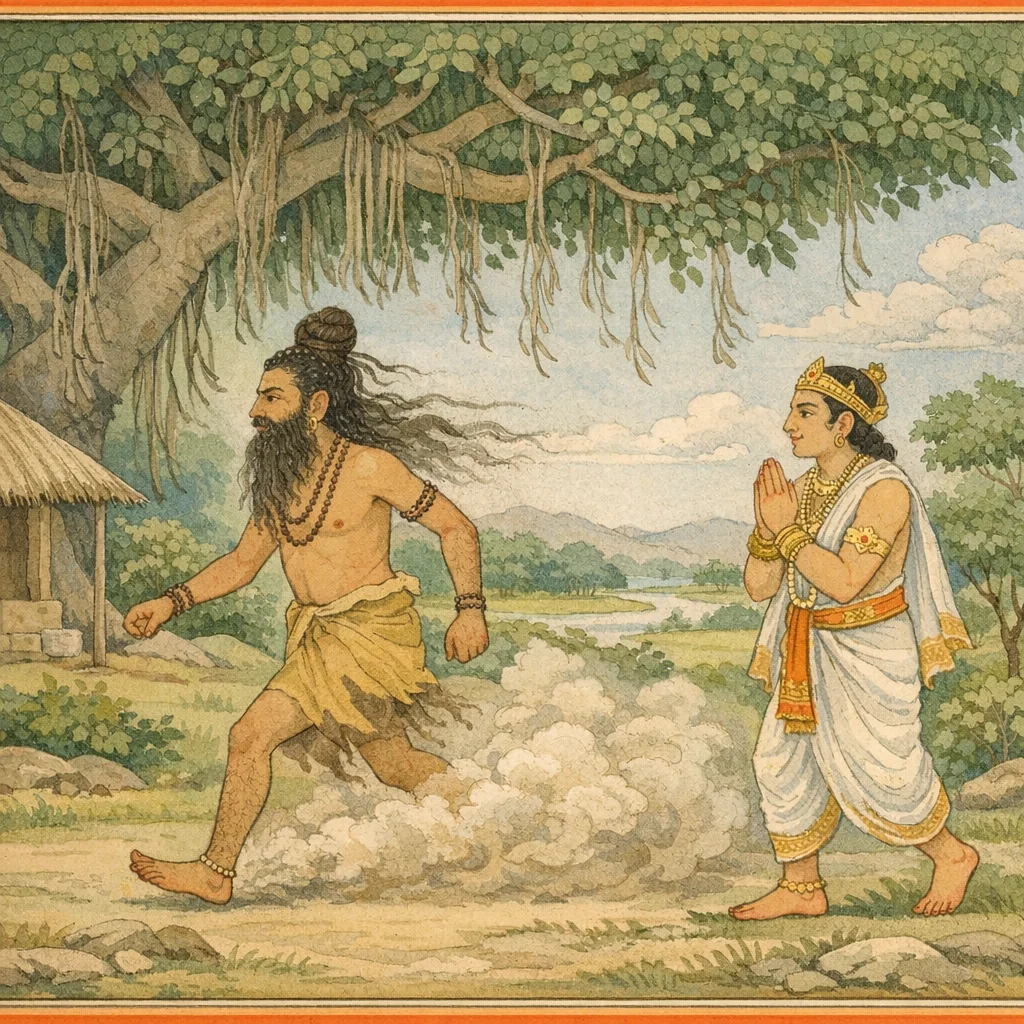
Vyāsa introduces an ancient exemplum concerning King Marutta’s planned sacrifice. Marutta approaches Bṛhaspati, recalling an earlier understanding that Bṛhaspati would officiate, and requests him to conduct the rite with preparations already assembled. Bṛhaspati declines, stating he is engaged by the Devarāja and bound by a prior promise; he further asserts he will not officiate for a human after officiating for an immortal. Marutta, shamed and distressed, departs and meets the devarṣi Nārada, who observes his agitation and offers to remove his anger through counsel. Marutta reports Bṛhaspati’s rejection and expresses despair. Nārada informs him of Saṃvarta, another son of Aṅgiras, described as dharmic yet roaming in an unconventional, disorienting manner, frequently near Vārāṇasī. Nārada prescribes a method: place a corpse at the city gate to identify the ascetic who turns back upon seeing it; follow him without retreating despite humiliations, approach privately with folded hands, and disclose that Nārada directed the meeting. Marutta complies, goes to Vārāṇasī, places the corpse, identifies Saṃvarta by his reaction, follows him, and endures being smeared with dust, mud, phlegm, and spittle. Saṃvarta then withdraws and sits beneath a broad nyagrodha (banyan) in cool shade, marking the transition to the next phase of negotiation.
Chapter Arc: व्यास राजन् को एक प्राचीन, तेजस्वी इतिहास में ले जाते हैं—राजा मरुत्त और बृहस्पति का संवाद, जहाँ एक मनुष्य-यज्ञ की आकांक्षा स्वयं देवगुरु की मर्यादा से टकराती है। → मरुत्त मन-ही-मन महान यज्ञ का संकल्प करता है और वाग्मी होकर बृहस्पति से याजक बनने की याचना करता है; पर बृहस्पति स्पष्ट कह देते हैं कि वे अमरों के यज्ञ कराकर मनुष्यों का यज्ञ कैसे कराएँ—और आज से याजन से निवृत्त होने की घोषणा कर देते हैं। नारद मार्ग दिखाते हैं: यदि बृहस्पति न चाहें तो अंगिरा-पुत्र संवर्त को खोजो—वही प्रसन्न होकर यज्ञ कराएगा। → मरुत्त वाराणसी में महेश्वर-दर्शन की आकांक्षा से विचरते उन्मत्त-वेषधारी संवर्त तक पहुँचता है; संवर्त राजा को परखने/तोड़ने के लिए एकान्त में धूल, कीचड़, श्लेष्मा और छींटों से अपमानित करता है—पर मरुत्त हाथ जोड़कर, पीछे-पीछे चलकर भी विनय नहीं छोड़ता। → राजा की अडिग नम्रता देखकर संवर्त लौटता है, थका हुआ एक बहुशाखी न्यग्रोध की शीतल छाया में बैठता है—और संकेत देता है कि अब संवाद/शिक्षा का द्वार खुल सकता है। → संवर्त बैठ तो गया है, पर क्या वह मरुत्त का यज्ञ स्वीकार करेगा, और किन शर्तों पर—यह अगले प्रसंग पर टिका रहता है।
Shlokas
Verse 1
व्यासजी कहते हैं--राजन्! इस प्रसंगमें बुद्धिमान् राजा मरुत्त और बृहस्पतिके इस पुरातन संवादविषयक इतिहासका उल्लेख किया जाता है
Vyāsa said: “O King, in this context there is recalled an ancient historical account—concerning a dialogue between the wise King Marutta and Bṛhaspati.”
Verse 2
देवराजस्य समयं कृतमाज्िरसेन ह | श्रुत्वा मरुत्तो नृपतिर्यज्ञमाहारयत् परम्,राजा मरुत्तने जब यह सुना कि अंगिराके पुत्र बृहस्पतिजीने मनुष्यके यज्ञ न करानेकी प्रतिज्ञा कर ली है, तब उन्होंने एक महान् यज्ञका आयोजन किया
Vyāsa said: When King Marutta heard that the son of Aṅgiras—Bṛhaspati—had made a pledge concerning the Lord of the gods, he resolved to undertake a supreme sacrifice.
Verse 3
संकल्प्य मनसा यज्ञ करन्धमसुतात्मज: । बृहस्पतिमुपागम्य वाग्मी वचनमत्रवीत्,बातचीत करनेमें कुशल करन्धमपौत्र मरुत्तने मन-ही-मन यज्ञका संकल्प करके बृहस्पतिजीके पास जाकर उनसे इस प्रकार कहा--
Having resolved in his mind to undertake a sacrifice, Marutta—grandson of Karaṇḍhama and son of Asūta—approached Bṛhaspati. Skilled in speech, he addressed him with fitting words.
Verse 4
भगवन् यन्मया पूर्वमभिगम्य तपोधन । कृतो$भिसंधिर्यज्ञस्य भवतो वचनाद् गुरो,“भगवन्! तपोधन! गुरुदेव! मैंने पहले एक बार आकर जो आपसे यज्ञके विषयमें सलाह ली थी और आपने जिसके लिये मुझे आज्ञा दी थी, उस यज्ञको अब मैं प्रारम्भ करना चाहता हूँ। आपके कथनानुसार मैंने सब सामग्री एकत्र कर ली है। साधु पुरुष! मैं आपका पुराना यजमान भी हूँ। इसलिये चलिये, मेरा यज्ञ करा दीजिये”
Vyāsa said: “Revered one, O ascetic rich in austerity—earlier I approached you and, following your instruction as my teacher, I formed the resolve concerning this sacrifice. Now I wish to commence that very yajña. In accordance with your word I have gathered all the required materials. As I have long been your patron (yajamāna), please come and officiate my sacrifice.”
Verse 5
तमहं यष्टुमिच्छामि सम्भारा: सम्भृताश्च मे । याज्यो5स्मि भवत: साधो तत् प्राप्तुहि विधत्स्व च,“भगवन्! तपोधन! गुरुदेव! मैंने पहले एक बार आकर जो आपसे यज्ञके विषयमें सलाह ली थी और आपने जिसके लिये मुझे आज्ञा दी थी, उस यज्ञको अब मैं प्रारम्भ करना चाहता हूँ। आपके कथनानुसार मैंने सब सामग्री एकत्र कर ली है। साधु पुरुष! मैं आपका पुराना यजमान भी हूँ। इसलिये चलिये, मेरा यज्ञ करा दीजिये”
Vyāsa said: “I wish to perform the sacrifice. The required materials have been gathered by me. O good man, I am to be officiated for by you; therefore, please make it possible for me to obtain the rite’s proper performance and arrange it accordingly.”
Verse 6
ब॒हस्पतिर्वाच न कामये याजयितु त्वामहं पृथिवीपते । वृतो5स्मि देवराजेन प्रतिज्ञातं च तस्य मे,बृहस्पतिजीने कहा--राजन्! अब मैं तुम्हारा यज्ञ कराना नहीं चाहता। देवराज इन्द्रने मुझे अपना पुरोहित बना लिया है और मैंने भी उनके सामने यह प्रतिज्ञा कर ली है इति श्रीमहाभारते आश्वमेधिके पर्वणि अश्वलमेधपर्वणि संवर्तमरुत्तीये षष्ठो5ध्याय: ।। ६ ।। इस प्रकार श्रीमह्ाभारत आश्वमेधिकपर्वके अन्तर्गत अश्वमेधपर्वमें संवर्त और मरुत्तका उपाख्यानविषयक छठा अध्याय पूरा हुआ
Bṛhaspati said: “O lord of the earth, I do not wish to officiate your sacrifice. I have been chosen by the king of the gods, and I have given him my pledged word.”
Verse 7
मरुत्त उवाच पित्र्यमस्मि तव क्षेत्र बहु मन््ये च ते भृशम् तवास्मि याज्यतां प्राप्तो भजमानं भजस्व माम्,मरुत्त बोले--विप्रवर! मैं आपके पिताके समयसे ही आपका यजमान हूँ तथा विशेष सम्मान करता हूँ। आपका शिष्य हूँ और आपकी सेवामें तत्पर रहता हूँ। अतः मुझे अपनाइये
Marutta said: “O foremost of brahmins, since my father’s time I have been your patron (yajamāna), and I honor you greatly. I am your disciple, ever intent on serving you. Therefore accept me and show me your favor.”
Verse 8
बुहस्पतिर्वाच अमर्त्य याजयित्वाहं याजयिष्ये कथं नरम् । मरुत्त गच्छ वा मा वा निवृत्तो<स्म्यद्य याजनात्,बृहस्पतिजीने कहा--मरुत्त! अमरोंका यज्ञ करानेके बाद मैं मरणधर्मा मनुष्योंका यज्ञ कैसे कराऊँगा? तुम जाओ या रहो। अब मैं मनुष्योंका यज्ञकार्य करानेसे निवृत्त हो गया हूँ
Bṛhaspati said: “Having already officiated sacrifices for the immortals, how could I now conduct a sacrifice for a mortal man? Marutta, whether you go or stay, I have today withdrawn from the act of officiating as priest.”
Verse 9
न त्वां याजयितास्म्यद्य वृणु यं त्वमिहेच्छसि । उपाध्यायं महाबाहो यस्ते यज्ञ करिष्यति,महाबाहो! मैं तुम्हारा यज्ञ नहीं कराऊँगा। तुम दूसरे जिसको चाहो उसीको अपना पुरोहित बना लो। जो तुम्हारा यज्ञ करायेगा
Marutta said: “I will not officiate your sacrifice today. Choose here whomever you wish as your priest—someone who will perform your yajña for you, O mighty-armed one.”
Verse 10
व्यास उवाच एवमुक्तस्तु नृपतिर्मरुत्तो व्रीडितो5भवत् । प्रत्यागच्छन् सुसंविग्नो ददर्श पथि नारदम्,व्यासजी कहते हैं--राजन्! बृहस्पतिजीसे ऐसा उत्तर पाकर महाराज मरुत्तको बड़ा संकोच हुआ। वे बहुत खिन्न होकर लौटे जा रहे थे, उसी समय मार्ममें उन्हें देवर्षि नारदजीका दर्शन हुआ
Vyāsa said: When the king Marutta received such a reply, he was overcome with embarrassment. Distressed and deeply agitated, he turned back; and as he was returning along the road, he saw the divine sage Nārada.
Verse 11
देवर्षिणा समागम्य नारदेन स पार्थिव: । विधिवत् प्राउ्जलिस्तस्थावथैनं नारदो<ब्रवीत्,देवर्षि नारदके साथ समागम होनेपर राजा मरुत्त यथाविधि हाथ जोड़कर खड़े हो गये। तब नारदजीने उनसे कहा--
Vyāsa said: Having met the divine seer Nārada, the king stood before him with joined palms in the proper manner, observing due reverence. Then Nārada addressed him—
Verse 12
राजर्ष नातिहृष्टोड्सि कच्चित् क्षेमं तवानघ । क्व गतो5सि कुतश्वैदमप्रीतिस्थानमागतम्,*राजर्षे! तुम अधिक प्रसन्न नहीं दिखायी देते हो। निष्पाप नरेश! तुम्हारे यहाँ कुशल तो है न? कहाँ गये थे और किस कारण तुम्हें यह खेदका अवसर प्राप्त हुआ है?
“O royal sage, you do not appear very pleased. O sinless king, is all well with you? Where have you gone, and for what reason has this occasion for sorrow and displeasure come upon you?”
Verse 13
श्रोतव्यं चेन्मया राजन ब्रूहि मे पार्थिवर्षभ । व्यपनेष्यामि ते मन्युं सर्वयत्नैर्नराधिप,“राजन! नृपश्रेष्ठ! यदि मेरे सुनने योग्य हो तो बताओ। नरेश्वर! मैं पूर्ण यत्न करके तुम्हारा दुःख दूर करूँगा”
Vyāsa said: “O King, bull among rulers—if it is something I ought to hear, then tell me. O lord of men, with every effort I shall remove your anguish and inner turmoil.”
Verse 14
एवमुक्तो मरुत्त: स नारदेन महर्षिणा । विप्रलम्भमुपाध्यायात् सर्वमेव न्यवेदयत्,महर्षि नारदके ऐसा कहनेपर राजा मरुत्तने उपाध्याय (पुरोहित)-से बिछोह होनेका सारा समाचार उन्हें कह सुनाया
Vyāsa said: Thus addressed by the great sage Nārada, King Marutta related in full the entire matter of his separation from his preceptor (royal priest).
Verse 15
मरुत्त उवाच गतोअस्म्यड्विरसः पुत्र देवाचार्य बृहस्पतिम् । यज्ञार्थमृत्विजं द्रष्टूं सच मां नाभ्यनन्दत,मरुत्तने कहा--नारदजी! मैं अंगिराके पुत्र देवगुरु बृहस्पतिके पास गया था। मेरी यात्राका उद्देश्य यह था कि उन्हें अपना यज्ञ करानेके लिये ऋत्विजके रूपमें देखूँ: किंतु उन्होंने मेरी प्रार्थना स्वीकार नहीं की
Marutta said: “I went to Bṛhaspati, the divine preceptor and son of Aṅgiras, intending to request him to serve as the officiating priest for my sacrifice. But he did not approve of me—he did not accept my request.”
Verse 16
प्रत्याख्यातश्न तेनाहं जीवितुं नाद्य कामये । परित्यक्तश्न गुरुणा दूषितश्चास्मि नारद,नारदजी! मेरे गुरुने मुझपर मरणधर्मा मनुष्य होनेका दोष लगाकर मुझे त्याग दिया। उनके द्वारा इस प्रकार अस्वीकार किये जानेके कारण अब मैं जीवित रहना नहीं चाहता
Marutta said: “Rejected by him, I no longer wish to live today. Cast off by my teacher and censured as though I were blameworthy, O Nārada, I stand disgraced. When one’s own guru repudiates one in this way—branding one with the fault of being a mortal bound to death—life itself loses its meaning for me.”
Verse 17
व्यास उवाच एवमुक्तस्तु राज्ञा स नारद: प्रत्युवाच ह । आविक्षितं महाराज वाचा संजीवयन्निव,व्यासजी कहते हैं--महाराज! राजा मरुत्तके ऐसा कहनेपर देवर्षि नारदने अपनी अमृतमयी वाणीके द्वारा अविक्षितकुमारको जीवन प्रदान करते हुए-से कहा
Vyāsa said: Thus addressed by the king, the sage Nārada replied. O great king, it was as though, by the nectar-like power of his speech, he restored life to Prince Āvikṣita—reviving him with words that brought clarity, courage, and renewed purpose.
Verse 18
नारद उवाच राजन्नज्धिरस: पुत्र: संवर्तो नाम धार्मिक: । चड्क्रमीति दिश: सर्वा दिग्वासा मोहयन् प्रजा:,नारदजी बोले--राजन्! अंगिराके दूसरे पुत्र संवर्त बड़े धार्मिक हैं। वे दिगम्बर होकर प्रजाको मोहमें डालते हुए अर्थात् सबसे छिपे रहकर सम्पूर्ण दिशाओंमें भ्रमण करते रहते हैं। यदि बृहस्पति तुम्हें अपना यजमान बनाना नहीं चाहते तो तुम संवर्तके ही पास चले जाओ संवर्त बड़े तेजस्वी हैं, वे प्रसन्नतापूर्वक तुम्हारा यज्ञ करा देंगे
Nārada said: “O King, Aṅgiras has a second son named Saṃvarta, a man devoted to dharma. Living unclothed and keeping himself hidden from common sight, he bewilders people and continually roams through all directions. If Bṛhaspati does not wish to accept you as his patron for the sacrifice, then go to Saṃvarta instead; he is exceedingly radiant and, when pleased, will gladly conduct your yajña.”
Verse 19
तं॑ गच्छ यदि याज्यं त्वां न वाउ्छति बृहस्पति: । प्रसन्नस्त्वां महातेजा: संवर्तो याजयिष्यति,नारदजी बोले--राजन्! अंगिराके दूसरे पुत्र संवर्त बड़े धार्मिक हैं। वे दिगम्बर होकर प्रजाको मोहमें डालते हुए अर्थात् सबसे छिपे रहकर सम्पूर्ण दिशाओंमें भ्रमण करते रहते हैं। यदि बृहस्पति तुम्हें अपना यजमान बनाना नहीं चाहते तो तुम संवर्तके ही पास चले जाओ संवर्त बड़े तेजस्वी हैं, वे प्रसन्नतापूर्वक तुम्हारा यज्ञ करा देंगे
Narada said: “If Bṛhaspati does not wish to accept you as a sacrificer (patron of the rite), then go to Saṁvarta. That great and radiant one, if pleased, will gladly officiate your sacrifice.”
Verse 20
मरुत्त उवाच संजीवितो&5हं भवता वाक्येनानेन नारद | पश्येयं क््व नु संवर्त शंस मे वदतां वर,मरुत्त बोले--वक्ताओंमें श्रेष्ठ नारदजी! आपने यह बात बताकर मुझे जिला दिया। अब यह बताइये कि मैं संवर्त मुनिका दर्शन कहाँ कर सकूँगा? मुझे उनके साथ कैसा बर्ताव करना चाहिये? मैं कैसा व्यवहार करूँ, जिससे वे मेरा परित्याग न करें। यदि उन्होंने भी मेरी प्रार्थना ठुकरा दी तब मैं जीवित नहीं रह सकूँगा
Marutta said: “O Nārada, best of speakers, by these words of yours I feel as though my life has been restored. Tell me—where may I behold Saṃvarta? Instruct me, so that I may approach him rightly and not be cast aside. If even he were to refuse my request, I could not go on living.”
Verse 21
कथं च तस्मै वर्तेयं कथं मां न परित्यजेत् । प्रत्याख्यातश्न तेनापि नाहं जीवितुमुत्सहे,मरुत्त बोले--वक्ताओंमें श्रेष्ठ नारदजी! आपने यह बात बताकर मुझे जिला दिया। अब यह बताइये कि मैं संवर्त मुनिका दर्शन कहाँ कर सकूँगा? मुझे उनके साथ कैसा बर्ताव करना चाहिये? मैं कैसा व्यवहार करूँ, जिससे वे मेरा परित्याग न करें। यदि उन्होंने भी मेरी प्रार्थना ठुकरा दी तब मैं जीवित नहीं रह सकूँगा
Marutta said: “How should I conduct myself toward him, and how can I ensure that he does not abandon me? Even if I am refused by him, I would not have the heart to go on living.”
Verse 22
नारद उवाच उन्मत्तवेषं बिभ्रत् स चड़क्रमीति यथासुखम् | वाराणस्यां महाराज दर्शनेप्सुर्महेश्वरम्,नारदजीने कहा--महाराज! वे इस समय वाराणसीमें महेश्वर विश्वनाथके दर्शनकी इच्छासे पागलका-सा वेष धारण किये अपनी मौजसे घूम रहे हैं
Narada said: “O great king, he is now roaming about in Varanasi at his own pleasure, wearing the guise of a madman, because he longs to behold Maheshvara—Vishvanatha.”
Verse 23
तस्या द्वारं समासाद्य न्यसेथा: कुणपं क्वचित् | त॑ दृष्टवा यो निवर्तेत संवर्त: स महीपते,तुम उस पुरीके प्रवेश-द्वारपर पहुँचकर वहाँ कहींसे एक मुर्दा लाकर रख देना। पृथ्वीनाथ! जो उस मुर्देको देखकर सहसा पीछेकी ओर लौट पड़े, उसे ही संवर्त समझना और वे शक्तिशाली मुनि जहाँ कहीं जायँ उनके पीछे-पीछे चले जाना। जब वे किसी एकान्त स्थानमें पहुचें, तब हाथ जोड़कर शरणापत्र हो जाना
Nārada said: “Go to the gate of that city and, somewhere there, place a corpse. O lord of the earth, the one who, on seeing that corpse, immediately turns back—know him to be Saṃvarta. Then follow that powerful sage wherever he goes. When he reaches a secluded place, approach with folded hands and seek refuge.”
Verse 24
त॑ पृष्ठतो5नुगच्छेथा यत्र गच्छेत् स वीर्यवान् । तनेकान्ते समासाद्य प्राउजलि: शरणं व्रजे:,तुम उस पुरीके प्रवेश-द्वारपर पहुँचकर वहाँ कहींसे एक मुर्दा लाकर रख देना। पृथ्वीनाथ! जो उस मुर्देको देखकर सहसा पीछेकी ओर लौट पड़े, उसे ही संवर्त समझना और वे शक्तिशाली मुनि जहाँ कहीं जायँ उनके पीछे-पीछे चले जाना। जब वे किसी एकान्त स्थानमें पहुचें, तब हाथ जोड़कर शरणापत्र हो जाना
Nārada said: “Follow him from behind wherever that mighty one may go. When you come up to him in a secluded place, approach with folded hands and seek his protection.”
Verse 25
पृच्छेत् त्वां यदि केनाहं तवाख्यात इति सम ह । ब्रूयास्त्वं नारदेनेति संवर्त कथितोडसि मे,यदि तुमसे पूछें कि किसने तुम्हें मेरा पता बताया है तो कह देना--'संवर्तजी! नारदजीने मुझे आपका पता बताया है”
Nārada said: “If someone asks you, ‘By whom was I informed about you?’, then you should reply, ‘By Nārada.’ Thus, O Saṃvarta, you have been identified to me as the one to be approached.”
Verse 26
स चेत् त्वामनुयुञ्जीत ममानुगमनेप्सया । शंसेथा वहल्लिमारूढं मामपि त्वमशड्कया,यदि वे तुमसे मेरे पास आनेके लिये मेरा पता पूछें तो तुम निर्भीक होकर कह देना कि “नारदजी आगमें समा गये”
Nārada said: “If he questions you, wishing to follow me and asking about my whereabouts, then without fear or hesitation you should tell him: ‘Nārada has entered into the fire.’”
Verse 27
व्यास उवाच स तथेति प्रतिश्रुत्य पूजयित्वा च नारदम् | अभ्यनुज्ञाय राजर्षिययौ वाराणसीं पुरीम्,व्यासजी कहते हैं--राजन! यह सुनकर राजर्षि मरुत्तने “बहुत अच्छा" कहकर नारदजीकी भूरि-भूरि प्रशंसा की और उनसे जानेकी आज्ञा ले वे वाराणसीपुरीकी ओर चल दिये
Vyāsa said: Hearing this, the royal sage Marutta assented, saying, “So be it.” He honored Nārada with due reverence, took his leave with permission, and then set out toward the city of Vārāṇasī.
Verse 28
तत्र गत्वा यथोक्तं स पुर्या द्वारे महायशा: । कुणपं स्थापयामास नारदस्य वच: स्मरन्,वहाँ जाकर नारदजीके कथनका स्मरण करते हुए महायशस्वी नरेशने उनके बताये अनुसार काशीपुरीके द्वारपर एक मुर्दा लाकर रख दिया
Having gone there, the illustrious king, remembering Nārada’s words, did exactly as instructed: he brought a corpse and placed it at the gate of the city.
Verse 29
यौगपलद्मेन विप्रश्न पुरीद्वारमथाविशत् । ततः स कुणपं दृष्टवा सहसा संन्यवर्तत,इसी समय विप्रवर संवर्त भी पुरीके द्वारपर आये; किंतु उस मुर्देको देखकर वे सहसा पीछेकी ओर लौट पड़े
Using a yogic power, the eminent brahmin entered the city gate. But the moment he saw a corpse there, he recoiled at once and turned back.
Verse 30
सतं निवृत्तमालक्ष्य प्राउ्जलि: पृष्ठतो5न्वगात् । आविक्षितो महीपाल: संवर्तमुपशिक्षितुम्,उन्हें लौटा देख राजा मरुत्त संवर्तसे शिक्षा लेनेके लिये हाथ जोड़े उनके पीछे-पीछे गये
Seeing the sage turn back, King Āvikṣita, ruler of the earth, followed behind him with palms joined, seeking instruction from Saṁvarta.
Verse 31
सचतंविजने दृष्टवा पांसुभि: कर्दमेन च । श्लेष्मणा चैव राजानं छीवनैश्व समाकिरत्,एकान्तमें पहुँचनेपर राजाको अपने पीछे-पीछे आते देख संवर्तने उनपर धूल फेंकी, कीचड़ उछाला तथा थूक और खखार डाल दिये
Vyāsa said: When Saṁvarta saw the king following him into a lonely, secluded place, he showered him with dust and splashed him with mud; he even defiled the king by casting phlegm, spittle, and mucus upon him.
Verse 32
स तथा बाध्यमानो वै संवर्तेन महीपति: । अन्वगादेव तमृषिं प्राउजलि: सम्प्रसादयन्,इस प्रकार संवर्तके सतानेपर भी राजा मरुत्त हाथ जोड़ उन्हें प्रसन्न करनेके उद्देश्यसे उन महर्षिके पीछे-पीछे चले ही गये
Though repeatedly obstructed by Saṁvarta, the king did not turn back. With palms joined in reverence, he continued to follow that sage, seeking to win his favor.
Verse 33
ततो निवर्त्य संवर्त: परिश्रान्त उपाविशत् । शीतलच्छायमासाद्य न्यग्रोध॑ बहुशाखिनम्,तब संवर्त मुनि लौटकर शीतल छायासे युक्त तथा अनेक शाखाओंसे सुशोभित एक बरगदके नीचे थककर बैठ गये
Then Saṃvarta turned back and sat down, weary. Seeking the cool shade of a many-branched banyan tree, he rested—like a sage pausing to regain composure and strength before the next step of his purpose.
Frequently Asked Questions
The conflict is between Bṛhaspati’s prior contractual vow to the Devarāja and Marutta’s expectation of priestly service based on earlier approach and readiness—testing how dharma adjudicates competing claims without violating pledged truth.
Legitimate ends (a public rite) require legitimate means: counsel, patience, and respect for autonomous obligations are portrayed as superior to entitlement, while perseverance under humiliation is shown as a prerequisite for accessing difficult spiritual authority.
No explicit phalaśruti is stated in this segment; the meta-function is exemplum-based instruction—using an ancient narrative to frame how ritual action, vows, and advisory mediation should be understood within broader dharma reasoning.