Adhyaya 30
धृतराष्ट्राश्रमगमनम् — The Pandavas’ Procession to Dhritarashtra’s Hermitage
Upa-parva: Āśramagamanam (The Royal Departure to the Forest Hermitage)
Vaiśaṃpāyana describes Yudhiṣṭhira issuing orders for a guarded, ceremonial departure. A jubilant mobilization cry (“yogo yoga”) rises among the mounted troops as preparations proceed. The movement is multi-modal and hierarchically arranged: some travel by conveyances, others by swift horses, imposing chariots, elephants, camels, and infantry equipped with spears and close-combat weapons. Citizens and provincial populations follow in diverse vehicles, motivated by the desire to see Dhṛtarāṣṭra. Kṛpa (Gautama), acting under royal instruction, leads the army toward the āśrama. Yudhiṣṭhira advances surrounded by Brahmins and praised by bards and panegyrists, shaded by a white royal parasol and accompanied by a large chariot division. Bhīma proceeds with powerful elephants and ready armaments; the Mādrī sons (Nakula and Sahadeva) are well-guarded by cavalry; Arjuna follows in a radiant chariot drawn by divine white horses. Draupadī and the women’s groups travel by palanquins with female attendants, distributing wealth. The Pāṇḍava host appears splendid with people, elephants, and horses, and with musical instruments sounding. They camp sequentially by pleasant riverbanks and lakes; Yuyutsu and the priest Dhaumya arrange city security by Yudhiṣṭhira’s command. Crossing the purifying Yamunā, Yudhiṣṭhira enters Kurukṣetra and sights from afar the hermitage of the wise royal sage (identified here with Śatayūpa) and of Dhṛtarāṣṭra; the populace enters the forest with loud acclamation.
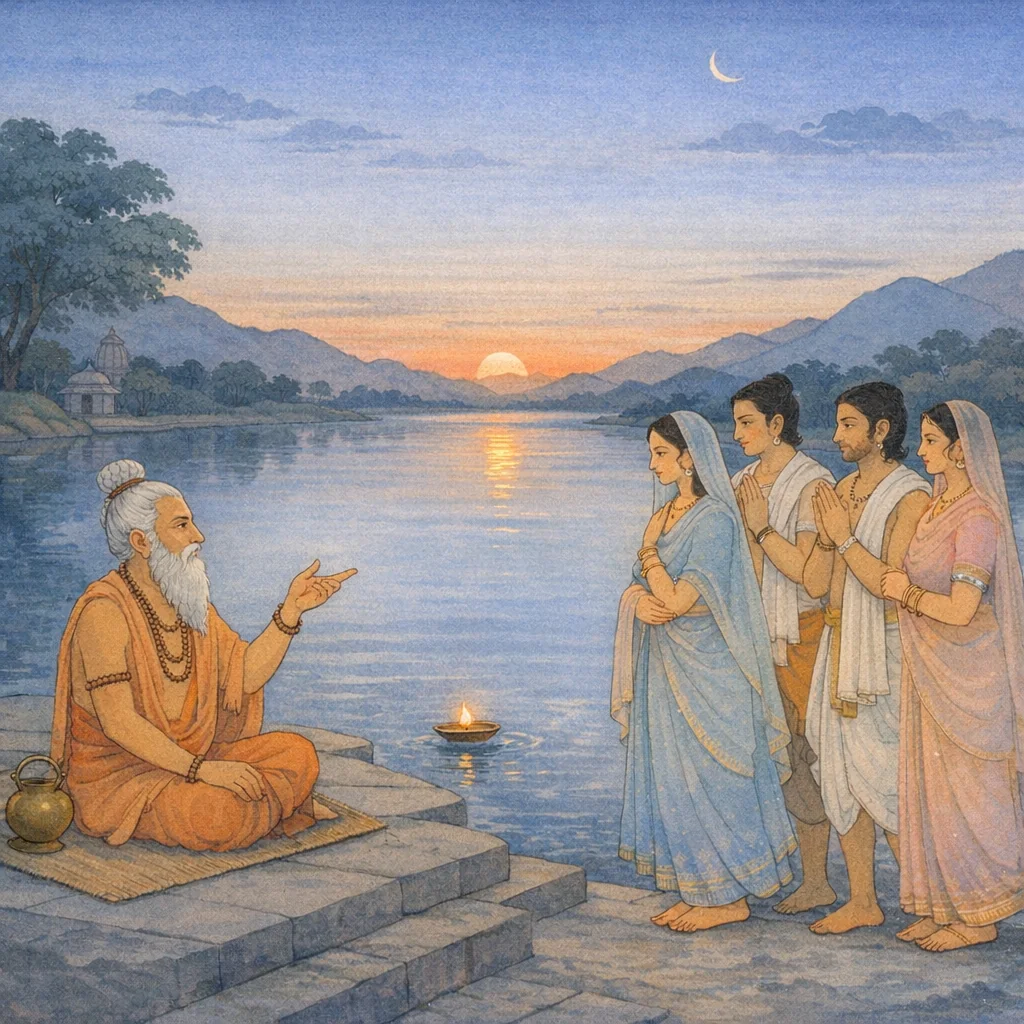
Chapter Arc: वन-निवास के शोक-धुएँ में व्यास प्रकट होकर धृतराष्ट्र, गांधारी, कुन्ती और शेष जनों के हृदय में दबी एक ही आकांक्षा को स्वर देते हैं—मृत स्वजनों का दर्शन। → व्यास पूर्वजन्मों का रहस्य खोलते हैं: धृतराष्ट्र का गन्धर्वराज-स्वरूप, और अन्य पात्रों की दैवी/आसुरी उत्पत्तियाँ; साथ ही वे बताते हैं कि यह आयोजन स्वयं राजा, कुन्ती और उपस्थितों की अंतःप्रेरणा से नियत था। यह ज्ञान शोक को और तीखा करता है—क्योंकि अब मृतक केवल ‘मरे’ नहीं, नियति के पात्र बन जाते हैं। → व्यास सबको भागीरथी/गंगा के तट पर चलने का आदेश देते हैं—जहाँ युद्ध में हत सभी राजाओं और प्रियजनों का साक्षात् दर्शन होगा; ‘परलोककृत भय’ से उपजा जो दीर्घ दुःख था, उसे आज हटाने का वचन देकर वे निर्णायक मोड़ रचते हैं। → सब लोग गंगा-तट पहुँचकर रात्रि की प्रतीक्षा करते हैं; सूर्यास्त के बाद स्नान-आचमन कर नैश कर्म में प्रवृत्त होते हैं—दर्शन के लिए स्वयं को शुद्ध और स्थिर करते हैं। → रात्रि का अनुष्ठान आरम्भ हो चुका है; अब अगले क्षणों में गंगा-तट पर मृत योद्धाओं का प्रकट होना शेष है।
Shlokas
Verse 1
ऑपनआक्रात छा अ्-क्ज एकत्रिशो< ध्याय: व्यासजीके द्वारा धृतराष्ट्र आदिके पूर्वजन्मका परिचय तथा उनके कहनेसे सब लोगोंका गड़ा-तटपर जाना व्यास उवाच भद्दे द्रक्ष्यसि गान्धारि पुत्रान् भ्रातून् सखींस्तथा । वधूश्न पतिभि: सार्ध निशि सुप्तोत्थिता इव,व्यासजीने कहा--भद्रे गान्धारि! आज रातमें तुम अपने पुत्रों, भाइयों और उनके मित्रोंको देखोगी। तुम्हारी वधुएँ तुम्हें पतियोंके साथ-साथ सोकर उठी हुई-सी दिखायी देंगी
Vyāsa said: “O noble Gāndhārī, tonight you will behold your sons, your brothers, and their friends as well. Your daughters-in-law will appear together with their husbands, as though they had risen from sleep in the night.”
Verse 2
कर्ण द्रक्ष्यति कुन्ती च सौभद्रं चापि यादवी । द्रौपदी पठ्च पुत्रांश्व पितृन् भ्रातृंस्तथैव च,कुन्ती कर्णको, सुभद्रा अभिमन्युको तथा द्रौपदी पाँचों पुत्रोंकी, पिताको और भाइयोंको भी देखेगी
Vyāsa said: Kuntī will behold Karṇa; and the Yādavī (Subhadrā) will also behold Saubhadra (Abhimanyu). Draupadī too will behold her five sons, as well as her fathers and her brothers.
Verse 3
पूर्वमेवैष हृदये व्यवसायो5भवन्मम । यदास्मि चोदितो राज्ञा भवत्या पृथयैव च,जब राजा धृतराष्ट्रने, तुमने और कुन्तीने भी मुझे इसके लिये प्रेरित किया था, उससे पहले ही मेरे हृदयमें यह (मृत व्यक्तियोंके दर्शन करानेका) निश्चय हो गया था
Vyāsa said: “Even before I was urged by the king—and by you, O Pṛthā (Kuntī)—this resolve had already arisen in my heart.”
Verse 4
न ते शोच्या महात्मान: सर्व एव नर्षभा: | क्षत्रधर्मपरा: सनन््तस्तथा हि निधन गता:,तुम्हें क्षत्रिय-धर्मपरायण होकर तदनुसार ही वीरगतिको प्राप्त हुए उन समस्त महामनस्वी, नरश्रेष्ठ वीरोंके लिये कदापि शोक नहीं करना चाहिये
Vyāsa said: You should not grieve for those great-souled, bull-like men among humans. Abiding in the dharma of kṣatriyas, they met their end in the very manner ordained for such warriors—attaining death in accordance with their duty.
Verse 5
भवितव्यमवश्यं तत् सुरकार्यमनिन्दिते । अवतेरुस्तत: सर्वे देवभागा महीतलम्,सती-साध्वी देवि! यह देवताओंका कार्य था और इसी रूपमें अवश्य होनेवाला था; इसलिये सभी देवताओंके अंश इस पृथ्वीपर अवतीर्ण हुए थे
Vyāsa said: “O blameless lady, that was inevitably destined to occur, for it was a work to be accomplished on behalf of the gods. Therefore all the divine portions descended upon the earth.”
Verse 6
गन्धर्वाप्सरसश्वैव पिशाचा गुहराक्षसा: । तथा पुण्यजनाश्रैव सिद्धा देवर्षयोडपि च,गन्धर्व, अप्सरा, पिशाच, गुह्मक, राक्षस, पुण्यजन, सिद्ध देवर्षि, देवता, दानव तथा निर्मल देवर्षिगण--ये सभी यहाँ अवतार लेकर कुरुक्षेत्रके समरांगणमें वधको प्राप्त हुए हैं
Vyāsa said: “Gandharvas and Apsarases, as well as Piśācas, Guhyakas, and Rākṣasas; likewise the Puṇyajanas, the Siddhas, and even the divine seers—these classes of beings too came here (taking embodied forms) and met their death on the battlefield of Kurukṣetra.”
Verse 7
देवाश्न दानवाश्वैव तथा देवर्षयो5मला: । त एते निधन प्राप्ता: कुरुक्षेत्रे रणाजिरे,गन्धर्व, अप्सरा, पिशाच, गुह्मक, राक्षस, पुण्यजन, सिद्ध देवर्षि, देवता, दानव तथा निर्मल देवर्षिगण--ये सभी यहाँ अवतार लेकर कुरुक्षेत्रके समरांगणमें वधको प्राप्त हुए हैं
Vyāsa said: “Gods and Dānavas alike, and the stainless divine seers as well—these very beings met their end on the battlefield of Kurukṣetra.”
Verse 8
गन्धर्वराजो यो धीमान् धृतराष्ट्र इति श्रुतः । स एव मानुषे लोके धृतराष्ट्र: पतिस्तव,गन्धर्वोंके लोकमें जो बुद्धिमान् गन्धर्वराज धृतराष्ट्रके नामसे विख्यात हैं, वे ही मनुष्यलोकमें तुम्हारे पति धृतराष्ट्रके रूपमें अवतीर्ण हुए हैं
Vyāsa said: “That wise king of the Gandharvas who is renowned by the name Dhṛtarāṣṭra—he himself has taken birth in the human world as your husband Dhṛtarāṣṭra.”
Verse 9
पाण्डुंं मरुदगणाद् विद्धि विशिष्टतममच्युतम् । धर्मस्यांशो5भवत् क्षत्ता राजा चैव युधिष्ठिर:
Vyāsa said: “Know Pāṇḍu to be the most eminent among the hosts of the Maruts, unfailing in prowess. Vidura (the kṣattā) was a portion of Dharma, and so too was King Yudhiṣṭhira.”
Verse 10
अपनी महिमासे कभी च्युत न होनेवाले राजा पाण्डुको तुम मरुद्गणोंसे भी श्रेष्ठतम समझो। विदुर धर्मके अंश थे। राजा युधिष्ठिर भी धर्मके ही अंश हैं ।। कलिं दुर्योधनं विद्धि शकुनिं द्वापरं तथा । दुःशासनादीन विद्धि त्वं राक्षसान् शुभदर्शने
Vyāsa said: “Know King Pāṇḍu—never fallen from his own majesty—to be superior even to the hosts of the Maruts. Vidura was a portion of Dharma, and King Yudhiṣṭhira too is a portion of Dharma. Know Duryodhana to embody Kali, and Śakuni to embody Dvāpara. And you, O auspicious-seeing one, understand Duḥśāsana and the others to be of rākṣasa-nature.”
Verse 11
दुर्योधनको कलियुग समझो और शकुनिको द्वापर। शुभदर्शने! अपने दुःशासन आदि पुत्रोंकोी राक्षस जानो ।। मरुद्गणाद् भीमसेनं बलवन्तमरिंदमम् । विद्धि त्वं तु नरमृषिमिमं पार्थ धनंजयम्,शत्रुओंका दमन करनेवाले बलवान् भीमसेनको मरुदगणोंके अंशसे उत्पन्न मानो। इन कुन्तीपुत्र धनंजयको तुम पुरातन ऋषि “नर” समझो
Vyāsa said: “O you of auspicious vision, understand Duryodhana to embody the Kali age, and Śakuni the Dvāpara. Know Duḥśāsana and the other sons to be of rākṣasa-nature. Recognize mighty Bhīmasena, the crusher of foes, as born from a portion of the Marut hosts; and know this Pārtha Dhanaṃjaya to be the ancient sage Nara.”
Verse 12
नारायणं हृषीकेशमश्चिनौ यमजौ तथा । यः स वैरार्थमुद्भूत: संघर्षजननस्तथा । तं॑ कर्ण विद्धि कल्याणि भास्करं शुभदर्शने,भगवान् श्रीकृष्ण नारायण ऋषिके अवतार हैं। नकुल और सहदेव दोनोंको अश्विनीकुमार समझो। कल्याणि! जो केवल वैर बढ़ानेके लिये उत्पन्न हुआ था और कौरव- पाण्डवोंमें संघर्ष पैदा करानेवाला था, उस कर्णको सूर्य समझो। जिस पाण्डवपुत्रको छः महारथियोंने मिलकर मारा था, उस सुभद्राकुमार अभिमन्युके रूपमें साक्षात् चन्द्रमा ही इस भूतलपर अवतीर्ण हुए थे। वे अपने योगबलसे दो रूपोंमें प्रकट हो गये थे (एक रूपसे चन्द्रलोकमें रहते थे और दूसरेसे भूतलपर)
Vyāsa said: “Know Kṛṣṇa—Nārāyaṇa, the Lord of the senses (Hṛṣīkeśa)—to be Nārāyaṇa Himself. Know the twin sons of Mādrī, Nakula and Sahadeva, to be the Aśvinī-kumāras. And, O auspicious lady of fair vision, know Karṇa to be the Sun: he was born chiefly to intensify enmity and to generate the great clash between the Kauravas and the Pāṇḍavas.”
Verse 13
यश्न पाण्डवदायादो हत: षड्भिम्महारथै: । स सोम इह सौभद्रो योगादेवाभवद् द्विधा,भगवान् श्रीकृष्ण नारायण ऋषिके अवतार हैं। नकुल और सहदेव दोनोंको अश्विनीकुमार समझो। कल्याणि! जो केवल वैर बढ़ानेके लिये उत्पन्न हुआ था और कौरव- पाण्डवोंमें संघर्ष पैदा करानेवाला था, उस कर्णको सूर्य समझो। जिस पाण्डवपुत्रको छः महारथियोंने मिलकर मारा था, उस सुभद्राकुमार अभिमन्युके रूपमें साक्षात् चन्द्रमा ही इस भूतलपर अवतीर्ण हुए थे। वे अपने योगबलसे दो रूपोंमें प्रकट हो गये थे (एक रूपसे चन्द्रलोकमें रहते थे और दूसरेसे भूतलपर)
Vyāsa said: “That heir of the Pāṇḍavas who was slain by six great chariot-warriors—he, the son of Subhadrā (Abhimanyu), was in truth Soma, the Moon, descended here upon the earth. By the power of yoga he manifested in two forms: in one aspect remaining in the lunar realm, and in another appearing among mortals.”
Verse 14
द्विधा कृत्वा$55त्मनो देहमादित्यं तपतां वरम् । लोकांश्ष तापयान वै विद्धि कर्ण च शोभने,शोभने! तपनेवालोंमें श्रेष्ठ सूर्ययेव अपने शरीरके दो भाग करके एकसे सम्पूर्ण लोकोंको ताप देते रहे और दूसरे भागसे कर्णके रूपमें अवतीर्ण हुए। इस तरह कर्णको तुम सूर्यरूप जानो
Vyāsa said: “O radiant lady, the Sun—foremost among those who give heat—divided his own body in two: with one part he continued to warm all the worlds, and with the other he descended as Karṇa. Therefore know Karṇa to be of solar nature.”
Verse 15
द्रौपद्या सह सम्भूतं धृष्टद्युम्नं च पावकात् । अन्नेर्भागं शुभं विद्धि राक्षसं तु शिखण्डिनम्,तुम्हें यह भी ज्ञात होना चाहिये कि जो द्रौपदीके साथ अग्निसे प्रकट हुआ था, वह धष्टद्यम्मन अग्निका शुभ अंश था और शिखण्डीके रूपमें एक राक्षसने अवतार लिया था
Vyāsa said: “Know that Dhṛṣṭadyumna—who manifested from the sacred fire together with Draupadī—was an auspicious portion of Agni. But Śikhaṇḍin, in that form, was the incarnation of a rākṣasa.”
Verse 16
द्रोणं बृहस्पतेर्भागं विद्धि द्रौणिं च रुद्रजम् । भीष्मं च विद्धि गाज़ेयं वसुं मानुषतां गतम्,द्रोणाचार्यको बृहस्पतिका और अअश्वत्थामाको रुद्रका अंश जानो। गंगापुत्र भीष्मको मनुष्ययोनिमें अवतीर्ण हुआ एक वसु समझो
Vyāsa said: “Know Droṇa to be a portion of Bṛhaspati, and know Droṇi (Aśvatthāmā) to be born of Rudra’s essence. And know Bhīṣma, the son of Gaṅgā, to be a Vasu who has entered human life.”
Verse 17
एवमेते महाप्रज्ञे देवा मानुष्यमेत्य हि । ततः पुनर्गता: स्वर्ग कृते कर्मणि शोभने,महाप्रज्ञे! शोभने! इस प्रकार ये देवता कार्यवश मानव-शरीरमें जन्म ले अपना काम पूरा कर लेनेपर पुनः स्वर्गलोकको चले गये हैं
Vyāsa said: “Thus, O great-minded one, these gods indeed came down into human birth. Then, once their noble task had been accomplished, they returned again to heaven.”
Verse 18
यच्च वै हृदि सर्वेषां दुःखमेतच्चिरं स्थितम् | तदद्य व्यपनेष्यामि परलोककृताद् भयात्,तुम सब लोगोंके हृदयमें इनके लिये पारलौकिक भयके कारण जो चिरकालसे दुःख भरा हुआ है, उसे आज दूर कर दूँगा
Vyāsa said: “And that sorrow which has long remained lodged in the hearts of you all—born of fear concerning the next world—I shall remove it today.”
Verse 19
सर्वे भवन्तो गच्छन्तु नदीं भागीरयथीं प्रति । तत्र द्रक्ष्यथ तान् सर्वान् ये हतास्तत्र संयुगे,इस समय तुम सब लोग गड़ाजीके तटपर चलो। वहीं सबको समरांगणमें मारे गये अपने सभी सम्बन्धियोंके दर्शन होंगे
Vyāsa said: “Let all of you proceed toward the river Bhāgīrathī (the Gaṅgā). There you will behold all those—your own people—who were slain there in the battle.”
Verse 20
वैशम्पायन उवाच इति व्यासस्य वचन श्रुत्वा सर्वो जनस्तदा । महता सिंहनादेन गड़ामभिमुखो ययौ,वैशम्पायनजी कहते हैं--राजन्! महर्षि व्यासका यह वचन सुनकर सब लोग महान् सिंहनाद करते हुए प्रसन्नतापूर्वक गड़ातटकी ओर चल दिये
Vaiśampāyana said: Hearing thus the words of the sage Vyāsa, all the people at that time, raising a great lion-like shout, set out joyfully facing toward the Gaṅgā.
Verse 21
धृतराष्ट्रश्न सामात्य: प्रययौ सह पाण्डवै: । सहितो मुनिशार्टूलैर्गन्धर्वैश्ष॒ समागतै:,राजा धृतराष्ट्र अपने मन्त्रियों, पाण्डवों, मुनिवरों तथा वहाँ आये हुए गन्धर्वोंके साथ गड़ाजीके समीप गये
Vaiśampāyana said: King Dhṛtarāṣṭra, accompanied by his ministers, set out together with the Pāṇḍavas. He went in the company of eminent sages and the Gandharvas who had assembled there—an image of the aged king moving under the guidance of counsel and sanctity, seeking the right course through association with the virtuous.
Verse 22
ततो गड्जां समासाद्य क्रमेण स जनार्णव: । निवासमकरोत् सर्वो यथाप्रीति यथासुखम्,क्रमश: वह सारा जनसमुद्र गड़ातटपर जा पहुँचा और सब लोग अपनी-अपनी रुचि तथा सुख-सुविधाके अनुसार जहाँ-तहाँ ठहर गये
Then, in due course, that vast multitude—like an ocean of people—reached the river Gaṅgā. Thereupon everyone made camp, settling in places according to individual preference and comfort, in an orderly manner.
Verse 23
राजा च पाण्डवै: सार्थमिष्टे देशे सहानुग: । निवासमकरोदू धीमान् सस्त्रीवृद्धपुर:सर:,बुद्धिमान् राजा धृतराष्ट्र स्त्रियों और वृद्धोंको आगे करके पाण्डवों तथा सेवकोंके साथ वहाँ अभीष्ट स्थानमें ठहरे
Vaiśampāyana said: The wise king Dhṛtarāṣṭra, accompanied by his attendants, took up residence in a chosen and agreeable place together with the Pāṇḍavas, placing the women and the elderly in front—an act reflecting care, propriety, and the dharma of protection in a time of withdrawal from worldly power.
Verse 24
जगाम तदहश्चापि तेषां वर्षशतं यथा । निशां प्रतीक्षमाणानां दिदृक्षूणां मृतान् नूपान्,मृत राजाओंको देखनेकी इच्छासे सभी लोग वहाँ रात होनेकी प्रतीक्षा करते रहे; अतः वह दिन उनके लिये सौ वर्षोके समान जान पड़ा तो भी वह धीरे-धीरे बीत ही गया
Vaiśampāyana said: That day, too, passed—yet to them it felt like a hundred years. For they stood waiting for nightfall, longing to behold the departed kings; thus, in the weight of grief and expectation, time itself seemed to stretch, even as the day slowly came to its end.
Verse 25
अथ पुण्यं गिरिवरमस्तम भ्यगमद् रवि: । ततः कृताभिषेकास्ते नैशं कर्म समाचरन्,तदनन्तर सूर्यदेव परम पवित्र अस्ताचलको जा पहुँचे। उस समय सब लोग स्नान करके सायंकालोचित संध्यावन्दन आदि कर्म करने लगे
Vaiśampāyana said: Then the sun approached its setting behind the holy and excellent mountain. Thereafter, having bathed and purified themselves, they performed the evening duties—such as the twilight worship—appropriate to the night. The scene underscores disciplined daily conduct: even amid hardship and transition, one sustains dharma through regular rites and self-restraint.
Verse 31
इति श्रीमहाभारते आश्रमवासिके पर्वणि पुत्रदर्शनपर्वणि गड़ातीरगमने एकत्रिंशो5ध्याय:
Thus, in the Śrī Mahābhārata, within the Āśramavāsika Parvan—specifically in the section called the “Vision of the Sons”—in the episode concerning the going to the bank of the Gaḍā, ends the thirty-first chapter. This closing colophon frames the narrative as a sacred record and signals a transition: the text emphasizes remembrance, reconciliation, and the moral weight of kinship even after the devastations of war.
Frequently Asked Questions
The chapter balances reverential reconciliation with prudent security: the visit to elders is framed as a public, disciplined act that protects the polity while honoring renunciant authority.
Legitimate leadership is shown as procedural and inclusive—coordinating ranks, safeguarding the community, and converting political movement into a socially stabilizing ritual of respect and accountability.
No explicit phalaśruti appears in the provided verses; the meta-significance is conveyed narratively by portraying the transition from royal power to hermitage-centered moral authority as an essential stage in the epic’s post-war ethical arc.