Adhyaya 161
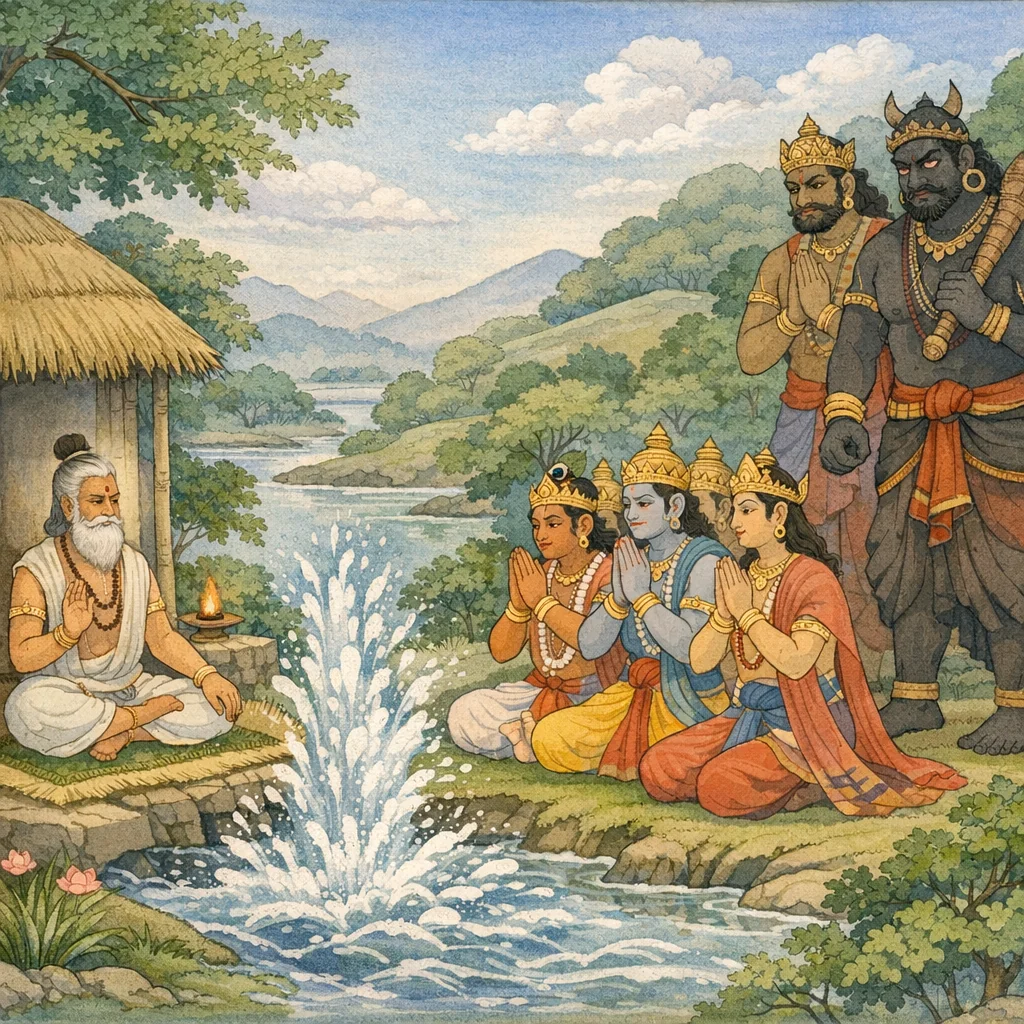
Chapter Arc: पवन (वायु) अर्जुन से दान-धर्म के प्रसंग में एक प्राचीन, विस्मयकारी आख्यान छेड़ते हैं—जब असुरों ने देवताओं को परास्त कर उनके यज्ञ और पितृ-स्वधा तक छीन ली, और स्वर्ग का तेज़ बुझने लगा। → देवता निरुत्साह होकर पृथ्वी पर भटकते हैं; यज्ञ-विधि बाधित, कर्मकाण्ड छिन्न, और देव-लोक की प्रतिष्ठा डगमगाती है। उसी समय वे अग्नि-सदृश तेजस्वी, सूर्य-प्रभा वाले महाव्रती अगस्त्य को देखते हैं; पर संकट टलता नहीं—यज्ञ-दीक्षा से कृश हुए देवताओं को देखकर ‘खलिन’ नामक पर्वत-प्राय दानव उन्हें मारने दौड़ते हैं, जल को ऊँचा उछालते और भयंकर आयुध उठाए। → देवता इन्द्र सहित शरण खोजते हुए वासिष्ठ के पास पहुँचते हैं; स्वयं शक्र भी व्यथित होकर वसिष्ठ की शरण लेते हैं। तब भगवान ऋषि वसिष्ठ अपने ब्रह्म-तेज और ब्रह्मदत्त वर-बल से दैत्यों का संहार कर देवताओं की रक्षा करते हैं। → वसिष्ठ के संरक्षण से त्रिदिववासी सुरक्षित होते हैं और दानव-विघ्न का अंत होता है; आख्यान का निष्कर्ष यह कि क्षत्र-बल भी जब धर्म-मार्ग से विचलित हो, तब ब्रह्म-तेज (तप, सत्य, संयम) ही लोक-रक्षा का अंतिम आश्रय बनता है। → पवन संकेत करते हैं कि वसिष्ठ के इस कर्म का वर्णन कहकर अब वे ‘वसिष्ठात् क्षत्रियं वरम्’—वसिष्ठ से सम्बद्ध किसी श्रेष्ठ क्षत्रिय/राजा के प्रसंग की ओर कथा मोड़ेंगे।
Shlokas
Verse 1
अपना छा | अप्-४#-रात जा - कुछ लोग 'घट्सहस्रशतह्ृदम्” का अर्थ यों करते हैं--वहाँ छः लाख तालाब शोभा पा रहे थे; परंतु 'शतह्ृददा” शब्द बिजलीका वाचक है; अतः उपर्युक्त अर्थ किया गया है। पजञ्चपज्चाशर्दाधिकशततमो< ध्याय: ब्रद्मर्षि अगस्त्य और वसिष्ठके प्रभावका वर्णन भीष्म उवाच इत्युक्त: स नृपस्तूष्णीम भूद् वायुस्ततो<ब्रवीत् । शृणु राजन्नगस्त्यस्य माहात्म्यं ब्राह्मणस्य ह,भीष्मजी कहते हैं--युधिष्ठिर! वायु देवताके ऐसा कहनेपर भी राजा कार्तवीर्य अर्जुन चुपचाप ही बैठे रह गया, कुछ बोल न सका। तब वायुदेव पुनः उससे बोले--“राजन्! अब ब्राह्मगजातीय अगसत्यका माहात्म्य सुनो--
Bhishma said: When this had been spoken, the king remained silent, unable to reply. Then Vayu spoke again: “O King, now listen to the greatness of the brahmin Agastya.”
Verse 2
असुरैर्निर्जिता देवा निरुत्साहाश्व ते कृता: | यज्ञाश्वैषां हृता: सर्वे पितृणां च स्वधास्तथा,“हैहयराज! प्राचीन समयमें असुरोंने देवताओंको परास्त करके उनका उत्साह नष्ट कर दिया। दानवोंने देवताओंके यज्ञ, पितरोंके श्राद्ध तथा मनुष्योंके कर्मानुष्ठान लुप्त कर दिये। तब अपने ऐश्वर्यसे भ्रष्ट हुए देवतालोग पृथ्वीपर मारे-मारे फिरने लगे। ऐसा सुननेमें आया है
Bhishma said: In ancient times the gods were defeated by the Asuras and were thereby stripped of their courage and initiative. The Asuras seized and disrupted all the gods’ sacrificial rites, and likewise the offerings (svadhā) due to the ancestors. Thus, when the channels of worship and duty were cut off, the divine order itself was shaken and the gods, fallen from their prosperity, were said to wander the earth in distress.
Verse 3
कर्मेज्या मानवानां च दानवैहैंहयर्षभ । भ्रष्टैश्चर्यास्ततो देवाश्चेरु: पृथ्वीमिति श्रुति:,“हैहयराज! प्राचीन समयमें असुरोंने देवताओंको परास्त करके उनका उत्साह नष्ट कर दिया। दानवोंने देवताओंके यज्ञ, पितरोंके श्राद्ध तथा मनुष्योंके कर्मानुष्ठान लुप्त कर दिये। तब अपने ऐश्वर्यसे भ्रष्ट हुए देवतालोग पृथ्वीपर मारे-मारे फिरने लगे। ऐसा सुननेमें आया है
Bhishma said: “O bull among the Haihayas, it is heard in tradition that the Danavas caused the rites of action and sacrifice among humans to disappear. Deprived of their proper observances and fallen from their divine prosperity, the gods then wandered over the earth in distress.”
Verse 4
ततः कदाचित् ते राजन् दीप्तमादित्यवर्चसम् | ददृशुस्तेजसा युक्तमगस्त्यं विपुलव्रतम्,“राजन! तदनन्तर एक दिन देवताओंने सूर्यके समान प्रकाशमान, तेजस्वी, दीप्तिमान् और महान व्रतधारी अगस्त्यको देखा
Then, O King, on one occasion they beheld Agastya—radiant with the splendor of the sun, endowed with spiritual brilliance, and steadfast in great vows.
Verse 5
अभिवाद्य तु तं देवा: पृष्टवा कुशलमेव च । इदमूचुर्महात्मानं वाक्यं काले जनाधिप,'जनेश्वर! उन्हें प्रणाम करके देवताओंने उनका कुशल-समाचार पूछा और समयपर उन महात्मासे इस प्रकार कहा--
Bhishma said: Having respectfully saluted him, the gods inquired after his well-being. Then, at the proper moment, they addressed that great-souled one with these words, O lord of men.
Verse 6
दानवैर्युधि भग्ना: सम तथैश्वर्याच्च भ्रंशिता: । तदस्मान्नो भयात् तीव्रात् त्राहि त्वं मुनिपुड्व,“मुनिवर! दानवोंने हमें युद्धमें हटाकर हमारा ऐश्वर्य छीन लिया है। इस तीव्र भयसे आप हमारी रक्षा करें"
Bhishma said: 'O foremost of sages, the Dānavas have shattered us in battle and have stripped away our sovereignty. Therefore, from this fierce fear that has seized us, protect us.'
Verse 7
इत्युक्तः स तदा देवैरगस्त्य: कुपितो5भवत् | प्रजज्वाल च तेजस्वी कालाग्निरिव संक्षये,“देवताओंके ऐसा कहनेपर तेजस्वी अगस्त्य मुनि कुपित हो गये और प्रलयकालके अग्निकी भाँति रोषसे जल उठे
When the gods spoke to him in this manner, the radiant sage Agastya became enraged; blazing with wrath, he flared up like the fire of Time (Kālāgni) at the world’s dissolution.
Verse 8
तेन दीप्तांशुजालेन निर्दग्धा दानवास्तदा । अन्तरिक्षान्महाराज निपेतुस्ते सहस्रशः,“महाराज! उनकी प्रज्वलित किरणोंके स्पर्शसे उस समय सहस्रों दानव दग्ध होकर आकाशसे पृथ्वीपर गिरने लगे
Bhīṣma said: “O great king, scorched by the touch of that blazing net of rays, the Dānavas were burned up, and by the thousands they fell from the sky to the earth.”
Verse 9
दह्ामानास्तु ते दैत्यास्तस्यागस्त्यस्य तेजसा । उभौ लोकौ परित्यज्य गताः काष्ठां तु दक्षिणाम्,“अगस्त्यके तेजसे दग्ध होते हुए दैत्य दोनों लोकोंका परित्याग करके दक्षिण दिशाकी ओर चले गये
Bhīṣma said: Burned by the blazing power of the sage Agastya, those Dāityas abandoned both worlds and fled toward the southern quarter.
Verse 10
बलिस्तु यजते यज्ञमश्चवमेधं महीं गतः । येडन्येडधस्था महीस्थाश्व ते न दग्धा महासुरा:,“उस समय राजा बलि पृथ्वीपर आकर अश्वमेध यज्ञ कर रहे थे। अत: जो दैत्य उनके साथ पृथ्वीपर थे और दूसरे जो पातालमें थे, वे ही दग्ध होनेसे बचे
Bhīṣma said: “At that time King Bali had come up to the earth and was performing the Aśvamedha sacrifice. Therefore, those great Asuras who were with him on the earth, as well as the others who were stationed below in the nether regions, were the ones who escaped being burned.”
Verse 11
ततो लोका: पुनः प्राप्ता: सुरैः शान्तभयैर्न॒प । अथैनमन्रुवन् देवा भूमिष्ठानसुरान् जहि,“नरेश्वर! तत्पश्चात् देवताओंका भय शान्त हो जानेपर वे पुन: अपने-अपने लोकमें चले आये। तदनन्तर देवताओंने अगस्त्यजीसे फिर कहा--'अब आप पृथ्वीपर रहनेवाले असुरोंका भी नाश कर डालिये”'
Bhīṣma said: “Then, O king, once their fear had been calmed, the gods returned again to their respective worlds. After that, the deities addressed him once more: ‘Now destroy the Asuras who remain dwelling upon the earth.’”
Verse 12
इत्युक्त: प्राह देवान् स न शक्तोडस्मि महीगतान् । दग्धुं तपो हि क्षीयेन्मे न शक््यामीति पार्थिव,'पृथ्वीनाथ! देवताओंके ऐसा कहनेपर अगस्त्यजी उनसे बोले--“अब मैं भूतलनिवासी असुरोंको नहीं दग्ध कर सकता; क्योंकि ऐसा करनेसे मेरी तपस्या क्षीण हो जायगी। इसलिये यह कार्य मेरे लिये असम्भव है”
Bhīṣma said: Thus addressed, he replied to the gods, “O king, I am not able to burn the asuras who dwell upon the earth. For if I were to burn them, my austerity would be diminished. Therefore, I cannot do this.”
Verse 13
एवं दग्धा भगवता दानवा: स्वेन तेजेसा । अगस्त्येन तदा राज॑ंस्तपसा भावितात्मना,'“राजन्! इस प्रकार शुद्ध अन्तःकरणवाले भगवान् अगस्त्यने अपने तप और तेजसे दानवोंको दग्ध कर दिया था
Bhīṣma said: “O King, in this manner the Dānavas were burned up by the blessed sage Agastya—his inner self purified and strengthened by austerity—through the power of his own spiritual radiance.”
Verse 14
ईदृशश्वाप्यगस्त्यो हि कथितस्ते मयानघ । ब्रवीम्यहं ब्रूहि वा त्वमगस्त्यात् क्षत्रियं वरम्,“निष्पाप नरेश! अगस्त्य ऐसे प्रभावशाली बताये गये हैं, जो ब्राह्मण ही हैं। यह बात मैं कहता हूँ, तुम अगस्त्य मुनिसे श्रेष्ठ किसी क्षत्रियको जानते हो तो बताओ”
Bhīṣma said: “O sinless one, I have described to you Agastya as a sage of such extraordinary power—indeed, a Brahmin of that stature. I state this plainly; or, if you know of any Kṣatriya superior to Agastya, then you tell me.”
Verse 15
भीष्म उवाच इत्युक्त: स तदा तूष्णीमभूद् वायुस्ततो<ब्रवीत् । शृणु राजन् वसिष्ठस्य मुख्यं कर्म यशस्विन:,भीष्मजीने कहा--युधिष्ठिर! उनके ऐसा कहनेपर भी कार्तवीर्य अर्जुन चुप ही रहा। तब वायु देवता फिर बोले--'राजन्! अब यशस्वी ब्राह्मण वसिष्ठ मुनिका श्रेष्ठ कर्म सुनो
Bhīṣma said: When this was said, he fell silent. Then Vāyu, the god of wind, spoke again: “O king, now hear of the foremost deed of the illustrious Brahmin sage Vasiṣṭha.”
Verse 16
आदित्या: सत्रमासन्त सरो वै मानसं प्रति । वसिष्ठ॑ मनसा गत्वा ज्ञात्वा तत् तस्य गौरवम्,“एक समय देवताओंने वसिष्ठ मुनिके गौरवको जानकर मन-ही-मन उनकी शरण जाकर मानसरोवरके तटपर यज्ञ आरम्भ किया
Bhīṣma said: The Ādityas were engaged in a sacrificial session on the shore of Lake Mānasarovara. Having understood the greatness of the sage Vasiṣṭha, they approached him inwardly with reverent intent and, honoring his eminence, commenced the rite there.
Verse 17
यजमानांस्तु तान् दृष्टवा सर्वान् दीक्षानुकर्शितान् । हन्तुमैच्छन्त शैलाभा: खलिनो नाम दानवा:,“समस्त देवता यज्ञकी दीक्षा लेकर दुबले हो रहे थे। उन्हें यज्ञ करते देख पर्वतके समान शरीरवाले खली" नामक दानवोंने उन सबको मार डालनेका विचार किया (फिर तो दोनों दलोंमें युद्ध छिड़ गया)
Bhīṣma said: Seeing all those sacrificers—every one of them emaciated by the disciplines of consecration (dīkṣā)—the Dānavas named Khalin, whose bodies were like mountains, desired to slay them. The episode shows how those weakened by sacred vows may become targets of adharma, and how violence against a yajña is deemed a grave moral transgression that summons conflict.
Verse 18
अदूरात् तु ततस्तेषां ब्रह्म॒दत्तवरं सर: । हताहता वै तत्रैते जीवन्त्याप्लुत्य दानवा:,“उनके पास ही मानसरोवर था, जिसके लिये ब्रह्माजीके द्वारा दैत्योंको यह वरदान प्राप्त था कि “इसमें डुबकी लगानेसे तुम्हें नूतन जीवन प्राप्त होगा: अत: उस समय दानवोंमेंसे जो हताहत होते थे, उन्हें दूसरे दानव उठाकर सरोवरमें फेंक देते थे और वे उसके जलमें डुबकी लगाते ही जी उठते थे
Not far from them lay a lake that had been granted a boon by Brahmā. There, the Dānavas—though struck down again and again—would regain life by plunging into its waters. Hence, whenever some among them fell in battle, the others would lift them up and cast them into the lake; the moment they immersed themselves, they rose again, restored to life.
Verse 19
ते प्रगृह्ा महाघोरान् पर्वतान् परिघान् द्रुमान् विक्षोभयन्त: सलिलमुत्थितं शतयोजनम्,'फिर सरोवरके जलको सौ योजन ऊँचे उछालते तथा हाथमें महाघोर पर्वत, परिघ एवं वृक्ष लिये हुए वे देवताओंपर टूट पड़ते थे। उन दानवोंकी संख्या दस हजारकी थी। जब उन्होंने देवताओंको अच्छी तरह पीड़ित किया, तब वे भागकर इन्द्रकी शरणमें गये
Bhīṣma said: “Seizing fearsome mountains, iron clubs, and trees, they churned the waters so violently that the lake’s water surged up to a hundred yojanas. Armed with these dreadful weapons, those Dānavas rushed upon the gods. Their host numbered ten thousand. When the gods had been grievously tormented, they fled and sought refuge with Indra.”
Verse 20
अभ्यद्रवन्त देवांस्ते सहस्नाणि दशैव हि । ततस्तैरदिता देवा: शरणं वासवं ययु:,'फिर सरोवरके जलको सौ योजन ऊँचे उछालते तथा हाथमें महाघोर पर्वत, परिघ एवं वृक्ष लिये हुए वे देवताओंपर टूट पड़ते थे। उन दानवोंकी संख्या दस हजारकी थी। जब उन्होंने देवताओंको अच्छी तरह पीड़ित किया, तब वे भागकर इन्द्रकी शरणमें गये
Bhīṣma said: Those assailants charged at the gods—indeed, they were ten thousand in number. Harassed and overwhelmed by them, the gods, sorely afflicted, fled and sought refuge with Vāsava (Indra). The episode underscores a recurrent Mahābhārata ethic: when power is misused to torment others, the afflicted seek rightful protection, and leadership is tested by its duty to shelter and restore order.
Verse 21
स च तैव्यथित: शक्रो वसिष्ठं शरणं ययौ । ततो<5भयं ददौ तेभ्यो वसिष्ठो भगवानृषि:,“इन्द्रको भी उन दैत्योंसे भिड़कर महान् क्लेश उठाना पड़ा; अतः वे वसिष्ठजीकी शरणमें गये। तब उन भगवान् वसिष्ठ मुनिने, जो बड़े ही दयालु थे, देवताओंको दुखी जानकर उन्हें अभयदान दे दिया और बिना किसी प्रयत्नके ही अपने तेजसे उन समस्त खली नामके दानवोंको दग्ध कर डाला
Bhishma said: Indra (Śakra), distressed by those Daityas, went to Vasiṣṭha for refuge. Then the venerable sage Vasiṣṭha granted them fearlessness—protecting the afflicted gods through his spiritual authority, showing that true security arises from dharma and the power of tapas rather than mere force.
Verse 22
तदा तान् दुःखितान् ज्ञात्वा आनृशंस्यपरो मुनि: । अयत्नेनादहत् सर्वान् खलिन: स्वेन तेजसा,“इन्द्रको भी उन दैत्योंसे भिड़कर महान् क्लेश उठाना पड़ा; अतः वे वसिष्ठजीकी शरणमें गये। तब उन भगवान् वसिष्ठ मुनिने, जो बड़े ही दयालु थे, देवताओंको दुखी जानकर उन्हें अभयदान दे दिया और बिना किसी प्रयत्नके ही अपने तेजसे उन समस्त खली नामके दानवोंको दग्ध कर डाला
Bhishma said: Then the sage, foremost in compassion, seeing their distress, granted them fearlessness; and without any exertion he burned up all those demons called Khalins by the power of his own spiritual radiance.
Verse 23
कैलासं प्रस्थितां चैव नदीं गड्जां महातपा: । आनयत् तत्सरो दिव्यं तया भिन्न च तत्सर:,“इतना ही नहीं--वे महातपस्वी मुनि कैलासकी ओर प्रस्थित हुई गंगा नदीको उस दिव्य सरोवरमें ले आये। गंगाजीने उसमें आते ही उस सरोवरका बाँध तोड़ डाला। गंगासे सरोवरका भेदन होनेपर जो स्रोत निकला, वही सरयू नदीके नामसे प्रसिद्ध हुआ। जिस स्थानपर खली नामक दानव मारे गये, वह देश खलिन नामसे विख्यात हुआ
Bhishma said: The great ascetics brought the river Gaṅgā, who had set out toward Kailāsa, into that celestial lake. As soon as Gaṅgā entered, she broke through the lake’s embankment; and from the breach made by Gaṅgā, the outflow that emerged became renowned as the river Sarayū.
Verse 24
सरो भिन्न तया नद्या सरयू: सा ततो5भवत् | हताश्च खलिनो यत्र स देश: खलिनो5भवत्,“इतना ही नहीं--वे महातपस्वी मुनि कैलासकी ओर प्रस्थित हुई गंगा नदीको उस दिव्य सरोवरमें ले आये। गंगाजीने उसमें आते ही उस सरोवरका बाँध तोड़ डाला। गंगासे सरोवरका भेदन होनेपर जो स्रोत निकला, वही सरयू नदीके नामसे प्रसिद्ध हुआ। जिस स्थानपर खली नामक दानव मारे गये, वह देश खलिन नामसे विख्यात हुआ
Bhishma said: “When that lake was breached by the river, the outflow that emerged thereafter became known as the Sarayū. And the region where the demons named Khalin were slain came to be famed by the name Khalina.”
Verse 25
एवं सेन्द्रा वसिष्ठेन रक्षितास्त्रिदिवौकस: । ब्रह्मदत्तवराश्चैव हता दैत्या महात्मना,“इस प्रकार महात्मा वसिष्ठने इन्द्रसहित देवताओंकी रक्षा की और ब्रह्माजीने जिनके लिये वर दिया था, ऐसे दैत्योंका भी संहार कर डाला
Bhishma said: “Thus, the dwellers of the three worlds—the gods, with Indra at their head—were protected by Vasiṣṭha. And that great-souled sage also slew the Daityas, even those who had been granted boons by Brahmā.”
Verse 26
एतत् कर्म वसिष्ठस्थ कथितं हि मयानघ । ब्रवीम्यहं ब्रूहि वा त्वं वसिष्ठात् क्षत्रियं वरम्,“निष्पाप नरेश! मैंने ब्रह्मर्षि वसिष्ठजीके इस कर्मका वर्णन किया है। मैं कहता हूँ, ब्राह्मण श्रेष्ठ है। यदि वसिष्ठसे बड़ा कोई क्षत्रिय है तो बताओ”
Bhishma said: “O blameless one, I have indeed described this deed of Vasiṣṭha. I declare that the Brāhmaṇa is the superior. Or else, tell me—if there exists any Kṣatriya who is greater than Vasiṣṭha.”
Verse 155
इति श्रीमहा भारते अनुशासनपर्वणि दानधर्मपर्वणि पवनार्जुनसंवादे पड्चपञ्चाशदधिकशततमो<ध्याय:
Thus ends, in the sacred Mahābhārata, within the Anuśāsana Parva—specifically in the section on the Dharma of gifts (Dāna-dharma)—the dialogue between Pavana (the Wind-god) and Arjuna: the one-hundred-and-fifty-fifth chapter (i.e., the 155th chapter of this sub-division).