Adhyaya 100
Gārhasthya-dharma: Vāsudeva–Pṛthivī-saṃvāda (Householder Duties and Daily Offerings)
Upa-parva: Gṛhastha-dharma Anuśāsana (Householder Duties Discourse)
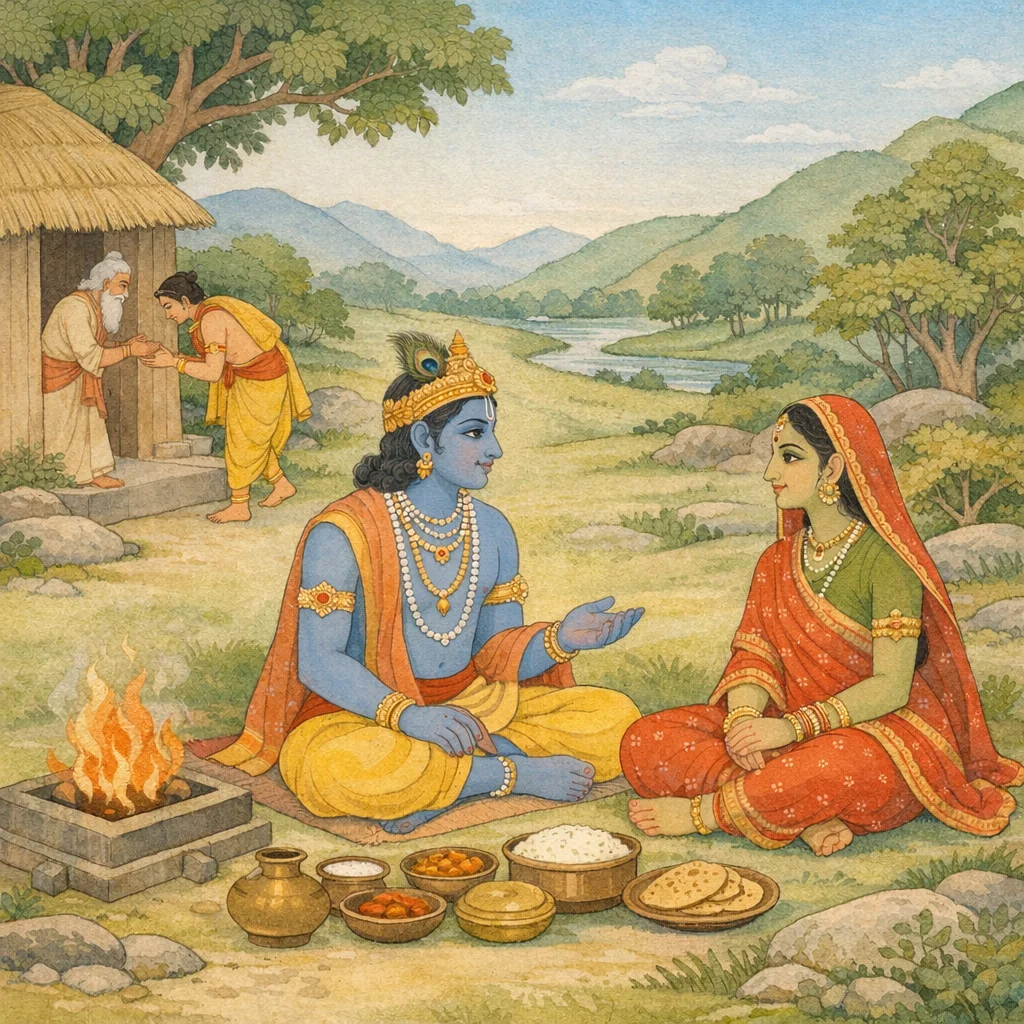
Chapter 100 opens with Yudhiṣṭhira requesting Bhīṣma to explain the totality of gārhasthya-dharma and the practical means by which a person attains ṛddhi (prosperity/flourishing) in this world. Bhīṣma introduces an earlier account: Vāsudeva, after praising the goddess Earth (Pṛthivī), asks what a householder must do to live happily and fulfill necessary obligations. Pṛthivī enumerates a structured daily program: honoring ṛṣis, pitṛs, devas, and humans through yajña, śrāddha (even with modest substances like water, milk, roots, or fruits), and hospitality. The chapter specifies vaiśvadeva and bali procedures, including directional and spatial allocations (e.g., offerings associated with Yama, Varuṇa, Soma, Śakra, Dhanvantari, Manu, Maruts, Viśvedevas, and nocturnal beings), followed by giving alms to a deserving twice-born (or offering into fire if none is available). It then orders sequence and etiquette: complete pitṛ-tarpaṇa and śrāddha, perform bali and vaiśvadeva, recite/consult brāhmaṇic instruction, and feed guests from the remainder, emphasizing the transient nature of the atithi. Proper honoring of teachers, father, friends, trusted persons, and long-staying dignitaries with madhuparka is prescribed. The unit closes with a results statement: one who performs these gṛhastha duties without envy gains worldly success and is honored in heaven; Bhīṣma affirms Vāsudeva practiced this and advises Yudhiṣṭhira to follow it for fame here and svarga thereafter.
Chapter Arc: युधिष्ठिर के गृहस्थ-धर्म और पंचयज्ञ/बलिवैश्वदेव के सूक्ष्म विधान पूछने पर भीष्म एक प्राचीन आख्यान का द्वार खोलते हैं—वासुदेव और पृथ्वीदेवी का संवाद। → कृष्ण पृथ्वीदेवी की स्तुति कर गृहस्थ के कर्तव्यों का मर्म पूछते हैं; पृथ्वीदेवी क्रमशः बताती हैं कि गृहस्थ को देव, ऋषि, पितृ और मनुष्यों के प्रति नित्य ऋण-शोधन करना है—श्राद्ध, अन्न-दान, जल-तर्पण, और सिद्धान्न से वैश्वदेव/बलि का विधिवत् आचरण। → विधान का निर्णायक क्रम उभरता है—पहले पितरों का संतर्पण, फिर बलि-विधान, तत्पश्चात् वैश्वदेव, और अंत में अतिथि/ब्राह्मण-आह्वान; साथ ही ‘यज्ञशिष्ट’ अन्न ही भोजन करने तथा राजा, ऋत्विज, स्नातक, गुरु, श्वशुर आदि का मधुपर्क से सत्कार करने की मर्यादा स्थापित होती है। → पृथ्वीदेवी गृहस्थ-धर्म के फल को स्पष्ट करती हैं—इस लोक में सुयश और परलोक में स्वर्ग; भीष्म इस उपदेश को युधिष्ठिर के प्रश्न का उत्तर मानकर समेटते हैं। → गृहस्थ-धर्म के भीतर दान और अतिथि-सत्कार के और सूक्ष्म भेद (पात्र-अपात्र, काल-देश, दान-क्रम) आगे के उपदेश के लिए संकेतित रहते हैं।
Shlokas
Verse 1
(दाक्षिणात्य अधिक पाठका १७५६ श्लोक मिलाकर कुल १९७३ *लोक हैं) शस्जआ तल (2) आअसमनन- सप्तनवतितमो< ध्याय: गृहस्थधर्म, पञठचयज्ञ-कर्मके विषयमें पृथ्वीदेवी और भगवान् श्रीकृष्णका संवाद युधिछिर उवाच गार्हस्थ्यं धर्ममखिल प्रब्रूहि भरतर्षभ । ऋद्धिमाप्रोति कि कृत्वा मनुष्य इह पार्थिव,युधिष्ठिरने कहा--भरतश्रेष्ठ) पृथ्वीनाथ! अब आप मुझे गृहस्थ-आश्रमके सम्पूर्ण धर्मोंका उपदेश कीजिये। मनुष्य कौन-सा कर्म करके इहलोकमें समृद्धिका भागी होता है?
Yudhiṣṭhira said: “O bull among the Bharatas, teach me in full the dharma of the householder’s life. By doing what deeds does a person, here in this world, attain prosperity, O king?”
Verse 2
भीष्म उवाच अत्र ते वर्तयिष्यामि पुरावृत्तं जनाधिप । वासुदेवस्य संवाद पृथिव्याश्वैव भारत,भीष्मजीने कहा--नरेश्वर! भरतनन्दन! इस विषयमें भगवान् श्रीकृष्ण और पृथ्वीका संवादरूप एक प्राचीन वृत्तान्त बता रहा हूँ
Bhishma said: “O lord of men, O Bharata, here I shall recount an ancient tale—the dialogue between Vāsudeva (Śrī Kṛṣṇa) and the Earth.”
Verse 3
संस्तुत्य पृथिवीं देवीं वासुदेव: प्रतापवान् । पप्रच्छ भरतश्रेष्ठ मां त्वं यत् पृच्छसे5द्य वै,भरतश्रेष्ठ! प्रतापी भगवान् श्रीकृष्णने पृथ्वी-देवीकी स्तुति करके उनसे यही बात पूछी थी, जो आज तुम मुझसे पूछते हो
Bhishma said: “O best of the Bharatas, the mighty Vāsudeva—after praising the goddess Earth—once asked her the very question that you are asking me today.”
Verse 4
वायुदेव उवाच गार्हस्थ्यं धर्ममाश्रित्य मया वा मद्दविधेन वा | किमवश्यं धरे कार्य कि वा कृत्वा कृतं भवेत्,भगवान् श्रीकृष्णने पूछा--वसुन्धरे! मुझको या मेरे-जैसे किसी दूसरे मनुष्यको गा्स्थ्य-धर्मका आश्रय लेकर किस कर्मका अनुष्ठान अवश्य करना चाहिये? क्या करनेसे गृहस्थको सफलता मिलती है?
Vāyudeva said: “O Earth-goddess, taking refuge in the dharma of the householder—whether by me or by another like me—what duty must necessarily be performed? And by doing what does a householder’s life become truly fulfilled, as though all that ought to be done has been done?”
Verse 5
पृथिव्युवाच ऋषय: पितरो देवा मनुष्याश्नैव माधव । इज्याश्वैवार्चनीयाश्व॒ यथा चैव निबोध मे,पृथ्वीने कहा--माधव! गृहस्थ पुरुषको सदा ही देवताओं, पितरों, ऋषियों और अतिथियोंका पूजन एवं सत्कार करना चाहिये। यह सब कैसे करना चाहिये! सो बता रही हूँ; सुनिये
The Earth said: “O Mādhava, sages, ancestors, gods, and also human guests are all to be honored. They are to be worshipped and duly revered. Now listen from me as I explain the proper manner in which this should be done.”
Verse 6
सदा यज्ञेन देवाश्व सदा55तिथ्येन मानुषा: । छन््दतश्न यथा नित्यमर्हान् भुञज्जीत नित्यश:,प्रतिदिन यज्ञ-होमके द्वारा देवताओंका, अतिथि-सत्कारके द्वारा मनुष्योंका (श्राद्ध तर्पण करके पितरोंका) तथा वेदोंका नित्य स्वाध्याय करके पूजनीय ऋषि-महर्षियोंका यथाविधि पूजन और सत्कार करना चाहिये। इसके बाद नित्य भोजन करना उचित है
Vāyu said: “One should daily honor the gods through sacrifice, and human beings through hospitality to guests. Likewise, by regular recitation and study of the Vedic hymns, one should duly revere those worthy of honor—especially the venerable seers. Only after performing these daily acts of worship and respectful service is it proper to partake of one’s food each day.”
Verse 7
तेन ह्ूषिगणा: प्रीता भवन्ति मधुसूदन । नित्यमग्निं परिचरेदभुक्त्वा बलिकर्म च,पयोमूलफलैर्वापि पितृणां प्रीतिमाहरन् । मधुसूदन! स्वाध्यायसे ऋषियोंको बड़ी प्रसन्नता होती है। प्रतेदिन भोजनके पहले ही अनिनिहोत्र एवं बलिवैश्वदेव कर्म करे। इससे देवता संतुष्ट होते हैं। पितरोंकी प्रसन्नताके लिये प्रतिदिन अन्न, जल, दूध अथवा फल-मूलके द्वारा श्राद्ध करना उचित है
Vāyudeva said: “By that practice, O Madhusūdana, the hosts of seers are pleased. Each day, before taking food, one should duly tend the sacred fire (agnihotra) and perform the offering rites (bali/vaiśvadeva). Thus the gods are satisfied. And for the contentment of the ancestors (pitṛs), one should daily gladden them through offerings such as food, water, milk, or fruits and roots.”
Verse 8
कुर्यात् तथैव देवा वै प्रीयन्ते मधुसूदन । कुर्यादहरह: श्राद्धमन्नाद्यंनोदकेन च
“Act in that very manner; thus indeed the gods are pleased, O Madhusūdana. One should perform śrāddha day after day, offering food and other provisions, and also water.”
Verse 9
सिद्धान्नाद् वैश्वदेवं वै कुर्यादगनौ यथाविधि,सिद्ध अन्न (तैयार हुई रसोई) मेंसे अन्न लेकर उसके द्वारा विधिपूर्वक बलिवैश्वदेव कर्म करना चाहिये
Vāyu said: “From food that has already been cooked and is ready to be served, one should take a portion and, in the sacred fire, perform the Vaiśvadeva offering in the prescribed manner.” The teaching emphasizes that daily household life becomes dharmic when one first dedicates a share of one’s sustenance to the divine and to all beings, rather than consuming it solely for oneself.
Verse 10
अग्नीषोमं वैश्वदेवं धान्वन्तर्यमनन्तरम् । प्रजानां पतये चैव पृथग्घोमो विधीयते,पहले अग्नि और सोमको, फिर विश्वेदेवोंको, तदनन्तर धन्वन्तरिको, तत्पश्चात् प्रजापतिको पृथक्-पृथक् आहुति देनेका विधान है
Vāyu said: “In the sacrificial rite, separate oblations are prescribed—first to Agni and Soma together, then to the Viśvedevas, next to Dhanvantari, and thereafter to Prajāpati, the lord of creatures.” The verse underscores disciplined order in worship: dharma is upheld by performing each offering distinctly and respectfully, without confusion or neglect.
Verse 11
तथैव चानुपूर्व्येण बलिकर्म प्रयोजयेत् । दक्षिणायां यमायेति प्रतीच्यां वरुणाय च,इसी प्रकार क्रमश: बलिकर्मका प्रयोग करे। माधव! दक्षिण दिशामें यमको, पश्चिममें वरुणको, उत्तर दिशामें सोमको, वास्तुके मध्यभागमें प्रजापतिको, ईशानकोणमें धन्वन्तरिको और पूर्वदिशामें इन्द्रको बलि समर्पित करे
Vāyu said: “In the same manner, one should perform the offering of bali in due sequence—presenting it to Yama in the southern direction and to Varuṇa in the western direction.” The instruction situates ritual action within an ordered moral cosmos, where disciplined procedure and reverence toward the guardians of the quarters support household dharma and social well-being.
Verse 12
सोमाय चाप्युदीच्यां वै वास्तुमध्ये प्रजापते: । धन्वन्तरे: प्रागुदीच्यां प्राच्यां शक्राय माधव,इसी प्रकार क्रमश: बलिकर्मका प्रयोग करे। माधव! दक्षिण दिशामें यमको, पश्चिममें वरुणको, उत्तर दिशामें सोमको, वास्तुके मध्यभागमें प्रजापतिको, ईशानकोणमें धन्वन्तरिको और पूर्वदिशामें इन्द्रको बलि समर्पित करे
Vāyu said: “Offer the bali to Soma in the northern quarter, and to Prajāpati in the very center of the dwelling-site. To Dhanvantari, offer it in the north‑eastern quarter; and to Śakra (Indra), in the eastern direction, O Mādhava.”
Verse 13
मनुष्येभ्य इति प्राहुर्बलिं द्वारि गृहस्य वै । मरुदभ्यो दैवतेभ्यश्व बलिमन्तर्गहे हरेत्,घरके दरवाजेपर सनकादि मनुष्योंके लिये बलि देनेका विधान है। मरुदगणों तथा देवताओंको घरके भीतर बलि समर्पित करनी चाहिये
Vāyu said: “They declare that the offering (bali) meant for human beings should be placed at the doorway of the house. But the offering intended for the Maruts and other divine beings should be presented within the house.”
Verse 14
तथैव विश्वेदेवेभ्यो बलिमाकाशतो हरेत् । निशाचरेभ्यो भूतेभ्यो बलिं नक्तं तथा हरेत्,विश्वेदवोंके लिये आकाशमें बलि अर्पित करे। निशाचरों और भूतोंके लिये रातमें बलि दे
Vāyu said: “In the same manner, one should offer a bali-oblation to the Viśvedevas by casting it upward into the open sky. Likewise, for the night-roaming beings and other spirits, one should offer the bali at night.”
Verse 15
एवं कृत्वा बलिं सम्यग दद्याद् भिक्षां द्विजाय वै | अलाभे ब्राह्मणस्याग्नावग्रमुद्धृत्य निक्षिपेत्
Having thus properly prepared and offered the bali (ritual portion), one should then give alms to a twice-born (Brahmin). If no Brahmin is available to receive it, one should take up the foremost portion and place it into the sacred fire—so that the intended act of giving is not abandoned, but fulfilled in a dharmic substitute.
Verse 16
इस प्रकार बलि समर्पण करके ब्राह्मणको विधिपूर्वक भिक्षा दे। यदि ब्राह्मण न मिले तो अन्नमेंसे थोड़ा-सा अग्रग्रास निकालकर उसका अग्निमें होम कर दे ।। यदा श्राद्ध पितृभ्यो5पि दातुमिच्छेत मानव: । तदा पश्चात् प्रकुर्वीत निवृत्ते श्राद्धकर्मणि
Thus, after offering the bali, one should duly give alms to a Brahmin. If no Brahmin is found, one should take a small foremost portion from the food and offer it as homa into the fire. And if a person also wishes to offer a śrāddha to the Pitṛs (ancestral spirits), he should do so only afterwards—after the primary śrāddha rite has been properly completed.
Verse 17
पितृन् संतर्पयित्वा तु बलिं कुर्याद् विधानतः । वैश्वदेवं ततः कुर्यात् पश्चाद् ब्राह्यगवाचनम्
Having first satisfied the Pitṛs—the ancestral spirits—with the offerings prescribed, one should then present the daily bali in due form. After that, one should perform the Vaiśvadeva rite, and finally proceed to the recitation and instruction of sacred Brahmanical learning—thus ordering one’s household duties according to dharma.
Verse 18
जिस दिन पितरोंका श्राद्ध करनेकी इच्छा हो, उस दिन पहले श्राद्धकी क्रिया पूरी करे। उसके बाद पितरोंका तर्पण करके विधिपूर्वक बलिवैश्वदेव-कर्म करे। तदनन्तर ब्राह्मणोंको सत्कारपूर्वक भोजन करावे ।। ततो>न्नेन विशेषेण भोजयेदतिथीनपि । अर्चापूर्व महाराज तत: प्रीणाति मानवान्
Vāyu said: “On the day when one intends to perform the śrāddha for the ancestors, one should first complete the śrāddha rites. After that, having offered tarpaṇa to the Pitṛs, one should duly perform the bali and Vaiśvadeva offerings. Then one should feed Brāhmaṇas with honor. Thereafter, with special care and good food, one should also feed guests; preceded by respectful worship, O great king—thus one brings satisfaction to people.”
Verse 19
महाराज! इसके बाद विशेष अन्तके द्वारा अतिथियोंको भी सम्मानपूर्वक भोजन करावे। ऐसा करनेसे गृहस्थ पुरुष सम्पूर्ण मनुष्योंको संतुष्ट करता है ।। गृहस्थ-धर्मके सम्बन्धमें श्रीकृष्णका पृथ्वीके साथ संवाद अनित्यं हि स्थितो यस्मात् तस्मादतिथिरुच्यते । आचार्यस्थ पितुश्चैव सख्युपराप्तस्य चातिथे:,जो नित्य अपने घरमें स्थित नहीं रहता, वह अतिथि कहलाता है। आचार्य, पिता, विश्वासपात्र मित्र और अतिथिसे सदा यह निवेदन करे कि “अमुक वस्तु मेरे घरमें मौजूद है, उसे आप स्वीकार करें।” फिर वे जैसी आज्ञा दें वैसा ही करे। ऐसा करनेसे धर्मका पालन होता है
O King, thereafter one should, with special care, honor even guests by offering them food respectfully. By doing so, the householder brings satisfaction to all people. In the discourse on the householder’s duty—spoken as a dialogue of Śrī Kṛṣṇa with the Earth—one is called an “atithi” (guest) because he does not remain permanently in one’s home. Therefore, to one’s teacher, father, trusted friend who has arrived, and to a guest, one should always say: “Such-and-such an item is available in my house; please accept it.” Then one should act exactly as they instruct. In this way, dharma is upheld.
Verse 20
इदमस्ति गृहे महमिति नित्यं निवेदयेत् । ते यद् वदेयुस्तत् कुर्यादिति धर्मों विधीयते,जो नित्य अपने घरमें स्थित नहीं रहता, वह अतिथि कहलाता है। आचार्य, पिता, विश्वासपात्र मित्र और अतिथिसे सदा यह निवेदन करे कि “अमुक वस्तु मेरे घरमें मौजूद है, उसे आप स्वीकार करें।” फिर वे जैसी आज्ञा दें वैसा ही करे। ऐसा करनेसे धर्मका पालन होता है
Vāyudeva said: One should regularly make this humble declaration: “This is available in my house.” Whatever those elders or guests then instruct, one should do accordingly—this is the rule of dharma. In ethical terms, a person who does not remain permanently settled in one’s home is regarded as an atithi (a guest). Therefore, to one’s teacher, father, trusted friend, and to a guest, one should always offer what is present at home and invite them to accept it; then one should act exactly as they direct. By such conduct, one upholds dharma through hospitality, reverence, and obedience to rightful guidance.
Verse 21
गृहस्थ: पुरुष: कृष्ण शिष्टाशी च सदा भवेत् | राजर्त्विजं स्नातकं च गुरु श्वशुरमेव च
Vāyu said: “O Kṛṣṇa, a man who lives the householder’s life should always eat in a disciplined and proper manner, and he should show due honor and deference to the king, the royal priest, a learned graduate (snātaka), his teacher, and his father-in-law.”
Verse 22
श्वभ्यश्न श्वपचेभ्यश्व वयोभ्यश्वावपेद् भुवि । वैश्वदेवं हि नामैतत् सायंप्रातर्विधीयते
Vāyu said: “Let one place food upon the ground for dogs, for outcastes who eat dog’s flesh, and for birds as well. This is indeed called the Vaiśvadeva offering, and it is to be performed both in the evening and in the morning.”
Verse 23
कुत्तों, चाण्डालों और पक्षियोंके लिये भूमिपर अन्न रख देना चाहिये। यह वैश्वदेव नामक कर्म है। इसका सायंकाल और प्रात:काल अनुष्ठान किया जाता है ।। एतांस्तु धर्मान् गार्हस्थ्यान् यः कुर्यादनसूयक: । स इहर्षिवरान् प्राप्य प्रेत्य लोके महीयते,जो मनुष्य दोषदृष्टिका परित्याग करके इन गृहस्थोचित धर्मोंका पालन करता है, उसे इस लोकमें ऋषि-महर्षियोंका वरदान प्राप्त होता है और मृत्युके पश्चात् वह पुण्यलोकोंमें सम्मानित होता है
Vāyu said: “One should place food upon the ground for dogs, outcastes, and birds. This is the rite called Vaiśvadeva, to be performed in the evening and again in the morning. Whoever, free from fault-finding and envy, practices these household duties gains in this very life the blessings of eminent seers; and after death, he is honored in worlds of merit.”
Verse 24
भीष्म उवाच इति भूमेर्वच: श्रुत्वा वासुदेव: प्रतापवान् । तथा चकार सतत त्वमप्येवं सदाचर,भीष्मजी कहते हैं--युधिष्ठिर! पृथ्वी देवीके ये वचन सुनकर प्रतापी भगवान् श्रीकृष्णने उन्हींके अनुसार गृहस्थधर्मोंका विधिवत् पालन किया। तुम भी सदा इन धर्मोका अनुष्ठान करते रहो
Bhishma said: “O Yudhishthira, having heard these words of the Earth-goddess, the mighty Vāsudeva (Śrī Kṛṣṇa) acted accordingly and continually observed the duties of the householder in the proper manner. You too should always practice and uphold these duties as a constant discipline.”
Verse 25
एतद् गृहस्थधर्म त्वं चेष्टमानो जनाधिप । इहलोके यश: प्राप्य प्रेत्य स्वर्गमवाप्स्पसि
Bhīṣma said: “If you strive to practice this dharma of the householder, O ruler of men, you will gain good fame in this world; and after death you will attain heaven.”
Verse 83
पयोमूलफलैर्वापि पितृणां प्रीतिमाहरन् । मधुसूदन! स्वाध्यायसे ऋषियोंको बड़ी प्रसन्नता होती है। प्रतेदिन भोजनके पहले ही अनिनिहोत्र एवं बलिवैश्वदेव कर्म करे। इससे देवता संतुष्ट होते हैं। पितरोंकी प्रसन्नताके लिये प्रतिदिन अन्न, जल, दूध अथवा फल-मूलके द्वारा श्राद्ध करना उचित है
Vāyu said: “Even by offerings of milk, roots, and fruits one brings satisfaction to the Fathers (Pitṛs). O Madhusūdana, the sages are greatly pleased by daily recitation and study of sacred texts. Each day, before taking one’s meal, one should perform the Agnihotra and the Bali–Vaiśvadeva offerings; by this the gods are contented. And for the contentment of the Pitṛs, it is proper to perform a daily śrāddha with food, water, milk, or with fruits and roots.”
Verse 96
इस प्रकार श्रीमह्याभारत अनुशासनपर्वके अन्तर्गत दानधर्मपर्वमें छत्रदान और उपानहदानकी प्रशंसानामक छानबेवाँ अध्याय पूरा हुआ
Thus ends the ninety-sixth chapter of the Anuśāsana Parva of the Śrī Mahābhārata, within the section on the dharma of giving (Dāna-dharma), titled “In Praise of the Gift of an Umbrella and the Gift of Footwear.” In ethical import, this closing colophon affirms that even simple, practical gifts—those that shelter and support others in daily life—are upheld as meritorious acts of dharma.
Verse 97
जनेश्वर! इस गृहस्थ-धर्मका पालन करते रहनेपर तुम इहलोकमें सुयश और परलोकमें स्वर्ग प्राप्त कर लोगे ।। इति श्रीमहाभारते अनुशासनपर्वणि दानधर्मपर्वणि बलिदानविधिनाम सप्तनवतितमो<ध्याय:
Bhishma said: “O lord of men, if you continue to uphold this dharma of the householder, you will gain good repute in this world, and in the world beyond you will attain heaven (svarga).” — Thus, in the Śrī Mahābhārata, in the Anuśāsana Parva, within the Dāna-dharma section, ends the ninety-seventh chapter, called “The Rite of Bali-offering (bali-dāna).”
Verse 216
अर्चयेन्मधुपर्केण परिसंवत्सरोषितान् | श्रीकृष्ण! गृहस्थ पुरुषको सदा यज्ञशिष्ट अन्नका ही भोजन करना चाहिये। राजा, ऋत्विज, स्नातक, गुरु और श्वशुर--ये यदि एक वर्षके बाद घर आवें तो मधुपर्कसे इनकी पूजा करनी चाहिये
Vāyu said: “O Śrī Kṛṣṇa, those who have stayed away for a full year should be honored with the madhupārka offering. A householder should always eat only food that remains after sacrifice (yajña-śiṣṭa), for that is the proper rule of life. Therefore, if a king, an officiating priest (ṛtvij), a snātaka (one who has completed the sacred student’s discipline), a teacher (guru), or a father-in-law returns home after a year, they should be received and worshipped with madhupārka.”
Frequently Asked Questions
It addresses how a householder should organize daily obligations so that prosperity (ṛddhi) and social-religious duties are fulfilled—balancing ritual offerings, ancestor rites, and hospitality as an integrated ethical schedule.
Household life is presented as a disciplined service network: regularly honor devas through yajña, pitṛs through śrāddha, humans through ātithya, and broader beings through bali/vaiśvadeva—performed consistently and without envy.
Yes. The text states that one who practices these gārhasthya-dharmas attains superior prosperity in this world and, after death, is honored in heaven; Bhīṣma reiterates this as counsel to Yudhiṣṭhira.