Adhyaya 65
Duḥṣanta at Kaṇva-Āśrama; Śakuntalā’s Reception and Origin Prelude (दुःषन्तस्य कण्वाश्रमागमनम्)
Upa-parva: Śakuntalopākhyāna (Episode of Śakuntalā and Duḥṣanta)
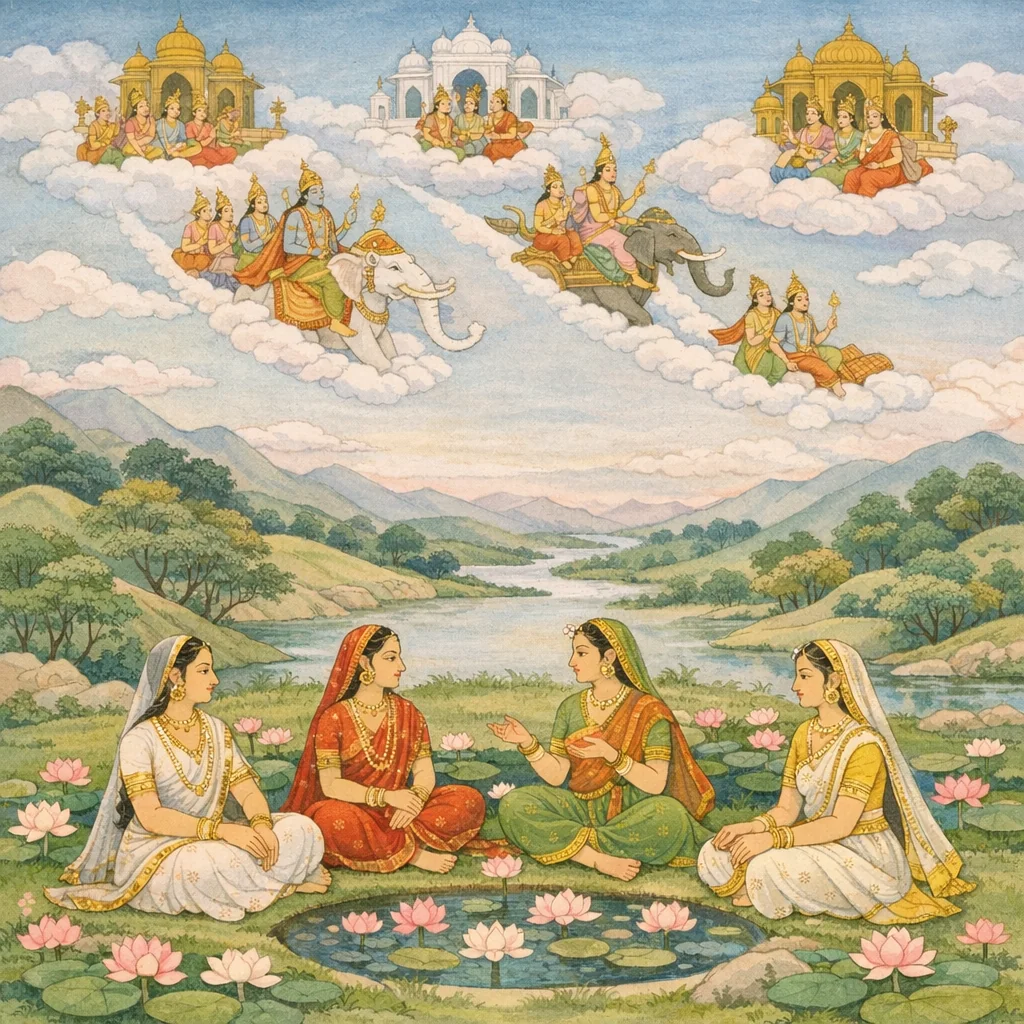
King Duḥṣanta arrives at Kaṇva’s hermitage after dismissing his attendants and finds the āśrama empty of the sage. Calling out, he is met by a young woman in ascetic attire, described with auspicious beauty and composure. She welcomes the king with formal hospitality—offering a seat and ritual water (pādya, arghya)—and inquires after his well-being. Duḥṣanta states his purpose: to pay respects to Ṛṣi Kaṇva; Śakuntalā replies that Kaṇva has gone to gather fruits and requests the king wait briefly. The king, increasingly captivated, questions her identity and origin, noting the apparent incongruity between her qualities and an ascetic environment. Śakuntalā identifies herself as Kaṇva’s daughter by social recognition, prompting Duḥṣanta’s doubt given Kaṇva’s strict vow and celibate reputation. Śakuntalā then begins an explanatory genealogy: Indra’s concern over Viśvāmitra’s intense tapas and the directive to Menakā to disrupt his austerities, setting up the circumstances of Śakuntalā’s birth.
Chapter Arc: Janamejaya is led deeper into the cosmic genealogy: after the devas’ descent for loka-hita and asura-vinasha, the narration turns to the vast lineages beginning with Aditi and her sisters—an origin-map for gods, daityas, danavas, gandharvas, and other beings. → Names multiply into an overwhelming catalogue—Aditi, Diti, Danu, Kala, Danayu, Simhika, Krodha, Pradha, Vishva, Vinata, Kapila—each a womb of worlds; the listener is made to feel the immensity of creation and the inevitability of conflict seeded in lineage. → The narrator declares the limit of enumeration: the progeny are so innumerable that they cannot be fully counted—an explicit pivot from list to infinity, from human accounting to cosmic scale. → The chapter stabilizes the genealogical frame: devas incarnate among rishis and royal houses by choice, and the broad families (including gandharvas and apsaras) are situated within a single, coherent origin-story. → The genealogy points forward to specific formidable lines—such as the famed sons of Danu (and Rudra’s attendant known as Mahakala)—inviting the next chapter’s deeper detailing of these powers and their roles in the coming age.
Shlokas
Verse 1
- “वैश्यायां क्षत्रियाज्जात: करण: परिकीर्तितः ।” (वैश्य माता और क्षत्रिय पितासे उत्पन्न पुत्र 'करण' कहलाता है) इस धर्मशास्त्रीय वचनके अनुसार युयुत्सुकी “करण' संज्ञा बतायी गयी है। (सम्भवपर्व) पञ्चषष्टितमो < ध्याय: मरीचि आदि महर्षियों तथा अदिति आदि दक्षकन्याओंके वंशका विवरण वैशमग्पायन उवाच अथ नारायणेनेन्द्रश्नबकार सह संविदम् । अवतर्तु महीं स्वर्गादंशत: सहित: सुरै:,वैशम्पायनजी कहते हैं--राजन्! देवताओंसहित इन्द्रने भगवान् विष्णुके साथ स्वर्ग एवं वैकुण्ठसे पृथ्वीपर अंशत: अवतार ग्रहण करनेके सम्बन्धमें कुछ सलाह की
Vaiśampāyana said: Then Indra, together with the gods, held counsel with Nārāyaṇa (Viṣṇu) about descending from heaven to the earth, taking partial incarnations. The passage frames a divine, deliberate plan: the gods resolve to enter the human world in measured portions to restore order and uphold dharma.
Verse 2
आदिश्य च स्वयं शक्र: सर्वानिव दिवौकस: । निर्जगाम पुनस्तस्मात् क्षयान्नारायणस्य ह,तत्पश्चात् सभी देवताओंको तदनुसार कार्य करनेके लिये आदेश देकर वे भगवान् नारायणके निवासस्थान वैकुण्ठधामसे पुन: चले आये
Vaiśaṃpāyana said: Having himself issued instructions, Śakra (Indra) directed all the celestial beings to act accordingly; then he departed again from that abode of Nārāyaṇa. The passage underscores orderly divine governance—authority exercised through clear command, and collective responsibility through obedient execution.
Verse 3
ते5मरारिविनाशाय सर्वलोकहिताय च । अवतेरु: क्रमेणैव महीं स्वर्गाद् दिवौकस:,तब देवतालोग सम्पूर्ण लोकोंके हित तथा राक्षसोंके विनाशके लिये स्वर्गसे पृथ्वीपर आकर क्रमश: अवतीर्ण होने लगे
For the destruction of the enemies of the gods and for the welfare of all the worlds, the celestial beings descended from heaven to the earth, appearing one after another in due order.
Verse 4
ततो ब्रद्मर्षिवंशेषु पार्थिवर्षिकुलेषु च । जज्ञिरे राजशार्दूल यथाकामं दिवौकस:,नृपश्रेष्ठ) वे देवगण अपनी इच्छाके अनुसार ब्रह्मर्षियों अथवा राजर्षियोंके वंशमें उत्पन्न हुए
Then, O tiger among kings, the dwellers of heaven were born—according to their own desire—into the lineages of Brahmin seers and into the royal-sage houses of earthly kings.
Verse 5
दानवान् राक्षसांश्चैव गन्धर्वान् पन्नगांस्तथा । पुरुषादानि चान्यानि जघ्नु: सत्त्वान्यनेकश:,वे दानव, राक्षस, दुष्ट गन्धर्व, सर्प तथा अन्यान्य मनुष्यभक्षी जीवोंका बारम्बार संहार करने लगे। भरतश्रेष्ठ) वे बचपनमें भी इतने बलवान् थे कि दानव, राक्षस, गन्धर्व तथा सर्प उनका बाल बाँका तक नहीं कर पाते थे
Vaiśaṃpāyana said: They repeatedly slew many kinds of beings—Dānavas, Rākṣasas, Gandharvas, serpents, and other man-eating creatures. The passage underscores their extraordinary strength even in childhood, by which such hostile beings could not so much as harm them.
Verse 6
दानवा राक्षसाश्रैव गन्धर्वा: पन्नगास्तथा । न तान् बलस्थान् बाल्ये5पि जघ्नुर्भरतसत्तम,वे दानव, राक्षस, दुष्ट गन्धर्व, सर्प तथा अन्यान्य मनुष्यभक्षी जीवोंका बारम्बार संहार करने लगे। भरतश्रेष्ठ) वे बचपनमें भी इतने बलवान् थे कि दानव, राक्षस, गन्धर्व तथा सर्प उनका बाल बाँका तक नहीं कर पाते थे
Vaiśaṃpāyana said: “Even the Dānavas, the Rākṣasas, the Gandharvas, and the serpentine beings could not strike down those mighty ones—not even in their childhood, O best of the Bharatas.”
Verse 7
जनमेजय उवाच देवदानवसड्घानां गन्धर्वाप्सरसां तथा । मानवानां च सर्वेषां तथा वै यक्षरक्षसाम्,जनमेजय बोले--भगवन्! मैं देवता, दानवसमुदाय, गन्धर्व, अप्सरा, मनुष्य, यक्ष, राक्षस तथा सम्पूर्ण प्राणियोंकी उत्पत्ति यथार्थरूपसे सुनना चाहता हूँ। आप कृपा करके आरम्भसे ही इन सबकी उत्पत्तिका यथावत् वर्णन कीजिये
Janamejaya said: “Revered sir, I wish to hear, in a true and orderly way, the origin of all beings—of the hosts of gods and demons, of Gandharvas and Apsarases, of all human beings, and likewise of Yakṣas and Rākṣasas. Please recount their beginnings to me from the very start, as they really occurred.”
Verse 8
श्रोतुमिच्छामि तत्त्वेन सम्भवं कृत्स्नमादित: । प्राणिनां चैव सर्वेषां सम्भवं वक्तुमहसि,जनमेजय बोले--भगवन्! मैं देवता, दानवसमुदाय, गन्धर्व, अप्सरा, मनुष्य, यक्ष, राक्षस तथा सम्पूर्ण प्राणियोंकी उत्पत्ति यथार्थरूपसे सुनना चाहता हूँ। आप कृपा करके आरम्भसे ही इन सबकी उत्पत्तिका यथावत् वर्णन कीजिये
Janamejaya said: “Revered sir, I wish to hear, in accordance with the truth, the complete account from the very beginning of the origin of all beings. You are worthy to relate to me the full genesis of every living creature.”
Verse 9
वैशम्पायन उवाच हन्त ते कथयिष्यामि नमस्कृत्य स्वयम्भुवे । सुरादीनामहं सम्यग लोकानां प्रभवाप्ययम्,वैशम्पायनजीने कहा--अच्छा, मैं स्वयम्भू भगवान् ब्रह्मा एवं नारायणको नमस्कार करके तुमसे देवता आदि सम्पूर्ण लोगोंकी उत्पत्ति और नाशका यथावत् वर्णन करता हूँ
Vaiśampāyana said: “Very well, I shall tell you. Having first bowed in reverence to Svayambhū, the Self-born, I will duly recount the arising and passing away of the worlds, and of the gods and other beings.”
Verse 10
ब्रह्मणो मानसा: पुत्रा विदिता: षण्महर्षय: । मरीचिरुत्यड्िरिसौ पुलस्त्य: पुलह: क्रतु:,ब्रह्माजीके मानस पुत्र छः महर्षि विख्यात हैं--मरीचि, अत्रि, अंगिरा, पुलस्त्य, पुलह और क्रतु
Vaiśampāyana said: “The six great seers, well known as the mind-born sons of Brahmā, are Marīci, Atri, Aṅgiras, Pulastya, Pulaha, and Kratu.”
Verse 11
मरीचे: कश्यप: पुत्र: कश्यपात् तु इमा: प्रजा: । प्रजज्ञिरे महाभागा दक्षकन्यास्त्रयोदश,मरीचिके पुत्र कश्यप थे और कश्यपसे ही ये समस्त प्रजाएँ उत्पन्न हुई हैं। (ब्रह्माजीके एक पुत्र दक्ष भी हैं) प्रजापति दक्षके परम सौभाग्यशालिनी तेरह कन्याएँ थीं
Vaiśampāyana said: “Kaśyapa was the son of Marīci; and from Kaśyapa, indeed, all these lines of creatures were born. There were thirteen exceedingly fortunate daughters of Prajāpati Dakṣa.”
Verse 12
अदितिर्दितिर्दनु: काला दनायु: सिंहिका तथा । क्रोधा प्राधा च विश्वा च विनता कपिला मुनि:,नरश्रेष्ठ! उनके नाम इस प्रकार हैं--अदिति, दिति, दनु, काला, दनायु, सिंहिका, क्रोधा (क्रूरा), प्राधा, विश्वा, विनता, कपिला, मुनि और कट्रू। भारत! ये सभी दक्षकी कन्याएँ हैं। इनके बल-पराक्रमसम्पन्न पुत्र-पौत्रोंकी संख्या अनन्त है
Vaiśampāyana said: “Aditi, Diti, Danu, Kālā, Danāyu, Siṁhikā, Krodhā, Prādhā, Viśvā, Vinatā, Kapilā, and Muni—these are their names. O best of men, O Bhārata, all of them are daughters of Dakṣa, and the lineages that arise from them—sons and grandsons endowed with strength and prowess—are beyond counting.”
Verse 13
कद्रश्न मनुजव्यात्र दक्षकन्यैव भारत । एतासां वीर्यसम्पन्नं पुत्रपौत्रमनन््तकम्,नरश्रेष्ठ! उनके नाम इस प्रकार हैं--अदिति, दिति, दनु, काला, दनायु, सिंहिका, क्रोधा (क्रूरा), प्राधा, विश्वा, विनता, कपिला, मुनि और कट्रू। भारत! ये सभी दक्षकी कन्याएँ हैं। इनके बल-पराक्रमसम्पन्न पुत्र-पौत्रोंकी संख्या अनन्त है
Vaiśaṃpāyana said: “O tiger among men, O Bhārata, Kadru too is indeed a daughter of Dakṣa. From these daughters there arose an endless line of sons and grandsons, endowed with strength and prowess.”
Verse 14
अदित्यां द्वादशादित्या: सम्भूता भुवने श्वरा: । ये राजन् नामतत्तांस्ते कीर्तयिष्यामि भारत,अदितिके पुत्र बारह आदित्य हुए, जो लोकेश्वर हैं। भरतवंशी नरेश! उन सबके नाम तुम्हें बता रहा हूँ---
Vaiśampāyana said: “From Aditi were born the twelve Ādityas, sovereign lords of the world. O king, O descendant of Bharata, I shall now recount their names to you.”
Verse 15
धाता मित्रो<र्यमा शक्रो वरुणस्त्वंश एव च | भगो विवस्वान् पूषा च सविता दशमस्तथा,धाता, मित्र, अर्यमा, इन्द्र, वरुण, अंश, भग, विवस्वान्, पूषा, दसवें सविता, ग्यारहवें त्वष्टा और बारहवें विष्णु कहे जाते हैं। इन सब आदित्योंमें विष्णु छोटे हैं; किंतु गुणोंमें वे सबसे बढ़कर हैं
Vaiśampāyana said: “Dhātṛ, Mitra, Aryaman, Śakra (Indra), Varuṇa, and also Aṁśa; Bhaga, Vivasvān, Pūṣan, and as the tenth Savitṛ—these are the Ādityas being enumerated.” In this context, the tradition further counts Tvaṣṭṛ as the eleventh and Viṣṇu as the twelfth; and though Viṣṇu is described as the youngest among these Ādityas, he is held to be foremost in excellence and divine qualities.
Verse 16
एकादशस्तथा त्वष्टा द्वादशो विष्णुरुच्यते । जघन्यजस्तु सर्वेषामादित्यानां गुणाधिक:,धाता, मित्र, अर्यमा, इन्द्र, वरुण, अंश, भग, विवस्वान्, पूषा, दसवें सविता, ग्यारहवें त्वष्टा और बारहवें विष्णु कहे जाते हैं। इन सब आदित्योंमें विष्णु छोटे हैं; किंतु गुणोंमें वे सबसे बढ़कर हैं
Vaiśampāyana said: “The eleventh is Tvaṣṭṛ, and the twelfth is called Viṣṇu. Though Viṣṇu is the youngest among all the Ādityas, he surpasses them all in excellence of qualities. The Ādityas are: Dhātṛ, Mitra, Aryaman, Indra, Varuṇa, Aṁśa, Bhaga, Vivasvān, Pūṣan, Savitṛ, Tvaṣṭṛ, and Viṣṇu.”
Verse 17
एक एव दिते: पुत्रो हिरण्यकशिपु: स्मृतः । नाम्ना ख्यातास्तु तस्येमे पठ्च पुत्रा महात्मन:,दितिका एक ही पुत्र हिरण्यकशिपु अपने नामसे विख्यात हुआ। उस महामना दैत्यके पाँच पुत्र थे
Vaiśaṃpāyana said: “Diti is remembered as having only one son, Hiraṇyakaśipu, renowned by name. Yet that great-souled Daitya had five sons, celebrated in their own right.”
Verse 18
प्रह्माद: पूर्वजस्तेषां संह्वादस्तदनन्तरम् । अनुह्वादस्तृतीयो5भूत् तस्माच्च शिविबाष्कलौ,उन पाँचोंमें प्रथणका नाम प्रहाद है। उससे छोटेको संह्ाद कहते हैं। तीसरेका नाम अनुह्ाद है। उसके बाद चौथे शिबि और पाँचवें बाष्कल हैं
Vaiśampāyana said: “Of them, the eldest was Prahmāda; next after him came Saṃhvāda. The third was Anuhvāda; and from him were born Śivi and Bāṣkala.”
Verse 19
प्रह्मादस्य त्रय: पुत्रा: ख्याता: सर्वत्र भारत । विरोचनश्न कुम्भश्न निकुम्भश्नेति भारत,भारत! प्रह्मदके तीन पुत्र हुए, जो सर्वत्र विख्यात हैं। उनके नाम ये हैं--विरोचन, कुम्भ और निकुम्भ
Vaiśampāyana said: “O Bhārata, Prahrāda had three sons, renowned everywhere—Virocana, Kumbha, and Nikumbha.”
Verse 20
विरोचनस्य पुत्रो5 भूद् बलिरेक: प्रतापवान् | बलेश्व प्रथित: पुत्रो बाणो नाम महासुर:,विरोचनके एक ही पुत्र हुआ, जो महाप्रतापी बलिके नामसे प्रसिद्ध है। बलिका विश्वविख्यात पुत्र बाण नामक महान् असुर है
Vaiśampāyana said: “Virocana had a single son—Bali, renowned for his might and splendor. And Bali’s celebrated son was Bāṇa, a great Asura.”
Verse 21
जिसे सब लोग भगवान् शंकरके पार्षद श्रीमान् महाकालके नामसे जानते हैं। भारत! दनुके चौंतीस पुत्र हुए, जो सर्वत्र विख्यात हैं
Vaiśampāyana said: “He whom all people know as the illustrious Mahākāla, a close attendant of the blessed Lord Śaṅkara—O Bhārata—Danu had thirty-four sons, renowned everywhere.”
Verse 22
तेषां प्रथमजो राजा विप्रचित्तिमहायशा: । शम्बरो नमुचिश्वैव पुलोमा चेति विश्रुत:,उनमें महायशस्वी राजा विप्रचित्ति सबसे बड़ा था। उसके बाद शम्बर, नमुचि, पुलोमा, असिलोमा, केशी, दुर्जय, अयःशिरा, अश्वशिरा, पराक्रमी अश्वशंकु, गगनमूर्धा, वेगवान्, केतुमान्, स्वर्भानु, अश्व, अश्वपति, वृषपर्वा, अजक, अभश्वग्रीव, सूक्ष्म, महाबली तुहुण्ड, इषुपाद, एकचक्र, विरूपाक्ष, हर, अहर, निचन्द्र, निकुम्भ, कुपट, कपट, शरभ, शलभ, सूर्य और चन्द्रमा हैं। ये दनुके वंशमें विख्यात दानव बताये गये हैं
Vaiśampāyana said: “Among them, the first-born and foremost king was the greatly renowned Vipracitti; and after him were famed Śambara, Namuci, and Pulomā. Thus is set forth the genealogical catalogue of the Dānava line, marking their rank and notoriety.”
Verse 23
असिलोमा च केशी च दुर्जयश्वैव दानव: । अयःशिरा अश्वशिरा अश्वशंकुश्न वीर्यवान्,उनमें महायशस्वी राजा विप्रचित्ति सबसे बड़ा था। उसके बाद शम्बर, नमुचि, पुलोमा, असिलोमा, केशी, दुर्जय, अयःशिरा, अश्वशिरा, पराक्रमी अश्वशंकु, गगनमूर्धा, वेगवान्, केतुमान्, स्वर्भानु, अश्व, अश्वपति, वृषपर्वा, अजक, अभश्वग्रीव, सूक्ष्म, महाबली तुहुण्ड, इषुपाद, एकचक्र, विरूपाक्ष, हर, अहर, निचन्द्र, निकुम्भ, कुपट, कपट, शरभ, शलभ, सूर्य और चन्द्रमा हैं। ये दनुके वंशमें विख्यात दानव बताये गये हैं
Vaiśampāyana said: “Among the Dānava demons were Asilomā and Keśī, and also the Dānava named Durjaya; likewise Ayaḥśirā (‘Iron-head’), Aśvaśirā (‘Horse-head’), and the mighty Aśvaśaṅku.”
Verse 24
तथा गगनमूर्धा च वेगवान् केतुमांश्न॒ सः । स्वर्भानुरश्वो5श्चपतिर्वृषपर्वाजकस्तथा,उनमें महायशस्वी राजा विप्रचित्ति सबसे बड़ा था। उसके बाद शम्बर, नमुचि, पुलोमा, असिलोमा, केशी, दुर्जय, अयःशिरा, अश्वशिरा, पराक्रमी अश्वशंकु, गगनमूर्धा, वेगवान्, केतुमान्, स्वर्भानु, अश्व, अश्वपति, वृषपर्वा, अजक, अभश्वग्रीव, सूक्ष्म, महाबली तुहुण्ड, इषुपाद, एकचक्र, विरूपाक्ष, हर, अहर, निचन्द्र, निकुम्भ, कुपट, कपट, शरभ, शलभ, सूर्य और चन्द्रमा हैं। ये दनुके वंशमें विख्यात दानव बताये गये हैं
Vaiśampāyana said: “Likewise (among them were) Gaganamūrdhā; Vegavān; Ketumān; Svarbhānu; Aśva; Aśvapati; Vṛṣaparvan; and Ajaka.”
Verse 25
अश्वग्रीवश्च सूक्ष्मश्न तुहुण्डश्व महाबल: । इषुपादेकचक्रश्न विरूपाक्षो हराहरी,उनमें महायशस्वी राजा विप्रचित्ति सबसे बड़ा था। उसके बाद शम्बर, नमुचि, पुलोमा, असिलोमा, केशी, दुर्जय, अयःशिरा, अश्वशिरा, पराक्रमी अश्वशंकु, गगनमूर्धा, वेगवान्, केतुमान्, स्वर्भानु, अश्व, अश्वपति, वृषपर्वा, अजक, अभश्वग्रीव, सूक्ष्म, महाबली तुहुण्ड, इषुपाद, एकचक्र, विरूपाक्ष, हर, अहर, निचन्द्र, निकुम्भ, कुपट, कपट, शरभ, शलभ, सूर्य और चन्द्रमा हैं। ये दनुके वंशमें विख्यात दानव बताये गये हैं
Vaiśampāyana said: “Among the famed Dānava descendants of Danu were Aśvagrīva and Sūkṣma; the mighty Tuhuṇḍaśva; Iṣupāda and Ekacakra; and Virūpākṣa, along with Harā and Ahara.”
Verse 26
निचन्द्रश्न निकुम्भश्न कुपट: कपटस्तथा । शरभ: शलभश्चैव सूर्याचन्द्रमसौ तथा । एते ख्याता दनोरव॑शे दानवा: परिकीर्तिता:,उनमें महायशस्वी राजा विप्रचित्ति सबसे बड़ा था। उसके बाद शम्बर, नमुचि, पुलोमा, असिलोमा, केशी, दुर्जय, अयःशिरा, अश्वशिरा, पराक्रमी अश्वशंकु, गगनमूर्धा, वेगवान्, केतुमान्, स्वर्भानु, अश्व, अश्वपति, वृषपर्वा, अजक, अभश्वग्रीव, सूक्ष्म, महाबली तुहुण्ड, इषुपाद, एकचक्र, विरूपाक्ष, हर, अहर, निचन्द्र, निकुम्भ, कुपट, कपट, शरभ, शलभ, सूर्य और चन्द्रमा हैं। ये दनुके वंशमें विख्यात दानव बताये गये हैं
Vaiśampāyana said: “Nicandra and Nikumbha, Kupaṭa and likewise Kapaṭa, Śarabha and Śalabha, and also Sūrya and Candramas—these are proclaimed as renowned Dānavas in the lineage of Danu.”
Verse 27
अन्यौ तु खलु देवानां सूर्याचन्द्रमसौ स्मृतौ । अन्यौ दानवमुख्यानां सूर्याचन्द्रमसौ तथा,देवताओंमें जो सूर्य और चन्द्रमा माने गये हैं, वे दूसरे हैं और प्रधान दानवोंमें सूर्य तथा चन्द्रमा दूसरे हैं
Vaiśampāyana said: “Indeed, the Sun and the Moon acknowledged among the gods are one pair; and likewise, among the foremost Dānavas, the Sun and the Moon are another pair.”
Verse 28
इमे च वंशा: प्रथिता: सत्त्ववन्तो महाबला: । दनुपुत्रा महाराज दश दानववंशजा:,महाराज! ये विख्यात दानववंश कहे गये हैं, जो बड़े धैर्यवान् और महाबलवान् हुए हैं। दनुके पुत्रोंमें निम्नाँकित दानवोंके दस कुल बहुत प्रसिद्ध हैं--
Vaiśampāyana said: “O great king, these lineages are renowned—endowed with courage and great strength. Among the sons of Danu, ten clans of Dānavas are especially celebrated.”
Verse 29
एकाक्षो मृतपा वीर: प्रलम्बनरकावपि । वातापी शत्रुतपन: शठश्वैव महासुर:,एकाक्ष, वीर मृतपा, प्रलम्ब, नरक, वातापी, शत्रुतपन, महान् असुर शठ, गविष्ठ, वनायु तथा दानव दीर्घजिह्न। भारत! इन सबके पुत्र-पौत्र असंख्य बताये गये हैं
Vaiśampāyana said: “There were also the hero Ekākṣa, Mṛtapa, and likewise Pralamba and Naraka; Vātāpi, Śatrutapana, and the great asura Śaṭha; also Gaviṣṭha, Vanāyu, and the dānava Dīrghajihna. O Bhārata, the sons and grandsons of all these are said to have been innumerable.”
Verse 30
गविष्ठश्न॒ वनायुश्न दीर्घजिद्दश्व॒ दानव: । असंख्येया: स्मृतास्तेषां पुत्रा: पौत्राश्न भारत,एकाक्ष, वीर मृतपा, प्रलम्ब, नरक, वातापी, शत्रुतपन, महान् असुर शठ, गविष्ठ, वनायु तथा दानव दीर्घजिह्न। भारत! इन सबके पुत्र-पौत्र असंख्य बताये गये हैं
Vaiśampāyana said: “Gaviṣṭha, Vanāyu, and the Dānava Dīrghajihna are named here. O Bhārata, their sons and grandsons are remembered as innumerable.”
Verse 31
सिंहिका सुषुवे पुत्र॑ राहुं चन्द्रार्कमर्टनम् । सुचन्द्रं चन्द्रहर्तारं तथा चन्द्रप्रमर्दनम्,सिंहिकाने राहु नामक पुत्रको उत्पन्न किया, जो चन्द्रमा और सूर्यका मान-मर्दन करनेवाला है। इसके सिवा सुचन्द्र, चन्द्रहर्ता तथा चन्द्रप्रमर्दनको भी उसीने जन्म दिया
Vaiśampāyana said: Siṁhikā gave birth to a son named Rāhu, famed for humiliating the Moon and the Sun. She also bore Sucandra, Candrahartā (the “stealer of the Moon”), and Candrapramardana (the “crusher of the Moon”).
Verse 32
क्रूरस्वभावं क्रूराया: पुत्रपौत्रमनन्तकम् | गण: क्रोधवशो नाम क्रूरकर्मारिमर्दन:,क्रूरा (क्रोधा)-के क्रूर स्वभाववाले असंख्य पुत्र-पौत्र उत्पन्न हुए। शत्रुओंका नाश करनेवाला क्रूरकर्मा क्रोधवश नामक गण भी क्रूराकी ही संतान हैं
Vaiśampāyana said: From Krūrā—herself of a cruel disposition—there arose an innumerable line of sons and grandsons, all sharing that harsh nature. Among her offspring was also the troop called Krodhavaśa, fierce in deed and renowned as destroyers of enemies.
Verse 33
दनायुष: पुनः पुत्राश्नत्वारो5सुरपुड्रवा: | विक्षरो बलवीरौ च वृत्रश्नैव महासुर:,दनायुके असुरोंमें श्रेष्ठ चार पुत्र हुए--विक्षर, बल, वीर और महान् असुर वृत्र
Vaiśampāyana said: From Dānāyu, there were born four sons, foremost among the Asuras—Vikṣara, Bala, Vīra, and Vṛtra, a mighty Asura.
Verse 34
कालाया: प्रथिता: पुत्रा: कालकल्पा: प्रहारिण: | प्रविख्याता महावीर्या दानवेषु परंतपा:,कालाके विख्यात पुत्र अस्त्र-शस्त्रोंका प्रहार करनेमें कुशल और साक्षात् कालके समान भयंकर थे। दानवोंमें उनकी बड़ी ख्याति थी। वे महान् पराक्रमी और शत्रुओंको संताप देनेवाले थे
Vaiśampāyana said: Kālā’s sons were renowned—skilled in striking with weapons, dreadful like Kāla himself. Among the Dānavas their fame was great: mighty heroes who brought torment upon their foes.
Verse 35
विनाशनकश्ष क्रोधक्ष क्रोधहन्ता तथैव च | क्रोधशत्रुस्तथैवान्ये कालकेया इति श्रुता:,उनके नाम इस प्रकार हैं--विनाशन, क्रोध, क्रोधहन्ता तथा क्रोधशत्रु। कालकेय नामसे विख्यात दूसरे-दूसरे असुर भी कालाके ही पुत्र थे
Vaiśampāyana said: “Vināśanaka, Krodha, Krodhahantā, and likewise Krodhaśatru—these, and other beings famed as the Kālakeyas, are heard of (in tradition).”
Verse 36
असुराणामुपाध्याय: शुक्रस्त्वृषिसुतो 5भवत् | ख्याताश्लोशनस: पुत्रा क्षत्वारो$सुरयाजका:,असुरोंके उपाध्याय (अध्यापक एवं पुरोहित) शुक्राचार्य महर्षि भृगुके पुत्र थे। उन्हें उशना भी कहते हैं। उशनाके चार पुत्र हुए, जो असुरोंके पुरोहित थे
Vaiśampāyana said: The preceptor and priest of the Asuras was Śukra, the son of a great seer. He was also famed by the name Uśanā. Uśanā had four sons, renowned as officiating priests who performed sacrifices for the Asuras—showing how even among the Asuras, learning, ritual authority, and inherited priestly lineages were firmly established.
Verse 37
त्वष्टाधरस्तथातन्रिक्ष द्वावन्यौ रौद्रकर्मिणौ । तेजसा सूर्यसंकाशा ब्रह्मलोकपरायणा:,इनके अतिरिक्त त्वष्टाधर तथा अत्रि ये दो पुत्र और हुए, जो रौद्र कर्म करने और करानेवाले थे। उशनाके सभी पुत्र सूर्यके समान तेजस्वी तथा ब्रह्मलोकको ही परम आश्रय माननेवाले थे
Moreover, there were two other sons, Tvaṣṭādhara and Atri, who performed—and caused others to perform—fierce, Rudra-like deeds. All the sons of Uśanā shone with the radiance of the sun and held Brahmaloka to be their highest refuge.
Verse 38
इत्येष वंशप्रभव: कथितस्ते तरस्विनाम् | असुराणां सुराणां च पुराणे संश्रुतो मया,राजन! मैंने पुराणमें जैसा सुन रखा है, उसके अनुसार तुमसे यह वेगशाली असुरों और देवताओंके वंशकी उत्पत्तिका वृत्तान्त बताया है
Vaiśampāyana said: “Thus I have narrated to you, O king, the origin of the lineages of the mighty—both the Asuras and the Devas—exactly as I have heard it preserved in the Purāṇic tradition.”
Verse 39
एतेषां यदपत्यं तु न शक््यं तदशेषत: । प्रसंख्यातुं महीपाल गुणभूतमनन्तकम्,महीपाल! इनकी जो संतानें हैं, उन सबकी पूर्णरूपसे गणना नहीं की जा सकती; क्योंकि वे सब अनन्त गुने हैं। ताक्ष्य, अरिष्टनेमि, गरुड, अरुण, आरुणि तथा वारुणि--ये विनताके पुत्र कहे गये हैं
Vaiśampāyana said: “O king, the progeny of these cannot be fully enumerated; it is not possible to count them exhaustively, for their multitude is endless.”
Verse 40
तार्क्ष्यक्षारिष्टनेमिश्व॒ तथैव गरुडह़ारुणौ । आरुणिवररिणिश्रैव वैनतेया: प्रकीर्तिता:,महीपाल! इनकी जो संतानें हैं, उन सबकी पूर्णरूपसे गणना नहीं की जा सकती; क्योंकि वे सब अनन्त गुने हैं। ताक्ष्य, अरिष्टनेमि, गरुड, अरुण, आरुणि तथा वारुणि--ये विनताके पुत्र कहे गये हैं
Vaiśampāyana said: O king, Tārkṣya, Ariṣṭanemi, Garuḍa, Aruṇa, and also Āruṇi and Varuṇi are proclaimed to be the sons of Vinatā. Their progeny is beyond complete enumeration, for it is said to be without end—signaling the vast, immeasurable spread of these divine lineages.
Verse 41
शेषो5नन्तो वासुकिश्न तक्षकश्न भुजड्भम: । कूर्मश्न॒ कुलिकश्नैव काद्रवेया: प्रकीर्तिता:,शेष, अनन्त, वासुकि, तक्षक, कूर्म और कुलिक आदि नागगण कढ्रूके पुत्र कहलाते हैं
Vaiśampāyana said: “Śeṣa, Ananta, Vāsuki, Takṣaka, and also the serpents Bhujaga, Kūrma, and Kulika—these are celebrated as the sons of Kadru.” The narration marks the acknowledged lineages among the Nāgas, a genealogical order that later frames their roles, rivalries, and duties within the epic’s moral universe.
Verse 42
भीमसेनोग्रसेनौ च सुपर्णो वरुणस्तथा । गोपतिर्धतराष्ट्रश्न सूर्यवर्चाश्न सप्तम:,राजन! भीमसेन, उग्रसेन, सुपर्ण, वरुण, गोपति, धुृतराष्ट्र, सातवें सूर्यवर्चा, सत्यवाक्, अर्करर्ण, विख्यात प्रयुत, भीम, सर्वज्ञ और जितेन्द्रिय चित्ररथ, शालिशिरा, चौदहवें पर्जन्य, पंद्रहवें कलि और सोलहवें नारद--से सब देवगन्धर्व जातिवाले सोलह पुत्र मुनिके गर्भसे उत्पन्न कहे गये हैं
Vaiśampāyana said: “Bhīmasena and Ugrasena; Suparṇa and Varuṇa; Gopati and Dhṛtarāṣṭra; and, as the seventh, Sūryavarcā—these are the names being enumerated.” In context, the verse is part of a genealogical catalogue, emphasizing the recognized origins and identities of notable beings; such lists in the Mahābhārata reinforce the moral idea that lineage, vows, and inherited dispositions shape one’s dharma and social responsibilities.
Verse 43
सत्यवागर्कपर्णश्व प्रयुतश्चापि विश्रुत: । भीमश्रित्ररथश्वैव विख्यात: सर्वविद् वशी,राजन! भीमसेन, उग्रसेन, सुपर्ण, वरुण, गोपति, धुृतराष्ट्र, सातवें सूर्यवर्चा, सत्यवाक्, अर्करर्ण, विख्यात प्रयुत, भीम, सर्वज्ञ और जितेन्द्रिय चित्ररथ, शालिशिरा, चौदहवें पर्जन्य, पंद्रहवें कलि और सोलहवें नारद--से सब देवगन्धर्व जातिवाले सोलह पुत्र मुनिके गर्भसे उत्पन्न कहे गये हैं
Vaiśampāyana said: “O King, among them were famed beings—Satyavāk, Arkaparṇa, Prayuta, and the renowned Viśruta; also Bhīma and Citraratha—celebrated, all-knowing, and self-controlled.” The passage underscores that true eminence is marked not merely by power or lineage, but by mastery of self and the steadiness of truthful speech.
Verse 44
तथा शालिशिरा राजन पर्जन्यश्व चतुर्दश: । कलि: पञ्चदशस्तेषां नारदश्षैव षोडश: । इत्येते देवगन्धर्वा मौनेया: परिकीर्तिता:,राजन! भीमसेन, उग्रसेन, सुपर्ण, वरुण, गोपति, धुृतराष्ट्र, सातवें सूर्यवर्चा, सत्यवाक्, अर्करर्ण, विख्यात प्रयुत, भीम, सर्वज्ञ और जितेन्द्रिय चित्ररथ, शालिशिरा, चौदहवें पर्जन्य, पंद्रहवें कलि और सोलहवें नारद--से सब देवगन्धर्व जातिवाले सोलह पुत्र मुनिके गर्भसे उत्पन्न कहे गये हैं
Vaiśaṃpāyana said: “So too, O king: Śāliśirā; and Parjanya as the fourteenth; Kali as the fifteenth; and Nārada indeed as the sixteenth. Thus these sixteen are declared to be the Mauneya Devagandharvas.” In context, the passage completes a genealogical enumeration, underscoring how lineage and classification (by birth and nature) are carefully preserved in the epic’s moral universe, where identity carries duties, reputation, and consequences.
Verse 45
अथ प्रभूतान्यन्यानि कीर्तयिष्यामि भारत । अनवद्यां मनुं वंशामसुरां मार्गणप्रियाम्,भारत! इसके अतिरिक्त अन्य बहुत-से वंशोंकी उत्पत्तिका वर्णन करता हूँ। प्राधा नामवाली दक्षकन्याने अनवद्या, मनु, वंशा, असुरा, मार्गणप्रिया, अरूपा, सुभगा और भासी इन कन्याओंको उत्पन्न किया। सिद्ध, पूर्ण, बारहि, महायशस्वी पूर्णायु, ब्रह्मचारी, रतिगुण, सातवें सुपर्ण, विश्वावसु, भानु और दसवें सुचन्द्र--से दस देव-गन्धर्व भी प्राधाके ही पुत्र बताये गये हैं। इनके सिवा महाभागा देवी प्राधाने पहले देवर्षि (कश्यप)-के समागमसे इन प्रसिद्ध अप्सराओंके शुभ लक्षणवाले समुदायको उत्पन्न किया था। उनके नाम ये हैं-- अलम्बुषा, मिश्रकेशी, विद्युत्पर्णा, तिलोत्तमा, अरुणा, रक्षिता, रम्भा, मनोरमा, केशिनी, सुबाहु, सुरता, सुरजा और सुप्रिया। अतिबाहु, सुप्रसिद्ध हाहा और हूहू तथा तुम्बुरु--ये चार श्रेष्ठ गन्धर्व भी प्राधाके ही पुत्र माने गये हैं
Vaiśampāyana said: “Now, O Bhārata, I shall recount many other lineages as well—Anavadyā, Manu, Vaṃśā, Asurā, and Mārgaṇapriyā.” In context, the narration continues the genealogical mapping of beings and clans, presenting creation and descent not as mere lists but as a way to situate communities within a moral-cosmic order and to show how diverse groups arise from specific progenitors.
Verse 46
अरूपां सुभगां भासीमिति प्राधा व्यजायत । सिद्धः पूर्णश्न बर्लिश्न पूर्णायुश्ष महायशा:,भारत! इसके अतिरिक्त अन्य बहुत-से वंशोंकी उत्पत्तिका वर्णन करता हूँ। प्राधा नामवाली दक्षकन्याने अनवद्या, मनु, वंशा, असुरा, मार्गणप्रिया, अरूपा, सुभगा और भासी इन कन्याओंको उत्पन्न किया। सिद्ध, पूर्ण, बारहि, महायशस्वी पूर्णायु, ब्रह्मचारी, रतिगुण, सातवें सुपर्ण, विश्वावसु, भानु और दसवें सुचन्द्र--से दस देव-गन्धर्व भी प्राधाके ही पुत्र बताये गये हैं। इनके सिवा महाभागा देवी प्राधाने पहले देवर्षि (कश्यप)-के समागमसे इन प्रसिद्ध अप्सराओंके शुभ लक्षणवाले समुदायको उत्पन्न किया था। उनके नाम ये हैं-- अलम्बुषा, मिश्रकेशी, विद्युत्पर्णा, तिलोत्तमा, अरुणा, रक्षिता, रम्भा, मनोरमा, केशिनी, सुबाहु, सुरता, सुरजा और सुप्रिया। अतिबाहु, सुप्रसिद्ध हाहा और हूहू तथा तुम्बुरु--ये चार श्रेष्ठ गन्धर्व भी प्राधाके ही पुत्र माने गये हैं
Vaiśampāyana said: From Prādhā were born the daughters named Arūpā, Subhagā, and Bhāsī. From her also were born sons such as Siddha, Pūrṇa, Barhi, Pūrṇāyu, and the greatly renowned Mahāyaśas. In this genealogical narration, the epic underscores how lineages—divine and semi-divine—are traced to specific mothers, presenting creation and succession as an ordered, name-bound transmission rather than a random occurrence.
Verse 47
ब्रह्मचारी रतिगुण: सुपर्णश्वेव सप्तम: । विश्वावसुश्च भानुश्च सुचन्द्रो दशमस्तथा,भारत! इसके अतिरिक्त अन्य बहुत-से वंशोंकी उत्पत्तिका वर्णन करता हूँ। प्राधा नामवाली दक्षकन्याने अनवद्या, मनु, वंशा, असुरा, मार्गणप्रिया, अरूपा, सुभगा और भासी इन कन्याओंको उत्पन्न किया। सिद्ध, पूर्ण, बारहि, महायशस्वी पूर्णायु, ब्रह्मचारी, रतिगुण, सातवें सुपर्ण, विश्वावसु, भानु और दसवें सुचन्द्र--से दस देव-गन्धर्व भी प्राधाके ही पुत्र बताये गये हैं। इनके सिवा महाभागा देवी प्राधाने पहले देवर्षि (कश्यप)-के समागमसे इन प्रसिद्ध अप्सराओंके शुभ लक्षणवाले समुदायको उत्पन्न किया था। उनके नाम ये हैं-- अलम्बुषा, मिश्रकेशी, विद्युत्पर्णा, तिलोत्तमा, अरुणा, रक्षिता, रम्भा, मनोरमा, केशिनी, सुबाहु, सुरता, सुरजा और सुप्रिया। अतिबाहु, सुप्रसिद्ध हाहा और हूहू तथा तुम्बुरु--ये चार श्रेष्ठ गन्धर्व भी प्राधाके ही पुत्र माने गये हैं
Vaiśampāyana said: From Prādhā were also born ten divine Gandharvas—Brahmacārī, Ratiguṇa, the seventh named Suparṇa, then Viśvāvāsu and Bhānu, and as the tenth, Sucandra. Thus the genealogy continues, enumerating the celestial lineages that arise from Dakṣa’s daughter Prādhā.
Verse 48
इत्येते देवगन्धर्वा: प्राधेया: परिकीर्तिता: । इमं॑ त्वप्सरसां वंशं विदितं पुण्यलक्षणम्,भारत! इसके अतिरिक्त अन्य बहुत-से वंशोंकी उत्पत्तिका वर्णन करता हूँ। प्राधा नामवाली दक्षकन्याने अनवद्या, मनु, वंशा, असुरा, मार्गणप्रिया, अरूपा, सुभगा और भासी इन कन्याओंको उत्पन्न किया। सिद्ध, पूर्ण, बारहि, महायशस्वी पूर्णायु, ब्रह्मचारी, रतिगुण, सातवें सुपर्ण, विश्वावसु, भानु और दसवें सुचन्द्र--से दस देव-गन्धर्व भी प्राधाके ही पुत्र बताये गये हैं। इनके सिवा महाभागा देवी प्राधाने पहले देवर्षि (कश्यप)-के समागमसे इन प्रसिद्ध अप्सराओंके शुभ लक्षणवाले समुदायको उत्पन्न किया था। उनके नाम ये हैं-- अलम्बुषा, मिश्रकेशी, विद्युत्पर्णा, तिलोत्तमा, अरुणा, रक्षिता, रम्भा, मनोरमा, केशिनी, सुबाहु, सुरता, सुरजा और सुप्रिया। अतिबाहु, सुप्रसिद्ध हाहा और हूहू तथा तुम्बुरु--ये चार श्रेष्ठ गन्धर्व भी प्राधाके ही पुत्र माने गये हैं
Vaiśaṃpāyana said: “Thus have these divine Gandharvas, known as the descendants of Prādhā, been duly enumerated. Now, O Bhārata, I shall relate the lineage of the Apsarases—well-known and marked by auspicious qualities.”
Verse 49
प्राधासूत महाभागा देवी देवर्षित: पुरा । अलनम्बुषा मिश्रकेशी विद्युत्पर्णा तिलोत्तमा,भारत! इसके अतिरिक्त अन्य बहुत-से वंशोंकी उत्पत्तिका वर्णन करता हूँ। प्राधा नामवाली दक्षकन्याने अनवद्या, मनु, वंशा, असुरा, मार्गणप्रिया, अरूपा, सुभगा और भासी इन कन्याओंको उत्पन्न किया। सिद्ध, पूर्ण, बारहि, महायशस्वी पूर्णायु, ब्रह्मचारी, रतिगुण, सातवें सुपर्ण, विश्वावसु, भानु और दसवें सुचन्द्र--से दस देव-गन्धर्व भी प्राधाके ही पुत्र बताये गये हैं। इनके सिवा महाभागा देवी प्राधाने पहले देवर्षि (कश्यप)-के समागमसे इन प्रसिद्ध अप्सराओंके शुभ लक्षणवाले समुदायको उत्पन्न किया था। उनके नाम ये हैं-- अलम्बुषा, मिश्रकेशी, विद्युत्पर्णा, तिलोत्तमा, अरुणा, रक्षिता, रम्भा, मनोरमा, केशिनी, सुबाहु, सुरता, सुरजा और सुप्रिया। अतिबाहु, सुप्रसिद्ध हाहा और हूहू तथा तुम्बुरु--ये चार श्रेष्ठ गन्धर्व भी प्राधाके ही पुत्र माने गये हैं
Vaiśampāyana said: O Bhārata, the illustrious goddess Prādhā, in former times, bore to the divine seer (Kaśyapa) the famed apsarases—Alambūṣā, Miśrakeśī, Vidyutparṇā, and Tilottamā. The narration here continues the genealogical account of beings born from Dakṣa’s line, emphasizing how even celestial artists and nymphs arise through ordained unions, sustaining the cosmic order rather than personal desire.
Verse 50
अरुणा रक्षिता चैव रम्भा तद्धन्मनोरमा | केशिनी च सुबाहुश्च सुरता सुरजा तथा,भारत! इसके अतिरिक्त अन्य बहुत-से वंशोंकी उत्पत्तिका वर्णन करता हूँ। प्राधा नामवाली दक्षकन्याने अनवद्या, मनु, वंशा, असुरा, मार्गणप्रिया, अरूपा, सुभगा और भासी इन कन्याओंको उत्पन्न किया। सिद्ध, पूर्ण, बारहि, महायशस्वी पूर्णायु, ब्रह्मचारी, रतिगुण, सातवें सुपर्ण, विश्वावसु, भानु और दसवें सुचन्द्र--से दस देव-गन्धर्व भी प्राधाके ही पुत्र बताये गये हैं। इनके सिवा महाभागा देवी प्राधाने पहले देवर्षि (कश्यप)-के समागमसे इन प्रसिद्ध अप्सराओंके शुभ लक्षणवाले समुदायको उत्पन्न किया था। उनके नाम ये हैं-- अलम्बुषा, मिश्रकेशी, विद्युत्पर्णा, तिलोत्तमा, अरुणा, रक्षिता, रम्भा, मनोरमा, केशिनी, सुबाहु, सुरता, सुरजा और सुप्रिया। अतिबाहु, सुप्रसिद्ध हाहा और हूहू तथा तुम्बुरु--ये चार श्रेष्ठ गन्धर्व भी प्राधाके ही पुत्र माने गये हैं
Vaiśampāyana said: “(Among those famed apsarases are) Aruṇā, Rakṣitā, Rambhā, and the exceedingly charming Manoramā; also Keśinī and Subāhu, as well as Suratā and Surajā.” In this genealogical narration, the speaker continues listing celebrated celestial nymphs born in the divine line, emphasizing the abundance and renown of beings produced through sacred unions and lineage.
Verse 51
सुप्रिया चातिबाहुश्न विख्यातौ च हाहा हूहू: । तुम्बुरुश्नेति चत्वार: स्मृता गन्धर्वसत्तमा:,भारत! इसके अतिरिक्त अन्य बहुत-से वंशोंकी उत्पत्तिका वर्णन करता हूँ। प्राधा नामवाली दक्षकन्याने अनवद्या, मनु, वंशा, असुरा, मार्गणप्रिया, अरूपा, सुभगा और भासी इन कन्याओंको उत्पन्न किया। सिद्ध, पूर्ण, बारहि, महायशस्वी पूर्णायु, ब्रह्मचारी, रतिगुण, सातवें सुपर्ण, विश्वावसु, भानु और दसवें सुचन्द्र--से दस देव-गन्धर्व भी प्राधाके ही पुत्र बताये गये हैं। इनके सिवा महाभागा देवी प्राधाने पहले देवर्षि (कश्यप)-के समागमसे इन प्रसिद्ध अप्सराओंके शुभ लक्षणवाले समुदायको उत्पन्न किया था। उनके नाम ये हैं-- अलम्बुषा, मिश्रकेशी, विद्युत्पर्णा, तिलोत्तमा, अरुणा, रक्षिता, रम्भा, मनोरमा, केशिनी, सुबाहु, सुरता, सुरजा और सुप्रिया। अतिबाहु, सुप्रसिद्ध हाहा और हूहू तथा तुम्बुरु--ये चार श्रेष्ठ गन्धर्व भी प्राधाके ही पुत्र माने गये हैं
Vaiśampāyana said: “O Bhārata, Supriyā and Atibāhu, and the renowned Hāhā and Hūhū, and also Tumburu—these four are remembered as the foremost among the Gandharvas.” In the genealogical narration, this verse completes a list of celebrated celestial musicians, emphasizing the tradition of preserving lineages and reputations as part of sacred history.
Verse 52
अमृतं ब्राह्मणा गावो गन्धर्वाप्सरसस्तथा | अपत्यं कपिलायास्तु पुराणे परिकीर्तितम्,अमृत, ब्राह्मण, गौएँ, गन्धर्व तथा अप्सराएँ--ये सब पुराणमें कपिलाकी संतानें बतायी गयी हैं
Vaiśampāyana said: “In the Purāṇic tradition it is proclaimed that nectar (amṛta), the Brāhmaṇas, the cows, and likewise the Gandharvas and Apsarases are the offspring of Kapilā.” The verse frames these revered and beneficent realities—sacred drink, priestly guardians of ritual order, life-sustaining cattle, and celestial beings—as arising from a single primordial source, underscoring a moral vision of the world as structured by sanctity, nourishment, and cosmic harmony.
Verse 53
इति ते सर्वभूतानां सम्भव: कथितो मया । यथावत् सम्परिख्यातो गन्धर्वाप्सरसां तथा,राजन! इस प्रकार मैंने तुम्हें सम्पूर्ण भूतोंकी उत्पत्तिका वृत्तान्त बताया है। इसी तरह गन्धर्वों, अप्सराओं, नागों, सुपर्णों, रुद्रों, मरुद्गणों, गौओं तथा श्रीसम्पन्न पुण्यकर्मा ब्राह्मणोंके जन्मकी कथा भी भलीभाँति कही है
Vaiśampāyana said: “Thus I have related to you the origin of all beings. In due order, O King, I have also duly recounted the births and lineages of the Gandharvas and Apsarases as well.”
Verse 54
भुजज़ानां सुपर्णानां रुद्राणां मरुतां तथा । गवां च ब्राह्मणानां च श्रीमतां पुण्यकर्मणाम्,राजन! इस प्रकार मैंने तुम्हें सम्पूर्ण भूतोंकी उत्पत्तिका वृत्तान्त बताया है। इसी तरह गन्धर्वों, अप्सराओं, नागों, सुपर्णों, रुद्रों, मरुद्गणों, गौओं तथा श्रीसम्पन्न पुण्यकर्मा ब्राह्मणोंके जन्मकी कथा भी भलीभाँति कही है
Vaiśampāyana said: “O King, I have thus related to you the account of the origins of all beings—likewise I have duly narrated the births of the Gandharvas and Apsarases, the Nāgas, the Suparṇas, the Rudras, the Marut hosts, the cattle, and the prosperous Brahmins whose deeds are meritorious.”
Verse 55
आयुष्यश्चैव पुण्यश्न धन्य: श्रुतिसुखावह: । श्रोतव्यश्वैव सततं श्राव्यश्वैवानसूयता,यह प्रसंग आयु देनेवाला, पुण्यमय, प्रशंसनीय तथा सुननेमें सुखद है। मनुष्यको चाहिये कि वह दोषदृष्टि न रखकर सदा इसे सुने और सुनावे
Vaiśampāyana said: “This episode is life-prolonging and meritorious, worthy of praise, and delightful to hear. Therefore one should listen to it continually and also recite it for others—doing so without fault-finding or envy.”
Verse 56
इमं तु वंशं नियमेन यः पठेत् महात्मनां ब्राह्मणदेवसंनिधौ । अपत्यलाभं॑ लभते स पुष्कलं श्रियं यश: प्रेत्य च शो भनां गतिम्,जो ब्राह्मण और देवताओंके समीप महात्माओंकी इस वंशावलीका नियमपूर्वक पाठ करता है, वह प्रचुर संतान, सम्पत्ति और यश प्राप्त करता है तथा मृत्युके पश्चात् उत्तम गति पाता है
Vaiśaṃpāyana said: Whoever, with due observance and discipline, recites this noble genealogy in the presence of Brahmins and the gods gains abundant offspring, prosperity, and fame; and after death he attains a beautiful and auspicious state.
Verse 64
इस प्रकार श्रीमह्याभारत आदिपर्वके अन्तर्गत अंशावतरणपर्वमें चौंसठवाँ अध्याय पूरा हुआ
Thus concludes the sixty-fourth chapter of the Aṃśāvataraṇa section within the Ādi Parva of the revered Mahābhārata. The narrator marks a formal closure, reminding the listener that the epic’s unfolding events are being framed within a larger sacred design of divine manifestations and their moral consequences.
Verse 65
इति श्रीमहाभारते आदिपर्वणि सम्भवपर्वणि आदित्यादिवंशकथने पज्चषष्टितमो< ध्याय:,इस प्रकार श्रीमहाभारत आदिपरव्वके अन्तर्गत सम्भवपर्वमें आदित्यादिवंशकथनविषयक पैंसठवाँ अध्याय पूरा हुआ
Thus, in the Śrī Mahābhārata, within the Ādi Parva and specifically the Sambhava Parva, the sixty-fifth chapter—dealing with the narration of the solar lineage and related dynastic origins—comes to its close. This colophon marks the completion of a unit of transmission, emphasizing faithful preservation of genealogy and tradition as a foundation for understanding later duties, conflicts, and moral choices.
Verse 231
रुद्रस्यानुचर: श्रीमान् महाकालेति यं विदु: । चतुस्त्रिंशद् दनो: पुत्रा: ख्याता: सर्वत्र भारत
Vaiśaṃpāyana said: A splendid attendant of Rudra, whom people know by the name Mahākāla; and the thirty-four sons of Danu are renowned everywhere, O Bhārata.
Frequently Asked Questions
The chapter stages a dharma-sankat between personal attraction and socially accountable conduct: Duḥṣanta’s desire to know Śakuntalā must be reconciled with propriety, consent, and the legitimacy of identity claims within a hermitage setting.
Right action is mediated by context and norms: hospitality and respectful inquiry function as ethical stabilizers when emotion arises, while tapas is portrayed as a force with consequences that extend beyond the individual ascetic to wider social and political orders.
No explicit phalaśruti appears in this passage; its meta-function is structural—initiating a genealogical explanation that anchors later dynastic legitimacy and demonstrates how embedded narratives supply causal depth to present events.