Adhyaya 49
Āstīka’s Commission and Approach to Janamejaya’s Sarpa-satra (आस्तीक-प्रेषणं यज्ञप्रवेशोपक्रमश्च)
Upa-parva: Āstīkopākhyāna (Āstīka Episode) — Sarpa-satra Context
The chapter opens with Jaratkāru (Vāsuki’s sister) summoning her son Āstīka at Vāsuki’s request and stating that the decisive time has arrived for the purpose for which she was given in marriage. Āstīka asks for the factual cause; she recounts the nāgas’ origin under Kadru and the curse that condemns them to perish in Janamejaya’s serpent-sacrifice, a curse affirmed by Brahmā. The narrative recalls the gods’ petition and Brahmā’s resolution: a brahmin born of Jaratkāru and Jaratkāru will become the instrument of release. Jaratkāru then urges Āstīka to act, specifically to protect Vāsuki and his kin from the sacrificial fire. Āstīka consoles the distressed Vāsuki, vows truthful effort, and outlines a strategy: approach the consecrated king with auspicious speech so the rite’s procedure is satisfied while opening a space for intervention. He departs swiftly, reaches the radiant sacrificial arena filled with learned officiants, is halted by gatekeepers, and begins praising the sacrifice as a formal prelude to entry.
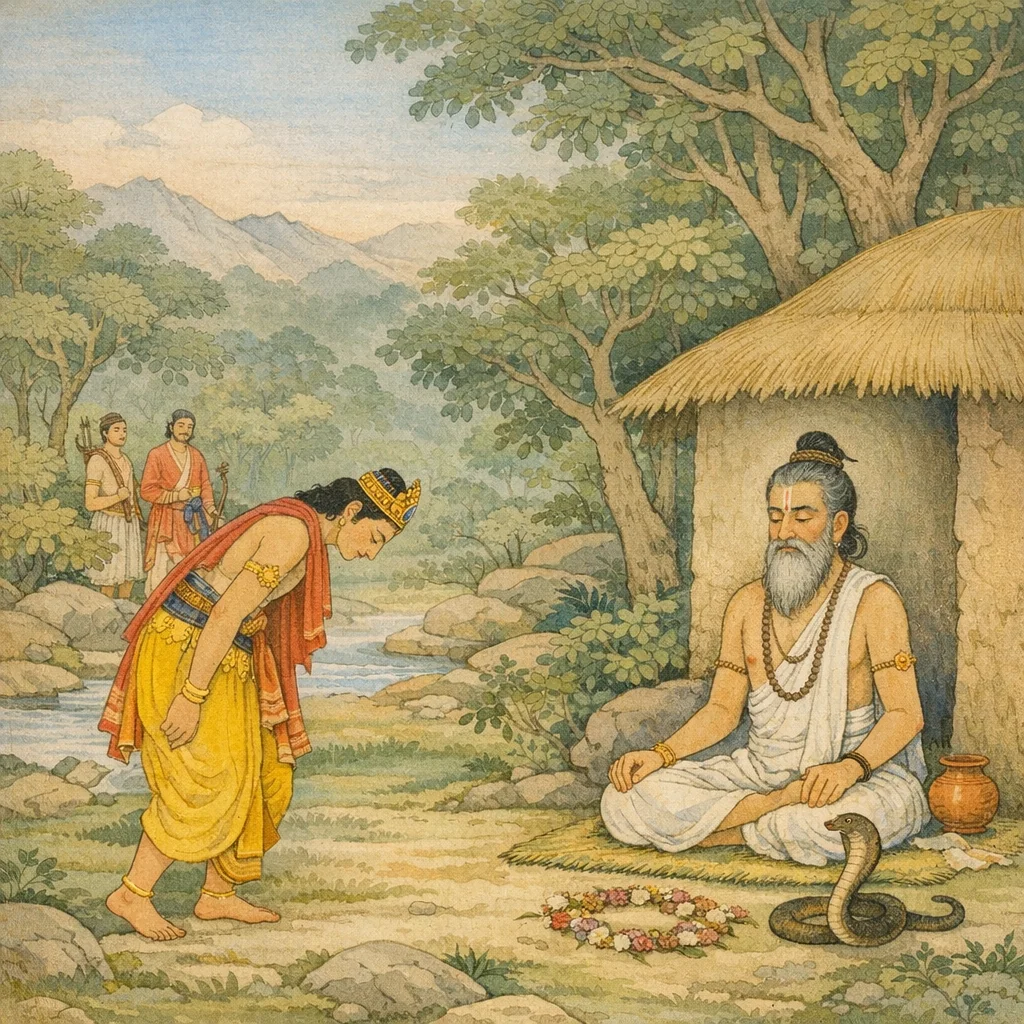
Chapter Arc: जनमेजय, पिता परीक्षित् के अंत का रहस्य जानने को व्याकुल होकर पूछता है—ऐसा धर्मात्मा राजा काल के वश कैसे आया? → सौति (उग्रश्रवा) के माध्यम से मंत्रियों का कथन आता है: परीक्षित् का रूप-गुण, सत्यवचन, दृढ़ पराक्रम और प्रजाप्रियता—सबका वर्णन होते हुए भी कथा शिकार-प्रसंग की ओर मुड़ती है, जहाँ राजधर्म और क्षणिक आवेग टकराने लगते हैं। → शिकार के थकान-तृष्णा से ग्रस्त राजा शमीक मुनि के आश्रम में पहुँचकर मौन-व्रती तपस्वी को अनादर करता है—और मुनि क्रोध न करके भी (सर्प-प्रसंग/अपमान-चिह्न) के साथ स्थिर रहता है; यही क्षण आगे के शाप और विनाश-श्रृंखला का बीज बनता है। → अध्याय का निष्कर्ष यह स्थापित करता है कि परीक्षित् मूलतः धर्ममय और गुणवान थे; पतन किसी स्थायी दुष्टता से नहीं, बल्कि परिस्थितिजन्य प्रमाद/अविवेक से आरम्भ हुआ—और मंत्रियों की वाणी से घटनाक्रम ‘यथावृत्त’ रूप में दर्ज हो जाता है। → मुनि ने कुछ कहा नहीं—पर यह मौन ही भयावह संकेत है: अब शाप किसके मुख से, किस रूप में प्रकट होगा, और राजा का अंत कैसे निश्चित होगा?
Shlokas
Verse 1
न 2ॉजजि:इ: एकोनपज्चाशत्तमो<ड्ध्याय: राजा परीक्षित्॒के धर्ममय आचार तथा उत्तम गुणोंका वर्णन, राजाका शिकारके लिये जाना और उनके द्वारा शमीक मुनिका तिरस्कार शौनक उवाच यदपृच्छत् तदा राजा मन्त्रिणो जनमेजय: । पितुः स्वर्गगतिं तन््मे विस्तरेण पुनर्वद,शौनकजी बोले--सूतनन्दन! राजा जनमेजयने (उत्तंककी बात सुनकर) अपने पिता परीक्षितके स्वर्गवासके सम्बन्धमें मन्त्रियोंसे जो पूछ-ताछ की थी, उसका आप विस्तारपूर्वक पुनः वर्णन कीजिये
Śaunaka said: “O son of Sūta, recount again in detail what King Janamejaya asked his ministers at that time—namely, the account of his father Parīkṣit’s passage to heaven.”
Verse 2
सौतिर्वाच शणु ब्रह्मन् यथापृच्छन्मन्त्रिणो नृपतिस्तदा । यथा चाख्यातवन्तस्ते निधनं तत् परीक्षित:,उग्रश्रवाजीने कहा--ब्रह्मन! सुनिये, उस समय राजाने मन्त्रियोंसे जो कुछ पूछा और उन्होंने परीक्षितकी मृत्युके सम्बन्धमें जैसी बातें बतायीं, वह सब मैं सुना रहा हूँ
Sauti (Ugraśravas) said: “Listen, O brahmin. What the king asked his ministers at that time, and how they spoke of Parīkṣit’s death—I shall relate it all.”
Verse 3
जनमेजय उवाच जानन्ति सम भवन्तस्तदू यथा वृत्तं पितुर्मम । आसीदू यथा स निधन गत: काले महायशा:,जनमेजयने पूछा--आपलोग यह जानते होंगे कि मेरे पिताके जीवनकालमें उनका आचार-व्यवहार कैसा था? और अन्तकाल आनेपर वे महायशस्वी नरेश किस प्रकार मृत्युको प्राप्त हुए थे?
Janamejaya said: “Surely you know how my father’s conduct and course of life truly were. Tell me also how that greatly renowned king met his end when his final time arrived.”
Verse 4
श्रुत्वा भवत्सकाशाद्ि पितुर्वत्तमशेषत: । कल्याणं प्रतिपत्स्यामि विपरीतं न जातुचित्,आपलोगोंसे अपने पिताके सम्बन्धमें सारा वृत्तान्त सुनकर ही मुझे शान्ति प्राप्त होगी; अन्यथा मैं कभी शान्त न रह सकूँगा
Janamejaya said: “Only after hearing from you, in full and without omission, the entire account concerning my father will I attain peace and well-being. Otherwise, I shall never, at any time, accept or fall into the opposite state.”
Verse 5
सौतिर्वाच मन्त्रिणो5थाब्रुवन् वाक्यं पृष्टास्तेन महात्मना । सर्वे धर्मविद: प्राज्ञा राजानं जनमेजयम्,उग्रश्रवाजी कहते हैं--राजाके सब मन्त्री धर्मज्ञ और बुद्धिमान् थे। उन महात्मा राजा जनमेजयके इस प्रकार पूछनेपर वे सभी उनसे यों बोले
Ugraśravas (Sauti) said: When that great-souled king questioned them, the ministers—each wise and well-versed in dharma—addressed King Janamejaya with their reply.
Verse 6
मन्त्रिण ऊचु. शृणु पार्थिव यद् ब्रूषे पितुस्तव महात्मन: । चरित॑ पार्थिवेन्द्रस्य यथा निष्ठां गतश्च॒ सः,मन्त्रियोंने कहा--भूपाल! तुम जो कुछ पूछते हो, वह सुनो। तुम्हारे महात्मा पिता राजराजेश्वर परीक्षितका चरित्र जैसा था और जिस प्रकार वे मृत्युको प्राप्त हुए वह सब हम बता रहे हैं
The ministers said: “O king, listen to what you ask. We shall relate the life-story of your noble father, the sovereign Parīkṣit—what his conduct was like, and in what manner he met his end.”
Verse 7
धर्मात्मा च महात्मा च प्रजापाल: पिता तव | आसीदिह यथावृत्त: स महात्मा शृणुष्व तत्,महाराज! आपके पिता बड़े धर्मात्मा, महात्मा और प्रजापालक थे। वे महामना नरेश इस जगत्में जैसे आचार-व्यवहारका पालन करते थे, वह सुनो
The ministers said: “Your father was righteous in spirit and truly great-souled, a protector of his subjects. Hear now how that noble man conducted himself in this world—how his life and conduct were in accordance with proper practice.”
Verse 8
चातुर्वर्ण्य स्वधर्मस्थं स कृत्वा पर्यरक्षत । धर्मतो धर्मविद् राजा धर्मो विग्रहवानिव,वे चारों वर्णोको अपने-अपने धर्ममें स्थापित करके उन सबकी थधर्मपूर्वक रक्षा करते थे। राजा परीक्षित् केवल धर्मके ज्ञाता ही नहीं थे, वे धर्मके साक्षात् स्वरूप थे
Janamejaya said: Having firmly established the four social orders in their own duties, he protected them in accordance with dharma. King Parīkṣit was not merely a knower of dharma; he seemed dharma itself, embodied in human form.
Verse 9
ररक्ष पृथिवीं देवीं श्रीमानतुलविक्रम: । देष्टारस्तस्य नैवासन् स च द्वेष्टि न कंचन,उनके पराक्रमकी कहीं तुलना नहीं थी। वे श्रीसम्पन्न होकर इस वसुधादेवीका पालन करते थे। जगतमें उनसे द्वेष रखनेवाले कोई न थे और वे भी किसीसे द्वेष नहीं रखते थे
Janamejaya said: Endowed with prosperity and of incomparable prowess, he protected the divine Earth. No one in the world bore hatred toward him, and he himself hated no one—thus his rule was marked by strength joined with universal goodwill.
Verse 10
सम: सर्वेषु भूतेषु प्रजापतिरिवा भवत् । ब्राह्मणा: क्षत्रिया वैश्या: शूद्राश्वैव स्वकर्मसु,प्रजापति ब्रह्माजीके समान वे समस्त प्राणियोंके प्रति समभाव रखते थे। राजन! महाराज परीक्षित्के शासनमें रहकर ब्राह्मण, क्षत्रिय, वैश्य तथा शूद्र सभी अपने-अपने वर्णाश्रमोचित कर्मोमें संलग्न और प्रसन्नचित्त रहते थे। वे महाराज विधवाओं, अनाथों, अंगहीनों और दीनोंका भी भरण-पोषण करते थे
Janamejaya said: “He was impartial toward all living beings, like Prajāpati himself. Under his rule, brāhmaṇas, kṣatriyas, vaiśyas, and śūdras alike remained engaged in their own prescribed duties.”
Verse 11
स्थिता: सुमनसो राजंस्तेन राज्ञा स्वधिष्ठिता: । विधवानाथविकलान् कृपणांश्व बभार स:,प्रजापति ब्रह्माजीके समान वे समस्त प्राणियोंके प्रति समभाव रखते थे। राजन! महाराज परीक्षित्के शासनमें रहकर ब्राह्मण, क्षत्रिय, वैश्य तथा शूद्र सभी अपने-अपने वर्णाश्रमोचित कर्मोमें संलग्न और प्रसन्नचित्त रहते थे। वे महाराज विधवाओं, अनाथों, अंगहीनों और दीनोंका भी भरण-पोषण करते थे
Janamejaya said: “O King, under that ruler’s well-established governance the people remained steady and content. He supported and maintained even widows, the orphaned, the disabled, and the destitute—showing impartial care toward all beings, like Prajāpati Brahmā.”
Verse 12
सुदर्श: सर्वभूतानामासीत् सोम इवापर: । तुष्टपुष्टजन: श्रीमान् सत्यवाग दृढविक्रम:,दूसरे चन्द्रमाकी भाँति उनका दर्शन सम्पूर्ण प्राणियोंके लिये सुखद एवं सुलभ था। उनके राज्यमें सब लोग हृष्ट-पुष्ट थे। वे लक्ष्मीवान्ू, सत्यवादी तथा अटल पराक्रमी थे
Janamejaya said: “He was pleasing to behold for all creatures, like a second Moon. In his realm the people were content and well-nourished. Endowed with prosperity, he spoke truth and possessed unwavering valor.”
Verse 13
धनुर्वेदे तु शिष्यो5भून्रुप: शारद्वतस्य सः । गोविन्दस्य प्रियश्वञासीत् पिता ते जनमेजय,राजा परीक्षित् धरनुर्वेदमें कृपाचार्यके शिष्य थे। जनमेजय! तुम्हारे पिता भगवान् श्रीकृष्णके भी प्रिय थे
O King Janamejaya, your father King Parīkṣit became a disciple of Śāradvata (Kṛpa) in the science of archery, Dhanurveda; and he was also dear to Govinda (Śrī Kṛṣṇa).
Verse 14
लोकस््य चैव सर्वस्य प्रिय आसीन्महायशा: । परिक्षीणेषु कुरुषु सोत्तरायामजीजनत्,वे महायशस्वी महाराज सम्पूर्ण जगतके प्रेमपात्र थे। जब कुरुकुल परिक्षीण (सर्वथा नष्ट) हो चला था, उस समय उत्तराके गर्भसे उनका जन्म हुआ। इसलिये वे महाबली अभिमन्युकुमार परीक्षित् नामसे विख्यात हुए। राजधर्म और अर्थनीतिमें वे अत्यन्त निपुण थे। समस्त सदगुणोंने स्वयं उनका वरण किया था। वे सदा उनसे संयुक्त रहते थे
Janamejaya said: “He, the greatly renowned one, was beloved of all the people. When the Kuru line had been all but exhausted, he was born from Uttarā’s womb. Thus the mighty son of Abhimanyu became famed by the name Parīkṣit—skilled in royal duty and statecraft, and endowed with virtues that seemed to choose him of their own accord.”
Verse 15
परीक्षिदभवत् तेन सौभद्रस्यात्मजो बली । राजधर्मार्थकुशलो युक्त: सर्वगुणैर्वत:,वे महायशस्वी महाराज सम्पूर्ण जगतके प्रेमपात्र थे। जब कुरुकुल परिक्षीण (सर्वथा नष्ट) हो चला था, उस समय उत्तराके गर्भसे उनका जन्म हुआ। इसलिये वे महाबली अभिमन्युकुमार परीक्षित् नामसे विख्यात हुए। राजधर्म और अर्थनीतिमें वे अत्यन्त निपुण थे। समस्त सदगुणोंने स्वयं उनका वरण किया था। वे सदा उनसे संयुक्त रहते थे
Janamejaya said: “Therefore there was born Parīkṣit, the mighty son of Saubhadra (Abhimanyu). Skilled in the duties of kingship and in statecraft, he was endowed with every virtue indeed.”
Verse 16
जितेन्द्रियश्षात्मवांक्ष॒ मेधावी धर्मसेविता । षड्वर्गजिन्महाबुद्धिर्नीतिशास्त्रविदुत्तम:,उन्होंने अपनी इन्द्रियोंको जीतकर मनको अपने वशमें कर रखा था। वे मेधावी तथा धर्मका सेवन करनेवाले थे। उन्होंने काम, क्रोध, लोभ, मोह, मद और मात्सर्य--इन छहों शत्रुओंपर विजय प्राप्त कर ली थी। उनकी बुद्धि विशाल थी। वे नीतिके विद्वानोंमें सर्वश्रेष्ठ थे
Janamejaya said: He had conquered his senses and kept his mind under firm control. He was intelligent and devoted to the practice of dharma. Having overcome the six inner foes—desire, anger, greed, delusion, pride, and envy—he possessed a vast intellect and stood foremost among those learned in the science of right conduct and polity.
Verse 17
प्रजा इमास्तव पिता षष्टिवर्षाण्यपालयत् | ततो दिष्टान्तमापन्न: सर्वेषां दु:खमावहन्,तुम्हारे पिताने साठ वर्षकी आयुतक इन समस्त प्रजाजनोंका पालन किया था। तदनन्तर हम सबको दु:ख देकर उन्होंने विदेह-कैवल्य प्राप्त किया। पुरुषश्रेष्ठ। पिताके देहावसानके बाद तुमने धर्मपूर्वक इस राज्यको ग्रहण किया है, जो सहस्रों वर्षोसे कुरुकुलके अधीन चला आ रहा है। बाल्यावस्थामें ही तुम्हारा राज्याभिषेक हुआ था। तबसे तुम्हीं इस राज्यके समस्त प्राणियोंका पालन करते हो
Janamejaya said: “These subjects of yours were protected by your father for sixty years. Then, having met his destined end, he brought sorrow upon all. After your father’s passing, you accepted this ancient Kuru sovereignty in accordance with dharma; though consecrated while still young, you have since sustained and protected all beings in the realm.”
Verse 18
ततस्त्व॑ पुरुषश्रेष्ठ धर्मेण प्रतिपेदिवान् । इदं वर्षसहस्राणि राज्यं कुरुकुलागतम् । बाल एवाभिकषिक्तस्त्वं सर्वभूतानुपालक:,तुम्हारे पिताने साठ वर्षकी आयुतक इन समस्त प्रजाजनोंका पालन किया था। तदनन्तर हम सबको दु:ख देकर उन्होंने विदेह-कैवल्य प्राप्त किया। पुरुषश्रेष्ठ। पिताके देहावसानके बाद तुमने धर्मपूर्वक इस राज्यको ग्रहण किया है, जो सहस्रों वर्षोसे कुरुकुलके अधीन चला आ रहा है। बाल्यावस्थामें ही तुम्हारा राज्याभिषेक हुआ था। तबसे तुम्हीं इस राज्यके समस्त प्राणियोंका पालन करते हो
Then you, best of men, accepted in accordance with dharma this kingship that has come down in the Kuru line for thousands of years. Though you were consecrated while still a boy, you have since protected all beings in the realm as their guardian-king.
Verse 19
जनमेजय उवाच नास्मिन् कुले जातु बभूव राजा यो न प्रजानां प्रियकृत् प्रियश्न । विशेषत: प्रेक्ष्य पितामहानां वृत्तं महद्वृत्तपरायणानाम्,जनमेजयने पूछा--मन्त्रियो! हमारे इस कुलमें कभी कोई ऐसा राजा नहीं हुआ, जो प्रजाका प्रिय करनेवाला तथा सब लोगोंका प्रेमपात्र न रहा हो। विशेषतः महापुरुषोंके आचारमें प्रवृत्त रहनेवाले हमारे प्रपितामह पाण्डवोंके सदाचारको देखकर प्राय: सभी धर्मपरायण ही होंगे
Janamejaya said: In this lineage of ours there has never been a king who was not a doer of what is dear to the people and himself beloved by them. Especially when one considers the conduct of our forefathers—great-souled men devoted to noble ways—one would expect that they were, for the most part, steadfast in dharma.
Verse 20
कथं निधनमापन्न: पिता मम तथाविध: । आचक्षध्वं यथावन्मे श्रोतुमिच्छामि तत्त्वत:,अब मैं यह जानना चाहता हूँ कि मेरे वैसे धर्मात्मा पिताकी मृत्यु किस प्रकार हुई? आपलोग मुझसे इसका यथावत् वर्णन करें। मैं इस विषयमें सब बातें ठीक-ठीक सुनना चाहता हूँ
Janamejaya asks: “How did my father—so noble and righteous—meet his death? Tell me the account exactly as it happened. I wish to hear the truth of this matter in full.”
Verse 21
सौतिर्वाच एवं संचोदिता राज्ञा मन्त्रिणस्ते नराधिपम् | ऊचुः सर्वे यथावृत्तं राज्ञ: प्रियहितैषिण:,उग्रश्रवाजी कहते हैं--शौनक! राजा जनमेजयके इस प्रकार पूछनेपर उन मन्त्रियोंने महाराजसे सब वृत्तान्त ठीक-ठीक बताया; क्योंकि वे सभी राजाका प्रिय चाहनेवाले और हितैषी थे
Sauti said: Thus questioned by the king, those ministers—who sought what was pleasing and beneficial to their lord—told the ruler the entire account exactly as it had occurred.
Verse 22
मन्त्रिण ऊचु. स राजा पृथिवीपाल: सर्वशस्त्रभृतां वर: । बभूव मृगयाशीलस्तव राजन् पिता सदा
The ministers said: “That king, the protector of the earth and the foremost among all who bore weapons, was ever devoted to the hunt. O King, such indeed was your father—always inclined to that pursuit.”
Verse 23
यथा पाण्डुर्महाबाहुर्धनुर्धरवरो युधि । अस्मास्वासज्य सर्वाणि राजकार्याण्यशेषत:
Janamejaya said: “Just as Pāṇḍu, mighty-armed—foremost among bowmen in battle—relying upon us, fulfilled all the duties of kingship in their entirety.”
Verse 24
स कदाचिद् वनगतो मृगं विव्याध पत्रिणा । विद्ध्वा चान्वसरत् तूर्ण तं॑ मृगं गहने वने
Once, having gone into the forest, he pierced a deer with a feathered arrow. After striking it, he swiftly pursued that wounded deer deep into the dense woodland.
Verse 25
मन्त्री बोले--राजन्! समस्त शस्त्रधारियोंमें श्रेष्ठ तुम्हारे पिता भूपाल परीक्षित्का सदा महाबाहु पाण्डुकी भाँति हिंसक पशुओंको मारनेका स्वभाव था और युद्धमें वे उन्हींकी भाँति सम्पूर्ण धनुर्थर वीरोंमें श्रेष्ठ सिद्ध होते थे। एक दिनकी बात है, वे सम्पूर्ण राजकार्यका भार हमलोगोंपर रखकर वनमें शिकार खेलनेके लिये गये। वहाँ उन्होंने पंखयुक्त बाणसे एक हिंसक पशुको बींध डाला। बींधकर तुरंत ही गहन वनमें उसका पीछा किया || २२-- २४ ।। पदातिर्बद्धनिस्त्रिंशस्ततायुधकलापवान् । न चाससाद गहने मृगं नष्टं पिता तव,वे तलवार बाँधे पैदल ही चल रहे थे। उनके पास बाणोंसे भरा हुआ विशाल तूणीर था। वह घायल पशु उस घने वनमें कहीं छिप गया। तुम्हारे पिता बहुत खोजनेपर भी उसे पा न सके
The minister said: “O King! Among all who bear arms, your father, King Parīkṣit, was ever the foremost. Like mighty-armed Pāṇḍu, he was by nature one who slew fierce beasts; and in war, like him, he proved the best of all heroic bowmen. One day, having laid the whole burden of royal business upon us, he went into the forest to sport at the hunt. There he pierced a savage creature with a feathered arrow, and, having struck it, at once pursued it into the deep thicket. He went on foot, his sword fastened at his side, furnished with a full array of weapons, and bearing a great quiver filled with arrows. Yet the wounded beast vanished in that dense wood; and though he searched long, your father could not find it.”
Verse 26
परिश्रान्तो वयःस्थश्न षष्टिवर्षो जरान्वित: । क्षुधित: स महारण्ये ददर्श मुनिसत्तमम्,प्रौढ़ अवस्था, साठ वर्षकी आयु और बुढ़ापेका संयोग इन सबके कारण वे बहुत थक गये थे। उस विशाल वनमें उन्हें भूख सताने लगी। इसी दशामें महाराजने वहाँ मुनिश्रेष्ठ शमीकको देखा। राजेन्द्र परीक्षितने उनसे मृगका पता पूछा; किंतु वे मुनि उस समय मौनव्रतके पालनमें संलग्न थे। उनके पूछनेपर भी महर्षि शभीक उस समय कुछ न बोले
Worn out by age—already advanced in years, sixty years old, and burdened with old age—he was sorely fatigued. In that vast forest, hunger tormented him. In that condition, the king beheld the foremost of sages there, Śamīka.
Verse 27
सतं पप्रच्छ राजेन्द्रो मुनिं मौनव्रते स्थितम् । न च किंचिदुवाचैनं पृष्टोडपि स मुनिस्तदा,प्रौढ़ अवस्था, साठ वर्षकी आयु और बुढ़ापेका संयोग इन सबके कारण वे बहुत थक गये थे। उस विशाल वनमें उन्हें भूख सताने लगी। इसी दशामें महाराजने वहाँ मुनिश्रेष्ठ शमीकको देखा। राजेन्द्र परीक्षितने उनसे मृगका पता पूछा; किंतु वे मुनि उस समय मौनव्रतके पालनमें संलग्न थे। उनके पूछनेपर भी महर्षि शभीक उस समय कुछ न बोले
King Parīkṣit questioned the sage, who was observing a vow of silence. Yet, even when asked, the sage said nothing at that time.
Verse 28
ततो राजा क्षुच्छुमार्तस्तं मुनिं स्थाणुवत् स्थितम् | मौनव्रतधरं शान्तं सद्यो मन्युवशं गत:,वे काठकी भाँति चुपचाप, निश्चेष्ट एवं अविचल भावसे स्थित थे। यह देख भूख-प्यास और थकावटसे व्याकुल हुए राजा परीक्षित्को उन मौनव्रतधारी शान्त महर्षिपर तत्काल क्रोध आ गया
Then the king, tormented by hunger, thirst, and weariness, saw that sage standing motionless like a pillar—observing the vow of silence, calm and serene. At the sight, King Parīkṣit, distressed by hunger, thirst, and fatigue, was at once seized by anger toward that quiet great seer.
Verse 29
न बुबोध च तं राजा मौनव्रतधरं मुनिम् । सतं क्रोधसमाविष्टो धर्षबामास ते पिता,राजाको यह पता नहीं था कि महर्षि मौनव्रतधारी हैं; अतः क्रोधमें भरे हुए आपके पिताने उनका तिरस्कार कर दिया
The king did not realize that the sage was observing a vow of silence. Overcome by anger, your father insulted that virtuous ascetic.
Verse 30
मृतं सर्प धनुष्कोट्या समुत्क्षिप्प धरातलात् | तस्य शुद्धात्मन: प्रादात् स्कन्धे भरतसत्तम,भरतश्रेष्ठ! उन्होंने धनुषकी नोकसे पृथ्वीपर पड़े हुए एक मृत सर्पको उठाकर उन शुद्धात्मा महर्षिके कंधेपर डाल दिया
Janamejaya said: “O best of the Bharatas, he used the tip of his bow to lift a dead snake from the ground and then placed it upon the shoulder of that pure-souled sage.”
Verse 31
न चोवाच स मेधावी तमथो साध्वसाधु वा । तस्थौ तथैव चाक्रुद्ध: सर्प स्कन्धेन धारयन्,किंतु उन मेधावी मुनिने इसके लिये उन्हें भला या बुरा कुछ नहीं कहा। वे क्रोधरहित हो कंधेपर मरा सर्प लिये हुए पूर्ववत् शान्त-भावसे बैठे रहे
The wise sage did not say anything to him—neither praise nor blame. Remaining free from anger, he stayed just as before, calmly seated, still bearing the dead snake upon his shoulder.
Verse 48
इस प्रकार श्रीमहाभारत आदिपरवके अन्तर्गत आस्तीकपव॑र्में आस्तीककी उत्पत्तिविषयक अड़तालीसवाँ अध्याय पूरा हुआ
Thus ends the forty-eighth chapter of the Āstīka section within the Ādi Parva of the Śrī Mahābhārata, describing the birth and origin of Āstīka.
Verse 49
इति श्रीमहाभारते आदिपर्वणि आस्तीकपर्वणि पारीक्षितीये एकोनपज्चाशत्तमो5 ध्याय:,इस प्रकार श्रीमह्याभारत आदिपव॑के अन्तर्गत आस्तीकपर्वमें परीक्षित्-चरित्रविषयक उनचासवाँ अध्याय पूरा हुआ
Thus, in the Śrī Mahābhārata, within the Ādi Parva, in the Āstīka Parva, in the section concerning Parīkṣit, the forty-ninth chapter is concluded. (This is a colophon marking the end of the chapter, affirming the textual setting and the completion of the narrative unit.)
Frequently Asked Questions
Āstīka must reconcile loyalty to maternal kin (nāgas) with respect for a king’s consecrated ritual authority, choosing an ethically compliant method—truthful, auspicious speech and procedural engagement—rather than disruption.
The chapter models how satya and kāla operate together: truthful intent must be enacted at the correct moment and through culturally valid forms (praise, respectful address, ritual etiquette) to become effective moral agency.
No explicit phalaśruti is stated here; the meta-function is narrative-teleological—identifying Āstīka as the prophesied agent whose understanding of curse-causality and ritual protocol enables a later salvific outcome.