Adhyaya 212
सुभद्राहरणम् (Subhadrā-haraṇa: Arjuna’s Taking of Subhadrā and the Dvārakā Assembly’s Response)
Upa-parva: Subhadrā-haraṇa (Abduction/Elopement of Subhadrā) Episode
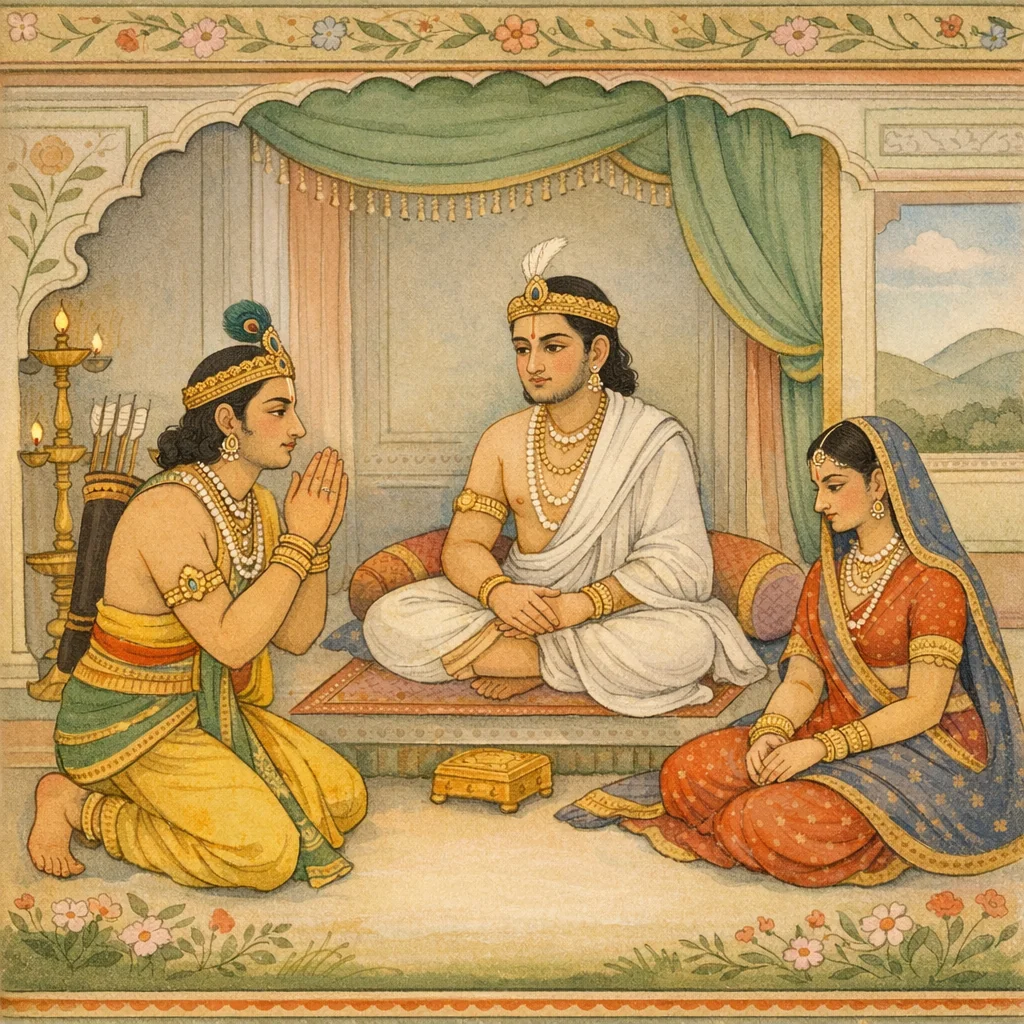
Vaiśaṃpāyana reports that Arjuna, permitted after discussion and with Vāsudeva’s awareness, proceeds toward Raivataka and prepares a richly equipped chariot. Subhadrā performs worship and auspicious rites, circumambulates the mountain, and departs toward Dvārakā; Arjuna rapidly approaches and places her onto the chariot, departing swiftly for his own city. Seeing Subhadrā being carried away, Dvārakā’s soldiery raises an alarm and reports to the Sudharmā assembly. The sabhāpāla sounds the war-drum; Bhoja-Vṛṣṇi-Andhaka leaders assemble, take seats, and hear the report of Arjuna’s action. Many react with anger and order immediate preparations—chariots, weapons, armor, horses—creating a crowded mobilization scene. Balarāma (Halāyudha), described as intoxicated and imposing, rebukes the group for unreflective outrage in Kṛṣṇa’s presence and instructs them to learn the ‘mahāmati’ Kṛṣṇa’s intention and then act accordingly. The assembly accepts the counsel, sits again, and a speaker (Kāmapāla) voices a grievance: Arjuna, honored due to Kṛṣṇa, is accused of repaying hospitality with affront and of forcibly taking Subhadrā, prompting vows of retaliation—setting the stage for negotiation versus escalation.
Chapter Arc: नियम-भंग का बोझ लेकर धनंजय धर्मराज से कहता है—मैंने आपको द्रौपदी के साथ देखकर प्रतिज्ञा तोड़ी; अब वनवास ही मेरा प्रायश्चित्त है। → पाँचों पाण्डवों और कृष्णा के बीच प्रेम, एकता और मर्यादा का सूक्ष्म संघर्ष उभरता है—एक ओर भ्रातृ-स्नेह रोकना चाहता है, दूसरी ओर क्षत्रिय-धर्म और वचन-पालन अर्जुन को आगे धकेलते हैं। साथ ही ‘राजा कर ले पर रक्षा न करे तो पापी’ जैसी उक्ति राज्य-धर्म की कठोर कसौटी याद दिलाती है, मानो यह अध्याय भी धर्म के लेखे-जोखे में बँधा हो। → अर्जुन का निर्णायक वचन—‘वनवासो गमिष्यामि… समयो हि नः कृतः’—और उसी क्षण उसका घर-गृहस्थी, भाई-बंधु, तथा द्रौपदी के निकट सुख को त्यागकर तीर्थयात्रा/वनगमन के लिए उठ खड़ा होना। → धर्मराज की आज्ञा/स्वीकृति के साथ अर्जुन का प्रस्थान निश्चित होता है; कथा का केंद्र अब हस्तिनापुर के अंतःपुर से हटकर वन, तीर्थ और यात्रा के अनुशासन पर टिक जाता है। → अर्जुन की तीर्थयात्रा में कौन-सा प्रसंग उसे महान अस्त्रों, मित्रताओं और आगामी संघर्षों की ओर ले जाएगा—यह प्रश्न अगले अध्यायों के लिए द्वार खोल देता है।
Shlokas
Verse 1
(दाक्षिणात्य अधिक पाठके ३ ३ “लोक मिलाकर कुल ३४३ श्लोक हैं) #सस्न का + (अमन (अर्जुनवनवासपर्व) दादशाधिकद्धिशततमो< ध्याय: अर्जुनके द्वारा ब्राह्मणके गोधनकी रक्षाके लिये नियमभंग और वनकी ओर प्रस्थान वैशम्पायन उवाच एवं ते समयं कृत्वा न्यवसंस्तत्र पाण्डवा: | वशे शस्त्रप्रतापेन कुर्वन्तो5न्यान् महीक्षित:,वैशम्पायनजी कहते हैं--जनमेजय! इस प्रकार नियम बनाकर पाण्डवलोग वहाँ रहने लगे। वे अपने अस्त्र-शस्त्रोंके प्रतापसे दूसरे राजाओंको अधीन करते रहते थे इस प्रकार श्रीमह्याभारत आदिपर्वके अन्तर्गत अर्जुनवनवासपर्वमें अर्जुनतीर्थयात्राविषयक दो सौ बारहवाँ अध्याय पूरा हुआ ॥/ २१२ ॥ (दाक्षिणात्य अधिक पाठका १ श्लोक मिलकर कुल ३६ श्लोक हैं) अपन क्ाता बछ। आर: 2 त्रयोदशाधिकदद्विशततमो< ध्याय: अर्जुनका गंगाद्वारमें ठहरना और वहाँ उनका उलूपीके साथ मिलन वैशम्पायन उवाच तं प्रयान््तं महाबाहुं कौरवाणां यशस्करम् | अनुजममुर्महात्मानो ब्राह्मणा वेदपारगा:
Vaiśampāyana said: “O Janamejaya, having thus established their agreed rule, the Pāṇḍavas dwelt there. By the might and awe of their weapons they kept other kings under control.”
Verse 2
तेषां मनुजसिंहानां पज्चानाममितौजसाम् | बभूव कृष्णा सर्वेषां पार्थानां वशवर्तिनी,कृष्णा मनुष्योंमें सिंहके समान वीर और अमित तेजस्वी उन पाँचों पाण्डवोंकी आज्ञाके अधीन रहती थी
Vaiśampāyana said: Among those five Pārthas—lion-like among men and of immeasurable prowess—Kṛṣṇā (Draupadī) lived in accordance with the will of them all, remaining under their guidance and authority.
Verse 3
ते तया तैश्व सा वीरै: पतिभि: सह पठ्चभि: । बभूव परमप्रीता नागैभोंगवती यथा,पाण्डव द्रौपदीके साथ और द्रौपदी उन पाँचों वीर पतियोंके साथ ठीक उसी तरह अत्यन्त प्रसन्न रहती थी जैसे नागोंके रहनेसे भोगवतीपुरी परम शोभायुक्त होती है
Vaiśampāyana said: With those five heroic husbands, she (Draupadī) lived in complete contentment—just as Bhogavatī, the splendid city of the Nāgas, becomes all the more radiant when filled with serpents.
Verse 4
वर्तमानेषु धर्मेण पाण्डवेषु महात्मसु । व्यवर्धन् कुरव: सर्वे हीनदोषा: सुखान्विता:,महात्मा पाण्डवोंके धर्मानुसार बर्ताव करनेके कारण समस्त कुरुवंशी निर्दोष एवं सुखी रहकर निरन्तर उन्नति करने लगे
Vaiśampāyana said: While the great-souled Pāṇḍavas were conducting themselves in accordance with dharma, all the Kurus prospered—free from faults and endowed with happiness.
Verse 5
अथ दीर्घेण कालेन ब्राह्मणस्य विशाम्पते । कस्यचित् तस्करा जहु: केचिद् गा नृपसत्तम,महाराज! तदनन्तर दीर्घकालके पश्चात् एक दिन कुछ चोरोंने किसी ब्राह्मणकी गौएँ चुरा लीं
Vaiśampāyana said: After a long time had passed, O lord of the people, some thieves carried off the cows of a certain brāhmaṇa, O best of kings.
Verse 6
ह्वियमाणे धने तस्मिन् ब्राह्मण: क्रोधमूर्च्छित: । आगम्य खाण्डवप्रस्थमुदक्रोशत् स पाण्डवान्,अपने गोधनका अपहरण होता देख ब्राह्मण अत्यन्त क़ुद्ध हो उठा और खाण्डवप्रस्थमें आकर उसने उच्चस्वरसे पाण्डवोंको पुकारा--
Vaiśampāyana said: As that wealth was being carried off, the brāhmaṇa, overcome by anger, came to Khāṇḍavaprastha and cried out loudly to the Pāṇḍavas.
Verse 7
हियते गोधन क्षुद्रेनशंसैरकृतात्मभि: । प्रसह चास्मद्विषयादभ्यधावत पाण्डवा:,“पाण्डवो! हमारे गाँवसे कुछ नीच, क्रूर और पापात्मा चोर जबरदस्ती गोधन चुराकर लिये जा रहे हैं। उसकी रक्षाके लिये दौड़ो
Vaiśaṃpāyana said: “Our cattle-wealth is being carried off by petty, cruel, and sinful men of uncontrolled nature. They are forcibly driving it away from our territory—run, O Pāṇḍavas, to protect it.”
Verse 8
ब्राह्मणस्य प्रशान्तस्य हविर्ध्वाड्क्षै: प्रलुप्पते । शार्दूलस्य गुहां शून्यां नीच: क्रोष्टाभिमर्दति,“आज एक शान्तस्वभाव ब्राह्मणका हविष्य कौए लूटकर खा रहे हैं। नीच सियार सिंहकी सूनी गुफाको रौंद रहा है
Vaiśampāyana said: “Today the sacrificial offering belonging to a peaceful, self-controlled brāhmaṇa is being snatched away and devoured by crows. A base jackal is trampling the empty cave of a tiger. Such reversals show a world where the unworthy grow bold when the worthy are unprotected, and where dharma appears eclipsed by disorder.”
Verse 9
अरक्षितारं राजानं बलिषड्भागहारिणम् | तमाहु: सर्वलोकस्य समग्र पापचारिणम्,“जो राजा प्रजाकी आयका छठा भाग करके रूपमें वसूल करता है, किंतु प्रजाकी रक्षाकी कोई व्यवस्था नहीं करता, उसे सम्पूर्ण लोकोंमें पूर्ण पापाचारी कहा गया है
Vaiśampāyana said: “A king who does not protect his subjects, yet takes the sixth share as tax/tribute, is declared to be a complete wrongdoer—sinful in the eyes of all the world.”
Verse 10
ब्राह्मणस्वे हते चौरैर्धर्मार्थे च विलोपिते । रोखूयमाणे च मयि क्रियतामस्त्रधारणम्,“मुझ ब्राह्मणका धन चोर लिये जा रहे हैं, मेरे गौके न रहनेपर दुग्ध आदि हविष्यके अभावसे धर्म और अर्थका लोप हो रहा है तथा मैं यहाँ आकर रो रहा हूँ। पाण्डवो! (चोरोंको दण्ड देनेके लिये) अस्त्र धारण करो”
Vaiśampāyana said: “When a brāhmaṇa’s property is being carried off by thieves, and when dharma and material welfare are being undermined—because, with my cow gone, there is no milk and other offerings for sacrifice—and when I have come here weeping, O Pāṇḍavas, take up weapons (to punish the thieves).”
Verse 11
वैशम्पायन उवाच रोरूयमाणस्याभ्याशे भृशं विप्रस्य पाण्डव: । तानि वाक्यानि शुश्राव कुन्तीपुत्रो धनंजय:
Vaiśaṃpāyana said: Near a Brahmin who was weeping bitterly, the Pāṇḍava—Kuntī’s son Dhanañjaya (Arjuna)—heard those words.
Verse 12
आयुधानि च यत्रासन् पाण्डवानां महात्मनाम्,महात्मा पाण्डवोंके अस्त्र-शस्त्र जहाँ रखे गये थे, वहीं धर्मराज युधिष्ठिर कृष्णाके साथ एकान्तमें बैठे थे। अतः पाण्डुपुत्र अर्जुन न तो घरके भीतर प्रवेश कर सकते थे और न खाली हाथ चोरोंका ही पीछा कर सकते थे
Vaiśaṃpāyana said: In the very place where the great-souled Pāṇḍavas’ weapons were kept, Dharmarāja Yudhiṣṭhira was seated in private with Kṛṣṇā (Draupadī). Therefore Arjuna, the son of Pāṇḍu, could neither enter the inner quarters of the house nor pursue the thieves empty-handed. The moment frames a moral dilemma: the duty to protect and recover what is stolen conflicts with the obligation to honor a pledged boundary and the privacy of one’s elders.
Verse 13
कृष्णया सह तत्रास्ते धर्मराजो युधिष्ठिर: । सम्प्रवेशाय चाशक्तो गमनाय च पाण्डव:,महात्मा पाण्डवोंके अस्त्र-शस्त्र जहाँ रखे गये थे, वहीं धर्मराज युधिष्ठिर कृष्णाके साथ एकान्तमें बैठे थे। अतः पाण्डुपुत्र अर्जुन न तो घरके भीतर प्रवेश कर सकते थे और न खाली हाथ चोरोंका ही पीछा कर सकते थे
Vaiśampāyana said: There, King Yudhiṣṭhira—the very embodiment of dharma—was seated in privacy together with Kṛṣṇā (Draupadī). Because of this, the Pāṇḍava (Arjuna) found himself unable either to enter the inner quarters (without violating the rule of privacy) or to go out in pursuit (since he could not take up his weapons). The moment highlights a moral dilemma where fidelity to a vow and respect for propriety collide with the urgent demands of protection and action.
Verse 14
तस्य चार्तस्य तैर्वाक्यैश्लोद्यमान: पुन: पुन: । आक्रन्दे तत्र कौन्तेयश्चिन्तयामास दु:खित:,इधर उस आर्त ब्राह्मणकी बातें उन्हें बार-बार शस्त्र ले आनेको प्रेरित कर रही थीं। जब वह अधिक रोने-चिल्लाने लगा, तब अर्जुनने दुःखी होकर सोचा--
Stirred again and again by the words of that afflicted brāhmaṇa, and as the lament there grew louder, the son of Kuntī (Arjuna), distressed at heart, began to reflect on what should be done.
Verse 15
हियमाणे धने तस्मिन् ब्राह्मणस्य तपस्विन: । अश्रुप्रमार्जनं तस्य कर्तव्यमिति निश्चय:,“इस तपस्वी ब्राह्मणके गोधनका अपहरण हो रहा है; अतः ऐसे समयमें इसके आँसू पोंछना मेरा कर्तव्य है। यही मेरा निश्चय है
As the wealth of that ascetic brāhmaṇa was being carried off, he resolved: “At such a moment, it is my duty to wipe away his tears. This is my firm decision.” The line frames compassion and protection of the vulnerable as an immediate obligation of dharma when injustice is occurring.
Verse 16
उपक्षेपणजो<धर्म: सुमहान् स्यान्महीपते: । यद्यस्य रुदतो द्वारि न करोम्यद्य रक्षणम्,“यदि मैं राजद्वारपर रोते हुए इस ब्राह्मणकी रक्षा आज नहीं करूँगा, तो महाराज युधिष्ठिरको उपेक्षाजनित महान् अधर्मका भागी होना पड़ेगा
Vaiśampāyana said: “O king, if today I do not protect this Brahmin who is weeping at the palace gate, then a very great unrighteousness—born of neglect—will fall upon the ruler.”
Verse 17
अनास्तिक्यं च सर्वेषामस्माकमपि रक्षणे | प्रतितिछेत लोके5स्मिन्नधर्मश्वैव नो भवेत्,“इसके सिवा लोकमें यह बात फैल जायगी कि हम सब लोग किसी आर्तकी रक्षारूप धर्मके पालनमें श्रद्धा नहीं रखते। साथ ही हमें अधर्म भी प्राप्तहोगा
And in this world it would become established that all of us—even in the matter of protecting one who seeks refuge—have no faith in the duty of protection. Thus, adharma would surely accrue to us as well.
Verse 18
अनादृत्य तु राजानं गते मयि न संशय: । अजाततशशत्रोर्नुपतेर्मम चैवानृतं भवेत्,“यदि राजाका अनादर करके मैं घरके भीतर चला जाऊँ, तो महाराज अजातशत्रुके प्रति मेरी प्रतिज्ञा मिथ्या होगी
Vaiśampāyana said: “If, disregarding the king, I were to go inside, there is no doubt that my word would become false—both with respect to King Ajātaśatru and with respect to myself. For to slight the ruler and withdraw would violate the pledged propriety of my conduct.”
Verse 19
अनुप्रवेशे राज्ञस्तु वनवासो भवेन्मम । सर्वमन्यत् परिद्वतं धर्षणात् तु महीपते:,“राजाकी उपस्थितिमें घरके भीतर प्रवेश करनेपर मुझको वनमें निवास करना होगा। इसमें महाराजके तिरस्कारके सिवा और सारी बातें तुच्छ होनेके कारण उपेक्षणीय हैं
Vaiśampāyana said: “If I enter the king’s presence (within the household), then exile to the forest will be my lot. Apart from the king’s affront, everything else is insignificant and therefore to be disregarded.”
Verse 20
अधर्मो वै महानस्तु वने वा मरणं मम । शरीरस्य विनाशेन धर्म एव विशिष्यते,“चाहे राजाके तिरस्कारसे मुझे नियमभंगका महान् दोष प्राप्त हो अथवा वनमें ही मेरी मृत्यु हो जाय तथापि शरीरको नष्ट करके भी गौ-ब्राह्मण-रक्षारूप धर्मका पालन ही श्रेष्ठ है!
Vaiśaṃpāyana said: “Let a great charge of unrighteousness befall me for breaking a rule due to a king’s contempt, or let me even die in the forest; even at the cost of this body’s destruction, the protection of dharma—especially the safeguarding of cows and brāhmaṇas—alone is the higher course.”
Verse 21
एवं विनिश्चित्य ततः कुन्तीपुत्रो धनंजय: । अनुप्रविश्य राजानमापृच्छय च विशाम्पते
Having thus reached a firm decision, Dhanañjaya—Kuntī’s son—then entered the king’s presence and, O lord of the people, respectfully took leave of him.
Verse 22
धनुरादाय संहृष्टो ब्राह्मणं प्रत्यभाषत । जनमेजय! ऐसा निश्चय करके कुन्तीकुमार धनंजयने राजासे पूछकर घरके भीतर प्रवेश करके धनुष ले लिया और (बाहर आकर) प्रसन्नतापूर्वक ब्राह्मणसे कहा-- || २१६ || ब्राह्मणागम्यतां शीघ्रं यावत् परधनैषिण:,“विप्रवर! शीघ्र आइये। जबतक दूसरोंके धन हड़पनेकी इच्छावाले वे क्षुद्र चोर दूर नहीं चले जाते, तभीतक हम दोनों एक साथ वहाँ पहुँच जायँ। मैं अभी आपका गोधन चोरोंके हाथसे छीनकर आपको लौटा देता हूँ
Vaiśampāyana said: Taking up his bow with delight, Arjuna addressed the brāhmaṇa. “O Janamejaya, having resolved thus, Kuntī’s son Dhanañjaya first asked the king’s leave, entered the house, and took the bow. Then, coming out, he spoke cheerfully to the brāhmaṇa: ‘Come quickly, revered brāhmaṇa—before those petty thieves who crave others’ wealth get far away. Let us reach the place together at once. I will immediately wrest your cattle from the thieves’ hands and restore it to you.’”
Verse 23
न दूरे ते गता: क्षुद्रास्तावद् गच्छावहे सह । यावन्निवर्तयाम्यद्य चौरहस्तादू धनं तव,“विप्रवर! शीघ्र आइये। जबतक दूसरोंके धन हड़पनेकी इच्छावाले वे क्षुद्र चोर दूर नहीं चले जाते, तभीतक हम दोनों एक साथ वहाँ पहुँच जायँ। मैं अभी आपका गोधन चोरोंके हाथसे छीनकर आपको लौटा देता हूँ
Vaiśampāyana said: “Those petty thieves have not yet gone far. Come—let us go together at once, before they get away. Today I will recover your wealth from the hands of the thieves and return it to you.” The passage frames swift, righteous action: the intent is not violence for its own sake, but the restoration of another’s property and the checking of greed-driven wrongdoing.
Verse 24
सो<नुसृत्य महाबाहुर्धन्वी वर्मी रथी ध्वजी । शरैर्विध्वस्य तांश्नौरानवजित्य च तद् धनम्,ऐसा कहकर महाबाहु अर्जुनने धनुष और कवच धारण करके ध्वजायुक्त रथपर आरूढ़ हो उन चोरोंका पीछा किया और बाणोंसे चोरोंका विनाश करके सारा गोधन जीत लिया
Vaiśampāyana said: Having pursued them, the mighty-armed Arjuna—bearing his bow, clad in armor, mounted on a chariot with its banner—shattered those thieves with his arrows and, having overcome them, recovered that wealth (the cattle).
Verse 25
ब्राह्म॒णं समुपाकृत्य यश: प्राप्प च पाण्डव: । ततस्तद् गोधन पार्थों दत्त्वा तस्मै द्विजातये,फिर ब्राह्मणको वह सारा गोधन देकर प्रसन्न करके अनुपम यशके भागी हो पाण्डुपुत्र सव्यसाची वीर धनंजय पुनः अपने नगरमें लौट आये। वहाँ आकर उन्होंने समस्त गुरुजनोंको प्रणाम किया और उन सभी गुरुजनोंने उनकी बड़ी प्रशंसा एवं अभिनन्दन किया
Vaiśampāyana said: Having duly approached and satisfied the brāhmaṇa, the Pāṇḍava attained renown. Then Pārtha, giving that entire wealth of cattle to the twice-born, pleased him and thereby won spotless fame—showing that honor gained through generosity and reverence for the learned is held superior to mere possession.
Verse 26
आजगाम पुरं वीर: सव्यसाची धनंजय: । सो5भिवाद्य गुरून् सर्वान् सर्वेश्वाप्पभिनन्दित:,फिर ब्राह्मणको वह सारा गोधन देकर प्रसन्न करके अनुपम यशके भागी हो पाण्डुपुत्र सव्यसाची वीर धनंजय पुनः अपने नगरमें लौट आये। वहाँ आकर उन्होंने समस्त गुरुजनोंको प्रणाम किया और उन सभी गुरुजनोंने उनकी बड़ी प्रशंसा एवं अभिनन्दन किया
Vaiśampāyana said: The heroic Dhanañjaya Arjuna, famed as Savyasācī, returned to his city. Having arrived, he paid respectful salutations to all his teachers and elders, and he was warmly praised and welcomed by them all—his conduct reflecting disciplined learning, gratitude, and the proper honoring of one’s gurus after accomplishing a task.
Verse 27
धर्मराजमुवाचेदं व्रतमादिश मे प्रभो । समय: समतिक्रान्तो भवत्संदर्शने मया
He addressed Dharmarāja: “O lord, instruct me in this vow. The appointed time has passed while I have been waiting for an audience with you.”
Verse 28
वनवासो गमिष्यामि समयो होष न: कृत: । इसके बाद अर्जुनने धर्मराजसे कहा--'प्रभो! मैंने आपको द्रौपदीके साथ देखकर पहलेके निश्चित नियमको भंग किया है; अत: आप इसके लिये मुझे प्रायश्रित्त करनेकी आज्ञा दीजिये। मैं वनवासके लिये जाऊँगा; क्योंकि हमलोगोंमें यह शर्त हो चुकी है” || २७ न्् इत्युक्तो धर्मराजस्तु सहसा वाक्यमप्रियम्,अर्जुनके मुखसे सहसा यह अप्रिय वचन सुनकर धर्मराज शोकातुर होकर लड़खड़ाती हुई वाणीमें बोले--'ऐसा क्यों करते हो?” इसके बाद राजा युधिष्ठिर धर्ममर्यादासे कभी च्युत न होनेवाले अपने भाई गुडाकेश धनंजयसे फिर दीन होकर बोले--“अनघ! यदि तुम मुझको प्रमाण मानते हो, तो मेरी यह बात सुनो--
Vaiśampāyana said: “I shall go to the forest; for this is the compact we have made.” Having spoken thus, Arjuna declared to Dharmarāja that, on seeing him with Draupadī, he had violated the previously fixed rule and therefore sought permission to perform expiation—choosing forest-exile as the penance, since such a condition had been agreed upon among them. Hearing this sudden and unwelcome speech from Arjuna, King Yudhiṣṭhira, stricken with grief, replied in a faltering voice, “Why do you act so?” Then the king, who never swerved from the boundaries of dharma, spoke again—now humbly—to his brother Guḍākeśa Dhanañjaya: “Blameless one, if you take me as your authority, then listen to what I say.”
Verse 29
कथमित्यब्रवीद् वाचा शोकार्त: सज्जमानया । युधिष्ठिरो गुडाकेशं भ्राता भ्रातरमच्युतम्,अर्जुनके मुखसे सहसा यह अप्रिय वचन सुनकर धर्मराज शोकातुर होकर लड़खड़ाती हुई वाणीमें बोले--'ऐसा क्यों करते हो?” इसके बाद राजा युधिष्ठिर धर्ममर्यादासे कभी च्युत न होनेवाले अपने भाई गुडाकेश धनंजयसे फिर दीन होकर बोले--“अनघ! यदि तुम मुझको प्रमाण मानते हो, तो मेरी यह बात सुनो--
Overcome with grief, Yudhiṣṭhira—his voice faltering—addressed his brother Guḍākeśa (Arjuna) and said, “Why do you act thus?” Having heard harsh and unwelcome words, the king, steadfast within the bounds of dharma, spoke again with humility, appealing to his brother’s sense of right conduct and rightful authority.
Verse 30
उवाच दीनो राजा च धनंजयमिदं वच: । प्रमाणमस्मि यदि ते मत्त: शृूणु वचोडनघ,अर्जुनके मुखसे सहसा यह अप्रिय वचन सुनकर धर्मराज शोकातुर होकर लड़खड़ाती हुई वाणीमें बोले--'ऐसा क्यों करते हो?” इसके बाद राजा युधिष्ठिर धर्ममर्यादासे कभी च्युत न होनेवाले अपने भाई गुडाकेश धनंजयसे फिर दीन होकर बोले--“अनघ! यदि तुम मुझको प्रमाण मानते हो, तो मेरी यह बात सुनो--
Then the king, distressed, spoke these words to Dhanañjaya (Arjuna): “If you regard me as an authority, O blameless one, then listen to what I say.”
Verse 31
अनुप्रवेशे यद् वीर कृतवांस्त्वं मम प्रियम् । सर्व तदनुजानामि व्यलीक॑ न च मे हृदि,“वीरवर! तुमने घरके भीतर प्रवेश करके तो मेरा प्रिय कार्य किया है, अतः उसके लिये मैं तुम्हें आज्ञा देता हूँ; क्योंकि मेरे हृदयमें वह अप्रिय नहीं है
Vaiśampāyana said: “O hero, by entering within you have done what is pleasing to me. Therefore I grant my full consent to that act; for in my heart there is no displeasure or resentment about it.”
Verse 32
गुरोरनुप्रवेशो हि नोपघातो यवीयस: । यवीयसोअबनुप्रवेशो ज्येष्ठस्य विधिलोपक:,'यदि बड़ा भाई घरमें स्त्रीके साथ बैठा हो, तो छोटे भाईका वहाँ जाना दोषकी बात नहीं है; परंतु छोटा भाई घरमें हो, तो बड़े भाईका वहाँ जाना उसके धर्मका नाश करनेवाला है
Vaiśampāyana said: “When the elder brother enters where the younger is, it is not counted as an offence against the younger. But when the younger enters the elder’s private space, it becomes a breach that undermines the elder’s due order and propriety.”
Verse 33
निवर्तस्व महाबाहो कुरुष्व वचनं मम । न हि ते धर्मलोपो$5स्ति न च ते धर्षणा कृता,“अतः महाबाहो! मेरी बात मानो; वनवासका विचार छोड़ दो। न तो तुम्हारे धर्मका लोप हुआ है और न तुम्हारे द्वारा मेरा तिरस्कार ही किया गया है'
Vaiśampāyana said: “Turn back, O mighty-armed one, and do as I ask. Your dharma has not been diminished, nor have you shown me any disrespect. Therefore abandon the thought of going into forest-exile.”
Verse 34
अर्जुन उवाच न व्याजेन चरेद् धर्ममिति मे भवतः श्रुतम् । न सत्याद् विचलिष्यामि सत्येनायुधभालभे,अर्जुन बोले--प्रभो! मैंने आपके ही मुखसे सुना है कि धर्माचरणमें कभी बहानेबाजी नहीं करनी चाहिये। अतः मैं सत्यकी शपथ खाकर और शस्त्र छूकर कहता हूँ कि सत्यसे विचलित नहीं होऊँगा
Arjuna said: “I have heard from your own lips that one should not practice dharma through pretexts or evasions. Therefore, taking an oath to truth and touching my weapons, I declare that I will not swerve from truth.”
Verse 35
(आज्ञा तु मम दातव्या भवता कीर्तिवर्धन | भवदाज्ञामृते किंचिन्न कार्यमिति निश्चितम् ।।) यशोवर्धन! मुझे आप वनवासके लिये आज्ञा दें, मेरा यह निश्चय है कि मैं आपकी आज्ञाके बिना कोई कार्य नहीं करूँगा ।। वैशम्पायन उवाच सो<भ्यनुज्ञाय राजानं वनचर्याय दीक्षित: । वने द्वादश वर्षाणि वासायानुजगाम ह,वैशम्पायनजी कहते हैं--जनमेजय! राजाकी आज्ञा लेकर अर्जुनने वनवासकी दीक्षा ली और वनमें बारह वर्षोंतक रहनेके लिये वे वहाँसे चल पड़े
“O increaser of fame, you must grant me your permission. I am firmly resolved that I will undertake no action without your command.” Vaiśampāyana said: Having obtained the king’s consent, Arjuna took up the vow of forest-dwelling and set out to live in the wilderness for twelve years.
Verse 113
श्रुत्वैव च महाबाहुर्मा भैरित्याह त॑ द्विजम् । वैशम्पायनजी कहते हैं--जनमेजय! वह ब्राह्मण निकट आकर बहुत रो रहा था। पाण्डुपुत्र कुन्तीनन्दन धनंजयने उसकी कही हुई सारी बातें सुनीं और सुनकर उन महाबाहुने उस ब्राह्मणसे कहा--'डरो मत”
Vaiśampāyana said: As soon as he had heard him, the mighty-armed hero addressed that brāhmaṇa, saying, “Do not be afraid.”
Verse 211
इस प्रकार श्रीमहाभारत आदिपव॑के अन्तर्गत विदुरागमनराज्यम्भपर्वमें युन्दोपयुन्दोपाख्यानविषयक दो सौ ग्यारहवाँ अध्याय पूरा हुआ
Thus ends the two-hundred-and-eleventh chapter of the Ādi Parva of the Śrī Mahābhārata, within the sub-section concerning Vidura’s arrival and related royal matters, dealing with the episode (upākhyāna) of Yunda and Upayunda. This closing colophon marks the completion of that narrative unit, signaling a transition to the next portion of the text.
Verse 212
इति श्रीमहाभारते आदिपर्वणि अर्जुनवनवासपर्वणि अर्जुनतीर्थयात्रायां दादशाधिकद्विशततमो< ध्याय:
Thus ends the two-hundred-and-twelfth chapter of the Ādi Parva of the Śrī Mahābhārata, within the section on Arjuna’s exile in the forest, specifically the account of Arjuna’s pilgrimage to sacred fords. The colophon signals the completion of this unit of narration, framing Arjuna’s wandering as a disciplined, dharma-oriented journey of purification and preparation.
Frequently Asked Questions
The chapter frames a conflict between perceived dishonor (hospitality and kinship expectations in Dvārakā) and the legitimacy of Arjuna’s action as an alliance-forming marriage move, raising questions of consent, procedure, and retaliatory justice.
Collective action should be preceded by epistemic discipline: ascertain intent, context, and legitimate authority (here, Kṛṣṇa’s stance) before escalating a dispute into organized retaliation.
No explicit phalaśruti appears in this passage; its meta-function is narrative: it models how institutional deliberation and senior counsel can interrupt rapid escalation in a kinship-political crisis.