Adhyaya 11
Lord Rāmacandra’s Charity, Sītā’s Departure, and the Lord’s Return to Vaikuṇṭha
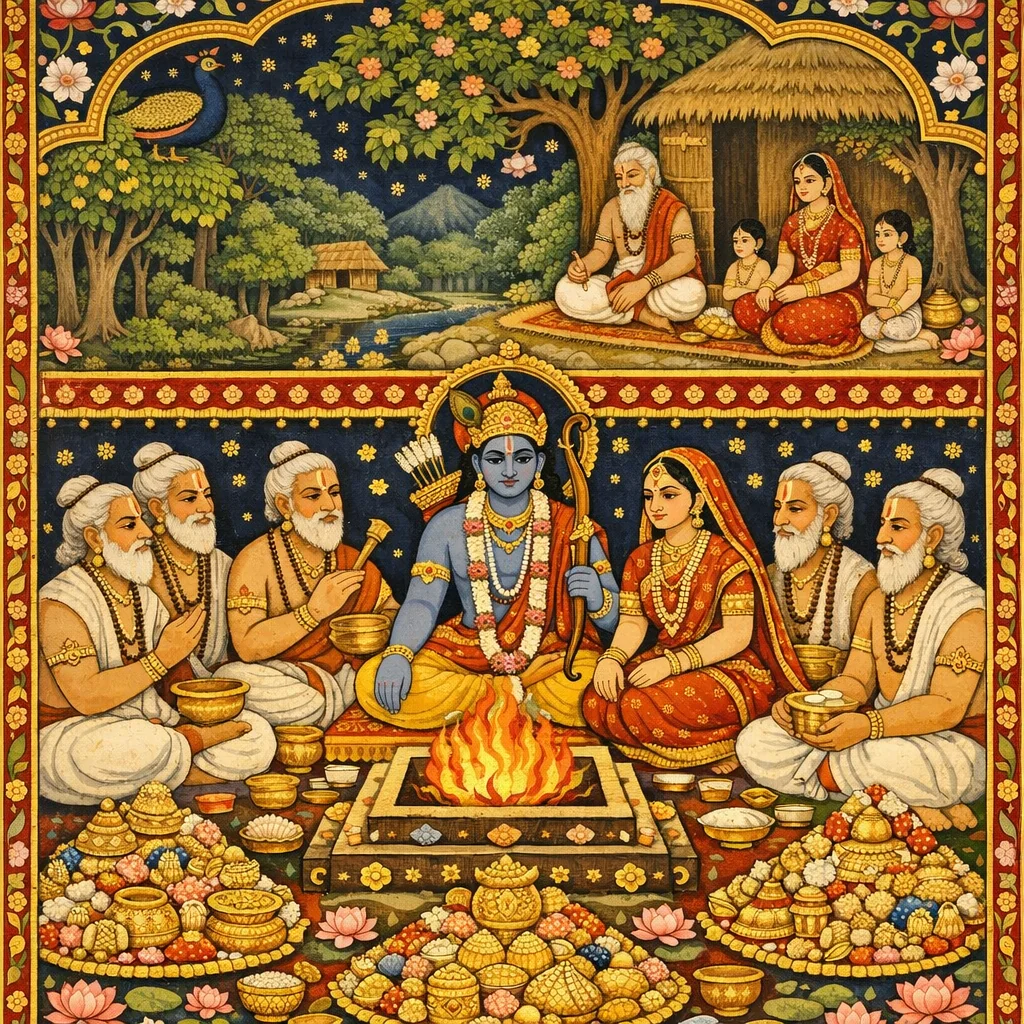
After the establishment of Rāma-rājya and the Lord’s exemplary rule in the Solar dynasty, this chapter describes Lord Rāmacandra performing magnificent yajñas under an ācārya and giving the four directions of His kingdom as dakṣiṇā, ultimately offering everything to the brāhmaṇas—showing that the Supreme Lord worships Himself while teaching ideal charity and detachment. The brāhmaṇas, satisfied by the true gift—illumination of the heart—return the wealth and praise His supremacy. The narrative then turns to a social episode: Rāma, in disguise, hears public criticism of Sītā; to protect the perceived integrity of royal dharma amid ignorant gossip, He abandons the pregnant Sītā. She takes shelter in Vālmīki’s āśrama and gives birth to Lava and Kuśa. The chapter also notes dynastic expansion through the sons of Lakṣmaṇa, Bharata, and Śatrughna, including Śatrughna’s slaying of Lavaṇa and the founding of Mathurā. Sītā, meditating on Rāma, enters the earth; Rāma manifests transcendental grief, remains celibate, performs prolonged Agnihotra, and finally returns to His own abode, Vaikuṇṭha, beyond the brahmajyoti. The chapter closes by extolling Rāma’s spotless fame and the liberating power of hearing His līlā, leading into Parīkṣit’s next inquiry about Rāma’s conduct toward His brothers and the citizens’ relationship with Him.
Shlokas
Verse 1
श्रीशुक उवाच भगवानात्मनात्मानं राम उत्तमकल्पकै: । सर्वदेवमयं देवमीजेऽथाचार्यवान् मखै: ॥ १ ॥
Śukadeva Gosvāmī said: Thereafter, Bhagavān Lord Rāmacandra accepted an ācārya and performed yajñas with splendid paraphernalia. Being the Supreme Lord of all devas, He thus worshiped Himself.
Verse 2
होत्रेऽददाद् दिशं प्राचीं ब्रह्मणे दक्षिणां प्रभु: । अध्वर्यवे प्रतीचीं वा उत्तरां सामगाय स: ॥ २ ॥
Lord Rāmacandra gave the entire east to the hotā priest, the south to the brahmā priest, the west to the adhvaryu priest, and the north to the udgātā, the chanter of the Sāma Veda. Thus He donated His kingdom.
Verse 3
आचार्याय ददौ शेषां यावती भूस्तदन्तरा । मन्यमान इदं कृत्स्नं ब्राह्मणोऽर्हति नि:स्पृह: ॥ ३ ॥
Thereafter, thinking that desireless brāhmaṇas are worthy of the whole world, Lord Rāmacandra gave to the ācārya all the land that remained between east, west, north, and south.
Verse 4
इत्ययं तदलङ्कारवासोभ्यामवशेषित: । तथा राज्ञ्यपि वैदेही सौमङ्गल्यावशेषिता ॥ ४ ॥
After giving everything in charity to the brāhmaṇas, Lord Rāmacandra kept only His own garments and ornaments. Similarly, Queen Vaidehī, Mother Sītā, was left with only her auspicious nose ornament, and nothing else.
Verse 5
ते तु ब्राह्मणदेवस्य वात्सल्यं वीक्ष्य संस्तुतम् । प्रीता: क्लिन्नधियस्तस्मै प्रत्यर्प्येदं बभाषिरे ॥ ५ ॥
All the brāhmaṇas engaged in the sacrificial duties, seeing the praised fatherly affection of Lord Rāmacandra—so favorable to the brāhmaṇas—became delighted. With hearts melted in devotion, they returned the wealth received from Him and spoke as follows.
Verse 6
अप्रत्तं नस्त्वया किं नु भगवन् भुवनेश्वर । यन्नोऽन्तर्हृदयं विश्य तमो हंसि स्वरोचिषा ॥ ६ ॥
O Bhagavān, Lord of the universe, what have You not given us? You have entered the innermost heart and, by Your own effulgence, dispelled the darkness of ignorance—this is the supreme gift; we need no material charity.
Verse 7
नमो ब्रह्मण्यदेवाय रामायाकुण्ठमेधसे । उत्तमश्लोकधुर्याय न्यस्तदण्डार्पिताङ्घ्रये ॥ ७ ॥
Obeisances to Brahmaṇya-deva, Lord Rāma, whose wisdom is never disturbed by anxiety. You are foremost among those praised by sublime hymns; sages beyond the reach of punishment lay down their staff and worship Your lotus feet. We bow to You.
Verse 8
कदाचिल्लोकजिज्ञासुर्गूढो रात्र्यामलक्षित: । चरन्वाचोऽशृणोद् रामो भार्यामुद्दिश्य कस्यचित् ॥ ८ ॥
Śukadeva Gosvāmī continued: Once, desiring to learn the people’s opinion, Lord Rāma walked at night incognito, hidden by a disguise. Then He heard a man speaking unfavorably about His consort, Sītādevī.
Verse 9
नाहं बिभर्मि त्वां दुष्टामसतीं परवेश्मगाम् । स्त्रैणो हि बिभृयात् सीतां रामो नाहं भजे पुन: ॥ ९ ॥
[The man said to his unchaste wife] You go to another man’s house; therefore you are unfaithful and defiled. I will not maintain you anymore. Only a henpecked husband would accept a wife like Sītā—Rāma did so; but I am not like him, and thus I will not take you back again.
Verse 10
इति लोकाद् बहुमुखाद् दुराराध्यादसंविद: । पत्या भीतेन सा त्यक्ता प्राप्ता प्राचेतसाश्रमम् ॥ १० ॥
Śukadeva Gosvāmī said: Men of meager knowledge and wicked character speak senselessly from many mouths. Fearing such miscreants, Lord Rāmacandra abandoned Sītādevī even though she was pregnant; thus Sītā reached the āśrama of Vālmīki Muni, the son of Prācetas.
Verse 11
अन्तर्वत्न्यागते काले यमौ सा सुषुवे सुतौ । कुशो लव इति ख्यातौ तयोश्चक्रे क्रिया मुनि: ॥ ११ ॥
When the time arrived, the pregnant mother Sītādevī gave birth to twin sons, later renowned as Lava and Kuśa. Vālmīki Muni performed the birth rites and sacred ceremonies for them.
Verse 12
अङ्गदश्चित्रकेतुश्च लक्ष्मणस्यात्मजौ स्मृतौ । तक्ष: पुष्कल इत्यास्तां भरतस्य महीपते ॥ १२ ॥
O Mahārāja Parīkṣit, Lakṣmaṇa had two sons, remembered as Aṅgada and Citraketu. And, O king, Bharata also had two sons, named Takṣa and Puṣkala.
Verse 13
सुबाहु: श्रुतसेनश्च शत्रुघ्नस्य बभूवतु: । गन्धर्वान् कोटिशो जघ्ने भरतो विजये दिशाम् ॥ १३ ॥ तदीयं धनमानीय सर्वं राज्ञे न्यवेदयत् । शत्रुघ्नश्च मधो: पुत्रं लवणं नाम राक्षसम् । हत्वा मधुवने चक्रे मथुरां नाम वै पुरीम् ॥ १४ ॥
Śatrughna had two sons, Subāhu and Śrutasena. During Bharata’s conquest of the directions, he slew many millions of Gandharvas and brought their wealth to offer it all to King Rāmacandra. Śatrughna also killed the rākṣasa Lavaṇa, son of Madhu, and thus founded the city called Mathurā within the great forest of Madhuvana.
Verse 14
सुबाहु: श्रुतसेनश्च शत्रुघ्नस्य बभूवतु: । गन्धर्वान् कोटिशो जघ्ने भरतो विजये दिशाम् ॥ १३ ॥ तदीयं धनमानीय सर्वं राज्ञे न्यवेदयत् । शत्रुघ्नश्च मधो: पुत्रं लवणं नाम राक्षसम् । हत्वा मधुवने चक्रे मथुरां नाम वै पुरीम् ॥ १४ ॥
Śatrughna had two sons, Subāhu and Śrutasena. During Bharata’s conquest of the directions, he slew many millions of Gandharvas and brought their wealth to offer it all to King Rāmacandra. Śatrughna also killed the rākṣasa Lavaṇa, son of Madhu, and thus founded the city called Mathurā within the great forest of Madhuvana.
Verse 15
मुनौ निक्षिप्य तनयौ सीता भर्त्रा विवासिता । ध्यायन्ती रामचरणौ विवरं प्रविवेश ह ॥ १५ ॥
Forsaken by her husband, Sītādevī entrusted her two sons to Vālmīki Muni’s care. Then, meditating upon the lotus feet of Lord Rāmacandra, she entered into the earth.
Verse 16
तच्छ्रुत्वा भगवान् रामो रुन्धन्नपि धिया शुच: । स्मरंस्तस्या गुणांस्तांस्तान्नाशक्नोद् रोद्धुमीश्वर: ॥ १६ ॥
Hearing that mother Sītā had entered the earth, Bhagavān Śrī Rāma was stricken with grief. Though the Supreme Lord, as He remembered Sītā’s exalted virtues, He could not restrain His sorrow born of transcendental love.
Verse 17
स्त्रीपुंप्रसङ्ग एतादृक्सर्वत्र त्रासमावह: । अपीश्वराणां किमुत ग्राम्यस्य गृहचेतस: ॥ १७ ॥
Attraction between man and woman is found everywhere and brings fear. It becomes a cause of anxiety even for rulers like Brahmā and Lord Śiva—what then of those whose minds are bound to worldly household life?
Verse 18
तत ऊर्ध्वं ब्रह्मचर्यं धार्यन्नजुहोत् प्रभु: । त्रयोदशाब्दसाहस्रमग्निहोत्रमखण्डितम् ॥ १८ ॥
Thereafter, Lord Rāmacandra observed perfect celibacy and performed the Agnihotra sacrifice uninterruptedly for thirteen thousand years.
Verse 19
स्मरतां हृदि विन्यस्य विद्धं दण्डककण्टकै: । स्वपादपल्लवं राम आत्मज्योतिरगात् तत: ॥ १९ ॥
After completing the sacrifice, Lord Rāmacandra—whose lotus feet were at times pierced by thorns in Daṇḍakāraṇya—placed those feet within the hearts of those who always remember Him. Then He entered His own abode, Vaikuṇṭha, beyond the brahmajyoti.
Verse 20
नेदं यशो रघुपते: सुरयाच्ञयात्त- लीलातनोरधिकसाम्यविमुक्तधाम्न: । रक्षोवधो जलधिबन्धनमस्त्रपूगै: किं तस्य शत्रुहनने कपय: सहाया: ॥ २० ॥
His fame for slaying Rāvaṇa with showers of arrows at the demigods’ request and for building a bridge across the ocean is not the Lord’s true glory. Raghu-pati Lord Rāmacandra’s spiritual form is ever absorbed in divine pastimes, and none is equal to or greater than Him; therefore, what need had He of the monkeys’ help in destroying His enemy?
Verse 21
यस्यामलं नृपसद:सु यशोऽधुनापि गायन्त्यघघ्नमृषयो दिगिभेन्द्रपट्टम् । तं नाकपालवसुपालकिरीटजुष्ट- पादाम्बुजं रघुपतिं शरणं प्रपद्ये ॥ २१ ॥
His spotless name and fame, which destroy sin, are sung in all directions like the victory-cloth of a conquering elephant. Even now sages such as Mārkaṇḍeya Ṛṣi glorify Him in royal assemblies, and Śiva, Brahmā, and saintly kings bow their crowned heads to worship the lotus feet of Raghu-pati. I take shelter of those feet.
Verse 22
स यै: स्पृष्टोऽभिदृष्टो वा संविष्टोऽनुगतोऽपि वा । कोसलास्ते ययु: स्थानं यत्र गच्छन्ति योगिन: ॥ २२ ॥
All the people of Kosala—those who touched the Lord, beheld Him, sat or lay with Him, or even merely followed Him—went to that abode attained by bhakti-yogīs, for Śrī Rāmacandra returned to His supreme dhāma.
Verse 23
पुरुषो रामचरितं श्रवणैरुपधारयन् । आनृशंस्यपरो राजन् कर्मबन्धैर्विमुच्यते ॥ २३ ॥
O King Parīkṣit, whoever hears with attentive ears the narrations of Lord Rāmacandra’s divine pastimes and holds them within the heart becomes free from the disease of envy and is released from the bondage of karma.
Verse 24
श्रीराजोवाच कथं स भगवान् रामो भ्रातृन् वा स्वयमात्मन: । तस्मिन् वा तेऽन्ववर्तन्त प्रजा: पौराश्च ईश्वरे ॥ २४ ॥
Mahārāja Parīkṣit asked: How did the Supreme Lord Rāma conduct Himself, and how did He relate to His brothers, who were expansions of His own Self? And how did those brothers, along with the citizens and people of Ayodhyā, behave toward that Īśvara?
Verse 25
श्रीबादरायणिरुवाच अथादिशद् दिग्विजये भ्रातृंस्त्रिभुवनेश्वर: । आत्मानं दर्शयन् स्वानां पुरीमैक्षत सानुग: ॥ २५ ॥
Śrī Śukadeva said: Having accepted the throne at Bharata’s earnest request, Lord Rāmacandra, ruler of the three worlds, ordered His younger brothers to conquer all directions; while He Himself remained in the capital with His attendants, granting audience to the citizens and overseeing the affairs of government.
Verse 26
आसिक्तमार्गां गन्धोदै: करिणां मदशीकरै: । स्वामिनं प्राप्तमालोक्य मत्तां वा सुतरामिव ॥ २६ ॥
During Lord Rāmacandra’s reign, Ayodhyā’s streets were sprinkled with fragrant water and with perfumed drops of liquor cast about by elephants from their trunks. Seeing the Lord personally supervising the city’s affairs in such splendor, the citizens greatly relished that opulence.
Verse 27
प्रासादगोपुरसभाचैत्यदेवगृहादिषु । विन्यस्तहेमकलशै: पताकाभिश्च मण्डिताम् ॥ २७ ॥
The palaces, palace gates, assembly halls, meeting platforms, temples, and all such places were adorned with golden waterpots and decorated with many kinds of flags.
Verse 28
पूगै: सवृन्तै रम्भाभि: पट्टिकाभि: सुवाससाम् । आदर्शैरंशुकै: स्रग्भि: कृतकौतुकतोरणाम् ॥ २८ ॥
Wherever Lord Rāmacandra went, auspicious welcome gates were raised with banana trees and betel-nut palms bearing their clusters, rich with flowers and fruits. The gates were adorned with colorful cloth flags and decorations, with mirrors and garlands.
Verse 29
तमुपेयुस्तत्र तत्र पौरा अर्हणपाणय: । आशिषो युयुजुर्देव पाहीमां प्राक्त्वयोद्धृताम् ॥ २९ ॥
Wherever Lord Rāmacandra went, the townspeople approached Him with worshipful offerings and begged for blessings, saying, “O Deva, protect us! As in Your Varāha incarnation You once lifted the earth from the ocean’s depths, so now sustain and preserve it; bestow Your grace upon us.”
Verse 30
तत: प्रजा वीक्ष्य पतिं चिरागतं दिदृक्षयोत्सृष्टगृहा: स्त्रियो नरा: । आरुह्य हर्म्याण्यरविन्दलोचन- मतृप्तनेत्रा: कुसुमैरवाकिरन् ॥ ३० ॥
Thereafter, having long been without the Lord’s sight, the citizens—men and women—eager for His darśana, left their homes and climbed upon the palace rooftops. Their eyes, still unsated by the vision of lotus-eyed Śrī Rāmacandra’s face, showered Him with flowers.
Verse 31
अथ प्रविष्ट: स्वगृहं जुष्टं स्वै: पूर्वराजभि: । अनन्ताखिलकोषाढ्यमनर्घ्योरुपरिच्छदम् ॥ ३१ ॥ विद्रुमोदुम्बरद्वारैर्वैदूर्यस्तम्भपङ्क्तिभि: । स्थलैर्मारकतै: स्वच्छैर्भ्राजत्स्फटिकभित्तिभि: ॥ ३२ ॥ चित्रस्रग्भि: पट्टिकाभिर्वासोमणिगणांशुकै: । मुक्ताफलैश्चिदुल्लासै: कान्तकामोपपत्तिभि: ॥ ३३ ॥ धूपदीपै: सुरभिभिर्मण्डितं पुष्पमण्डनै: । स्त्रीपुम्भि: सुरसङ्काशैर्जुष्टं भूषणभूषणै: ॥ ३४ ॥
Thereafter, Śrī Rāmacandra entered His ancestral palace, honored by the kings of old. It abounded in countless treasuries and was furnished with priceless and majestic appointments.
Verse 32
अथ प्रविष्ट: स्वगृहं जुष्टं स्वै: पूर्वराजभि: । अनन्ताखिलकोषाढ्यमनर्घ्योरुपरिच्छदम् ॥ ३१ ॥ विद्रुमोदुम्बरद्वारैर्वैदूर्यस्तम्भपङ्क्तिभि: । स्थलैर्मारकतै: स्वच्छैर्भ्राजत्स्फटिकभित्तिभि: ॥ ३२ ॥ चित्रस्रग्भि: पट्टिकाभिर्वासोमणिगणांशुकै: । मुक्ताफलैश्चिदुल्लासै: कान्तकामोपपत्तिभि: ॥ ३३ ॥ धूपदीपै: सुरभिभिर्मण्डितं पुष्पमण्डनै: । स्त्रीपुम्भि: सुरसङ्काशैर्जुष्टं भूषणभूषणै: ॥ ३४ ॥
On either side of the doorway were seats fashioned of coral; the courtyards were encircled by rows of vaidūrya-maṇi pillars; the floor was of clear, polished marakata-maṇi, and the walls shone like radiant crystal.
Verse 33
अथ प्रविष्ट: स्वगृहं जुष्टं स्वै: पूर्वराजभि: । अनन्ताखिलकोषाढ्यमनर्घ्योरुपरिच्छदम् ॥ ३१ ॥ विद्रुमोदुम्बरद्वारैर्वैदूर्यस्तम्भपङ्क्तिभि: । स्थलैर्मारकतै: स्वच्छैर्भ्राजत्स्फटिकभित्तिभि: ॥ ३२ ॥ चित्रस्रग्भि: पट्टिकाभिर्वासोमणिगणांशुकै: । मुक्ताफलैश्चिदुल्लासै: कान्तकामोपपत्तिभि: ॥ ३३ ॥ धूपदीपै: सुरभिभिर्मण्डितं पुष्पमण्डनै: । स्त्रीपुम्भि: सुरसङ्काशैर्जुष्टं भूषणभूषणै: ॥ ३४ ॥
The palace was adorned with variegated garlands, banners and festoons, and with garments woven with clusters of gems. Pearls that stirred delight, and charming, desirable furnishings, made it shine all the more.
Verse 34
अथ प्रविष्ट: स्वगृहं जुष्टं स्वै: पूर्वराजभि: । अनन्ताखिलकोषाढ्यमनर्घ्योरुपरिच्छदम् ॥ ३१ ॥ विद्रुमोदुम्बरद्वारैर्वैदूर्यस्तम्भपङ्क्तिभि: । स्थलैर्मारकतै: स्वच्छैर्भ्राजत्स्फटिकभित्तिभि: ॥ ३२ ॥ चित्रस्रग्भि: पट्टिकाभिर्वासोमणिगणांशुकै: । मुक्ताफलैश्चिदुल्लासै: कान्तकामोपपत्तिभि: ॥ ३३ ॥ धूपदीपै: सुरभिभिर्मण्डितं पुष्पमण्डनै: । स्त्रीपुम्भि: सुरसङ्काशैर्जुष्टं भूषणभूषणै: ॥ ३४ ॥
The palace was adorned with fragrant incense and lamps, and beautified with floral decorations. Within, men and women, radiant like the devas, wore many ornaments—made lovelier still by resting upon their bodies.
Verse 35
तस्मिन्स भगवान् राम: स्निग्धया प्रिययेष्टया । रेमे स्वारामधीराणामृषभ: सीतया किल ॥ ३५ ॥
In that palace, Lord Bhagavān Śrī Rāmacandra, foremost among the learned, dwelt with Śrī Sītā, His beloved pleasure potency, and enjoyed perfect peace.
Verse 36
बुभुजे च यथाकालं कामान् धर्ममपीडयन् । वर्षपूगान् बहून् नृणामभिध्याताङ्घ्रिपल्लव: ॥ ३६ ॥
Without violating dharma, Lord Śrī Rāmacandra—whose lotus feet are worshiped by devotees in meditation—enjoyed all transcendental pleasures in due course for many years.
Frequently Asked Questions
The episode presents the ideal of yajña with complete dakṣiṇā, demonstrating that a perfect king sees all opulence as Bhagavān’s trust and uses it for dharma. The Bhāgavatam also reveals a deeper theology: the Lord is the Supreme of all devas, so His worship and giving teach by example—showing vairāgya (detachment) and the supremacy of devotion over possession.
The text frames the criticism as arising from “men with a poor fund of knowledge,” yet it depicts Rāma acting to uphold the perceived standard of rāja-dharma and protect the moral authority of the throne in the eyes of society. In Bhāgavata theology, this is līlā in which the Lord models the gravity of leadership and the consequences of public cynicism, while Sītā remains spiritually spotless and sheltered by Vālmīki.
Lava and Kuśa are the twin sons born to Sītā in Vālmīki’s āśrama, with their saṁskāras performed by Vālmīki. They represent the continuation of the Solar dynasty narrative (vaṁśānucarita) and anchor Sītā’s vindicated sanctity within a sacred setting rather than within contested public opinion.
The chapter states that, meditating on Lord Rāmacandra’s lotus feet, Sītā entered into the earth—signifying her return to her divine source (Bhū-devī/earth) and her transcendence beyond worldly accusation. It functions as a theological closure: her purity is not adjudicated by society but affirmed by her divine departure.
The text says He enters His own abode, Vaikuṇṭha, beyond the brahmajyoti. ‘Brahmajyoti’ refers to the impersonal spiritual effulgence; ‘beyond’ indicates the personal realm where Bhagavān’s form, qualities, and līlā are fully manifest—attained by bhakti-yogīs.
The Bhāgavatam states that aural reception (śravaṇa) of Rāma-kathā cures matsarya (envy), which is a root disease of conditioned life, and thereby loosens bondage to karma (fruitive reactions). Hearing the Lord’s spotless fame reorients the heart from rivalry and suspicion toward reverence, gratitude, and devotion.