Vamana Purana
वामनपुराण
The Purana of the Dwarf Avatar
The story of Vishnu's Vamana avatara — from the cosmic three steps that bound King Bali to the Trivikrama theophany, woven with Shaiva-Vaishnava syncretism and tirtha-mahatmya.
Start ReadingAbout This Book
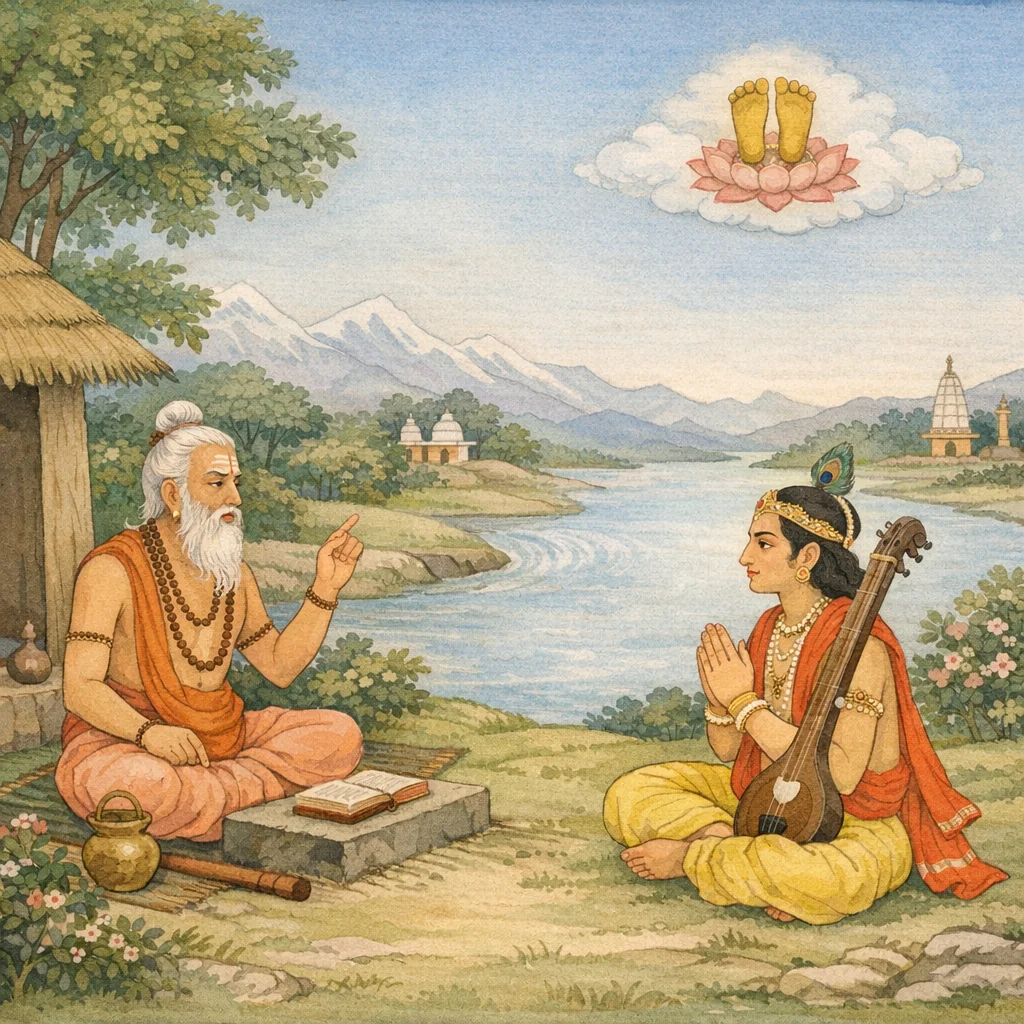
The Vamana Purana is one of the eighteen Mahapuranas, narrated by the sage Pulastya to Narada. It centres on the story of Lord Vishnu's fifth avatar, Vamana — the divine dwarf who approached the generous King Bali during a great sacrifice, asked for three steps of land, and then expanded into the cosmic Trivikrama form covering the three worlds. Beyond the central Vamana narrative, this Purana is remarkable for its Shaiva-Vaishnava syncretism (Harihara theology), extensive tirtha-mahatmya sections covering Kurukshetra and other sacred sites, Devi mythology including the Katyayani-Mahishasura cycle, and detailed cosmographic and dharmic teachings across 69 adhyayas and approximately 7,679 verses.
How This Book Is Organised
The Vamana Purana is a two-level text: 69 Adhyayas (chapters), each containing individual Shlokas (verses).
Adhyayas
69 chapters spanning cosmology, mythology, and theology
Shlokas
~7,679 verses read one by one
Available Reading Features
This edition of the Vamana Purana on Vedapath includes:

Original Sanskrit verses (Devanagari)

Transliteration for guided reading

Word-by-word meanings

Translations in 30 languages

Vamana avatara context and Harihara theology
Adhyayas of the Vamana Purana
The Vamana Purana is divided into 69 Adhyayas.
Each Adhyaya explores narratives spanning Vishnu's avatara, Shaiva mythology, Devi legends, and tirtha-mahatmya.
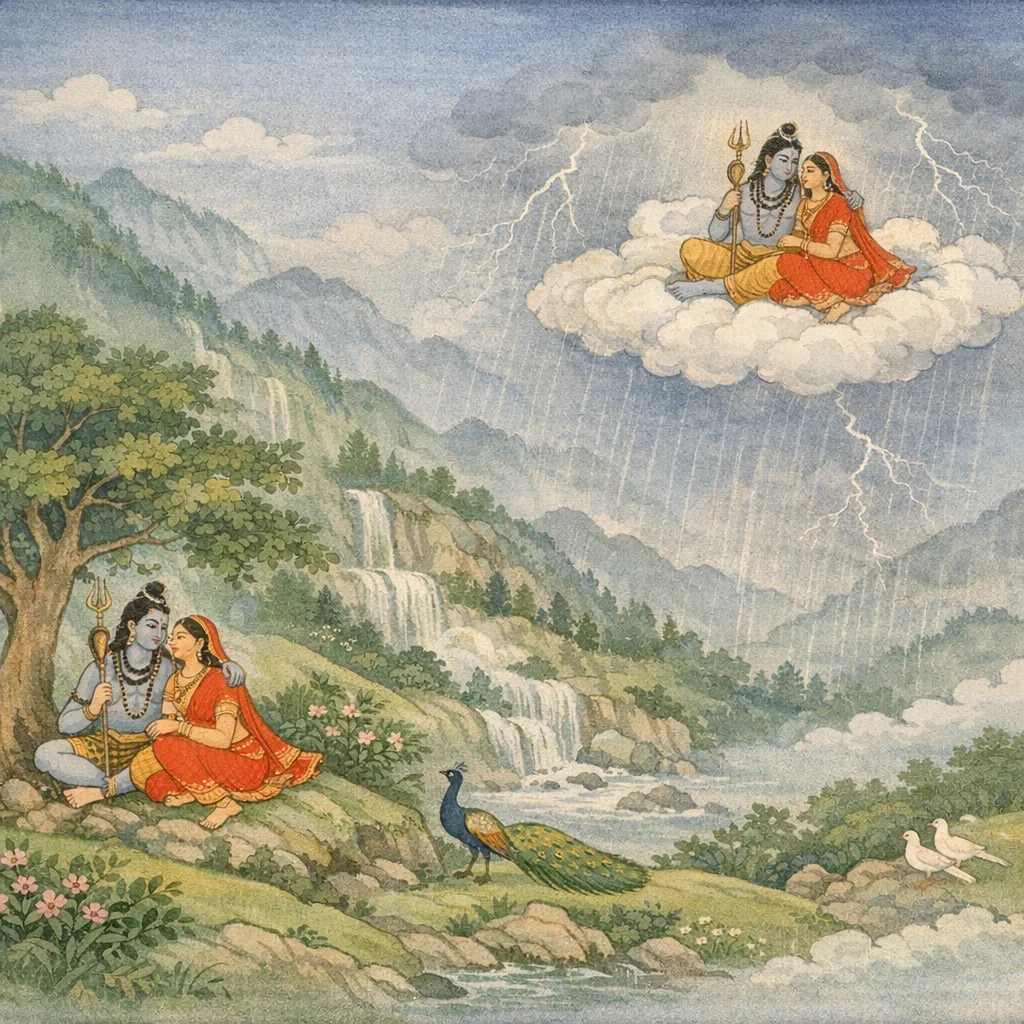
Adhyaya 1: Narada Questions Pulastya
The Vamana Purana Begins
Narada approaches Pulastya to hear the Purana. The dialogue opens with Sati's monsoon lament and sets the cosmic stage for what follows.
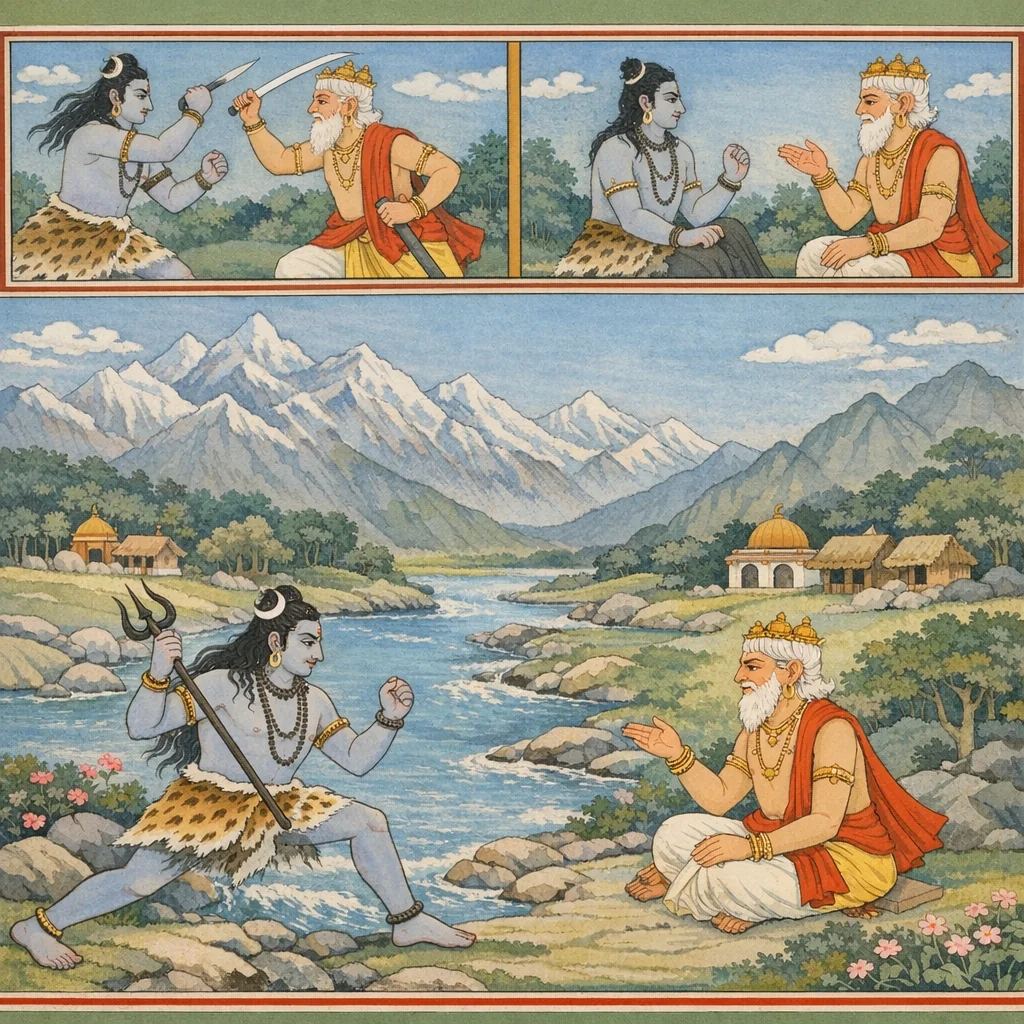
Adhyaya 2: Daksha's Sacrifice & Kapalin Rudra
Origin of Kapalin Rudra
The Pulastya-Narada dialogue recounts Daksha's fateful sacrifice and how Rudra came to bear the skull (Kapalin).
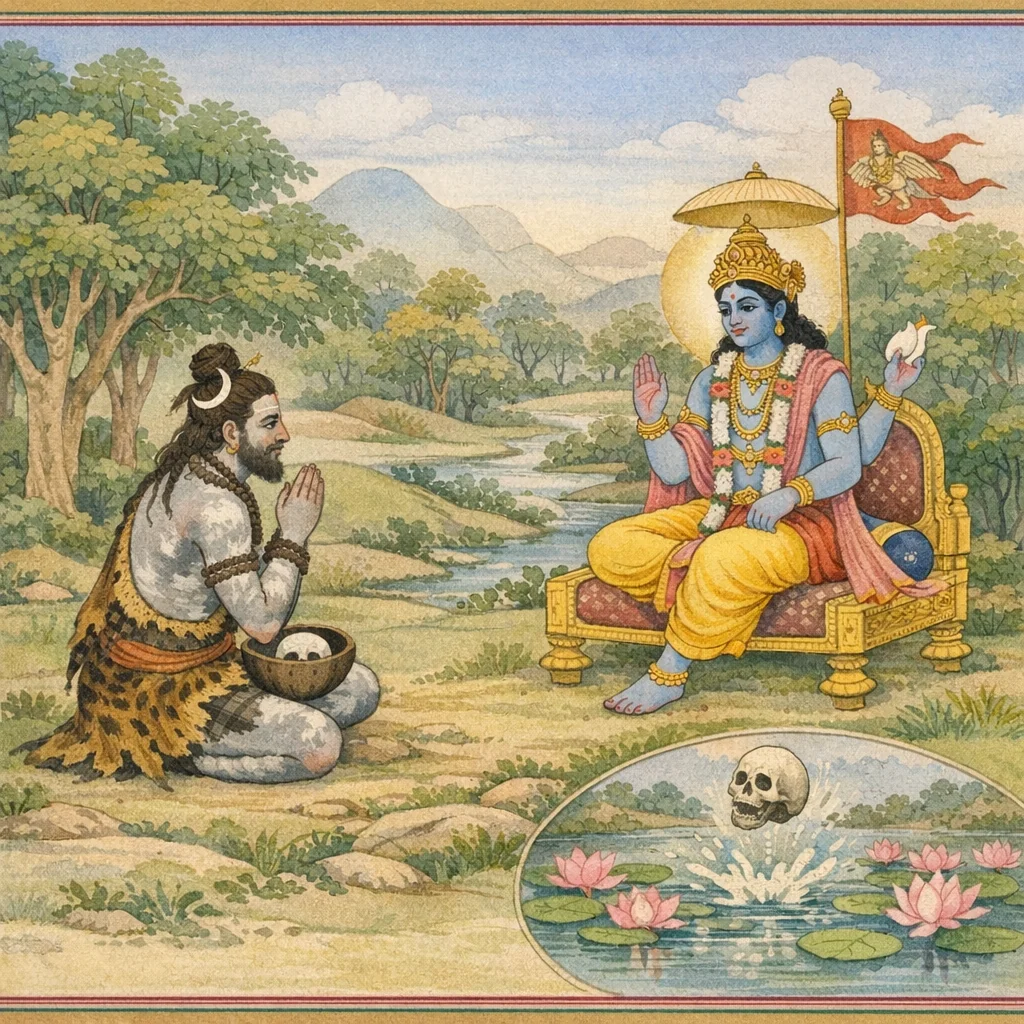
Adhyaya 3: Shiva's Brahmahatya
Vishnu's Counsel and Kapalamocana Tirtha
Shiva's sin of Brahmahatya, Vishnu's counsel, and the sanctification of Kapalamocana Tirtha at Varanasi.
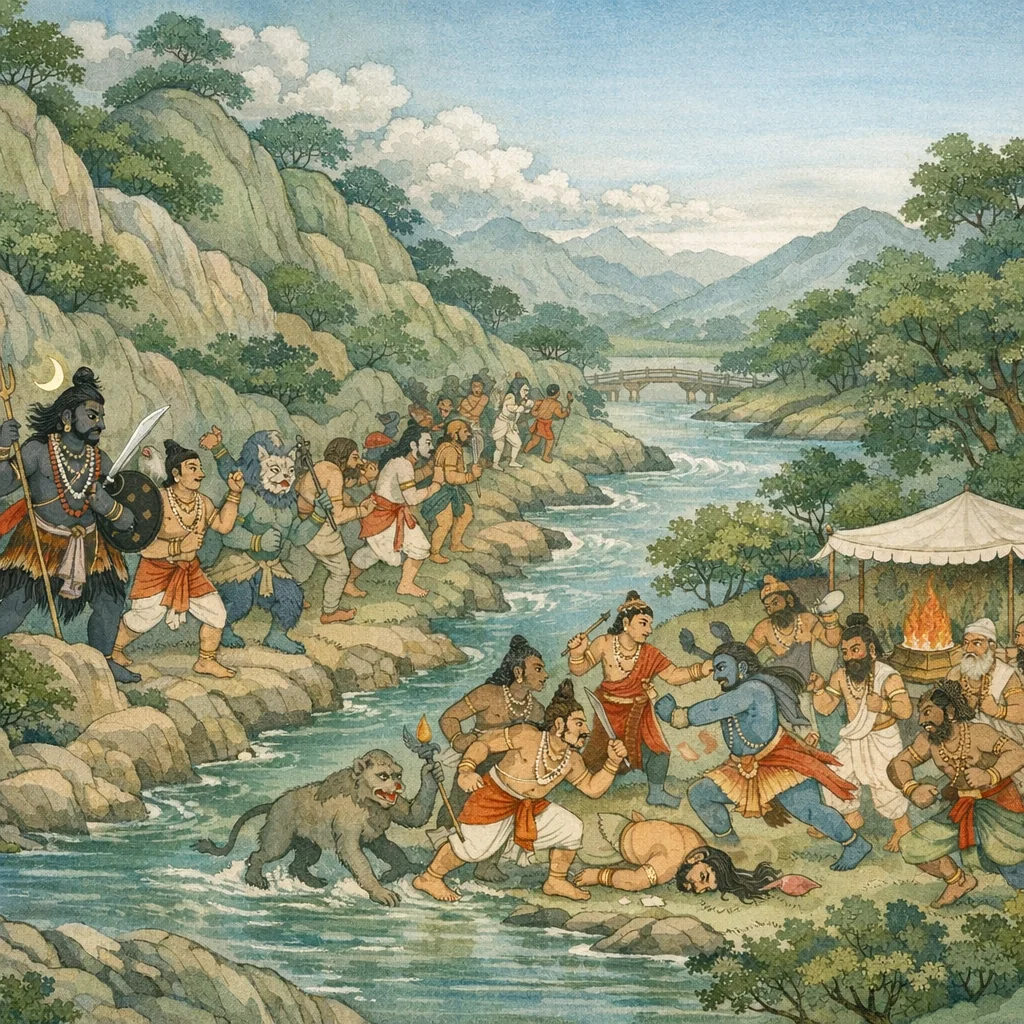
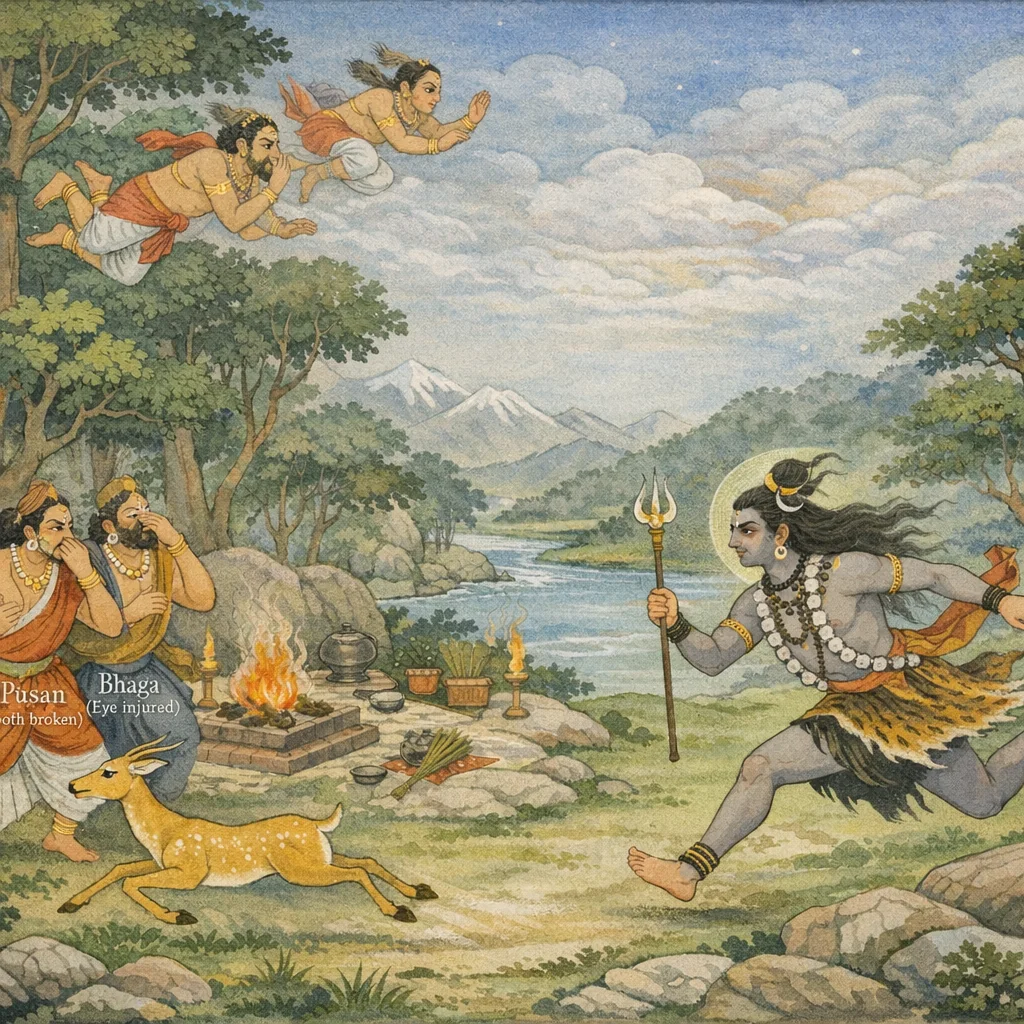
Adhyaya 4: Sati's Death & Virabhadra
The Assault on Daksha's Sacrifice
Sati's self-immolation and Virabhadra's terrifying assault on Daksha's sacrifice on behalf of Shiva.
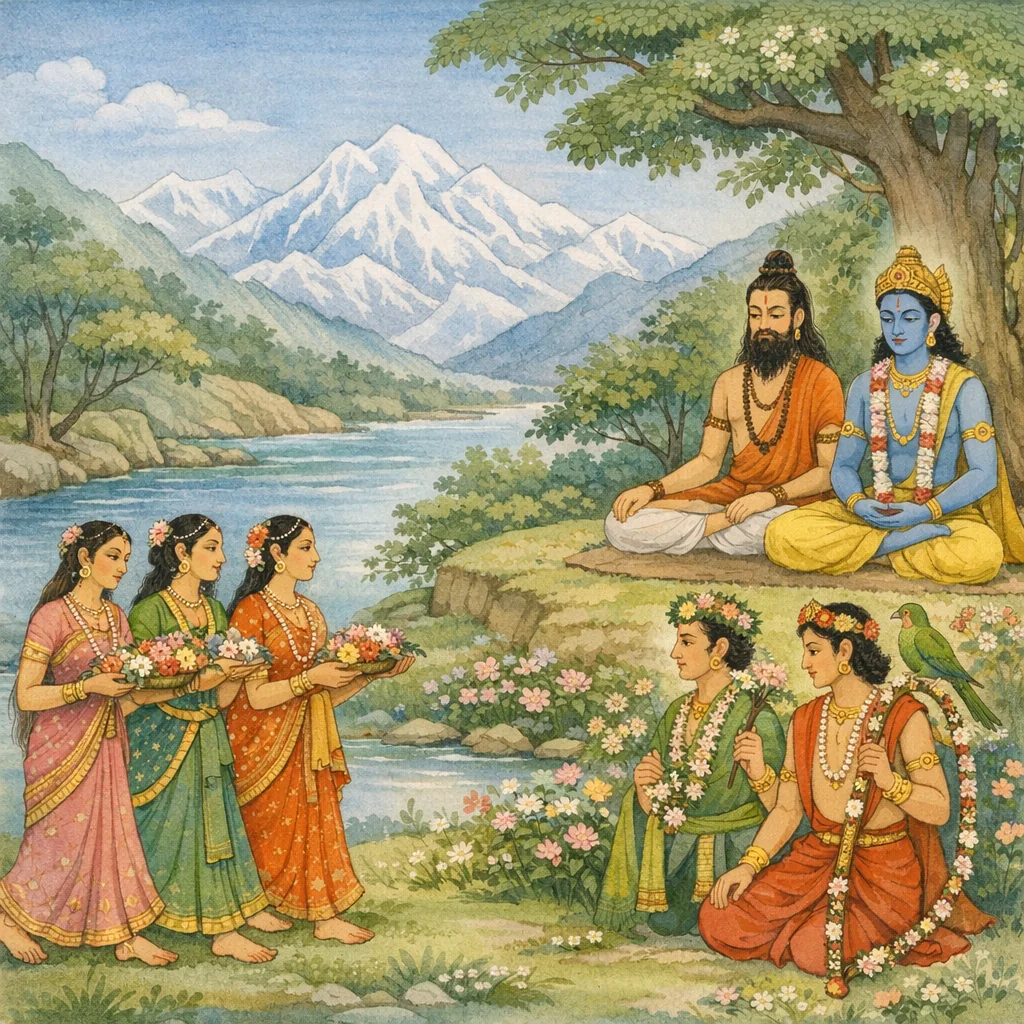
Adhyaya 5: Rudra's Wrath & Kalarupa
Iconography of Kalarupa through the Zodiac
Rudra's wrath at Daksha's sacrifice and the cosmic iconography of Kalarupa across the zodiac signs.
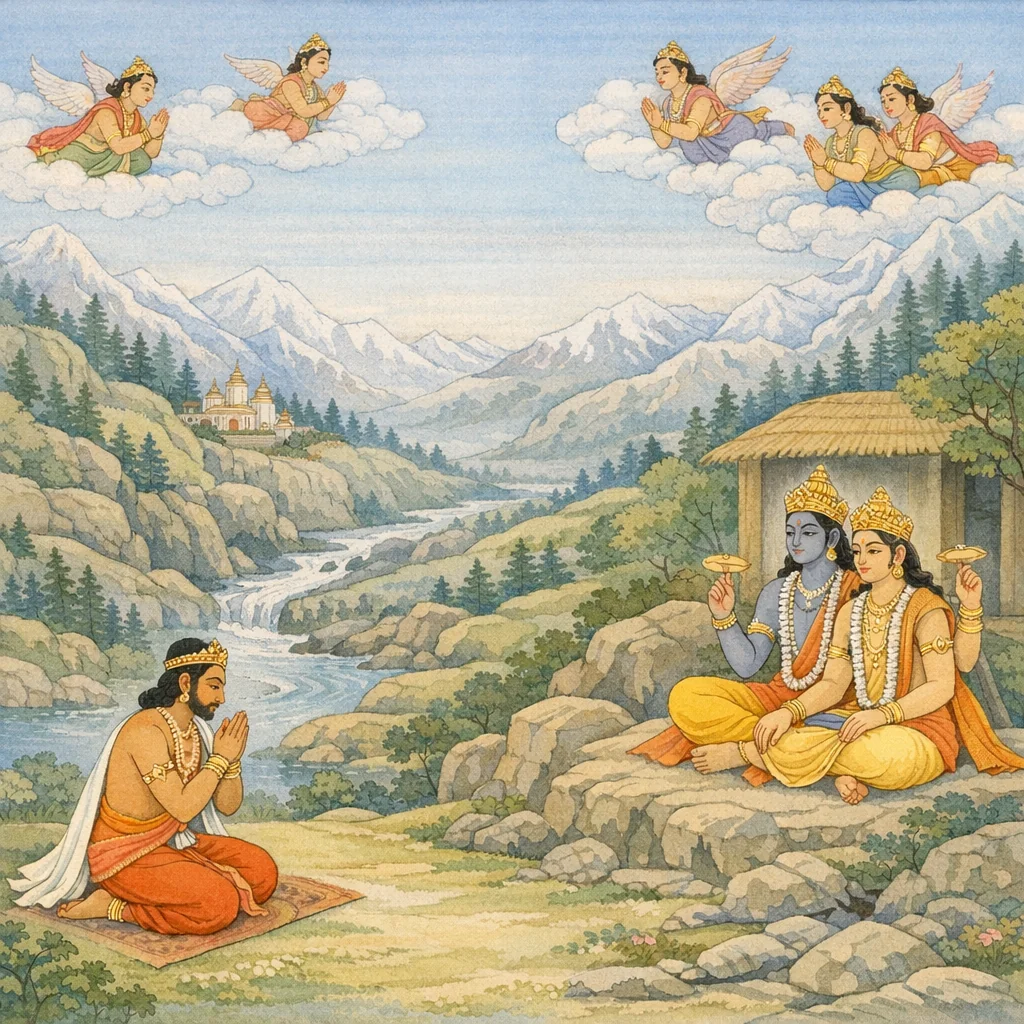
Adhyaya 6: Nara-Narayana's Tapas
Indra's Temptation and the Burning of Kama
The great penance of Nara-Narayana, Indra's failed temptation, and the origin of Ananga (bodiless Kama).
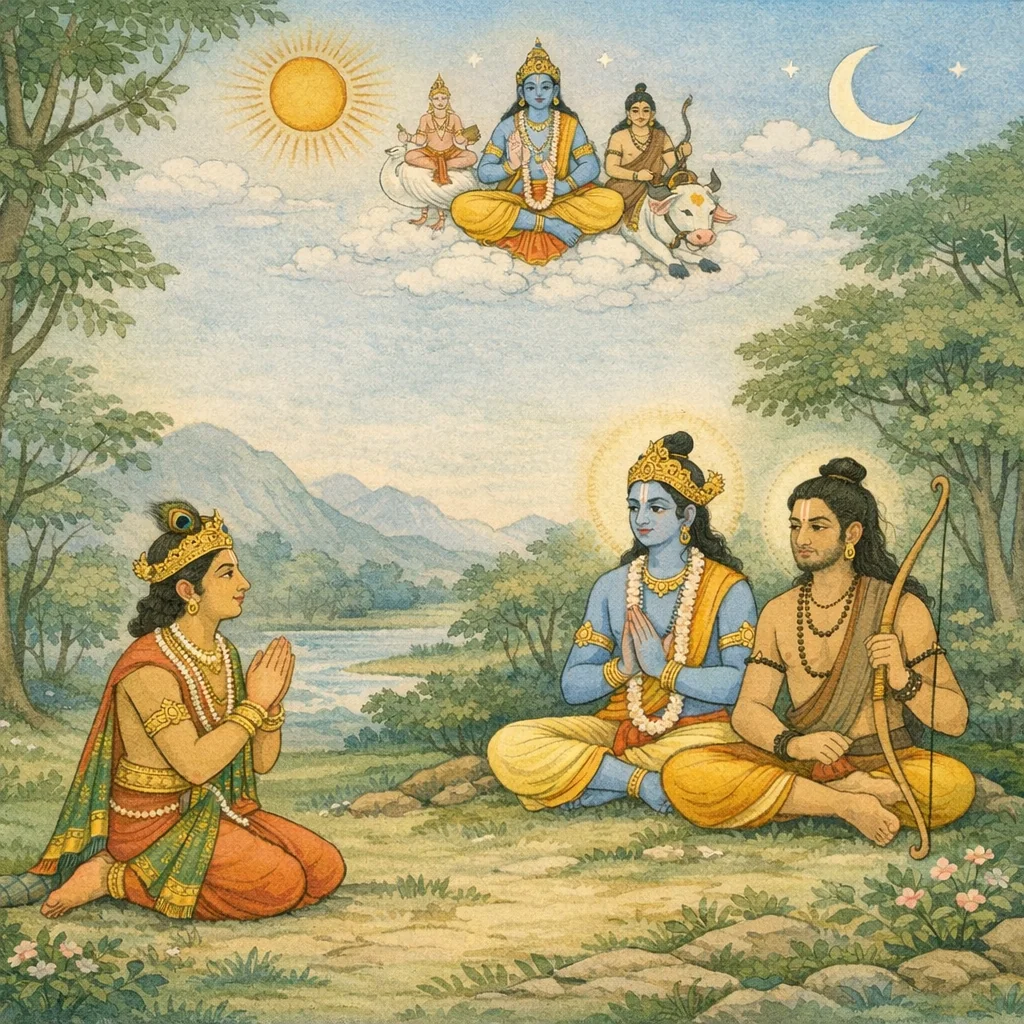
Adhyaya 7: Prahlada vs Nara-Narayana
Defeat and Victory through Bhakti
Prahlada's defeat at the hands of Nara-Narayana and his ultimate victory through unwavering devotion.
Adhyaya 8: Prahlada's Victory through Bhakti
Battle and Devotion
Continuation of Prahlada's encounter with Nara-Narayana, demonstrating the supremacy of devotion over martial power.
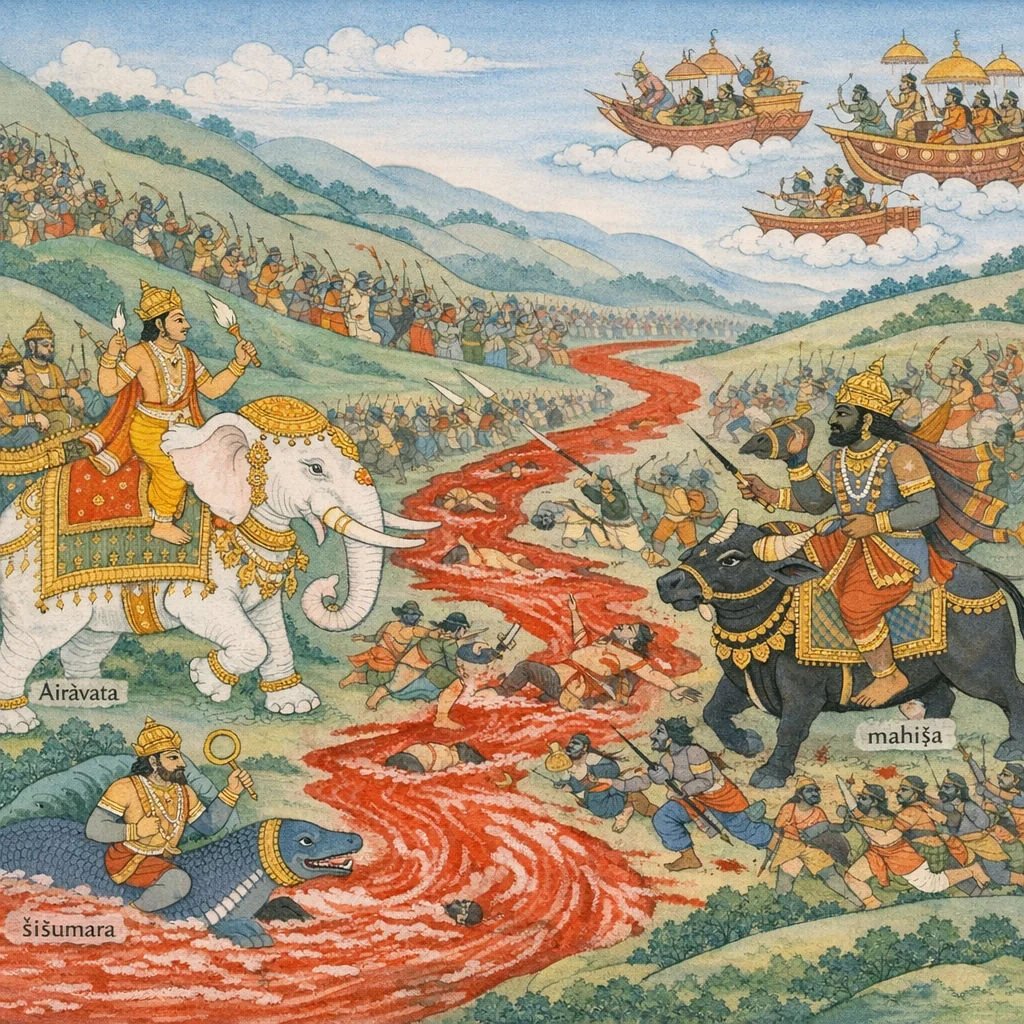
Adhyaya 9: Andhaka's Coronation
Boons from Shiva and the Daiva-Asura War
The blind demon Andhaka receives boons from Shiva and is crowned king, sparking the great war between Devas and Asuras.
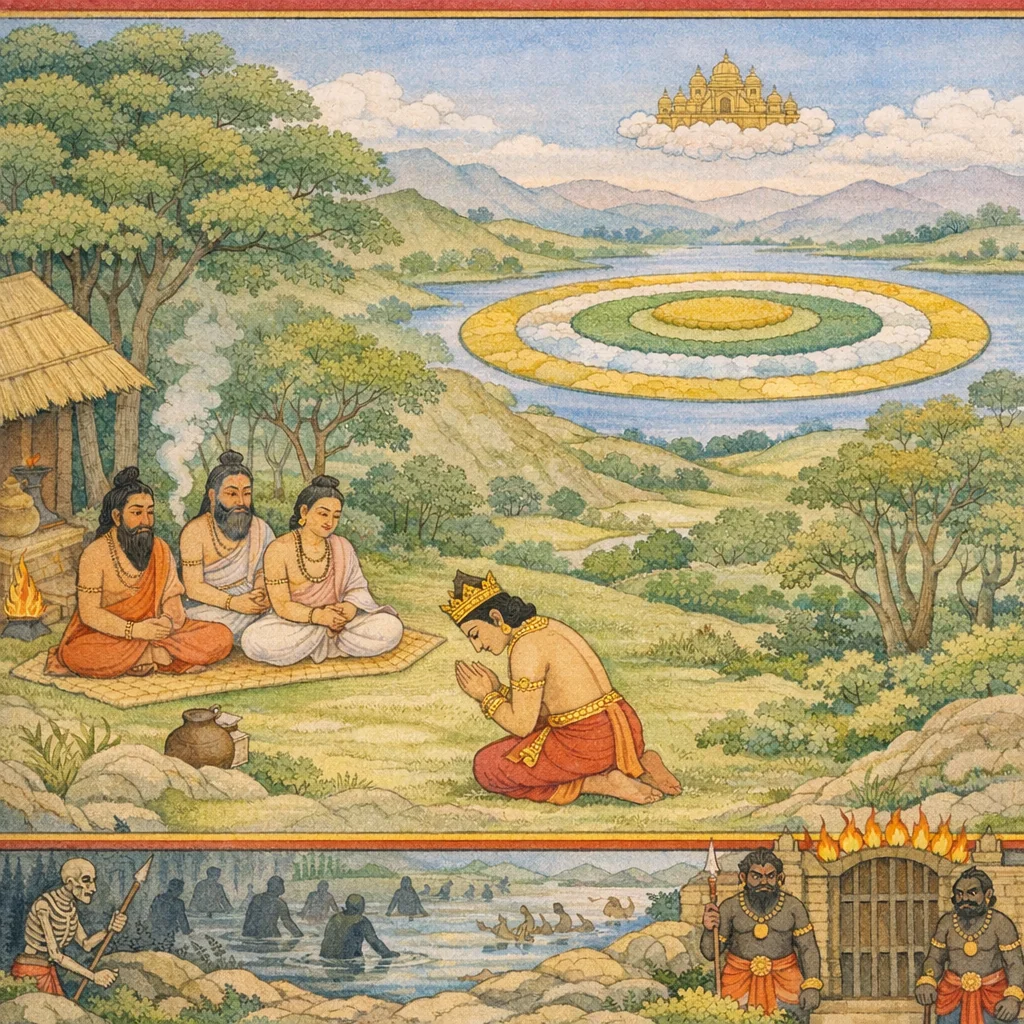
Adhyaya 10: Sukeshi's Inquiry into Dharma
The Seven Dvipas and Twenty-One Hells
Sukeshi inquires about dharma; the cosmic geography of the seven island-continents and the twenty-one hells is revealed.
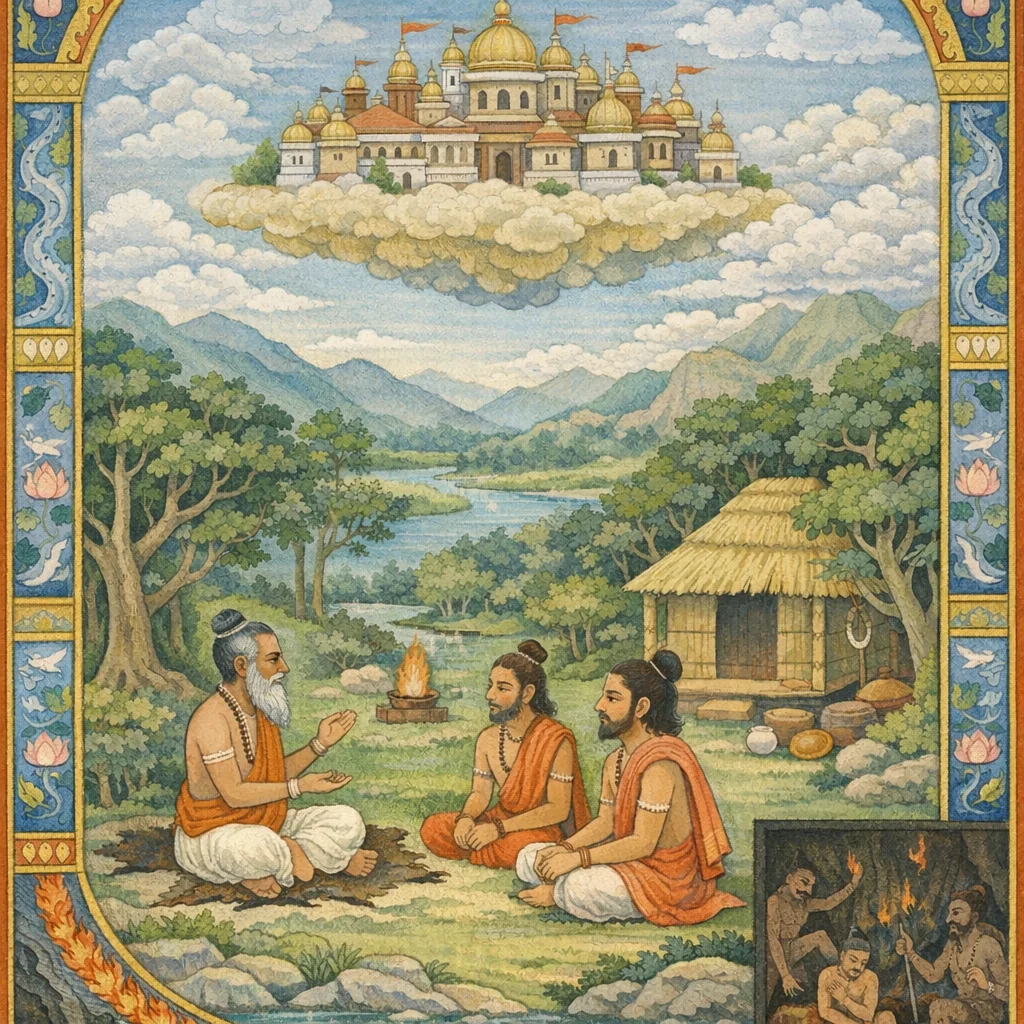
Adhyaya 11: Sukesha's Boon & Twelve Dharmas
Cosmography of Seven Dvipas
Sukesha receives a boon; the twelve dharmas of beings and the detailed cosmography of hells are described.
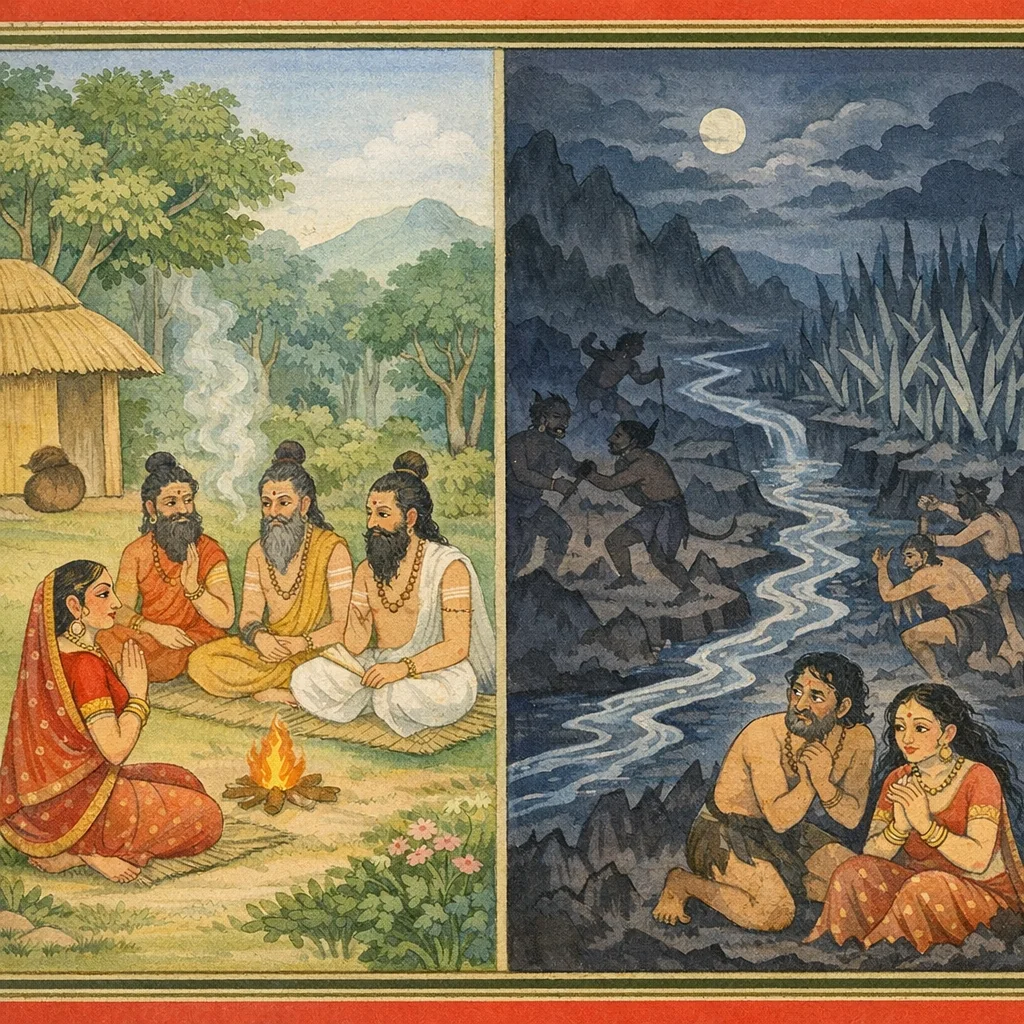
Adhyaya 12: Karmic Causes of Narakas
Ingratitude and Irremediable Sin
The karmic causes that lead to various hells and the irremediability of ingratitude (Kritaghna-dosha).
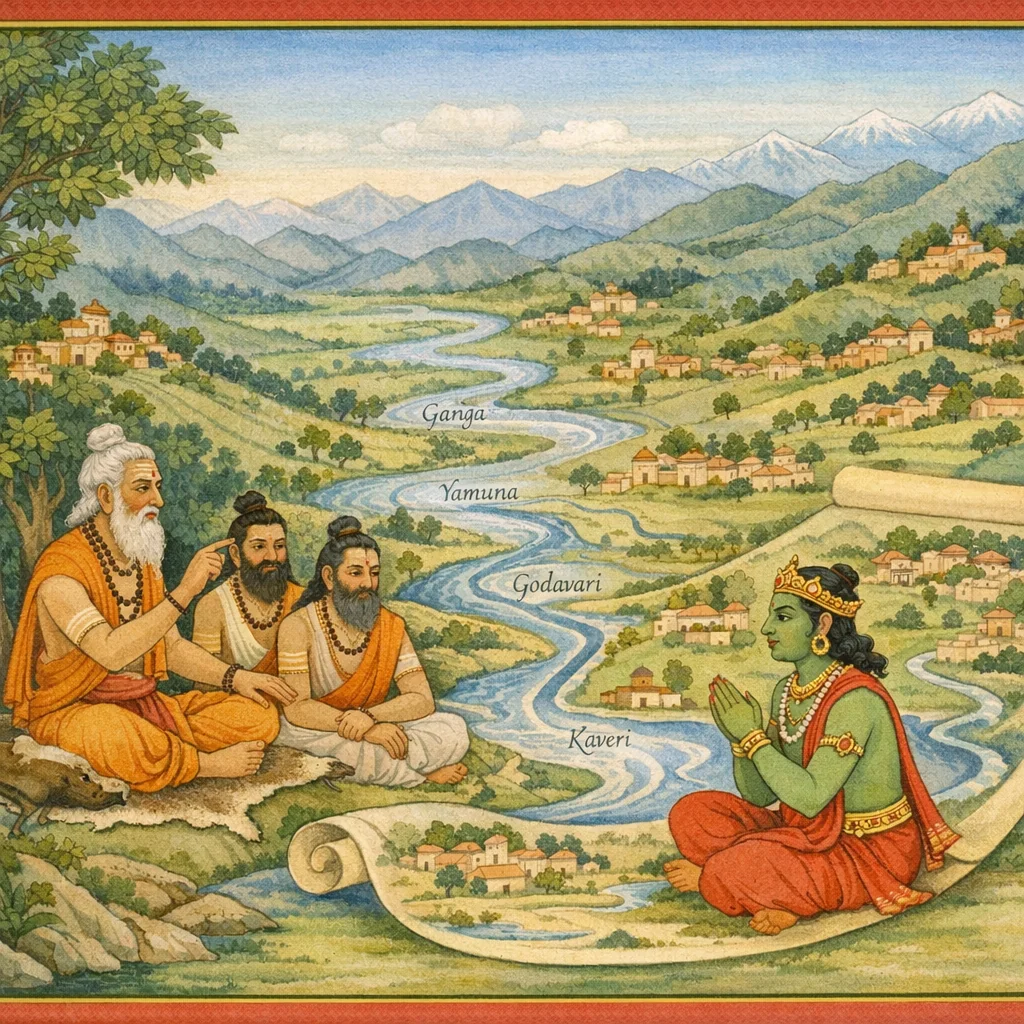
Adhyaya 13: Structure of Jambudvipa
Nine Varshas and Sacred Geography
The nine divisions of Jambudvipa including Bharata-varsha, its mountains, rivers, and peoples.
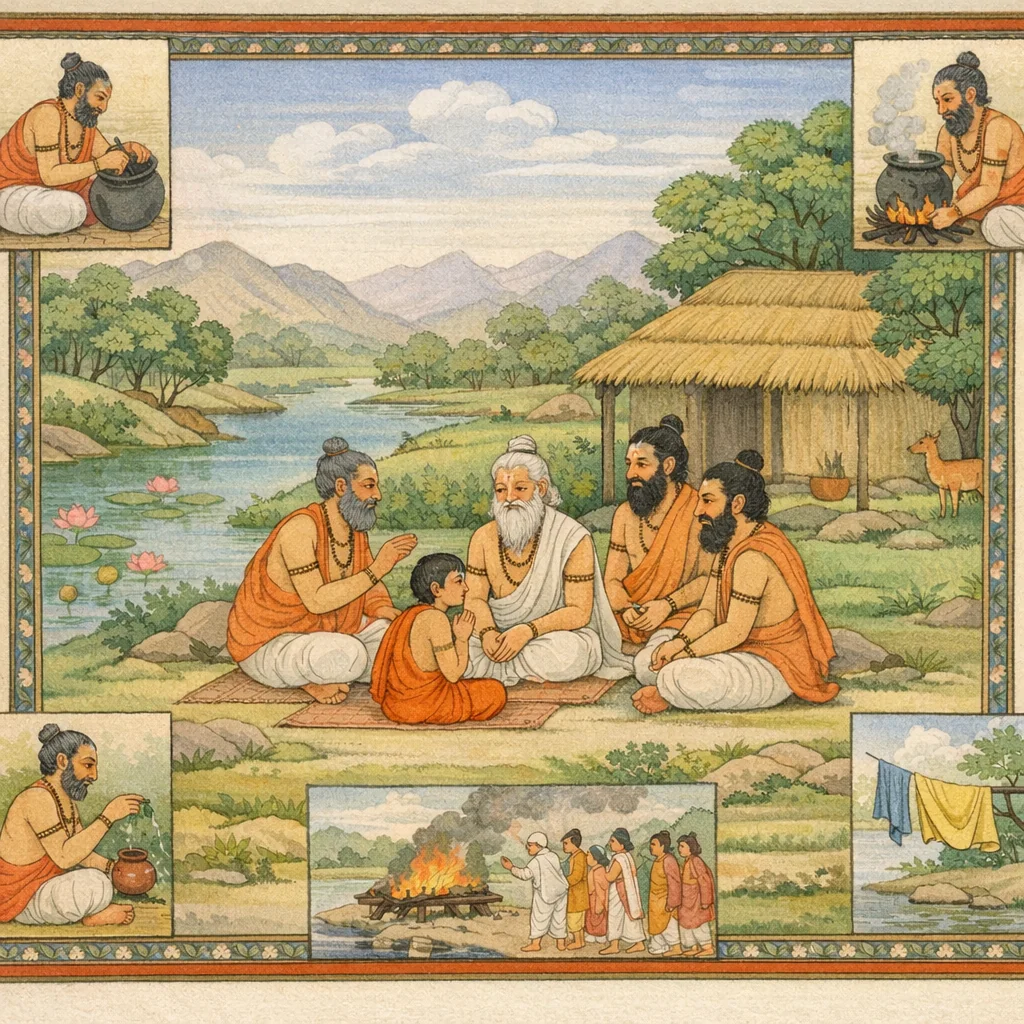
Adhyaya 14: Rules of Purity (Shauca)
Duties of Householder and Forest-Dweller
Detailed rules of ritual purity, permissible foods, and the dharmic duties of householders and forest-dwellers.
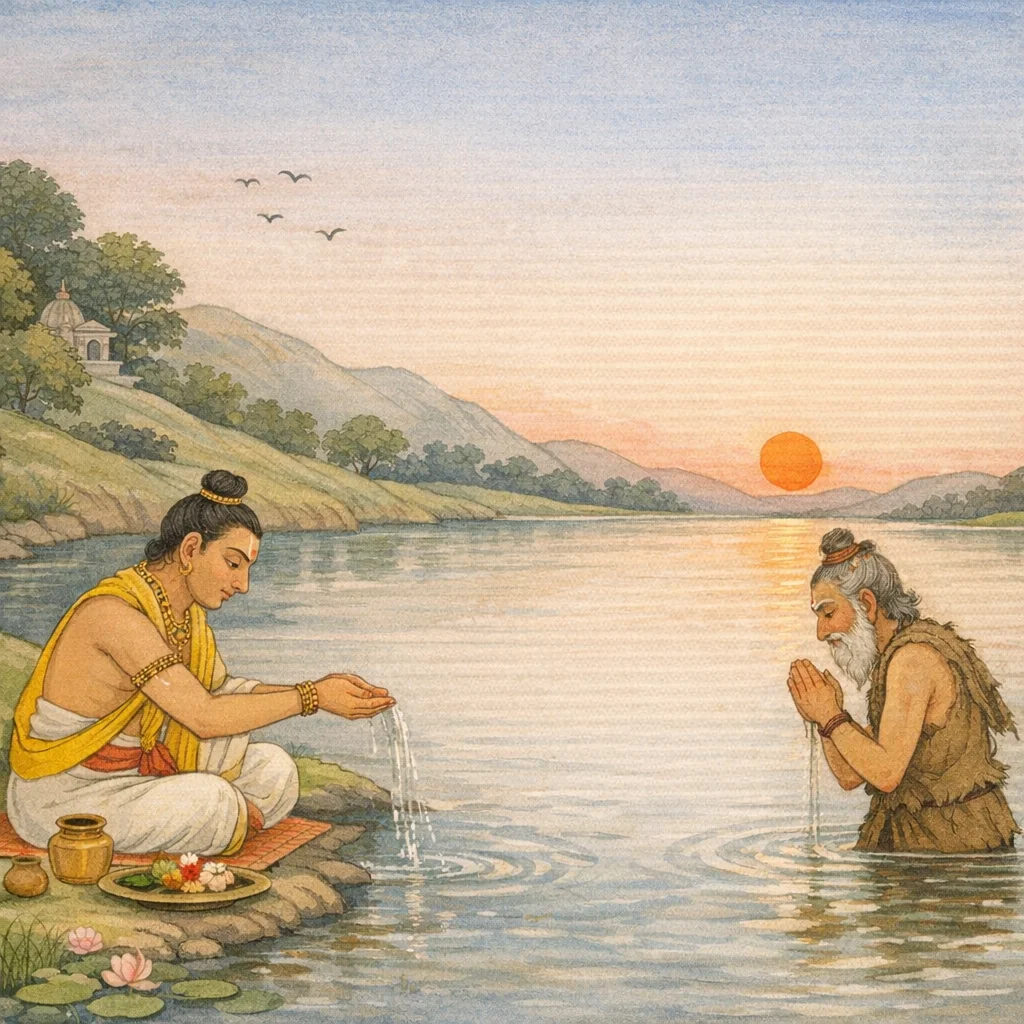
Adhyaya 15: Dietary Rules & Purification
Duties of the Ashrama System
Further elaboration on dietary guidelines, purification methods, and the duties across the stages of life.
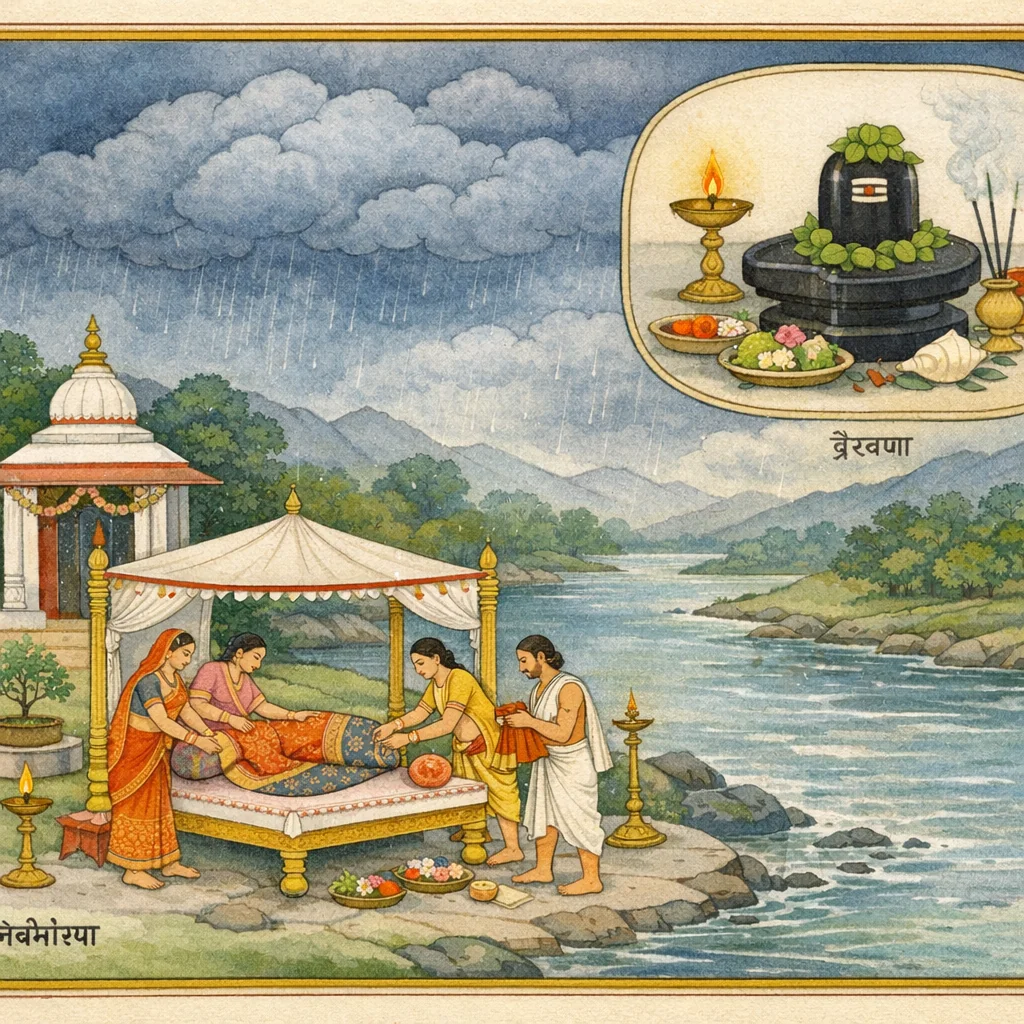
Adhyaya 16: Caturmasya Observances
The Sleeping-Awakening Cycle of the Gods
The four-month observances of Caturmasya and the cosmic cycle of Hari-Hara worship during the gods' sleep.
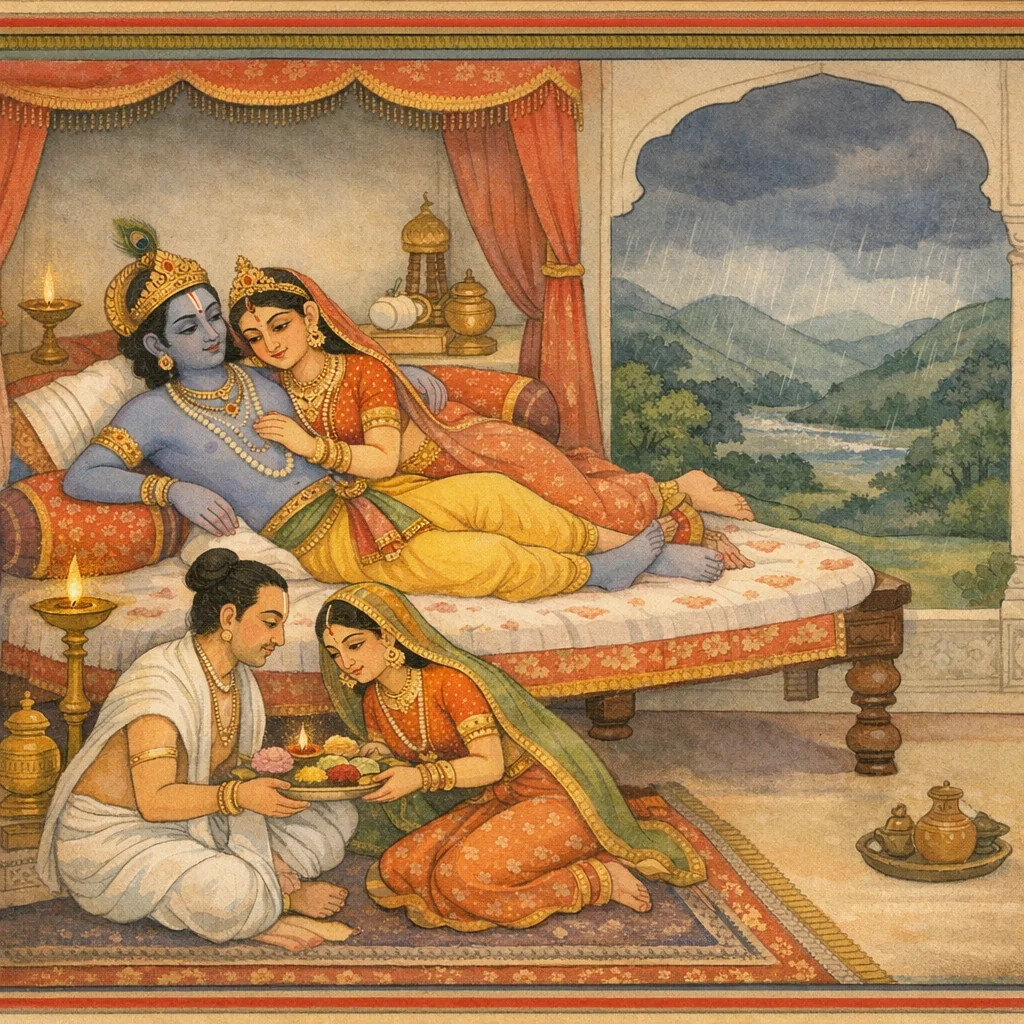
Adhyaya 17: Vishnu's Sleep (Ashunya-Shayana)
Shiva's Monthly Vows
The rite of Vishnu's sleep (Ashunya-Shayana) and the monthly vows dedicated to Shiva.
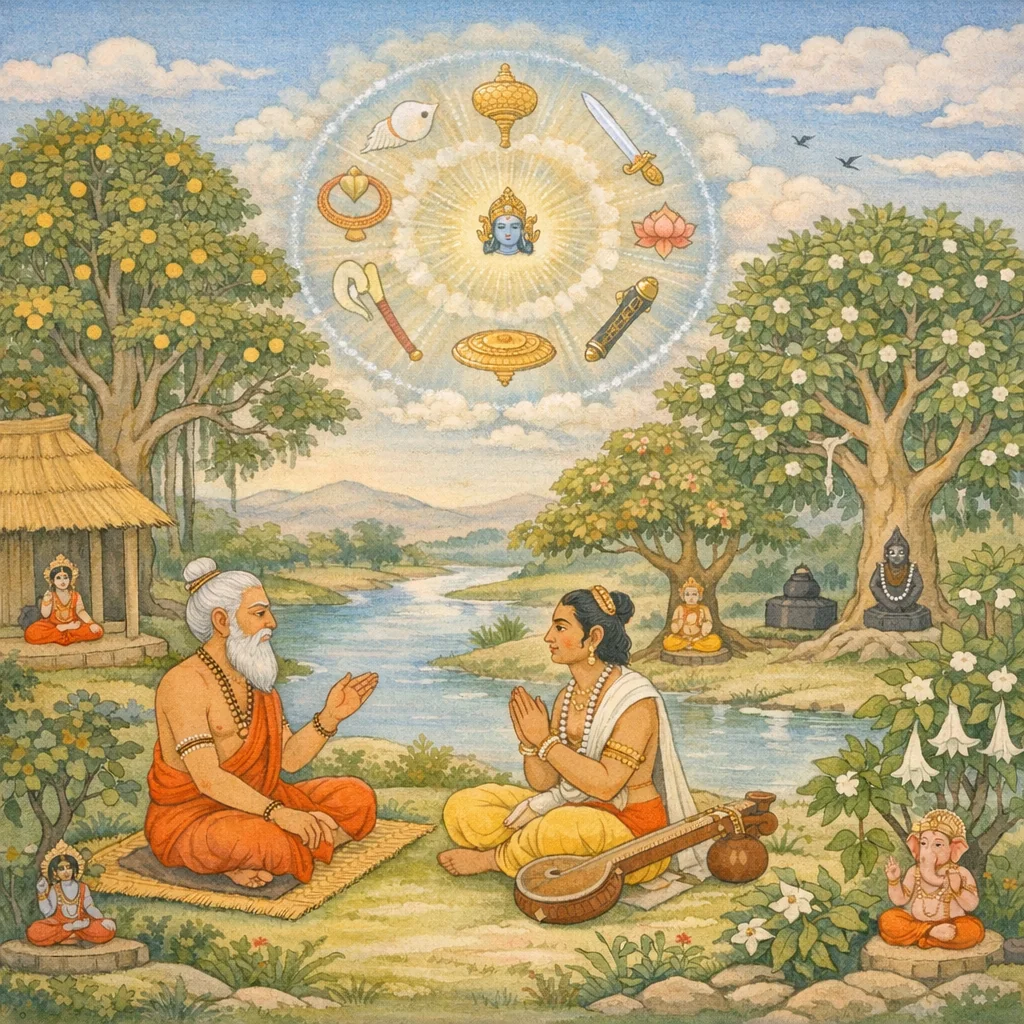
Adhyaya 18: Akhanda Ekadashi Vrata
Prelude to Katyayani-Mahishasura
The supreme Ekadashi vow and the Vaishnava protective hymn, setting the stage for the Katyayani-Mahishasura narrative.
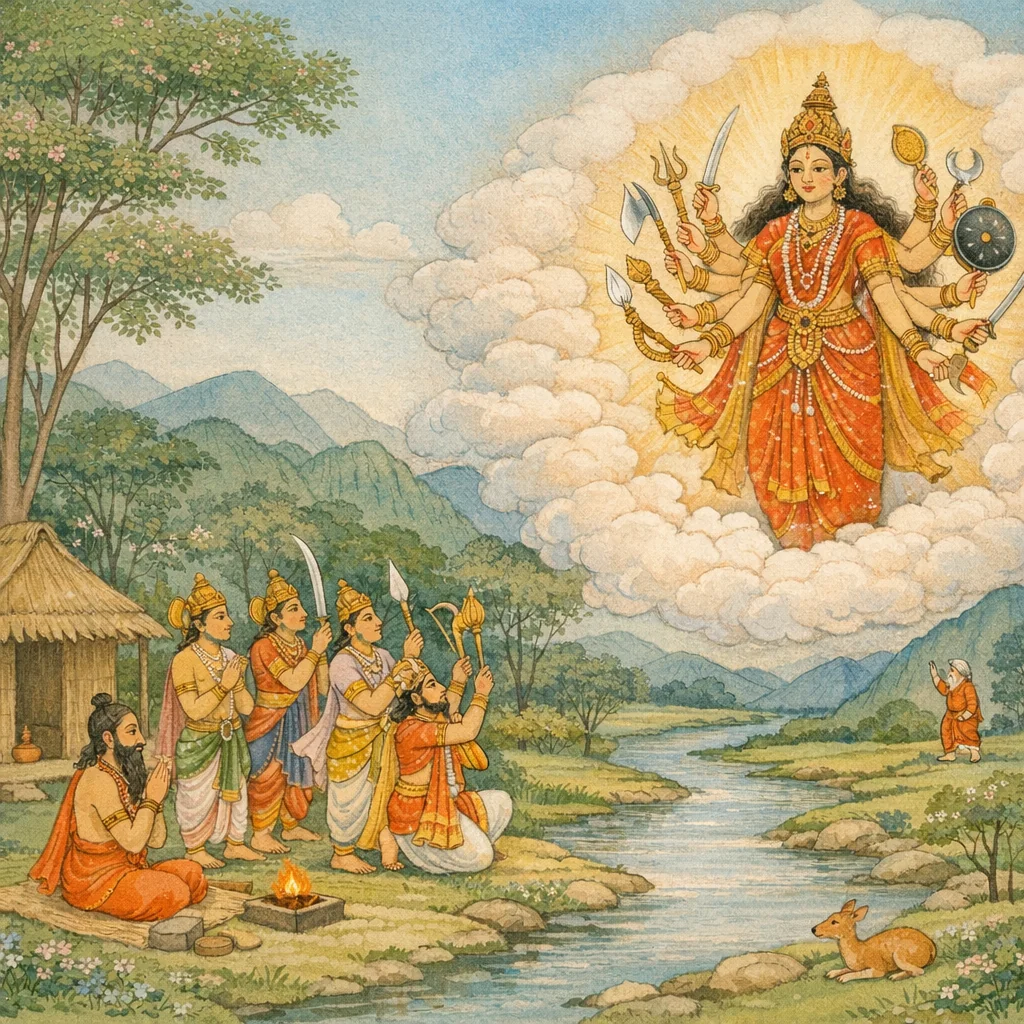
Adhyaya 19: Manifestation of Katyayani
Humbling of the Vindhya by Agastya
The goddess Katyayani (Durga) manifests, and sage Agastya humbles the Vindhya mountain.
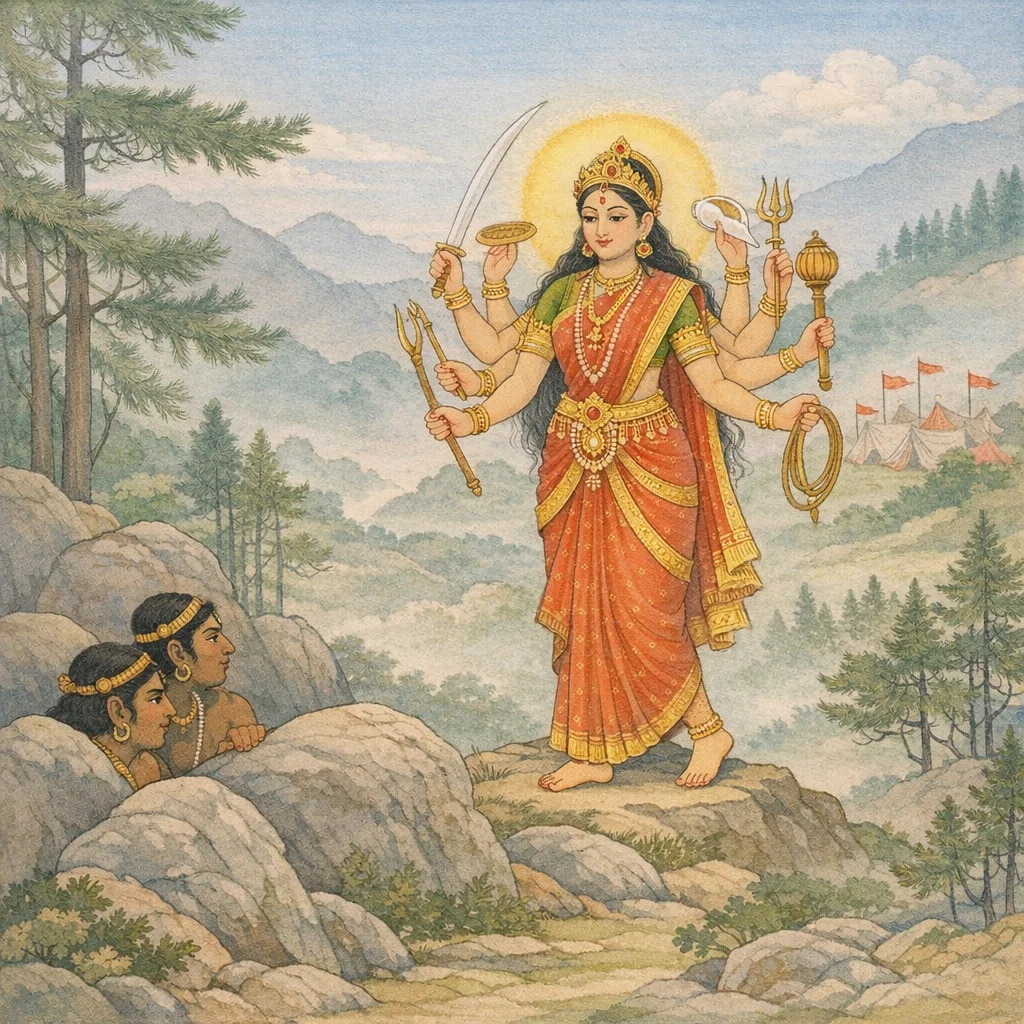
Adhyaya 20: Chanda & Munda Discover Katyayani
Mahishasura's Proposal
The demon scouts Chanda and Munda discover the goddess; Mahishasura proposes marriage and is met with divine fury.
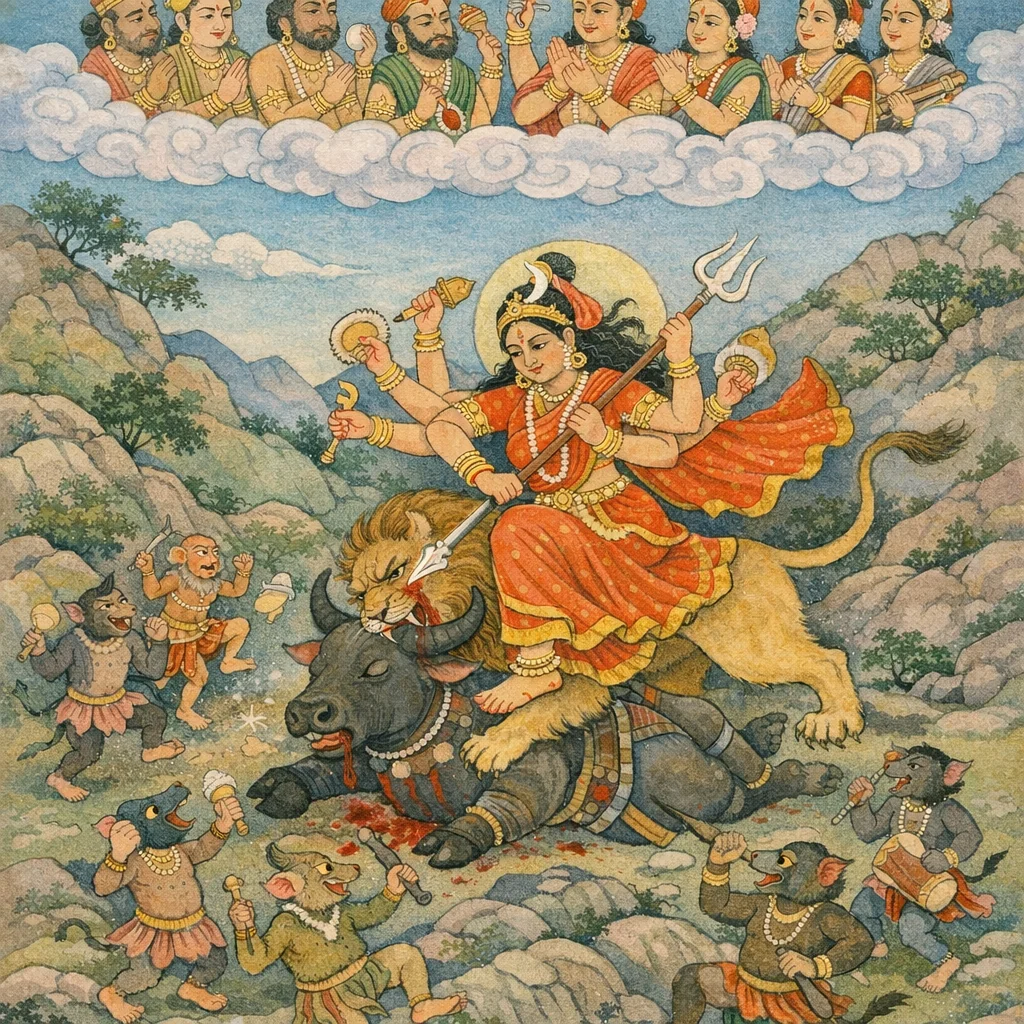
Adhyaya 21: Katyayani Slays Mahishasura
Rout of the Daitya Hosts
The climactic battle where Katyayani-Durga slays the buffalo-demon Mahishasura and routes his army.
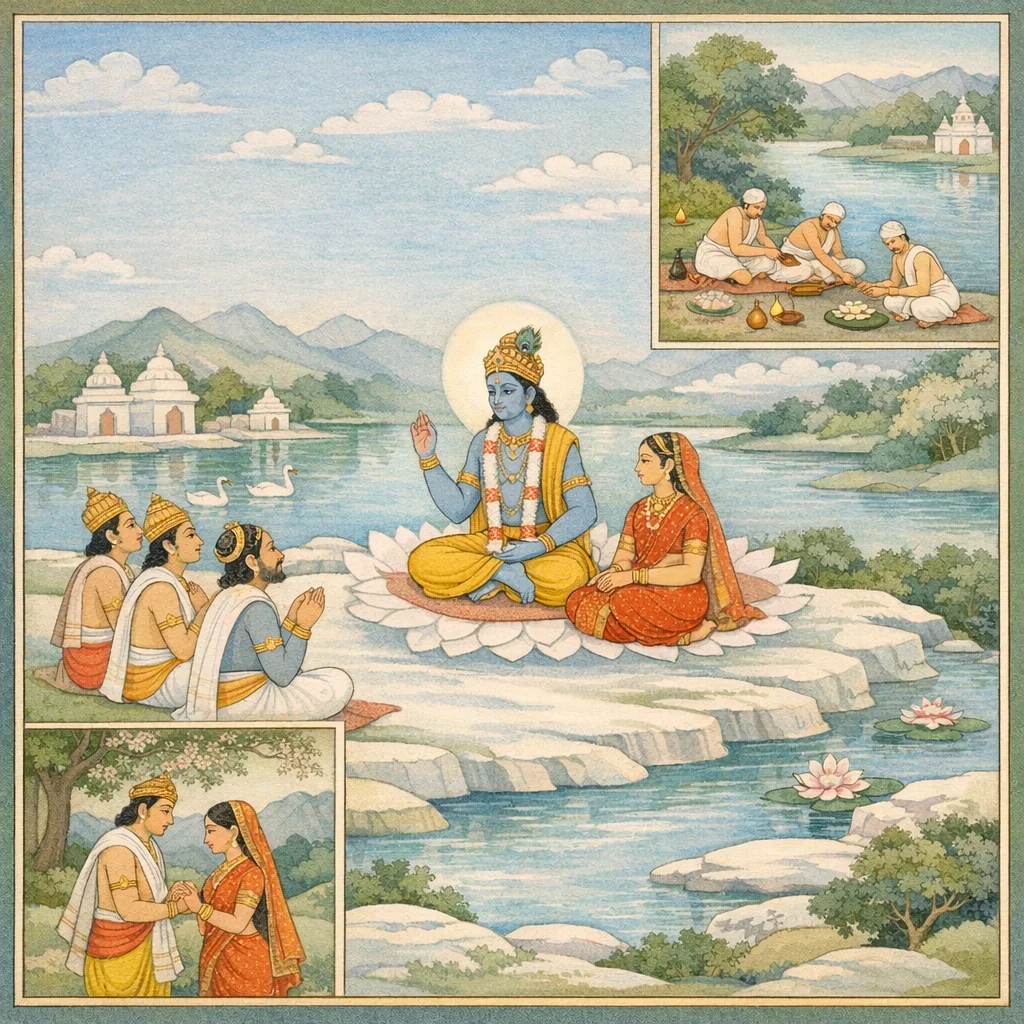
Adhyaya 22: Kurukshetra & Prithudaka Tirtha
Marriage of Samvarana with Tapati
The sacred site of Kurukshetra, the Prithudaka pilgrimage, and the romantic tale of Samvarana and Tapati.
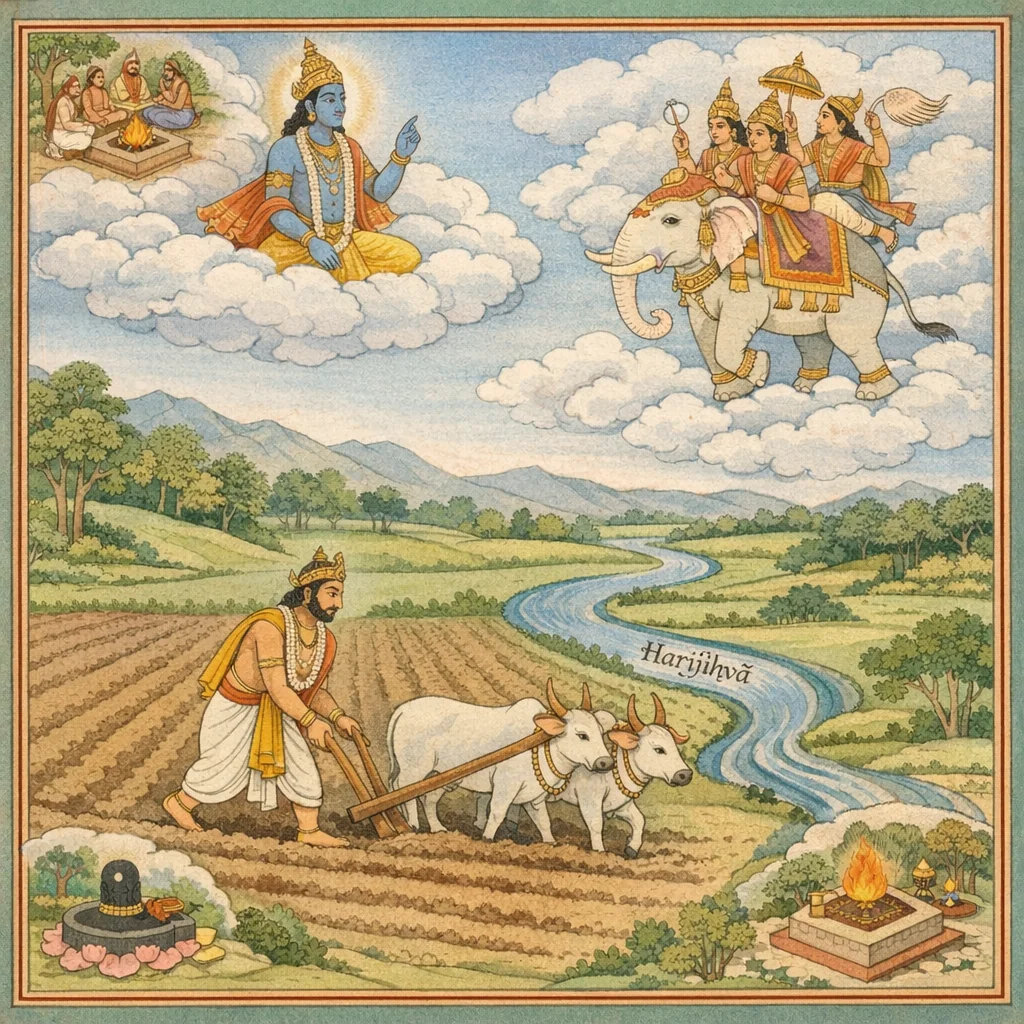
Adhyaya 23: Kuru's Consecration
Sanctification of Samantapanchaka
King Kuru consecrates the sacred field, establishing Samantapanchaka (Kurukshetra) as the holiest of pilgrimage sites.
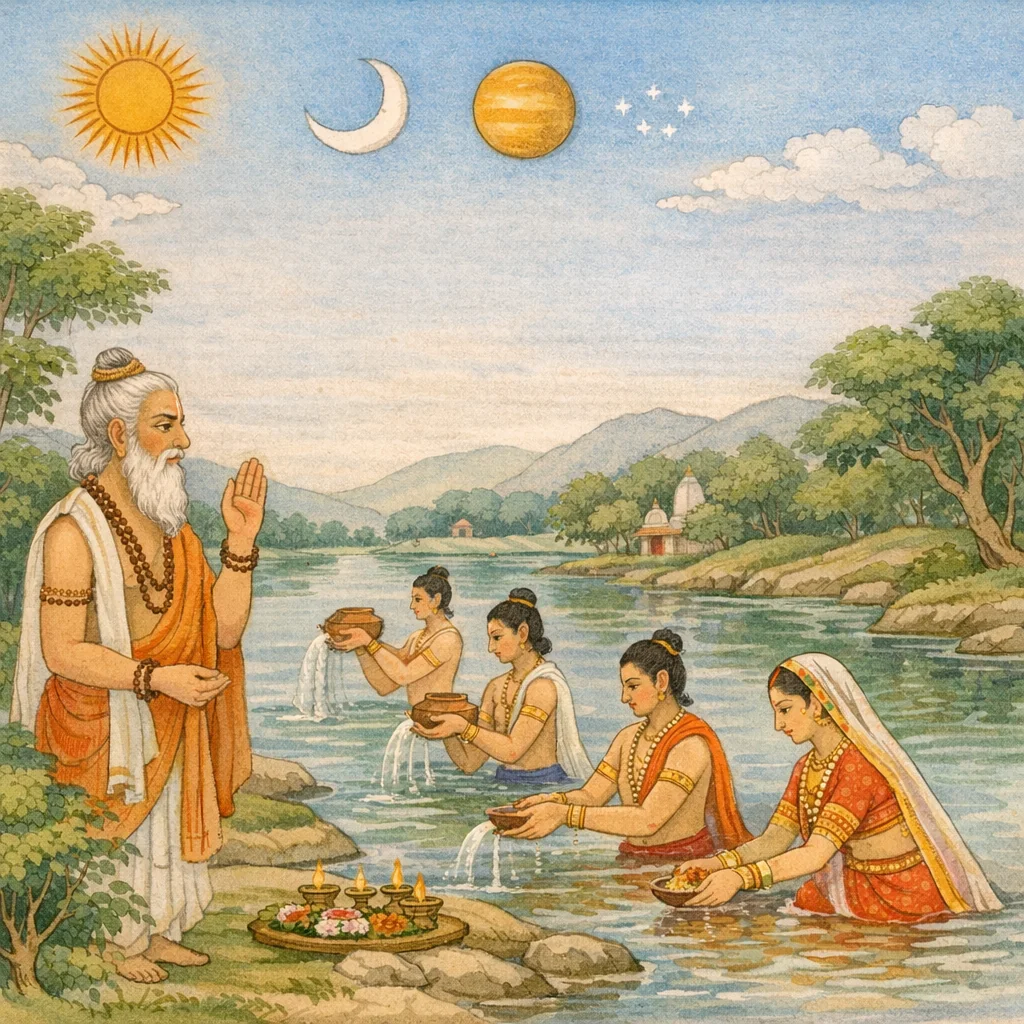
Adhyaya 24: Glory of Prithudaka Tirtha
Akshaya Tithi at Kurukshetra
The imperishable merit of pilgrimage to Prithudaka Tirtha and the significance of the Akshaya Tithi.
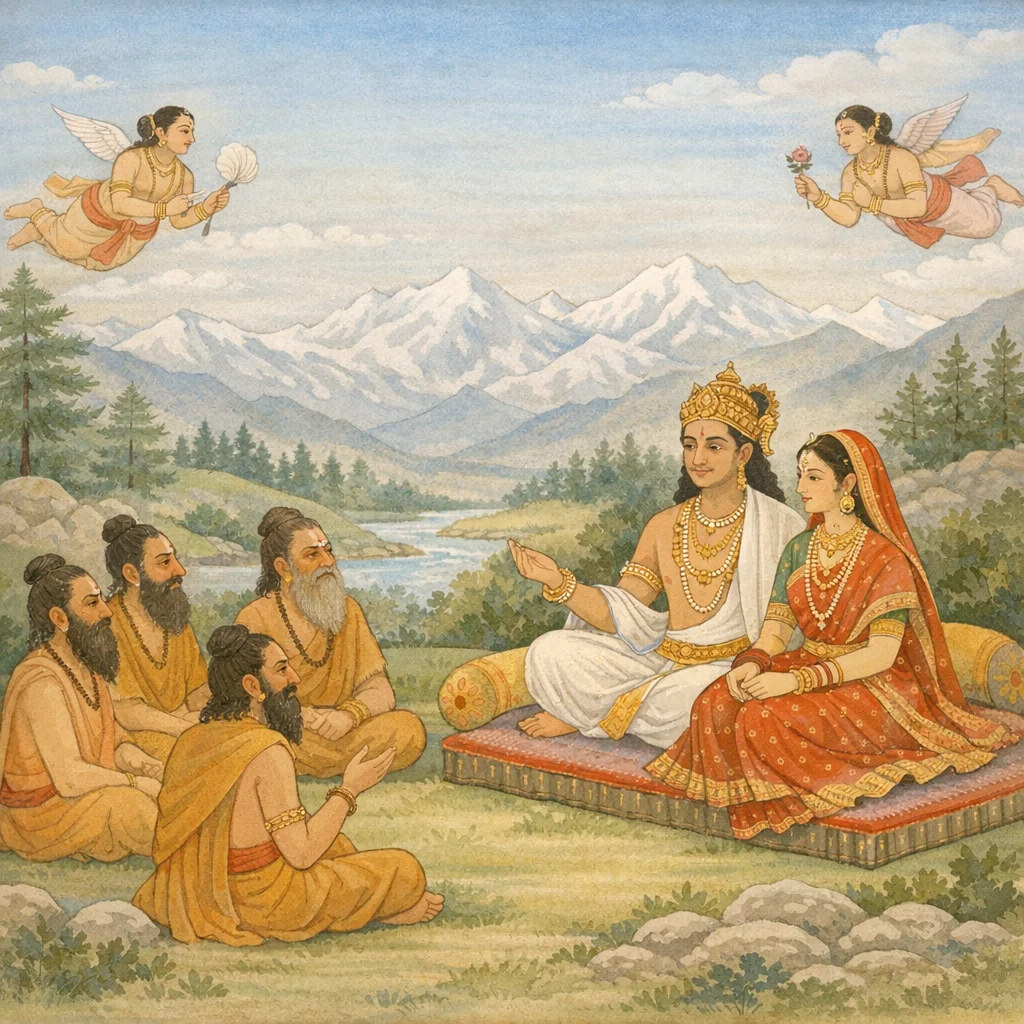
Adhyaya 25: Saptarishis Seek Uma for Shiva
Himavan Grants the Marriage
The seven great sages approach Himavan to seek Uma's hand in marriage for Lord Shiva.
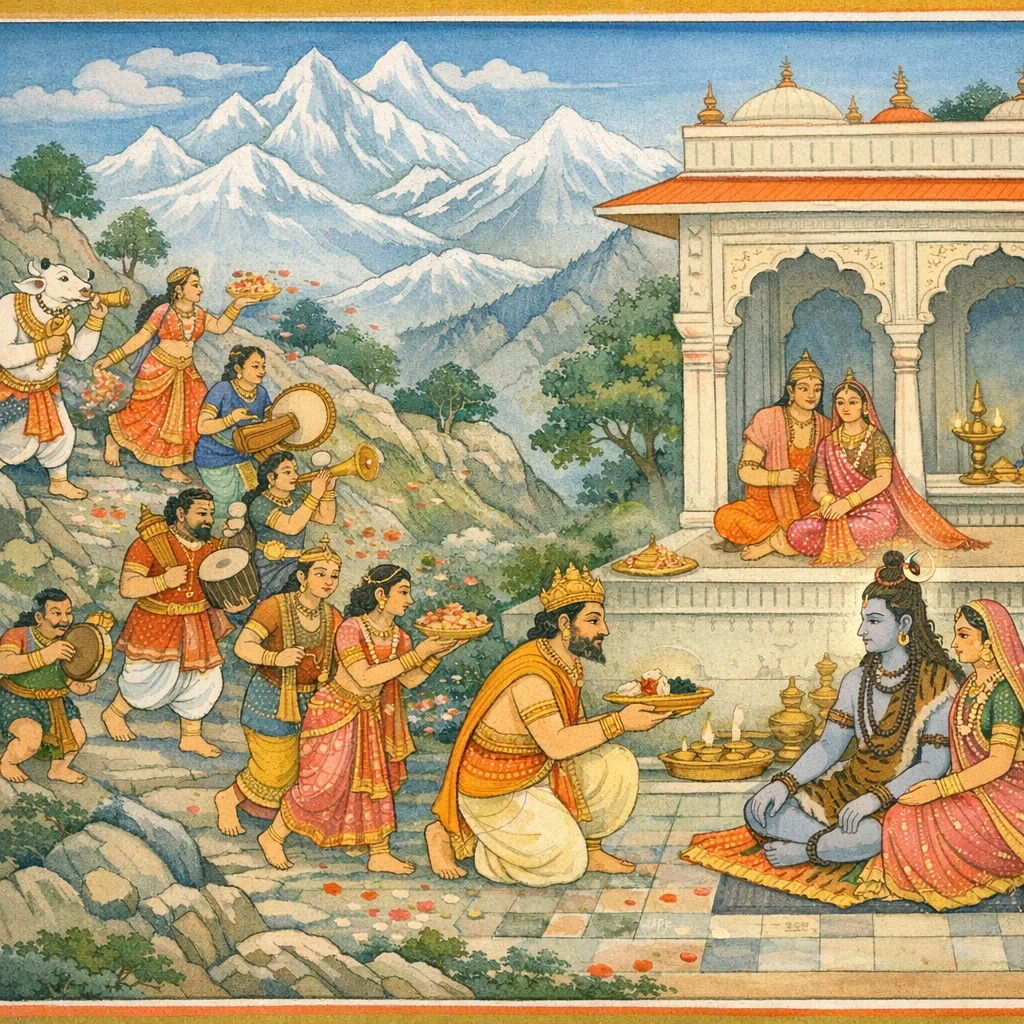
Adhyaya 26: Shiva's Wedding Procession (Part 1)
Marriage of Girija
Shiva's divine wedding procession to Kailasa and the auspicious marriage ceremonies of Girija (Parvati).
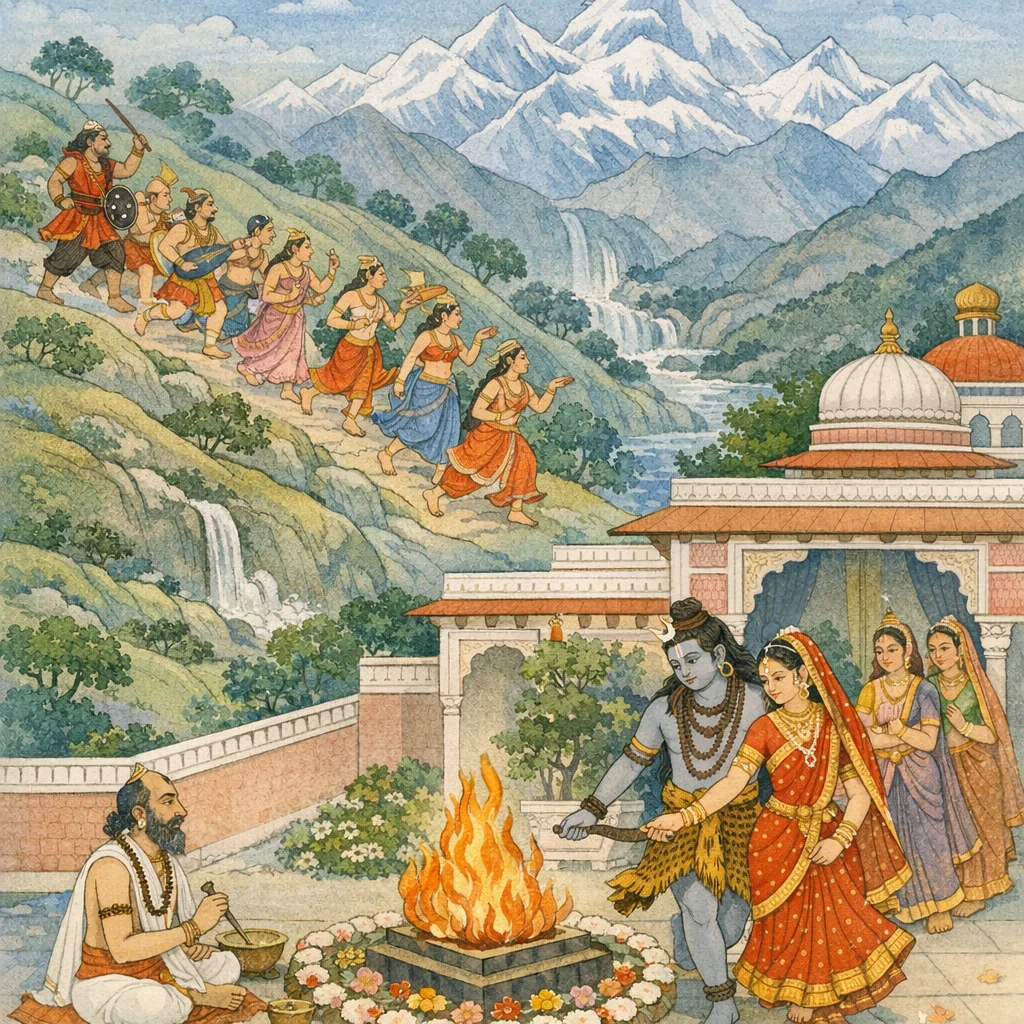
Adhyaya 27: Shiva's Wedding Procession (Part 2)
Marriage of Girija Continued
Continuation of the divine wedding procession and the celebrations marking Shiva's union with Girija.
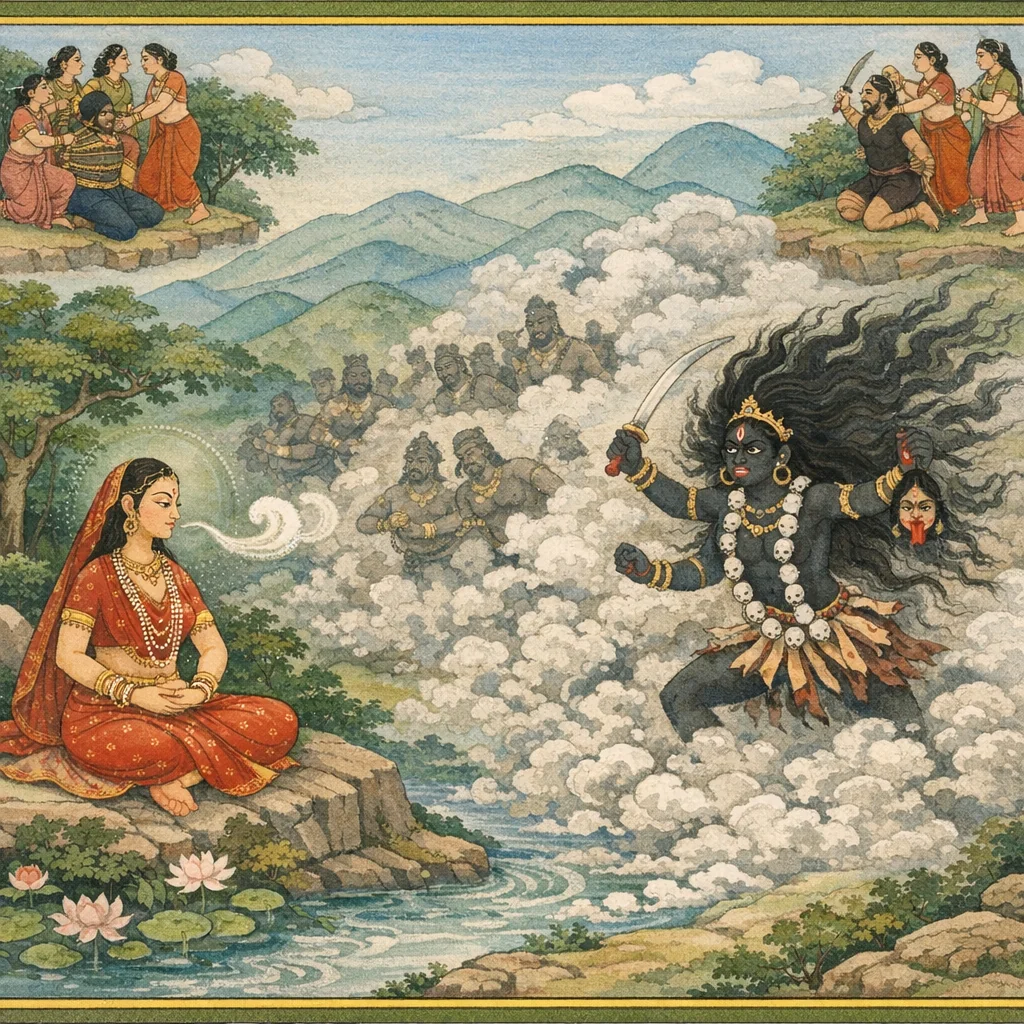
Adhyaya 28: Slaying of Namuci (Part 1)
Rise of Shumbha-Nishumbha
The slaying of the demon Namuci and the rise of the terrible brothers Shumbha and Nishumbha.
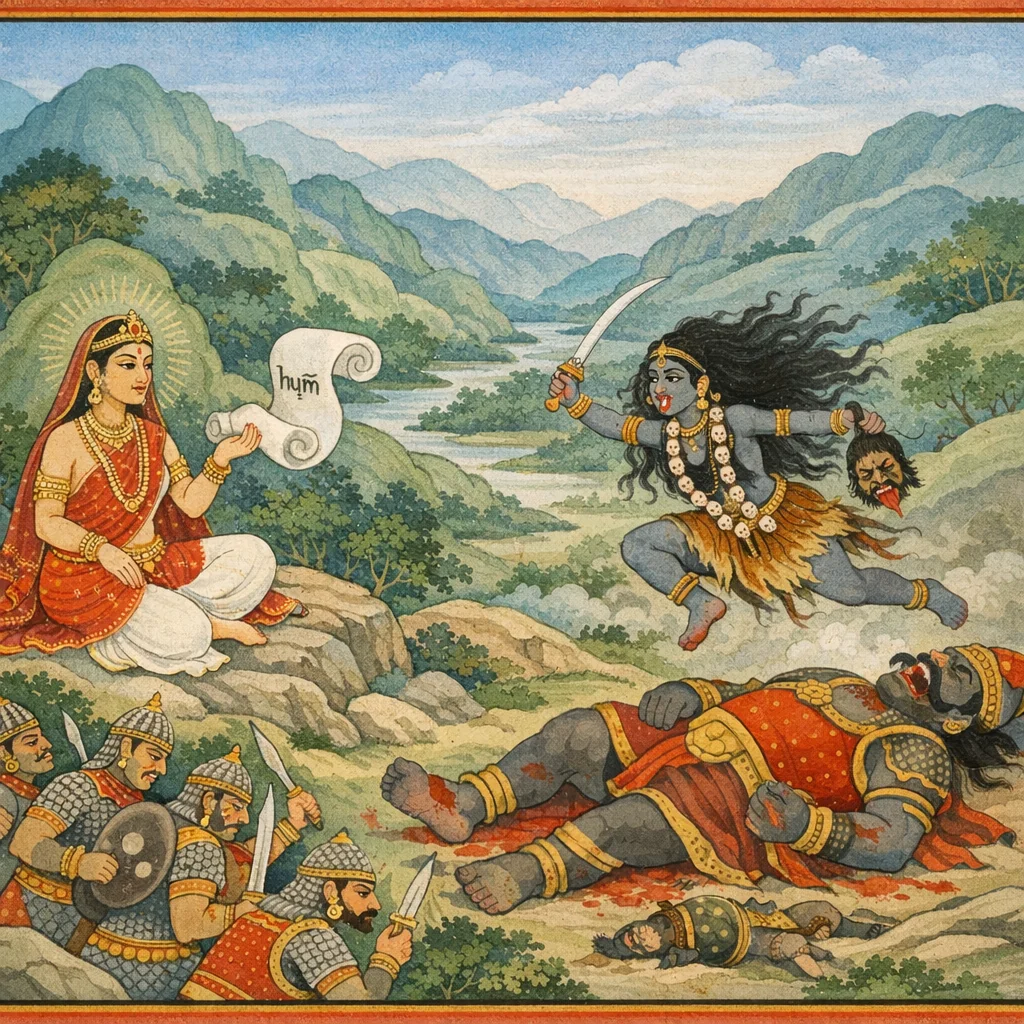
Adhyaya 29: Kaushiki's Battle (Part 2)
Birth of Chamunda
Kaushiki battles Dhumralochana, and the terrifying Chamunda manifests from Kali's wrath.
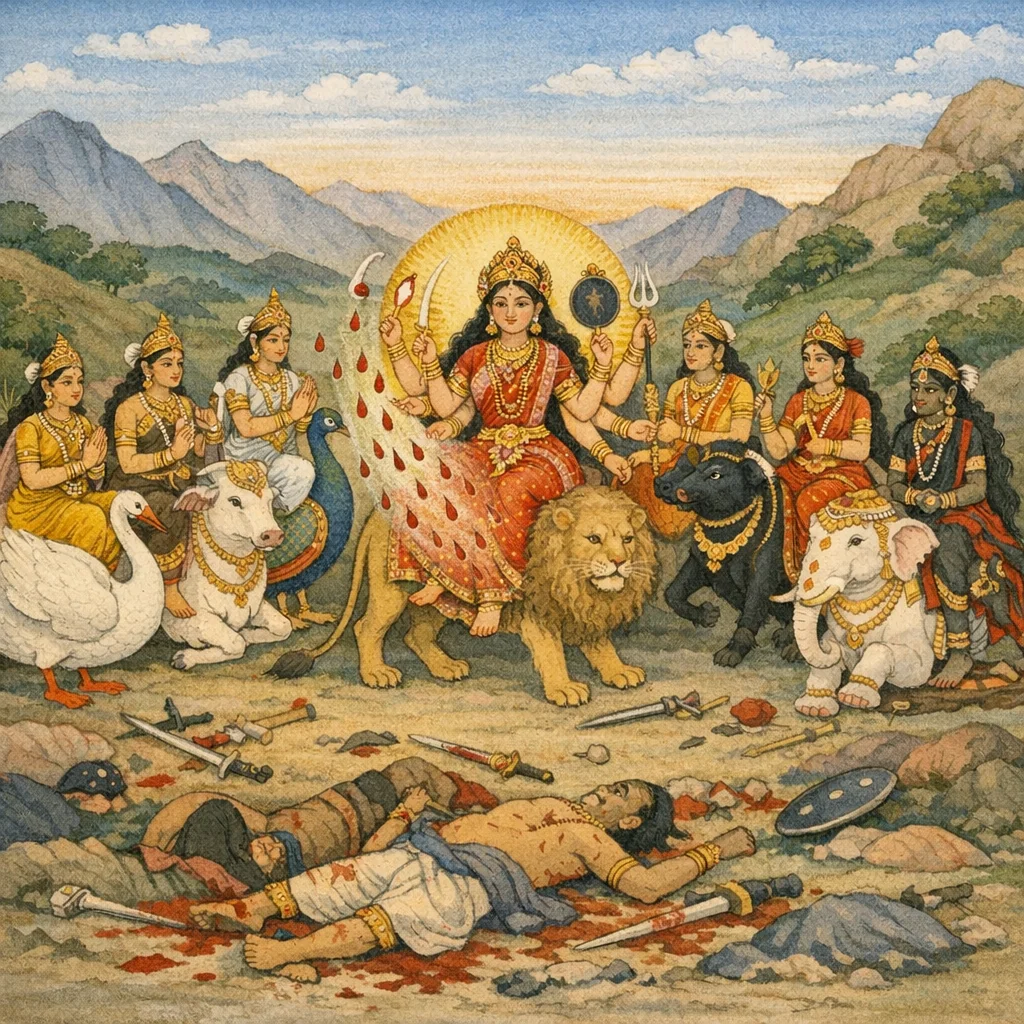
Adhyaya 30: Slaying of Raktabija
Matrikas and the Devas' Hymn
Raktabija and Nishumbha-Shumbha are slain; the Matrikas manifest and the Devas sing a great hymn.
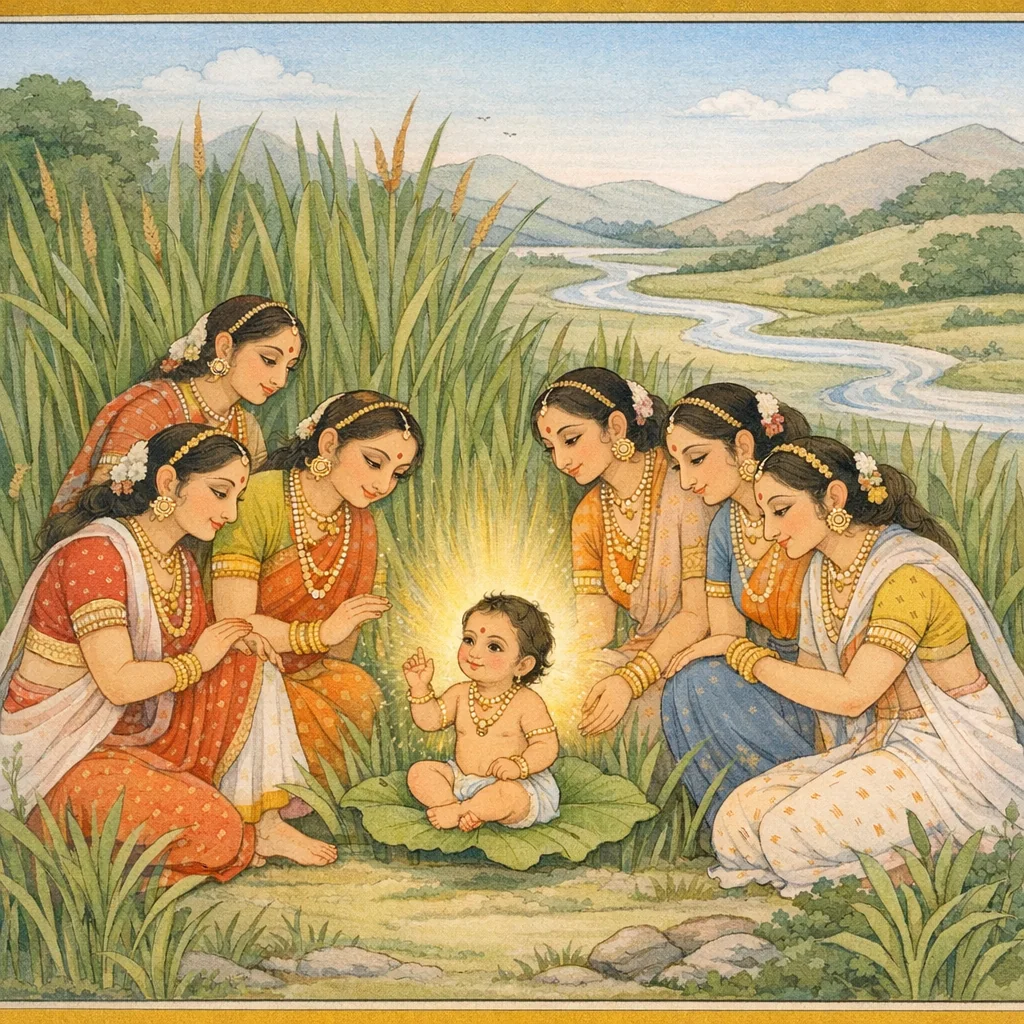
Adhyaya 31: Birth of Skanda (Kartikeya)
Consecration at Kurukshetra
The miraculous birth and divine consecration of Skanda (Kartikeya) at the sacred field of Kurukshetra.
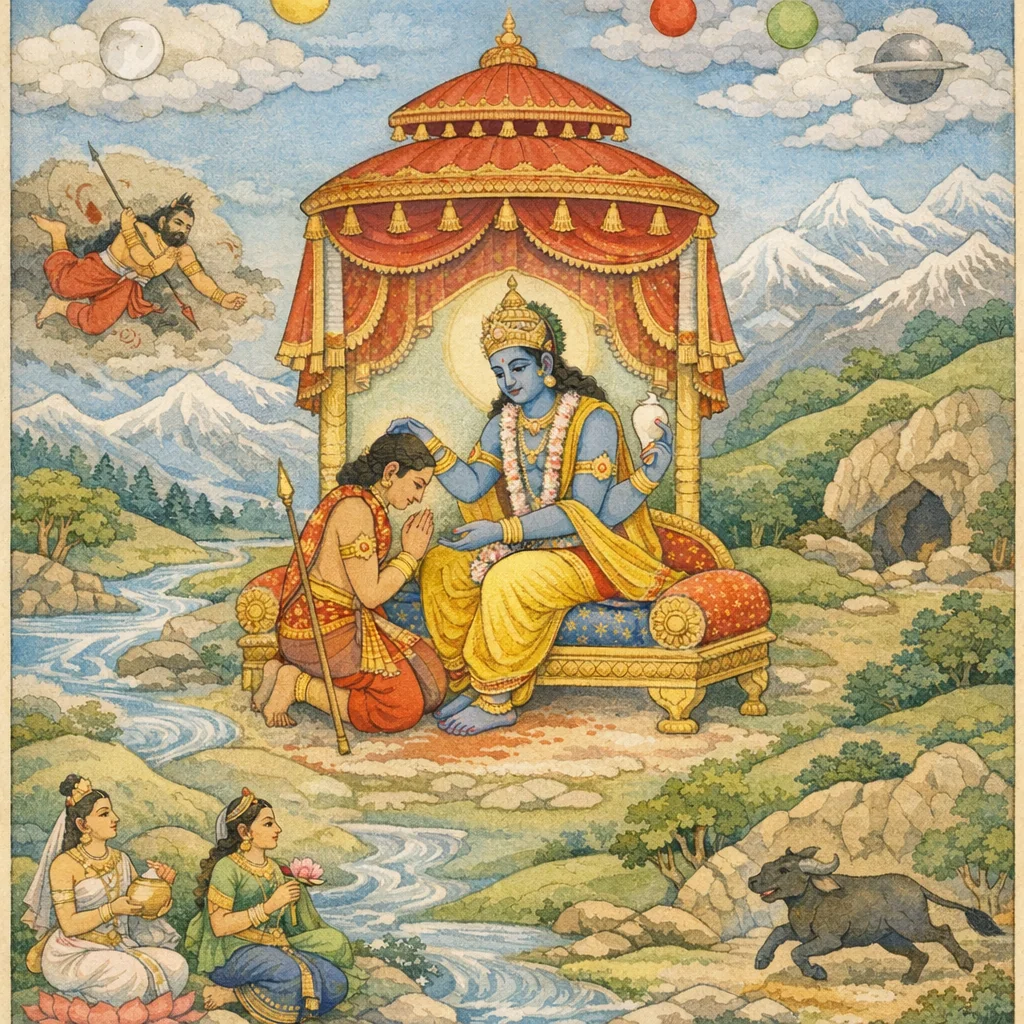
Adhyaya 32: Skanda Slays Taraka & Mahisha
Svastyayana and Victory
Skanda receives blessings (Svastyayana) and defeats the mighty demons Taraka and Mahisha.
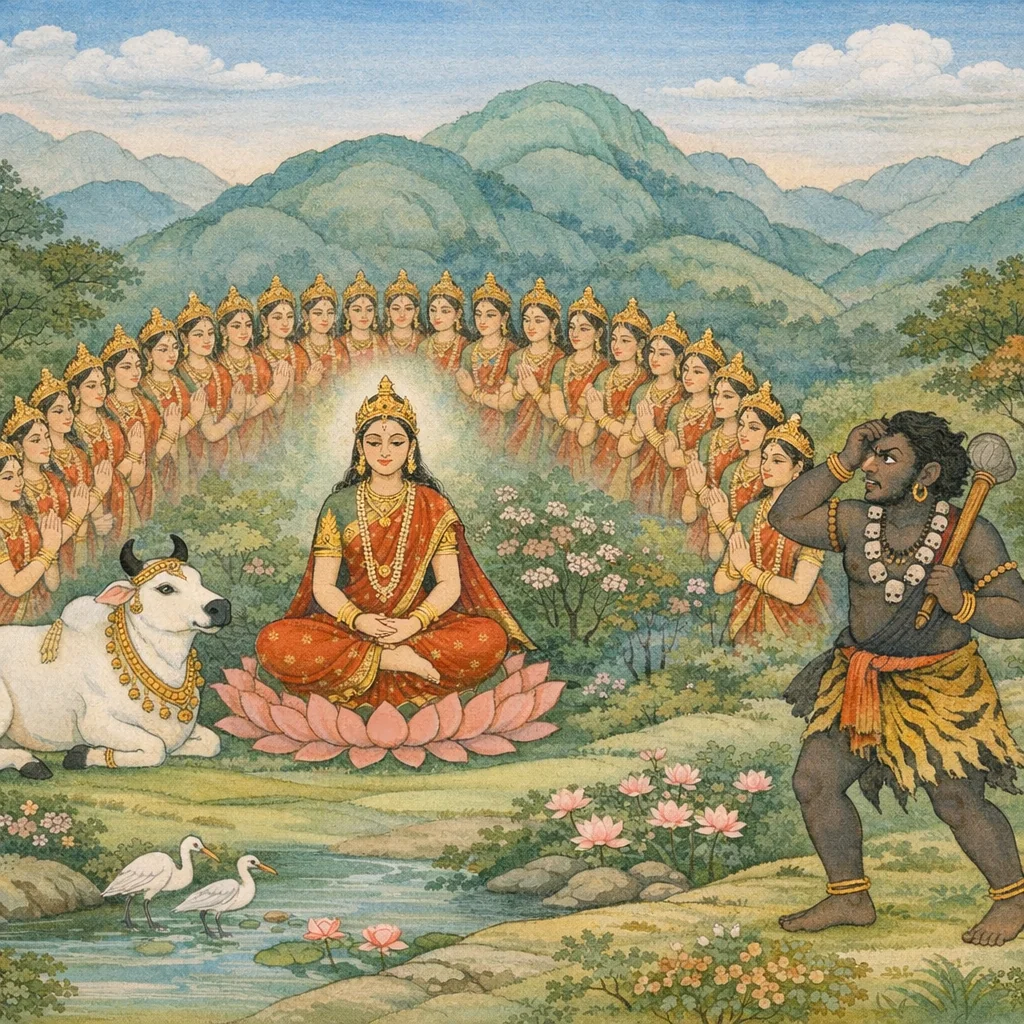
Adhyaya 33: Ritadhvaja Aids Galava
Andhaka's Infatuation with Gauri
King Ritadhvaja helps the sage Galava while Andhaka becomes dangerously infatuated with Gauri.
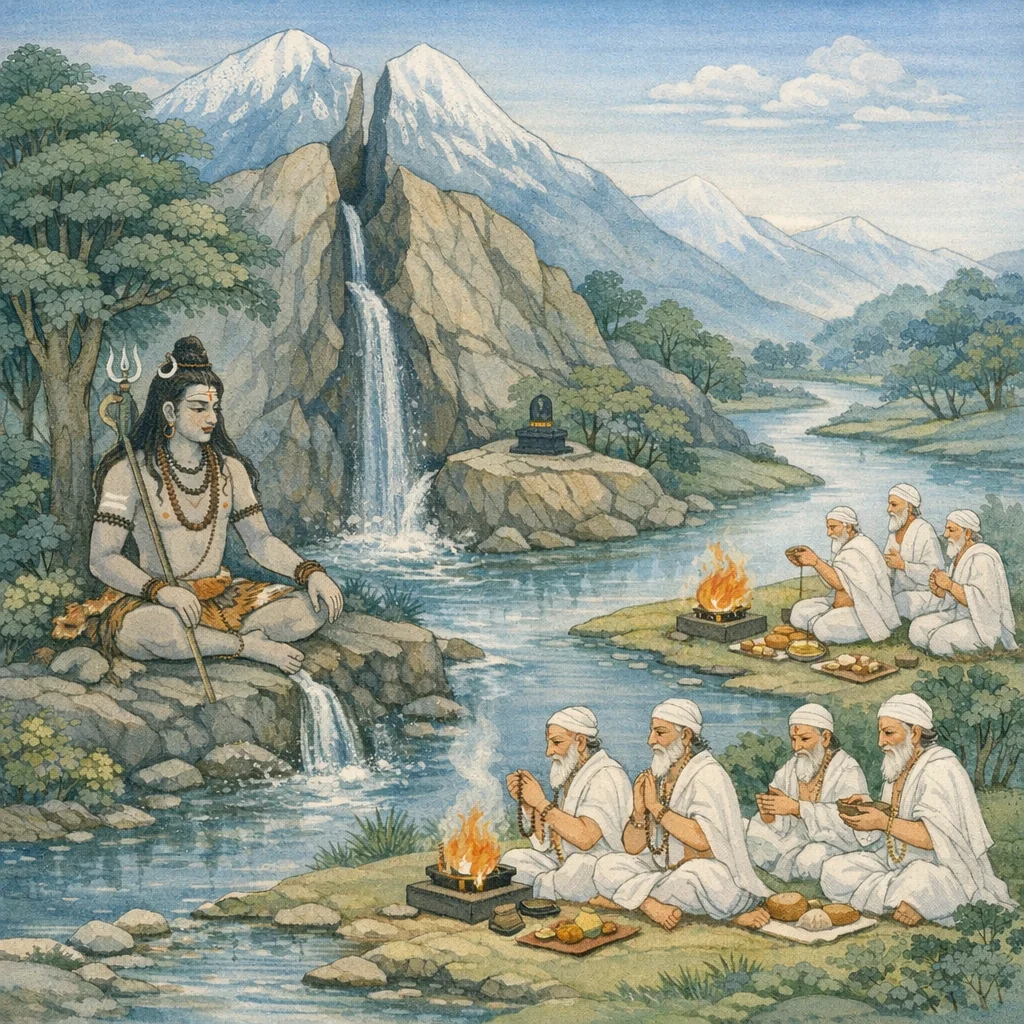
Adhyaya 34: Shiva's Kedara Tirtha
Rise of Mura and Vaishnava Theology
The sanctification of Kedara Tirtha, the rise of the demon Mura, and an excursion into Vaishnava theology.
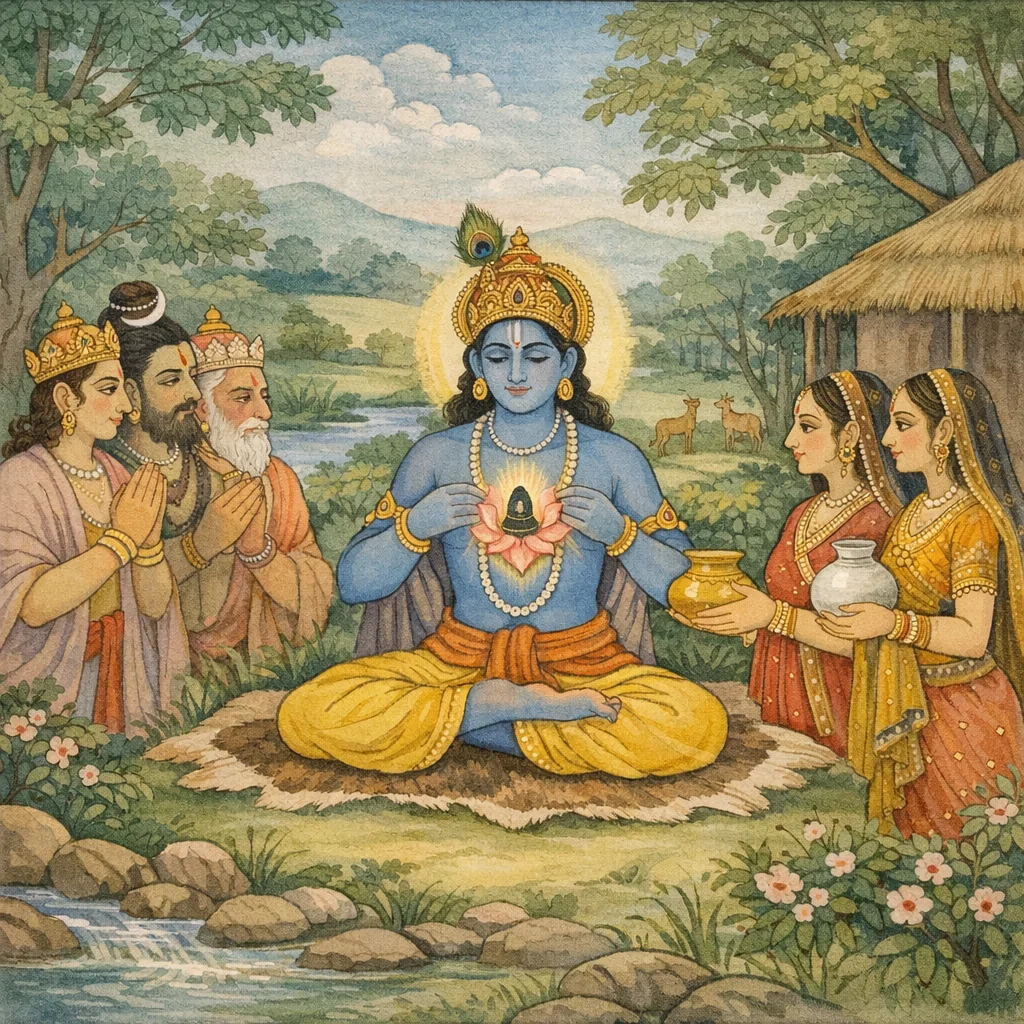
Adhyaya 35: Harihara Revelation
Sthanu in Vishnu at Kurukshetra
The revelation of Harihara (Shiva within Vishnu), and the Kurukshetra tirtha cycle including the Saptasarasvata pilgrimage.
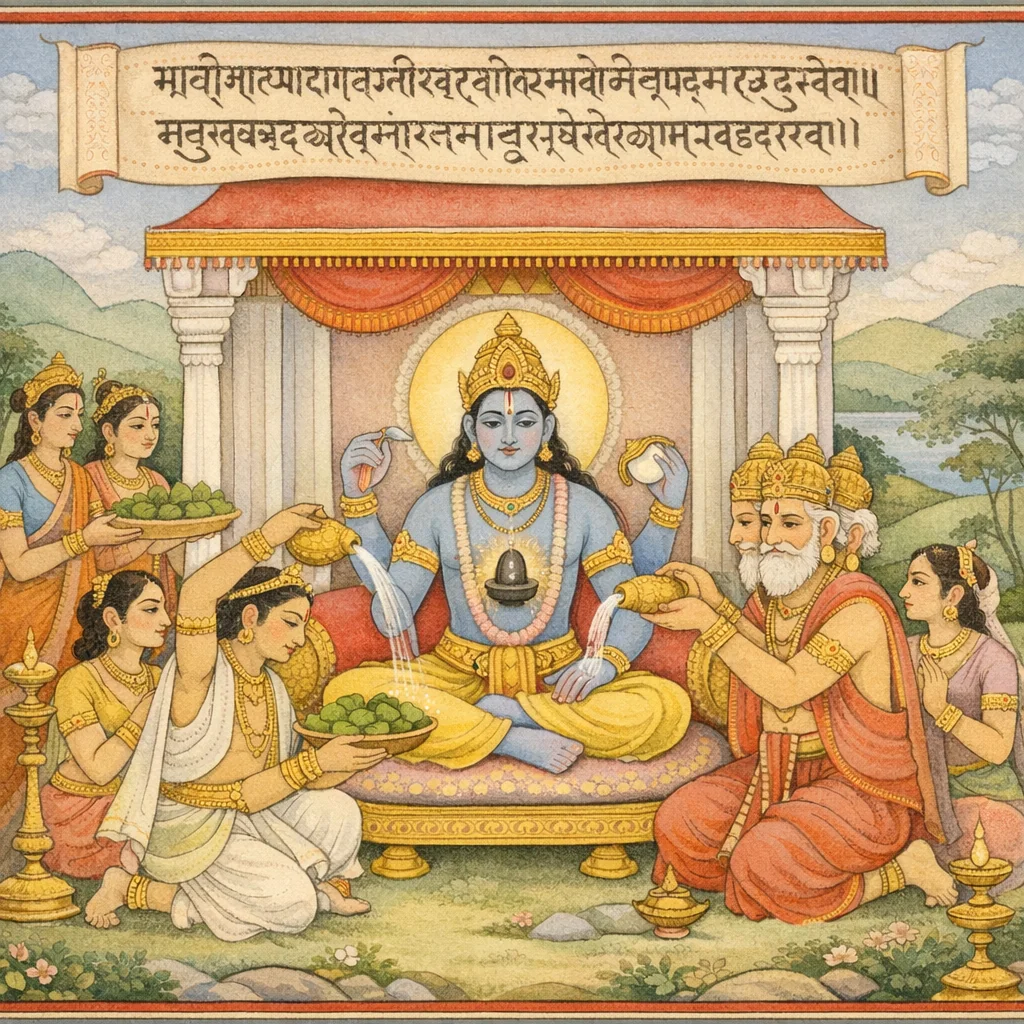
Adhyaya 36: Saptasarasvata Tirtha
Harihara Glory at Kurukshetra
The sacred Saptasarasvata pilgrimage site at Kurukshetra and the continued glorification of the Harihara unity.
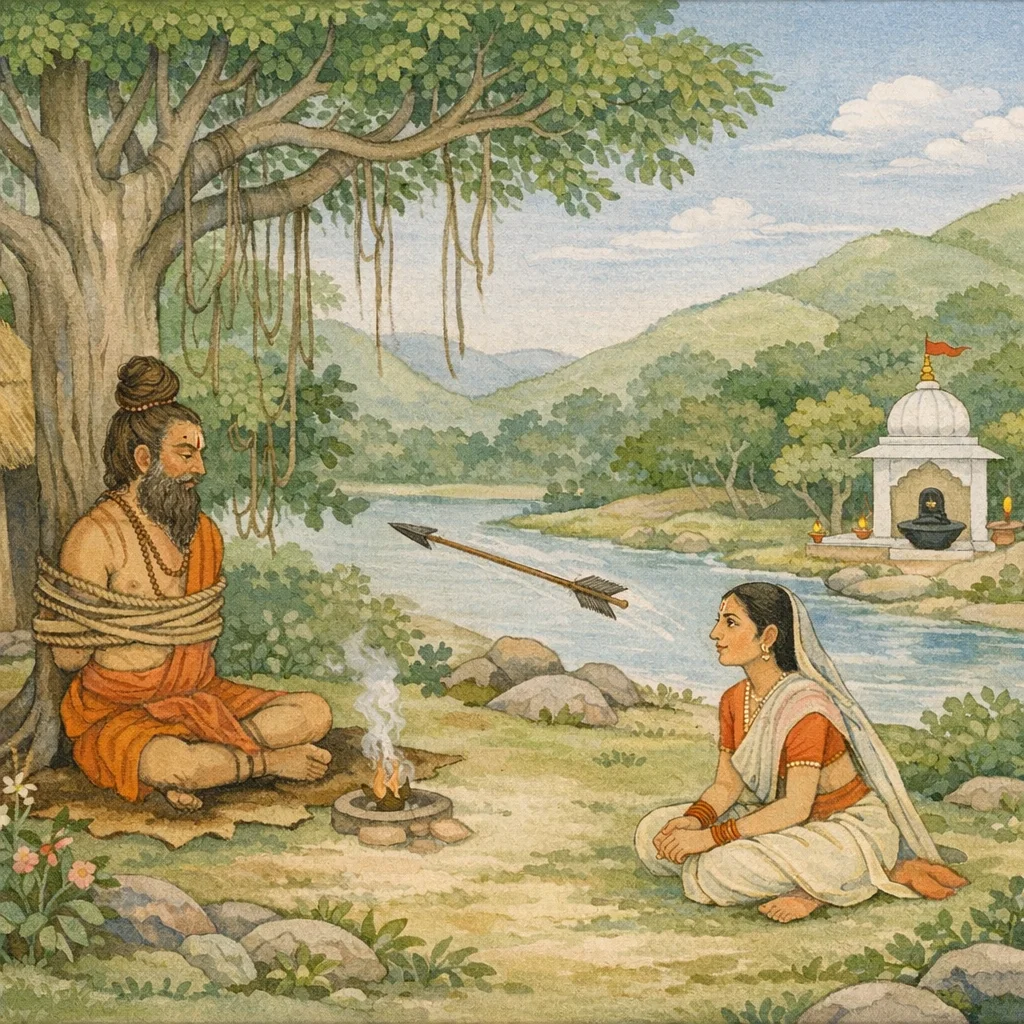
Adhyaya 37: Jabali on the Banyan Tree
Nandayanti's Appeal
The sage Jabali is bound on a banyan tree; Nandayanti appeals at Sri-Kantha on the Yamuna for divine help.
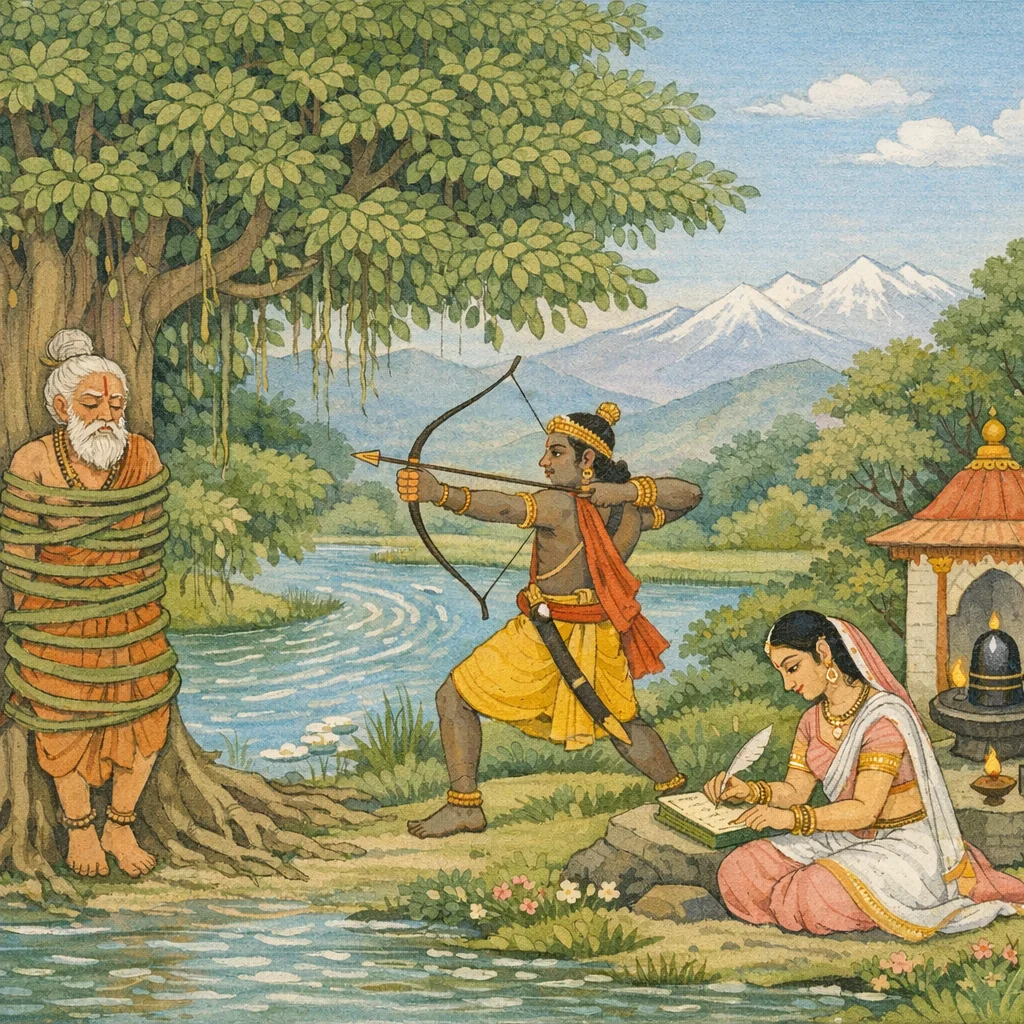
Adhyaya 38: Jabali Bound by the Monkey
Yamuna-Hiranyavati Sacred Corridor
Jabali's ordeal continues as Nandayanti seeks salvation along the sacred Yamuna-Hiranyavati corridor.
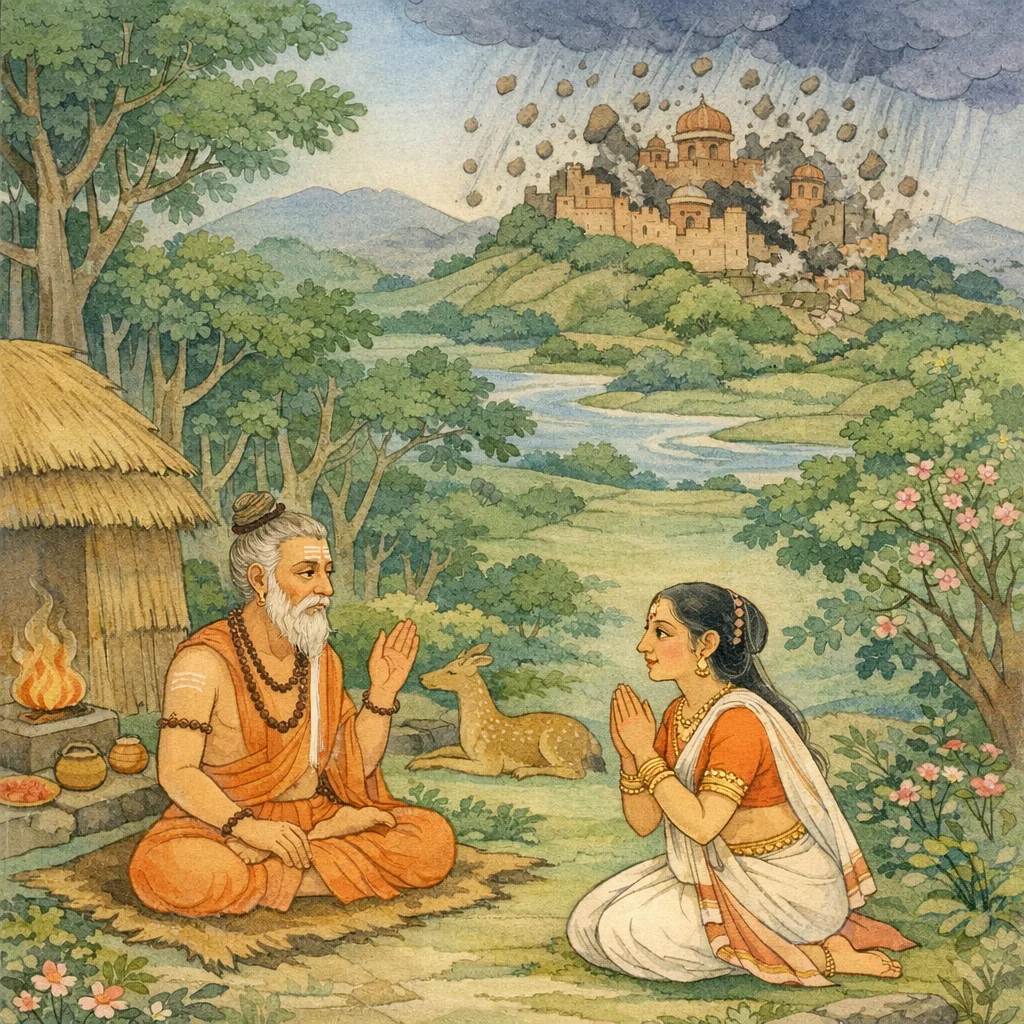
Adhyaya 39: Shukra's Curse on King Danda
Andhaka Challenges Shiva
Sage Shukra curses King Danda for his transgression, and Andhaka rises to challenge Lord Shiva directly.
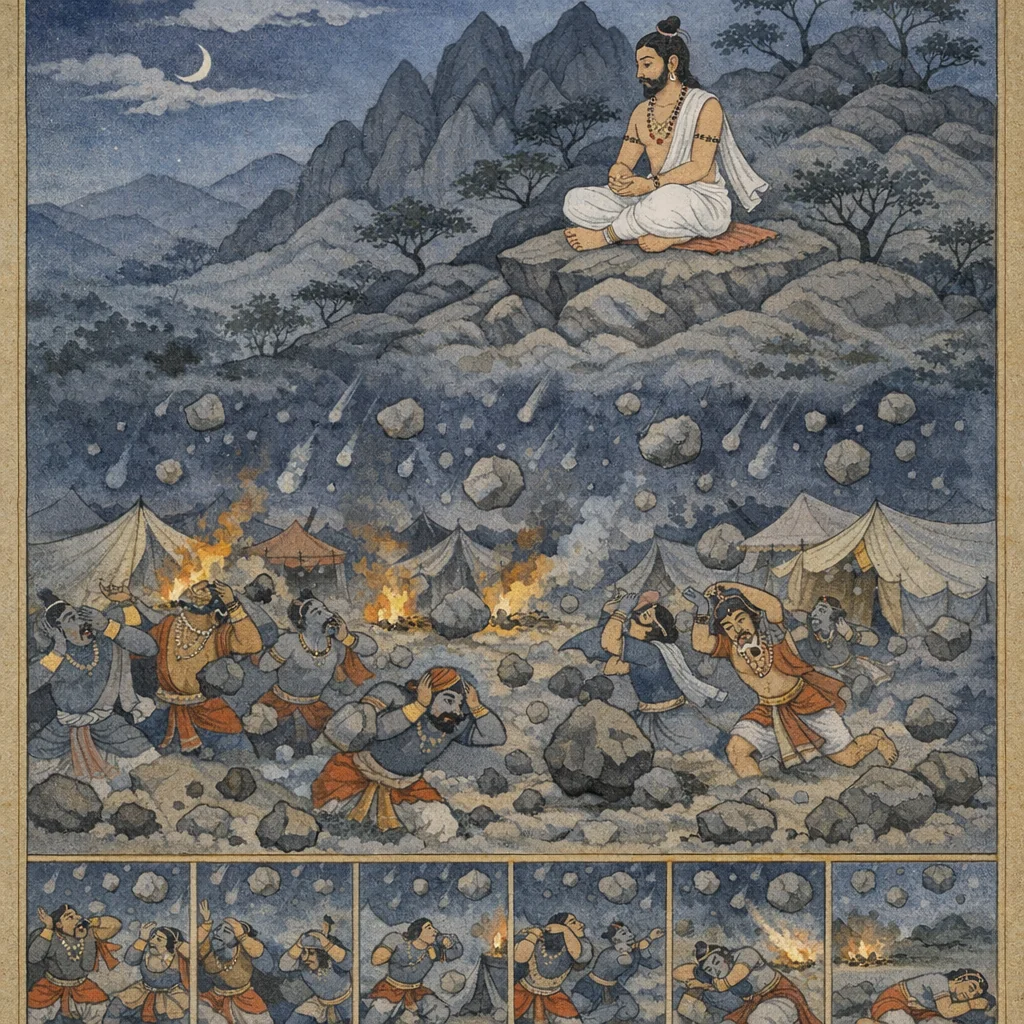
Adhyaya 40: Prahlada's Counsel to Andhaka
Shukra's Curse Continued
Prahlada counsels the reckless Andhaka on the path of dharma after Shukra's devastating curse on King Danda.
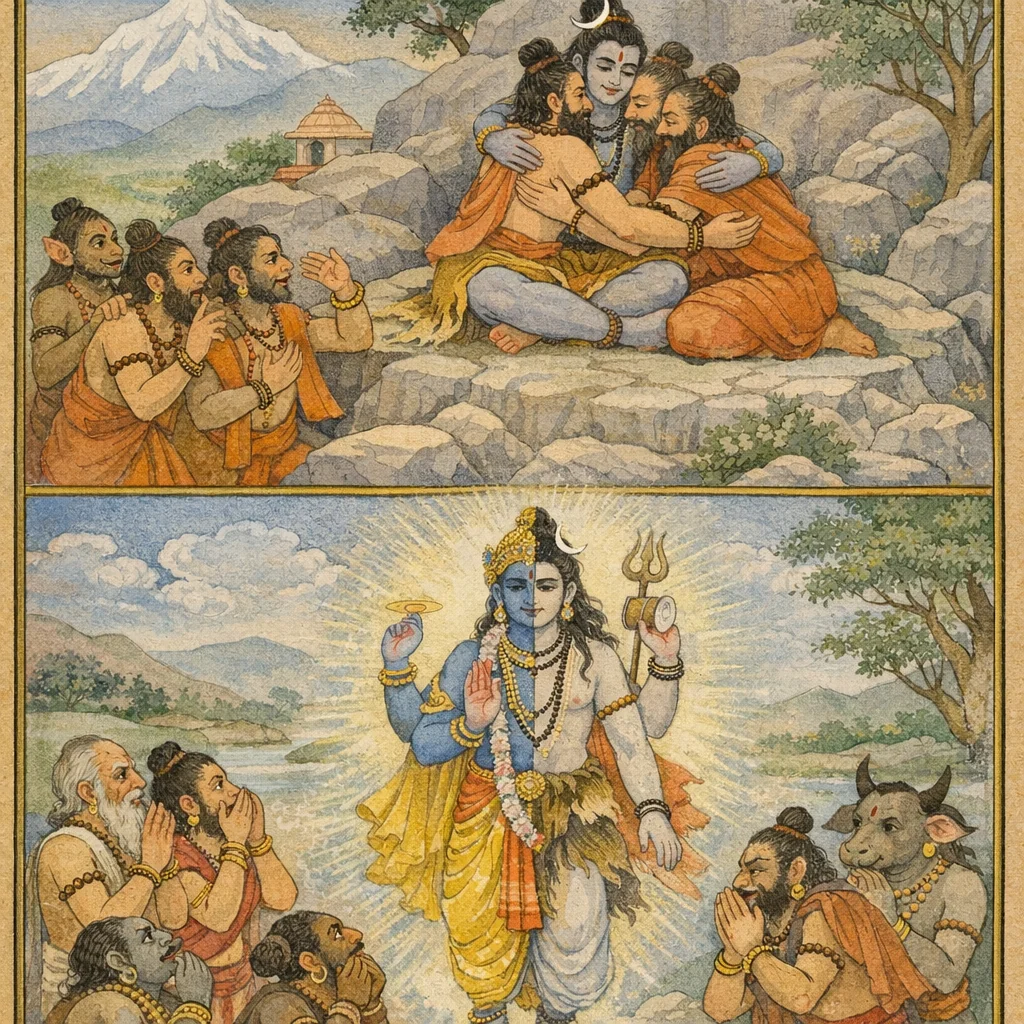
Adhyaya 41: Harihara Non-Duality
Revelation of Sadasiva to the Ganas
The profound revelation of Harihara non-duality: Shiva and Vishnu as one Sadasiva, shown to the divine attendants.
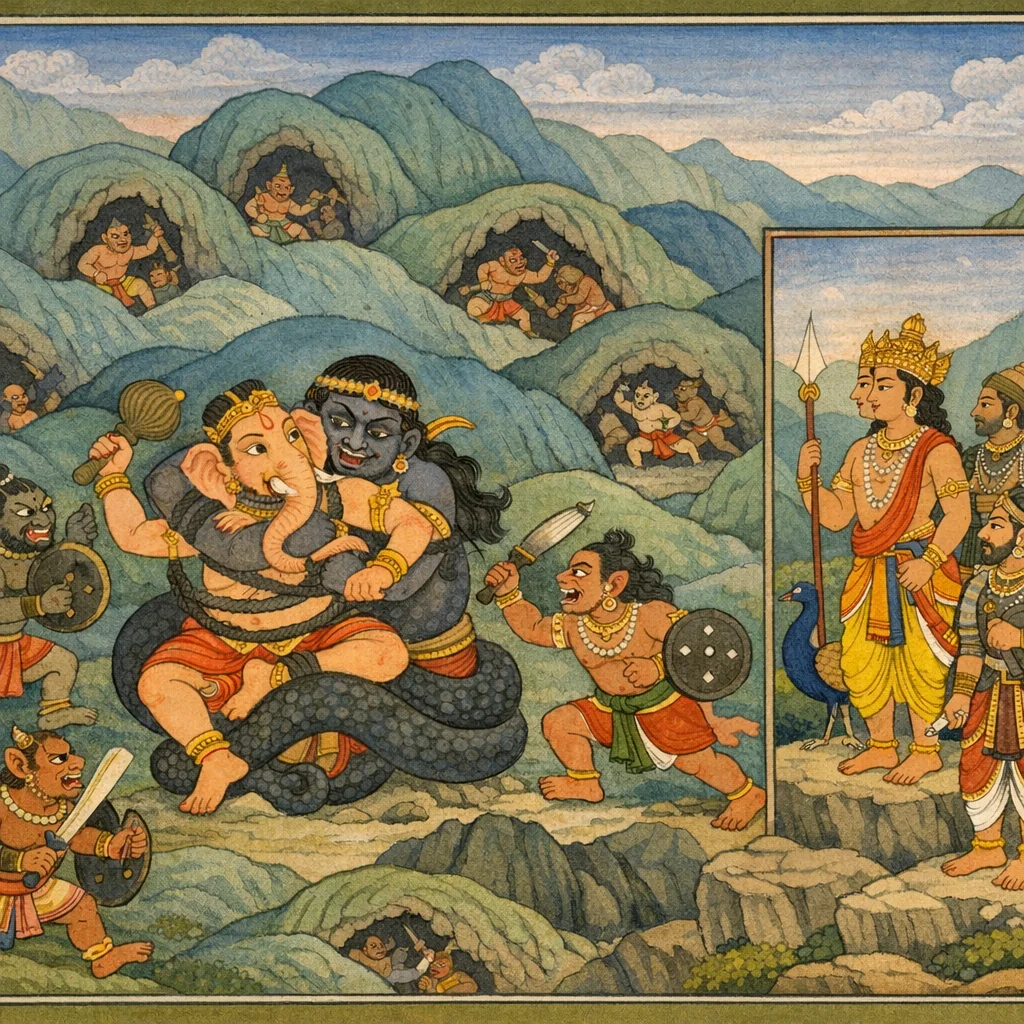
Adhyaya 42: Battle at Mandara
Vinayaka, Nandin, and Skanda Rout the Daityas
The great battle at Mount Mandara where Vinayaka, Nandin, and Skanda decisively rout the Daitya armies.
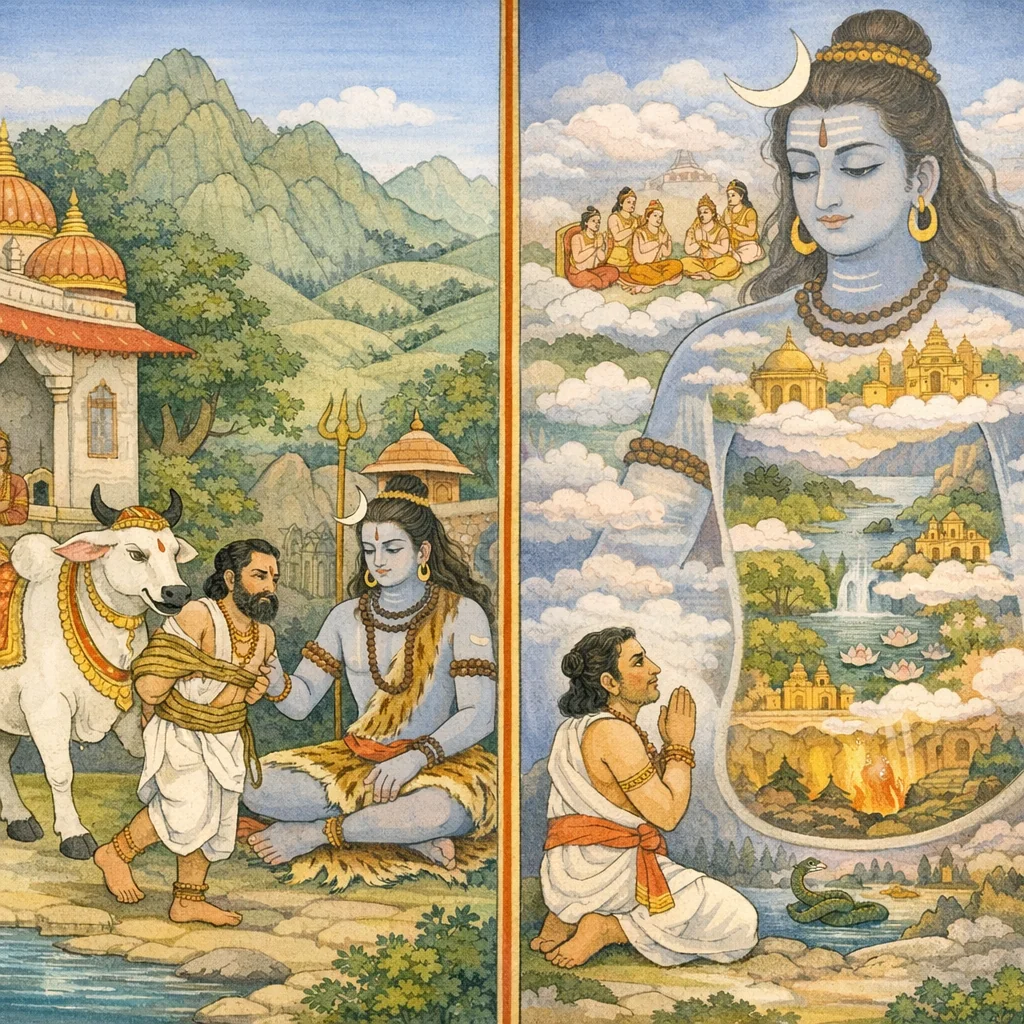
Adhyaya 43: Shukra's Samjivani
Shiva Contains the Asuras
Shukra employs the Samjivani (life-restoring) knowledge, Shiva contains the Asuras, and Indra regains power.
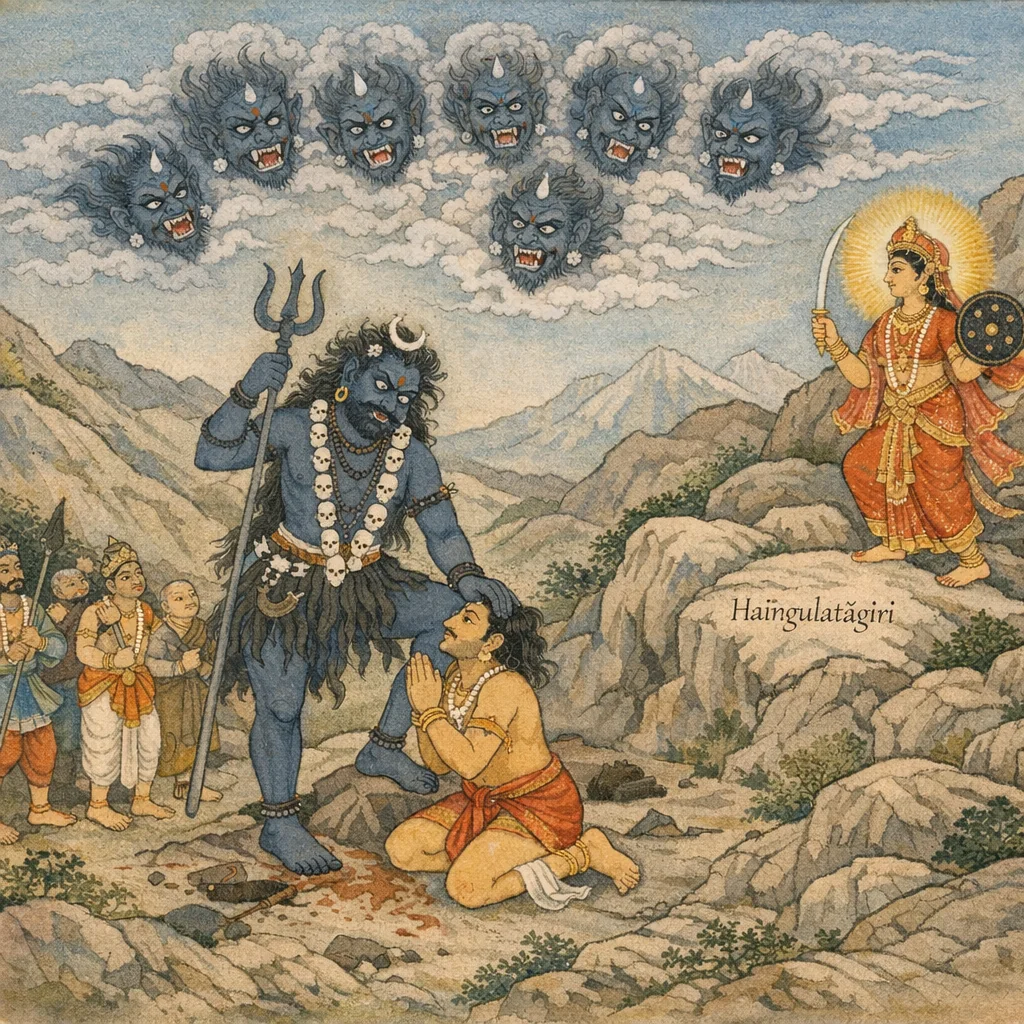
Adhyaya 44: Andhaka's Defeat & Redemption
Bhairava Manifestation
Andhaka is defeated by the terrifying Bhairava manifestation of Shiva and redeemed as Bhringi Ganapati.
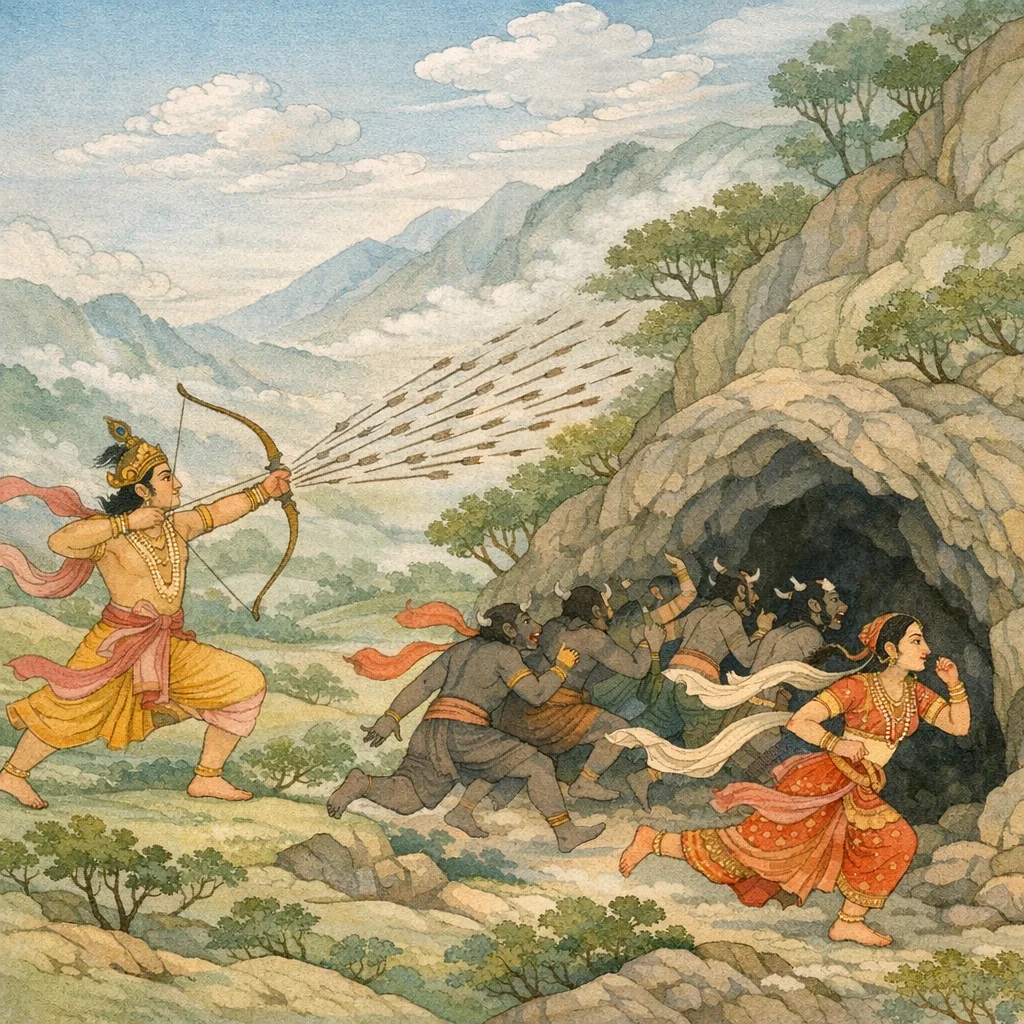
Adhyaya 45: Indra's Campaign on Mount Malaya
Birth of the Maruts
Indra campaigns on Mount Malaya, and the Maruts are born -- origin of the epithet Gotrabhid.
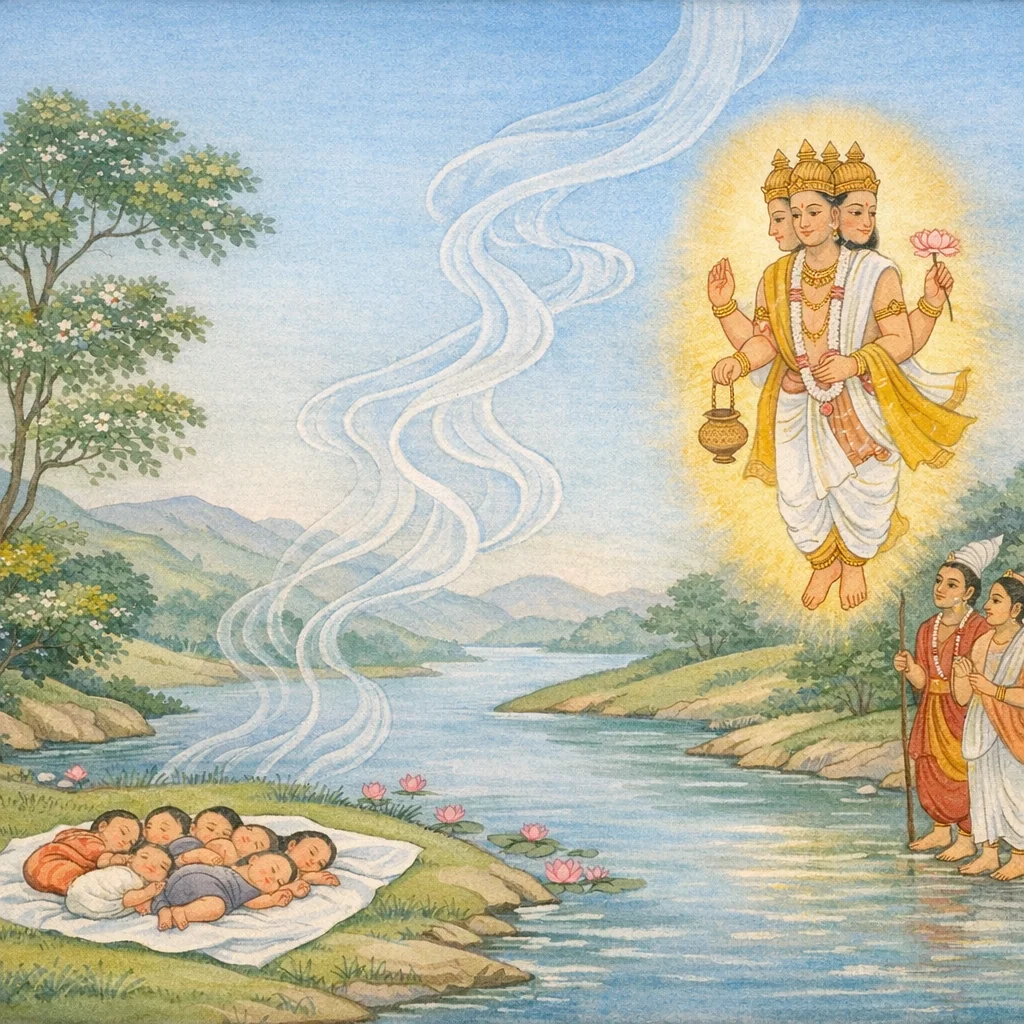
Adhyaya 46: Origins of the Maruts
Across the Manvantaras
The Pulastya-Narada dialogue traces the origins and manifestations of the Maruts across cosmic cycles.
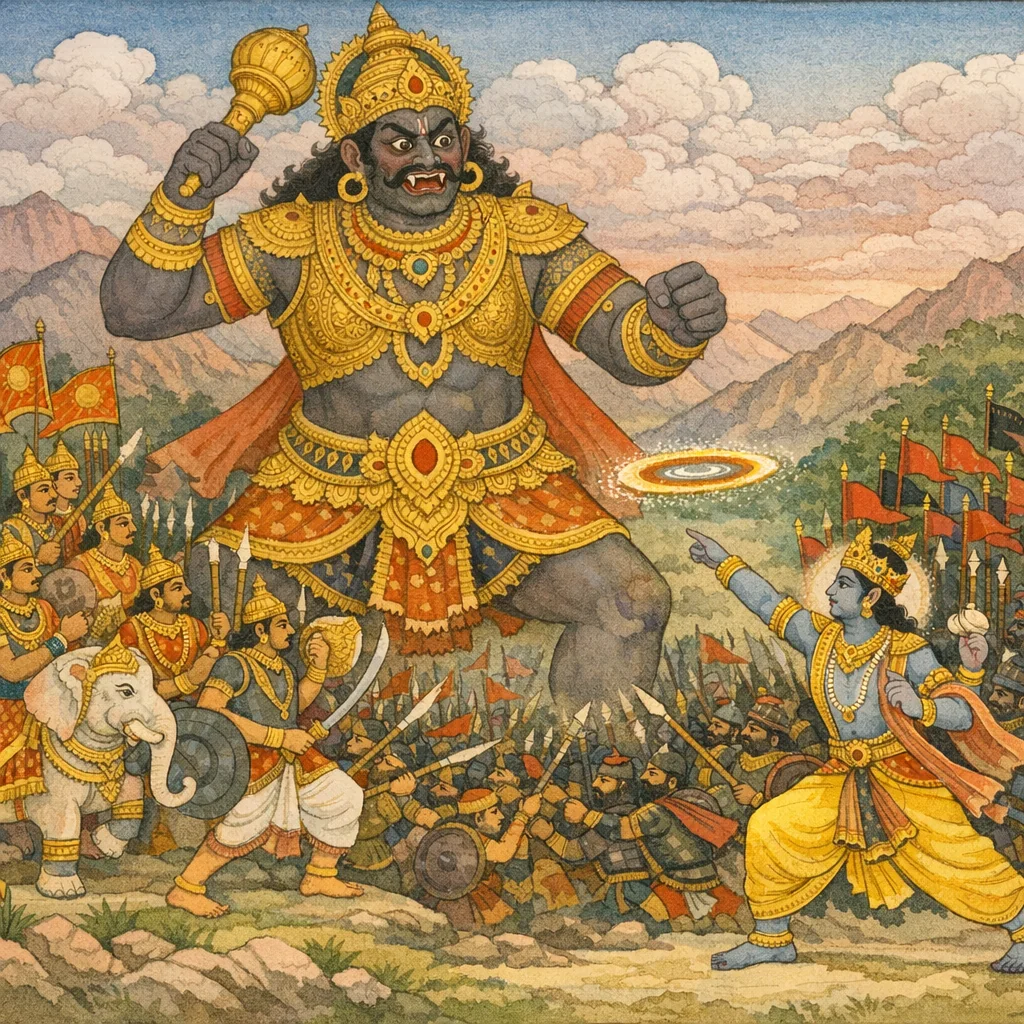
Adhyaya 47: Vishnu Slays Kalanemi
The Deva-Asura War
Vishnu enters the great Deva-Asura war and destroys the formidable demon Kalanemi.
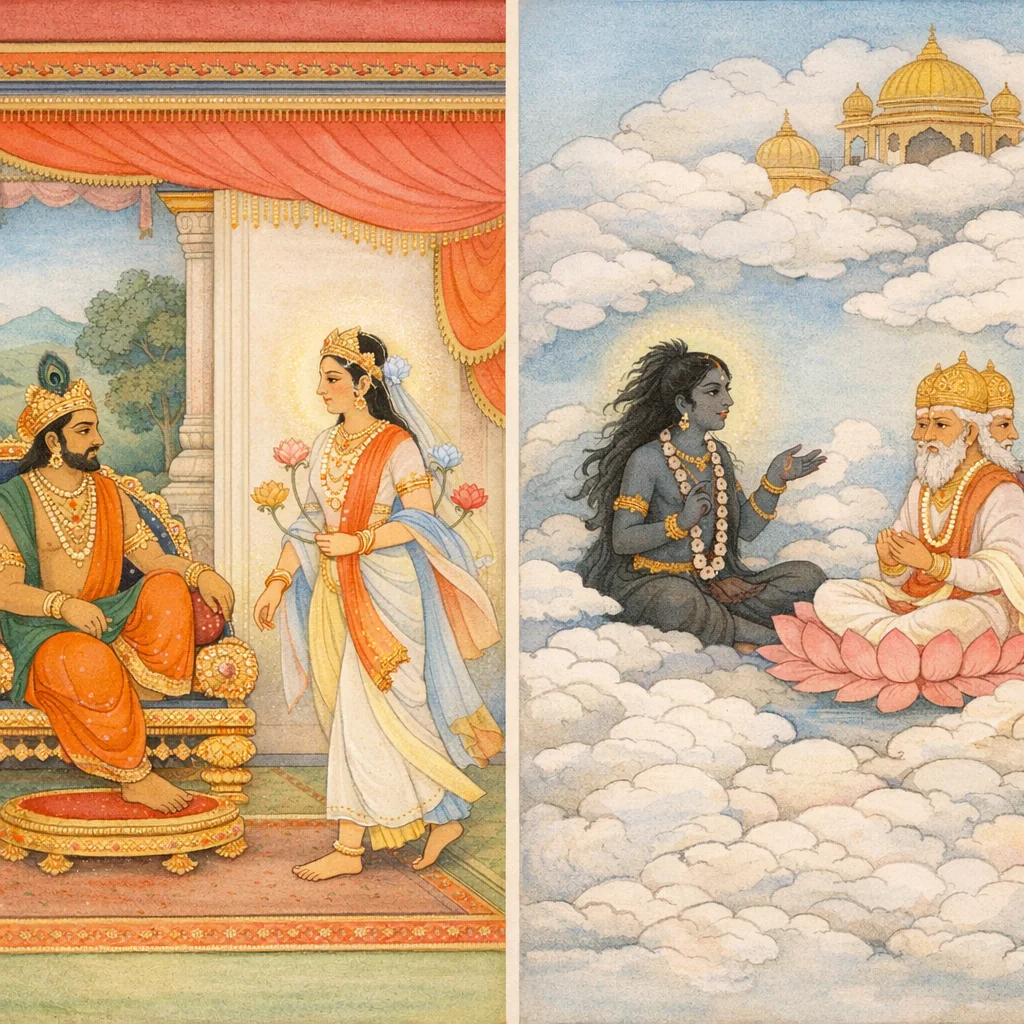
Adhyaya 48: Kali's Complaint to Brahma (Part 1)
Arrival of Jayashri
The goddess Kali (strife) complains to Brahma about the decline of dharma; Sri (Jayashri) arrives in Bali's court.
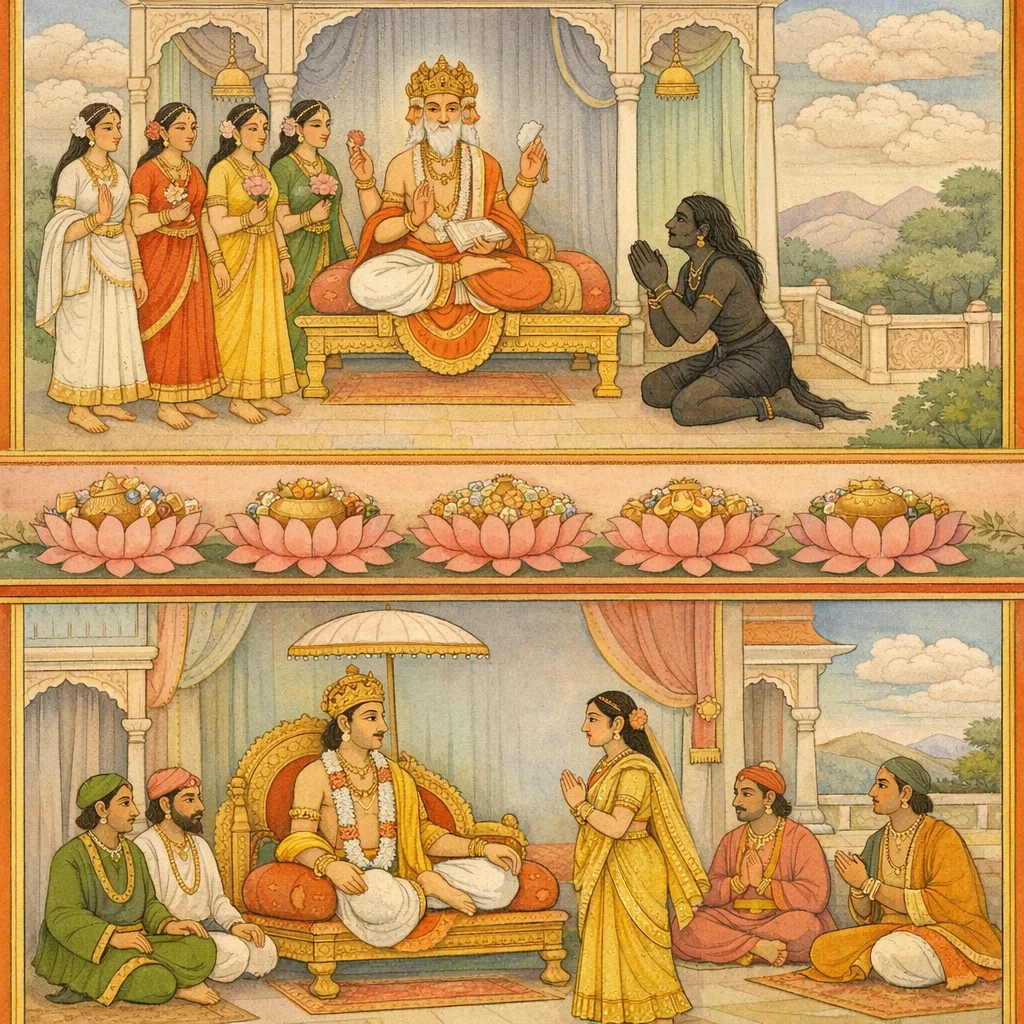
Adhyaya 49: Kali's Complaint to Brahma (Part 2)
Sri in Bali's Reign
Continuation of Kali's complaint; the goddess Sri's presence during the reign of the magnanimous King Bali.
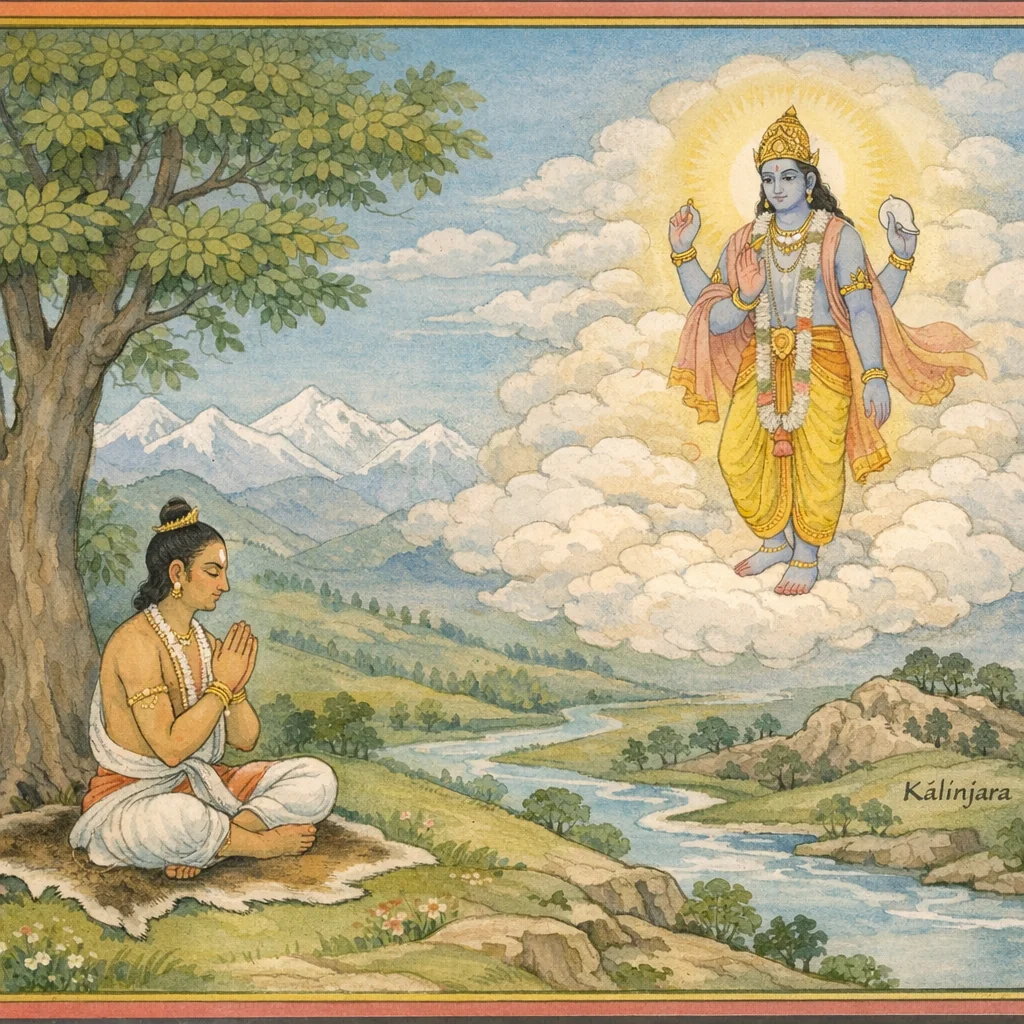
Adhyaya 50: Indra's Penance & Aditi's Vow
Solar Vow for Vishnu's Descent
Indra performs penance at the sacred river while Aditi undertakes a solar vow to bring about Vishnu's descent as Vamana.
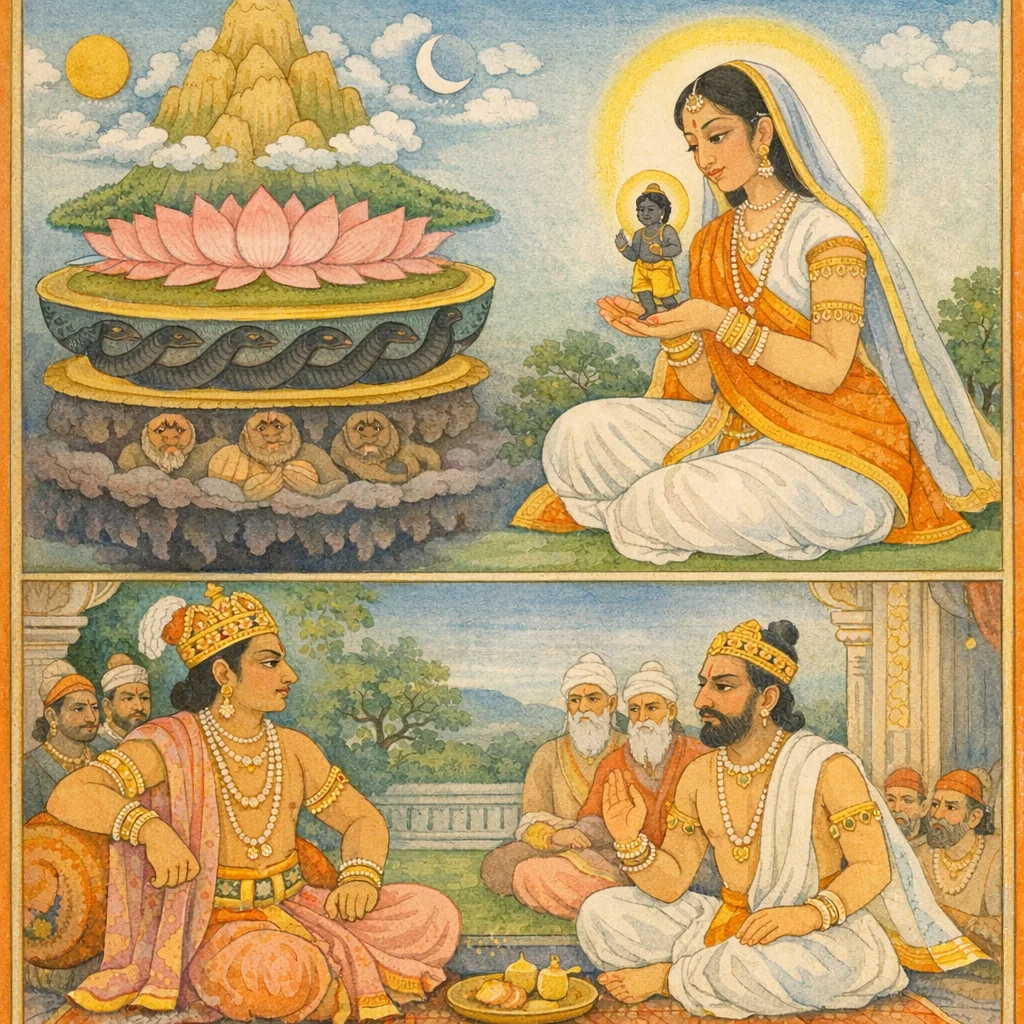
Adhyaya 51: Bali Learns of Vamana
Prahlada Teaches Refuge in Hari
Bali learns that Vamana is growing in Aditi's womb; his grandfather Prahlada teaches the supreme refuge in Hari.
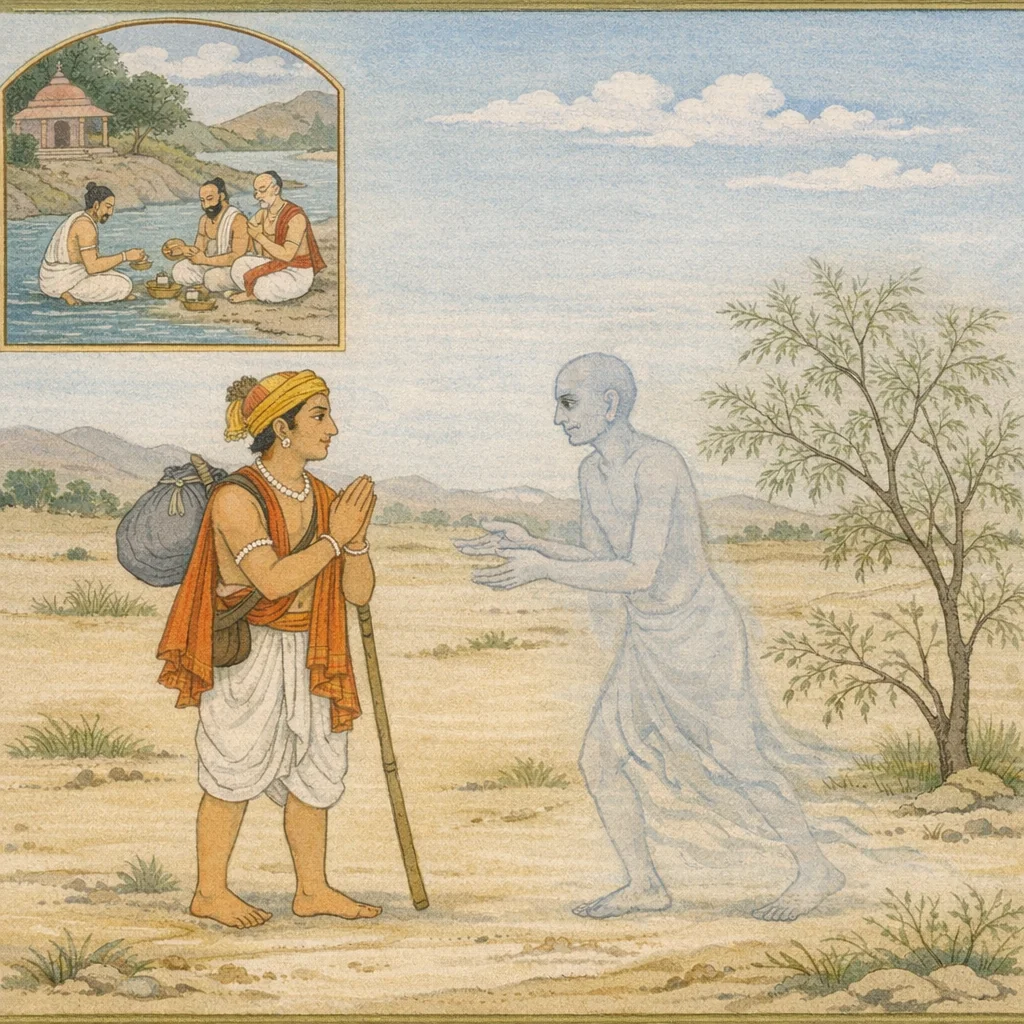
Adhyaya 52: Merit of Shravana Dvadashi
Liberation of a Preta
The immense merit of the Shravana-Dvadashi observance and the liberation of a restless spirit through Gaya rites.
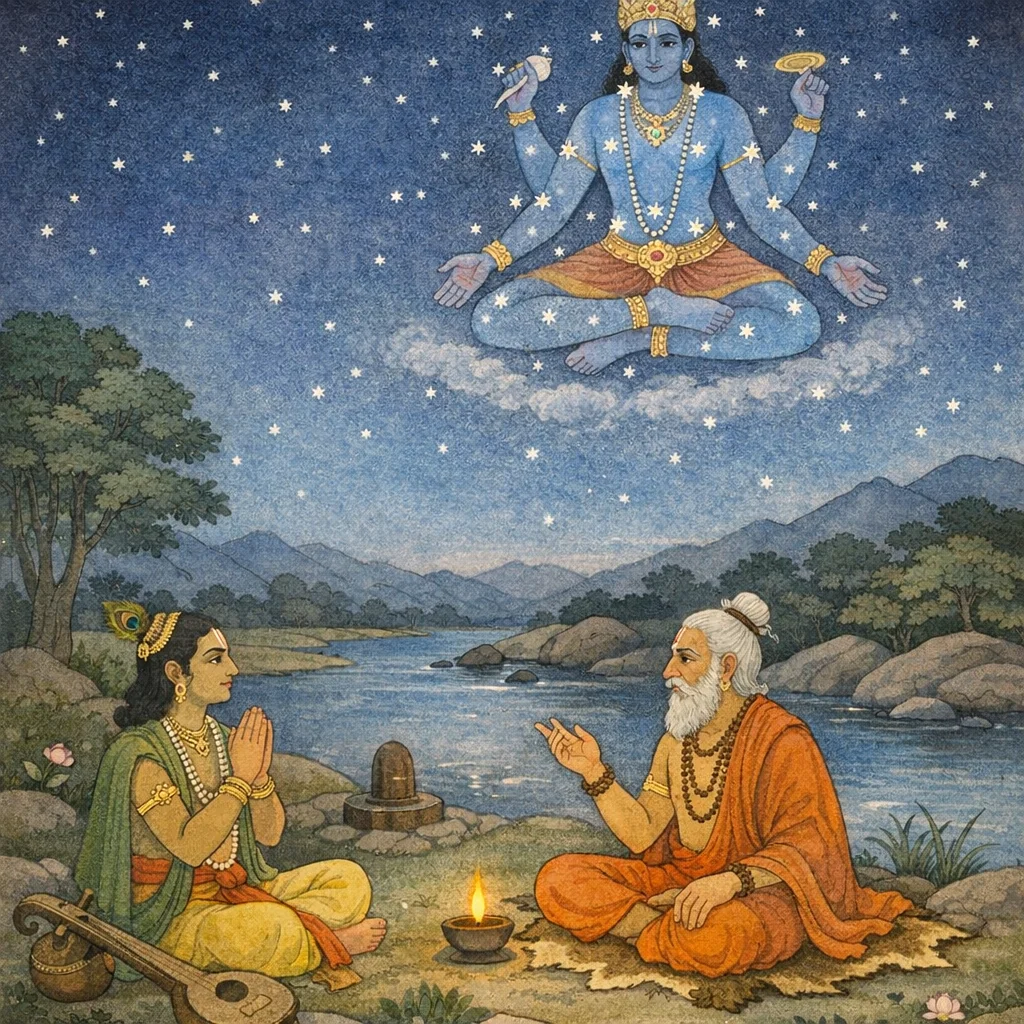
Adhyaya 53: Nakshatra-Purusha Vrata
Worship of Vishnu as the Constellations
The Nakshatra-Purusha Vrata: worshipping Vishnu's cosmic body mapped onto the twenty-seven constellations.
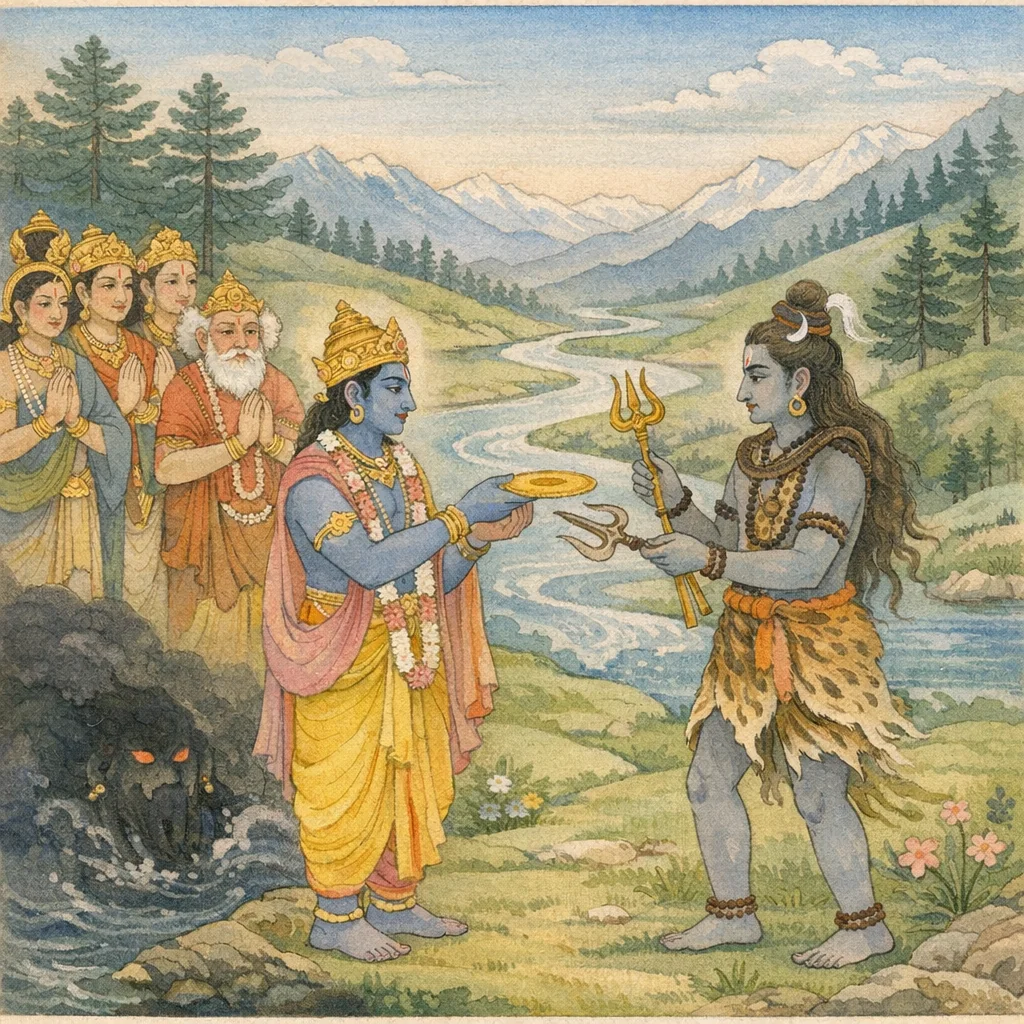
Adhyaya 54: Prahlada's Pilgrimage
Sudarshana-Trishula Exchange
Prahlada's pilgrimage and the origin story of the exchange of the Sudarshana discus and Trishula (trident).
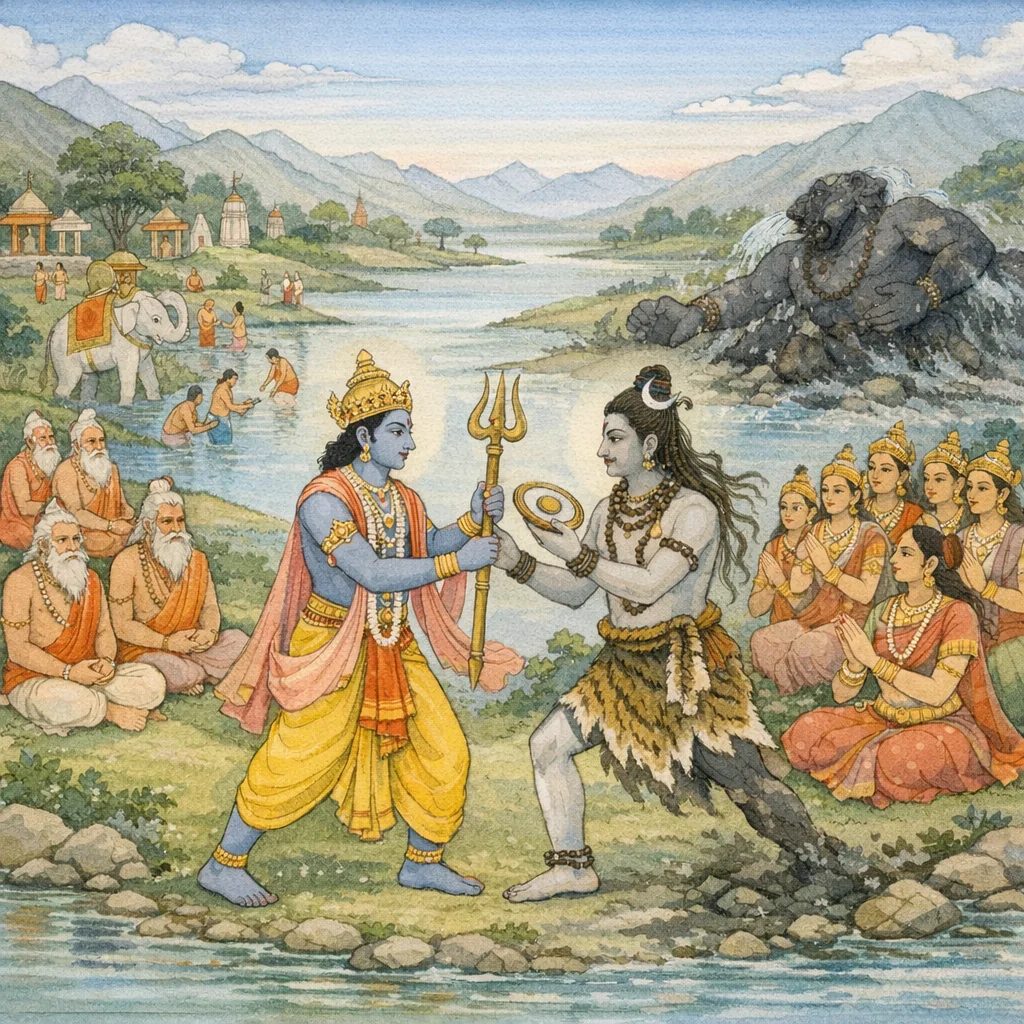
Adhyaya 55: Prahlada at Kurukshetra
Origin of the Chakra-Trishula Exchange
Prahlada's pilgrimage to Kurukshetra and the theological origin of the weapon exchange between Vishnu and Shiva.
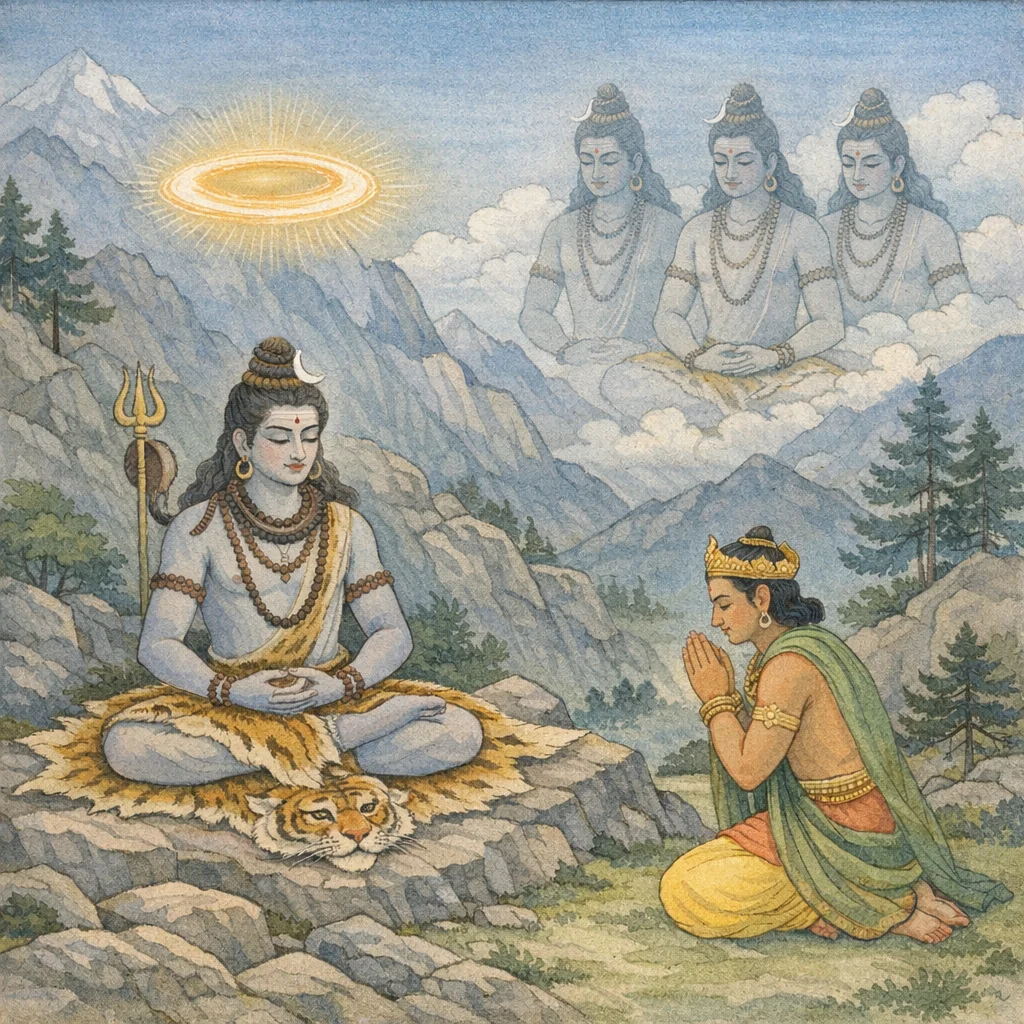
Adhyaya 56: Gift of Sudarshana
Sanctification of Virupaksha
Shiva's boon of Sudarshana to Vishnu and the sanctification of the Virupaksha pilgrimage site.
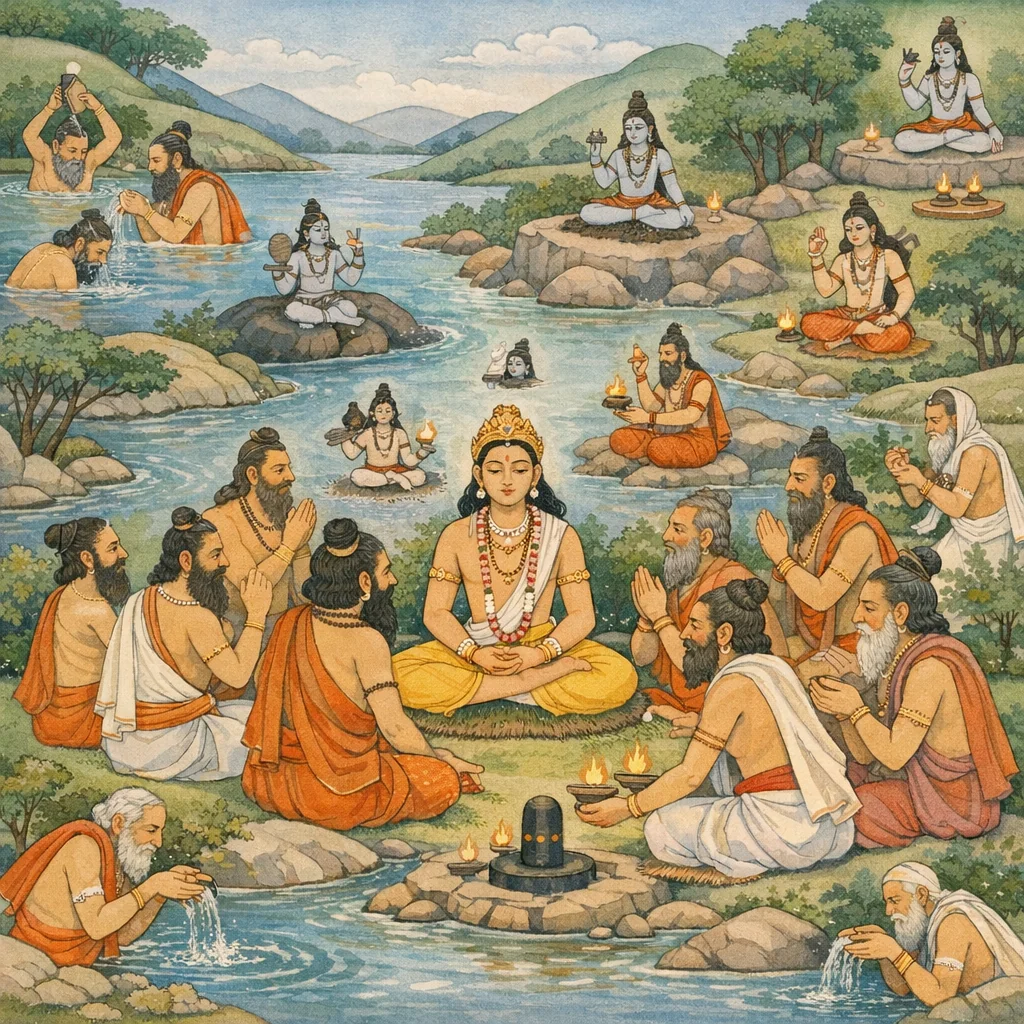
Adhyaya 57: Prahlada's Tirtha Circuit
Naimisha to Shalagrama
Prahlada's grand pilgrimage circuit visiting sacred sites from Naimisha to Rudrakoti and Shalagrama.
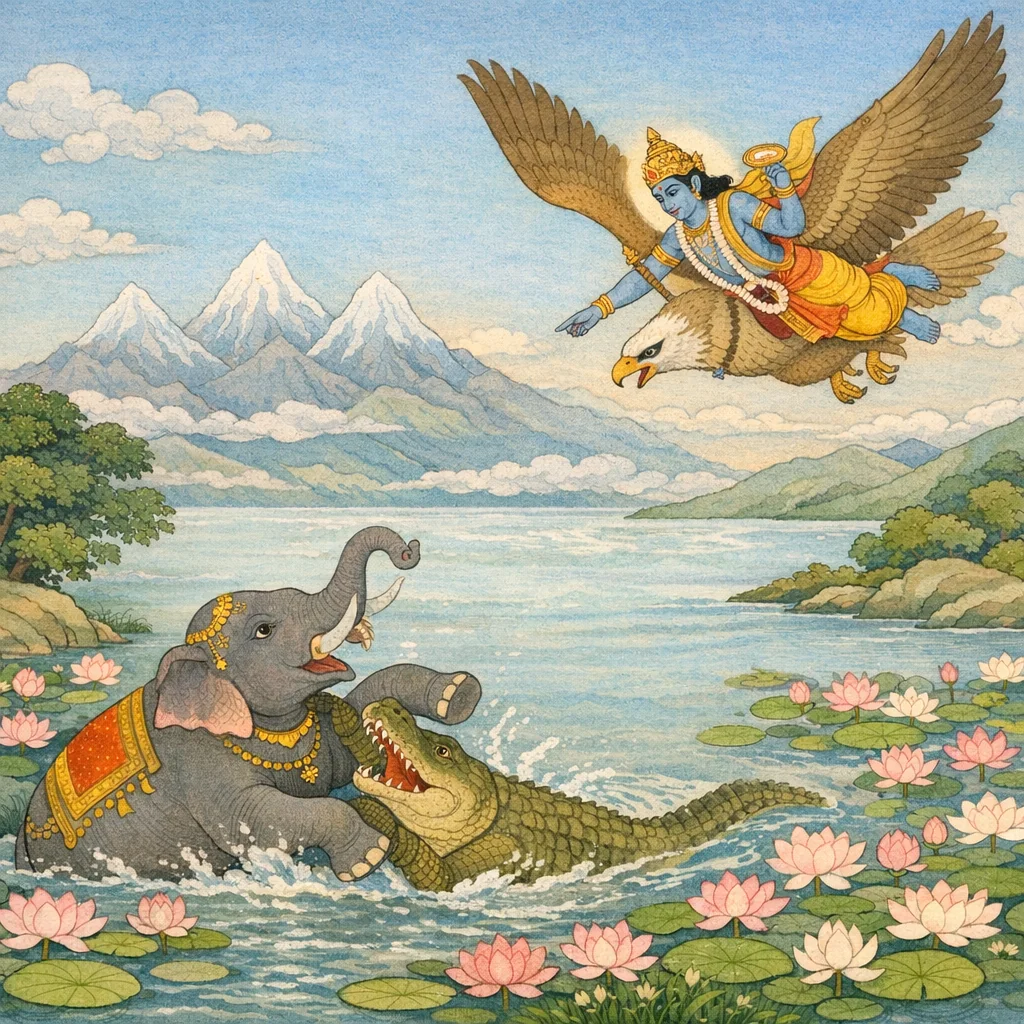
Adhyaya 58: Gajendra's Deliverance
Power of Remembrance
The famous Gajendra-moksha episode: the elephant king's deliverance through the protective power of remembering Vishnu.
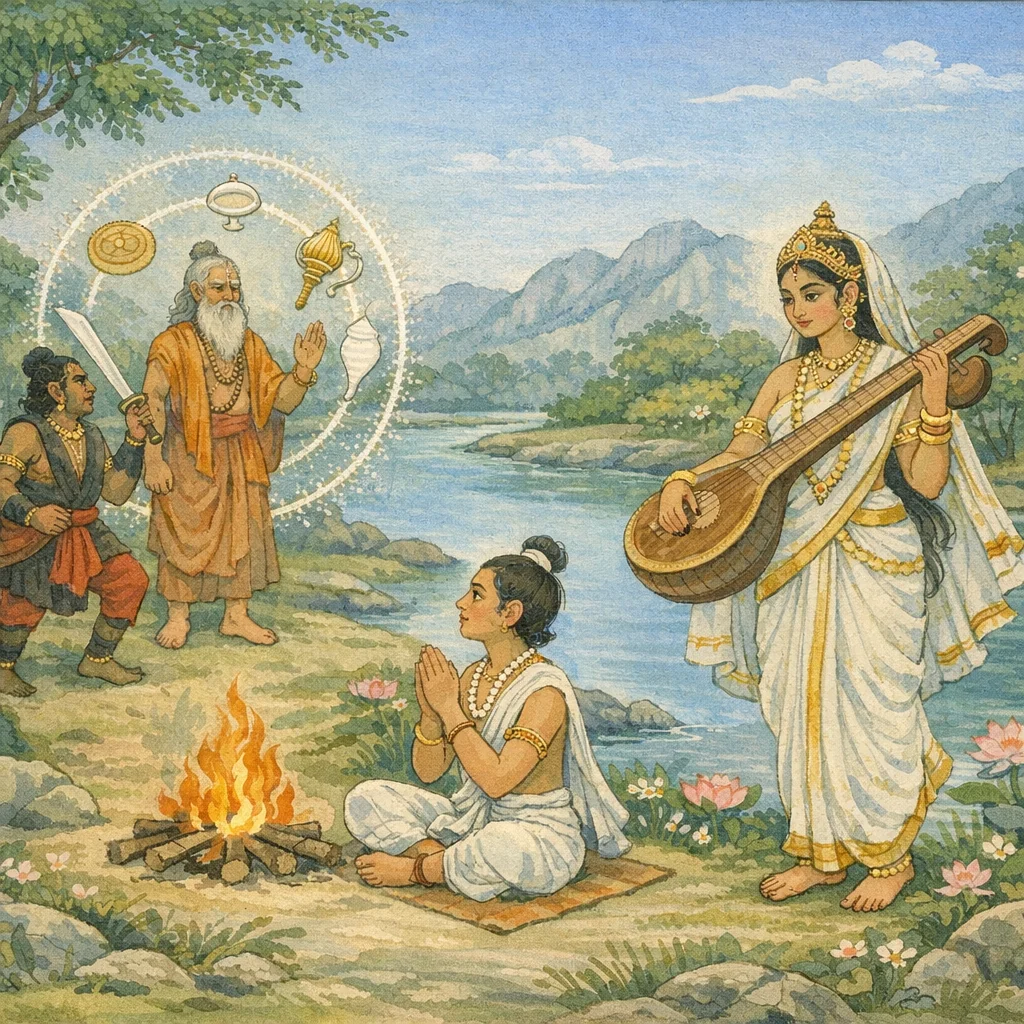
Adhyaya 59: Sarasvata Hymn to Vishnu
Redemption of a Rakshasa
The Sarasvata hymn (Vishnu-Panjara) and its power to redeem even a Rakshasa through devotion.
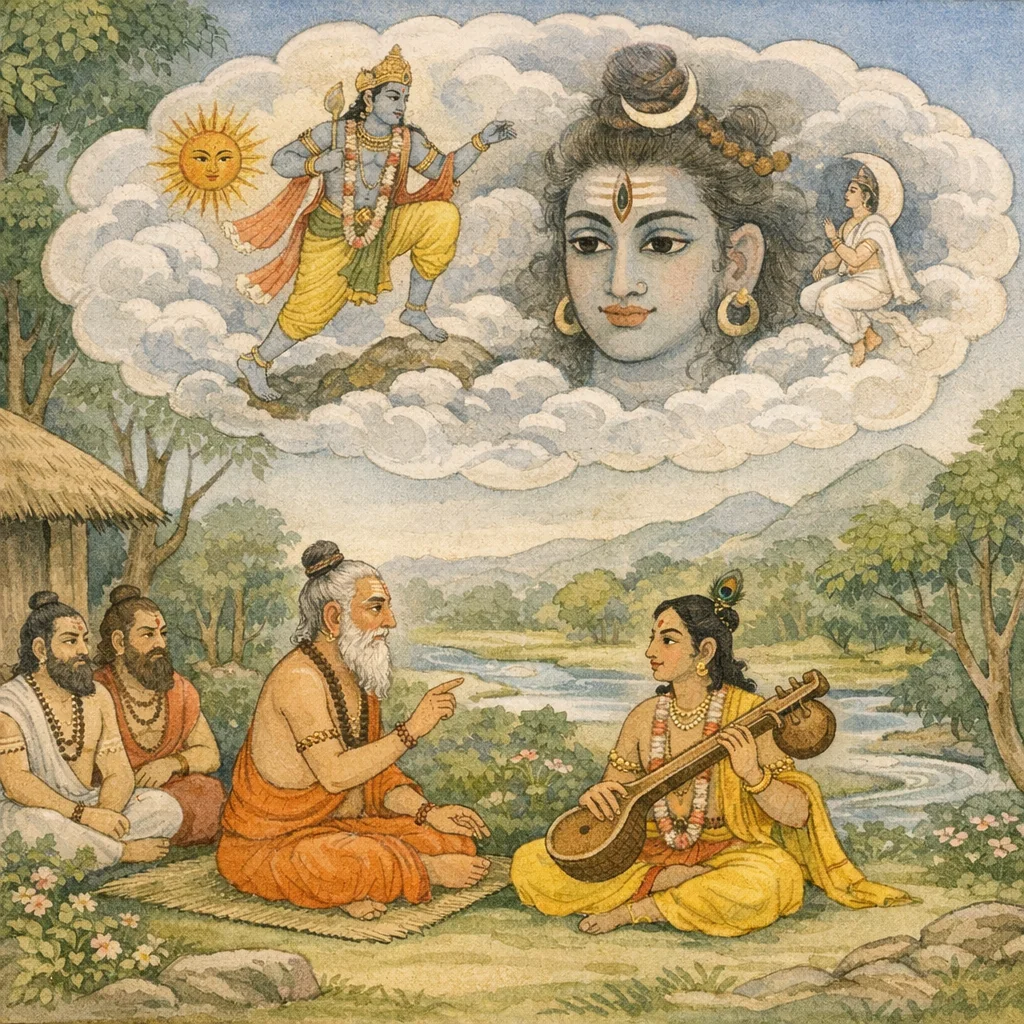
Adhyaya 60: Sin-Destroying Hymn (Part 1)
Papasamana Stava
The first part of the great sin-destroying hymn (Papasamana Stava) and syncretic praise of Hari-Hara.
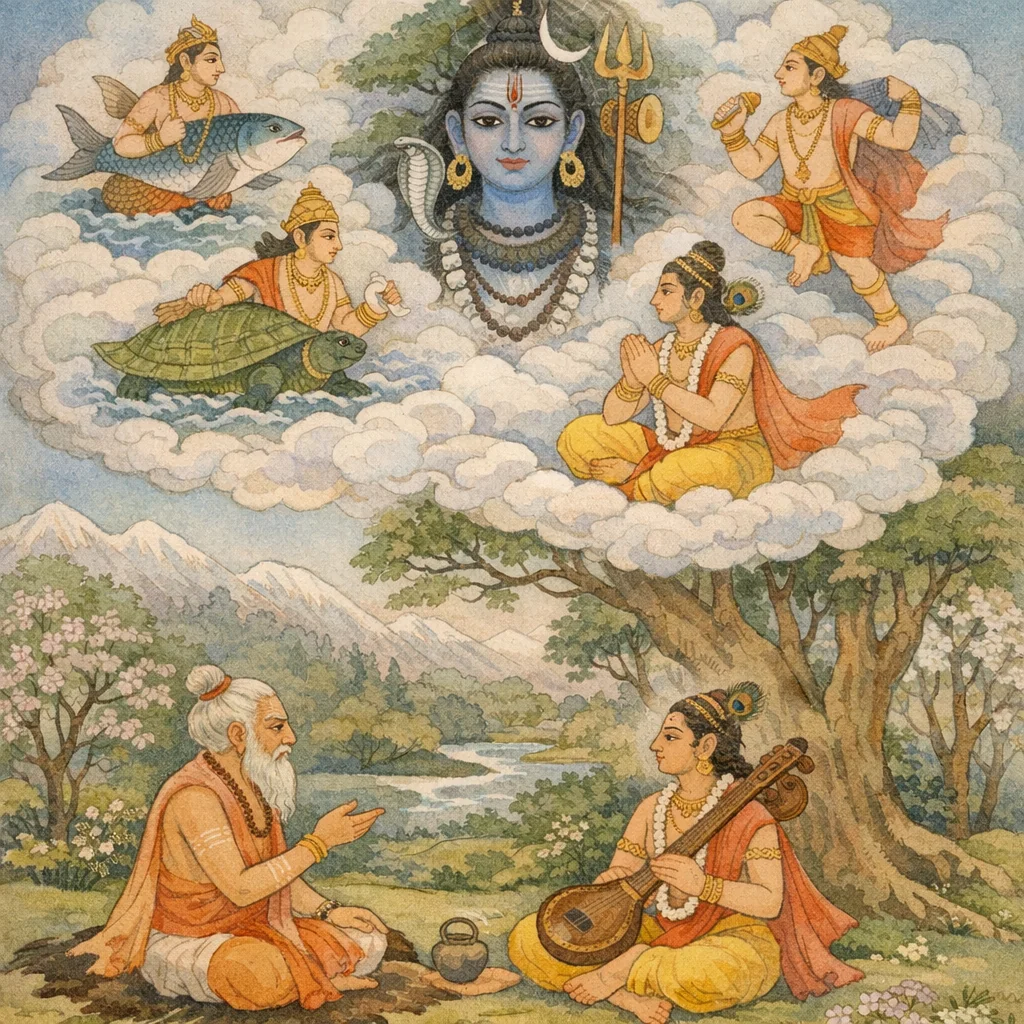
Adhyaya 61: Sin-Destroying Hymn (Part 2)
Syncretic Praise of Hari-Hara
Continuation of the Papasamana Stava with the syncretic theological praise of the unity of Hari and Hara.
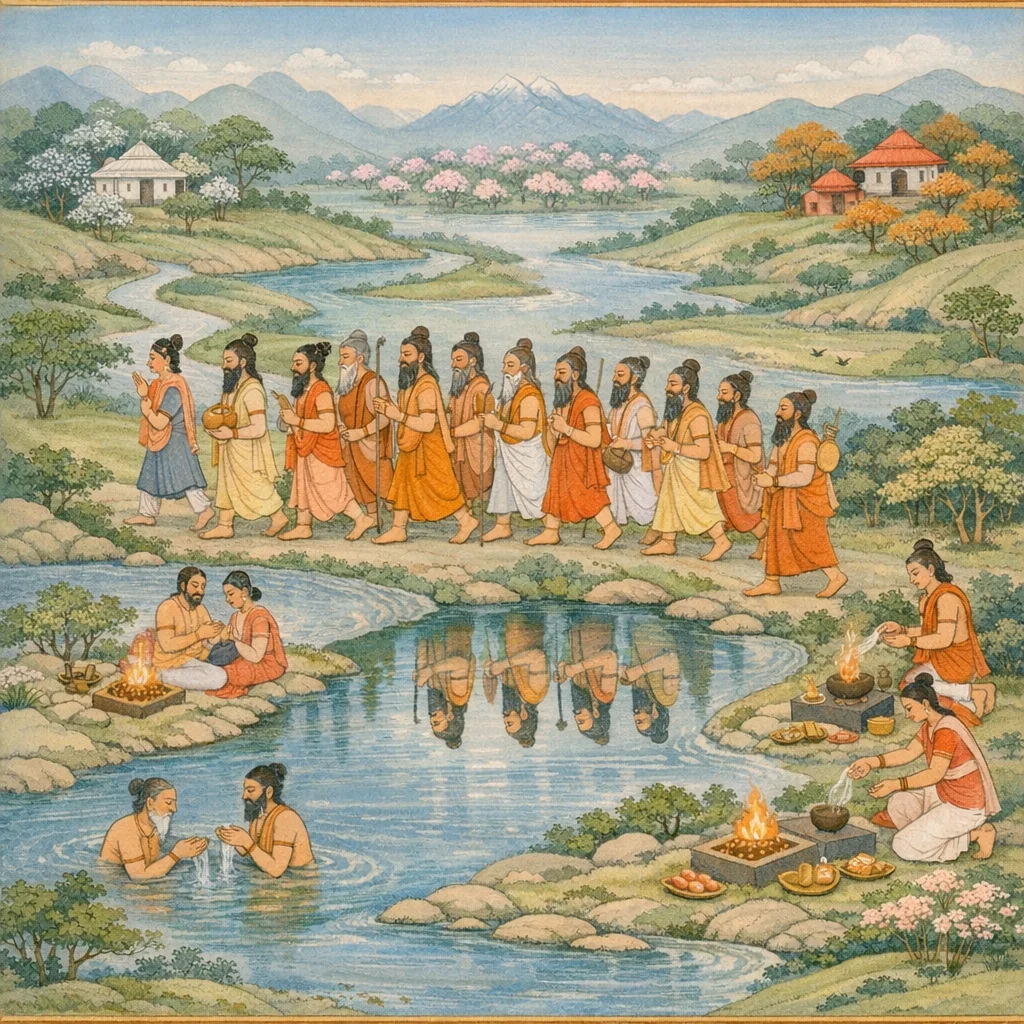
Adhyaya 62: Vamana's Birth
At Bali's Horse-Sacrifice
The divine birth of Lord Vamana during Bali's great horse-sacrifice and the mapping of Vishnu's sacred presences.
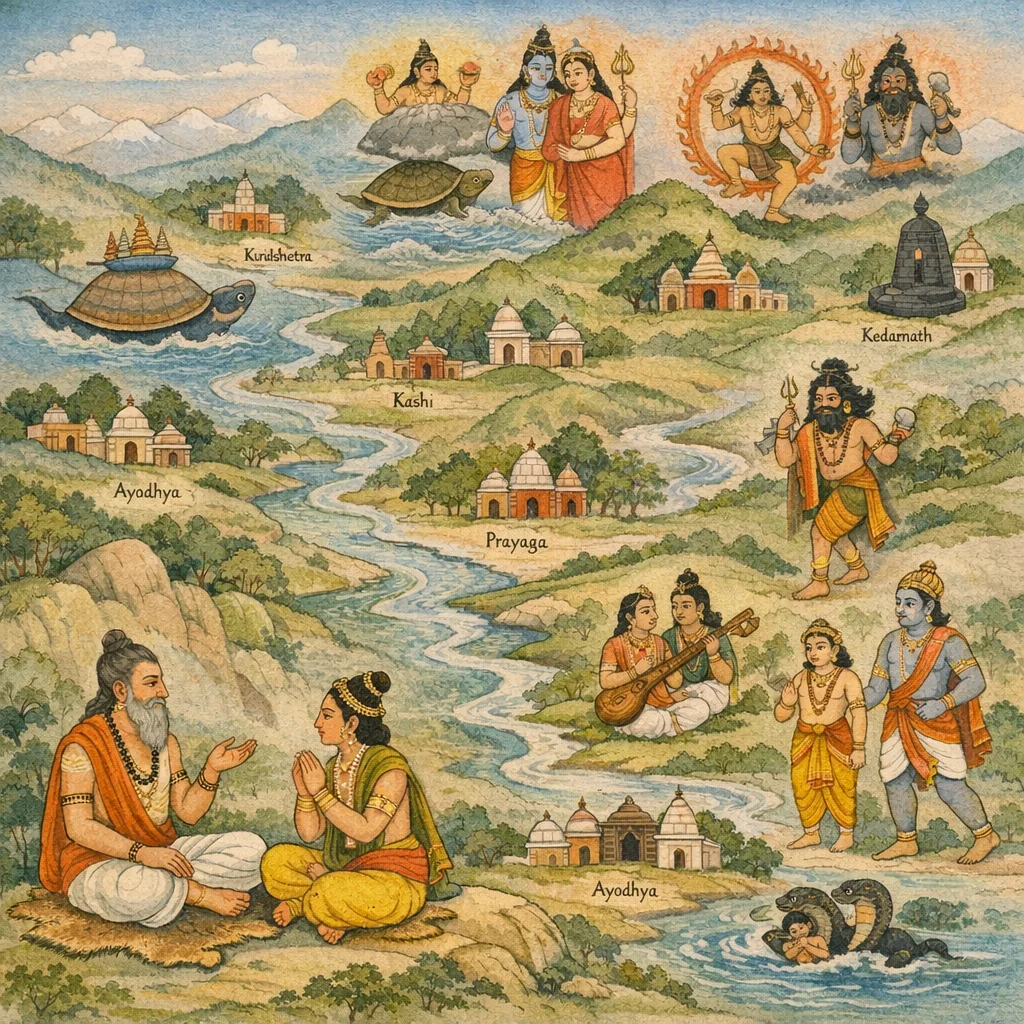
Adhyaya 63: Sacred Abodes of Vishnu & Shiva
Tirtha-Mahatmya Catalogue
A comprehensive catalogue of the sacred abodes of both Vishnu and Shiva within the Pulastya-Narada narrative frame.
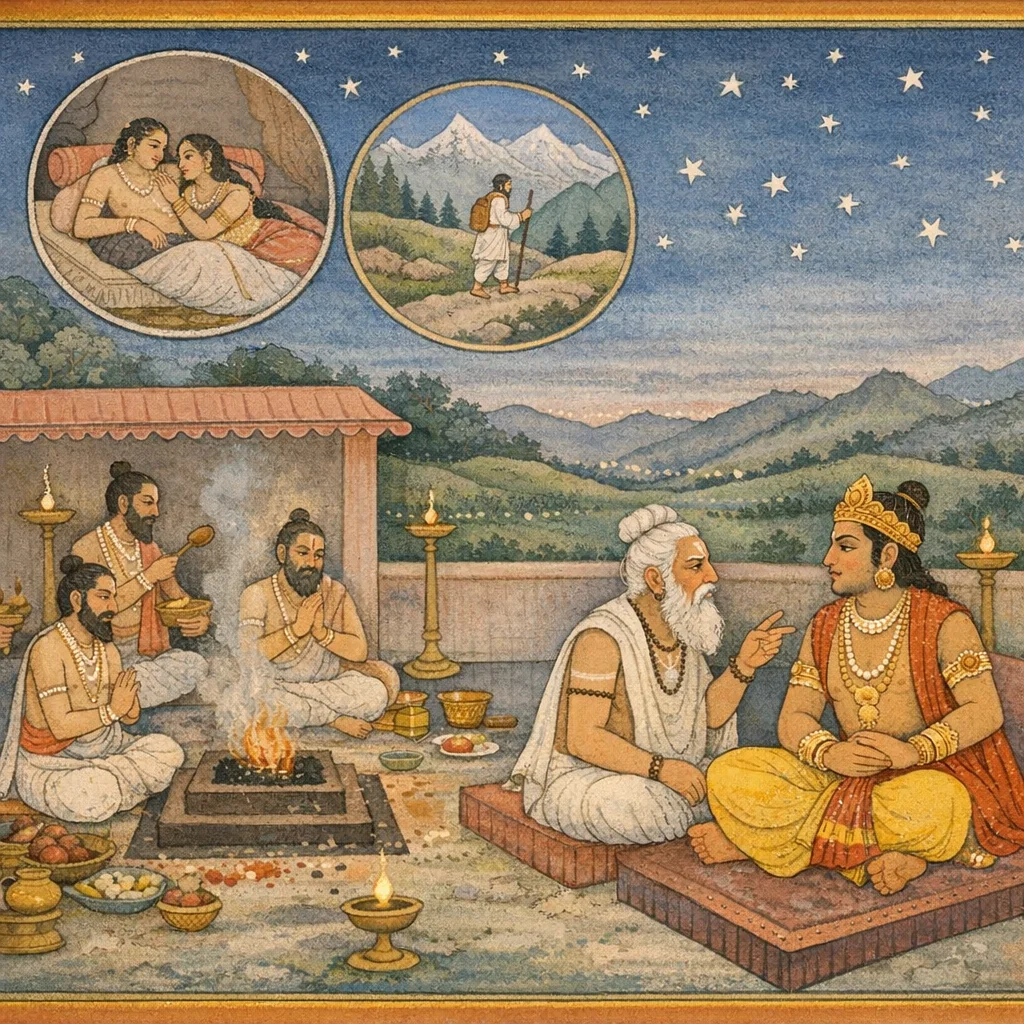
Adhyaya 64: Portents at Bali's Sacrifice
Power of Past Karma
Ominous portents appear at Bali's sacrifice; the story of the Koshakara's son demonstrates the power of past karma.
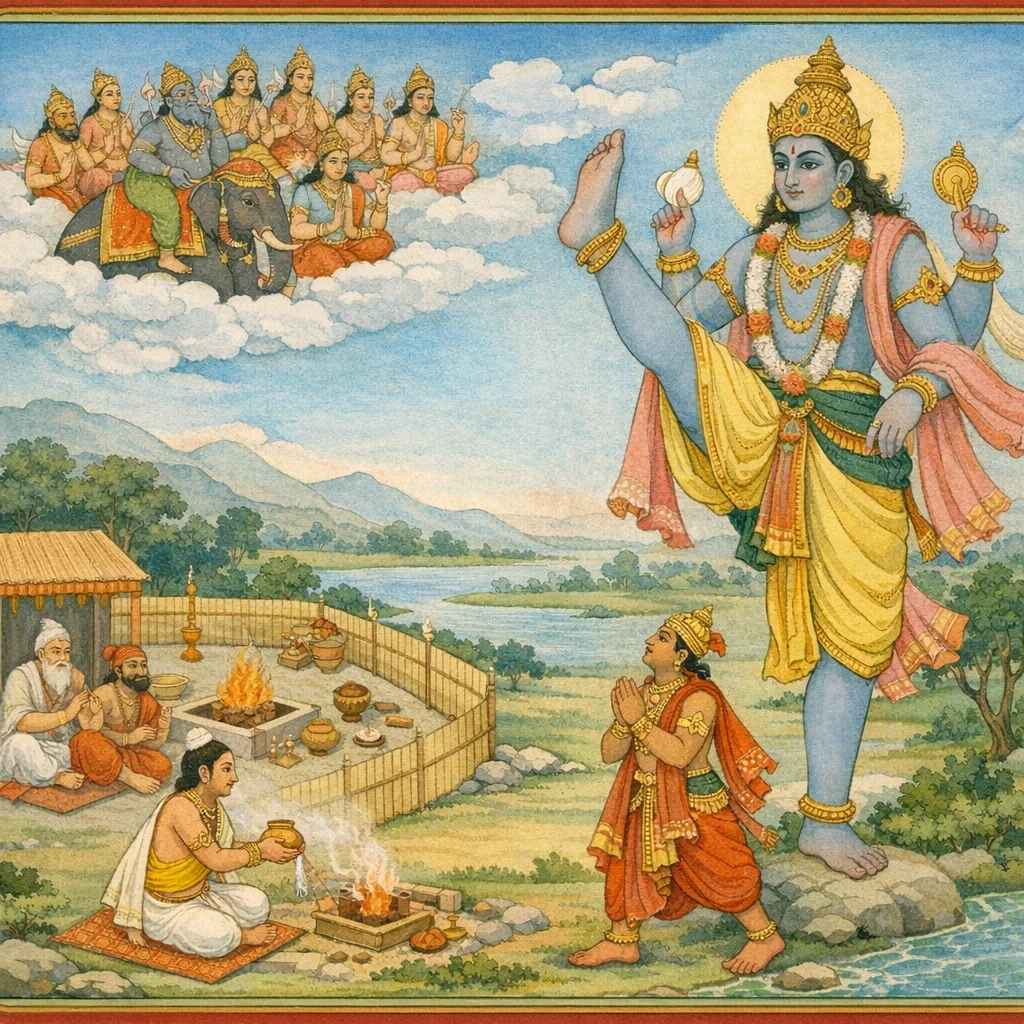
Adhyaya 65: Vamana's Three Steps
Binding of Bali
The climactic episode: Vamana takes his cosmic three steps, covering the universe, and binds the generous King Bali.
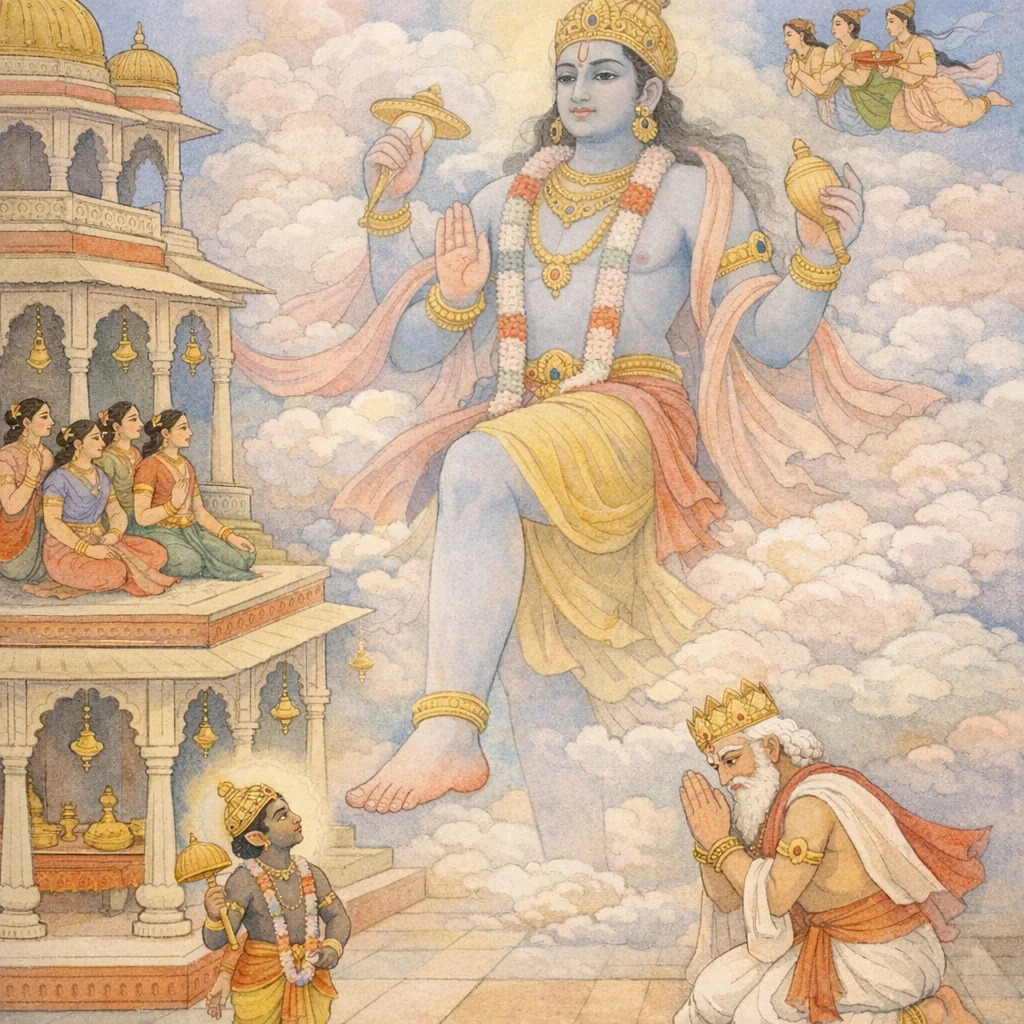
Adhyaya 66: Trivikrama Theophany
Vishnu's Return to Brahma
The Vamana-Trivikrama theophany: Vishnu reveals his cosmic form and returns to Brahma after the binding of Bali.
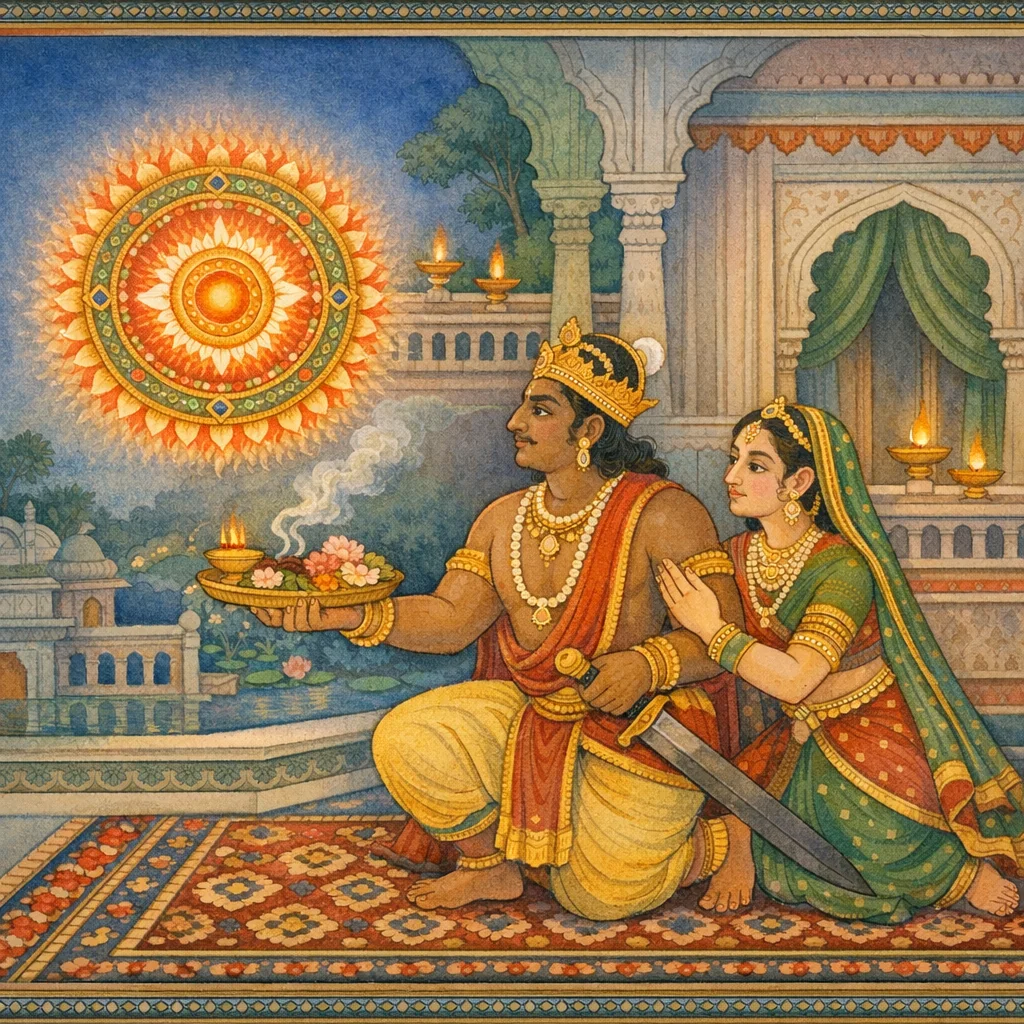
Adhyaya 67: Bali's Sudarshana Worship
Prahlada's Teaching on Vishnu-Bhakti
Bali worships the Sudarshana discus while Prahlada imparts the supreme teaching on Vishnu-bhakti.
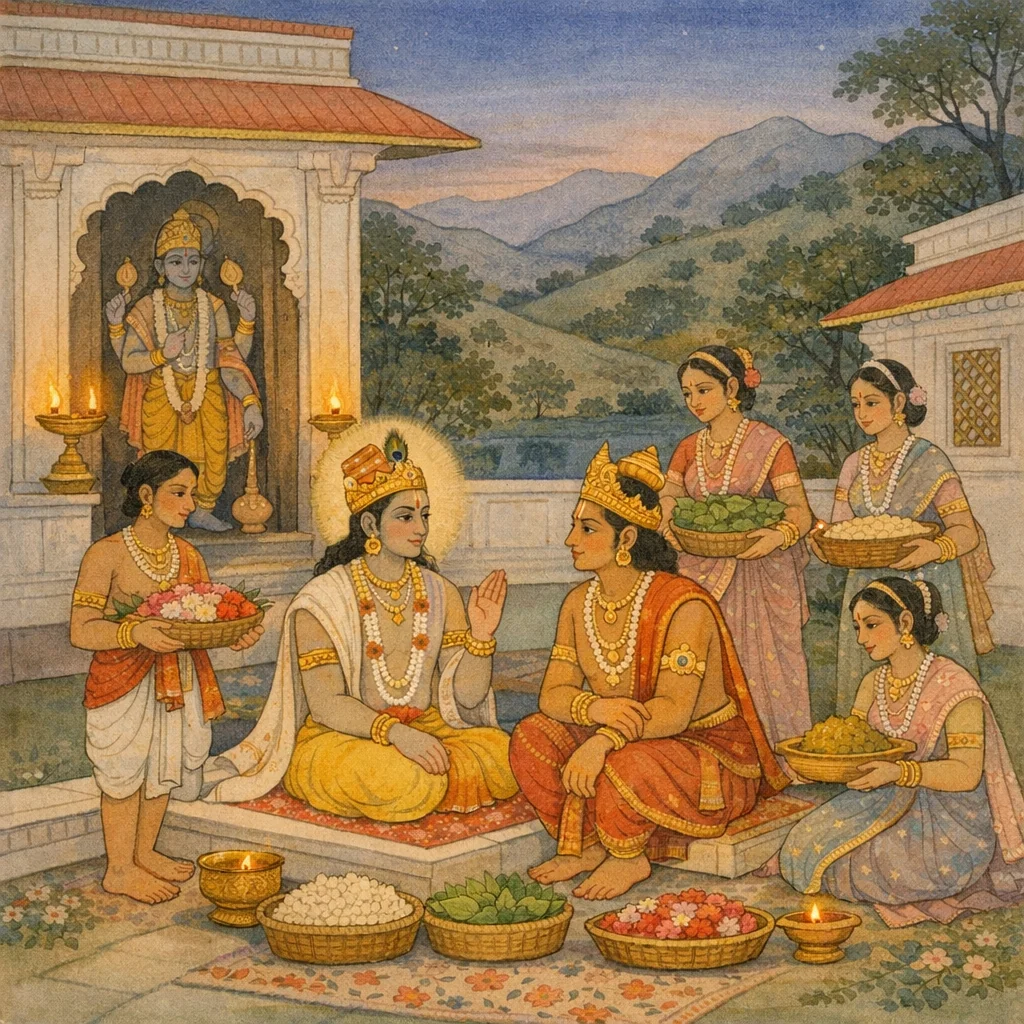
Adhyaya 68: Prahlada's Instructions to Bali
Vishnu Worship and Temple Building
Prahlada instructs Bali on Vishnu worship, monthly gifts, and the merit of building Hari's temple.
Adhyaya 69: Merit of the Vamana Purana
Phalashruti - Fruit of Hearing
The closing Phalashruti: the immense spiritual merit of hearing and reciting the Vamana Purana.
Frequently Asked Questions
It juxtaposes a Viṣṇu-centered maṅgala (Vāmana who restores Indra’s sovereignty from Bali) with an extended Śaiva narrative (Satī–Śaṅkara), using the Pulastya–Nārada frame to present both as parts of one authoritative Purāṇic discourse—an implicit syncretic theology rather than sectarian exclusivism.
This unit is primarily seasonal-topographical sacralization rather than a tīrtha-catalogue: it locates Śiva on Mandara and sanctifies landscape through prāvṛṭ-varṇana (rivers swelling, forests flowering, lakes filling). No Kurukṣetra/Sarasvatī tīrtha list appears in the provided passage.
Bali–Vāmana is introduced programmatically in the opening salutation (Viṣṇu as Vāmana who ‘seizes the three worlds’ and returns sovereignty to Indra). The chapter then shifts to Nārada’s inquiry—setting up the later detailed account—while Pulastya begins the exposition with the Śaiva episode that exemplifies the Purāṇa’s integrated scope.
The chapter stages conflict (Dakṣa’s exclusion; Brahmā–Rudra rivalry) but resolves it through shared cosmology and shared sacred space: Śiva’s Kapālī identity is explained as a consequence of primordial ahaṅkāra and cosmic function (tāmasa dissolution), while the narrative relocates to Nara–Nārāyaṇa territory where Śiva engages Nārāyaṇa in a controlled, dharma-governed encounter. This frames Shaiva and Vaishnava powers as complementary agencies within one Purāṇic order rather than competing absolutes.
The adhyāya explicitly sanctifies a Himalayan pilgrimage complex: Badarikāśrama and the Nara–Nārāyaṇa-sthāna, with Sarasvatī invoked as a sacred river presence in that region. The movement from Mandara (a divine mountain setting) to Badarikāśrama functions as topographical theology—locating sectarian synthesis and ascetic authority in a recognized tīrtha landscape associated with Nara–Nārāyaṇa.
This passage does not advance the Bali–Vāmana cycle directly. Instead, it establishes a foundational syncretic frame—through the Pulastya–Nārada discourse and the Kapālī-Rudra origin—preparing the Purāṇa’s broader project of integrating Shaiva and Vaishnava theologies before later avatāra-centered narratives.
The chapter stages a doctrinal reciprocity: Śiva, afflicted by brahmahatyā-doṣa, approaches Viṣṇu and praises him as both nirguṇa and the guṇa-embodiments (including Rudra as tamas). Viṣṇu then grants the practical means of expiation through a Vaiṣṇava-revealed tīrtha, showing that Śaiva purification is completed through Viṣṇu’s grace—an explicit Harihara synthesis rather than sectarian rivalry.
It functions as a tīrtha-map culminating in Kāśī: Viṣṇu identifies the Varaṇā and Asi rivers as boundary-markers and elevates the region between them as Yogaśāyin’s supreme tīrtha-field. Within Vārāṇasī, Daśāśvamedha is highlighted, and the lotus-pond Kapālamocana is established as the decisive site where bathing removes the kapāla and ends brahmahatyā-doṣa, thereby instituting an etiological origin for the tīrtha’s name and merit.
No. This Adhyāya is primarily a Śiva–Viṣṇu tīrtha-mahātmya centered on brahmahatyā expiation and the sanctification of Vārāṇasī (Kapālamocana/Daśāśvamedha), framed by Pulastya’s discourse to Nārada.
The narrative stages direct confrontation without theological negation: Viṣṇu (Keśava/Murāri) intervenes to protect the yajña, yet his astras become ineffective against Vīrabhadra and the gaṇas, indicating that Śiva’s krodha-śakti can suspend even Vaiṣṇava weaponry. This functions as syncretic theology—affirming both deities’ cosmic roles while warning that sacrificial order (yajña) cannot stand when it is severed from reverence toward Śiva.