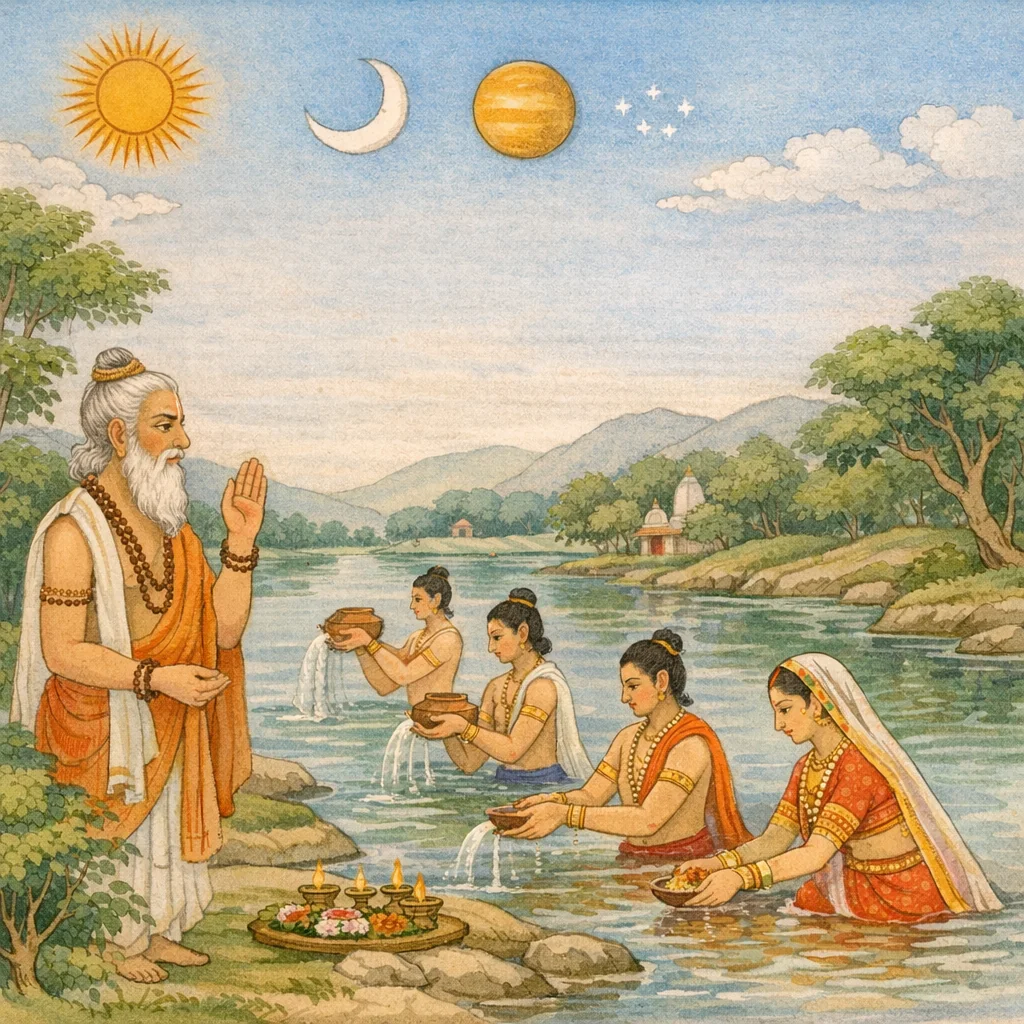
Adhyaya 24: The Glory of Prithudaka Tirtha and the Akshaya Tithi at Kurukshetra
पृथूदक-तीर्थमाहात्म्य एवं अक्षया-तिथिवर्णन (Pṛthūdaka-Tīrtha-Māhātmya evaṃ Akṣayā-Tithi-Varṇana)
Akshaya Tithi at Kurukshetra
Within the Pulastya–Nārada narrative frame, this Adhyāya presents a Kurukṣetra-centered tīrtha-māhātmya in which Devadeva (Hari addressed as Murāri) directs the gods to the mahātīrtha Pṛthūdaka, praised as intrinsically purifying and fear-dispelling. The sanctity is calendrically anchored: when the luminaries and Bṛhaspati align in Mṛgaśiras, the day is celebrated as Akṣayā, a time especially efficacious for pitṛ-tarpaṇa and śrāddha on the banks of the east-flowing (prācī) Sarasvatī. The devas, led by Indra, enact the pilgrimage, bathe, and request Bṛhaspati to ‘authorize’ the auspicious configuration, foregrounding Purāṇic ritual time as a theological instrument. The chapter then pivots to a genealogical-etiological strand: Indra’s pious offering to the Pitṛs yields Menā, given to Himavān, and the union produces three exceptionally beautiful daughters—linking śrāddha-merit, sacred geography, and dynastic cosmology in a syncretic Purāṇic register.
Divine Beings
Sacred Geography
Mortal & Asura Figures
Key Content Points
- Devadeva/Murāri instructs the gods to proceed to Kurukṣetra’s Pṛthūdaka, a mahātīrtha described as puṇya and pāpa-bhaya-apaha (sin- and fear-removing).
- Ritual time is specified through astral markers: the Mṛgaśiras nakṣatra with Sun, Moon, and Bṛhaspati yields the celebrated Akṣayā tithi, ideal for śrāddha and pitṛ-ārādhana at the prācī Sarasvatī.
- After the devas bathe, they petition Bṛhaspati to effect/confirm the auspicious configuration; the narrative then connects pitṛ-bhakti to lineage by recounting Indra’s piṇḍa-offering and the consequent bestowal of Menā to Himavān, leading to three divine-like daughters.
Shlokas in Adhyaya 24
Verse 1
देवदेव उवाच एवं पृथूदको देवाः पुण्यः पापभयापहः तं गच्छध्वं महातीर्थं यावत् संनिधिवोधितम्
ព្រះអម្ចាស់នៃទេវតាទាំងអស់មានព្រះបន្ទូលថា៖ «ដូច្នេះហើយ ឱទេវតាទាំងឡាយ ‘ព្រឹធូទក’ នេះមានបុណ្យ និងបំបាត់ការភ័យខ្លាចដែលកើតពីបាប។ ចូរទៅកាន់ទីរីថ៍ដ៏មហិមា នោះ តាមដែលបានប្រកាសអំពីសាន្និធិទេវភាព (វត្តមានបរិសុទ្ធ) របស់វា»។
Verse 2
यदा मृगशिरोऋक्षे शशिसूर्यौ बृहस्पतिः तिष्ठन्ति सा तिथिः पुण्या त्वक्षया परिगीयते
«នៅពេលព្រះចន្ទ និងព្រះអាទិត្យ ព្រមទាំងព្រះព្រហស្បតិ (ព្រះគ្រូបृहស្បតិ) ស្ថិតនៅក្នុងនក្ខត្រ មೃគសិរៈ នោះថ្ងៃតិថីនោះជាបរិសុទ្ធ ហើយត្រូវបានសរសើរថា ‘អក្សយា’ ដែលផ្តល់បុណ្យមិនរលាយ»។
Verse 3
तं गच्छध्वं सुरश्रेष्ठा यत्र प्राची सरस्वती पितॄन् आराधयध्वं हि तत्र श्राद्धेन भक्तिततः
«សូមទៅទីនោះ ឱព្រះទេវតាអ្នកប្រសើរបំផុត ដែលទន្លេសរស្វតីហូរទៅទិសកើត។ នៅទីនោះ ចូរគោរពបូជាបិត្រឹ (Pitṛs) ដោយធ្វើពិធីស្រាទ្ធ (śrāddha) ដោយសទ្ធាភក្តី»។
Verse 4
ततो मुरारिवचनं श्रुत्वा देवाः सवासवाः समाजग्मुः कुरुक्षेत्रे पुण्यतीर्थं पृथूदकम्
«បន្ទាប់មក ព្រះទេវតាទាំងឡាយ—រួមទាំងវាសវ (ឥន្ទ្រ)—បានស្តាប់ព្រះវាចនៈរបស់មុរារី (វិෂ្ណុ) ហើយបានប្រមូលផ្តុំគ្នានៅកុរុក្សេត្រ ត្រង់ទីរមណីយទេវតីរថ៍ដ៏បរិសុទ្ធ ឈ្មោះ ព្រឹធូទក (Pṛthūdaka)»។
Verse 5
तत्र स्नात्वा सुराः सर्वे बृहस्पतिमचोदयन् विशस्व भगवन् ऋक्षमिमं मृशिरं कुरु पुण्यां तिथिं पापहरां तव कालो ऽयमागतः
«នៅទីនោះ ព្រះទេវតាទាំងអស់បានងូតទឹករួច ហើយបានជំរុញព្រះព្រហស្បតិ (Bṛhaspati) ថា៖ ‘ឱព្រះអង្គដ៏គួរគោរព សូមប្រកាសឲ្យច្បាស់; សូមកំណត់ឲ្យយើងនក្ខត្រ (nakṣatra) នេះ ហើយធ្វើឲ្យដឹងនូវទីថិ (tithi) ដ៏មង្គល ដែលបំបាត់បាប។ ពេលវេលារបស់ព្រះអង្គបានមកដល់ហើយ’»។
Verse 6
प्रवर्तते रविस्तत्र चन्द्रमापि विशत्यसौ त्वदायत्तं गुरो कार्यं सुराणां तत् कुरुष्व च
«នៅទីនោះ ព្រះអាទិត្យបន្តដំណើររបស់ព្រះអង្គ ហើយព្រះចន្ទក៏ចូលទៅក្នុងគន្លងរបស់ព្រះអង្គដែរ។ ឱគ្រូ (Guru) កិច្ចការរបស់ព្រះទេវតាទាំងឡាយអាស្រ័យលើព្រះអង្គ ដូច្នេះសូមបំពេញកាតព្វកិច្ចនោះផង»។
Verse 7
इत्येवमुक्तो देवैस्तु देवाचार्यो ऽब्रवीदिदम् यदि वर्षाधिपो ऽहं स्यां ततो यास्यामि देवताः
«ព្រះទេវតាបាននិយាយដូច្នេះទៅកាន់ព្រះគ្រូទេវតា ហើយព្រះអង្គបានមានព្រះវាចនៈថា៖ ‘ប្រសិនបើខ្ញុំក្លាយជាអធិបតីនៃឆ្នាំ នោះខ្ញុំនឹងទៅ ឱព្រះទេវតាទាំងឡាយ’»។
Verse 8
आषाढे मासि मार्गर्क्षे चन्द्रक्षयतिथिर्हि या तस्यां पुरन्दरः प्रीतः पिण्डं पितृषु भक्तितः
ក្នុងខែអាសាឍៈ នៅថ្ងៃនក្ខត្រ «មារគ» និងទិថិ «ចន្ទ្រក្សយ» (ព្រះចន្ទថយ) នៅឱកាសនោះ ពុរន្ទរៈ (ឥន្ទ្រ) ពេញព្រះហឫទ័យ ពេលមានការថ្វាយបិណ្ឌដល់បិត្រឹទេវតា ដោយសទ្ធា។
Verse 9
प्रादात् तिलमधून्मिश्रं हविष्यान्नं कुरुष्वथ ततः प्रीतास्तु पितरस्तां प्राहुस्तनयां निजाम
គាត់បានថ្វាយអាហារហវិષ្យ (haviṣya) លាយជាមួយល្ង និងទឹកឃ្មុំ។ បន្ទាប់មក បិត្រឹទាំងឡាយពេញចិត្ត ហើយបានប្រកាសថា នាងជាកូនស្រីផ្ទាល់របស់គាត់។
Verse 10
मेनां देवाश्च शैलाय हिमयुक्ताय वै ददुः तां मेनां हिमवांल्लब्ध्वा प्रसादाद् दैवतेष्वथ प्रीतिमानभवच्चासौ रराम च यथेच्छया
ព្រះទេវតាទាំងឡាយបានប្រគល់មេនាឲ្យដល់ភ្នំហិមវត់ អ្នកពាក់ព័ន្ធនឹងព្រិល។ ហិមវត់បានទទួលមេនាដោយព្រះគុណរបស់ទេវតា ហើយក៏រីករាយ មានចិត្តពេញបំណង និងលេងសប្បាយជាមួយនាងតាមចិត្តប្រាថ្នា។
Verse 11
ततो हिमाद्रिः पितृकन्यया समं समर्पयन् वै विषयान् यथैष्टम् अजीजनत् सा तनयाश्च तिस्रो रूपातियुक्ताः सुरयोषितोपमाः
បន្ទាប់មក ហិមាទ្រី (ហិមវត់) ជាមួយនារីកើតពីបិត្រឹ (មេនា) បានរីករាយនឹងវត្ថុអារម្មណ៍តាមដែលប្រាថ្នា។ នាងបានបង្កើតកូនស្រីបីនាក់ ស្រស់ស្អាតលើសលប់ ដូចនារីសួគ៌។
Frequently Asked Questions
The chapter uses the honorific Devadeva while also identifying the speaker as Murāri (a Viṣṇu epithet), a Purāṇic strategy that normalizes shared divine sovereignty and ritual authority across sectarian vocabularies, even as the narrative remains focused on tīrtha and śrāddha praxis.
Pṛthūdaka in Kurukṣetra is presented as a mahātīrtha whose bath removes pāpa and fear; its efficacy is heightened when performed at the prācī Sarasvatī, where pitṛ-ārādhana through śrāddha is explicitly prescribed, making the site a ritual node in the Sarasvatī-basin pilgrimage map.
No. The passage functions primarily as a Kurukṣetra tīrtha-māhātmya and a pitṛ-ritual calendar note (Akṣayā tithi), followed by a genealogical-etiological account (Indra’s offering leading to Menā and Himavān’s progeny), rather than the Bali–Vāmana conflict sequence.