Adhyaya 74
दमयन्ती–बाहुकसंवादः (Damayantī’s Dialogue with Bāhuka; Recognition and Disclosure)
Upa-parva: Nalopākhyāna (The Episode of Nala and Damayantī)
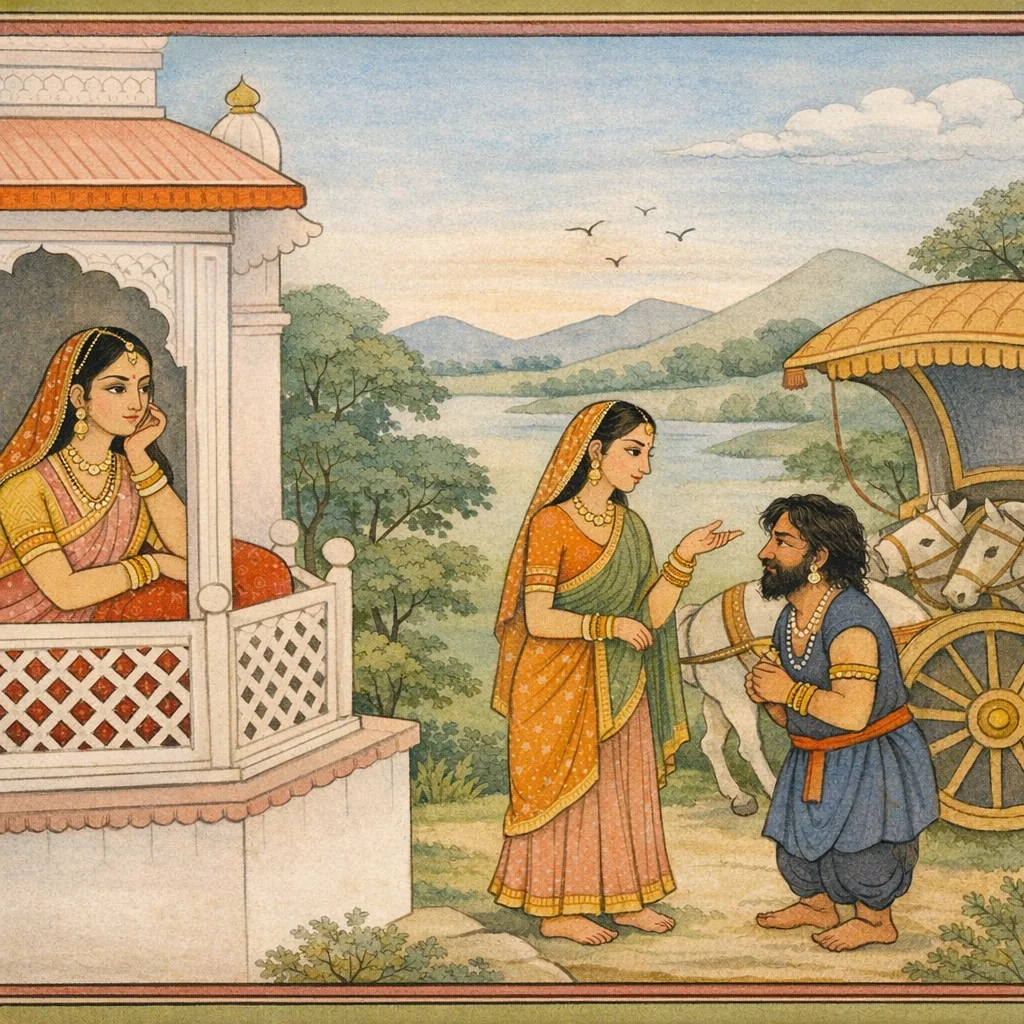
Bṛhadaśva narrates how Keśinī reports to Damayantī after observing signs that intensify suspicion about Bāhuka’s identity. Distressed yet determined, Damayantī sends Keśinī to her mother and seeks authorization; with parental consent, Nala is brought into Damayantī’s quarters. Seeing him in altered appearance, Damayantī is overwhelmed by grief and addresses him directly as Bāhuka, posing a moral indictment: who but Nala could abandon an innocent, exhausted wife asleep in the wilderness? She recalls the sanctity of their marriage vows and the promise of protection, framing abandonment as a rupture of pledged dharma. Her lament produces visible signs of suffering, which Nala observes; he responds with a causal explanation—his kingdom’s loss was not self-caused, but driven by Kali, intensified by a curse, and now overcome through effort and austerity. He asserts his return is solely for Damayantī and challenges the rumor of her choosing another husband, highlighting reputational harm and the ethics of public report. Damayantī, hearing his lament, responds with fear and reverence, indicating the scene’s transition from accusation to recognition and reconciliation.
Chapter Arc: दमयन्ती, ऋतुपर्ण के साथ आए विकृत-ह्रस्व ‘बाहुक’ को रथोपस्थ पर उपविष्ट देख, भीतर ही भीतर चौंक उठती है—यह साधारण सारथि नहीं, कहीं नल तो नहीं? वह केशिनी को जाँच के लिए भेजती है। → दमयन्ती केशिनी को सावधानी, मधुर वाणी और यथातत्त्व प्रश्नों का आदेश देती है—अयोध्या से कब चले, क्यों आए, और यह ‘बाहुक’ कौन है। केशिनी बाहुक से संवाद करती है, जबकि दमयन्ती प्रासाद से दूर से ही हर भाव-भंगिमा को परखती रहती है। → दमयन्ती की ‘महती शंका’ तीव्र हो उठती है—बाहुक के उत्तरों, आचरण और भीतर छिपी गरिमा से उसे नल की छाया दिखती है; साथ ही श्लोकों में ‘श्रेष्ठ स्त्री’ का धर्म-संकेत उभरता है: पति राज्यभ्रष्ट, श्रीहीन, क्षुधित और व्यसनाप्लुत हो तब भी पत्नी का कर्तव्य क्या है? → केशिनी लौटकर दमयन्ती को बाहुक के कथन, उसके ‘विकार’ (वेष-परिवर्तन/विकृत रूप) और समस्त संवाद का निवेदन करती है। दमयन्ती के संदेह को ठोस आधार मिलता है, पर पहचान अभी निर्णीत नहीं होती। → दमयन्ती के पास अब संकेत हैं, प्रमाण नहीं—क्या वह बाहुक को नल सिद्ध कर पाएगी, और क्या नल स्वयं अपना आवरण हटाएगा?
Shlokas
Verse 1
हि >> मय न () है 7 चतु:ःसप्ततितमो< ध्याय: बाहुक-केशिनी-संवाद दमयन्त्युवाच गच्छ केशिनि जानीहि क एष रथवाहक: । उपविष्टो रथोपस्थे विकृतो हस्वबाहुक:,दमयन्ती बोली--केशिनी! जाओ और पता लगाओ कि यह छोटी-छोटी बाँहोंवाला कुरूप रथवाहक, जो रथके पिछले भागमें बैठा है, कौन है?
Bṛhadaśva said: Damayantī said, “Go, Keśinī, and find out who this charioteer is—this deformed, short-armed man seated on the rear part of the chariot.” In the unfolding search for truth, Damayantī instructs her attendant to investigate the identity behind an outwardly unappealing appearance, hinting that discernment should look beyond mere form.
Verse 2
अभ्येत्य कुशल भद्रे मृदुपूर्व समाहिता । पृच्छेथा: पुरुषं होनं यथातत्त्वमनिन्दिते,भद्रे! इसके निकट जाकर सावधानीके साथ मधुर वाणीमें कुशल पूछना। अनिन्दिते! साथ ही इस पुरुषके विषयमें ठीक-ठीक बातें जाननेकी चेष्टा करना
Bṛhadaśva said: “Dear one, go up to him carefully, composed and self-possessed, and first address him with gentle, courteous words of inquiry about his well-being. O blameless lady, then try to learn the truth of this man’s condition and circumstances exactly as they are.”
Verse 3
अत्र मे महती शड़्का भवेदेष नलो नृप: । यथा च मनसस्तुष्टिहददयस्य च निर्वति:,इसके विषयमें मुझे बड़ी भारी शंका है। सम्भव है, इस वेषमें राजा नल ही हों। मेरे मनमें जैसा संतोष है और हृदयमें जैसी शान्ति है, इसे मेरी उक्त धारणा पुष्ट हो रही है
Bṛhadaśva said: “Here a great doubt arises in me: perhaps this man is King Nala in disguise. The satisfaction in my mind and the calm repose in my heart seem to confirm that very suspicion.”
Verse 4
ब्रूयाश्वैनं कथान्ते त्वं पर्णादवचनं यथा । प्रतिवाक्यं च सुश्रोणि बुद्धयेथास्त्वमनिन्दिते,सुश्रोणि! तुम बातचीतके सिलसिलेमें इसके सामने पर्णाद ब्राह्मणवाली बात कहना और अनिन्दिते! यह जो उत्तर दे, उसे अच्छी तरह समझना
Verse 5
ततः समाहिता गत्वा दूती बाहुकमब्रवीत् । दमयन्त्यपि कल्याणी प्रासादस्था हरुपैक्षत,तब वह दूती बड़ी सावधानीसे वहाँ जाकर बाहुकसे वार्तालाप करने लगी और कल्याणी दमयन्ती भी महलमें उसके लौटनेकी प्रतीक्षामें बैठी रही
Then the messenger-woman, composed and attentive, went and spoke to Bāhuka. Meanwhile the noble Damayantī, seated within the palace, waited expectantly for her return—restraining her feelings and placing hope in the careful conduct of her envoy.
Verse 6
केशिन्युवाच स्वागतं ते मनुष्येन्द्र कुशल ते ब्रवीम्पहम् । दमयन्त्या वच: साधु निबोध पुरुषर्षभ,केशिनीने कहा--नरेन्द्र! आपका स्वागत है! मैं आपका कुशल समाचार पूछती हूँ। पुरुषश्रेष्ठी दमयन्तीकी कही हुई ये उत्तम बातें सुनिये
Keśinī said: “Welcome to you, O lord among men. I inquire after your well-being. O best of men, listen carefully to these excellent words spoken by Damayantī.”
Verse 7
कदा वै प्रस्थिता यूयं किमर्थमिह चागता: । तत् व्वं ब्रूहि यथान्यायं वैदर्भी श्रोतुमिच्छति,विदर्भराजकुमारी यह सुनना चाहती हैं कि आपलोग अयोध्यासे कब चले हैं और किस लिये यहाँ आये हैं? आप न्यायके अनुसार ठीक-ठीक बतायें
Bṛhadaśva said: “When did you set out, and for what purpose have you come here? Tell it truly and in accordance with what is proper; the princess of Vidarbha wishes to hear it.”
Verse 8
बाहुक उवाच श्रुत: स्वयंवसे राज्ञा कोसलेन महात्मना । द्वितीयो दमयन्त्या वै भविता श्व इति द्विजात्,बाहुक बोला--महात्मा कोसलराजने एक ब्राह्मणके मुखसे सुना था कि कल दमयन्तीका द्वितीय स्वयंवर होनेवाला है
Bāhuka said: “I heard from a twice-born Brahmin, as reported by the great-souled king of Kosala, that tomorrow Damayantī will hold a second svayaṃvara.”
Verse 9
श्र॒ुत्वैतत् प्रस्थितो राजा शतयोजनयायिश्रि: । हयैर्वातजवैर्मुख्यैरहमस्य च सारथि:,यह सुनकर राजा हवाके समान वेगवाले और सौ योजनतक दौड़नेवाले अच्छे घोड़ोंसे जुते हुए रथपर सवार हो विदर्भदेशके लिये प्रस्थित हो गये। इस यात्रामें मैं ही इनका सारथि था
Hearing this, the king set out at once, mounting a chariot yoked with excellent horses swift as the wind and famed for running a hundred yojanas. On that journey, I myself served as his charioteer. The episode underscores prompt, disciplined action after receiving counsel, and the ethical weight of loyal service performed without self-importance.
Verse 10
केशिन्युवाच अथ योअड्सौ तृतीयो व: स कुतः कस्य वा पुनः । त्वं च कस्य कथं चेदं त्वयि कर्म समाहितम्,केशिनीने पूछा--आपलोगोंमेंसे जो तीसरा व्यक्ति है, वह कहाँसे आया है अथवा किसका सेवक है? ऐसे ही आप कौन हैं, किसके पुत्र हैं और आपपर इस कार्यका भार कैसे आया है?
Keśinī said: “And this third person among you—where has he come from, and whose man is he? And you—who do you belong to, whose son are you, and how has this responsibility been placed upon you?”
Verse 11
बाहुक उवाच पुण्यश्लोकस्य वै सूतो वार्ष्णेय इति विश्रुत: । स नले विद्रुते भद्रे भाड़ासुरिमुपस्थित:,बाहुक बोला--भद्रे! उस तीसरे व्यक्तिका नाम वार्ष्णेय है। वह पुण्यश्लोक राजा नलका सारथि है। नलके वनमें निकल जानेपर वह ऋतुपर्णकी सेवामें चला गया है
Bāhuka said: “Indeed, the charioteer of the renowned king Puṇyaśloka (Nala) is famed by the name Vārṣṇeya. When Nala fled away, O noble lady, that Vārṣṇeya entered the service of Ṛtupārṇa.”
Verse 12
अहमप्यश्वकुशल: सूतत्वे च प्रतिष्ठित: । ऋतुपर्णेन सारथ्ये भोजने च वृतः स्वयम्,मैं भी अश्वविद्यामें कुशल हूँ और सारथिके कार्यमें भी निपुण हूँ, इसलिये राजा ऋतुपर्णने स्वयं ही मुझे वेतन देकर सारथिके पदपर नियुक्त कर लिया
Bāhuka said: “I too am skilled in the knowledge of horses and well established in the duties of a charioteer. Therefore King Ṛtuparṇa himself engaged me—appointing me as his charioteer and providing for my maintenance.”
Verse 13
केशिन्युवाच अथ जानाति वार्ष्णेय: क्व नु राजा नलो गत: । कथं च त्वयि वा तेन कथितं स्यात् तु बाहुक,केशिनीने पूछा--बाहुक! क्या वार्ष्णेय यह जानता है कि राजा नल कहाँ चले गये, उसने आपसे महाराजके सम्बन्धमें कैसी बात बतायी है?
Keśinī said: “Does Vārṣṇeya know where King Nala has gone? And what, indeed, did he tell you about it, Bāhuka—what account did he give to you concerning the king?”
Verse 14
बाहक उवाच इहैव पुत्रौ निक्षिप्प नलस्य शुभकर्मण: । गतस्ततो यथाकामं नैष जानाति नैषधम्,बाहुक बोला--भद्रे! पुण्यकर्मा नलके दोनों बालकोंको यहीं रखकर वार्ष्णेय अपनी रुचिके अनुसार अयोध्या चला गया था। यह नलके विषयमें कुछ नहीं जानता है
Bāhaka said: “Here itself, after leaving behind the two sons of the virtuous Nala, Vārṣṇeya went away thence to Ayodhyā according to his own wish. This man knows nothing about Nala of Niṣadha.”
Verse 15
न चान्य: पुरुष: वश्रिन्नलं वेत्ति यशस्विनि । गूढश्चरति लोके5स्मिन् नष्टरूपे महीपति:,यशस्विनि! दूसरा कोई पुरुष भी नलको नहीं जानता। राजा नलका पहला रूप अदृश्य हो गया है। वे इस जगत्में गूढ़भावसे विचरते हैं
Bāhuka said: “And no other man, O illustrious lady, truly knows Nala. The king’s former appearance has vanished; in this world he moves about in concealment, his identity hidden.”
Verse 16
आत्मैव तु नलं वेद या चास्य तदनन्तरा । न हि वै स्वानि लिड्रानि नल: शंसति कहिचित्,परमात्मा ही नलको जानते हैं तथा उसकी जो अन्तरात्मा है, वह उन्हें जानती है, दूसरा कोई नहीं; क्योंकि राजा नल अपने लक्षणों या चिह्लोंको कभी दूसरोंके सामने नहीं प्रकट करते हैं
Bāhuka said: “Only Nala himself truly knows Nala—and so does that inner awareness that follows closest upon him. For King Nala never discloses his own identifying marks to anyone at any time.”
Verse 17
केशिन्युवाच यो5सावयोध्यां प्रथमं गतो5सौ ब्राह्मणस्तदा । इमानि नारीवाक्यानि कथयान: पुन: पुन:,केशिनीने कहा--पहली बार अयोध्यामें जब वे ब्राह्मणदेवता गये थे, तब उन्होंने स्त्रियोंकी सिखायी हुई निम्नांकित बातें बार-बार कही थीं--
Keśinī said: “When that brāhmaṇa first went to Ayodhyā, he repeatedly recited these very words—sayings taught by women—again and again.”
Verse 18
क्व नु त्वं कितवच्छित्त्वा बस्त्रार्थ प्रस्थितो मम । उत्सृज्य विपिने सुप्तामनुरक्तां प्रियां प्रिय,'“ओ जुआरी प्रियतम! तुम अपने प्रति अनुराग रखनेवाली वनमें सोयी हुई मुझ प्यारी पत्नीको छोड़कर तथा मेरे आधे वस्त्रको फाड़कर कहाँ चल दिये?
Bāhaka said: “Where have you gone, O gambler-beloved, after tearing away my garment for your own clothing? How could you set off, abandoning in the forest your dear wife—sleeping there and devoted to you?”
Verse 19
सा वै यथा समादिष्टा तथा<>स्ते त्वत्प्रतीक्षिणी । दहामाना दिवा रात्रौ वस्त्रार्थेनाभिसंवृता,“उसे तुमने जिस अवस्थामें देखा था, उसी अवस्थामें वह आज भी है और तुम्हारे आगमनकी प्रतीक्षा कर रही है। आधे वस्त्रसे अपने शरीरको ढककर वह युवती दिन-रात तुम्हारी विरहाग्निमें जल रही है
“She remains exactly as she was instructed—still waiting for you. Burning in the fire of separation day and night, the young woman keeps herself covered only for the sake of clothing, with but a half-garment.”
Verse 20
तस्या रुदन्त्या: सततं तेन दुःखेन पार्थिव । प्रसादं कुरु मे वीर प्रतिवाक्यं वदस्व च,“वीर भूमिपाल! सदा तुम्हारे शोकसे रोती हुई अपनी उसी प्यारी पत्नीपर पुनः कृपा करो और मेरी बातका उत्तर दो”
Bāhaka said: “O king, she has been weeping constantly under that sorrow. O hero, show me your favor—be gracious again toward that beloved wife of yours, and give me your reply.”
Verse 21
तस्यास्तत् प्रियमाख्यानं प्रवदस्व महामते । तदेव वाक्यं वैदर्भी श्रोतुमिच्छत्यनिन्दिता,“महामते! इसके उत्तरमें आप दमयन्तीको प्रिय लगनेवाली कोई बात कहिये। साध्वी विदर्भकुमारी आपकी उसी बातको पुनः सुनना चाहती हैं!
Bāhuka said: “O wise one, tell her something that will be pleasing to hear. The blameless princess of Vidarbha wishes to hear that very statement of yours once again.”
Verse 22
एतच्छुत्वा प्रतिवचस्तस्य दत्तं त्वया किल | यत् पुरा तत् पुनस्त्वत्तो वैदर्भी श्रोतुमिच्छति,बाहुक! ब्राह्मणके मुखसे यह वचन सुनकर पहले आपने जो उत्तर दिया था, उसीको वैदर्भी आपके मुँहसे पुनः: सुनना चाहती हैं
Having heard these words from the brāhmaṇa, she wishes to hear again from your own mouth, O Bāhuka, the very reply that you once gave earlier. The Vaidehī seeks a repetition of your former answer—suggesting both the gravity of the matter and her need for certainty and moral clarity.
Verse 23
बृहृदश्च उवाच एवमुक्तस्य केशिन्या नलस्य कुरुनन्दन । ह्ृदयं व्यथितं चासीदश्रुपूर्ण च लोचने,बृहदश्च मुनि कहते हैं--युधिष्ठिर! केशिनीके ऐसा कहनेपर राजा नलके हृदयमें बड़ी वेदना हुई। उनकी दोनों आँखें आँसुओंसे भर गयीं
Bṛhadaśva said: “O delight of the Kurus, when Keśinī spoke thus to King Nala, his heart was deeply pained, and both his eyes filled with tears.”
Verse 24
स निगृह्यात्मनो दुःखं दहुमानो महीपति: । वाष्पसंदिग्धया वाचा पुनरेवेदमब्रवीत्,निषधनरेश शोकाग्निसे दग्ध हो रहे थे, तो भी उन्होंने अपने दुःखके वेगको रोककर अश्रुगदगद वाणीमें पुनः: यों कहना आरम्भ किया
Though the king was burning inwardly with grief, he restrained the surge of his sorrow. Then, with a voice choked and blurred by tears, he began to speak again—showing the ethical ideal of self-control even amid overwhelming anguish.
Verse 25
बाहुक उवाच वैषम्यमपि सम्प्राप्ता गोपायन्ति कुलस्त्रिय: । आत्मानमात्मना सत्यो जित: स्वर्गों न संशय:,बाहुक बोला--उत्तम कुलकी स्त्रियाँ बड़े भारी संकटमें पड़कर भी स्वयं अपनी रक्षा करती हैं। ऐसा करके वे स्वर्ग और सत्य दोनोंपर विजय पा लेती हैं, इसमें संशय नहीं है
Verse 26
रहिता भर्त॑भिश्चापि न क्रुध्यन्ति कदाचन । प्राणांश्षारित्रकवचान् धारयन्ति वरस्त्रिय:,श्रेष्ठ नारियाँ अपने पतियोंसे परित्यक्त होनेपर भी कभी क्रोध नहीं करतीं। वे सदा सदाचाररूपी कवचसे आवृत प्राणोंको धारण करती हैं
Bāhuka said: “Even when abandoned by their husbands, noble women do not become angry at any time. They preserve their very lives as though protected by an armor of good conduct and virtuous character.”
Verse 27
विषमस्थेन मूढेन परिगभ्रष्टसुखेन च । यत् सा तेन परित्यक्ता तत्र न क्रोद्धुमहति,वह पुरुष बड़े संकटमें था तथा सुखके साधनोंसे वज्चित होकर किंकर्तव्यविमूढ़ हो गया था। ऐसी दशामें यदि उसने अपनी पत्नीका परित्याग किया है, तो इसके लिये पत्नीको उसपर क्रोध नहीं करना चाहिये
Verse 28
प्राणयात्रां परिप्रेप्सो: शकुनैर््तवासस: । आधिभिर्दह्युमानस्य श्यामा न क्रोद्धुमहति,जीविका पानेके लिये चेष्टा करते समय पक्षियोंने जिसके वस्त्रका अपहरण कर लिया था और जो अनेक प्रकारकी मानसिक चिन्ताओंसे दग्ध हो रहा था, उस पुरुषपर श्यामाको क्रोध नहीं करना चाहिये
Verse 29
सत्कृतासत्कृता वापि पतिं दृष्टवा तथाविधम् | राज्यभ्रष्टं श्रिया हीन॑ क्षुधितं व्यसनाप्लुतम्,पतिने उसका सत्कार किया हो या असत्कार; उसे चाहिये कि पतिको वैसे संकटमें पड़ा देखकर उसे क्षमा कर दे; क्योंकि वह राज्य और लक्ष्मीसे वंचित हो भूखसे पीड़ित एवं विपत्तिके अथाह सागरमें डूबा हुआ था
Whether she has honored him or slighted him, on seeing her husband in such a condition—fallen from his kingdom, bereft of prosperity, tormented by hunger, and submerged in calamity—she ought to forgive him. The ethical point is that compassion and forbearance are especially due when a person is broken by misfortune and deprivation, not to be judged harshly at the moment of ruin.
Verse 30
एवं ब्रुवाणस्तद् वाक्यं नल: परमदुर्मना: । न वाष्पमशकत् सोढ़ुं प्रसरोद च भारत,इस प्रकार पूर्वोक्त बातें कहते हुए नलका मन अत्यन्त उदास हो गया। भारत! वे अपने उमड़ते हुए आँसुओंको रोक न सके तथा रोने लगे
As Nala spoke these words, his heart sank into profound dejection. O Bhārata, he could not bear back the surge of tears; they broke forth, and he began to weep—revealing the moral weight of his suffering and the human cost of error and misfortune.
Verse 31
ततः सा केशिनी गत्वा दमयन्त्यै न्यवेदयत् । तत् सर्व कथितं चैव विकारं तस्य चैव तम्,तदनन्तर केशिनीने भीतर जाकर दमयन्तीसे यह सब निवेदन किया। उसने बाहुककी कही हुई सारी बातों और उसके मनोविकारोंको भी यथावत् कह सुनाया
Then Keśinī went in and reported everything to Damayantī. She conveyed, just as it had been spoken, all that Bāhuka had said, and also the state of mind and emotional disturbance he displayed—thereby placing before Damayantī both his words and the truth suggested by his inner turmoil.
Verse 73
इस प्रकार श्रीमह्याभारत वनपववके अन्तर्गत नलोपाख्यानपर्वमें ऋतुपर्णका राजा भीमके नगरमें प्रवेशविषयक तिहत्तरवाँ अध्याय पूरा हुआ
Thus ends the seventy-third chapter of the Nalopākhyāna section within the Vana Parva of the Śrī Mahābhārata, describing King Ṛtuparṇa’s entry into Bhīma’s city. The closing formula signals a transition in the narrative: the movement of a king into another ruler’s domain, an act that in epic ethics carries implications of protocol, hospitality, and the duties of rulers toward guests and envoys.
Verse 74
इति श्रीमहाभारते वनपर्वणि नलोपाख्यानपर्वणि नलकेशिनीसंवादे चतु:सप्ततितमो5ध्याय:
Thus ends the seventy-fourth chapter in the Vana Parva of the Śrī Mahābhārata, within the Nalopākhyāna (the episode of Nala), specifically in the dialogue between Nala and Keśinī. This closing colophon marks the completion of the chapter and situates the narrative within its ethical frame: the unfolding consequences of conduct, loyalty, and discernment in the Nala story.
Frequently Asked Questions
The dilemma is whether abandonment under altered agency can be ethically excused: Damayantī frames the act as a breach of vow and protection, while Nala argues impairment by Kali and curse, raising questions about culpability, repair, and restitution.
The chapter models rigorous truth-seeking with procedural care (messenger verification, parental consent, direct questioning) while holding space for causal complexity—distinguishing explanation from absolution and prioritizing ethical repair.
No explicit phalaśruti appears in the provided portion; the meta-function is exemplary: the narrative is structured as a didactic case study within the Nalopākhyāna, illustrating dharma under misfortune and the pathway from grievance to recognition.