Adhyaya 53
Damayantī’s Proposal of a Witnessed Choice; Nala Reports to the Lokapālas (Adhyāya 53)
Upa-parva: Nala–Damayantī Upākhyāna (Episode of Nala and Damayantī)
Bṛhadaśva narrates Damayantī’s address to Nala after honoring the gods. She offers herself and all her possessions to him, confesses that the hamsa-message has caused her inner distress, and states that she has gathered kings for his sake. She warns that rejection would drive her toward self-destructive acts, emphasizing the gravity of consent and commitment. Nala replies that while the Lokapālas stand present, it is improper for her to desire a mere human; he portrays himself as unworthy compared to the divine rulers and cautions that acting against the gods invites fatal consequence. Damayantī, speaking through tears, proposes a faultless (nirapāya) solution: let Nala and the gods come together to her svayaṃvara; in their presence she will openly choose Nala, preventing any charge of wrongdoing. Nala returns to the assembled deities, who question him; he reports that Damayantī has resolved to choose him publicly before them, thereby placing her decision within a transparent, witnessed procedure.
Chapter Arc: निषध के नरेश नल और विदर्भ की राजकुमारी दमयन्ती—दोनों के गुणों का लोक-प्रसिद्ध वर्णन होता है; जैसे इन्द्र देवों में शिरोमणि, वैसे ही नल मनुजों में तेजस्वी माने जाते हैं। → दमयन्ती के रूप-यश का विस्तार और नल के सत्य, शौर्य, वेदविद्या तथा राज्य-वैभव का प्रतिपादन होते-होते, नल के हृदय में काम का उदय असह्य हो उठता है; वह अन्तःपुर के समीप वन में एकान्त खोजता है। → एक आकाशचारी हंस नल के हाथ पड़ता है; नल उसे मारने को उद्यत होता है, तभी हंस विनयपूर्वक कहता है—“राजन्, मुझे न मारें; मैं आपका प्रिय कार्य करूँगा,” और दूत बनने का वचन देता है। → नल का आवेग एक दिशा पाता है—हंस के माध्यम से दमयन्ती तक संदेश पहुँचाने की आशा बनती है; प्रेम अब केवल भीतर का ताप नहीं, संवाद का मार्ग बन जाता है। → हंस किस प्रकार दमयन्ती के समीप जाकर नल का संदेश सुनाएगा, और दमयन्ती का हृदय उस वाणी को सुनकर क्या उत्तर देगा?
Shlokas
Verse 1
#:73:.8 #::23-:.7 (0) हि २ 7 त्रिपञज्चाशत्तमो<्ध्याय: नल-दमयन्तीके गुणोंका वर्णन, उनका परस्पर हम राग और हंसका दमयन्ती और नलको एक-दूसरेके संदेश सुनाना बृहृदश्चव उवाच आसीद्ू राजा नलो नाम वीरसेनसुतो बली । उपपन्नो गुणैरिप्टे रूपवानश्वकोविद:,बृहदश्वने कहा--धर्मराज! निषधदेशमें वीरसेनके पुत्र नल नामसे प्रसिद्ध एक बलवान् राजा हो गये हैं। वे उत्तम गुणोंसे सम्पन्न, रूपवान् और अश्वसंचालनकी कलामें कुशल थे
Bṛhadaśva said: In the land of Niṣadha there once lived a king named Nala, the mighty son of Vīrasena. Endowed with admirable virtues, handsome in form, and highly skilled in the art of handling horses, he was renowned among men. The narrative begins by establishing Nala’s ethical and royal excellence as the foundation for the trials and choices that will follow.
Verse 2
अतिष्ठन्मनुजेन्द्राणां मूर्थ्नि देवपतिर्य था । उपर्युपरि सर्वेषामादित्य इव तेजसा,जैसे देवराज इन्द्र सम्पूर्ण देवताओंके शिरमौर हैं, उसी प्रकार राजा नलका स्थान समस्त राजाओंके ऊपर था। वे तेजमें भगवान् सूर्यके समान सर्वोपरि थे। निषधदेशके महाराज नल बड़े ब्राह्मणभक्त, वेदवेत्ता, शूरवीर, द्यूत-क्रीड़ाके प्रेमी, सत्यवादी, महान् और एक अक्षौहिणी सेनाके स्वामी थे
Bṛhadaśva said: “Just as Indra, lord of the gods, stands at the head of the celestial beings, so King Nala stood above all kings. In splendor he surpassed them all, radiant like the Sun.” The verse frames Nala’s eminence not merely as political rank but as a moral and charismatic supremacy—an ideal of kingship measured by brilliance, authority, and the capacity to inspire order among rulers.
Verse 3
ब्रह्मण्यो वेदविच्छूरो निषधेषु महीपति: । अक्षप्रिय: सत्यवादी महानक्षौहिणीपति:,जैसे देवराज इन्द्र सम्पूर्ण देवताओंके शिरमौर हैं, उसी प्रकार राजा नलका स्थान समस्त राजाओंके ऊपर था। वे तेजमें भगवान् सूर्यके समान सर्वोपरि थे। निषधदेशके महाराज नल बड़े ब्राह्मणभक्त, वेदवेत्ता, शूरवीर, द्यूत-क्रीड़ाके प्रेमी, सत्यवादी, महान् और एक अक्षौहिणी सेनाके स्वामी थे
Bṛhadaśva said: King Nala, ruler among the Niṣadhas, was devoted to Brahmins, learned in the Vedas, and a valiant hero. Fond of the dice-game yet steadfast in truth, he was a great monarch, commanding the forces of an akṣauhiṇī—preeminent among kings in rank and radiance.
Verse 4
ईप्सितो वरनारीणामुदार: संयतेन्द्रिय: । रक्षिता धन्विनां श्रेष्ठ: साक्षादिव मनु: स्वयम्,वे श्रेष्ठ स्त्रियोंकोी प्रिय थे और उदार, जितेन्द्रिय, प्रजाजनोंके रक्षक तथा साक्षात् मनुके समान धनुर्धरोंमें उत्तम थे
Bṛhadaśva said: “He was dearly desired by noble women; generous and self-restrained, a protector of his subjects, and the foremost among archers—like Manu himself in visible form.”
Verse 5
तथैवासीद्ू विदर्भेषु भीमो भीमपराक्रम: । शूर: सर्वगुणैर्युक्त: प्रजाकाम: स चाप्रज:
“So it was also in Vidarbha: there was a man named Bhīma, of dreadful prowess—valiant and endowed with every virtue. He longed for offspring, yet remained without children.”
Verse 6
इसी प्रकार उन दिनों विदर्भदेशमें भयानक पराक्रमी भीम नामक राजा राज्य करते थे। वे शूरवीर और सर्व-सद्गुणसम्पन्न थे। उन्हें कोई संतान नहीं थी। अतः संतानप्राप्तिकी कामना उनके हृदयमें सदा बनी रहती थी ।। स प्रजार्थे परं यत्नमकरोत् सुसमाहितः । तमभ्यगच्छद् ब्रद्मर्षिदमनो नाम भारत,भारत! राजा भीमने अत्यन्त एकाग्रचित्त होकर संतानप्राप्तिके लिये महान् प्रयत्न किया। उन्हीं दिनों उनके यहाँ दमन नामक ब्रह्मर्षि पधारे
King Bhīma of Vidarbha, a formidable and heroic ruler endowed with every noble virtue, remained without an heir. With an unceasing longing for offspring, he undertook the highest effort with concentrated mind. At that time, O Bhārata, a brahmarṣi named Damana came to him—signaling that the king’s righteous desire for lineage would now be guided through ascetic and spiritual counsel rather than mere worldly power.
Verse 7
त॑ं स भीम: प्रजाकामस्तोषयामास धर्मवित् | महिष्या सह राजेन्द्र सत्कारेण सुवर्चसम्,राजेन्द्र! धर्मज्ञ तथा संतानकी इच्छावाले उस भीमने अपनी रानीसहित उन महातेजस्वी मुनिको पूर्ण सत्कार करके संतुष्ट किया। महायशस्वी दमन मुनिने प्रसन्न होकर पत्नीसहित राजा भीमको एक कन्या और तीन उदार पुत्र प्रदान किये
Bṛhadaśva said: Desiring offspring and guided by dharma, King Bhīma gratified that radiant sage by honoring him with full hospitality, together with his queen. Pleased by such reverent conduct, the illustrious sage (Dama) bestowed upon Bhīma—along with his wife—a daughter and three noble sons, showing how righteous service to the worthy bears fruit.
Verse 8
तस्मै प्रसन्नो दमन: सभार्याय वरं ददौ । कन्यारत्नं कुमारांश्व त्रीनुदारान् महायशा:,राजेन्द्र! धर्मज्ञ तथा संतानकी इच्छावाले उस भीमने अपनी रानीसहित उन महातेजस्वी मुनिको पूर्ण सत्कार करके संतुष्ट किया। महायशस्वी दमन मुनिने प्रसन्न होकर पत्नीसहित राजा भीमको एक कन्या और तीन उदार पुत्र प्रदान किये
Pleased with him, the illustrious sage Damana, together with his wife, granted him a boon: a jewel-like daughter and three noble sons. The episode underscores the ethical idea that sincere hospitality and reverence shown to the virtuous—especially by one who seeks progeny in a dharmic way—bear auspicious fruit through the grace of the righteous.
Verse 9
दमयन्तीं दमं दान्तं दमनं च सुवर्चसम् । उपपन्नान् गुणै: सर्वैर्भीमान् भीमपराक्रमान्,कन्याका नाम था दमयन्ती और पुत्रोंके नाम थे--दम, दान्त तथा दमन। ये सभी बड़े तेजस्वी थे। राजाके तीनों पुत्र गुणसम्पन्न, भयंकर वीर और भयानक पराक्रमी थे
Bṛhadaśva said: “(Nala and Damayantī had children:) a daughter named Damayantī, and three sons—Dama, Dānta, and Damana—radiant in splendor. Endowed with every virtue, they were formidable and possessed of fearsome prowess.”
Verse 10
दमयन्ती तु रूपेण तेजसा यशसा श्रिया । सौभाग्येन च लोकेषु यश: प्राप सुमध्यमा,सुन्दर कटिप्रदेशवाली दमयन्ती रूप, तेज, यश, श्री और सौभाग्यके द्वारा तीनों लोकोंमें विख्यात यशस्विनी हुई
Bṛhadaśva said: Damayantī—slender-waisted and graceful—became renowned throughout the worlds, distinguished by her beauty, radiance, good fame, prosperity, and auspicious fortune. The verse underscores how inner merit and auspicious qualities, reflected outwardly, naturally draw widespread esteem.
Verse 11
अथ तां वयसि प्राप्ते दासीनां समलंकृताम् । शतं शतं सखीनां च पर्युपासच्छचीमिव,जब उसने युवावस्थामें प्रवेश किया, उस समय सौ दासियाँ और सौ सखियाँ वस्त्राभूषणोंसे अलंकृत हो सदा उसकी सेवामें उपस्थित रहती थीं। मानो देवांगनाएँ शचीकी उपासना करती हों
Then, when she had reached youth, a hundred maidservants—adorned and well-appointed—and likewise a hundred female companions continually attended upon her, as though celestial maidens were waiting upon Śacī herself. The narrative underscores the royal ideal of careful guardianship and honor shown to a young woman of high station, expressed through constant service, protection, and decorum.
Verse 12
तत्र सम राजते भैमी सर्वाभरणभूषिता । सखीमध्येडनवद्याजी विद्युत्सौदामनी यथा,अनिन्द्द सुन्दर अंगोंवाली भीमकुमारी दमयन्ती सब प्रकारके आभूषणोंसे विभूषित हो सखियोंकी मण्डलीमें वैसी ही शोभा पाती थी, जैसे मेघमालाके बीच विद्युत् प्रकाशित हो रही हो
There, Bhīmī (Damayantī), adorned with every kind of ornament, shone resplendently among her companions—her flawless limbs radiant like a streak of lightning flashing amid a mass of clouds. The verse underscores her innate dignity and auspicious presence, suggesting that true excellence naturally becomes visible even within a crowd.
Verse 13
अतीव रूपसम्पन्ना श्रीरिवायतलोचना । न देवेषु न यक्षेषु तादूगू रूपवती क्वचित्,वह लक्ष्मीके समान अत्यन्त सुन्दर रूपसे सुशोभित थी। उसके नेत्र विशाल थे। देवताओं और यक्षोंमें भी वैसी सुन्दरी कन्या कहीं देखनेमें नहीं आती थी
Bṛhadaśva said: “She was endowed with extraordinary beauty, like Śrī (Lakṣmī) herself, with long, wide eyes. Nowhere—neither among the gods nor among the Yakṣas—could one find a maiden of such beauty.”
Verse 14
मानुषेष्वपि चान्येषु दृष्टपूर्वाथवा श्रुता । चित्तप्रसादनी बाला देवानामपि सुन्दरी,मनुष्यों तथा अन्य वर्गके लोगोंमें भी वैसी सुन्दरी पहले न तो कभी देखी गयी थी और न सुननेमें ही आयी थी। उस बालाको देखते ही चित्त प्रसन्न हो जाता था। वह देववर्गमें भी श्रेष्ठ सुन्ददी समझी जाती थी
Bṛhadaśva said: Even among human beings and other classes of beings, such a maiden had never before been seen or even heard of. The very sight of her brought gladness and serenity to the mind; and she was deemed beautiful even among the gods.
Verse 15
नलश्न नरशार्दूलो लोकेष्वप्रतिमो भुवि । कन्दर्प इव रूपेण मूर्तिमानभवत् स्वयम्,नरश्रेष्ठ नल भी इस भूतलके मनुष्योंमें अनुपम सुन्दर थे। उनका रूप देखकर ऐसा जान पड़ता था, मानो नलके आकारमें स्वयं मूर्तिमान् कामदेव ही उत्पन्न हुआ हो
Bṛhadaśva said: Nala, that tiger among men, was without equal among the people of the world. In beauty he seemed like Kāma (the god of love) himself made manifest in bodily form—as though Love had taken shape as Nala. The verse underscores how extraordinary outward charm can be, while implicitly setting the stage for the moral contrast between external splendor and the trials that test inner steadiness and dharma.
Verse 16
तस्या: समीपे तु नल॑ प्रशशंसु: कुतूहलात् । नैषधस्य समीपे तु दमयन्तीं पुन: पुन:,लोग कौतूहलवश दमयन्तीके समीप नलकी प्रशंसा करते थे और निषधराज नलके निकट बार-बार दमयन्तीके सौन्दर्यकी सराहना किया करते थे
Out of sheer curiosity, people near Damayantī kept praising Nala; and near Nala, the king of Niṣadha, they again and again extolled Damayantī—each being celebrated in the other’s presence, as public admiration stirred their mutual longing and set the stage for their destined union.
Verse 17
तयोरदृष्ट: कामो< भूच्छृण्वतो: सतत॑ गुणान् | अन्योन्यं प्रति कौन्तेय स व्यवर्धत हृच्छय:,कुन्तीनन्दन! इस प्रकार निरन्तर एक-दूसरेके गुणोंको सुनते-सुनते उन दोनोंमें बिना देखे ही परस्पर काम (अनुराग) उत्पन्न हो गया। उनकी वह कामना दिन-दिन बढ़ती ही चली गयी
O son of Kuntī, as the two of them continually listened to accounts of each other’s virtues, love arose between them even without seeing one another. That heart-born longing then kept growing steadily, day by day, as their mutual admiration deepened into attachment.
Verse 18
अशव्नुवन् नल: काम तदा धारयितुं हृदा । अन्तःपुरसमीपस्थे वन आस्ते रहोगत:,जब राजा नल उस कामवेदनाको हृदयके भीतर छिपाये रखनेमें असमर्थ हो गये, तब वे अन्तः:पुरके समीपवर्ती उपवनमें जाकर एकान्तमें बैठ गये
Bṛhadaśva said: When King Nala could no longer keep the surge of desire contained within his heart, he withdrew to a grove near the inner apartments and sat there in solitude. The episode highlights how overpowering inner impulses can drive even a righteous ruler to seek seclusion—an implicit call to self-restraint and mindful handling of passion rather than letting it spill into public or harmful action.
Verse 19
स ददर्श ततो हंसान् जातरूपपरिष्कृतान् | वने विचरतां तेषामेकं जग्राह पक्षिणम्,इतनेहीमें उनकी दृष्टि कुछ हंसोंपर पड़ी, जो सुवर्णमय पंखोंसे विभूषित थे। वे उसी उपवनमें विचर रहे थे। राजाने उनमेंसे एक हंसको पकड़ लिया
Then he saw swans whose bodies were adorned as if refined with gold. As they wandered about in the forest-grove, the king seized one bird from among them—an act that sets the scene for a consequential exchange, where a ruler’s impulse to possess meets the ethical demand to respect living beings and the order of dharma.
Verse 20
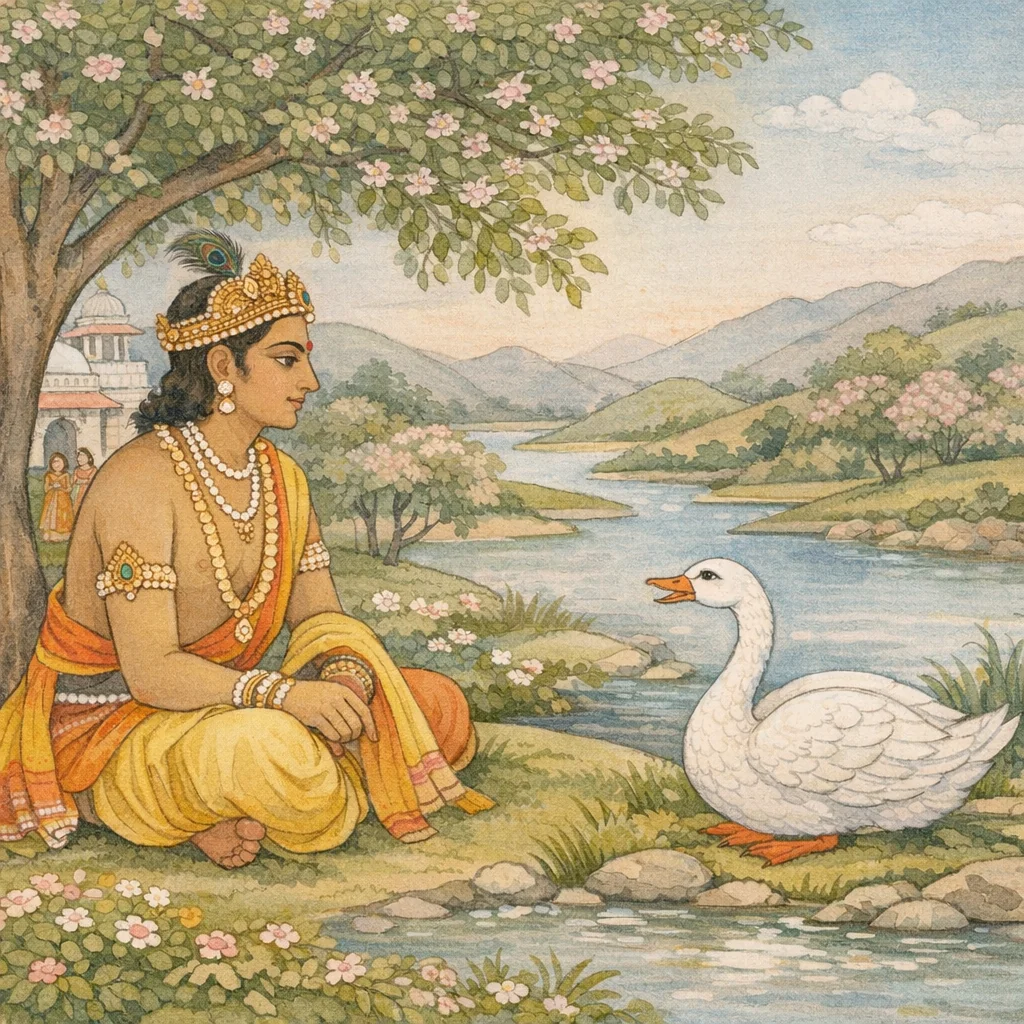
ततो<न््तरिक्षगो वाचं व्याजहार नल॑ तदा । हन्तव्यो5स्मि न ते राजन् करिष्यामि तव प्रियम्
Then Nala, speaking as a voice from the sky, declared: “O King, I am not to be slain by you. I will do what is pleasing to you.” The moment underscores a restraint grounded in dharma: even amid danger and uncertainty, the higher order intervenes to prevent wrongful violence and to guide the king toward a rightful course.
Verse 21
/, (७ ,7 )७॥] दमयन्तीसकाशे त्वां कथयिष्यामि नैषध । यथा त्वदन्यं पुरुषं न सा मंस्यति कहिचित्,“निषधनरेश! मैं दमयन्तीके निकट आपकी ऐसी प्रशंसा करूँगा, जिससे वह आपके सिवा दूसरे किसी पुरुषको मनमें कभी स्थान न देगी”
Bṛhadaśva said: “O king of Niṣadha, I shall speak of you in Damayantī’s presence in such a way that she will never, anywhere, set her mind upon any man other than you.”
Verse 22
एवमुक्तस्ततो हंसमुत्ससर्ज महीपति: । ते तु हंसा: समुत्पत्य विदर्भानगमंस्तत:,हंसके ऐसा कहनेपर राजा नलने उसे छोड़ दिया। फिर वे हंस वहाँसे उड़कर विदर्भदेशमें गये
Thus addressed, the king released the swan. The swans then rose into the sky and flew from that place to the land of Vidarbha—setting in motion the chain of events that will connect Nala with Damayantī. The episode underscores a king’s restraint and propriety: having heard the message, he does not harm the messenger-bird but lets it go, allowing destiny to unfold without cruelty.
Verse 23
विदर्भनगरीं गत्वा दमयन्त्यास्तदान्तिके । निपेतुस्ते गरुत्मन्त: सा ददर्श च तान् खगान्,तब विदर्भनगरीमें जाकर वे सभी हंस दमयन्तीके निकट उतरे। दमयन्तीने भी उन अद्भुत पक्षियोंकों देखा
Having gone to the city of Vidarbha, those swift-winged birds descended near Damayantī. Damayantī, in turn, saw those remarkable birds—an auspicious turn in the unfolding of events, as messengers and omens often guide righteous unions and timely decisions in the epic’s moral world.
Verse 24
सा तानद्धुतरूपान् वै दृष्टया सखिगणावृता । ह्ृष्टा ग्रहीतुं खगमांस्त्वरमाणोपचक्रमे,सखियोंसे घिरी हुई राजकुमारी दमयन्ती उन अपूर्व पक्षियोंकों देखकर बहुत प्रसन्न हुई और तुरंत ही उन्हें पकड़नेकी चेष्टा करने लगी
Surrounded by her circle of companions, Princess Damayantī, on seeing those birds of wondrous appearance, was filled with delight and at once hurriedly set about trying to catch them. The scene underscores youthful spontaneity and the innocent impulse to possess what is beautiful and rare—an impulse that, in the Nala–Damayantī narrative, becomes a prelude to fateful encounters.
Verse 25
अथ हंसा विससूपु: सर्वतः प्रमदावने । एकैकशस्तदा कन्यास्तान् हंसान् समुपाद्रवन्,तब हंस उस प्रमदावनमें सब ओर विचरण करने लगे। उस समय सभी राजकन्याओं ने एक-एक करके उन सभी हंसोंका पीछा किया
Then the swans began to roam about in every direction within the pleasure-grove. At that time, the princesses, each one separately, ran after those swans—an image of youthful play that sets the scene for the ensuing events, where desire and curiosity begin to move the characters toward consequential choices.
Verse 26
दमयन्ती तु यं हंसं समुपाधावदन्तिके । स मानुषीं गिरं कृत्वा दमयन्तीमथाब्रवीत्,दमयन्ती जिस हंसके निकट दौड़ रही थी, उसने उससे मानवी वाणीमें कहा --
As Damayantī ran up close to the swan, it assumed a human voice and addressed her. The scene marks a turning point where a seemingly ordinary creature becomes a moral messenger, guiding her toward a fateful choice in love and dharma.
Verse 27
दमयन्ति नलो नाम निषधेषु महीपतिः । अश्विनो: सदृशो रूपे न समास्तस्य मानुषा:,“राजकुमारी दमयन्ती! सुनो, निषथदेशमें नल नामसे प्रसिद्ध एक राजा हैं, जो अश्विनीकुमारोंके समान सुन्दर हैं। मनुष्योंमें तो कोई उनके समान है ही नहीं
Bṛhadaśva said: “Princess Damayantī, listen. In the land of the Niṣadhas there is a king renowned by the name Nala. In beauty he resembles the twin Aśvins, and among human beings none is his equal.”
Verse 28
कन्दर्प इव रूपेण मूर्तिमानभवत् स्वयम् । तस्य वै यदि भार्या त्वं भवेथा वरवर्णिनि
Bṛhadaśva said: “In beauty he became, as it were, Love-god Kāma himself embodied. O fair-complexioned lady, if indeed you were to become his wife…”
Verse 29
सफल ते भवेज्जन्म रूप॑ चेदं सुमध्यमे । वयं हि देवगन्धर्वमनुष्योरगराक्षसान्
Bṛhadaśva said: “O fair-waisted lady, if this beauty of yours is matched by virtue and right conduct, then your birth will truly be fruitful. For we have seen and known many kinds of beings—gods, Gandharvas, humans, serpents, and Rākṣasas—yet it is character that gives lasting worth beyond mere appearance.”
Verse 30
दृष्टवन्तो न चास्माभिरदर्दष्टपूर्वस्तथाविध: । त्वं चापि रत्नं नारीणां नरेषु च नलो वर:
Bṛhadaśva said: “We have indeed seen many, yet we have never before beheld anyone of such a kind. And you too are a jewel among women; among men, Nala is the finest.”
Verse 31
विशिष्टया विशिष्टेन संगमो गुणवान् भवेत् । 'सुन्दरि! रूपकी दृष्टिसे तो वे मानो स्वयं मूर्तिमान् कामदेव-से ही प्रतीत होते हैं। सुमध्यमे! यदि तुम उनकी पत्नी हो जाओ तो तुम्हारा जन्म और यह मनोहर रूप सफल हो जाय। हमलोगोंने देवता, गन्धर्व, मनुष्य, नाग तथा राक्षसोंको भी देखा है; परंतु हमारी दृष्टिमें अबतक उनके-जैसा कोई भी पुरुष पहले कभी नहीं आया है। तुम रमणियोंमें रत्नस्वरूपा हो और नल पुरुषोंके मुकुटमणि हैं। यदि किसी विशिष्ट नारीका विशिष्ट पुरुषके साथ संयोग हो तो वह विशेष गुणकारी होता है” | २८--३० $ ।। 277, | "कट 9८. | /' ५७४४-८९ 20%, ४ ॥/८ ॥/, ५. ॥४- ७:४8२:7” ० २॥॥| ४८४६८ &: एवमुक्ता तु हंसेन दमयन्ती विशाम्पते,राजन! हंसके इस प्रकार कहनेपर दमयन्तीने उससे कहा--'पक्षिराज! तुम नलके निकट भी ऐसी ही बातें कहना'। राजन! विदर्भराजकुमारी दमयन्तीसे “तथास्तु” कहकर वह हंस पुनः निषधदेशमें आया और उसने नलसे सब बातें निवेदन की
Bṛhadaśva said: “When an exceptional woman is united with an exceptional man, that union becomes richly endowed with excellence.”
Verse 32
अब्रवीत् तत्र तं हंसं त्वमप्येवं नले वद | तथेत्युक्त्वाण्डज: कन्यां विदर्भस्य विशाम्पते । पुनरागम्य निषधान् नले सर्व न्यवेदयत्,राजन! हंसके इस प्रकार कहनेपर दमयन्तीने उससे कहा--'पक्षिराज! तुम नलके निकट भी ऐसी ही बातें कहना'। राजन! विदर्भराजकुमारी दमयन्तीसे “तथास्तु” कहकर वह हंस पुनः निषधदेशमें आया और उसने नलसे सब बातें निवेदन की
Bṛhadaśva said: There, she spoke to that swan, “You too should speak in the same way to Nala.” The bird replied, “So be it,” and, O lord of the people, having addressed the princess of Vidarbha, the swan returned again to Niṣadha and reported everything to Nala. The episode underscores the role of a truthful messenger and the ethical clarity of direct, respectful communication in matters of love and choice.
Verse 52
इस प्रकार श्रीमह्या भारत वनपर्वके अन्तर्गत नलोपाख्यानपर्वमें बुहदश्चयुधिष्टिस्संवादविषयक बावनवाँ अध्याय पूरा हुआ
Thus, in the revered Mahābhārata, within the Vana Parva, in the section known as the Nala episode, the fifty-second chapter—concerned with the dialogue between Bṛhadaśva and Yudhiṣṭhira—comes to its conclusion. The closing formula underscores the didactic frame: Yudhiṣṭhira’s moral inquiry is answered through exemplary narrative, presenting dharma as something to be learned through lived experience, counsel, and reflection amid adversity.
Verse 53
इति श्रीमहाभारते वनपर्वणि नलोपाख्यानपर्वणि हंसदमयन्तीसंवादे त्रिपउ्चाशत्तमो<डध्याय:
Thus, in the Śrī Mahābhārata, within the Vana Parva, in the Nalopākhyāna section, in the dialogue between the swan and Damayantī, ends the fifty-third chapter. This colophon marks the close of a narrative unit that frames moral reflection through storytelling—using a messenger’s speech to guide choice, discernment, and the pursuit of a worthy spouse within the bounds of dharma.
Verse 80
तब आकाशचारी हंसने उस समय नलसे कहा--'राजन्! आप मुझे न मारें। मैं आपका प्रिय कार्य करूँगा ।। ५२0 ॥ ॥/॥९
Then the sky-ranging swan said to Nala at that moment: “O King, do not kill me. I will carry out what is dear and beneficial for you.” The plea frames a moral appeal for restraint and offers service in return, turning violence aside through speech and promised goodwill.
Frequently Asked Questions
The dilemma is how to reconcile Damayantī’s autonomous marital choice with the recognized authority of the Lokapālas, while ensuring that neither Nala nor Damayantī incurs doṣa (ethical fault) through secrecy or perceived disrespect.
Ethical action is strengthened by transparent procedure: when competing claims and authorities exist, a witnessed and rule-consistent method can preserve personal intention (saṅkalpa) without violating broader norms.
No explicit phalaśruti appears in this chapter; its meta-function is structural—establishing a dharmically defensible protocol for the svayaṃvara and clarifying character intent for the narrative’s subsequent developments.