Adhyaya 307
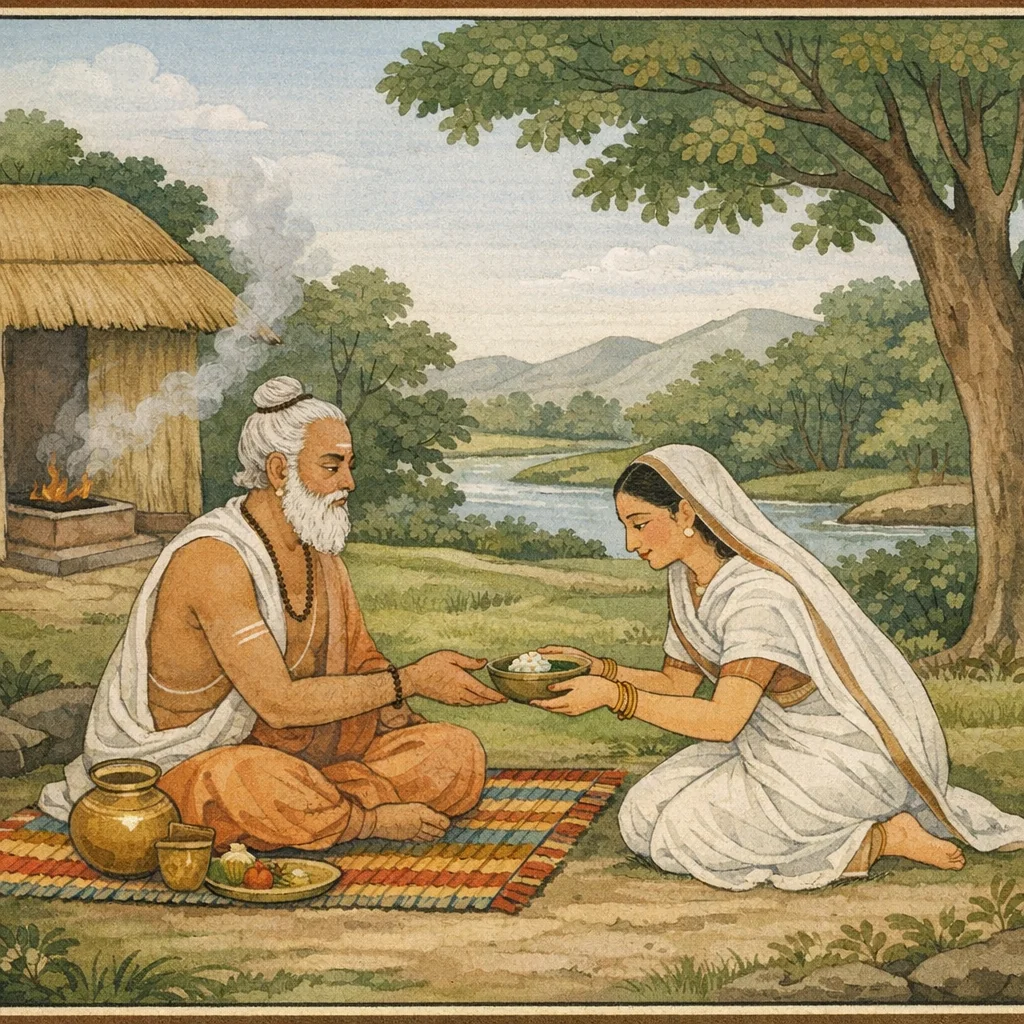
Chapter Arc: वनवास की कठोरता के बीच एक ब्राह्मण अतिथि के आगमन/संभावित आगमन का प्रसंग उठता है—और कुन्ती (पृथा) स्वयं कहती है कि ब्राह्मण-पूजा ही उसका स्वभाव है तथा वह राजाज्ञा के बिना भी सेवा को तत्पर है। → समय-असमय (सायंकाल, प्रातः, रात्रि, अर्धरात्रि) अतिथि के आने की संभावना रखी जाती है; सेवा में आलस्य, मान और थकान बाधा बन सकते हैं, पर कुन्ती उन्हें त्यागकर विधिवत् परिचर्या का संकल्प करती है। साथ ही राजा (यहाँ युधिष्ठिर-स्वर) कुल-हित, आत्म-हित और धर्म-हित के लिए उसे निःशंक होकर यह कर्तव्य करने को कहता है। → अग्निशरण/अग्निहोत्र-गृह में तेजस्वी आसन, आहार आदि की सम्यक् व्यवस्था कर, कुन्ती शौच-परायण होकर देववत् ब्राह्मण की विधिपूर्वक सेवा करती है—यही अध्याय का कर्म-शिखर है, जहाँ ‘अतिथि’ को ‘देव’ मानने का आदर्श प्रत्यक्ष होता है। → राजा का अनुमोदन और उपदेश स्थिर हो जाता है: द्विजों के प्रति क्षमा, यथाशक्ति पूजा, और कुल-कल्याण हेतु अतिथि-सत्कार—कुन्ती का आचरण इस उपदेश को मूर्त रूप देता है।
Shlokas
Verse 1
अपना स२ (0 अवज असल चतुराधिकत्रिशततमो< ध्याय: कुन्तीका पितासे वार्तालाप और ब्राह्मणकी परिचर्या कुन्त्युवाच ब्राह्मुणं यन्त्रिता राजन्नुपस्थास्यामि पूजया । यथाप्रतिज्ञं राजेन्द्र न च मिथ्या ब्रवीम्पहम,कुन्ती बोली--राजन! मैं नियमोंमें आबद्ध रहकर आपकी प्रतिज्ञाके अनुसार निरन्तर इन तपस्वी ब्राह्मणकी सेवा-पूजाके लिये उपस्थित रहूँगी। राजेन्द्र! मैं झूठ नहीं बोलती हूँ
Kuntī said: “O King, bound by my vows and self-discipline, I shall continually attend upon this ascetic brāhmaṇa with reverent service, in accordance with your pledge. O best of kings, I do not speak falsely.”
Verse 2
एष चैव स्वभावो मे पूजयेयं द्विजानिति । तव चैव प्रियं कार्य श्रेयश्ष परमं मम,यह मेरा स्वभाव ही है कि मैं ब्राह्मणोंकी सेवा-पूजा करूँ और आपका प्रिय करना तो मेरे लिये परम कल्याणकी बात है ही
Vaiśampāyana said: “This indeed is my very nature—that I should honor and serve the twice-born (brāhmaṇas). And to do what is dear to you is, for me, the highest good.”
Verse 3
यद्येवैष्यति सायाह्वे यदि प्रातरथो निशि । यद्यर्थरात्रे भगवान् न मे कोपं करिष्यति,ये पूजनीय ब्राह्मण यदि सायंकाल आवें, प्रातःकाल पधारें अथवा रात या आधीरातमें भी दर्शन दें, ये कभी भी मेरे मनमें क्रोध उत्पन्न नहीं कर सकेंगे--मैं हर समय इनकी समुचित सेवाके लिये प्रस्तुत रहूँगी
Vaiśampāyana said: “Whether he comes at evening, or in the morning, or even in the night; even if the venerable one arrives at midnight, he will not provoke anger in me. At any time, I shall remain ready to render proper service to the Brahmin worthy of honor.”
Verse 4
लाभो ममैष राजेन्द्र यद् वै पूजयती द्विजान् | आदेशे तव तिष्ठन्ती हित कुर्या नरोत्तम,राजेन्द्र! नरश्रेष्ठ! मेरे लिये महान् लाभकी बात यही है कि मैं आपकी आज्ञाके अधीन रहकर ब्राह्मणोंकी सेवा-पूजा करती हुई सदैव आपका हित-साधन करूँ
Vaiśampāyana said: “O king, this indeed is my gain—that, abiding under your command, I may honor and serve the twice-born (brāhmaṇas) and, in doing so, continually work for your welfare, O best of men.”
Verse 5
विसत्रब्धो भव राजेन्द्र न व्यलीकं द्विजोत्तम: । वसन प्राप्स्यति ते गेहे सत्यमेतद् ब्रवीमि ते,महाराज! विश्वास कीजिये। आपके भवनमें निवास करते हुए ये द्विजश्रेष्ठ कभी अपने मनके प्रतिकूल कोई कार्य नहीं देख पायेंगे। यह मैं आपसे सत्य कहती हूँ
Vaiśampāyana said: “Be at ease, O king of kings. This foremost of Brahmins is not deceitful. While dwelling in your house, he will never encounter anything contrary to his own conscience and purpose. This I tell you in truth, O great king.”
Verse 6
यत् प्रियं च द्विजस्यास्य हितं॑ चैव तवानघ । यतिष्यामि तथा राजन व्येतु ते मानसो ज्वर:,निष्पाप नरेश! आपकी मानसिक चिन्ता दूर हो जानी चाहिये। मैं वही कार्य करनेका प्रयत्न करूँगी जो इन तपस्वी ब्राह्मणको प्रिय और आपके लिये हितकर हो
Vaiśampāyana said: “O sinless king, I shall strive to do exactly what is dear to this brahmin ascetic and what is beneficial for you as well. May the fever of anxiety in your mind be dispelled.”
Verse 7
ब्राह्मणा हि महाभागा: पूजिता: पृथिवीपते | तारणाय समर्था: स्युर्विपरीते वधाय च,क्योंकि पृथ्वीपते! महाभाग ब्राह्मण भलीभाँति पूजित होनेपर सेवकको तारनेमें समर्थ होते हैं; और इसके विपरीत अपमानित होनेपर विनाशकारी बन जाते हैं
Vaiśampāyana said: “O lord of the earth, the noble Brahmins—when duly honored—are capable of delivering and protecting one’s dependents; but when treated in the opposite manner, through disrespect, they become agents of ruin.”
Verse 8
साहमेतद् विजानन्ती तोषयिष्ये द्विजोत्तमम् । न मत्कृते व्यथां राजन प्राप्स्यसि द्विजसत्तमात्,मैं इस बातको जानती हूँ। अतः इन श्रेष्ठ ब्राह्यणको सब तरहसे संतुष्ट रखूँगी। राजन! मेरे कारण इन द्विजश्रेष्ठठे आपको कोई कष्ट नहीं प्राप्त होगा
“Knowing this well, I shall fully satisfy that foremost of Brahmins. O King, because of me you will not incur any distress from that excellent Brahmin.”
Verse 9
अपराधे5पि राजेन्द्र राज्ञामश्रेयसे द्विजा: । भवन्ति चवनो यद्वत् सुकन्याया: कृते पुरा,राजेन्द्र! किसी बालिकाद्वारा अपराध बन जानेपर भी ब्राह्मणलोग राजाओंका अमंगल करनेको उद्यत हो जाते हैं, जैसे प्राचीनकालमें सुकन्याद्वारा अपराध होनेपर महर्षि च्यवन महाराज शर्यातिका अनिष्ट करनेको उद्यत हो गये थे
Vaiśampāyana said: “O best of kings, even when the fault lies elsewhere, Brahmins may become intent on bringing misfortune upon kings. So it once happened in ancient times: because of Sukanyā’s act, the sage Cyavana became ready to bring calamity upon King Śaryāti.”
Verse 10
नियमेन परेणाहमुपस्थास्ये द्विजोत्तमम् । यथा त्वया नरेन्द्रेदं भाषितं ब्राह्मणं प्रति
Vaiśampāyana said: “With the strictest discipline I shall attend upon that foremost of twice-born Brahmins, exactly as you, O king among men, have spoken regarding this matter in relation to the Brahmin.”
Verse 11
नरेन्द्र! आपने ब्राह्मणके प्रति बर्ताव करनेके विषयमें जो कुछ कहा है, उसके अनुसार मैं उत्तम नियमोंके पालनपूर्वक इन श्रेष्ठ ब्राह्मणकी सेवामें उपस्थित रहूँगी ।। एवं ब्रुवन्तीं बहुश: परिष्वज्य समर्थ्य च । इति चेति च कर्तव्यं राजा सर्वमथादिशत्,इस प्रकार कहती हुई कुन्तीको बारंबार गलेसे लगाकर राजाने उसकी बातोंका समर्थन किया और कैसे-कैसे क्या-क्या करना चाहिये, इसके विषयमें उसे सुनिश्चित आदेश दिया
Vaiśampāyana said: “O king! In accordance with what you have said about proper conduct toward Brahmins, I shall, observing excellent disciplines, remain devotedly at the service of these eminent Brahmins.” As Kuntī spoke thus, the king repeatedly embraced her, affirmed her resolve, and then issued clear instructions about all that was to be done—this and that—laying down the proper course of action.
Verse 12
राजोवाच एवमेतत्् त्वया भद्रे कर्तव्यमविशड्कया । मद्धितार्थ तथा>>त्मार्थ कुलार्थ चाप्यनिन्दिते,राजा बोले-भद्रे! अनिन्दिते! मेरे, तुम्हारे तथा कुलके हितके लिये तुम्हें नि:शंकभावसे इसी प्रकार यह सब कार्य करना चाहिये
The king said: “Yes—exactly so. O noble lady, you should carry this out without any hesitation. O blameless one, it is to secure my welfare, your own welfare, and the welfare of our family as well.”
Verse 13
एवमुक्त्वा तु तां कनन््यां कुन्तिभोजो महायशा: । पृथां परिददौ तस्मै द्विजाय द्विजवत्सल:,ब्राहणप्रेमी महायशस्वी राजा कुन्तिभोजने पुत्रीसे ऐसा कहकर उन आये हुए द्विजकी सेवामें पृथाको दे दिया
Vaiśampāyana said: Having spoken thus, the illustrious Kuntibhoja—ever affectionate toward Brahmins—formally entrusted the maiden Pṛthā to that Brahmin. The episode underscores the king’s reverence for learned guests and his sense of duty to honor and support them, even through significant personal sacrifice.
Verse 14
इयं ब्रह्मन् मम सुता बाला सुखविवर्धिता । अपराध्येत यत्र किंचिन्न कार्य हृदि तत् त्वया,और कहा--'ब्रह्मन! यह मेरी पुत्री पृथा अभी बालिका है और सुखमें पली हुई है। यदि आपका कोई अपराध कर बैठे, तो भी आप उसे मनमें नहीं लाइयेगा
Vaishampayana said: “O Brahmin, this is my daughter—still a young girl, reared in comfort. If she should commit any offence in any matter, you should not take it to heart.”
Verse 15
द्विजातयो महा भागा वृद्धबालतपस्थविषु । भवन्त्यक्रोधना: प्रायो हापराद्धेषु नित्यदा,“वृद्ध, बालक और तपस्वीजन यदि कोई अपराध कर दें, तो भी आप-जैसे महाभाग ब्राह्मण प्रायः कभी उनपर क्रोध नहीं करते
Vaiśampāyana said: “O greatly fortunate brāhmaṇas, those who are twice-born are, for the most part, free from anger—especially toward the aged, toward children, and toward ascetics. Even when such persons commit a fault, you do not habitually become wrathful with them.”
Verse 16
सुमहत्यपराधेऊपि क्षान्ति: कार्या द्विजातिभि: | यथाशक्ति यथोत्साहं पूजा ग्राह्मा द्विजोत्तम,“विप्रवर! सेवकका महान् अपराध होनेपर भी ब्राह्मणोंको क्षमा करनी चाहिये तथा शक्ति और उत्साहके अनुसार उनके द्वारा की हुई सेवा-पूजा स्वीकार कर लेनी चाहिये”
Vaiśaṃpāyana said: “Even when a servant has committed a very great offence, those who are twice-born should practice forgiveness. And, O best of Brahmins, they should accept the service and acts of reverence offered to them, in accordance with the servant’s capacity and sincere effort.”
Verse 17
तथेति ब्राह्मणेनोक्ते स राजा प्रीतमानस: । हंसचन्द्रांशुसंकाशं गृहमस्मै न्न्यवेदयत्,ब्राह्मणने “तथास्तु/ कहकर राजाका अनुरोध मान लिया। इससे उनके मनमें बड़ी प्रसन्नता हुई। उन्होंने ब्राह्मणको रहनेके लिये हंस और चन्द्रमाकी किरणोंके समान एक उज्ज्वल भवन दे दिया
Vaiśaṃpāyana said: When the brāhmaṇa replied, “So be it,” the king’s heart was filled with joy. Pleased, he presented him with a radiant dwelling—bright like a swan and like the moon’s beams—so that the brāhmaṇa might reside there. The episode highlights the ethical ideal of honoring a worthy guest and responding to assent with generous, respectful hospitality.
Verse 18
तत्राग्निशरणे क्लृप्तमासनं तस्य भानुमत् | आहारादि च सर्व तत् तथैव प्रत्यवेदयत्,वहाँ अग्निहोत्रगृहमें उनके लिये चमचमाते हुए सुन्दर आसनकी व्यवस्था हो गयी। भोजन आदिकी सब सामग्री भी राजाने वहीं प्रस्तुत कर दी
Vaiśampāyana said: There, in the fire-sanctuary (the agnihotra-house), a radiant and fitting seat was arranged for him. Likewise, all provisions—food and the rest—were duly presented to him, reflecting the host’s careful observance of hospitality and proper conduct.
Verse 19
निक्षिप्य राजपुत्री तु तन्द्री मानं तथैव च | आतस्थे परम यत्नं ब्राह्मणस्याभिराधने,राजकुमारी कुन्ती आलस्य और अभिमानको दूर भगाकर ब्राह्मणकी आराधनामें बड़े यत्नसे संलग्न हो गयी
Vaiśaṃpāyana said: Having cast aside her drowsiness and her pride, the princess set herself with the utmost effort to the respectful service and propitiation of the brāhmaṇa. Ethically, the verse highlights self-discipline and humility as prerequisites for rightly approaching sacred power and spiritual authority.
Verse 20
तत्र सा ब्राह्म॒णं गत्वा पृथा शौचपरा सती । विधिवत् परिचारह॑ देववत् पर्यतोषयत्,बाहर-भीतरसे शुद्ध हो सती-साध्वी पृथा उन पूजनीय ब्राह्मणके पास जाकर देवताकी भाँति उनकी विधिवत् आराधना करके उन्हें पूर्णरूपसे संतुष्ट रखने लगी
There, Pṛthā (Kuntī)—a virtuous woman devoted to purity—went to the revered brāhmaṇa and, serving him in the prescribed manner as one would serve a deity, kept him fully pleased. The episode underscores an ethic of dharma expressed through disciplined conduct, cleanliness, humility, and reverent service to the worthy.
Verse 303
इस प्रकार श्रीमहाभारत वनपववके अन्तर्गत कुण्डलाहरणपर्वमें पृथाकोी उपदेशविषयक तीन सौ तीनवाँ अध्याय पूरा हुआ
Thus ends the three-hundred-and-third chapter of the Mahābhārata’s Vana Parva, within the section known as the ‘Episode of the Taking of the Earrings,’ dealing with the instruction given by Pṛthā (Kuntī). This closing colophon marks the completion of that chapter and frames its ethical focus as counsel meant to guide conduct amid hardship.
Verse 304
इति श्रीमहाभारते वनपर्वणि कुण्डलाहरणपर्वणि पृथाद्विजपरिचर्यायां चतुरधिकत्रिशततमो<ध्याय:
Thus ends the three-hundred-and-seventh chapter of the Vana Parva of the Śrī Mahābhārata, within the section on the taking of the earrings, specifically in the episode concerning Pṛthā’s service to a brahmin. This closing colophon signals the completion of the chapter and situates the narrative within its larger ethical frame of duty, humility, and the consequences of actions.