Adhyaya 16
Saubha-ākhyāna: Śālva’s Approach and the Fortification of Dvārakā (सौभाख्यानम्—द्वारकायाः सुरक्षाविधानम्)
Upa-parva: Saubha-ākhyāna (Account of Śālva’s Saubha Campaign against Dvārakā)
The chapter opens with Yudhiṣṭhira requesting Vāsudeva to narrate in greater detail the killing connected with Saubha (Śālva’s aerial stronghold). Vāsudeva begins by stating that Śālva, having heard that Kṛṣṇa had slain Śrautaśrava, advances upon Dvārakā. Śālva is depicted as surrounding and pressing the city, initiating a full engagement. The narrative then shifts to a technical description of Dvārakā’s defensive readiness: banners, gateways, engines, weapons, and protective devices are enumerated in dense catalog form, presenting the city as systematically equipped according to śāstric (procedural) norms. The defenders—identified with the Vṛṣṇi-Andhakas and leaders such as Ugrasena and Uddhava—enforce civic discipline by proclaiming abstention from intoxicants to prevent negligence. Non-essential public performers are removed beyond the perimeter, crossings are disrupted, boats are restricted, trenches are reinforced with stakes, wells and surrounding terrain are managed, and access control is tightened so that no unauthorized movement occurs. The chapter closes by emphasizing that Dvārakā is protected by king Āhuka (Ugrasena) with generous provisioning, orderly payroll and equipment distribution, and a force composed of proven warriors with elephants and horses—rendering the city comparable to Indra’s abode in security and armament.
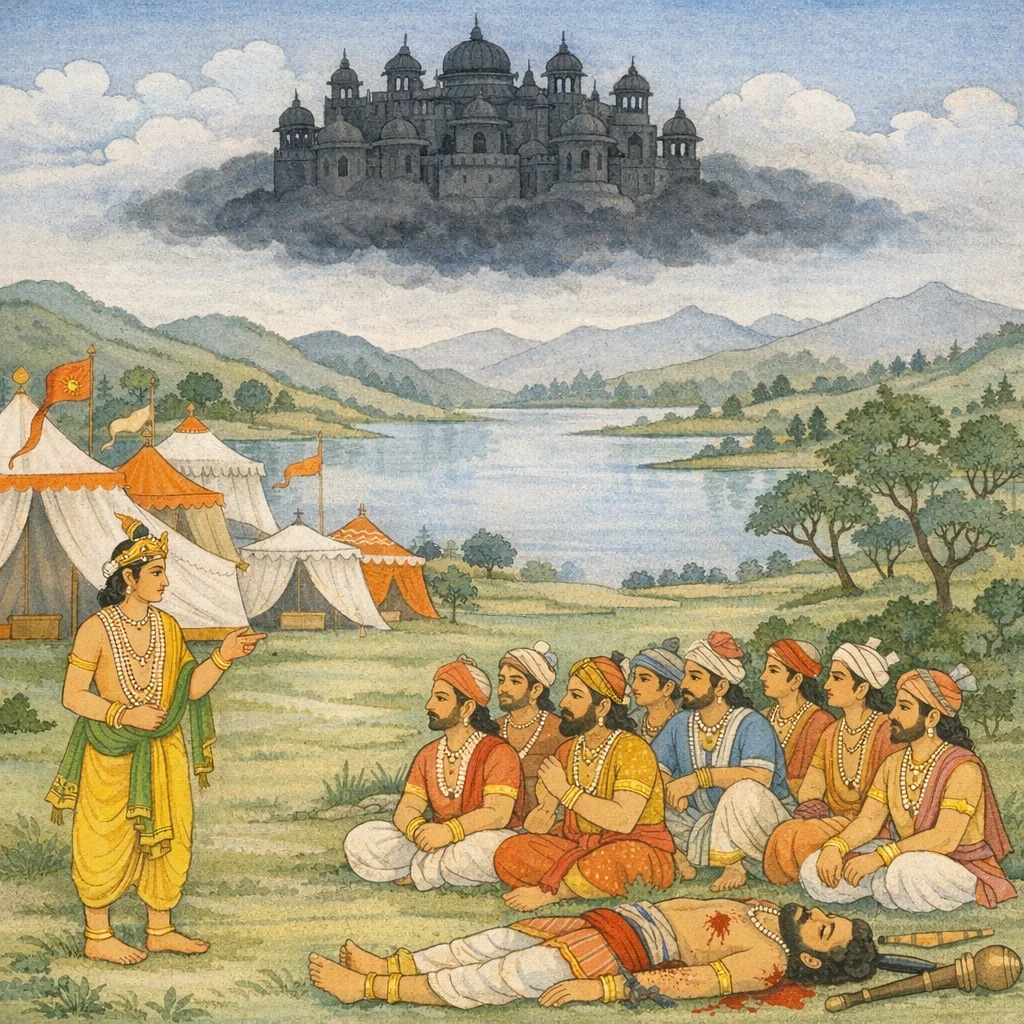
Chapter Arc: समतल भूमि के पास, जल से भरे विशाल जलाशय के किनारे शाल्वराज अपनी चतुरङ्गिणी सेना को उतारता है—ध्वज, रथ, धनुष और आयुधों की विचित्र शोभा के साथ, मानो युद्ध स्वयं शिविर बनकर बैठ गया हो। → सेना श्मशान, देवायतन, वल्मीक और चैत्यवृक्षों को छोड़कर शेष स्थानों में पड़ाव डालती है; उधर यादव पक्ष में शाल्व के आक्रमण का समाचार फैलते ही प्रतिकार की तैयारी होती है और रणभूमि में साम्ब शाल्व के सचिव/सेनापति क्षेमवृद्धि को ललकारता है। → क्रोधोन्मत्त महारथी पुत्र (यादव पक्ष) विविन्ध्य पर घातक प्रहार करता है—विविन्ध्य के गिरते ही शाल्व की सेना विक्षुब्ध हो उठती है; तभी शाल्व अपने कामगामी ‘सौभ’ विमान/नगर के सहारे पुनः लौटकर युद्ध को नया मोड़ देता है। → यादव वीर प्रतिज्ञा करते हैं कि वे धनुष से छूटे लोहे के सर्प-सदृश बाणों द्वारा सौभपति की सेना का नाश करेंगे; प्रद्युम्न धैर्य बँधाता है—‘भय न करो, सौभराज अभी नष्ट हो रहा है’—और सेना पुनः व्यवस्थित होकर यथासुख युद्ध में प्रवृत्त होती है। → सौभ के पुनरागमन से युद्ध का परिणाम अनिश्चित रह जाता है—क्या यादवों का धैर्य और प्रद्युम्न का आश्वासन शाल्व की मायावी शक्ति को तोड़ पाएगा?
Shlokas
Verse 1
#:732..8 #::3::7 () है रे 7-3 - श्रुतश्रवा शिशुपालकी माताका नाम है। यह वसुदेवजीकी बहिन थी। घोडशो< ध्याय: शाल्वकी विशाल सेनाके आक्रमणका यादवसेनाद्वारा प्रतिरोध, साम्बद्धारा क्षेमवृद्धिकी पराजय, वेगवान्का वध तथा चारुदेष्णद्वारा विविन्ध्य दैत्यका वध एवं प्रद्युम्नद्वारा सेनाको आश्वासन वायुदेव उवाच तां तूपयातो राजेन्द्र शाल्व: सौभपतिस्तदा । प्रभूतनरनागेन बलेनोपविवेश ह,भगवान् श्रीकृष्ण कहते हैं--राजेन्द्र! सौभ विमानका स्वामी राजा शाल्व अपनी बहुत बड़ी सेनाके साथ, जिसमें हाथीसवारों तथा पैदलोंकी संख्या अधिक थी, द्वारकापुरीपर चढ़ आया और उसके निकट आकर ठहरा
Vāyudeva said: “O king, at that time Śālva, the lord of the Saubha aerial city, advanced against that place. With a vast force—abounding in infantry and war-elephants—he drew near to Dvārakā and encamped close by.”
Verse 2
समे निविष्टा सा सेना प्रभूतसलिलाशये । चतुरड्रबलोपेता शाल्वराजाभिपालिता,जहाँ अधिक जलसे भरा हुआ जलाशय था, वहीं समतल भूमिमें उसकी सेनाने पड़ाव डाला। उसमें हाथीसवार, घुड़सवार, रथी और पैदल चारों प्रकारके सैनिक थे। स्वयं राजा शाल्व उसका संरक्षक था
Vāyu said: There, on level ground beside a reservoir filled with abundant water, that army made its camp. It was a complete fourfold force—elephants, horses, chariots, and infantry—and it was guarded and directed under King Śālva’s command. The scene underscores the practical ethics of kingship in war: securing water, choosing stable terrain, and maintaining disciplined protection of one’s troops.
Verse 3
वर्जयित्वा श्मशानानि देवता55यतनानि च । वल्मीकांश्रैत्यवक्षांश्व तन्निविष्टमभूदू बलम्,श्मशानभूमि, देवमन्दिर, बाँबी और चैत्यवृक्षको छोड़कर सभी स्थानोंमें उसकी सेना फैलकर ठहरी हुई थी
Vāyu said: Excluding the cremation grounds and the sanctuaries of the gods, the anthills and the sacred trees, the army spread out and took up its encampment everywhere else. The scene underscores a basic restraint even amid force: places marked by death and places held sacred are to be left undisturbed.
Verse 4
अनीकानां विभागेन पन्थान: संवृता5भवन् | प्रवणाय च नैवासञ्छाल्वस्य शिविरे नूप,सेनाओंके विभागपूर्वक पड़ाव डालनेसे सारे रास्ते घिर गये थे। राजन! शाल्वके शिविरमें प्रवेश करनेका कोई मार्ग नहीं रह गया था
Vāyu said: “By the orderly deployment and division of the battalions, all the roads were blocked. O king, there remained no passage at all by which one could enter Śālva’s camp.”
Verse 5
सर्वायुधसमोपेतं सर्वशस्त्रविशारदम् | रथनागाश्वकलिलं पदातिध्वजसंकुलम्,नरश्रेष्ठ राजा शाल्वकी वह सेना सब प्रकारके आयुधोंसे सम्पन्न, सम्पूर्ण अस्त्र- शस्त्रोंके संचालनमें निपुण, रथ, हाथी और घोड़ोंसे भरी हुई तथा पैदल सिपाहियों और ध्वजा-पताकाओंसे व्याप्त थी। उसका प्रत्येक सैनिक हृष्ट-पुष्ट एवं बलवान् था। सबमें वीरोचित लक्षण दिखायी देते थे। उस सेनाके सिपाही विचित्र ध्वजा तथा कवच धारण करते थे। उनके रथ और धनुष भी विचित्र थे। कुरुनन्दन! द्वारकाके समीप उस सेनाको ठहराकर राजा शाल्वने उसे वेगपूर्वक द्वारकाकी ओर बढ़ाया; मानो पक्षिराज गरुड़ अपने लक्ष्यकी ओर उड़े जा रहे हों
Vāyu said: “That army was fully equipped with every kind of weapon and expertly trained in the use of all arms. It was dense with chariots, elephants, and horses, and crowded with foot-soldiers and fluttering standards. Thus arrayed, it advanced with force—an image of martial might gathering to press toward its objective.”
Verse 6
तुष्टपुष्टबलोपेतं वीरलक्षणलक्षितम् | विचित्रध्वजसन्नाहं विचित्ररथकार्मुकम्,नरश्रेष्ठ राजा शाल्वकी वह सेना सब प्रकारके आयुधोंसे सम्पन्न, सम्पूर्ण अस्त्र- शस्त्रोंके संचालनमें निपुण, रथ, हाथी और घोड़ोंसे भरी हुई तथा पैदल सिपाहियों और ध्वजा-पताकाओंसे व्याप्त थी। उसका प्रत्येक सैनिक हृष्ट-पुष्ट एवं बलवान् था। सबमें वीरोचित लक्षण दिखायी देते थे। उस सेनाके सिपाही विचित्र ध्वजा तथा कवच धारण करते थे। उनके रथ और धनुष भी विचित्र थे। कुरुनन्दन! द्वारकाके समीप उस सेनाको ठहराकर राजा शाल्वने उसे वेगपूर्वक द्वारकाकी ओर बढ़ाया; मानो पक्षिराज गरुड़ अपने लक्ष्यकी ओर उड़े जा रहे हों
Vāyu said: “That army of King Śālva was cheerful, well-nourished, and endowed with strength; it bore the marks of true warriors. Its banners and armor were of many kinds, and its chariots and bows were likewise varied and splendid.”
Verse 7
संनिवेश्य च कौरव्य द्वारकायां नरर्षभ । अभिसारयामास तदा वेगेन पतगेन्द्रवत्,नरश्रेष्ठ राजा शाल्वकी वह सेना सब प्रकारके आयुधोंसे सम्पन्न, सम्पूर्ण अस्त्र- शस्त्रोंके संचालनमें निपुण, रथ, हाथी और घोड़ोंसे भरी हुई तथा पैदल सिपाहियों और ध्वजा-पताकाओंसे व्याप्त थी। उसका प्रत्येक सैनिक हृष्ट-पुष्ट एवं बलवान् था। सबमें वीरोचित लक्षण दिखायी देते थे। उस सेनाके सिपाही विचित्र ध्वजा तथा कवच धारण करते थे। उनके रथ और धनुष भी विचित्र थे। कुरुनन्दन! द्वारकाके समीप उस सेनाको ठहराकर राजा शाल्वने उसे वेगपूर्वक द्वारकाकी ओर बढ़ाया; मानो पक्षिराज गरुड़ अपने लक्ष्यकी ओर उड़े जा रहे हों
Vāyu said: “O scion of the Kurus, O bull among men—having stationed his forces near Dvārakā, King Śālva then drove them forward at great speed toward the city, like the lord of birds rushing upon its mark. His army was fully equipped with every kind of weapon, skilled in the handling of missiles and arms, crowded with chariots, elephants, and horses, and spread with foot-soldiers and banners. Each warrior was robust and strong, bearing the marks of heroism; their standards, armor, chariots, and bows were of varied and striking kinds.”
Verse 8
तदापतन्तं संदृश्य बलं शाल्वपतेस्तदा । निर्याय योधयामासु: कुमारा वृष्णिनन्दना:,शाल्वराजकी उस सेनाको आती देख उस समय वृष्णिकुलको आनन्दित करनेवाले कुमार नगरसे बाहर निकलकर युद्ध करने लगे
Vāyu said: Seeing at that time the army of Śālva’s lord advancing upon them, the youthful princes—delighting the Vṛṣṇi clan—went out from the city and began to engage the enemy in battle. The scene underscores the kṣatriya duty of meeting aggression directly, protecting the community without delay.
Verse 9
असहन्तो5भियानं तच्छाल्वराजस्य कौरव । चारुदेष्णश्न साम्बश्न प्रद्युम्नश्न महारथ:,कुरुनन्दन! शाल्वराजके उस आक्रमणको वे सहन न कर सके। चारुदेष्ण, साम्ब और महारथी प्रद्युम्न--ये सब कवच, विचित्र आभूषण तथा ध्वजा धारण करके रथोंपर बैठकर शाल्वराजके अनेक श्रेष्ठ योद्धाओंके साथ भिड़ गये
O Kaurava, unable to endure that assault of King Śālva, Cārudeṣṇa, Sāmba, and the great chariot-warrior Pradyumna took up their armor, splendid ornaments, and banners, mounted their chariots, and engaged in battle with many of Śālva’s foremost fighters. The passage highlights the kṣatriya duty of not tolerating an unjust aggression and responding with organized valor rather than fear or passivity.
Verse 10
ते रथैर्दशिता: सर्वे विचित्राभरणध्वजा: । संसक्ता: शाल्वराजस्य बहुभियोंधपुड्भवै:,कुरुनन्दन! शाल्वराजके उस आक्रमणको वे सहन न कर सके। चारुदेष्ण, साम्ब और महारथी प्रद्युम्न--ये सब कवच, विचित्र आभूषण तथा ध्वजा धारण करके रथोंपर बैठकर शाल्वराजके अनेक श्रेष्ठ योद्धाओंके साथ भिड़ गये
Vāyu said: “All of them, mounted on chariots and displaying varied ornaments and banners, closed in and engaged the king of Śālva’s forces—those many formidable companies of warriors, O joy of the Kurus. Unable to endure Śālva’s assault, Cārudeṣṇa, Sāmba, and the great chariot-warrior Pradyumna, armoured and splendidly adorned, took to their chariots and met Śālva’s best fighters in battle.”
Verse 11
गृहीत्वा कार्मुकं साम्ब: शाल्वस्य सचिवं रणे | योधयामास संद्ृष्ट: क्षेमवृद्धि चमूपतिम्,हर्षमें भरे हुए साम्बने धनुष धारण करके शाल्वके मन्त्री तथा सेनापति क्षेमवृद्धिके साथ युद्ध किया
Having taken up his bow, Sāmba—filled with martial ardor—engaged in battle Śālva’s minister and the army-commander Kṣemavṛddhi, confronting them directly on the field. The verse highlights the decisive initiative of a warrior who, once armed and resolved, meets the enemy leadership face to face, intensifying the ethical weight of combat by targeting those who guide and command the opposing force.
Verse 12
तस्य बाणमयं वर्ष जाम्बवत्या: सुतो महत् । मुमोच भरतश्रेष्ठ यथा वर्ष सहस्रदूक्ू,भरतश्रेष्ठ! जाम्बवतीकुमारने उसके ऊपर भारी बाणवर्षा की, मानो इन्द्र जलकी वर्षा कर रहे हों। महाराज! सेनापति क्षेमवृद्धिने साम्बकी उस भयंकर बाणवर्षाको हिमालयकी भाँति अविचल रहकर सहन किया
O best of the Bharatas, Jāmbavatī’s son unleashed upon him a great rain of arrows, like the thousand-eyed Indra pouring down a storm. Yet the opposing commander endured that dreadful volley without wavering, standing firm like the Himālaya—an image of steadiness and martial discipline amid violence.
Verse 13
तद् बाणवर्ष तुमुलं विषेहे स चमूपति: । क्षेमवृद्धिर्महाराज हिमवानिव निश्चल:,भरतश्रेष्ठ! जाम्बवतीकुमारने उसके ऊपर भारी बाणवर्षा की, मानो इन्द्र जलकी वर्षा कर रहे हों। महाराज! सेनापति क्षेमवृद्धिने साम्बकी उस भयंकर बाणवर्षाको हिमालयकी भाँति अविचल रहकर सहन किया
Verse 14
ततः साम्बाय राजेन्द्र क्षेमवृद्धिरपि स्वयम् । मुमोच मायाविहितं शरजालं महत्तरम्,राजेन्द्र! तदनन्तर क्षेमवृद्धिने स्वयं भी साम्बके ऊपर मायानिर्मित बाणोंकी भारी वर्षा प्रारम्भ की
Then, O king, Kṣemavṛddhi himself unleashed upon Sāmba a vast net-like shower of arrows, fashioned through illusion. The episode underscores how, in conflict, power may be amplified by deceptive arts (māyā), testing a warrior’s steadiness and discernment rather than mere strength.
Verse 15
ततो मायामयं जाल॑ माययैव विदीर्य सः । साम्ब: शरसहस्रेण रथमस्याभ्यवर्षत,साम्बने उस मायामय बाणजालको मायासे ही छिजन्न-भिन्न करके क्षेमवृद्धिके रथपर सहस्रों बाणोंकी झड़ी लगा दी
Then, tearing apart that illusory net of missiles by counter-illusion itself, Sāmba showered his opponent’s chariot with a thousand arrows—meeting deception with skill and resolve, and pressing the fight without yielding to trickery.
Verse 16
ततः स विद्धः साम्बेन क्षेमवृद्धिश्चमूपति: । अपायाज्जवनैरश्रै: साम्बबाणप्रपीडित:,साम्बने सेनापति क्षेमवृद्धिको अपने बाणोंसे घायल कर दिया। वह साम्बकी बाणवर्षासे पीड़ित हो शीघ्रगामी अश्वोंकी सहायतासे (लड़ाईका मैदान छोड़कर) भाग गया इति श्रीमहाभारते वनपर्वणि अर्जुनाभिगमनपर्वणि सौभवधोपाख्याने षोडशो<ध्याय:
Then Kṣemavṛddhi, the commander of the army, was struck by Sāmba’s arrows. Tormented by Sāmba’s relentless shower of shafts, he withdrew from the battlefield, fleeing with the help of swift horses—an image of how, in war, courage collapses when one’s strength and composure are broken by superior force.
Verse 17
तस्मिन् विप्रद्रुते क्ूरे शाल्वस्याथ चमूपतौ । वेगवान् नाम दैतेय: सुतं मे5भ्यद्रवद् बली,शाल्वके क्रूर सेनापति क्षेमवृद्धिके भाग जाने-पर वेगवान् नामक बलवान दैत्यने मेरे पुत्रपर आक्रमण किया
When Śālva’s cruel commander of the army was thrown into confusion and routed, a mighty Dānava named Vegavān charged straight at my son. The episode underscores how, amid the chaos of battle, violent retaliation and opportunistic assaults arise, testing steadiness, protection of one’s dependents, and the warrior’s restraint under provocation.
Verse 18
अभिफपन्नस्तु राजेन्द्र साम्बो वृष्णिकुलोद्वह: । वेगं वेगवतो राजं॑स्तस्थौ वीरो विधारयन्,राजेन्द्र! वृष्णिवेंशका भार वहन करनेवाला वीर साम्ब वेगवान्के वेगको सहन करते हुए धैर्यपूर्वक उसका सामना करने लगा
O king, the heroic Sāmba—foremost of the Vṛṣṇi lineage—though hard-pressed, stood his ground. Bearing with steadfast composure the onrush of the swift opponent’s force, he faced it without yielding, exemplifying courage restrained by self-control.
Verse 19
स वेगवति कौन्तेय साम्बो वेगवत्तीं गदाम् । चिक्षेप तरसा वीरो व्याविद्धय सत्यविक्रम:,कुन्तीनन्दन! सत्यपराक्रमी वीर साम्बने अपनी वेगशालिनी गदाको बड़े वेगसे घुमाकर वेगवान् दैत्यके सिरपर दे मारा
Vāyu said: “O son of Kuntī, the hero Sāmba—true to his proven valor—whirled his mighty mace and, with great force, hurled it at the head of the swift-moving demon.” The scene underscores righteous courage: strength is shown as disciplined action directed against a violent adversary, not as cruelty for its own sake.
Verse 20
तया त्वभिहतो राजन् वेगवान् न््यपतद् भुवि । वातरुग्ण इव क्षुण्णो जीर्णमूलो वनस्पति:,राजन्! उस गदासे आहत होकर वेगवान् इस प्रकार पृथ्वीपर गिर पड़ा, मानो जीर्ण हुई जड़वाला पुराना वृक्ष हवाके वेगसे टूटकर धराशायी हो गया हो
O King, struck by her mace, the mighty one fell headlong to the earth—like an old tree with decayed roots, shattered and brought down by the force of the wind. The image underscores how even great strength collapses when its support is weakened, and how decisive action in conflict can swiftly humble the powerful.
Verse 21
तस्मिन् विनिहते वीरे गदानुन्ने महासुरे । प्रविश्य महतीं सेनां योधयामास मे सुत:,गदासे घायल हुए उस वीर महादैत्यके मारे जानेपर मेरा पुत्र साम्ब शाल्वकी विशाल सेनामें घुसकर युद्ध करने लगा
When that heroic great demon—struck down by the mace—had been slain, my son plunged into the vast army and began to fight. The episode underscores how, after the fall of a formidable champion, the struggle does not cease; duty and resolve drive the next warrior to step forward into the fray.
Verse 22
चारुदेष्णेन संसक्तो विविन्ध्यो नाम दानव: । महारथ: समाज्ञातो महाराज महाधनु:,महाराज! चारुदेष्णके साथ महारथी एवं महान् धनुर्धर विविन्ध्य नामक दानव शाल्वकी आज्ञासे युद्ध कर रहा था
Vāyu said: “O great king, a dānava named Vivindhya—renowned as a mahāratha and a mighty wielder of the bow—had engaged in combat alongside Cārudeṣṇa.”
Verse 23
ततः सुतुमुलं युद्ध चारुदेष्णविविन्ध्ययो: । वृत्रवासवयो राजन् यथा पूर्व तथाभवत्,राजन्! तदनन्तर चारुदेष्ण और विविन्ध्यमें वैसा ही भयंकर युद्ध होने लगा, जैसा पहले इन्द्र और वृत्रासुरमें हुआ था
Then a most tumultuous battle arose between Cārudeṣṇa and Vivindhya, O King—just as in former times the dreadful combat between Vṛtra and Vāsava (Indra) had taken place. The comparison underscores how war, when driven by pride and hostility, can swell into a ruinous, world-shaking force, repeating ancient patterns of violence.
Verse 24
अन्योन्यस्याभिसंक्रुद्धावन्योन्यं जघ्नतुः शरै: । विनदन्तौ महारावान् सिंहाविव महाबलौ,वे दोनों एक-दूसरेपर कुपित हो बाणोंसे परस्पर आघात कर रहे थे और महाबली सिंहोंकी भाँति जोर-जोरसे गर्जना करते थे
Enraged at one another, the two struck each other repeatedly with arrows. Like two mighty lions, they roared with thunderous cries—an image of escalating wrath where valor is inseparable from the moral danger of uncontrolled anger.
Verse 25
रौक्मिणेयस्ततो बाणमग्न्यकॉपमवर्चसम् | अभिमन्त्र्य महास्त्रेण संदधे शत्रुनाशनम्,तदनन्तर रुक्मिणीनन्दन चारुदेष्णने अग्नि और सूर्यके समान तेजस्वी शत्रुनाशक बाणको महान् (दिव्य) अस्त्रसे अभिमन्त्रित करके अपने धनुषपर संधान किया
Then Raukmiṇeya, having empowered a foe-destroying arrow blazing like fire and the sun with a great divine weapon-mantra, set it upon his bow—signaling a decisive escalation in the combat through sanctioned, consecrated force rather than mere physical prowess.
Verse 26
स विविन्ध्याय सक्रोध: समाहूय महारथ: । चिक्षेप मे सुतो राजन् स गतासुरथापतत्,राजन! तत्पश्चात् मेरे उस महारथी पुत्रने क्रोधमें भरकर विविन्ध्यपर वह बाण चलाया। उसके लगते ही विविन्ध्य प्राणशून्य होकर पृथ्वीपर गिर पड़ा
Vāyu said: “O King, my son, a great chariot-warrior, summoned Vivindhya in anger and hurled his weapon at him. When it struck, Vivindhya, bereft of life, fell to the earth.” The passage underscores how wrath, once given command, turns prowess into destruction and brings a swift, irreversible end to life.
Verse 27
विविन्ध्यं निहतं दृष्टवा तां च विक्षोभितां चमूम् | कामगेन स सौभेन शाल्व: पुनरुपागमत्,विविन्ध्यको मारा गया और सेनाको तहस-नहस हुई देख शाल्व इच्छानुसार चलनेवाले सौभ विमानद्वारा फिर वहाँ आया
Seeing Vivindhya slain and the army thrown into turmoil, Śālva returned once more to that place, arriving in his Saubha aerial craft that could move according to his will—an image of renewed aggression after a setback, and of how unchecked desire and pride drive one back into conflict despite the ruin already caused.
Verse 28
ततो व्याकुलितं सर्व द्वारकावासि तद् बलम् | दृष्टवा शाल्वं महाबाहो सौभस्थं नृपते तदा,महाबाहु नरेश्वर! उस समय सौभ विमानपर बैठे हुए शाल्वको देखकर द्वारकाकी सारी सेना भयसे व्याकुल हो उठी
Then, seeing Śālva—mighty-armed—seated in the Saubha aerial fortress, all that army of Dvārakā’s inhabitants became shaken and distressed with fear. The scene underscores how sudden displays of power and illusion in war can unsettle even a prepared force, testing steadiness and resolve.
Verse 29
ततो निर्याय कौरव्य अवस्थाप्य च तद् बलम् | आनर्तानां महाराज प्रद्युम्नो वाक्यमब्रवीत्,महाराज कुरुनन्दन! तब प्रद्युम्नने निकलकर आनर्तवासियोंकी उस सेनाको धीरज बँधाया और इस प्रकार कहा--
Then, stepping forth, O scion of the Kurus, Pradyumna halted that force and steadied the hearts of the Ānarta warriors. Addressing them with resolve, he spoke words meant to restore order and courage—an act of leadership that upholds dharma by preventing panic and guiding a host toward disciplined action.
Verse 30
सर्वे भवन्तस्तिष्ठ न्तु सर्वे पश्यन्तु मां युधि । निवारयन्तं संग्रामे बलात् सौभं॑ सराजकम्,“यादवो! आप सब लोग (चुपचाप) खड़े रहें और मेरे पराक्रमको देखें; मैं किस प्रकार युद्धमें राजा शाल्वके सहित सौभ विमानकी गतिको रोक देता हूँ
Vāyu said: “All of you, remain where you are; all of you watch me in battle. See how, by sheer force in the midst of combat, I restrain the Saubha aerial fortress together with its king.”
Verse 31
अहं सौभपते: सेनामायसैर्भुजगैरिव । धनुर्भुजविनिर्मुक्तिर्नाशयाम्यद्य यादवा:,“यदुवंशियो! मैं अपने धरनुर्दण्डसे छूटे हुए लोहेके सर्पतुल्य बाणोंद्वारा सौभपति शाल्वकी सेनाको अभी नष्ट किये देता हूँ
Vāyu said: “O Yādavas, today I shall destroy the army of Śālva, lord of Saubha, with arrows released from my bow-arm—like iron serpents.” The utterance frames the coming violence as a decisive, duty-driven intervention in battle, emphasizing irresistible force and the moral resolve to end an opposing host.
Verse 32
आश्वसथध्व॑ न भी: कार्या सौभराडटद्य नश्यति । मयाभिपन्नो दुष्टात्मा ससौभो विनशिष्यति,“आप धैर्य धारण करें, भयभीत न हों, सौभराज अभी नष्ट हो रहा है। दुष्टात्मा शाल्व मेरा सामना होते ही सौभ विमानसहित नष्ट हो जायगा”
Vāyu said: “Take heart; do not give way to fear. Today the lord of Saubha is being destroyed. That wicked-souled Śālva, once confronted by me, will perish together with the Saubha aerial city.”
Verse 33
एवं ब्रुवति संहृष्टे प्रद्युम्ने पाण्डुनन्दन । विछितं तद् बल॑ वीर युयुधे च यथासुखम्,वीर पाण्डुनन्दन! हर्षमें भरे हुए प्रद्युम्मनके ऐसा कहने पर वह सारी सेना स्थिर हो पूर्ववत् प्रसन्नता और उत्साहके साथ युद्ध करने लगी
As Pradyumna, filled with exhilaration, spoke thus, O son of Pāṇḍu, that host—now steadied and set in order—resumed the fight as before, with renewed cheer and confidence. The passage underscores how timely words from a spirited leader can restore morale and discipline, turning confusion into purposeful action in the midst of war.
Frequently Asked Questions
The implied dilemma is governance under imminent threat: leaders must balance openness and normal civic life with restrictive security measures, ensuring protection without descending into disorder or negligence.
Preparedness is ethical discipline: vigilance, regulated conduct (including sobriety), and coordinated provisioning are presented as legitimate instruments of rājadharma when a polity faces strategic danger.
No explicit phalaśruti is stated in the provided verses; the meta-emphasis functions implicitly by portraying śāstric procedure and apramāda as the interpretive key for understanding effective and responsible protection.