Adhyaya 10
सुरभि–इन्द्रसंवादः (Surabhi–Indra Dialogue as a Governance Exemplar)
Upa-parva: Vyāsa–Dhṛtarāṣṭra Saṃvāda: Surabhi–Indra Ākhyāna (Dice-episode reflection)
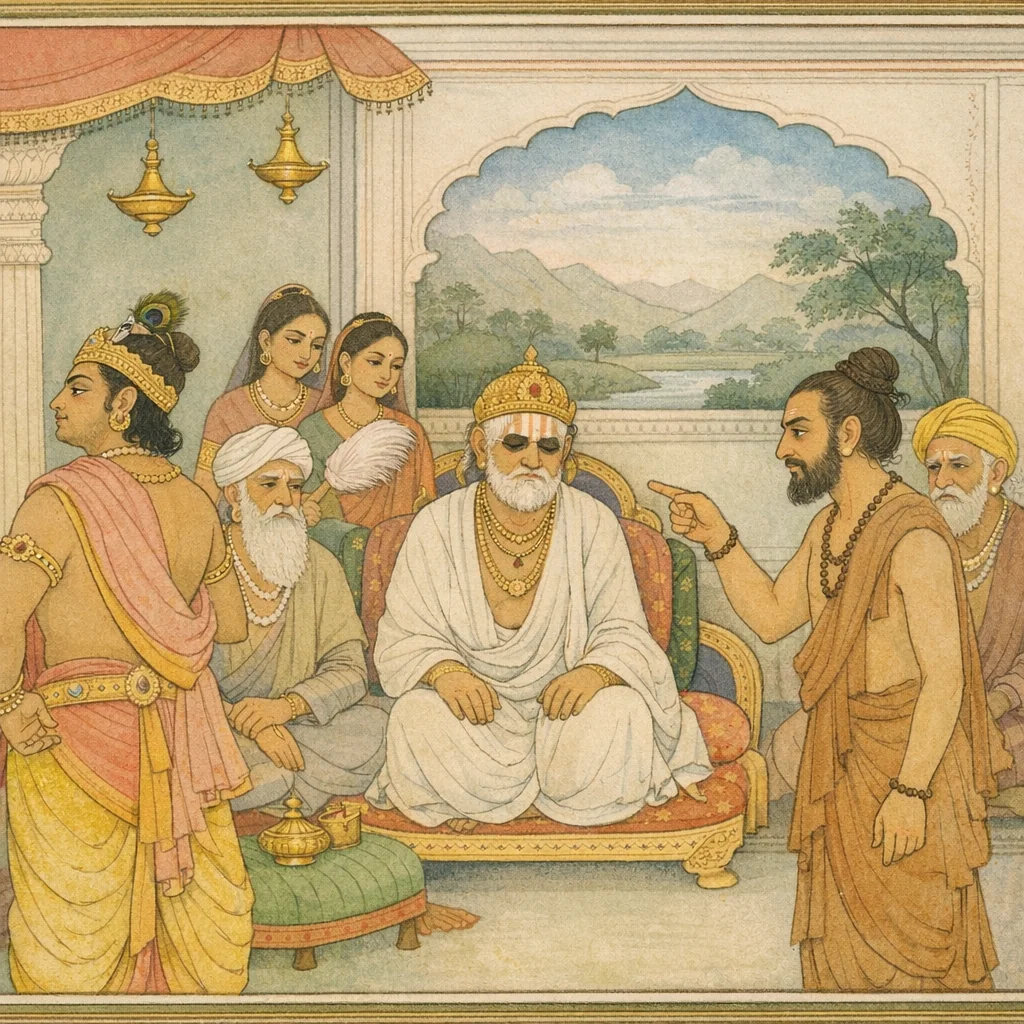
Dhṛtarāṣṭra states that the dice-related course was not approved by Bhīṣma, Droṇa, Vidura, or Gāndhārī, and confesses inability to abandon Duryodhana due to paternal attachment. Vyāsa affirms the strength of filial attachment and introduces an exemplary narrative: Surabhi, mother of cattle, weeps in heaven; Indra inquires and Surabhi explains her sorrow at seeing her weakened son (an ox) overburdened and repeatedly struck while ploughing. Indra questions why one suffering child moves her when she has many; Surabhi clarifies that compassion becomes greater for the distressed. Indra, persuaded, sends heavy rain to obstruct the ploughing and relieve the ox. Vyāsa applies the lesson to Dhṛtarāṣṭra: equal regard for sons should be complemented by greater compassion for the afflicted; he identifies Pāṇḍu, Dhṛtarāṣṭra, and Vidura as comparable in worth, notes the Pāṇḍavas’ precarious condition, and advises that Duryodhana should seek śama with them if Dhṛtarāṣṭra desires their continued life and stability.
Chapter Arc: व्यासजी हस्तिनापुर आते हैं और धृतराष्ट्र के सम्मुख कुरुवंश के कल्याण का मार्ग रखते हैं—पाण्डवों के प्रति सद्भाव ही राज्य की रक्षा है। → व्यास के उपदेश के बाद मैत्रेय मुनि धृतराष्ट्र से निवेदन करते हैं कि यदि उन पर अनुग्रह और कुरुकुल पर दया है तो दुर्योधन को वश में करें; भीष्म, द्रोण, विदुर की सम्मति भी यही है। पर दुर्योधन अहंकारवश अशिष्टता दिखाता है, और मुनि के वचनों का तिरस्कार करता है। → मैत्रेय दुर्योधन को कठोर चेतावनी देते हैं—पाण्डवों की शक्ति का स्मरण कराते हुए (भीम द्वारा किर्मीर-वध आदि) बताते हैं कि जो क्रोध और दर्प में अंधा होकर उन्हें ललकारेगा, वह विनाश को प्राप्त होगा; दुर्योधन का अपमान मुनि-शाप/भविष्यवाणी की धार को तीक्ष्ण कर देता है। → मैत्रेय अपने वचन कहकर यथागत लौट जाते हैं; दुर्योधन भीतर ही भीतर भय और क्रोध से व्याकुल होकर सभा/नगर से बाहर निकलता है, पर अहंकार उसे झुकने नहीं देता। → मुनि का अंतिम आग्रह—‘क्रोध के वश में मत हो’—अनसुना रह जाता है; दुर्योधन के अगले कदमों से कुरुवंश पर संकट और गहराने का संकेत मिलता है।
Shlokas
Verse 1
अऑडआ हर (0) है 7-2 दशमो< ध्याय: व्यासजीका जाना, मैत्रेयजीका धृतराष्ट्र और दुर्योधनसे पाण्डवोंके प्रति सद्भावका अनुरोध तथा दुर्योधनके अशिष्ट व्यवहारसे रुष्ट होकर उसे शाप देना धृतराष्ट उवाच एवमेतन्महाप्राज्ञ यथा वदसि नो मुने । अहं चैव विजानामि सर्वे चेमे नराधिपा:,धृतराष्ट्र बोले--महाप्राज्ञ मुने! आप जैसा कहते हैं, यही ठीक है। मैं भी इसे ही ठीक मानता हूँ तथा ये सब राजालोग भी इसीका अनुमोदन करते हैं
Dhṛtarāṣṭra said: “So it is, O greatly wise one—exactly as you tell us, O sage. I too understand it to be so, and all these kings here likewise acknowledge and approve it.”
Verse 2
भवांश्ष मन्यते साधु यत् कुरूणां महोदयम् । तदेव विदुरो<प्याह भीष्मो द्रोणश्न मां मुने,मुने! आप भी वही उत्तम मानते हैं जो कुरुवंशके महान् अभ्युदयका कारण है। मुने! यही बात विदुर, भीष्म और द्रोणाचार्यने भी मुझे कही है
Dhṛtarāṣṭra said: “You indeed judge as best that course which would bring about the great prosperity and uplift of the Kuru line. The very same counsel was also given to me, O sage, by Vidura, Bhīṣma, and Droṇa.”
Verse 3
यदि त्वहमनुग्राह्म: कौरव्येषु दया यदि । अन्वशाधि दुरात्मानं पुत्र दुर्योधनं मम,यदि आपका मुझपर अनुग्रह है और यदि कौरव-कुलपर आपकी दया है तो आप मेरे दुरात्मा पुत्र दुर्योधनको स्वयं ही शिक्षा दीजिये
Dhṛtarāṣṭra said: “If I am worthy of your favor, and if you have compassion for the Kaurava house, then please instruct and restrain my wicked-minded son Duryodhana.”
Verse 4
व्यास उवाच अयमायाति वै राजन मैत्रेयो भगवानृषि: । अन्विष्य पाण्डवान् भ्रातृनिहैत्यस्मद्दिदृक्षया,व्यासजीने कहा--राजन! ये महर्षि भगवान् मैत्रेय आ रहे हैं। पाँचों पाण्डवबन्धुओंसे मिलकर अब ये हमलोगोंसे मिलनेके लिये यहाँ आते हैं
Vyāsa said: “O King, the venerable sage Maitreya is indeed coming. Having searched for and met the Pāṇḍava brothers, he now comes here, wishing to see us.”
Verse 5
एष दुर्योधन पुत्रं तव राजन् महानृषि: । अनुशास्ता यथान्यायं शमायास्य कुलस्य च,महाराज! ये महर्षि ही इस कुलकी शान्तिके लिये तुम्हारे पुत्र दुर्योधनको यथायोग्य शिक्षा देंगे
O King, here is a great sage. For the sake of peace in this lineage, he will instruct your son Duryodhana in the proper manner, according to what is right and fitting.
Verse 6
ब्रूयाद् यदेष कौरव्य तत् कार्यमविशड्कया । अक्रियायां तु कार्यस्य पुत्र ते शप्स्यते रुषा,कुरुनन्दन! मैत्रेय जो कुछ कहें, उसे निःशंक होकर करना चाहिये। यदि उनके बताये हुए कार्यकी अवहेलना की गयी तो वे कुपित होकर तुम्हारे पुत्रको शाप दे देंगे
Vyāsa said: “O scion of the Kuru line, whatever this (sage) tells you—do that deed without hesitation. But if the task he prescribes is left undone, then, angered, he will curse your son, O delight of the Kurus.”
Verse 7
वैशम्पायन उवाच एवमुक््त्वा ययौ व्यासो मैत्रेय: प्रत्यदृश्यत । पूजया प्रतिजग्राह सपुत्रस्तं नराधिप:,वैशम्पायनजी कहते हैं--जनमेजय! ऐसा कहकर व्यासजी चले गये और मैत्रेयजी आते हुए दिखायी दिये। राजा धुृतराष्ट्रने पुत्रसहित उनकी अगवानी की और स्वागत- सत्कारके साथ उन्हें अपनाया
Vaiśampāyana said: Having spoken thus, Vyāsa departed. Then Maitreya came into view. The king, the lord of men, together with his sons, went forth to receive him and welcomed him with due honor—upholding the ethic that a guest and a sage are to be met with reverence and proper hospitality.
Verse 8
अध्यद्धाभि: क्रियाभिरवव विश्रान्तं मुनिसत्तमम् । प्रश्रयेणाब्रवीद् राजा धृतराष्ट्रोडम्बिकासुत:,पाद्य, अर्घ्य आदि उपचारोंद्वारा पूजित हो जब मुनिश्रेष्ठ मैत्रेय विश्राम कर चुके, तब अम्बिकानन्दन राजा धृतराष्ट्रने नम्रतापूर्वक पूछा--
When the foremost sage had been duly honored with the prescribed rites of hospitality and had taken rest, King Dhṛtarāṣṭra, the son of Ambikā, addressed him with humility—seeking counsel in a spirit of reverence and proper conduct.
Verse 9
इस प्रकार श्रीमह्याभारत वनपर्वके अन्तर्गत अरण्यपर्वमें सुराभिे-उपाख्यानविषयक नवाँ अध्याय पूरा हुआ,सुखेनागमनं कच्चिद् भगवन् कुरुजाड्लान् । कच्चित् कुशलिनो वीरा भ्रातर: पञ्च पाण्डवा: “भगवन्! इस कुरुदेशमें आपका आगमन सुख-पूर्वक तो हुआ है न? वीर भ्राता पाँचों पाण्डव तो कुशलसे हैं न?
“Revered sir, did you arrive safely in the Kurujāṅgala region? And are the five heroic Pāṇḍava brothers—those brothers—well and unharmed?”
Verse 10
समये स्थातुमिच्छन्ति कच्चिच्च भरतर्षभा: | कच्चित् कुरूणां सौक्षात्रमव्युच्छिन्नं भविष्यति,“क्या वे भरतश्रेष्ठ पाण्डव अपनी प्रतिज्ञापर स्थिर रहना चाहते हैं? क्या कौरवोंमें उत्तम भ्रातृभाव अखण्ड बना रहेगा?” इति श्रीमहाभारते वनपर्वणि अरण्यपर्व॑णि मैत्रेयशापे दशमो<ध्याय:
Vaiśampāyana said: “Do those bull-like scions of Bharata wish to stand firm at the appointed time—steadfast in their vow? And will the Kurus’ good kinship, their brotherly concord, remain unbroken?” In these questions lies an anxious moral scrutiny: whether the Pāṇḍavas will uphold their pledged restraint and whether the Kauravas will preserve familial solidarity rather than let rivalry harden into irreparable breach.
Verse 11
मैत्रेय उदाच तीर्थयात्रामनुक्रामन् प्राप्तो5स्मि कुरुजाड्लान् । यदृच्छया धर्मराजं दृष्टवान् काम्यके वने,मैत्रेयजीने कहा--राजन! मैं तीर्थयात्राके प्रसंगसे घूमता हुआ अकस्मात् कुरुजांगल देशमें चला आया हूँ। काम्यकवनमें धर्मराज युधिष्ठिरसे भी मेरी भेंट हुई थी
Vaiśaṃpāyana said: Maitreya said—“While proceeding on a pilgrimage from one sacred ford to another, I have arrived in the land of Kurujāṅgala. By chance I also met Dharmarāja (Yudhiṣṭhira) in the Kāmyaka forest.” The statement frames the encounter as providential and dharma-oriented: a wandering sage, guided by pilgrimage and circumstance, comes into contact with the righteous king in exile.
Verse 12
त॑ं जटाजिनसंवीतं तपोवननिवासिनम् । समाजममुर्महात्मान द्रष्ट मुनिगणा: प्रभो,प्रभो! जटा और मृगचर्म धारण करके तपोवनमें निवास करनेवाले उन महात्मा धर्मराजको देखनेके लिये वहाँ बहुत-से मुनि पधारे थे
Vaiśampāyana said: Clad in matted locks and a deerskin, dwelling in the forest of austerities, that great-souled one (Dharmarāja) became the focus of a gathering—many companies of sages arrived there, eager to behold him. The scene underscores how a ruler’s commitment to restraint and dharma, even in exile, draws the reverence of the spiritually accomplished.
Verse 13
तत्राश्रीषं महाराज पुत्राणां तव विभ्रमम् | अनयं द्यूतरूपेण महाभयमुपस्थितम्,महाराज! वहीं मैंने सुना कि तुम्हारे पुत्रोंकी बुद्धि भ्रान्त हो गयी है। वे ह्यूतरूपी अनीतिमें प्रवृत्त हो गये और इस प्रकार जूएके रूपमें उनके ऊपर बड़ा भारी भय उपस्थित हो गया है
Verse 14
ततोऊहं त्वामनुप्राप्त: कौरवाणामवेक्षया । सदा हभ्यधिकः: स्नेहः प्रीतिश्न त्वयि मे प्रभो,यह सुनकर मैं कौरवोंकी दशा देखनेके लिये तुम्हारे पास आया हूँ। राजन! तुम्हारे ऊपर सदासे ही मेरा स्नेह और प्रेम अधिक रहा है
Then I came to you, O lord, in order to see for myself the condition of the Kauravas. For from long ago my affection and fond regard for you have been greater than for others—born of enduring loyalty and personal attachment.
Verse 15
नैतदौपयिकं राजंस्त्वयि भीष्मे च जीवति । यदन्योन्येन ते पुत्रा विरुध्यन्ते कथंचन,महाराज! तुम्हारे और भीष्मके जीते-जी यह उचित नहीं जान पड़ता कि तुम्हारे पुत्र किसी प्रकार आपसमें विरोध करें
Vaiśaṃpāyana said: “O King, while you and Bhīṣma are still alive, it does not seem proper or fitting that your sons should, in any manner, fall into mutual opposition. Such discord, under the guardianship of elders, is ethically inappropriate and threatens the order that dharma requires within the royal house.”
Verse 16
मेढी भूत: स्वयं राजन निग्रहे प्रग्रहे भवान् । किमर्थमनयं घोरमुत्पद्यन्तमुपेक्षसे,महाराज! तुम स्वयं इन सबको बाँधकर नियन्त्रणमें रखनेके लिये खंभेके समान हो; फिर पैदा होते हुए इस घोर अन्यायकी क्यों उपेक्षा कर रहे हो
Vaiśampāyana said: “O King, you yourself stand like a firm post meant to bind and restrain—capable of holding things in check through both control and release. Why then, O great king, do you ignore this dreadful injustice as it is arising?”
Verse 17
दस्यूनामिव यद् वृत्तं सभायां कुरुनन्दन । तेन न भ्राजसे राजंस्तापसानां समागमे,कुरुनन्दन! तुम्हारी सभामें डाकुओंकी भाँति जो बर्ताव किया गया है, उसके कारण तुम तपस्वी मुनियोंके समुदायमें शोभा नहीं पा रहे हो
Vaiśampāyana said: “O delight of the Kurus, because of the conduct you displayed in the royal assembly—like that of marauders—you do not now shine with honor, O king, in the gathering of ascetic sages.”
Verse 18
वैशम्पायन उवाच ततो व्यावृत्य राजानं दुर्योधनममर्षणम् । उवाच श्लक्षणया वाचा मैत्रेयो भगवानृषि:,वैशम्पायनजी कहते हैं--जनमेजय! तदनन्तर महर्षि भगवान् मैत्रेय अमर्षशील राजा दुर्योधनकी ओर मुड़कर उससे मधुर वाणीमें इस प्रकार बोले
Vaiśampāyana said: Then, turning toward King Duryodhana—known for his ungovernable resentment—the venerable sage Maitreya addressed him in gentle, refined speech. The scene signals a moral confrontation: a hot-tempered ruler is met not with provocation, but with disciplined, benevolent counsel, testing whether pride will yield to dharma-guided advice.
Verse 19
मैत्रेय उवाच दुर्योधन महाबाहो निबोध वदतां वर | वचन मे महाभाग ब्रुवतो यद्धितं तव,मैत्रेयजीने कहा--महाबाहु दुर्योधन! तुम वक्ताओंमें श्रेष्ठ हो; मेरी एक बात सुनो। महाभाग! मैं तुम्हारे हितकी बात बता रहा हूँ
Maitreya said: “O Duryodhana, mighty-armed and foremost among speakers, listen. O noble one, I am about to tell you words meant for your welfare.”
Verse 20
मा द्रुह: पाण्डवान् राजन् कुरुष्व प्रियमात्मन: । पाण्डवानां कुरूणां च लोकस्य च नरर्षभ,राजन! तुम पाण्डवोंसे द्रोह न करो। नरश्रेष्ठ] अपना, पाण्डवोंका, कुरुकुलका तथा सम्पूर्ण जगत्का प्रिय साधन करो
Maitreya said: “O King, do not bear malice toward the Pāṇḍavas. Act in a way that is truly beneficial—dear to your own higher self. O best of men, become the source of what is good and pleasing for the Pāṇḍavas, for the Kurus, and for the whole world.”
Verse 21
ते हि सर्वे नरव्यात्रा: शूरा विक्रान्तयोधिन: । सर्वे नागायुतप्राणा वज्ञसंहनना दृढा:,मनुष्योंमें श्रेष्ठ सब पाण्डव शूरवीर, पराक्रमी और युद्धकुशल हैं। उन सबमें दस हजार हाथियोंका बल है। उनका शरीर वज्रके समान दृढ़ है
Maitreya said: “For all of them are tiger-like among men—heroes, bold and battle-proven. Each possesses the life-force and strength of ten thousand elephants, and their bodies are firm, compact, and unbreakable like a thunderbolt.”
Verse 22
सत्यव्रतधरा: सर्वे सर्वे पुरुषमानिन: । हन्तारो देवशत्रूणां रक्षमां कामरूपिणाम्
Maitreya said: “All of them are steadfast in vows of truth, and each considers himself a true man of honor. They are slayers of the gods’ enemies—those shape-shifting Rākṣasas—acting as protectors of the divine order by destroying forces that thrive on deceit and predation.”
Verse 23
इतः प्रद्रवतां रात्रौ यः स तेषां महात्मनाम्,यहाँसे रातमें जब वे महात्मा पाण्डव चले जा रहे थे, उस समय उनका मार्ग रोककर भयंकर और पर्वतके समान विशालकाय किर्मीर उनके सामने खड़ा हो गया। युद्धकी श्लाघा रखनेवाले बलवानोंमें श्रेष्ठ भीमसेनने उस राक्षसको बलपूर्वक पकड़कर पशुकी तरह वैसे ही मार डाला, जैसे व्याप्र छोटे मृगको मार डालता है। राजन्! देखो, दिग्विजयके समय भीमसेनने उस महान धनुर्धर राजा जरासंधको भी युद्धमें मार गिराया, जिसमें दस हजार हाथियोंका बल था। (यह भी स्मरण रखना चाहिये कि) वसुदेवनन्दन भगवान् श्रीकृष्ण उनके सम्बन्धी हैं तथा द्रपदके सभी पुत्र उनके साले हैं
Maitreya said: As those great-souled Pāṇḍavas were moving swiftly away from that place by night, their path was blocked by the dreadful rākṣasa Kirmīra, huge like a mountain, who stood before them. Then Bhīmasena—foremost among the strong who take pride in battle—seized that demon with sheer force and killed him like a beast, just as a tiger kills a small deer. O King, behold: even in his campaign of conquest Bhīmasena struck down in battle the great archer-king Jarāsandha, whose might was said to equal that of ten thousand elephants. And remember also: Bhagavān Śrī Kṛṣṇa, the son of Vasudeva, is their kinsman, and all the sons of Drupada are their brothers-in-law—so the Pāṇḍavas stand supported by strength, righteous alliances, and formidable protectors.
Verse 24
आवृत्य मार्ग रौद्रात्मा तस्थौ गिरिरिवाचल: । त॑ भीम: समरश्लाघी बलेन बलिनां वर:,यहाँसे रातमें जब वे महात्मा पाण्डव चले जा रहे थे, उस समय उनका मार्ग रोककर भयंकर और पर्वतके समान विशालकाय किर्मीर उनके सामने खड़ा हो गया। युद्धकी श्लाघा रखनेवाले बलवानोंमें श्रेष्ठ भीमसेनने उस राक्षसको बलपूर्वक पकड़कर पशुकी तरह वैसे ही मार डाला, जैसे व्याप्र छोटे मृगको मार डालता है। राजन्! देखो, दिग्विजयके समय भीमसेनने उस महान धनुर्धर राजा जरासंधको भी युद्धमें मार गिराया, जिसमें दस हजार हाथियोंका बल था। (यह भी स्मरण रखना चाहिये कि) वसुदेवनन्दन भगवान् श्रीकृष्ण उनके सम्बन्धी हैं तथा द्रपदके सभी पुत्र उनके साले हैं
Maitreya said: Blocking the path, the fierce-souled one stood firm like an unmoving mountain. Then Bhīma—renowned for prowess in battle, the foremost among the strong—seized him with sheer force and slew him like a beast. The episode underscores that raw power, when yoked to the protection of the righteous and the removal of violent obstruction, becomes a legitimate instrument of dharma rather than mere cruelty.
Verse 25
जघान पशुमारेण व्याघ्र: क्षुद्रमूगं यथा । पश्य दिग्विजये राजन् यथा भीमेन पातितः,यहाँसे रातमें जब वे महात्मा पाण्डव चले जा रहे थे, उस समय उनका मार्ग रोककर भयंकर और पर्वतके समान विशालकाय किर्मीर उनके सामने खड़ा हो गया। युद्धकी श्लाघा रखनेवाले बलवानोंमें श्रेष्ठ भीमसेनने उस राक्षसको बलपूर्वक पकड़कर पशुकी तरह वैसे ही मार डाला, जैसे व्याप्र छोटे मृगको मार डालता है। राजन्! देखो, दिग्विजयके समय भीमसेनने उस महान धनुर्धर राजा जरासंधको भी युद्धमें मार गिराया, जिसमें दस हजार हाथियोंका बल था। (यह भी स्मरण रखना चाहिये कि) वसुदेवनन्दन भगवान् श्रीकृष्ण उनके सम्बन्धी हैं तथा द्रपदके सभी पुत्र उनके साले हैं
Maitreya said: “He slew him with brute force, just as a tiger kills a small deer. And behold, O King: in the campaign of conquest too, Bhīma struck down (his foe) in battle.” The verse underscores Bhīma’s overwhelming strength and fearlessness, presenting his violence not as wanton cruelty but as protective, warrior-like force deployed against dangerous adversaries, thereby reinforcing the Pandavas’ capacity to overcome threats during their exile and beyond.
Verse 26
जरासंधो महेष्वासो नागायुतबलो युधि । सम्बन्धी वासुदेवश्व श्याला: सर्वे च पार्षता:,यहाँसे रातमें जब वे महात्मा पाण्डव चले जा रहे थे, उस समय उनका मार्ग रोककर भयंकर और पर्वतके समान विशालकाय किर्मीर उनके सामने खड़ा हो गया। युद्धकी श्लाघा रखनेवाले बलवानोंमें श्रेष्ठ भीमसेनने उस राक्षसको बलपूर्वक पकड़कर पशुकी तरह वैसे ही मार डाला, जैसे व्याप्र छोटे मृगको मार डालता है। राजन्! देखो, दिग्विजयके समय भीमसेनने उस महान धनुर्धर राजा जरासंधको भी युद्धमें मार गिराया, जिसमें दस हजार हाथियोंका बल था। (यह भी स्मरण रखना चाहिये कि) वसुदेवनन्दन भगवान् श्रीकृष्ण उनके सम्बन्धी हैं तथा द्रपदके सभी पुत्र उनके साले हैं
Maitreya said: Jarāsandha was a mighty archer, possessing in battle the strength of ten thousand elephants. Vāsudeva (Śrī Kṛṣṇa) is their kinsman, and all the sons of Pārṣata (Drupada) are their brothers-in-law. Thus, O King, the Pāṇḍavas are supported by proven valor and by powerful family alliances—facts that bear directly on questions of prudence, duty, and the likely outcome of conflict.
Verse 27
कस्तान् युधि समासीत जरामरणवान् नर: । तस्य ते शम एवास्तु पाण्डवैर्भरतर्षभ,जरा और मृत्युके वशमें रहनेवाला कौन मनुष्य युद्धमें उन पाण्डवोंका सामना कर सकता है। भरतकुल-भूषण! ऐसे महापराक्रमी पाण्डवोंके साथ तुम्हें शान्तिपूर्वक मिलकर ही रहना चाहिये
Maitreya said: “What mortal, subject to old age and death, could ever stand against those Pāṇḍavas in battle? O bull among the Bharatas, therefore let there be peace for you with the Pāṇḍavas—live in concord with them.”
Verse 28
वैशम्पायन उवाच एवं तु ब्रुवतस्तस्य मैत्रेयस्य विशाम्पते,वैशम्पायनजी कहते हैं--राजन! मैत्रेयजी जब इस प्रकार कह रहे थे, उस समय दुर्योधनने मुसकराकर हाथीके सूँड़के समान अपनी जाँघको हाथसे ठोंका और पैरसे पृथ्वीको कुरेदने लगा
Vaiśampāyana said: “O king, while the sage Maitreya was speaking in this manner, Duryodhana, smiling in contempt, struck his thigh—like an elephant’s trunk—with his hand, and began to scrape the earth with his foot. The gesture reveals his arrogance and refusal to heed righteous counsel, foreshadowing the ethical collapse that drives the conflict.”
Verse 29
ऊरु गजकराकारं करेणाभिजघान स: | दुर्योधन: स्मितं कृत्वा चरणेनोल्लिखन् महीम्,वैशम्पायनजी कहते हैं--राजन! मैत्रेयजी जब इस प्रकार कह रहे थे, उस समय दुर्योधनने मुसकराकर हाथीके सूँड़के समान अपनी जाँघको हाथसे ठोंका और पैरसे पृथ्वीको कुरेदने लगा
Vaiśampāyana said: As Maitreya was speaking in this manner, Duryodhana—smiling—struck his thigh with his hand, shaped like an elephant’s trunk, and with his foot began to scrape the earth. The gesture signals arrogant defiance and contempt for counsel, foreshadowing how pride hardens the heart against dharma-guided advice.
Verse 30
न किंचिदुक्त्वा दुर्मेधास्तस्थी किंचिदवाड्मुख: । तमशुश्रूषमाणं तु विलिखन्तं वसुंधराम्,उस दुर्बृद्धिने मैत्रेयजीको कुछ भी उत्तर न दिया। वह अपने मुँहको कुछ नीचा किये चुपचाप खड़ा रहा। राजन! मैत्रेयजीने देखा, दुर्योधन सुनना नहीं चाहता, वह पैरोंसे धरतीको कुरेद रहा है। यह देख उनके मनमें क्रोध जाग उठा। फिर तो वे मुनिश्रेष्ठ मैत्रेय कोपके वशीभूत हो गये
Vaiśaṃpāyana said: Without saying anything, the dull-witted man stood there in silence, his face lowered. Seeing him unwilling to listen and scraping the earth with his foot, the sage Maitreya’s anger was stirred—an ethical warning that arrogance and contempt for counsel invite grave consequences.
Verse 31
दृष्टवा दुर्योधन राजन् मैत्रेयं कोप आविशतू । स कोपवशमापन्नो मैत्रेयो मुनिसत्तम:,उस दुर्बृद्धिने मैत्रेयजीको कुछ भी उत्तर न दिया। वह अपने मुँहको कुछ नीचा किये चुपचाप खड़ा रहा। राजन! मैत्रेयजीने देखा, दुर्योधन सुनना नहीं चाहता, वह पैरोंसे धरतीको कुरेद रहा है। यह देख उनके मनमें क्रोध जाग उठा। फिर तो वे मुनिश्रेष्ठ मैत्रेय कोपके वशीभूत हो गये
Vaiśampāyana said: Seeing Duryodhana, O king, the sage Maitreya was seized by anger. Overcome by that wrath, Maitreya—the best of ascetics—became controlled by indignation, for Duryodhana’s arrogant, heedless conduct showed contempt for counsel and for the discipline of dharma.
Verse 32
विधिना सम्प्रणुदित: शापायास्य मनो दे | ततः स वार्युपस्पृश्य कोपसंरक्तलोचन: । मैत्रेयो धार्तराष्ट्र तमशपद् दुष्टचेतसम्,विधातासे प्रेरित होकर उन्होंने दुर्योधनको शाप देनेका विचार किया। तदनन्तर मैत्रेयने क्रोधसे लाल आँखें करके जलका आचमन किया और उस दुष्ट चित्तवाले धृतराष्ट्रपुत्रको इस प्रकार शाप दिया--
Urged on by the ordinance of fate, he resolved in his mind to pronounce a curse. Then Maitreya, his eyes reddened with anger, performed the ritual sipping of water and cursed that Dhṛtarāṣṭra’s son, Duryodhana, whose mind had turned to wickedness. The passage frames the curse not as mere personal wrath, but as a morally charged response to persistent wrongdoing, presented as aligned with a larger providential order.
Verse 33
यस्मात् त्वं मामनादृत्य नेमां वाचं चिकीर्षसि । तस्मादस्याभिमानस्य सद्यः: फलमवाप्लुहि,“दुर्योधन! तू मेरा अनादर करके मेरी बात मानना नहीं चाहता; अतः तू इस अभिमानका तुरंत फल पा ले
Because you disregard me and refuse to carry out these words, therefore—O Duryodhana—receive at once the immediate consequence of this pride. The statement frames arrogance and contempt for wise counsel as a moral fault that ripens quickly into suffering.
Verse 34
4432 ) त्वदभिद्रोहसंयुक्तं युद्धमुत्पत्स्यते महत् । तत्र भीमो गदाघातैस्तवोरं भेत्स्यते बली,"तेरे द्रोहके कारण बड़ा भारी युद्ध छिड़ेगा, उसमें बलवान् भीमसेन अपनी गदाकी चोटसे तेरी जाँघ तोड़ डालेंगे”
Vaiśampāyana said: “Because of your act of treachery, a great war will break out. In that conflict, the mighty Bhīma will shatter your thigh with the blows of his mace.”
Verse 35
इत्येवमुक्ते वचने धृतराष्ट्रो महीपति: । प्रसादयामास मुनि नैतदेवं भवेदिति,उनके ऐसा कहनेपर महाराज धूृतराष्ट्रने मुनिको प्रसन्न किया और कहा--“भगवन्! ऐसा न हो'
When those words had thus been spoken, King Dhṛtarāṣṭra sought to appease the sage and said, “Revered sir, may it not be so.” In the ethical frame of the epic, the blind king’s response reveals anxious resistance to an unwelcome truth and an attempt to soften or avert the consequences being foretold.
Verse 36
मैत्रेय उवाच शमं यास्यति चेत् पुत्रस्तव राजन् यदा तदा । शापो न भविता तात विपरीते भविष्यति,मैत्रेयजीने कहा--राजन्! जब तुम्हारा पुत्र शान्ति धारण करेगा (पाण्डवोंसे वैर- विरोध न करके मेल-मिलाप कर लेगा), तब यह शाप इसपर लागू न होगा। तात! यदि इसने विपरीत बर्ताव किया तो यह शाप इसे अवश्य भोगना पड़ेगा
Maitreya said: “O King, whenever your son truly comes to peace—abandoning hostility and choosing reconciliation—then this curse will not take effect upon him. But, dear one, if he acts in the opposite way, the curse will surely come to pass.”
Verse 37
वैशम्पायन उवाच विलक्षयंस्तु राजेन्द्रो दुर्योधनपिता तदा । मैत्रेयं प्राह किर्मीर: कथं भीमेन पातित:,वैशम्पायनजी कहते हैं-जनमेजय! तब दुर्योधनके पिता महाराज धूृतराष्ट्रने भीमसेनके बलका विशेष परिचय पानेके लिये मैत्रेयजीसे पूछा--“मुने! भीमने किर्मीरको कैसे मारा?”
Verse 38
मैत्रेय उवाच नाहं वक्ष्यामि ते भूयो न ते शुश्रूषते सुत: । एष ते विदुर: सर्वमाख्यास्यति गते मयि,मैत्रेयजीने कहा--राजन्! तुम्हारा पुत्र मेरी बात सुनना नहीं चाहता, अतः मैं तुमसे इस समय फिर कुछ नहीं कहूँगा। ये विदुरजी मेरे चले जानेपर वह सारा प्रसंग तुम्हें बतायेंगे
Verse 39
वैशम्पायन उवाच इत्येवमुक्त्वा मैत्रेय: प्रातिष्तत यथा55गतम् । किर्मीरवधसंविग्नो बहिर्दुर्योधनो ययौ,वैशम्पायनजी कहते हैं--राजन्! ऐसा कहकर मैत्रेयजी जैसे आये थे वैसे ही चले गये। किर्मीरवधका समाचार सुनकर उद्विग्न हो दुर्योधन भी बाहर निकल गया
Vaiśampāyana said: Having spoken thus, Maitreya departed, returning just as he had come. And Duryodhana too went out, shaken with anxiety on hearing the news of Kirmīra’s slaying—an event that signals the growing consequences of violence and the fear it breeds in those who persist in hostility.
Verse 223
हिडिम्बबकमुख्यानां किर्मीरस्य च रक्षस: । वे सब-के-सब सत्यव्रतधारी और अपने पौरुषपर अभिमान रखनेवाले हैं। इच्छानुसार रूप धारण करनेवाले देवद्रोही हिडिम्ब आदि राक्षसोंका तथा राक्षसजातीय किर्मीरका वध भी उन्होंने ही किया है
Maitreya said: “Hiḍimba and the other foremost rākṣasas, as well as the rākṣasa Kirmīra—these were all beings who prided themselves on their own might and held fast to their chosen vows. Those god-opposing rākṣasas such as Hiḍimba, who could assume forms at will, and Kirmīra of the rākṣasa race too—he alone brought about their destruction.”
Verse 276
कुरु मे वचन राजन् मा मन्युवशमन्वगा: । राजन! तुम मेरी बात मानो; क्रोधके वशमें न होओ
Maitreya said: “O King, follow my counsel; do not let yourself be carried away by anger.”
Frequently Asked Questions
He recognizes the dice episode as ethically unsound and contrary to senior counsel, yet admits incapacity to restrain or abandon Duryodhana due to overpowering paternal attachment, creating a conflict between governance duty and familial bias.
Compassion is not merely equal sentiment; it is a duty-responsive priority: the distressed merit greater protective action. Therefore, a ruler should actively safeguard those placed in hardship and curb enabling behavior that intensifies suffering.
No explicit phalaśruti is stated; the meta-function is exemplarity. The ākhyāna serves as a normative proof-text (dṛṣṭānta) that legitimizes policy counsel—urging śama with the Pāṇḍavas—by demonstrating how even Indra alters action when confronted with ethically framed suffering.