Adhyaya 24
Gandhārī’s Lament for Bhūriśravas and Śakuni (Book 11, Chapter 24)
Upa-parva: Strī-vilāpa (Lamentations on the Battlefield) — Gandhārī’s Observations
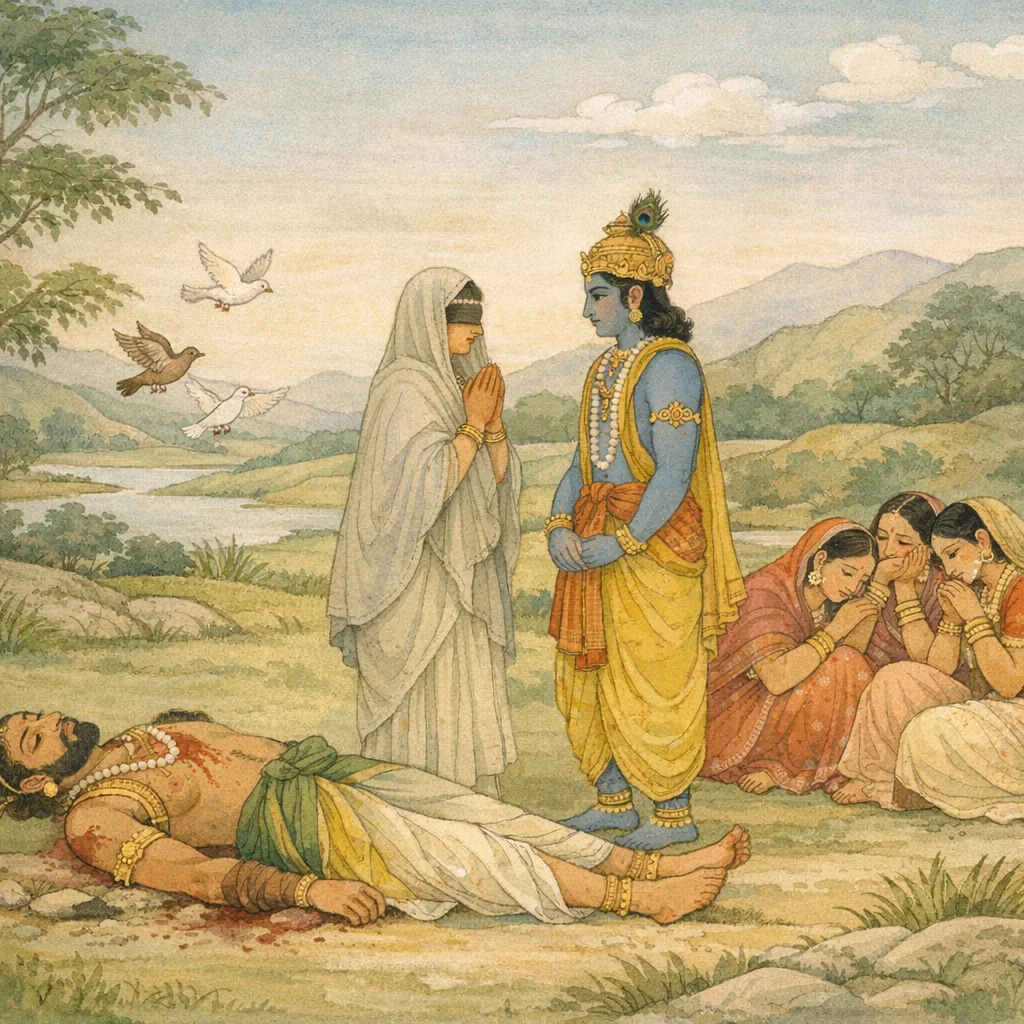
Gandhārī, speaking to Kṛṣṇa, directs attention to the dead and grieving on the battlefield. She points out Somadatta’s son Bhūriśravas, described as fallen near Mādhava, with his body subjected to scavenging birds; Somadatta is portrayed as overwhelmed by bereavement, while Bhūriśravas’s mother attempts to console him. Gandhārī then evokes the intense lamentation of daughters-in-law (snūṣāḥ), depicted with disheveled hair and minimal garments, running in distress as widows. The chapter preserves a pointed critique of the circumstances of Bhūriśravas’s death: reference is made to the severing of his arm by Arjuna and the subsequent killing by Sātyaki, framed by the lamenting women as ethically improper, especially against one who had become inattentive or was in a withdrawn posture. A wife of Yūpadhvaja (an epithet associated with Bhūriśravas) mourns over the severed arm, recalling intimate domestic imagery to intensify the contrast between household life and battlefield violence. The focus then shifts to Śakuni: Gandhārī notes his death at Sahadeva’s hands and contrasts his former royal luxuries with his present exposure, using irony to depict birds ‘fanning’ him. She characterizes Śakuni’s deceptive prowess—his many forms and stratagems—now rendered ineffective by Pāṇḍava power, and links his instruction in gambling and hostility to the ruin of her sons and kin. The chapter ends with a rhetorical question about why Śakuni would provoke conflict even beyond this world, reinforcing the moralized causality of the epic’s aftermath.
Chapter Arc: युद्ध-भूमि के शवों के बीच गान्धारी श्रीकृष्ण के सम्मुख आती है; भूरिश्रवा के पास उसकी पत्नियों का विलाप उठता है और शोक का दृश्य एक-एक करके अपराध-बोध में बदलने लगता है। → गान्धारी मृत सोमदत्त को ‘पुत्रशोकाभिसंतप्त’ देखती है और सात्यकि (युयुधान) के कृत्य की ओर संकेत करती है—प्रायोपविष्ट भूरिश्रवा पर प्रहार को ‘पापतरं कर्म’ कहकर धिक्कारती है; शोक अब न्याय-प्रश्न बन जाता है। → गान्धारी श्रीकृष्ण से मुखातिब होकर युद्ध के भीतर हुए अधर्म की चरम रेखा दिखाती है—जो कभी राज-वैभव में व्यजन से वीजित था, वही अब पक्षियों के पंखों से ‘उपवीज्यते’; इस उलटाव में वह सात्यकि के वार को निर्णायक पाप के रूप में स्थापित करती है। → निन्दा के बाद भूरिश्रवा-पक्ष की स्त्रियाँ मौन हो जाती हैं; गान्धारी अपने शोक को व्यापक वैर-चक्र की व्याख्या में बदलती है—यही वैर पाण्डवों के साथ ‘महद् वैरं’ बनकर उसके पुत्रों और अपने कुल के विनाश तक पहुँचा। → गान्धारी आशंका प्रकट करती है कि परलोक में भी दुर्बुद्धि शत्रुता को भड़काएगा—क्या यह वैर मृत्यु के बाद भी पीछा करेगा, और क्या श्रीकृष्ण इसका उत्तर देंगे?
Shlokas
Verse 1
#िला (0) आस अन+- चतुर्विशो$ध्याय: भूरिश्रवाके पास उसकी पत्नियोंका विलाप, उन सबको तथा शकुनिको देखकर गान्धारीका श्रीकृष्णके सम्मुख शोकोद्गार गान्धायुवाच सोमदत्तसुतं पश्य युयुधानेन पातितम् । वितुद्यमानं विहगैर्बहुभिर्माधवान्तिके,गान्धारी बोलीं--माधव! देखो, सात्यकिने जिन्हें मार गिराया था, वे ही ये सोमदत्तके पुत्र भूरिश्रवा पास ही दिखायी दे रहे हैं। इन्हें बहुत-से पक्षी चोंच मार-मारकर नोच रहे हैं
Gāndhārī said: “O Mādhava, look at Somadatta’s son—Bhūriśravas—lying here, struck down by Yuyudhāna. Near you he is being pecked and torn by many birds.” In this lament, the queen points to the indignity that follows slaughter in war: even a renowned warrior’s body becomes prey, intensifying grief and raising implicit questions about the moral cost of victory and the limits of righteous conduct amid vengeance and chaos.
Verse 2
पुत्रशोकाभिसंतप्त: सोमदत्तो जनार्दन । युयुधानं महेष्वासं गर्हयन्निव दृश्यते,जनार्दन! उधर पुत्रशोकसे संतप्त होकर मरे हुए सोमदत्त महाधनुर्धर सात्यकिकी निन््दा करते हुए-से दिखायी दे रहे हैं
Vaiśampāyana said: O Janārdana, Somadatta—consumed by grief for his son—appears as though he is censuring the great archer Yuyudhāna (Sātyaki). In the aftermath of slaughter, sorrow turns into blame, and the bereaved seek a moral target for their loss.
Verse 3
असौ हि भूरिश्रवसो माता शोकपरिप्लुता । आश्वासयति भर्तारें सोमदत्तमनिन्दिता,उधर वे शोकमें डूबी हुई भूरिश्रवाकी सती साध्वी माता अपने पतिको मानो आश्वासन देती हुई कहती हैं--
Vaiśampāyana said: Overwhelmed by grief, the blameless mother of Bhūriśravas spoke as though to console her husband Somadatta—seeking to steady him amid the sorrow brought by the war’s losses.
Verse 4
दिष्ट्या नैनं महाराज दारुणं भरतक्षयम् । कुरुसंक्रन्दनं घोर युगान्तमनुपश्यसि,“महाराज! सौभाग्यसे आपको यह भरतवंशियोंका दारुण विनाश, घोर प्रलयके समान कुरुकुलका महासंहार देखनेका अवसर नहीं मिला है
Vaiśampāyana said: “By good fortune, O great king, you did not have to witness this dreadful destruction of the Bharatas—this terrible, war-cry-filled slaughter of the Kurus, like the end of an age. It is a grim mercy that such a sight did not fall upon your eyes.”
Verse 5
दिष्ट्या यूपध्वजं पुत्र वीर॑ भूरिसहस्रदम् । अनेकक्रतुयज्वानं निहतं नानुपश्यसि
Vaiśaṃpāyana said: “By good fortune, O son, you do not behold the slain hero Yūpadhvaja—he who bestowed thousands in gifts and who had performed many sacrificial rites. (May it be well that your eyes are spared that grievous sight.)”
Verse 6
“जिसकी ध्वजामें यूपका चिह्न था, जो सहसों स्वर्ण-मुद्राओंकी भूरि-भूरि दक्षिणा दिया करता था और जिसने अनेक यज्ञोंका अनुष्ठान पूरा कर लिया था, उस वीर पुत्र भूरिश्रवाकी मृत्युका कष्ट सौभाग्यसे आप नहीं देख रहे हैं ।। दिष्ट्या स्नुषाणामाक्रन्दे घोरं विलपितं बहु न शृणोषि महाराज सारसीनामिवार्णवे,“महाराज! समुद्रतटपर चीत्कार करनेवाली सारसियोंके समान इस युद्धस्थलमें आप अपने इन पुत्रवधुओंका अत्यन्त भयानक विलाप नहीं सुन रहे हैं, यह भाग्यकी ही बात है
By good fortune, O great king, you do not hear the dreadful, profuse lamentation and wailing of your daughters-in-law—like the cries of female cranes upon the seashore. It is a mercy of fate that this terrible sound of grief does not reach you.
Verse 7
एकवत्त्रार्थसंवीता: प्रकीर्णासितमूर्थजा: । स्नुषास्ते परिधावन्ति हतापत्या हतेश्वरा:,“आपकी पुत्रवधुएँ एक वस्त्र अथवा आधे वस्त्रसे ही शरीरको ढँककर अपनी काली- काली लटें छिटकाये इस युद्धभूमिमें चारों ओर दौड़ रही हैं। इन सबके पुत्र और पति भी मारे जा चुके हैं
Verse 8
श्वापदैर्भक्ष्यममाणं त्वमहो दिष्ट्या न पश्यसि । छिन्नबाहुं नरव्याप्रमर्जुनेन निपातितम्,“अहो! आपका बड़ा भाग्य है कि अर्जुनने जिसकी एक बाँह काट ली थी और सात्यकिने जिसे मार गिराया था, युद्धमें मारे गये उस भूरिश्रवा और शलको आप हिंसक जन्तुओंका आहार बनते नहीं देखते हैं तथा इन सब अनेक प्रकारके रूप-रंगवाली पुत्रवधुओंको भी आज यहाँ रणभूमिमें भटकती हुई नहीं देख रहे हैं
Vaiśampāyana said: “By good fortune you do not have to witness him being devoured by wild beasts—the tiger among men whose arm was cut off and who was struck down by Arjuna. The line underscores the moral horror of war: even the mighty, once fallen, become helpless bodies on a field where dignity is stripped away, and the living are spared only by not having to see such degradation.”
Verse 9
शलं विनिहतं संख्ये भूरिश्रवसमेव च । स््नुषाश्न विविधा: सर्वा दिष्ट्या नाद्येह पश्यसि,“अहो! आपका बड़ा भाग्य है कि अर्जुनने जिसकी एक बाँह काट ली थी और सात्यकिने जिसे मार गिराया था, युद्धमें मारे गये उस भूरिश्रवा और शलको आप हिंसक जन्तुओंका आहार बनते नहीं देखते हैं तथा इन सब अनेक प्रकारके रूप-रंगवाली पुत्रवधुओंको भी आज यहाँ रणभूमिमें भटकती हुई नहीं देख रहे हैं
Vaiśampāyana said: “By good fortune you do not see here today—on this battlefield—Śala, slain in the fight, nor Bhūriśravas as well; and likewise you do not see all these daughters-in-law of varied appearance, wandering about here. (For otherwise you would behold them reduced to the misery of war, exposed to the fate of becoming prey for violent creatures.)”
Verse 10
दिष्ट्या तत् काज्चनं छत्र॑ यूपकेतोर्महात्मन: । विनिकीर्ण रथोपस्थे सौमदत्तेन पश्यसि,'सौभाग्यसे अपने महामनस्वी पुत्र यूपध्वज भूरिश्रवाके रथपर खण्डित होकर गिरे हुए उसके सुवर्णमय छत्रको आप नहीं देख पा रहे हैं!
Vaiśampāyana said: “It is fortunate indeed that you are able to see that golden parasol of the noble Yūpaketu—scattered and cast down upon the chariot-seat by Saumadatta. The fallen royal emblem makes visible the ruin brought by pride and violence in war, and it marks how even the signs of sovereignty are reduced to fragments when dharma is eclipsed by slaughter.”
Verse 11
अमूस्तु भूरिश्रवसो भार्या: सात्यकिना हतम् | परिवार्यानुशोचन्ति भर्तारमसितेक्षणा:,श्रीकृष्ण! भूरिश्रवाकी कजरारे नेत्रोंवाली वे पत्नियाँ सात्यकिद्वारा मारे गये अपने पतिको सब ओरसे घेरकर बारंबार शोकसे पीड़ित हो रही हैं
Vaiśampāyana said: “O Śrī Kṛṣṇa, the dark-eyed wives of Bhūriśravas, surrounding their husband who had been slain by Sātyaki, were repeatedly overcome with grief and lamented him from all sides.”
Verse 12
एता विलप्य करुणं भर्तृशोकेन कर्शिता: । पतन्त्यभिमुखा भूमौ कृपणं बत केशव,केशव! पतिशोकसे पीड़ित हुई ये अबलाएँ करुणाजनक विलाप करके पतिके सामने अत्यन्त दुःखसे पछाड़ खा-खाकर गिर रही हैं
Vaiśampāyana said: “These women, wasted by grief for their husbands, lament piteously and, falling forward to the ground before their lords, collapse again and again in utter misery—alas, O Keśava, O Keśava!”
Verse 13
बीभत्सुरतिबी भत्सं कर्मेदमकरोत् कथम् | प्रमत्तस्य यदच्छैत्सीद् बाहुं शूरस्य यज्वन:,वे कहती हैं--'अर्जुनने यह अत्यन्त घृणित कर्म कैसे किया? कि दूसरेके साथ युद्धमें लगे रहकर उनकी ओरसे असावधान हुए आप-जैसे यज्ञपरायण शूरवीरकी बाँह काट डाली
Vaiśampāyana said: “How could Arjuna perform this deed—so utterly abhorrent? How could he cut off the arm of a heroic, sacrifice-devoted warrior when that man, engaged in battle with another, had become momentarily unguarded?”
Verse 14
ततः पापतरं कर्म कृतवानपि सात्यकि: । यस्मात् प्रायोपविष्टस्य प्राहार्षीत् संशितात्मन:
Then Sātyaki, though already guilty of wrongdoing, committed an even more sinful act—because he struck down a self-controlled man who had sat in fast unto death (prāyopaveśa), a posture meant for renunciation rather than combat. The narrative underscores the ethical collapse that follows war: violence spills beyond the battlefield’s codes, and even restraint and penitential resolve are violated.
Verse 15
“उनसे भी बढ़कर घोर पापकर्म सात्यकिने किया है; क्योंकि उन्होंने आमरण अनशनके लिये बैठे हुए एक शुद्धात्मा साधुपुरुषके ऊपर खड़्गका प्रहार किया है ।। एको द्वाभ्यां हतः शेषे त्वमधर्मेण धार्मिक । कि नु वक्ष्यति वै सत्सु गोष्ठछीषु च सभासु च,“धर्मात्मा महापुरुष! तुम अकेले दो महारथियोंद्वारा अधर्मपूर्वक मारे जाकर रणभूमिमें सो रहे हो। भला, सात्यकि साधु पुरुषोंकी सभाओं और बैठकोंमें अपने लिये कलंकका टीका लगानेवाले इस पापकर्मका वर्णन स्वयं अपने ही मुखसे किस प्रकार करेंगे?” माधव! इस प्रकार यूपध्वजकी ये स्त्रियाँ सात्यकिको कोस रही हैं
Vaiśampāyana said: “Even more dreadful than those deeds is the sinful act committed by Sātyaki: he struck with a sword a pure-souled holy man who had sat down to fast until death. ‘O righteous one, you lie on the battlefield—slain unjustly, alone, by two great warriors. What will Sātyaki say among the good, in their gatherings and assemblies, when he must describe with his own mouth this wicked deed that brands him with disgrace?’ Thus, O Mādhava, the women of Yūpadhvaja were cursing Sātyaki.”
Verse 16
अपुण्यमयशस्यं च कर्मेदं सात्यकि: स्वयम् । इति यूपध्वजस्यैता: स्त्रिय: क्रोशन्ति माधव,“धर्मात्मा महापुरुष! तुम अकेले दो महारथियोंद्वारा अधर्मपूर्वक मारे जाकर रणभूमिमें सो रहे हो। भला, सात्यकि साधु पुरुषोंकी सभाओं और बैठकोंमें अपने लिये कलंकका टीका लगानेवाले इस पापकर्मका वर्णन स्वयं अपने ही मुखसे किस प्रकार करेंगे?” माधव! इस प्रकार यूपध्वजकी ये स्त्रियाँ सात्यकिको कोस रही हैं
Vaiśampāyana said: “This deed is both sinful and disgraceful; how could Sātyaki himself ever describe such an act from his own mouth in the assemblies and gatherings of the virtuous?” Thus, O Mādhava, the women of Yūpadhvaja cry out, lamenting and denouncing Sātyaki—framing the killing as unrighteous and staining the killer’s fame in the moral memory of society.
Verse 17
भार्या यूपध्वजस्यैषा करसम्मितमध्यमा । कृत्वोत्सड़े भुजं भर्तु: कृपणं परिदेवति,श्रीकृष्ण! देखो, यूपध्वजकी यह पतली कमरवाली भार्या पतिकी कटी हुई बाँहको गोदमें लेकर बड़े दीनभावसे विलाप कर रही है
Vaiśampāyana said: “This is the wife of Yūpadhvaja, slender-waisted. Taking her husband’s severed arm upon her lap, she laments piteously—an image of the war’s cruel aftermath, where the cost of violence is borne not only by the fallen but by those who must grieve them.”
Verse 18
अयं स हन्ता शूराणां मित्राणामभयप्रद: । प्रदाता गोसहस्राणां क्षत्रियान्तकर: कर:,वह कहती है--'हाय! यह वही हाथ है, जिसने युद्धमें अनेक शूरवीरोंका वध, मित्रोंको अभयदान, सहस्रों गोदान तथा क्षत्रियोंका संहार किया है
Vaiśaṃpāyana said: “Alas—this is that very hand: the slayer of many heroes in battle, the giver of fearlessness to friends, the donor of thousands of cows, and the hand that brought about the destruction of kṣatriya warriors.” The line underscores the moral shock of war: the same hand capable of protection and generosity is also the instrument of mass killing, intensifying the lament of the bereaved.
Verse 19
अयं स रसनोत्कर्षी पीनस्तनविमर्दन: । नाभ्यूरूजघनस्पर्शी नीवीविस्नंसन: कर:,“यह वही हाथ है, जो हमारी करधनीको खींच लेता, उभरे हुए स्तनोंका मर्दन करता, नाभि, ऊरु और जघन प्रदेशको छूता और नीवीका बन्धन सरका दिया करता था
Vaiśampāyana said: “This is that very hand—once bold in tugging at a woman’s girdle, in pressing her full breasts, in touching the navel, thighs, and hips, and in loosening the knot of her lower garment.” The verse evokes the moral revulsion and grief of the women in the aftermath of war, recalling acts of sexual violation and humiliation as emblematic of adharma whose consequences now return upon the perpetrators.
Verse 20
वासुदेवस्य सांनिध्ये पार्थेनाक्लिष्टकर्मणा । युध्यत: समरे<न्येन प्रमत्तस्य निपातित:,“जब मेरे पति समरांगणमें दूसरेके साथ युद्धमें संलग्न हो अर्जुनकी ओरसे असावधान थे, उस समय भगवान् श्रीकृष्णके निकट अनायास ही महान् कर्म करनेवाले अर्जुनने इस हाथको काट गिराया था
Verse 21
कि नु वक्ष्यसि संसत्सु कथासु च जनार्दन । अर्जुनस्य महत् कर्म स्वयं वा स किरीटभूत्,“जनार्दन! तुम सत्पुरुषोंकी सभाओंमें, बातचीतके प्रसंगमें अर्जुनके महान् कर्मका किस तरह वर्णन करोगे? अथवा स्वयं किरीटधारी अर्जुन ही कैसे इस जघन्य कार्यकी चर्चा करेंगे?”
Verse 22
इत्येवं गर्हयित्वैषा तूष्णीमास्ते वराड़ना । तामेतामनुशोचन्ति सपत्न्य: स्वामिव स्नुषाम्,इस तरह अर्जुनकी निन्दा करके यह सुन्दरी चुप हो गयी है। इसकी बड़ी सौतें इसके लिये उसी प्रकार शोक प्रकट कर रही हैं, जैसे सास अपनी बहूके लिये किया करती है
Vaiśaṃpāyana said: “Having thus censured him, that noble lady fell silent. Her co-wives then lamented for her—just as a mother-in-law grieves for her daughter-in-law.”
Verse 23
गान्धारराज: शकुनिर्बलवान् सत्यविक्रम: । निहतः सहदेवेन भागिनेयेन मातुल:,यह गान्धारदेशका राजा महाबली सत्यपराक्रमी शकुनि पड़ा हुआ है। इसे सहदेवने मारा है। भानजेने मामाके प्राण लिये हैं
Vaiśampāyana said: “Śakuni, the king of Gandhāra—mighty and famed for steadfast valor—has been slain. Sahadeva has killed his maternal uncle; the nephew has taken the life of the mother’s brother.” The line underscores the grim moral inversion produced by the war: even sacred kinship bonds (nephew and maternal uncle) are broken under the compulsions of vengeance and kṣatriya duty on the battlefield.
Verse 24
यः पुरा हेमदण्डाभ्यां व्यजनाभ्यां सम वीज्यते । स एष पक्षिभि: पक्ष: शयान उपवीज्यते,इति श्रीमहा भारते स्त्रीपर्वणि स्त्रीविलापपर्वणि गान्धारीवाक्ये चतुर्विशो5ध्याय: ।। २४ ।। इस प्रकार श्रीमह्याभारत स्त्रीपर्वके अन्तर्गत स्त्रीविलापपर्वमें गान्धारीवाक्यविषयक चौबीसवाँ अध्याय पूरा हुआ
He who once was fanned evenly with two yak-tail fans with golden handles is now, as he lies in death, fanned only by the wings of birds. The line underscores the moral reversal wrought by war: royal luxury and human attendance vanish, and the fallen body is left to nature—an image of impermanence and the tragic cost of adharma-driven conflict.
Verse 25
पहले सोनेके डंडोंसे विभूषित दो-दो व्यजनोंद्वारा जिसको हवा की जाती थी, वही शकुनि आज धरतीपर सो रहा है और पक्षी अपनी पाँखोंसे इसको हवा करते हैं ।। यः स्वरूपाणि कुरुते शतशो5थ सहस्रश: । तस्य मायाविनो माया दग्धा: पाण्डवतेजसा,जो अपने सैकड़ों और हजारों रूप बना लिया करता था, उस मायावीकी सारी मायाएँ पाण्डुपुत्र सहदेवके तेजसे दग्ध हो गयीं
Vaiśampāyana said: Formerly, Shakuni was fanned by pairs of yak-tail fans adorned with golden handles; today that same man lies upon the bare earth, and birds fan him with their wings. He who used to assume hundreds and even thousands of forms—every artifice of that master of illusion has been burned away by the Pandava’s splendor, namely Sahadeva’s prowess. The verse underscores the moral reversal brought by war: worldly luxury and cunning cannot withstand righteous valor, and pride in deception ends in humiliation and ruin.
Verse 26
मायया निकृतिप्रज्ञो जितवान् यो युधिष्ठिरम् । सभायां विपुलं राज्यं स पु]नर्जीवितं जित:,जो छलविद्याका पण्डित था, जिसने द्यूतसभामें मायाद्वारा युधिष्ठिर तथा उनके विशाल राज्यको जीत लिया था, वही फिर अपना जीवन भी हार गया
Vaiśaṃpāyana said: The man who, being skilled in deceit and illusion, had defeated Yudhiṣṭhira and won his vast kingdom in the royal assembly—he, in turn, was later defeated and even lost his own life. The verse underscores the moral recoil of adharma: victory gained through fraud does not endure, and the deceiver ultimately meets ruin.
Verse 27
शकुन्ता: शकुनिं कृष्ण समन्तात् पर्युपासते । कैतवं मम पुत्राणां विनाशायोपशिक्षितम्,श्रीकृष्ण! आज शकुनि (पक्षी) ही इस शकुनिकी चारों ओरसे उपासना करते हैं। इसने मेरे पुत्रोंके विनाशके लिये ही द्यूतविद्या अथवा धूर्तविद्या सीखी थी
Vaiśaṃpāyana said: “O Kṛṣṇa, birds are now gathering all around and attending upon Śakuni. That deceit—his mastery of gambling and trickery—was learned only for the destruction of my sons, O Śrī Kṛṣṇa.”
Verse 28
एतेनैतन्महद् वैरं प्रसक्त पाण्डवै: सह । वधाय मम पुत्राणामात्मन: सगणस्य च,इसीने सगे-सम्बन्धियोंसहित अपने और मेरे पुत्रोंके वधके लिये पाण्डवोंके साथ महान् वैरकी नींव डाली थी
Vaiśaṃpāyana said: “By this act, a great and deep-rooted enmity was set in motion with the Pāṇḍavas—an enmity that tended toward the destruction of my sons and even of myself together with my whole following.”
Verse 29
यथैव मम पुत्राणां लोका: शस्त्रजिता: प्रभो । एवमस्यापि दुर्बुद्धेलोका: शस्त्रेण वै जिता:,प्रभो! जैसे मेरे पुत्रोंको शस्त्रोंद्वारा जीते हुए पुण्यलोक प्राप्त हुए हैं, उसी प्रकार इस दुर्बद्धि शकुनिको भी शस्त्रद्वारा जीते हुए उत्तम लोक प्राप्त होंगे
Vaiśaṃpāyana said: “O lord, just as my sons have attained blessed worlds won through the power of weapons, so too will this evil-minded Śakuni attain worlds won by weapons.”
Verse 30
कथं च नायं तत्रापि पुत्रान्मे भ्रातृभि: सह । विरोधयेदजुप्रज्ञाननजुर्मधुसूदन,मधुसूदन! मेरे पुत्र सरल बुद्धिके हैं। मुझे भय है कि उन पुण्यलोकोंमें पहुँचकर यह शकुनि फिर किसी प्रकार उन सब भाइयोंमें परस्पर विरोध न उत्पन्न कर दे
Vaiśampāyana said: “And how could it not be that, even there (in those meritorious realms), this man might set my sons at odds with their brothers? My sons are simple-minded; I fear that Śakuni, having reached those holy worlds, may once again contrive to kindle mutual hostility among all the brothers.”
Frequently Asked Questions
The chapter foregrounds contested battlefield propriety: whether a combatant’s vulnerability (distraction/withdrawn posture) alters the ethical status of subsequent harm, as voiced through the widows’ critique of Arjuna’s and Sātyaki’s actions.
Grief is presented as a valid mode of moral reasoning: it re-reads status, heroism, and strategy through consequences, insisting that dharma must be evaluated not only by intent and rule, but by aftermath and suffering.
No explicit phalaśruti appears here; the chapter functions as narrative-ethical commentary, using lament and irony to situate the listener for the subsequent, more formal dharma discourses of the post-war books.